Southeast Lens - Documentation, Travel and Street Photography

Ho Chi Minh City – Street Life Between Tradition and Modern Vietnam
Moments from Saigon’s vibrant streets, daily life, and timeless contrasts captured through my lens.
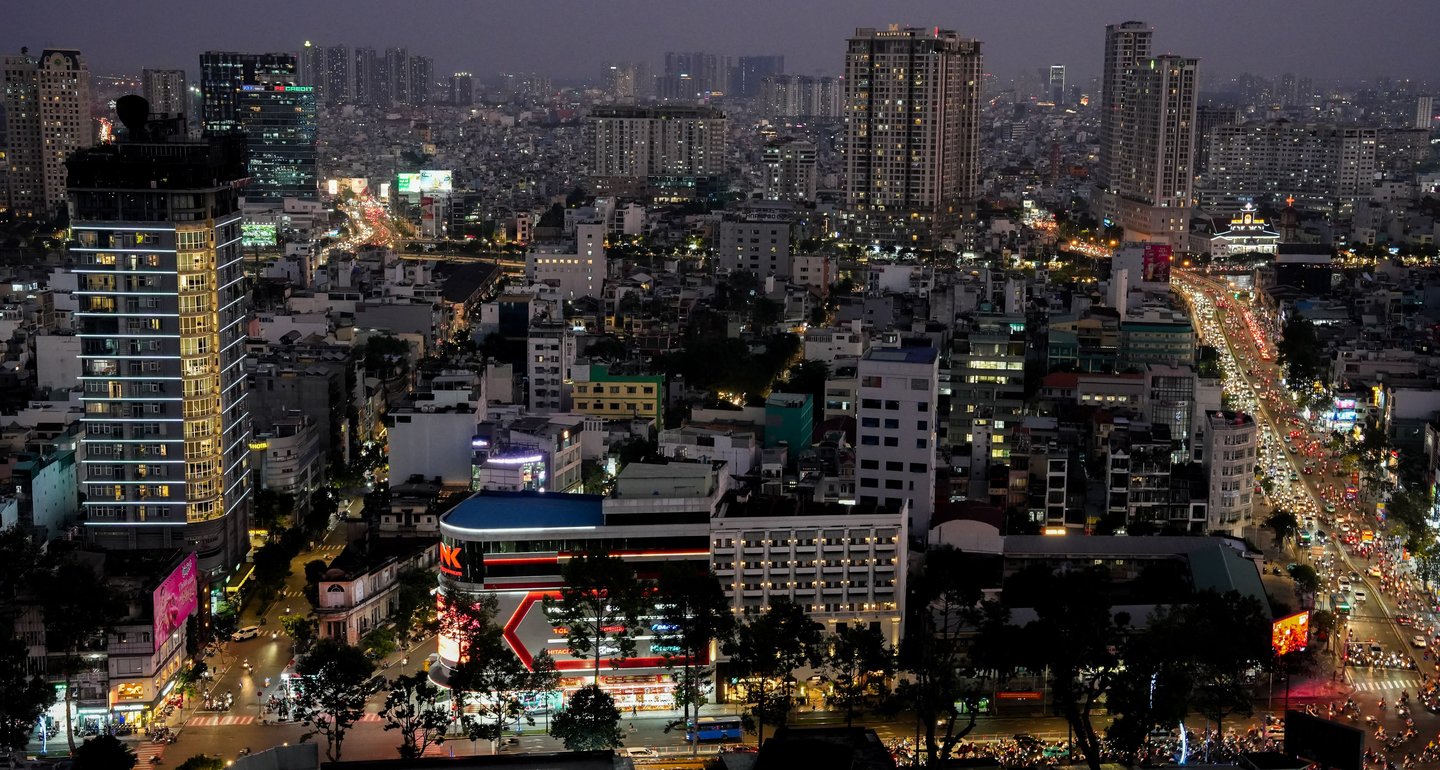
Saigon is a city of relentless, intoxicating energy. This curated collection brings together raw moments from the pavement, capturing the authentic rhythm, daily life, and timeless contrasts of Vietnam’s largest metropolis through my lens.
The heart of this series unfolded in and around the frantic intersections of Saigon District 1. Using this central hub as a springboard, my objective was to document the stark visual friction between centuries-old, traditional living conditions and the soaring, hyper-modern skyline of Ho Chi Minh City. Within this gallery, you will find industrial scenes along the Saigon River, the neon-drenched chaos of the city center, and sweeping cityscapes captured from high-altitude rooftop bars.
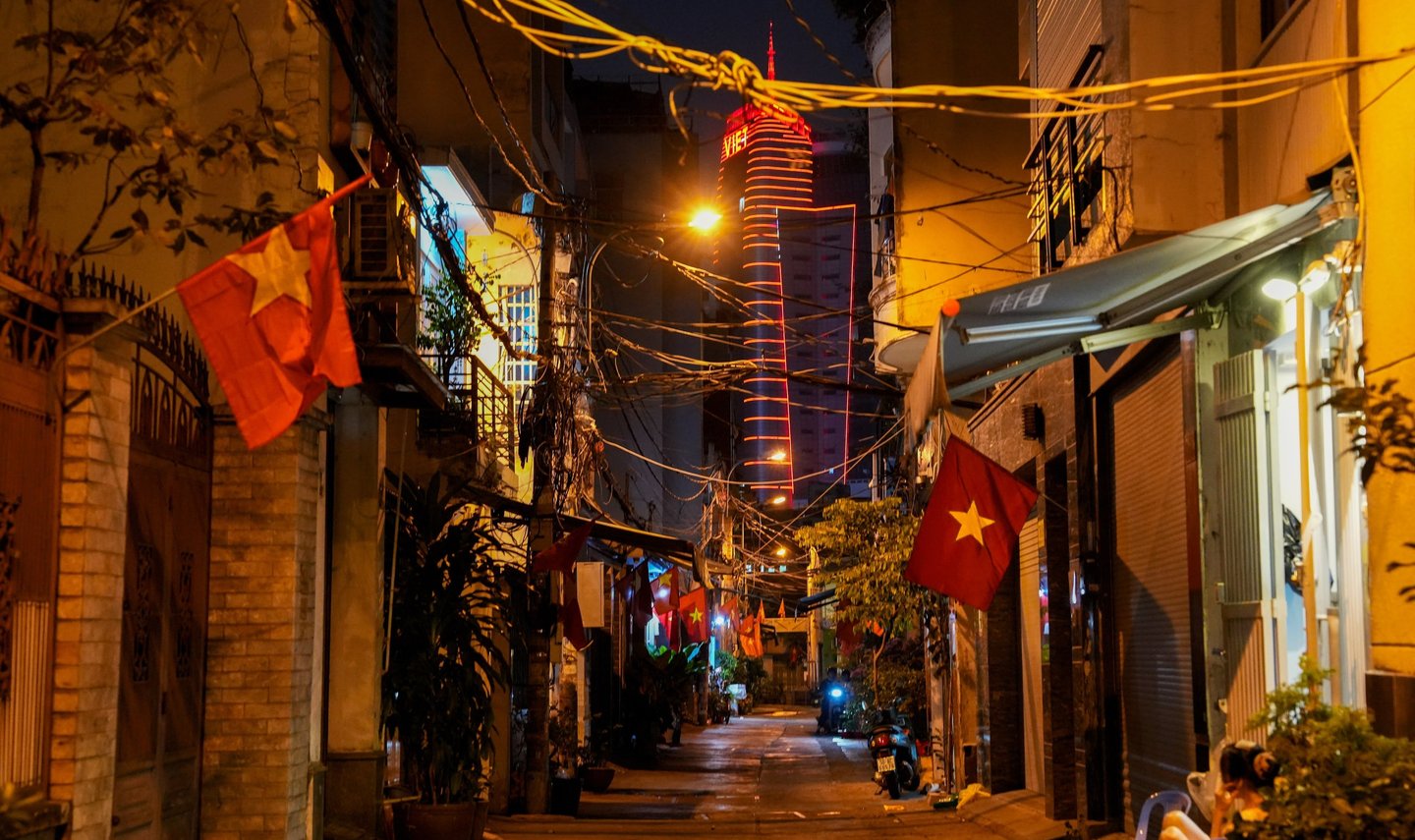
From the Neon of Bui Vien to the Heritage of Cholon
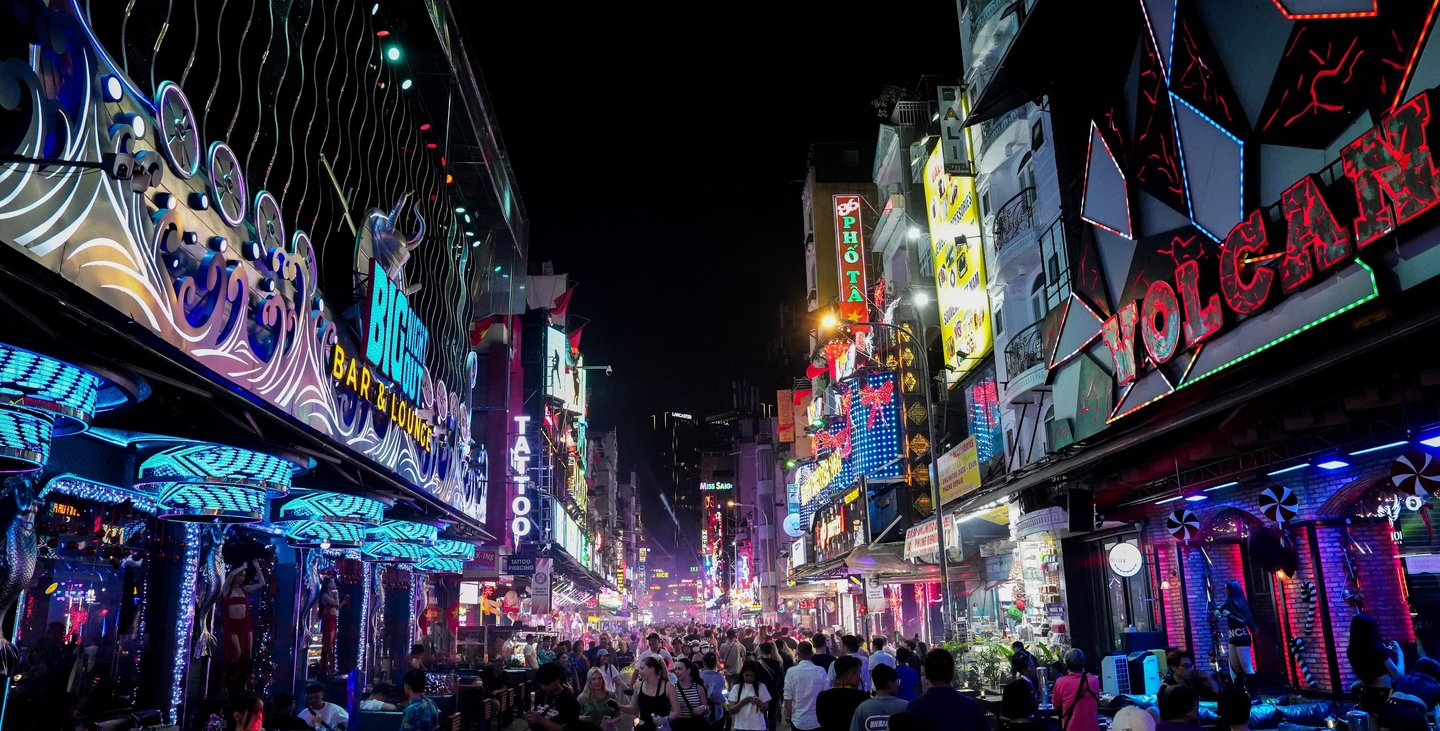
This archive cuts straight through the diverse subcultures of the city. I’ve documented iconic architectural landmarks like the historic Central Post Office and the famous, multi-layered Café Apartment building, before diving headfirst into the sensory overload of Bui Vien Walking Street—a space where Saigon’s nightlife, noise, and urban grit collide into a single frame.
The visual narrative then shifts gears into District 5, widely known as Cholon (Saigon's Chinatown). This neighborhood is a sprawling labyrinth of color, weathered temples, dense scents, and ancient trading traditions that have remained unchanged for generations.
Deep into the Mekong Delta: Cai Rang Floating Market
Expanding beyond the city limits, an additional chapter of this documentary project takes you deep into the heart of the Mekong Delta. Located near Can Tho, South Vietnam’s second-largest city, lies the legendary Cai Rang Floating Market.
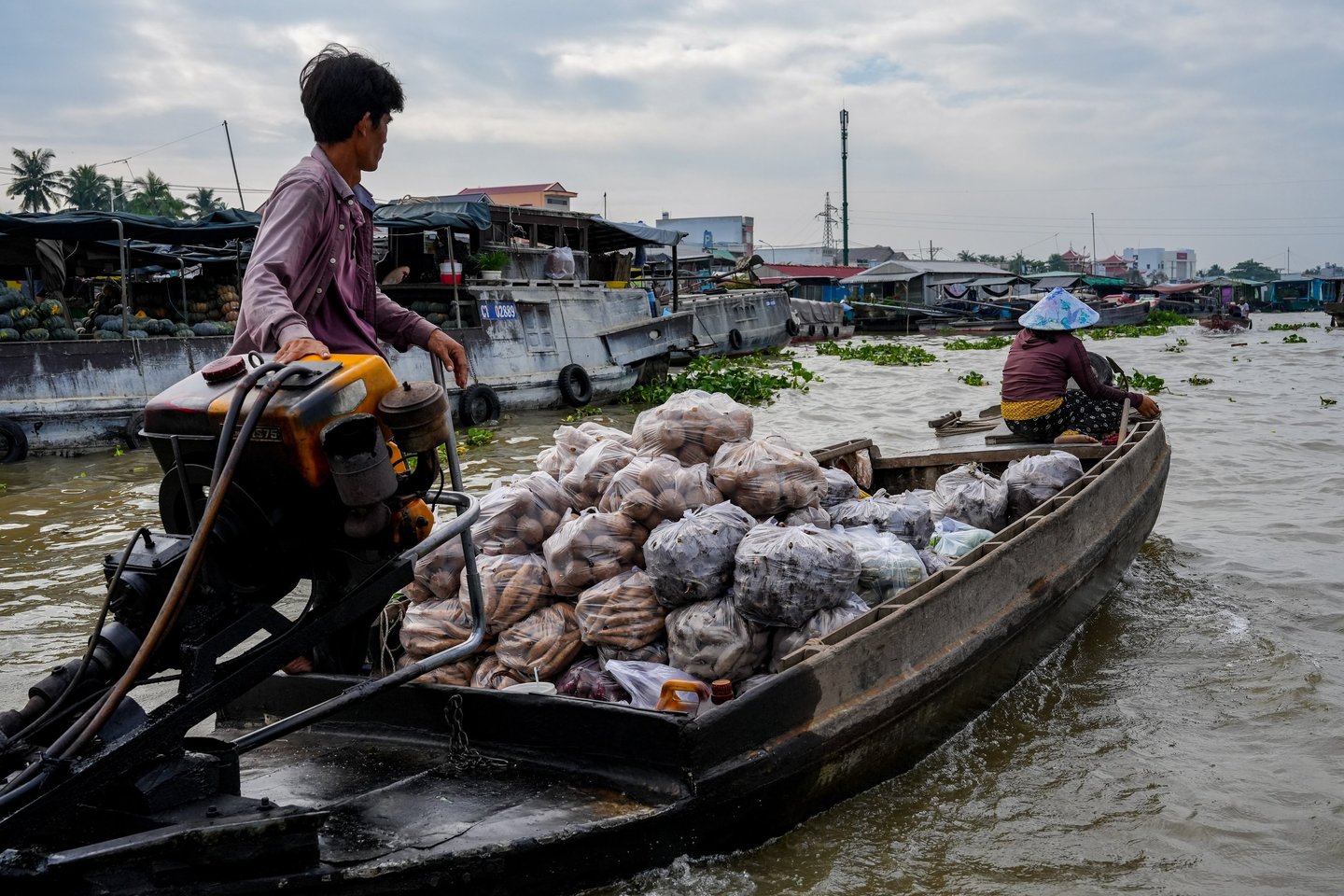
While it requires a journey into the delta from Saigon, it remains one of the most rewarding environments in Southeast Asia for authentic travel and documentary photography. Standing on a moving longtail boat amidst the morning mist, tracking local merchants trading wholesale produce directly from deck to deck, offers an unfiltered glimpse into a vanishing way of life.
The Documentary Setup: Built for Speed and Low Light
Every photograph in this Vietnam series was captured using the Sony Alpha 7 IV (ILCE-7M4) paired with the Sony FE 24-70mm f/2.8 GM II lens. In a fast-moving, unpredictable environment like Saigon, this setup is my ultimate workhorse. It provides the exact focal flexibility and low-light performance required to seamlessly transition from bright street-market scenes to high-ISO night photography without missing a single beat.
Explore the complete high-res archive, view individual image stories, or secure a commercial photo license for your next editorial project on my photography website at strangphotography.com.
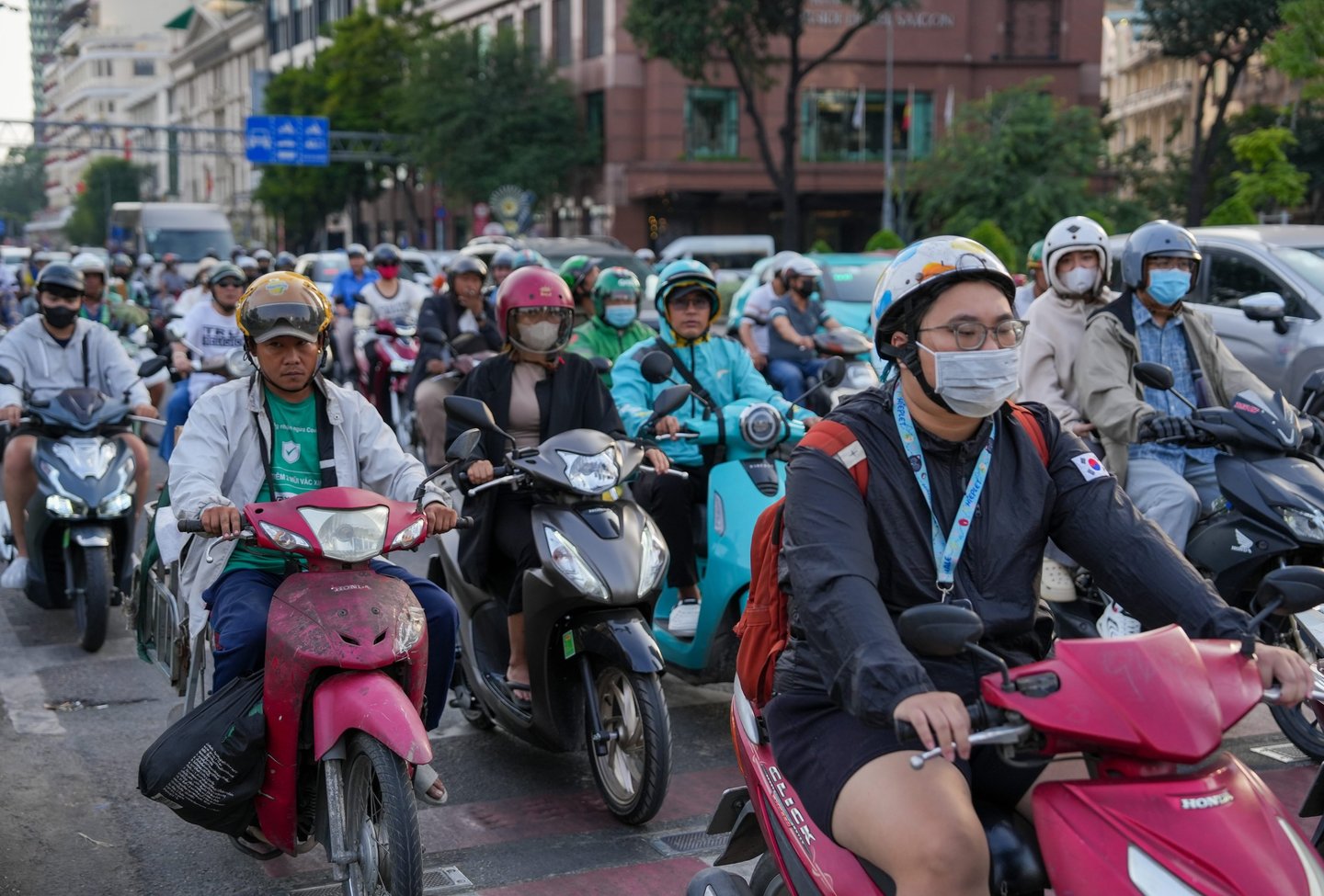
Ho Chi Minh City: Navigating the Chaos from Minute One
Ho Chi Minh City is a masterpiece of organized chaos, but the arrival at Tan Son Nhat International Airport (SGN) can be a real test of patience. Between the massive crowds at immigration and the overwhelming energy outside the terminal, you want your logistics to be invisible.
That’s why I never travel to Vietnam without my Saily eSIM. I’ve relied on it for years throughout Southeast Asia to keep my workflow moving.
Why staying connected is a game-changer here:
Avoid the Taxi Scams: Once you exit SGN, you’ll be met with a wall of people and "taxi fixers" trying to lure you into cars with exorbitant, rigged prices. Having an active data connection allows me to bypass the "taxi mafia" entirely. I walk straight to the Grab pick-up point, knowing my fare is fixed and my driver is tracked.
Instant Coordination: After spending a long time in the notorious immigration queues, the last thing you want is to hunt for a local SIM card booth. With Saily, I’m online the second I land. I can check my hotel location on Google Maps and signal my ride while I’m still walking out of the terminal.
Focus on the Street: My goal is to capture the "Street Life Between Tradition and Modern Vietnam." By sorting my connectivity before I arrive, I save my energy for the city itself, not for negotiating fares on the sidewalk.
I use Saily because it’s reliable and eliminates the stress of the "first hour" in a new city. If you’re heading to Saigon, do yourself a favor and get connected before you land.
As a Saily partner, I may earn a small commission if you purchase through my link—at no extra cost to you. I only recommend tools I use and trust myself.
Saigon Street Stories – Life Between Skyscrapers and Side Alleys
Authentic street scenes and daily moments from District 1, where modern Vietnam meets the soul of Saigon.
Ho Chi Minh City, formerly known as Saigon, is a metropolis defined by its rapid, vertical evolution. Yet, the true pulse of the city doesn’t beat inside its air-conditioned malls, but directly on the asphalt. This collection centers on visual storytelling within Saigon District 1—not focusing on the polished downtown core, but exploring the immediate fringes where towering glass skyscrapers collide with the raw, unapologetic grit of authentic Vietnamese street life.
For a documentary photographer, this architectural and social friction is pure gold. You will find multi-generational routines unfolding directly in the shadows of luxury high-rises.
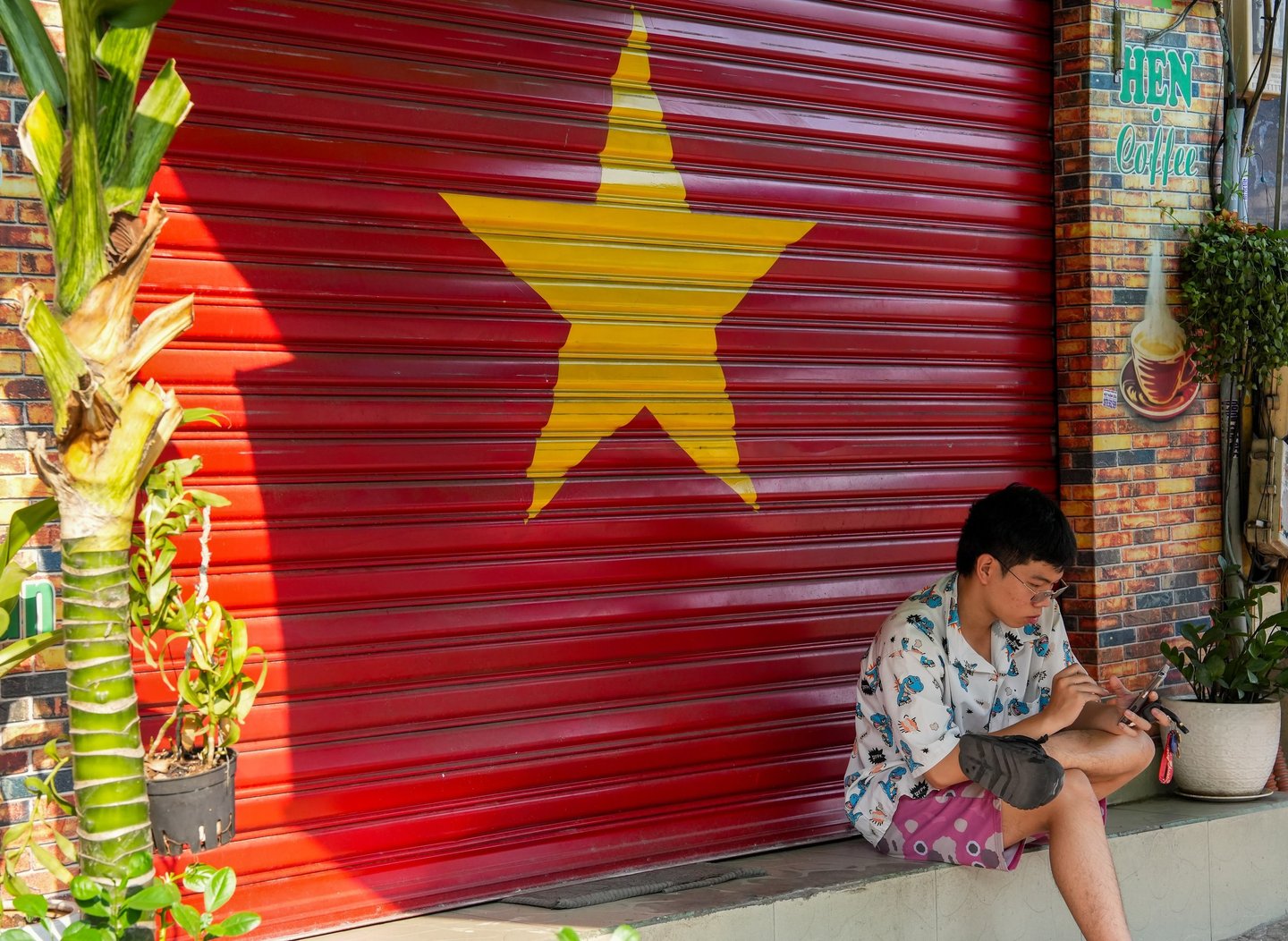
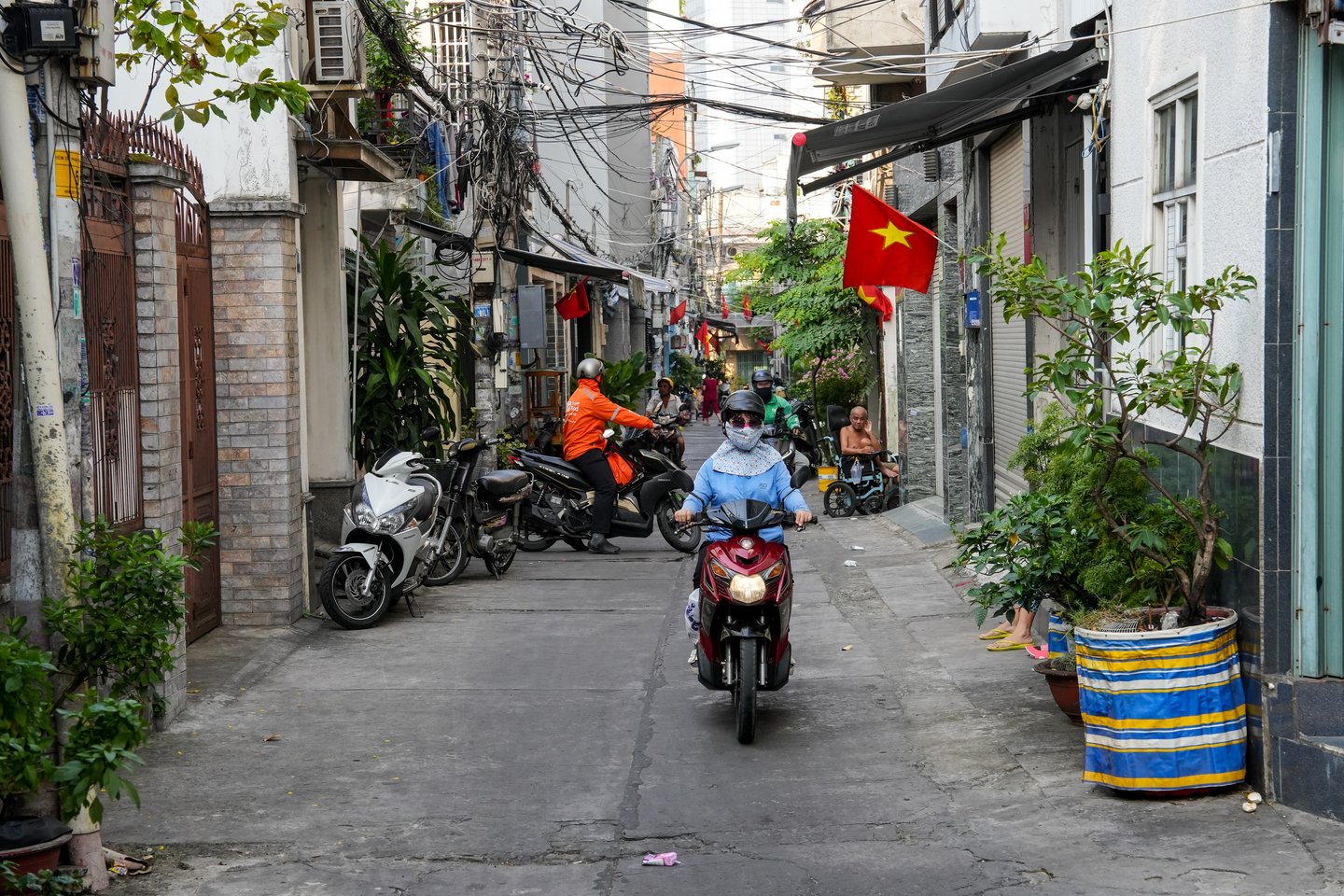
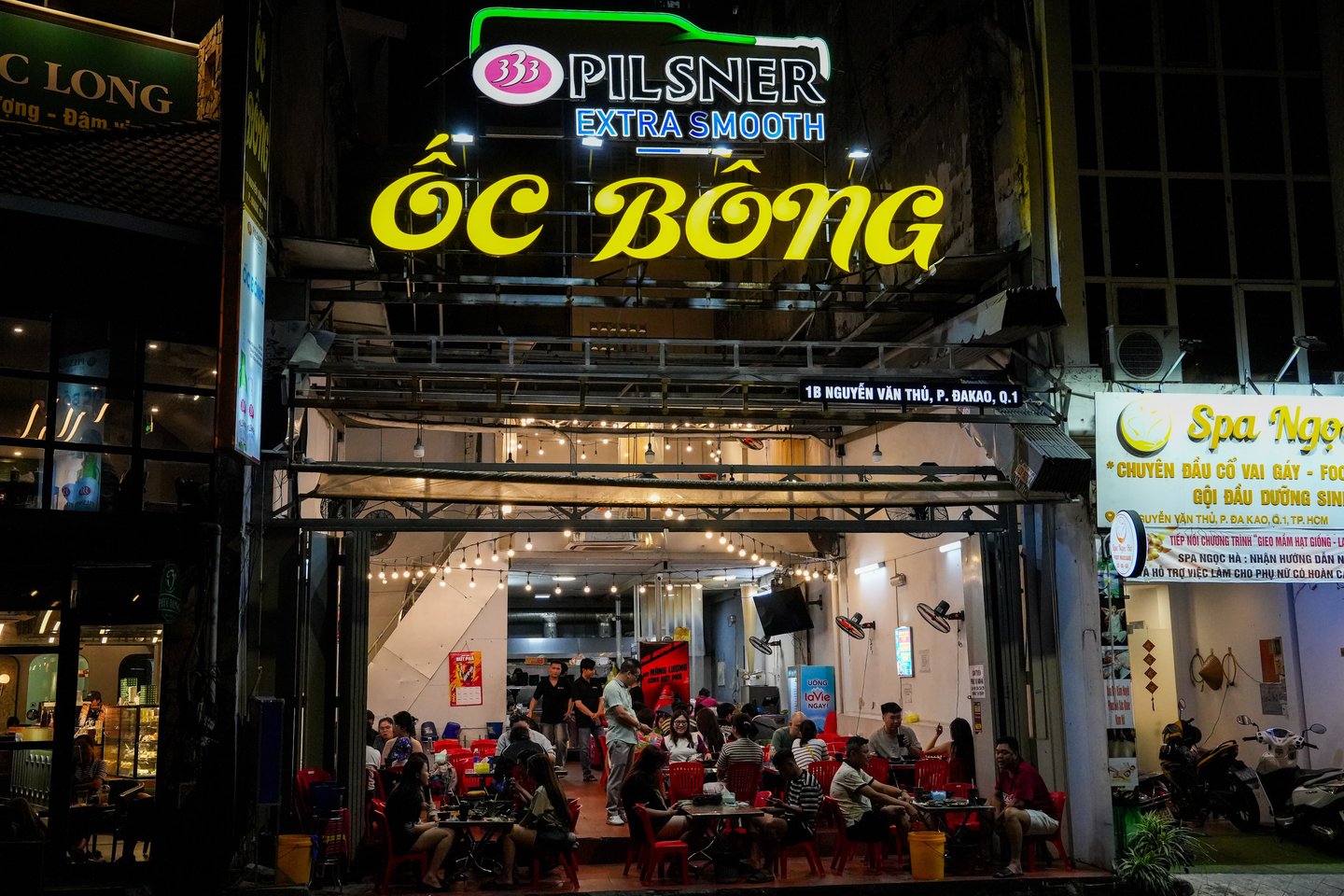
The Sidewalk Symphony of District 1
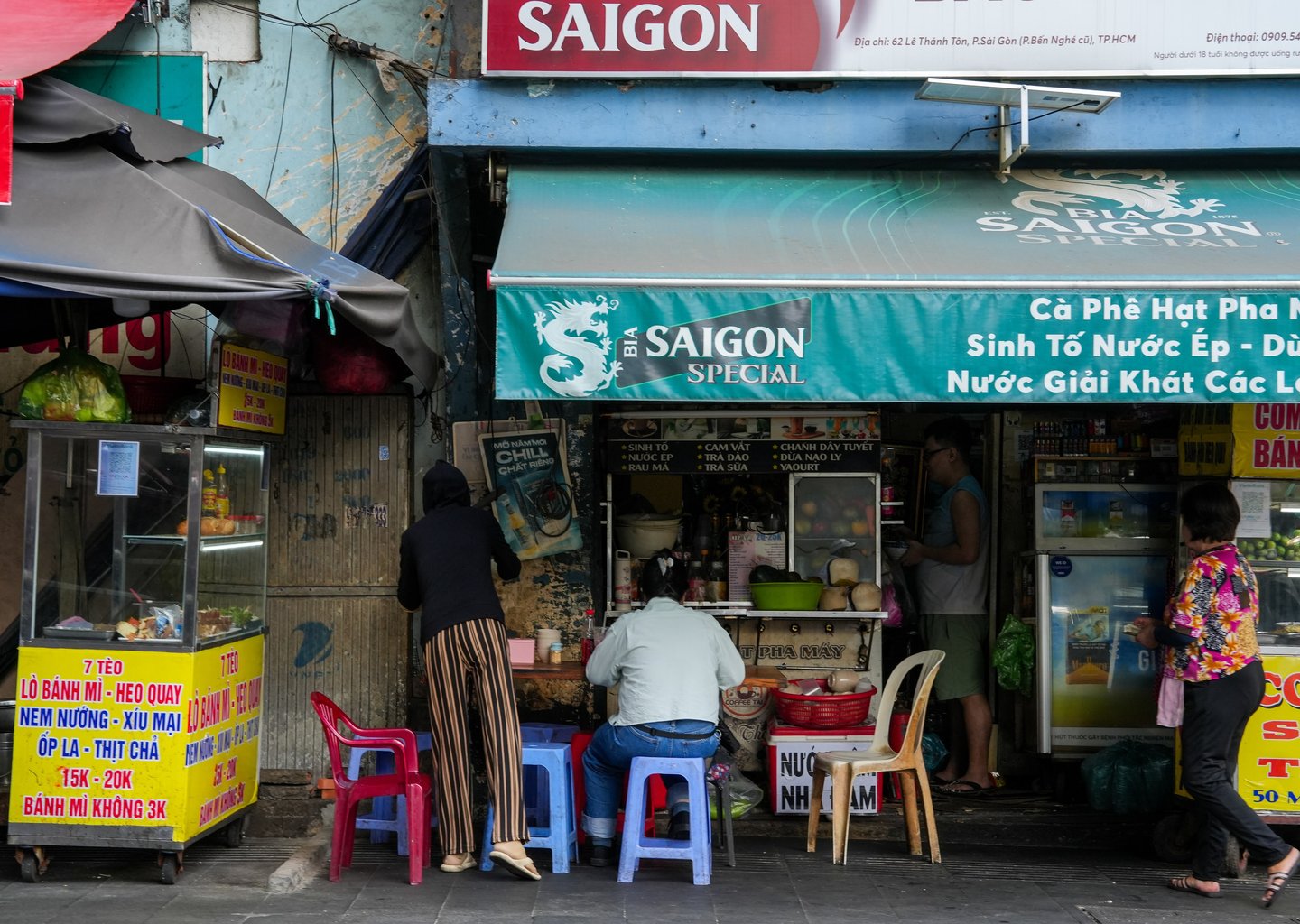
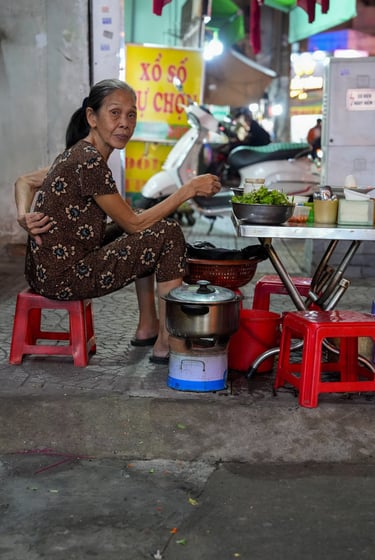
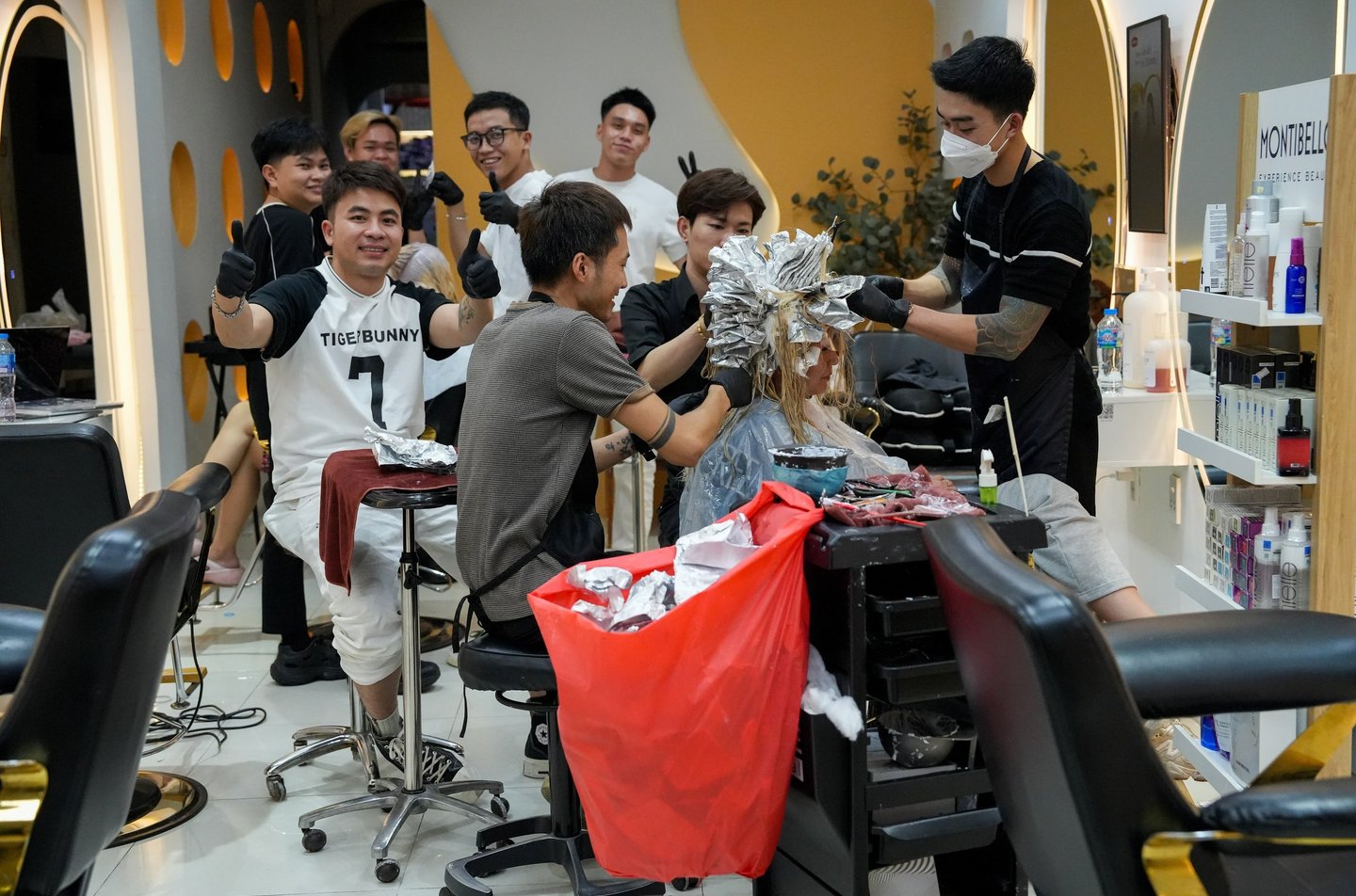
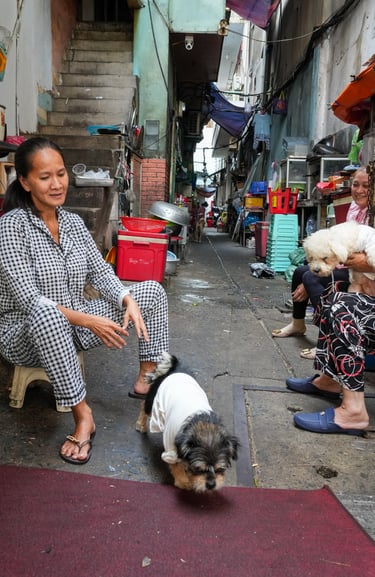
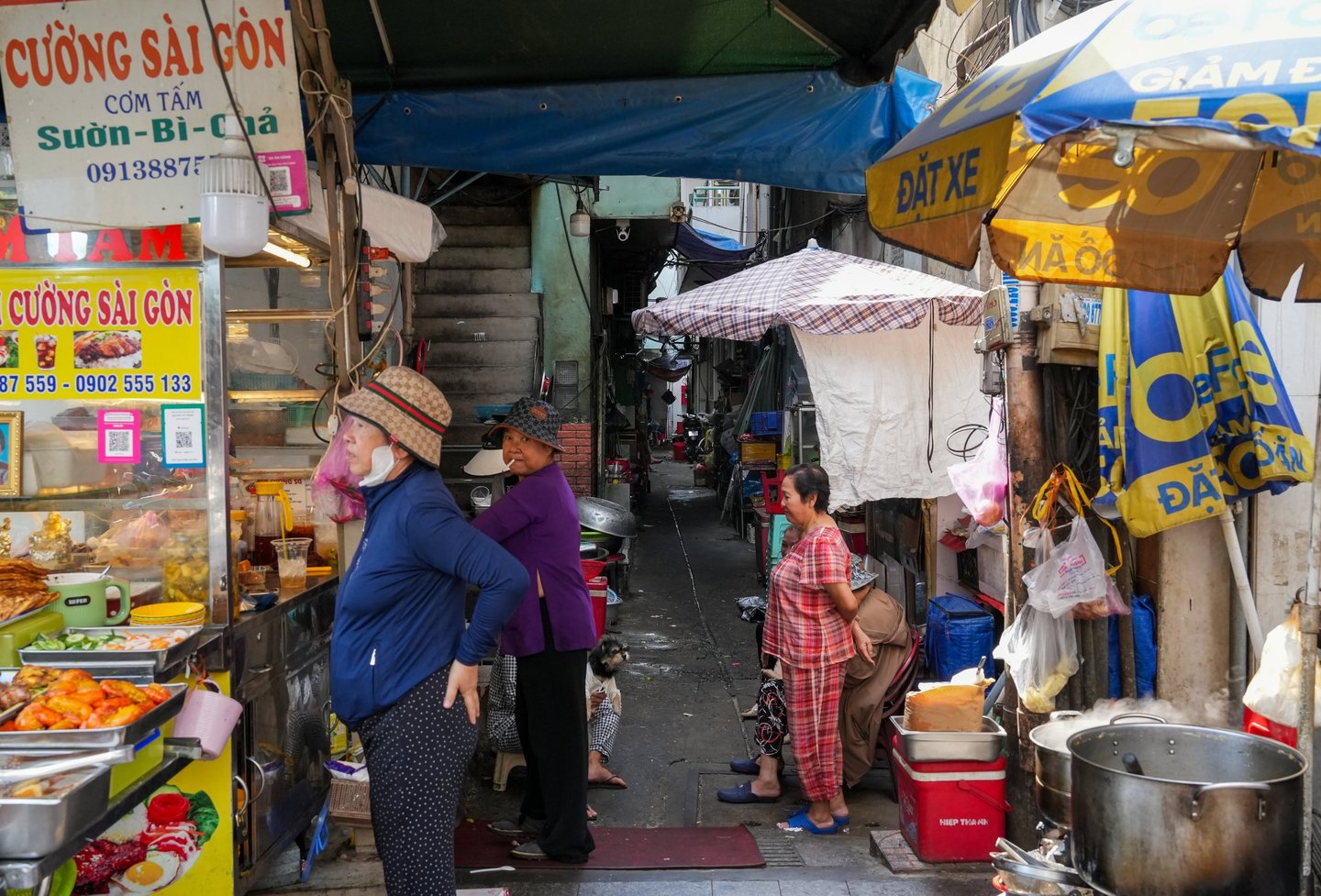
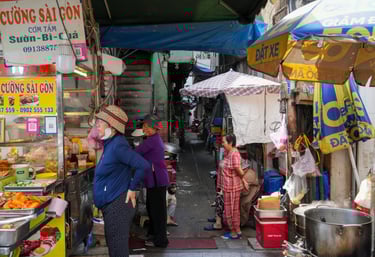
The streetscape here is a masterclass in spatial efficiency. Sidewalks double as open-air living rooms and business hubs: makeshift kitchens send up steam from oversized stockpots, locals perch on iconic tiny plastic stools for breakfast, and narrow residential alleys cut through concrete blocks, framed perfectly by the sprawling city skyline.
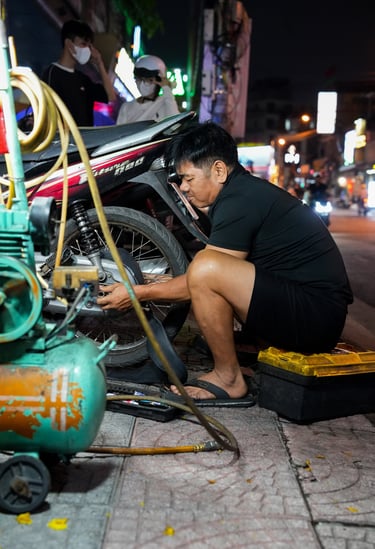
This urban landscape is entirely dominated by Saigon’s motorcycle culture. With millions of registered scooters filling the gridlock every single day, the street serves as an ongoing mechanics' workshop.
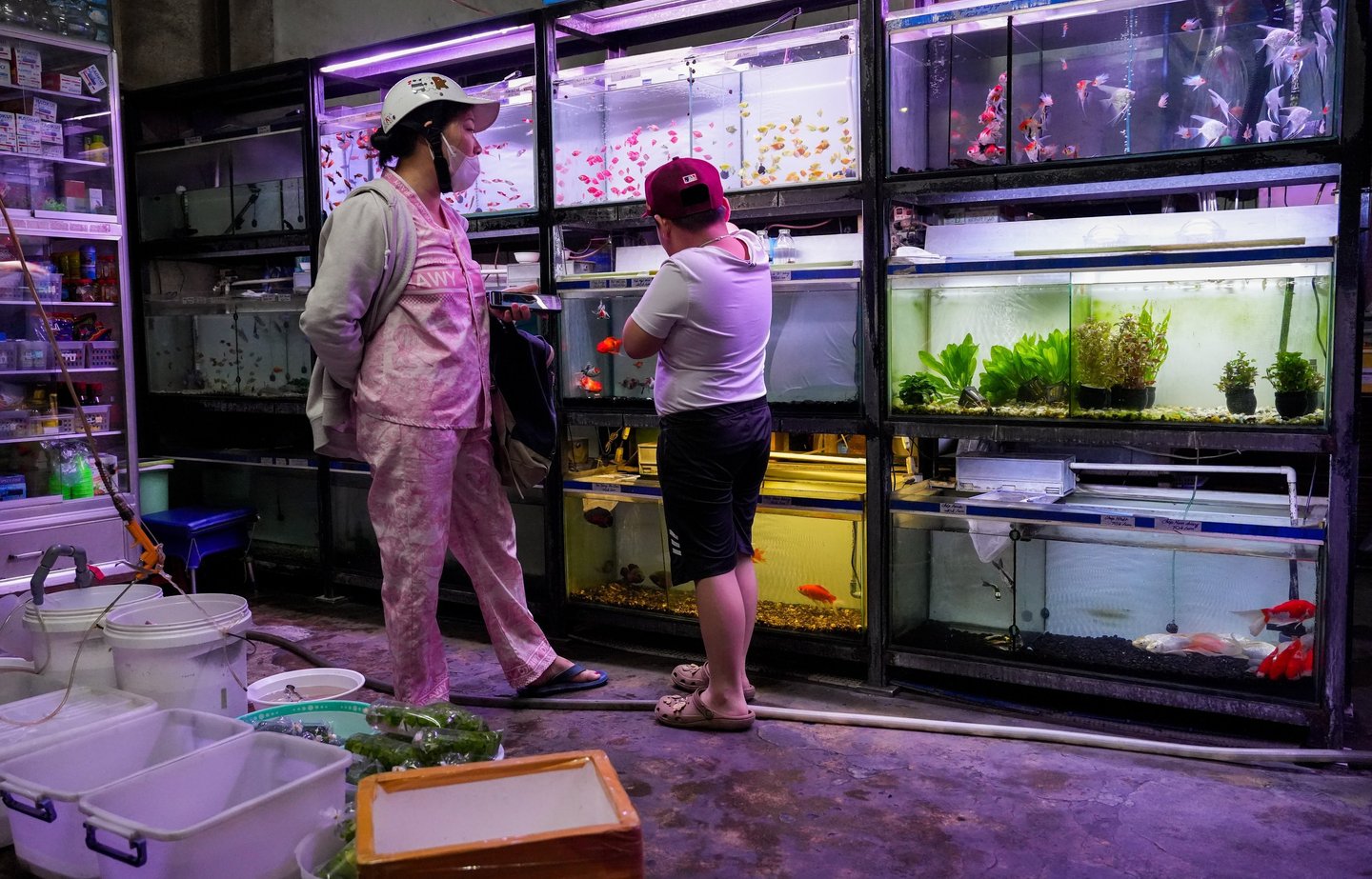
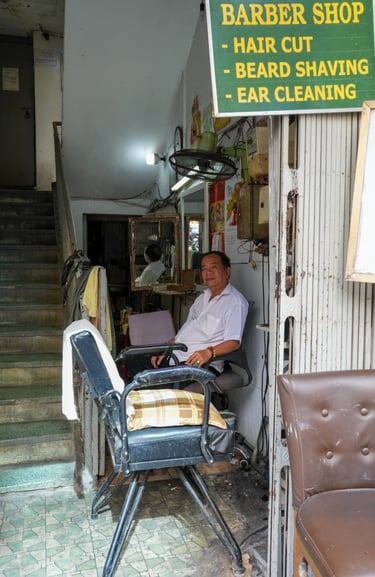
In this neighborhood, every meter tells a different story. A local mechanic patches up a scooter directly on the pavement, while just arm's length away, an elderly woman sits on a low wooden stool, quietly observing the chaos. Behind them, an aquarium shop glows with fluorescent lights, flanked by a bustling beauty salon where a team of stylists is at work. On the corner, a group of women chat over iced coffee, their small fashion dogs nestled beside them, while a barber leans against his chair, waiting patiently for his next client.
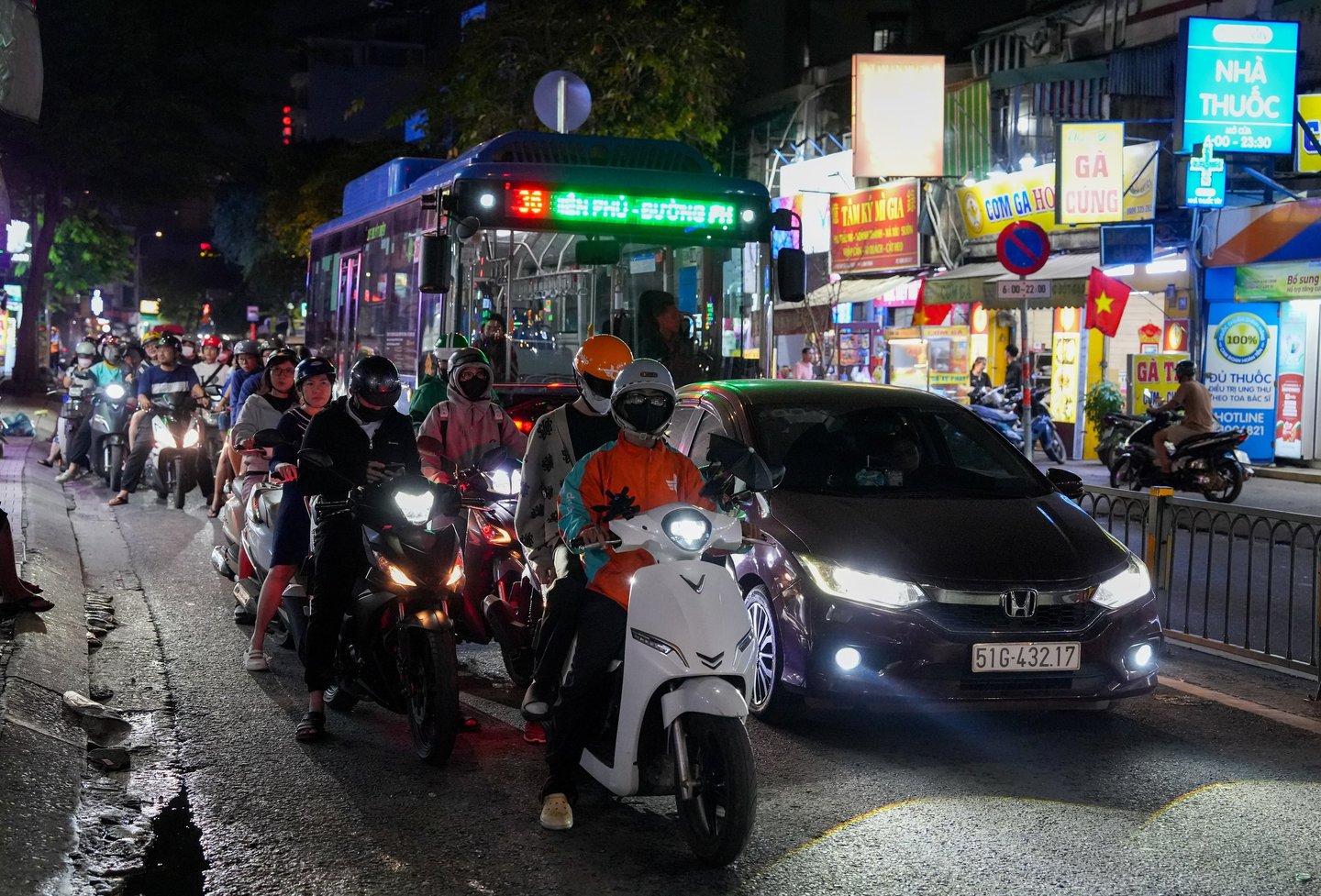




Documenting the Unscripted Rhythm of Vietnam
There is an overwhelming density of energy, color, and raw humanity packed into every block of this city. Navigating these side streets with a camera requires patience, but it offers an unfiltered view into the daily transitions of a changing nation. These frames aren't staged or polished; they are honest fragments of an everyday rhythm that makes street photography in Vietnam an endless source of inspiration.
Saigon by Night – Lights, Architecture and Urban Contrasts
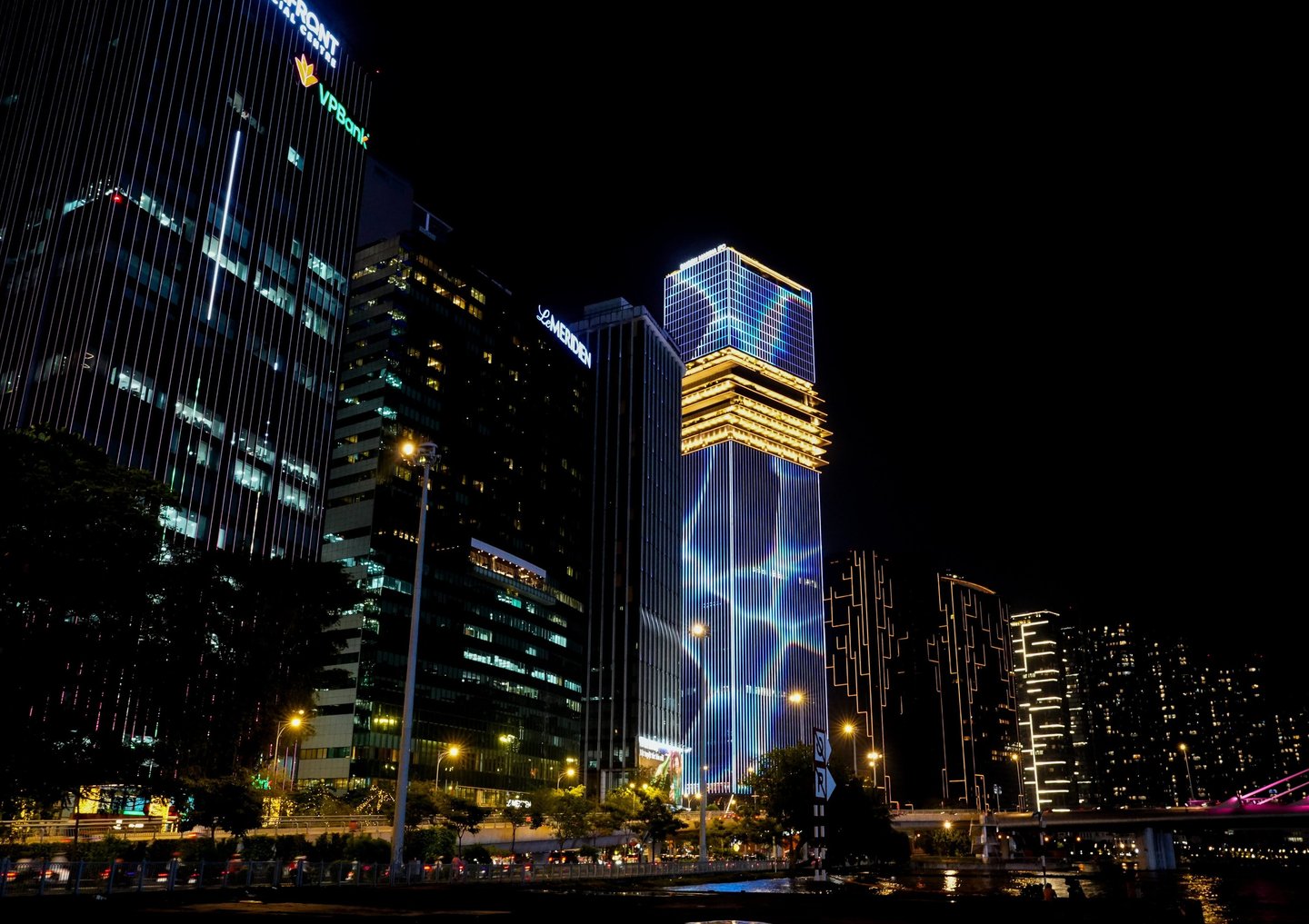
Night scenes from Ho Chi Minh City: Exploring the skyline, river reflections, and cutting-edge architecture in vivid color.
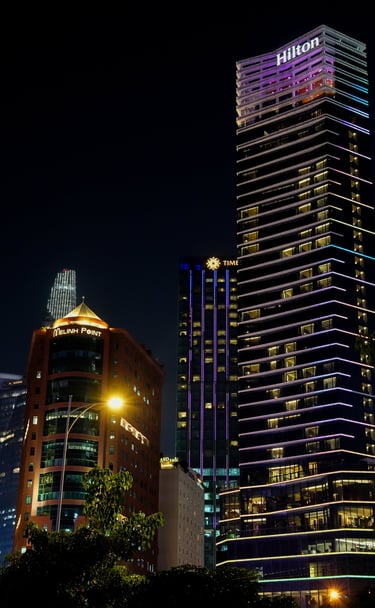
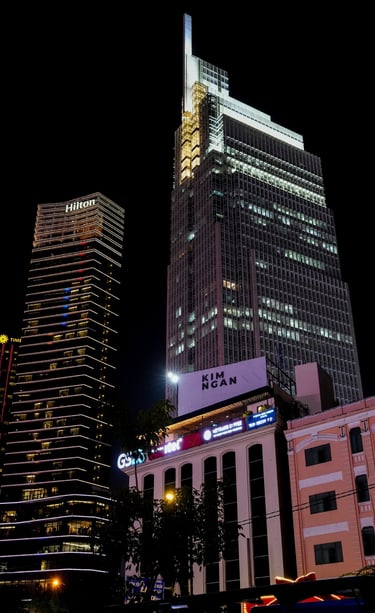
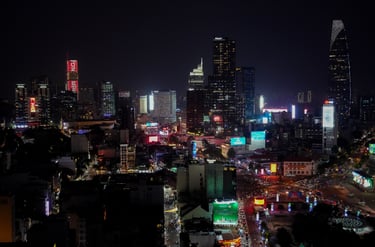
When darkness falls, Ho Chi Minh City transforms into a hyper-futuristic canvas of light and shadow. This collection captures the vertical evolution of Vietnam’s economic powerhouse from my personal perspective as a documentary photographer—focusing on the sharp architectural lines, vibrant colors, and intense urban energy that define Saigon after dark.
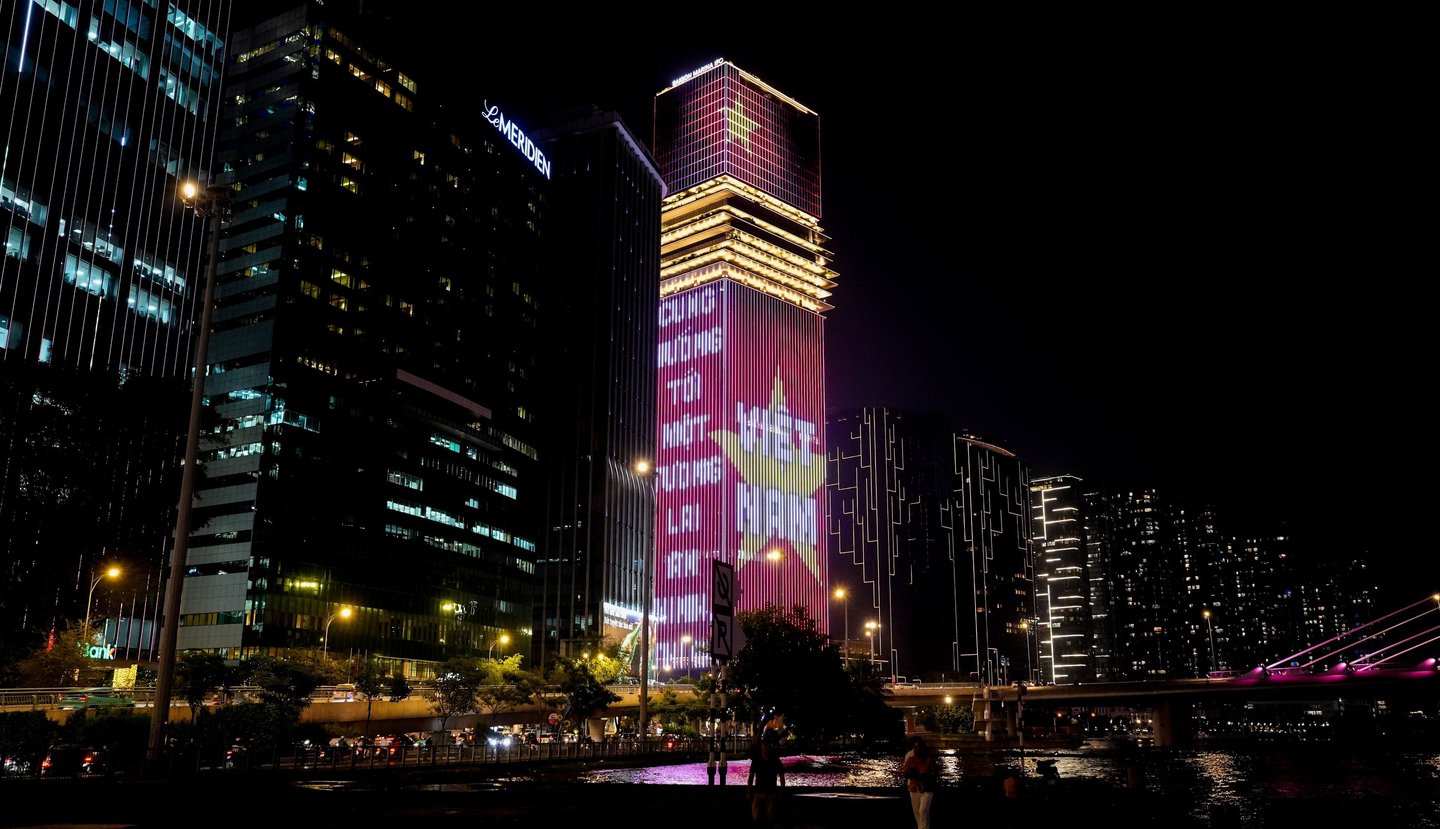

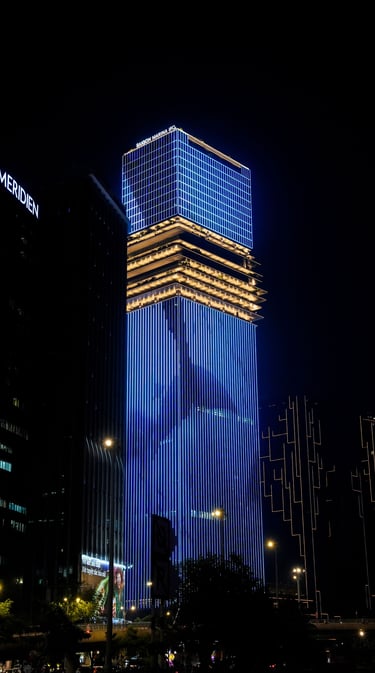

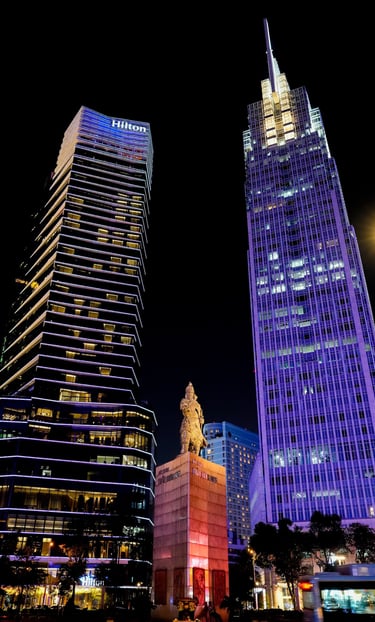
The visual journey begins along the newly reshaped waterfront of Saigon District 1, headlined by the striking, illuminated facade of the Marina Central Tower. This towering architectural landmark anchors a rapidly expanding premier business district right on the water's edge. Rising directly alongside it are other prominent fixtures of the shifting skyline, including the sleek structures of the Le Méridien Saigon and the newly completed Hilton Saigon Hotel, whose sophisticated exterior lighting masterfully accentuates the city’s modern aesthetic.


The Glow of Ba Son Bridge and the River
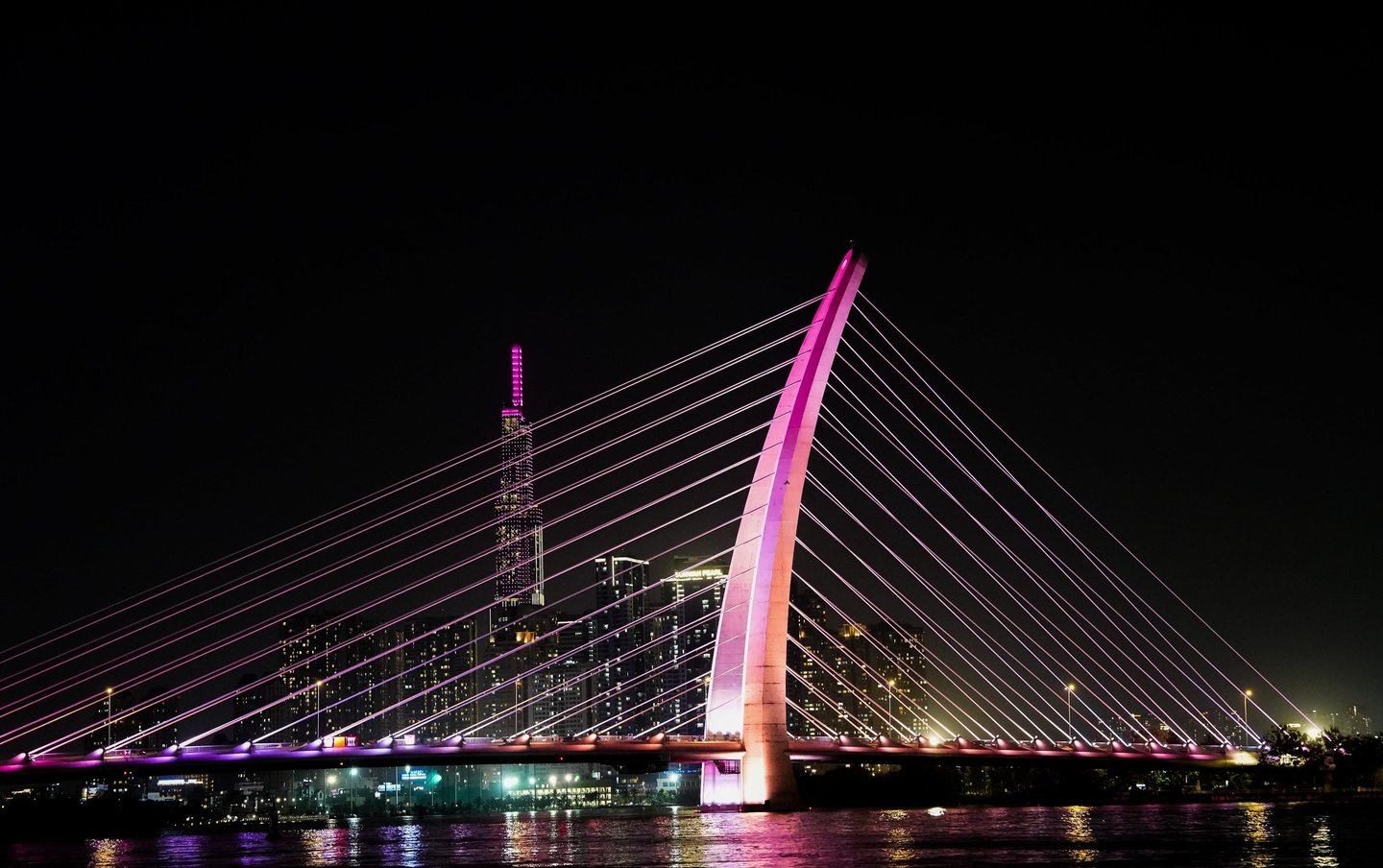
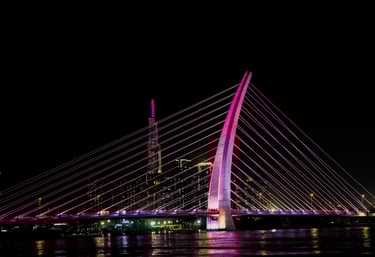
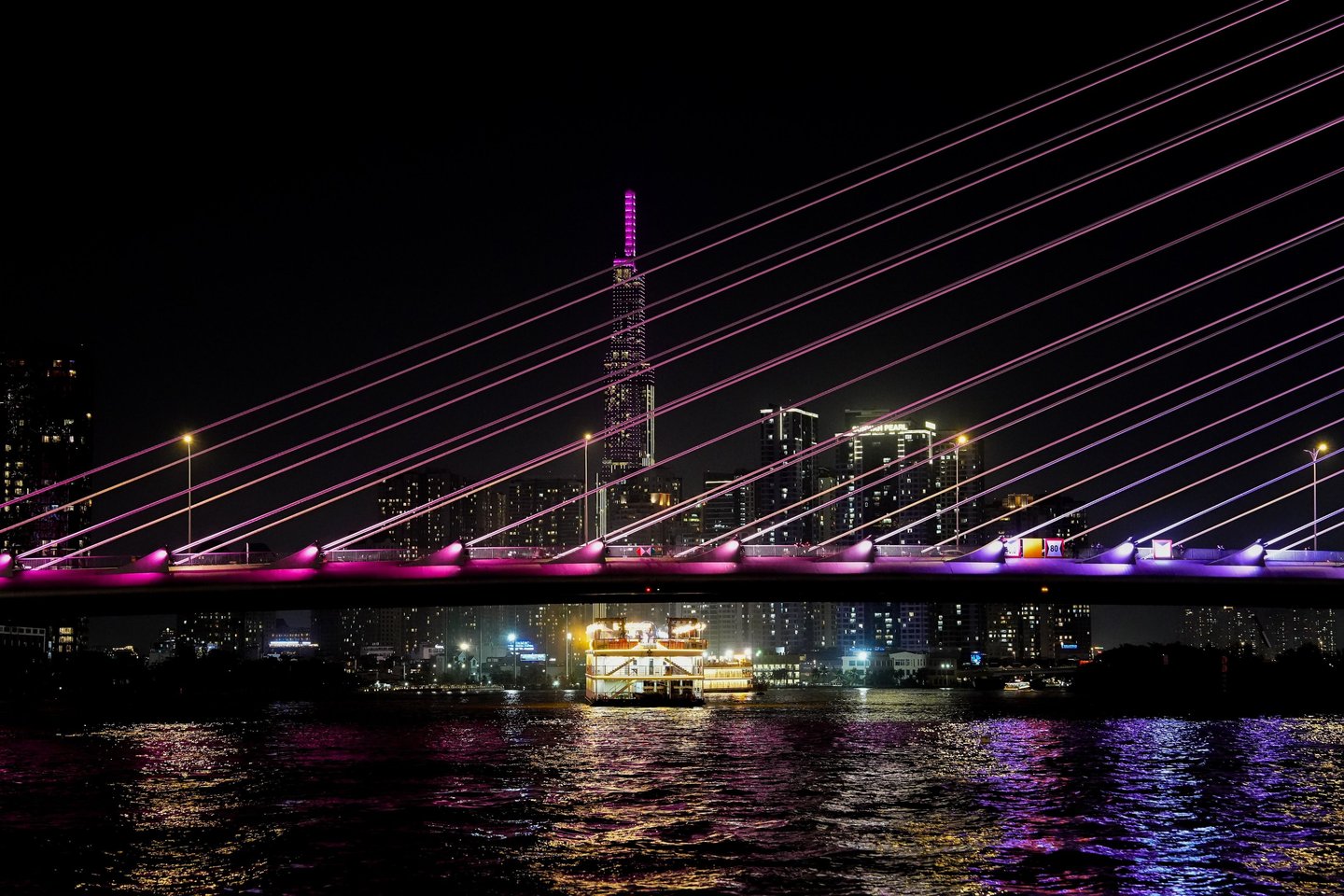
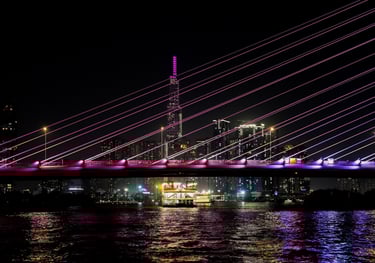
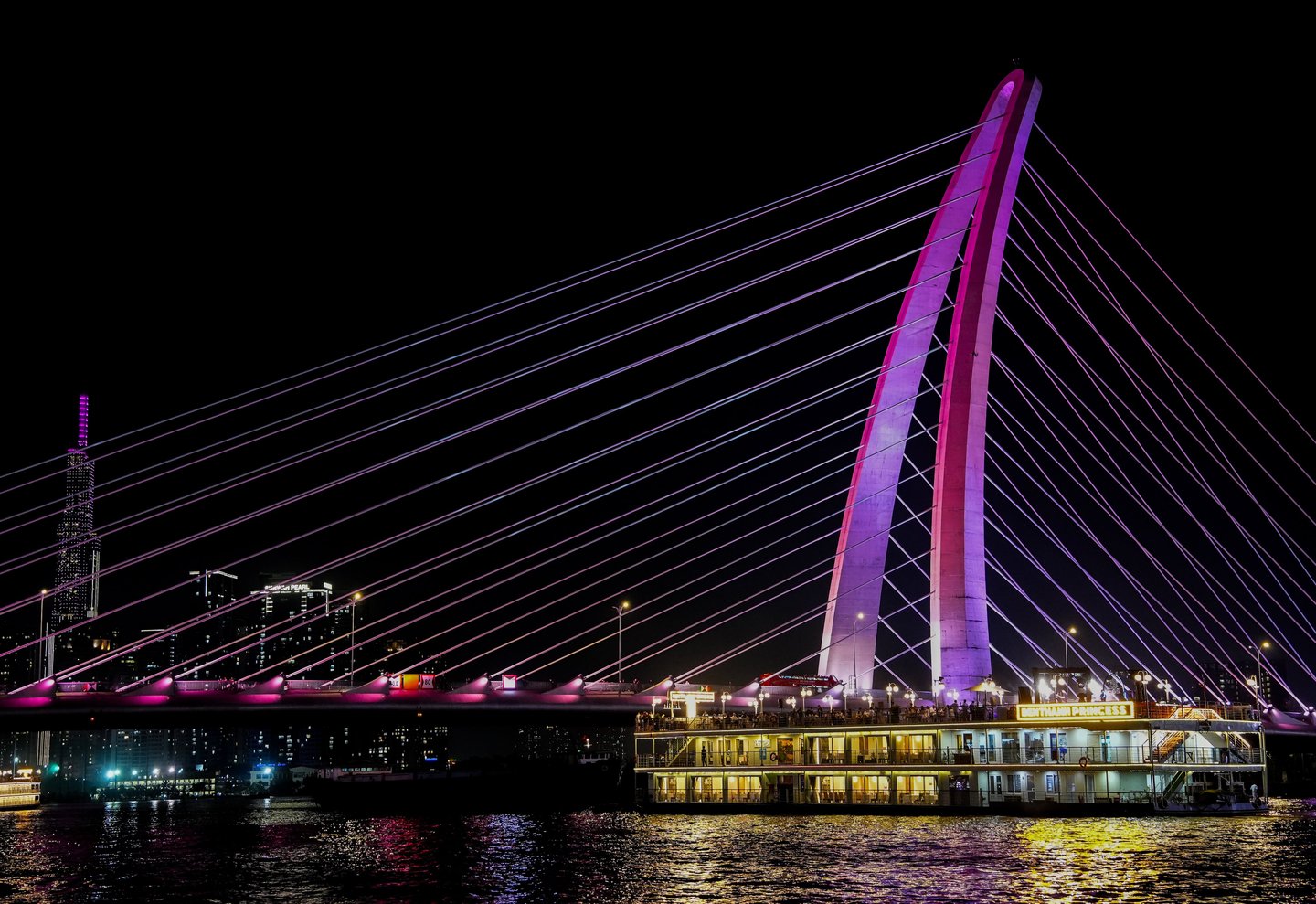
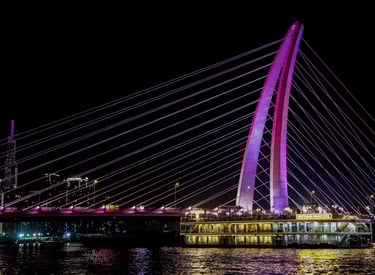
A central focal point of this night series is the monumental Ba Son Bridge (widely known as the Thu Thiem 2 Bridge). This state-of-the-art cable-stayed bridge spans the Saigon River, glowing in a brilliant, signature purple hue that cuts through the dark.
In one of the core frames, the illuminated dining cruise ship “Saigon Princess” glides slowly beneath the spans, creating long, colorful light reflections on the river surface while the dense backdrop of skyscrapers looms behind it. It is a single, packed scene that perfectly encapsulates the dual soul of modern Vietnam: historic waterways colliding with soaring ambition.

The Technical Setup: Pushing High-ISO Boundaries
Freezing the kinetic energy of a glowing metropolis requires a setup built for speed and low-light precision. Every frame in this architectural gallery was captured using the Sony Alpha 7 IV (ILCE-7M4).
To maintain total creative control under challenging dark conditions, I bypassed automatic settings and dialed in my camera manually. Pushing the body to its limits, I shot at high-ISO ranges between 5000 and 6400, balancing the exposure with wide apertures from f/2.8 to f/4.0. Keeping a tight grip on the shutter speed allowed me to eliminate motion blur from the passing river traffic while precisely capturing the crisp neon light trails and intricate details of the facade illuminations.
Cholon Market – The Beating Heart of Chinatown in Saigon
A vivid glimpse into authentic Vietnam: Capturing the people, markets, and everyday energy of District 5 in Ho Chi Minh City.
Cholon, stretching across the labyrinthine lanes of Ho Chi Minh City District 5, literally translates to “Big Market.” Holding its ground as one of the largest Chinatowns in the world, this district stands in stark contrast to the polished modern sheen of District 1. Cholon feels unapologetically raw, heavily textured, and deeply genuine—a living archive where multi-generational, family-run workshops thrive beneath weathered facades, even as the rest of Saigon modernizes at a breakneck pace.
Exploring this historic enclave offers an immersive rush of movement, local trade, and unscripted human interactions.

The Sidewalk Symphony of District 5
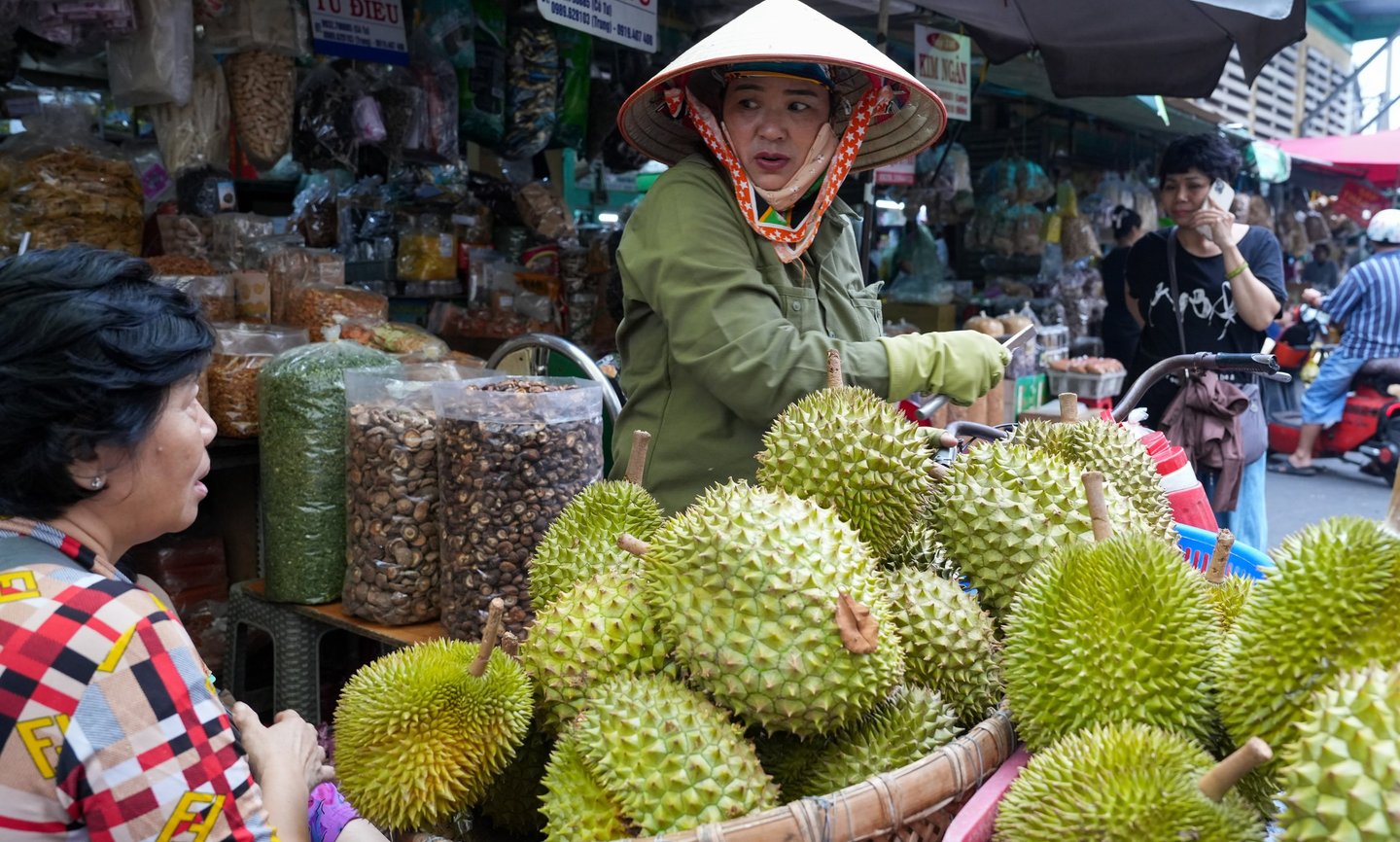
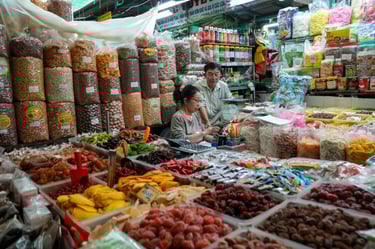
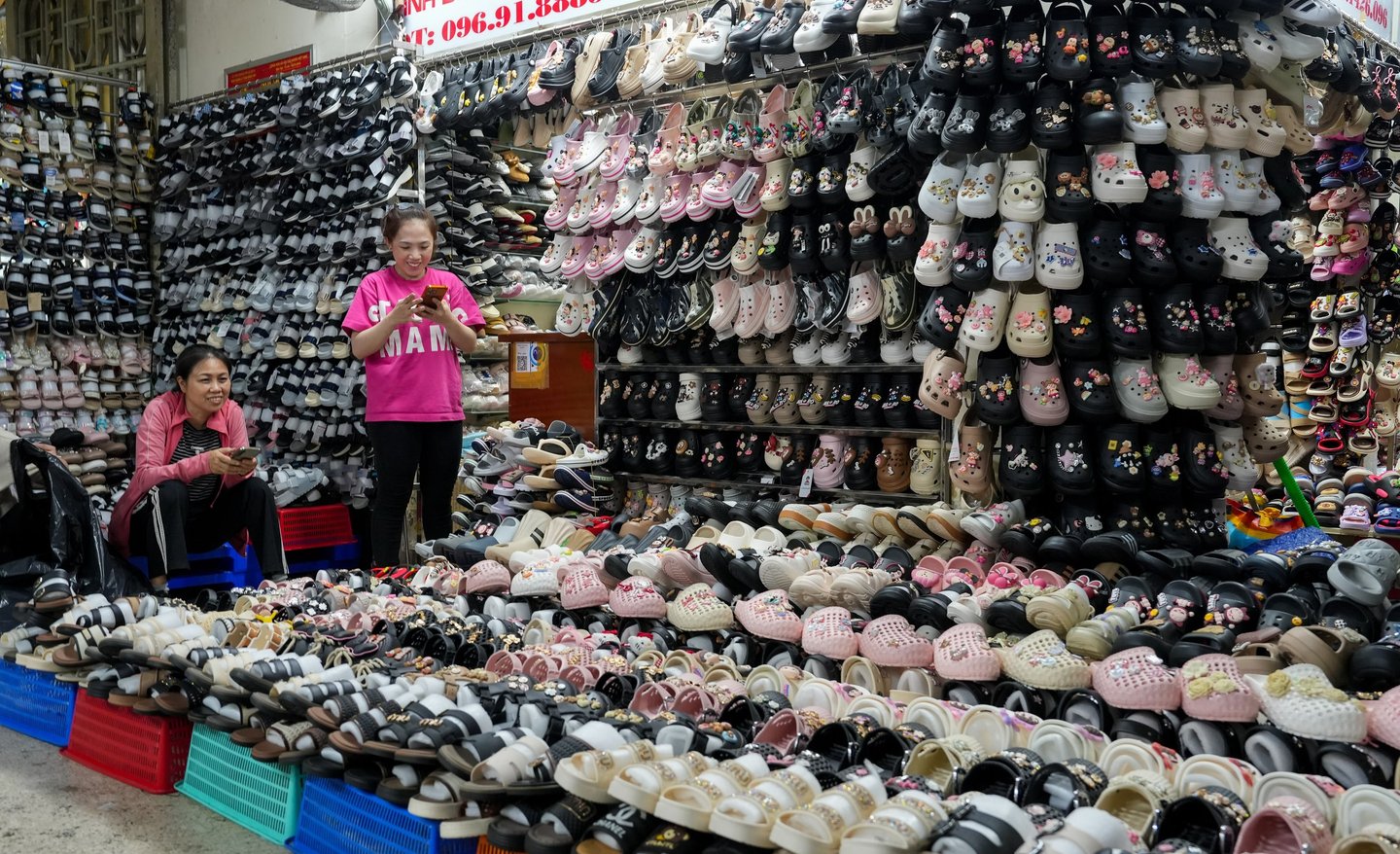
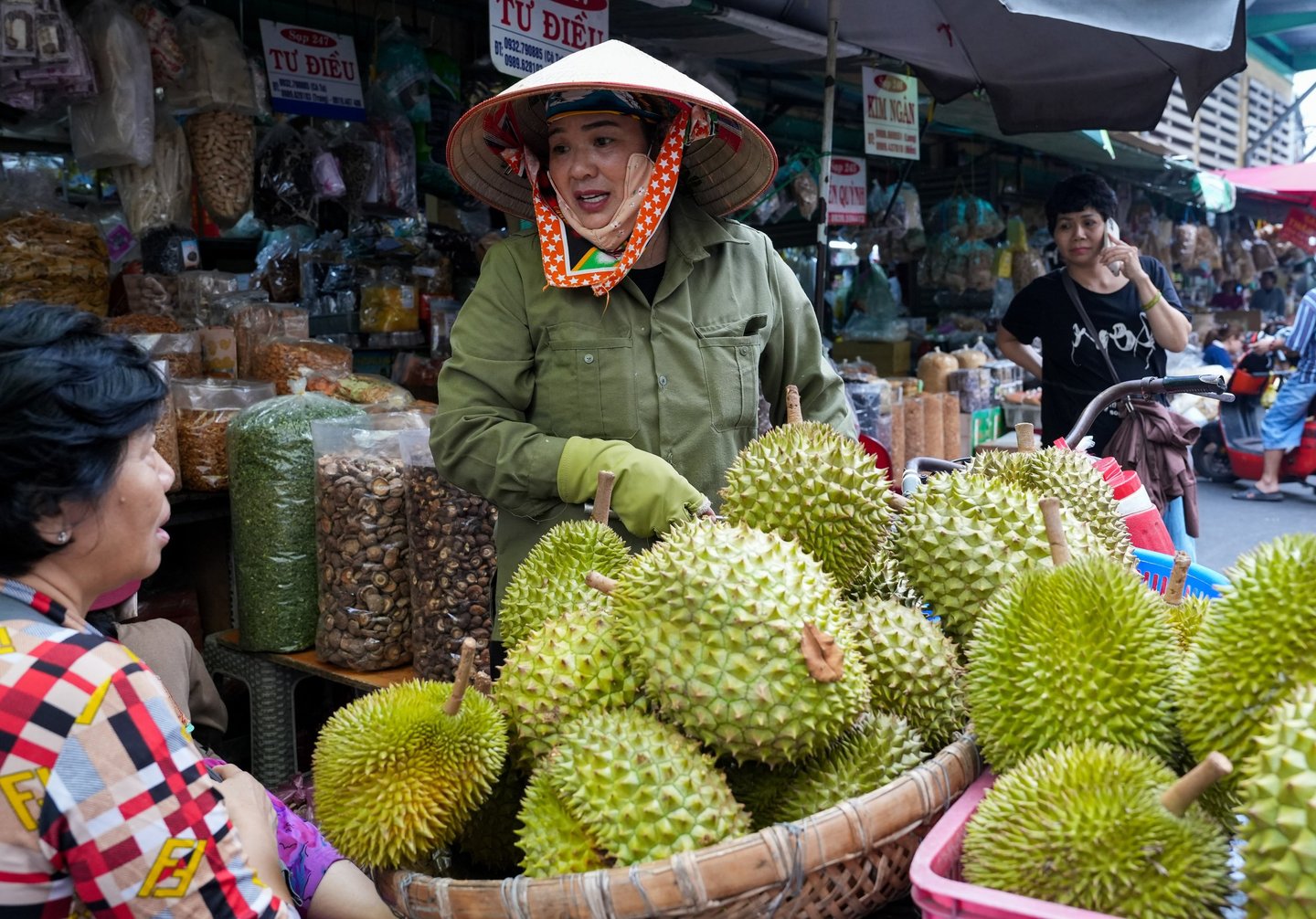
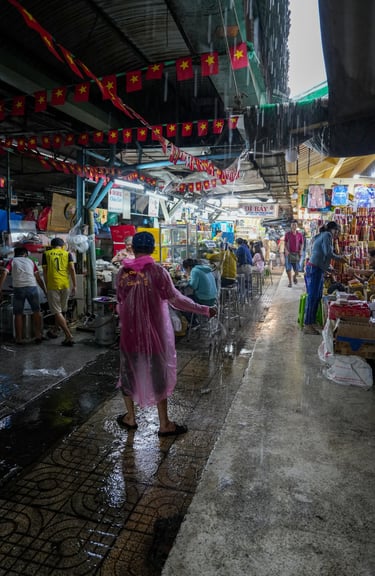
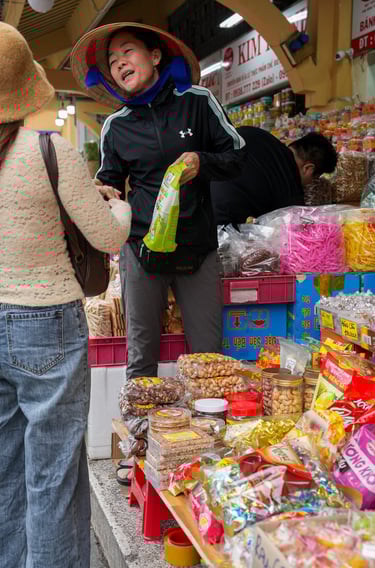
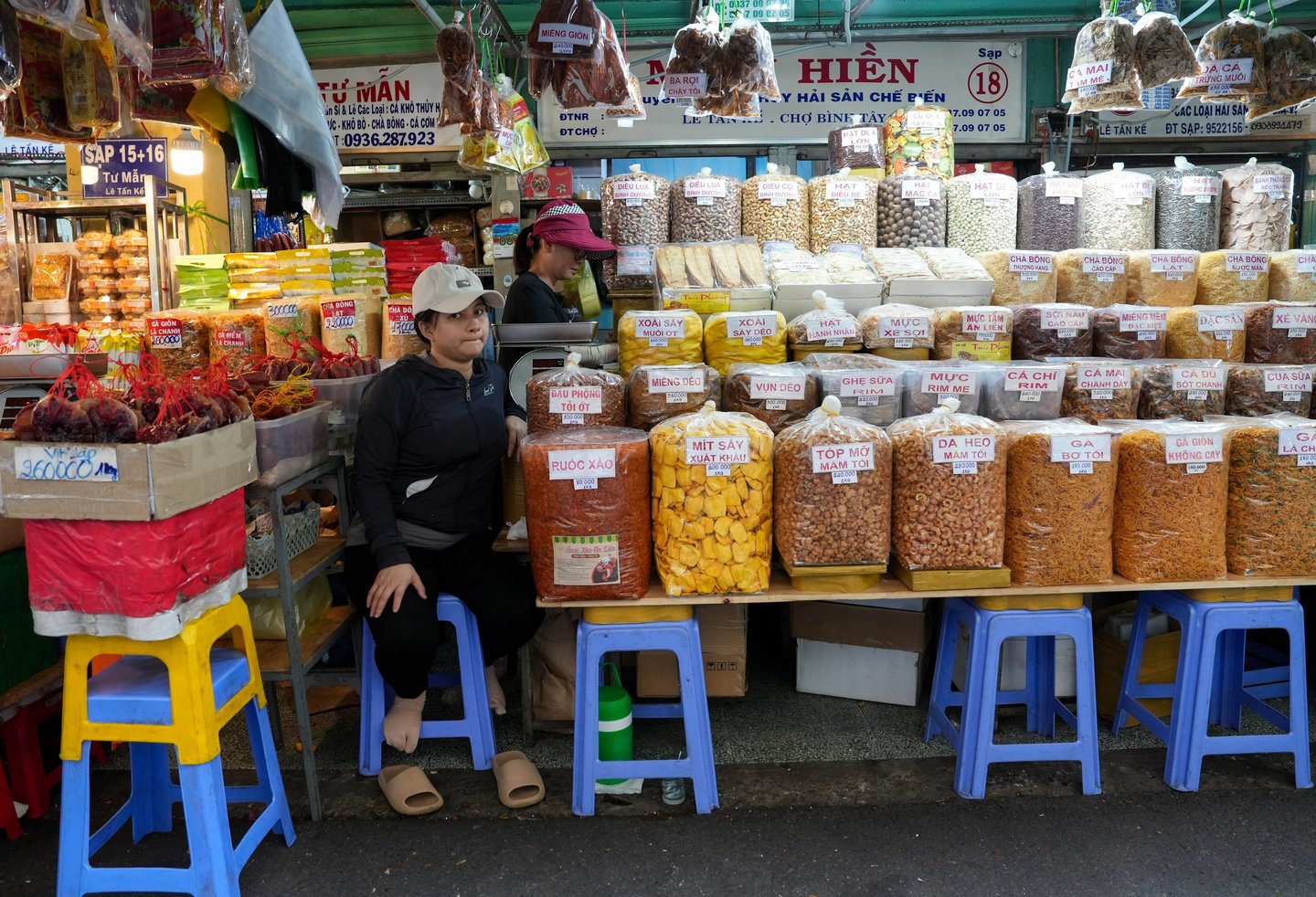
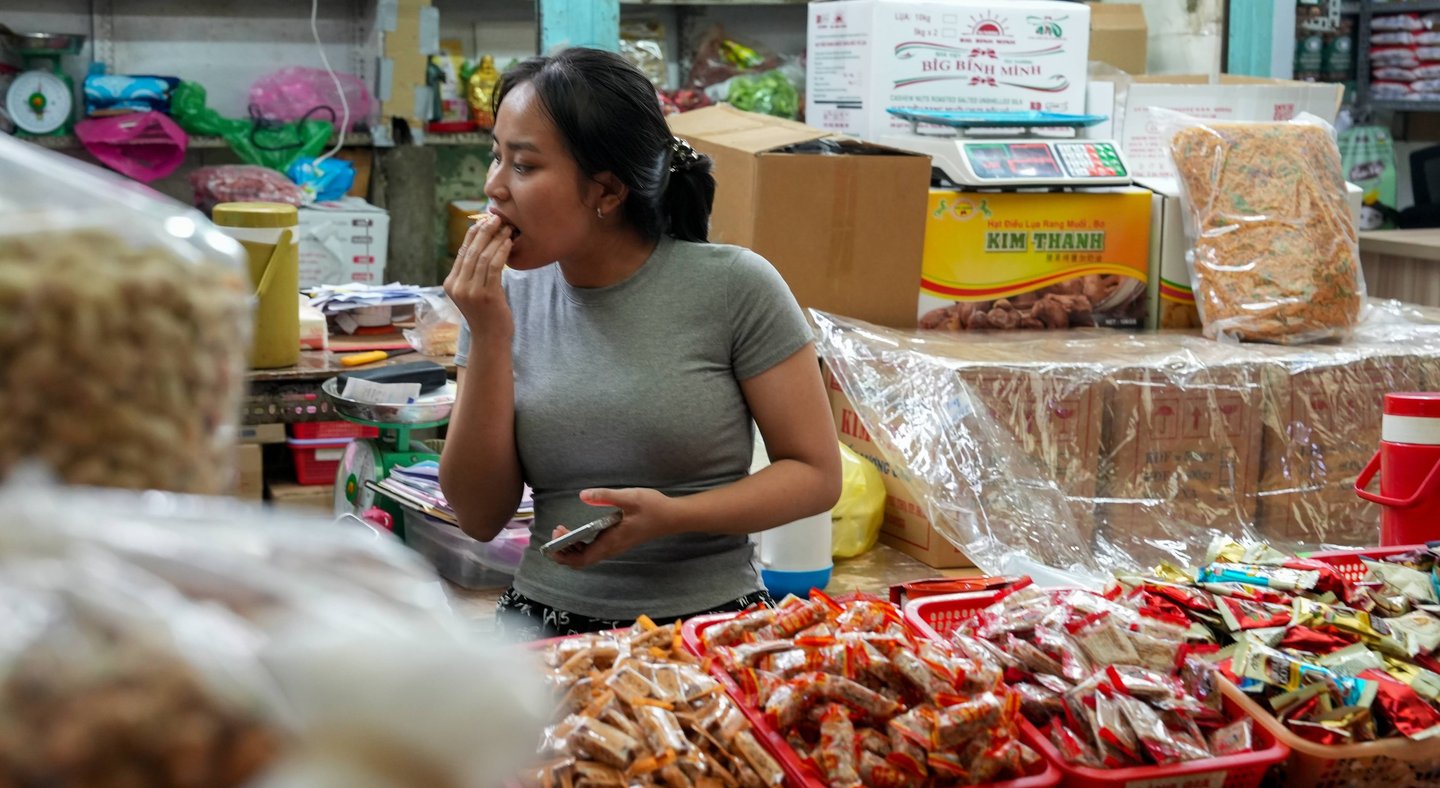
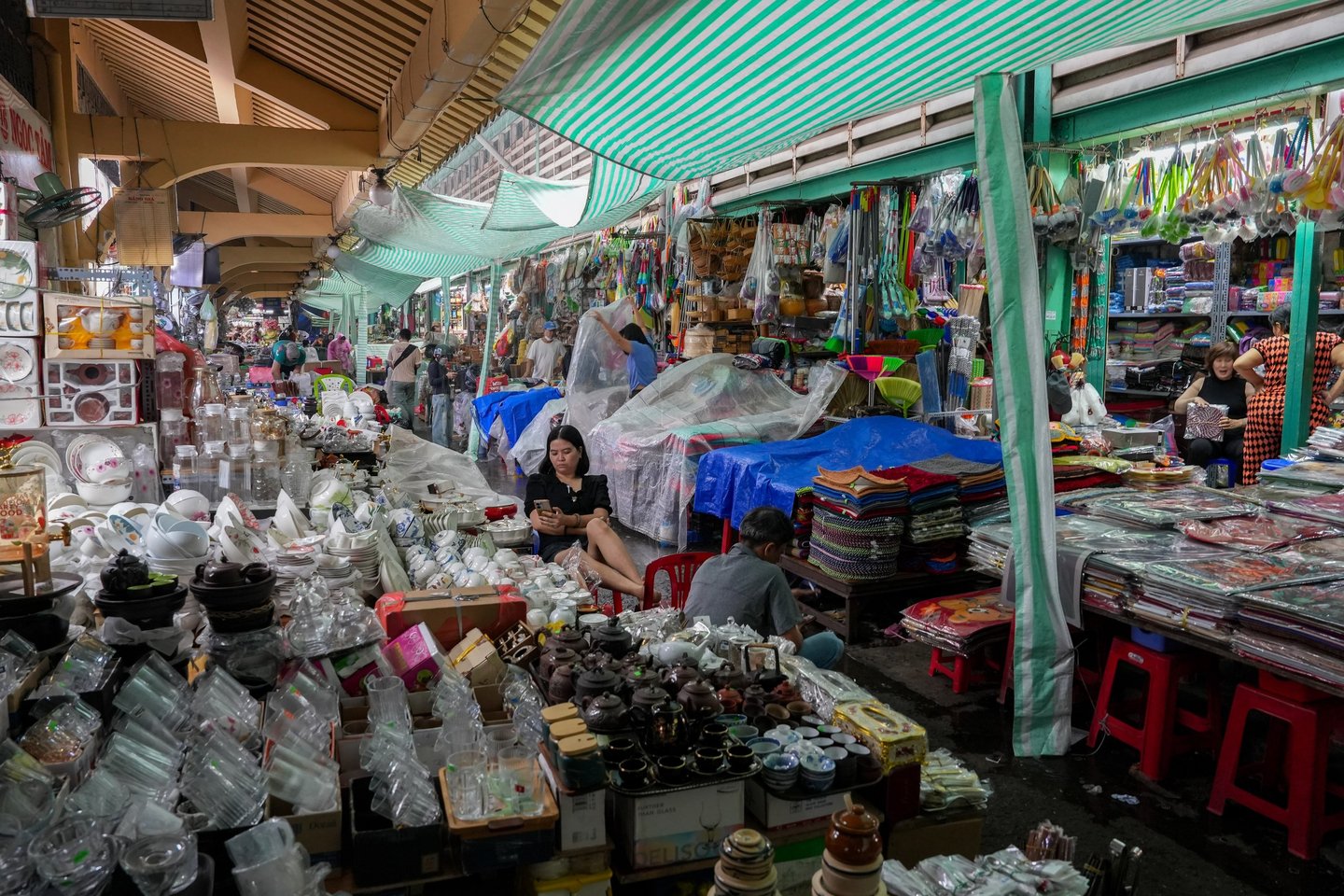
Inside and around the central market pavilions, daily life unfolds without a script. You walk past a market woman slicing fresh durian, its unmistakable aroma cutting through the humid air. Nearby, two cheerful vendors sit directly on the concrete, framed by literal mountains of wholesale shoes.
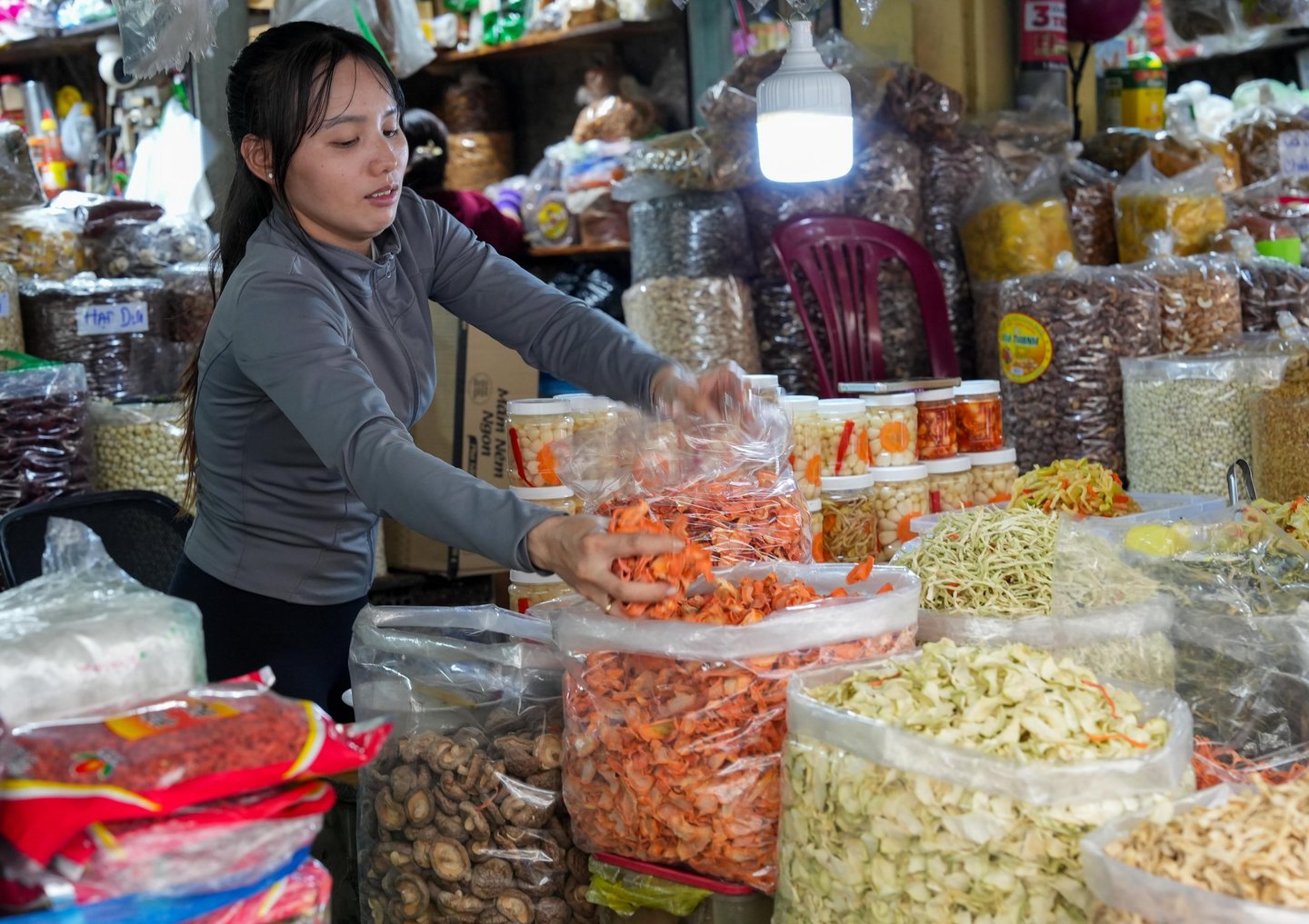
Even when a sudden tropical downpour hits and the aging roof leaks heavily, the trading carries on without a hitch. Merchants and buyers negotiate within the tightest layout of stalls, communicating with swift gestures and quick smiles.
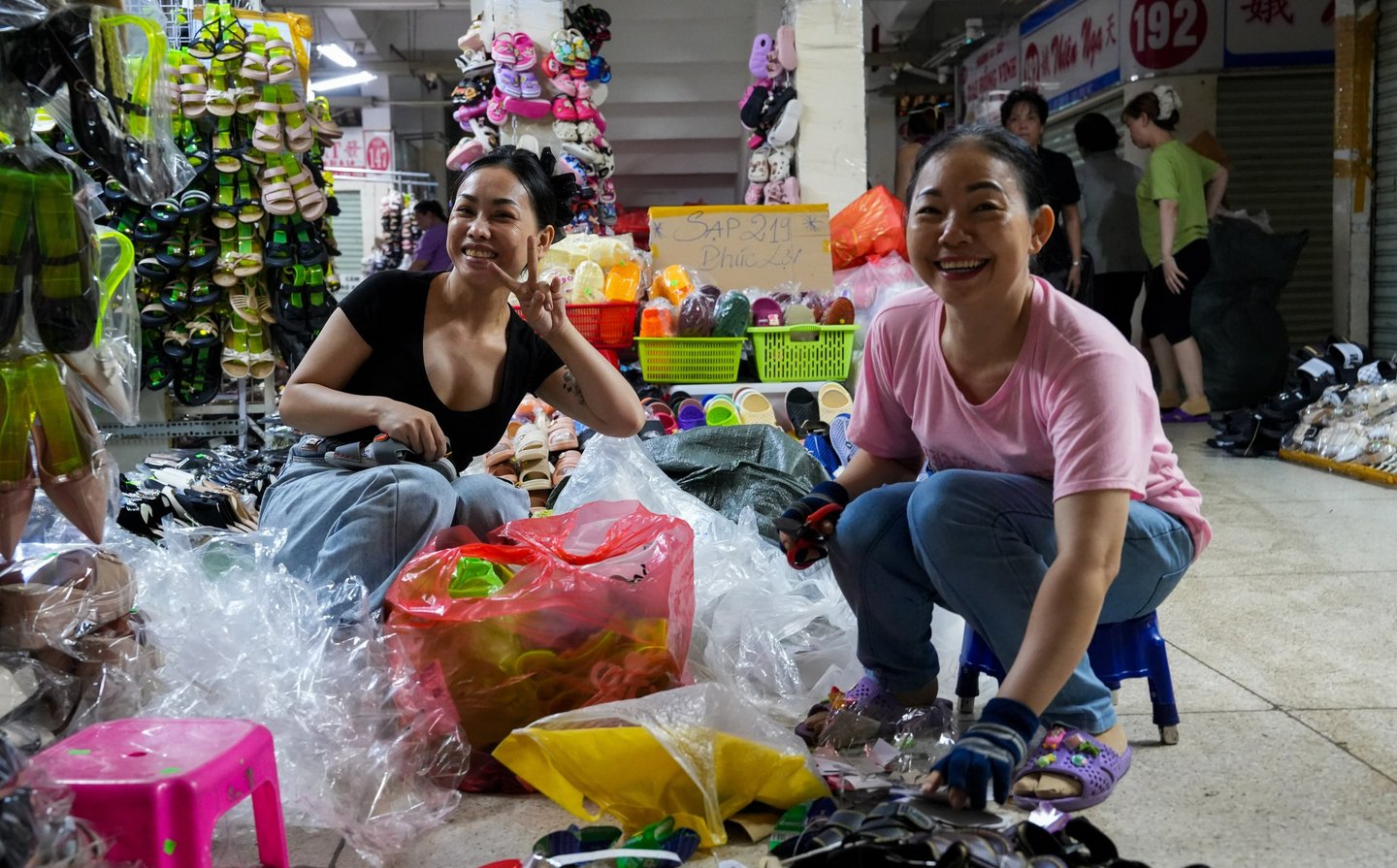
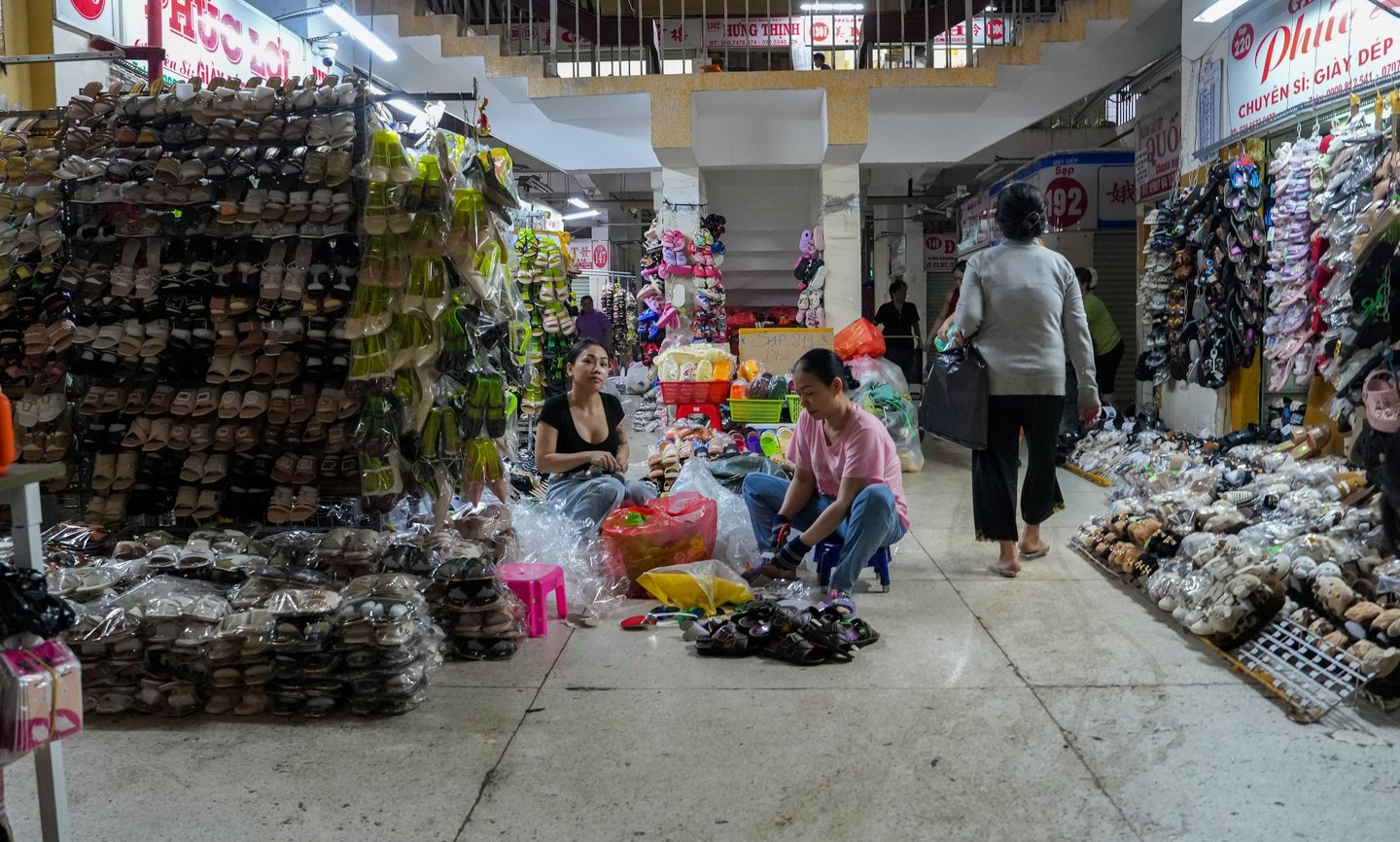
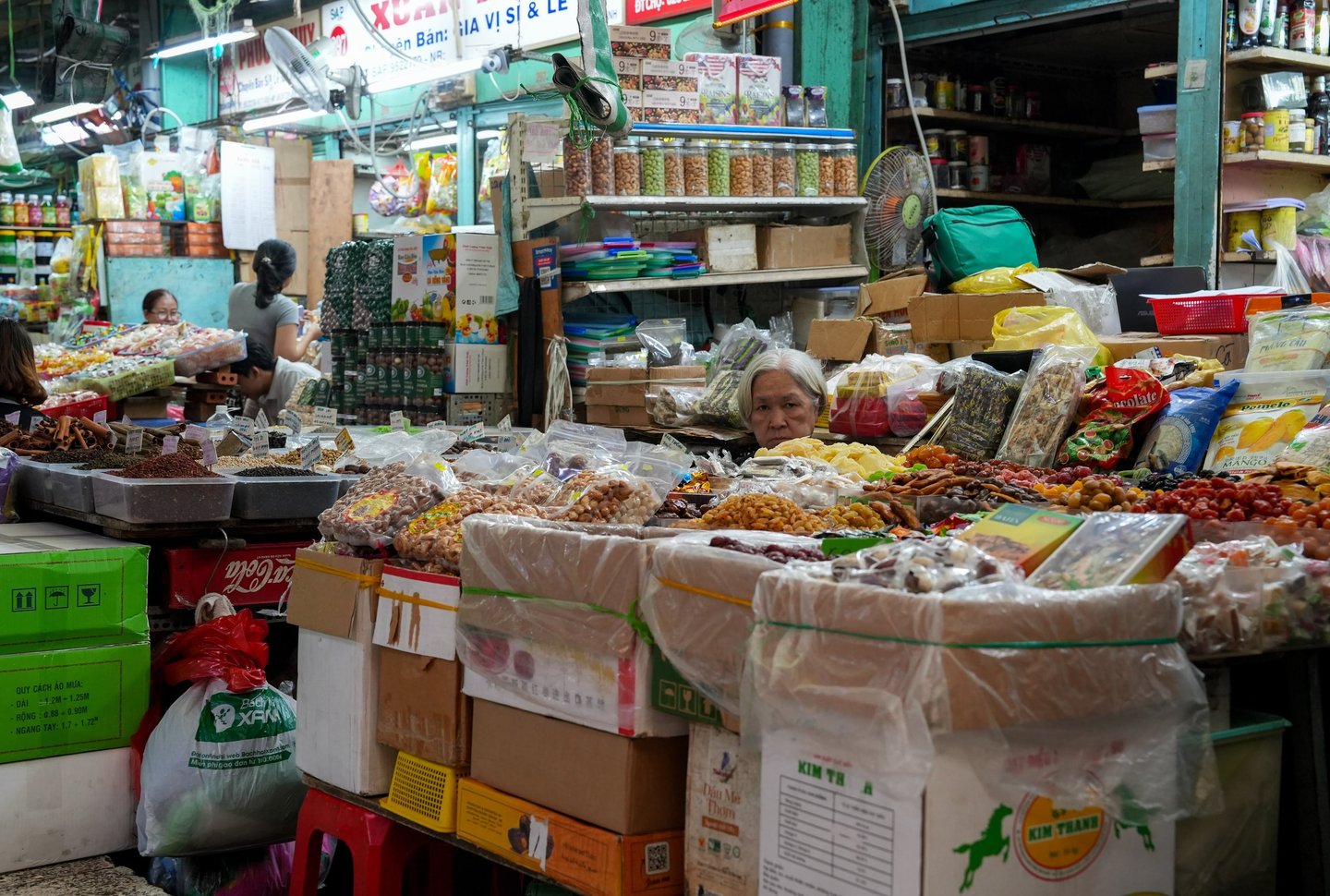
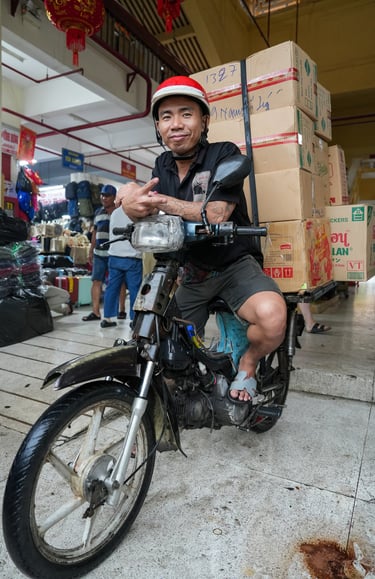
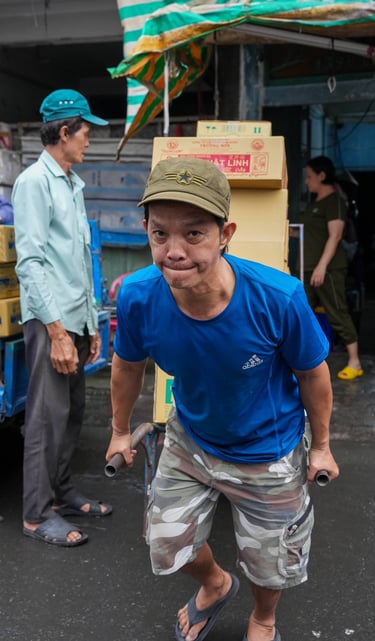
The spatial efficiency is mind-boggling. Men navigate impossibly narrow lanes on their motorbikes, balancing heavy, oversized cargo on their back seats with effortless precision. A vendor sits quietly behind towers of colorful traditional sweets, while a few stalls down, a woman samples her own freshly simmered broth. Steaming bowls of authentic Pho are prepped and served right in the middle of the market aisles, while an entire parallel alleyway is tightly packed with handbag vendors, requiring visitors to thread the needle carefully to avoid disrupting the displays.




Documentary Storytelling: The 50mm Perspective
Despite the claustrophobic chaos, the local community remains incredibly welcoming. When approaching people for permission to capture their daily routines, the response is overwhelmingly warm, yielding honest street storytelling moments that define the spirit of Vietnam.
Getting to Cholon is a logistical testament to Saigon's growth: the drive from District 1 takes a standard 30 minutes in the afternoon, but during peak rush hour, the heavy gridlock easily stretches the commute to an hour and a half. Yet, the reward is an unparalleled photography experience.
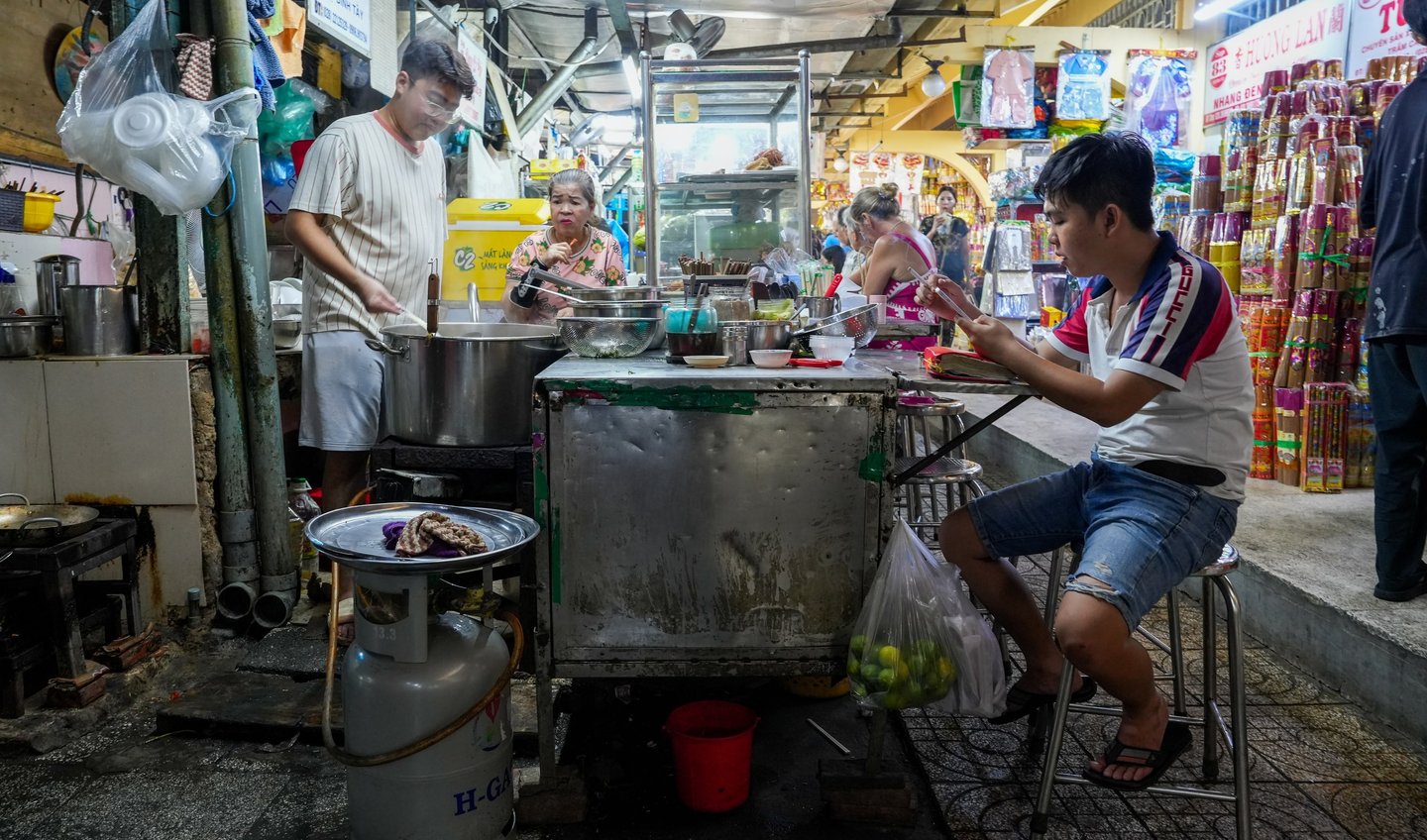
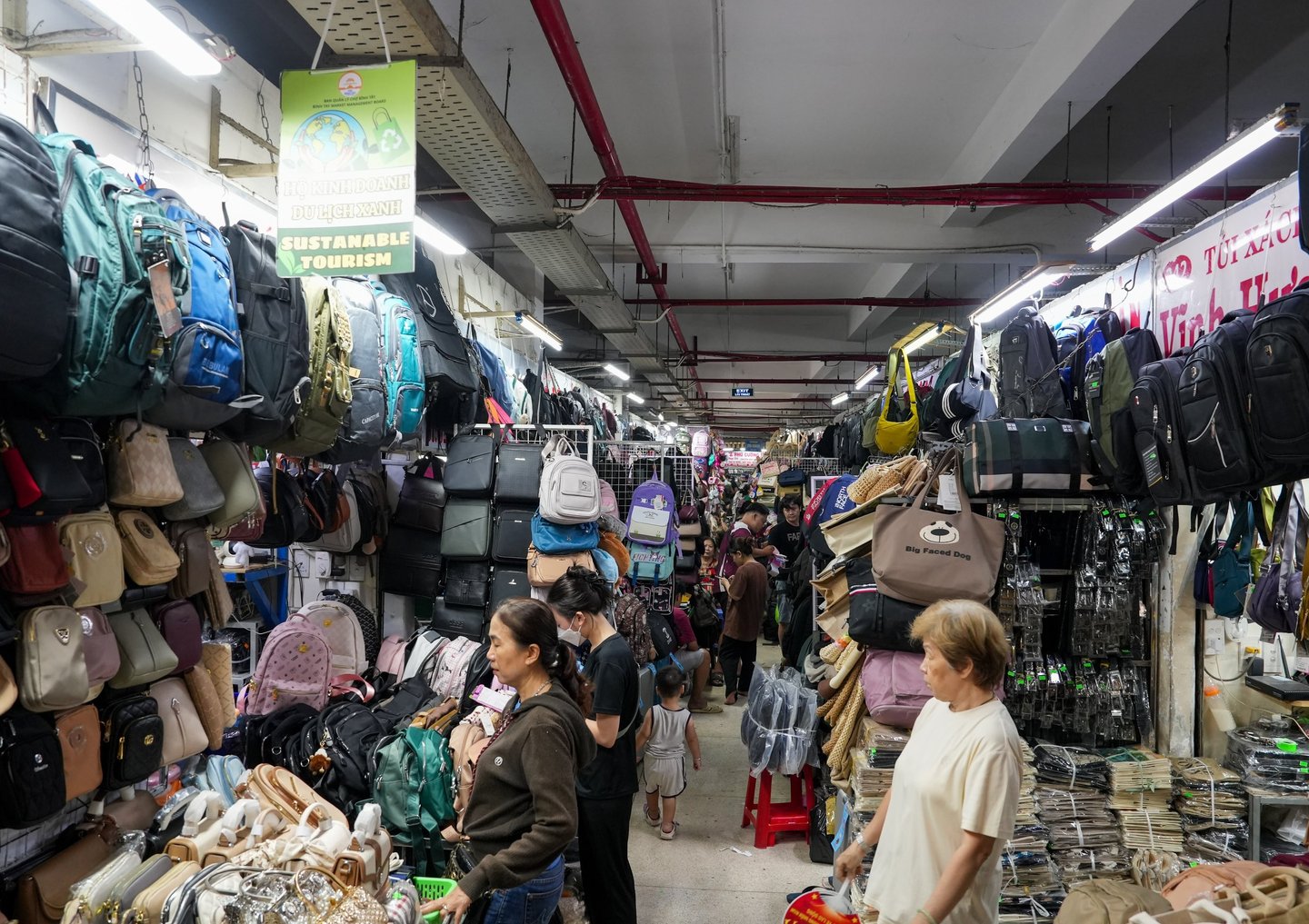
To document this dense environment, I relied on my Sony Alpha 7 IV (ILCE-7M4). Given the mixed lighting under the market awnings, I manually dialed my ISO to 800 to keep my shutter speeds sharp. I kept my aperture flexible between f/4.0 and f/5.6, shooting almost exclusively at a fixed 50mm focal length. This classic perspective mirrors the natural human field of view, pulling the audience directly into the crowded aisles of Cholon exactly as I stood there.
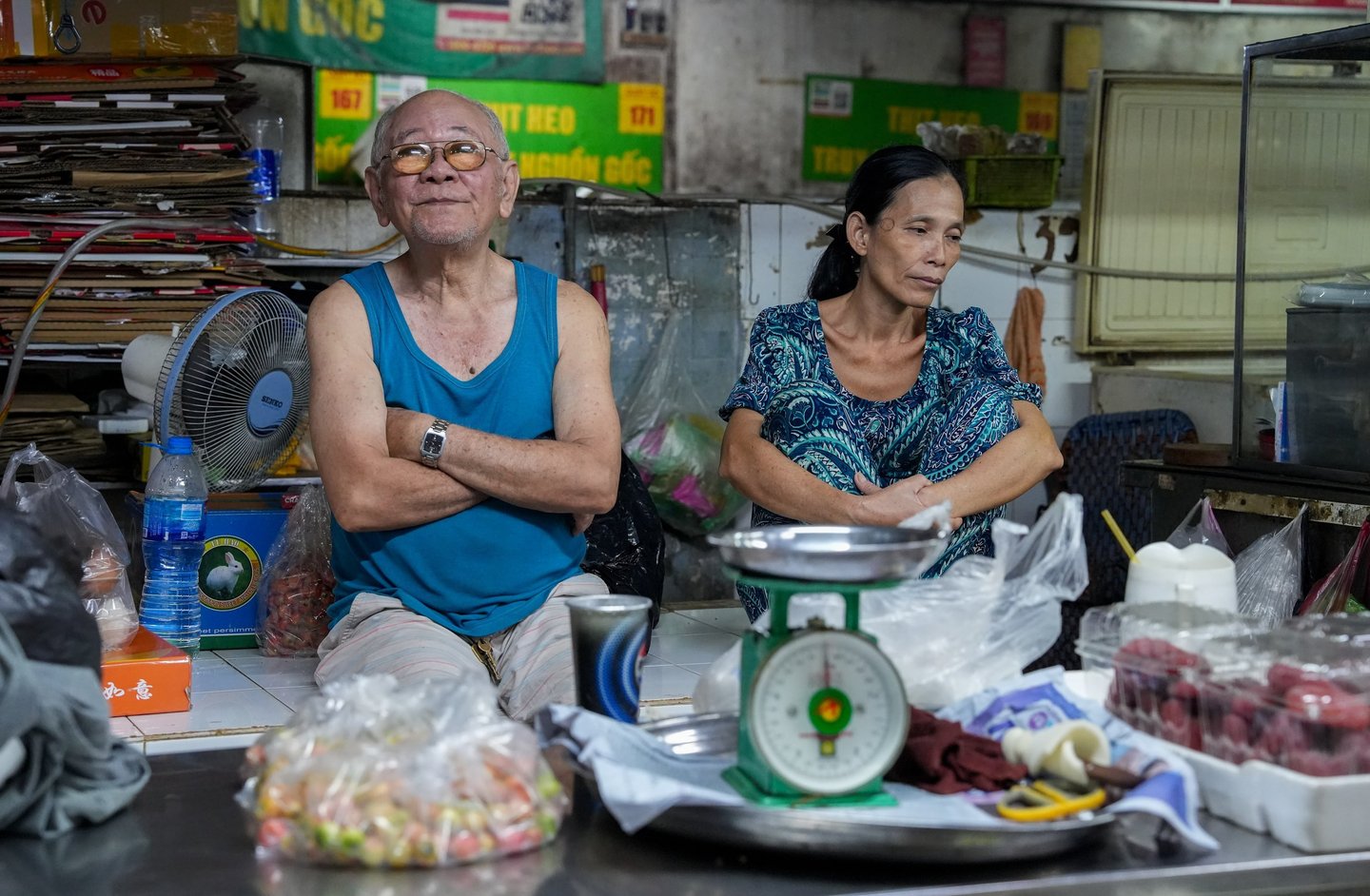
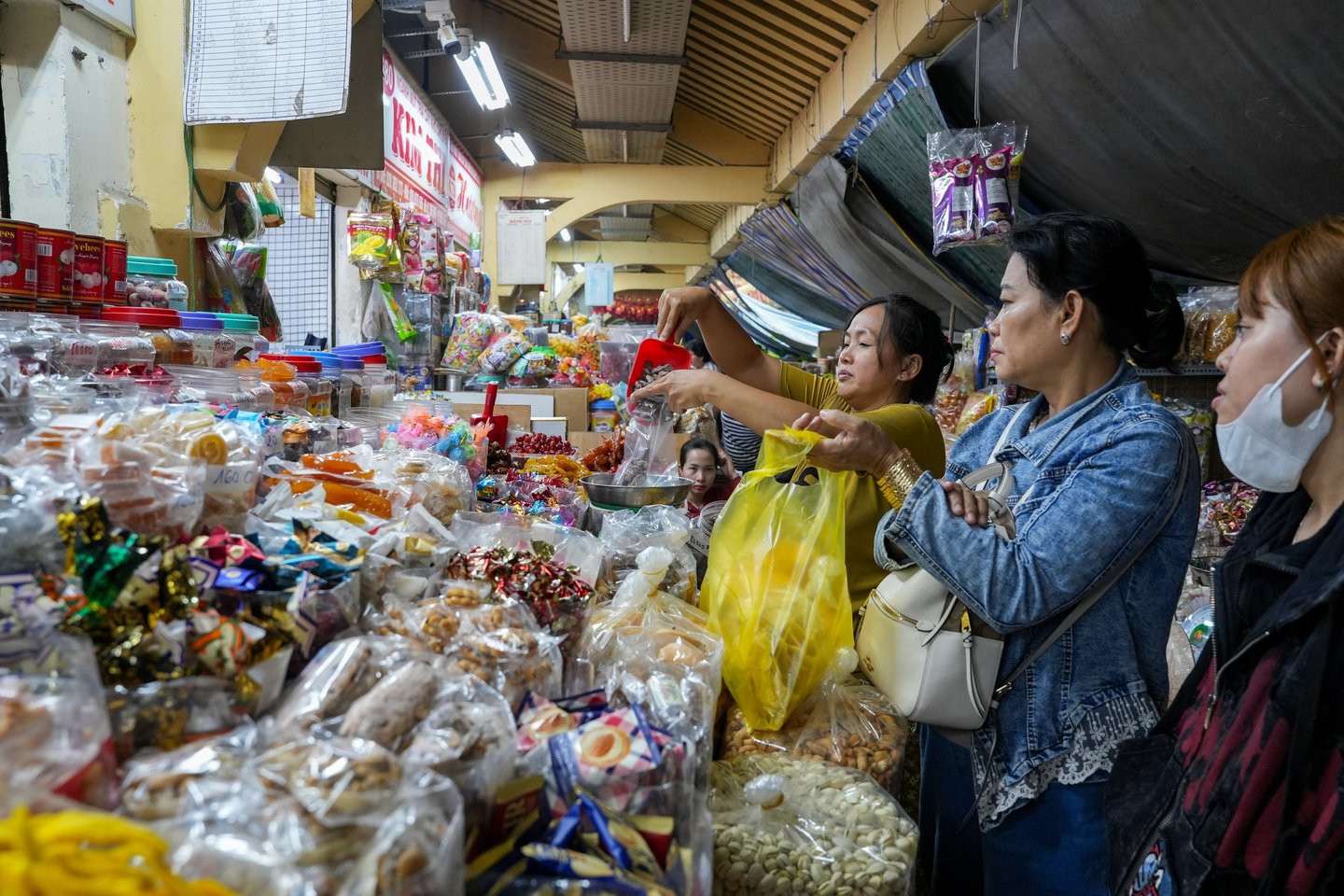
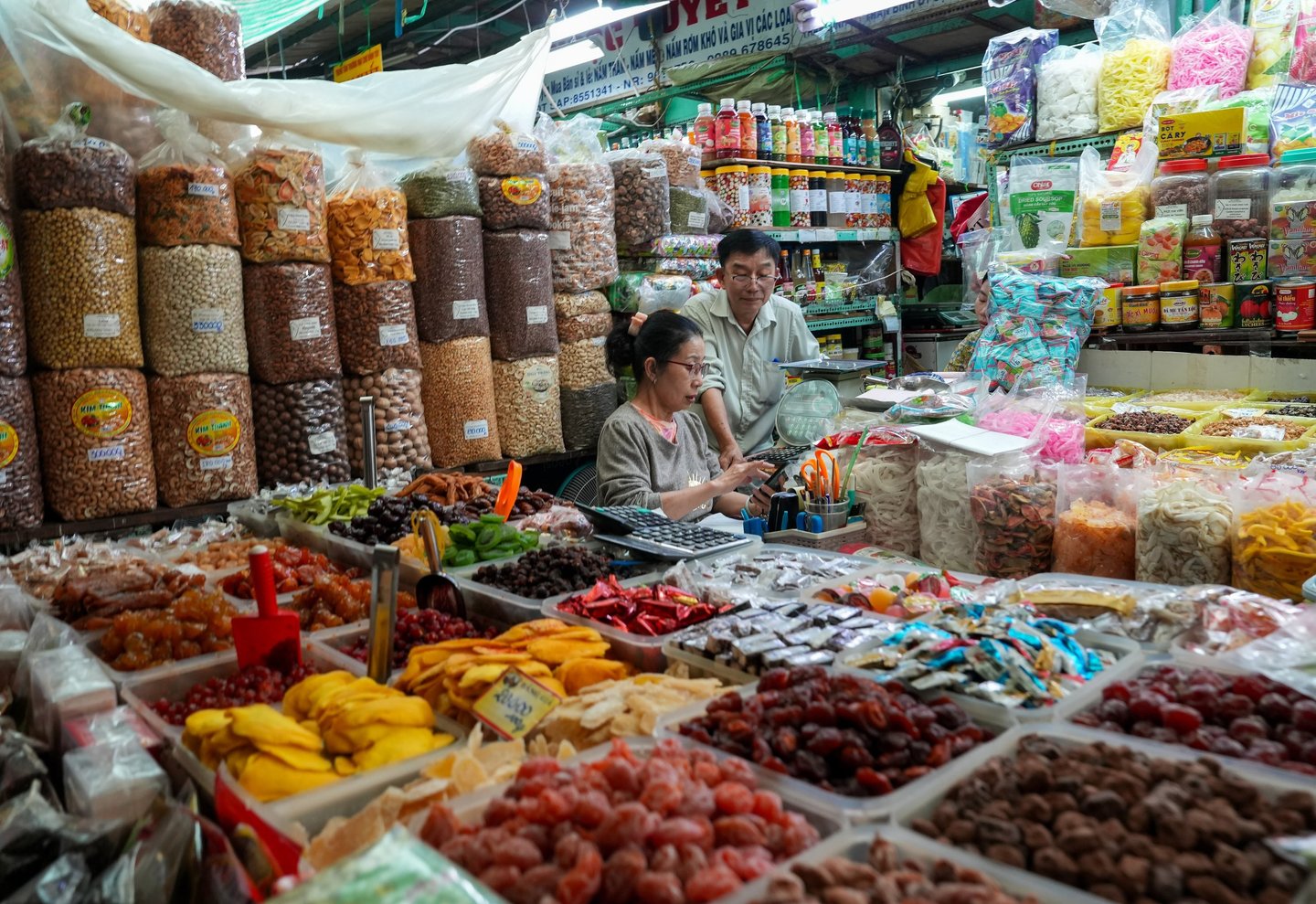
Amidst this dense gridlock, an elderly couple running a tiny dry-goods stall takes a quiet breath. Sitting cross-legged, both are momentarily lost in thought—a fleeting pocket of stillness completely detached from the ambient roar around them.
Bui Vien Walking Street – Nightlife and Energy in Saigon
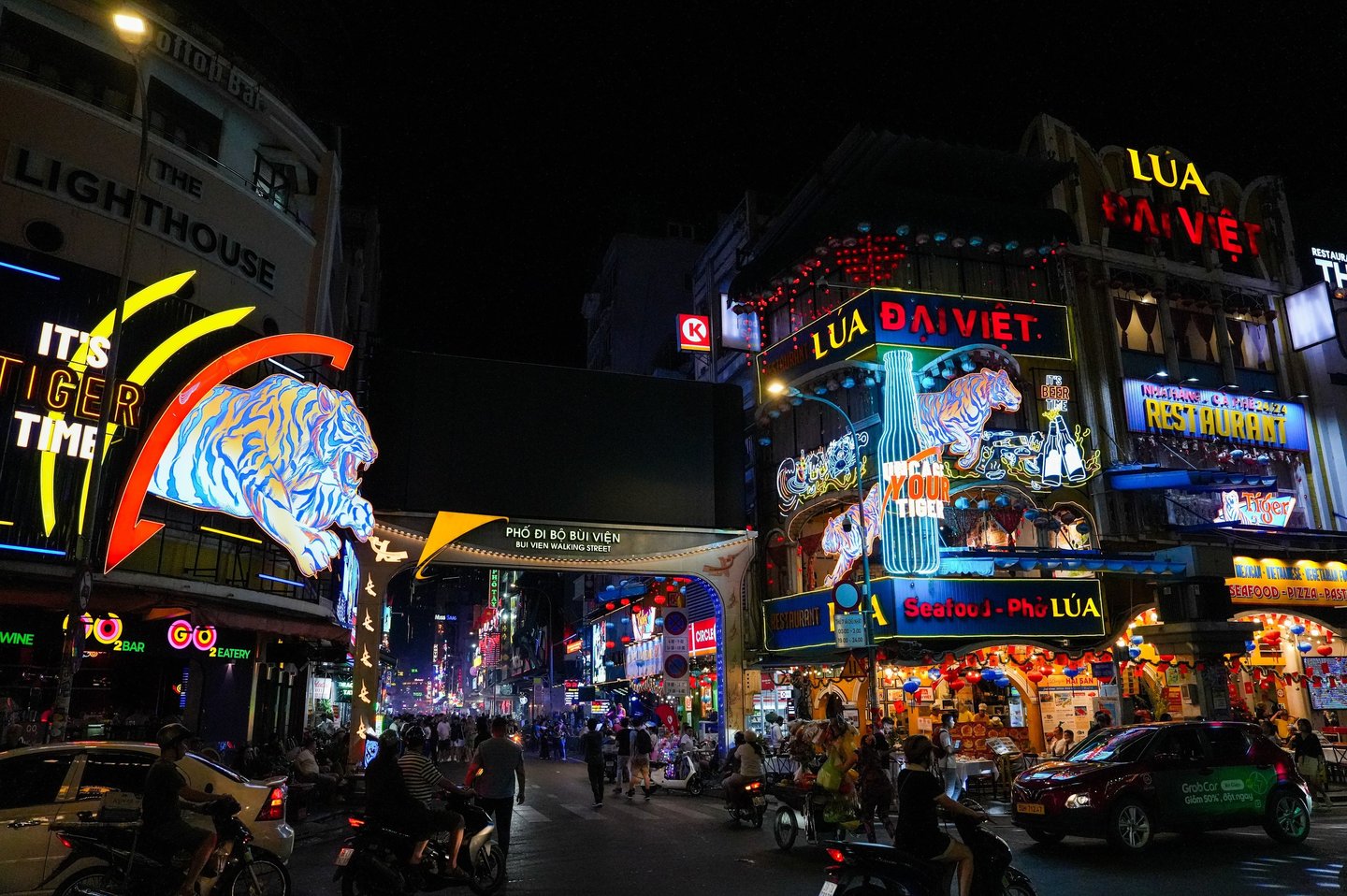
The Bui Vien Walking Street is located in the heart of the backpacker district of District 1 in Ho Chi Minh City, between Pham Ngu Lao Street and De Tham Street.
It’s often referred to as the “Khao San Road” of Saigon – a meeting point for travelers, locals, musicians, and street performers, and a symbol of modern, vibrant Vietnam.
In the past, this street was simply a residential and commercial area.
Since its official transformation into a “Walking Street” in 2017, it has been closed to traffic in the evenings and turns into a bright, loud spectacle of music, food, and street life.
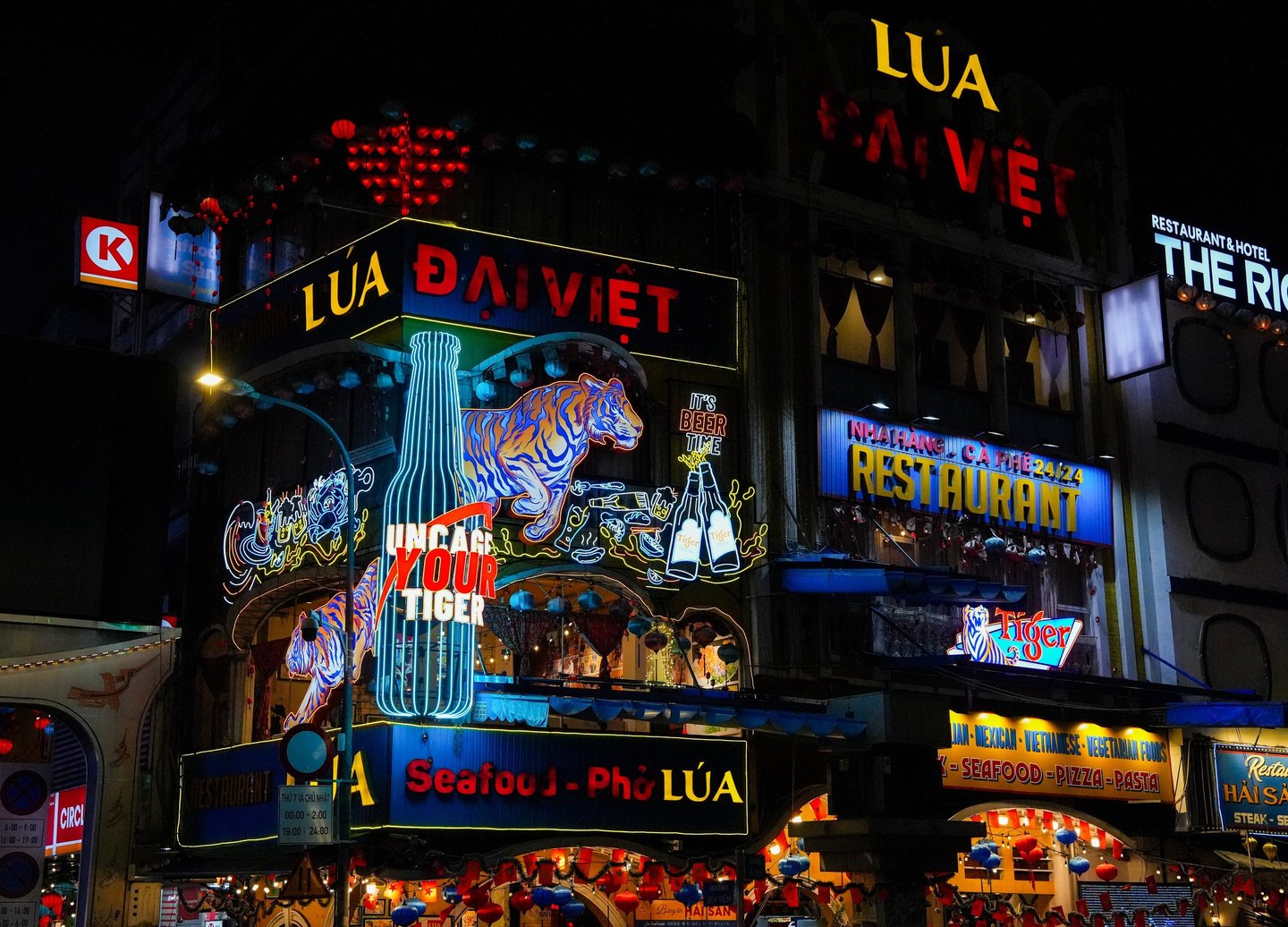
📸 Photographic Perspectives
For photographers, the Bui Vien Walking Street offers a wide range of subjects and visual impressions:
Low-light photography with neon colors, reflections, and vibrant lighting moods.
Portraits and street moments – faces illuminated by bar lights, musicians performing, and street vendors in lively conversation.
Motion blur that captures scooter lights, passing crowds, and reflections in windows.
Contrasts between day and night: calm and quiet during the day, a completely different world after sunset.
Perfect for the Sony Alpha 7 IV, with aperture settings between f/2.8 and f/4.0 and ISO values from 3200 to 6400.
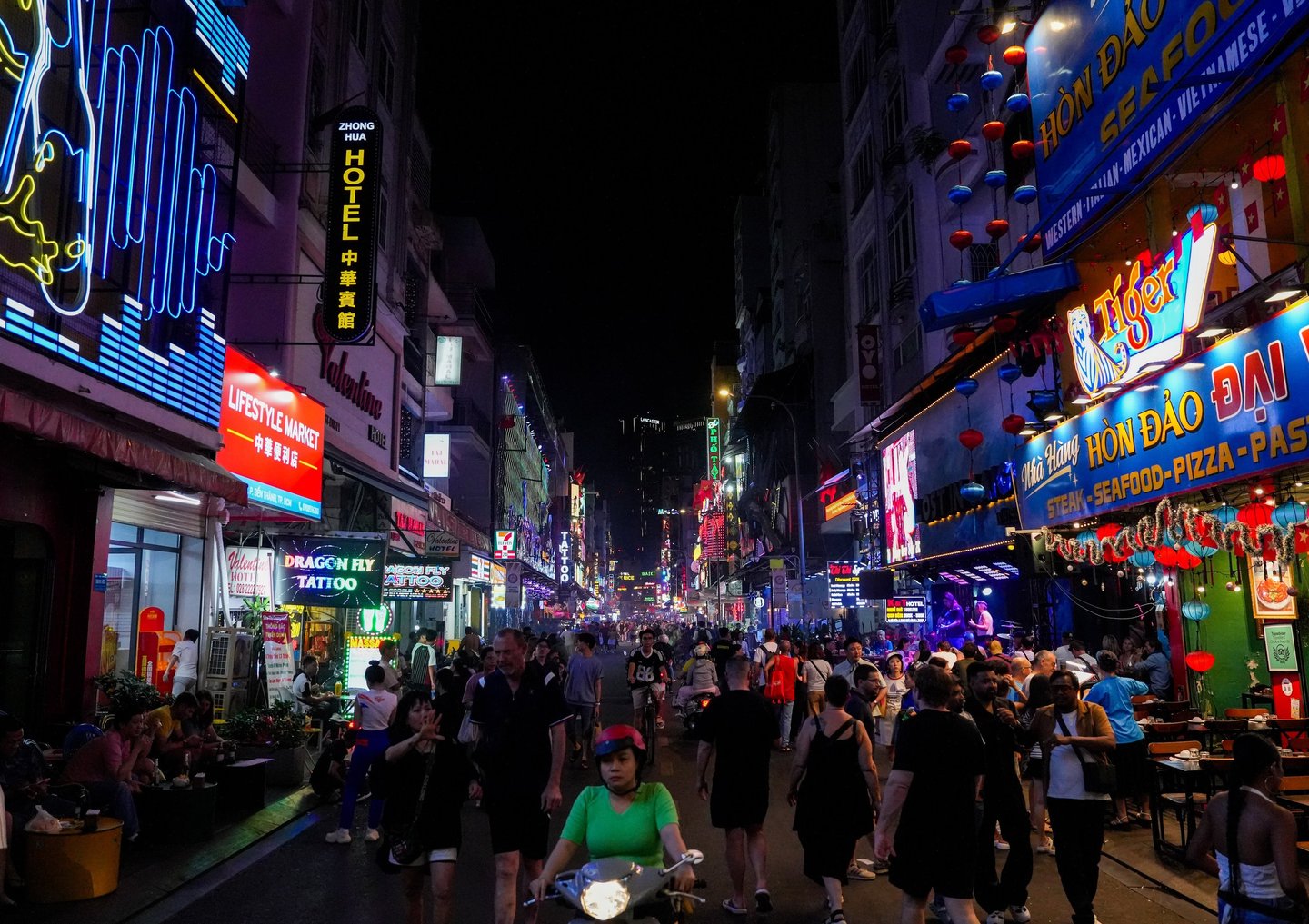
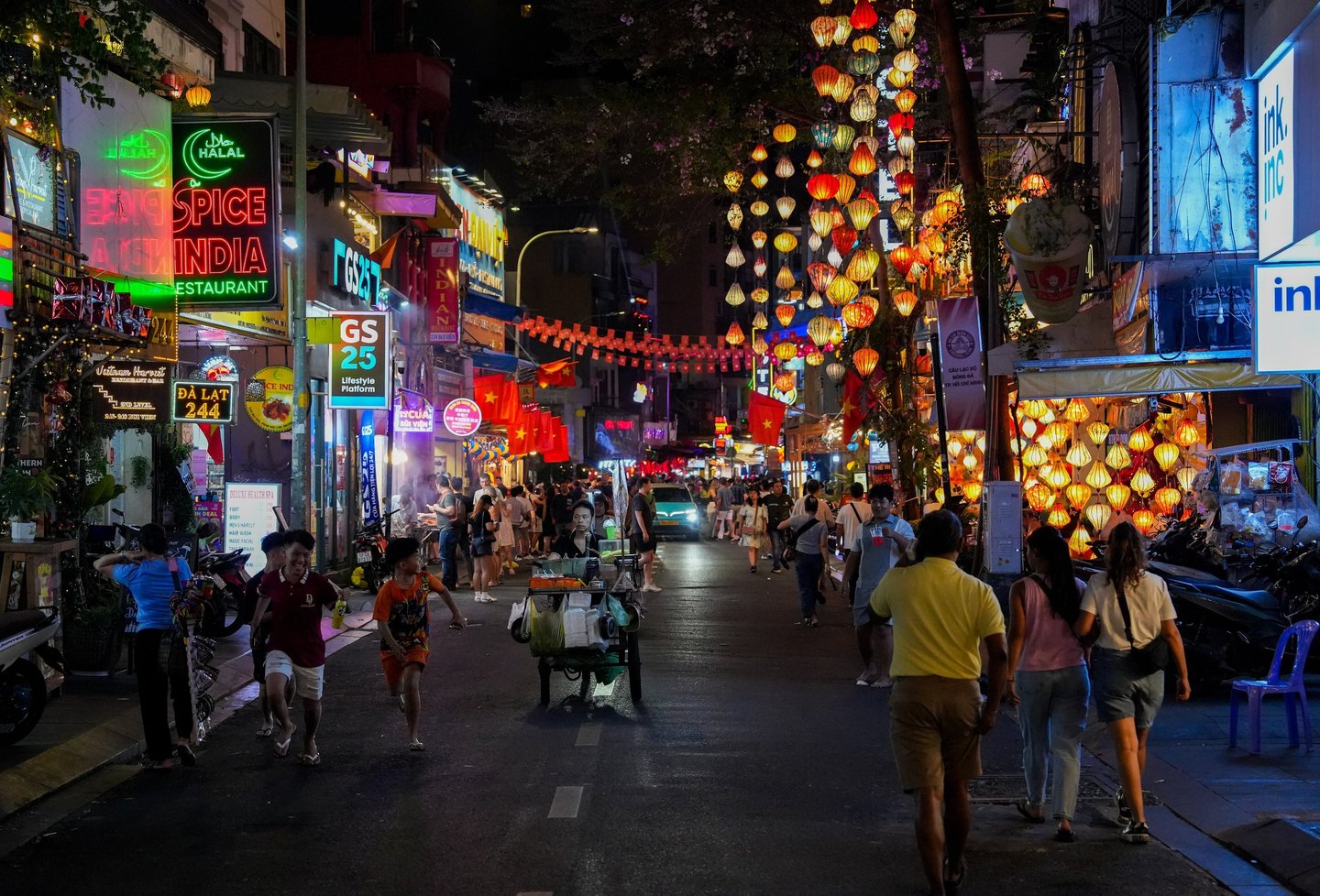
When night falls in Ho Chi Minh City, the streets of Bui Vien come alive.
It’s loud, colorful, and full of people — a place that never really sleeps.
As a photographer, I wanted to capture exactly that: the contrast between light and shadow, between performance and real life.
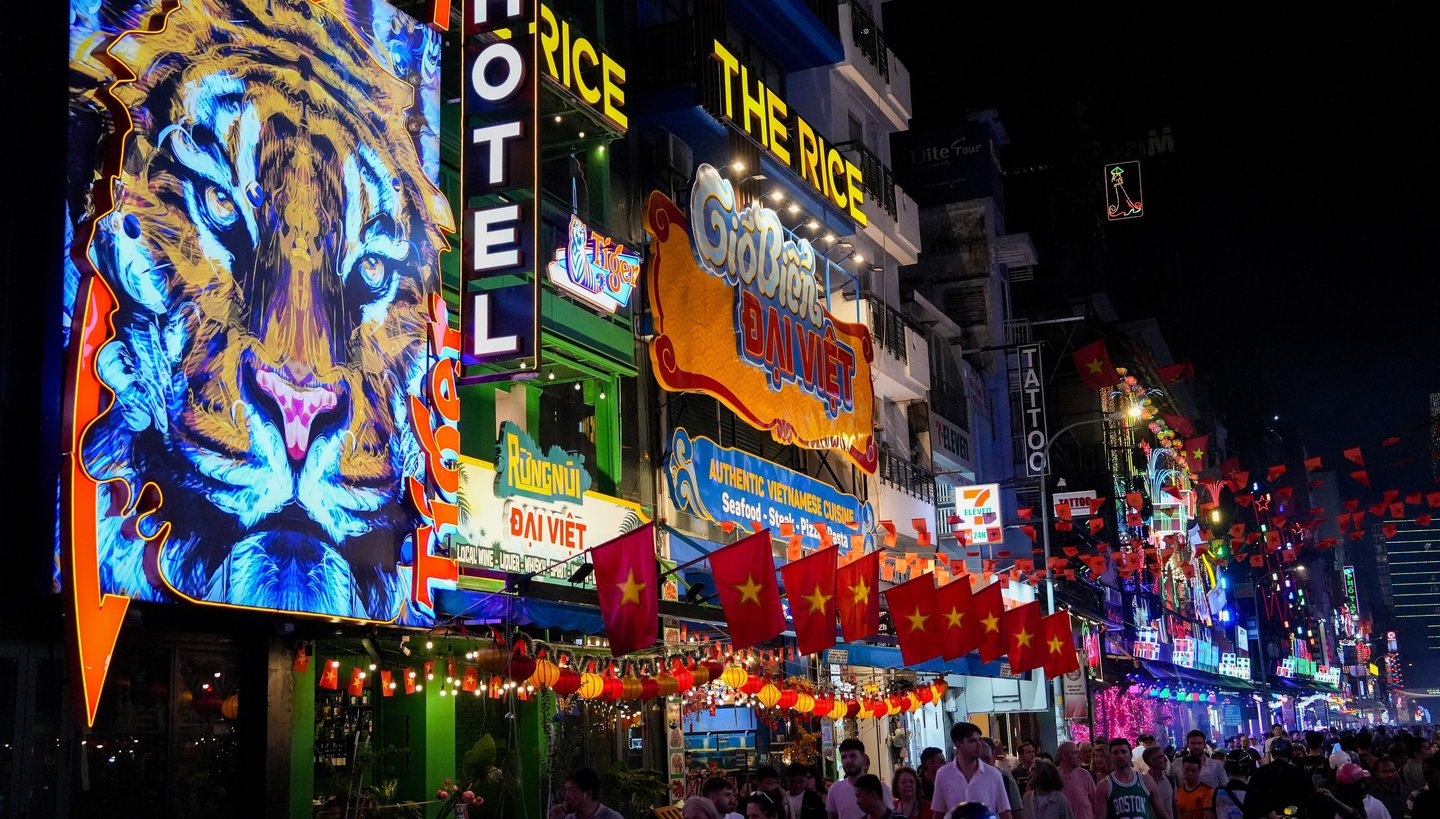
Everywhere you look, bright neon signs flash across the facades, bars compete for attention, and the air is filled with music and voices.
Crowds move up and down the street — travelers, locals, street vendors, and musicians, all blending into a single, vivid rhythm.
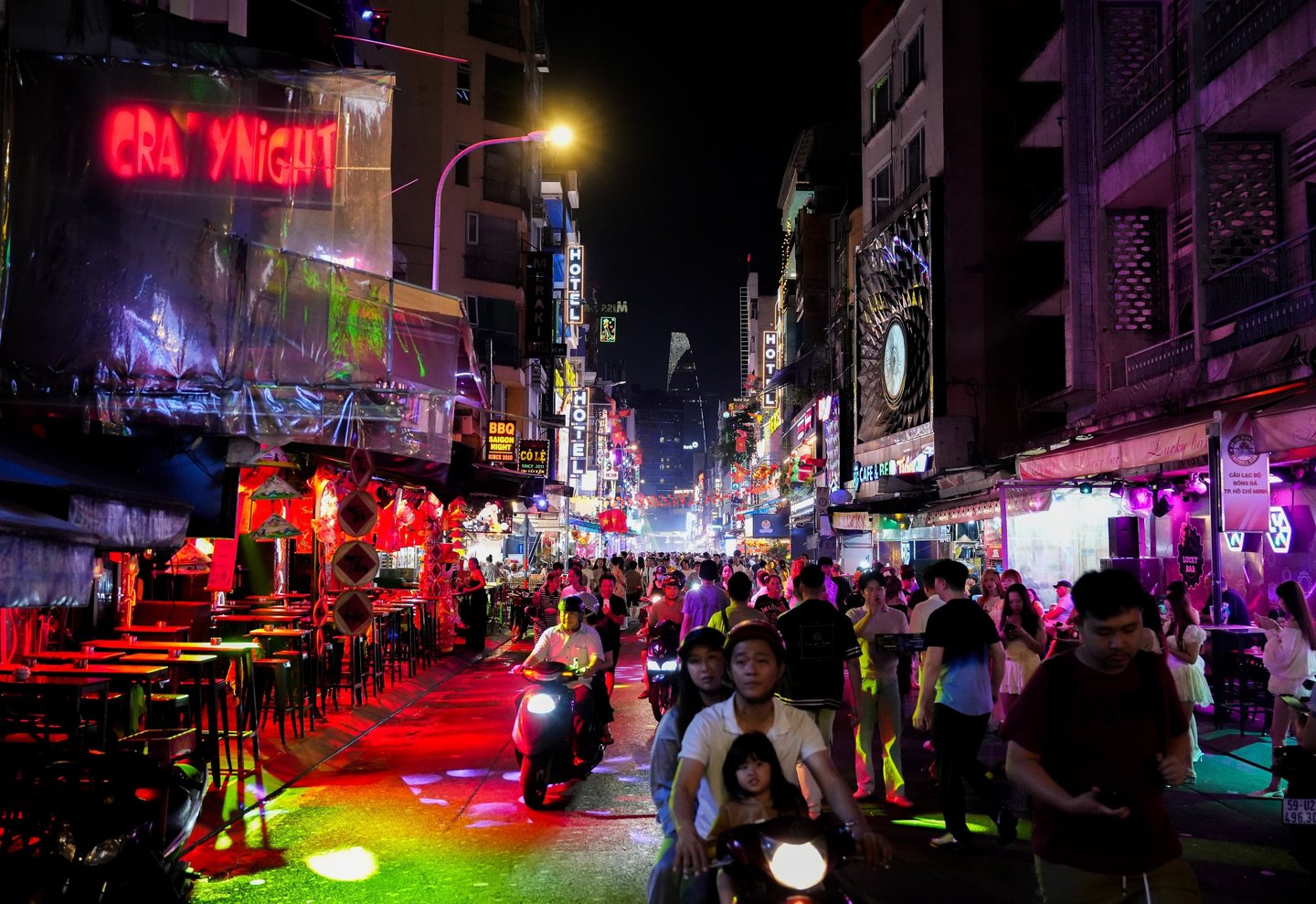
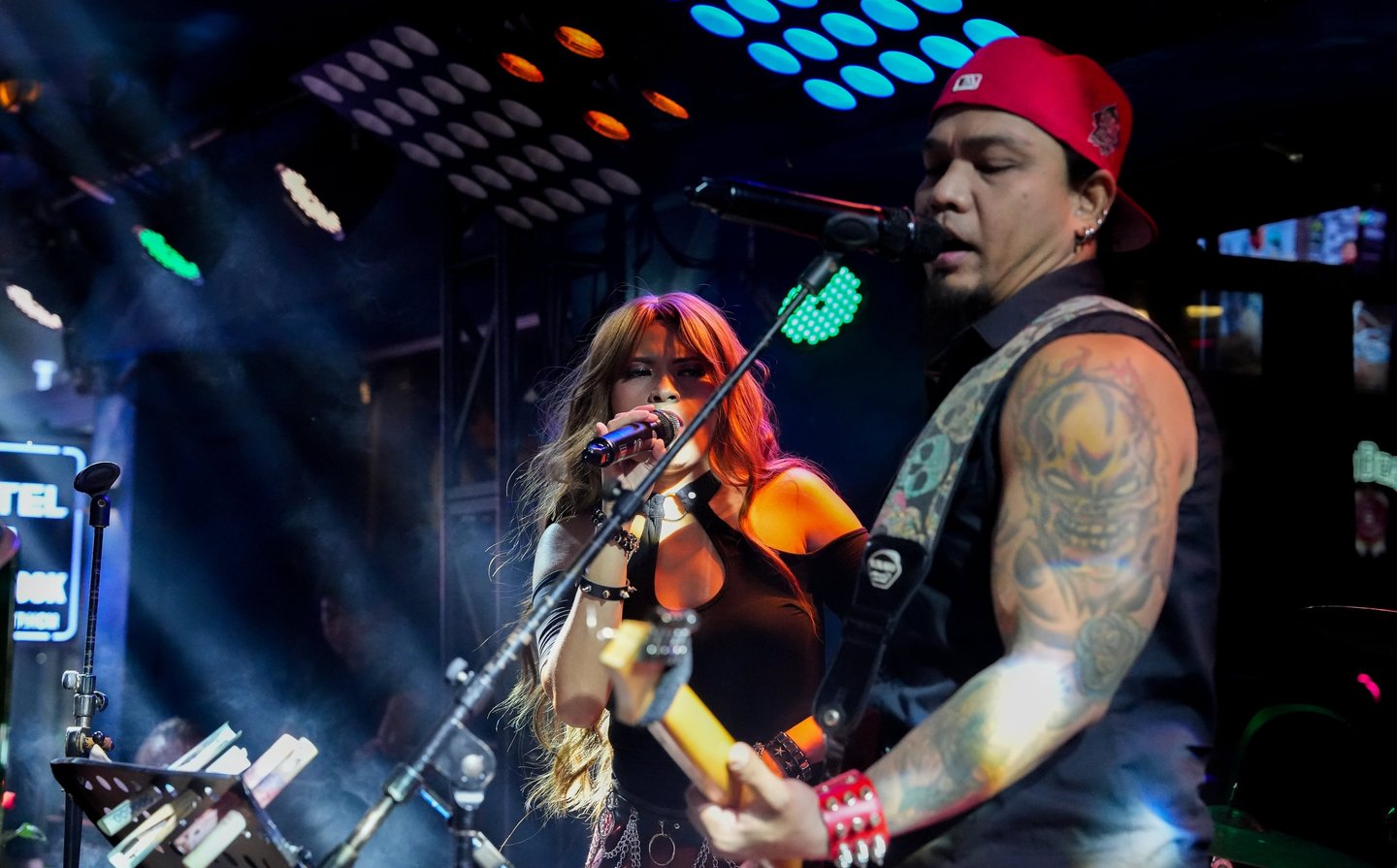
In one live music bar, a truly great band was playing, their sound mixing with laughter and the hum of the city





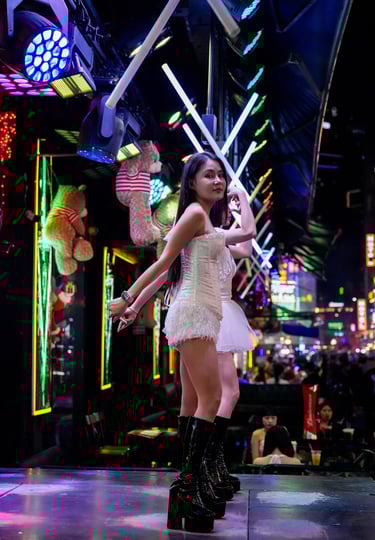
At another corner, bar dancers invited people in with confident smiles and rhythmic moves — part of the nightly energy that defines Saigon’s entertainment scene.



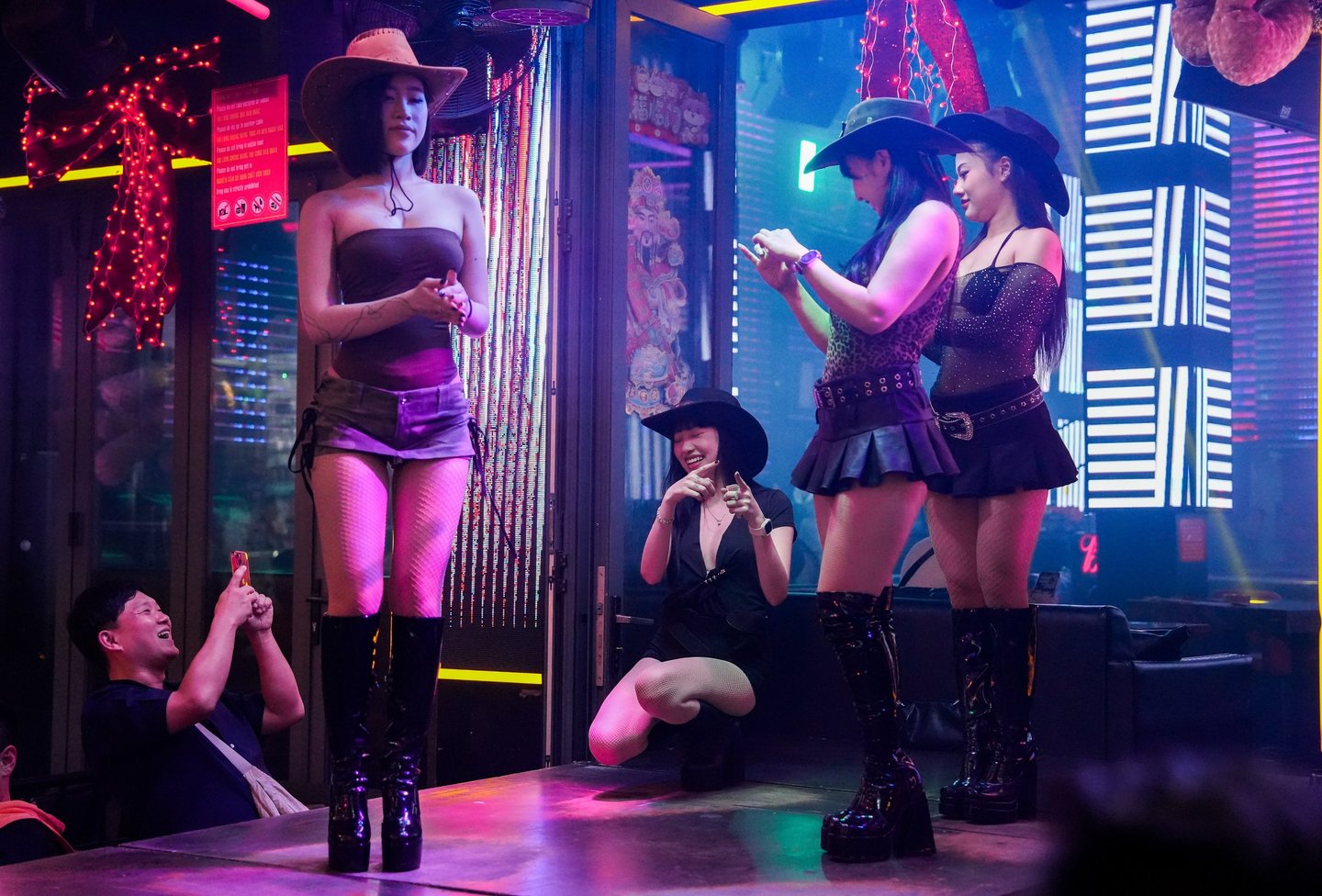
And then there are the small, quiet details I always look for.
In one bar, around midnight, a cat sat calmly on the counter, watching the chaos around her as if she owned the place.
Moments like that — unexpected, real, almost poetic — are what make street photography so special to me.


These images are not just nightlife shots; they show the pulse of a modern city that balances tradition, tourism, and pure human energy.
Captured with my Sony Alpha 7 IV (ILCE-7M4) and Sony FE 24–70mm f/2.8 GM II, these photographs reflect what I see when I walk through Saigon at night — not the glossy postcard version, but the real one, full of life, sound, and light.
Saigon Landmarks – Central Post Office, Book Street, Café Apartment & Saigon River Photography
This section of my Ho Chi Minh City collection focuses on four remarkable places — the Central Post Office, Book Street, The Café Apartment, and the Saigon River at Bach Dang Pier.
Each tells its own story about the city’s mix of history, creativity, and modern rhythm.
All photographs were taken in natural daylight during the late afternoon, using my Sony Alpha 7 IV (ILCE-7M4) with the FE 24–70mm f/2.8 GM II lens — my go-to setup for capturing real light, real moments, and the atmosphere of daily life.
The Central Post Office – Colonial Elegance in Modern Saigon
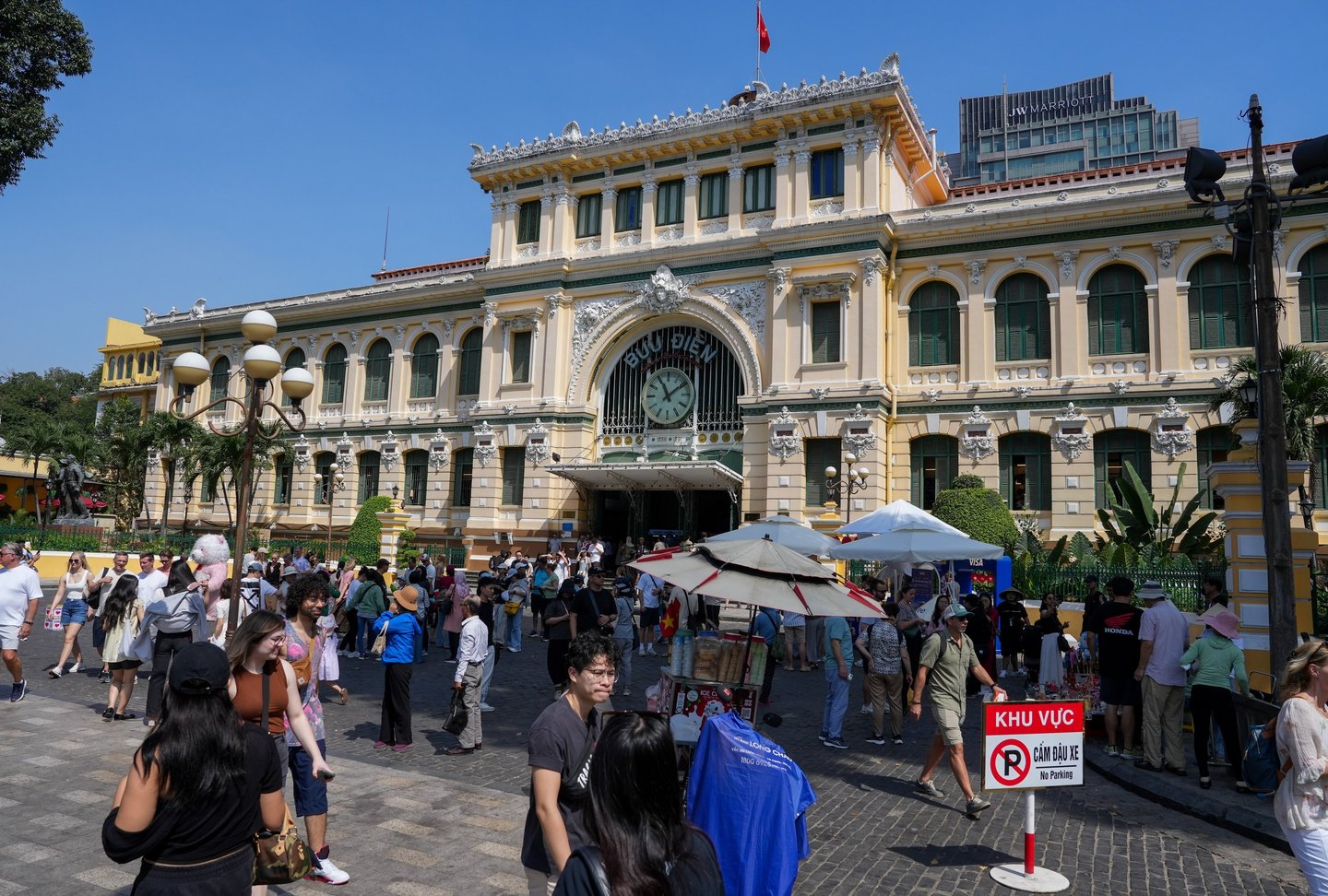
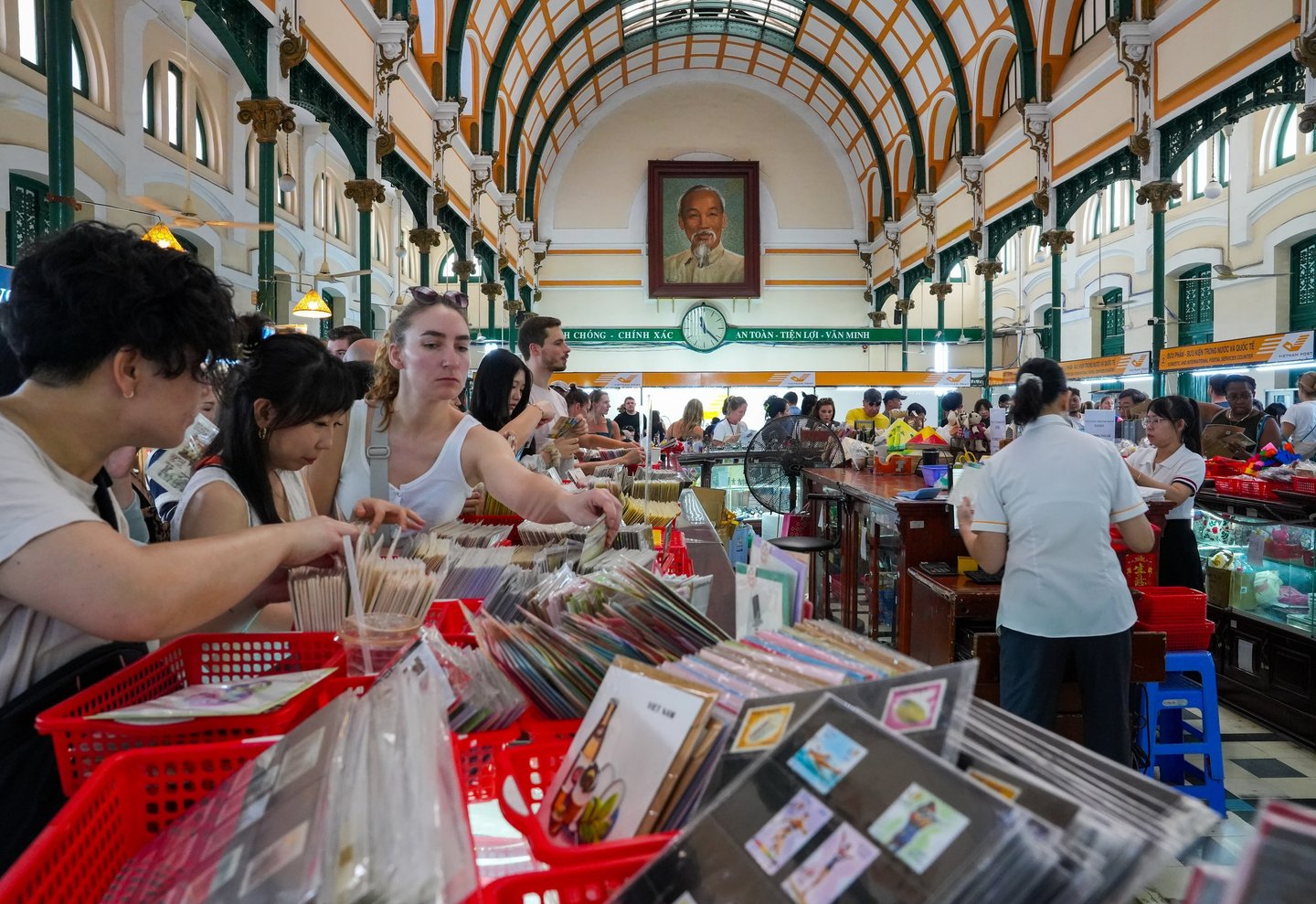
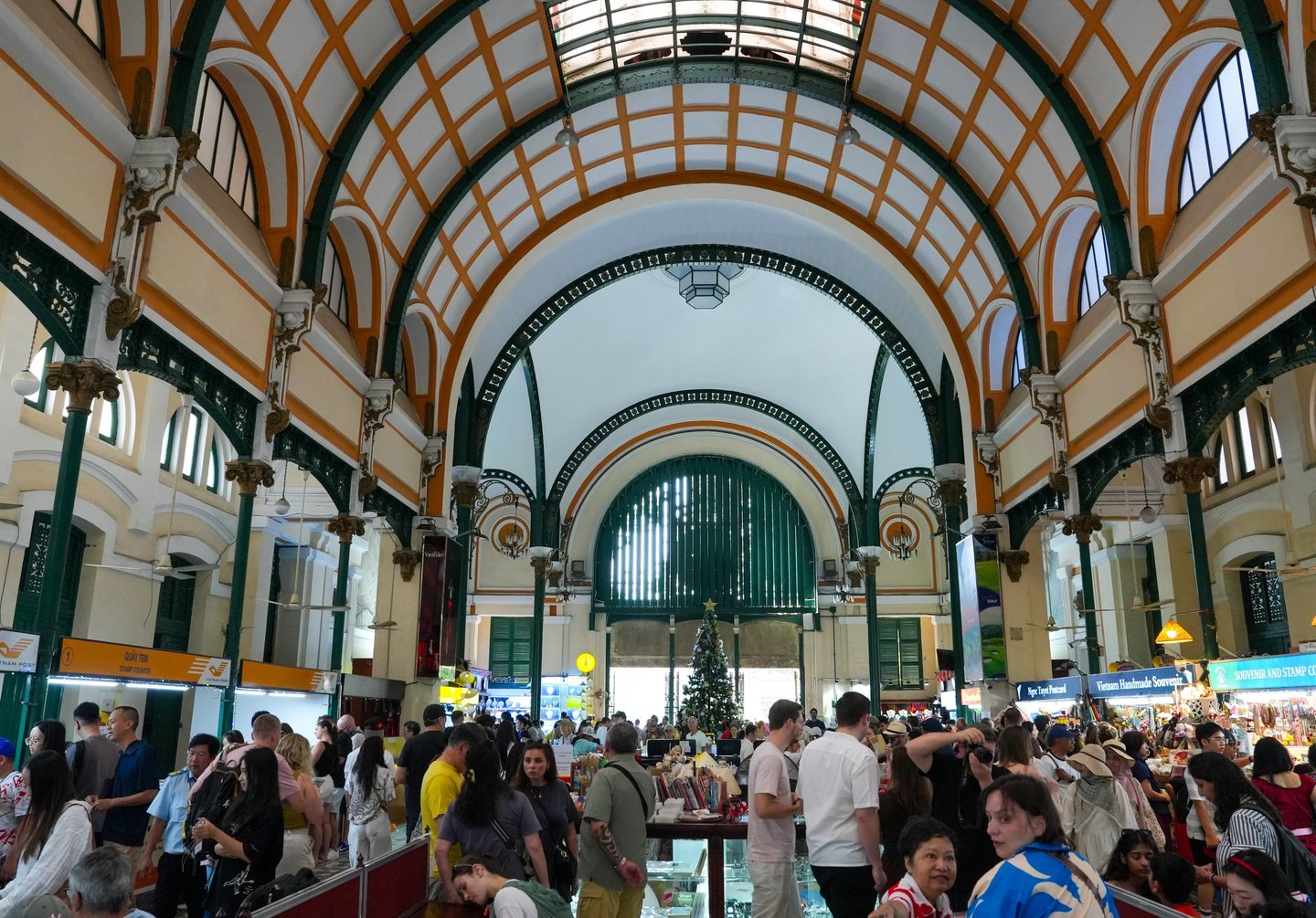
Located next to the Notre-Dame Cathedral, the Saigon Central Post Office is one of the city’s most iconic buildings, designed by Alfred Foulhoux during the late 19th century under French colonial rule.
From the outside, its yellow façade and arched windows reflect classic European architecture.
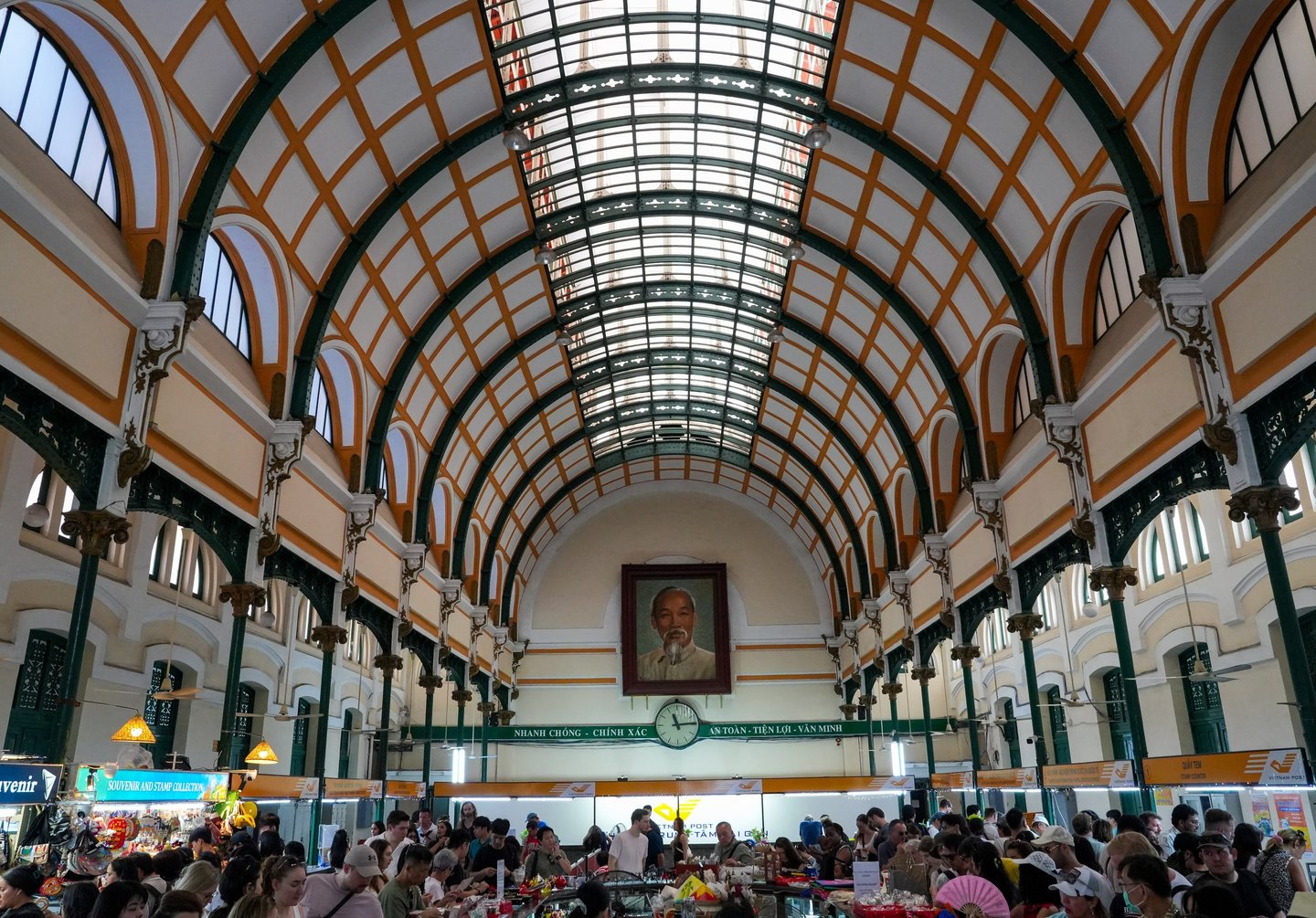
Inside, the long vaulted ceiling, the antique telephone booths, and the huge portrait of Ho Chi Minh create a fascinating mix of past and present.

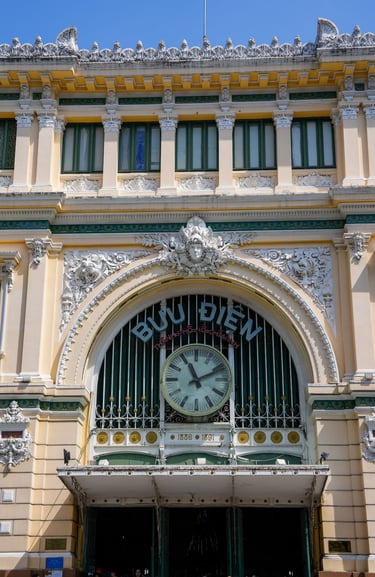

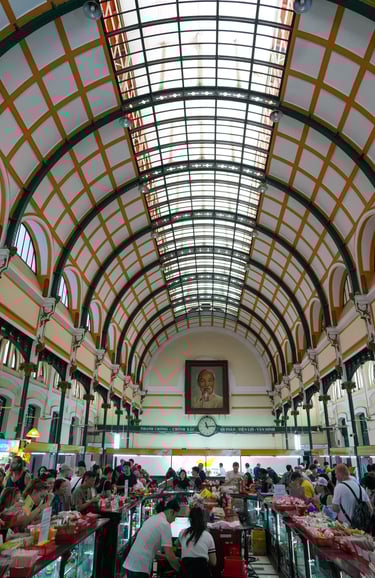
As I walked through the hall, I wanted to capture not just the architecture but the people who still use this place — locals sending parcels, tourists taking photos, and clerks working behind polished wooden counters.
It’s a living museum, filled with details that tell stories of communication before the digital age
Nguyen Van Binh Book Street – A Quiet Escape in the City
Just a few steps away from the Post Office lies Book Street, one of my favorite places in Saigon.
Between the trees and the cafés, you find students reading, families exploring small bookshops, and artists sketching quietly at the tables.
The afternoon light here is soft, filtering through the leaves — perfect for capturing warm tones and relaxed moments.

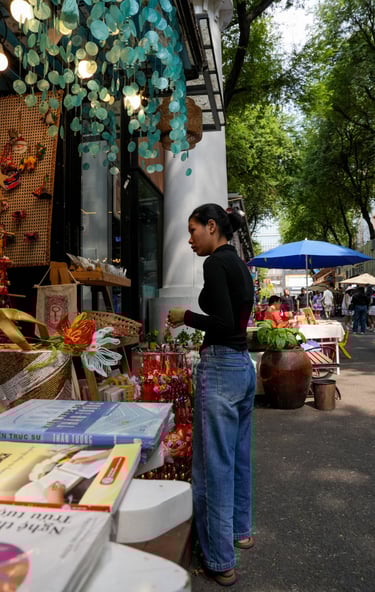

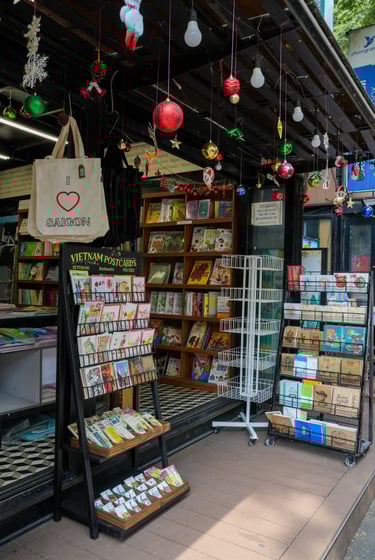

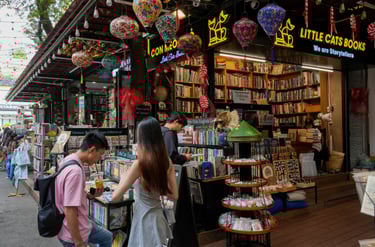
For me, this street shows a completely different side of Vietnam: peaceful, creative, and deeply human.
☕ The Café Apartment – Stories Behind Every Balcony
On Nguyen Hue Boulevard, the Café Apartment is a unique piece of Saigon’s creative spirit.
Once an old residential building, it’s now home to cafés, boutiques, and small studios stacked on nine floors — each with its own design, color, and charm.
I photographed it during the late afternoon when the light hits the balconies and casts long reflections across the street.

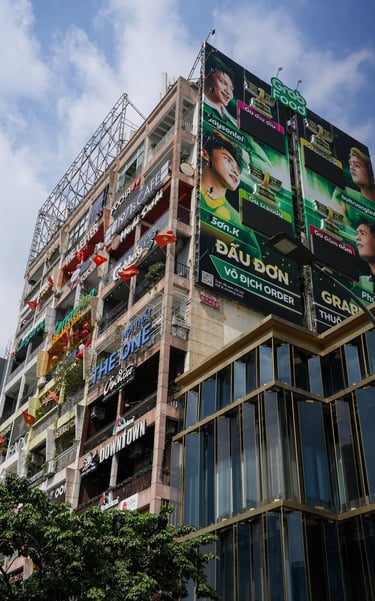

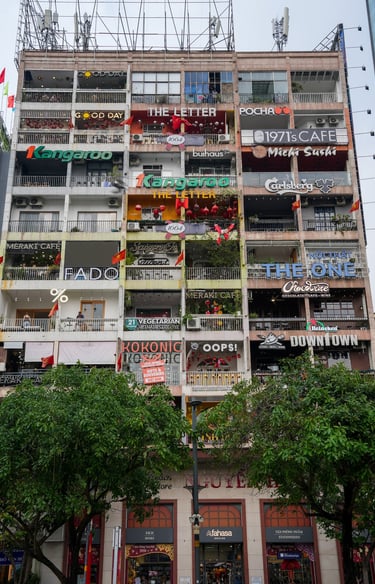

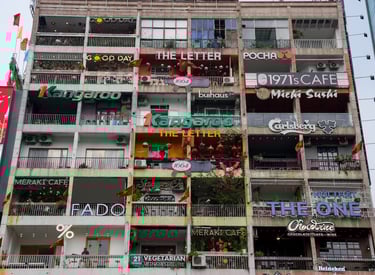
It’s not just architecture — it’s a vertical storybook of Saigon’s new generation, where every floor holds a different atmosphere.
🌊 Saigon River – Reflections at Bach Dang Pier
Down by the Saigon River, near the Bach Dang Station, the city opens up again.
You can see the skyline rising across the water, boats moving slowly, and people gathering along the pier to enjoy the evening breeze.
The late afternoon light was perfect here — golden and soft, turning reflections on the river into living textures.

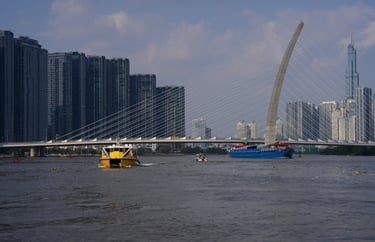
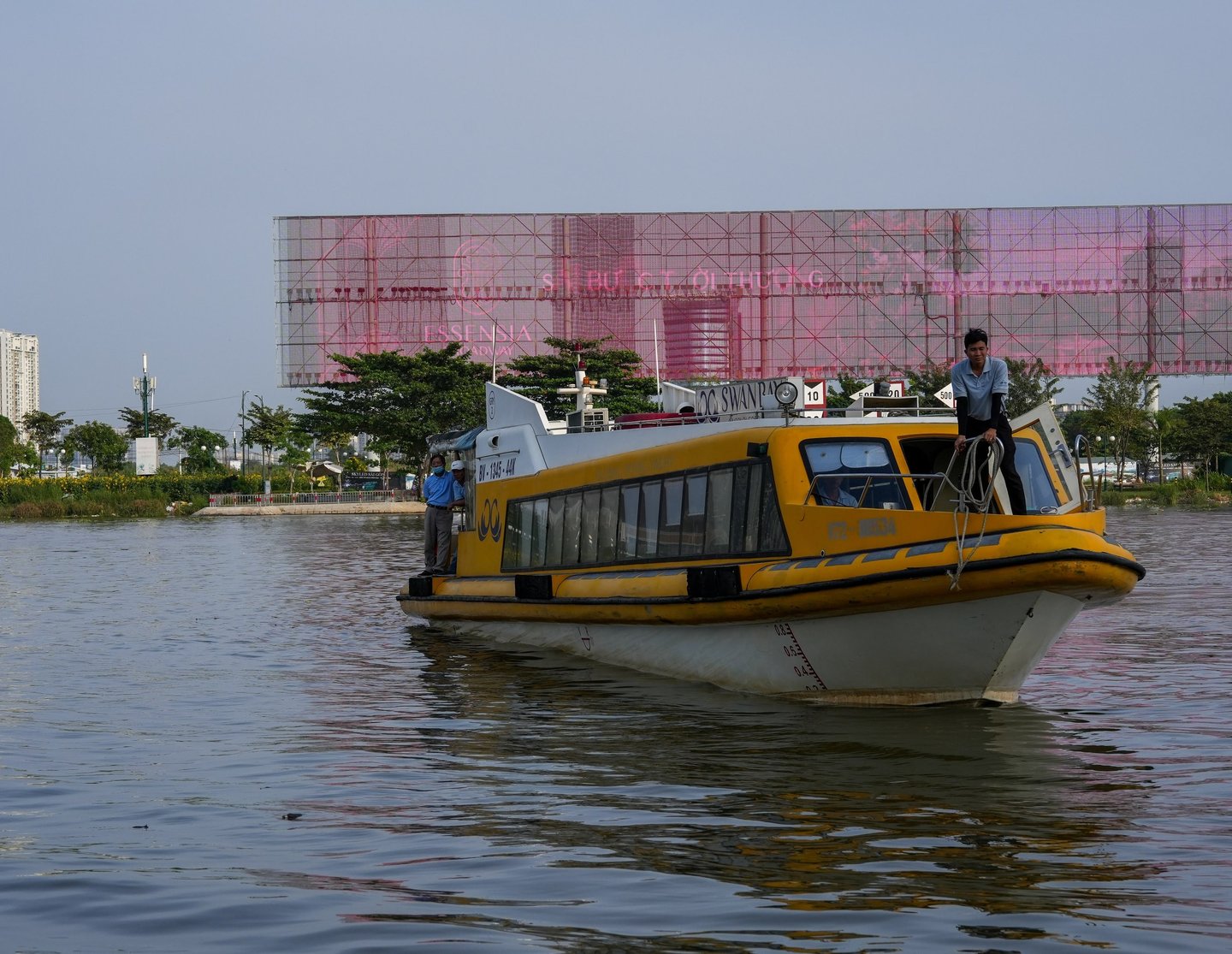
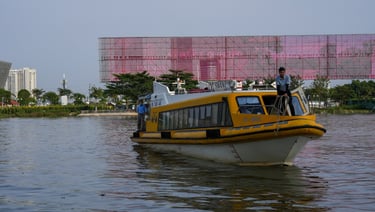
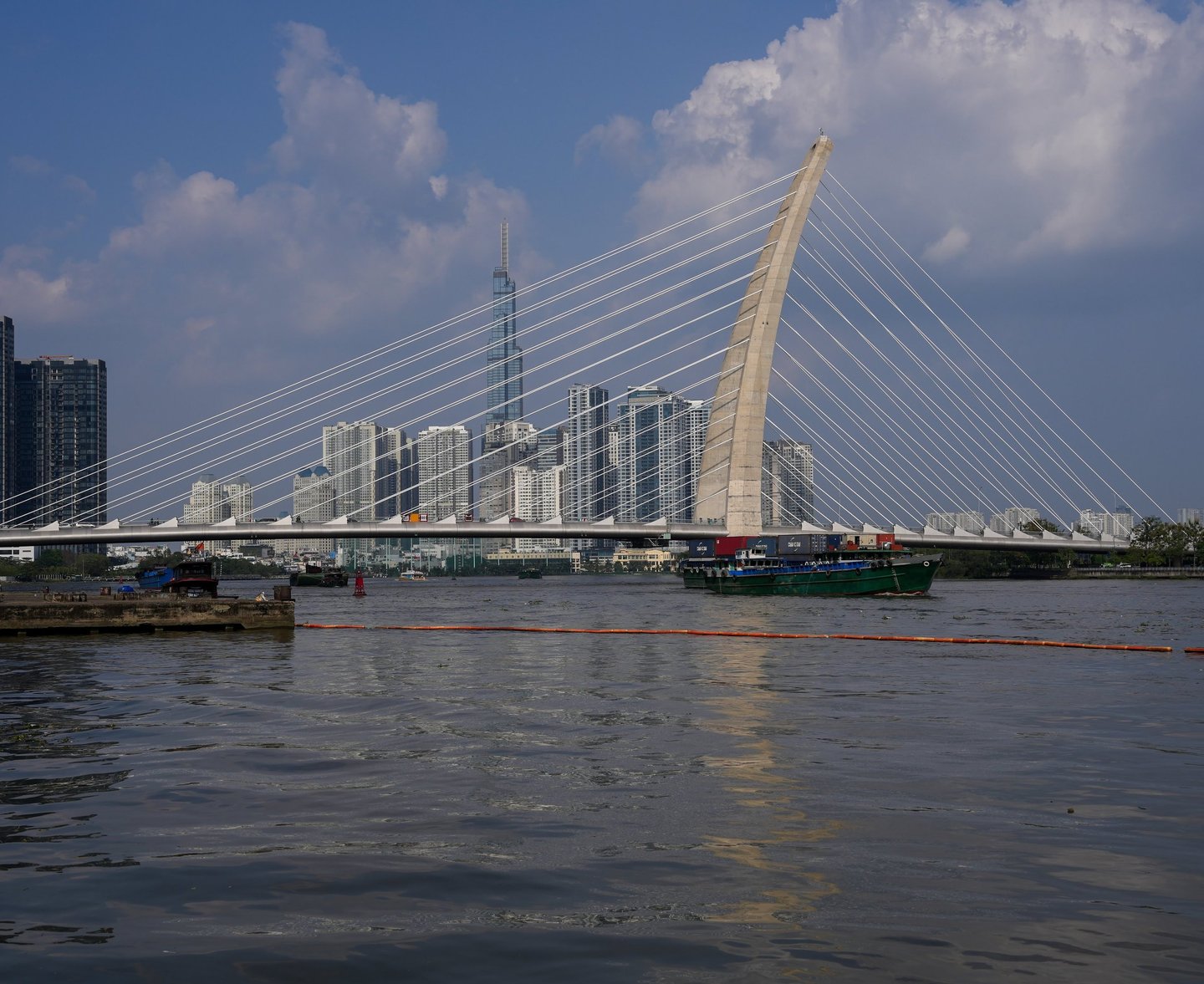
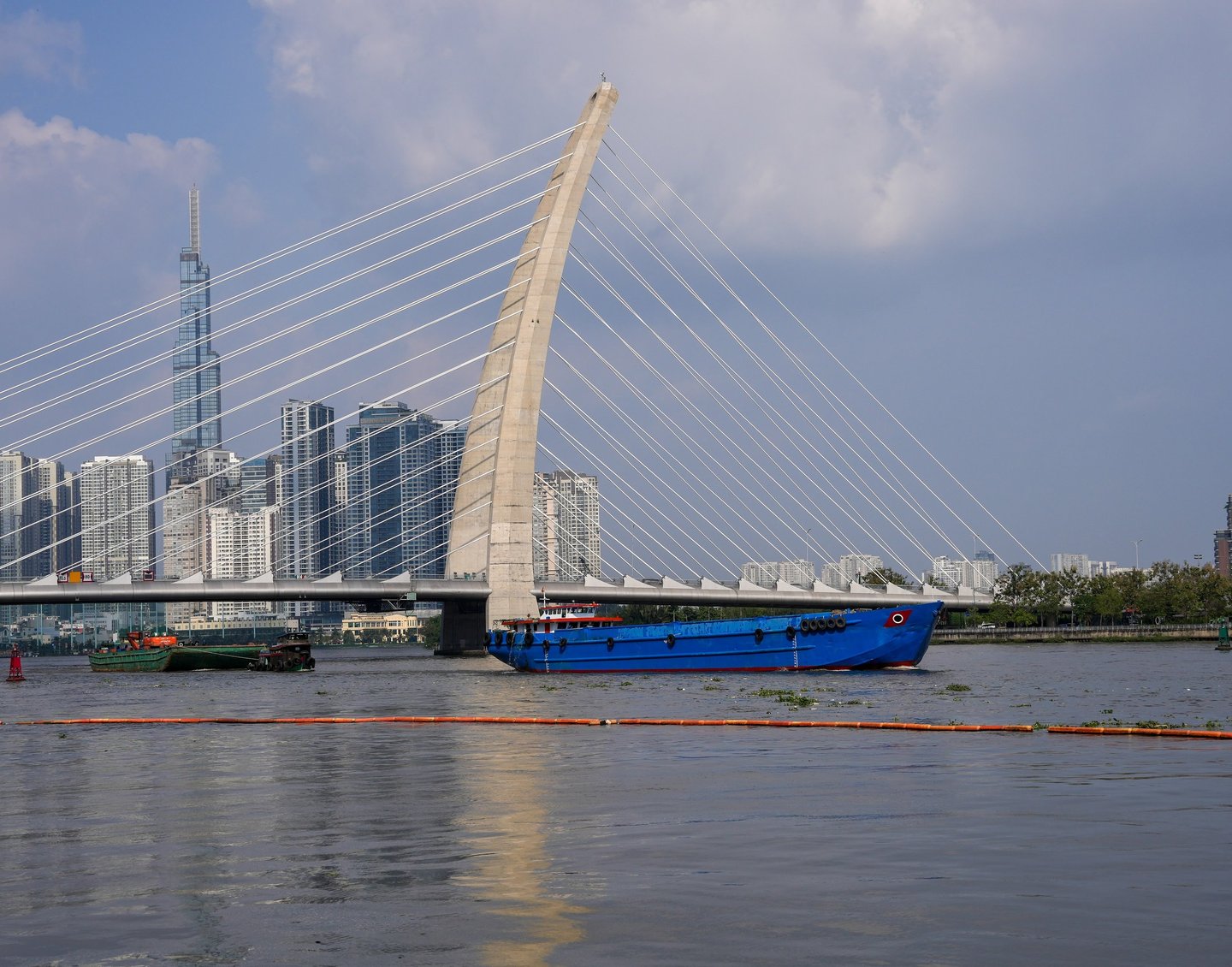
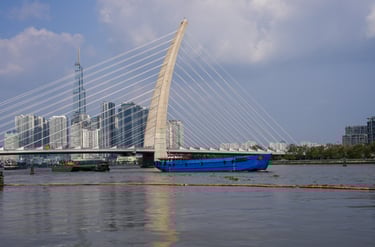
I wanted these photos to show both sides of Saigon: the calm flow of the river and the restless pulse of the city just behind it.
For me, that balance defines what makes Ho Chi Minh City so fascinating — history, movement, and emotion, all in one frame.
Chill Sky Bar – Golden Light, City Haze and Saigon Nights
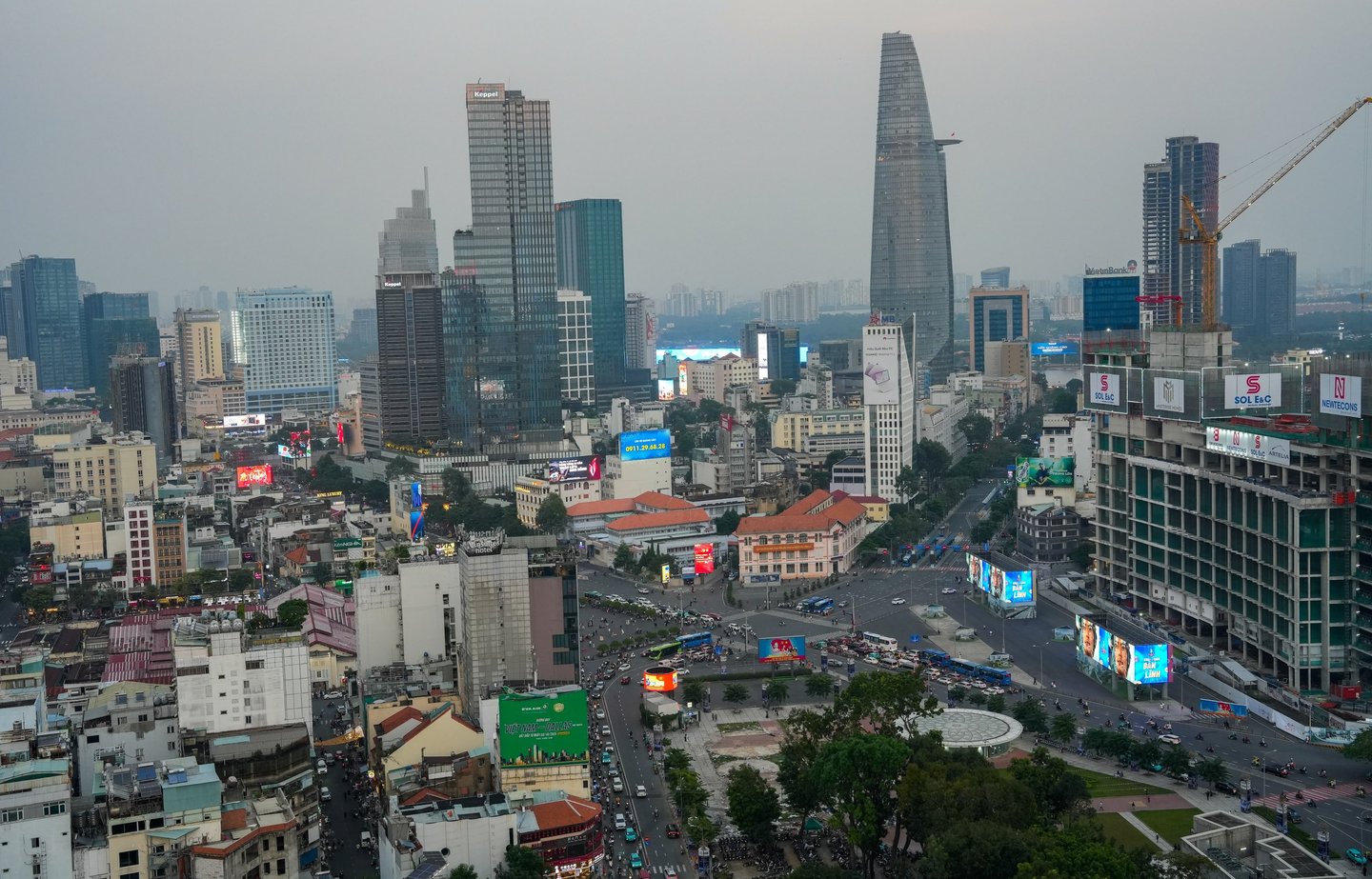
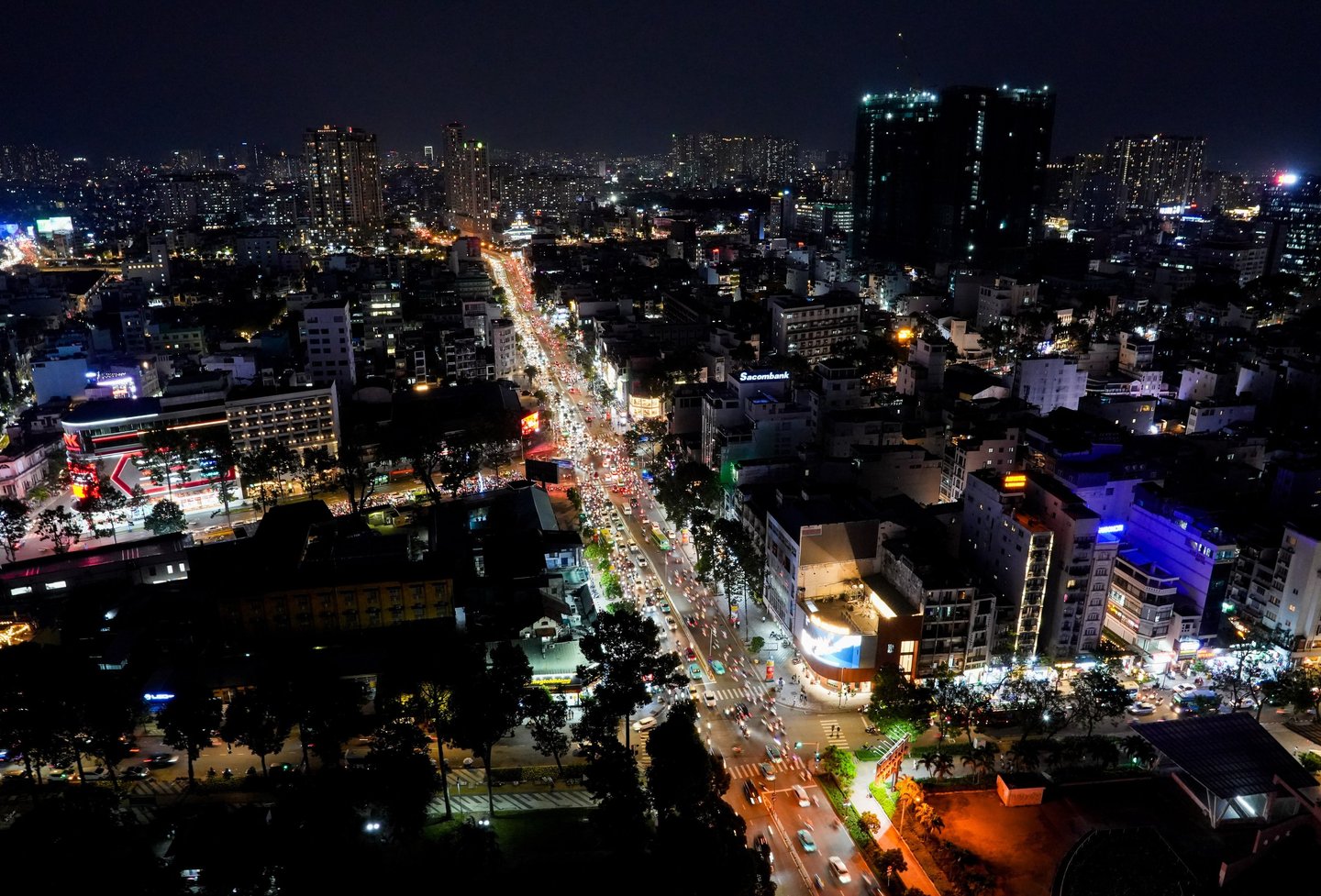
This part of my Ho Chi Minh City (formerly Saigon) series was photographed from the Chill Sky Bar on top of the AB Tower in District 1.
It’s one of those places where the view seems endless — a panorama of Saigon stretching toward the horizon, with its towers, streets, and the soft glow of late afternoon light.
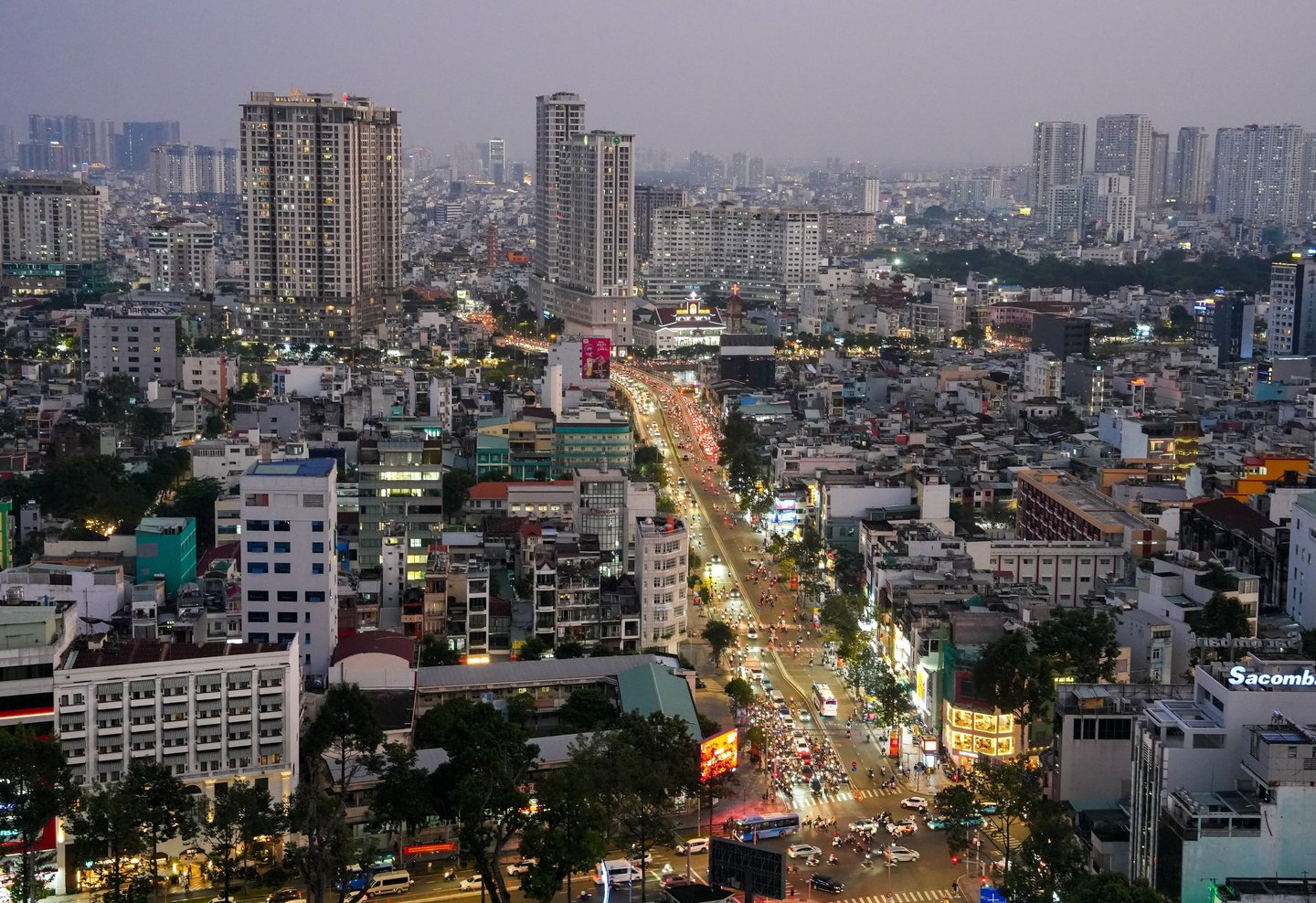
The time I chose for shooting was just before sunset, when the city haze from the PM levels hangs gently over the skyline.
That thin layer of mist gives the photos a natural softness — a filter that no lens could ever reproduce.
You can see the city slowly changing its tone: warm orange light fading into cooler shades of blue as day turns into night.

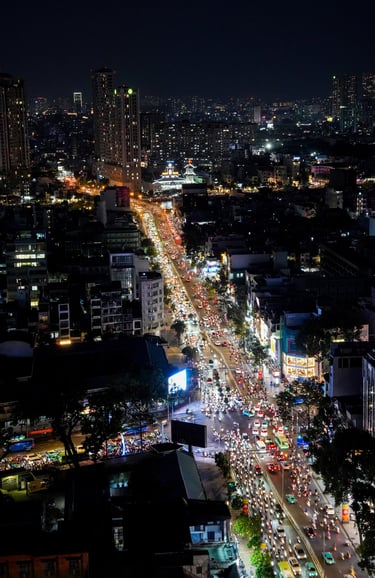

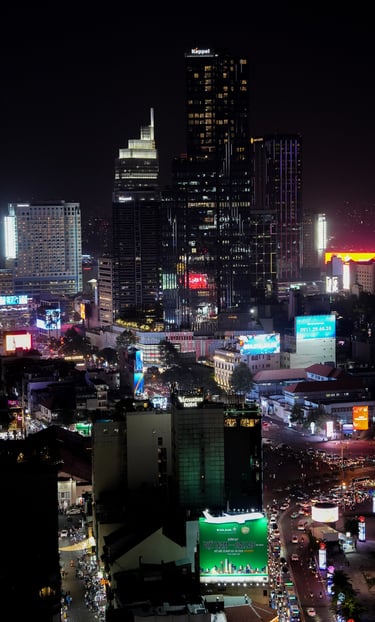
From up here, Ho Chi Minh City feels calm and full of rhythm at the same time.
The Bitexco Tower catches the last sunlight, and down below the lights of the traffic begin to draw bright lines through the city.
It’s a moment where you can sense how alive this place really is.
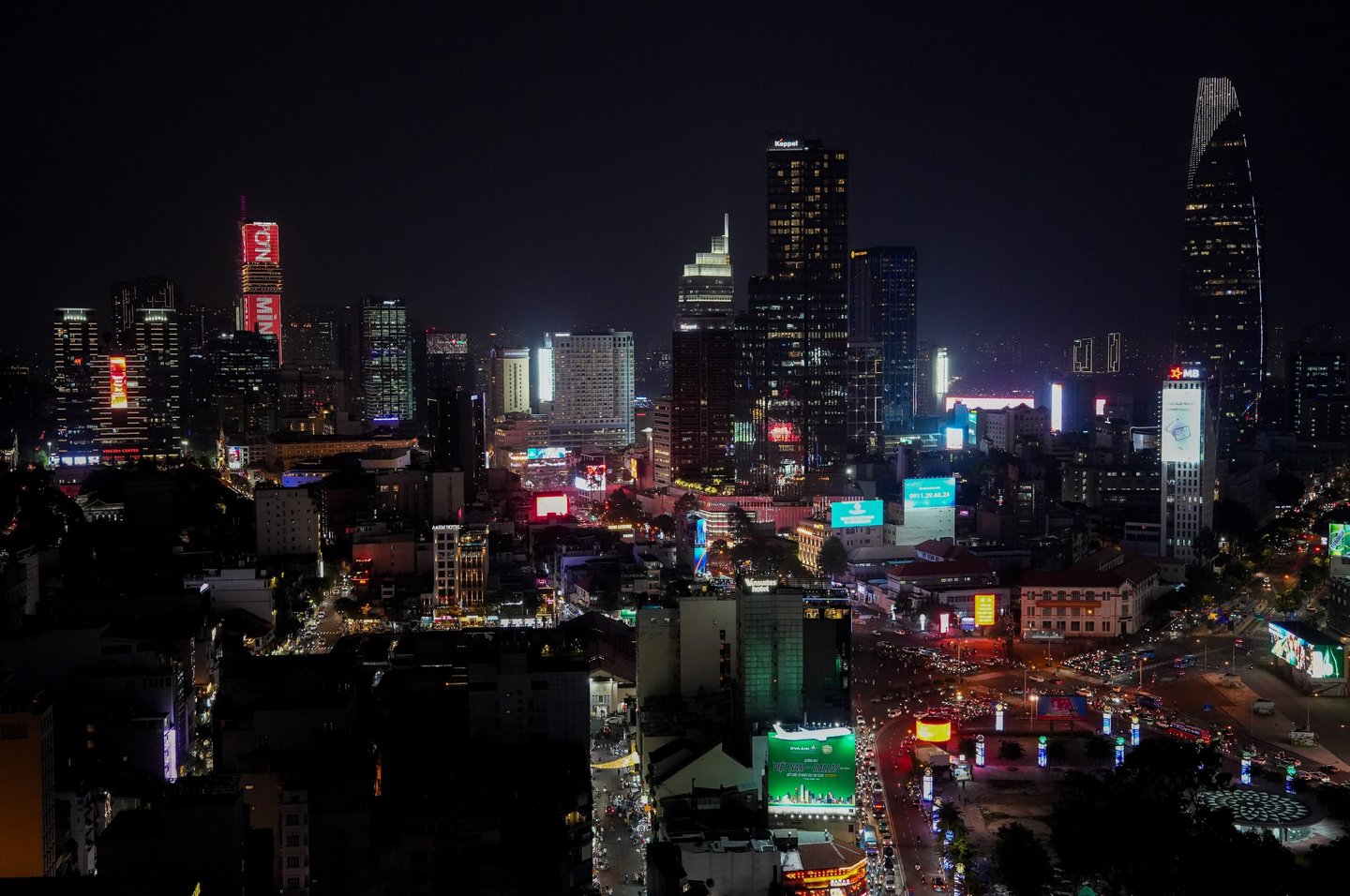
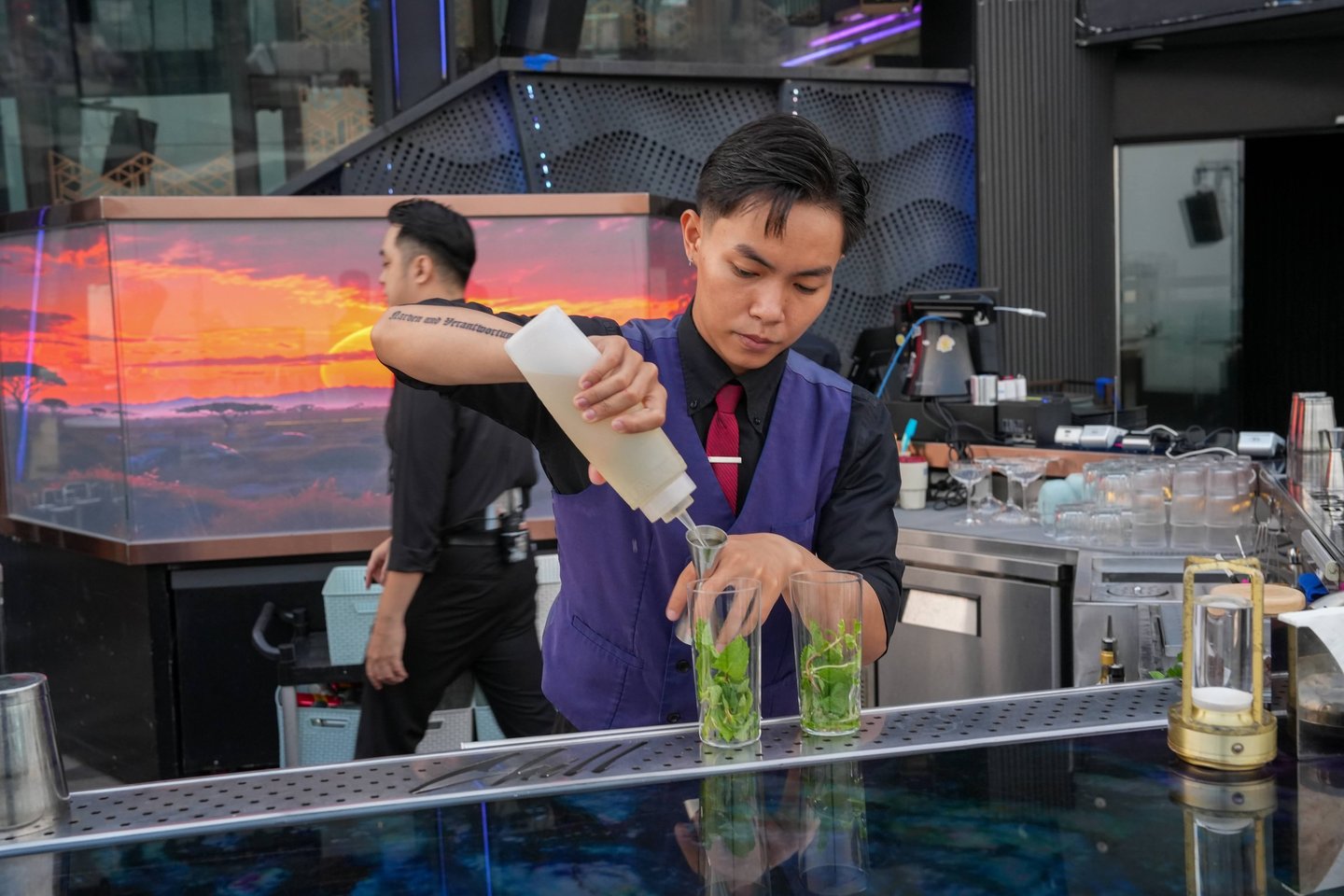
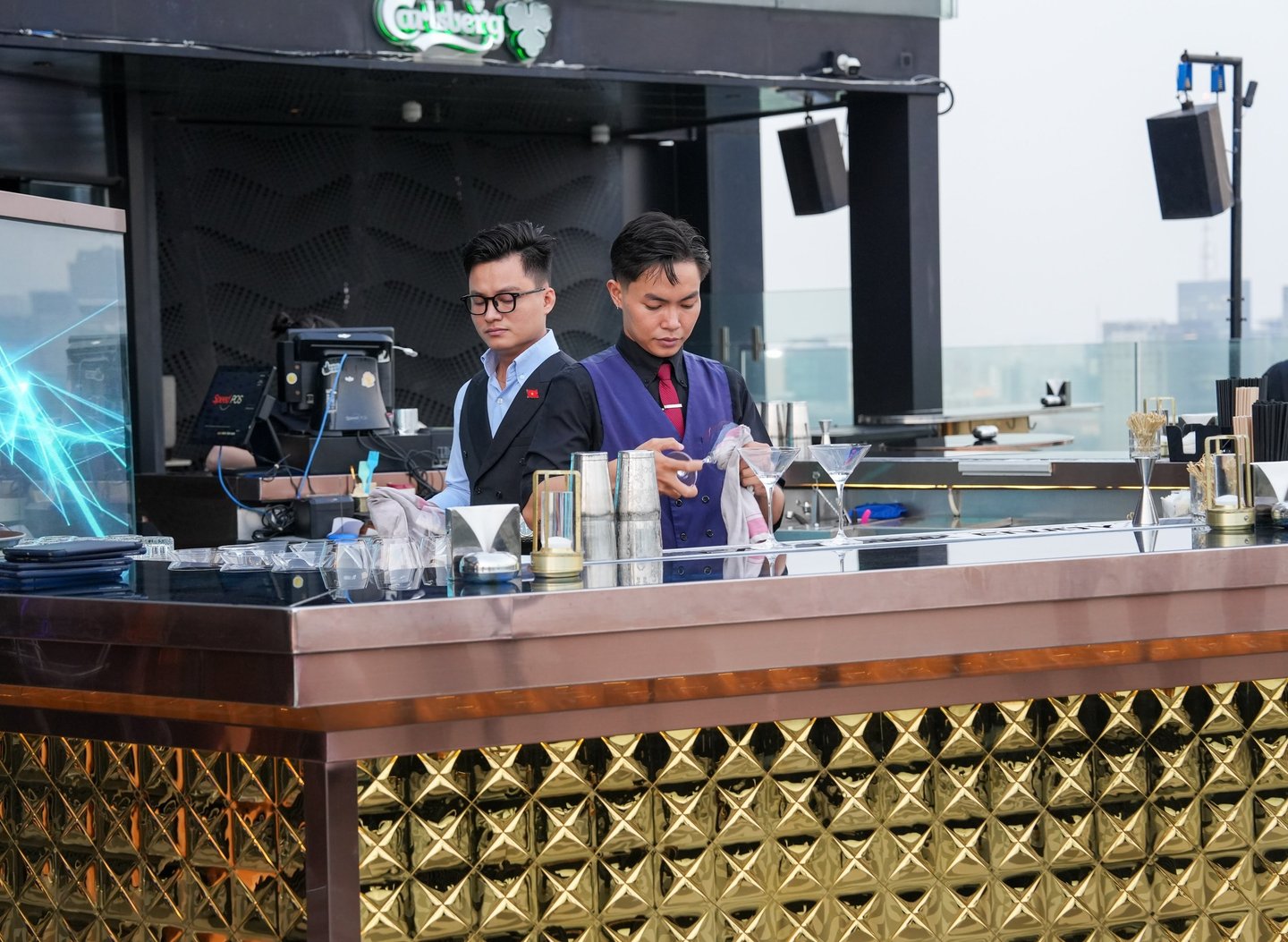
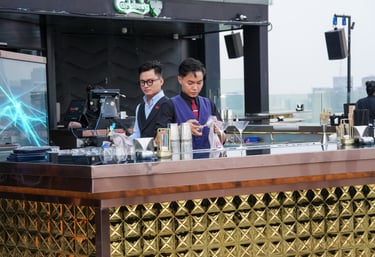
While I was photographing the skyline, I also captured moments from inside the bar — the people who create this atmosphere.
A bartender, focused and professional, was preparing Mojito cocktails with perfect precision.
The rhythm of his work matched the music and the movement of the evening crowd.
For me, that’s what makes this place unique — it’s not just a view, it’s a living scene, full of light, sound, and stories.
Cai Rang Floating Market – Life on the Water in the Mekong Delta
This part of my Vietnam series takes you to the Cai Rang Floating Market, one of the most authentic and lively places in the Mekong Delta.
Located near Can Tho, the second-largest city in southern Vietnam, the market lies along the Song Can Tho and Song Hau Rivers, two important waterways that form part of the southern branches of the Mekong.
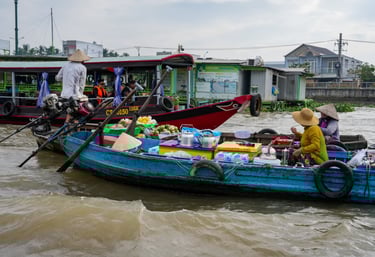
We started our journey at 4:00 a.m., together with our tour guide and driver, leaving the still-sleeping streets of Ho Chi Minh City (Saigon) behind.
After around two hours, we reached Can Tho, a vibrant river city shaped by its canals and bridges.
To our surprise, our guide, driver, and the captain of our small boat all proudly described themselves as South Vietnamese — a small but meaningful insight into how people here still identify with the region’s history.
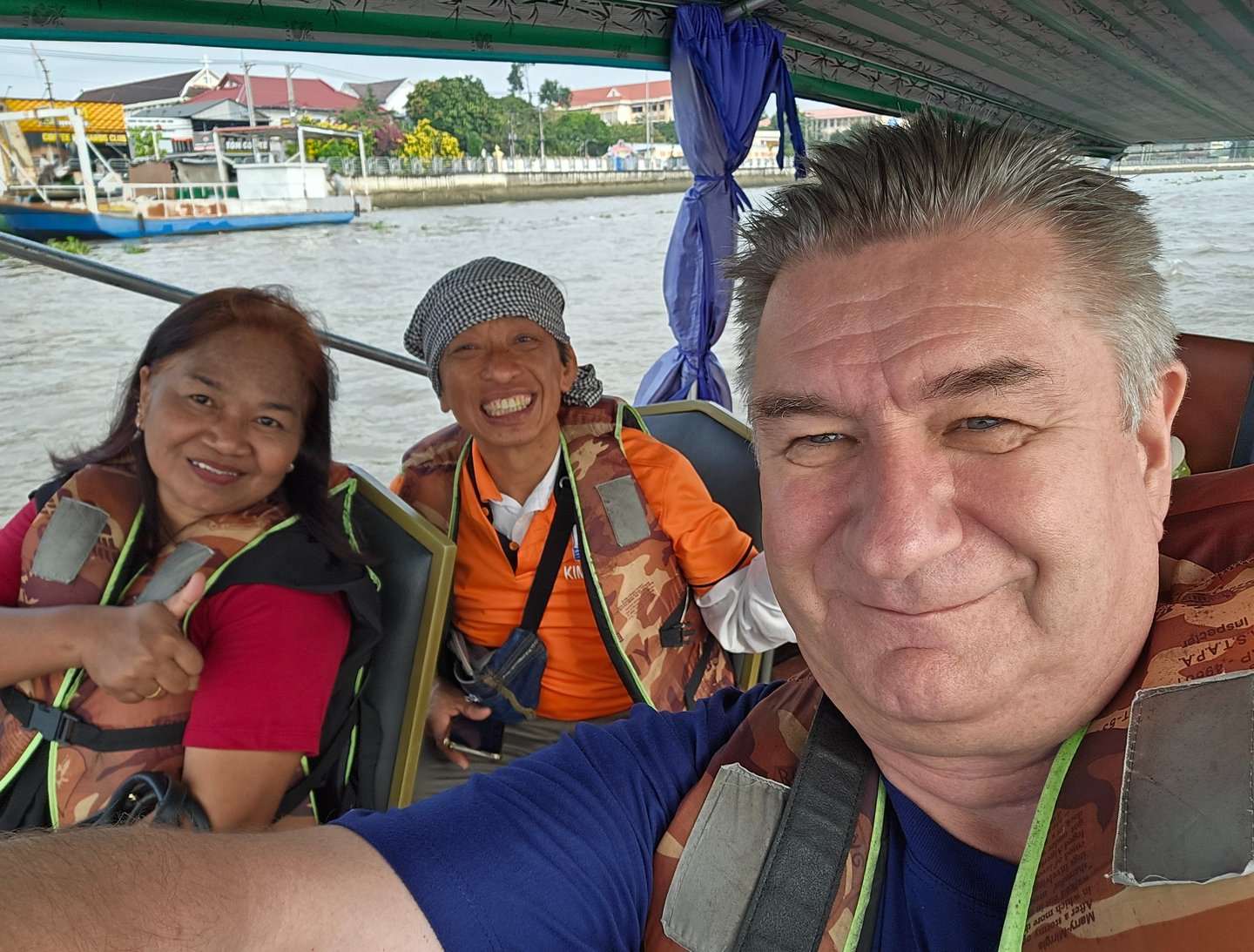
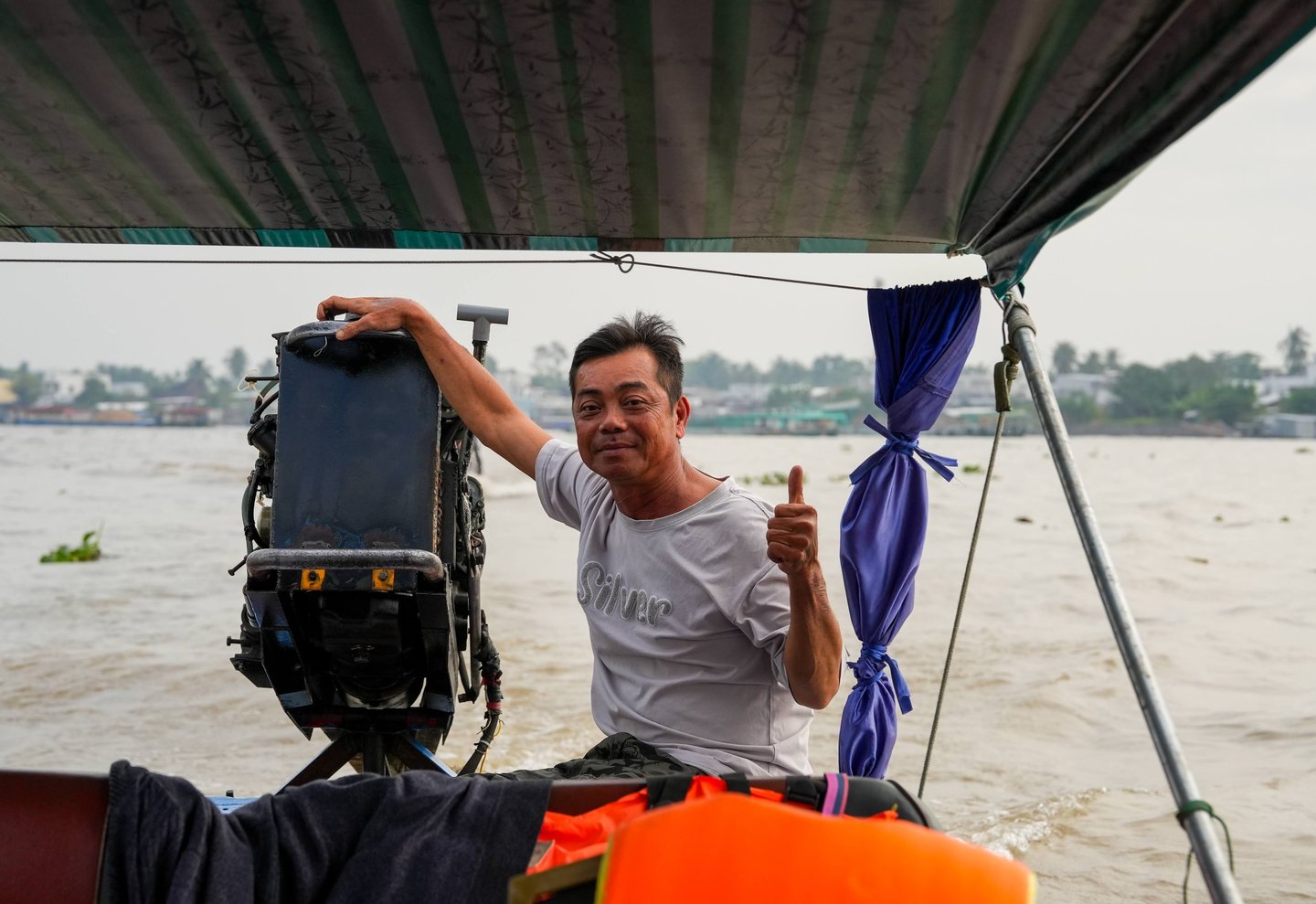
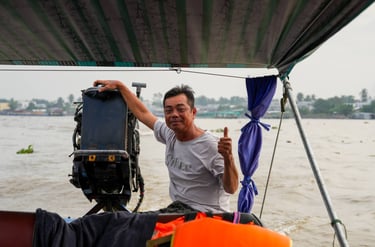
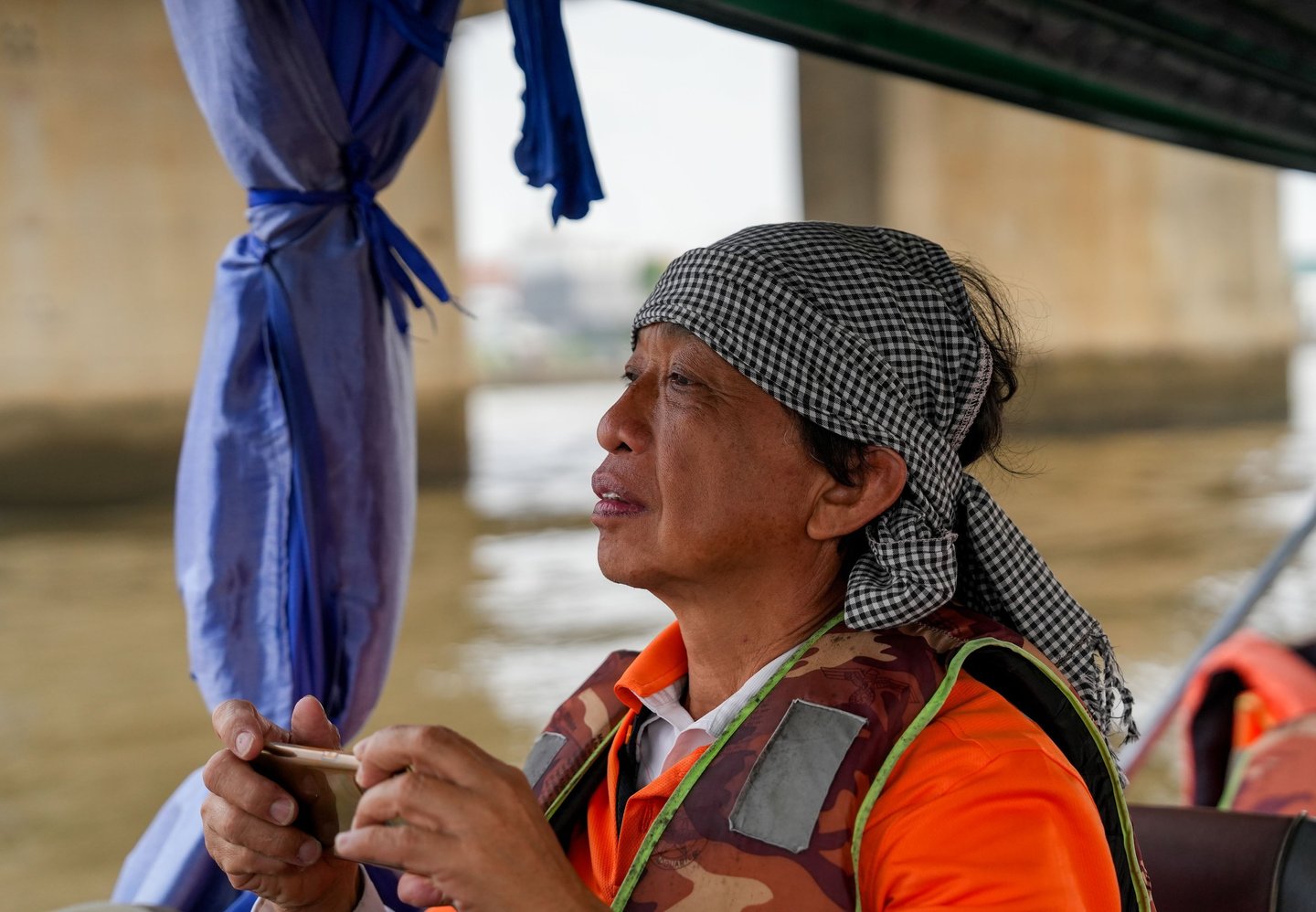
From the pier in Can Tho, we started our boat trip on the Song Hau River, the main distributary of the Mekong in this region.
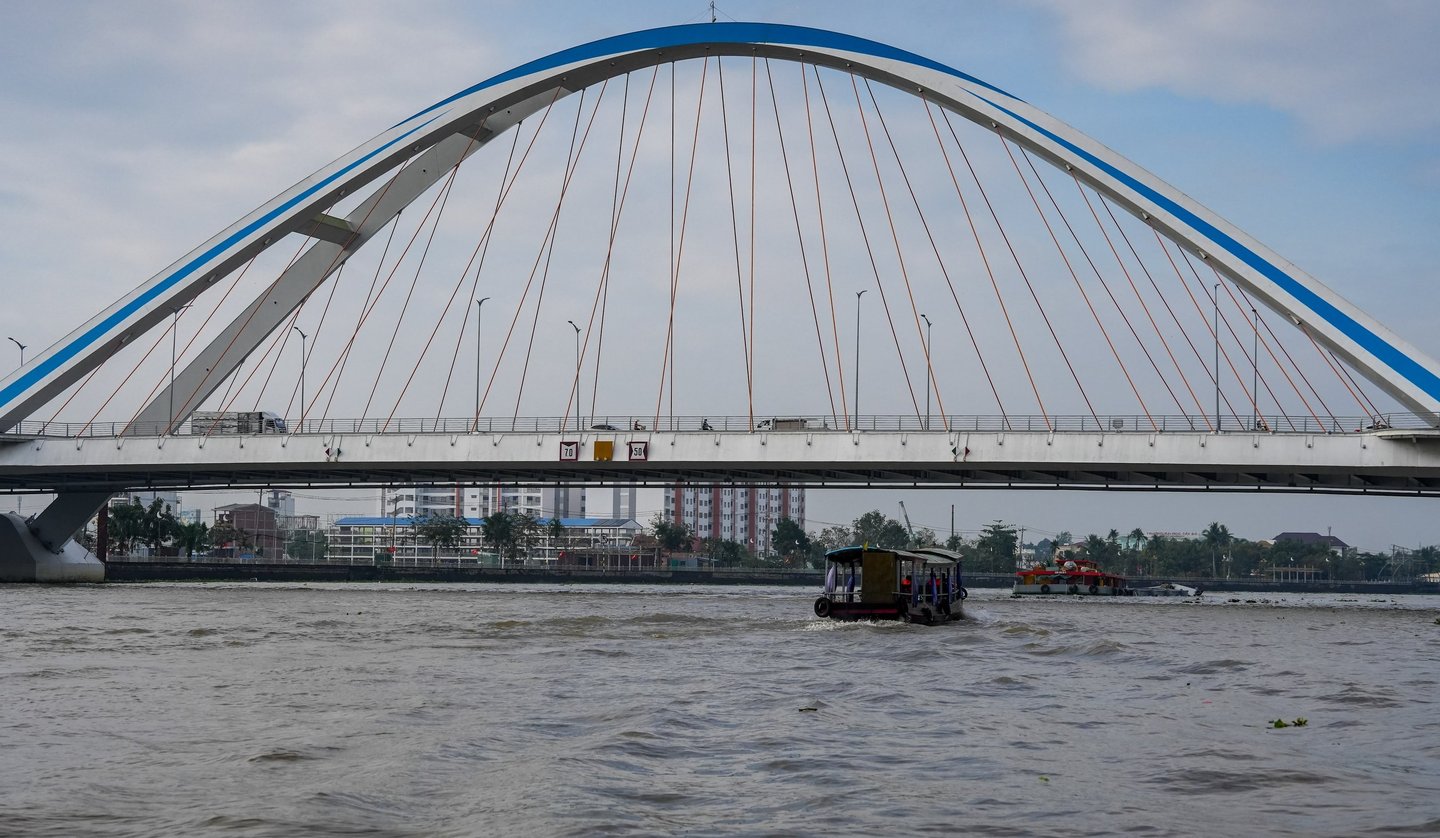
We passed under two large bridges that connect the city’s riverbanks — impressive structures that have replaced the old ferry routes that once carried people and goods across the delta.
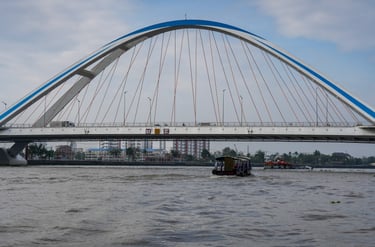
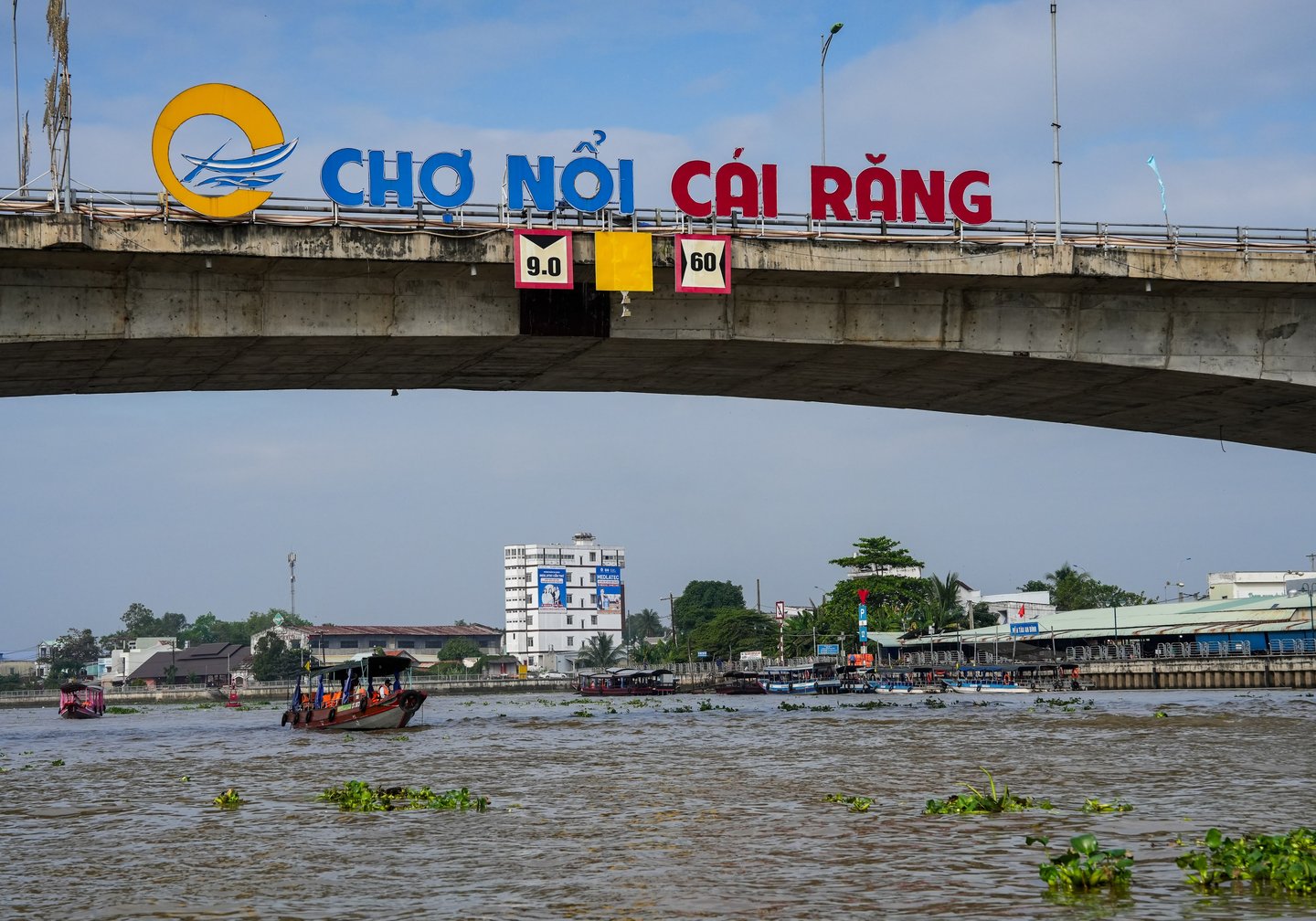
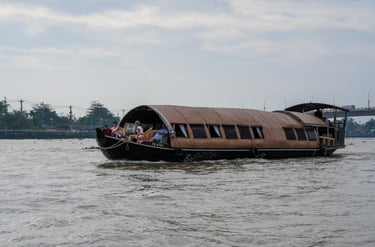
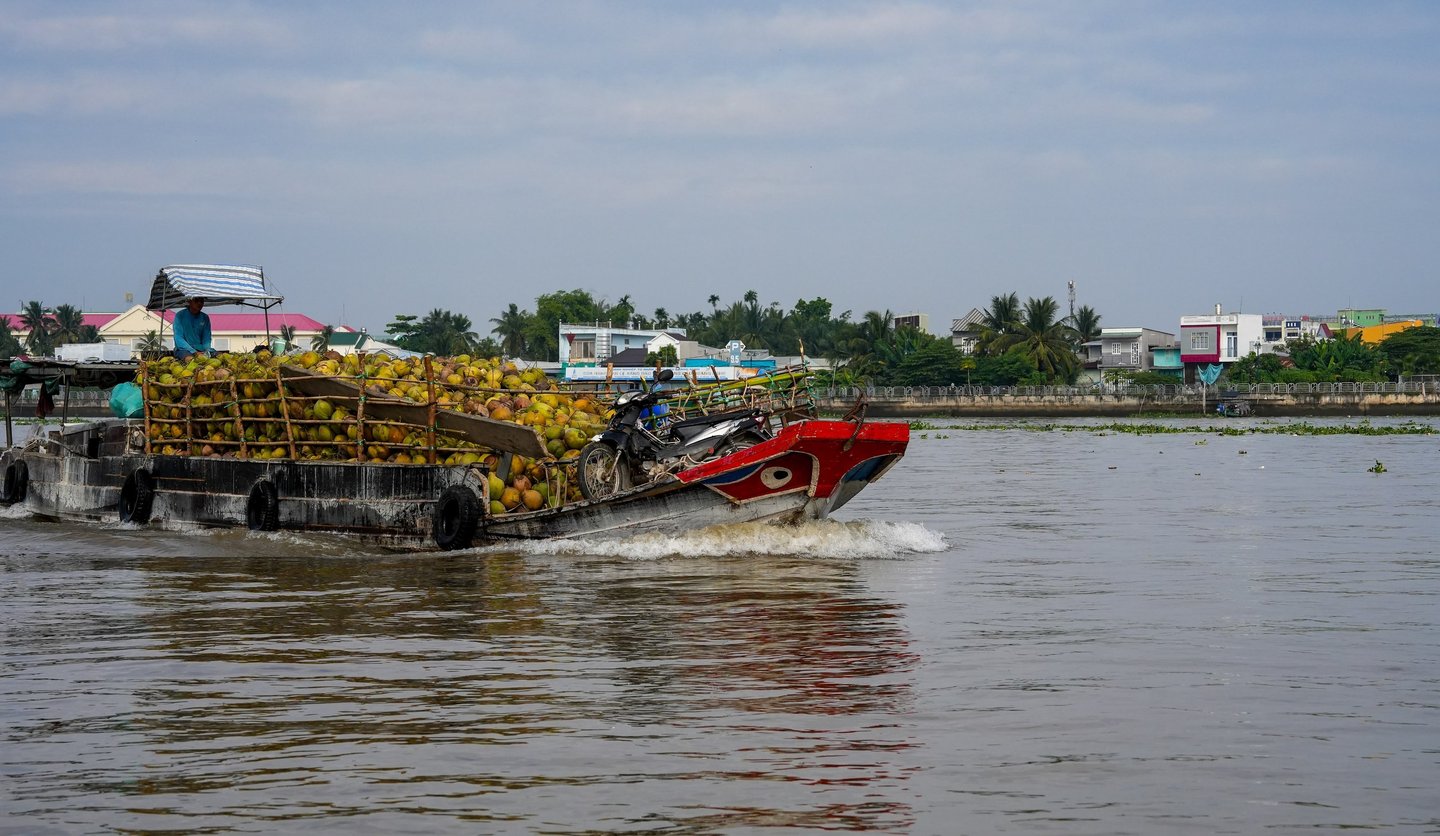
As the sky began to brighten, we turned into the Song Can Tho River, a smaller waterway that branches off the Song Hau River and leads directly to the Cai Rang Floating Market.
At this early hour, the market was already in full motion.
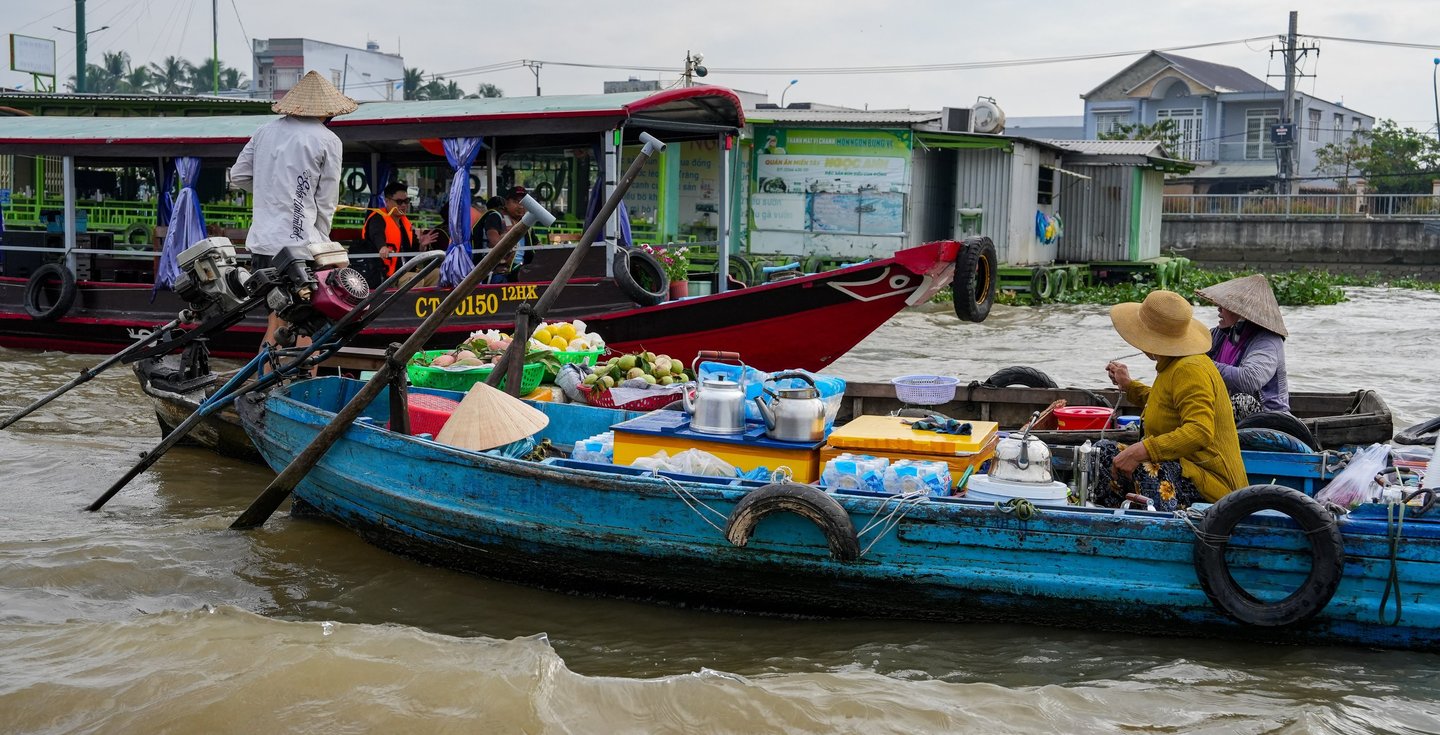
Boats of all sizes filled the river, each carrying fruits, vegetables, or local products.
Vendors called out to each other, deals were made directly from boat to boat, and small coffee sellers navigated through the crowd with steaming cups for the traders.
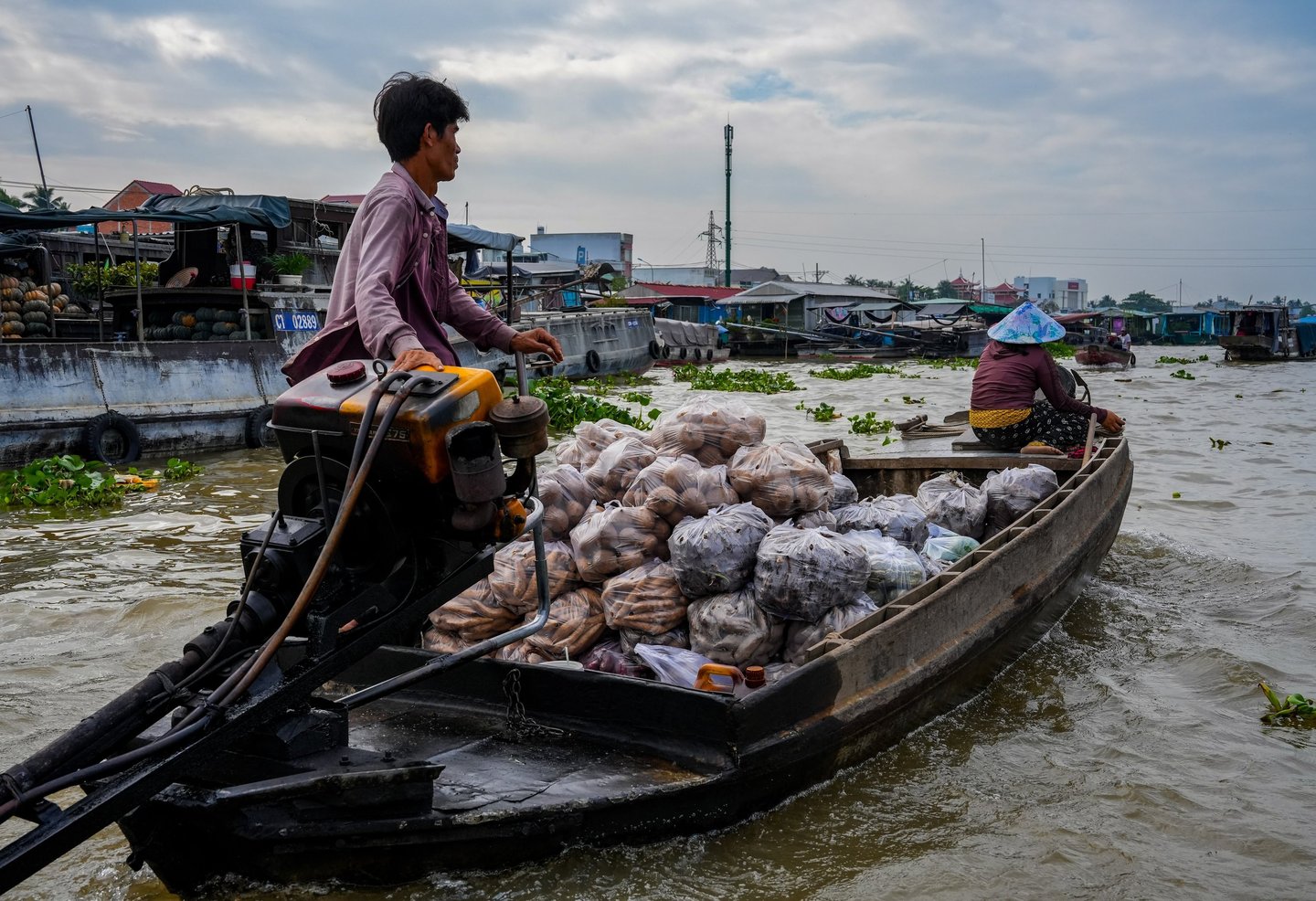
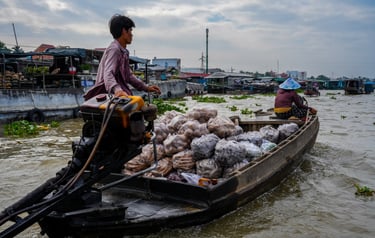
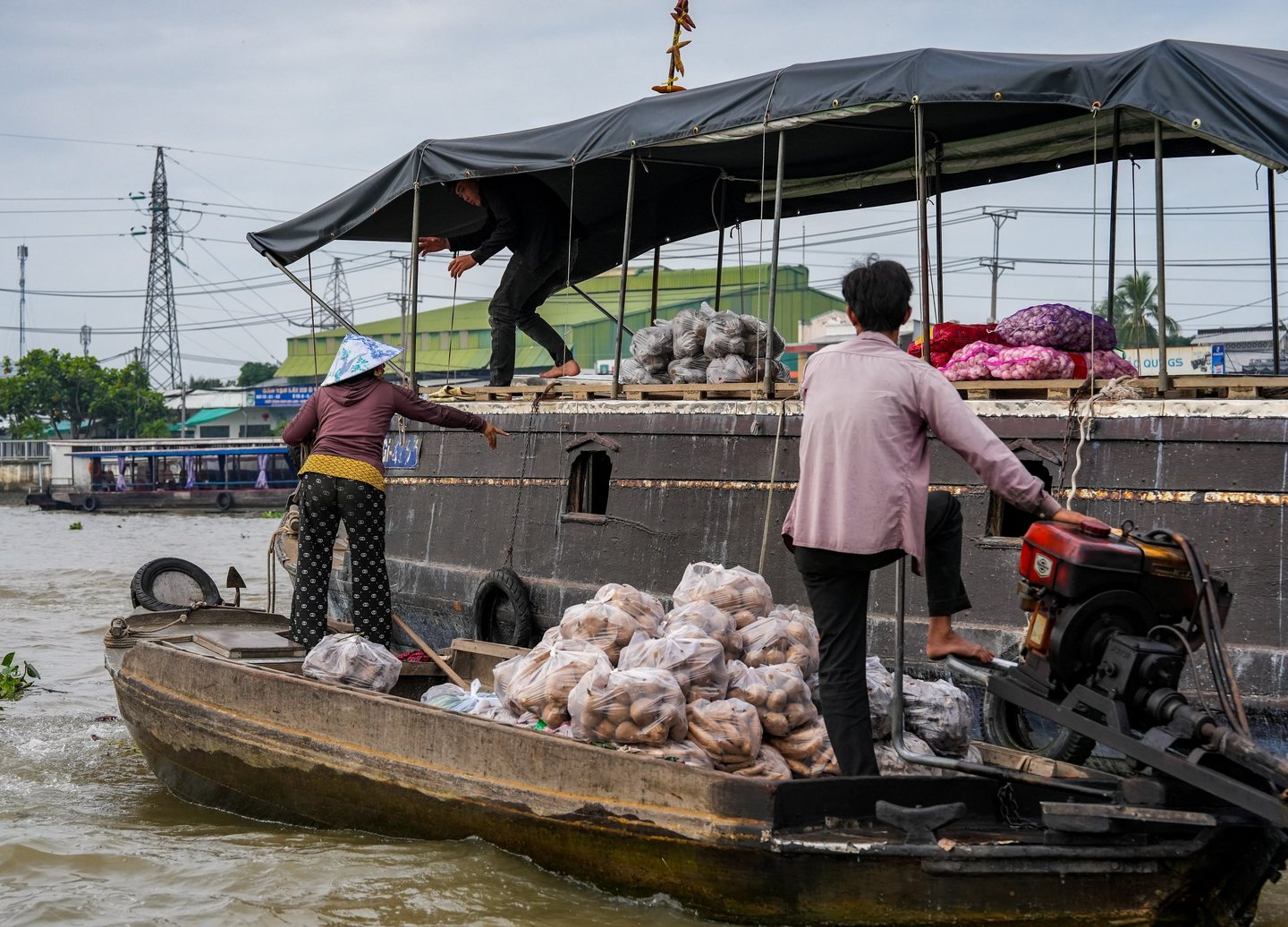
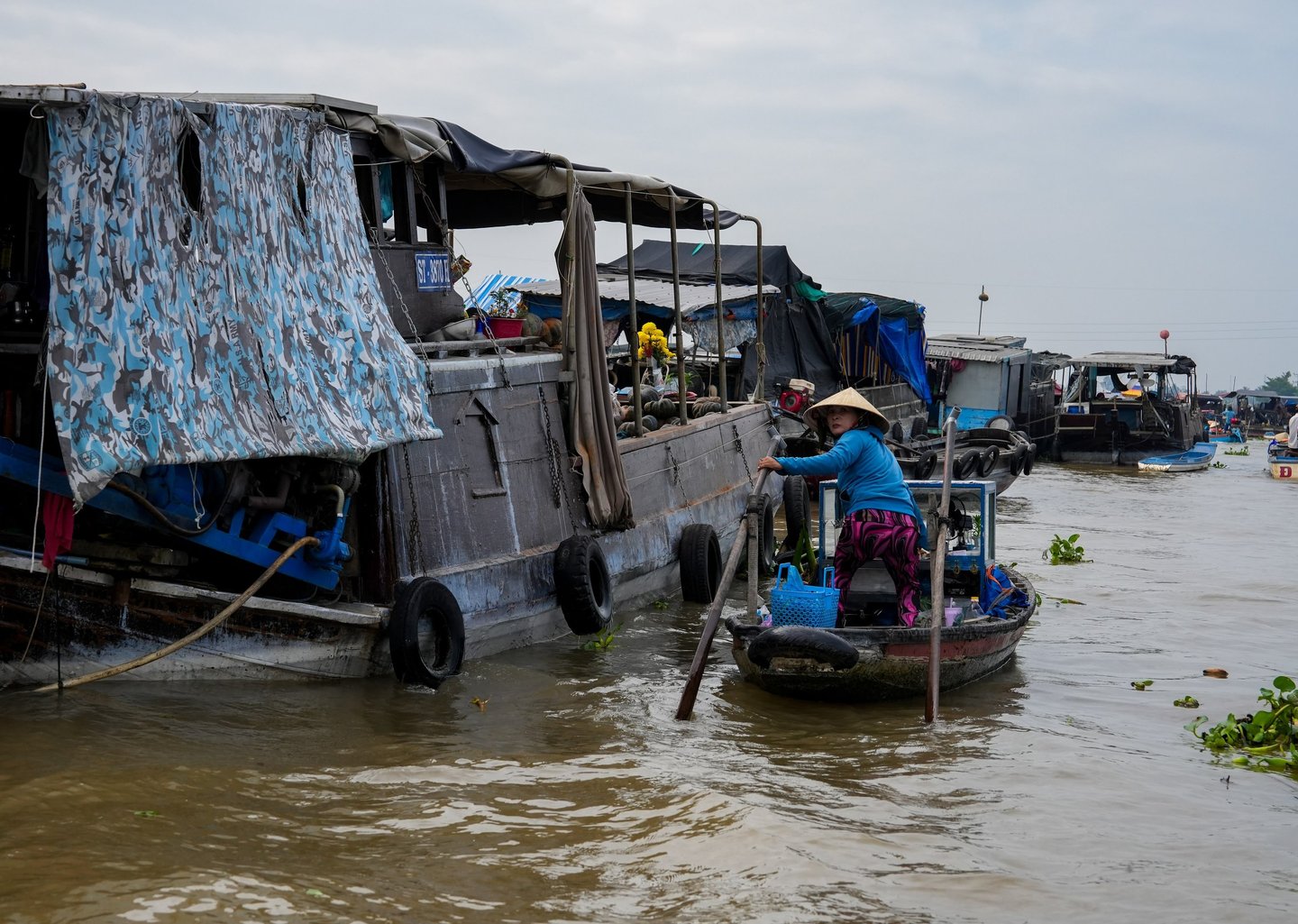
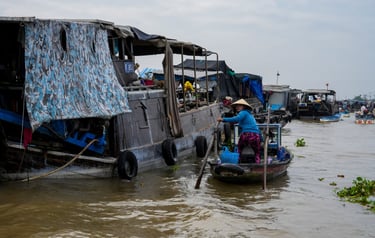
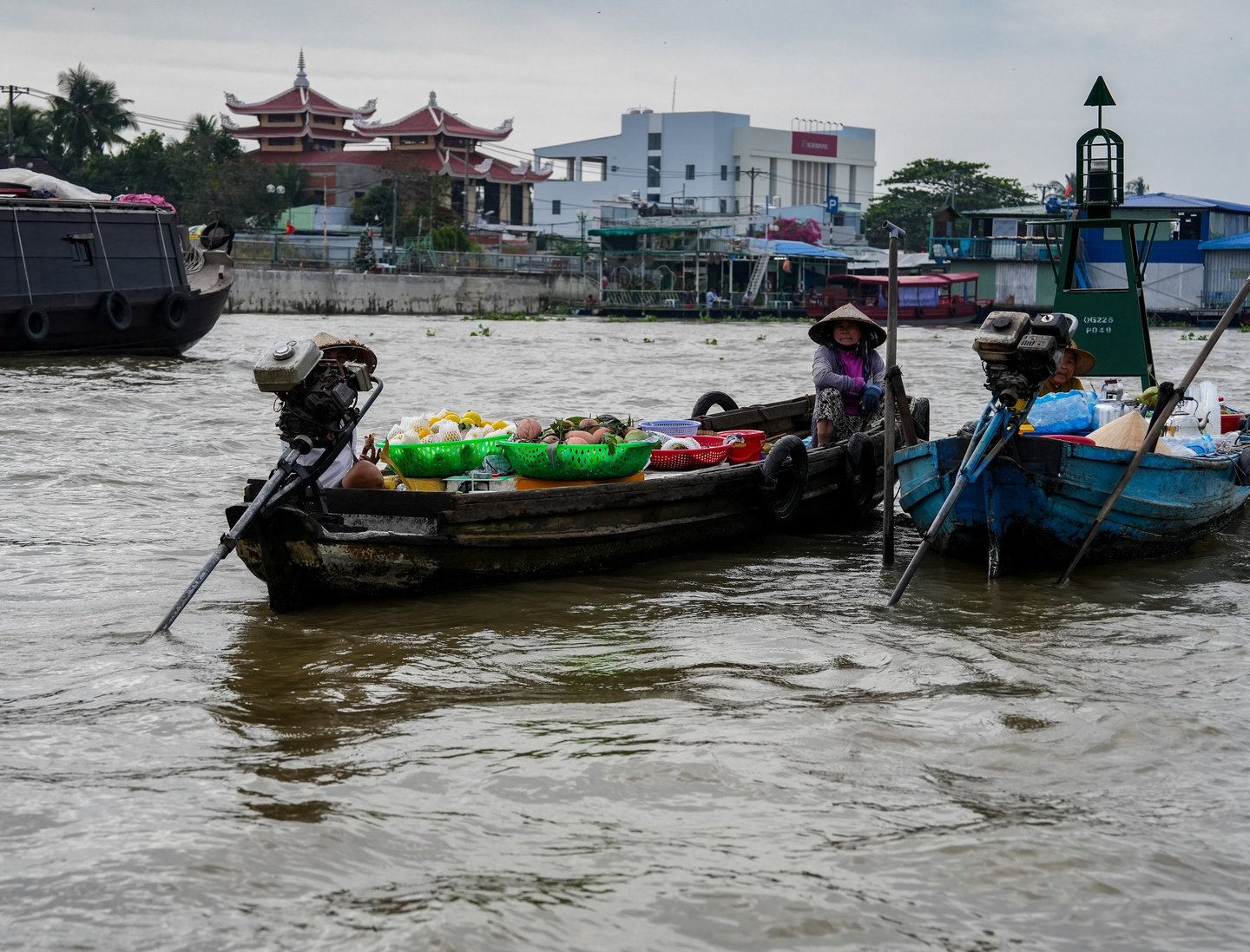
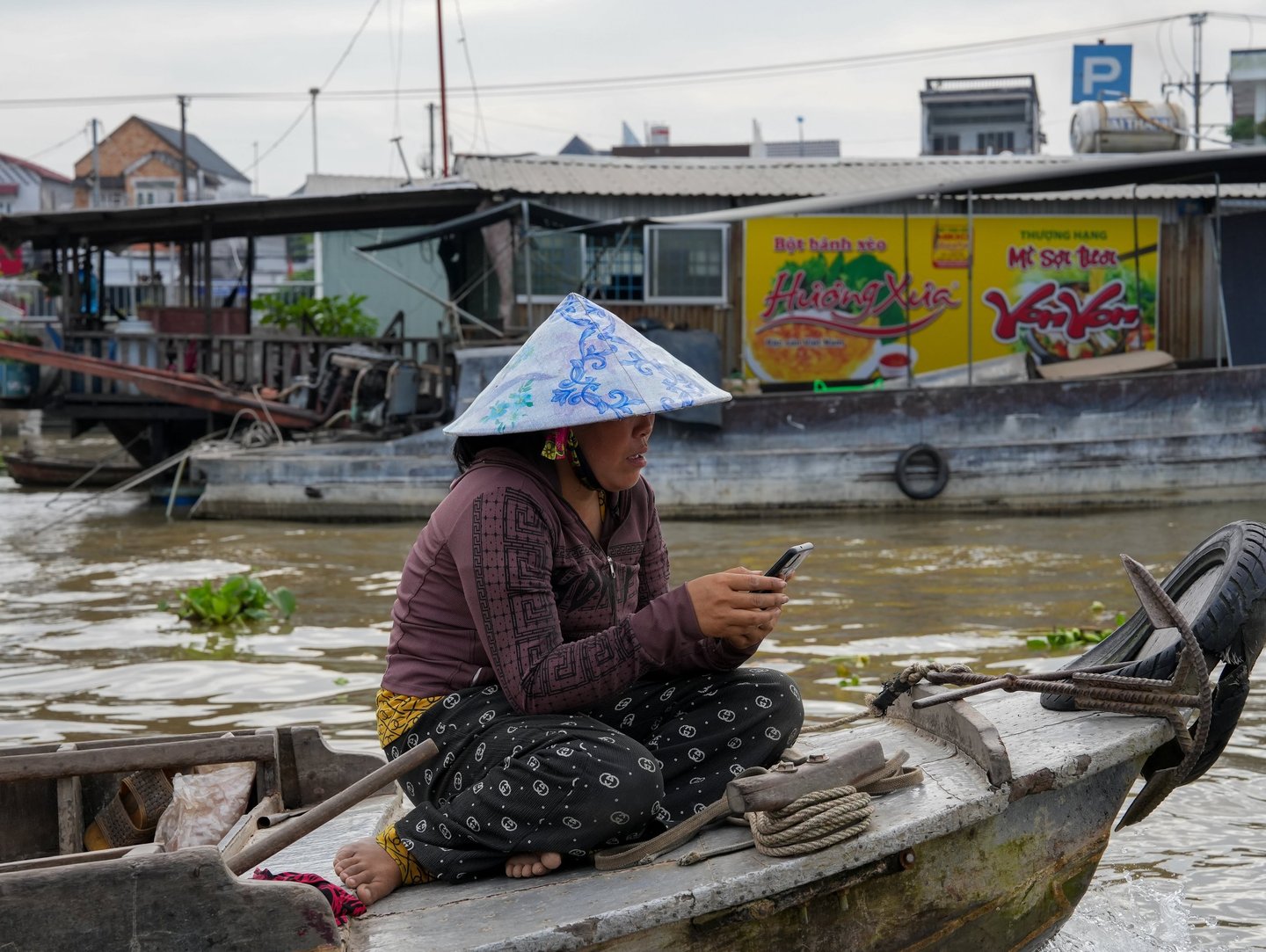
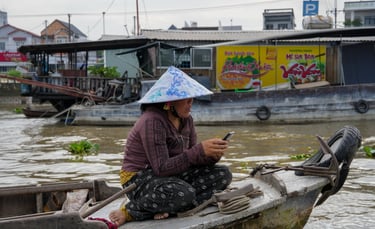
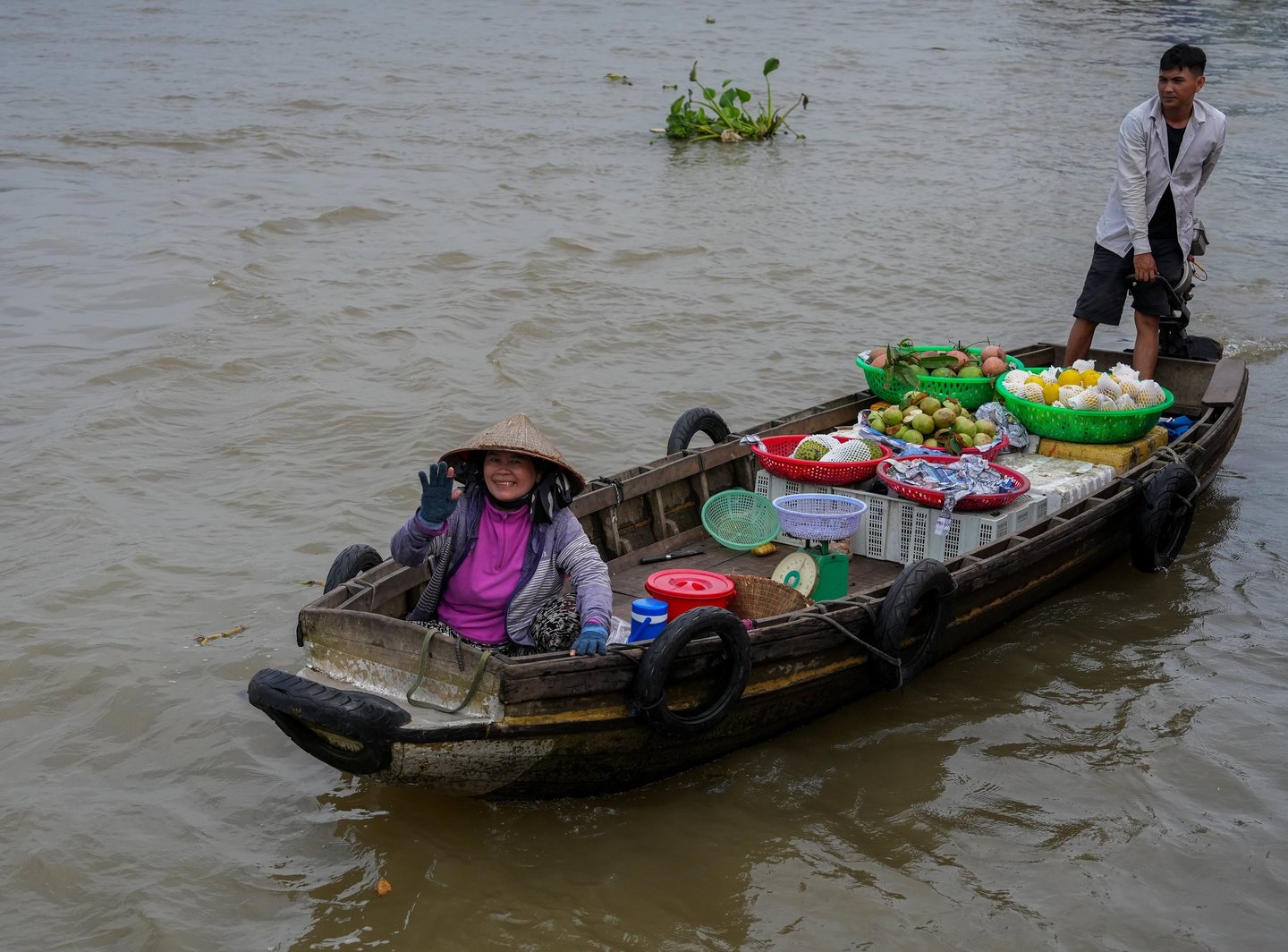
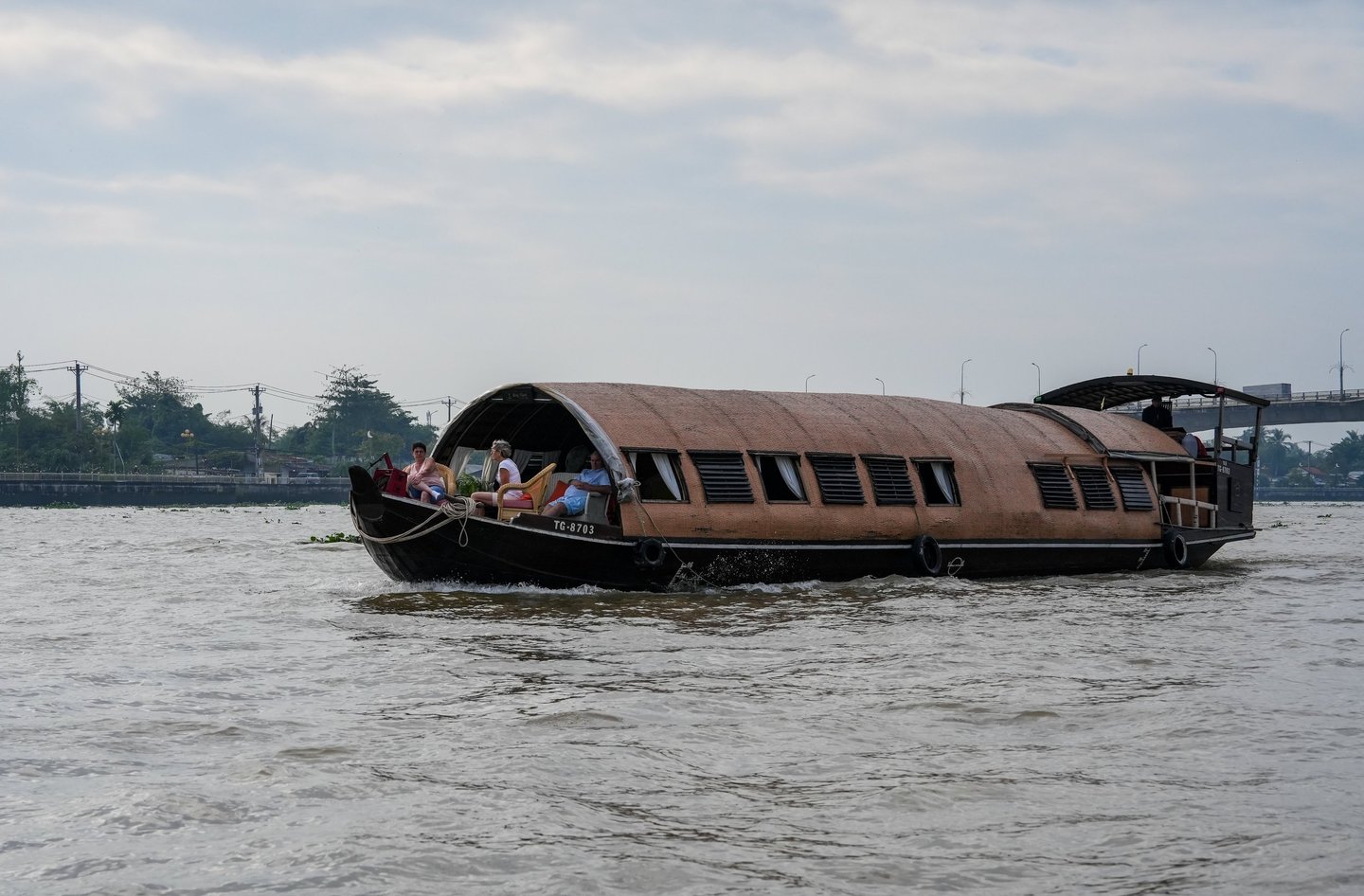
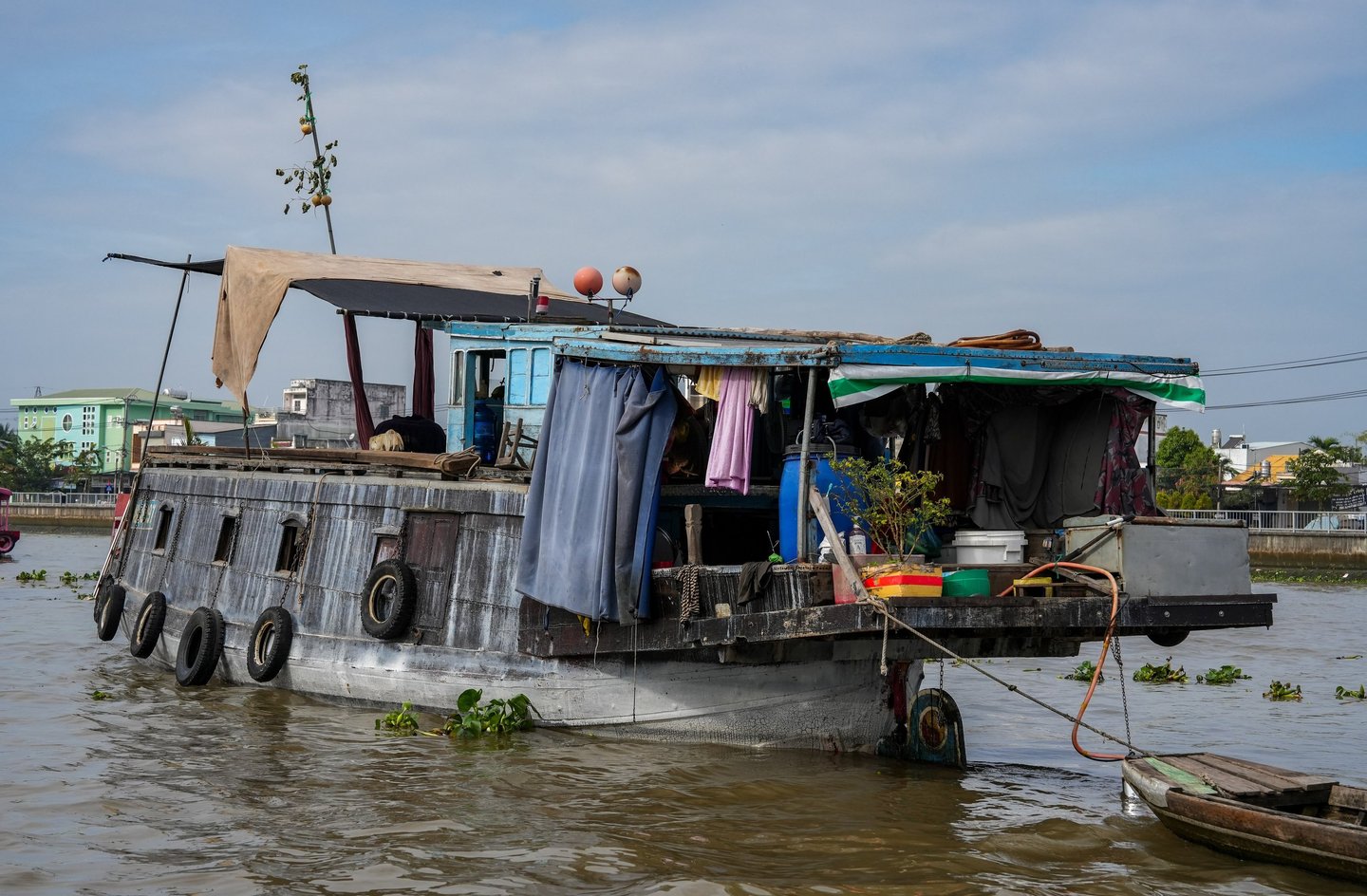
Among the larger transport barges and traditional wooden fishing boats, we also saw Asian-style houseboats — simple but functional, serving as both homes and workplaces for the families who live along the river.
The morning light reflected softly on the water, and the combination of sounds, colors, and movement created a unique rhythm that perfectly represents the life of the Mekong Delta.
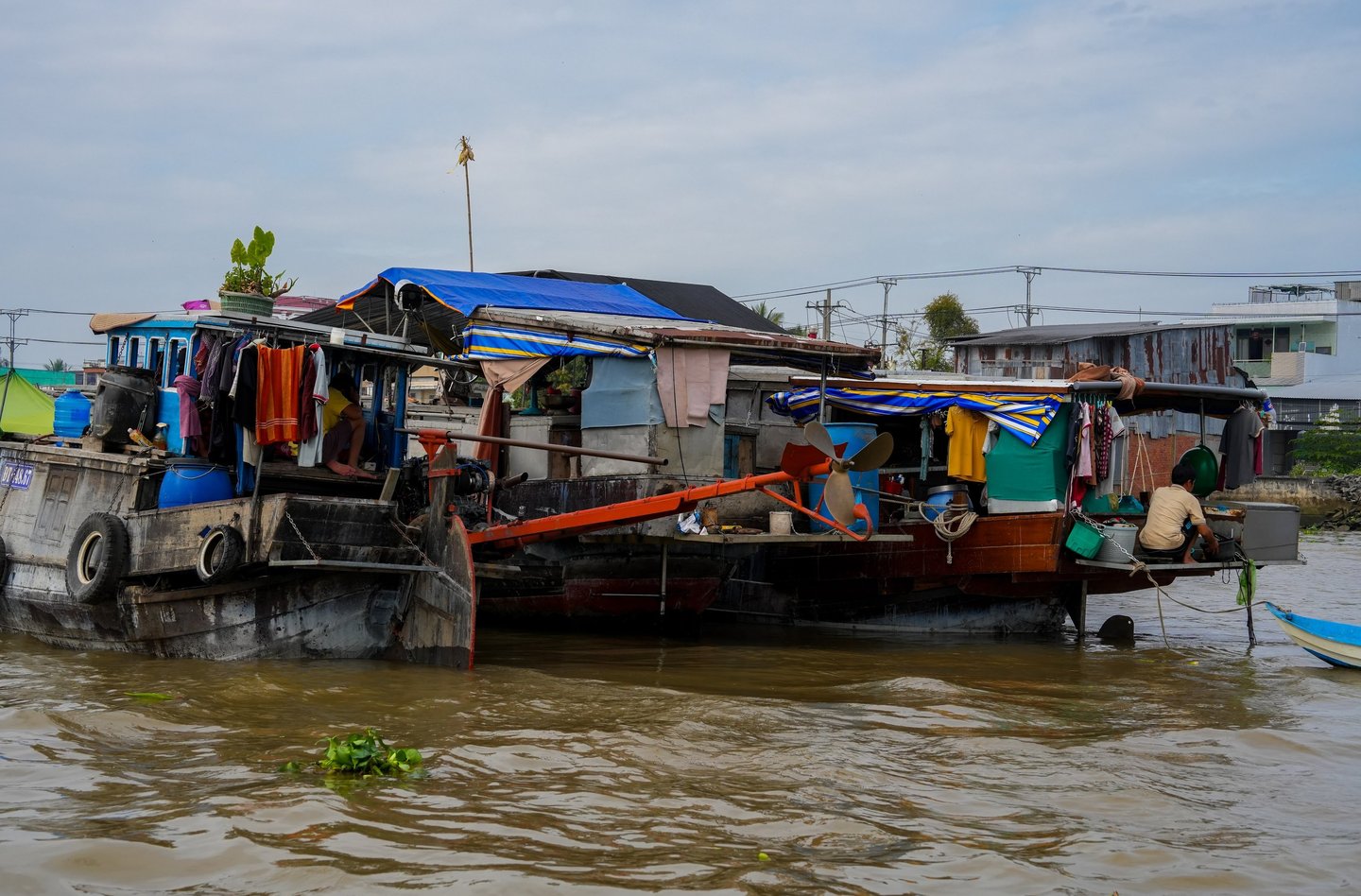
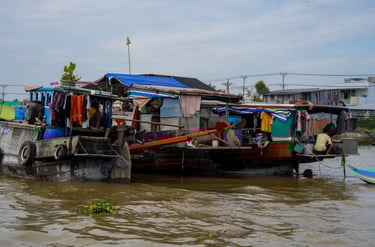
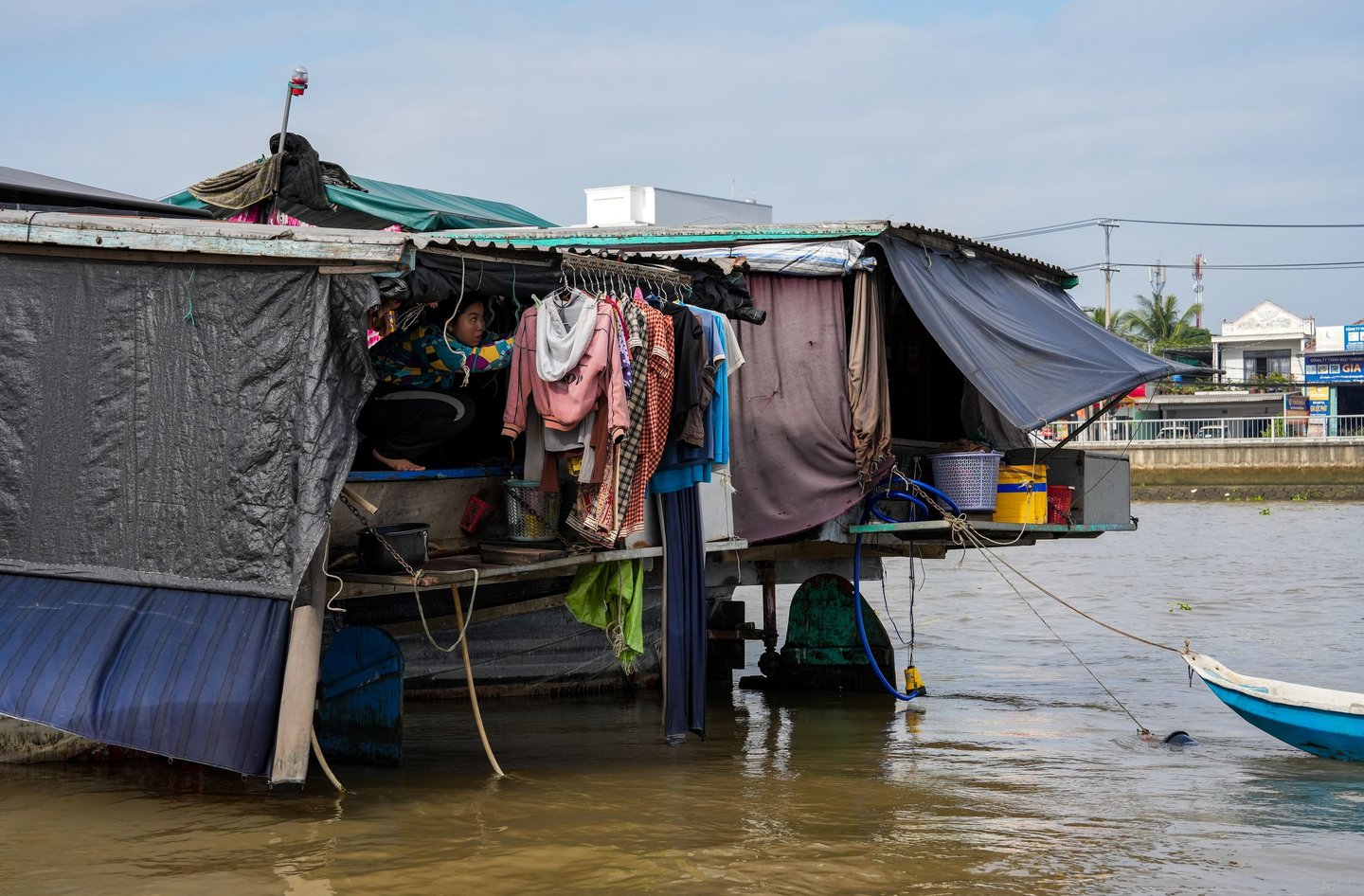
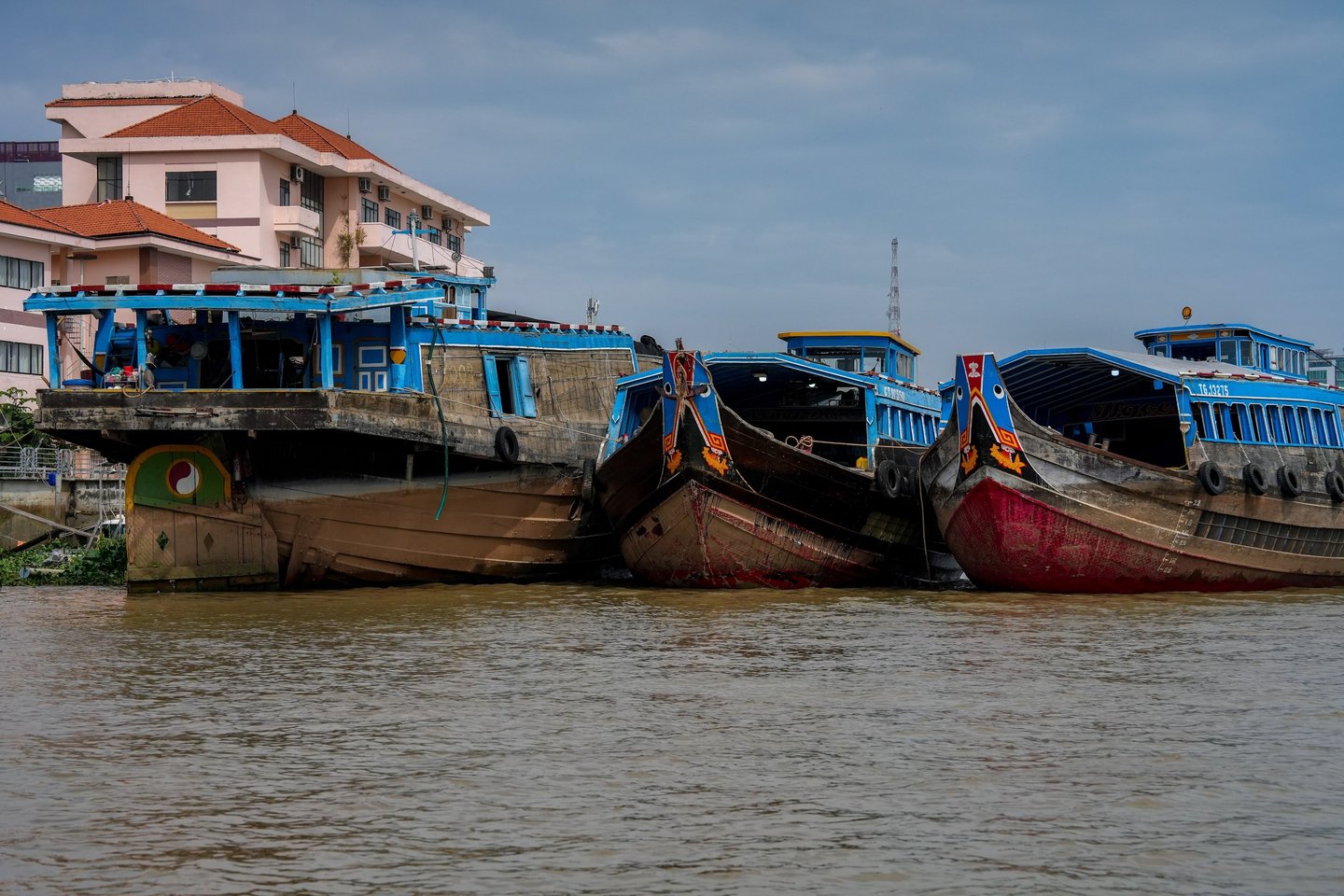
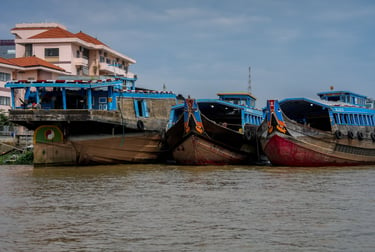

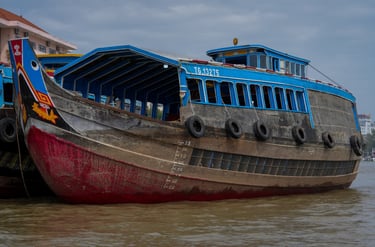
All photos from this trip were taken with my Sony Alpha 7 IV (ILCE-7M4) and Sony FE 24–70 mm f/2.8 GM II, capturing the textures, reflections, and real atmosphere of this early morning river life.
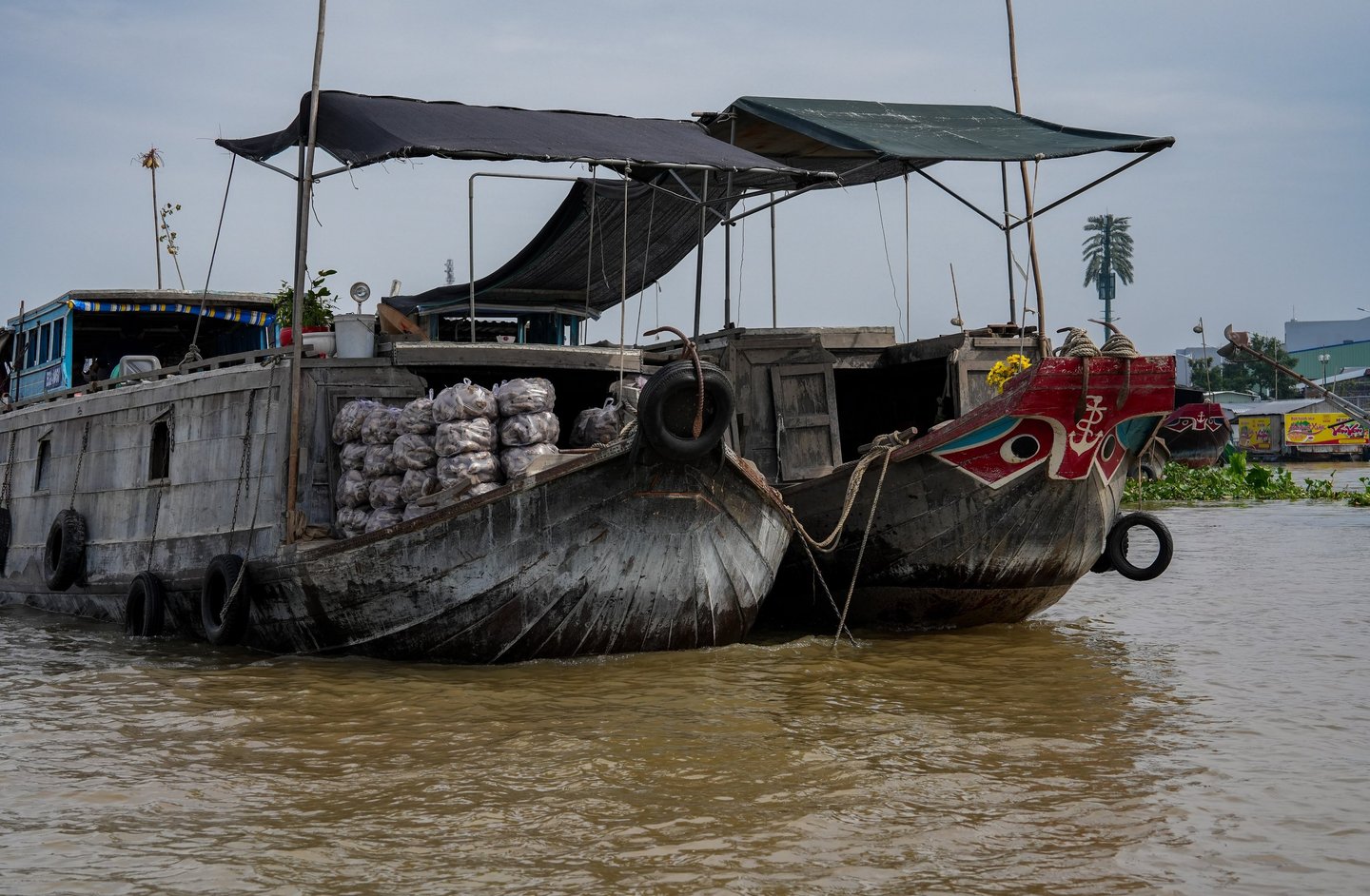
The Cai Rang Floating Market is more than just a place to visit — it’s a reminder of how the people of Vietnam remain deeply connected to their rivers, their trade, and their traditions.
Want to dive deeper into Vietnam? Check out strangphotography.com for more photo stories and insights. Simply use the buttons on the page to navigate through the different chapters and locations!
Contact
Fuel my creativity, If you enjoy my content, feel free to support me with a small tip. Thanks for being part of this journey!
If you enjoy my photography and the stories I capture across Southeast Asia, consider supporting my journey. Every coffee helps me stay on the road longer and document more unique locations. Thank you for being part of the adventure!
Traveling across Southeast Asia, I’ve found that having an eSIM ready the moment you land is an absolute game-changer. I highly recommend Saily – I’ve had a great experience with them myself. It offers unbeatable advantages, especially for ordering a Grab taxi right away or using Google Maps to find your way as soon as you exit the airport
This post contains affiliate links for Saily. If you sign up through my link, I may earn a small commission at no extra cost to you. I only recommend services like Saily because I use them personally and they’ve made my travels much easier.
You can license my photography directly through my Alamy portfolio. My work covers authentic travel and street photography across Southeast Asia — Bangkok, Ho Chi Minh City, and the wider region — shot on location, not staged.
Looking for street scenes, urban editorial content, or landscapes from Thailand and Vietnam? My full collection is on Alamy, with licensing options from standard editorial to extended commercial rights, depending on what your project needs.
Disclosure: the link below is an affiliate link. If you license an image through it, I earn a share of the sale at no extra cost to you. It goes straight back into keeping me on the road and shooting across Southeast Asia.
© 2025 Strangphotography – Southeast Lens. All rights reserved.
All photos taken by me in public spaces. Licensing available via Alamy.
Unauthorized use prohibited. For full legal info, see my Imprint