Southeast Lens - Documentation, Travel and Street Photography

Bangkok in Thailand – A City of Endless Stories, Travel, Documentary and Photography Inspiration
Few cities in Southeast Asia offer as many visual layers as Bangkok.
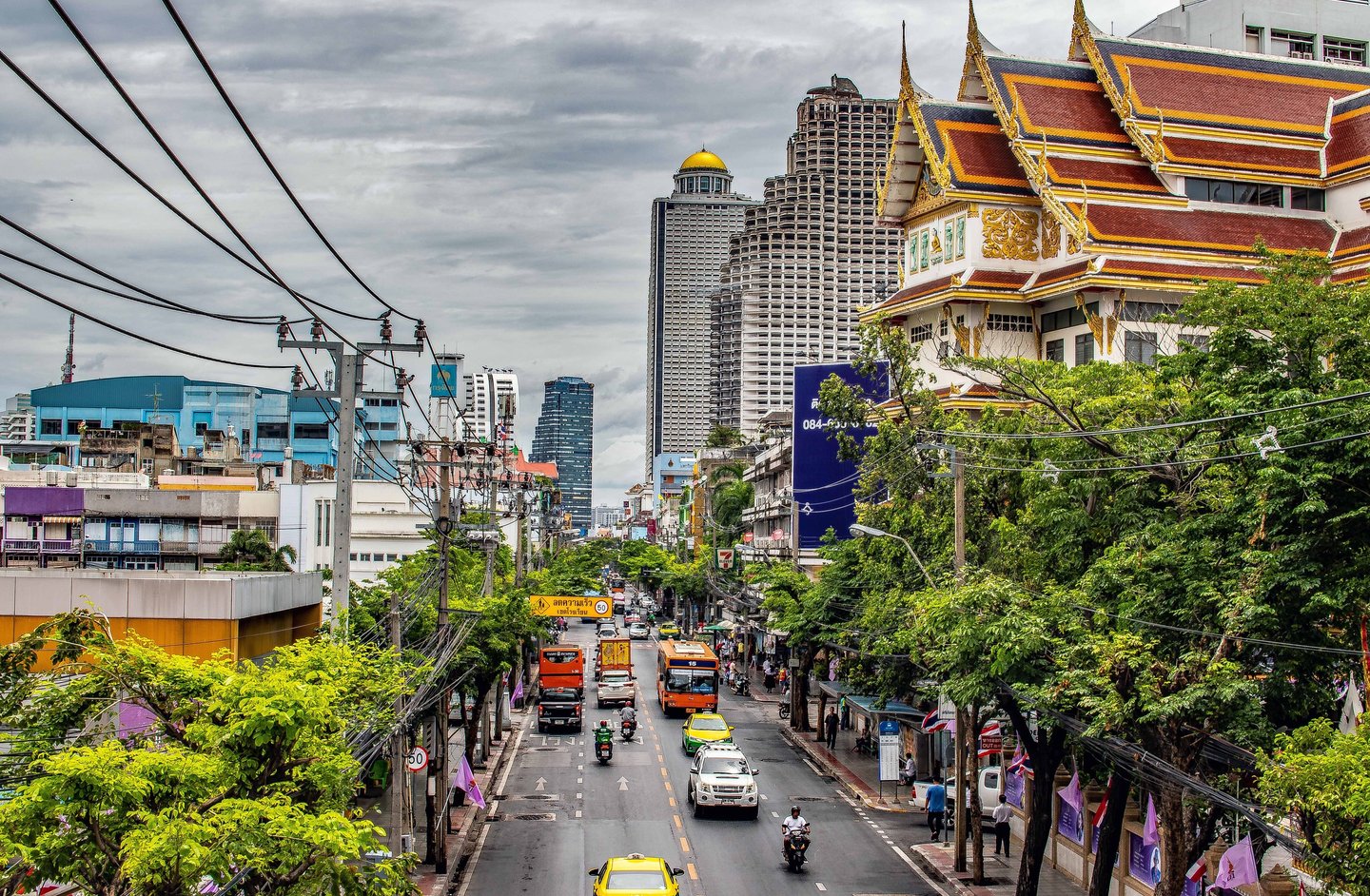
For photographers, travelers, and storytellers, the city is an endless source of inspiration — a place where historic temples, modern skyscrapers, narrow canal neighborhoods, and vibrant street life exist side by side.
Living in Pattaya for several years has made spontaneous trips to Bangkok part of our routine. My wife and I often plan short photography trips to the Thai capital — sometimes for three nights, sometimes just for a quick “One Night in Bangkok.”
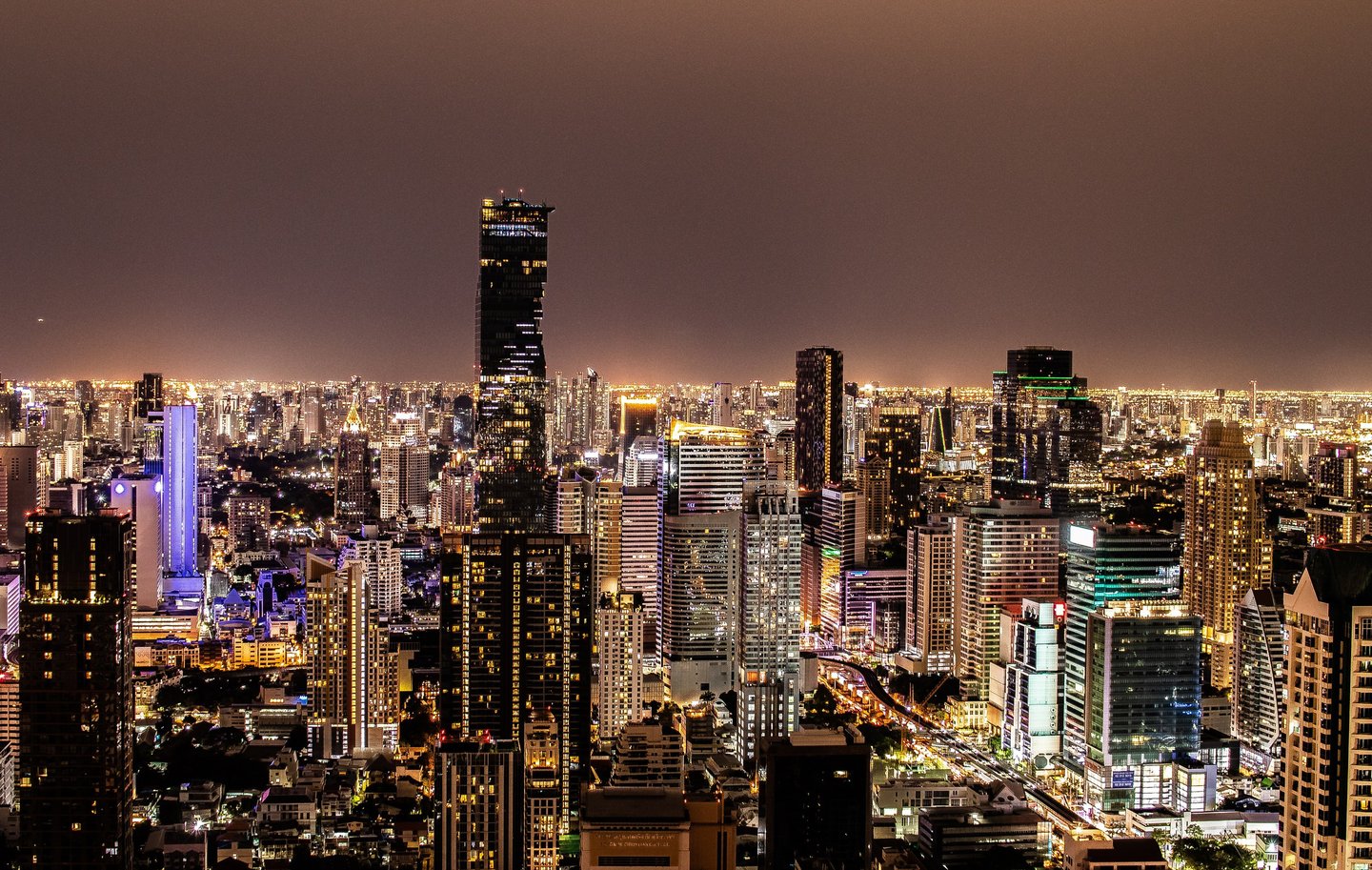
Each visit usually revolves around a specific photographic theme or location.
Sometimes it’s the intense street life of Yaowarat Road in Chinatown, Bangkok, sometimes the quieter atmosphere around Lumphini Park, the view from Bangkok’s growing number of rooftop bars, the early morning light at Wat Arun, or the traditional canal life along the Thonburi khlongs.
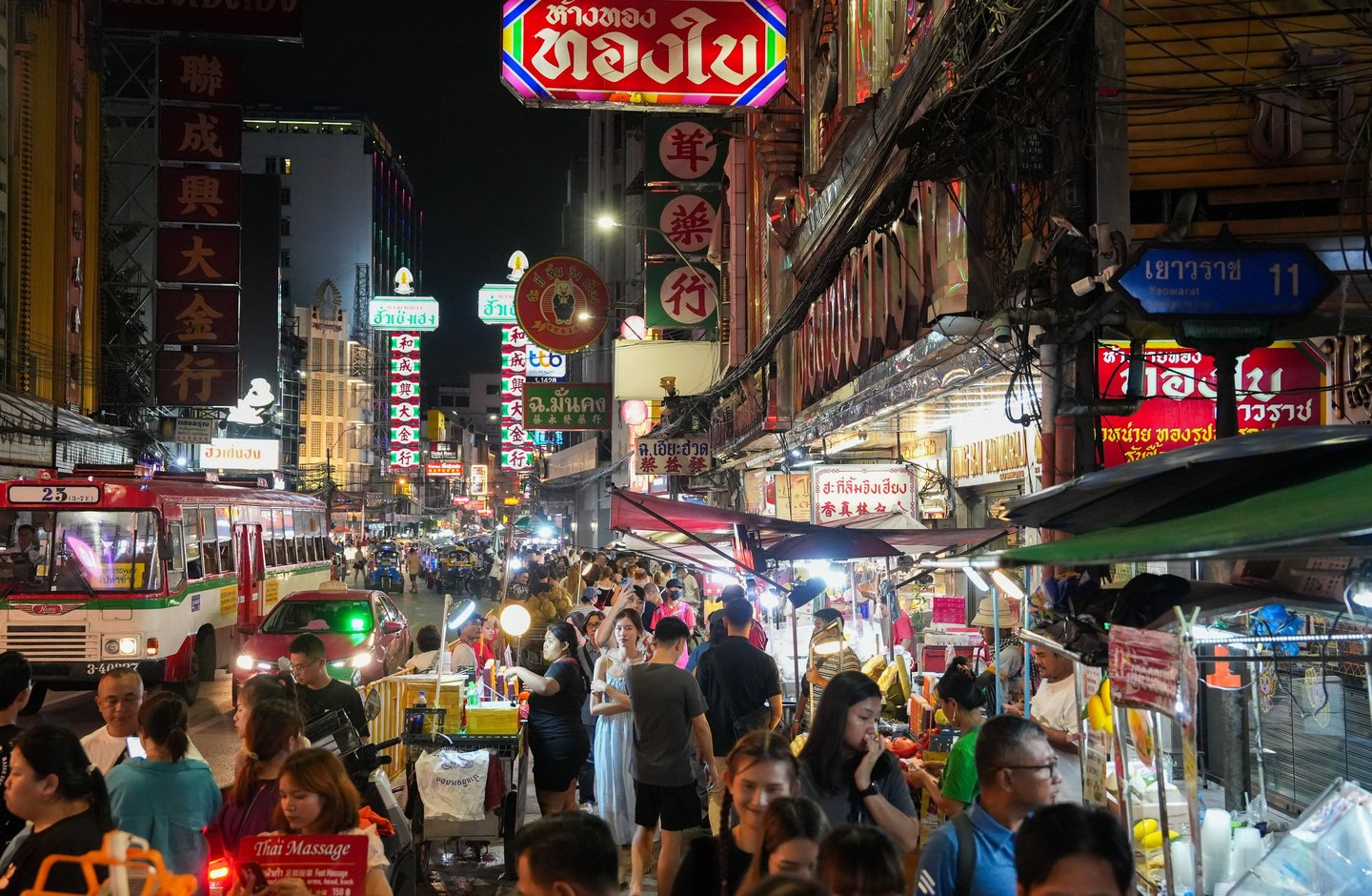
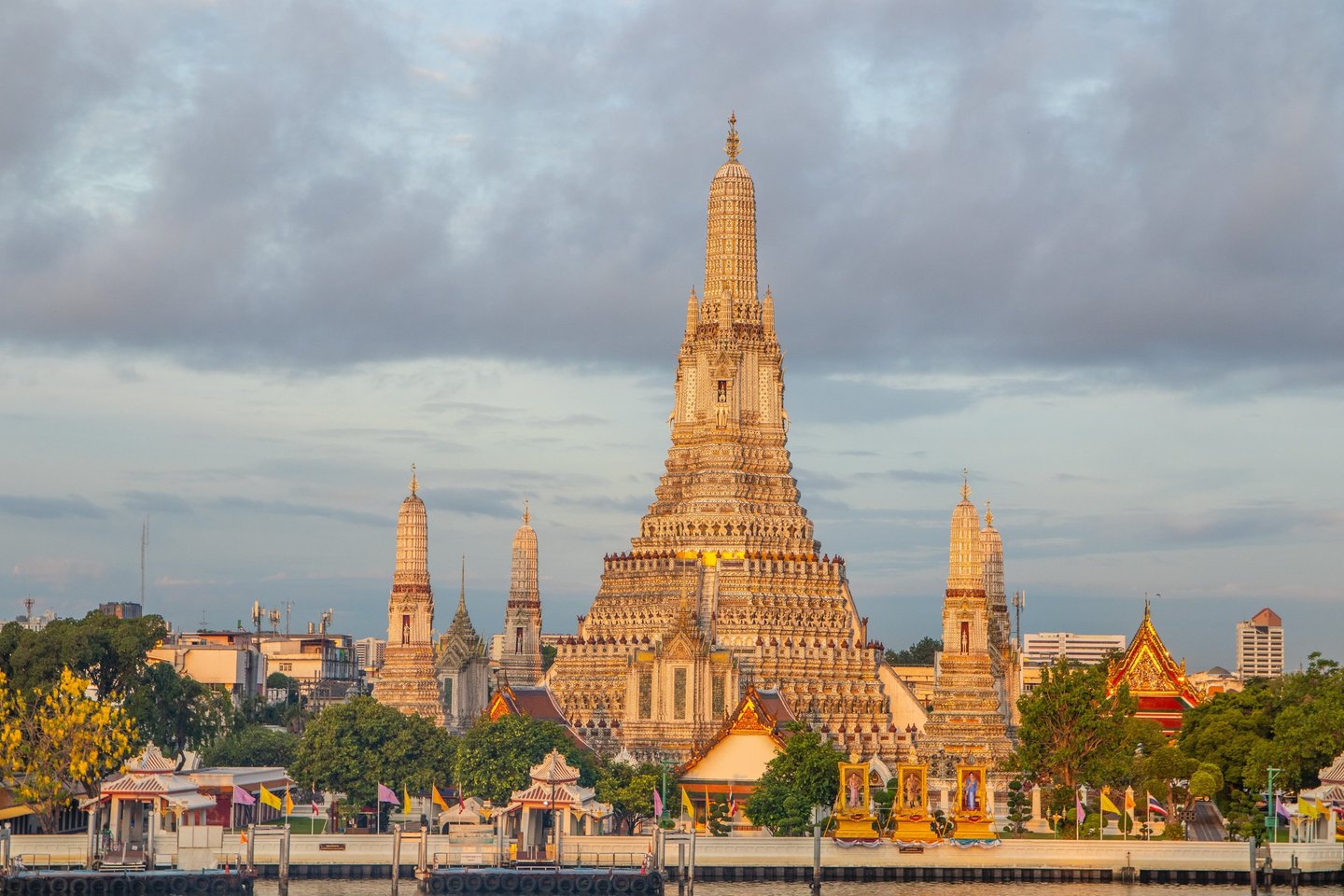
This section on strangphotography.com will therefore never really be finished.
Bangkok is constantly changing, and each visit reveals something new. The result will be an evolving collection of travel, documentary, and photography stories from one of Asia’s most fascinating megacities.
Most of the images shown here were captured with my Sony Alpha 7 IV paired with the Sony FE 24-70mm f/2.8 GM II, a combination that has proven extremely versatile for travel and documentary photography.
Some images were taken with my Canon EOS 77D and the Sigma 30mm f/1.4 DC HSM Art, a setup I still occasionally enjoy using.
A Brief Look at the City
Bangkok, officially known as Krung Thep Maha Nakhon, developed from a small trading settlement along the Chao Phraya River into one of the most dynamic cities in Southeast Asia.
The city became the capital of Siam in 1782 when King Rama I established the royal center on the eastern side of the river, an area that today includes landmarks such as the Grand Palace and many of the country’s most important temples.
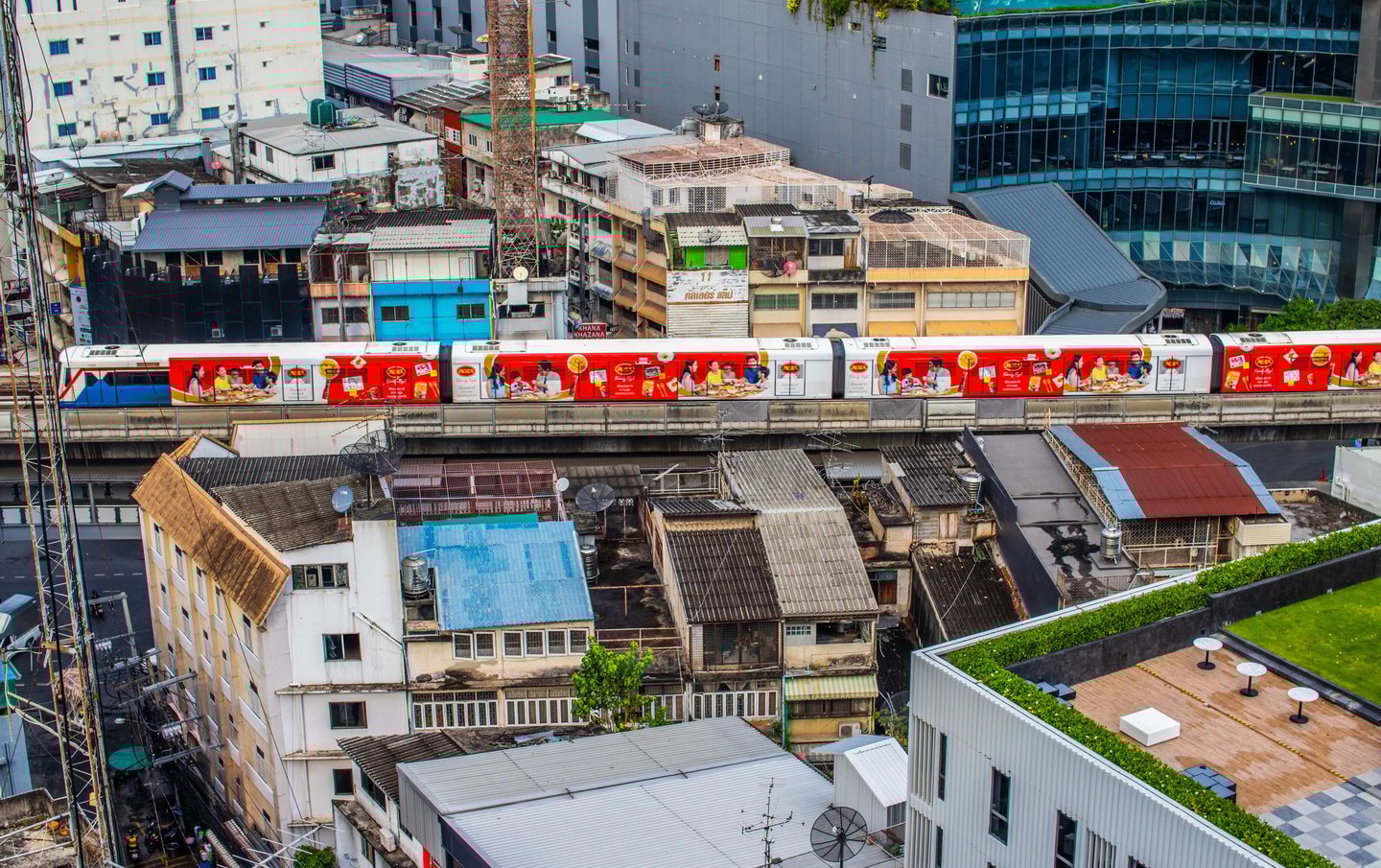
Over time Bangkok expanded far beyond its historic core. Today it is a vast metropolitan area of more than 10 million people, combining traditional neighborhoods, modern business districts, elevated train systems, river transport routes, and an intricate network of canals known as khlongs.
This mixture of history, infrastructure, culture, and daily urban life is exactly what makes Bangkok such a rewarding destination for travel and documentary photography.
Travel, Documentary and Photography Inspiration
The stories on this page are not meant to be a classic travel guide.
Instead, they reflect how I experience Bangkok through the lens — observing street scenes, architecture, light, and the rhythm of daily life.
Some sections will focus on well-known places, others on smaller details that often go unnoticed. But together they form a growing visual archive of a city that never really stands still.
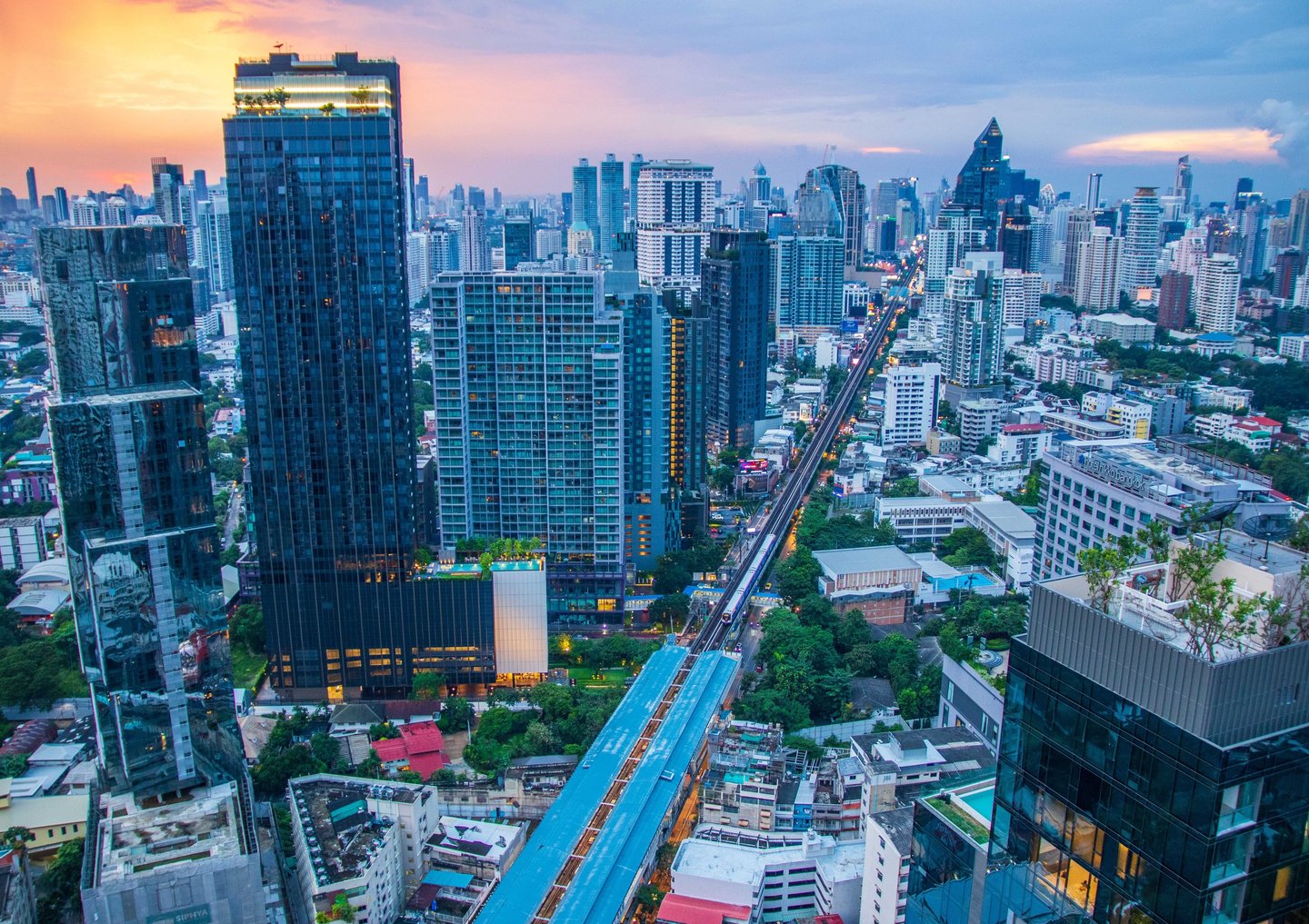
For travelers planning a visit to Thailand, for social media creators searching for authentic visual stories, and for editors of travel magazines looking for documentary imagery from Bangkok, this section will continue to grow with every new trip.
In a city like Bangkok, there is always another story waiting just around the corner.
Bangkok: Skip the Airport Stress, Stay Connected
When I’m on the ground in Thailand for a shoot, I don’t have time to waste. The last thing I want after landing at Suvarnabhumi (BKK) or Don Mueang (DMK) is to stand in line at a mobile booth and lose the best light of the day.
I’ve been using the Saily eSIM across Southeast Asia for years. I set it up before I fly, and I’m online the second the plane touches the tarmac.
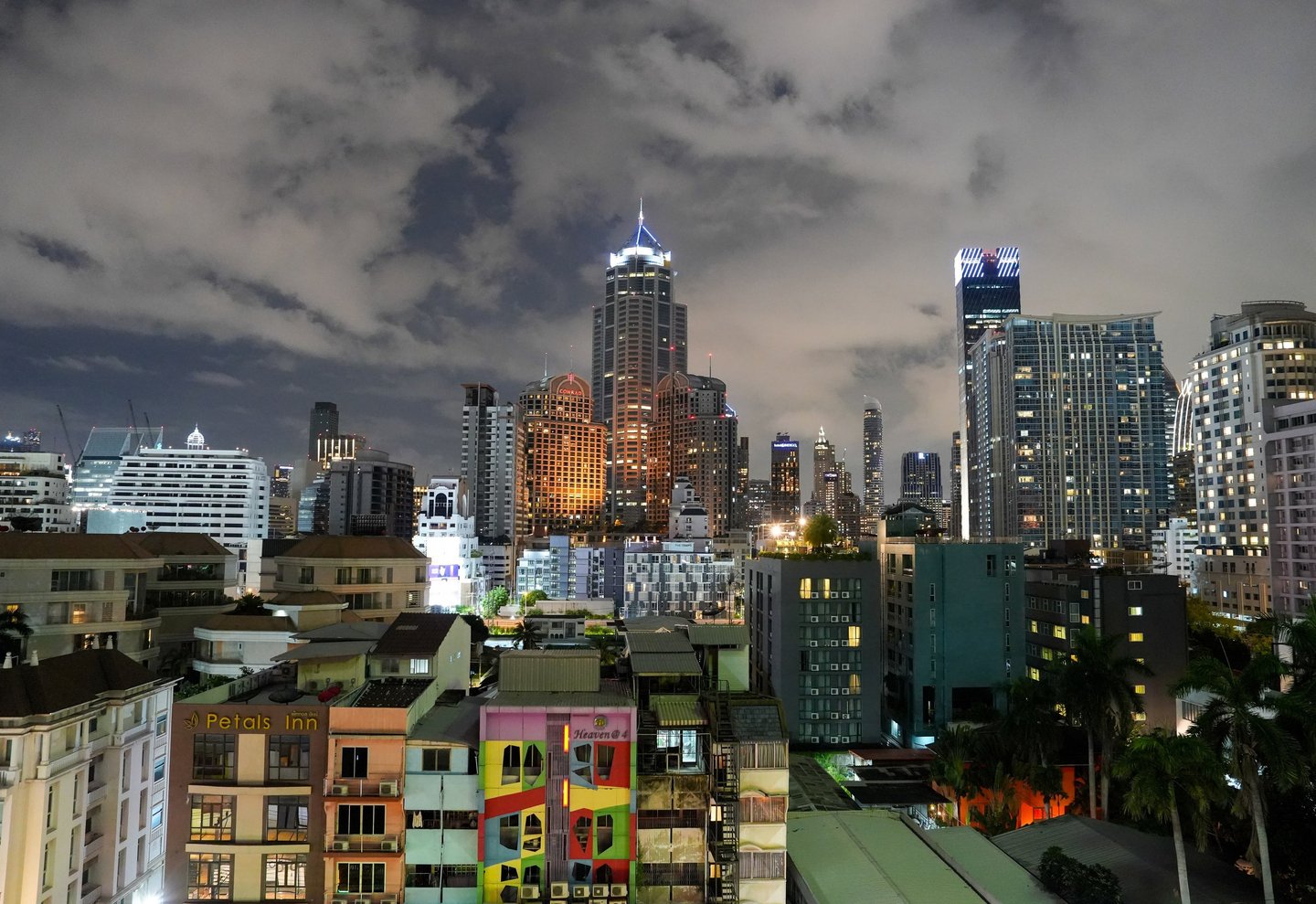
Why it’s essential for my workflow:
Instant Navigation: I have immediate access to Google Maps and my Grab Taxi App.
Beating the "Taxi Mafia": Arriving without data often leaves you at the mercy of airport drivers with sky-high price demands. With Grab, I get a fixed, fair price immediately and avoid the "taxi mafia" scams entirely.
Efficiency: No queues, no language barriers, and no swapping physical SIM cards. I get straight into a car and focus on the story I’m there to tell.
Saily has been a reliable tool in my kit for a long time. If you want to arrive like a pro and avoid the local markup, this is how I do it.
As a Saily partner, I may earn a small commission if you purchase through my link—at no extra cost to you. I only recommend tools I use and trust myself.
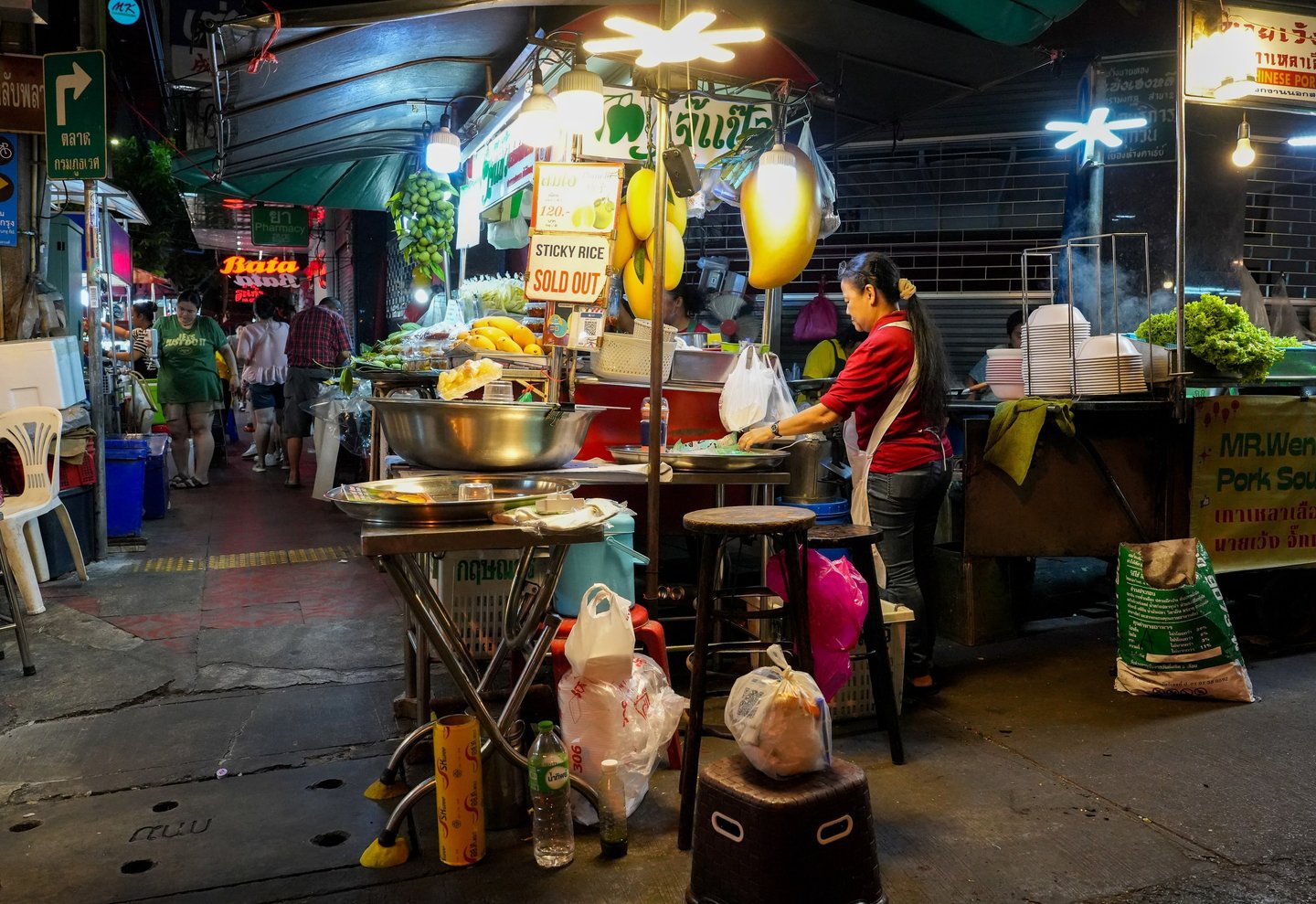
Yaowarat Road at Night – The Electric Heart of Bangkok’s Chinatown
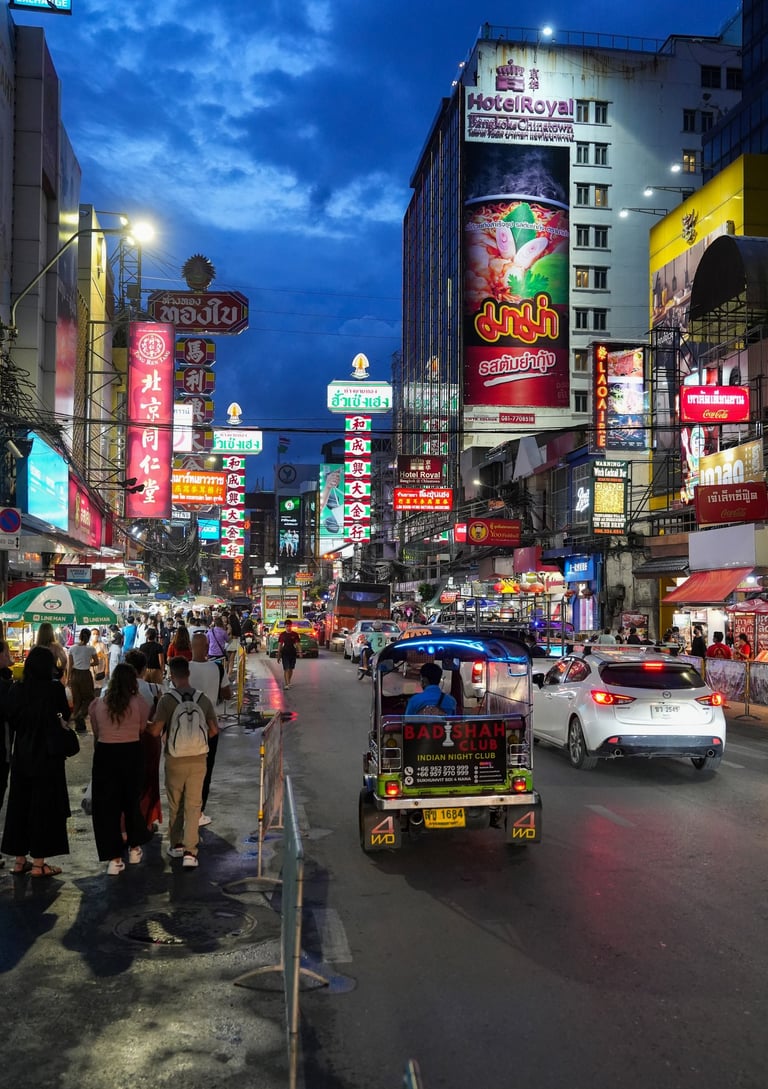
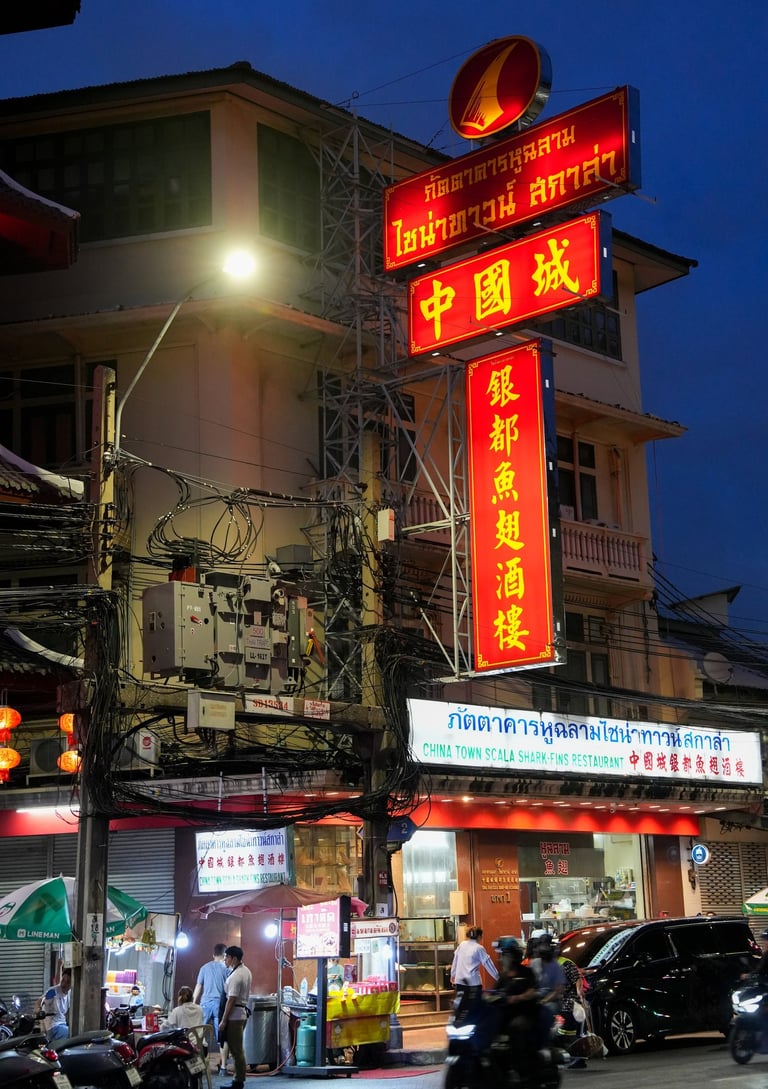
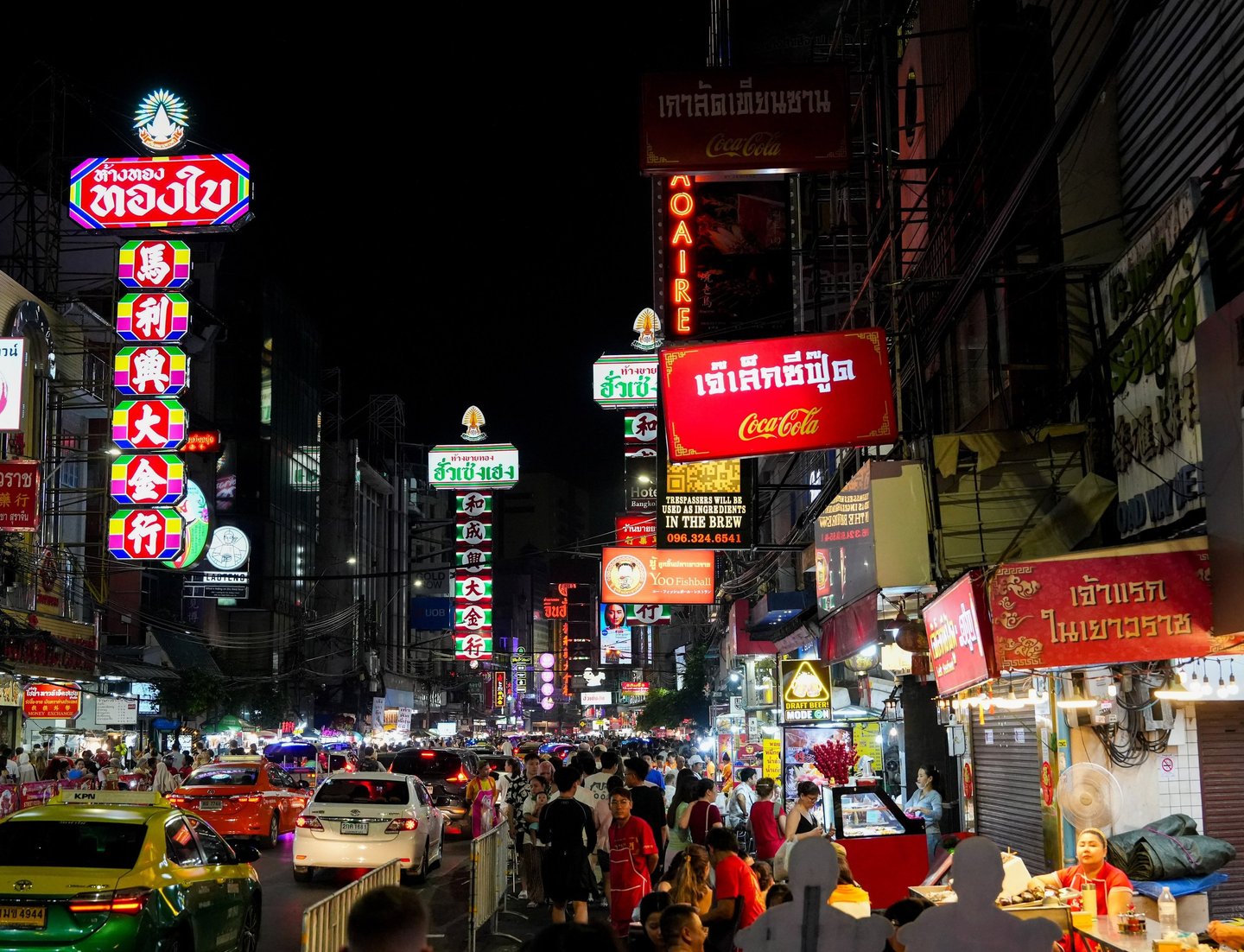
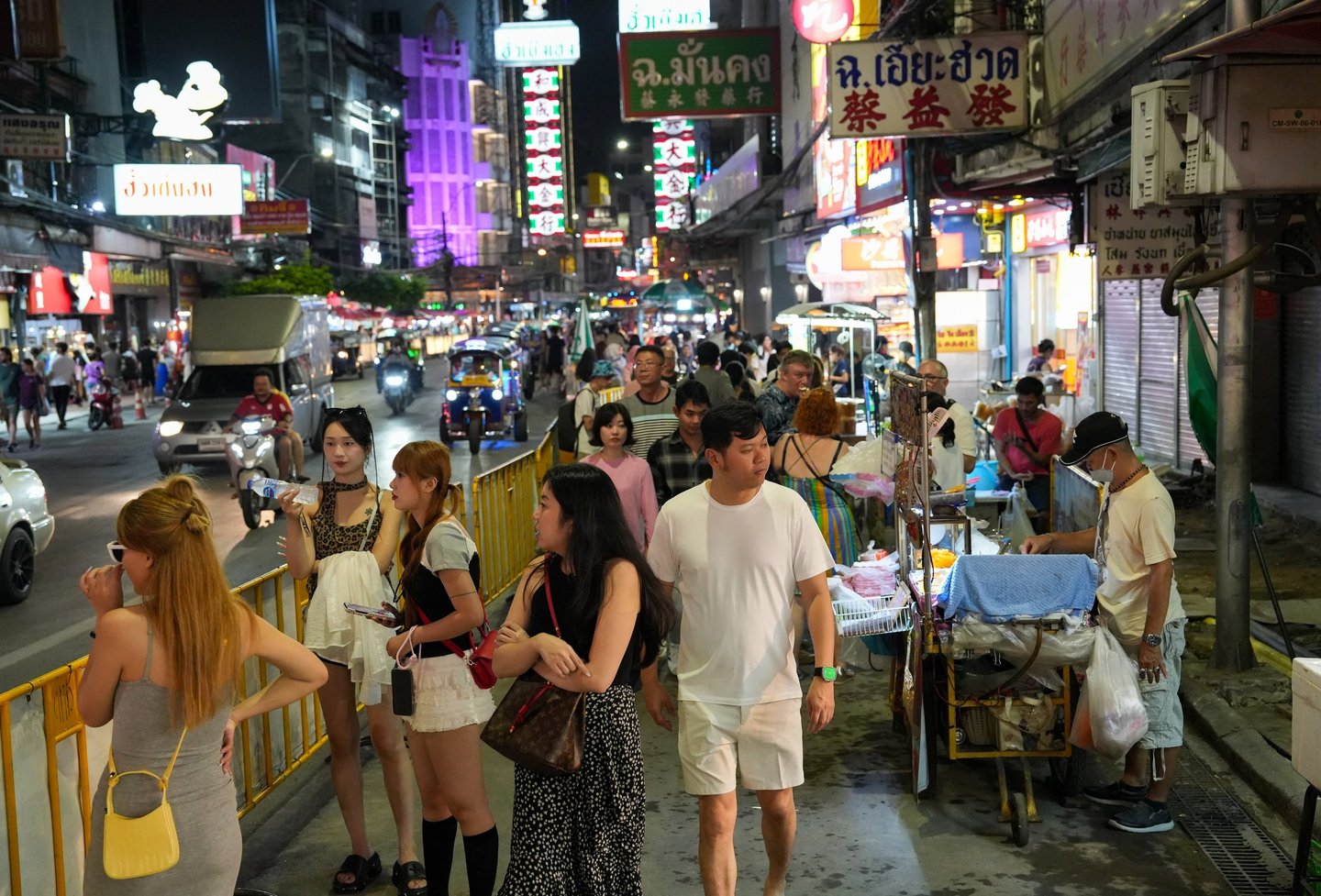
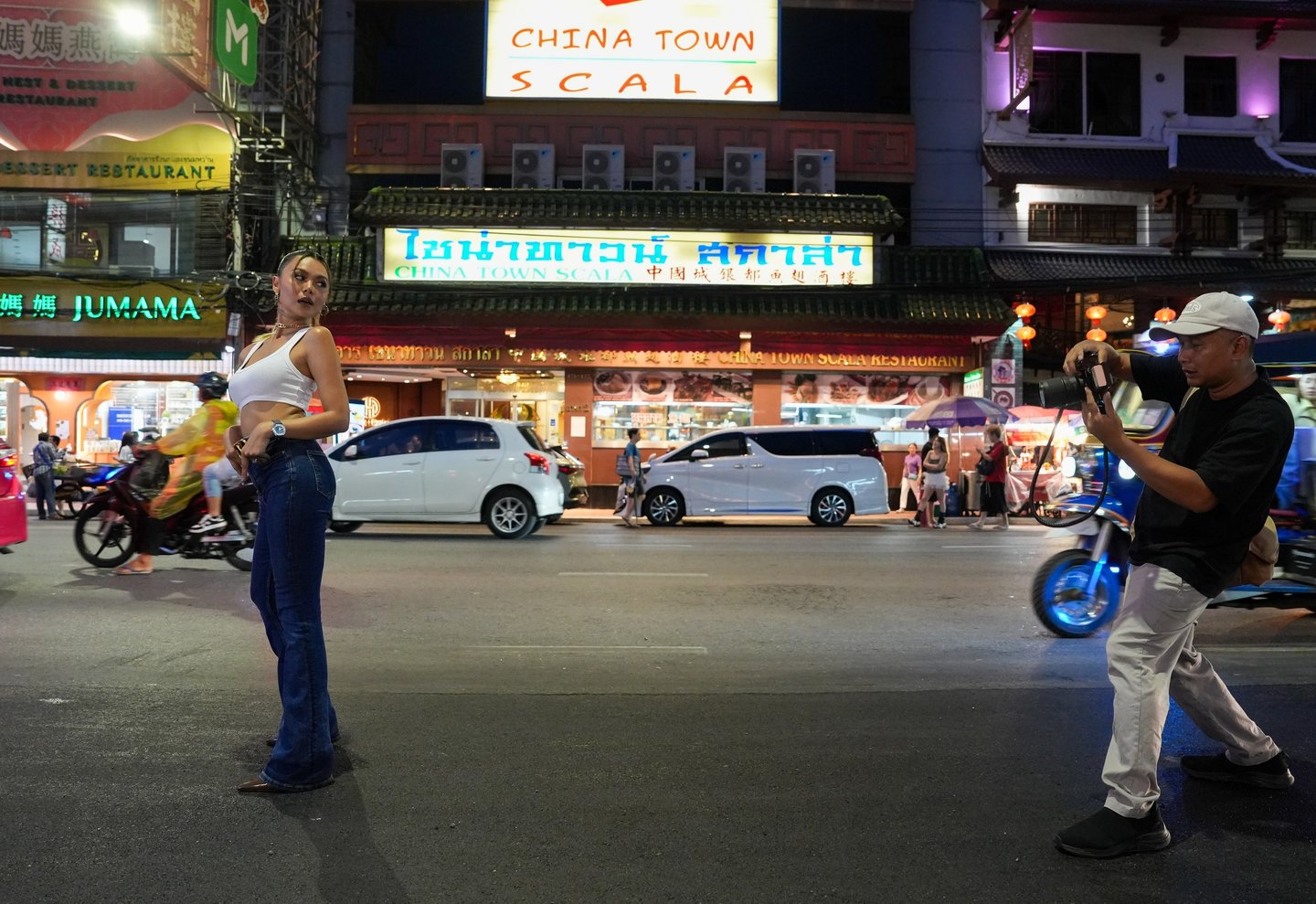
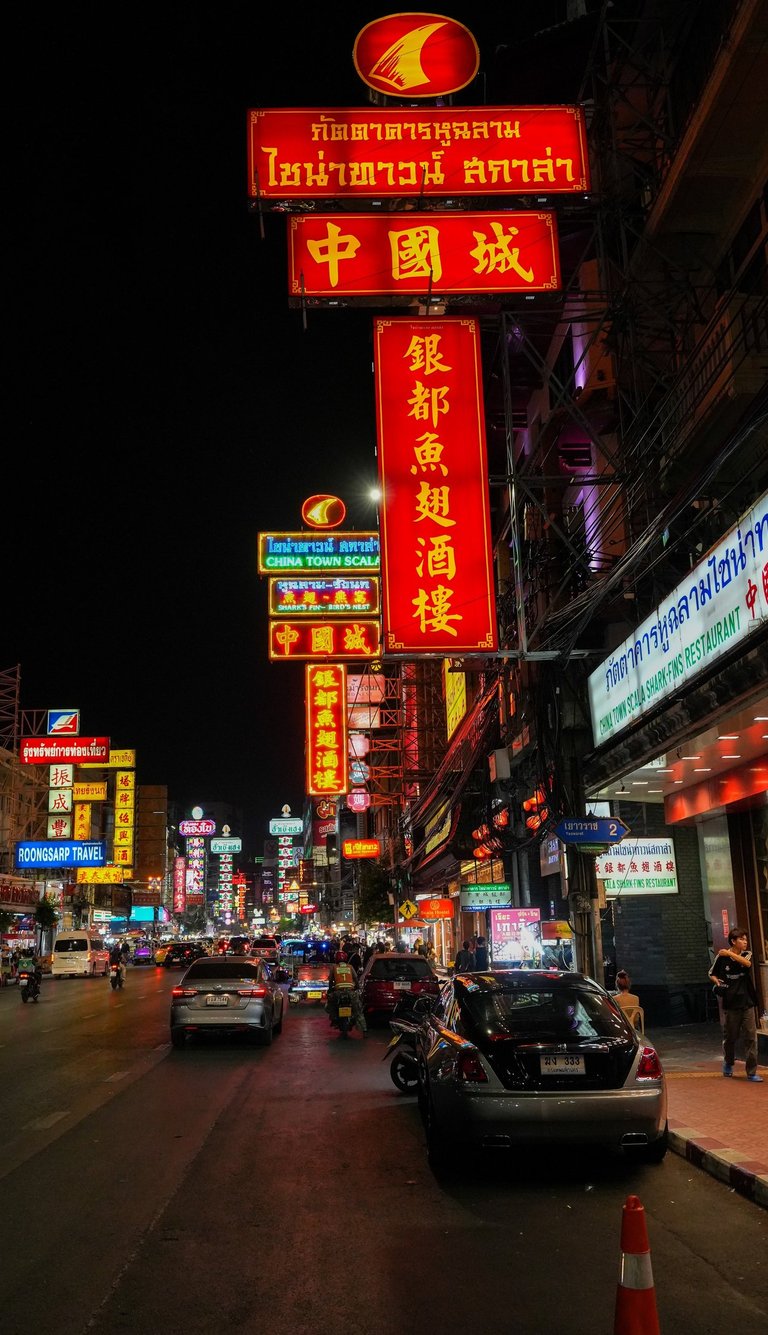
When the sun sets over Bangkok, one part of the city begins to glow in a very different way: Yaowarat Road, the beating heart of Chinatown, Bangkok.
This is one of those places where night photography and street photography come together almost effortlessly.
For this series I worked mainly with my Sony Alpha 7 IV paired with the Sony FE 24-70mm f/2.8 GM II. In an environment like Yaowarat Road, that setup really shows its strengths. Even at ISO values between 5000 and 6400, the camera delivers impressive image quality — something that makes a huge difference when working in fast-moving night scenes.
A Street Full of Energy
Yaowarat Road is the main artery of Bangkok’s Chinatown, an area that dates back more than two centuries. Chinese traders settled here in the late 18th century after Bangkok became the capital of Siam. Over time the district developed into one of the most important commercial centers in the city.
Today the street still carries that spirit of trade and migration — but after dark it transforms into something entirely different.
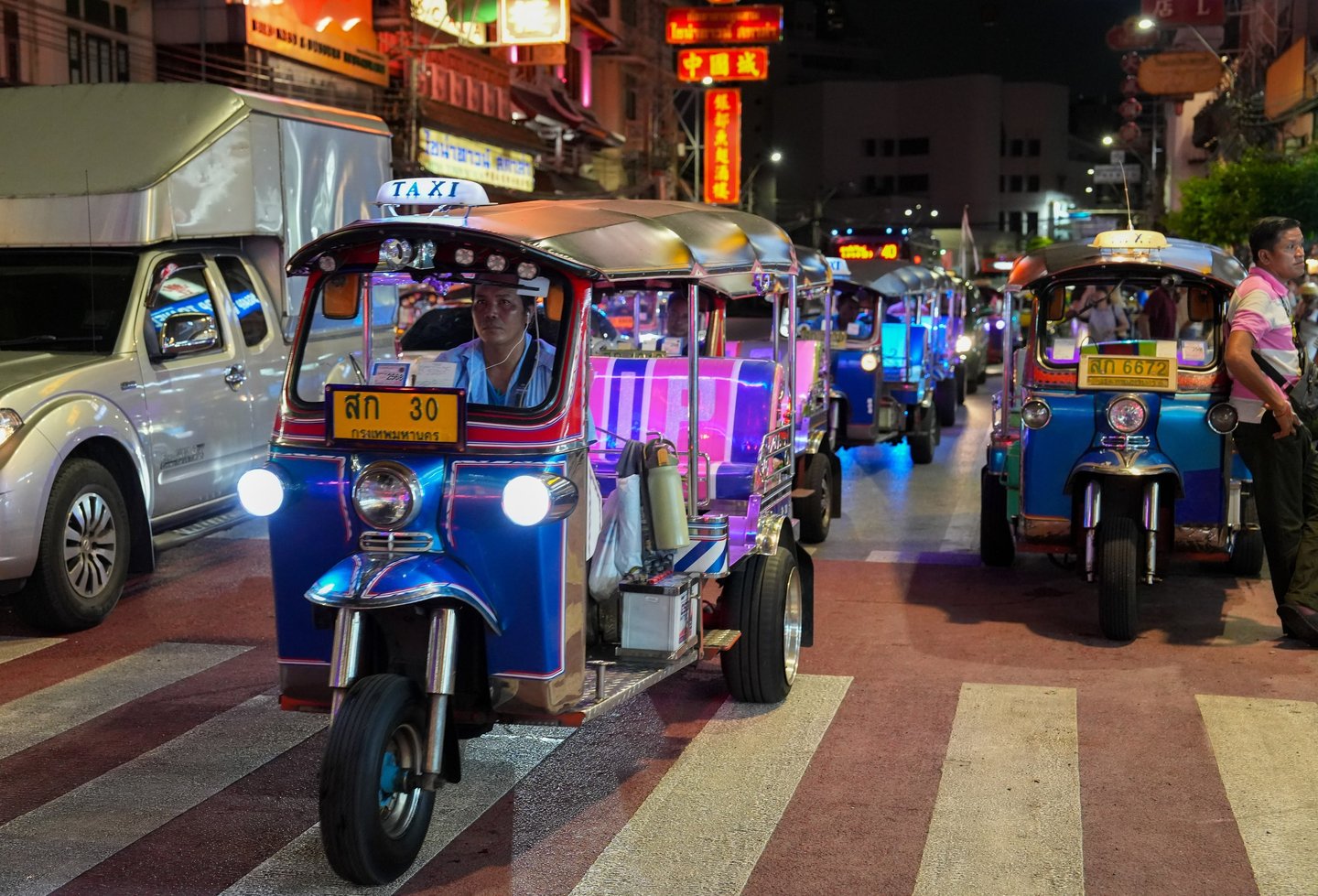
Neon signs in bright Chinese characters light up the street. Restaurants open their doors and the sidewalks fill with food stalls offering everything from seafood and noodles to desserts and tropical fruit. The density of people here is remarkable. Locals, travelers, and night photographers all move through the same narrow spaces, creating an atmosphere that feels chaotic yet strangely organized.
For anyone interested in street photography in Bangkok, this is one of the most exciting places in the city.
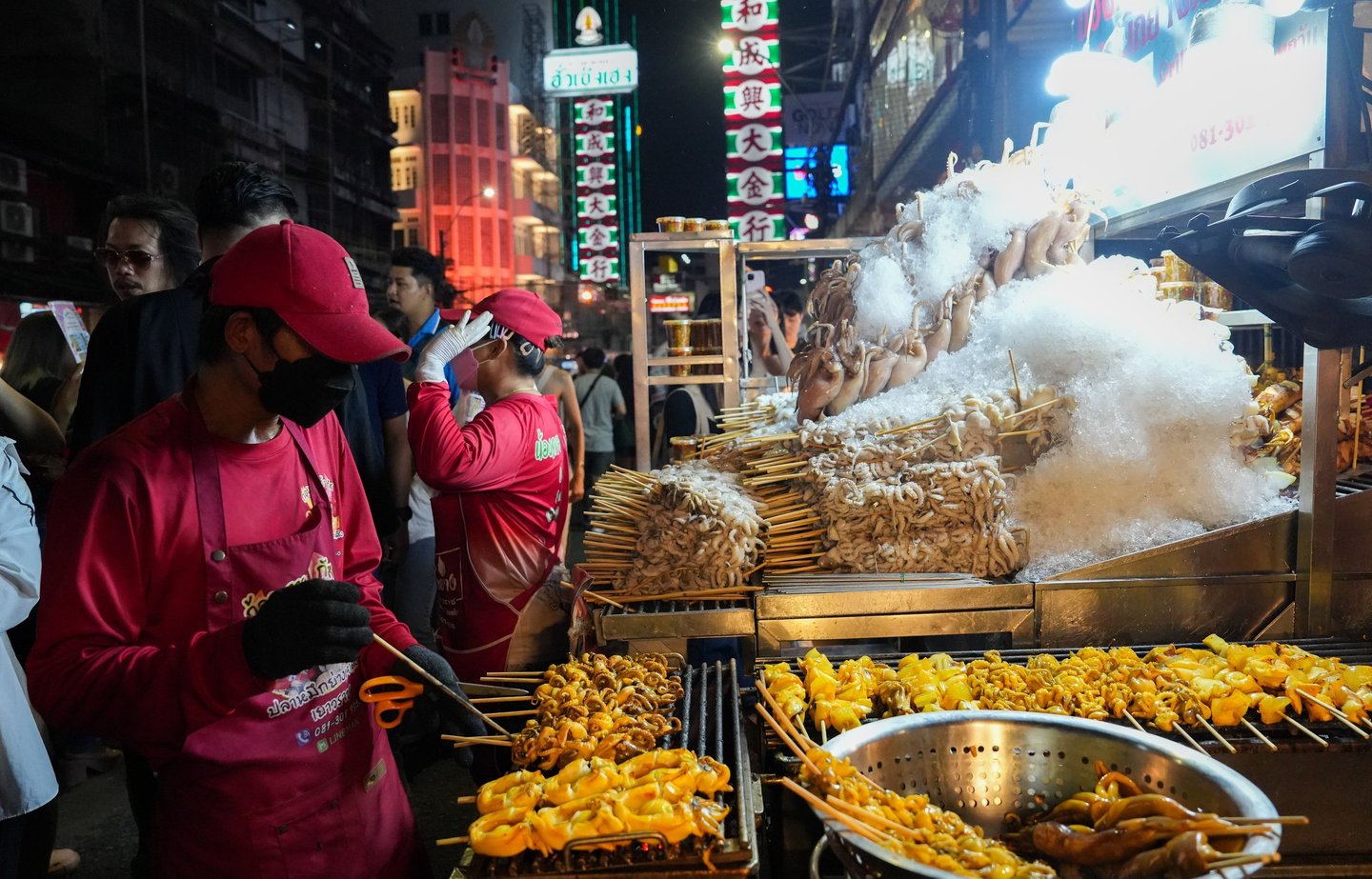
Scenes Between Neon Lights and Side Streets
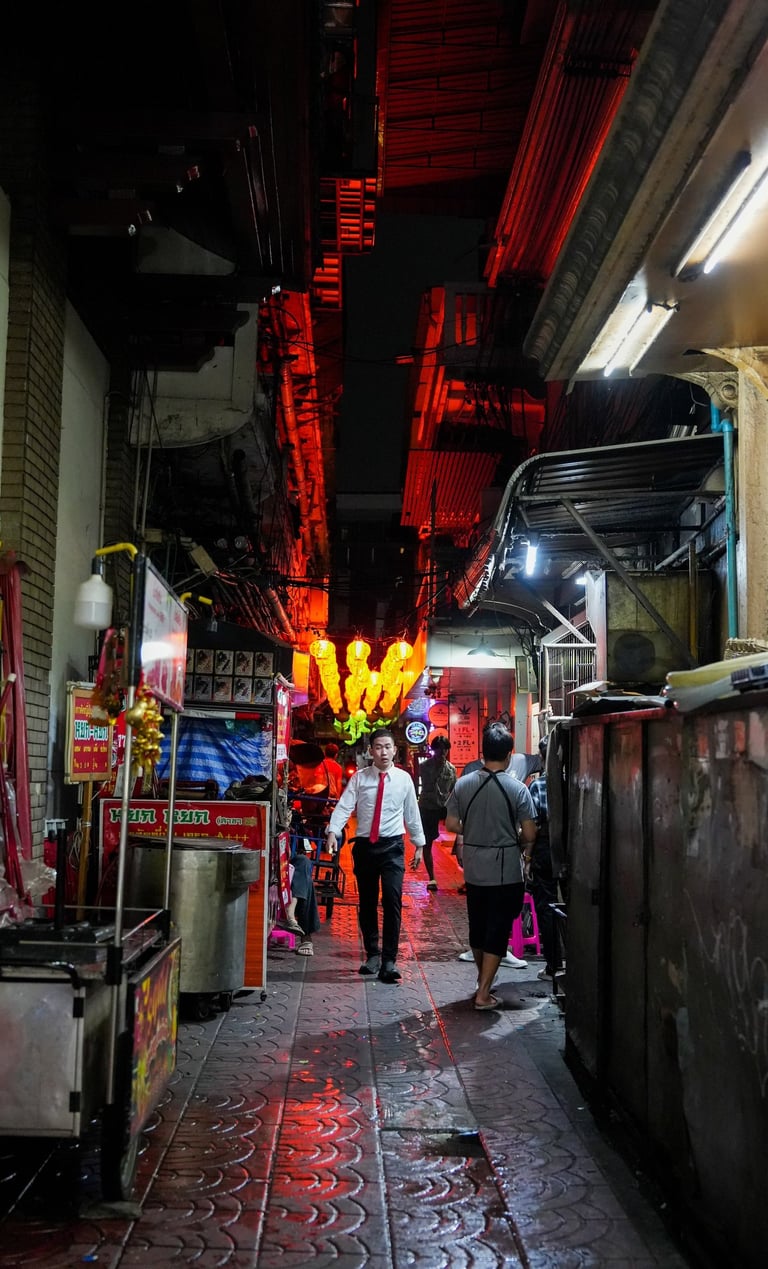
While the main road is full of bright lights and traffic, the nearby alleys reveal a different side of Chinatown.
In small side streets and narrow lanes you’ll find simple street food kitchens and family-run restaurants preparing meals right on the sidewalk. The smells, the noise, and the constant movement create an environment where something interesting seems to happen every few meters.
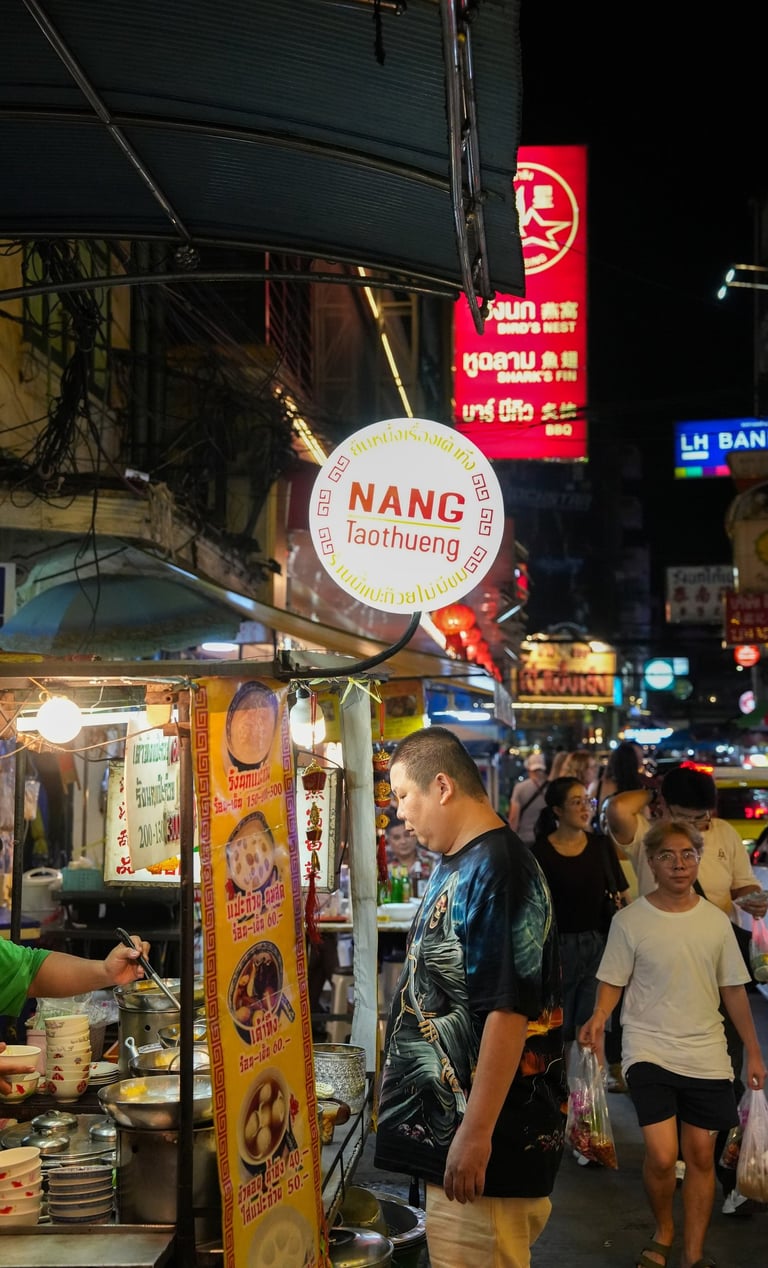
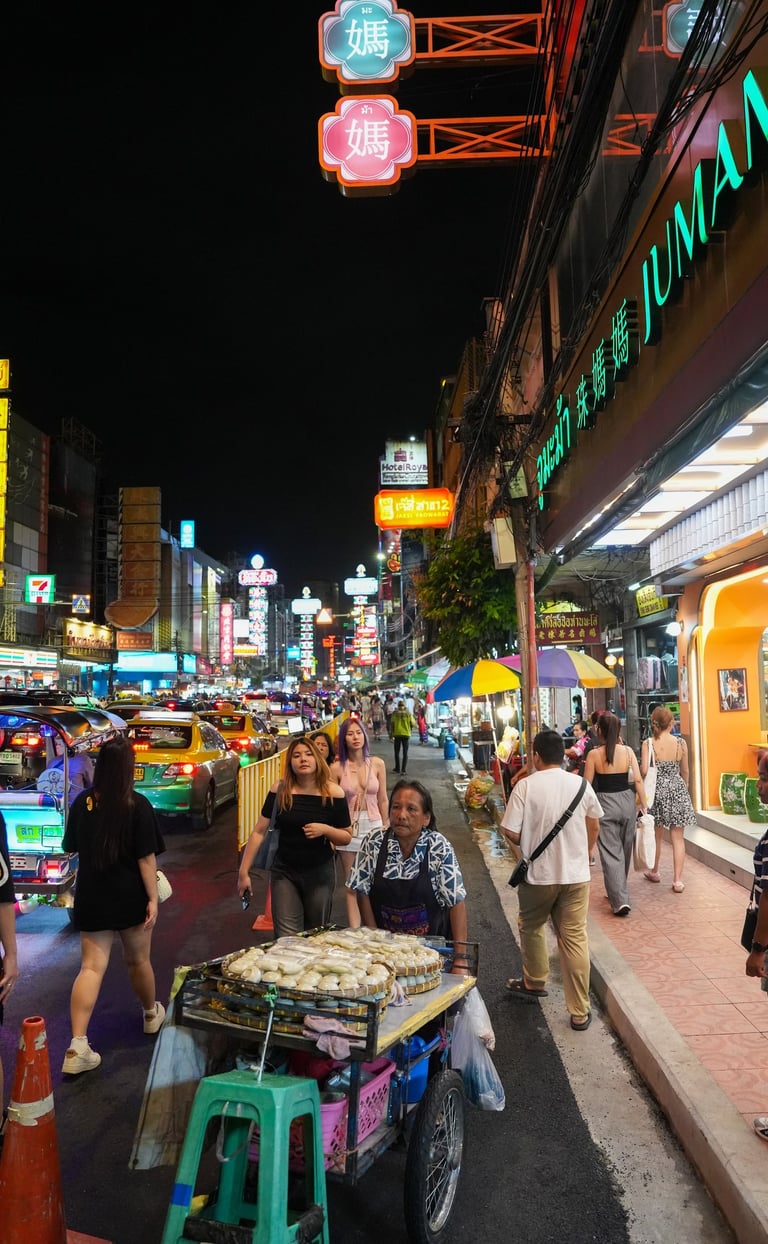
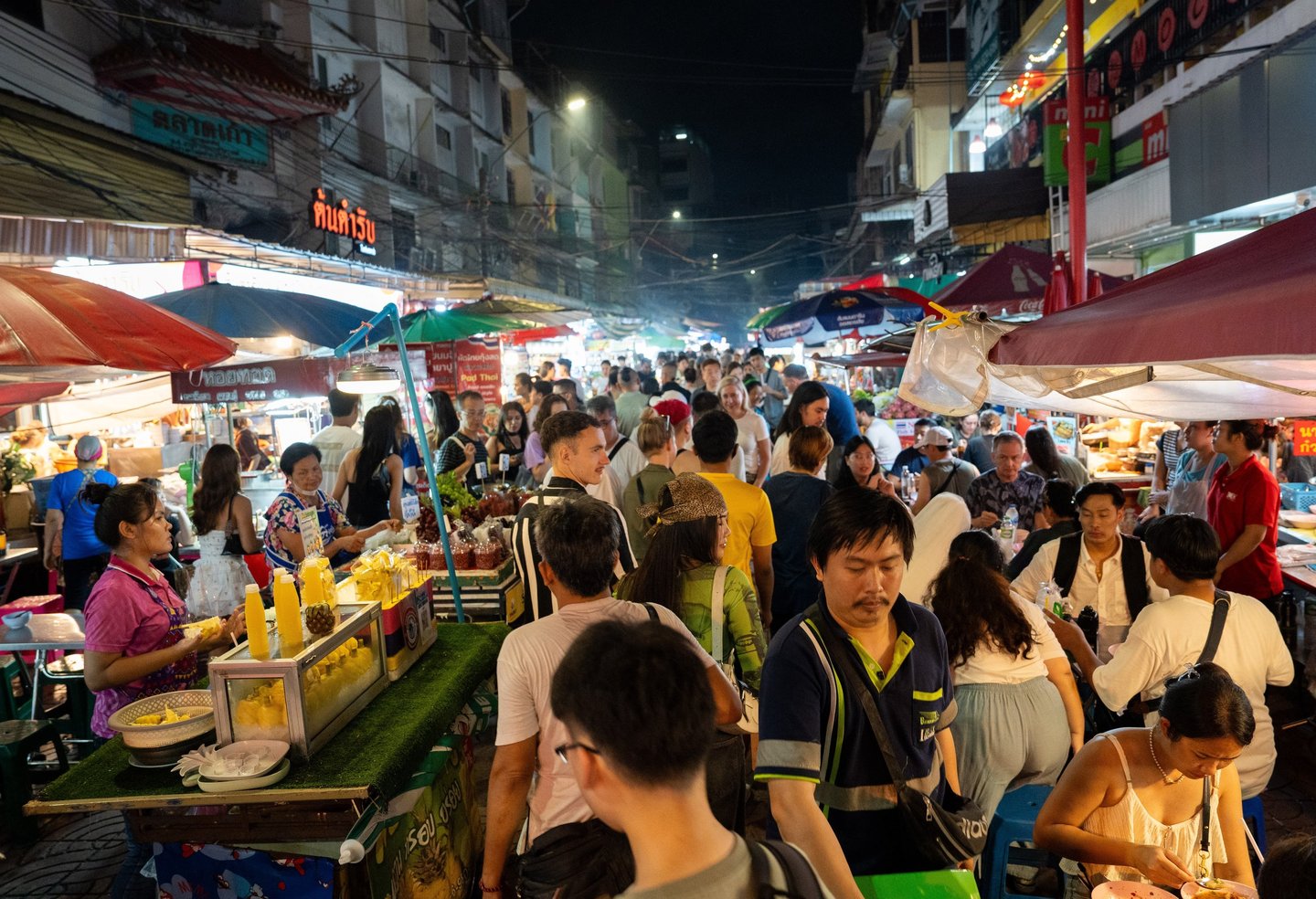
In one darker back alley behind a restaurant, I photographed a scene that could easily have come from a film noir moment — a sharply dressed Asian man in a white shirt and tie standing in the shadows, giving the impression that some kind of quiet deal was taking place.
Moments like that are exactly why documentary street photography works so well in this part of Bangkok. The city writes its own stories — you just need to be there with the camera.
Tuk-Tuks, Hotels, and Nightlife
Along Yaowarat Road you’ll also see countless tuk-tuk taxis waiting for passengers, their colorful lights blending into the neon glow of the street.
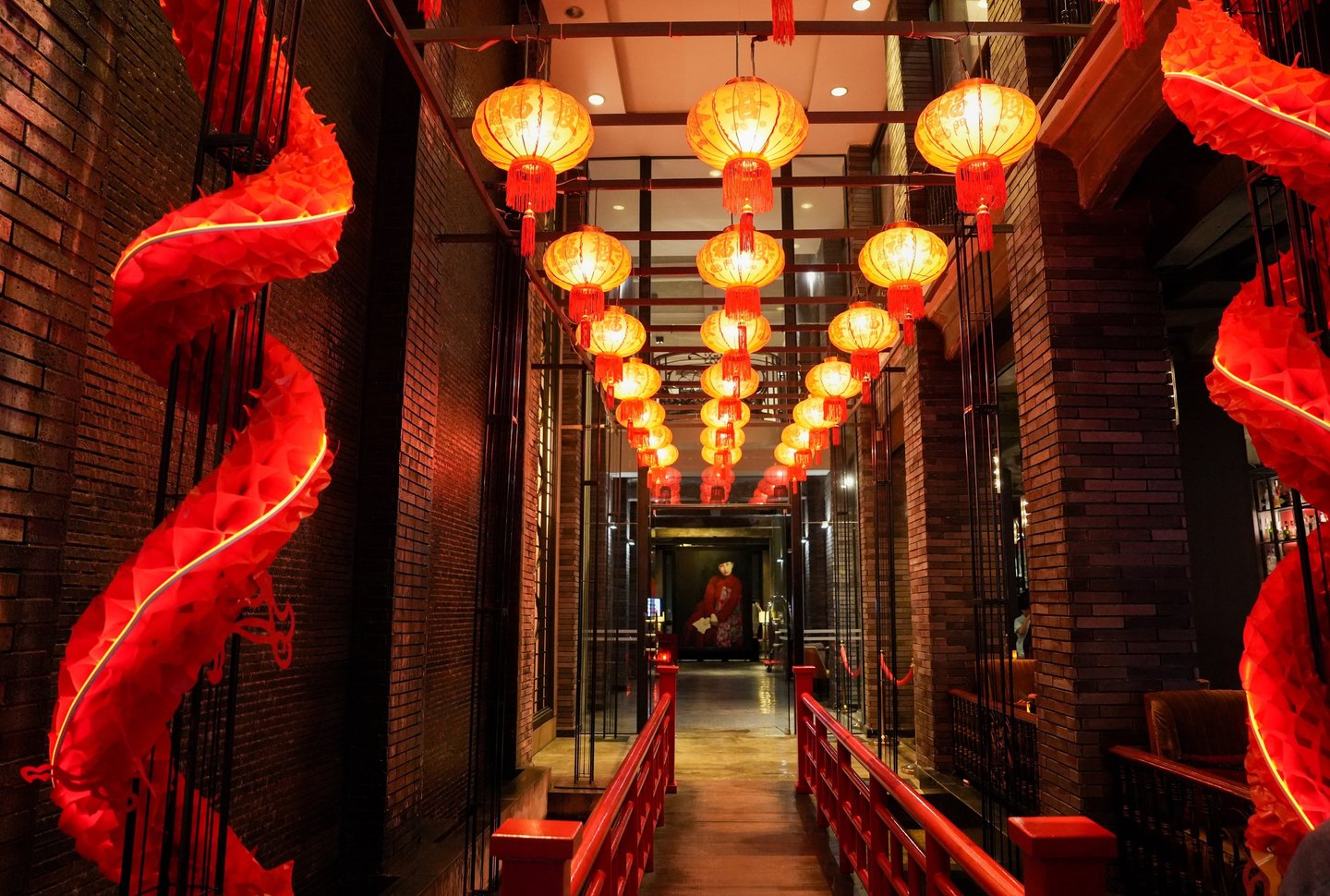
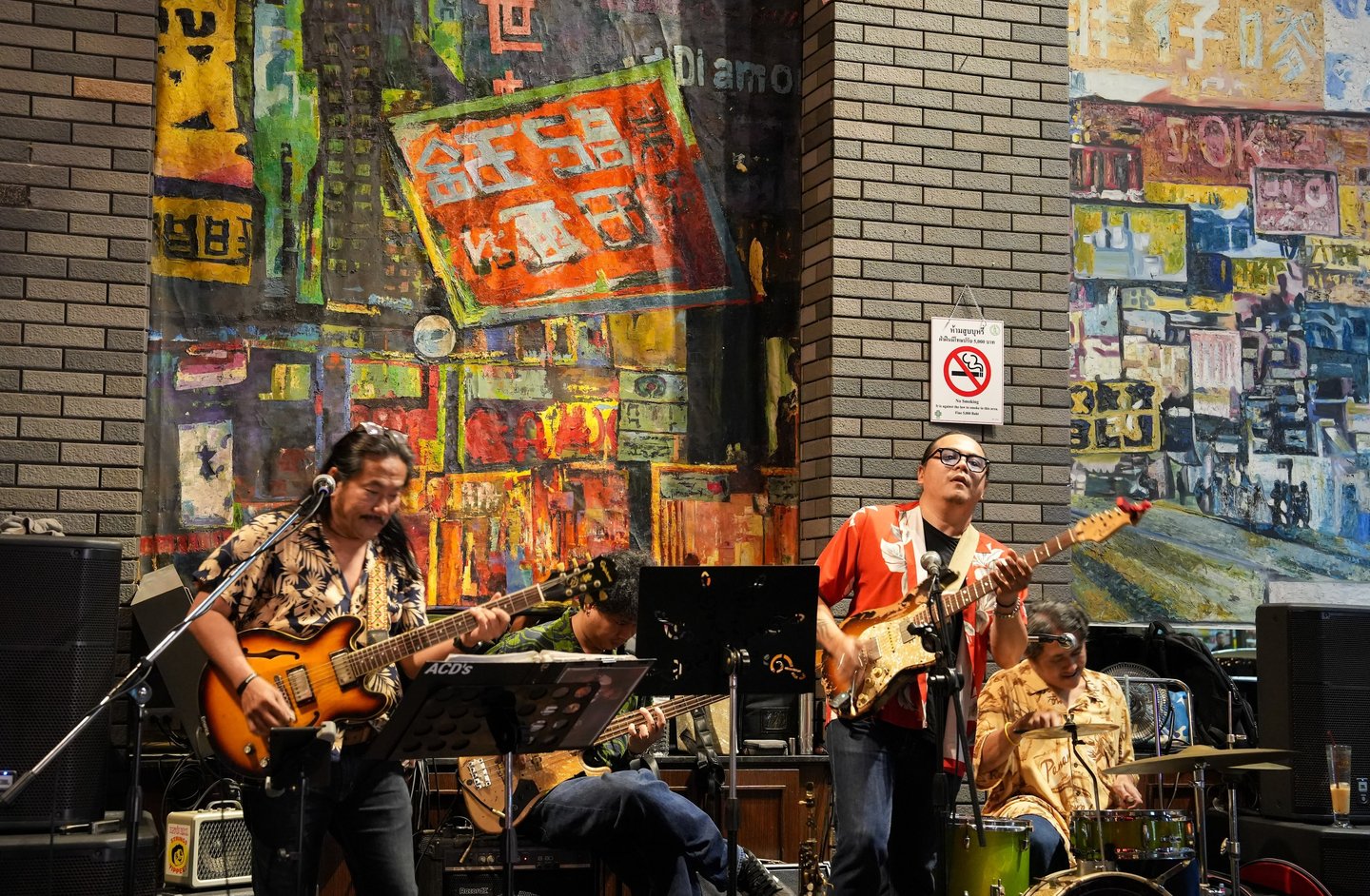
One particularly striking location I photographed was the entrance of the Shanghai Mansion Bangkok, right in the center of Chinatown. The building stands out with its distinctive Chinese-style design and bright red entrance.
Inside the foyer, an Asian rock band was performing live when I passed through — adding another layer to the atmosphere of the neighborhood.
Bangkok Street Photography at Its Best
For me, Yaowarat Road is one of the most fascinating places in Bangkok to photograph at night. The mix of history, migration, food culture, neon lights, and street life creates an environment that constantly changes from moment to moment.
This is not a quiet place, and that’s exactly what makes it interesting.
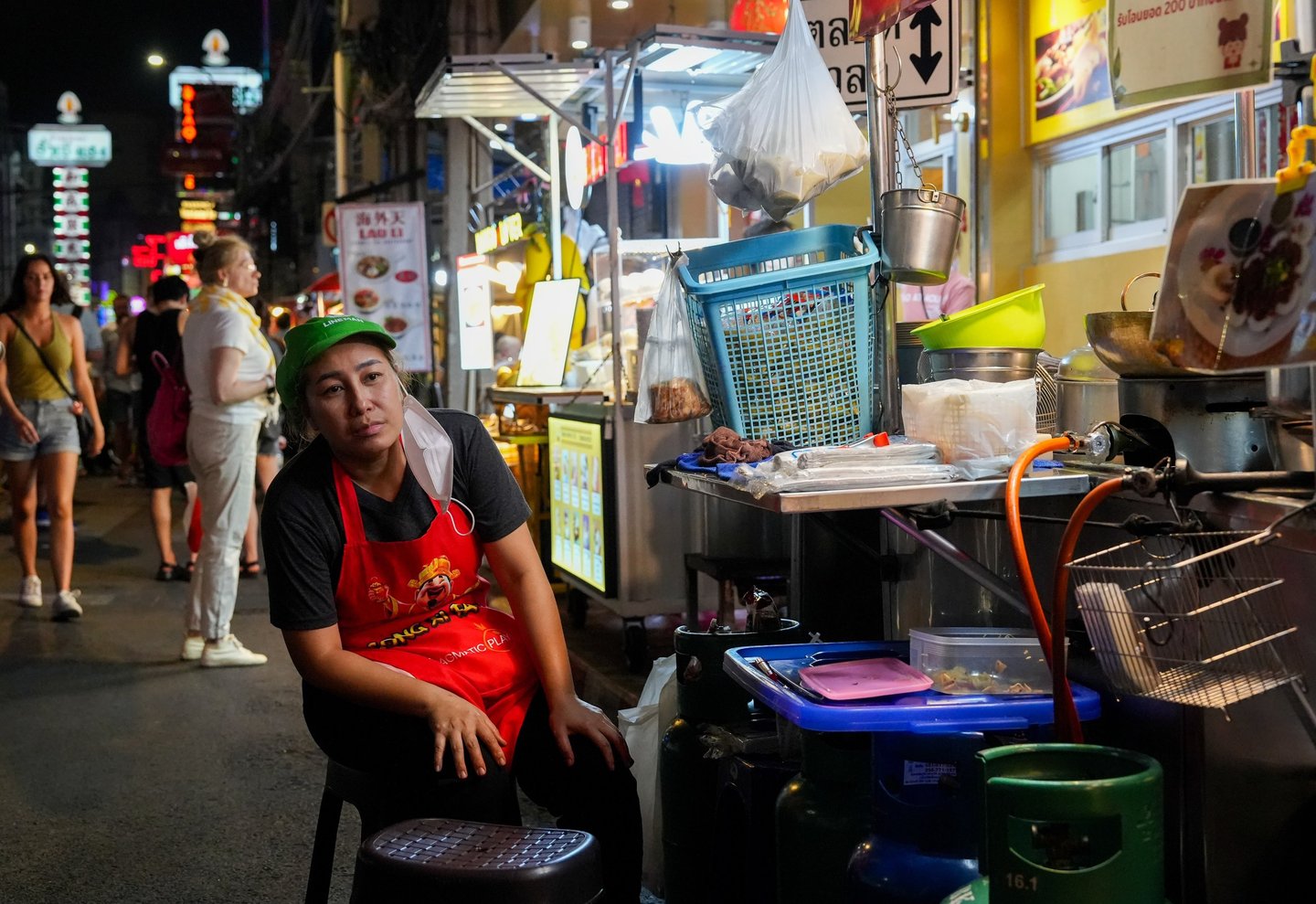
For travel photographers, documentary storytellers, social media creators, or editors looking for authentic images from Bangkok’s Chinatown, Yaowarat Road remains one of the most visually intense streets in Southeast Asia.
And every time I return, the street seems to tell a slightly different story.
Thonburi Khlongs – Bangkok’s Quiet Waterways Beyond the Skyline
On the western side of the Chao Phraya River, a completely different side of Bangkok begins — slower, quieter, and far removed from the glass towers and traffic of the modern city.
Welcome to Thonburi and its network of khlongs, the canals that once defined Bangkok.
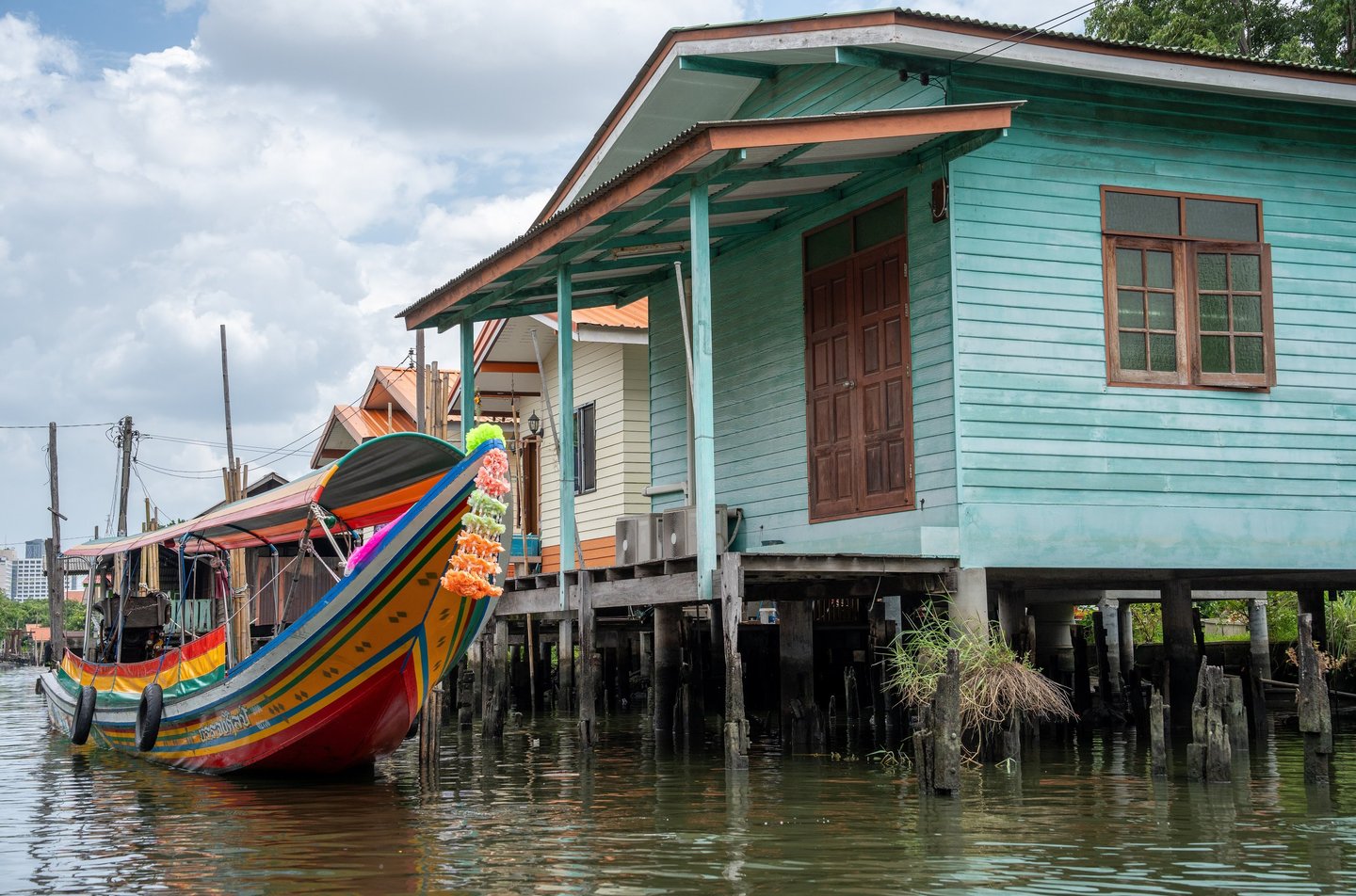
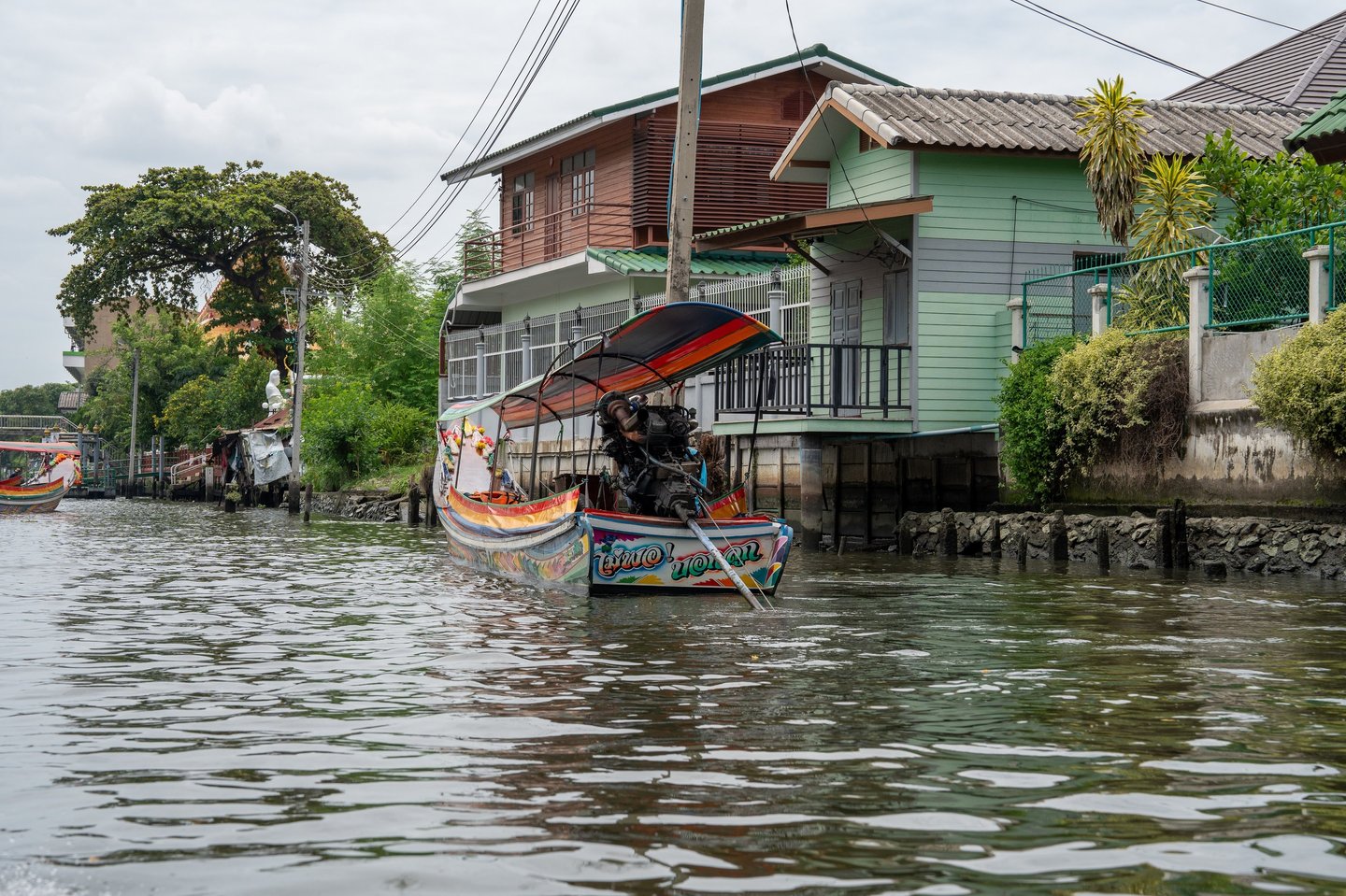
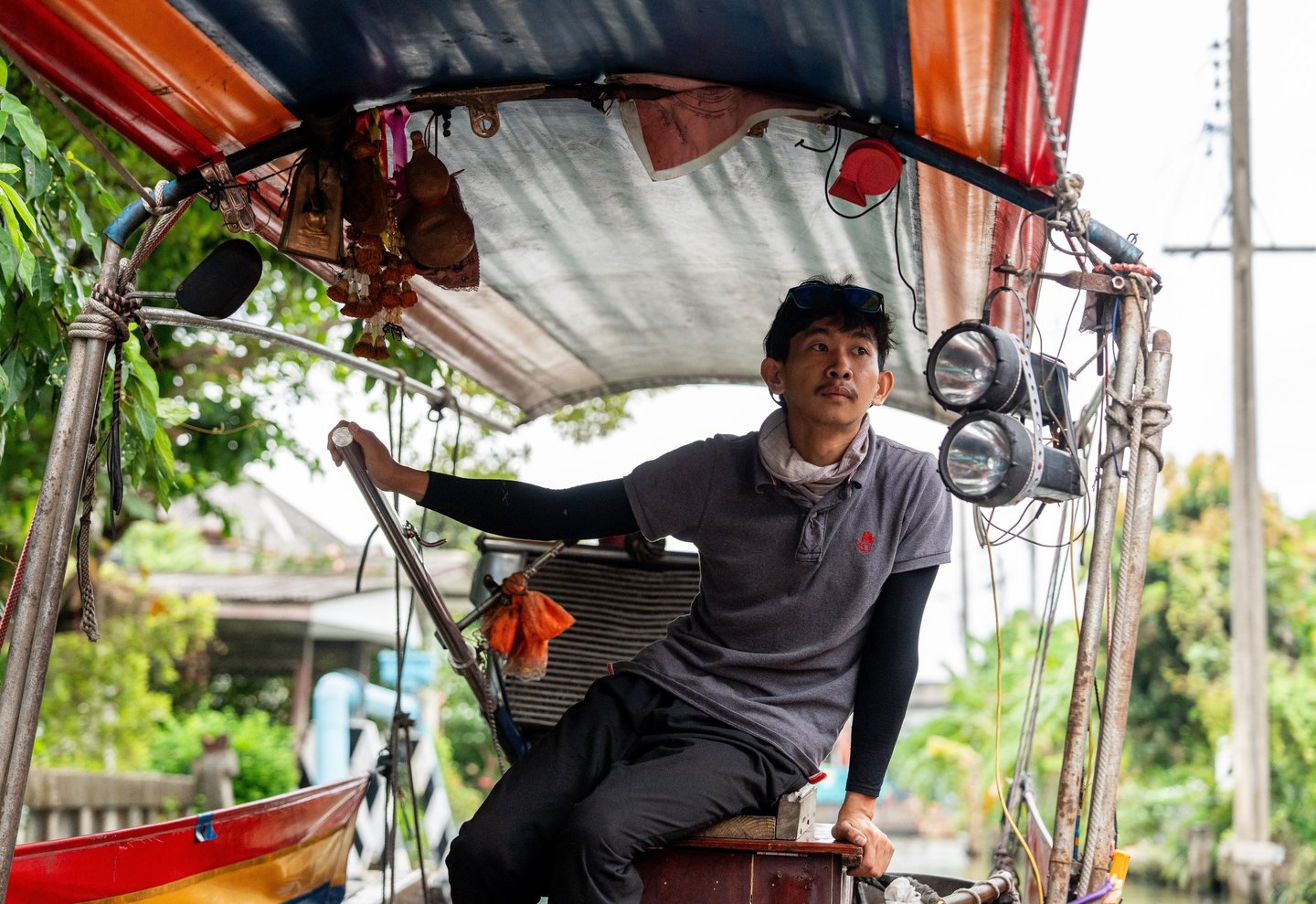
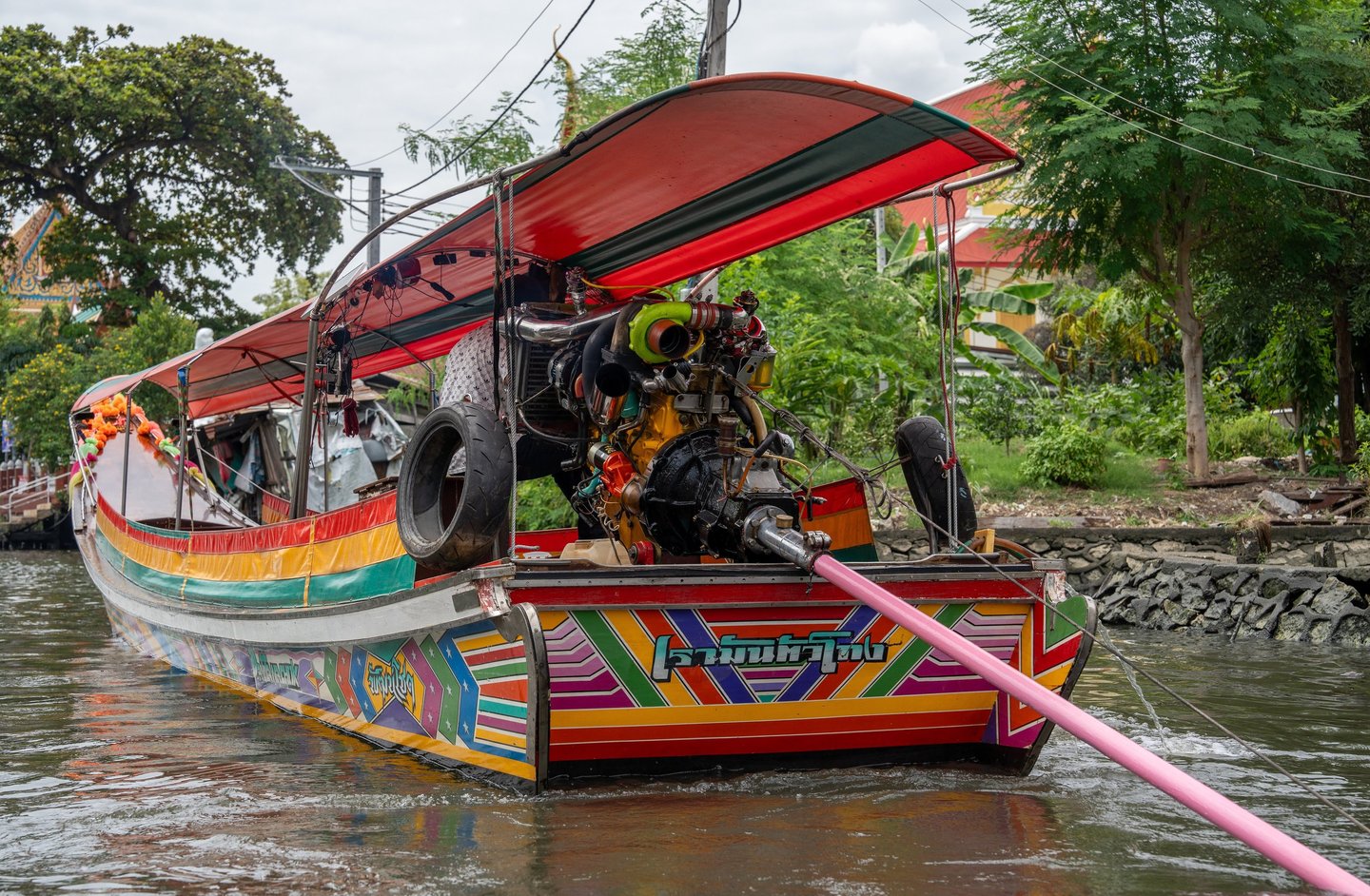
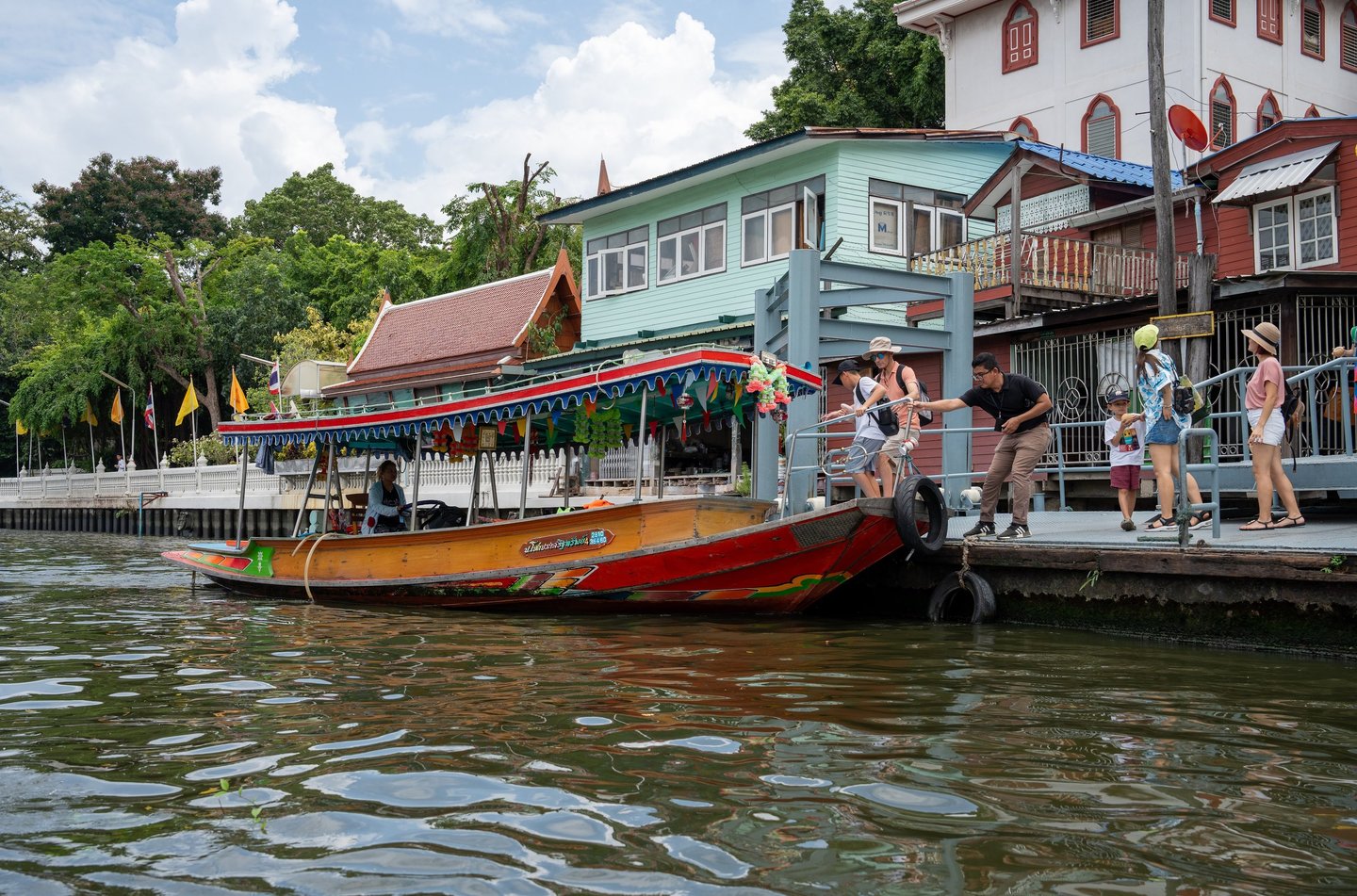
For this section, most of the images were taken during the day from a traditional Thai long-tail boat moving through the canals. I set my Sony Alpha 7 IV to ISO 400, which allowed shutter speeds above 1/1000 sec at around f/8.0 — necessary conditions when shooting from a moving boat. The constant motion of the water and the boat doesn’t leave much room for error.
A Look Back – The Old Capital
Before Bangkok became the capital we know today, Thonburi itself was the center of power. After the fall of Ayutthaya in 1767, King Taksin established his capital here on the western banks of the river.
Even though the capital later moved across the river to what is now central Bangkok, Thonburi never lost its identity.
The area still preserves elements of an older way of life — one that is closely tied to the water.
The khlongs, originally used for transport, trade, and daily life, earned Bangkok the nickname “Venice of the East.” While many canals in the city have disappeared over time, Thonburi still offers a glimpse into that past.
Life Along the Khlongs
Moving through the canals by boat, the city changes character almost instantly.
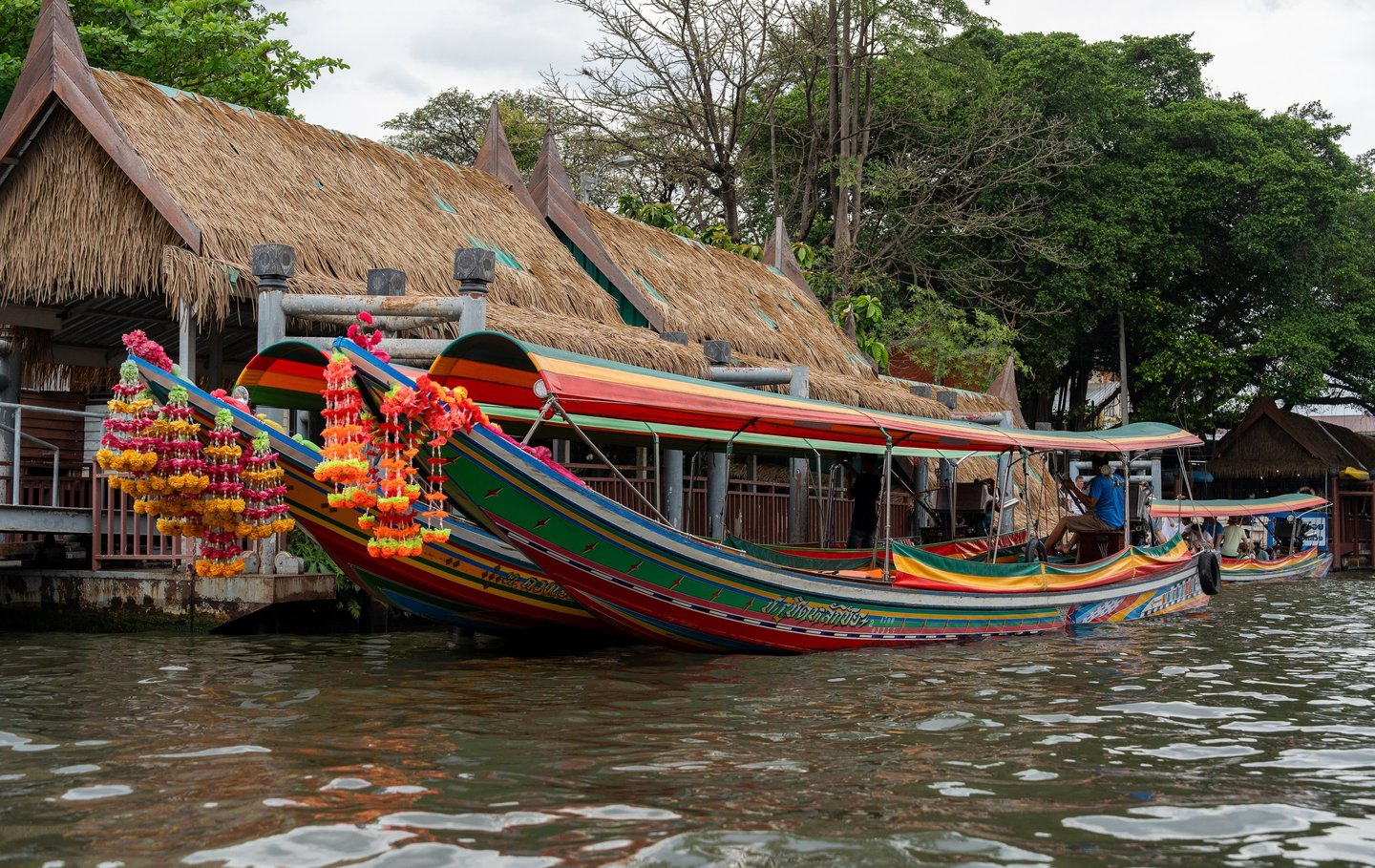
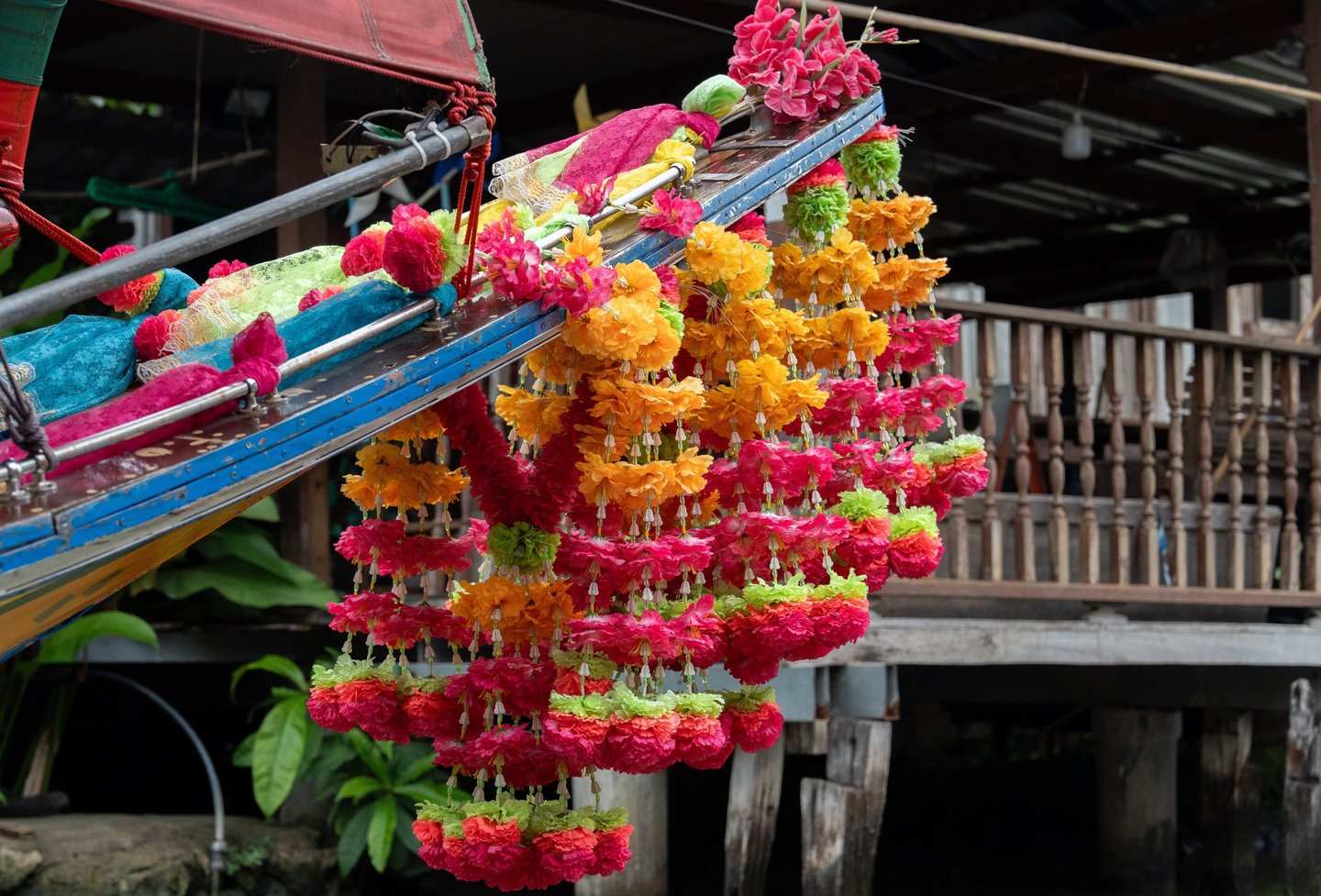
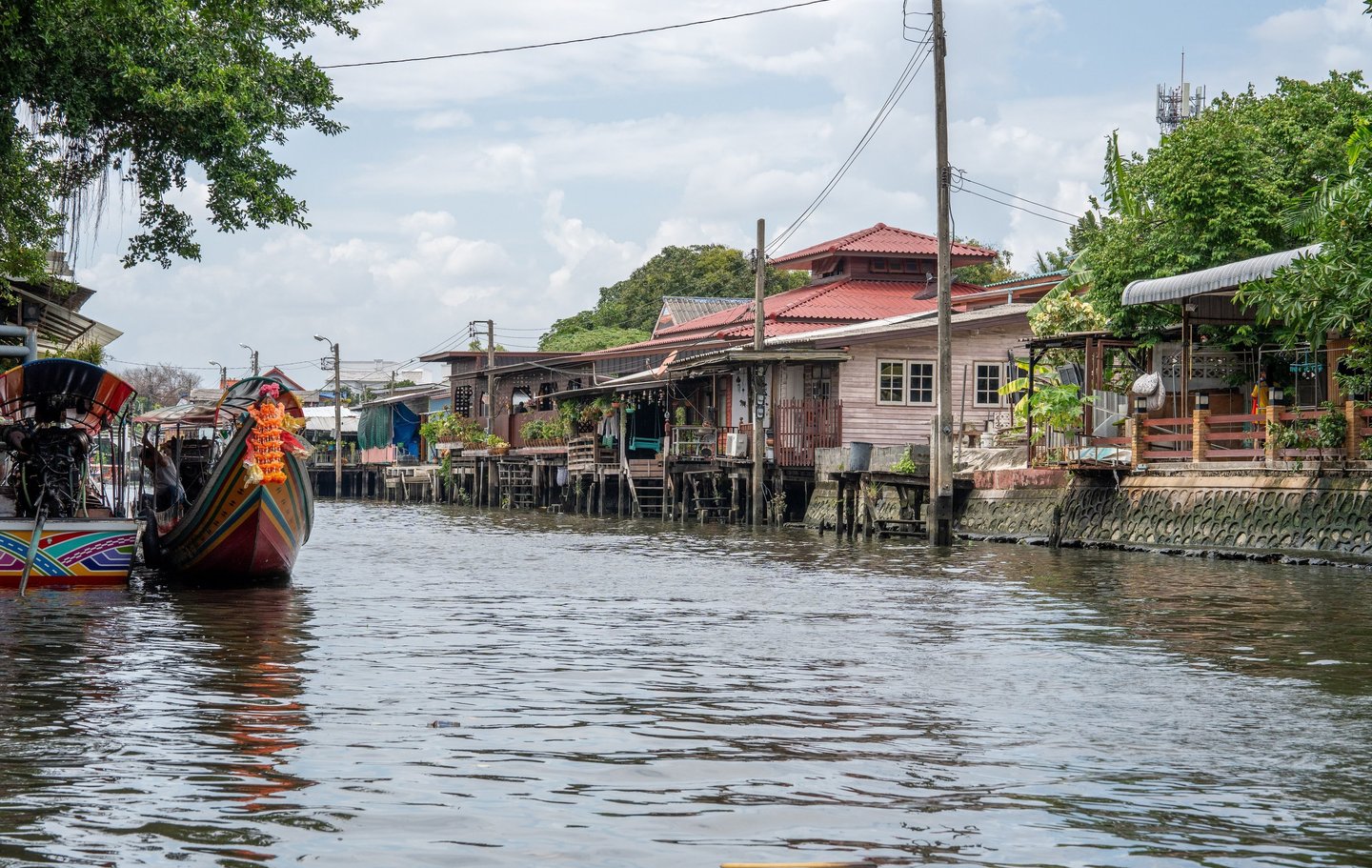
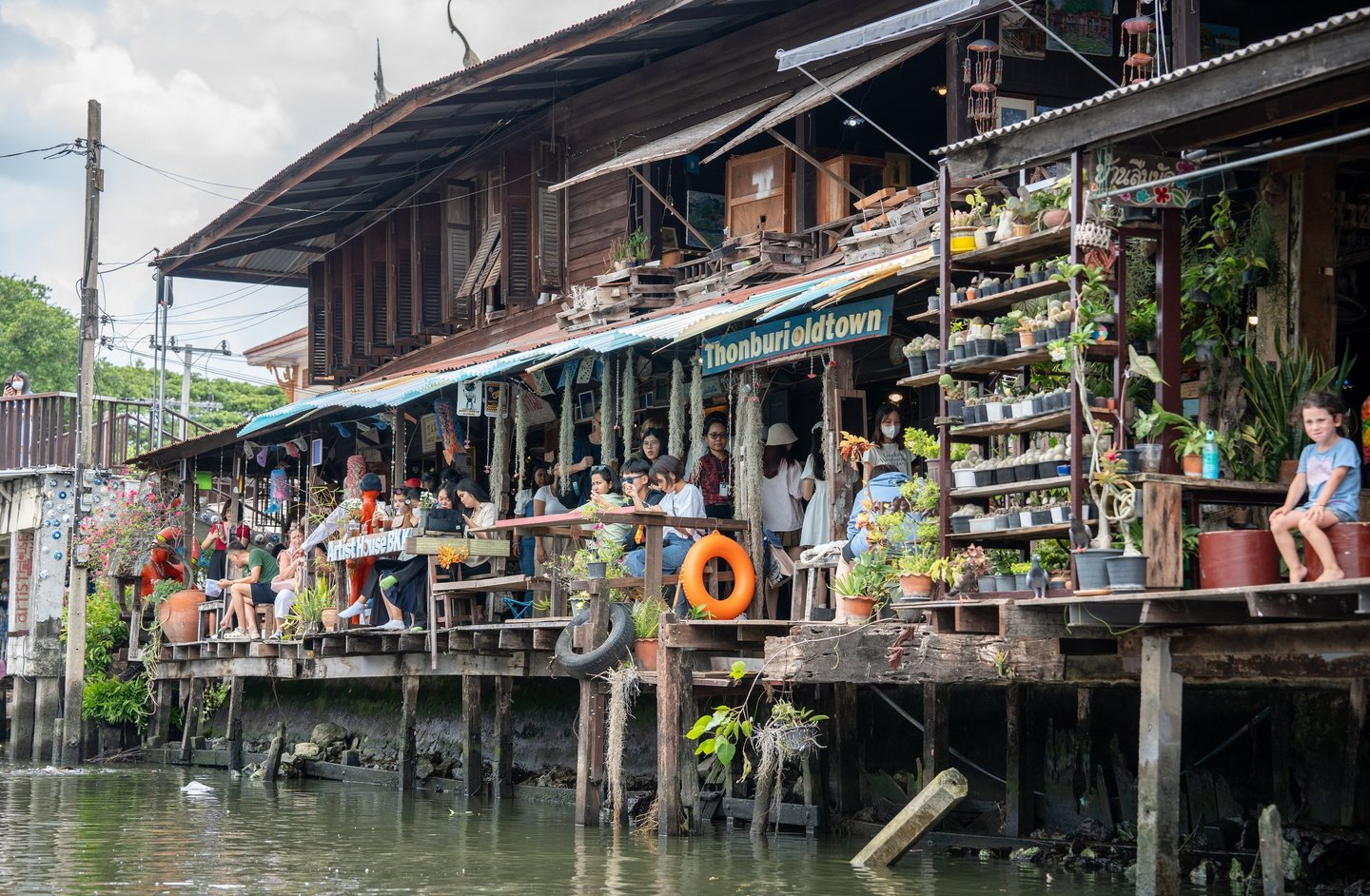
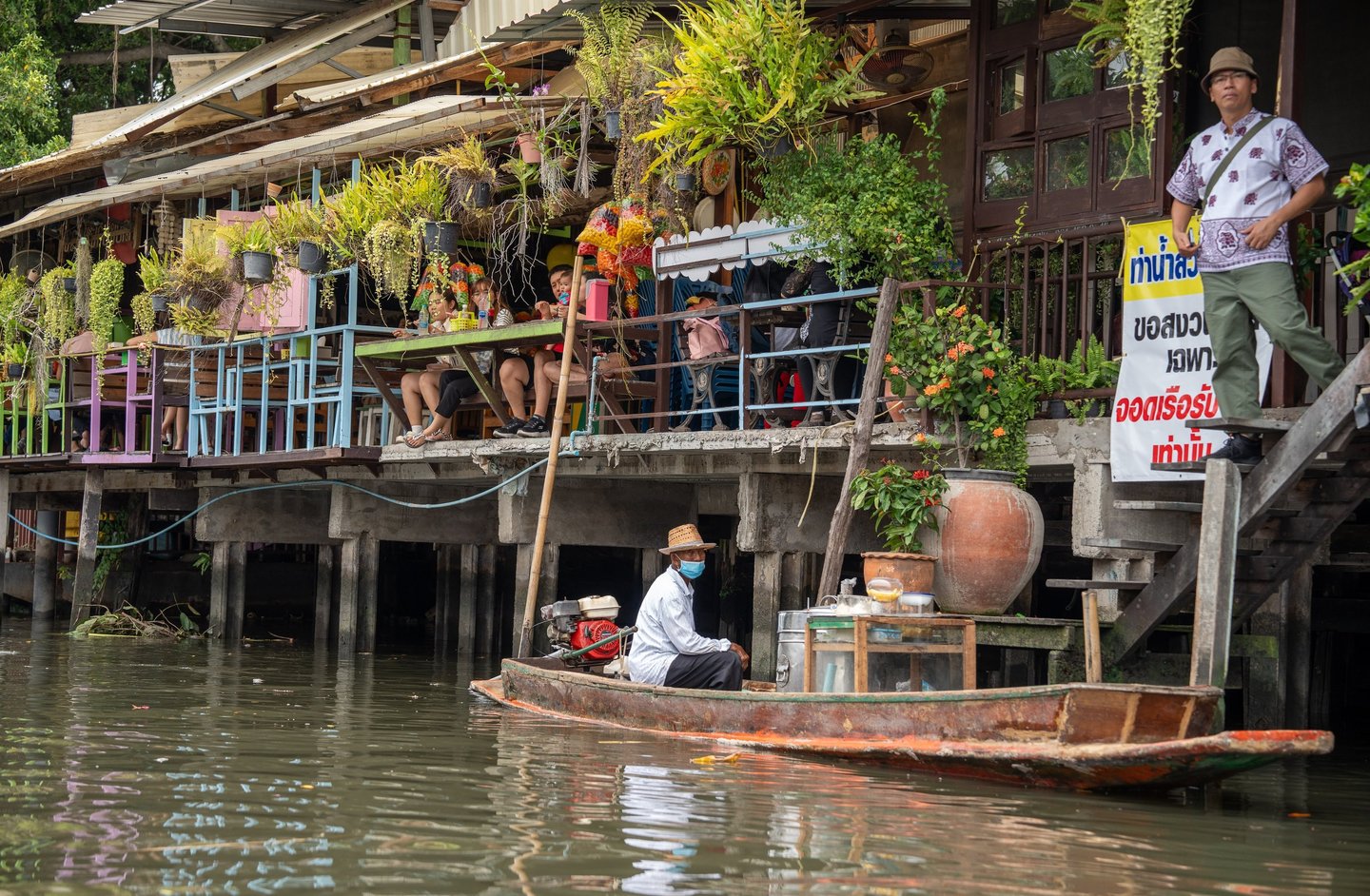
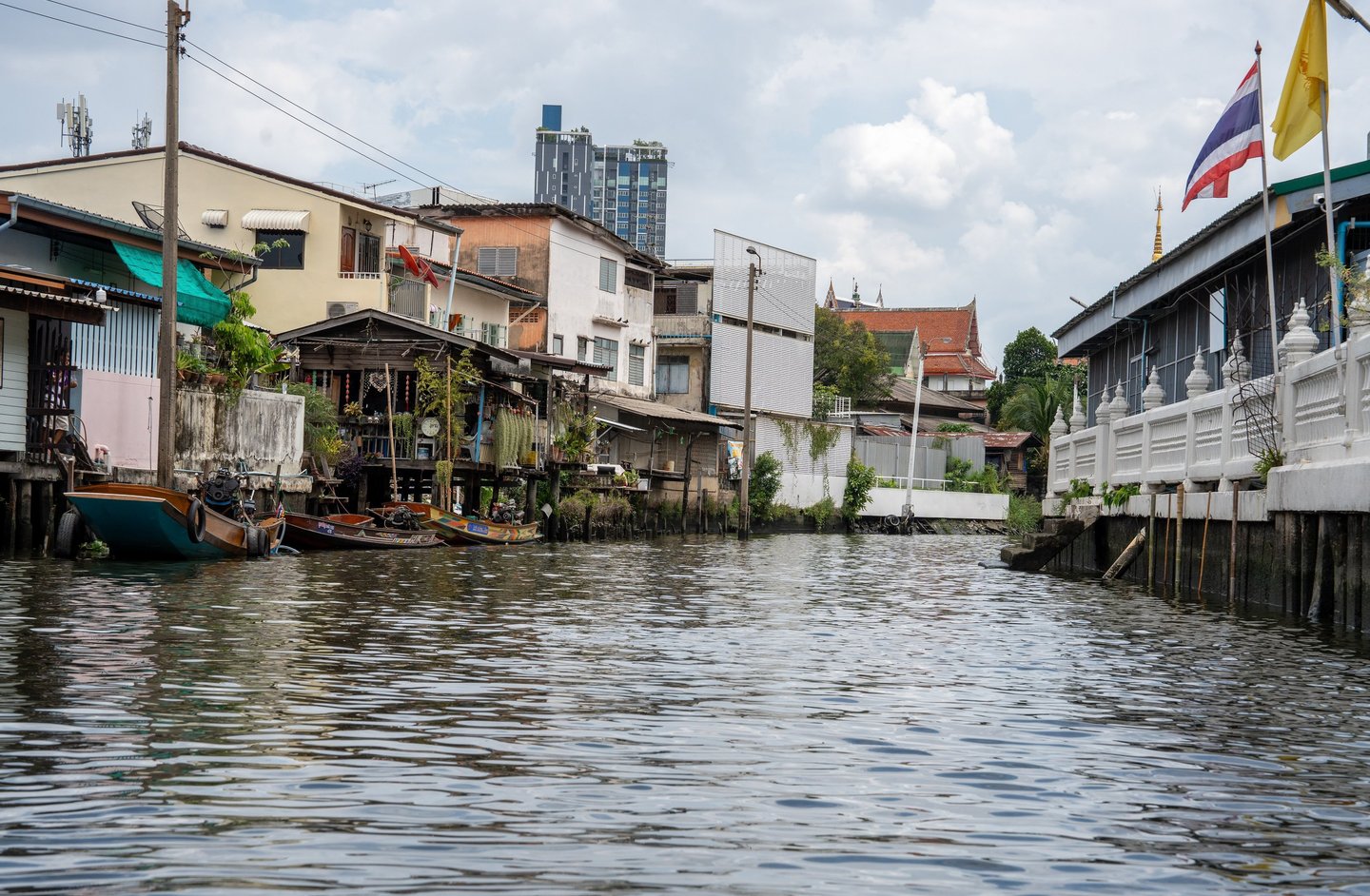
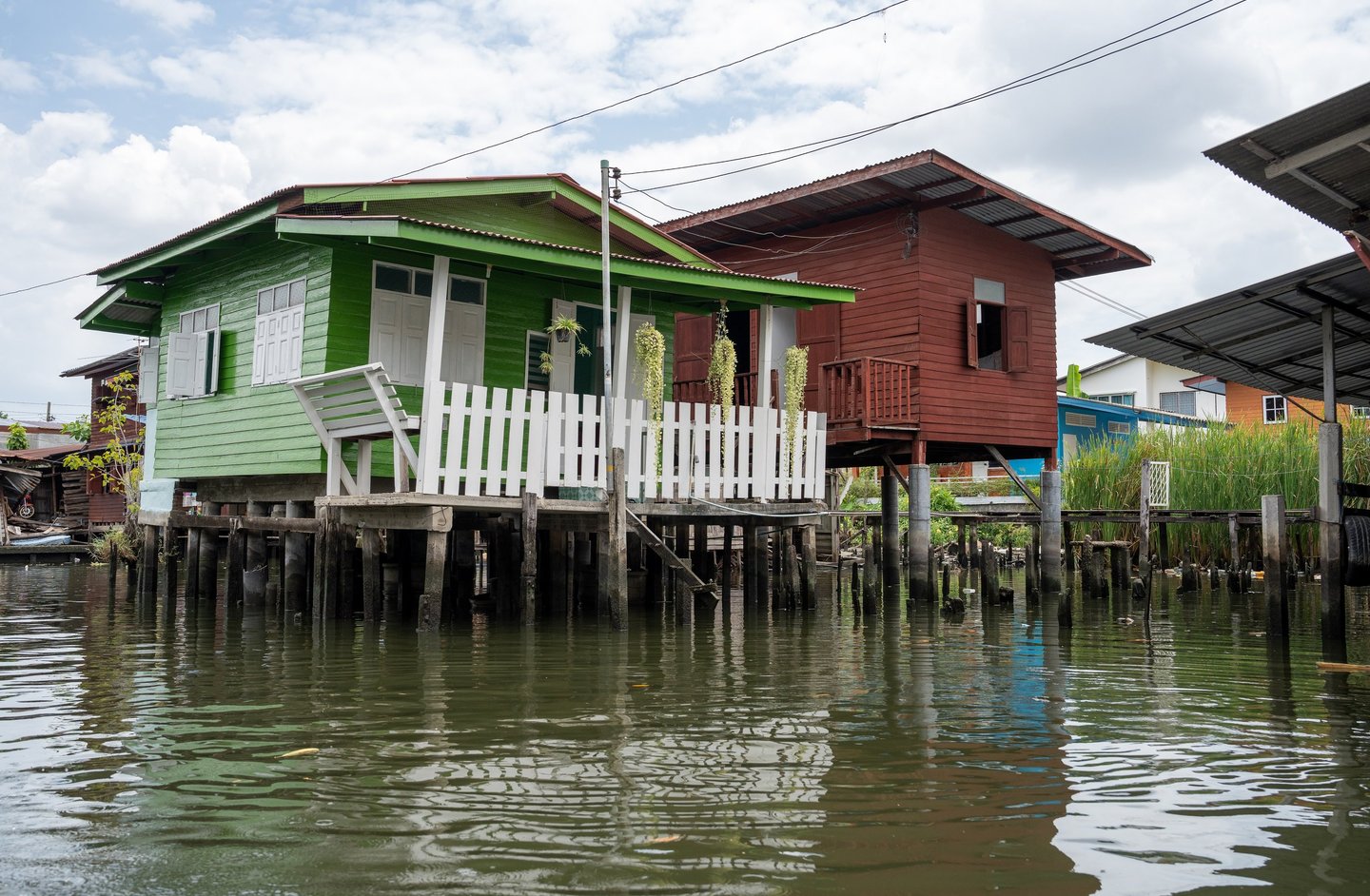
Wooden houses stand directly on the water, many built on stilts, with small docks where boats are tied up. Some of these homes have been here for decades, weathered by sun and rain, while others have been adapted into small restaurants, cafés, or bars overlooking the canal.
Boats are everywhere — not just for tourists, but as part of everyday life.
They are used for transport, deliveries, and moving between neighborhoods that are still more connected by water than by road.
From a photographic perspective, this environment is constantly shifting.
Reflections on the water, passing boats, narrow canals, and layers of wooden structures create compositions that feel both chaotic and balanced at the same time.
Between Movement and Stillness
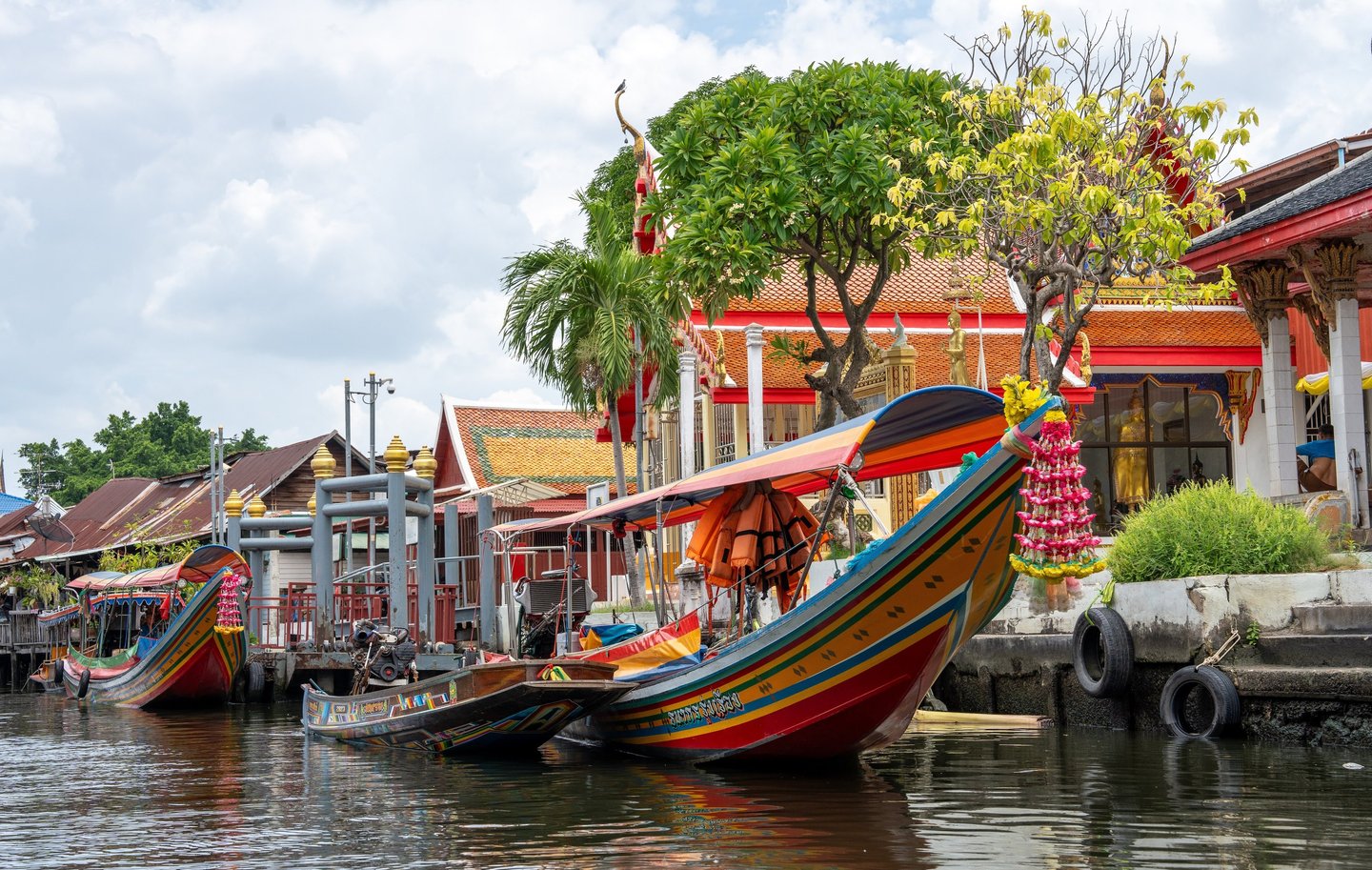
Shooting from a moving long-tail boat adds its own dynamic.
Scenes appear and disappear within seconds — a house, a dock, a passing boat — and timing becomes everything.
At the same time, there is a certain calmness in Thonburi that contrasts strongly with the rest of Bangkok. No neon lights, no high-rise buildings — just water, wood, and the rhythm of daily life.
This is where travel and documentary photography in Bangkok becomes especially interesting.
Not in the obvious places, but in these quieter areas where the city reveals its older layers.
A Different Perspective on Bangkok
For anyone exploring Bangkok beyond the typical skyline and nightlife, Thonburi and its khlongs offer a completely different experience.
It’s a place where history is still visible, where the connection between people and water remains part of everyday life, and where photography becomes less about spectacle and more about observation.
For me, this was one of those moments where Bangkok felt less like a megacity and more like a living archive of its own past.
Baiyoke Tower II & Pratunam – Bangkok’s Vertical Landmark Meets Street-Level Chaos
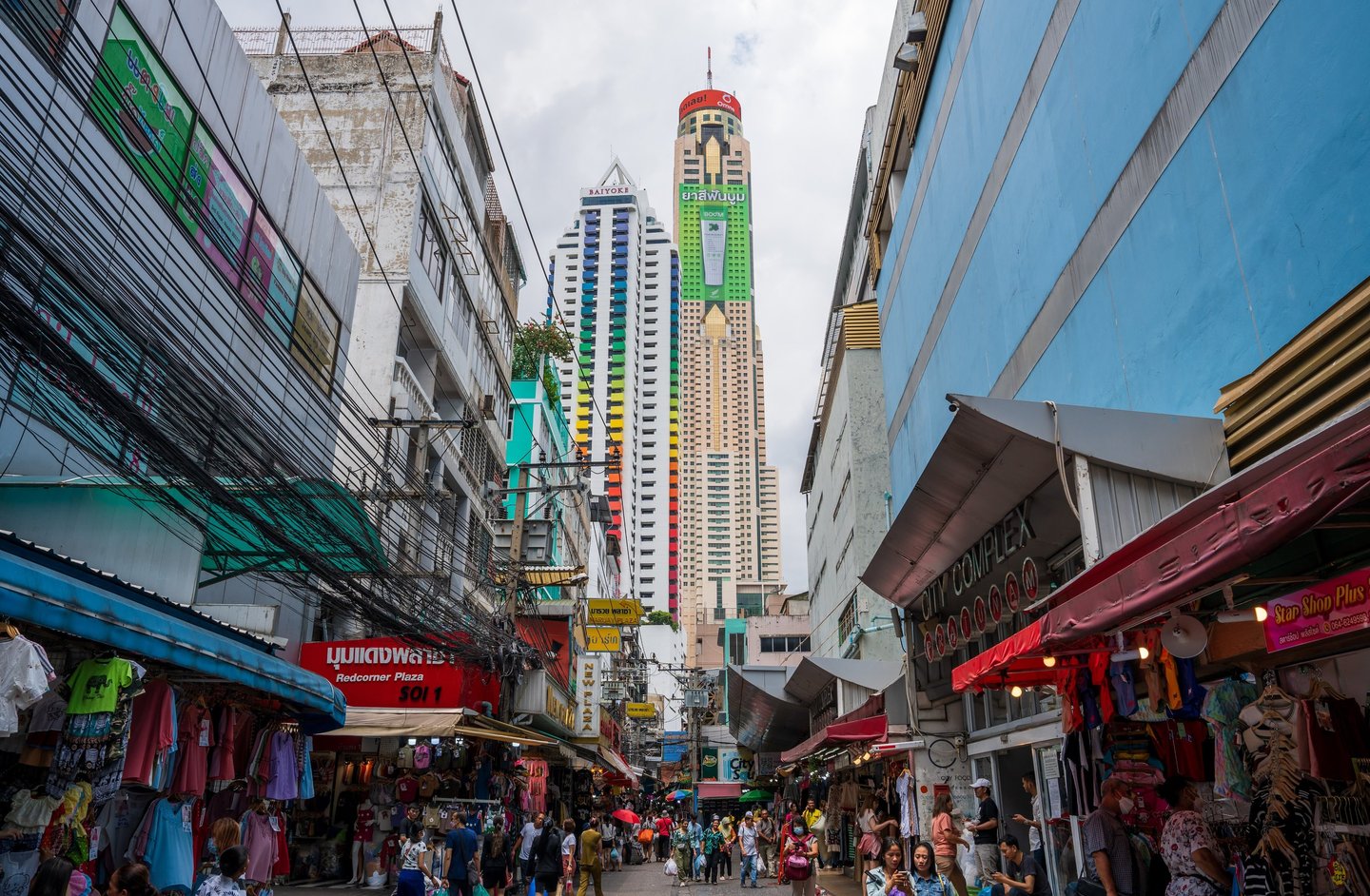
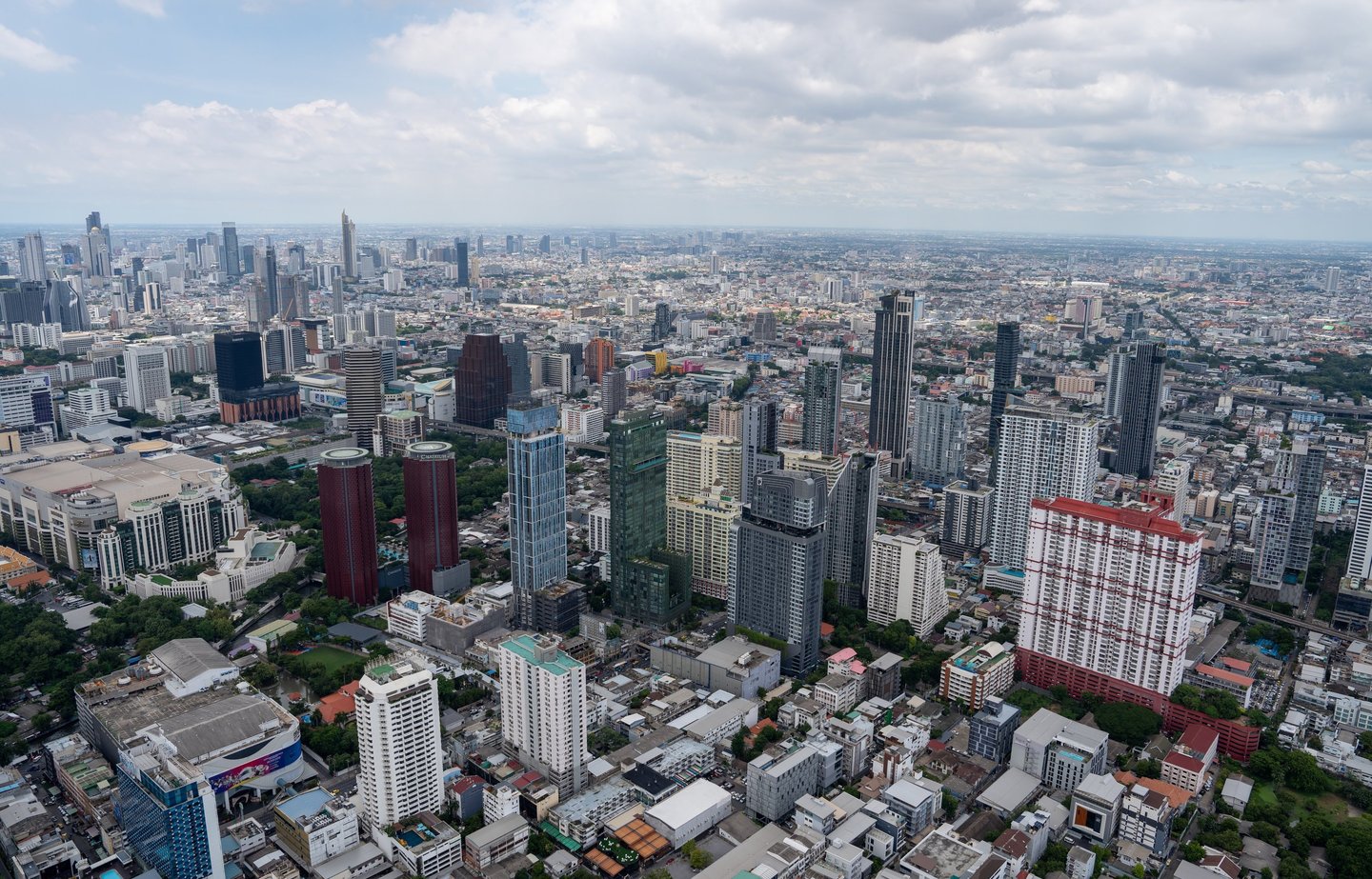
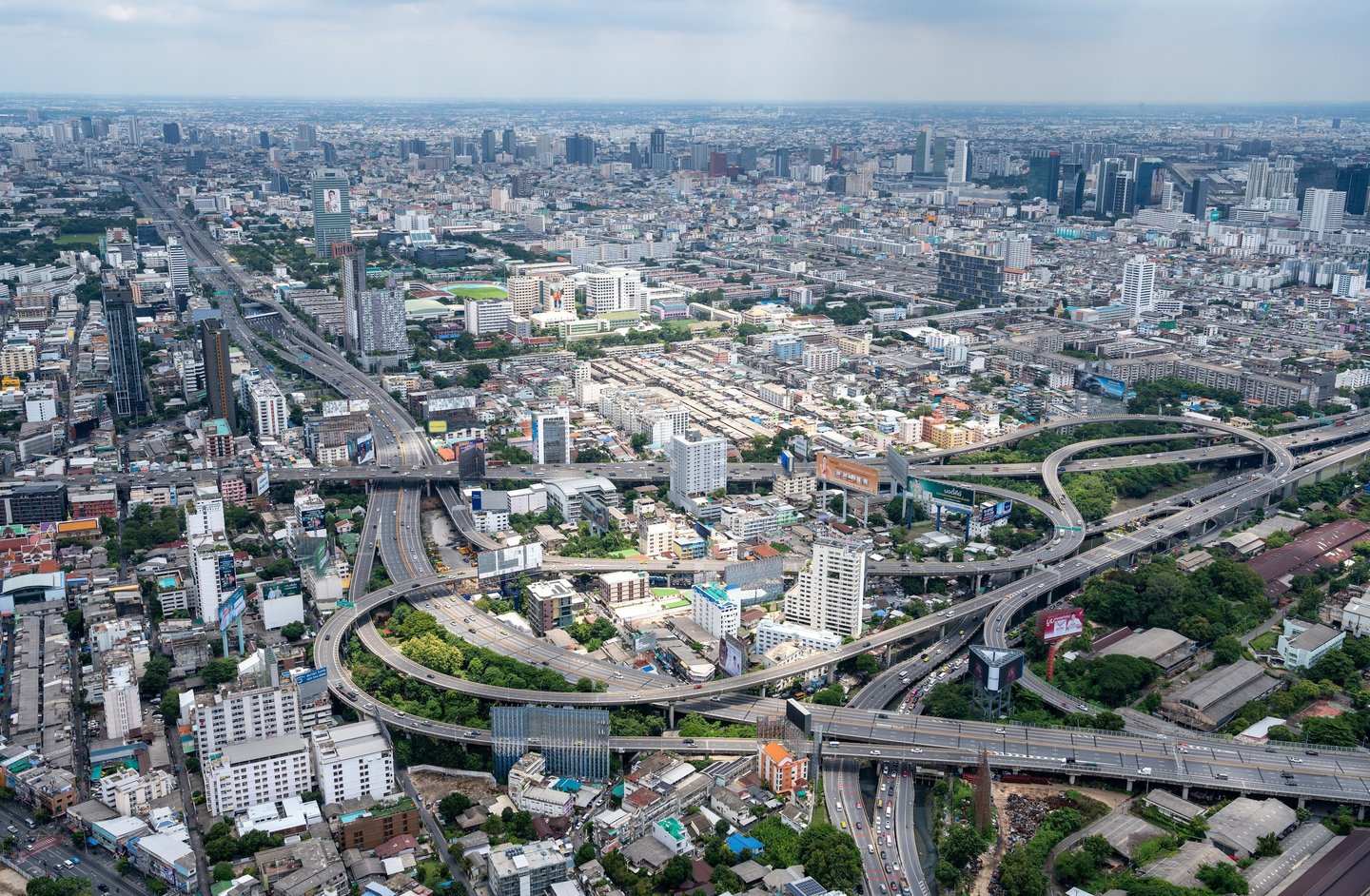
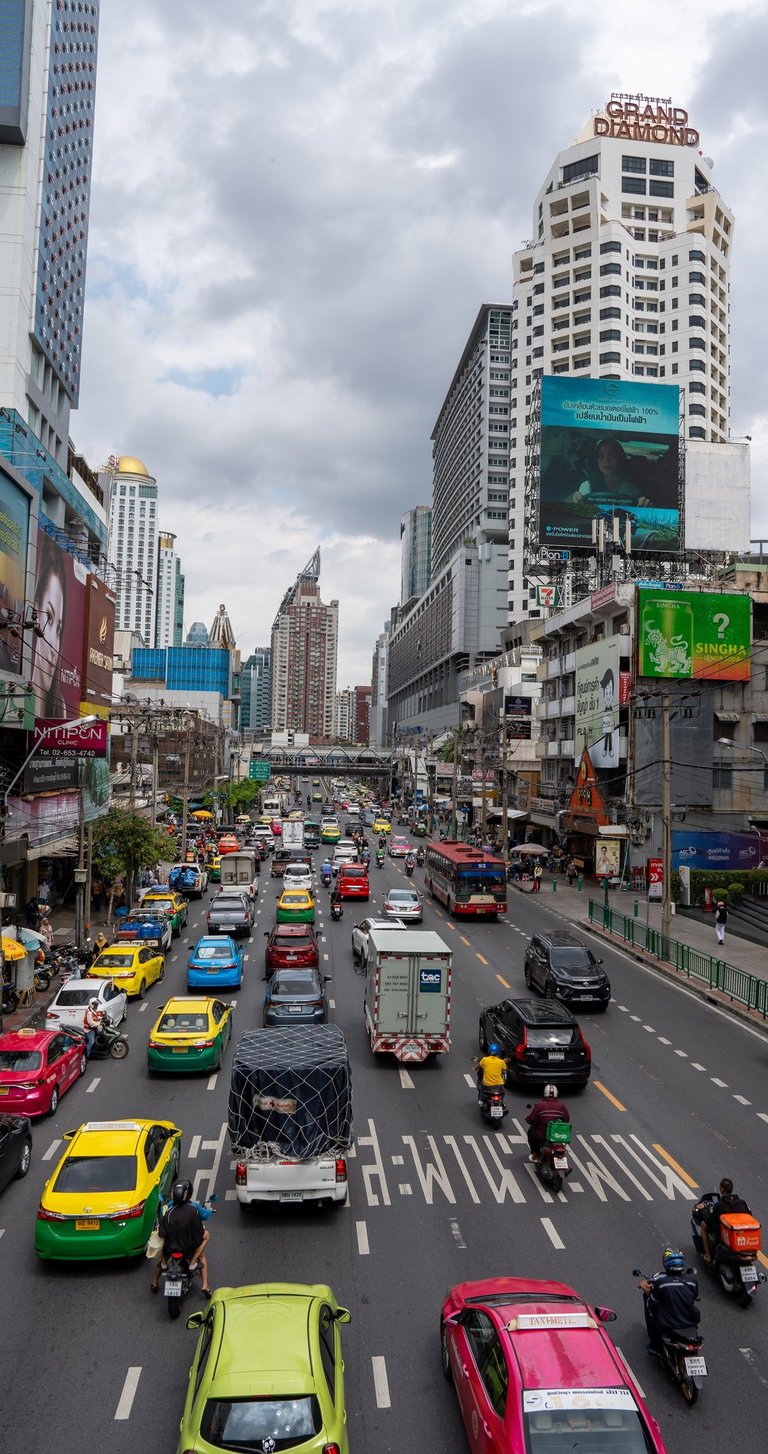
Right in the middle of Bangkok, in one of the busiest commercial districts of the city, rises a building that has shaped the skyline for decades: the Baiyoke Tower II.
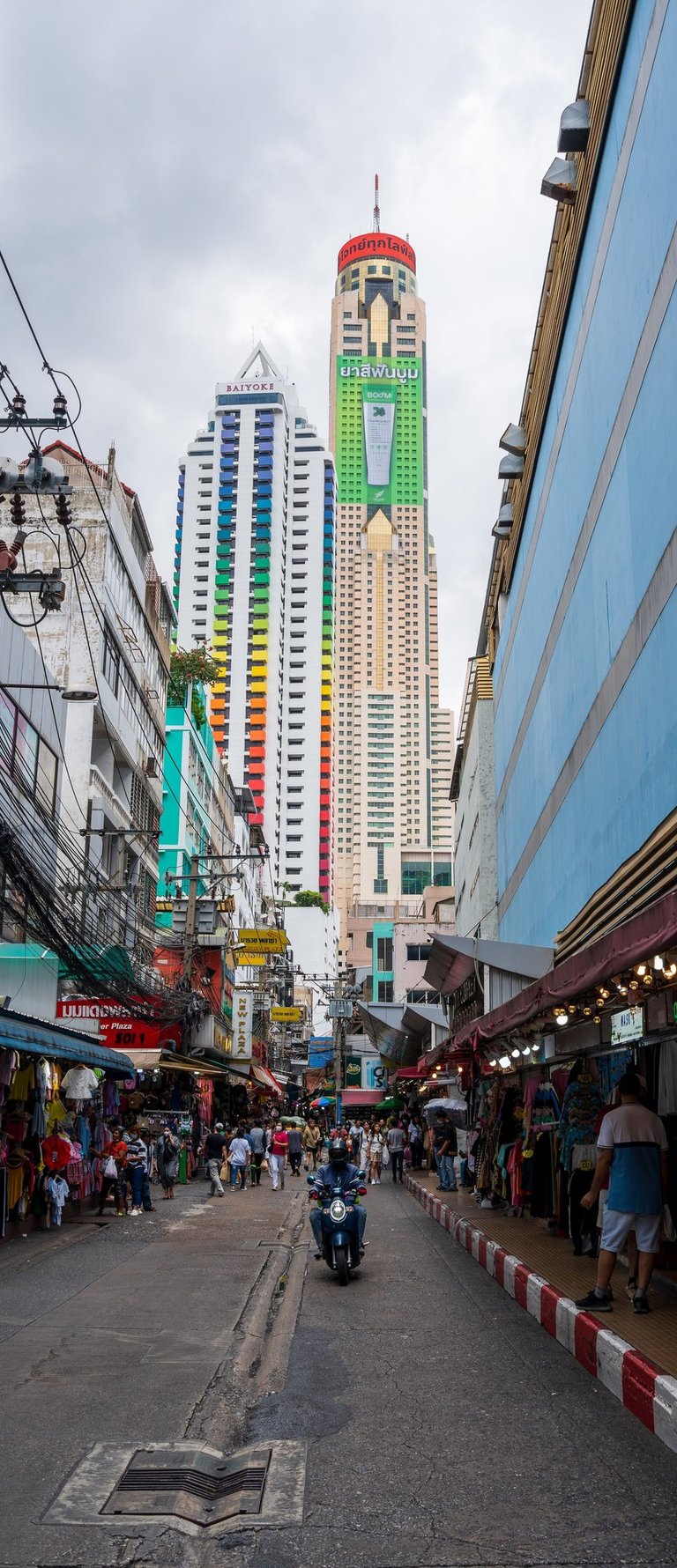
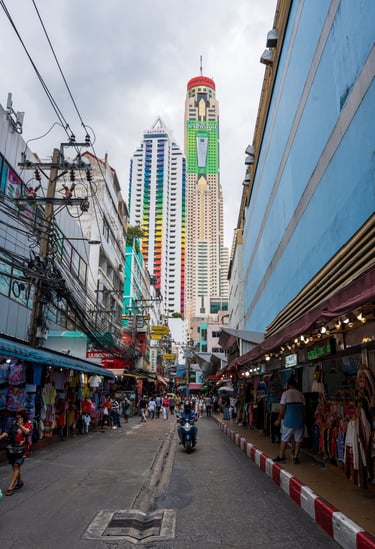
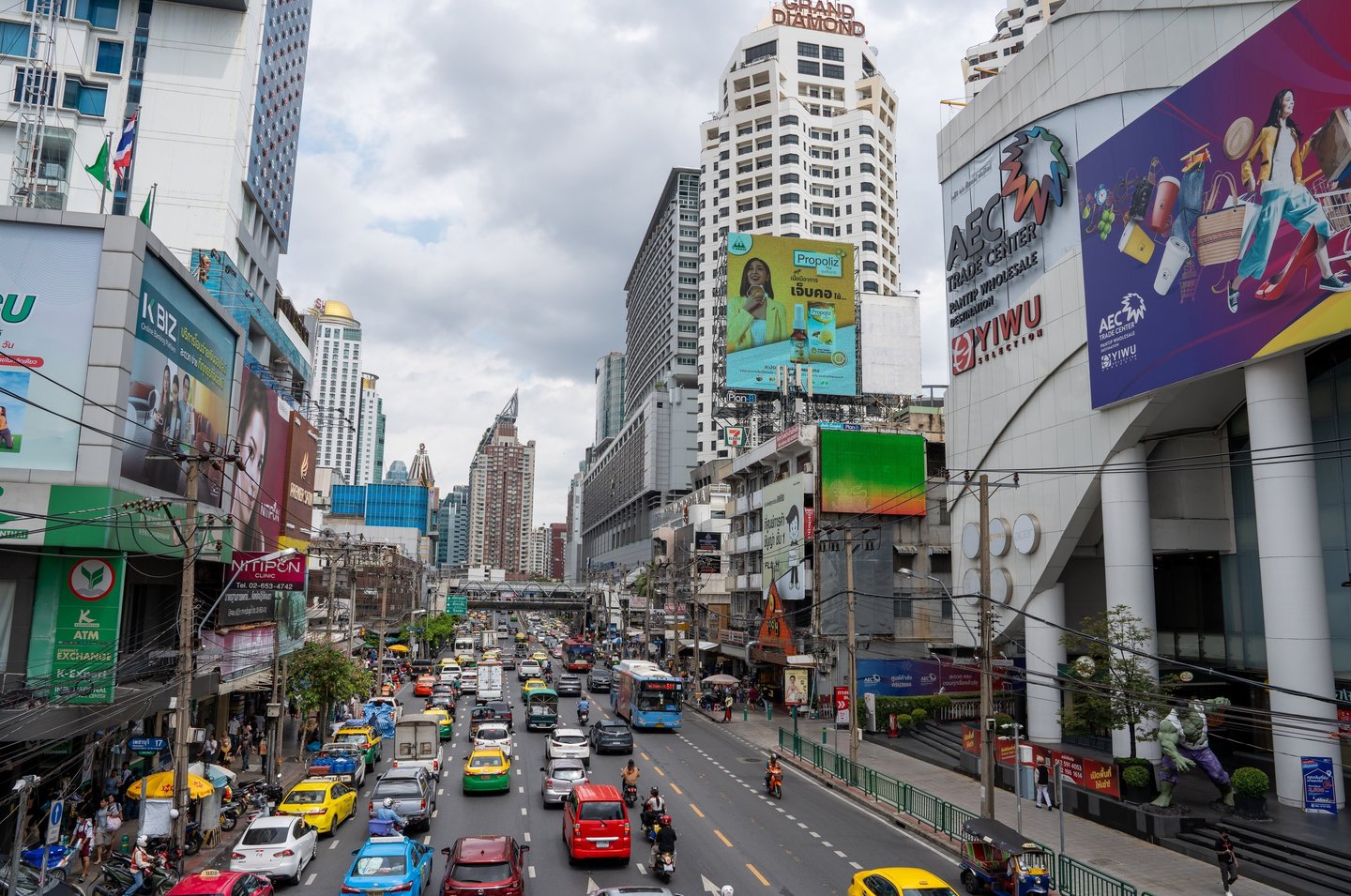
Photographed from the crowded streets of the Pratunam area, the tower feels less like a distant landmark and more like a vertical extension of the chaos happening below.
A Landmark Above the City
With a height of 304 meters, Baiyoke Tower II was once the tallest building in Thailand and remains one of the most recognizable structures in Bangkok’s skyline.
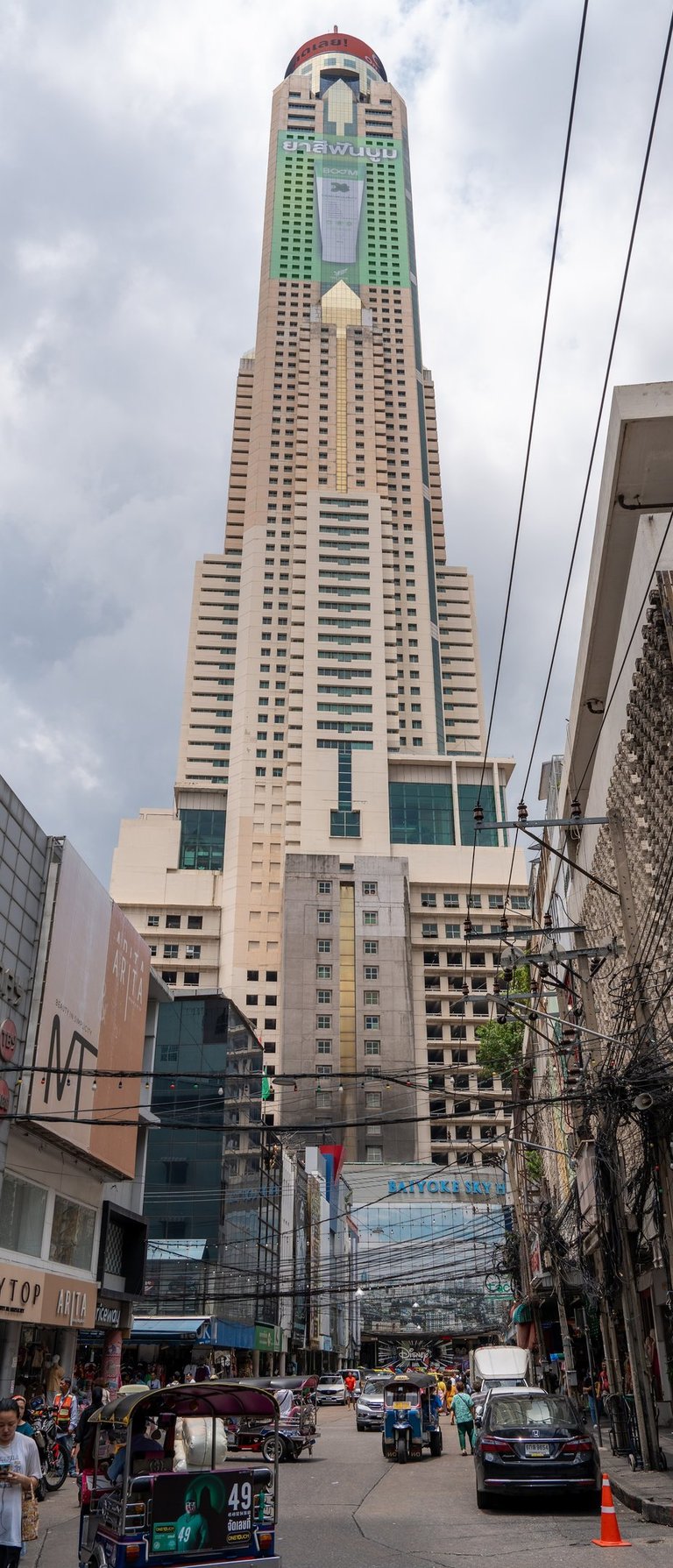
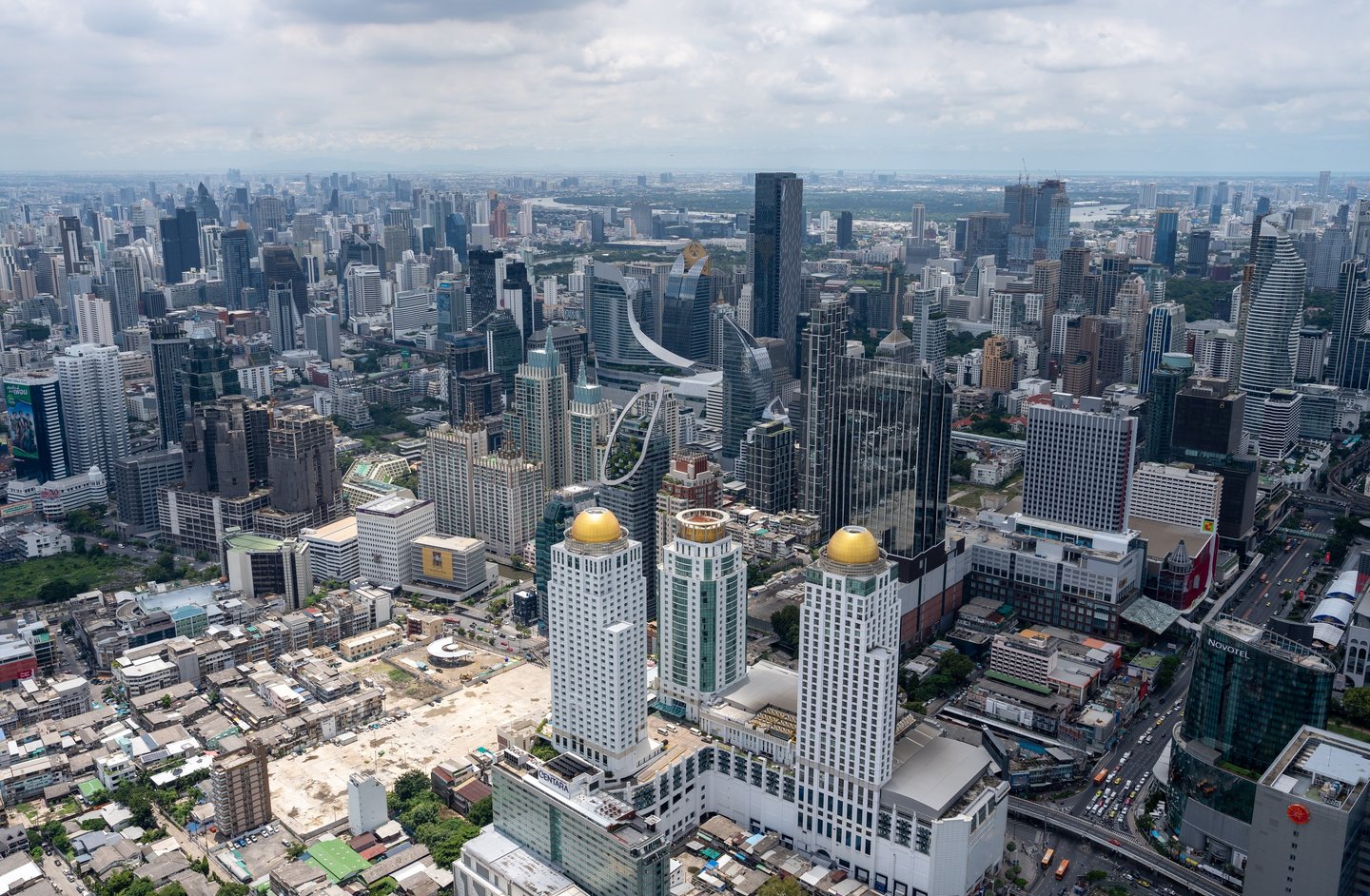
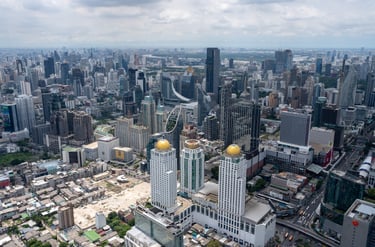
The tower houses the Baiyoke Sky Hotel, one of the tallest hotels in the world. From above, the city stretches endlessly in all directions. The observation deck on the 77th floor and the rotating platform on the 84th floor offer a full 360-degree view — a perspective that shows just how vast and dense Bangkok has become.
But what interested me more was not the view from the top — it was the view from below.
Standing in the streets of Pratunam, looking up at the tower, you get a completely different impression. The building rises out of a tightly packed urban environment filled with traffic, street vendors, and endless movement. It’s a contrast that works extremely well in urban and documentary photography.
Pratunam – Trade, Traffic and Constant Movement
The Pratunam district has long been one of Bangkok’s most important commercial areas, particularly known for its role in the textile and fashion trade. The name “Pratunam” itself translates roughly to “water gate,” a reference to the canal system that once played a key role in trade and transport.
Today, the canals have mostly disappeared from this part of the city, replaced by roads, markets, and shopping complexes — but the area has never lost its commercial energy.
Walking through Pratunam, you are constantly surrounded by movement. Delivery trucks, taxis, motorbikes, and pedestrians all compete for space. Above that, large buildings and shopping centers dominate the skyline.
Phetchaburi Road – The Pulse of the District
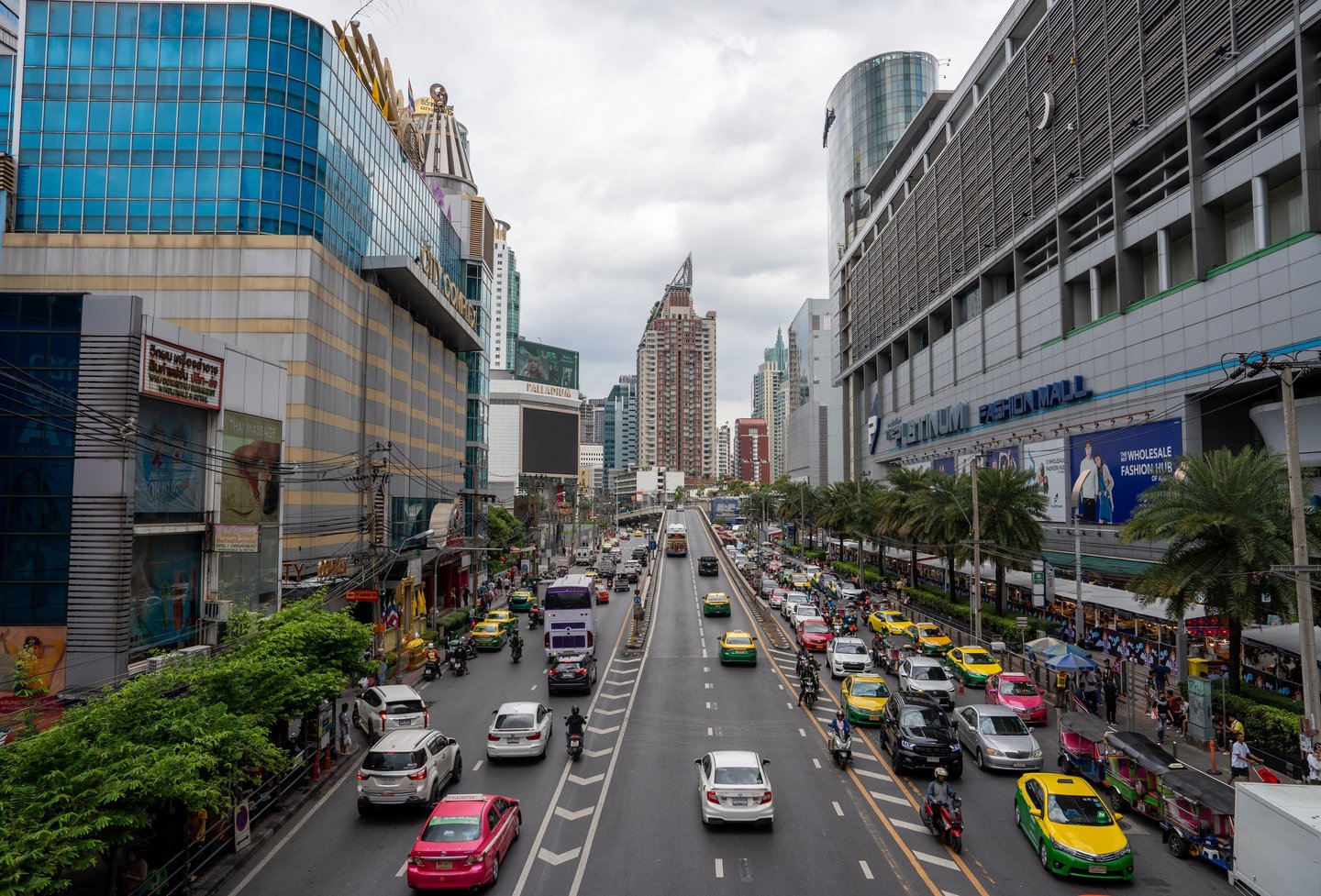
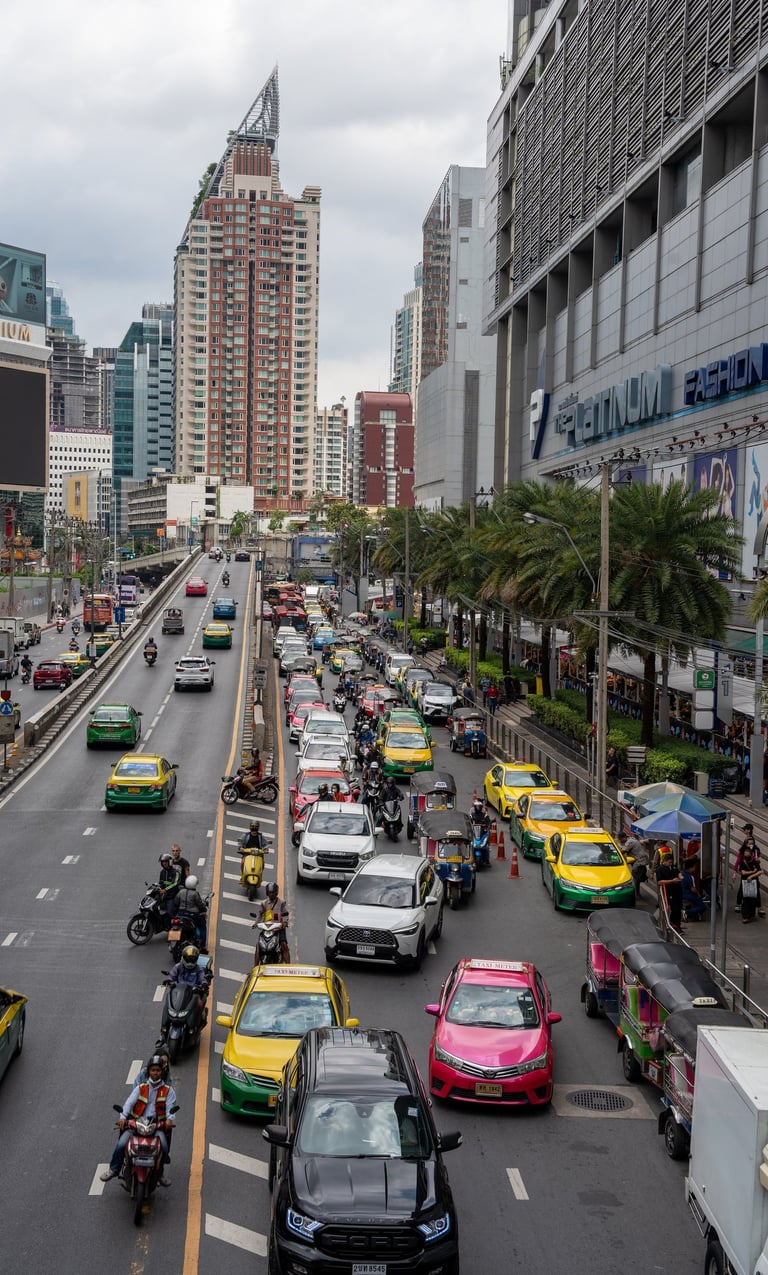
Running through this area is Phetchaburi Road, one of the main traffic arteries connecting different parts of the city.
On one side, you’ll find the Platinum Fashion Mall, a massive complex known for wholesale and retail fashion. It’s a place where local retailers, tourists, and business owners all mix, creating a constant flow of people and goods.
On the opposite side stands the City Complex Pratunam, another busy shopping center that adds to the density and intensity of the area.
From a photographic point of view, this street is exactly what you would expect from central Bangkok:
heavy traffic, layered compositions, urban density, and constant motion.
Between Skyline and Street Life
What makes this part of Bangkok so interesting to me is the contrast between scale and detail.
You have one of the tallest buildings in the country towering above you, while at street level everything feels compressed, chaotic, and fast-paced. It’s a place where modern cityscape photography and raw street photography naturally come together.
This is not a polished version of Bangkok.
This is the city as it functions — loud, crowded, and constantly in motion.
For travel and documentary photography, areas like Pratunam are essential.
They show how the city really works beyond temples and tourist highlights.
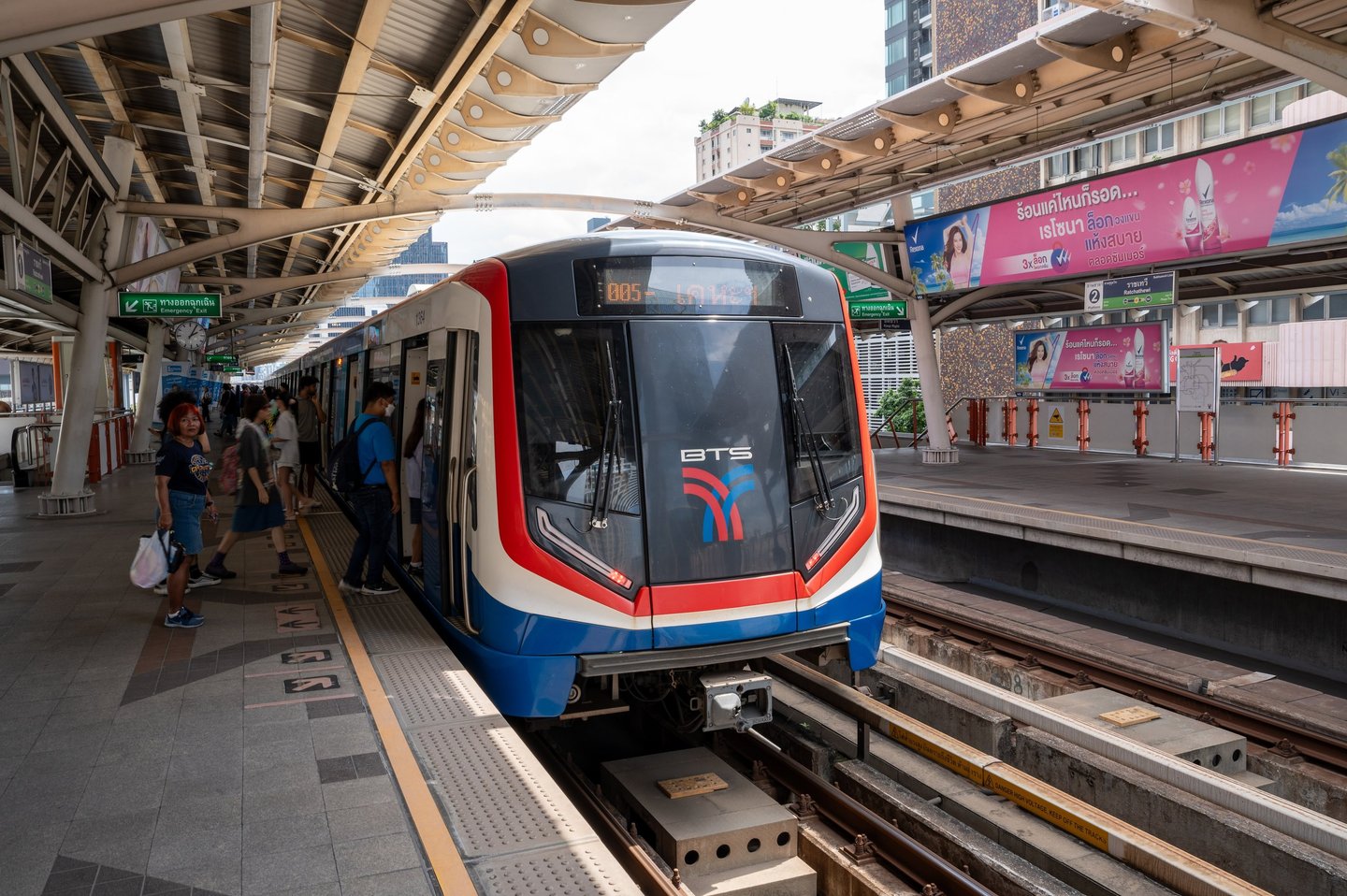
A Photographer’s Perspective
the images in this section were captured with my Sony Alpha 7 IV and the Sony FE 24-70mm f/2.8 GM II, a setup that allows me to quickly adapt between wide urban scenes and tighter street compositions.
In a place like Pratunam, flexibility matters. The scenes change quickly, and you don’t get a second chance.
From Bangkok to Mahachai Market – Street Photography Along the Railway and the Tha Chin River
Bangkok never really slows down. But sometimes, all it takes is a short train ride to see a completely different side of the city.
This series starts at Wongwian Yai Station, a smaller and often overlooked railway station on the Thonburi side of Bangkok. Opened in the early 20th century, the station has long served as the starting point of the Maeklong Railway line, connecting Bangkok with the coastal province of Samut Sakhon.
Even today, not much has changed here. The station feels functional, almost quiet compared to the rest of Bangkok. Local commuters, small food vendors, simple platforms – it’s not designed for tourists, and that’s exactly why I find it interesting. My first photographs were taken right here, capturing everyday street scenes around the station before the train even departs.
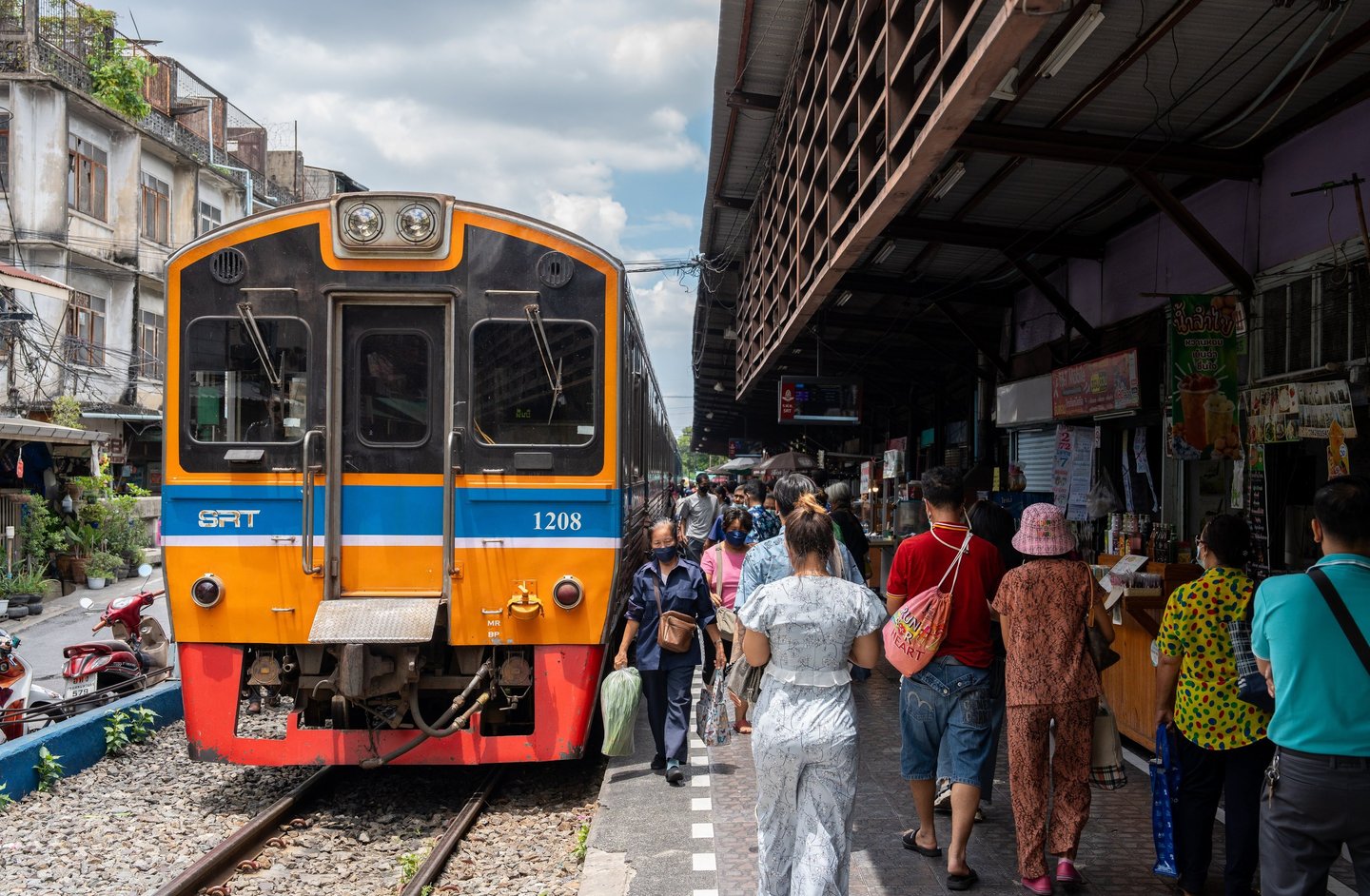
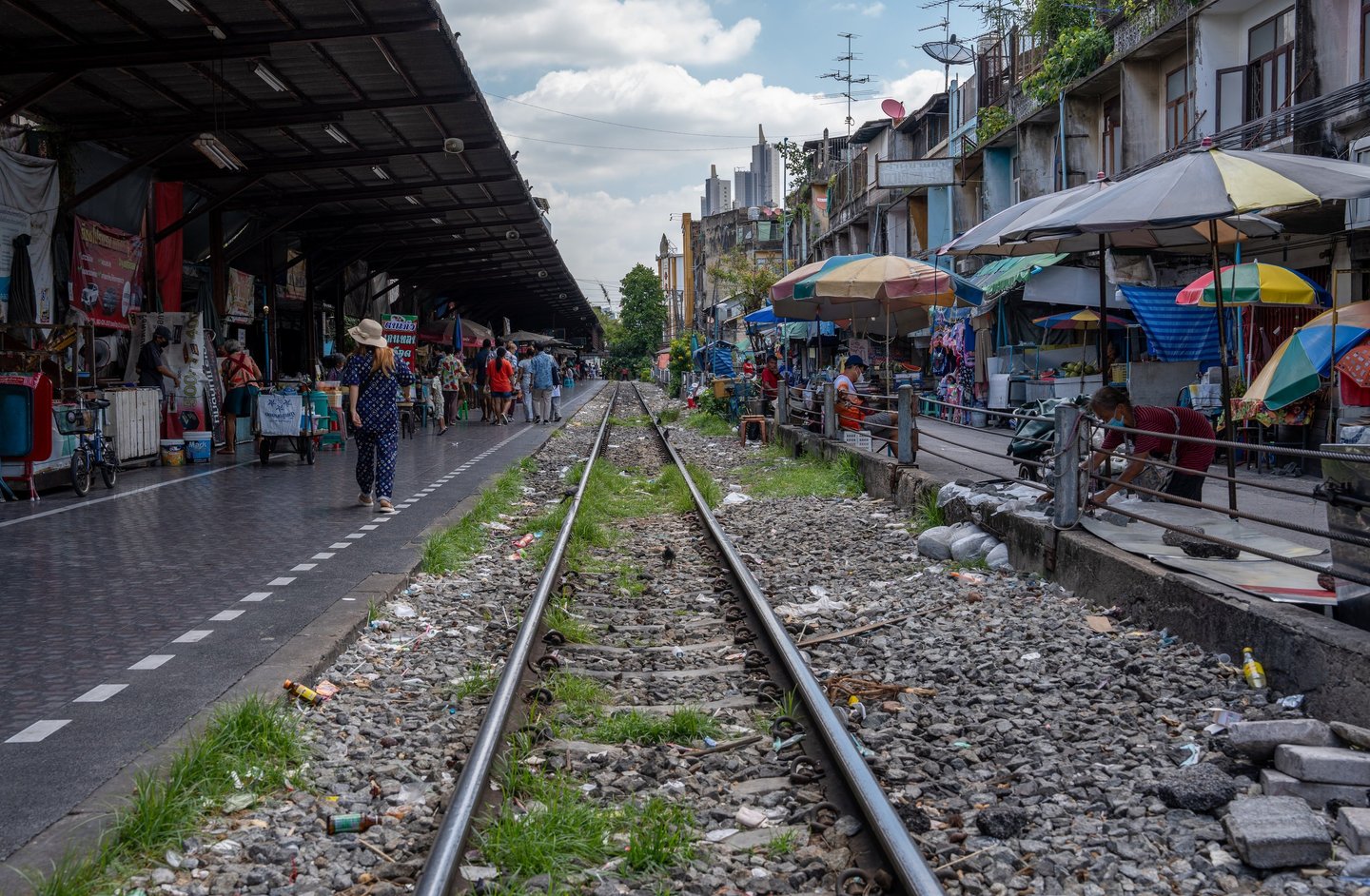
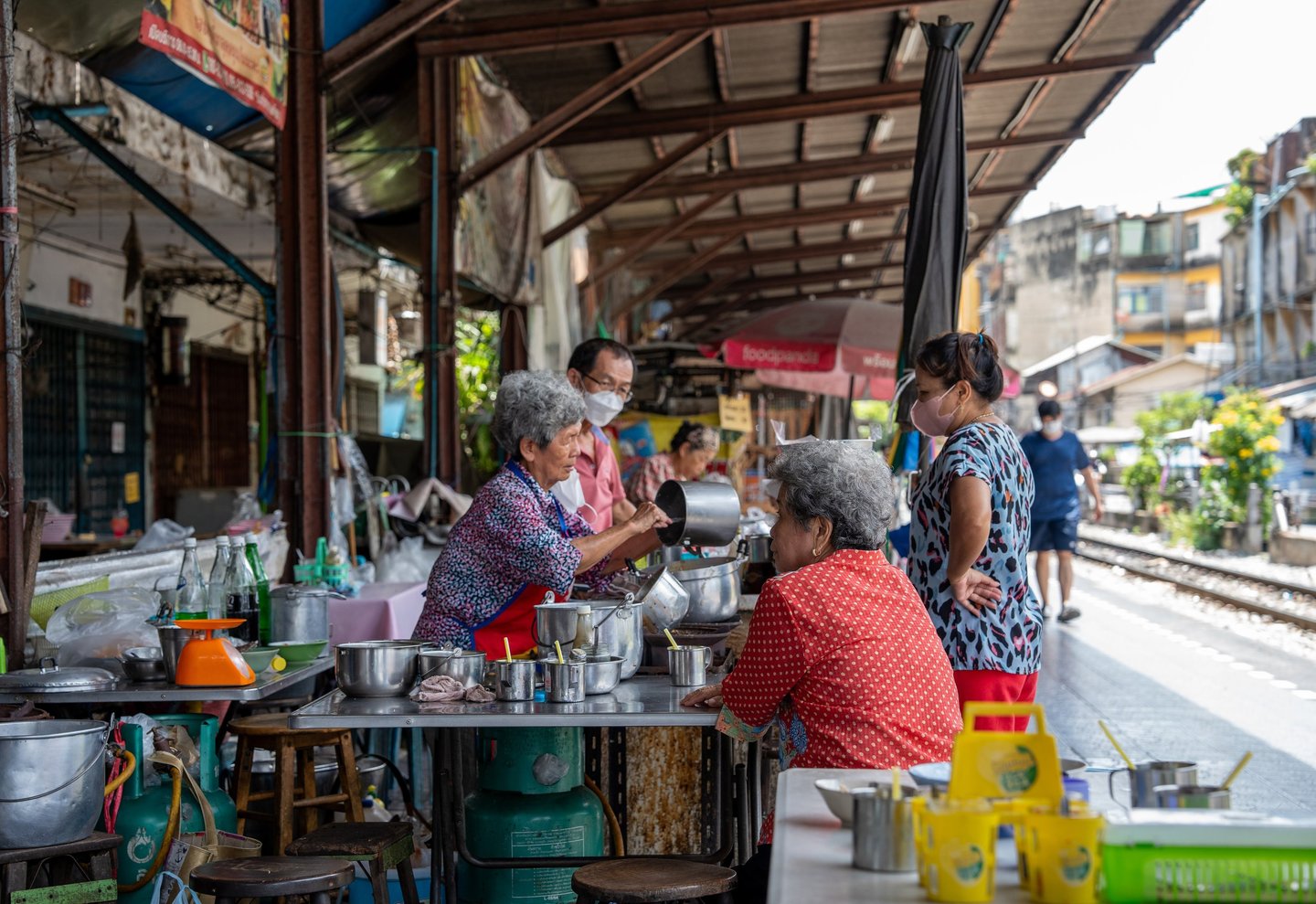
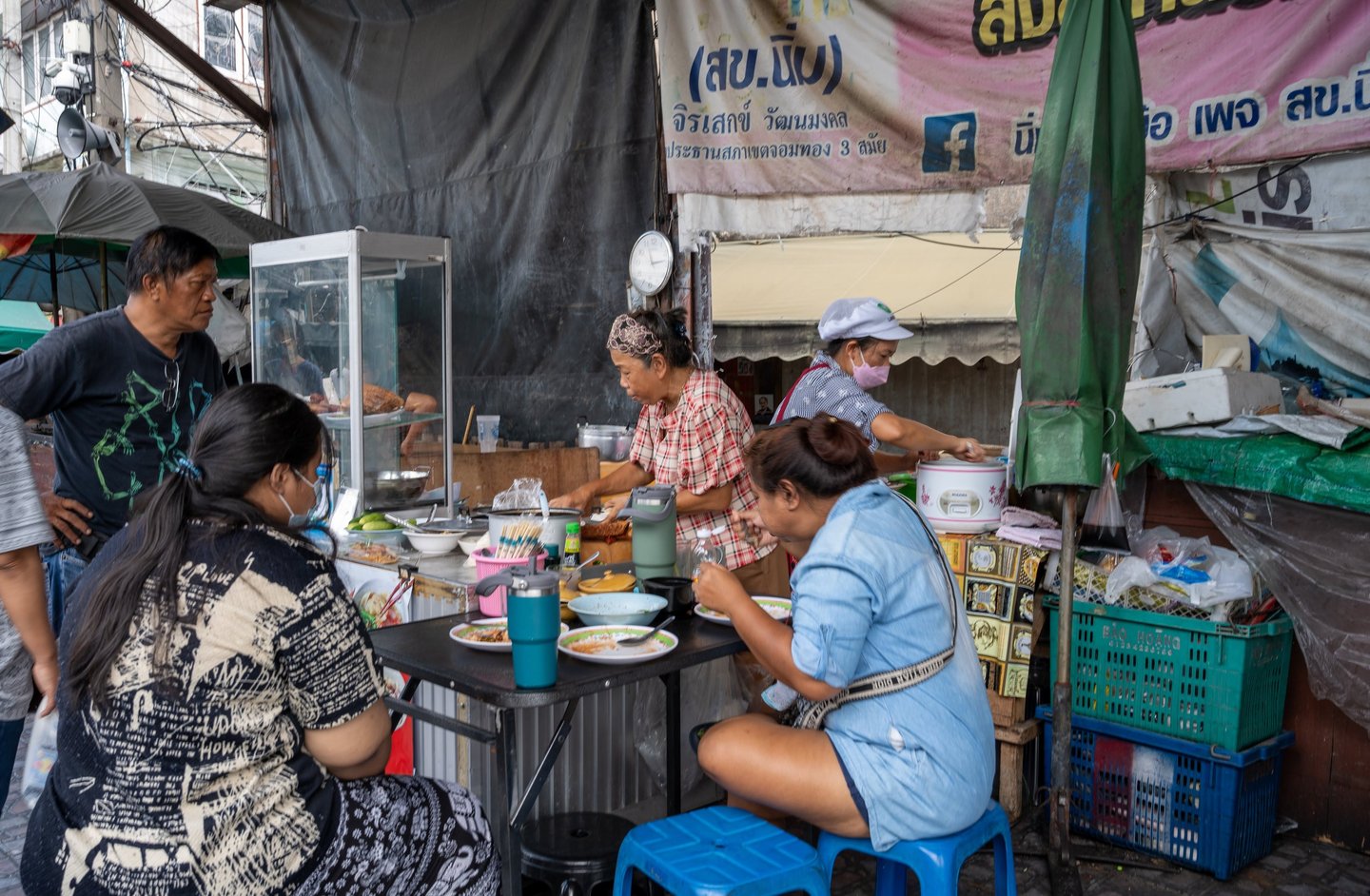
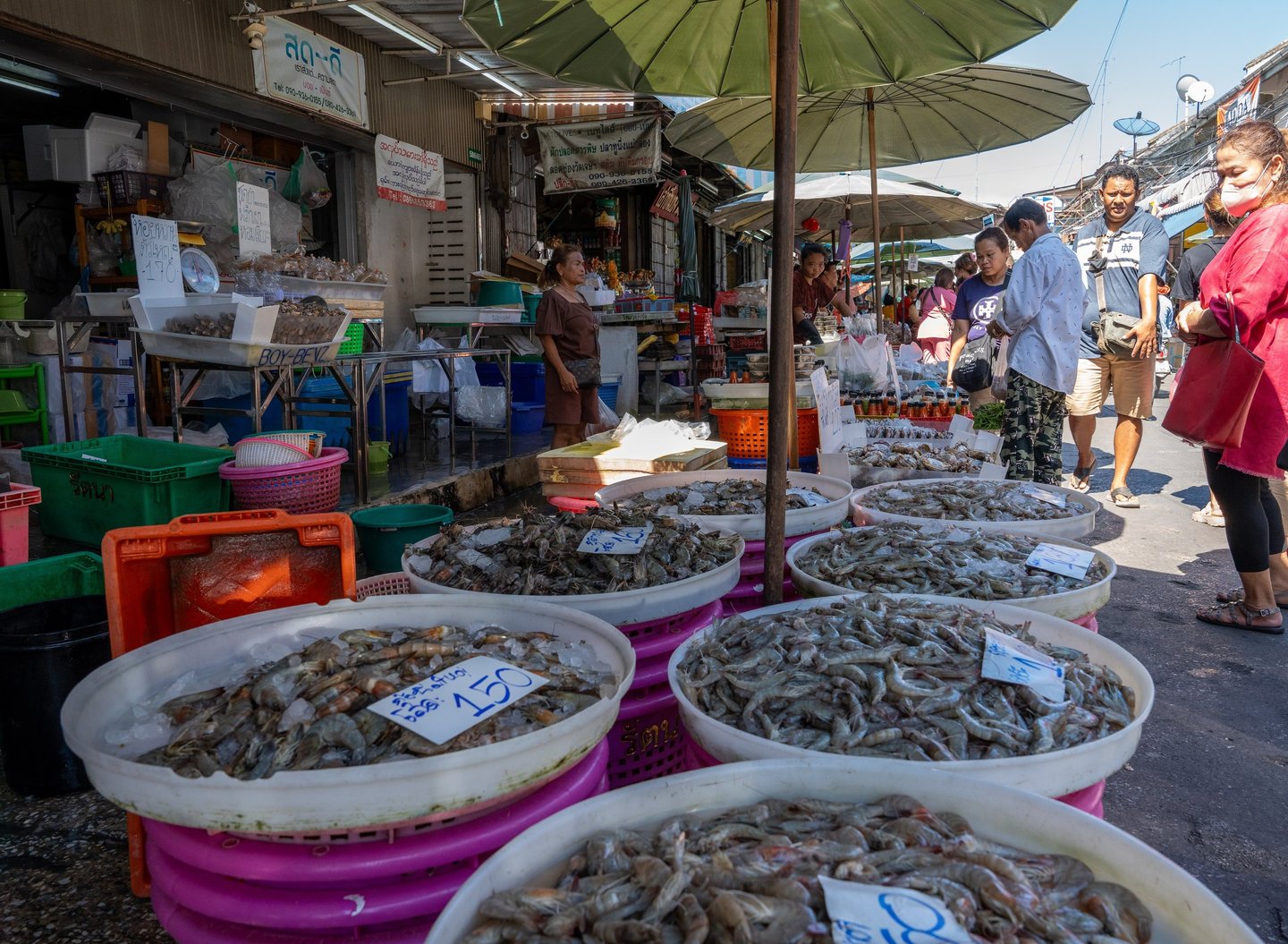
The Mahachai Market itself is one of the largest and most active seafood markets in the region. Historically, it developed as a key hub for fishermen bringing in their daily catch. Today, it still serves that purpose – but on a much larger and more intense scale. Fresh fish, seafood, vegetables, and goods are traded constantly, from early morning until late in the day.
What makes this place unique is how closely everything is connected: railway tracks, market stalls, river traffic, and daily life all exist in the same narrow space.
At the station in Mahachai, I noticed something unusual – the front of a locomotive being used to transport crates of fresh tomatoes. It’s a small detail, but it says a lot about how flexible and practical things work here. Nothing is staged. Everything is used.
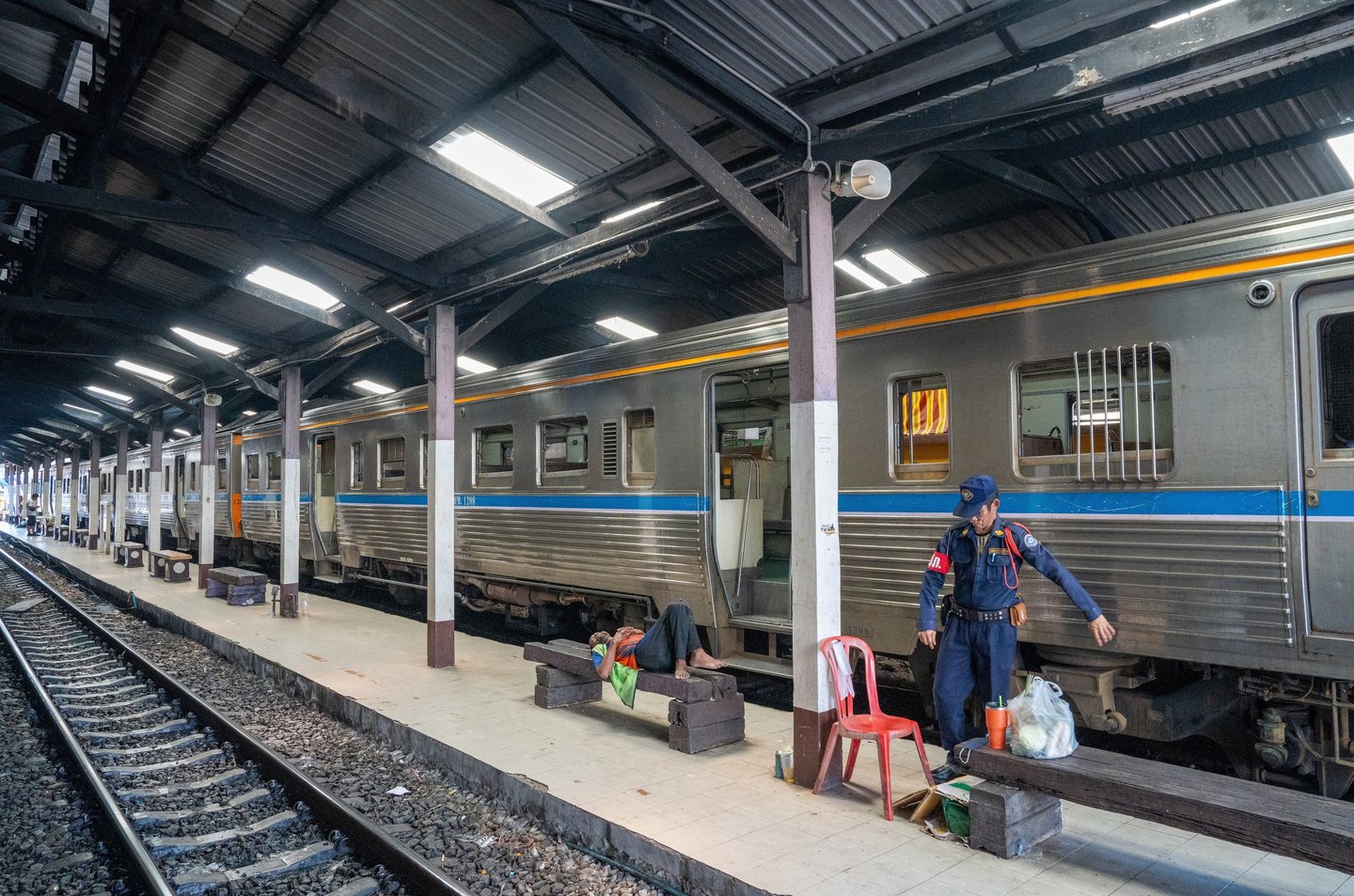
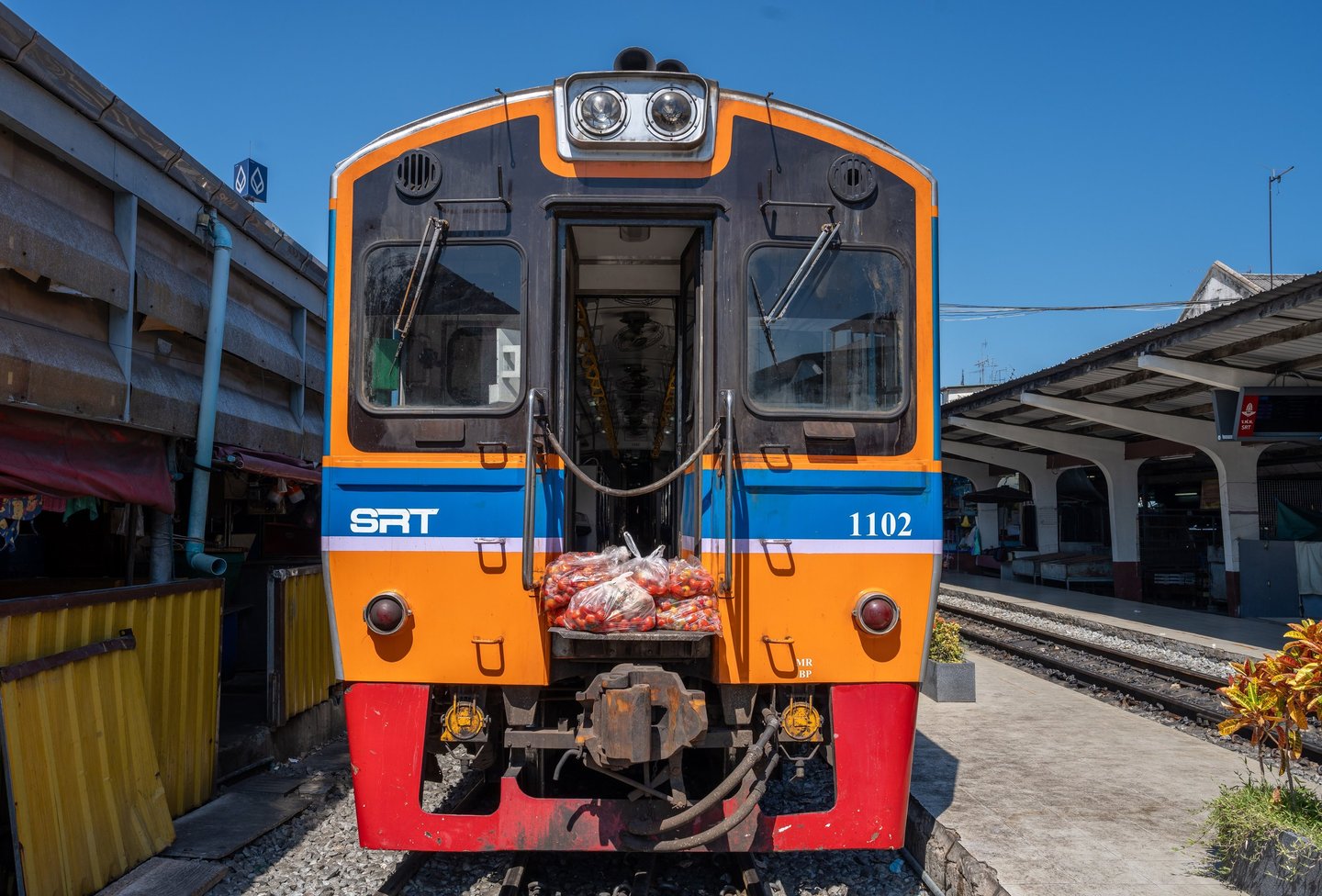
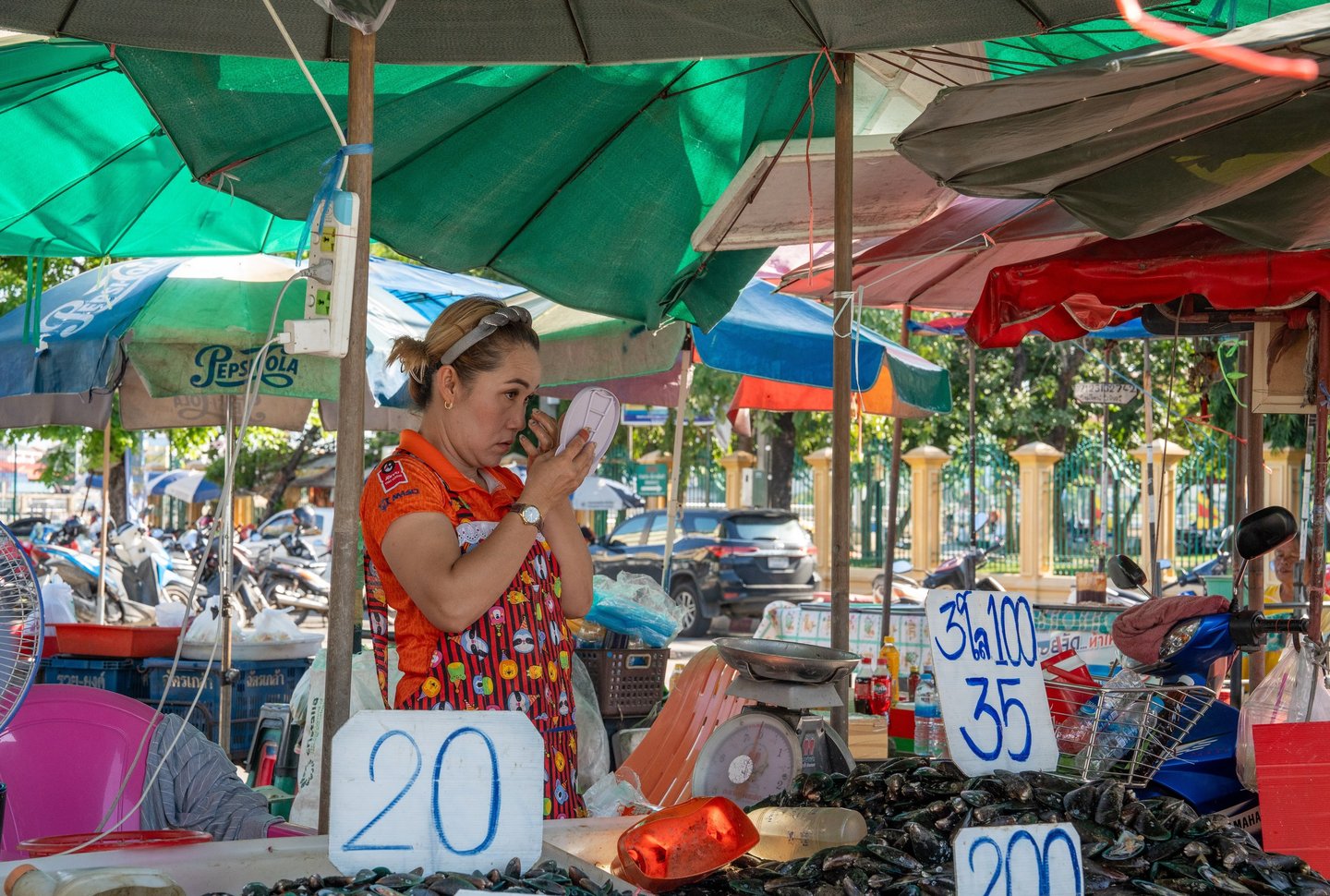
From there, the focus shifts to the fish market itself. The atmosphere is raw, busy, and very direct. Workers carry seafood, ice is constantly being moved, and the ground is wet from melted ice and water.
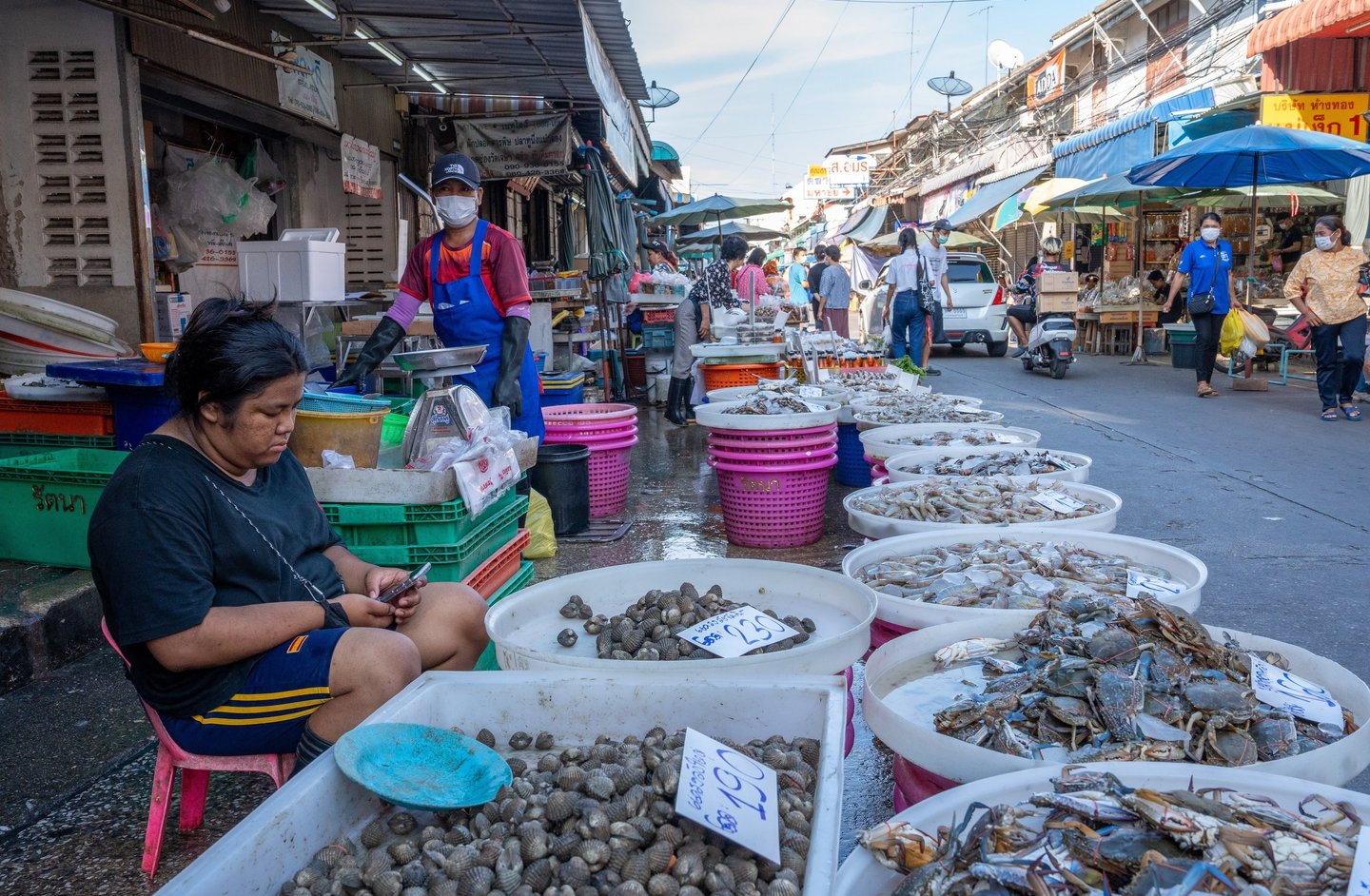
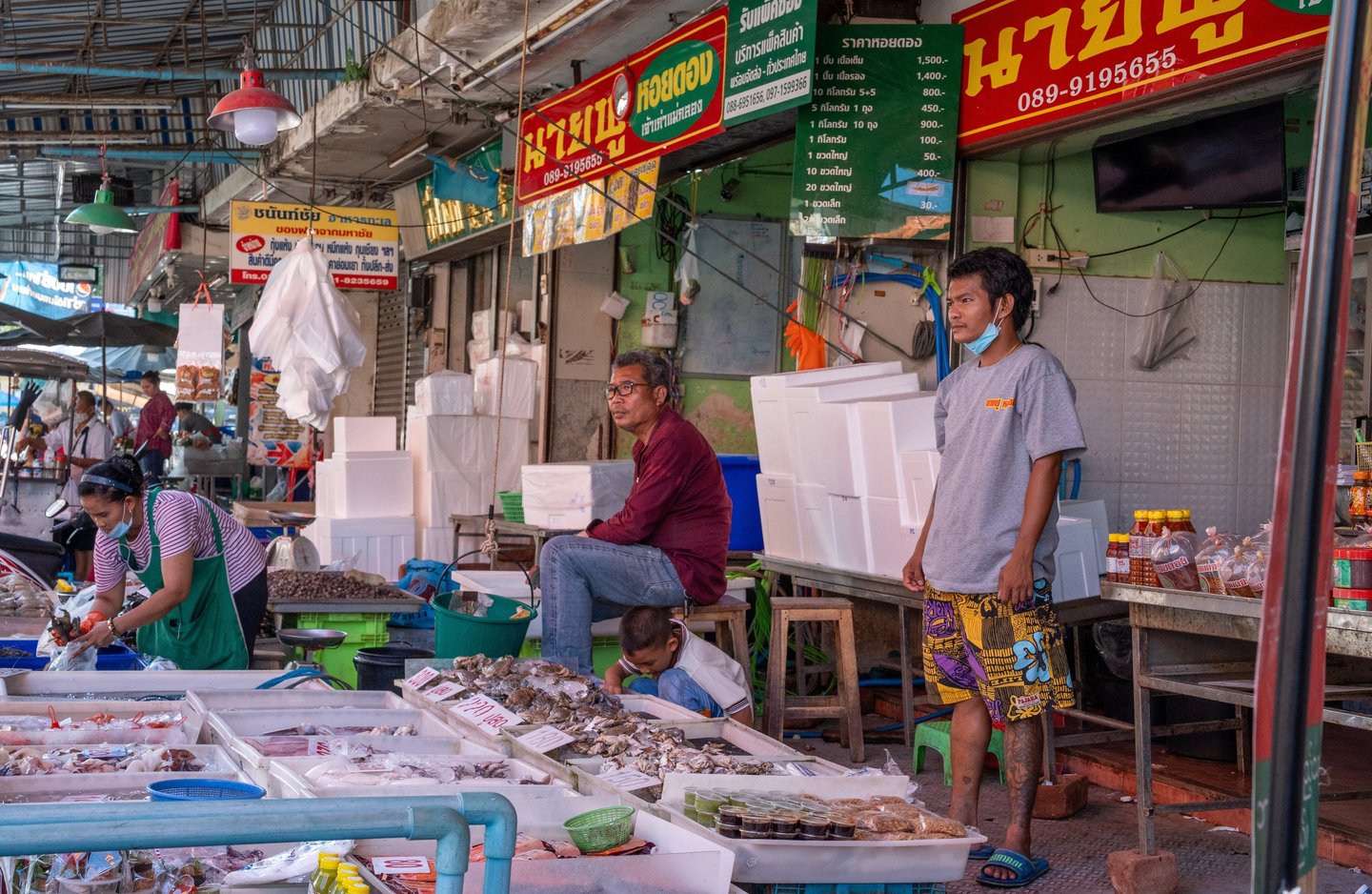
Right next to the market, ferries cross the Tha Chin River throughout the day, transporting people, motorbikes, and goods between both sides. I spent some time photographing this constant movement – the rhythm of engines, water, and people coming and going.
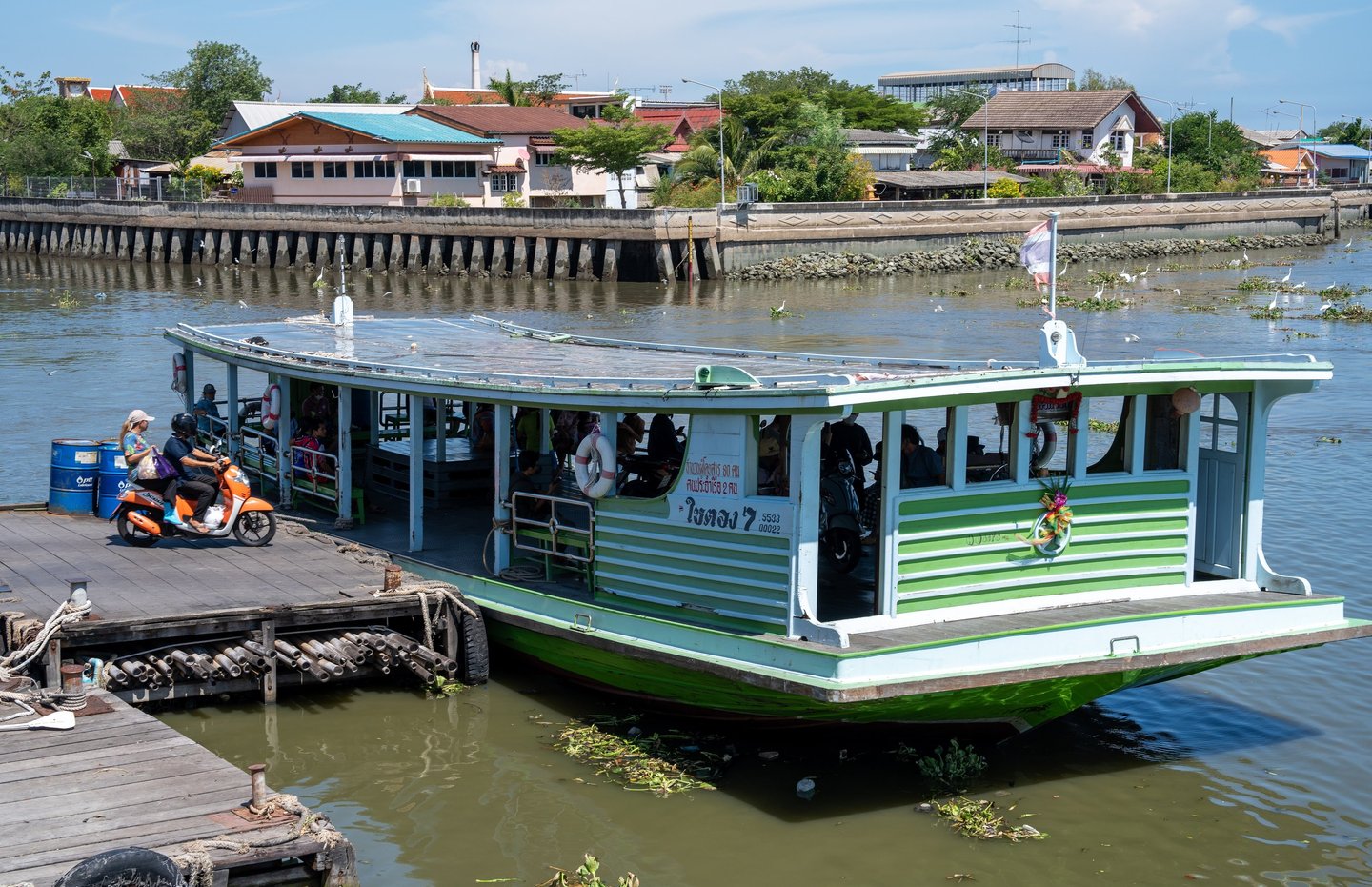
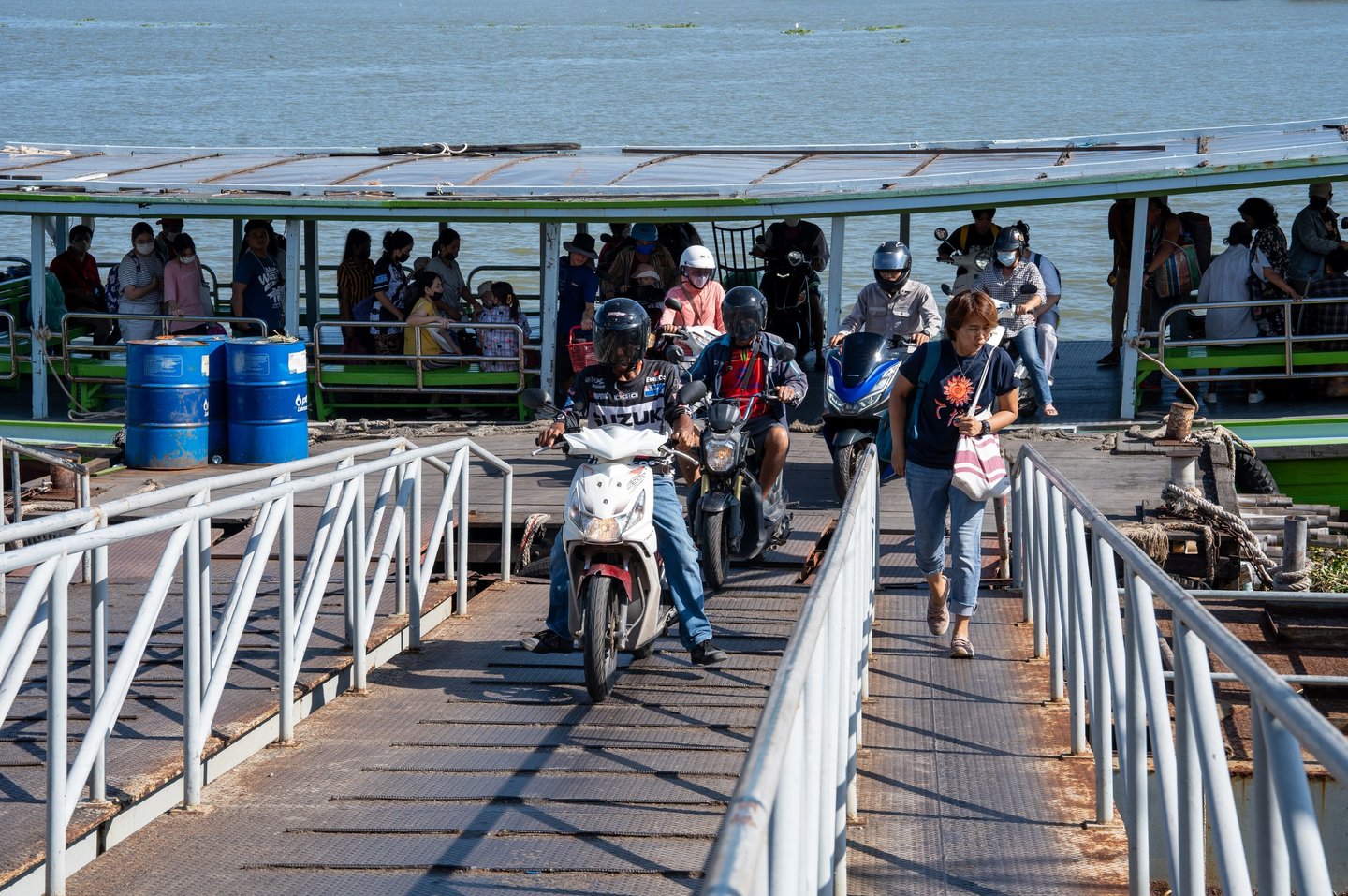
The river itself is still highly active. It remains an essential transport and economic lifeline for the region, even as modern infrastructure continues to develop around it. Fishing boats, cargo movement, and local ferries all share the same space, creating a layered and constantly changing scene.
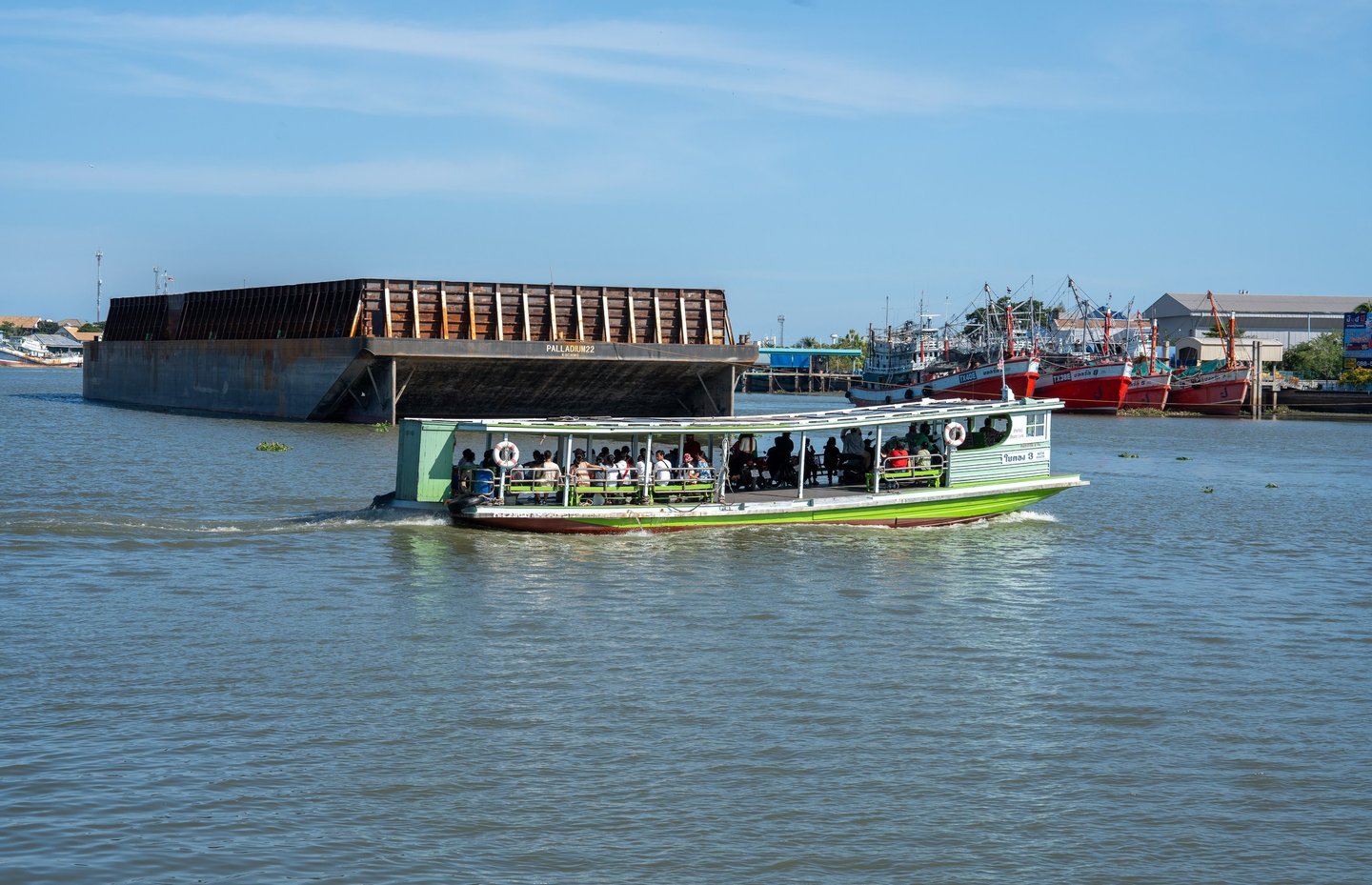
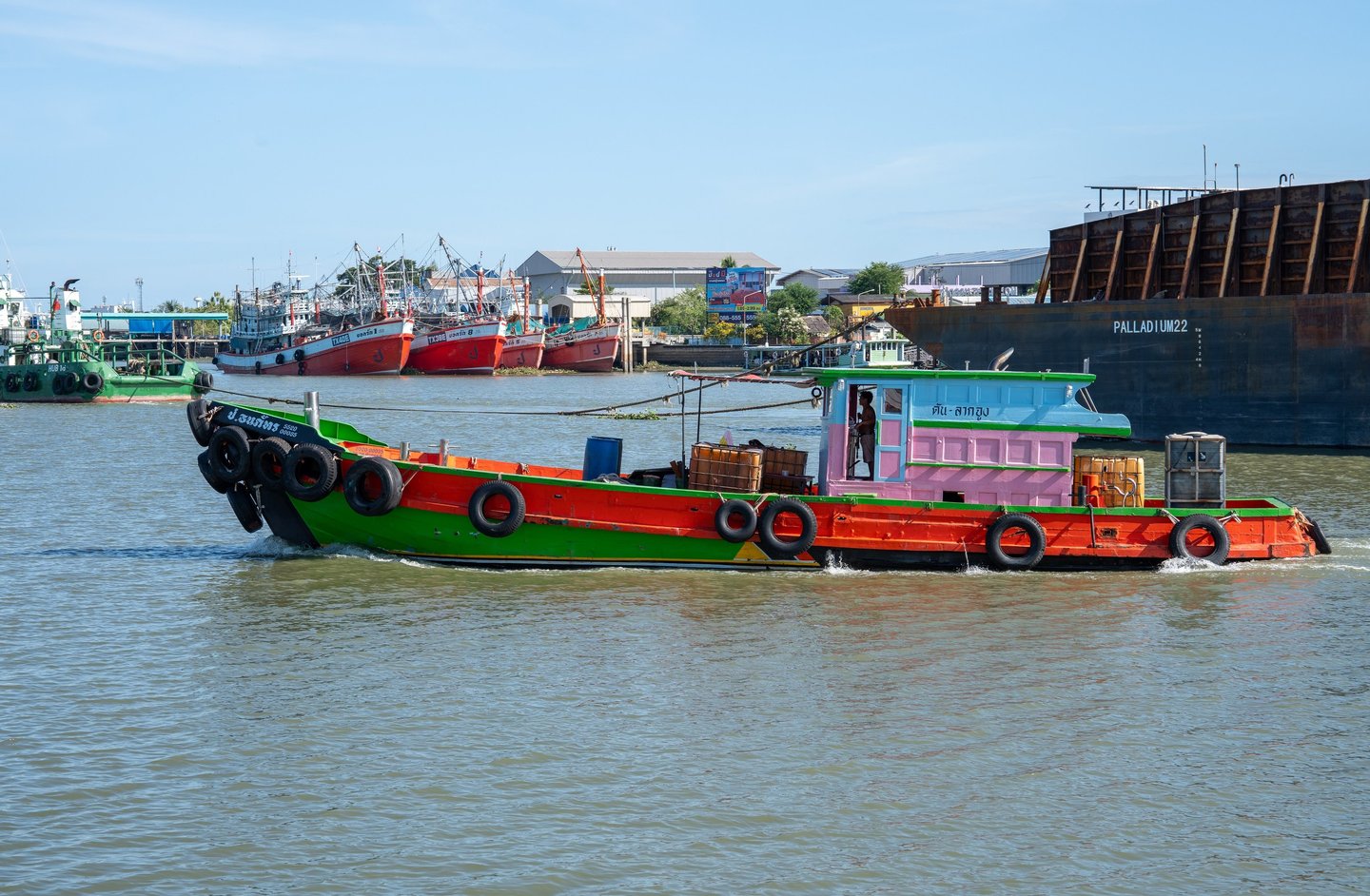
Mahachai Market is also regularly featured on Thai television, often highlighted as one of the most authentic local markets near Bangkok. And after spending time there, it’s easy to understand why.
This short journey from Bangkok to Mahachai offers a completely different perspective – less polished, more direct, and deeply connected to everyday life. For me, it’s exactly the kind of place where street photography becomes real.
Lumphini Park and the Streets Around It – Bangkok Between Quiet Green Space and Endless Traffic
Bangkok is a city that rarely gives you a pause. Noise, movement, traffic – it’s always there. But right in the middle of it, there’s a place where things slow down, at least for a moment.
Lumphini Park sits surrounded by some of the busiest roads in Bangkok. And that contrast is exactly what makes this area interesting to me as a photographer.
The park itself dates back to the 1920s, created under King Rama VI as Bangkok’s first public park. It was originally intended as an exhibition ground and later developed into a green space for the city. Today, it has become one of the most important places for locals – not as a landmark, but as part of everyday life.
Early in the morning, people come here to run, to exercise, or just to sit. Later in the day, the pace slows even more. Groups gather, others walk quietly through the park, and some just watch the water. It’s not staged, not designed – it just happens.
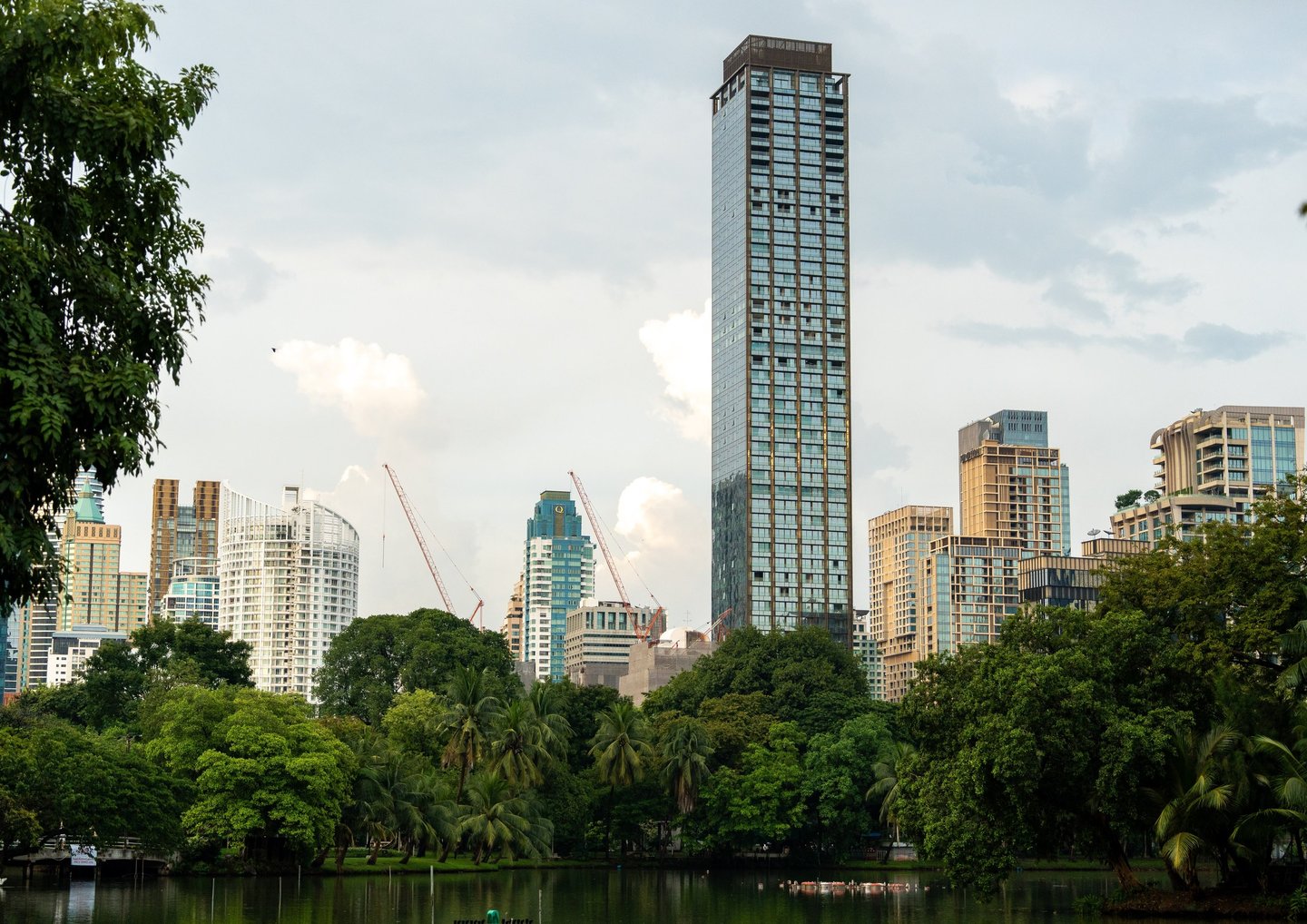
What stands out visually is the constant presence of the skyline. Modern high-rise buildings frame the park from all sides. You see them through the trees, reflected in the water, or rising behind people sitting on benches. It creates a very specific tension between nature and city – something that works especially well in photography.
Then there are the details you don’t expect.
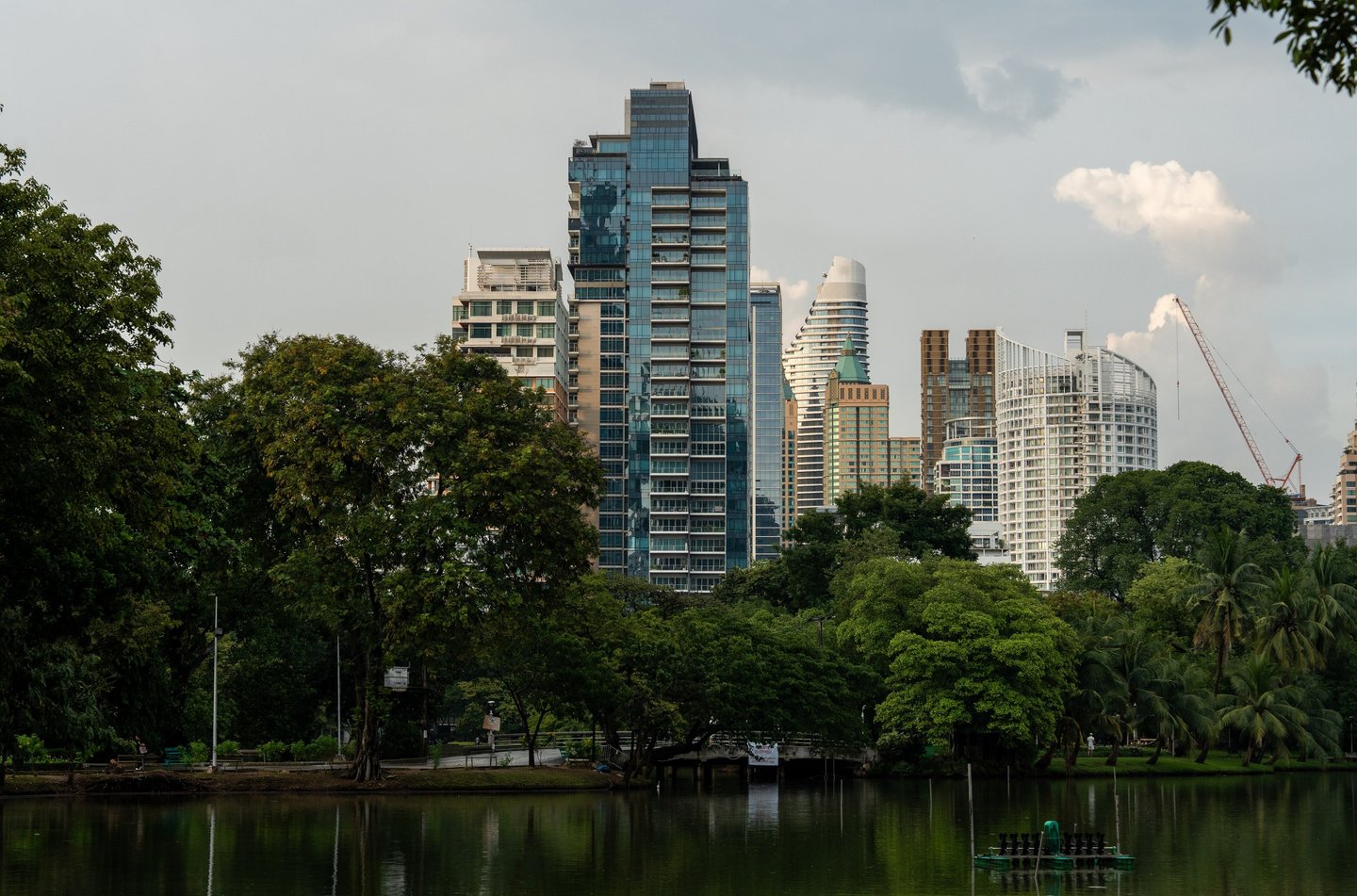
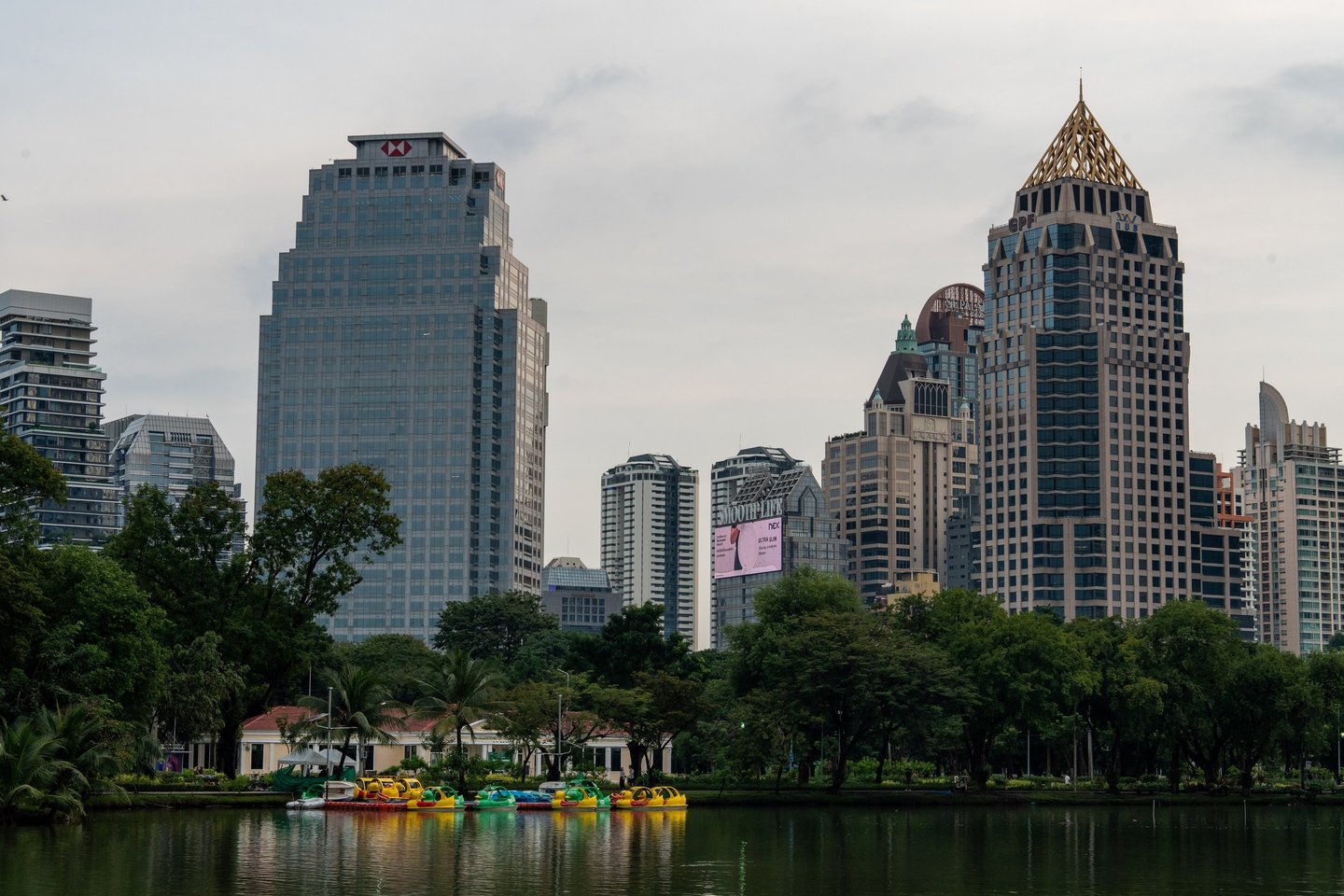
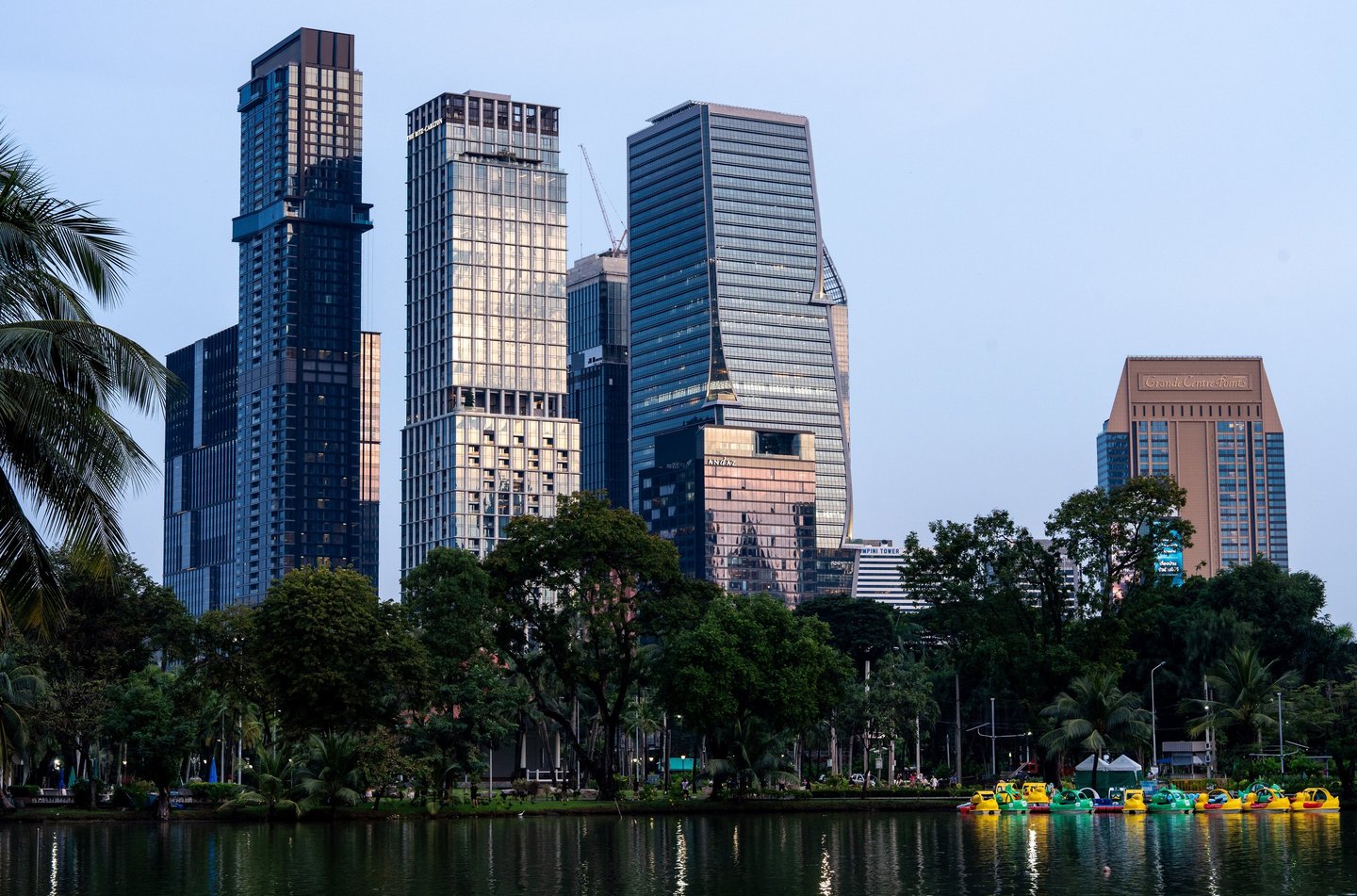
Monitor lizards move freely through the park, mostly near the water. They’re part of the environment here. Some people ignore them completely, others stop and watch. For me, they add another layer to the scene – something you wouldn’t normally associate with a city like Bangkok.
In one moment, I noticed a street cat sitting on a park bench, completely still, almost posing. Small situations like that don’t last long, but they’re exactly what I look for.








Just outside the park, everything changes again.
The streets around Lumphini Park are the opposite of what happens inside. Heavy traffic, constant movement, noise, heat rising from the asphalt. Cars, motorbikes, buses – everything pushing forward at the same time.
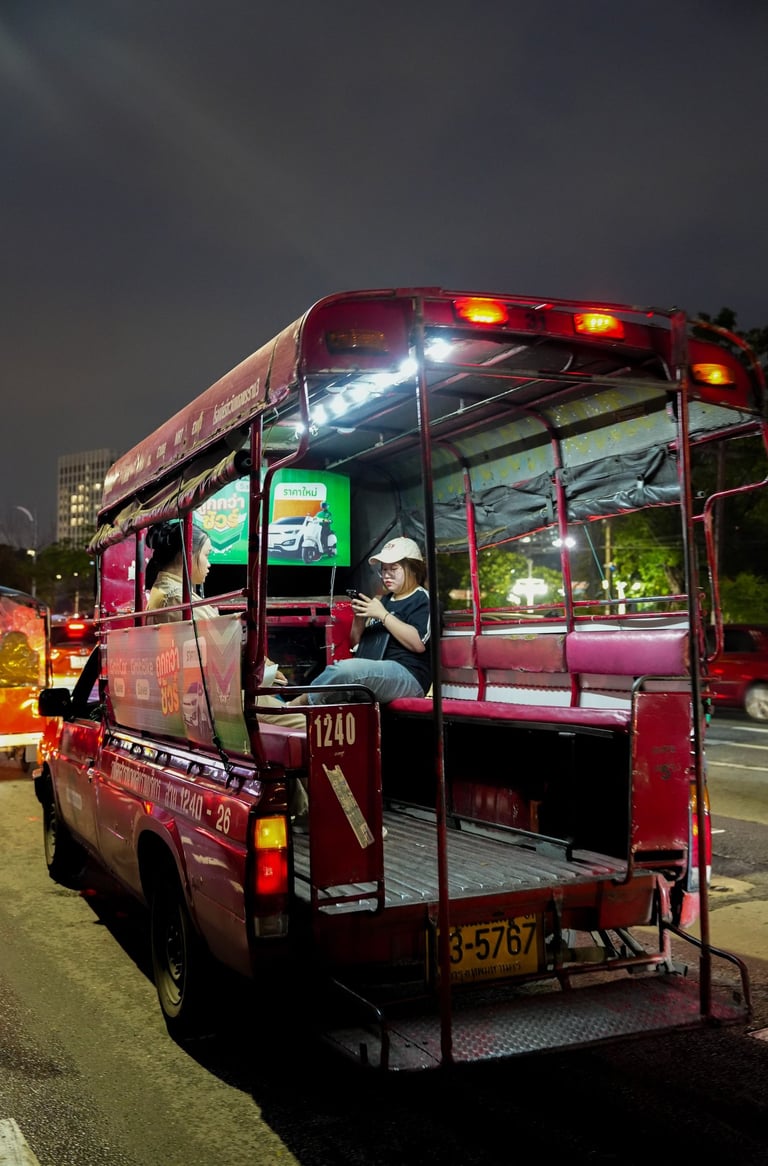
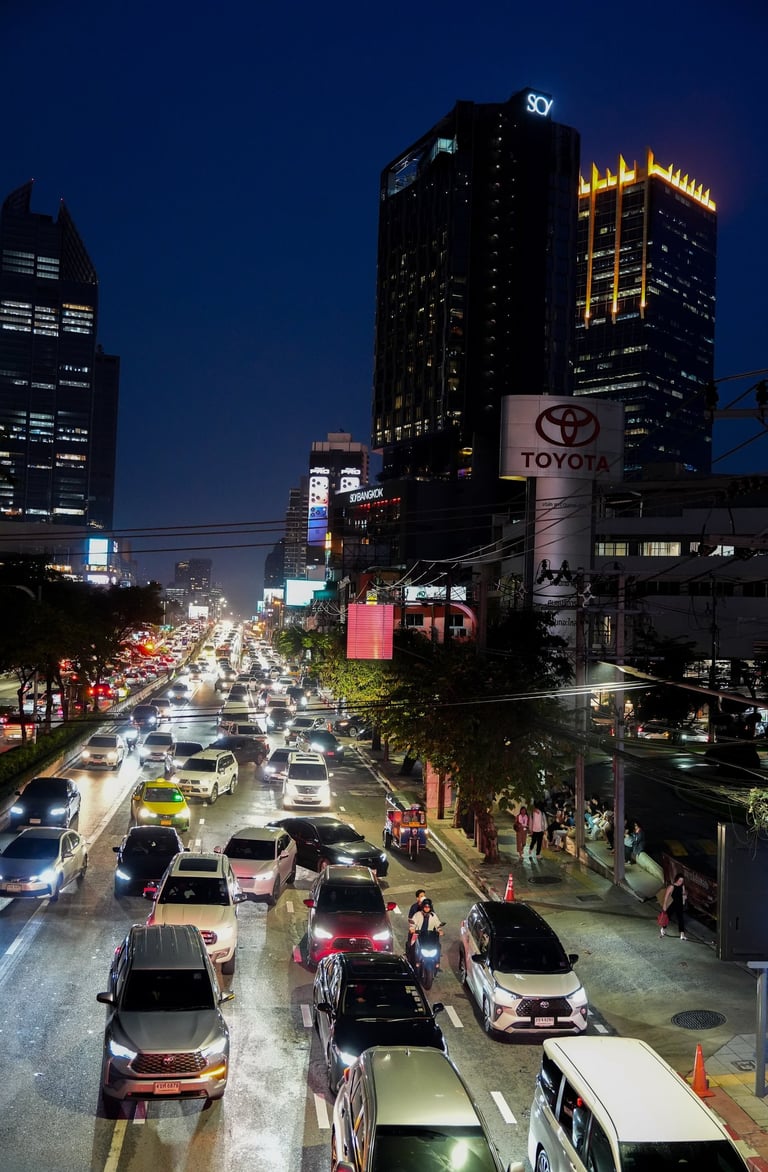
Photographing both sides – inside the park and just outside on the streets – makes the contrast even stronger. Within a few steps, the atmosphere shifts completely.
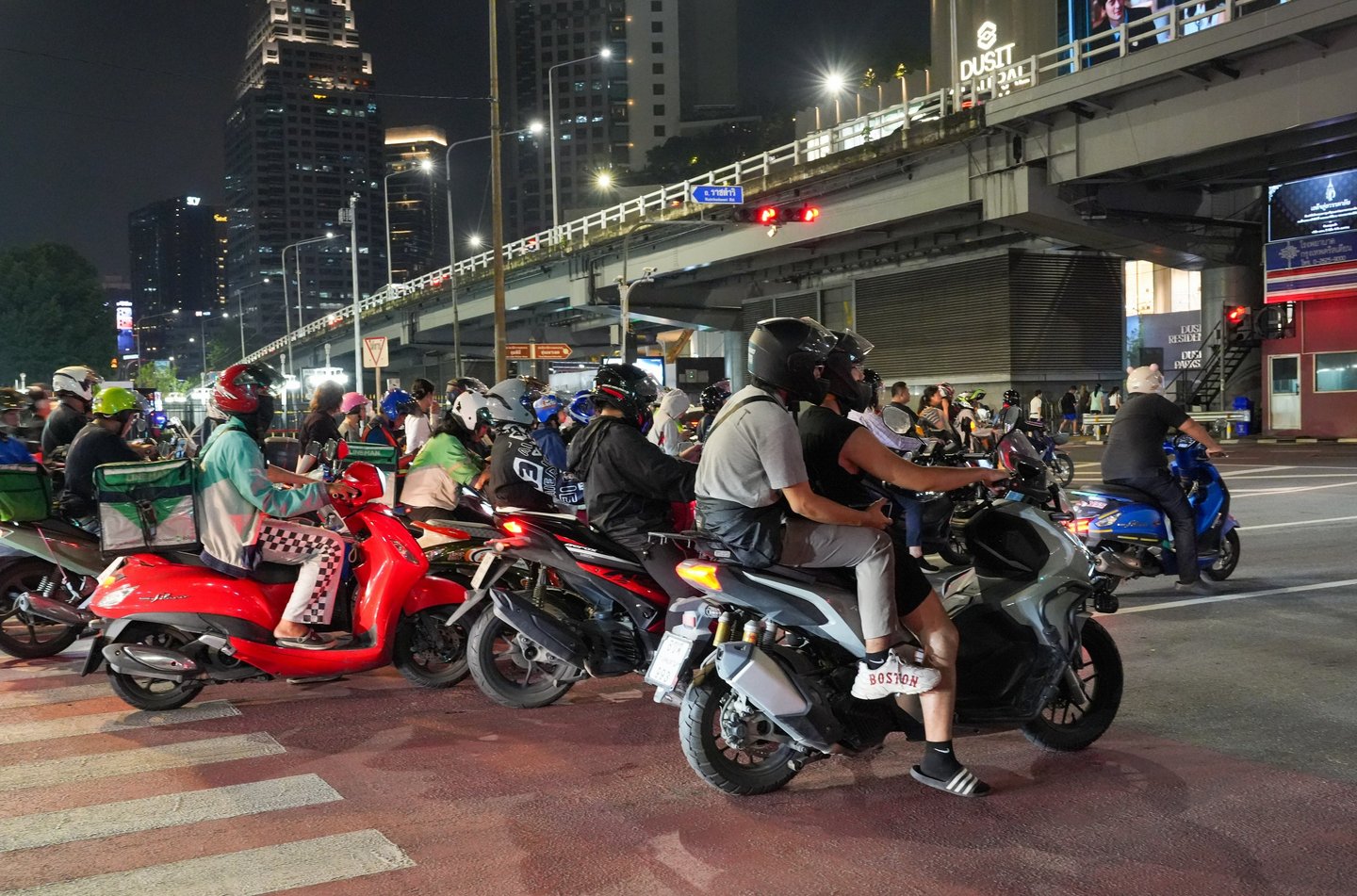
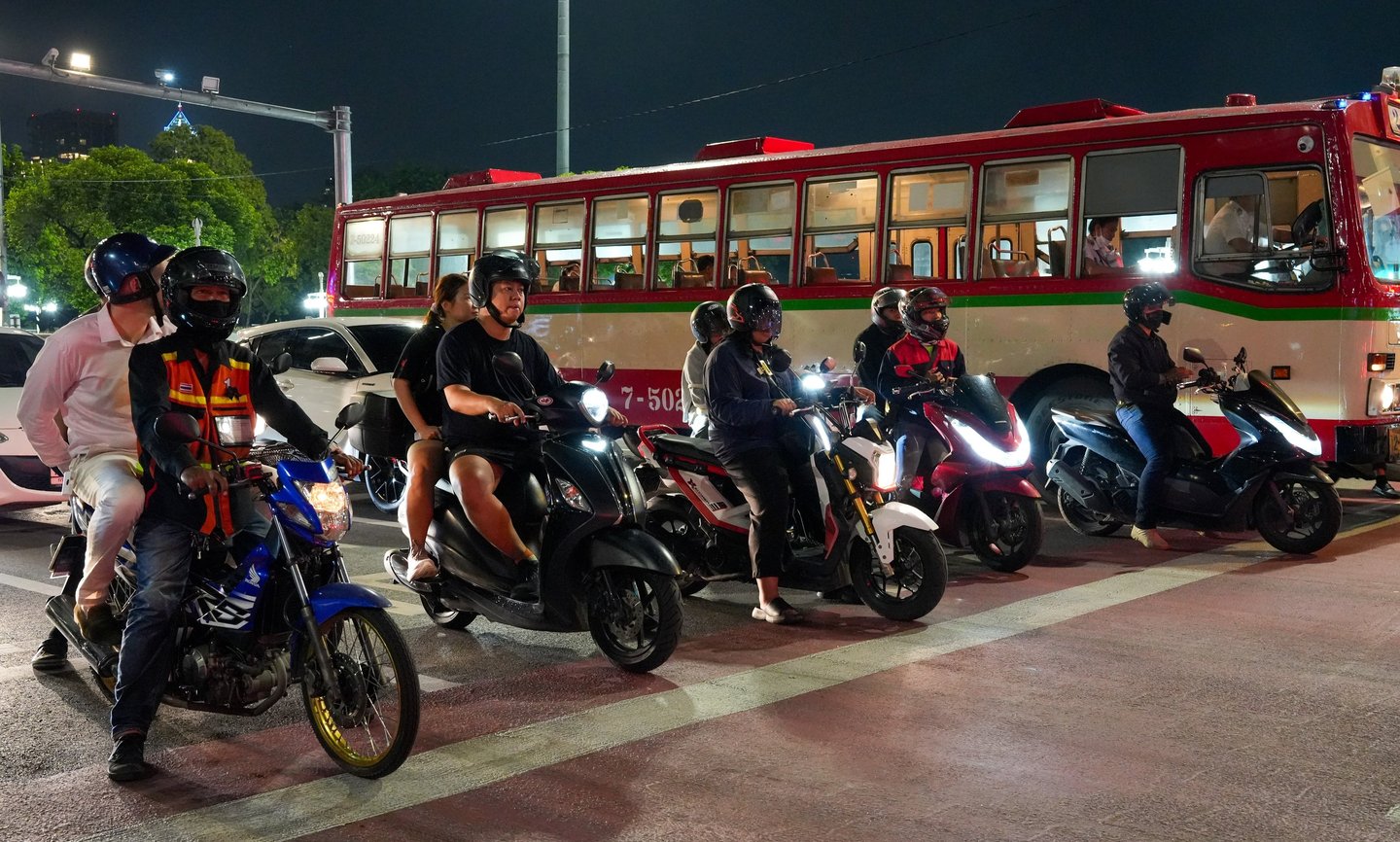
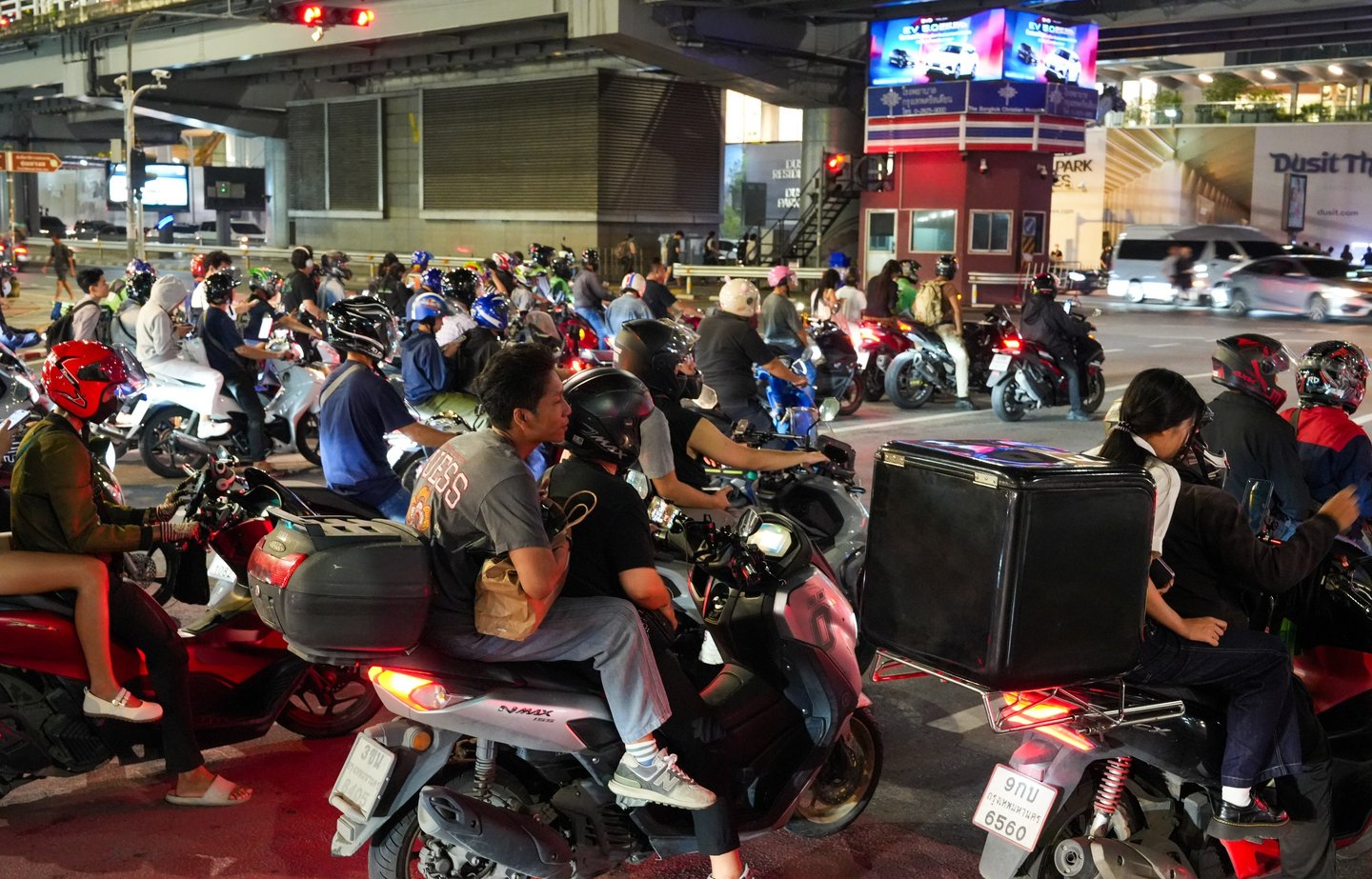
For me, this area is not just about the park itself. It’s about that transition. The line between calm and chaos, between stillness and movement.
And in a city like Bangkok, that line is never far away.
Bangkok Skyline: Where Concrete Meets Green, and the City Reaches New Heights
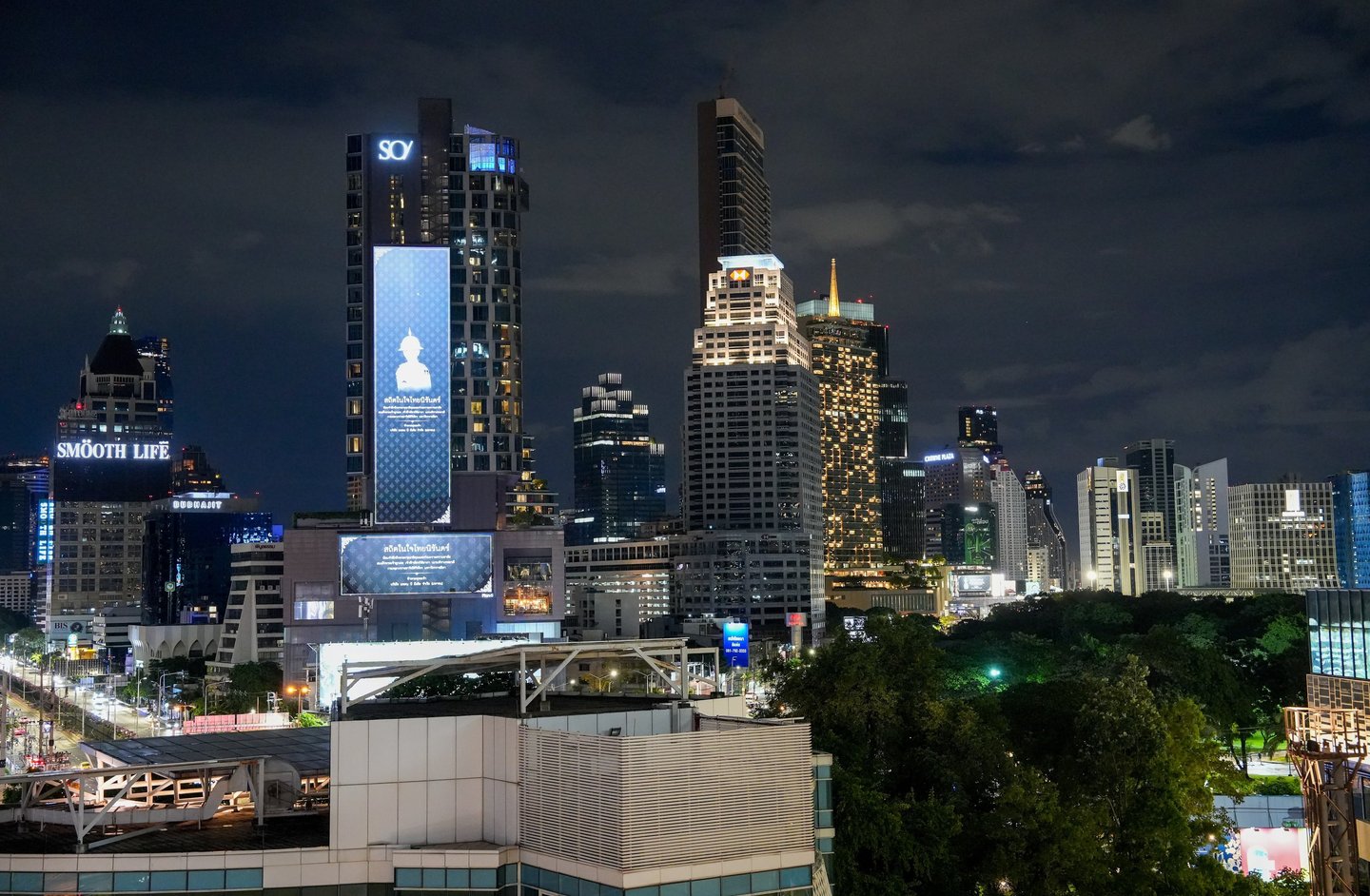
I'm standing at the edge of Lumphini Park well after dark, and this Bangkok skyline in front of me looks nothing like it did two years ago. That's the rhythm of Bangkok cityscape photography — you turn your back for a season, and the horizon has rearranged itself.
Night is when Bangkok's architecture actually reveals itself. For anyone into Bangkok night photography, the towers stop being silhouettes and become light sources, each one lit differently, each one competing for the same stretch of sky. I shot this handheld at 1/15 second — no tripod, deliberately slow, because I wanted Lumphini Park's canopy to hold its shape while the city lights behind it carried a faint blur of motion. On the Sony Alpha 7 IV with the FE 24-70mm GM II, that shutter speed is a risk worth taking when the ambient light of the Bangkok skyline is this rich.
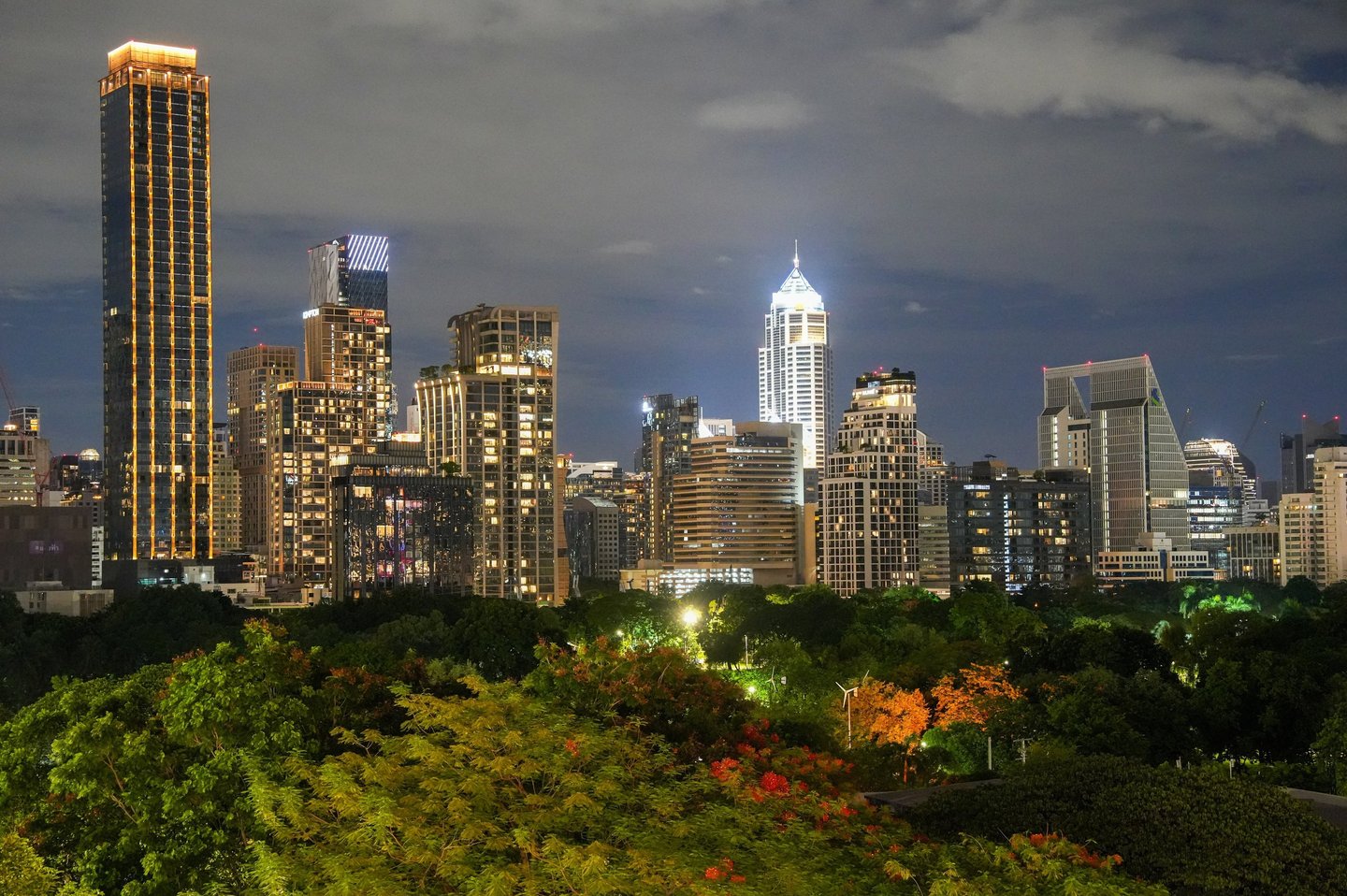
In the foreground, Lumphini Park's tree line sits thick and dark, grounding the frame. Behind it, the Dusit Central Park Tower rises in warm gold from base to crown — still the newest addition to this stretch of the Bangkok skyline, and impossible to ignore in the composition. Older glass towers crowd around it under a heavy night sky, and one crane keeps working in the gap between buildings, lit by its own work lights, because in this city something is always going up, even after midnight.
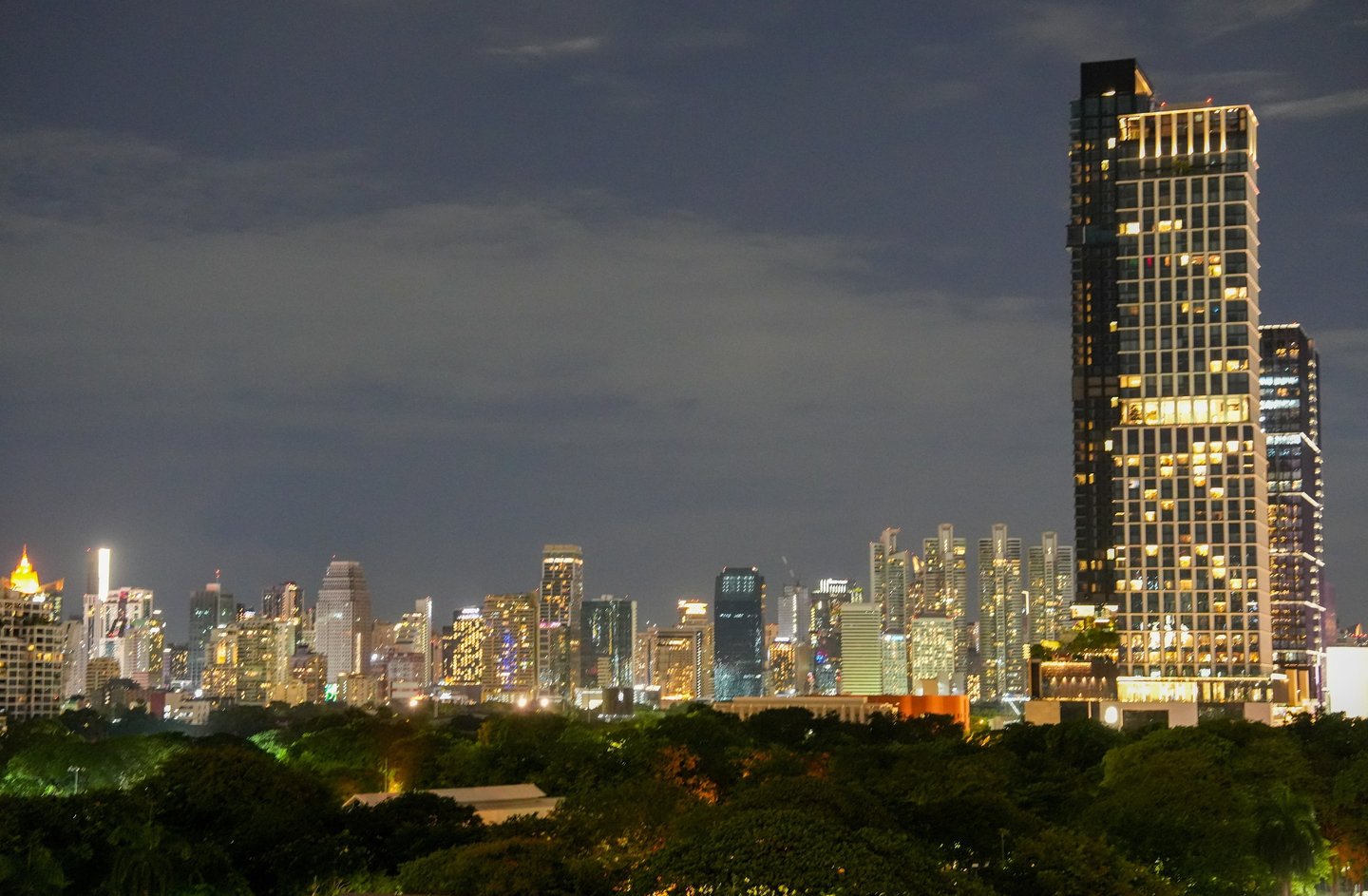
The Sala Daeng intersection has changed the way this whole neighborhood reads at night. It's not just a wall of glass viewed from the park paths anymore — the Level 6 rooftop park at Dusit Central Park puts you above Rama IV Road, watching the BTS Skytrain glide past beneath you in a streak of light while Lumphini Park's dark canopy spreads out on the other side. Traffic, mass transit, and park silhouette, all in one night sightline — that combination is rare in a city built this dense, and it's become one of my favorite spots for Bangkok rooftop photography.
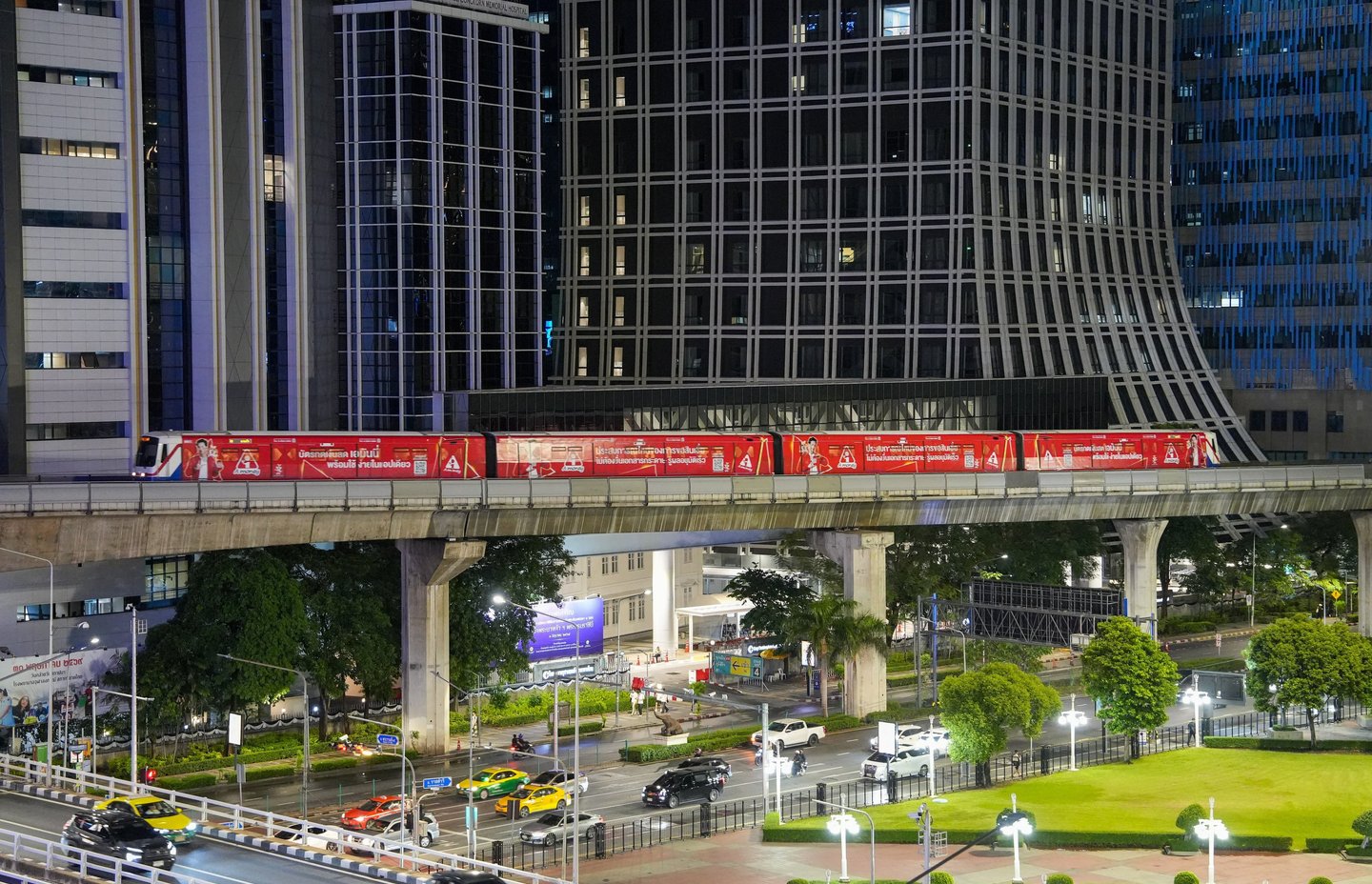
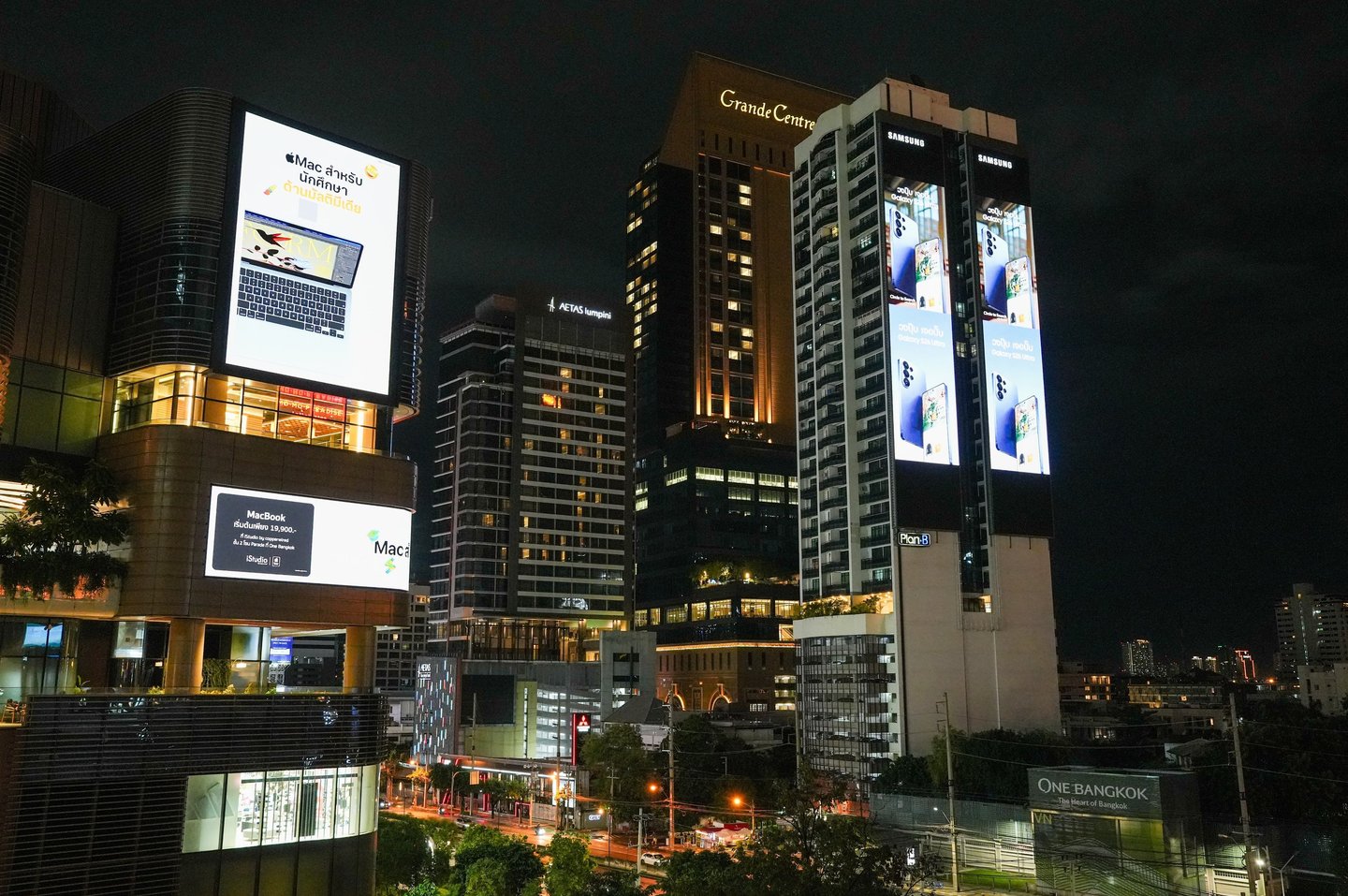
A short walk down Rama IV Road, at the corner with Witthayu Road and bordering Lumphini Park on its other side, is One Bangkok — over 16 hectares, the largest private development in Thai history. Walking through it after dark, the contrast to old Bangkok architecture is immediate: wide lit plazas, illuminated art installations, and towers designed by firms like SOM and KPF glowing where low-rise shophouses used to stand. The Parade holds Thailand's first Mitsukoshi Depachika food hall; The Storeys carries the rooftop dining and nightlife scene; POST 1928 is still filling in with luxury flagship stores.
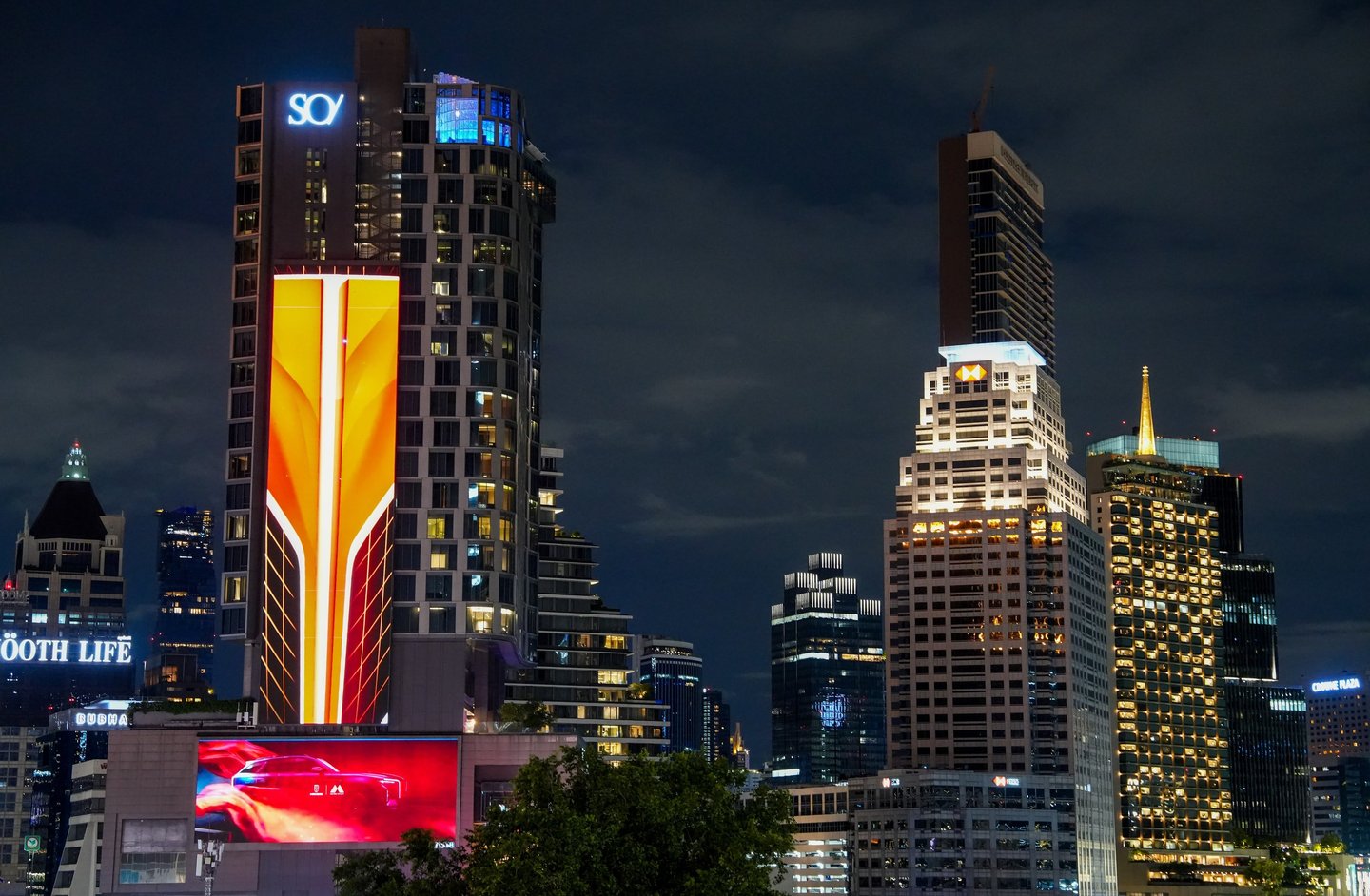
By 2030, the Signature Tower will top out at 430 meters, with an observation deck looking back down over the park I was standing in tonight — a reminder that this Bangkok skyline, and the wider Southeast Asia skyline it's part of, is still very much a work in progress. That's exactly what keeps me coming back after dark with a camera.
Bangkok United Ultras at Rajamangala Stadium – A Night of Hope, Pride and Reality
On April 15, 2026, Bangkok came to a standstill. Not because of the traffic. Not because of the heat. Because of football.
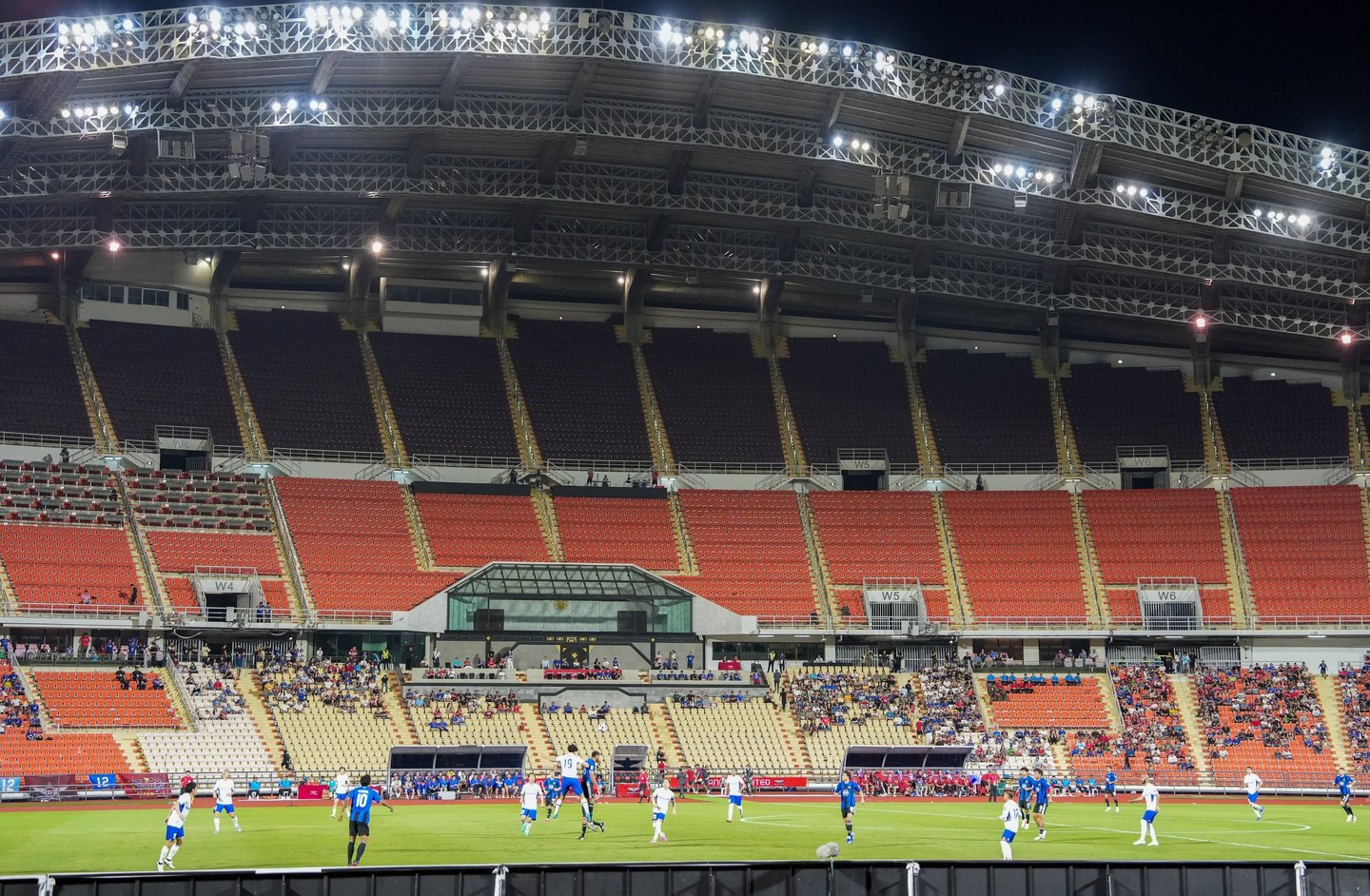
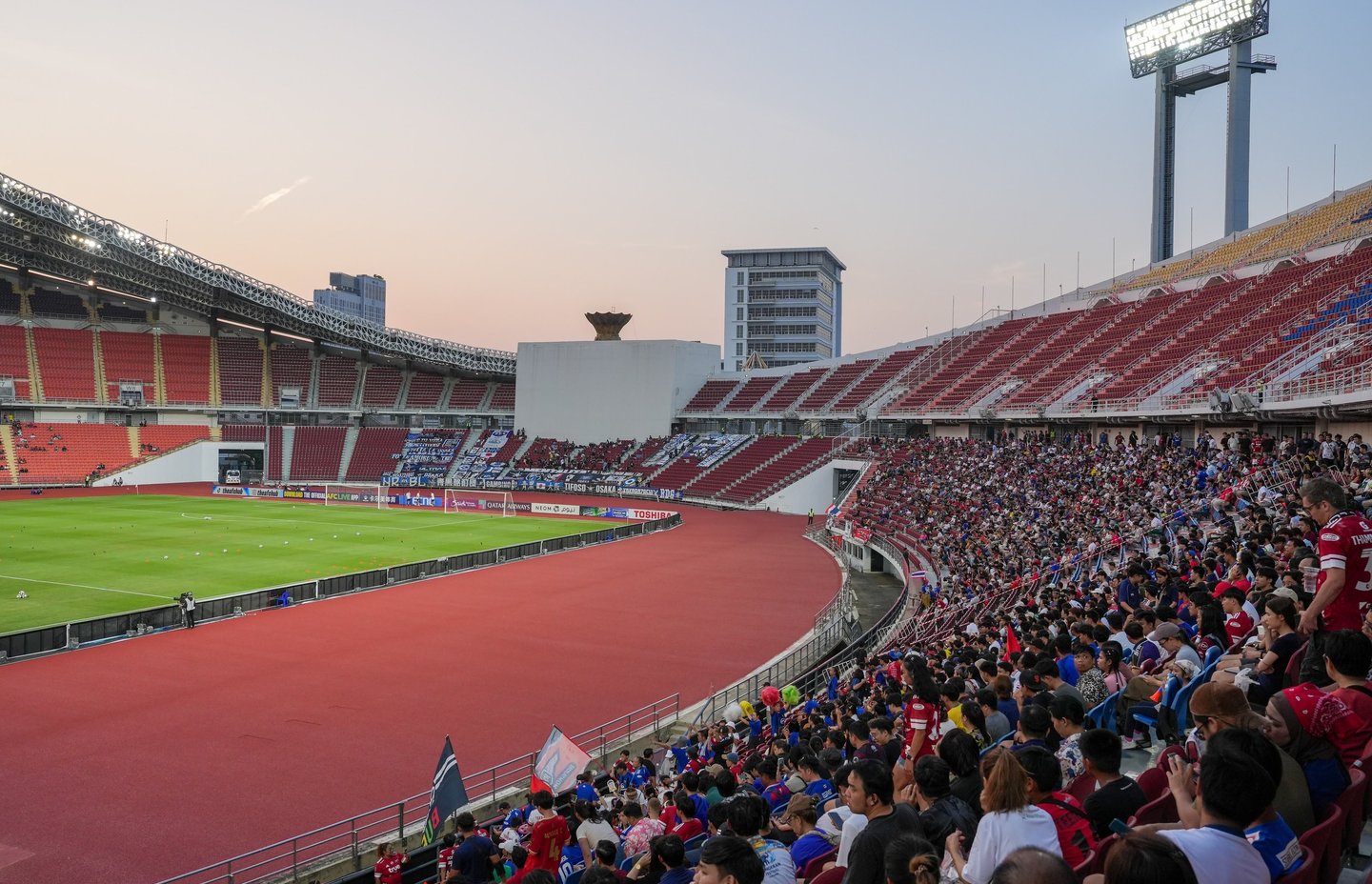
True Bangkok United hosted Gamba Osaka in the semi-final of the AFC Champions League Two at the massive Rajamangala National Stadium, Thailand’s biggest stadium. A place built for major occasions. Opened in 1998 for the Asian Games, home of the Thai national team, stage for finals, concerts and nights people remember for years. With a capacity of around 50,000, it often feels monumental. That night, 14,000 fans were inside, yet it still felt bigger than the numbers suggested.
After a stunning 1–0 away win in Japan, suddenly everything seemed possible. Bangkok was dreaming of a final. But football rarely cares about dreams. In the end, Gamba Osaka won 3–0.
I was there. Not as a fan. With a camera.
And sometimes you see more through a viewfinder than with your own eyes.
Three Hours Before Kick-Off: The Ultras Take Over the Forecourt
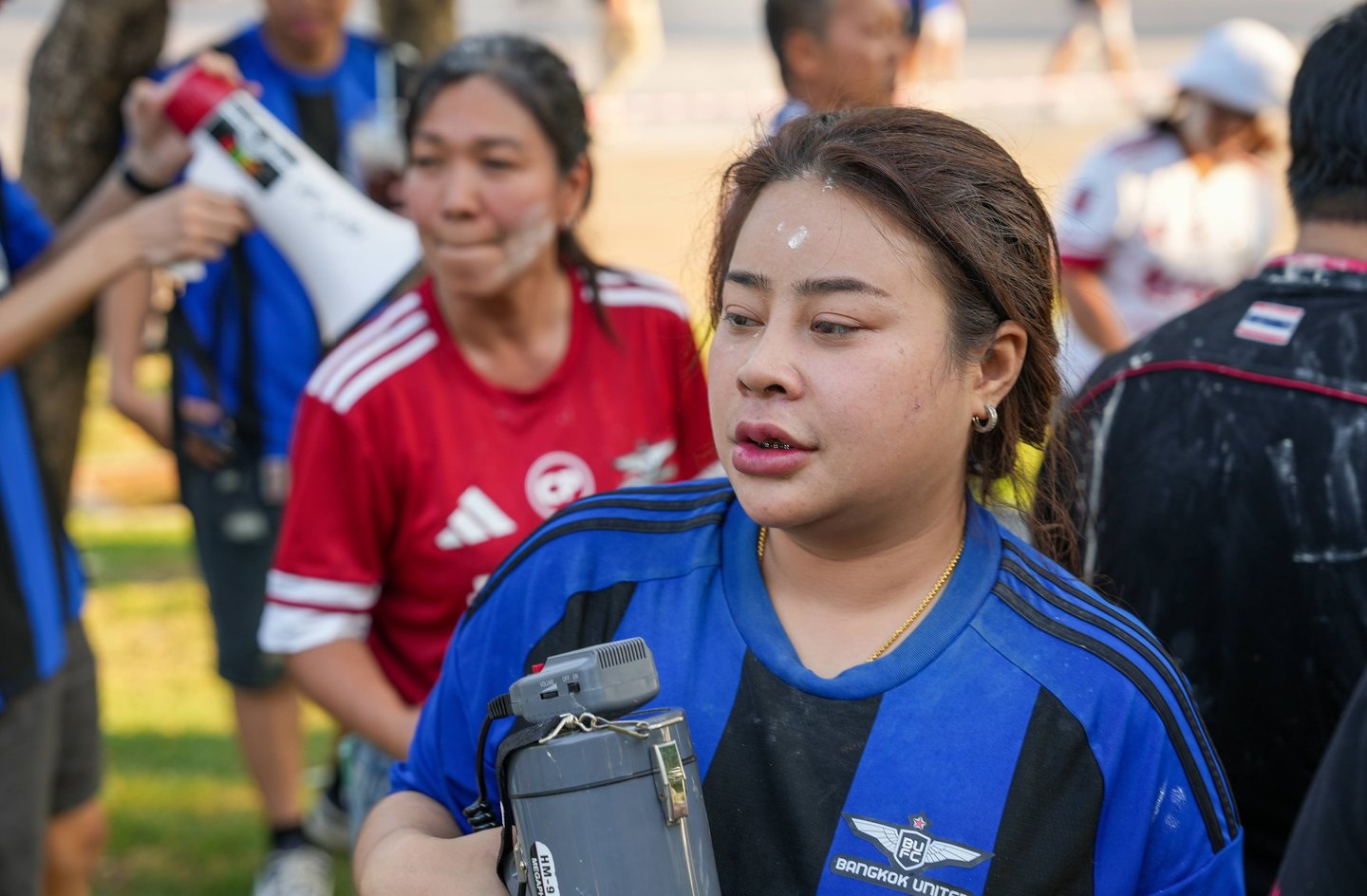
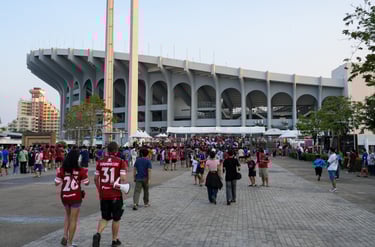
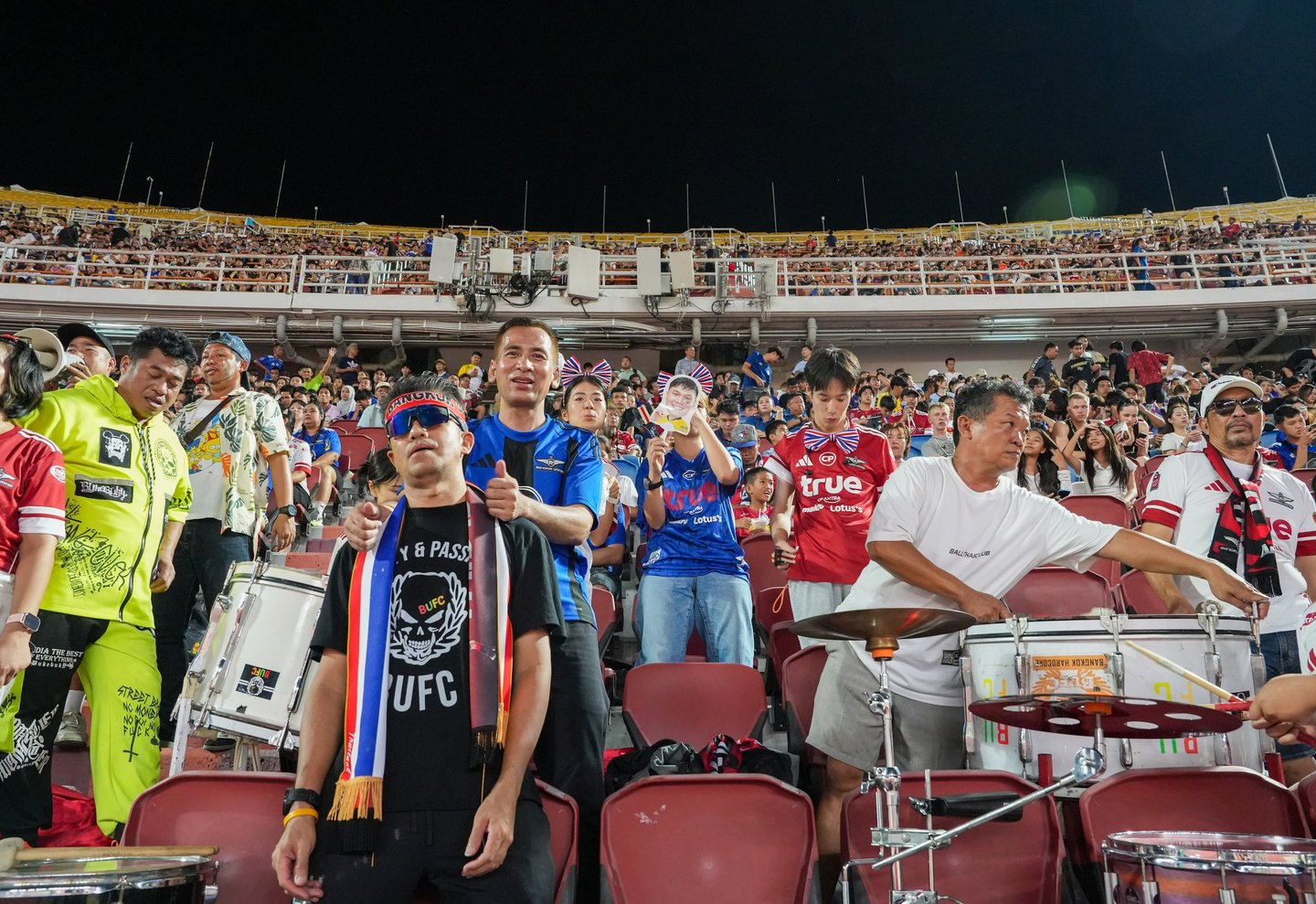
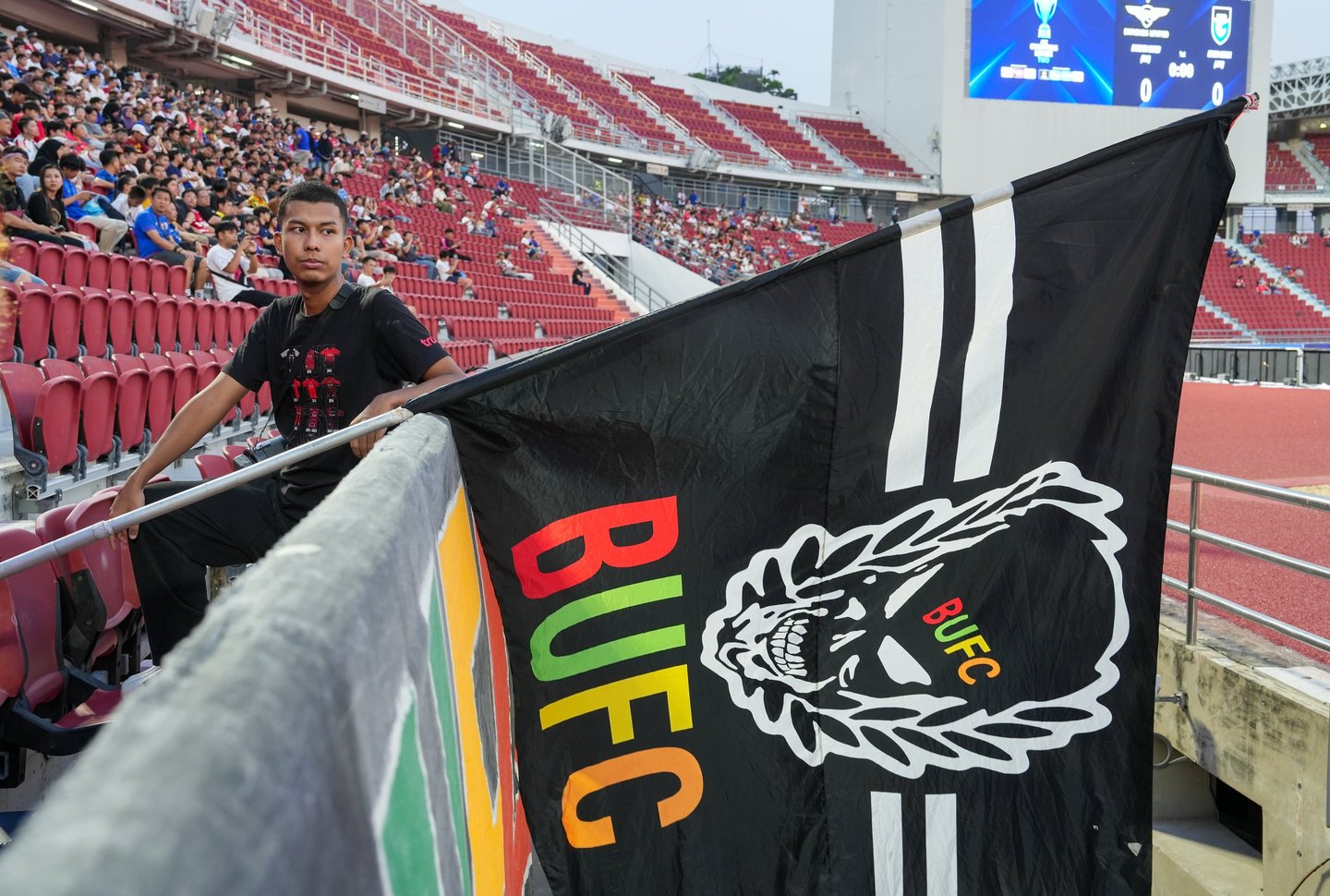
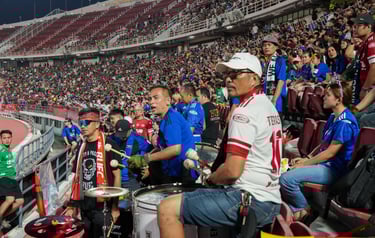
Hours before the match, the BUFC Ultras had already gathered outside the stadium. Black and red everywhere. Flags. Drums. Voices warming up for ninety minutes of nonstop support.
Bangkok United do not have the giant fanbase of Buriram United. They do not have the raw intensity of Port FC from Khlong Toei. But that is exactly what makes this scene interesting. It is smaller. More direct. More genuine.
The people standing here are not here for the spectacle.
They are here because they mean it.
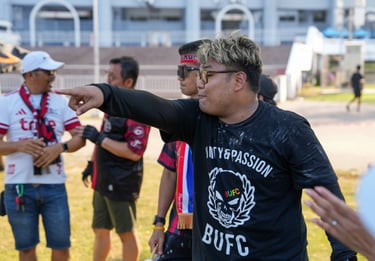
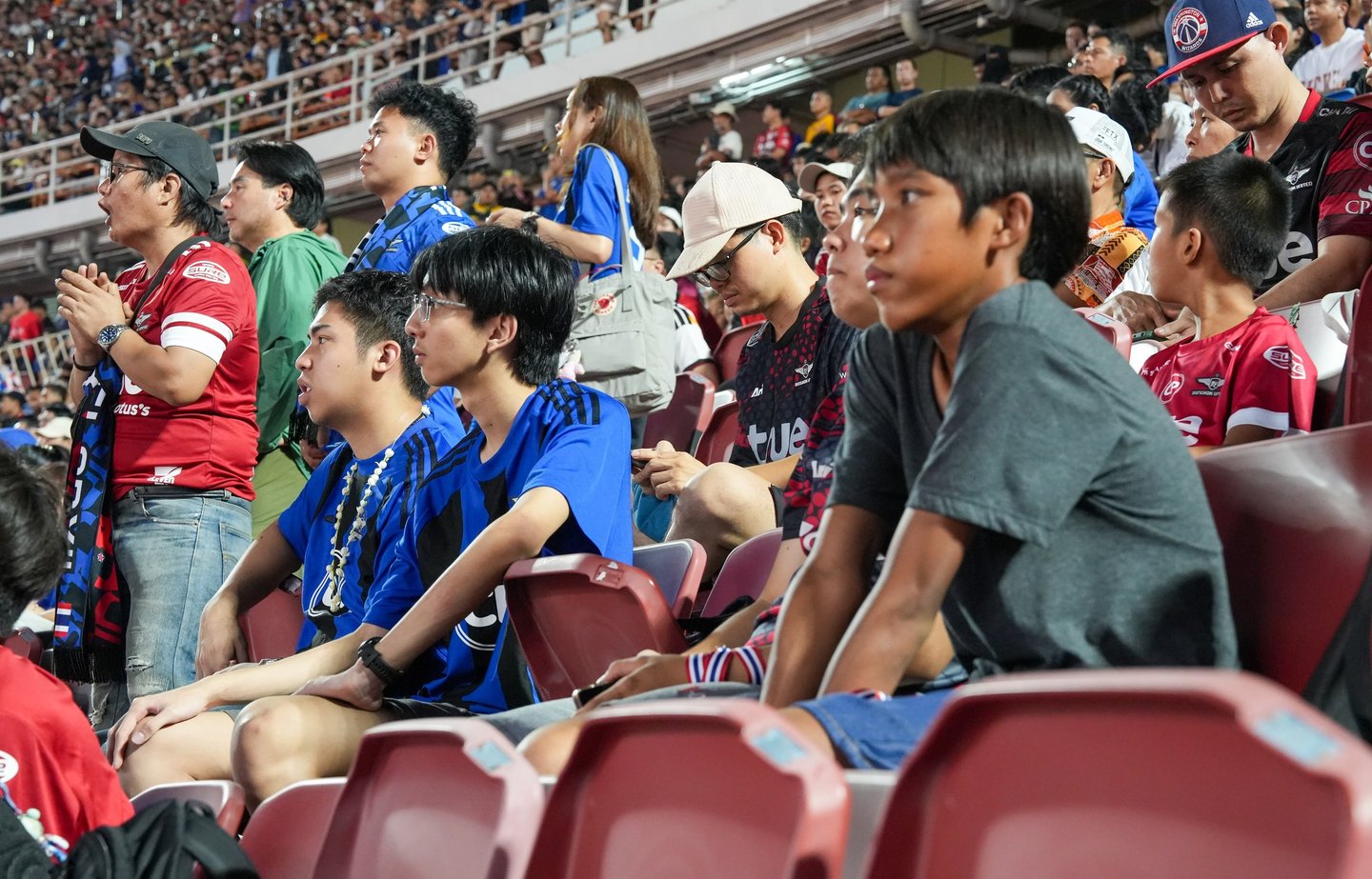
I photographed faces, looks, gestures. Young fans with scarves around their necks. Older men carrying years of stadium experience in their eyes. Group photos, beer cans, drumsticks, final cigarettes before entering. Those hours before kick-off often tell more than the match itself.





Rajamangala Stadium – Concrete, History and Pressure
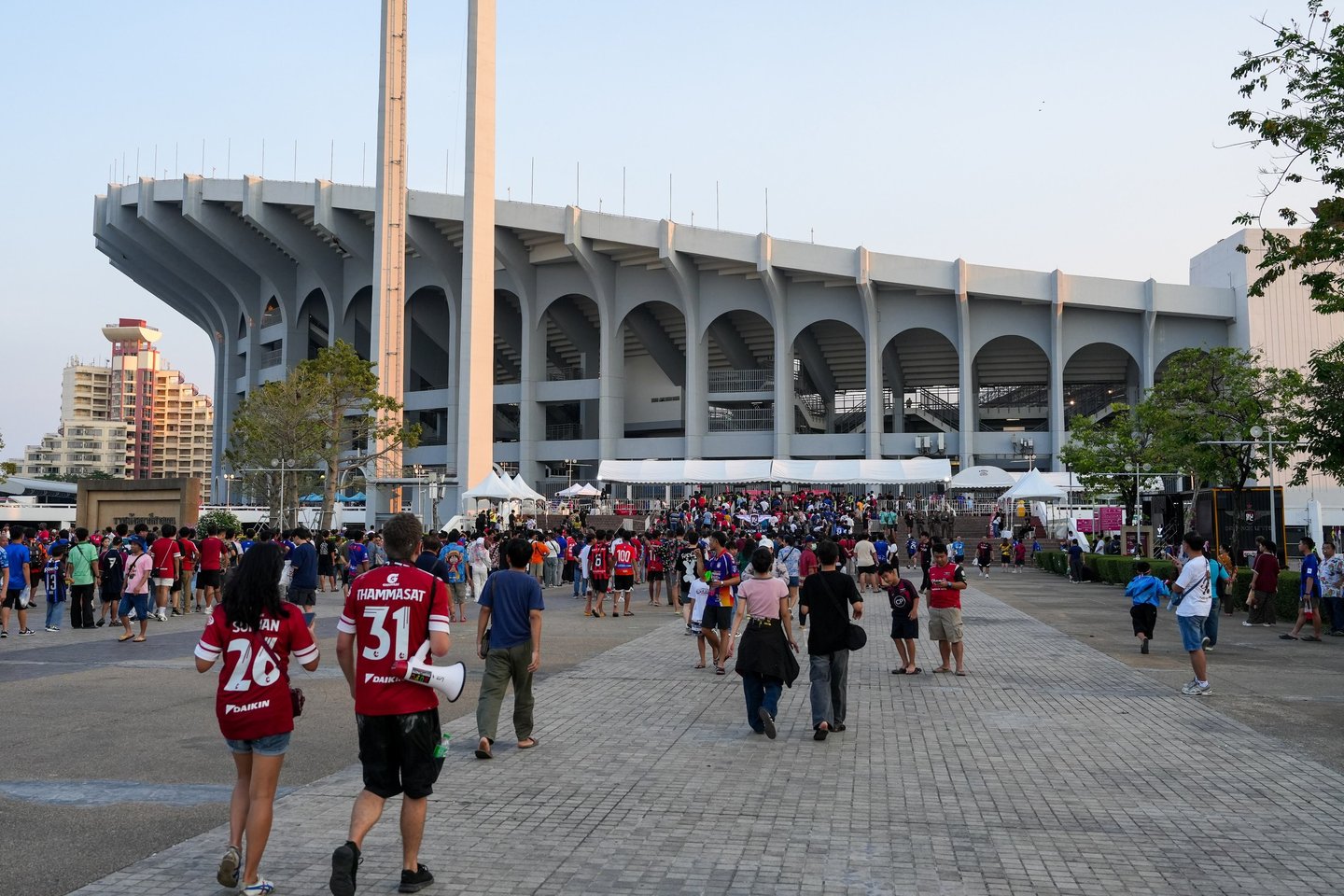
Rajamangala Stadium in Hua Mak (in eastern Bangkok, Bang Kapi district) is not a charming football ground. It is huge, heavy, raw and at times intimidating. That is exactly why it works for nights like this.
Built for the 1998 Asian Games, later modernised, host of international tournaments and major national team matches – it is a stadium with weight behind it. Here, an ordinary club fixture becomes something much bigger.
Bangkok United normally play at Thammasat Stadium in Rangsit. That is home. But Rajamangala is the grand stage.
And you feel that immediately.
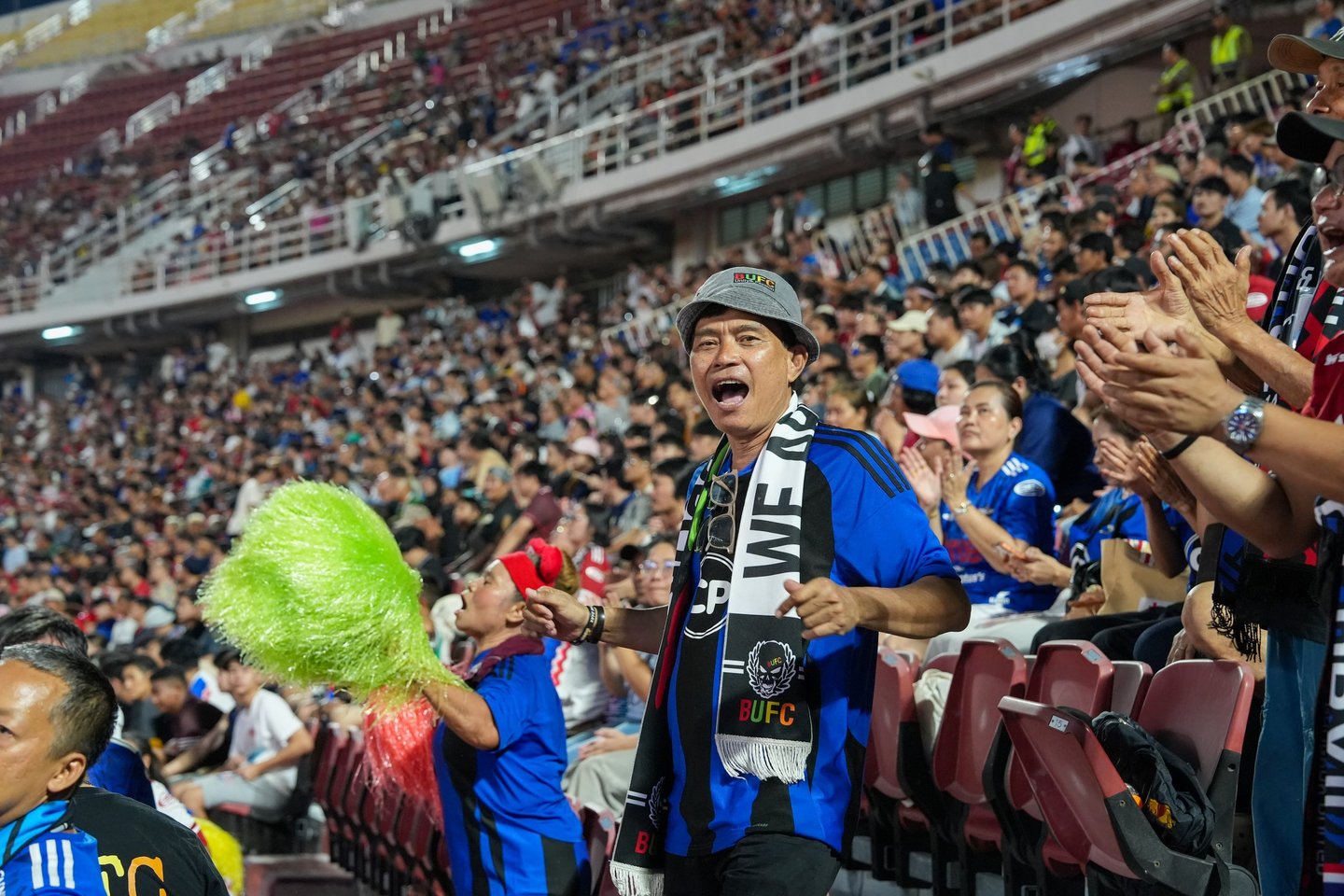
Inside the Stadium: The Ultras as the Engine
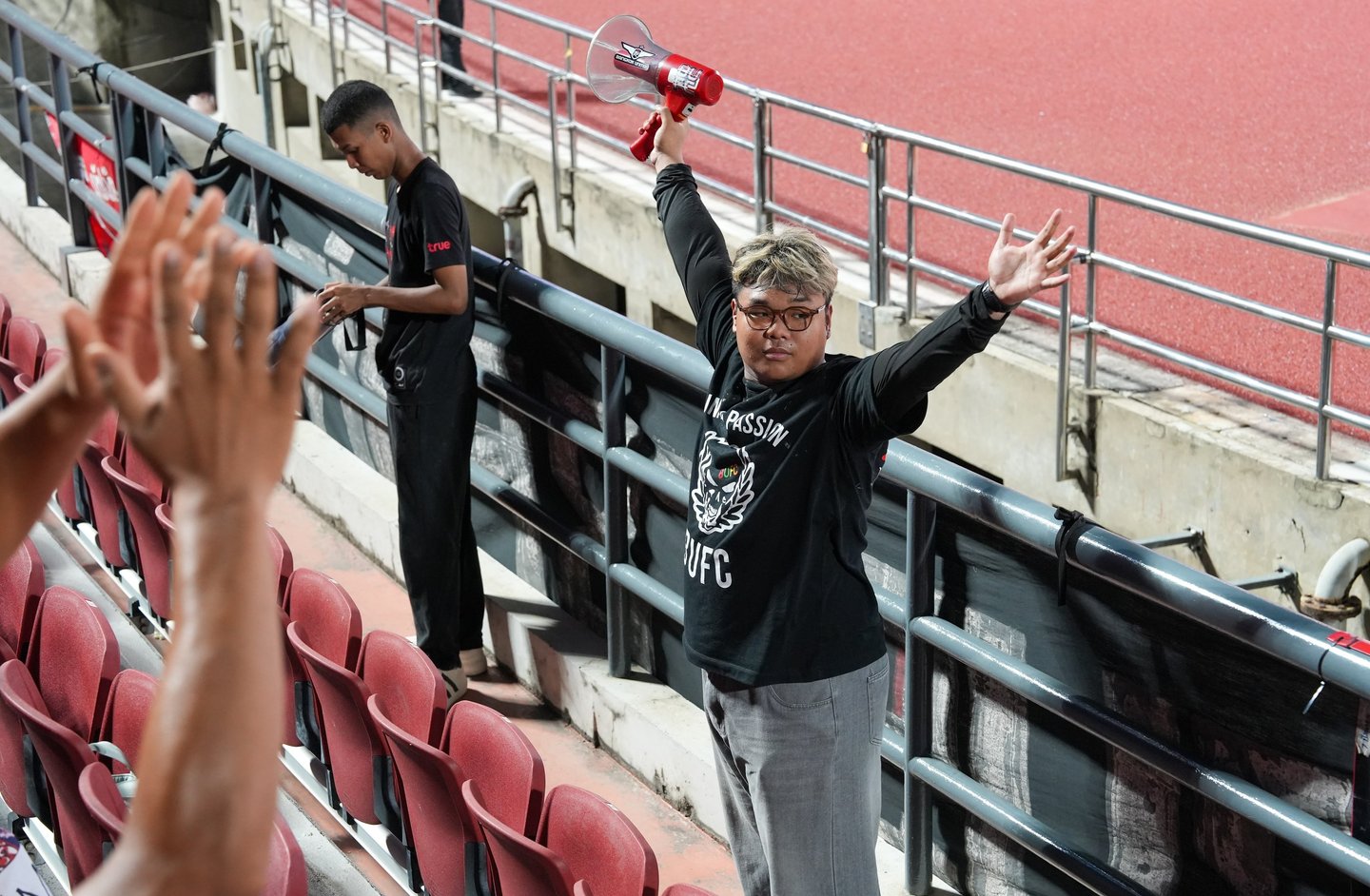
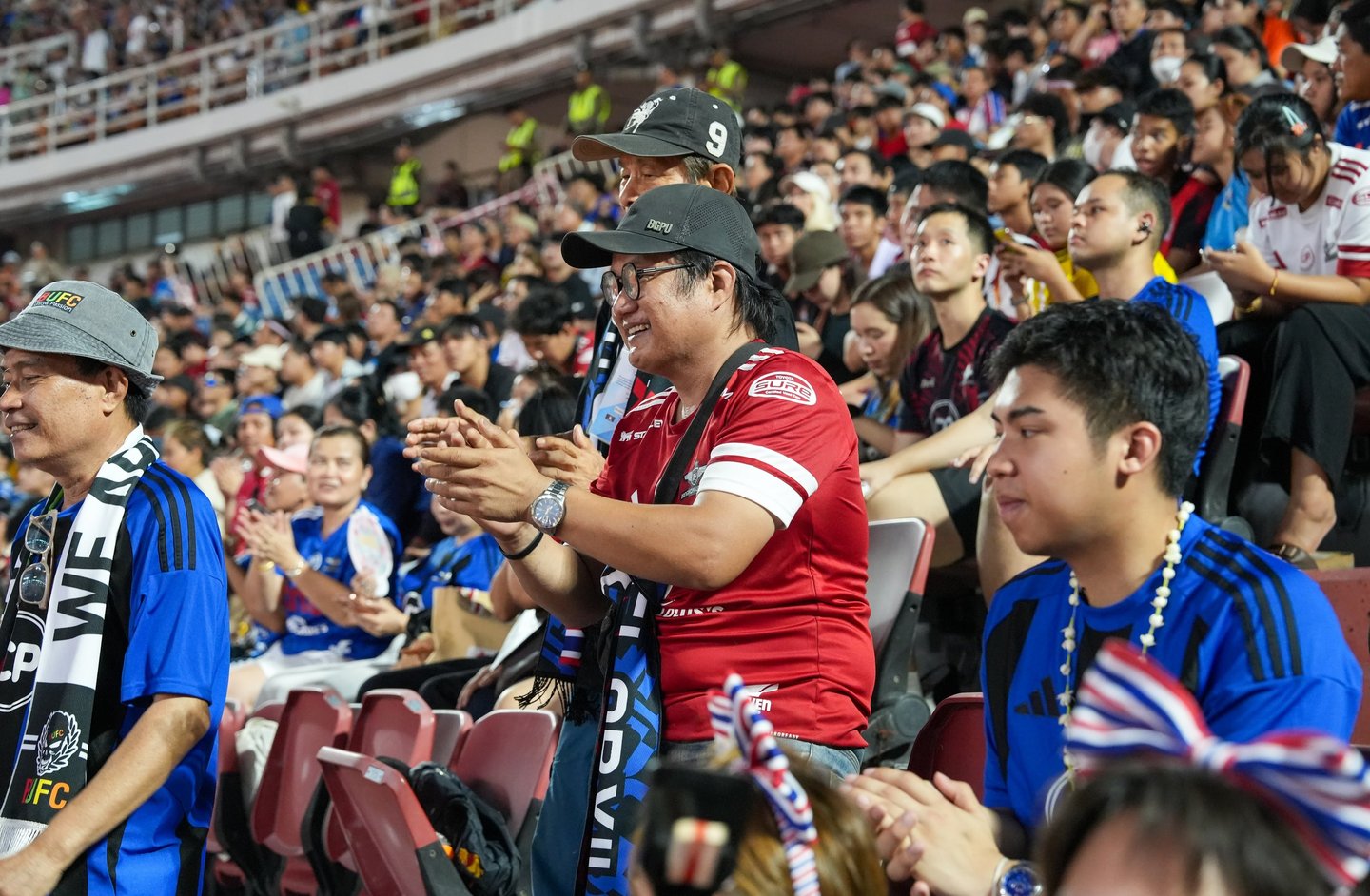
Once inside, my attention quickly moved away from the pitch and towards the stands.
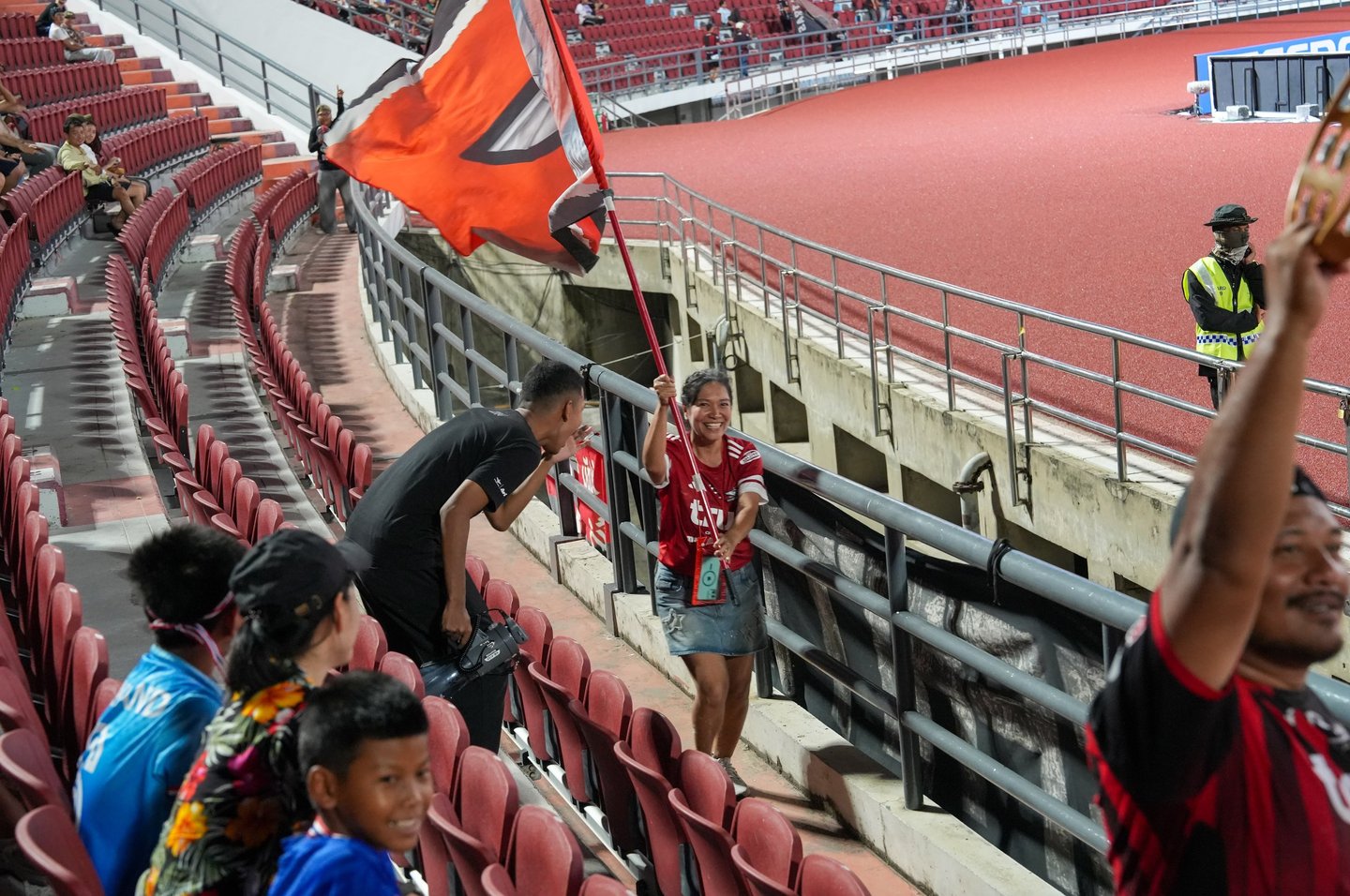
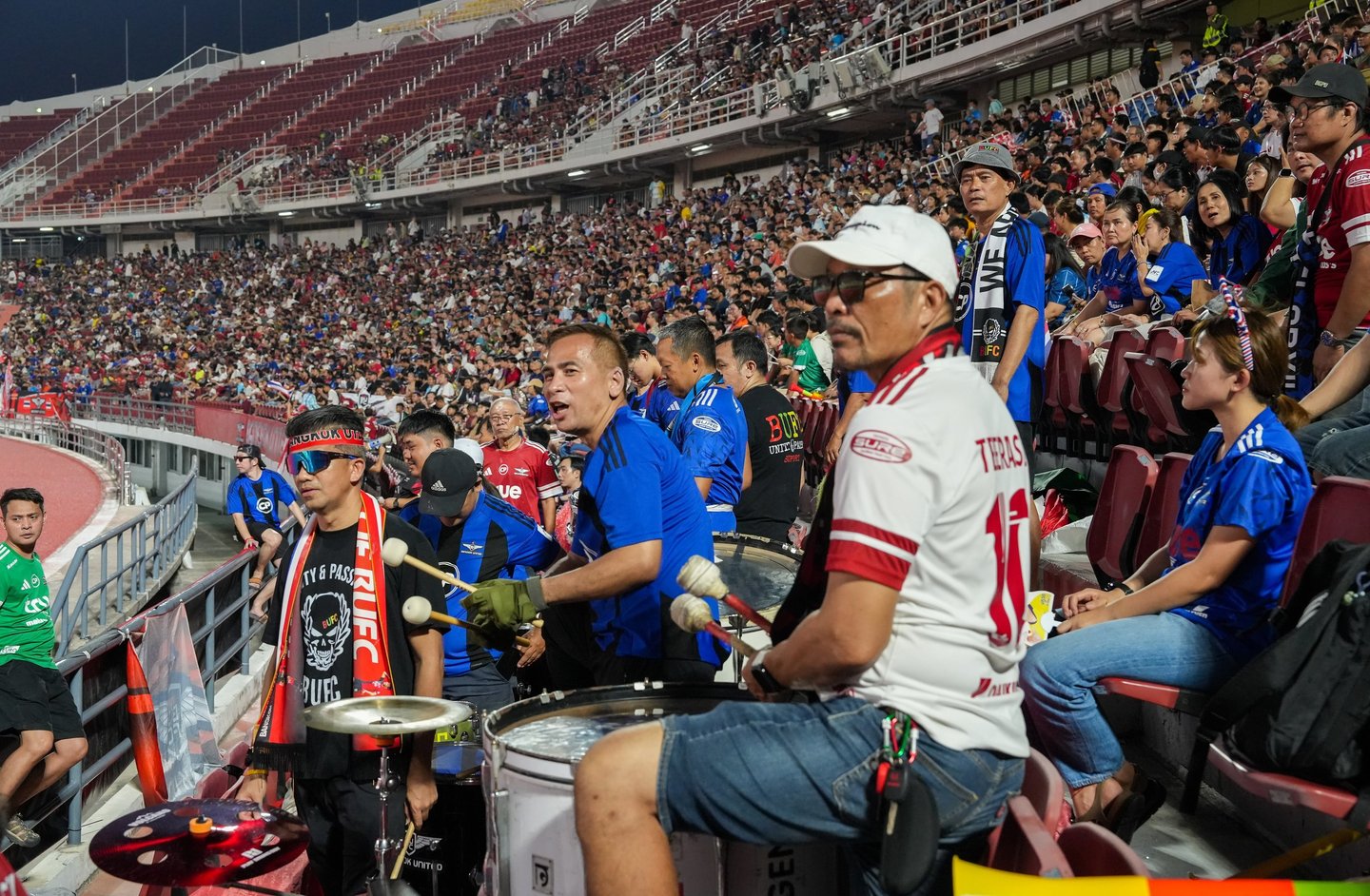
That was where the real force of the night stood: the Ultras. Not because of violence. Not because of clichés. Because of energy.
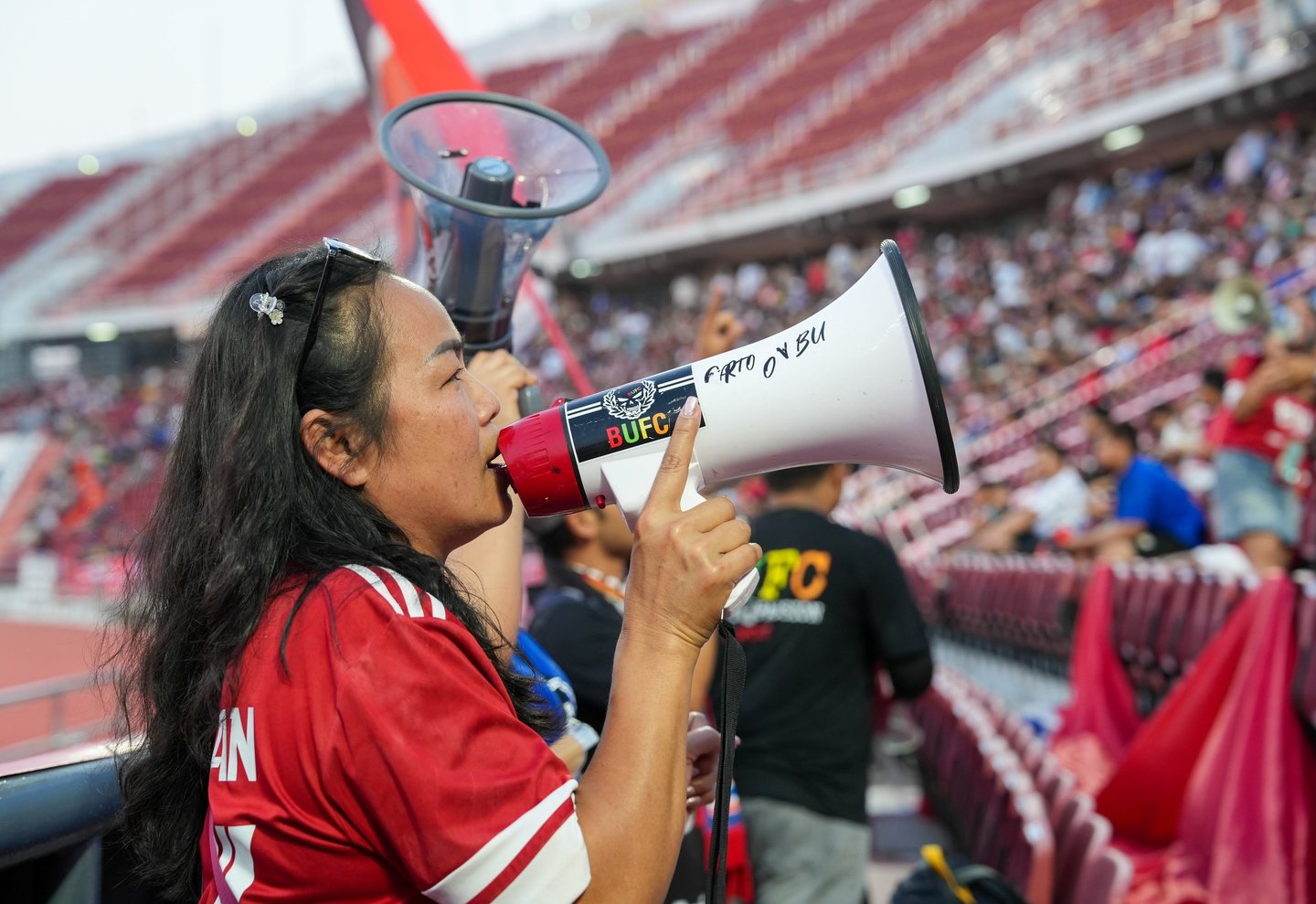
At the front fence: capos with megaphones.
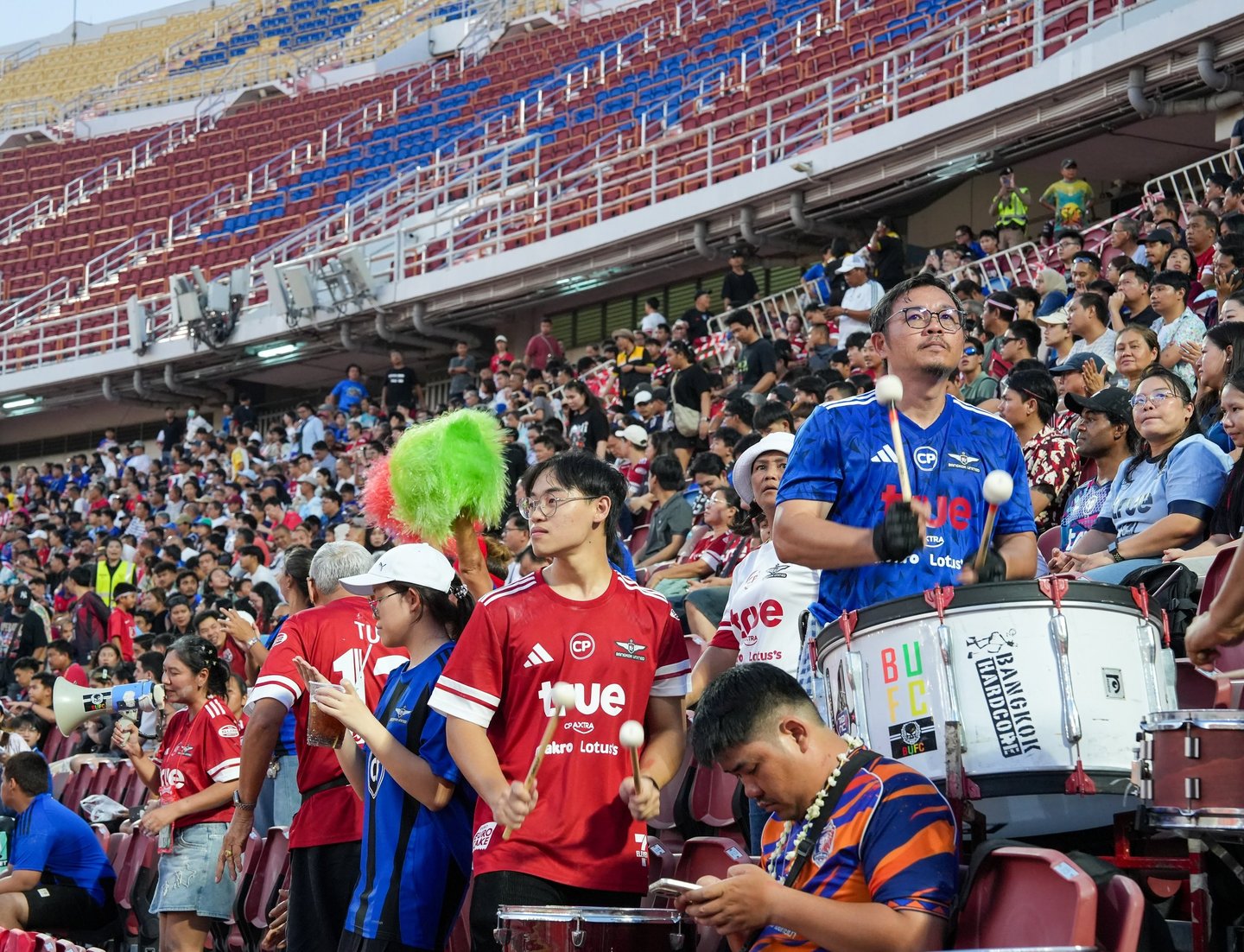
Beside them: drummers setting the rhythm without pause
They were not only leading their own section – they were pulling the entire stadium with them. The opposite stand, the side sections, even neutral spectators responded to their cues. One chant, one drum roll, one arm movement – and suddenly the vast bowl came alive.
That is the real role of Ultras:
Not to be a side story, but to be the heartbeat.
I have seen many matches. But what this group created with relatively small numbers was remarkable. Without them, the atmosphere would have been half as strong.

True Bangkok United – From University Roots to the Top of Thai Football
Many people outside Thailand still underestimate True Bangkok United. But the club has long become one of the most important sides in the country.
Founded with roots in university football and later developed into a modern professional club, Bangkok United have grown into one of the most consistent teams in Thai League 1. Regular title challenges, continental football, modern structures and ambitious squads. Backed by True, one of Thailand’s biggest telecommunications companies.
Even so, the club still carries something unique: less folklore, less provincial passion, less mass hysteria. More capital city. More modern identity. More ambition.
And perhaps that is exactly why they need their Ultras so much.
After the Match: Pride Despite Defeat
The result was clear. The feeling was not.
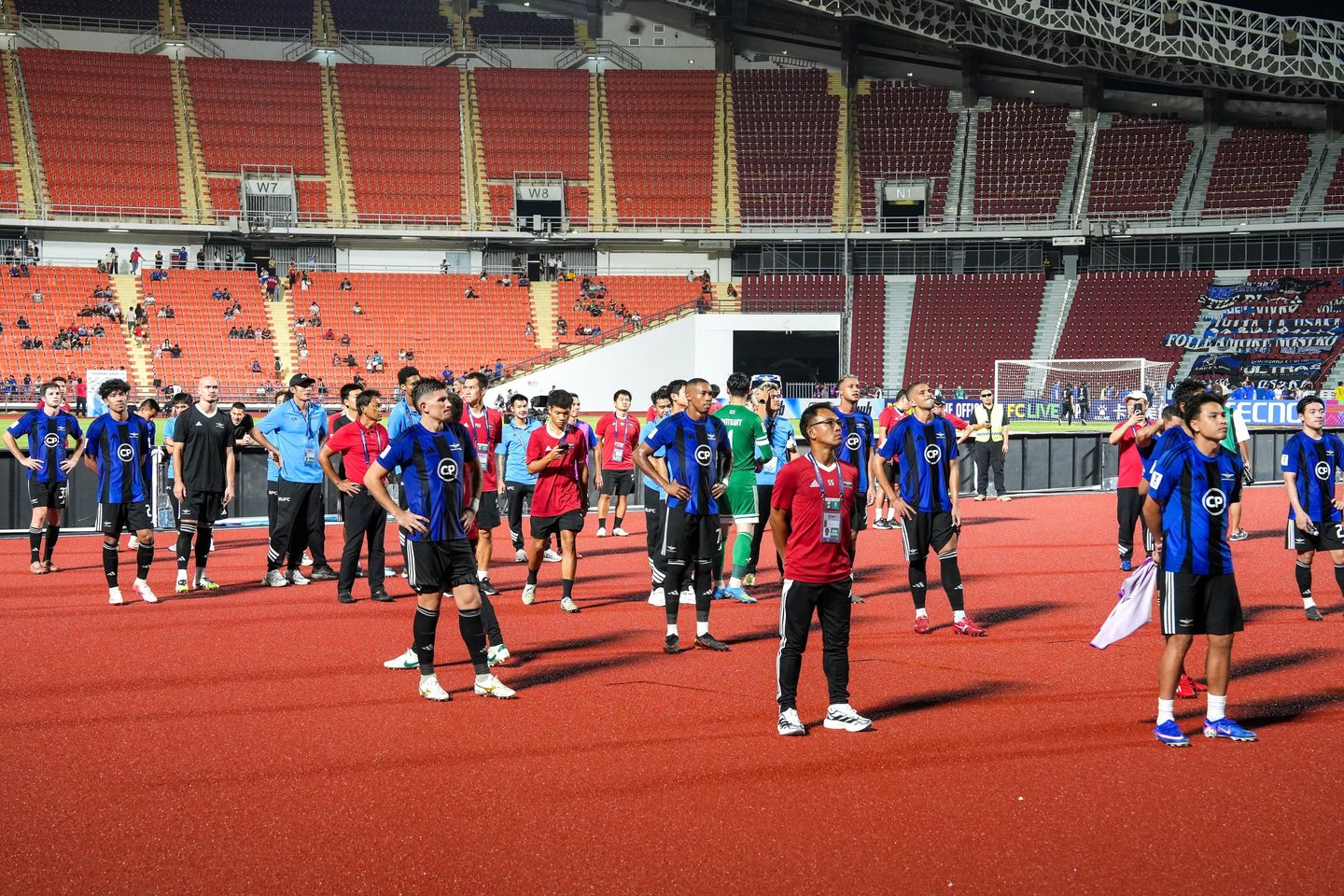
After the final whistle, the players walked over to the stand. They applauded the fans. Some stayed for a moment. Some lowered their heads. The Ultras kept singing.
No whistles. No cheap anger.
Only pride in an international campaign that had gone further than many expected.
These are the moments I most enjoy photographing. Not goals. Not celebrations. But what remains when everything has already been decided.
Why I Photograph Nights Like This
Football, to me, is not only sport. It is urban culture. Identity. Body language. Community.
That night was not only about Bangkok United against Gamba Osaka. It was about loyalty. About a scene that is often underestimated. About people who arrive hours before kick-off, give everything, and still stay after defeat.
That is where real images are made.

Photographed with my Sony Alpha 7 IV and the outstanding Sony FE 24-70mm f/2.8 GM – fast enough for movement, sharp enough for difficult light, versatile enough for everything between the terrace and the concrete.
But the camera never makes the image.
The people in front of it do.
Bangkok from Above – City Views, Night Perspectives and Urban Landscapes in Thailand
Avani+ Riverside Bangkok – Night Perspectives over the Chao Phraya
There are places in Bangkok that just work. Not because they’re loud or overhyped, but because they give you exactly the perspective you’re looking for as a photographer.
The bar at the Avani+ Riverside Bangkok Hotel is one of those places. 26th floor, Thonburi side, slightly removed from the usual tourist-heavy viewpoints. And that distance is what makes it valuable.
Up here, you don’t just look at the Bangkok skyline — you read it. Especially at night. The cable-stayed bridges in the south cut clean, almost graphic lines through the darkness, lit in a way that gives structure to the frame. The Chao Phraya River runs through it all, reflecting the city lights in constant motion, never the same twice.
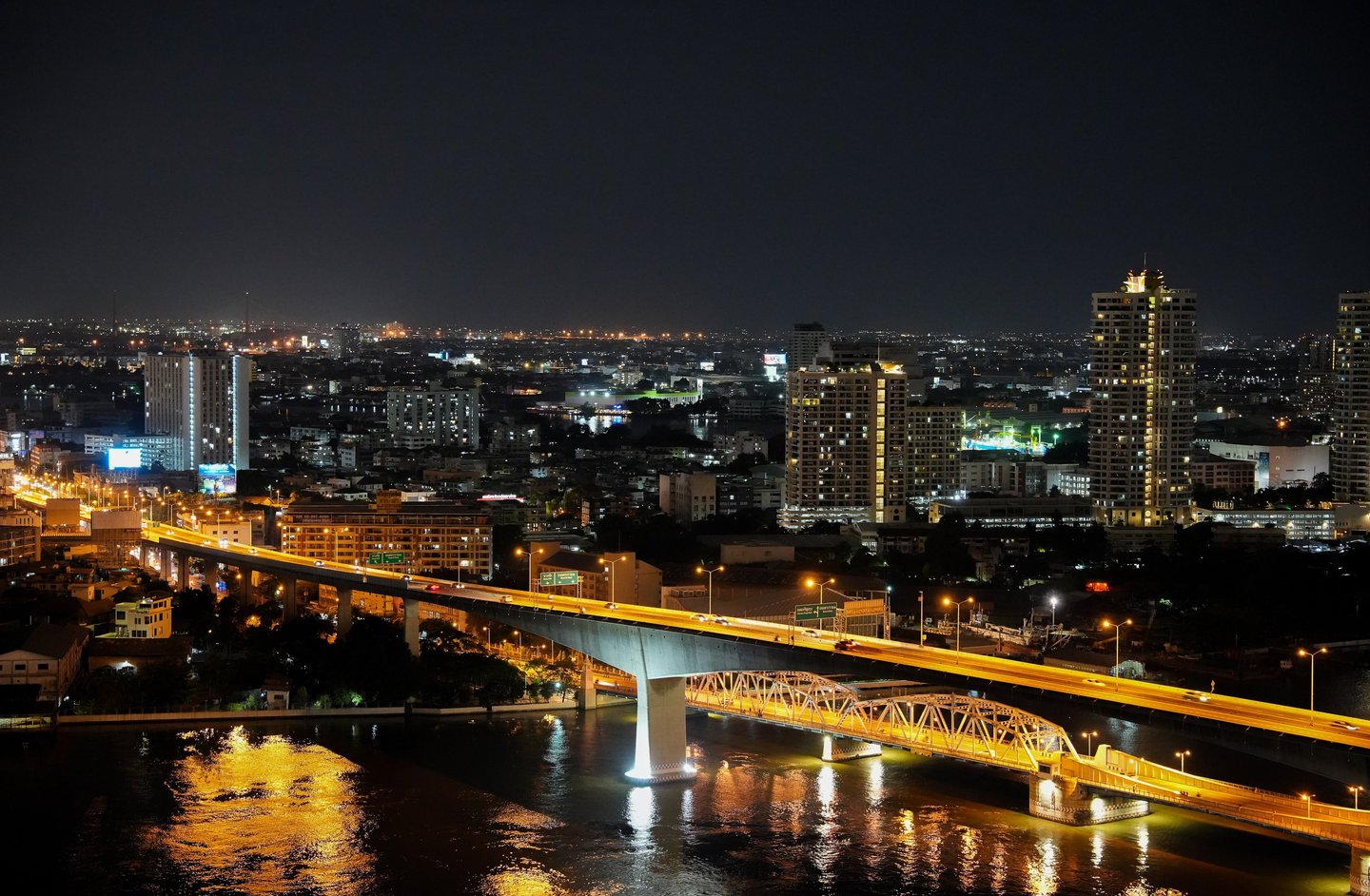
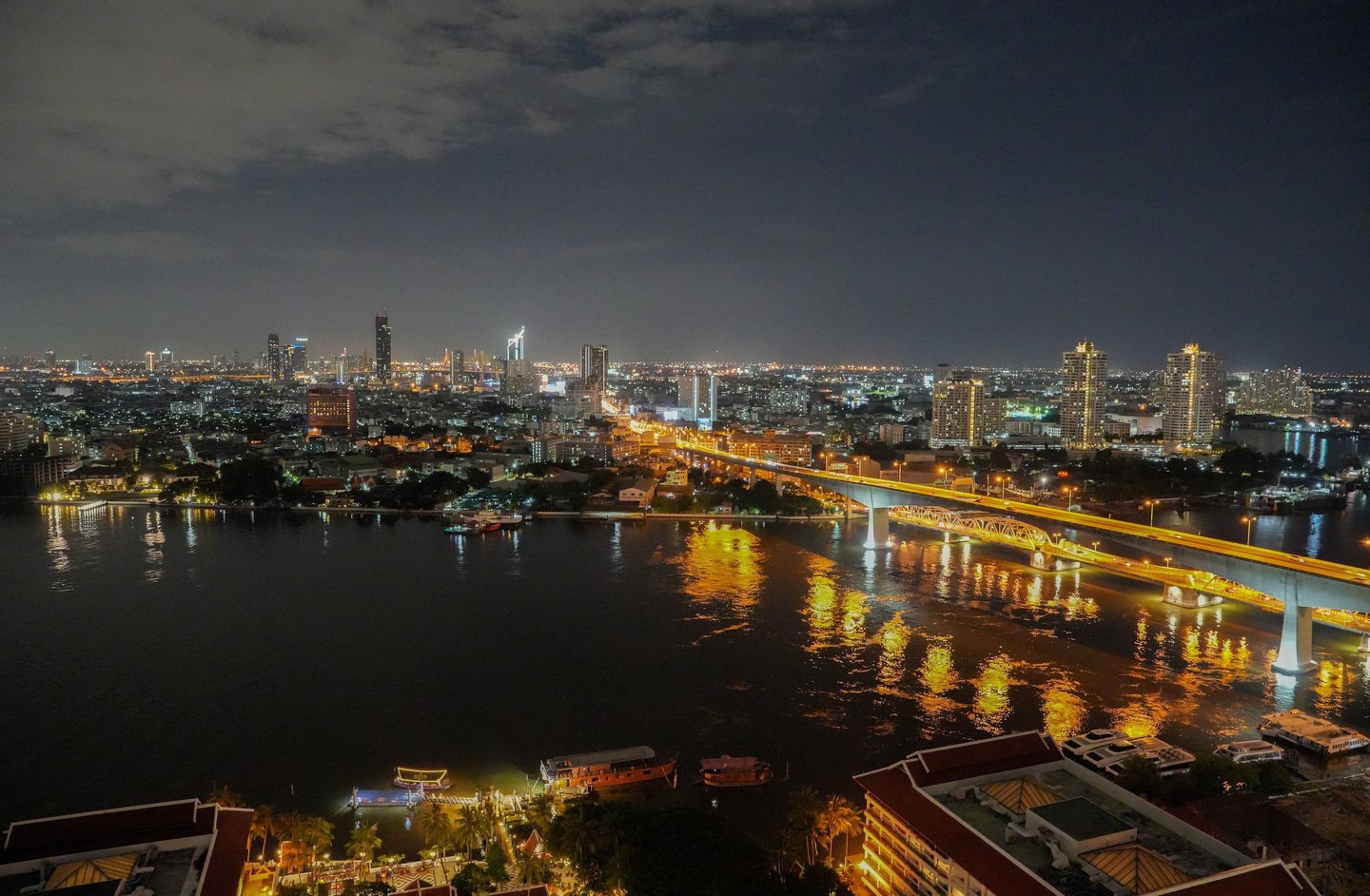
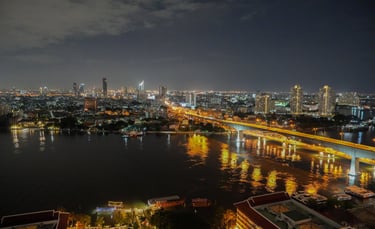
Shift your view slightly north and you’ll catch Asiatique across the river. After dark, this angle becomes interesting — a mix of urban landscape, light, and depth that feels balanced rather than overloaded. No crowds pushing you, no rush. Just space to work, to frame, to wait.
All images here were shot at night, and that’s exactly how this location unfolds its full potential. Bangkok changes after sunset. The heat drops, the light takes over, and the city becomes something else entirely. That’s when the reflections get deeper, the contrasts stronger, and the skyline gains character.
I chose to shoot everything in color. Night photography in Bangkok lives from its tones — the warm lights, the cooler shadows, the subtle gradients in the sky and on the water. Black and white would strip away too much of that atmosphere.
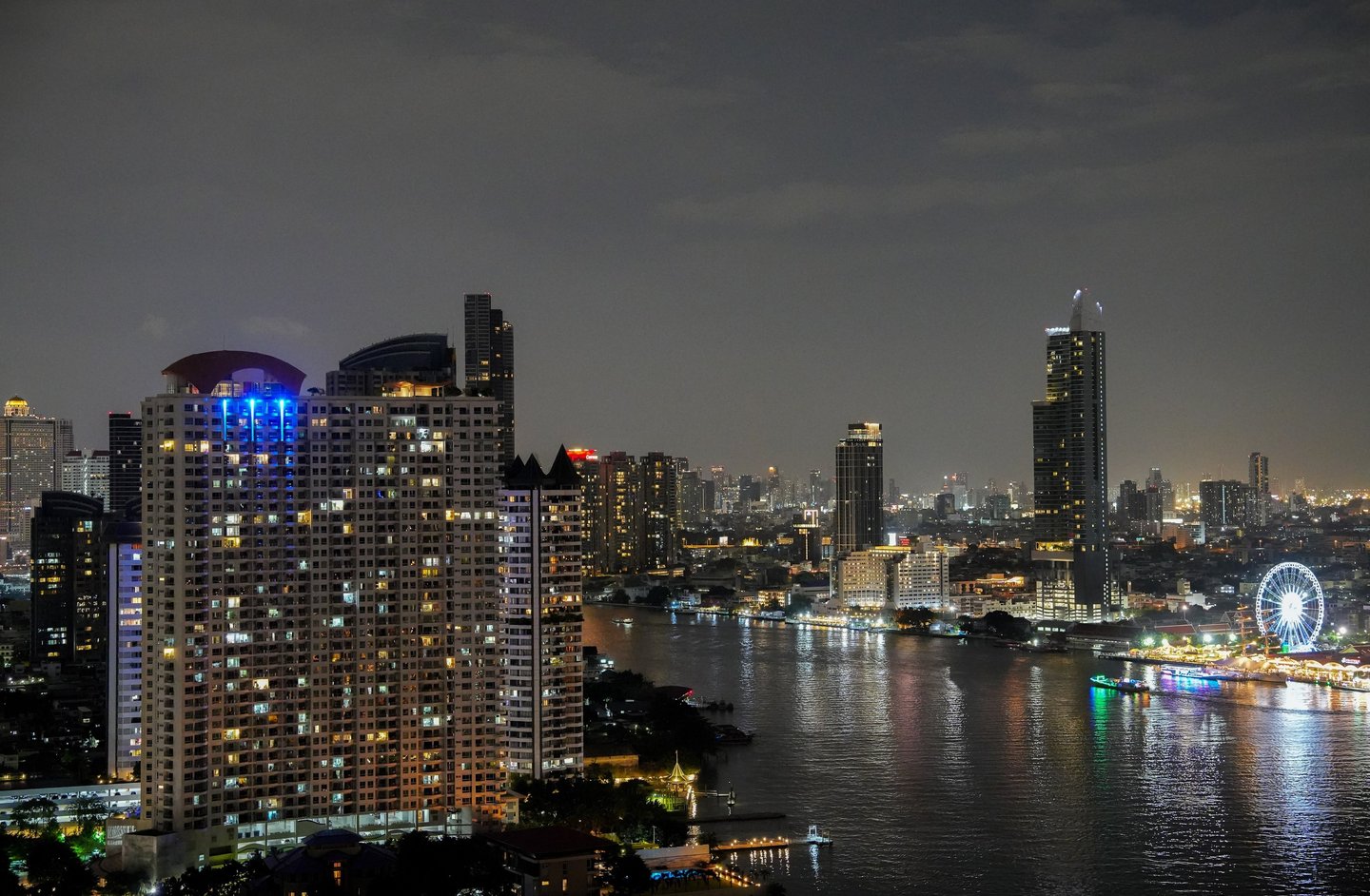
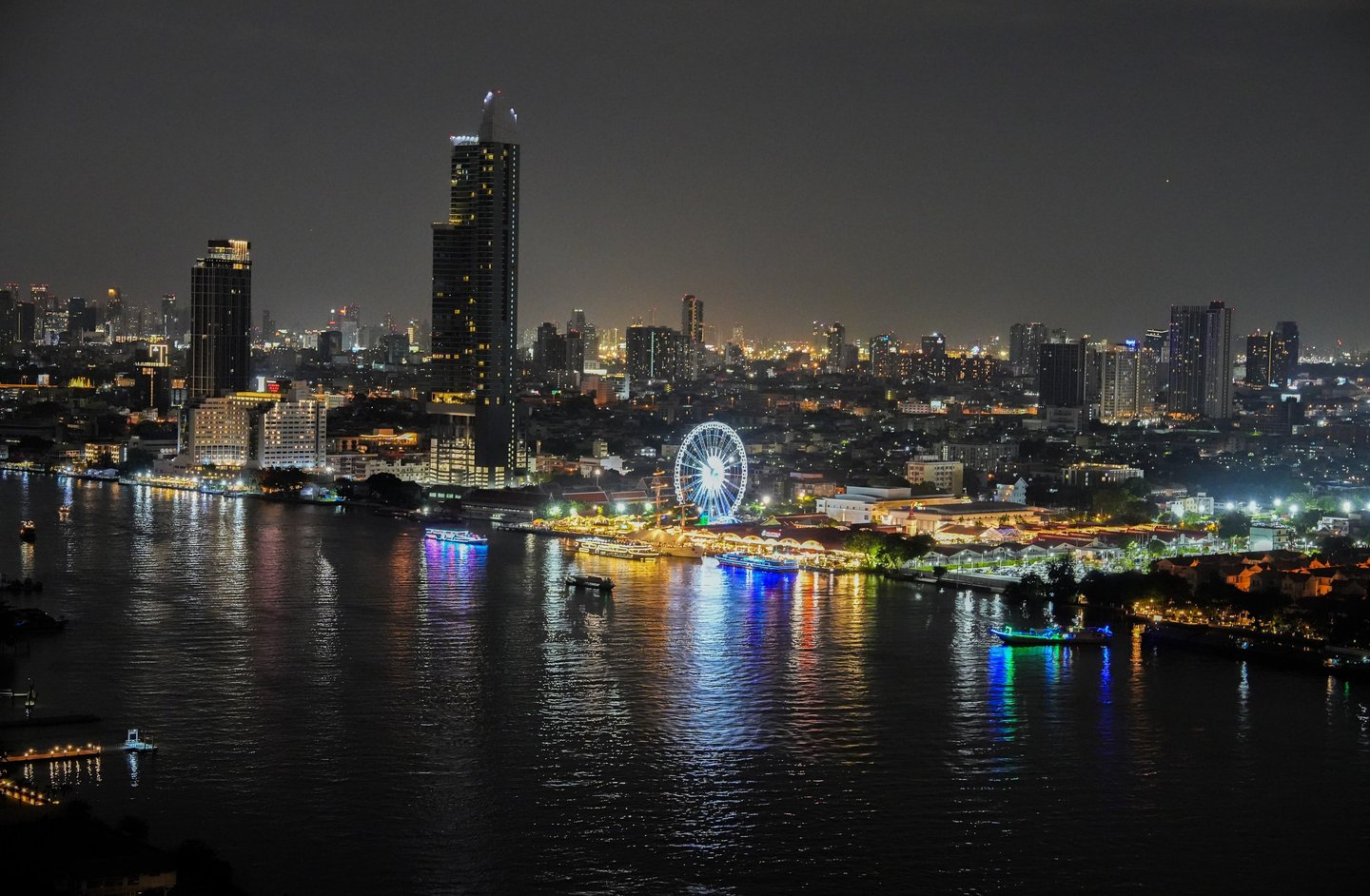
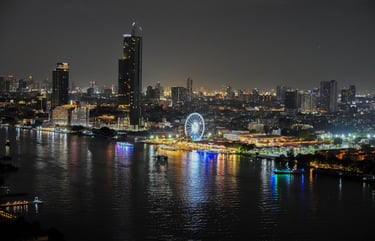
For me, this isn’t a place you just tick off your list. It’s a spot where you stay a while. Watch the light shift, the boats move, the city breathe. And if you give it that time, the images come naturally.
Wat Saket (Golden Mount) – Bangkok Between Two Worlds
Wat Saket isn’t a place you just tick off your list. You climb the steps, leave the noise behind — and at the top, Bangkok opens up in a way that feels real.
The Golden Mount is an artificial hill right in the middle of the city. What looks calm today has a long history. Back in the 19th century, during the reign of King Rama III, they tried to build a massive chedi here. The ground was too soft, the structure collapsed, and what remained became the base of what you see today. Later, under Rama IV and Rama V, the hill was reinforced and the golden chedi on top was completed. Today, it’s both a religious site and one of the most interesting viewpoints in Bangkok.
The climb itself is part of the experience. Around 300 steps, winding up through greenery, past bells, small shrines, and prayer flags. Every few meters, you catch glimpses of the city through the trees. The higher you go, the quieter it gets.
At the top, you get a full 360-degree view. And this is where it becomes interesting from a photography perspective.
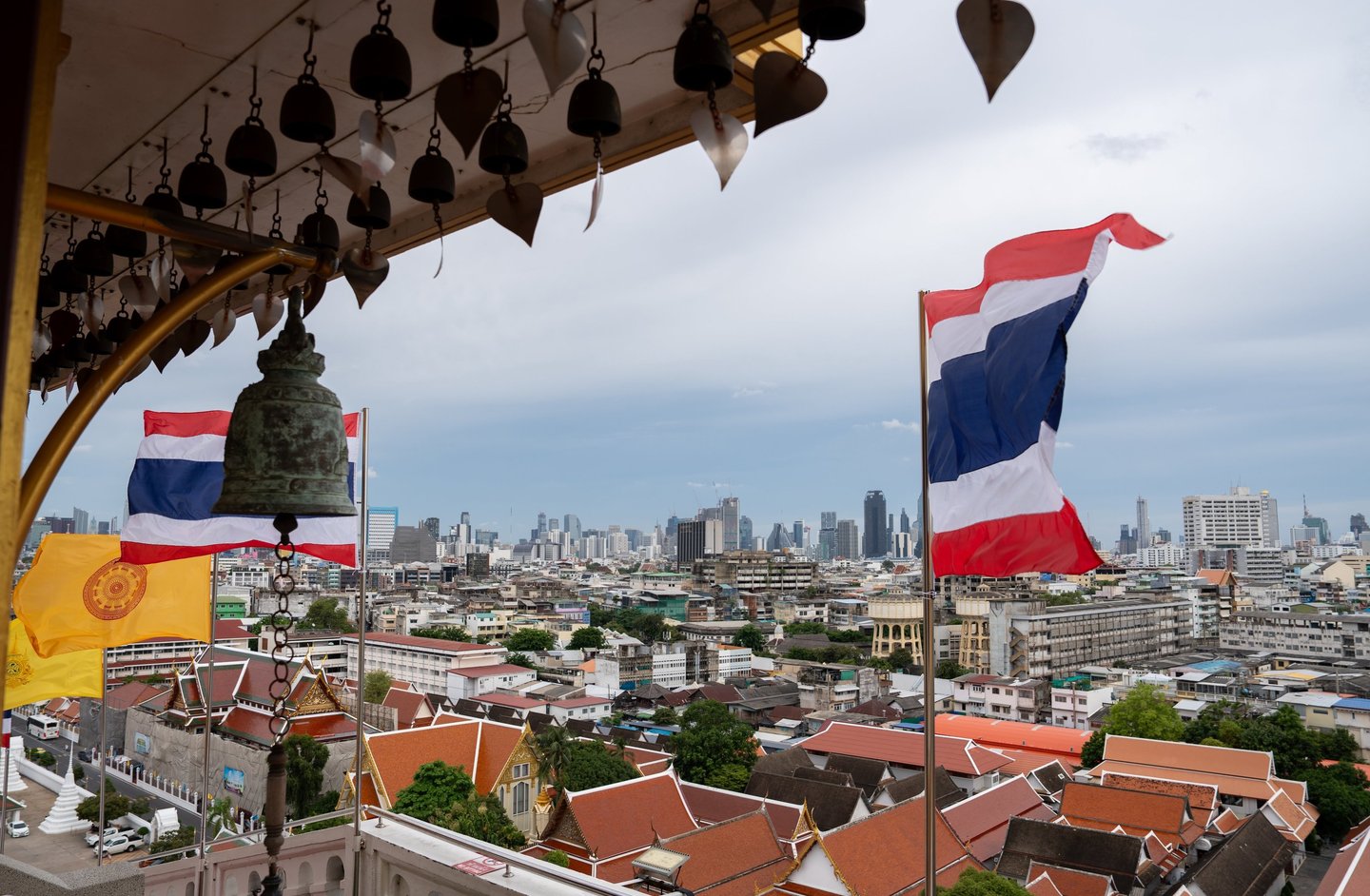
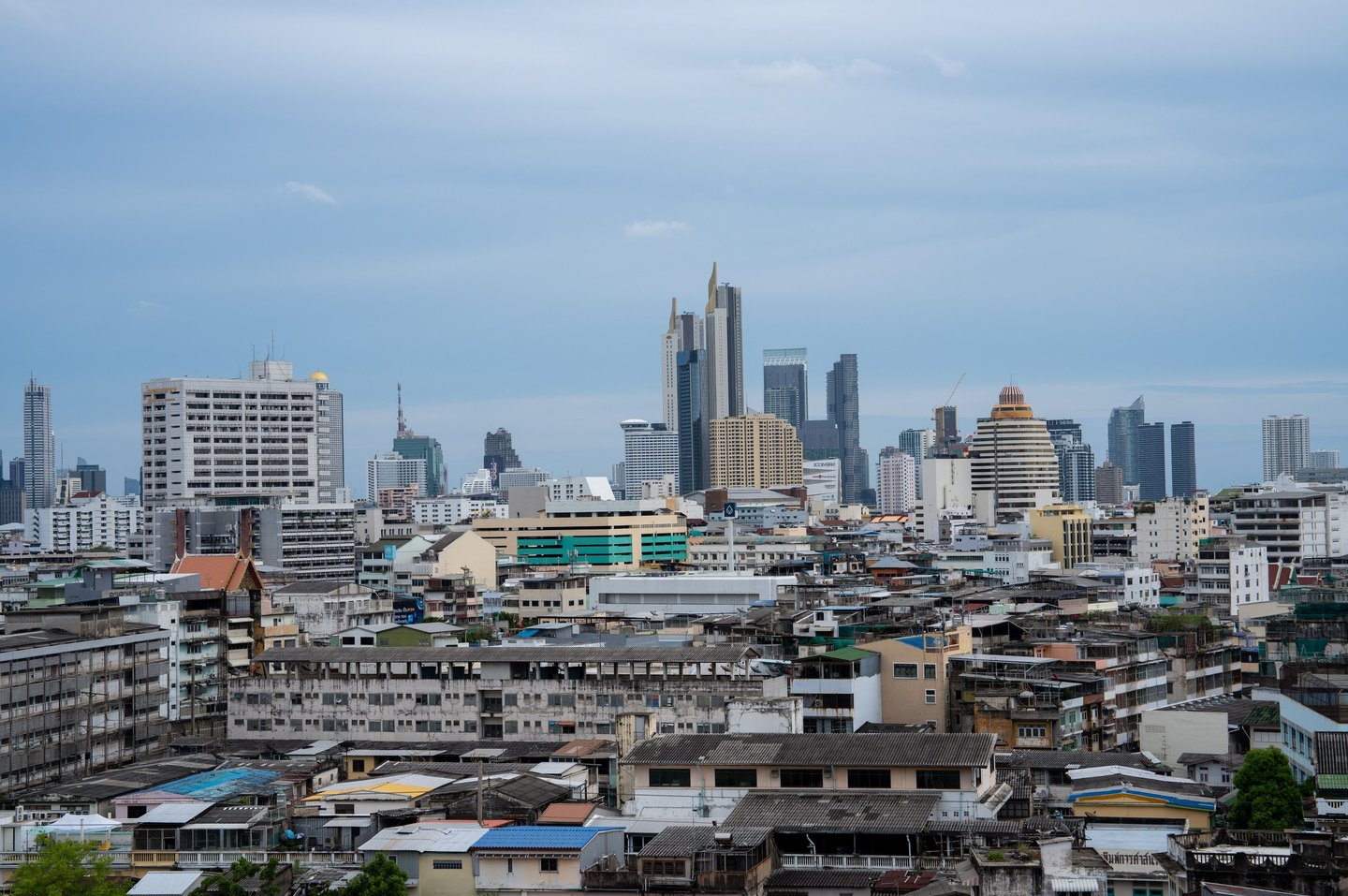
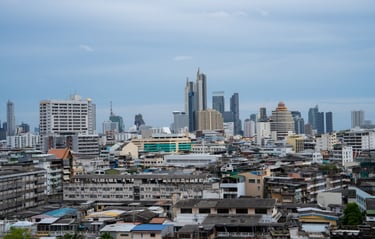
Look in one direction and you see the older side of Bangkok. Low-rise buildings, tight structures, no clean lines — just a dense, lived-in city that grew over time. It’s not polished, not designed to impress. But it’s real.
Turn a bit further, and the skyline appears. High-rises, glass towers, sharp edges. The modern version of Bangkok. Wealth, speed, constant growth.
And you’re standing right in between.
For me, this is one of the few places where you can see that contrast so clearly. No filters, no staging — just the reality of a city balancing past and future at the same time.
Light plays a big role here. Late afternoon brings out depth in the older districts. During blue hour, the skyline in the distance starts to glow while the foreground still holds structure.
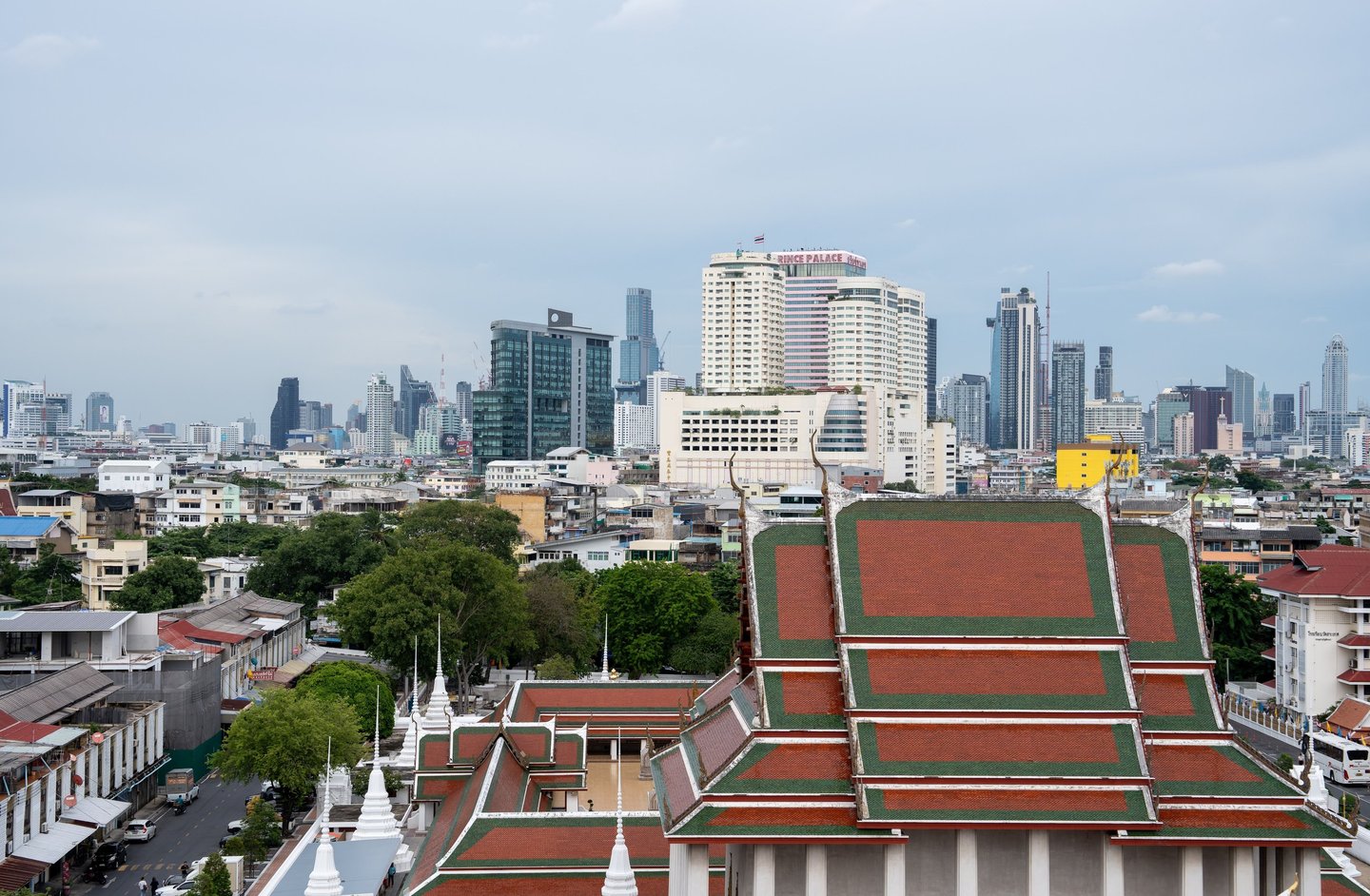
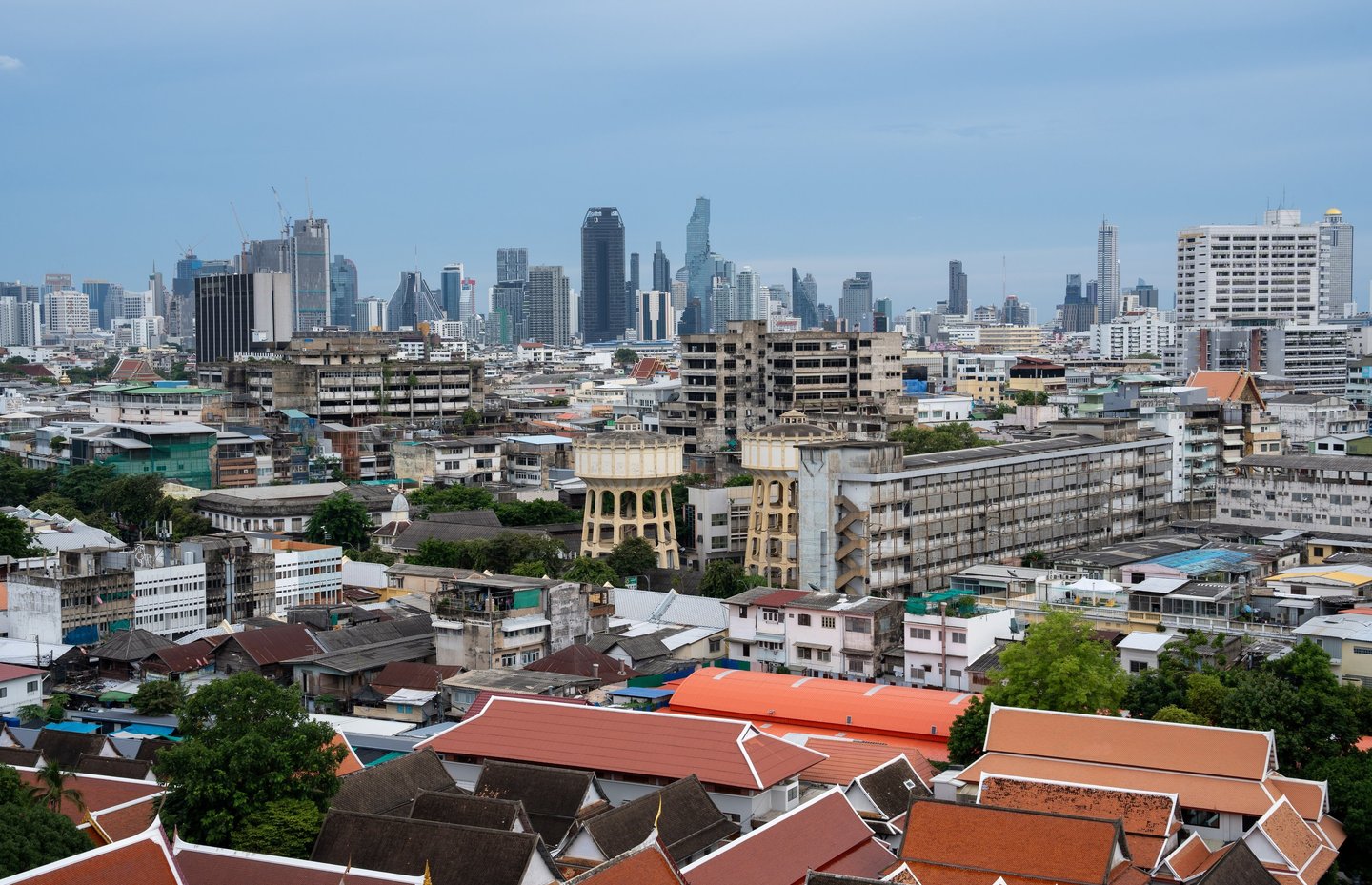
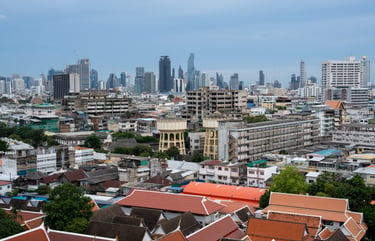
Wat Saket isn’t an obvious “wow” location at first glance. But if you give it time, you start to understand Bangkok a little better from up here.
Bangkok from Above – Sukhumvit 4 between skyline, steel and stories
Bangkok never really slows down. Especially not around Sukhumvit 4.
What many visitors first associate with nightlife and neon lights is, from above, one of the most fascinating urban landscapes in all of Thailand. Between old low-rise buildings, luxury condominiums, rooftop bars, endless traffic and the concrete lines of the BTS Skytrain, this part of the city constantly changes its face depending on light, weather and perspective.
For me as a photographer, Sukhumvit 4 is less about the clichés and more about structure, movement and contrast. This is where Bangkok feels dense, restless and alive. Looking down from the rooftops of different hotels in the area, the city turns into layers of geometry: glass towers beside aging apartment blocks, narrow sois disappearing into shadow, and the BTS railway cutting straight through the middle of it all like an artery of steel.
The photographs in this series were taken from several rooftop bars around Sukhumvit Road and Nana. Each location offered a completely different perspective over Bangkok’s cityscape. Some views opened toward the endless skyline stretching deep into Asok and Phrom Phong, while others focused directly on the BTS Skytrain moving between the high-rise buildings below. From above, the trains almost look silent, floating through the urban canyon while thousands of people move underneath them every single hour.
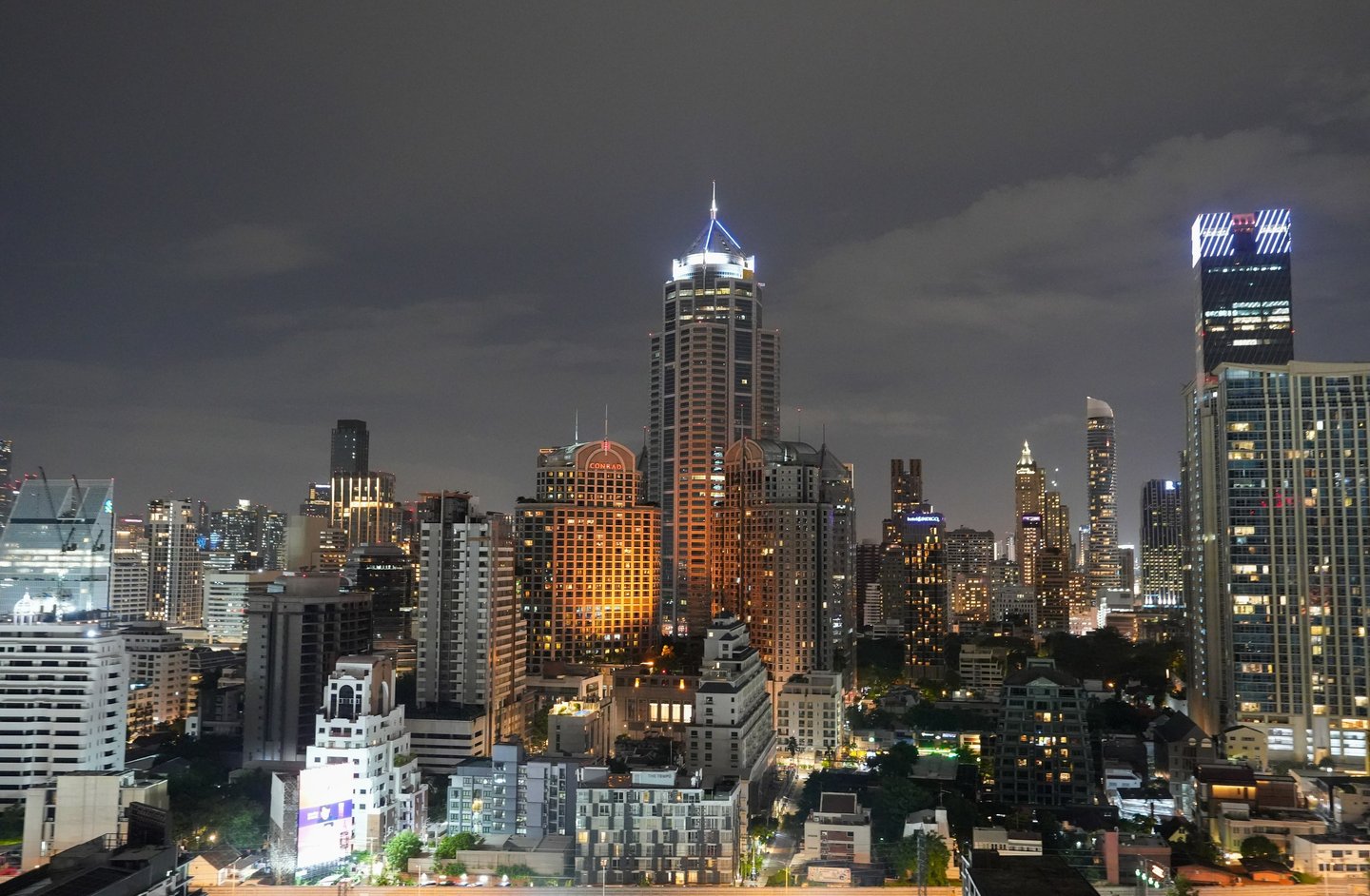
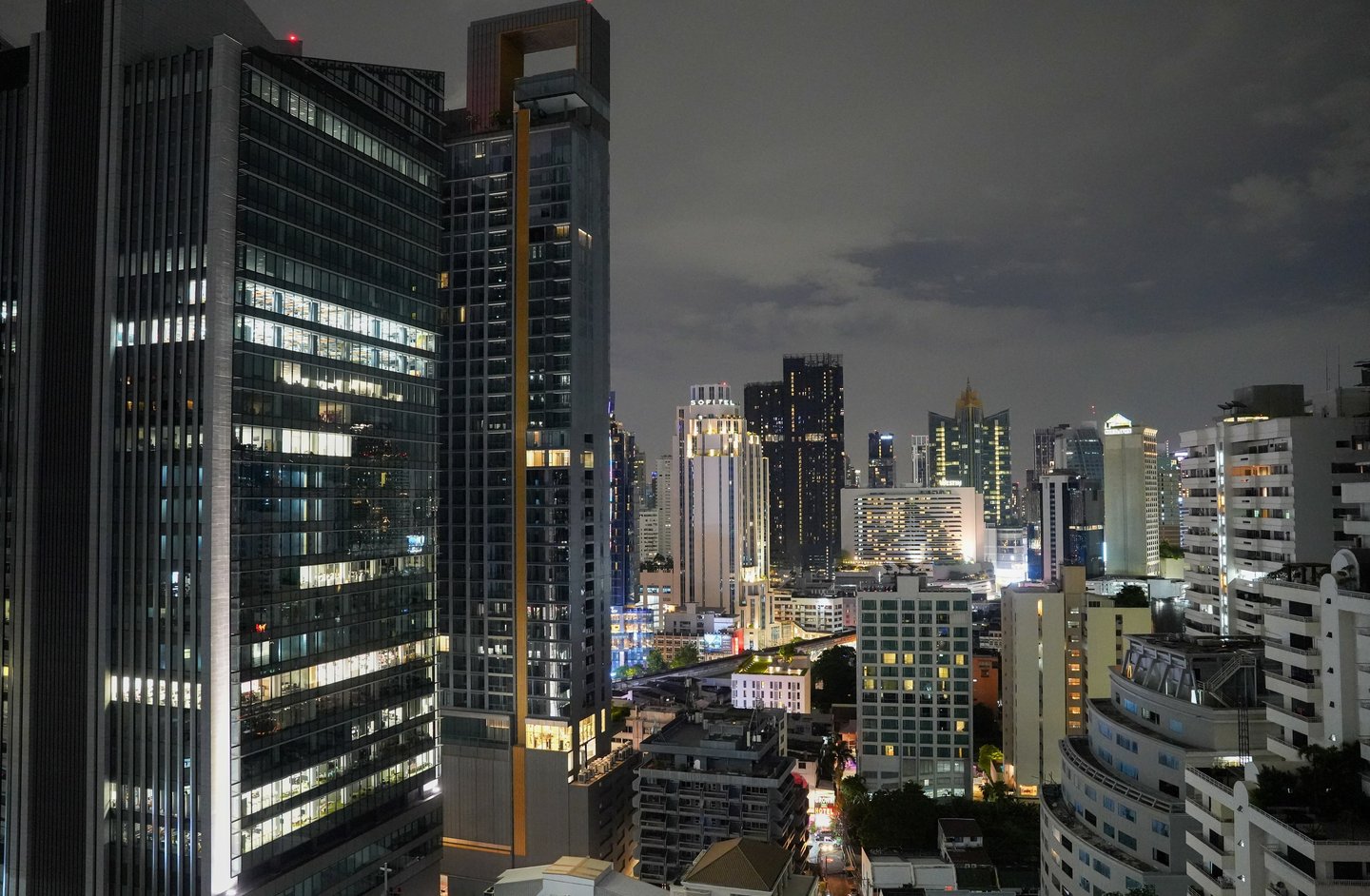
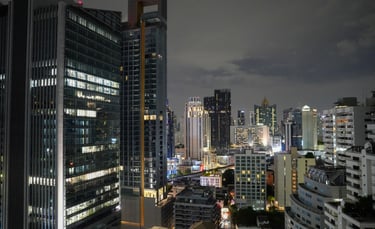
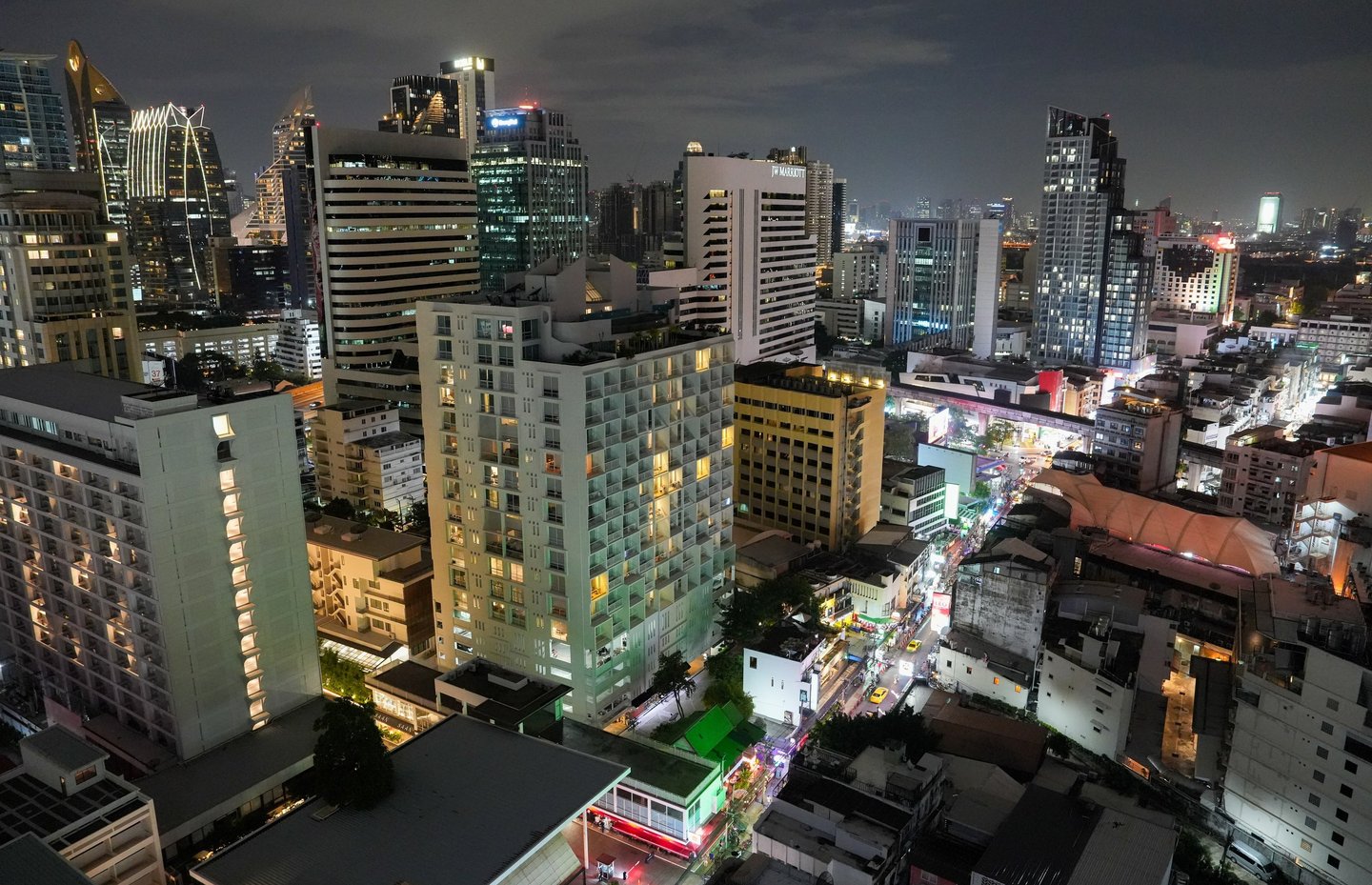
Historically, Sukhumvit was once far outside the original center of Bangkok. Decades ago, much of this area was still made up of canals, small residential communities and undeveloped land. Everything changed with the rapid economic growth during the 1970s and 1980s. Sukhumvit Road evolved into one of Bangkok’s main commercial arteries, attracting international hotels, embassies, restaurants and nightlife venues. The arrival of the BTS Skytrain in 1999 transformed the district once again. Areas like Nana and Asok suddenly became even more connected, pushing vertical growth higher and faster than ever before.
Today, Sukhumvit 4 represents a very specific side of Bangkok: modern, chaotic, international and constantly moving. You can stand on a rooftop terrace surrounded by luxury hotels while directly below you, street food vendors still prepare meals beside old concrete shop houses. That contrast is exactly what makes this district visually addictive for photography.
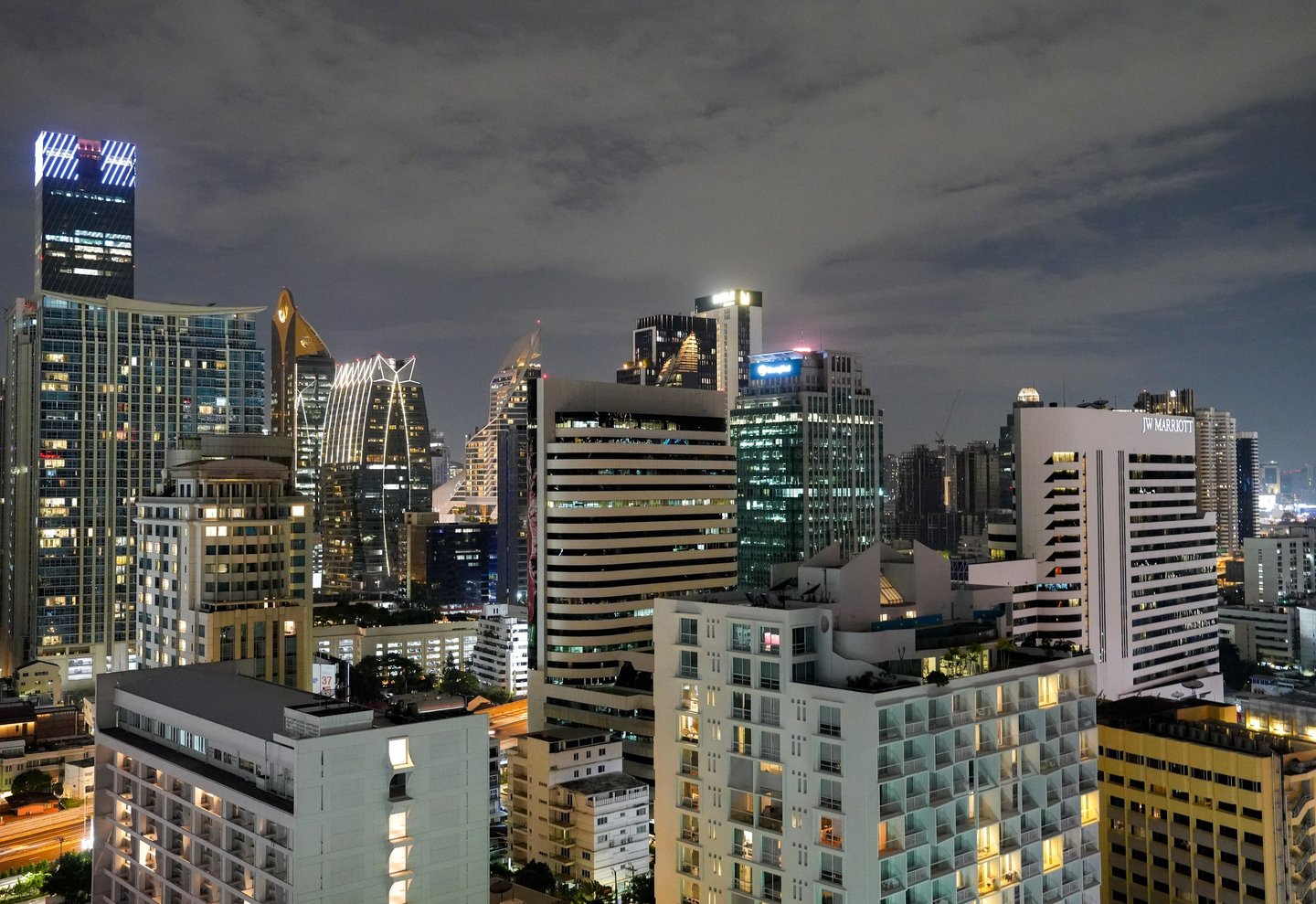
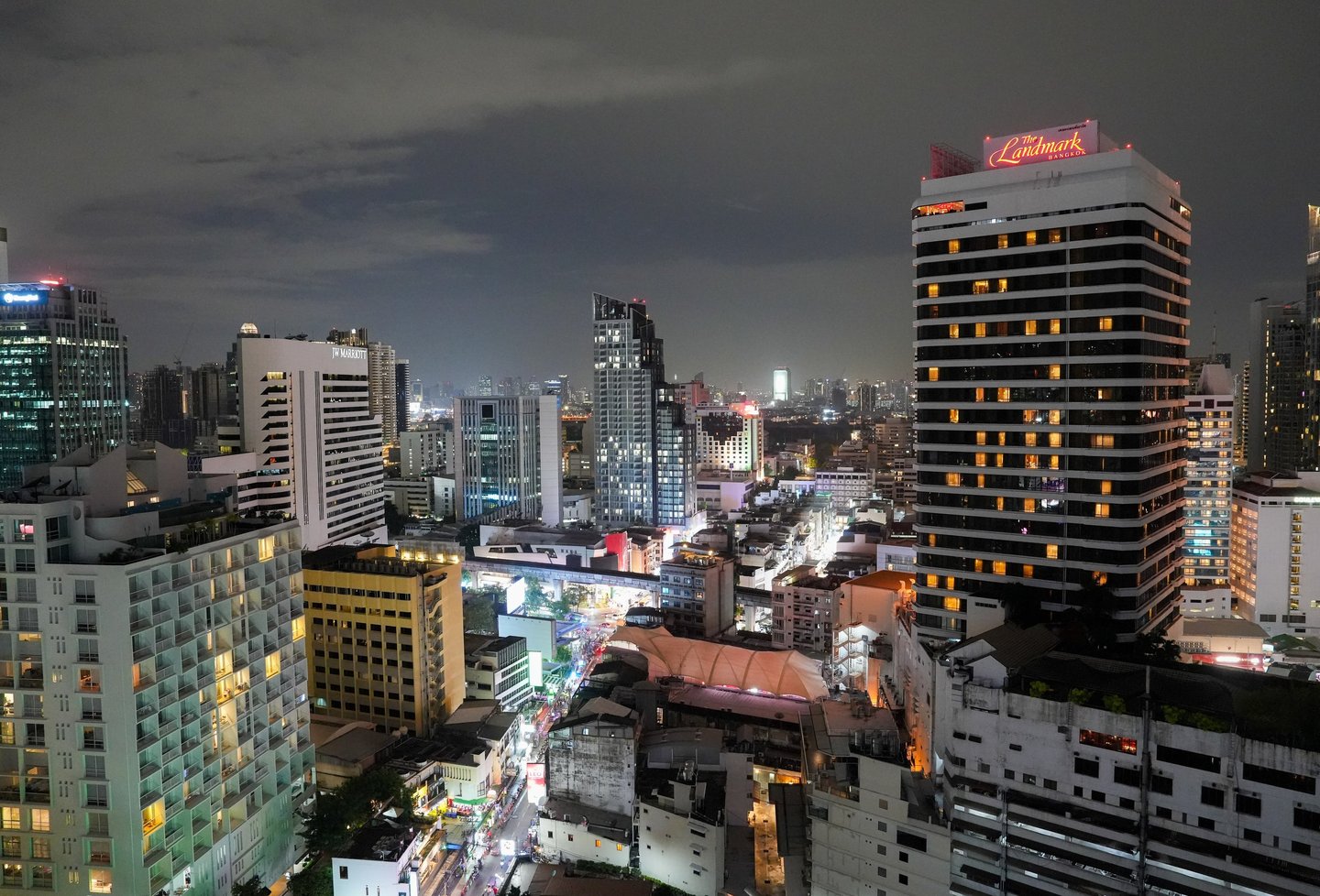
At night, the atmosphere changes completely. The reflections of headlights, illuminated skyscrapers and glowing BTS stations create a cinematic scene that feels almost unreal in places. From a documentary and street photography perspective, Bangkok’s skyline is not just architecture — it is movement, rhythm and density. Every train entering the frame, every rooftop light and every narrow side street adds another layer to the story.
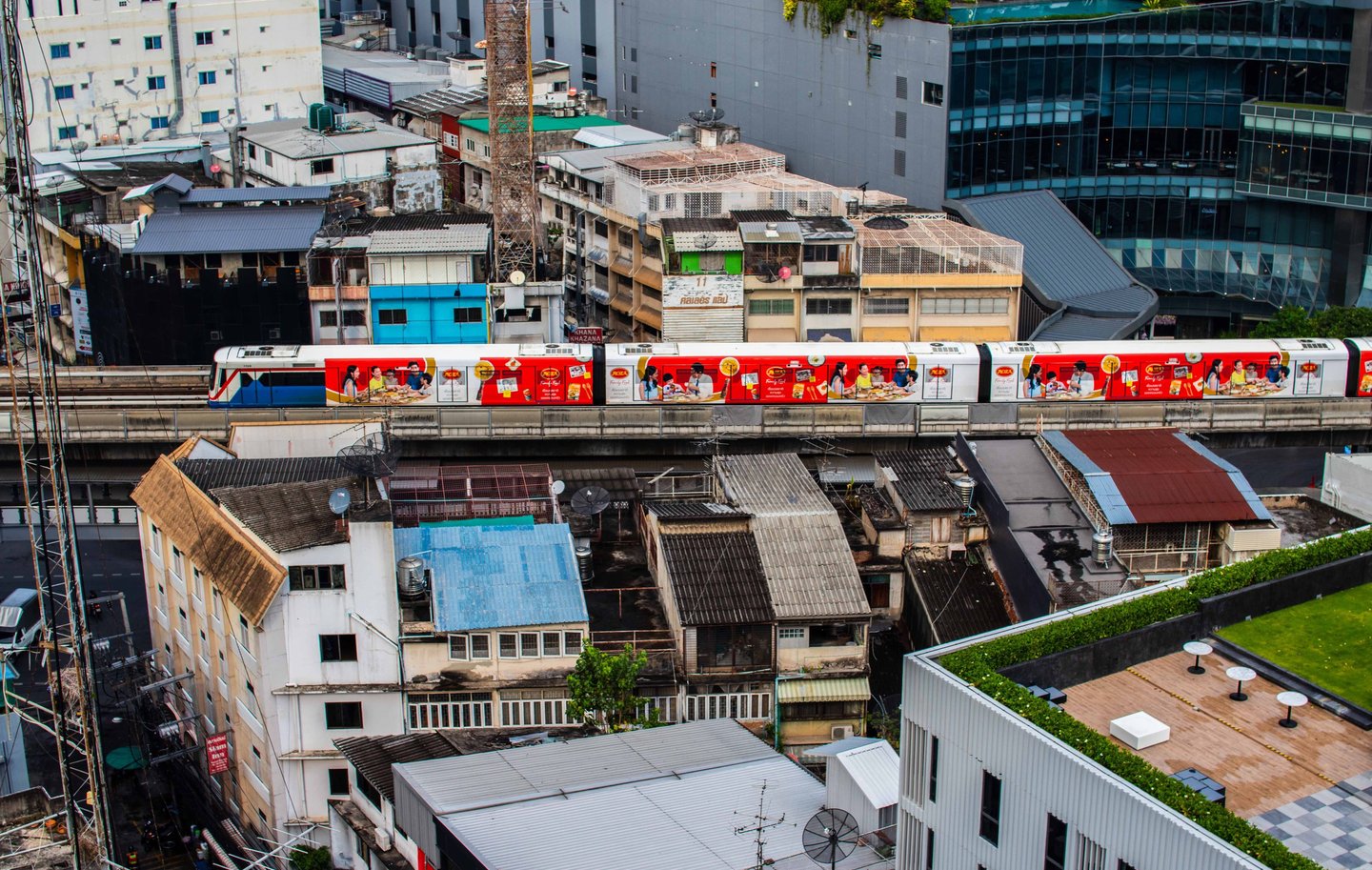
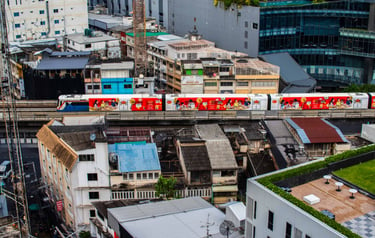
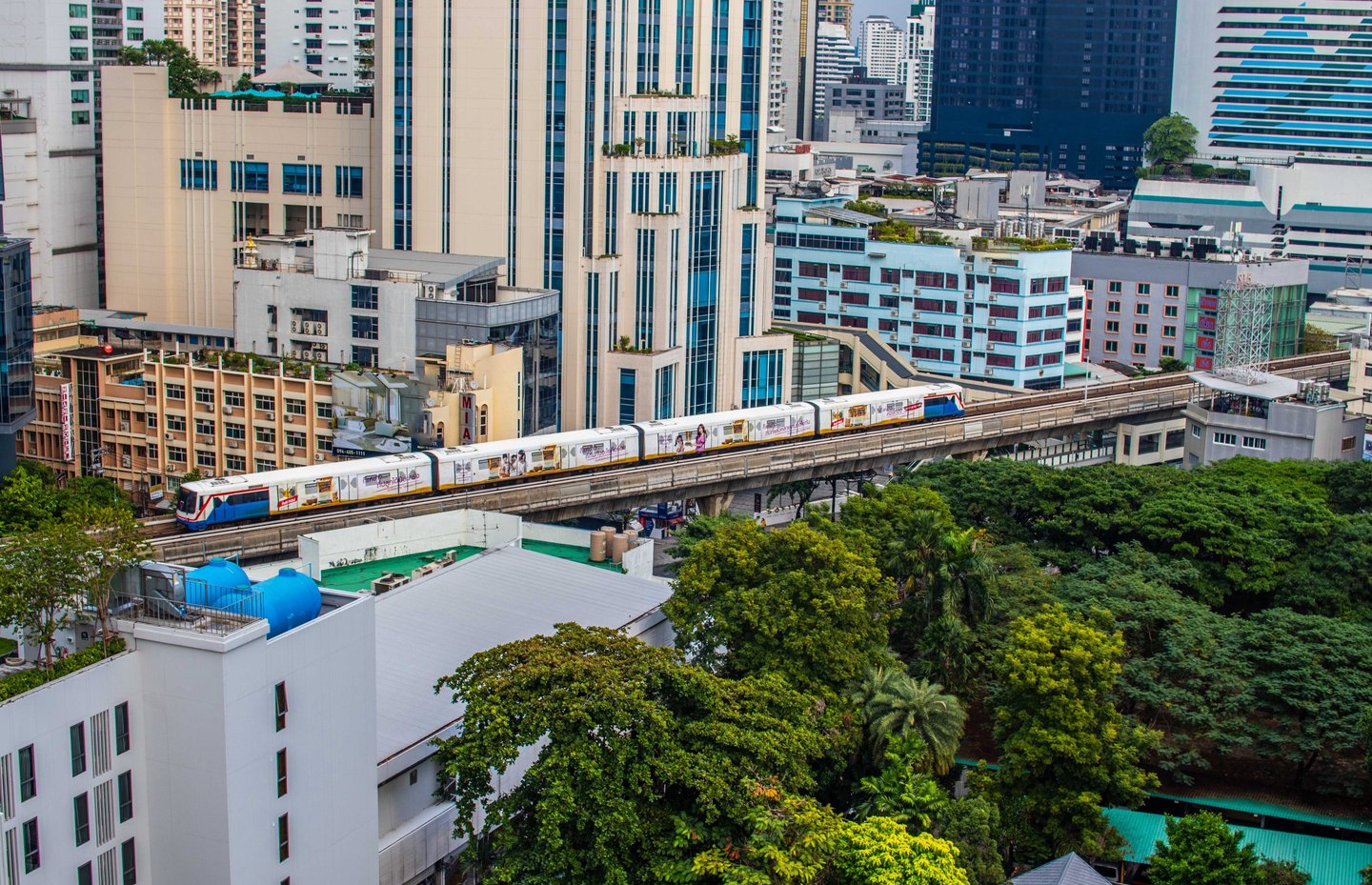
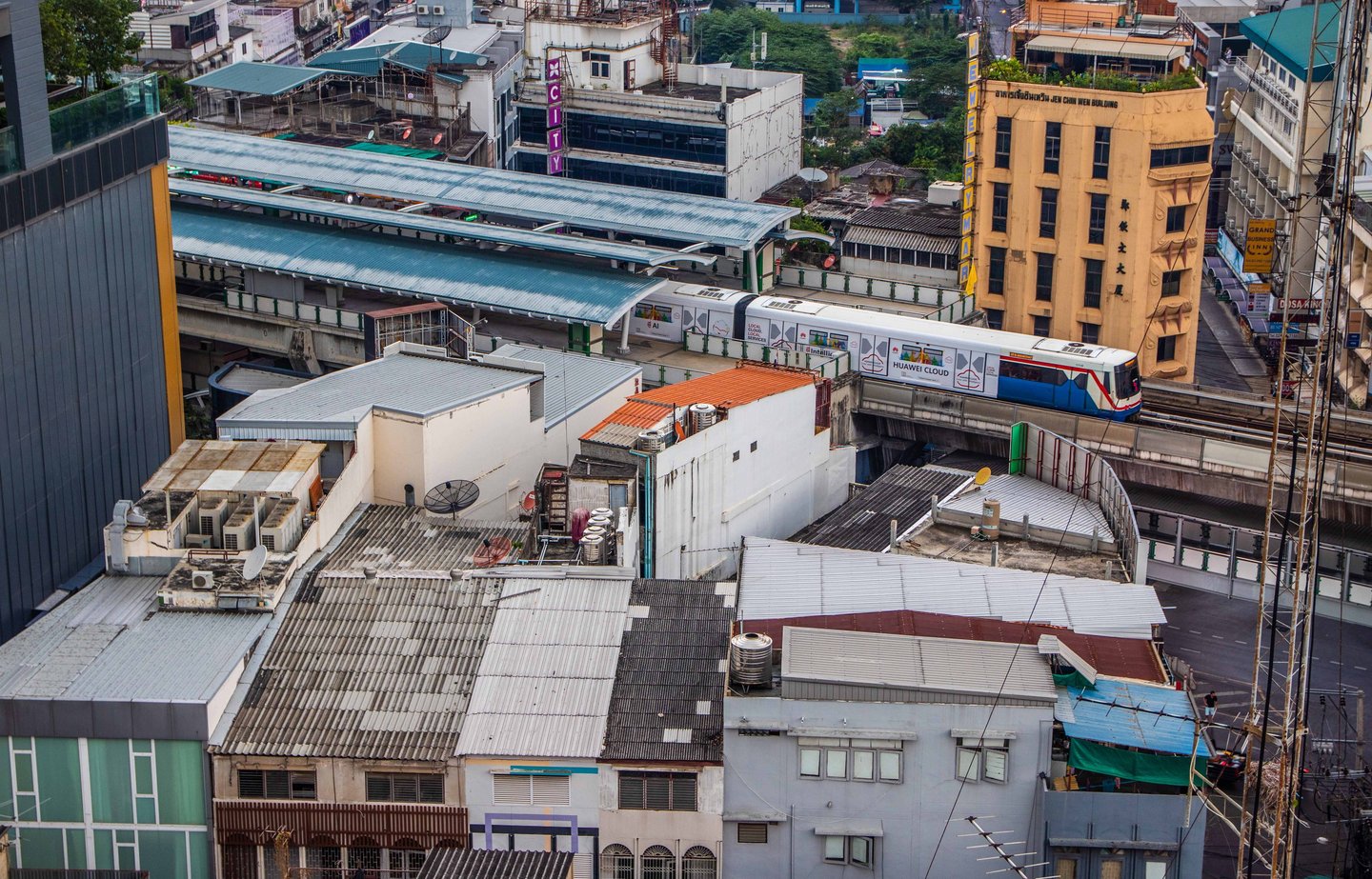
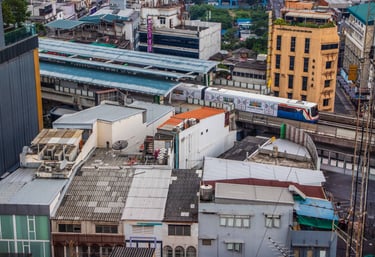
This section of Bangkok from Above focuses on these perspectives. Not the postcard version of Bangkok, but the real urban texture of the city. The endless repetition of towers, railroads and concrete, interrupted by small human moments hidden somewhere between the skyline.
Spire Rooftop Bar Bangkok – Above the Endless Streets of Lumphini
Bangkok has countless rooftop bars, but only a few truly stay with me long after leaving the city behind.
Spire Rooftop Bar near Lumphini Park became one of those places.
High above the streets of Silom, on top of the completely reimagined Dusit Thani Bangkok, the city suddenly feels different. Quieter somehow. More distant. The traffic noise fades into a low vibration while the skyline stretches endlessly around you. From up there, Bangkok looks less chaotic and more cinematic.
The bar itself sits on the upper floors of the new Dusit Thani Bangkok, directly facing Lumphini Park. The original hotel opened back in 1970 and quickly became one of Bangkok’s most iconic landmarks. For decades, the golden spire on top of the old Dusit Thani shaped the skyline around Silom and Rama IV Road. It was one of those buildings everybody in Bangkok seemed to recognize instantly. In 2019 the original structure disappeared as part of the huge Dusit Central Park redevelopment project, changing this part of the city completely.
When the new Dusit Thani Bangkok reopened in 2024, the famous golden spire returned as well — modernized, but still carrying the identity of the old building. Spire Rooftop Bar was created around that symbol, almost like a continuation of Bangkok’s skyline history instead of simply another luxury rooftop
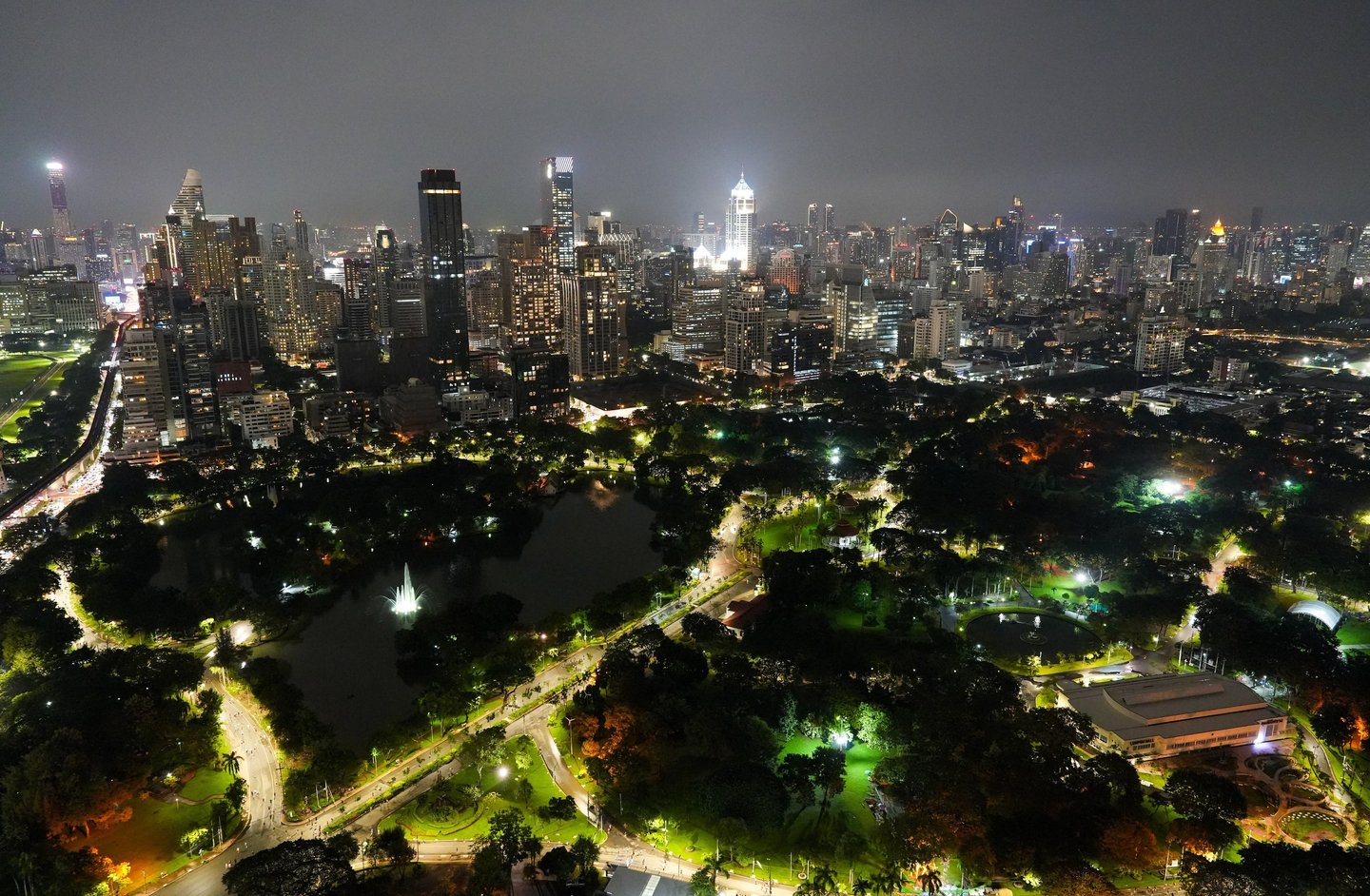
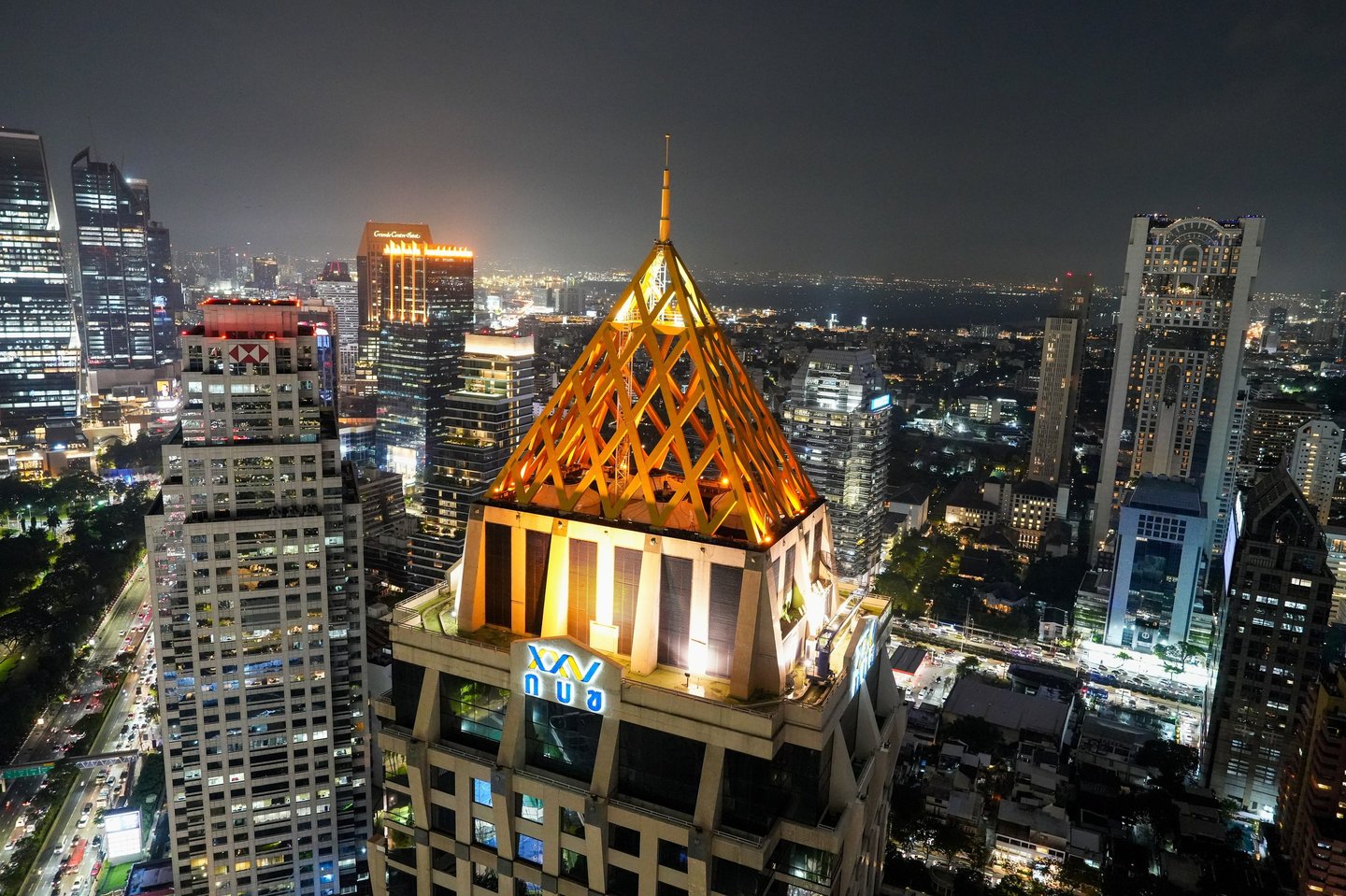
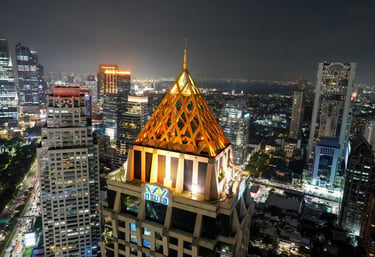
As a photographer, this location immediately stood out to me because of its perspective.
Most rooftops in Bangkok focus on height alone. Spire works differently. The view over Lumphini Park creates this rare contrast between dense urban structures and open green space. One direction is filled with glass towers, highways and endless concrete lines. The other opens toward the dark trees of the park, cutting through the city like a breathing space between the skyscrapers.
Especially at dark hour, the atmosphere changes completely.
The first lights switch on around Sathorn and Silom while the reflections begin appearing in the glass facades. BTS Skytrains move through the city below like illuminated lines between the towers. From up there, Bangkok becomes layers of movement, light and geometry.
What I liked most was the balance of the place itself.
Spire feels elegant without trying too hard. The open-air terraces, soft lighting and the illuminated golden spire create a calm atmosphere that works perfectly for photography. Even with people around, it never felt overly loud or crowded during my visit
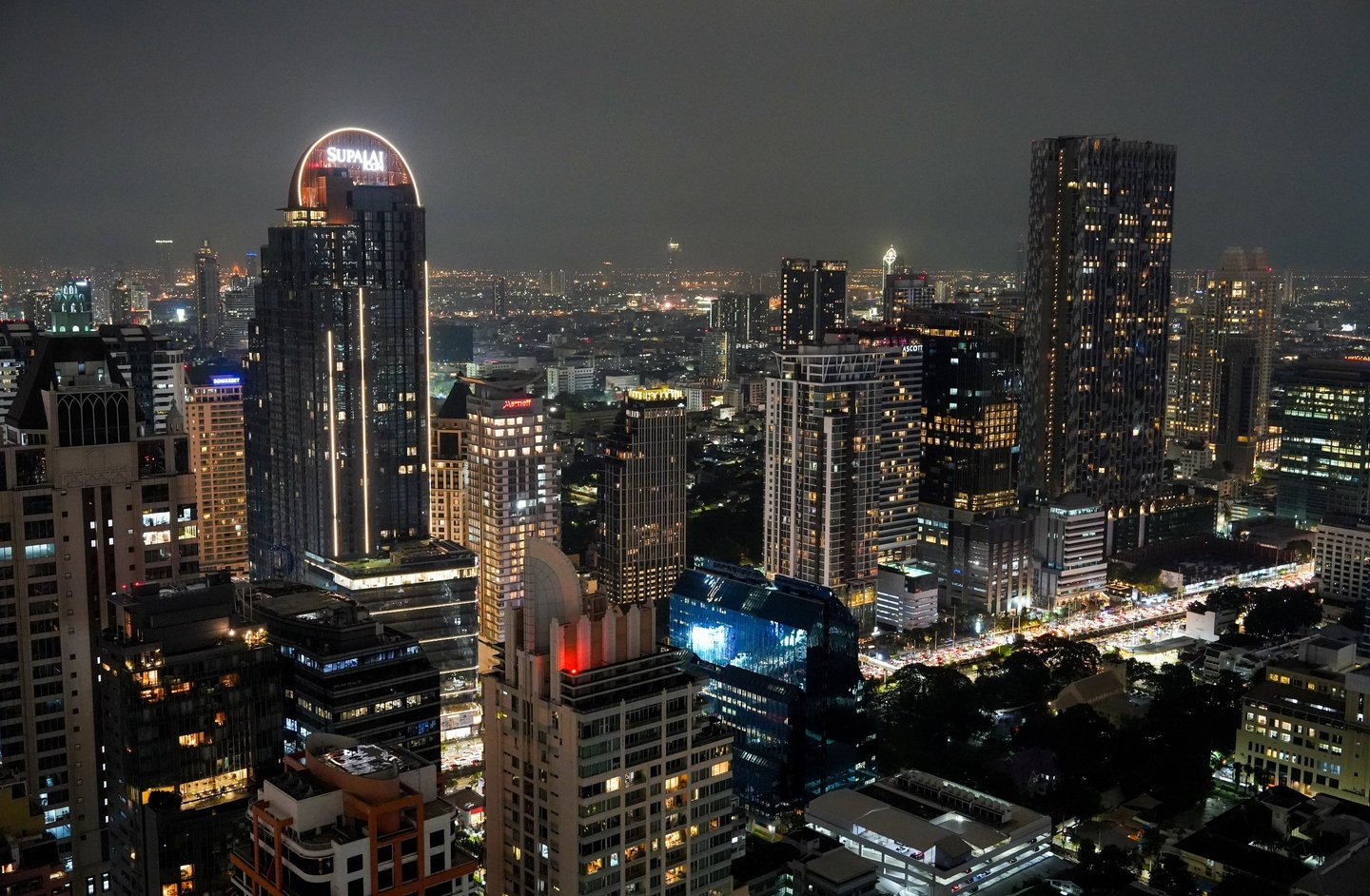
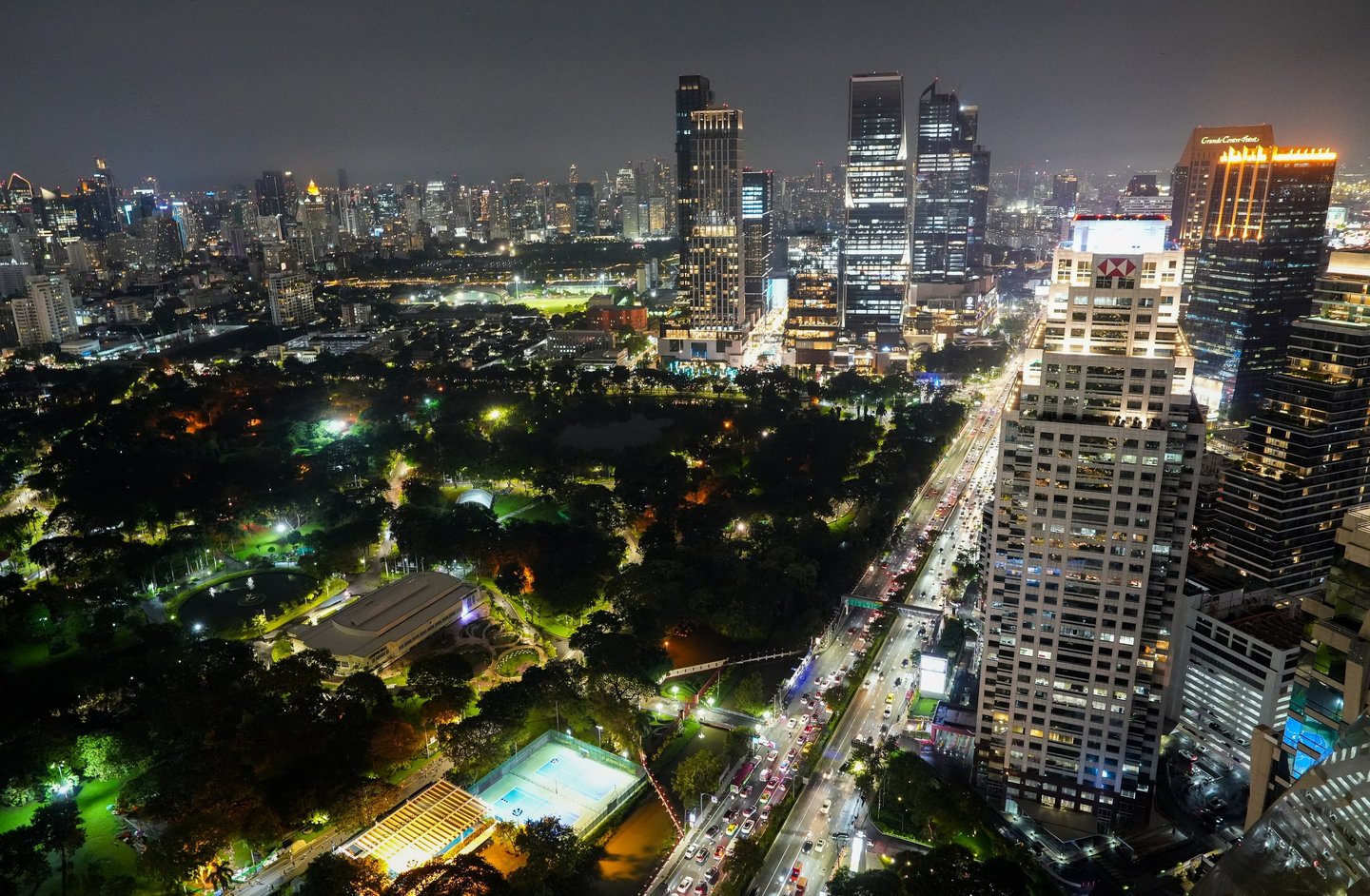
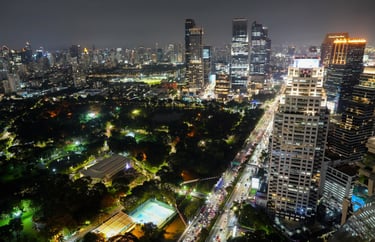
Photographically, this rooftop is one of the strongest locations in Bangkok for urban landscapes and cityscape photography. The angle over Lumphini Park, the surrounding skyline of Silom, the visibility toward One Bangkok and the distant towers of Sukhumvit create constantly changing compositions depending on weather, haze and light conditions.
This section of Bangkok from Above – City Views, Night Perspectives and Urban Landscapes in Thailand focuses exactly on these moments.
The feeling of standing above one of the busiest cities in Southeast Asia while watching the movement below become almost abstract. Bangkok never really sleeps — it simply changes perspective.
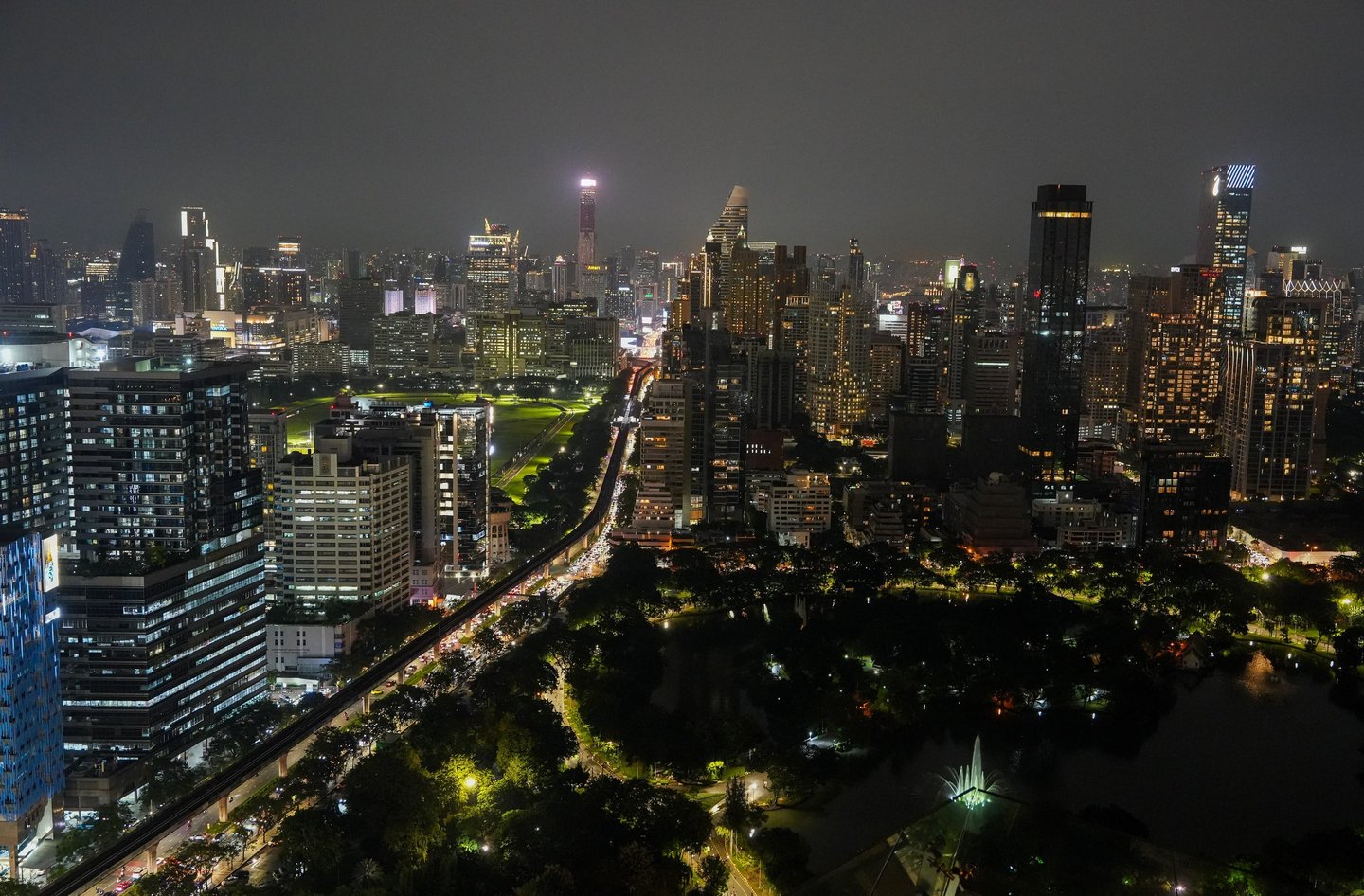
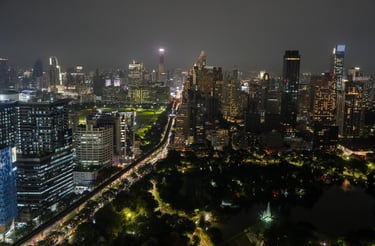
For me, Spire Rooftop Bar is less about luxury and more about observing Bangkok from a distance while still feeling completely connected to it
Mahanakhon SkyWalk Bangkok – Above the Endless Lights of Thailand’s Capital
There are rooftop bars in Bangkok that impress you for a few minutes — and then there are places like the Mahanakhon SkyWalk that completely change your perspective of the city.
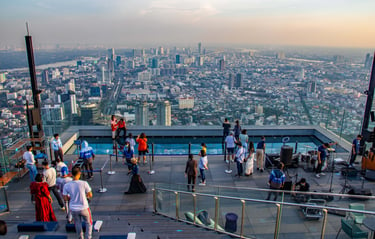
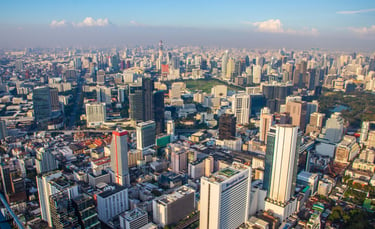
Standing on the 78th floor of King Power Mahanakhon, Bangkok suddenly feels endless. Streets disappear into the horizon, highways turn into glowing lines and the skyline stretches far beyond what the eye can fully capture. From up there, the city feels less like a destination and more like a living structure constantly moving beneath you.
For photography, this place is honestly overwhelming in the best possible way.
King Power Mahanakhon rises 314 meters above Bangkok and remains one of the most recognizable buildings in Thailand. When the tower officially opened in 2016, it immediately changed Bangkok’s skyline forever. The building itself was designed by German architect Ole Scheeren, whose concept intentionally broke away from the clean glass skyscraper style seen across Asia. The now famous “pixelated” architectural design gives the tower its fragmented appearance, almost as if parts of the building dissolve into the city around it.
That design is exactly what makes the tower so photogenic from nearly every angle in Bangkok.
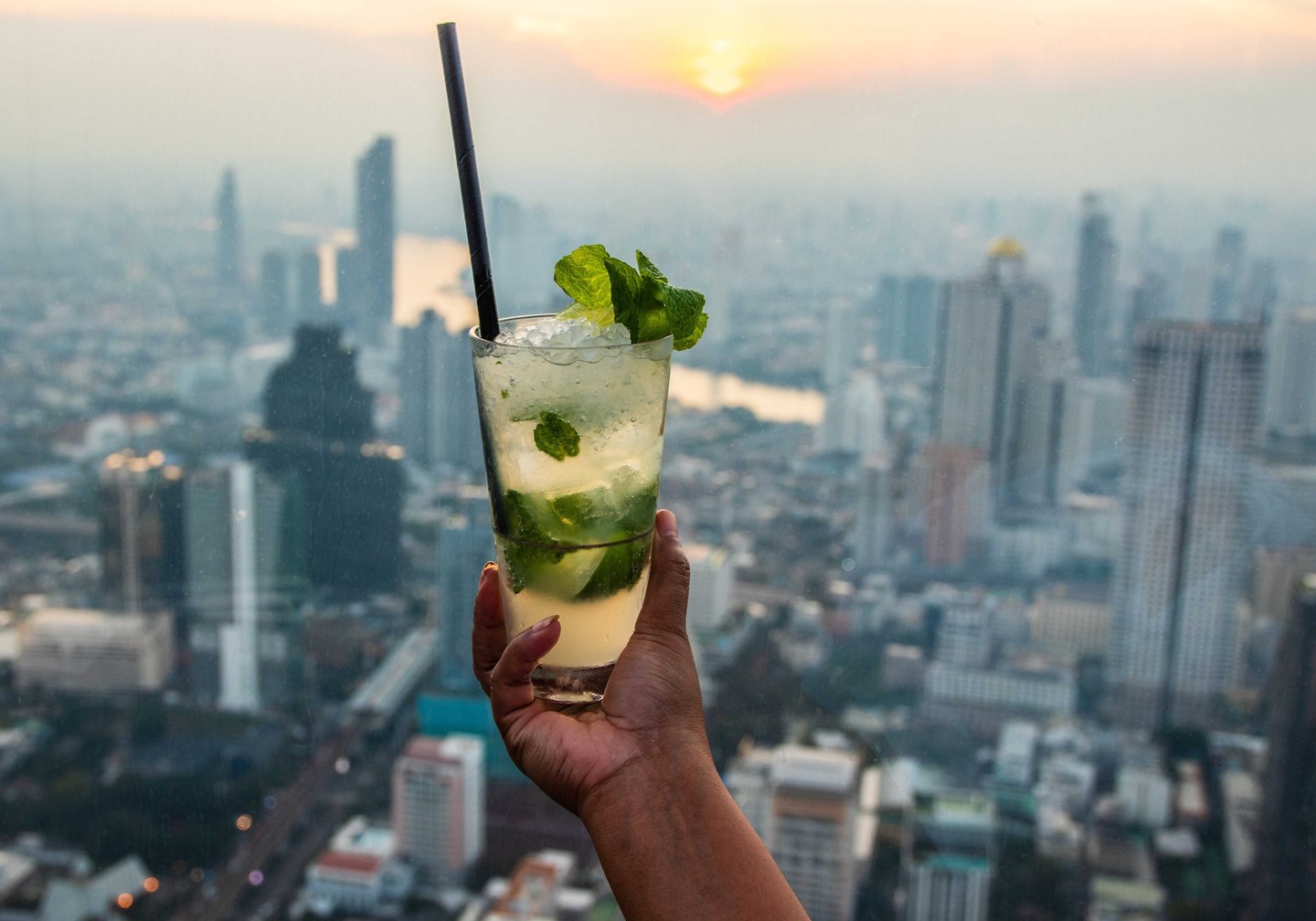
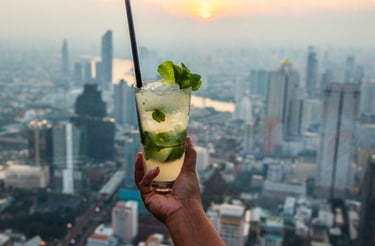
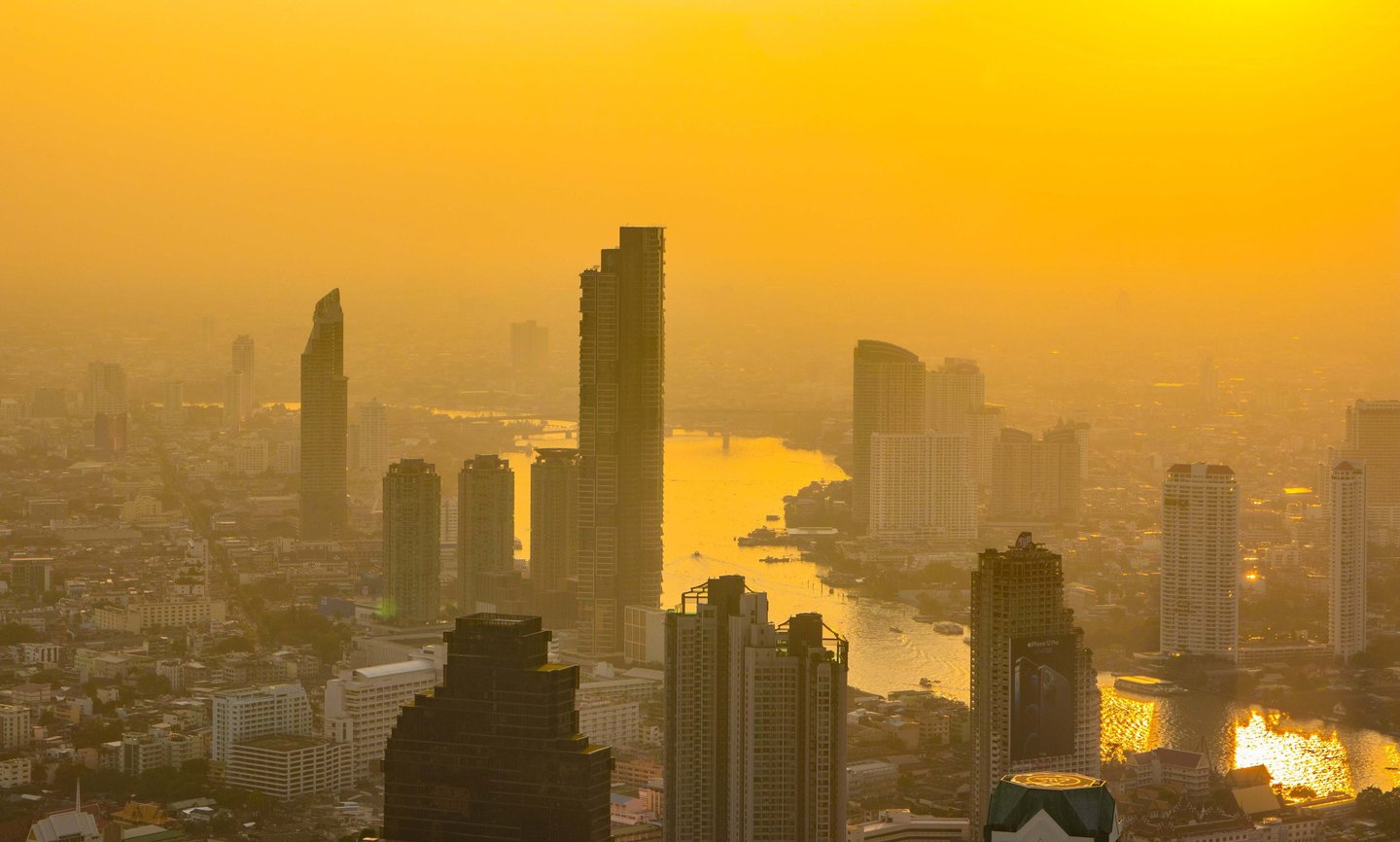
Historically, the Sathorn and Silom districts around Mahanakhon transformed rapidly during Bangkok’s economic boom in the late 1980s and 1990s. What once were lower-rise business districts slowly evolved into one of the densest urban landscapes in Southeast Asia. Today the tower stands directly in the center of Bangkok’s financial district, surrounded by BTS Skytrain lines, elevated highways, luxury hotels and endless layers of concrete and glass.
The SkyWalk itself sits on the very top floors of the building.
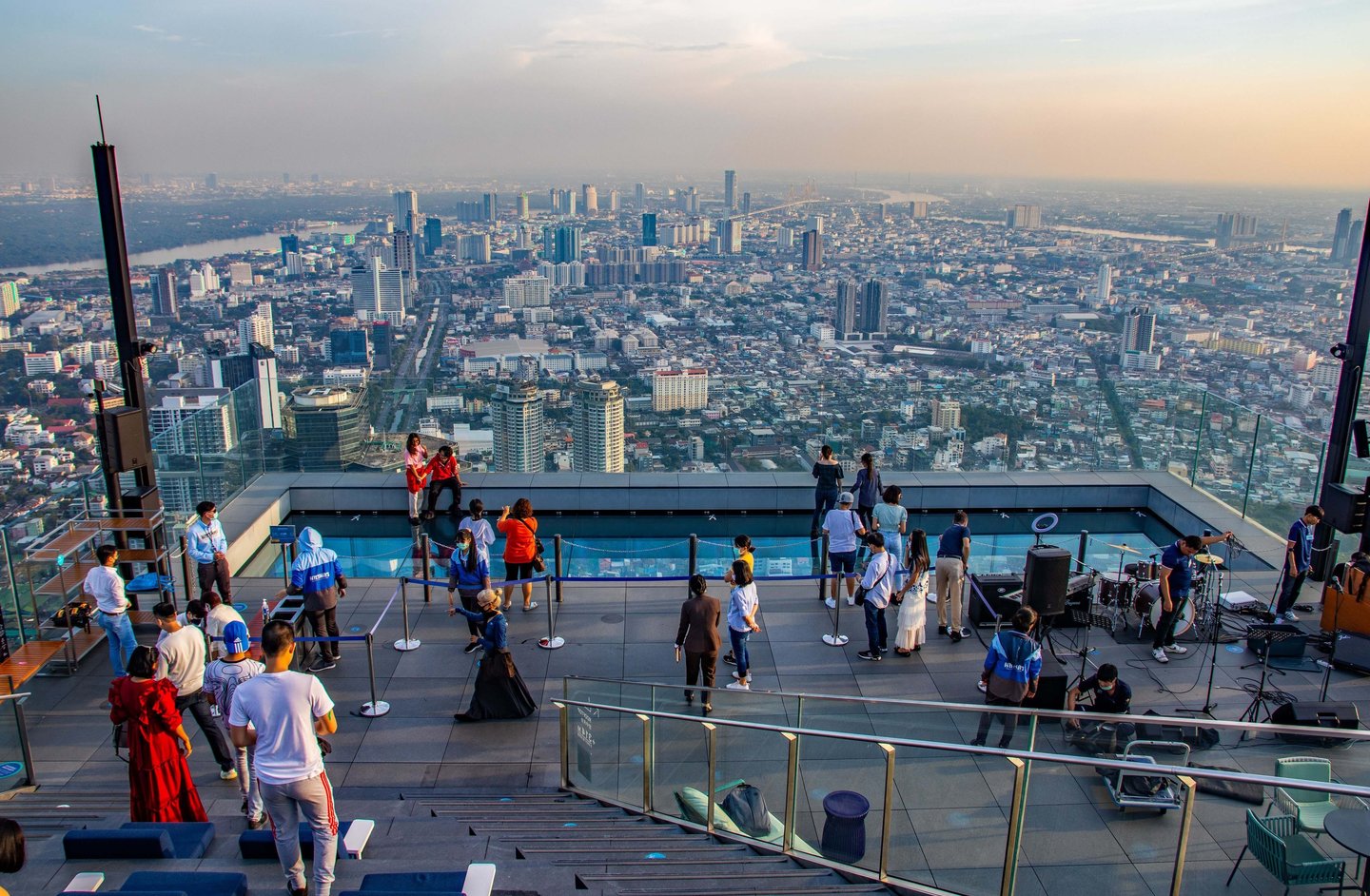
The open rooftop platform on the 78th floor creates one of the most exposed viewpoints in the entire city. Unlike many rooftop bars that frame the skyline from behind glass panels or enclosed terraces, this place feels completely open to Bangkok. Wind, heat, city noise from far below and the changing light all become part of the experience.
At sunset the atmosphere changes minute by minute.
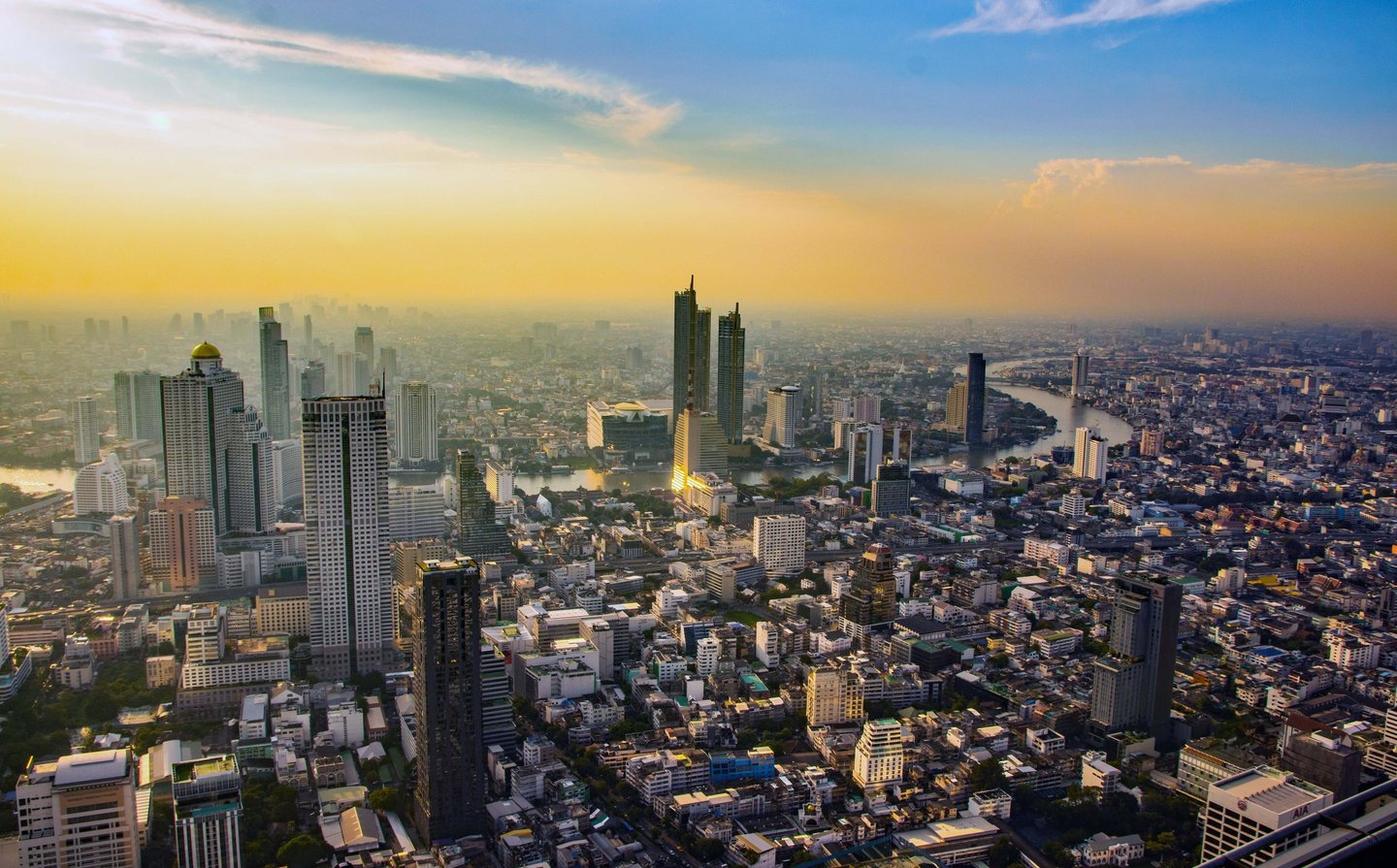
Warm reflections hit the skyscrapers around Sathorn while the city slowly begins switching on its lights. The Chao Phraya River becomes visible in the distance, weaving through the buildings like a dark ribbon between glowing towers. BTS Skytrains move through the city beneath the platform while traffic creates endless streams of light far below.
What stayed with me most as a photographer was the scale.
Bangkok from street level can feel chaotic, loud and almost impossible to fully process. But from the Mahanakhon SkyWalk, the city suddenly becomes structured. You begin noticing patterns — repeating windows, moving train lines, compressed neighborhoods between skyscrapers and the constant contrast between old Bangkok and modern development.
The atmosphere at the rooftop changes depending on the hour.
Early evening still feels relaxed and cinematic. Once darkness fully arrives, the city becomes pure light and movement. Reflections appear in every direction and Bangkok starts looking almost unreal from this height.
Photographically, this rooftop is one of the strongest locations in Thailand for urban photography, cityscape photography and long exposure work. The 360-degree perspective allows completely different compositions depending on weather conditions, haze, light and season. No two visits ever really look the same.
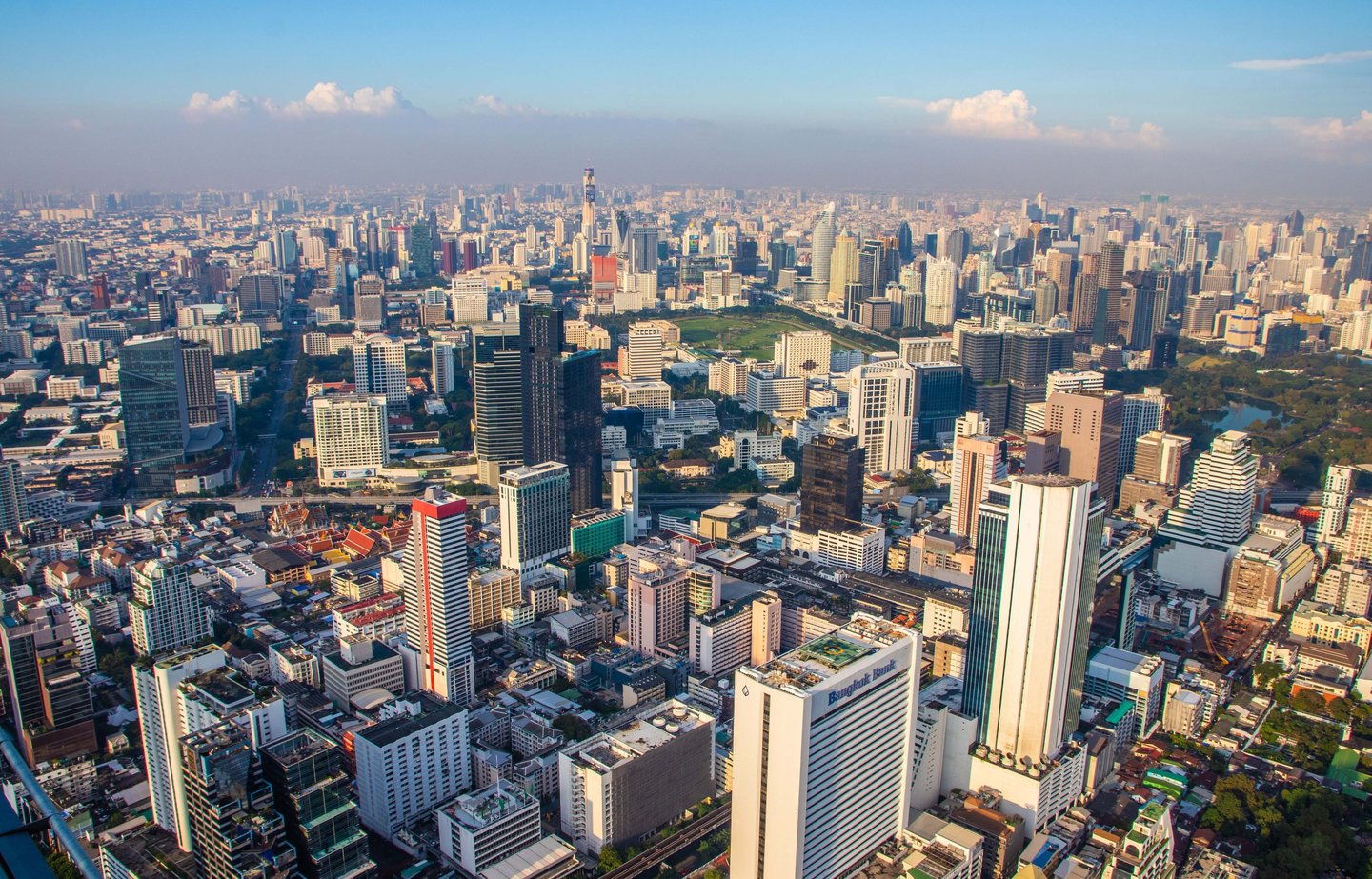
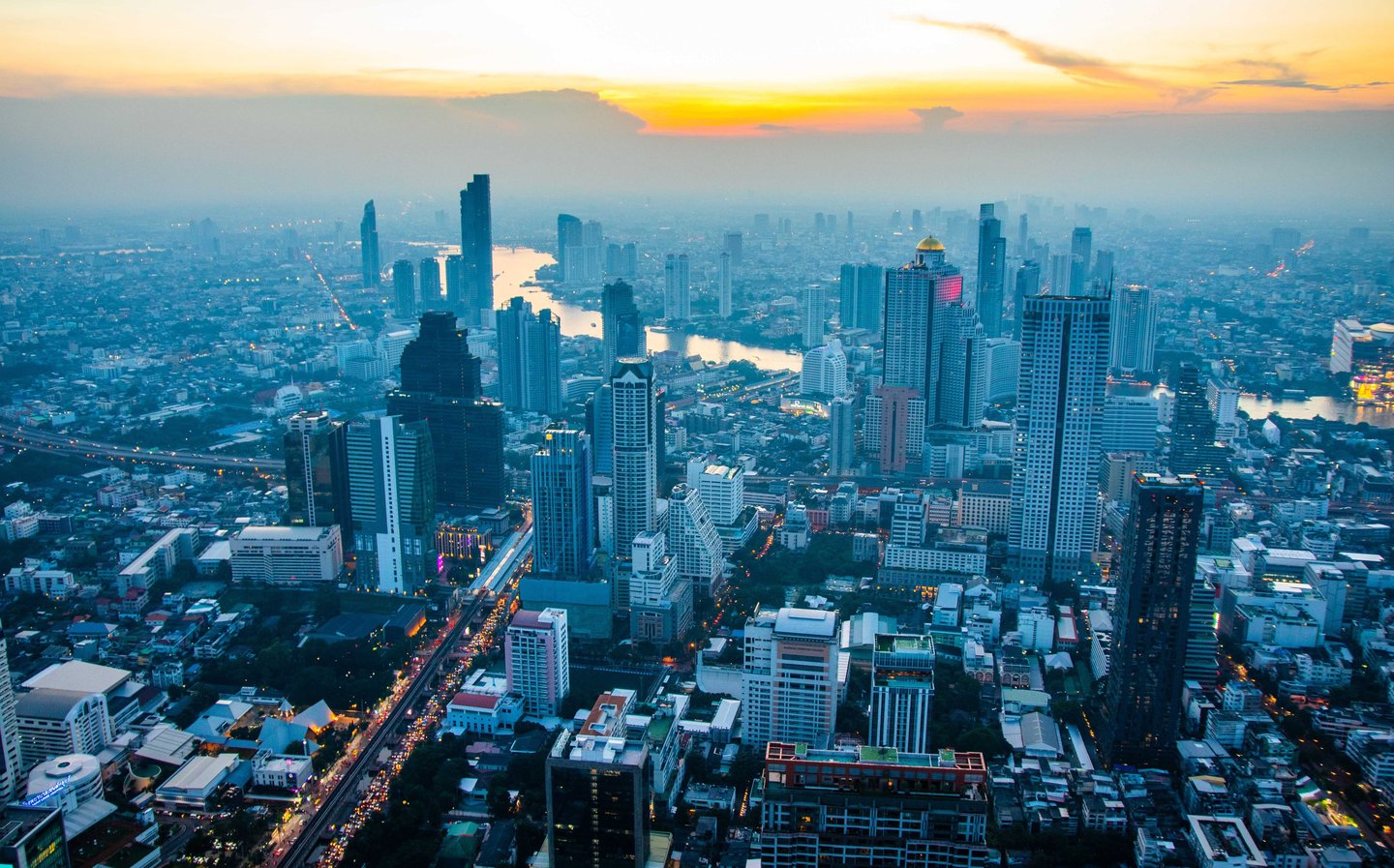
This section of Bangkok from Above – City Views, Night Perspectives and Urban Landscapes in Thailand focuses exactly on these moments — observing one of the largest cities in Southeast Asia from above while the skyline continuously changes beneath the camera.
For me, the Mahanakhon SkyWalk is not simply a rooftop attraction.
It is one of the few places where Bangkok truly reveals its scale.
The Slow Track to Bangkok in Thailand: From Pattaya to the Echoes of Hua Lamphong
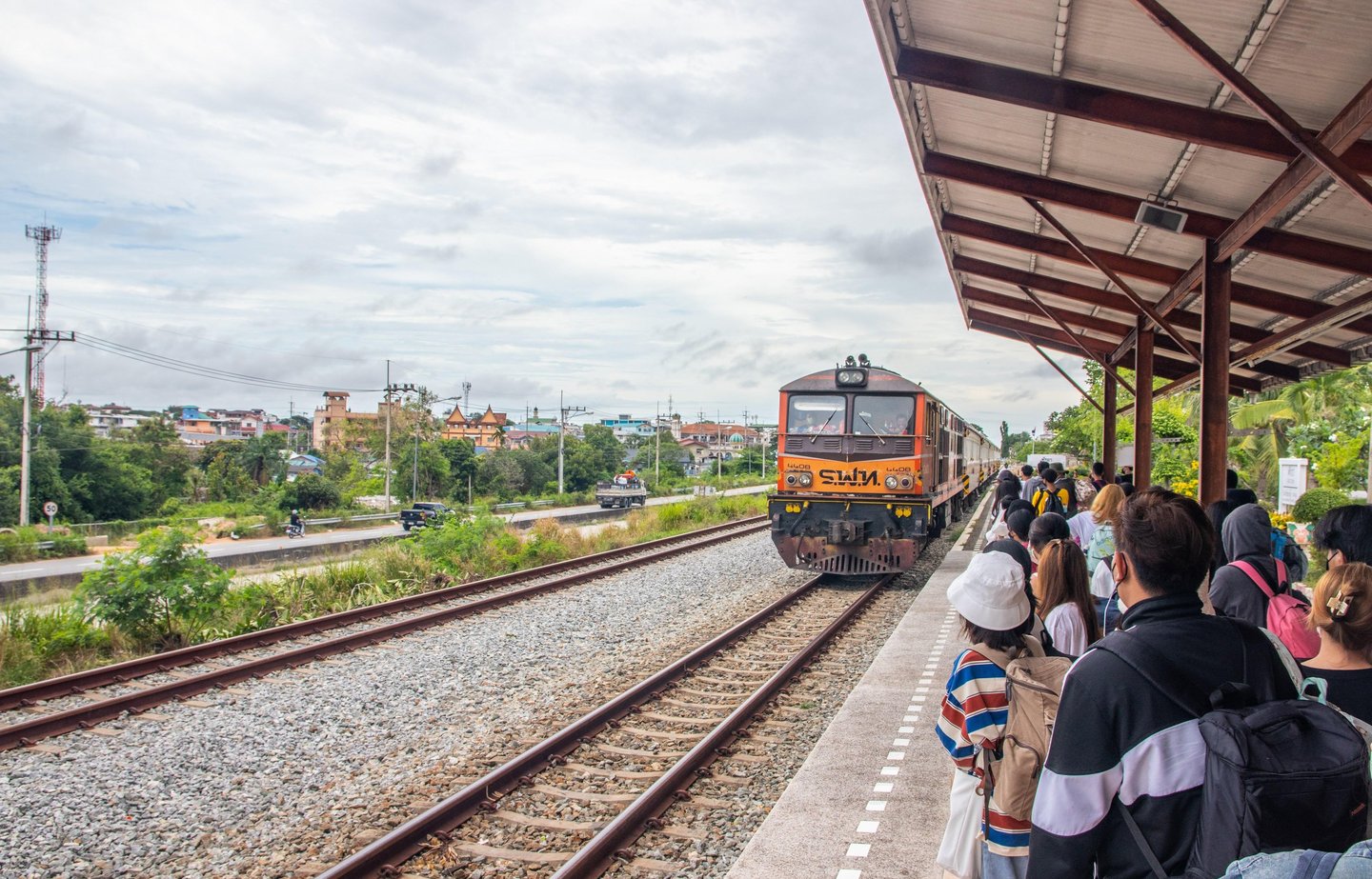
There is a distinct difference between traveling just to get somewhere and traveling to actually document a country. If you want speed, you take the highway. But if you want to capture the true, unvarnished rhythm of Thailand, you buy a third-class ticket for the local train from Pattaya and let the landscape unfold at its own pace.
This series is the visual record of that journey—a nearly three-hour, ground-level transit that pulls you out of the coastal heat and drops you straight into the historic heart of the capital at Hua Lamphong Station.
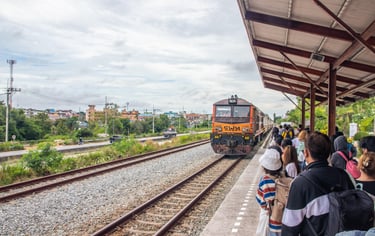
Third Class Rail vs. The Modern Rush
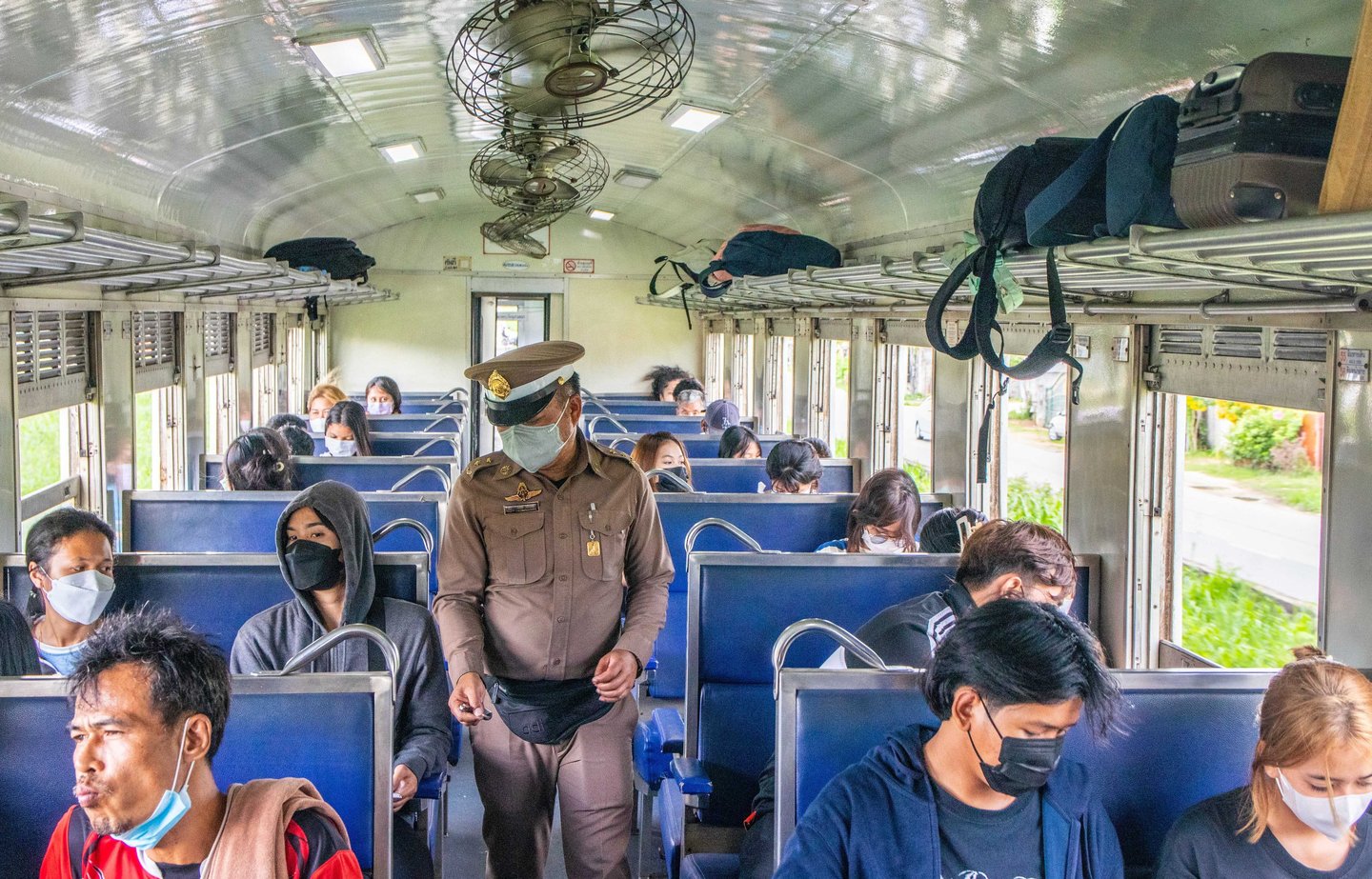
To understand the visual texture of this trip, you have to experience the ride itself. Rolling out of Pattaya, the journey is a sensory throwback. If you are trying to benchmark this against standard European travel—like a second-class carriage on a German train—forget it. This is raw, classic third-class, and it operates on a completely different wavelength.
There is no sealed glass or sterile air conditioning here. Instead, you get wide-open windows, the constant rhythmic clatter of the tracks, and heavy wooden and vinyl seats that have carried generations of locals. It’s loud, it’s breezy, and the tropical heat mixes constantly with the scent of diesel and trackside street food.
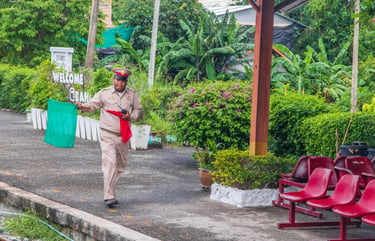
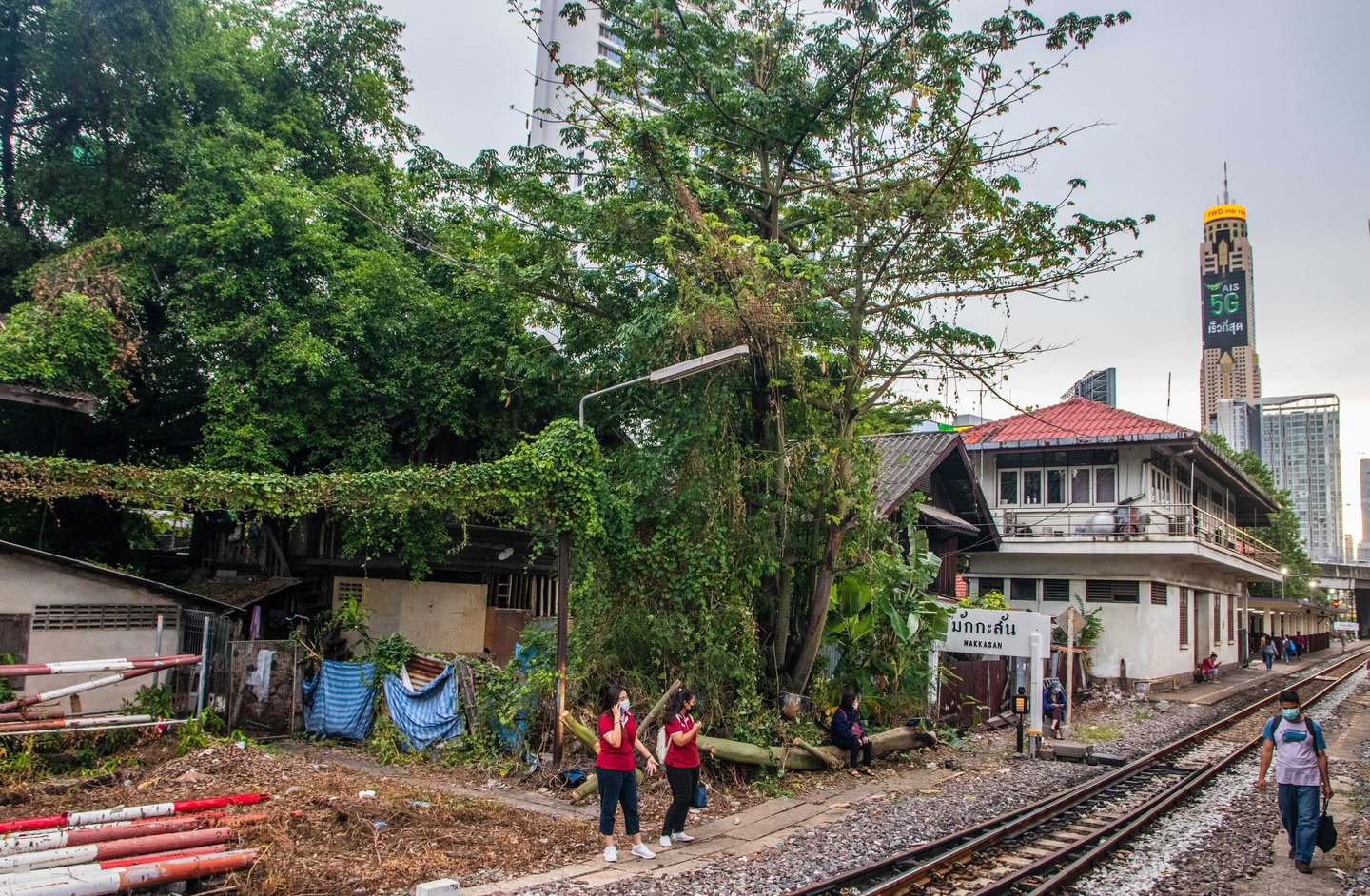
For street and documentary photography, this environment is absolute gold. The open windows act like natural frames. They allow you to watch the shifting landscape turn from rural fields into dense urban sprawl, all while capturing candid, unposed moments of fellow passengers just killing time.
Arriving at the Crossroads: The Transition of Hua Lamphong
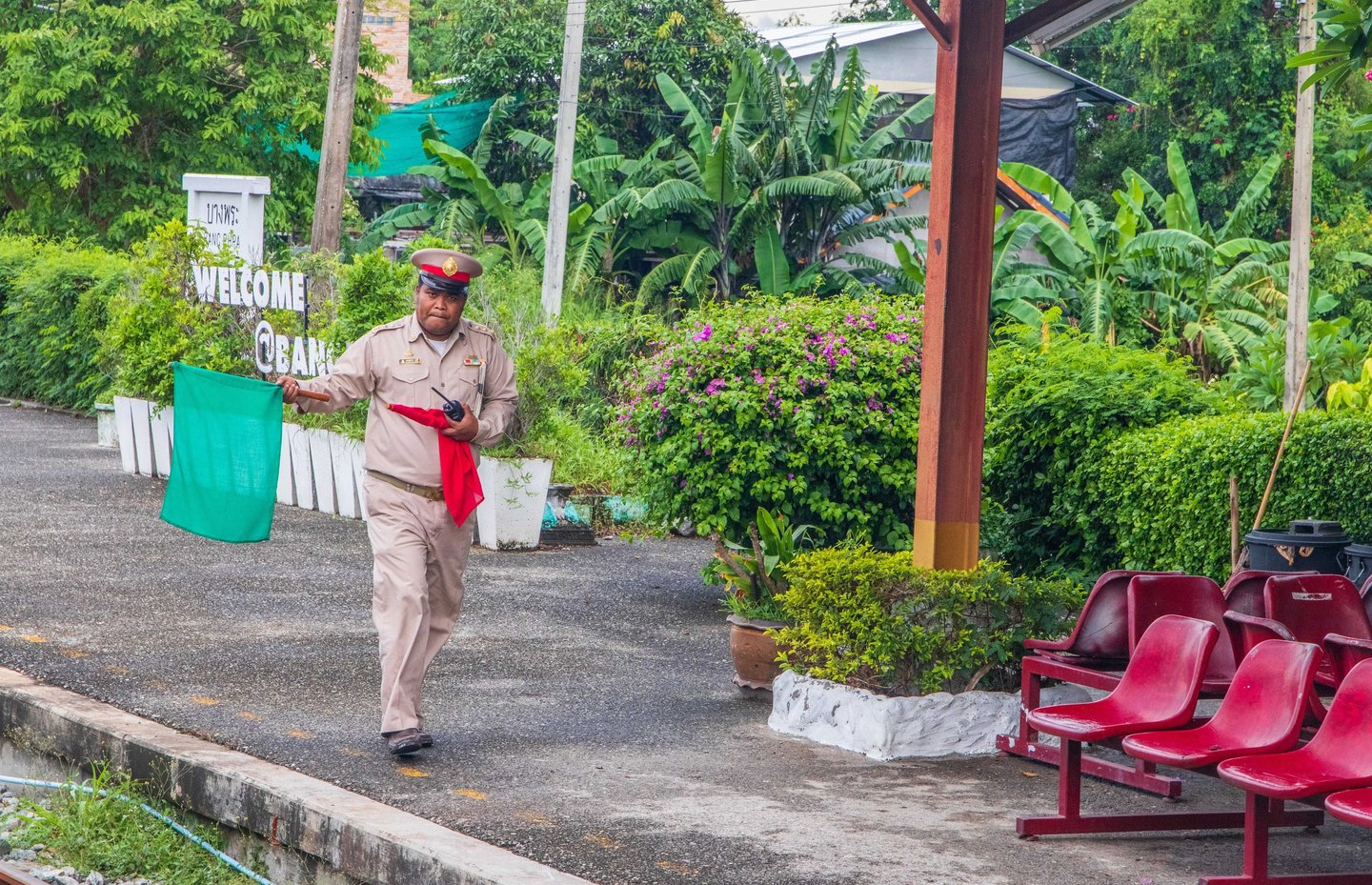
The ultimate destination of this slow-moving transit is the arrival under the massive, vaulted iron roof of Hua Lamphong Terminal. Opened in 1916, this Italian neo-renaissance landmark has served as the undisputed beating heart of Thai rail travel for over a century. Walking onto these platforms always feels like stepping into a living archive—a place that has witnessed millions of life-changing journeys, tearful reunions, and chaotic holiday rushes.
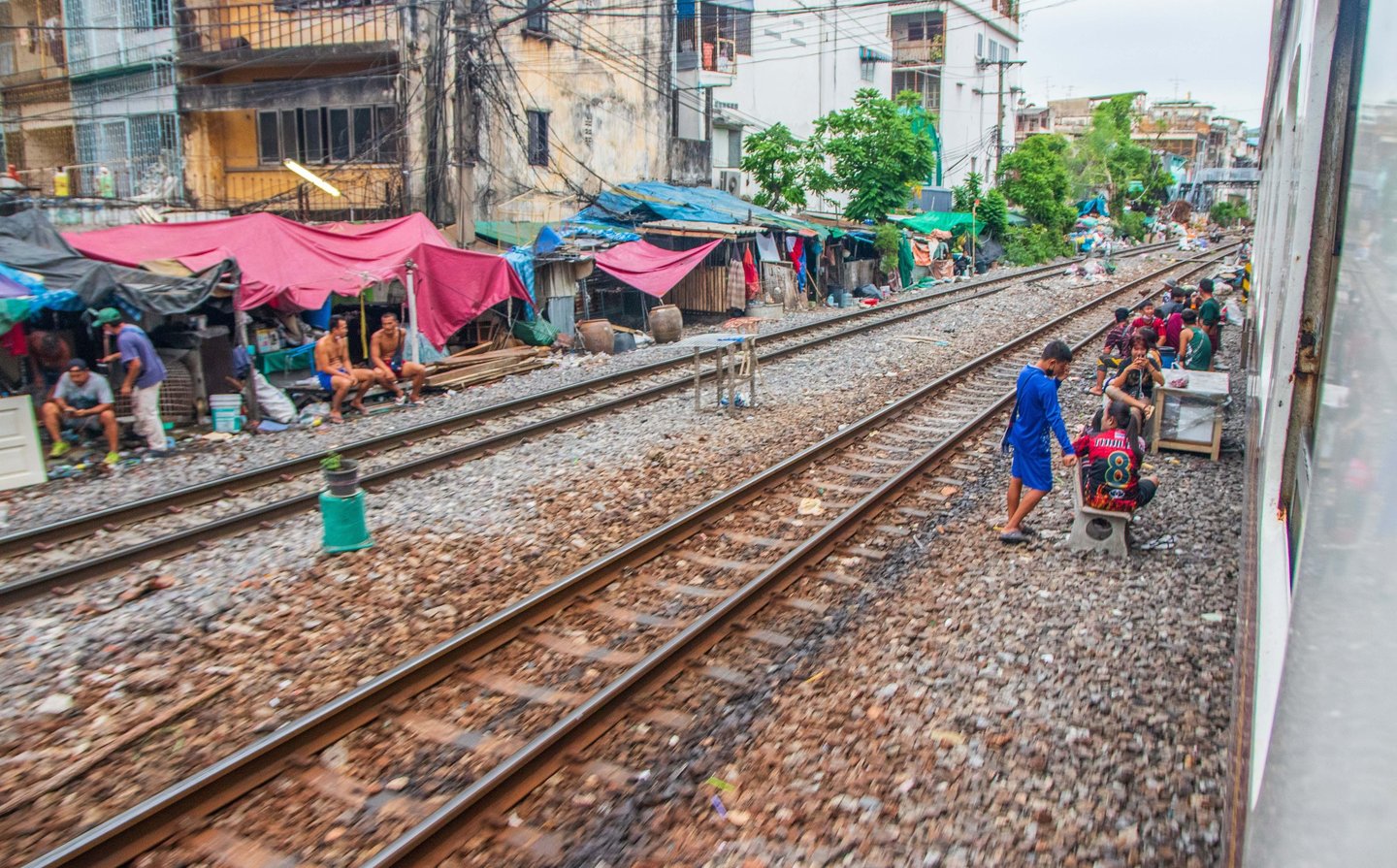
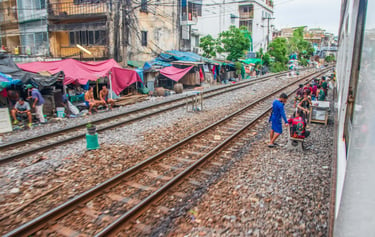
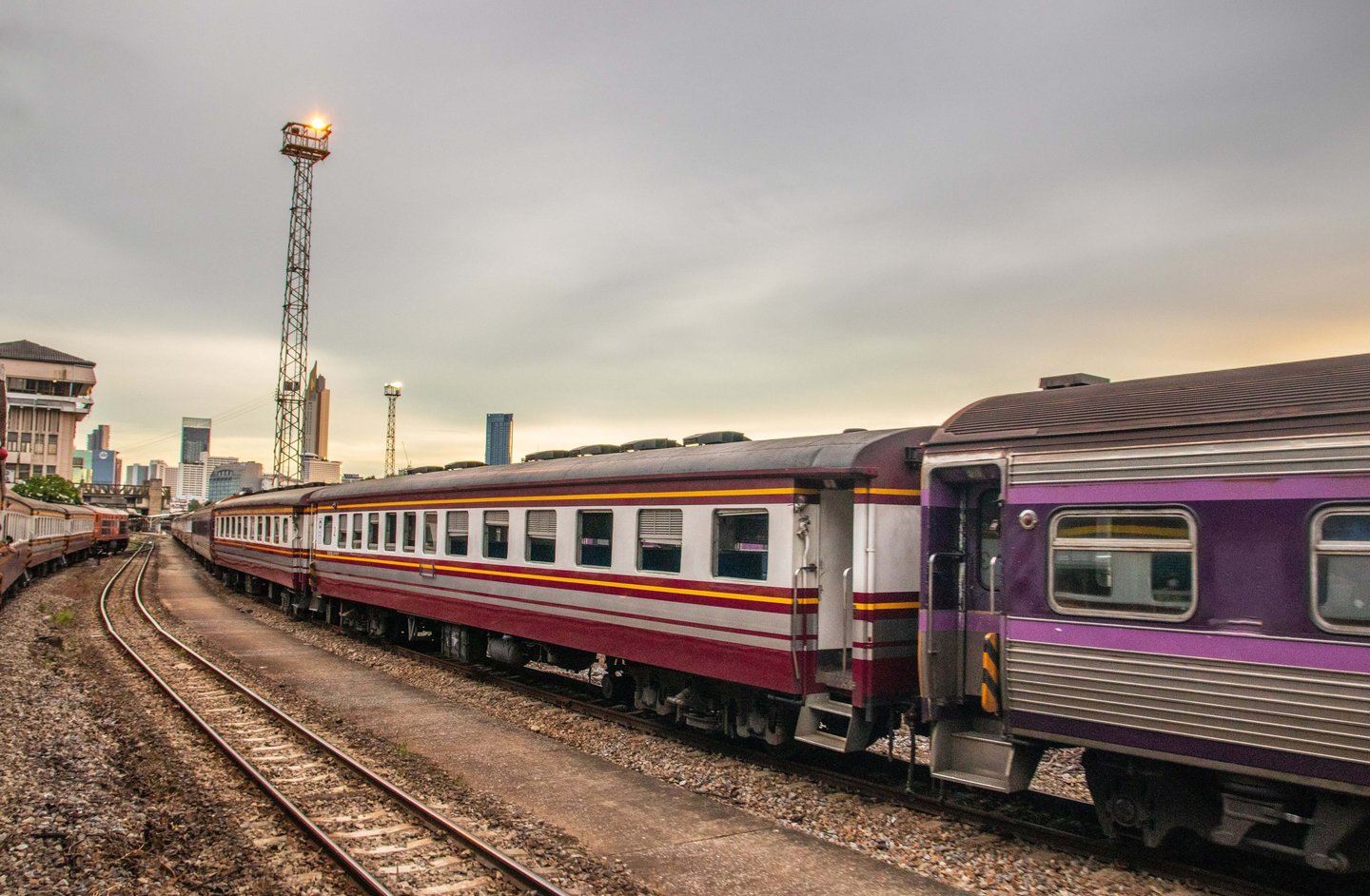
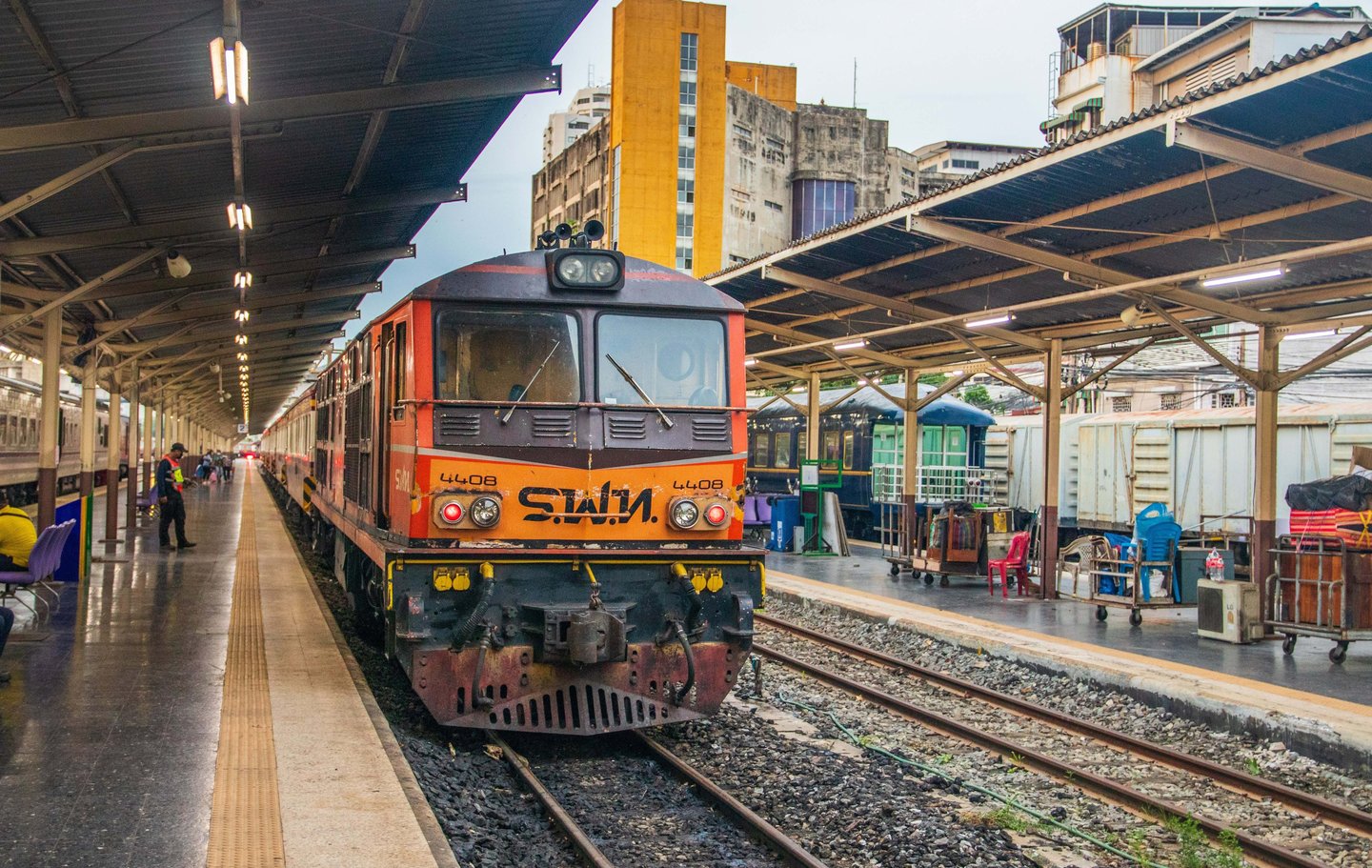
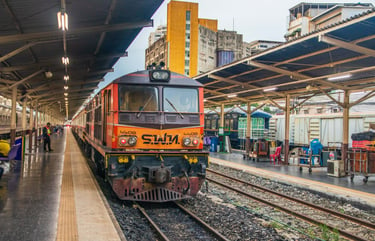
However, the station is currently navigating a poignant transition. With the vast majority of long-distance train traffic now diverted to the hyper-modern Krung Thep Aphiwat Central Terminal, Hua Lamphong has shed its frantic, high-stakes energy. It hasn’t hit the end of the line just yet, but the atmosphere has noticeably shifted gears.
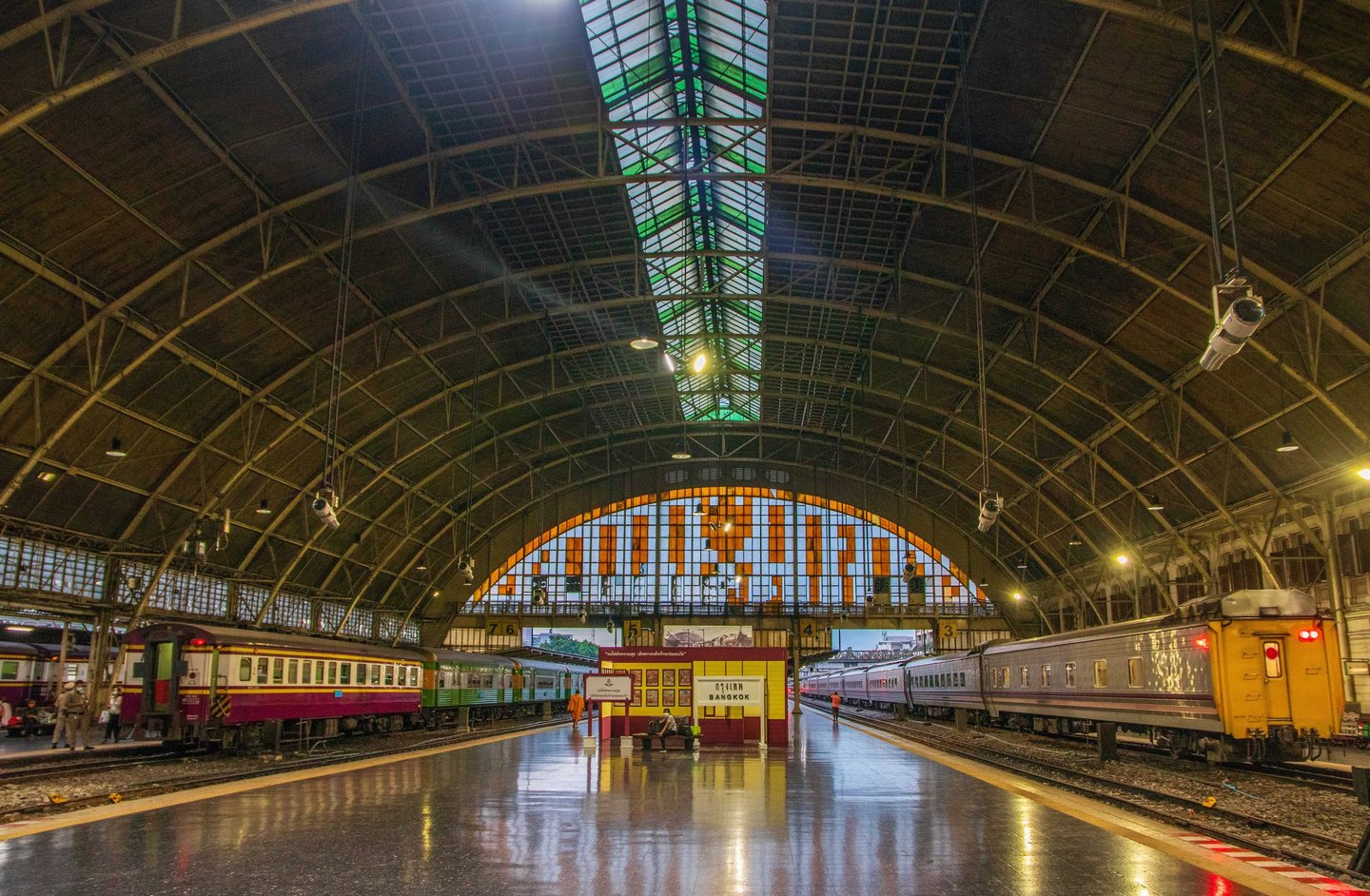
Today, the platforms are quieter, populated mostly by local commuter trains like the one from Pattaya. The frantic rush has given way to a deep, heavy nostalgia. It’s a bittersweet moment in Bangkok’s history, and one that demands to be documented before it’s gone completely.
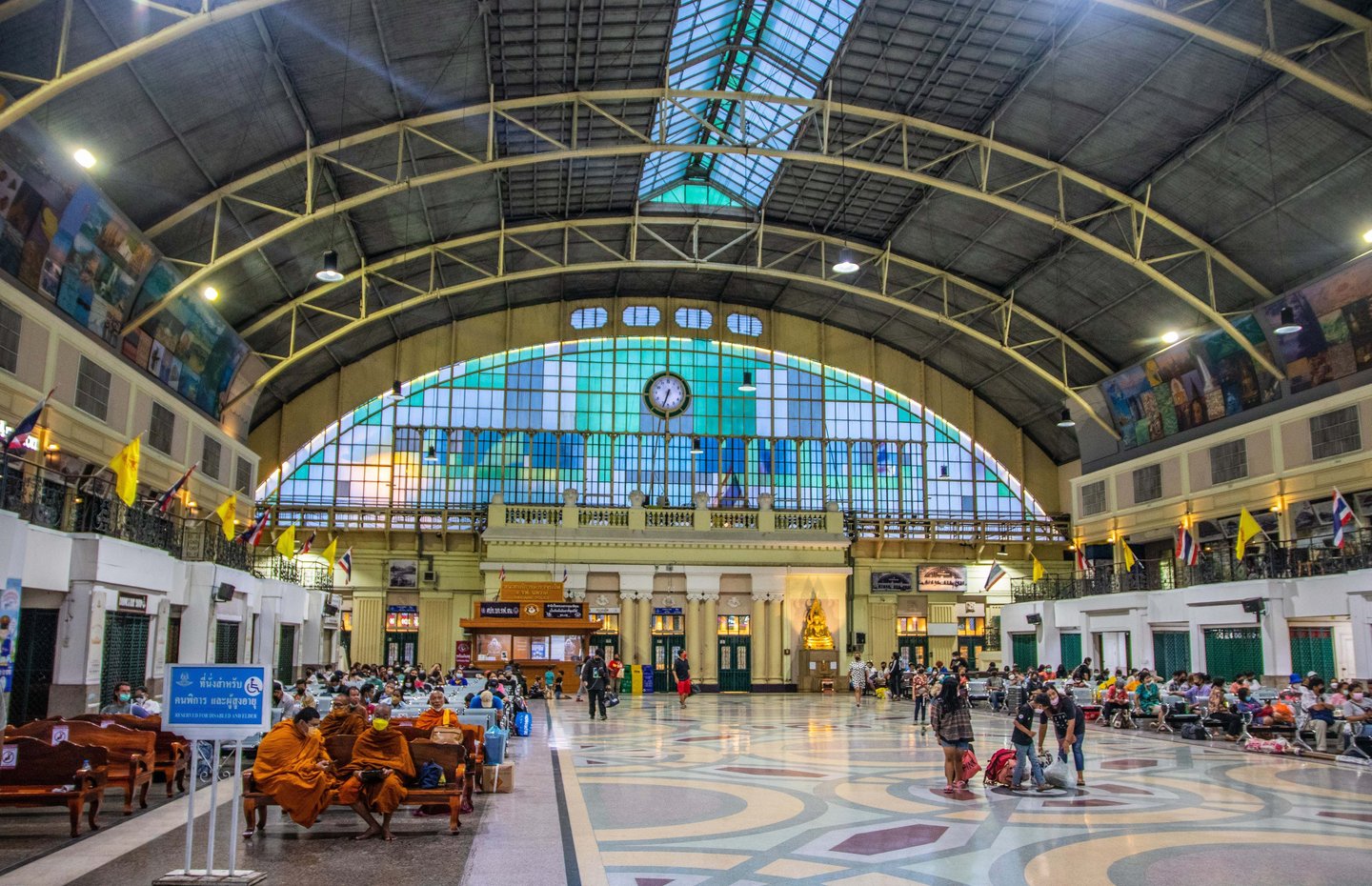
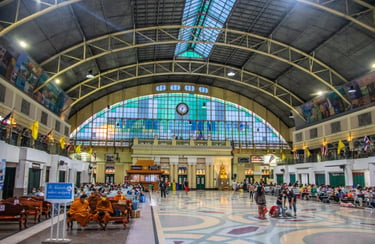
My Perspective: Framing the Journey
My objective with these images wasn't to create a sanitized travel guide. I wanted to freeze the raw, gritty reality of the Thai railway experience—the peeling paint on the vintage carriages, the soft late afternoon light cutting through the station’s iron girders, and the honest, unscripted moments of people moving between these two worlds.
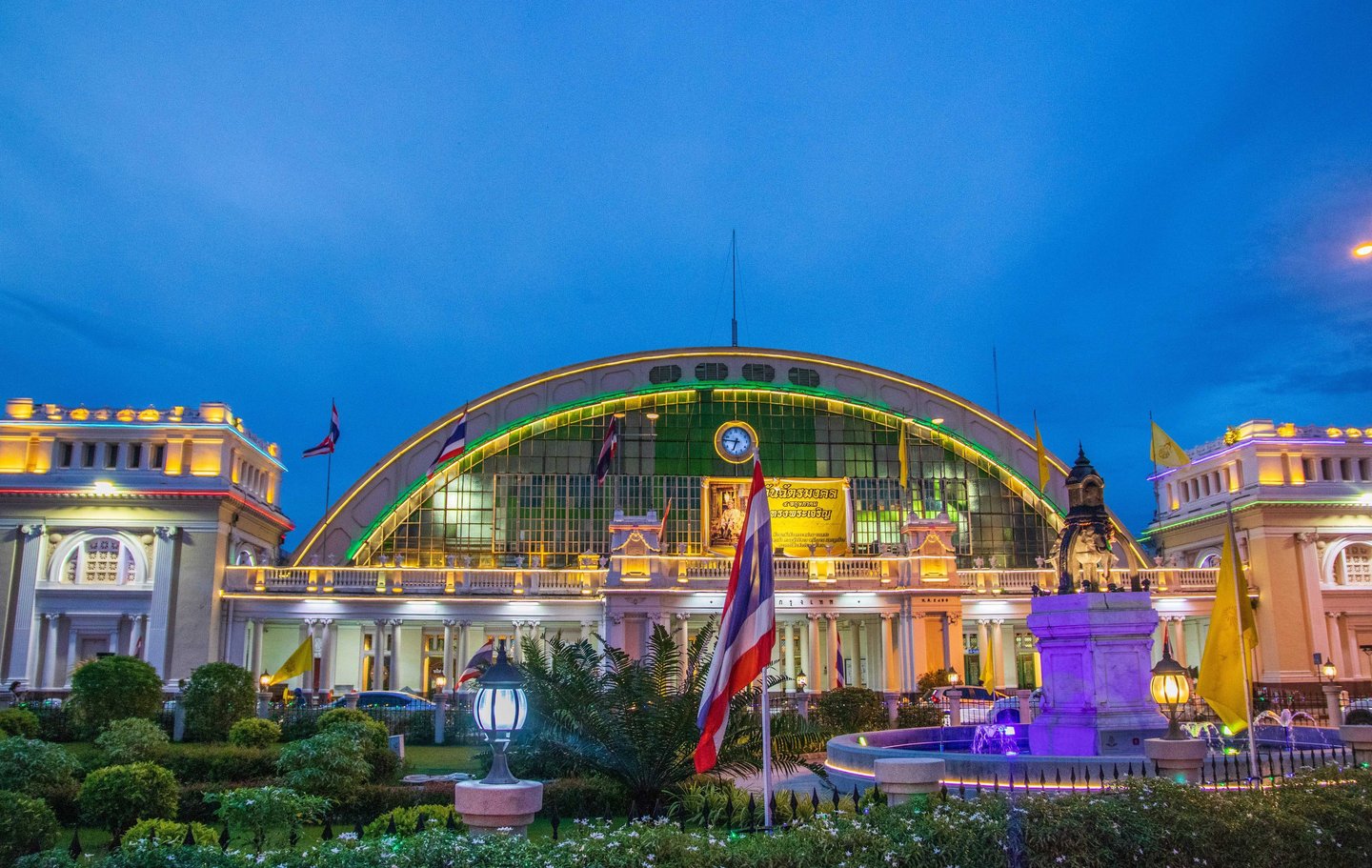
The Setup: Capturing the high-contrast lighting shifts inside the moving train and the vast scale of the terminal platforms required split-second adaptability. Managing the deep shadows without losing the raw grit of the scene meant relying heavily on fast reactions to catch those fleeting, unposed moments before the light changed or the train moved on.
The Arteries of Bangkok: Navigating the Chao Phraya River with a Camera and a Ticket
For anyone tracking the visual diary of this city on strangphotography.com, you already know my focus on Bangkok in Thailand – A City of Endless Stories, Travel, Documentary and Photography Inspiration. To truly document the pulse of this metropolis, you have to leave the asphalt behind and head straight for the brown, churning waters of the Chao Phraya River.
Historically, this river was the absolute foundation of old Bangkok—a sprawling network of canals (khlongs) that earned the city its title as the "Venice of the East." Before skyscrapers dominated the horizon, life, trade, and transit happened entirely on the water. Today, even as concrete tracks and modern highways cut through the sky, the river remains an unyielding, high-speed artery keeping the capital moving.
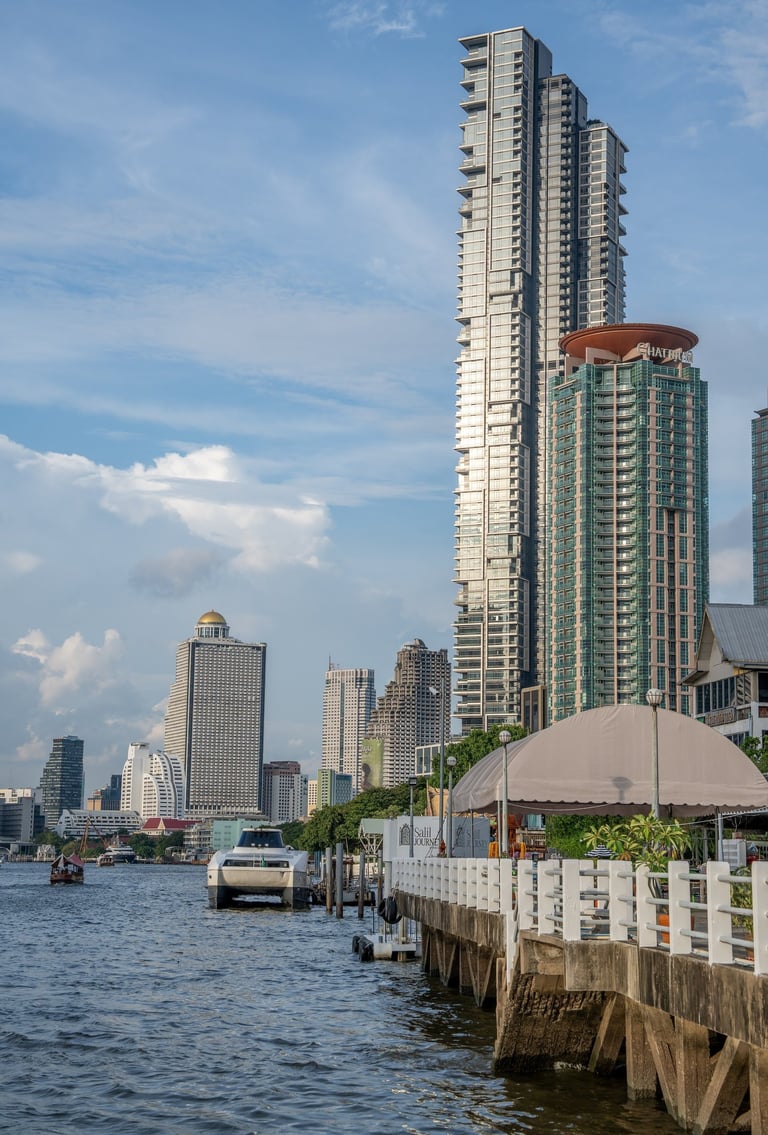
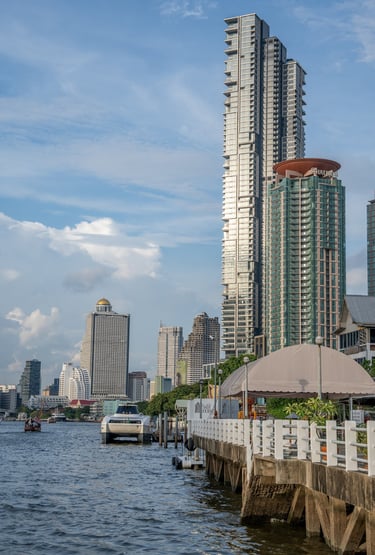
The Waterborne Lifeline: How River Transit Works
When my wife and I are staying in Bangkok, the river is our primary mode of transit. If you are trying to cut across the city, standard taxis or municipal buses will trap you in soul-crushing traffic jams for hours. Aside from the Skytrain (BTS), the public commuter boats are the only serious alternative to beat the gridlock. It costs next to nothing—just a few baht per ticket—and it gets you across town with relentless efficiency.
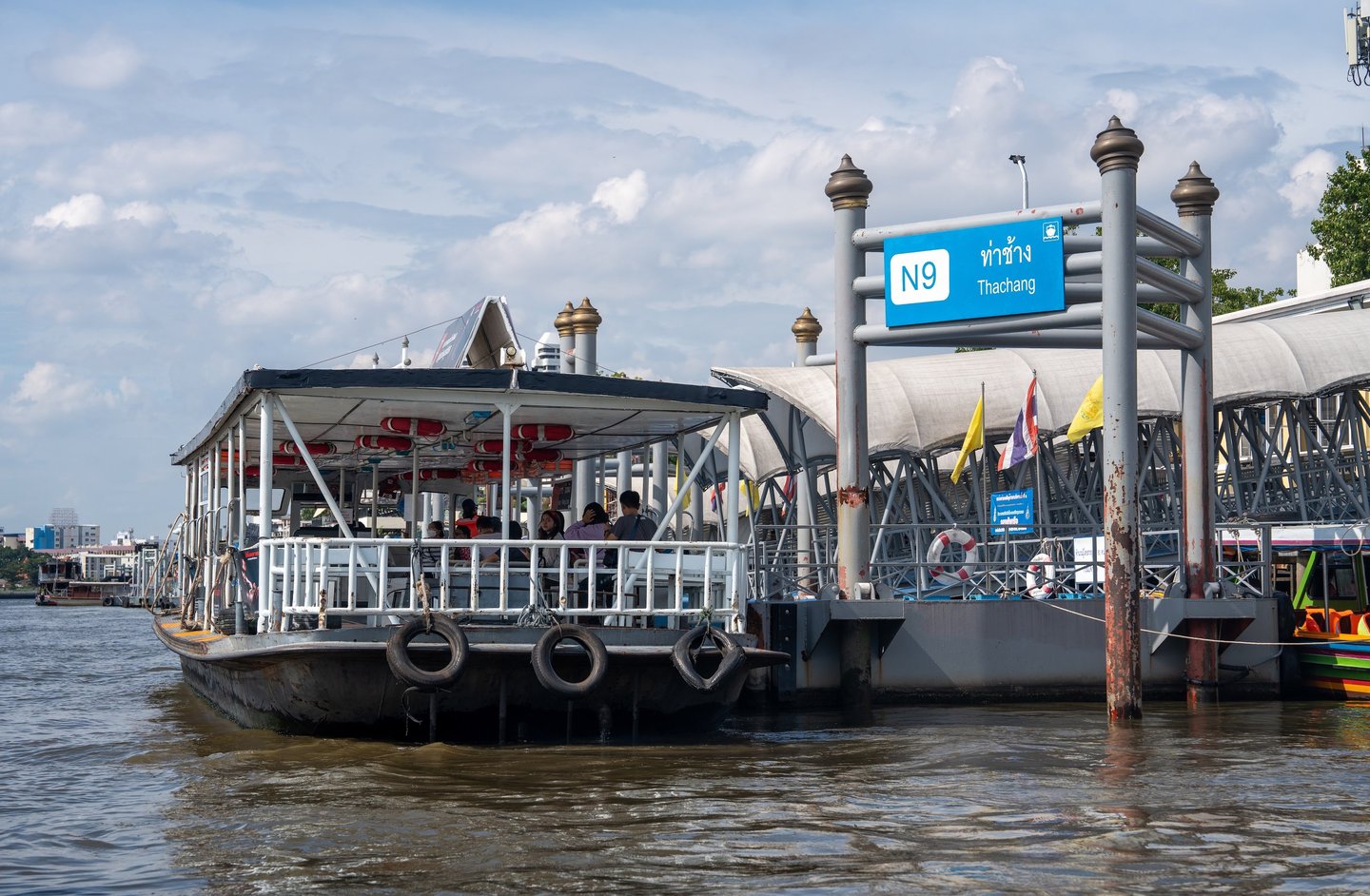
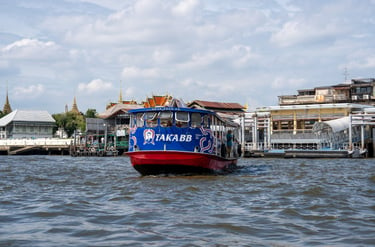
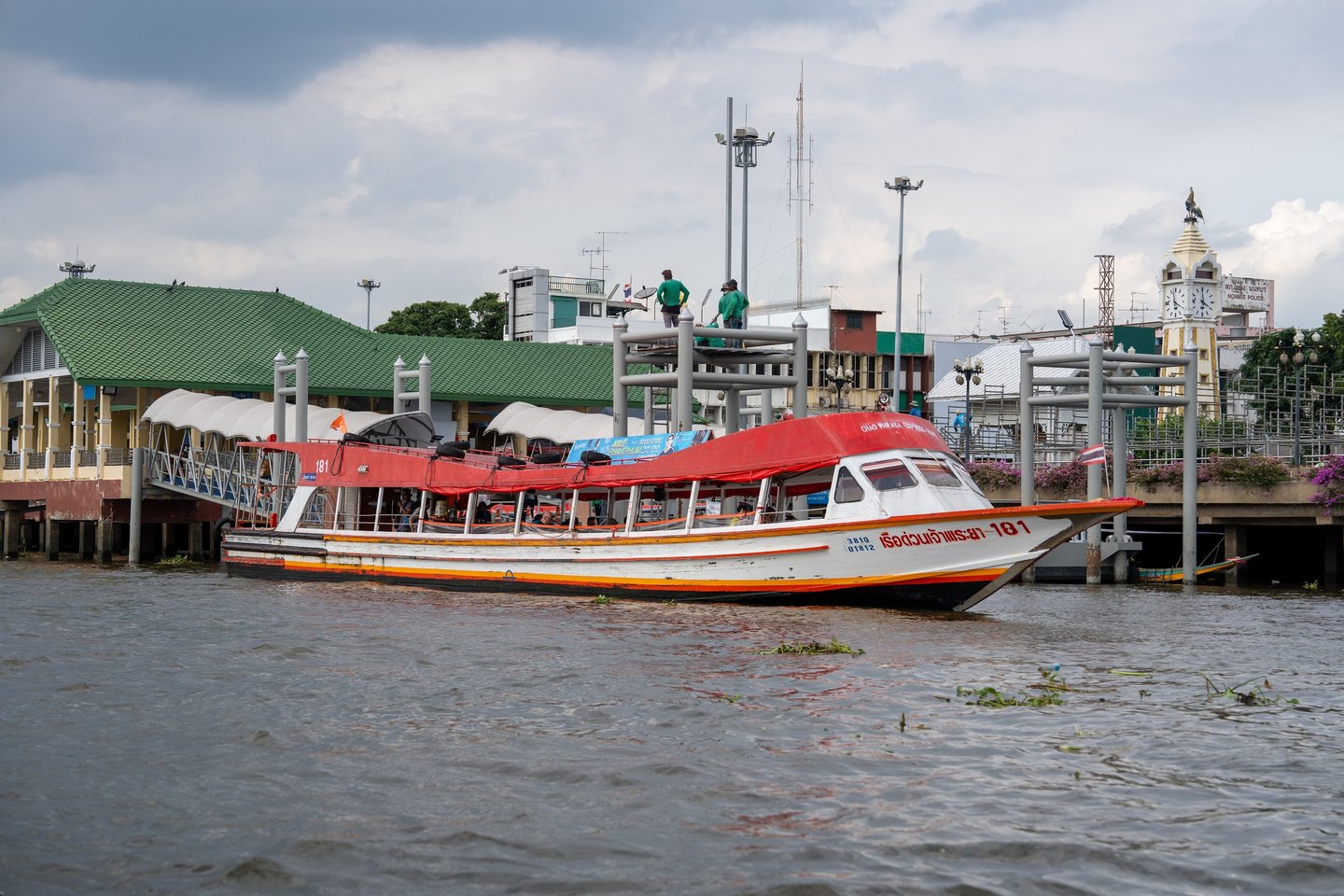
The system relies on a network of color-coded flags (Orange, Yellow, Green, and No Flag) indicating which vessel stops at which specific pier. Navigating the docks can feel intimidating at first, with massive concrete terminals handling thousands of commuters daily. A prime example is Thachang Pier N9, a critical transit hub where public commuter ferries stand moored against industrial docks under the heavy daylight heat, shifting crowds of locals and travelers directly toward the historic Grand Palace district.
The Baptism by Fire: A Lesson in Efficiency
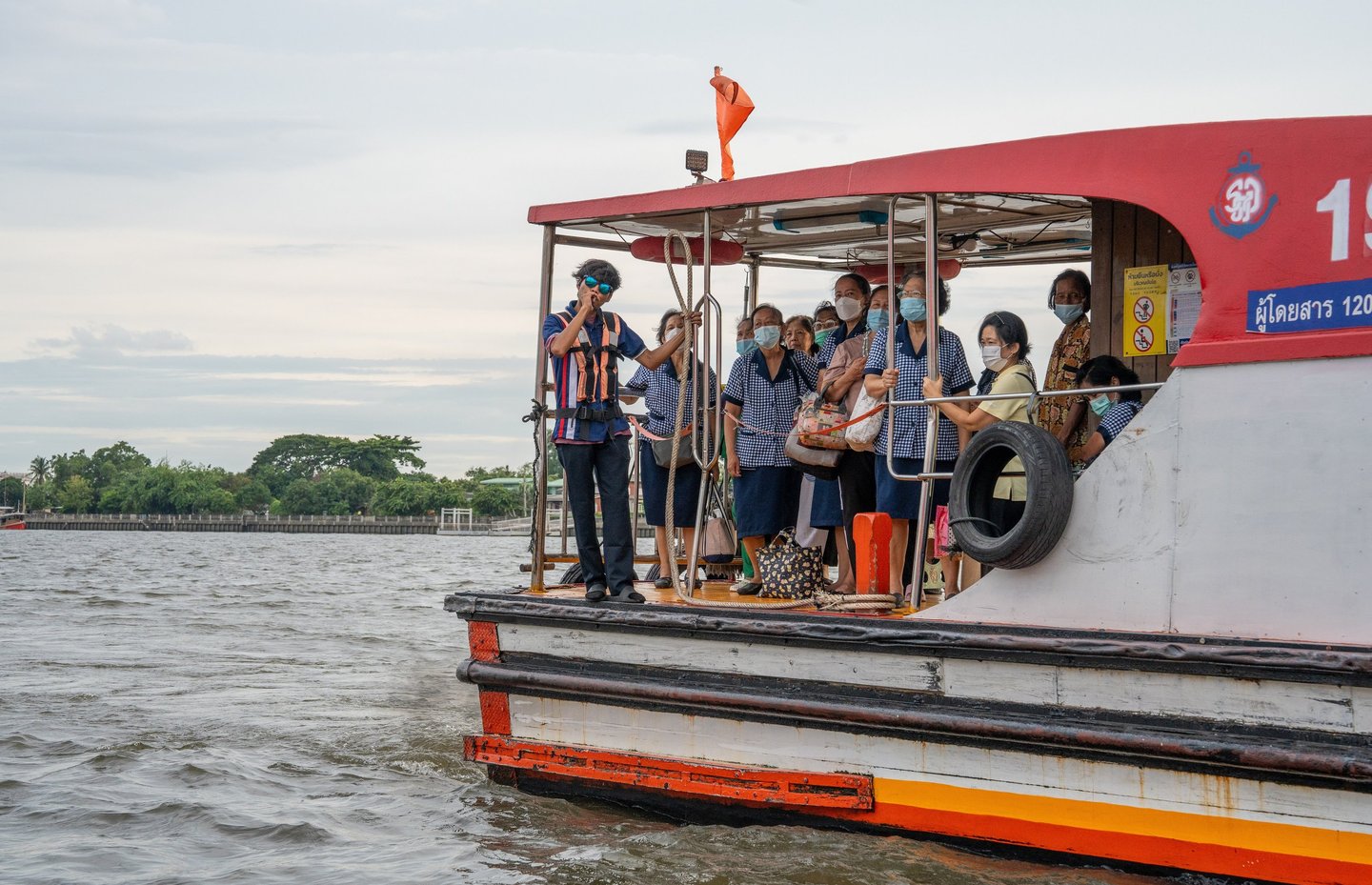
If you want a raw, unposed look at local life, the boarding process is a masterclass in urban momentum. The river is choppy, and the boat captains don't waste a single second. As the vessel hits the tires lining the pier, the boat crew springs into action.
You will hear them before you see them—using loud, commanding shouts and sharp blasts on whistles to order arriving passengers off the deck and new commuters into their seats. It’s loud, direct, and completely stripped of politeness.
I distinctly remember when my family came over from Germany to visit us. My sister was completely taken aback by this foreign, authoritative tone. To her, it sounded like an aggressive military drill just to get across a river. But after a few days of watching the chaotic dance handle thousands of people without a single hitch, she saw the method in the madness. You get to your destination fast. The notorious delays, cancellations, and infrastructure breakdowns that plague the German rail network (Deutsche Bahn) or European public transit simply do not exist here. The river runs on time because the crew forces it to.
Documenting the Commute: A Visual Journey
Capturing this system through a lens requires reacting to constant motion, shifting light, and spraying water. Here is the documentary breakdown of the river's daily rhythm, from the fleet to the skyline:
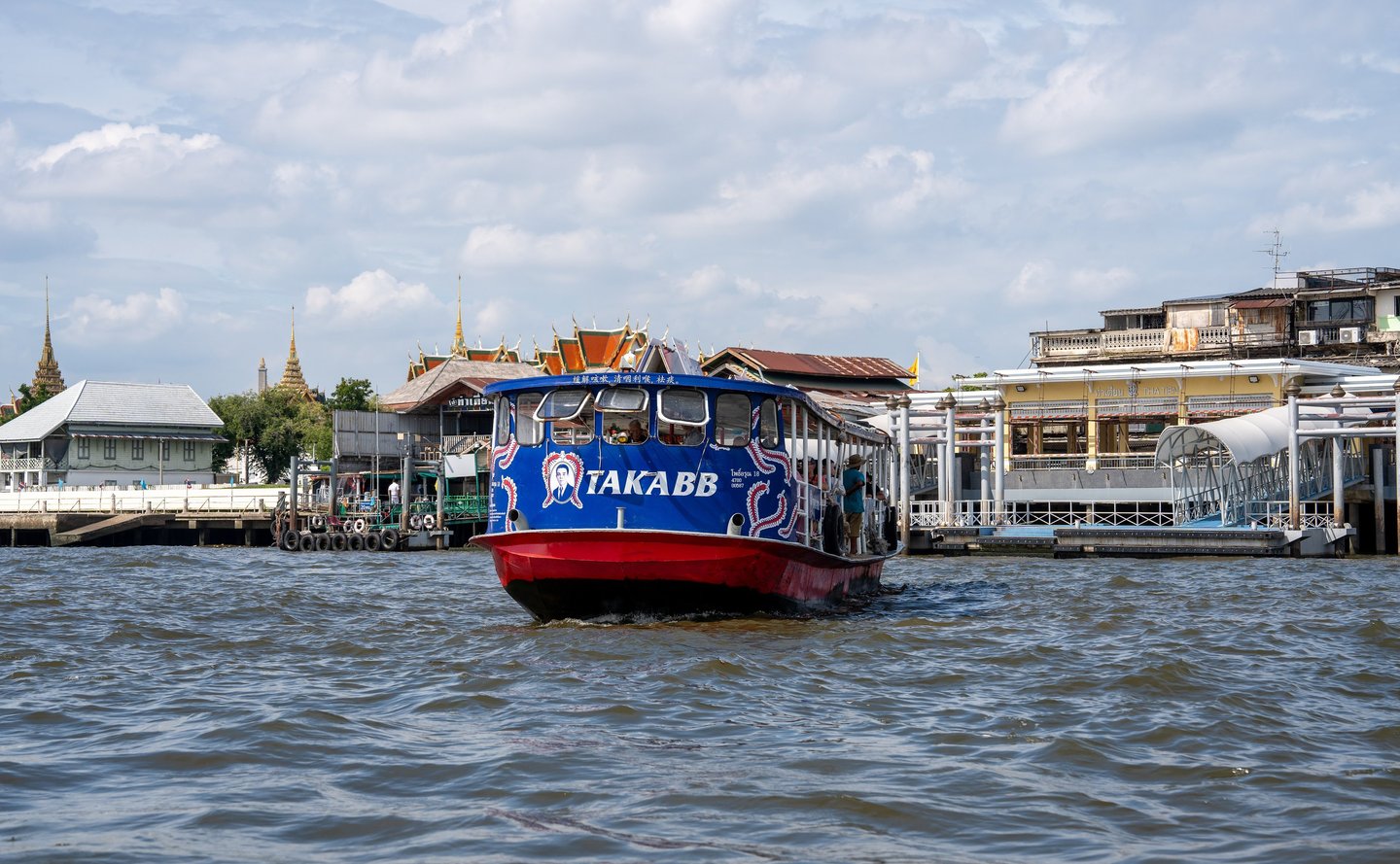
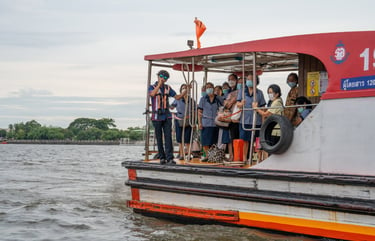
The Commuter Experience: On the open decks of the Chao Phraya Express boats, you see the real face of the city. Local commuters, many still wearing face masks out of habit, stand packed tightly together as the crew manages the thick mooring ropes while the vessel cuts through the gray water under heavy, overcast skies.
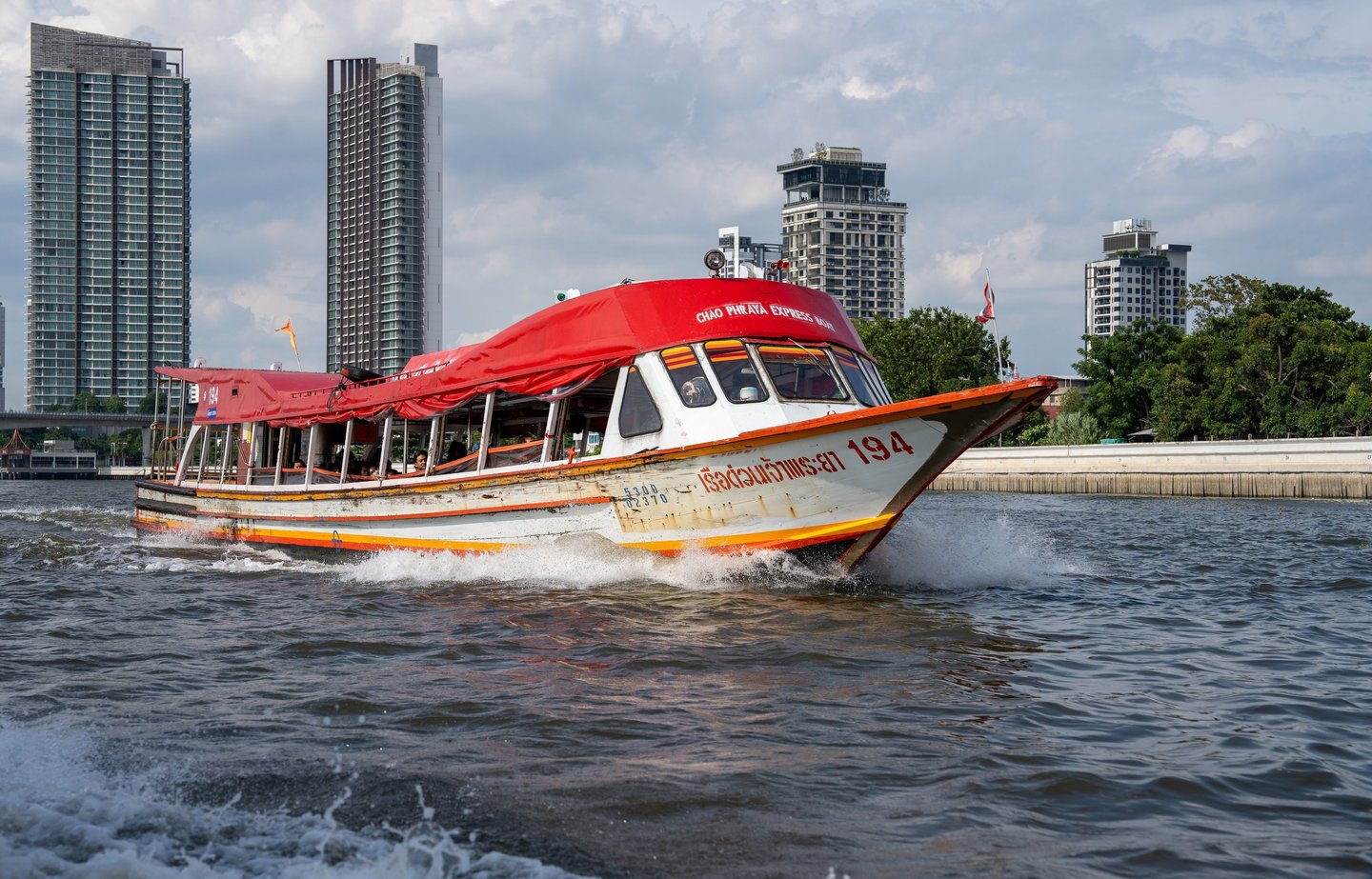
The Express Fleet: The workhorses of the river are unmistakable. Vessles like the Chao Phraya Express Boat 181 sit low in the water at their piers, defined by their signature red canopies and green-roofed terminal backdrops. Out on the open water, these boats—like the Chao Phraya Express Boat 194—kick up massive white spray as they push full throttle past modern residential skyscrapers lining the concrete embankments.
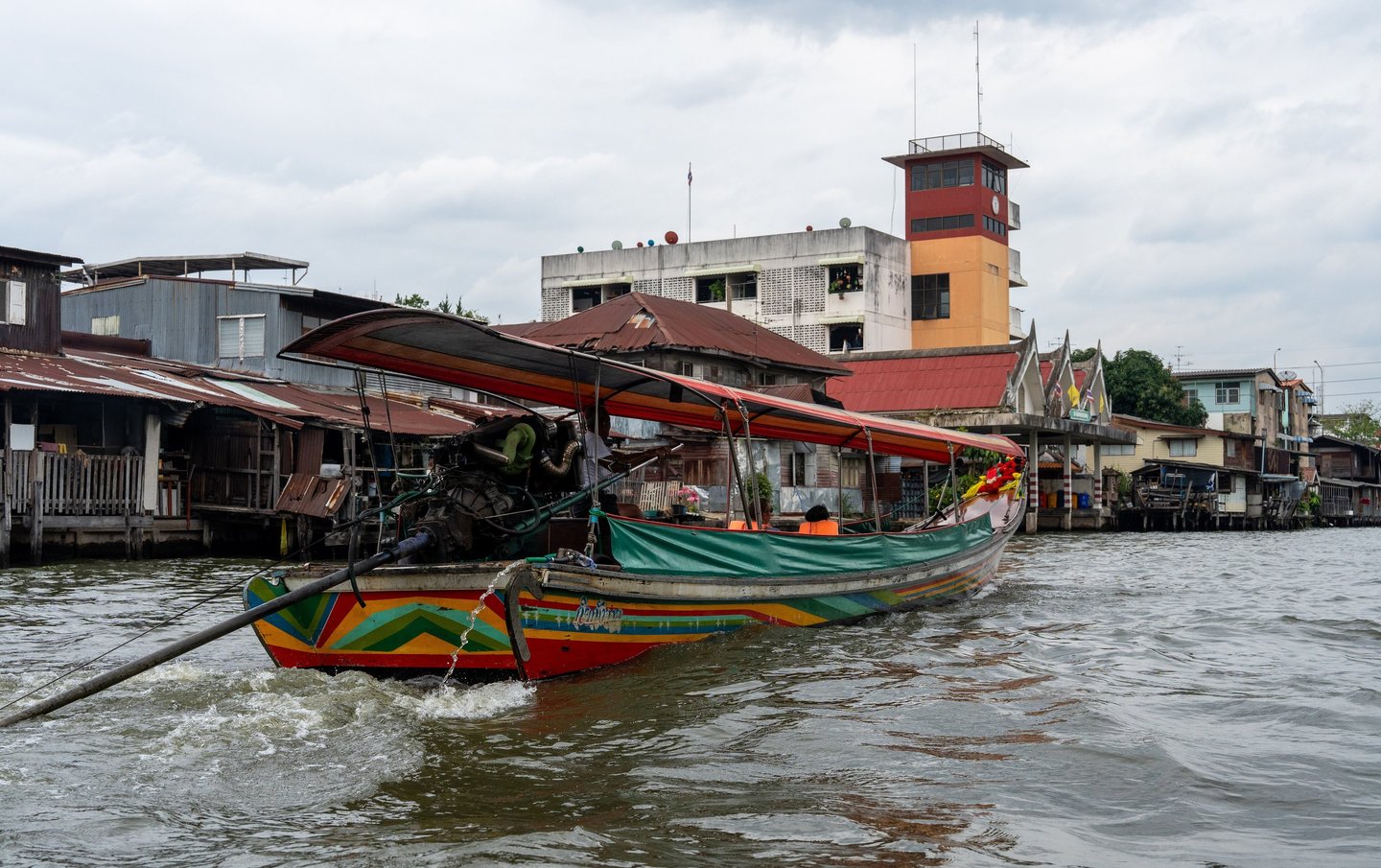
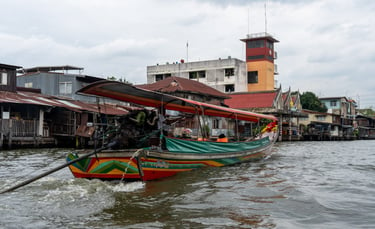
The Traditional Long-Tails: Tucked away along the old wooden stilt houses and local residences decorated with royal portraits, you find the soul of old Bangkok: traditional long-tail boats. Painted in bright, festive colors, these slender wooden crafts use exposed automotive engines to weave through the tight spots where the larger ferries can't go.
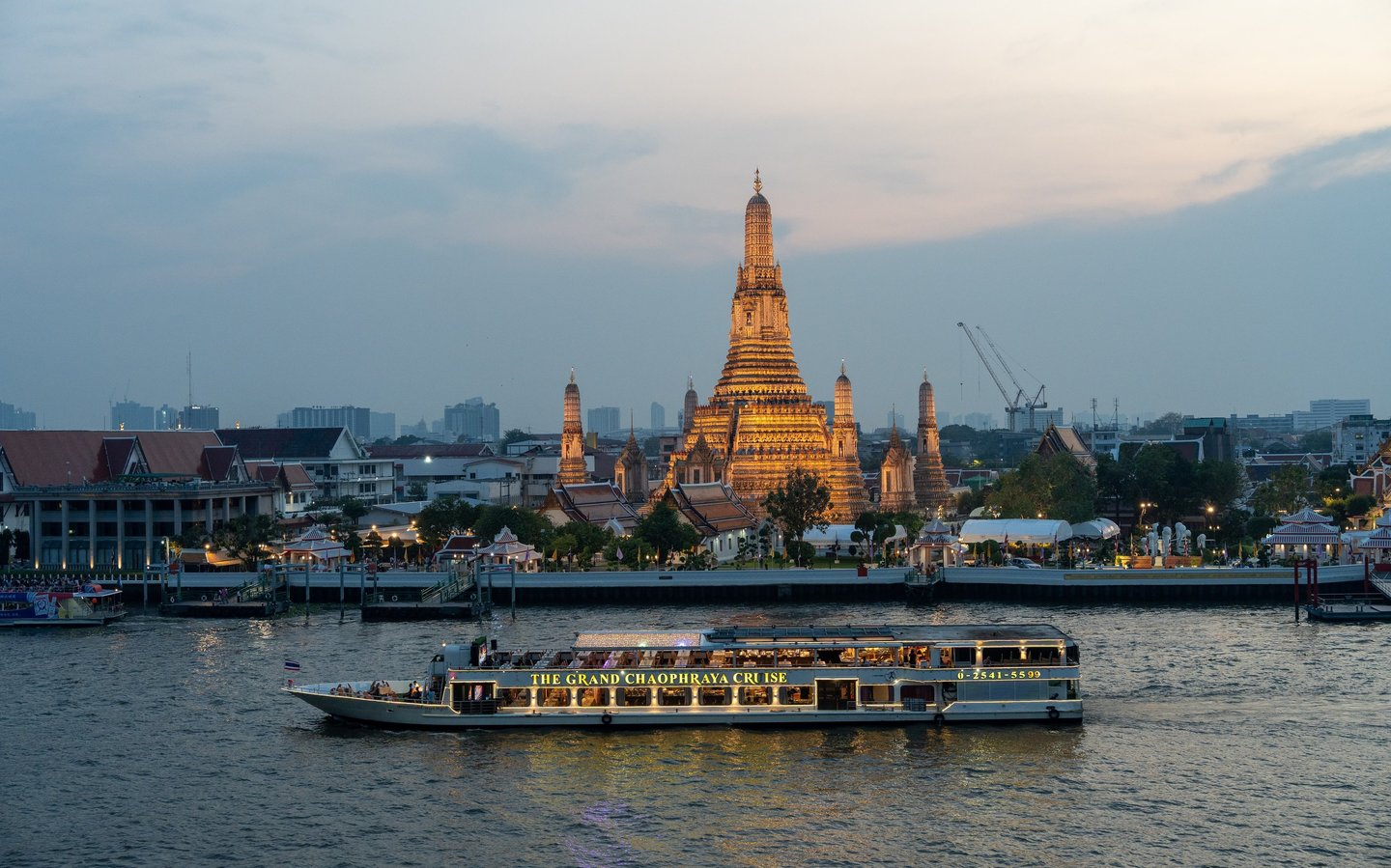
The Commercial Contrast: The river changes character entirely as the sun drops. Massive commercial vessels, like The Grand Chao Phraya Cruise, glide across the dark waters, their multi-tiered passenger decks brightly lit, catering to the evening crowds against a silhouetted skyline.
Golden Hour on the Water
As a photographer, the real magic happens when the harsh tropical sun finally yields to twilight. The river turns into a mirror for the sky.
Looking down the concrete piers during the day, sunlit glass skyscrapers dominate the horizon under standard blue skies while the public ferries navigate the muddy, choppy currents below. But as evening sets in, the atmosphere completely transforms.
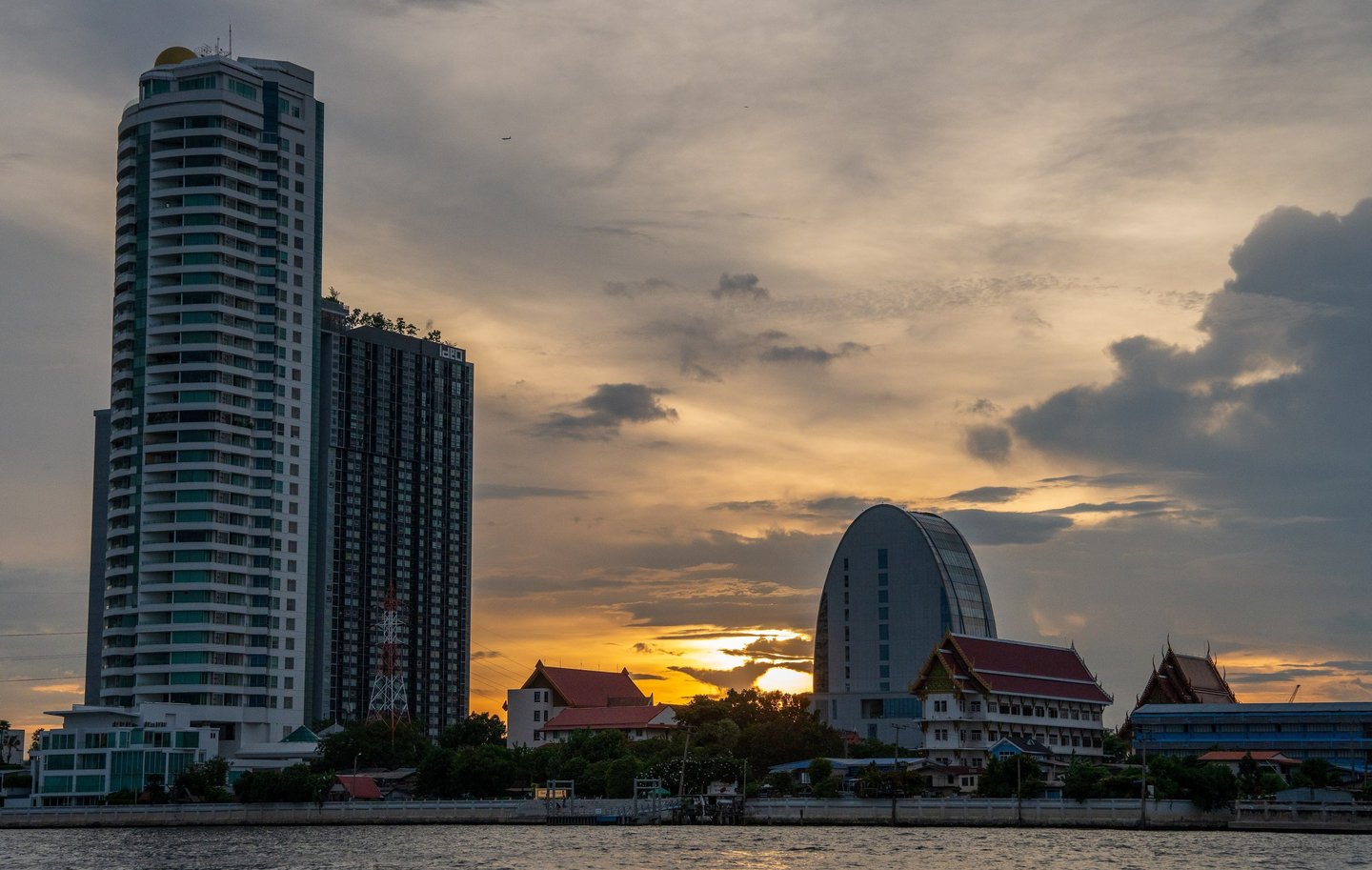
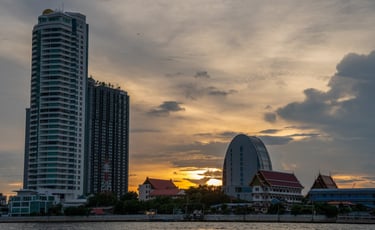
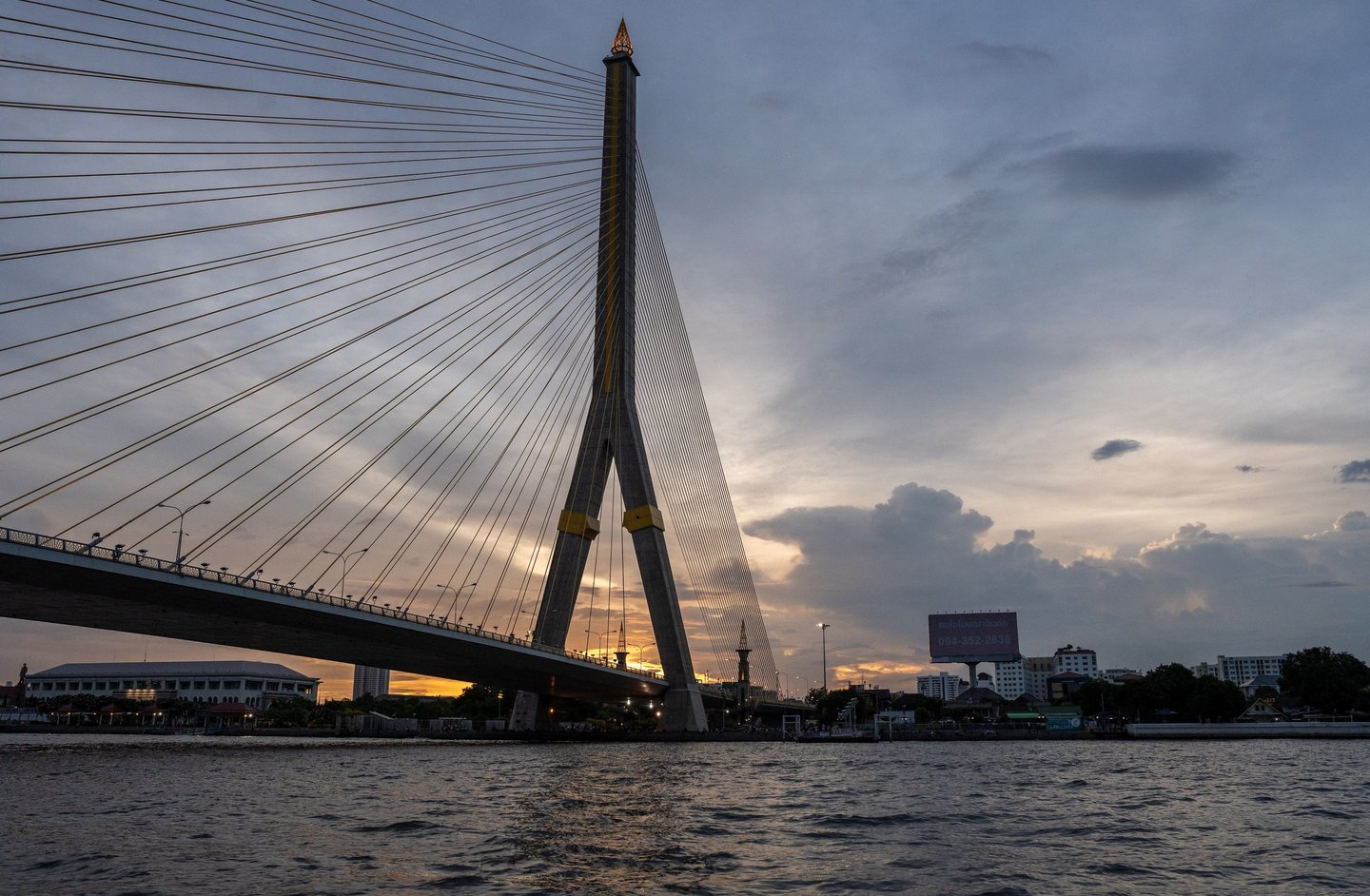
The sunset over the Chao Phraya is dramatic, with the sun breaking through heavy clouds to cast a deep gold reflection across the water, contrasting against the stark geometry of cylindrical skyscrapers. Further down the river, the asymmetric pylon and sweeping cables of the Rama VIII Bridge slice through the orange glow of the horizon.
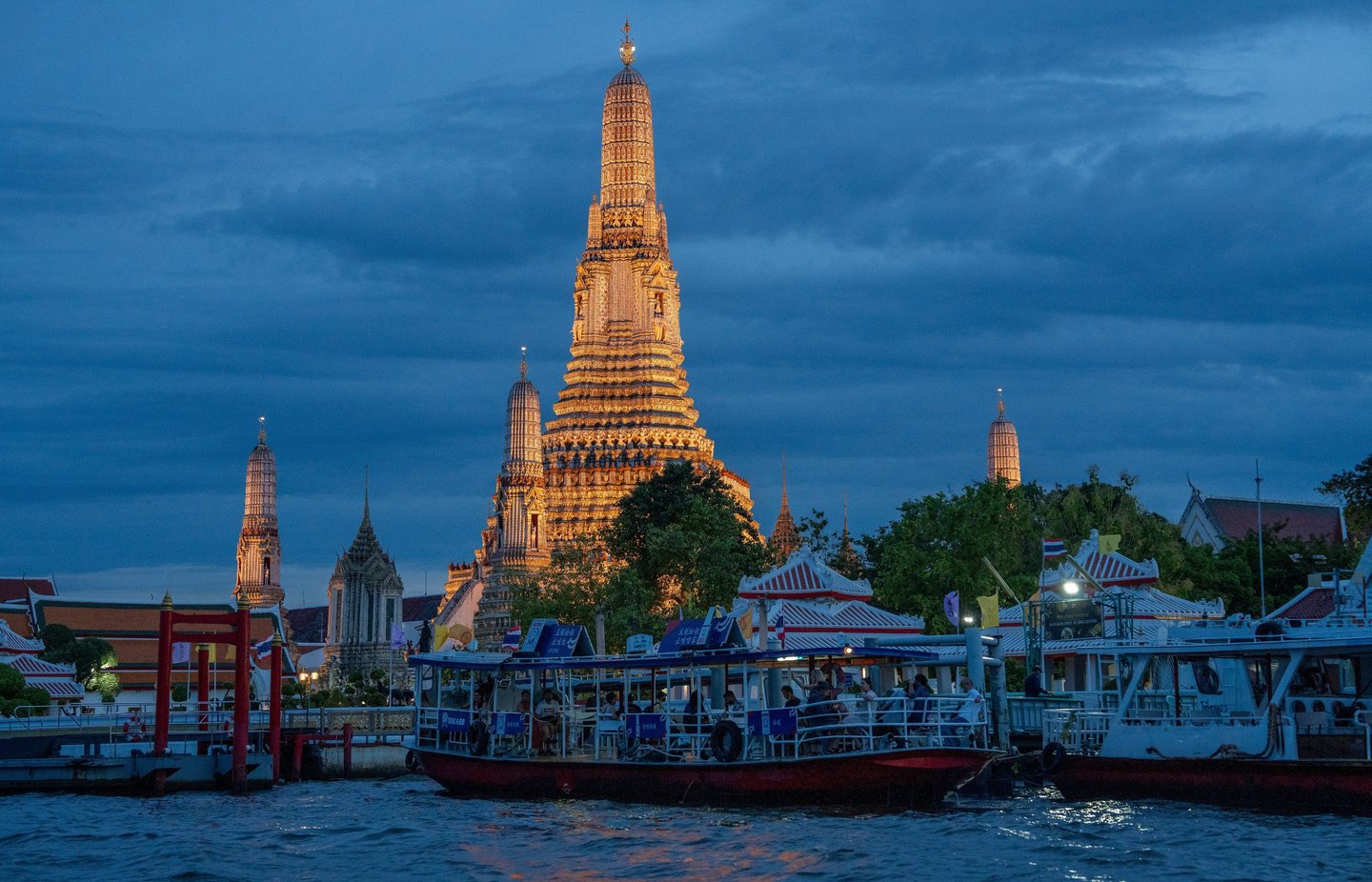
And finally, there is the undeniable crown jewel of the riverbank: Wat Arun, the Temple of Dawn. Seeing that massive spire illuminated in deep gold against a fading twilight or a dark blue, cloudy dusk sky—while the passenger ferries and long-tail boats cross its path—is the definitive visual story of Bangkok. It’s the perfect collision of ancient spirituality and relentless modern hustle.
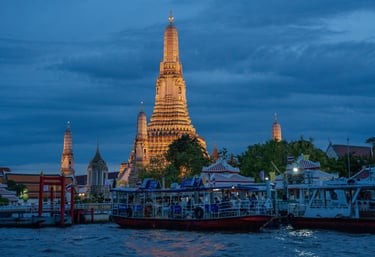
Bangkok by River: A Dinner Cruise on the Chao Phraya — Two Hours, Ten Frames, and a City That Shows You Its Best Side From the Water
I've photographed Bangkok from rooftops, from street level, from canal boats and from the BTS. But the Chao Phraya at night from a moving dinner cruise is a different proposition entirely — and one I hadn't properly attempted until now.
The departure pier is Asiatique on the east bank. Two hours on the river, returning to the same point. We were on the third floor — open-air upper deck, no roof, direct sightlines in every direction. For photography that's the only place to be. Glass-enclosed lower decks are fine for dinner. They're useless for getting a clean shot of anything on the riverbank.
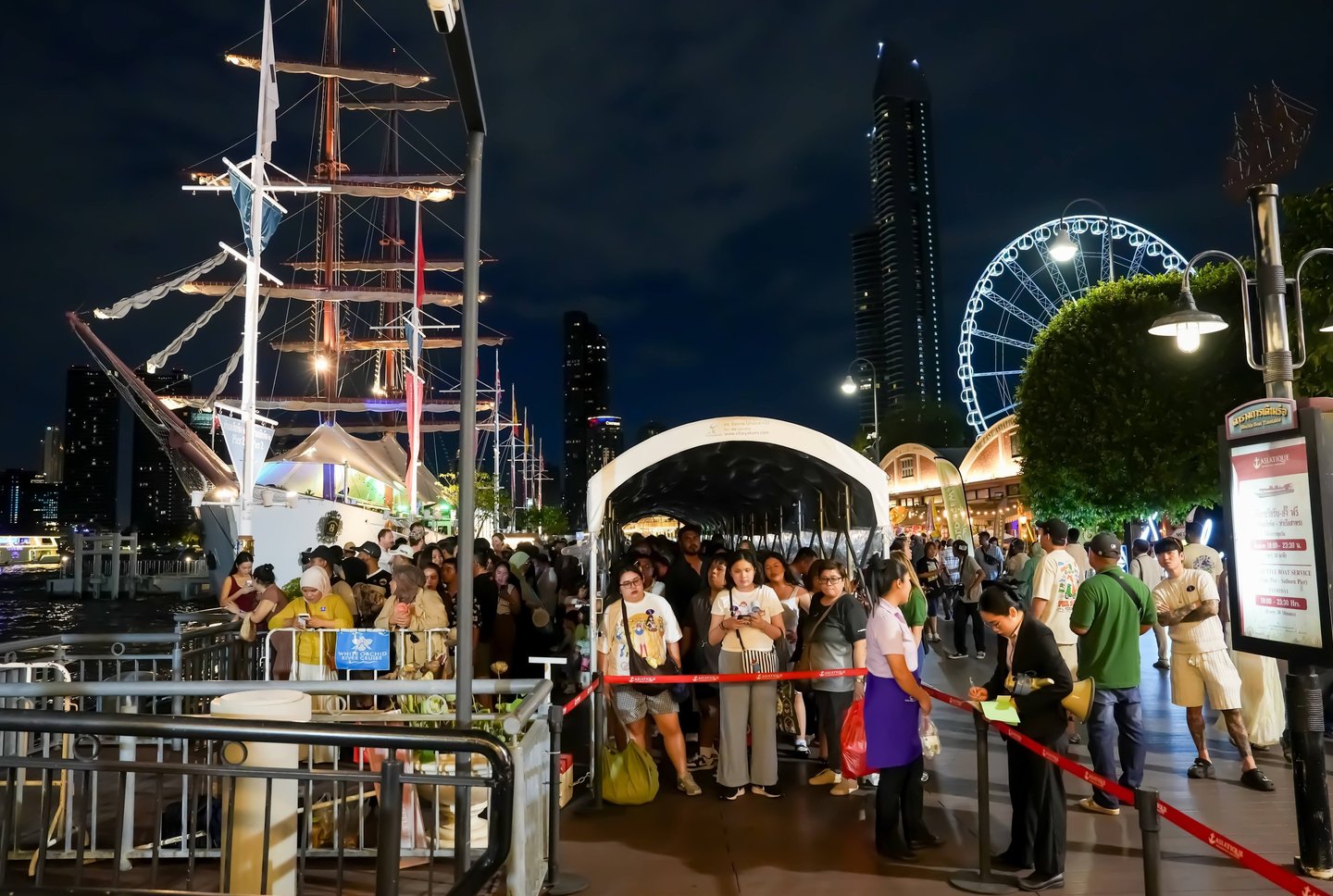
The Light Problem — and How the A7 IV Handled It
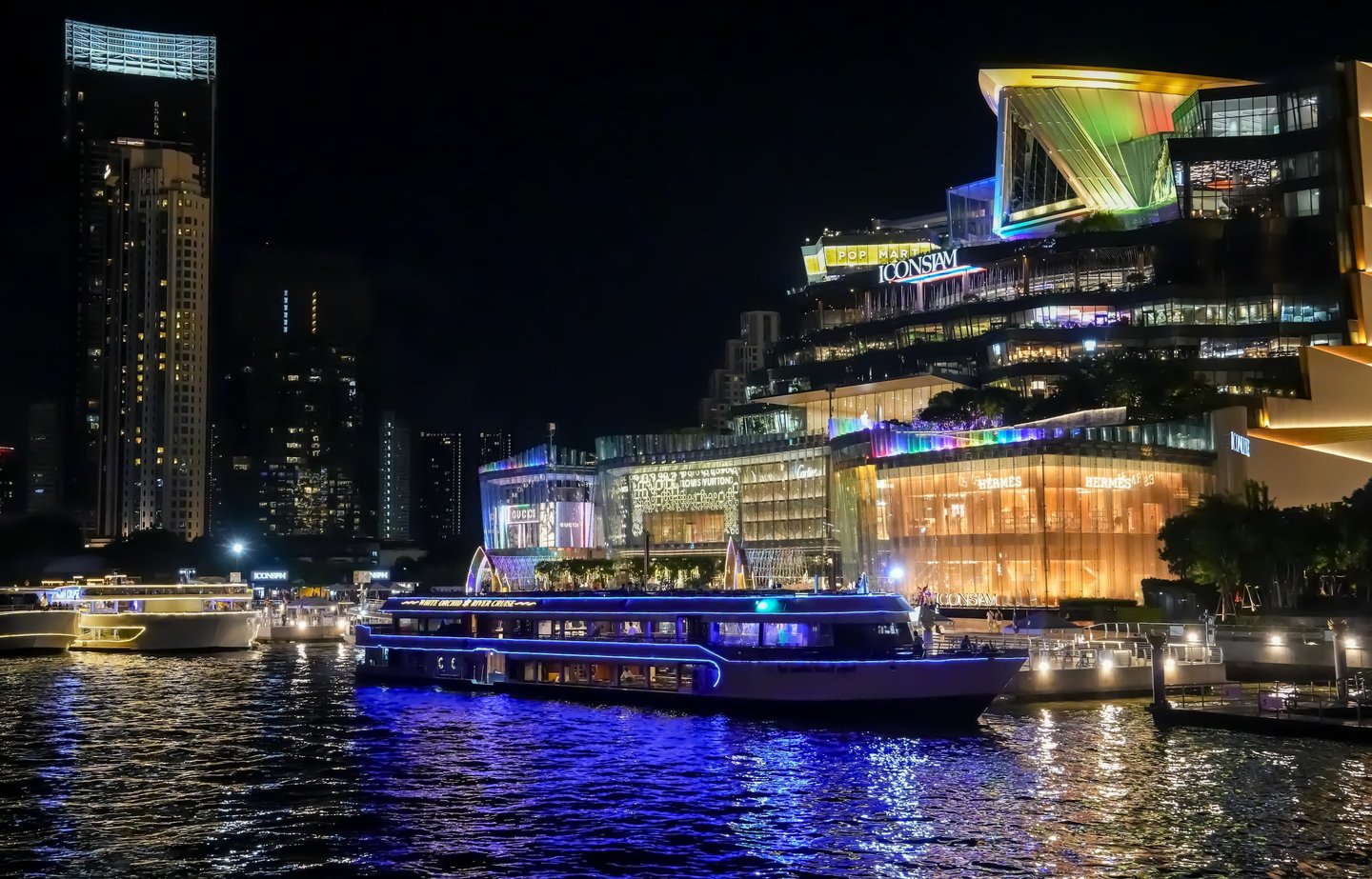
Shooting from a moving vessel at night in available light is one of the more demanding combinations you can put a camera through. The boat is never still. The subject — bridges, temples, shopping centres, cruise ships — is always at a different distance and angle. And the light levels range from near-darkness on the open river to almost daylight-bright when you're alongside a fully illuminated facade like ICONSIAM.
I set the Sony Alpha 7 IV to ISO 12800 and kept it there for the full two hours. With the FE 24-70mm f/2.8 GM II the minimum shutter speed I'd accept was 1/60 — anything slower and the boat's motion produces blur that no stabilisation system recovers from. In practice I was shooting between 1/60 and 1/250 depending on how much light the subject was throwing at the sensor.
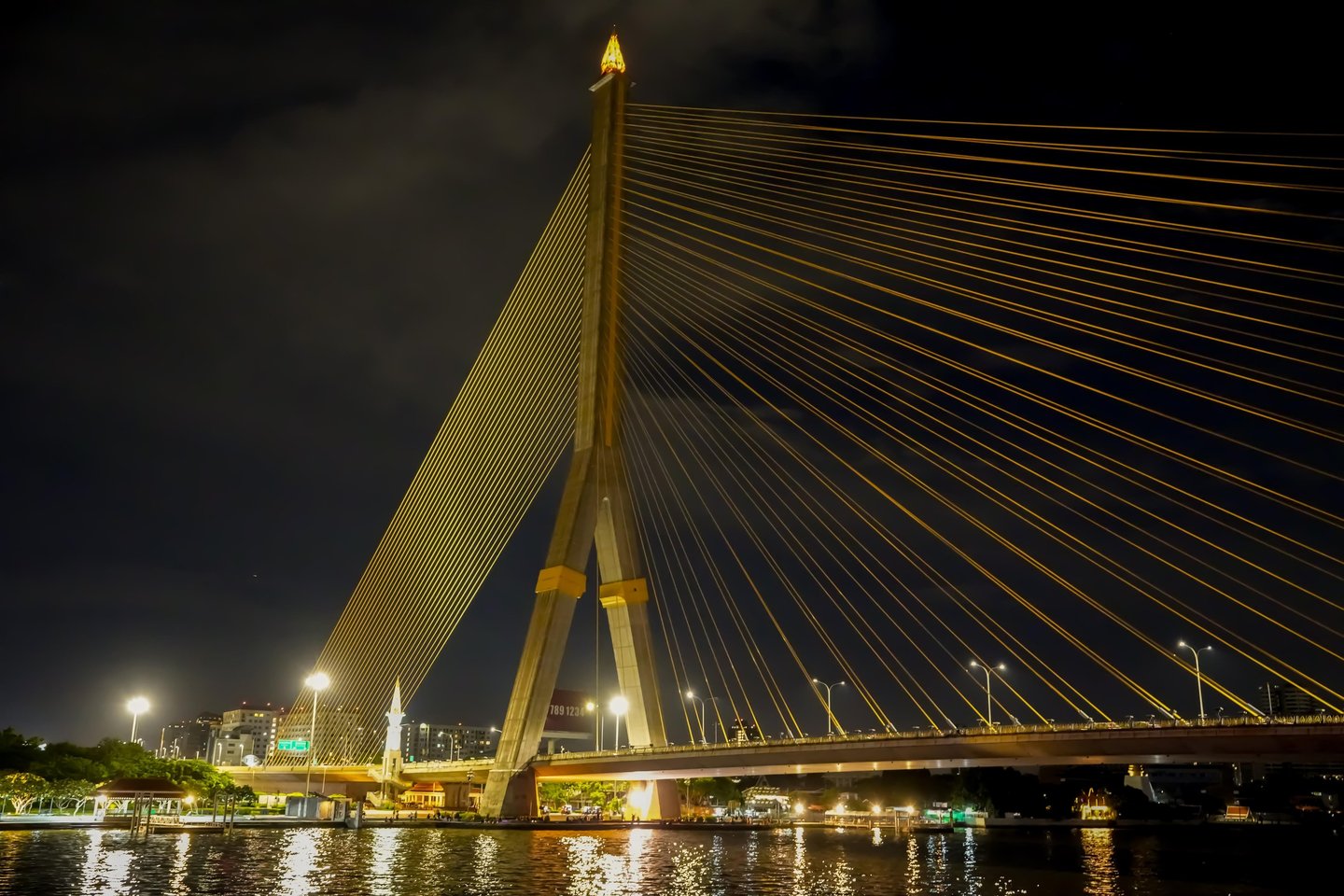
At ISO 12800 the A7 IV files are grainy. That's not a complaint — it's a fact, and the grain is structured and consistent rather than random digital noise. The colour holds, the shadow detail is recoverable, and the highlights on something like the Rama VIII Bridge cables or the ICONSIAM rooftop don't blow out completely. For this kind of shooting that's exactly what you need.
What the River Shows You
The sequence across two hours covers more of Bangkok than most visitors see in a week on foot.
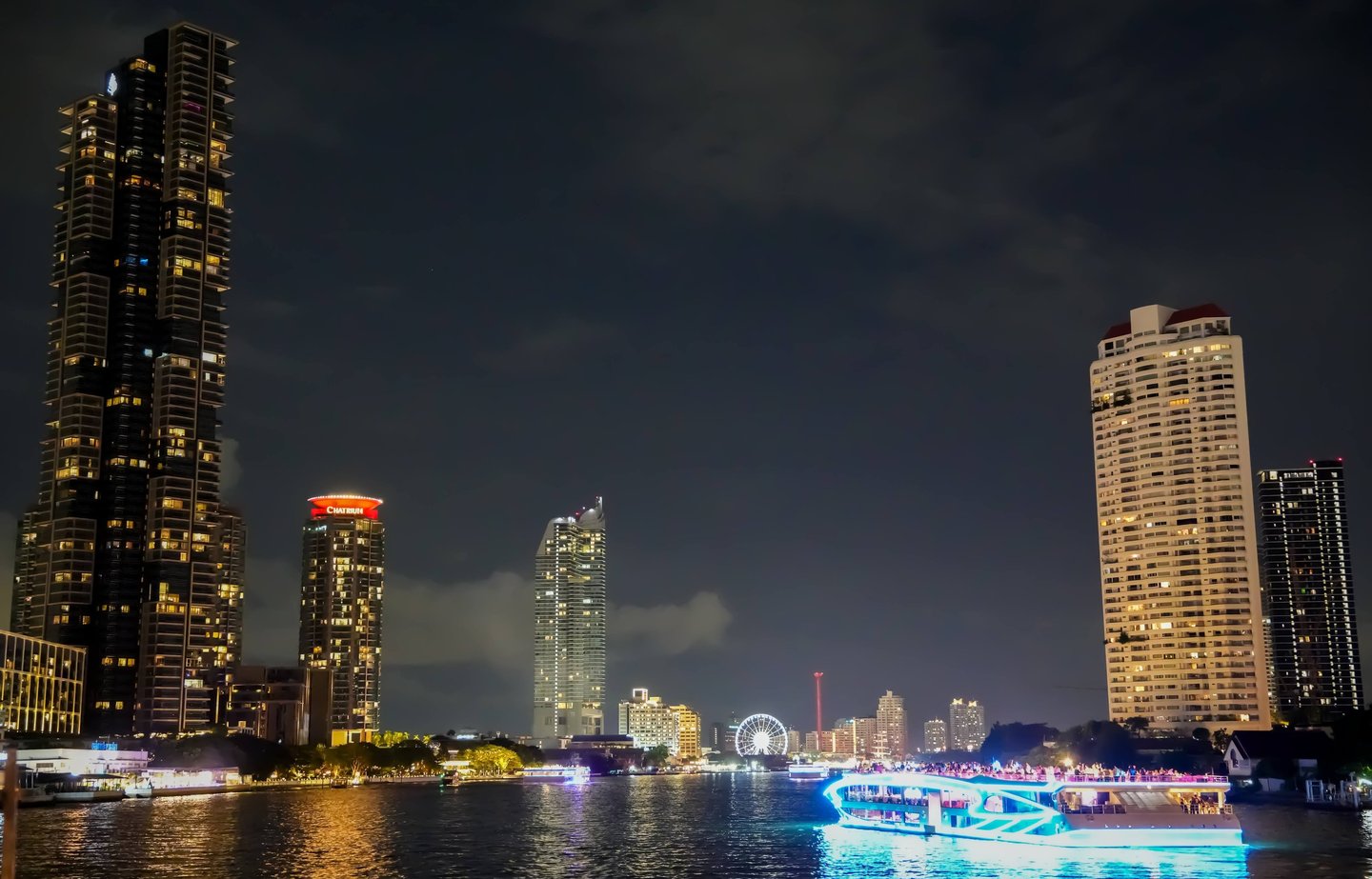
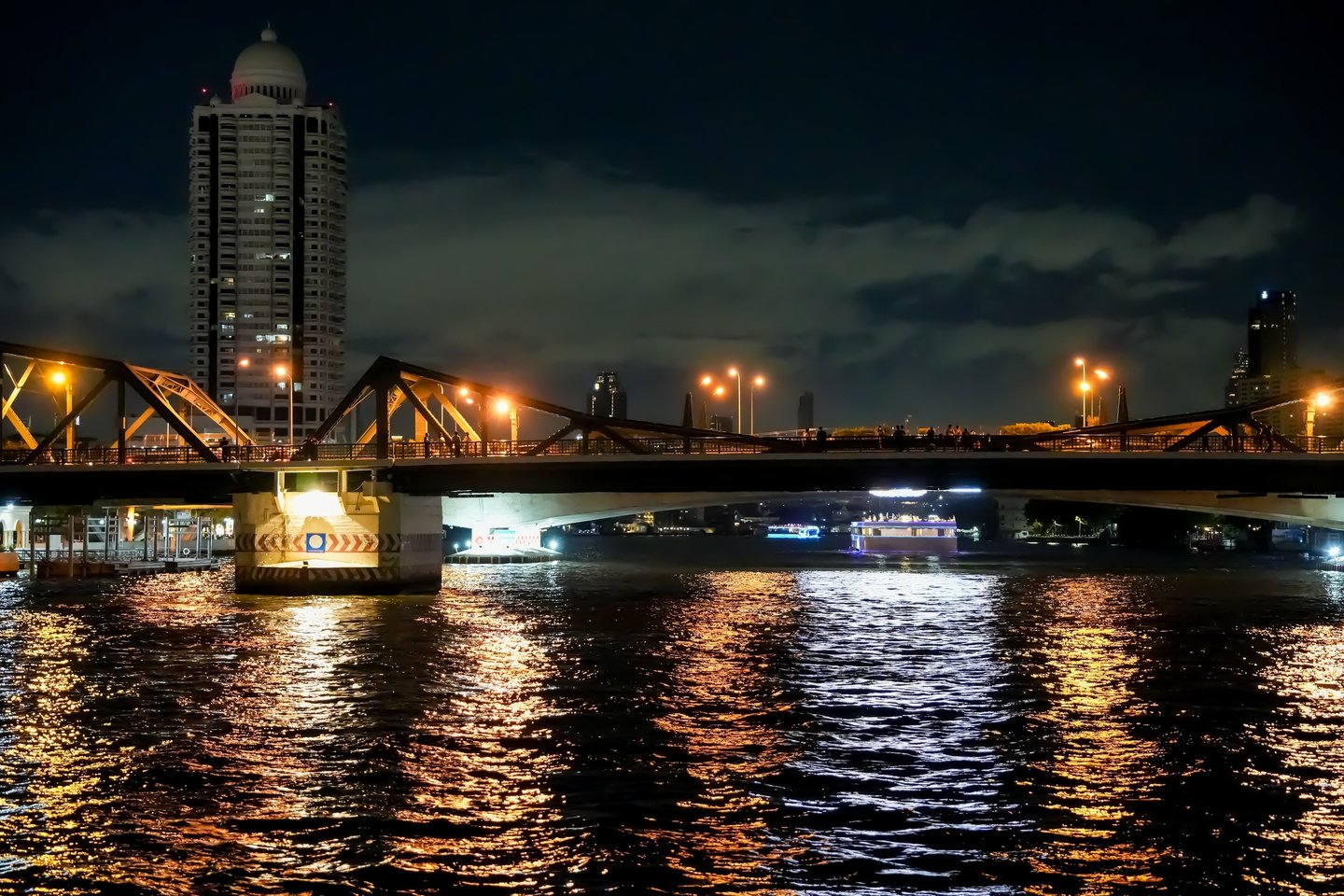
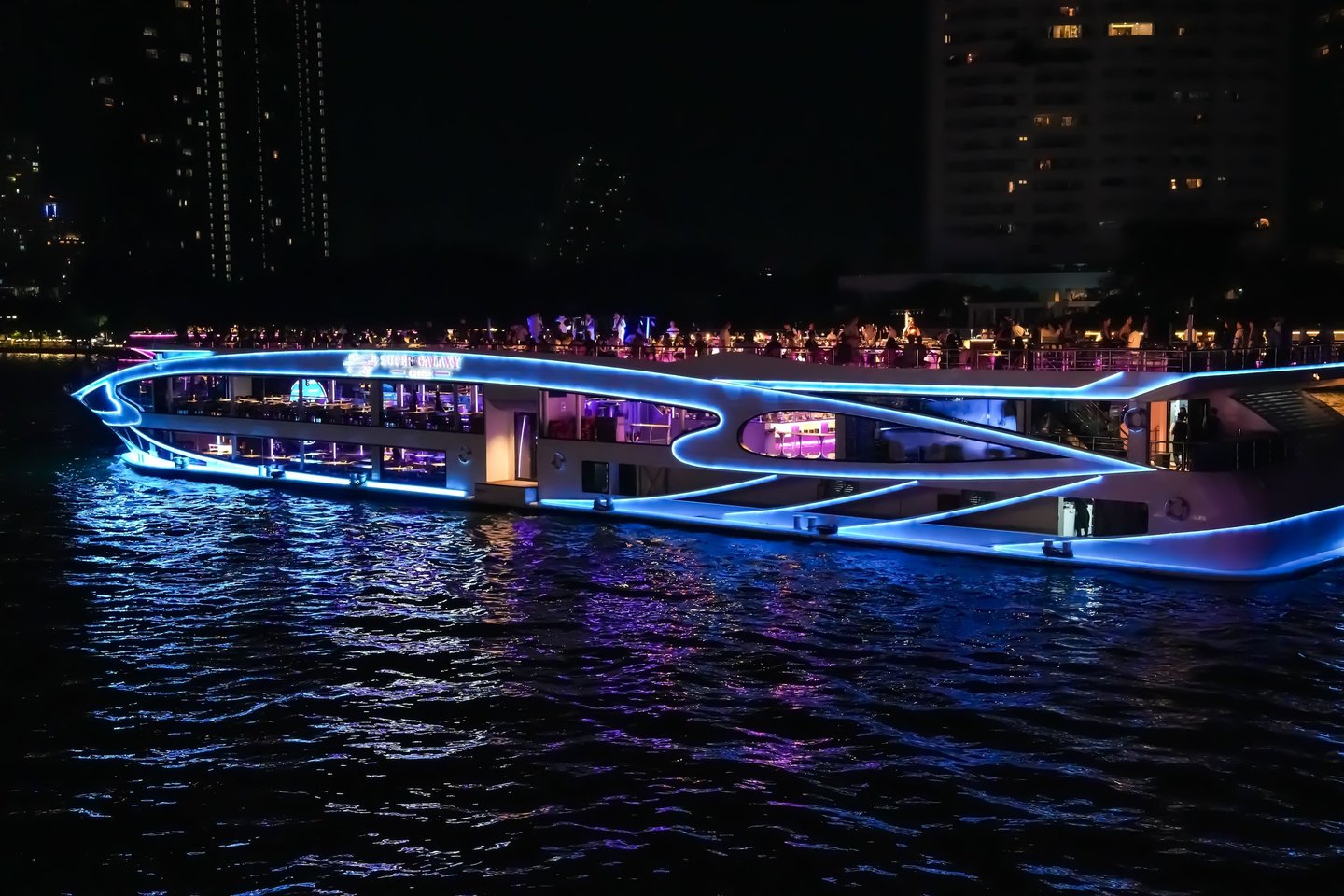
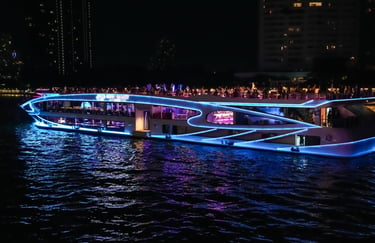
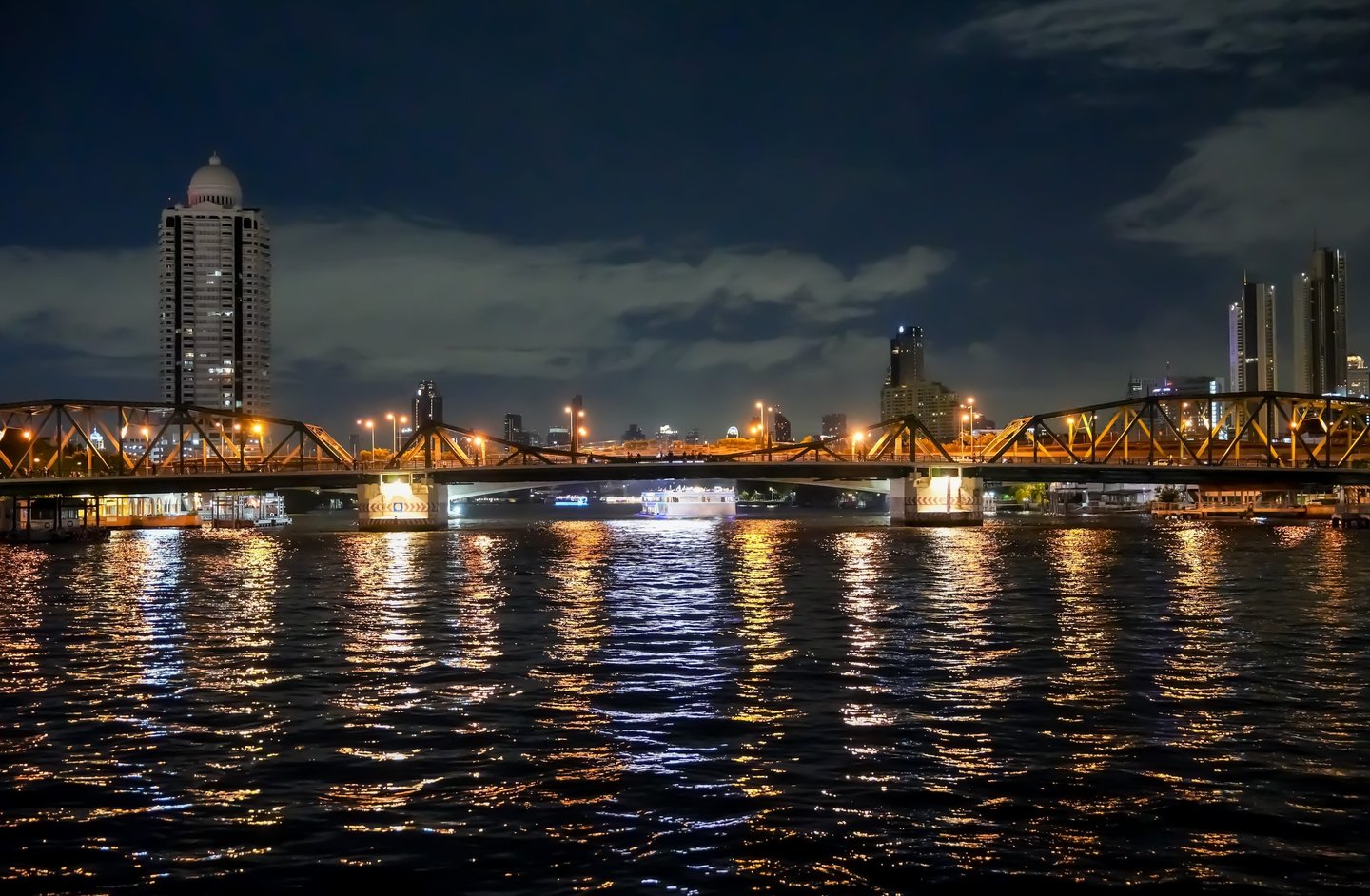
Leaving Asiatique you pass under the Taksin Bridge almost immediately — old steel truss structure, amber lit, river traffic moving through the arches underneath. A cruise boat with blue LED trim overtakes on the right. The Super Galaxy — a sleek, low-profile dinner vessel with neon light strips running the full length of its hull — is moored mid-river, diners visible on the upper deck.
Further north, the Rama VIII Bridge comes into view — a single asymmetric cable-stayed tower lit gold, the stay cables fanning out across the full width of the frame. Shot at 33mm from the upper deck as we passed underneath. The river reflection of the cables runs for fifty metres in every direction.
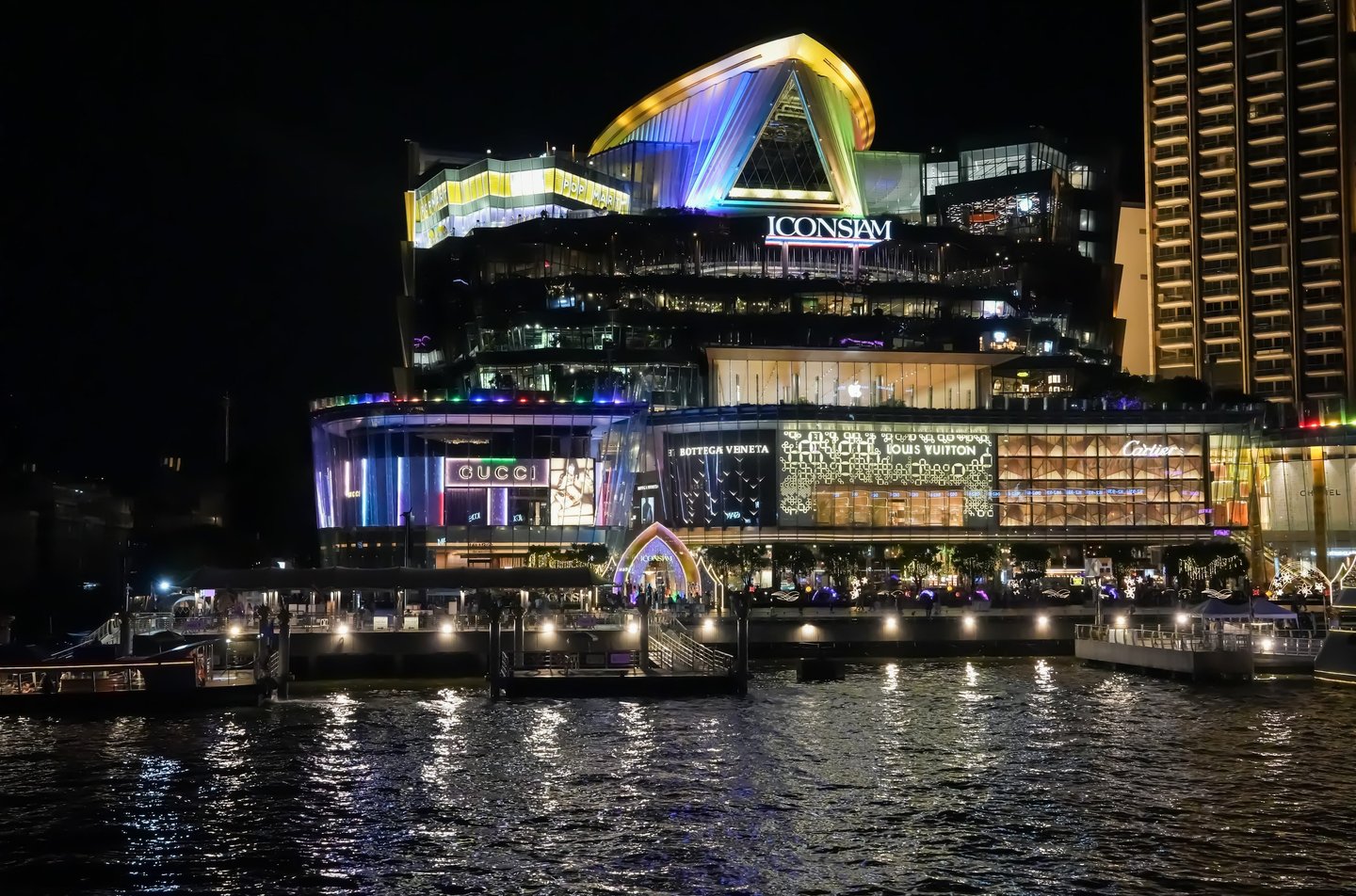
On the Thonburi side: ICONSIAM. From the water the scale of it is different to anything you get from the riverfront promenade. The rainbow-lit triangular rooftop structure, the Gucci, Bottega Veneta, Louis Vuitton and Cartier facades across the lower floors — all of it reflected back across the Chao Phraya. The White Orchid River Cruise was docked at the pier as we passed.
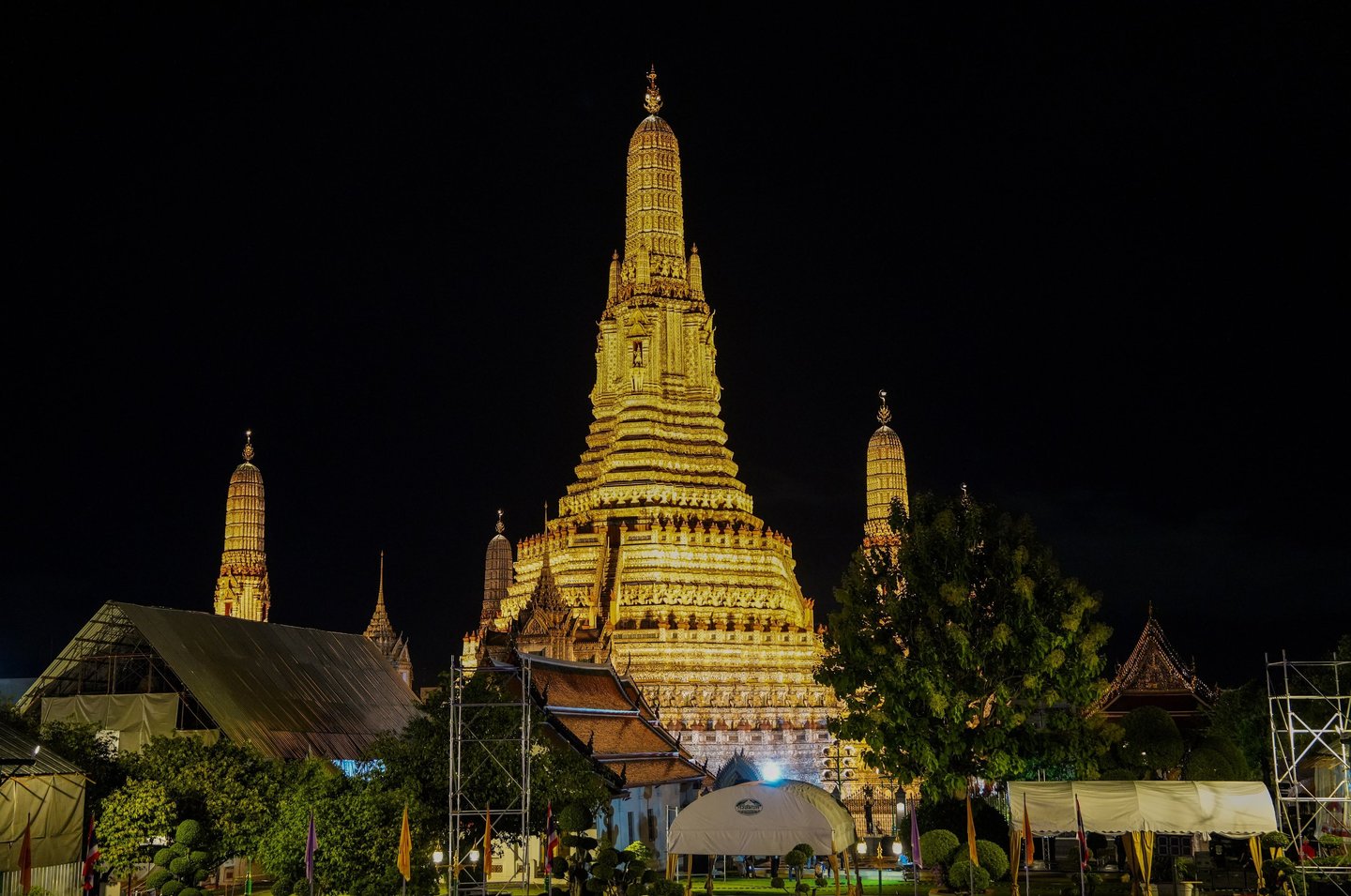
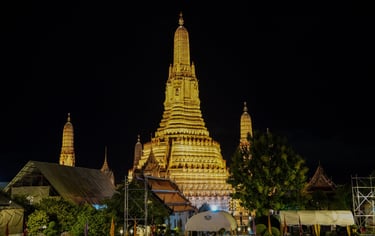
And at the furthest point of the route, approaching the Thonburi bank: Wat Arun. The Temple of Dawn, fully illuminated in gold against a black sky, shot from the water at close range. This is the angle most people only see from the opposite bank. From the river itself the prana towers fill the frame differently — taller, more detailed, the scaffolding from ongoing restoration work still visible on the lower sections.
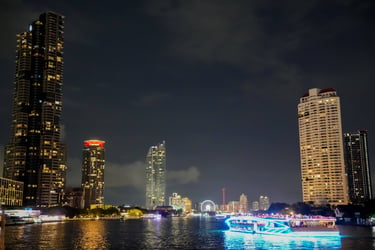
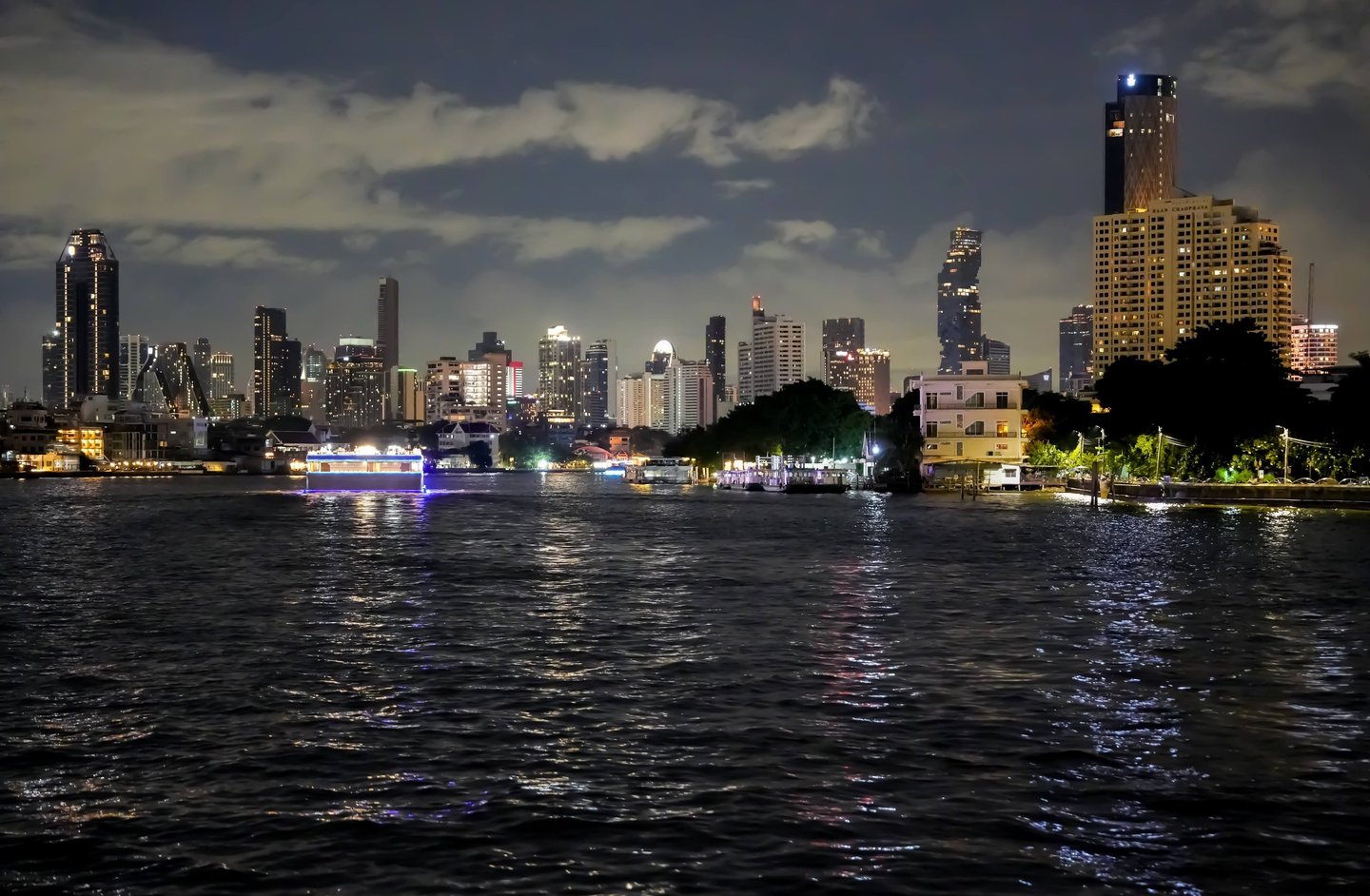
The return leg shows you the east bank skyline in full — towers from Silom to Sathorn reflected in the water, a lit cruise boat moving in the opposite direction, the Bangkok skyline doing what it does when it has a dark river to reflect off.
The Shot That Doesn't Work From Land
Almost everything on this list is photographable from a fixed position somewhere on the riverbank. The Rama VIII Bridge from Bangli district. Wat Arun from Tha Tien pier. ICONSIAM from the shuttle boat approach.
What the dinner cruise gives you is the moving perspective — the relationship between the subjects changing as the boat moves, the angles you only get from mid-river, and the compression of all of it into a single two-hour window after dark.
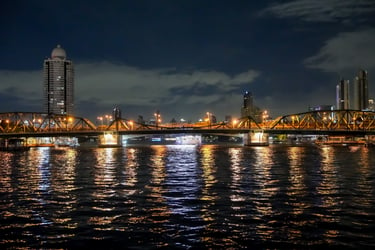
If you're shooting Bangkok at night and you haven't done the river — it belongs on the list.
📍 Chao Phraya River, Bangkok, Thailand · Departure: Asiatique Pier
📷 Sony Alpha 7 IV · FE 24-70mm f/2.8 GM II · ISO 12800 · 1/60s–1/250s · f/2.8–f/6.3
Contact
Fuel my creativity, If you enjoy my content, feel free to support me with a small tip. Thanks for being part of this journey!
If you enjoy my photography and the stories I capture across Southeast Asia, consider supporting my journey. Every coffee helps me stay on the road longer and document more unique locations. Thank you for being part of the adventure!
Traveling across Southeast Asia, I’ve found that having an eSIM ready the moment you land is an absolute game-changer. I highly recommend Saily – I’ve had a great experience with them myself. It offers unbeatable advantages, especially for ordering a Grab taxi right away or using Google Maps to find your way as soon as you exit the airport
This post contains affiliate links for Saily. If you sign up through my link, I may earn a small commission at no extra cost to you. I only recommend services like Saily because I use them personally and they’ve made my travels much easier.
You can license my photography directly through my Alamy portfolio. My work covers authentic travel and street photography across Southeast Asia — Bangkok, Ho Chi Minh City, and the wider region — shot on location, not staged.
Looking for street scenes, urban editorial content, or landscapes from Thailand and Vietnam? My full collection is on Alamy, with licensing options from standard editorial to extended commercial rights, depending on what your project needs.
Disclosure: the link below is an affiliate link. If you license an image through it, I earn a share of the sale at no extra cost to you. It goes straight back into keeping me on the road and shooting across Southeast Asia.
© 2025 Strangphotography – Southeast Lens. All rights reserved.
All photos taken by me in public spaces. Licensing available via Alamy.
Unauthorized use prohibited. For full legal info, see my Imprint