Southeast Lens - Documentation, Travel and Street Photography

Black and White Photography in Southeast Asia – Night Street Photography & Urban Contrast
Black and white photography is more than just a visual style for me – it’s a conscious way of seeing and capturing Southeast Asia in a more reduced and intense form. Without color, the focus naturally shifts to what really matters: light, shadow, contrast, and the moment itself.
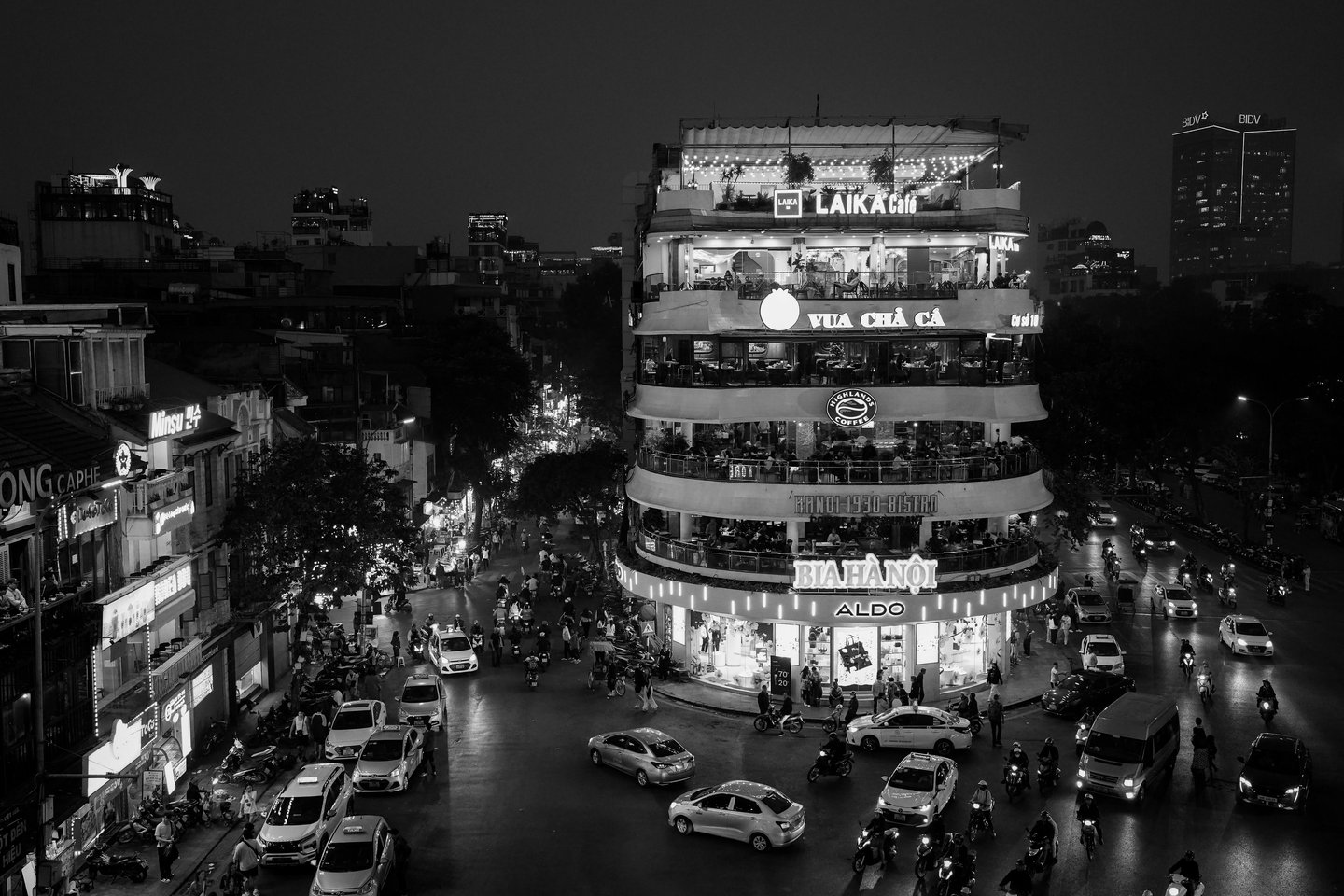
Hanoi in Vietnam, the old Quarter
I spend a lot of time traveling through countries like Vietnam, Thailand, Laos, and Malaysia – often at night, often just walking the streets. That’s exactly where most of these images are created.
In cities like Hanoi, Bangkok, and Luang Prabang, these moments feel especially powerful to me. Neon lights, deep shadows in narrow alleys, reflections on wet streets – in black and white, all of this often feels more raw, more direct, and more honest.


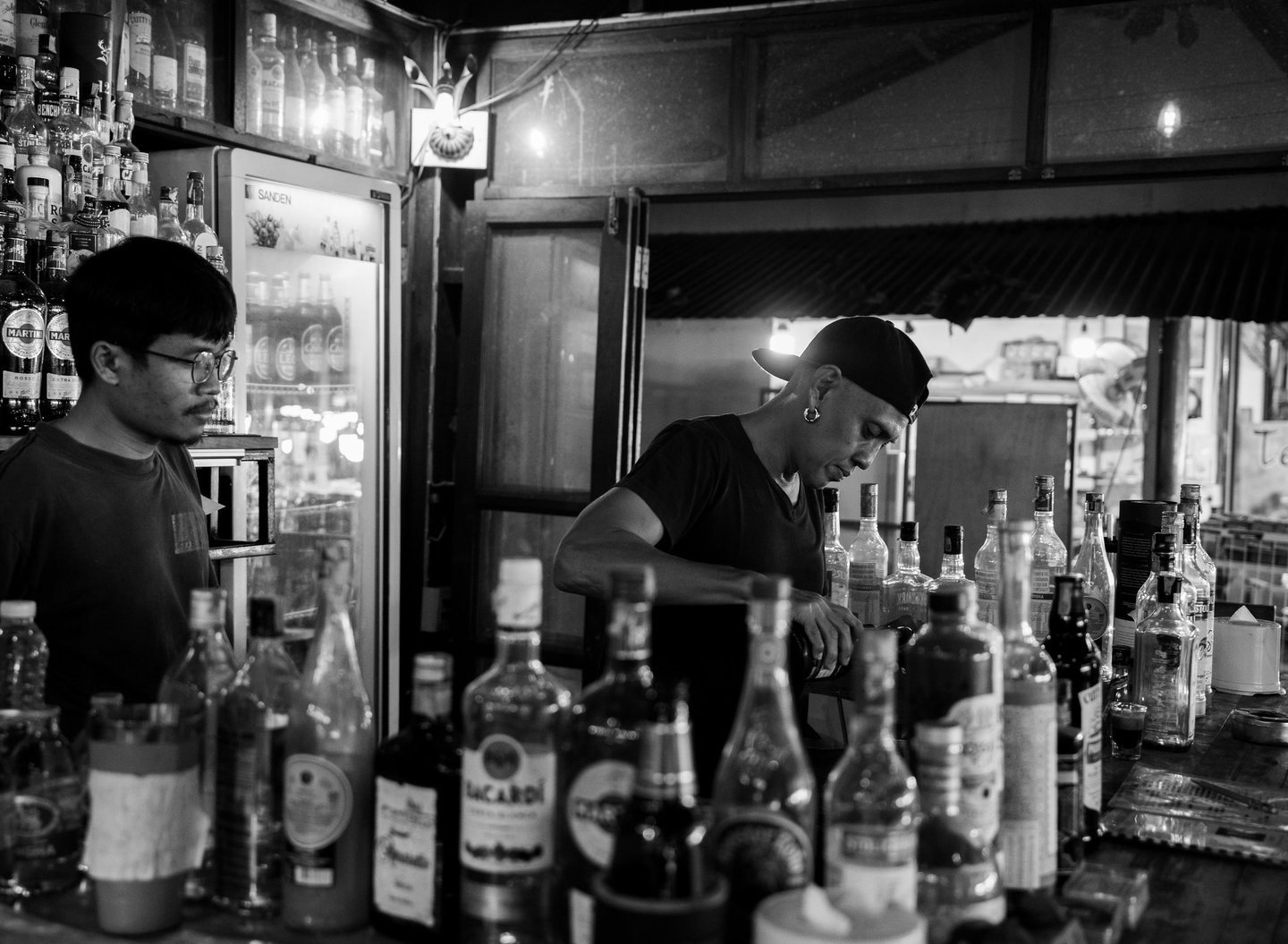
A Bar in Chiang Mai, Thailand
Smurfbar at Soi Buakhao in Pattaya, Thailand
I shoot with the Sony Alpha 7 IV (ILCE-7M4) paired with the Sony FE 24-70mm f/2.8 GM II. This setup gives me the flexibility to react quickly while still delivering strong results in low-light situations – which is essential for night street photography.
For post-processing, I use Adobe Lightroom and Adobe Camera Raw. My main focus is on contrast. I deliberately enhance the blacks and push the separation between light and dark. Midtones are not the priority – I want the images to feel bold, not soft.
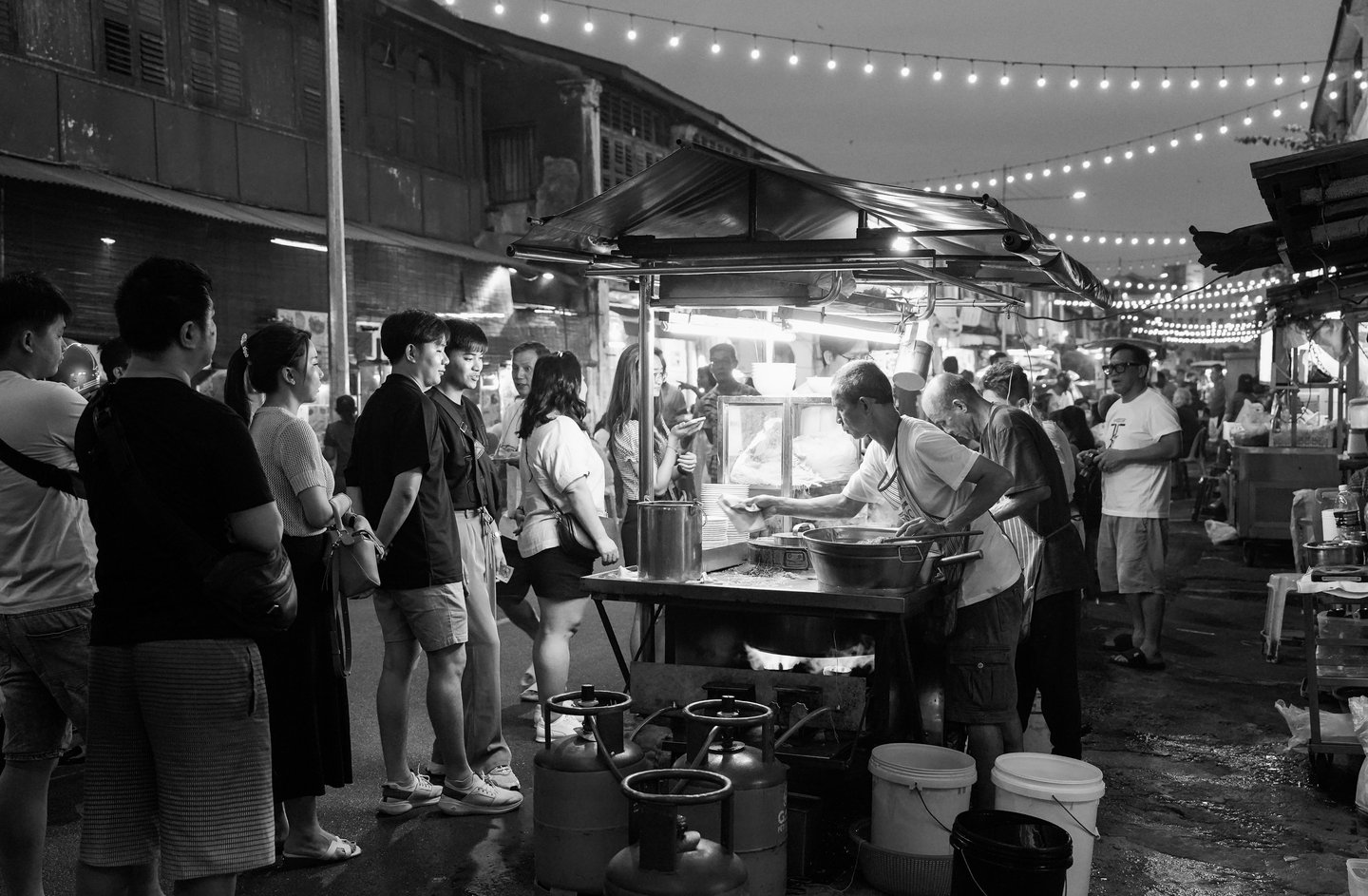
Street Food in Georgetown on Penang, Malaysia
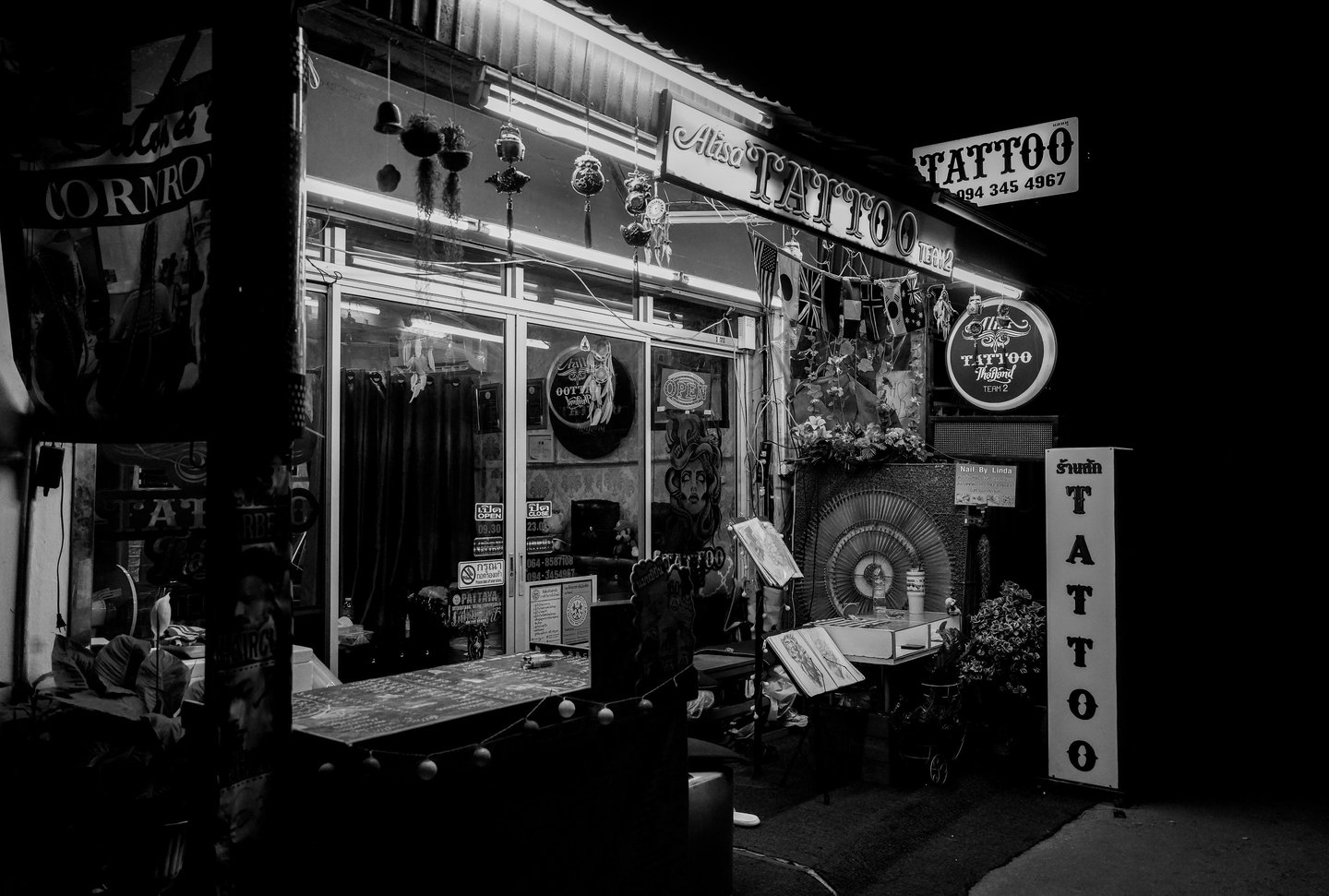
Tattoo Studio in Pattaya, Thailand
Most of these photos are unplanned. I walk, observe, and wait for the right moment. And sometimes, everything just comes together for a split second – that’s the moment I’m looking for.
This page is dedicated entirely to black and white photography. I’ll share short and compact insights for each destination, while more detailed stories and background can be found on the individual pages for each location.
Hanoi in Black and White – Night Street Photography in Vietnam’s Old Quarter
Hanoi is one of those places that stays with you. Not because of landmarks alone, but because of what happens in between – in the streets, on the sidewalks, in the constant movement of everyday life.
As part of my work across Vietnam, I keep coming back to Hanoi. Especially at night. That’s when the city reveals a different rhythm – more contrast, more shadows, more moments that feel real and unfiltered.
Historically, Hanoi is one of the oldest capitals in Southeast Asia, with over a thousand years of cultural layers shaped by dynasties, colonial influence, and modern development. Today, that mix is still visible everywhere – especially in the Old Quarter, where tradition and everyday life blend seamlessly into each other.
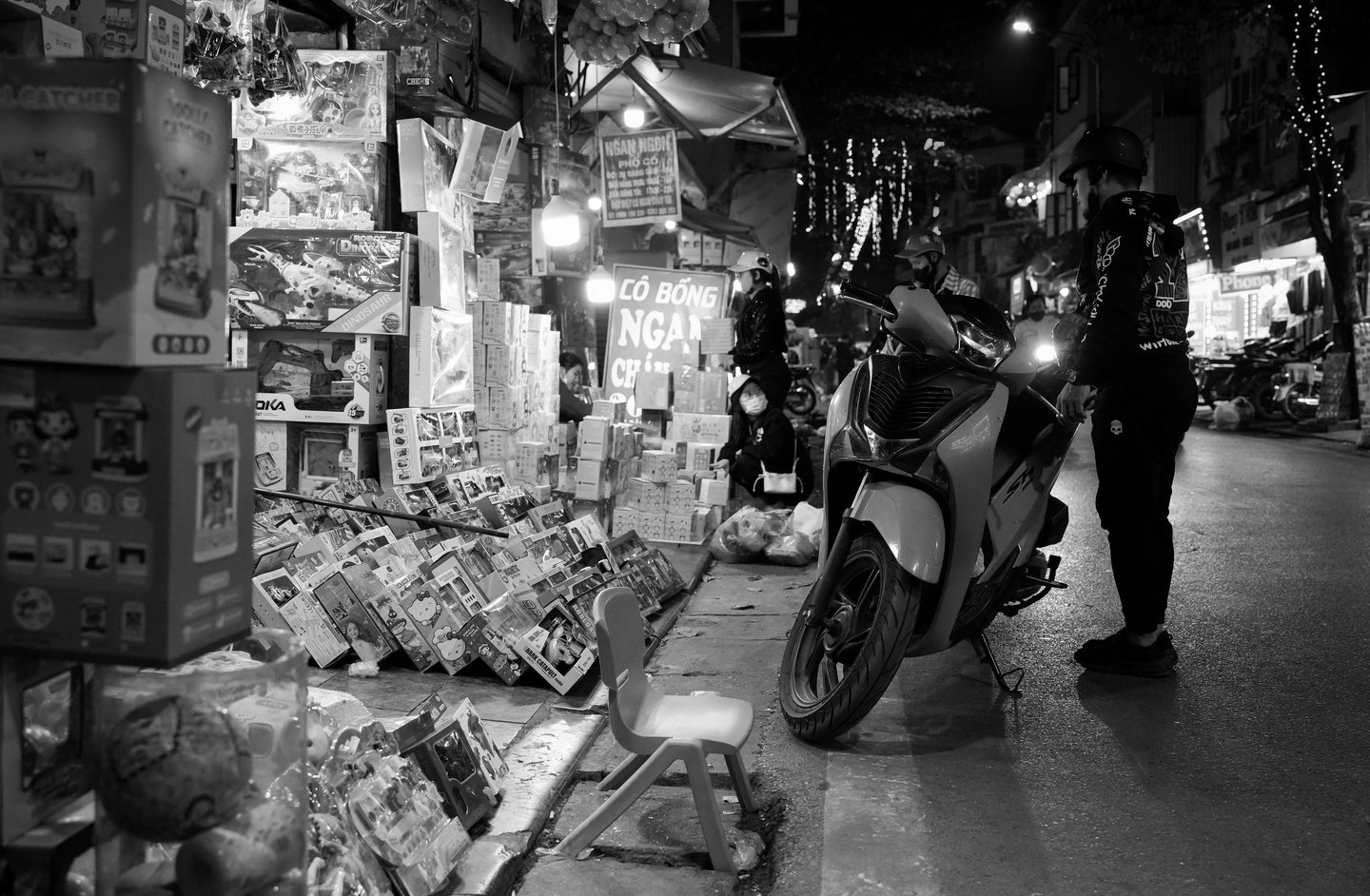
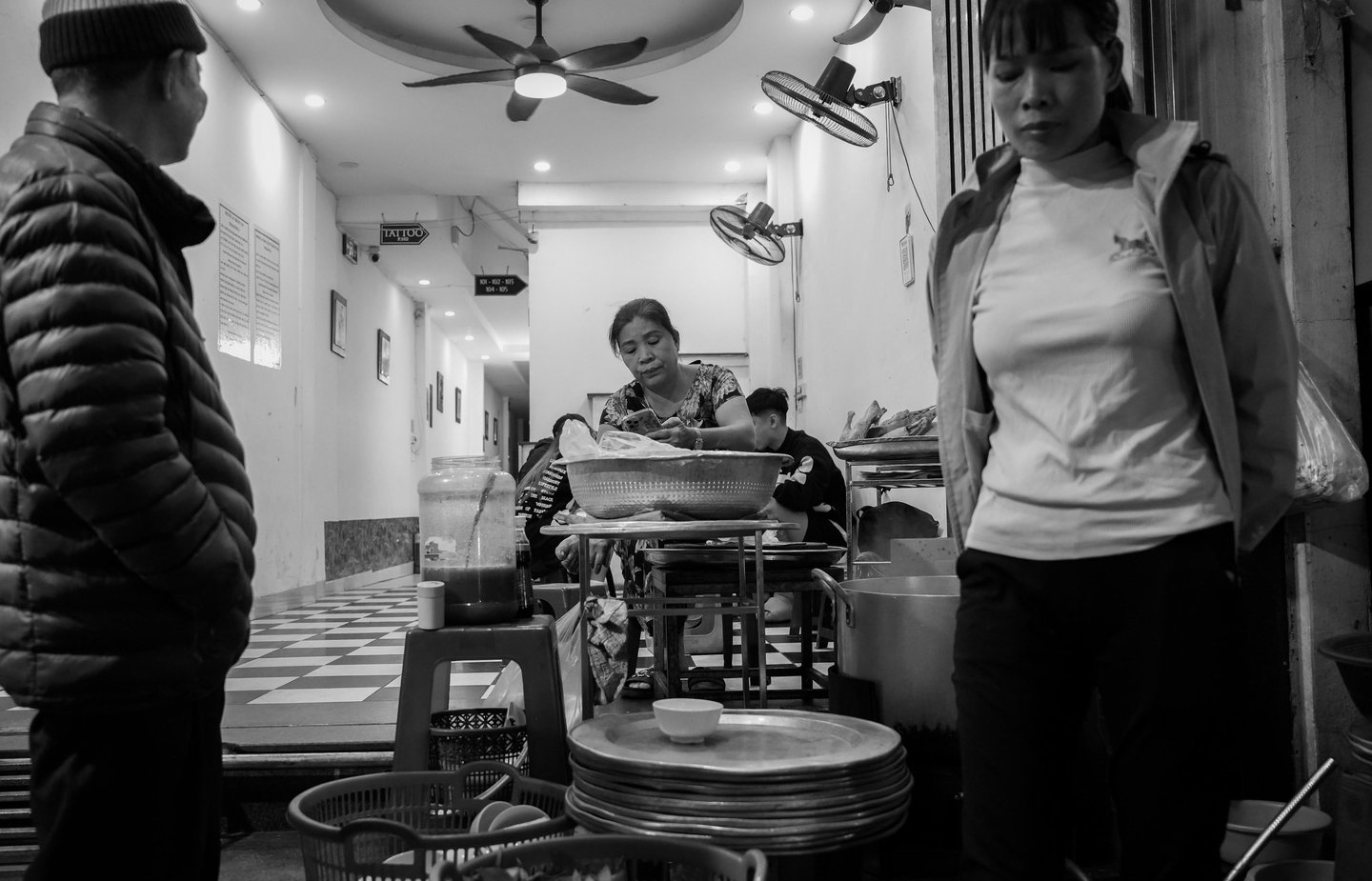
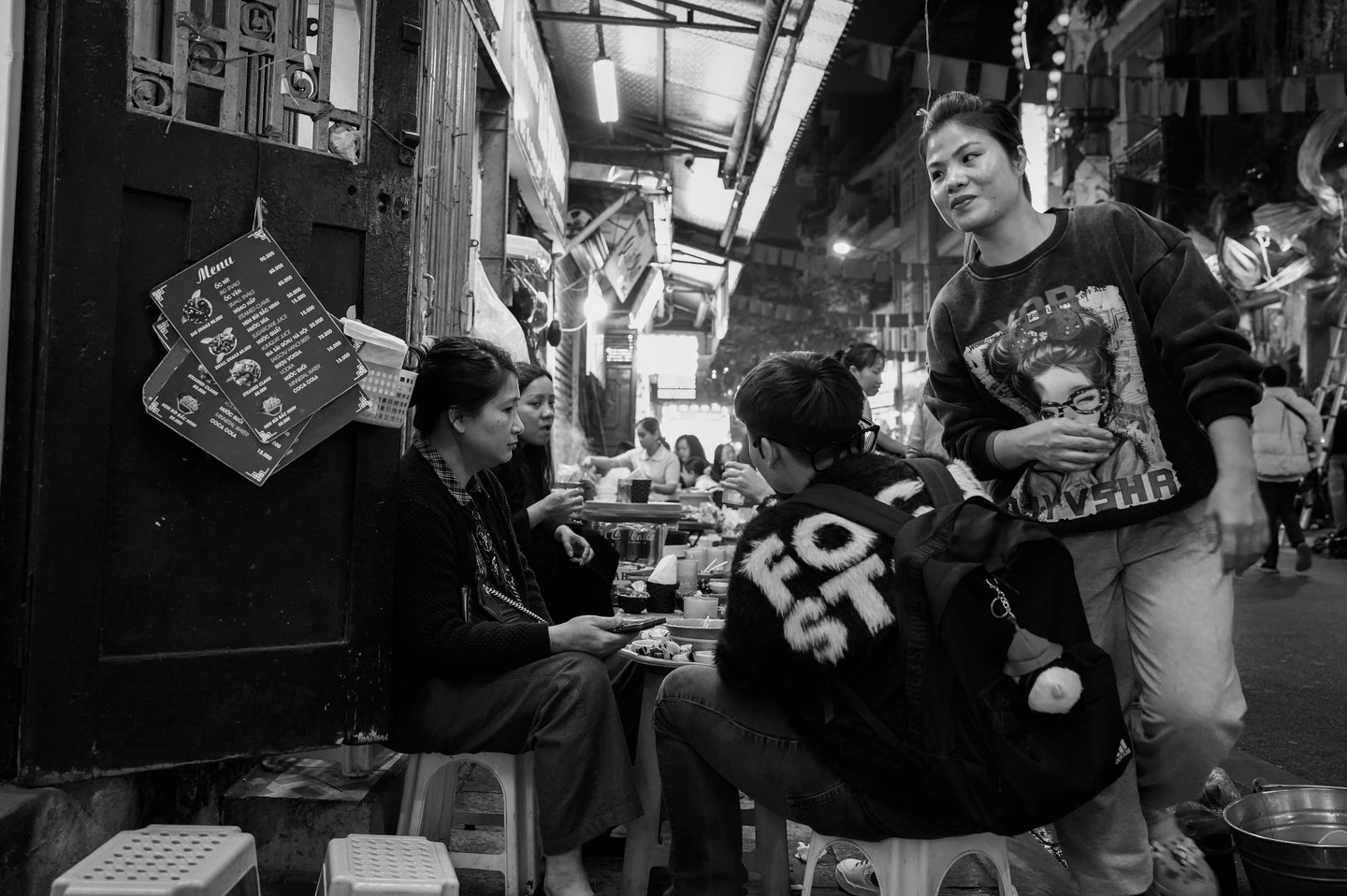
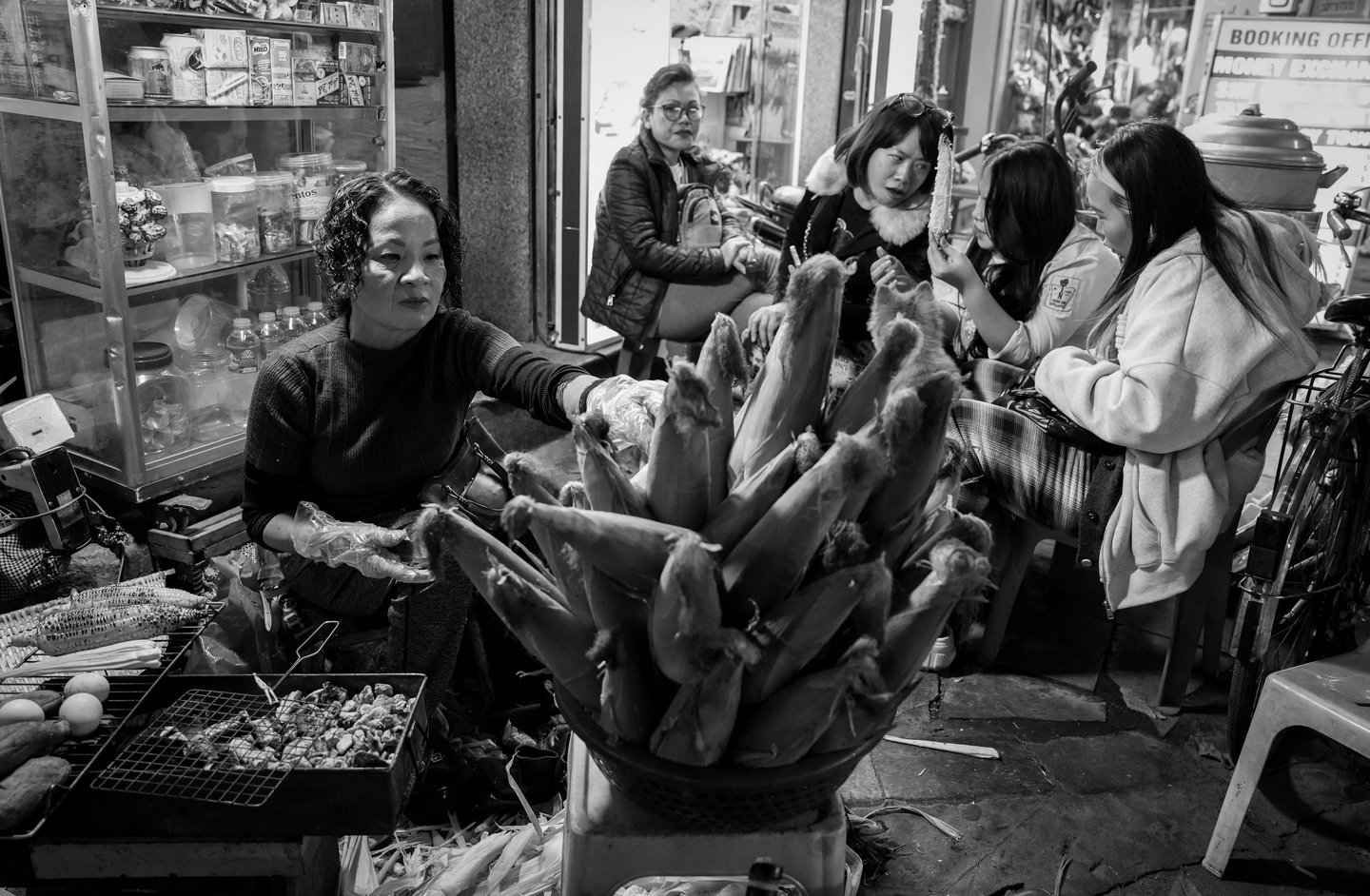
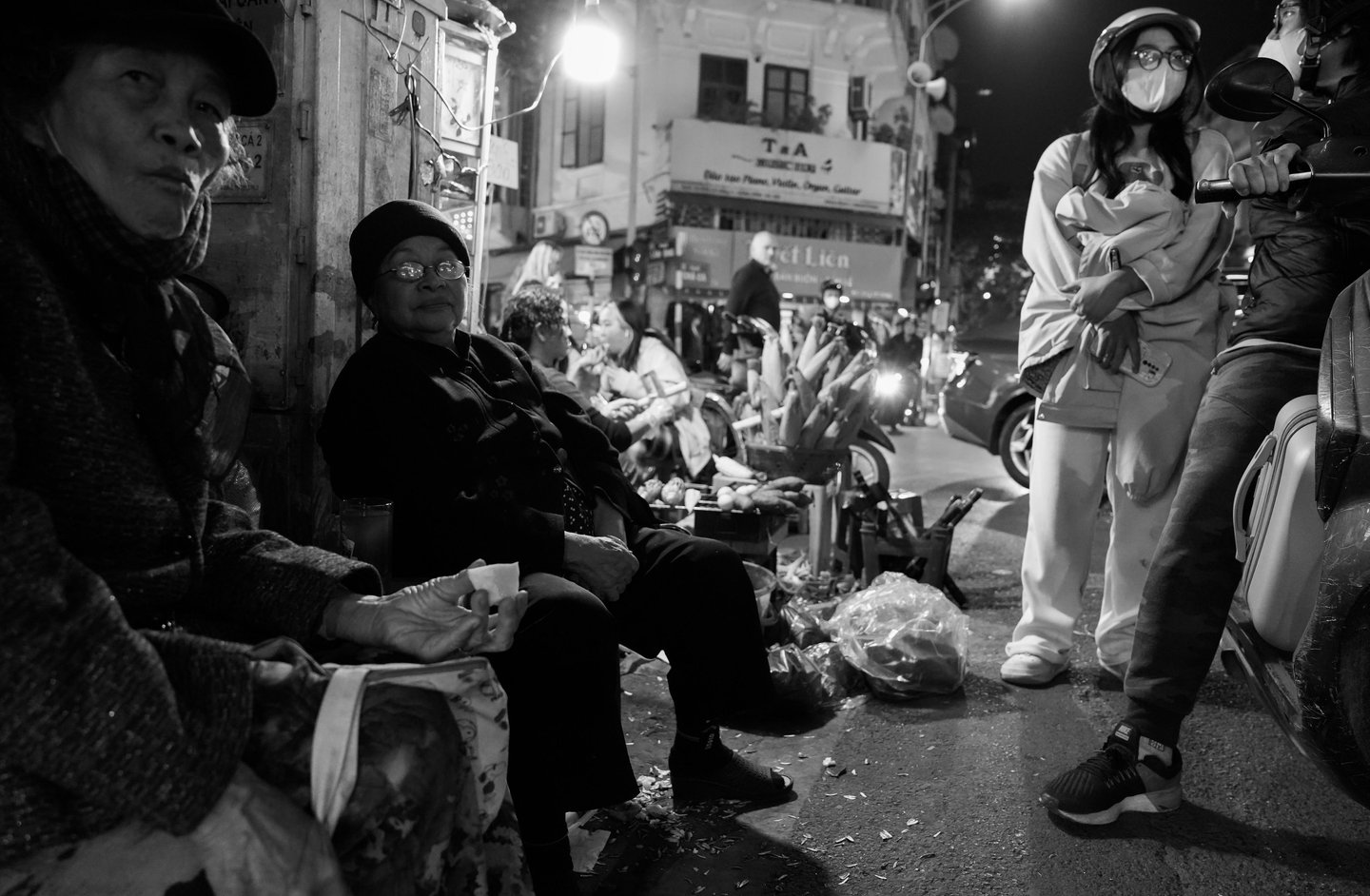
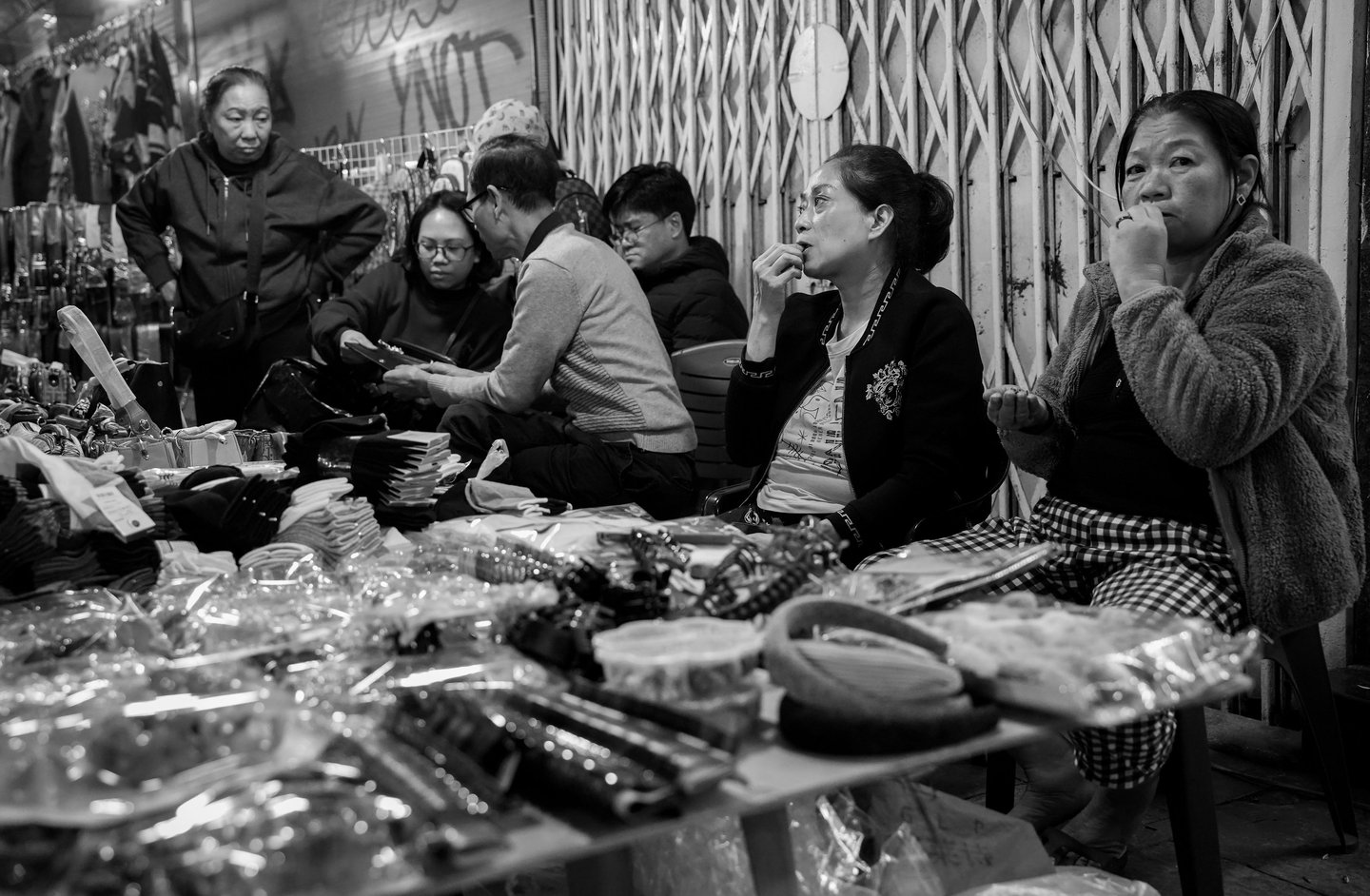
Most of my black and white street photography in Hanoi is captured right there – in the Old Quarter. What immediately stands out are the sidewalks. They’re not really sidewalks in the way you might expect. Instead, they are filled with countless small plastic stools, placed in front of a dense mix of street food spots, restaurants, and bars.
This is where life happens.
People sit close together, eat, drink, talk, and watch the street. It’s social, loud, chaotic at times – but never random. There’s a structure to it, even if it doesn’t look like it at first glance. In black and white, these scenes become even more intense. The contrast between light sources and deep shadows gives these everyday moments a different weight.
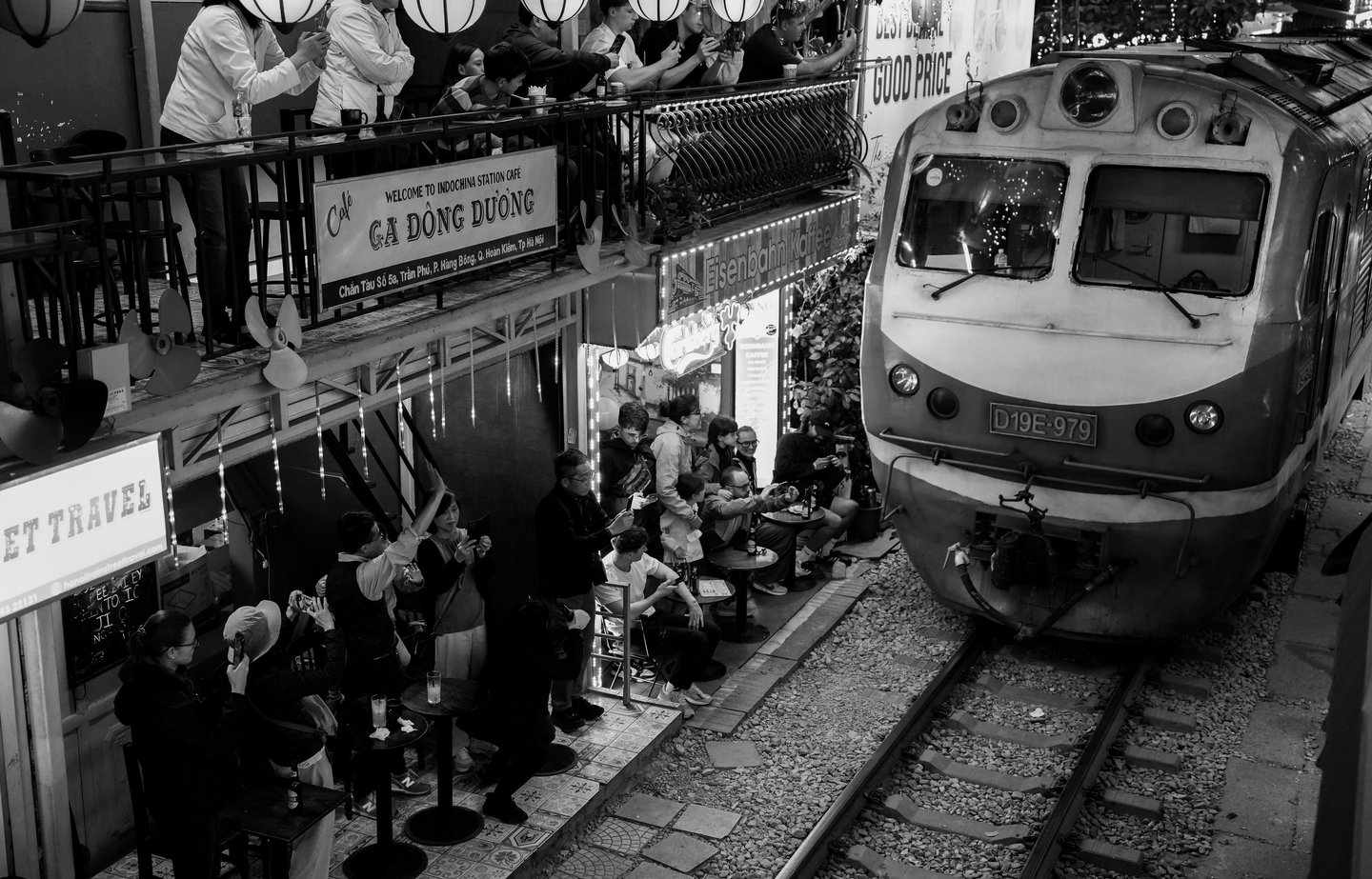
A short walk from the Old Quarter leads to what is probably one of the most unusual places in Hanoi – the Train Street.
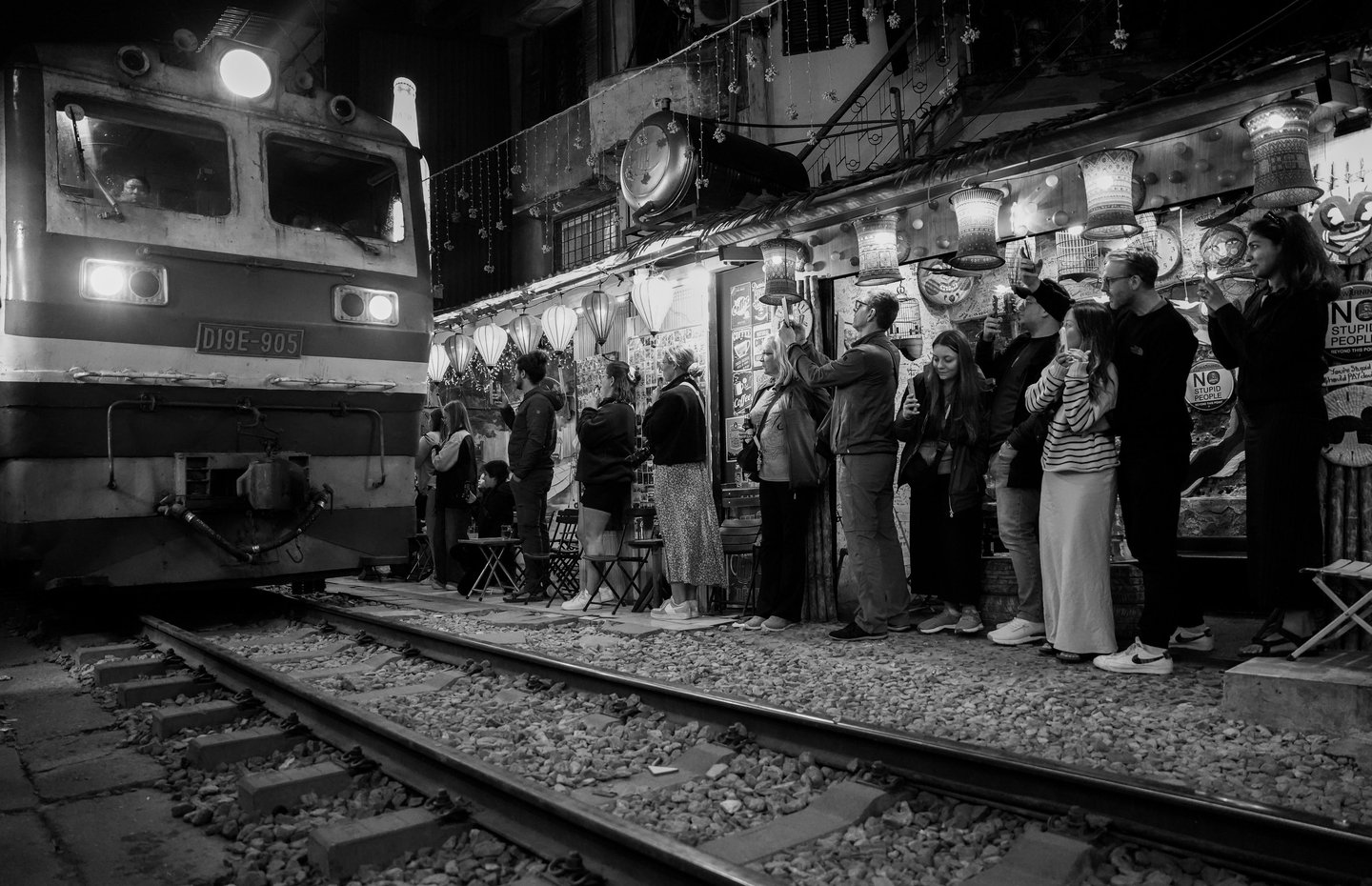
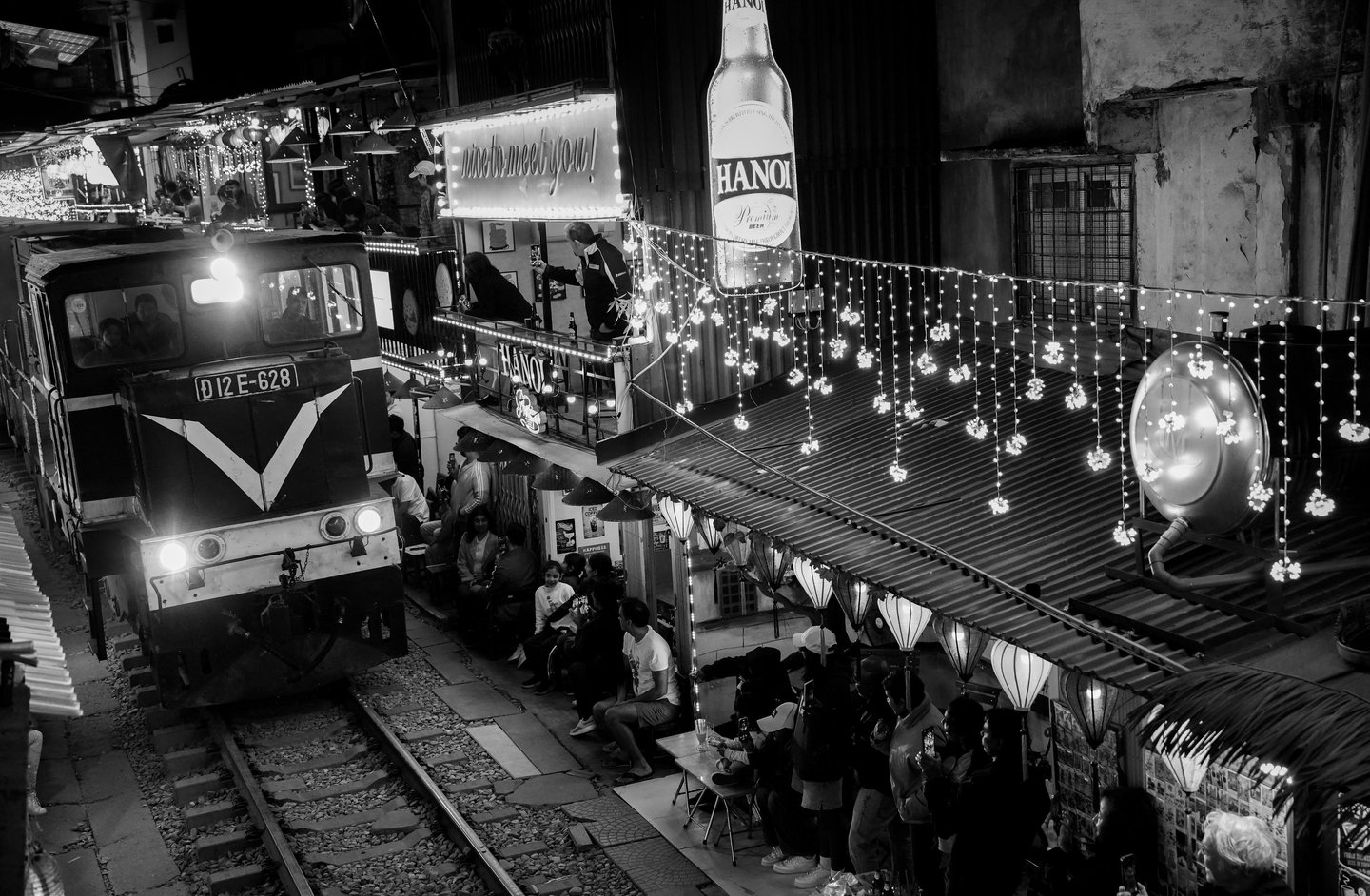
Hanoi Train Street is exactly what it sounds like: a narrow railway track running directly through tightly packed residential buildings, cafés, and small bars. The tracks were originally built during the French colonial period, connecting Hanoi to other parts of northern Vietnam.
Today, trains still pass through several times a day – just inches away from homes and businesses. In recent years, access has been restricted at times due to safety concerns, but the area remains one of the most unique urban environments I’ve photographed.
At night, the atmosphere changes completely. Lights from cafés reflect off the metal tracks, people gather along the edges, and everything seems to pause for a moment when a train approaches. In black and white, the scene becomes even more minimal – just lines, light, and tension.
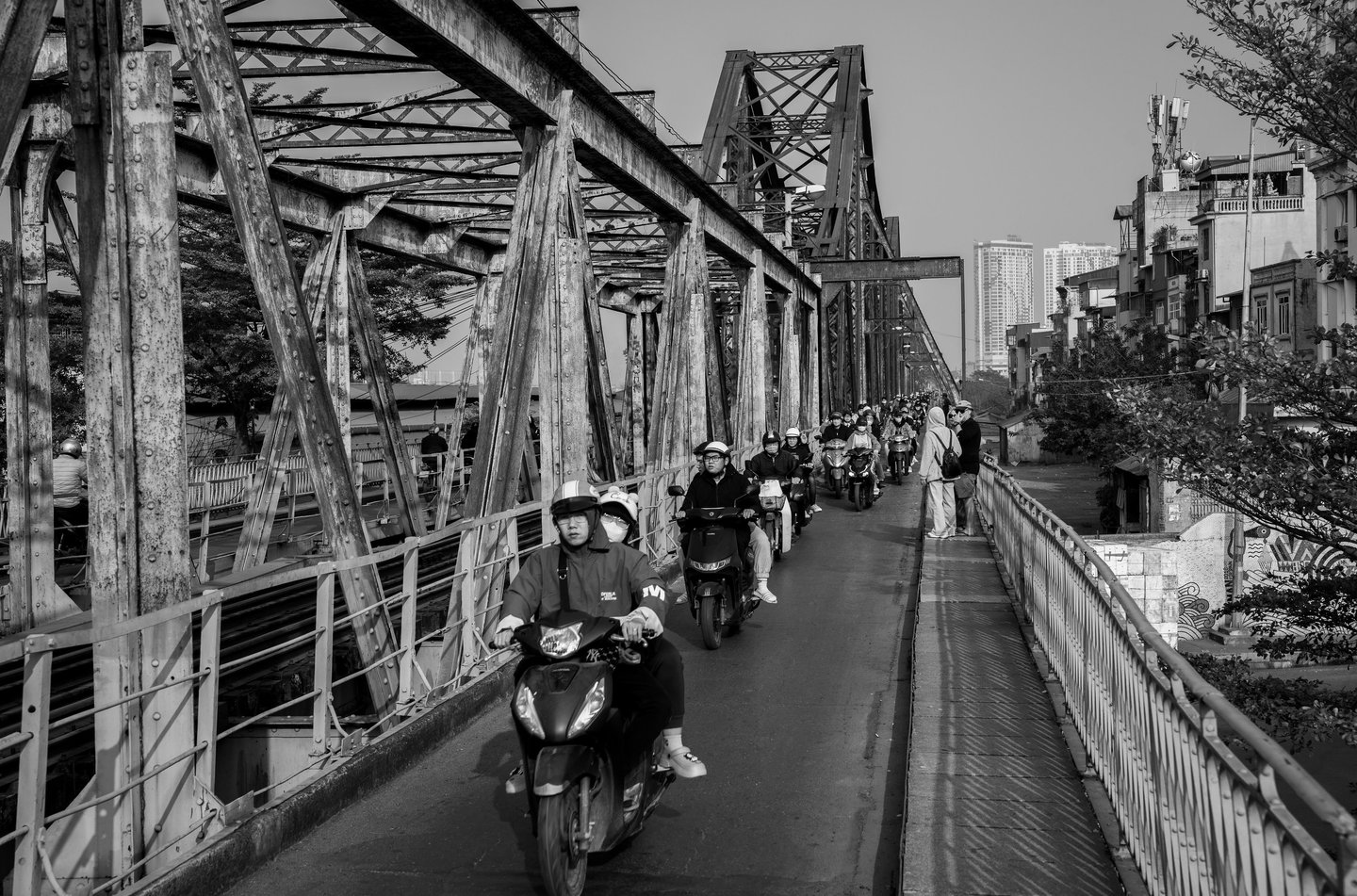
Another place that left a strong impression on me is the Long Bien Bridge.
Built between 1899 and 1902 during French colonial rule, the bridge was designed by the same engineering firm associated with Gustave Eiffel. It spans the Red River and has played an important role in Hanoi’s history – especially during wartime, when it was heavily bombed and repeatedly repaired.
Today, the bridge is still in use, mostly by motorbikes, bicycles, and trains. Walking across it at night feels different from anywhere else in the city. It’s quieter, more exposed. The structure itself – steel, repetition, geometry – works perfectly in black and white photography. Light falls differently here, and the city feels more distant.
This series of black and white photographs from Hanoi is just a preview.
A more in-depth story, including my experience in Ha Long Bay, will be published soon here on strangphotography.com.
Northern Thailand in Black and White – Street Photography from Nan to Chiang Mai
Northern Thailand feels different. Slower, quieter, more grounded. Traveling through this part of Thailand with my camera, I noticed quickly that the rhythm of the streets changes – and with it, the way I photograph.
This series focuses entirely on black and white street photography, captured between Nan, close to the border of Laos, and Chiang Mai.
Nan is not a place that immediately stands out on a map, but that’s exactly what makes it interesting to me. Historically, it was once an independent kingdom, shaped by Lanna culture and later integrated into Thailand. Even today, that sense of identity is still visible – in the architecture, in the pace of life, and especially in the streets.
Most of my photographs in Nan were taken at night. On weekends, a Thai street food market appears near one of the temples. It’s simple, local, and not made for tourists. Small food stalls line the street, people gather on plastic chairs, and everything feels natural and unfiltered. In black and white, these scenes become less about color and more about structure and interaction.
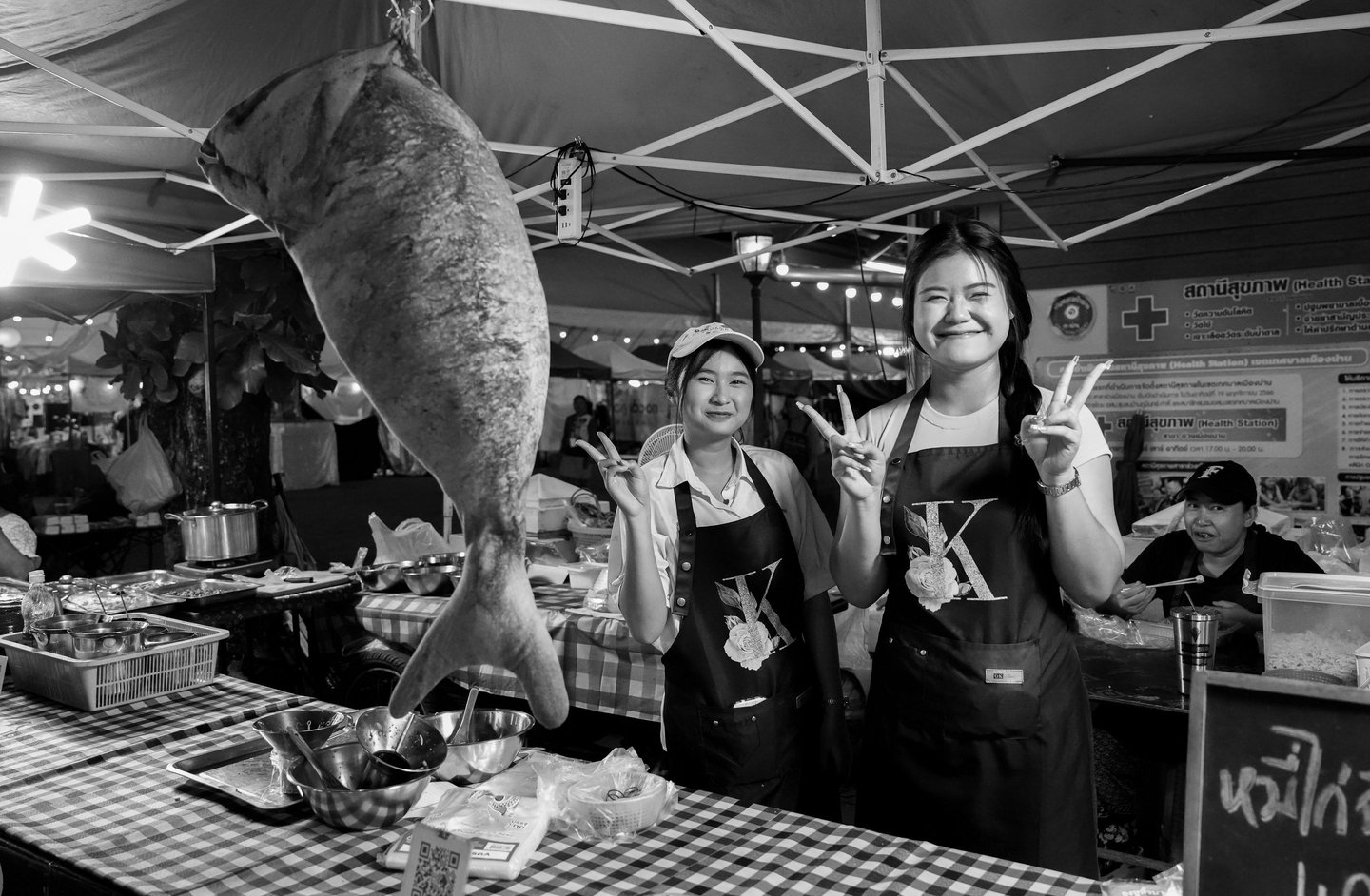
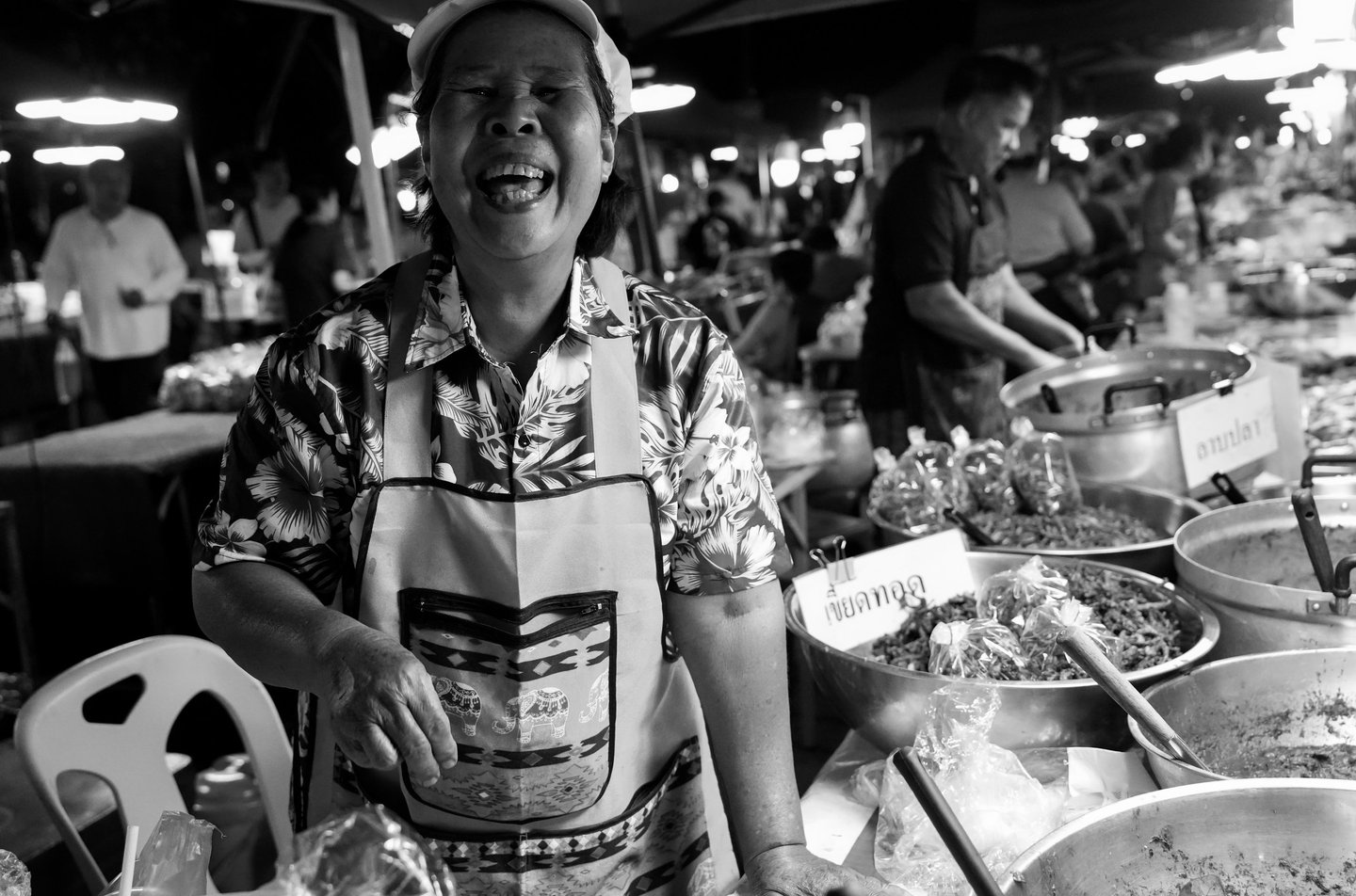
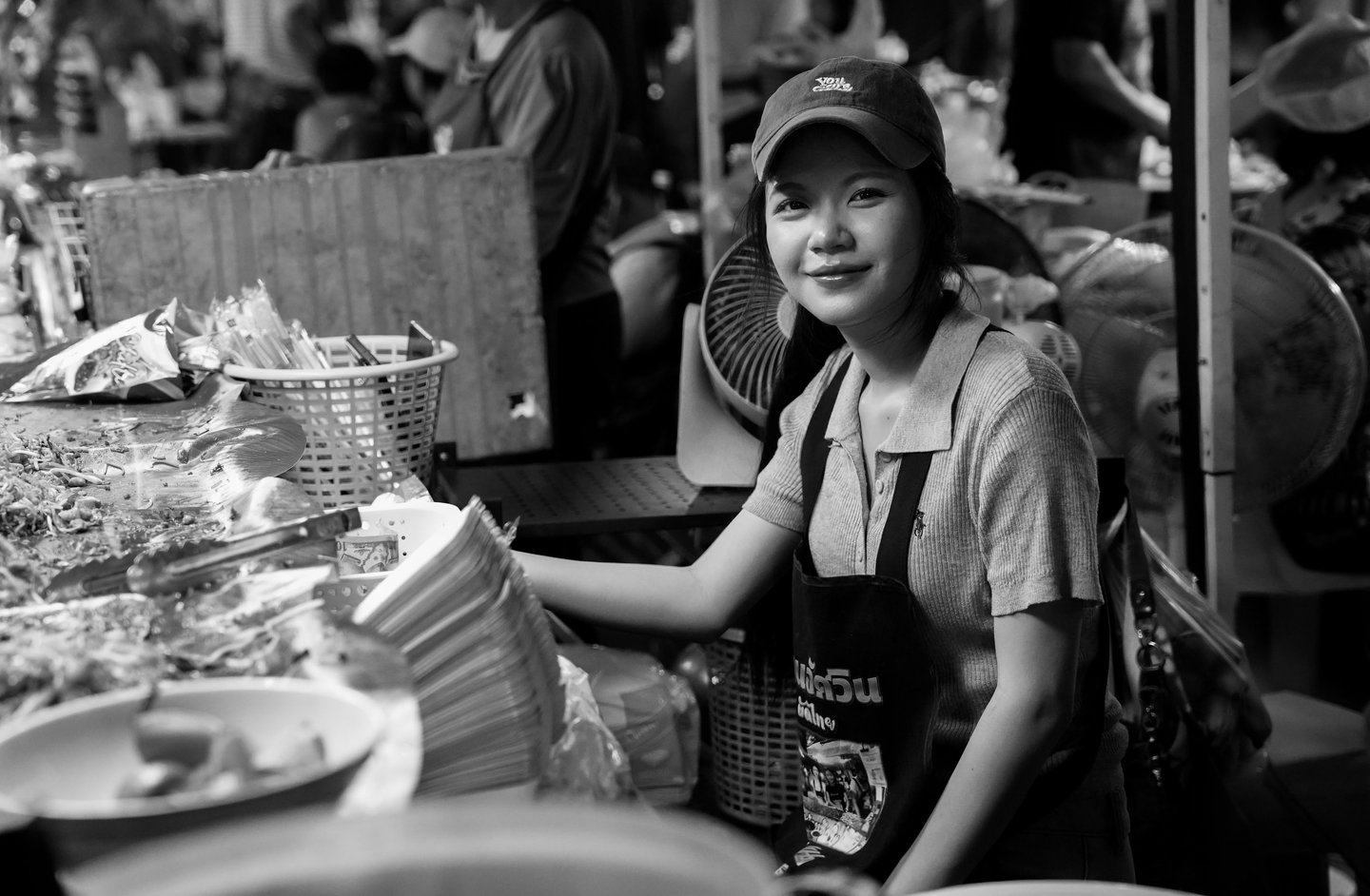
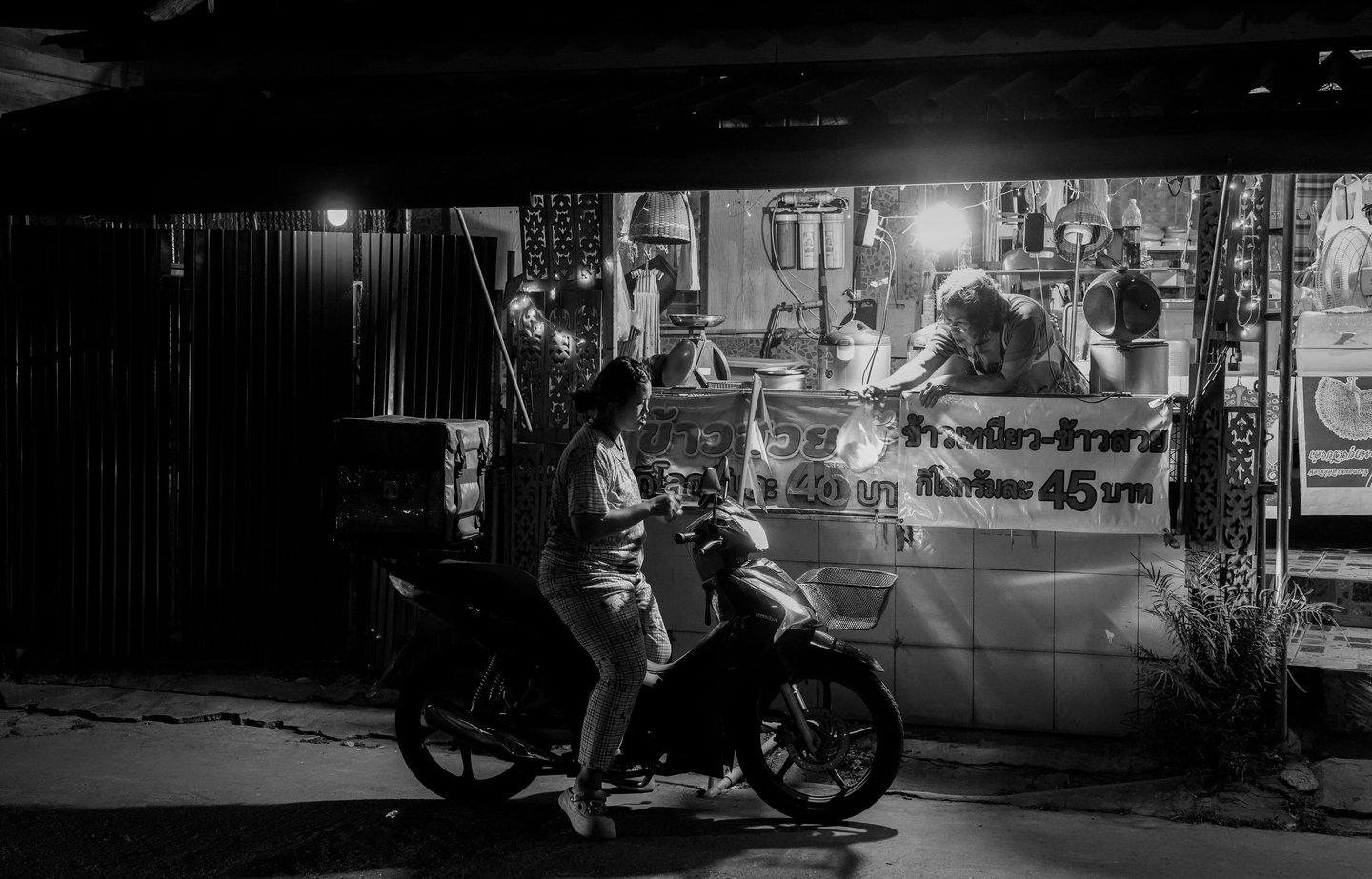
Just around the corner, in a small side street, I came across a shop selling rice directly from the storefront. Nothing staged, nothing designed – just everyday life. Moments like this are easy to overlook, but they’re often the ones that stay.
Another place that stood out to me in Nan was the We' Loft Bar. Every evening, there’s live music played in a stripped-down, unplugged style. The light is low, the atmosphere intimate, and it creates exactly the kind of contrast I look for in black and white photography. Faces, shadows, small movements – everything feels more present.
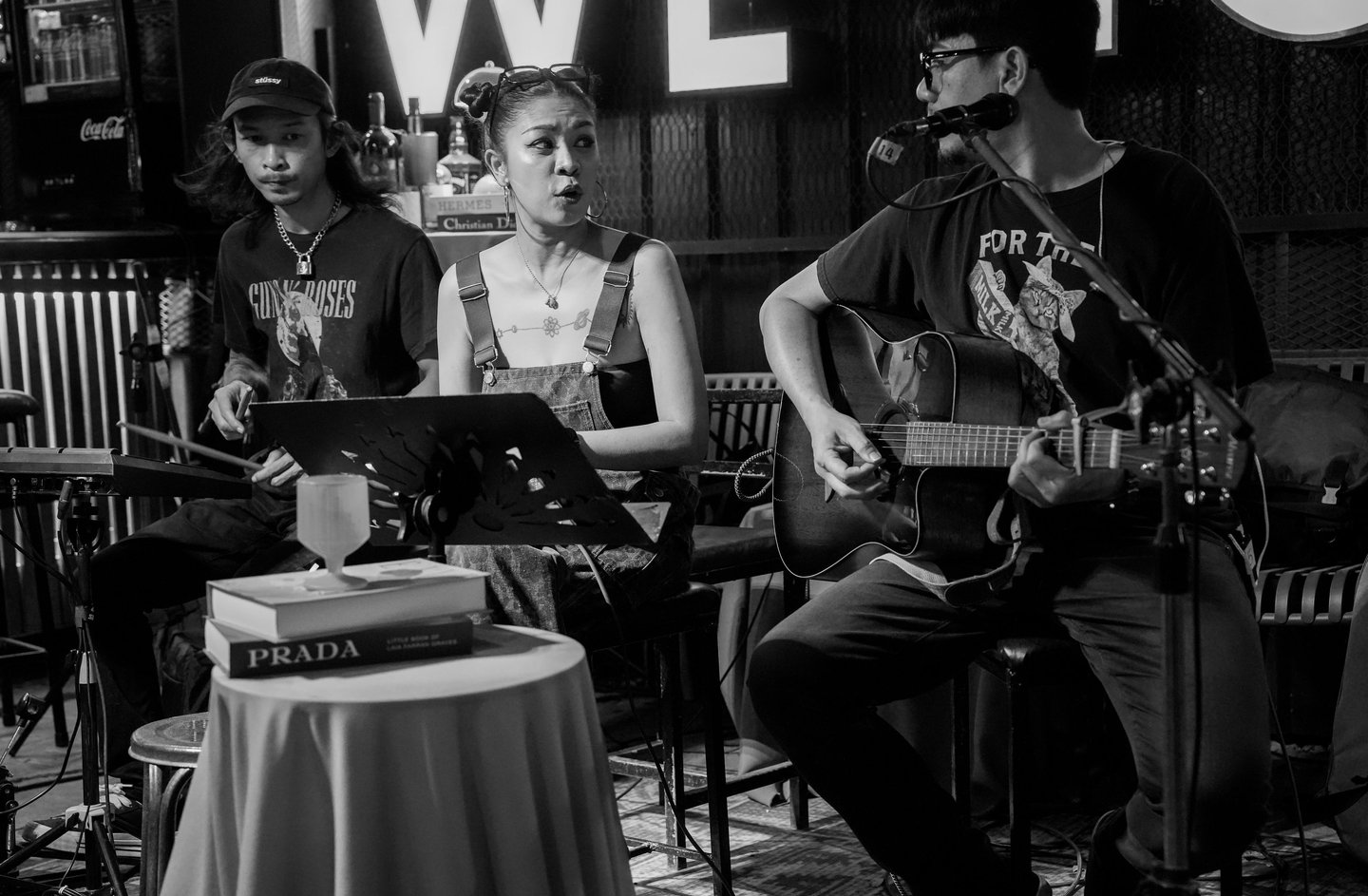

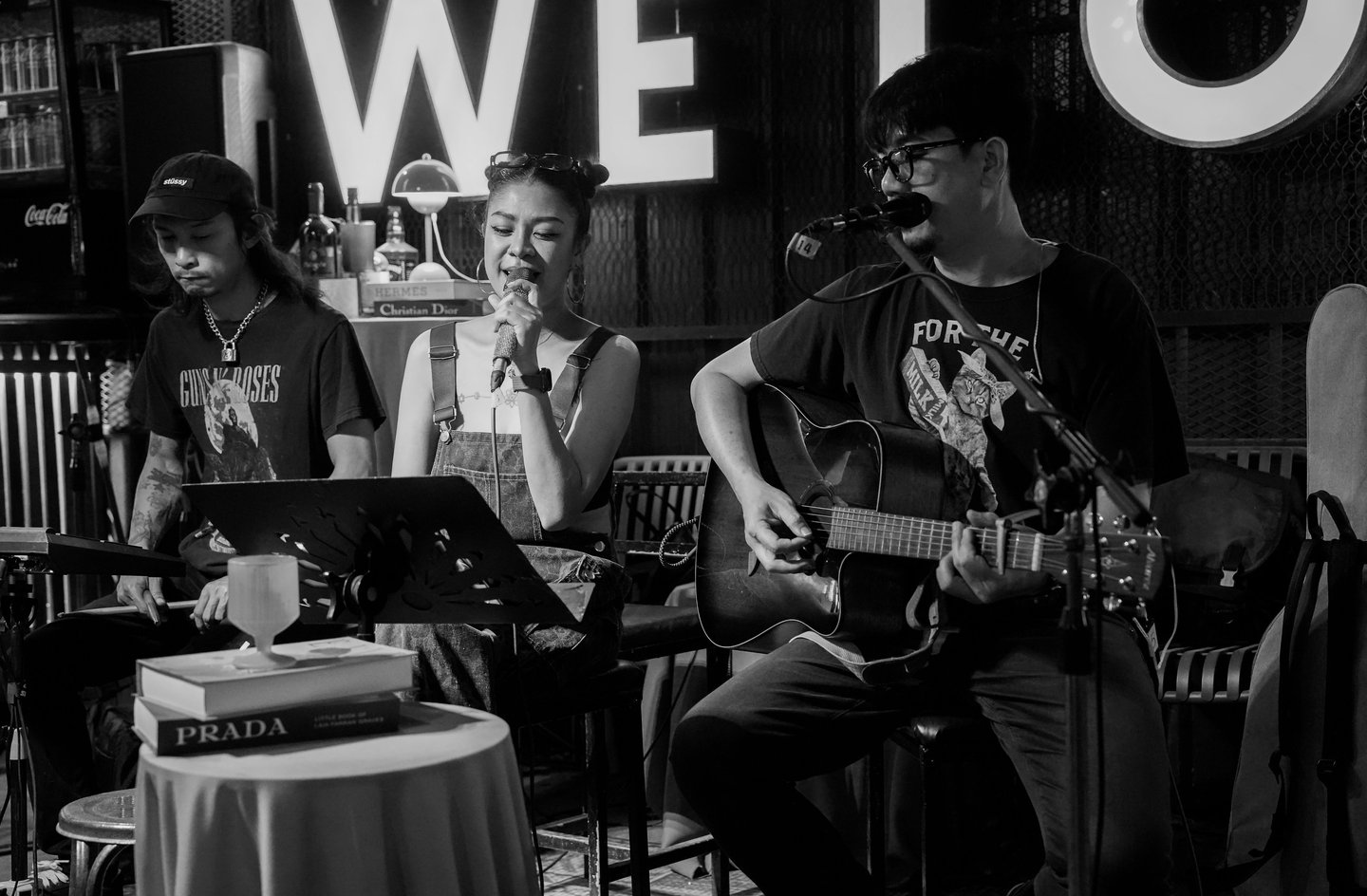

Further west, in Chiang Mai, the atmosphere shifts again. The city has a long history as the former capital of the Lanna Kingdom and is now one of the cultural centers of northern Thailand. You can still feel that history, especially inside the old city walls.
Most of my street photography here was captured in the historic Old Town. Narrow streets, temples, passing scooters, and changing light conditions throughout the evening create a constant flow of small, unplanned moments.
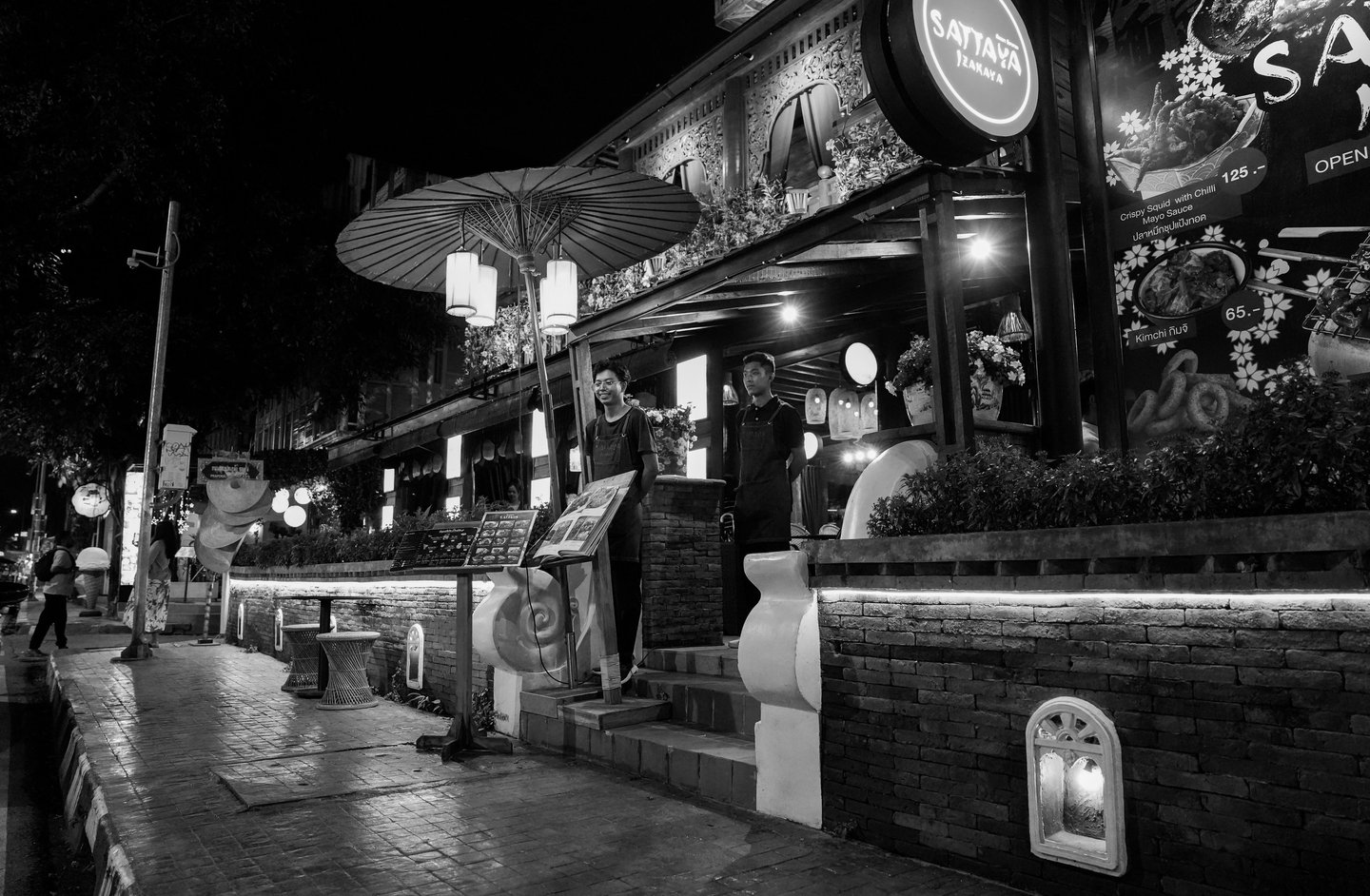
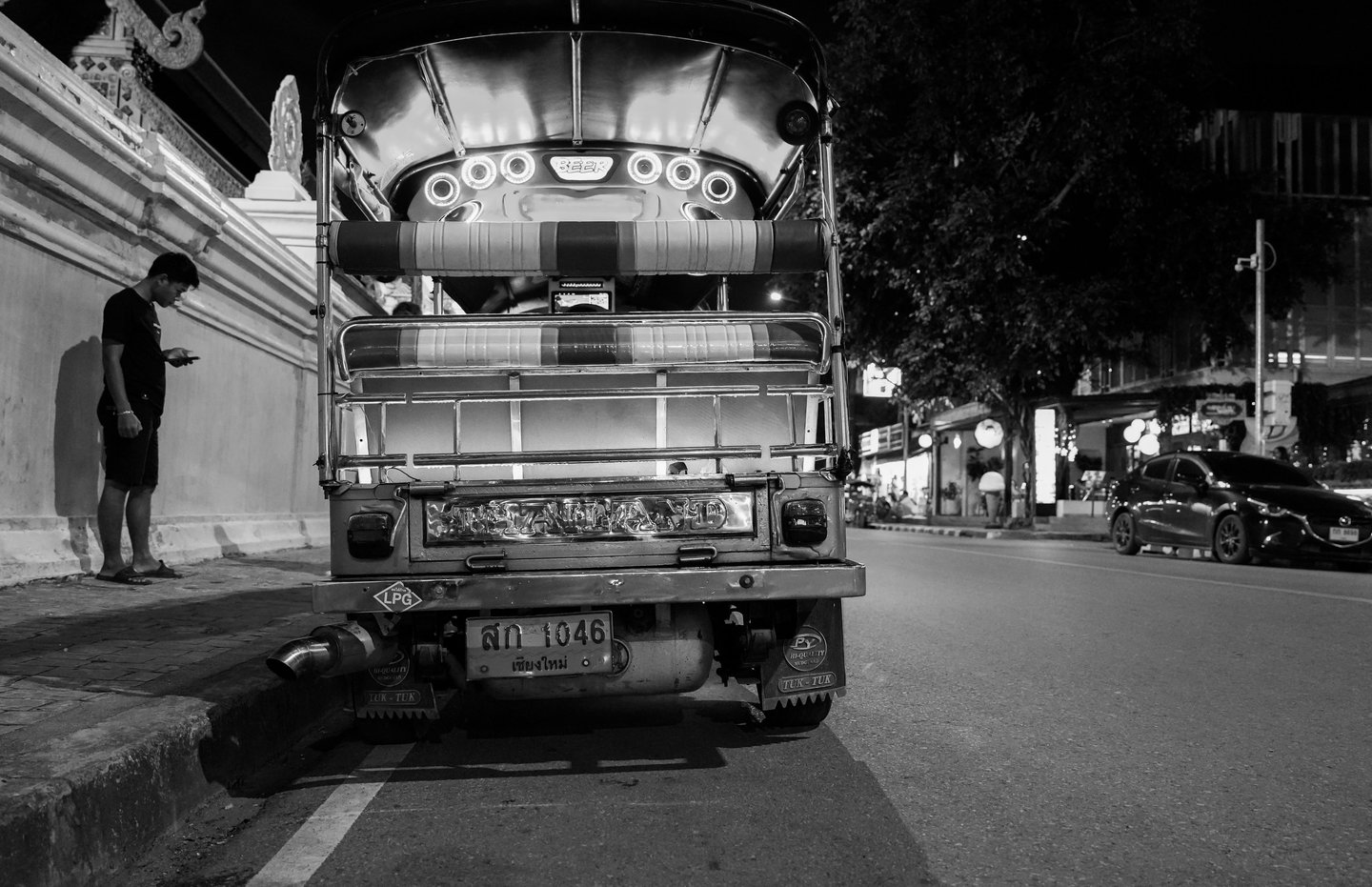
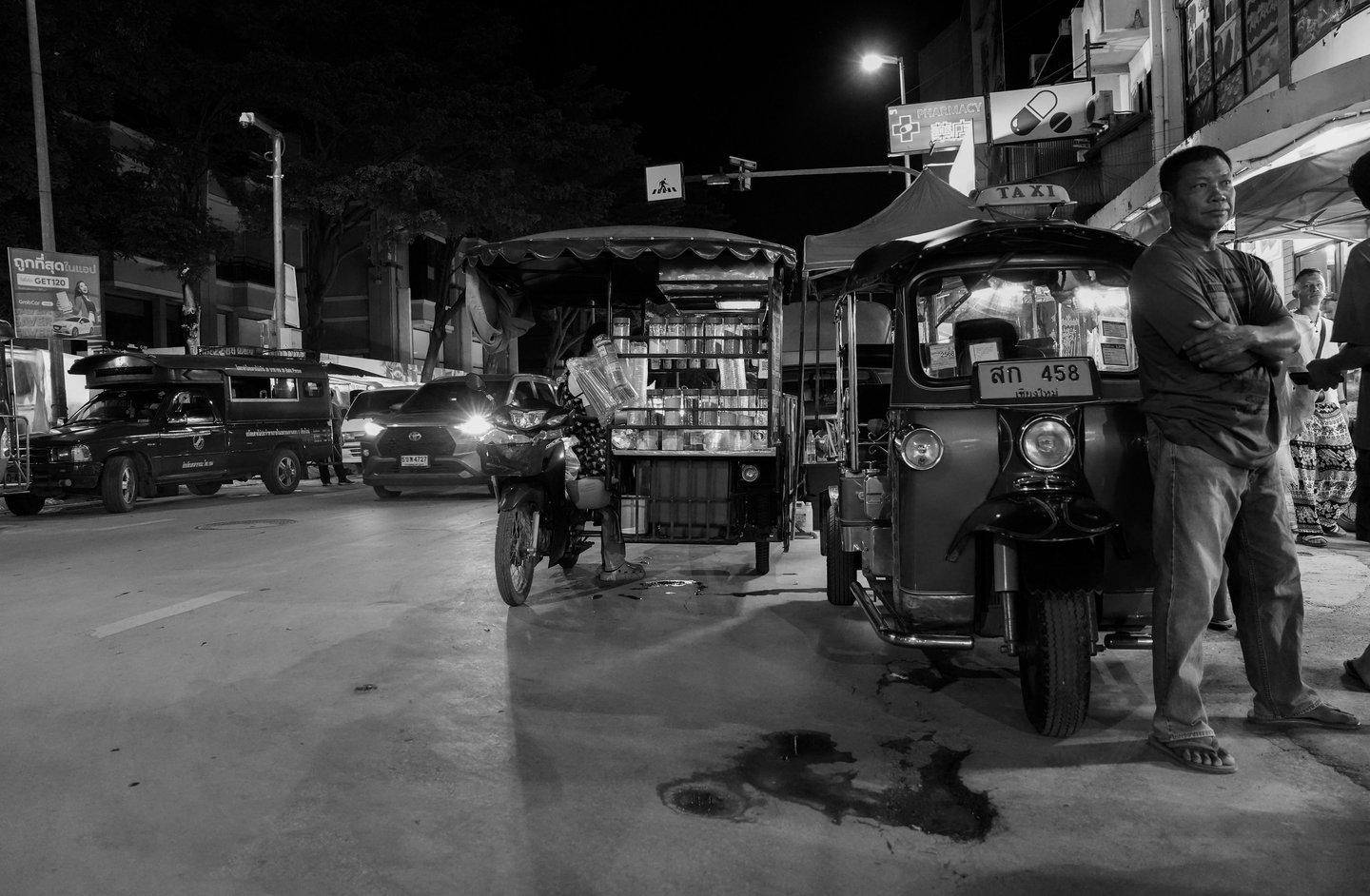
Another key location is the Night Bazaar – one of the busiest areas in the city after dark. It’s louder, more crowded, more commercial than Nan, but still full of scenes that work well in black and white. Movement, contrast, and human interaction are everywhere if you take the time to observe.
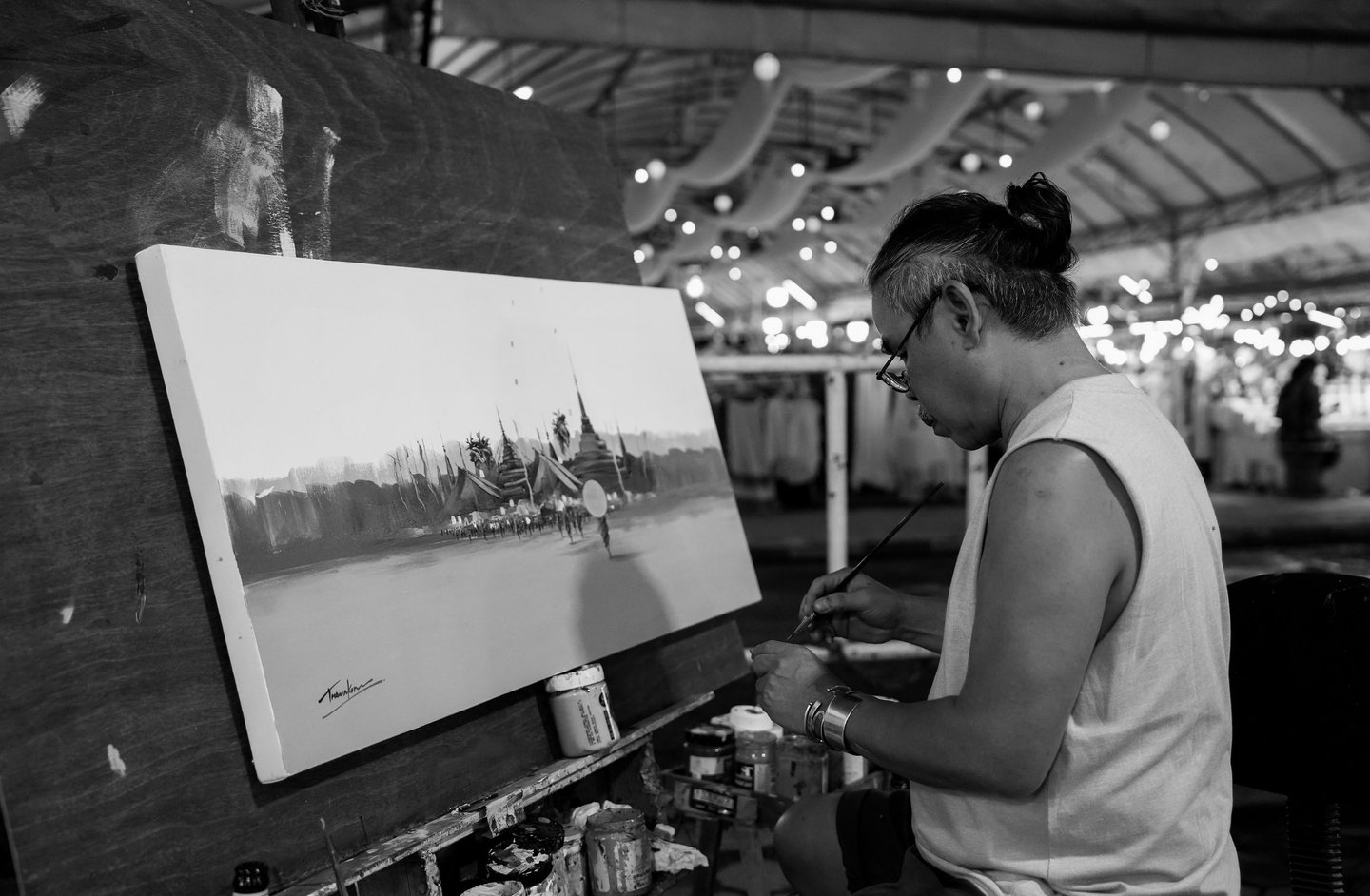
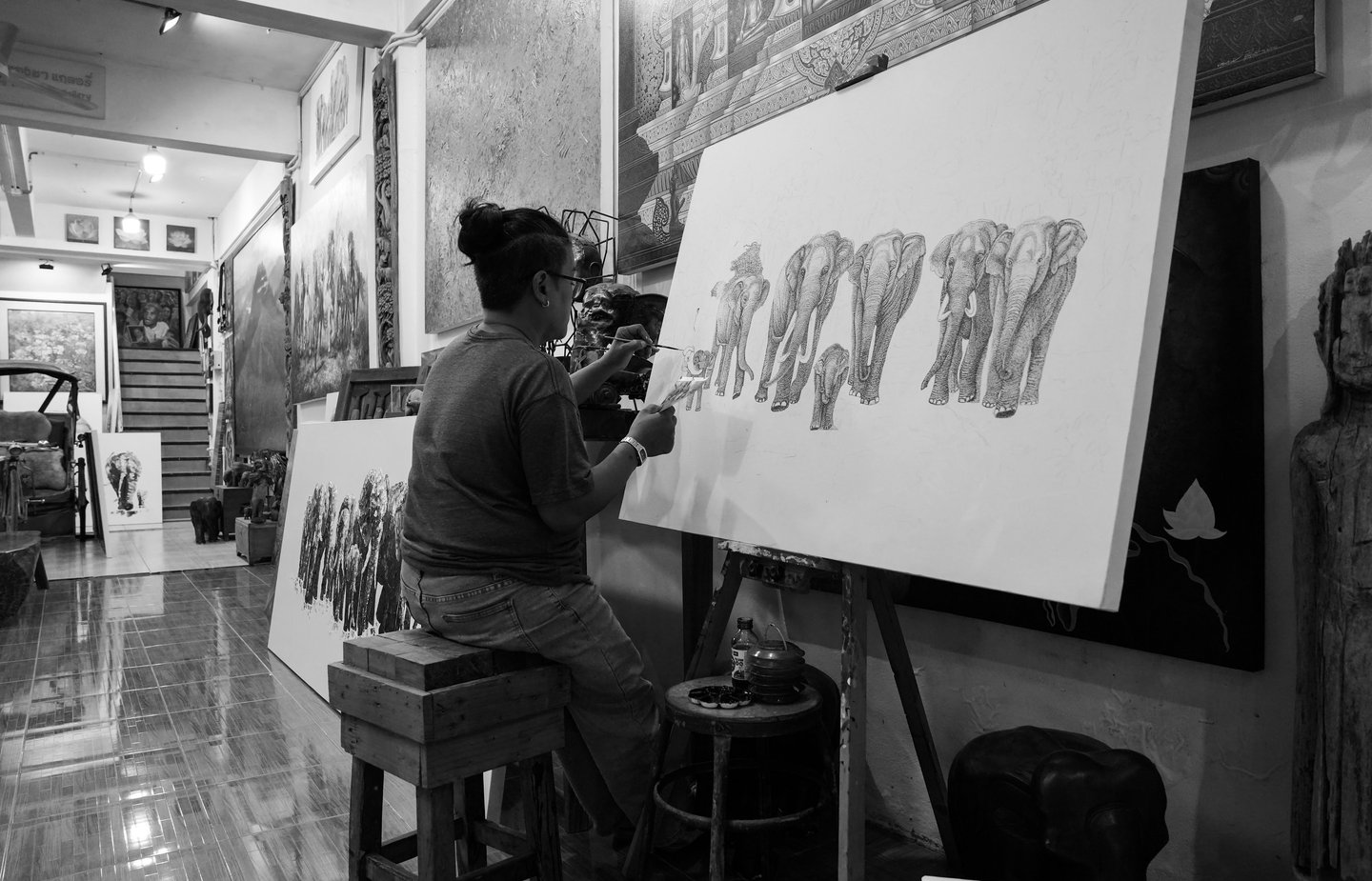
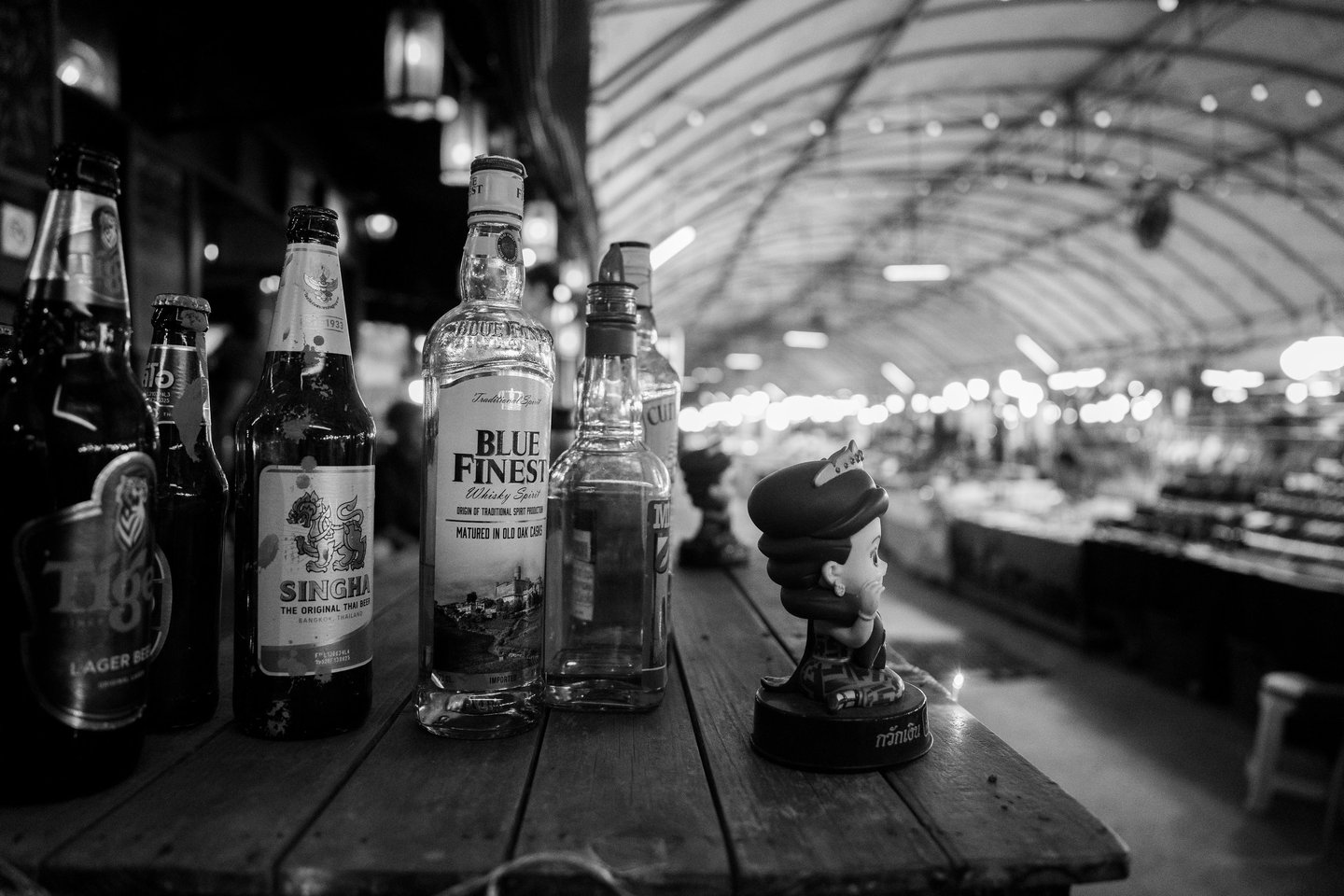
This part of Northern Thailand, photographed in black and white, is less about iconic sights and more about everyday life. It’s about slowing down, walking without a fixed plan, and noticing what happens in front of you.
Hoi An in Black and White – Night Street Photography in Vietnam’s Historic Old Town
Some cities look beautiful in colour.
Hoi An reveals something deeper in black and white.
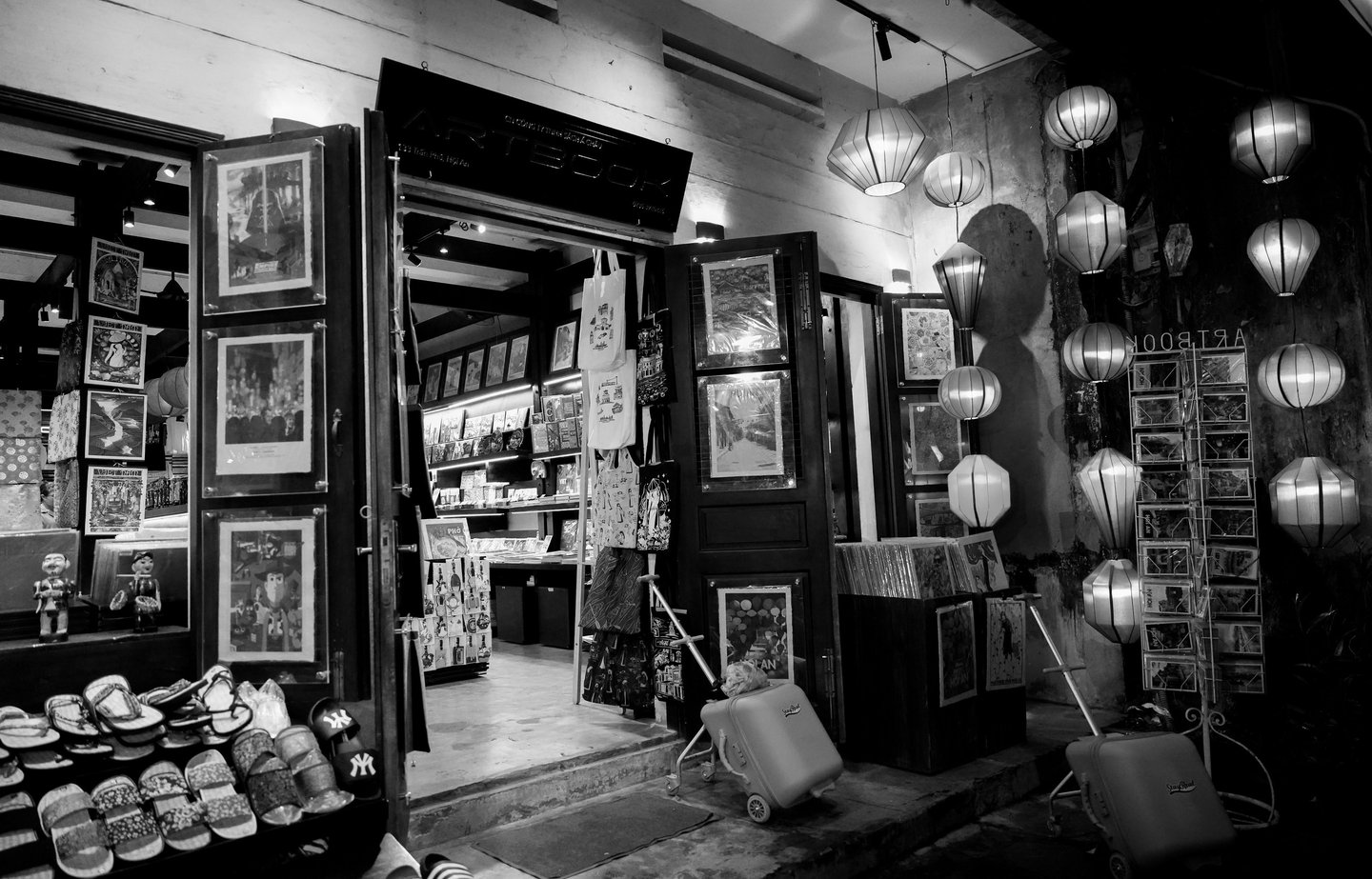
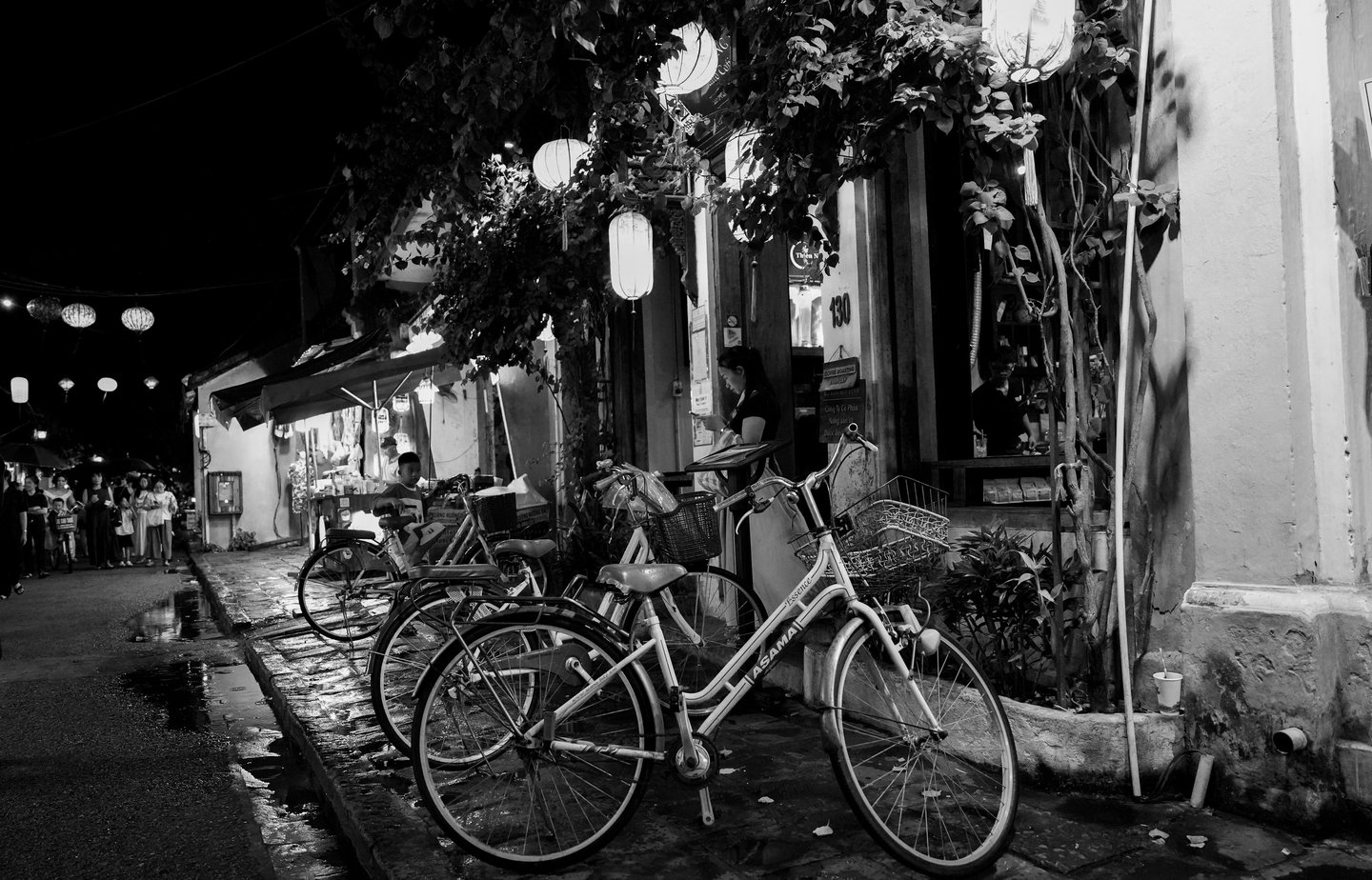
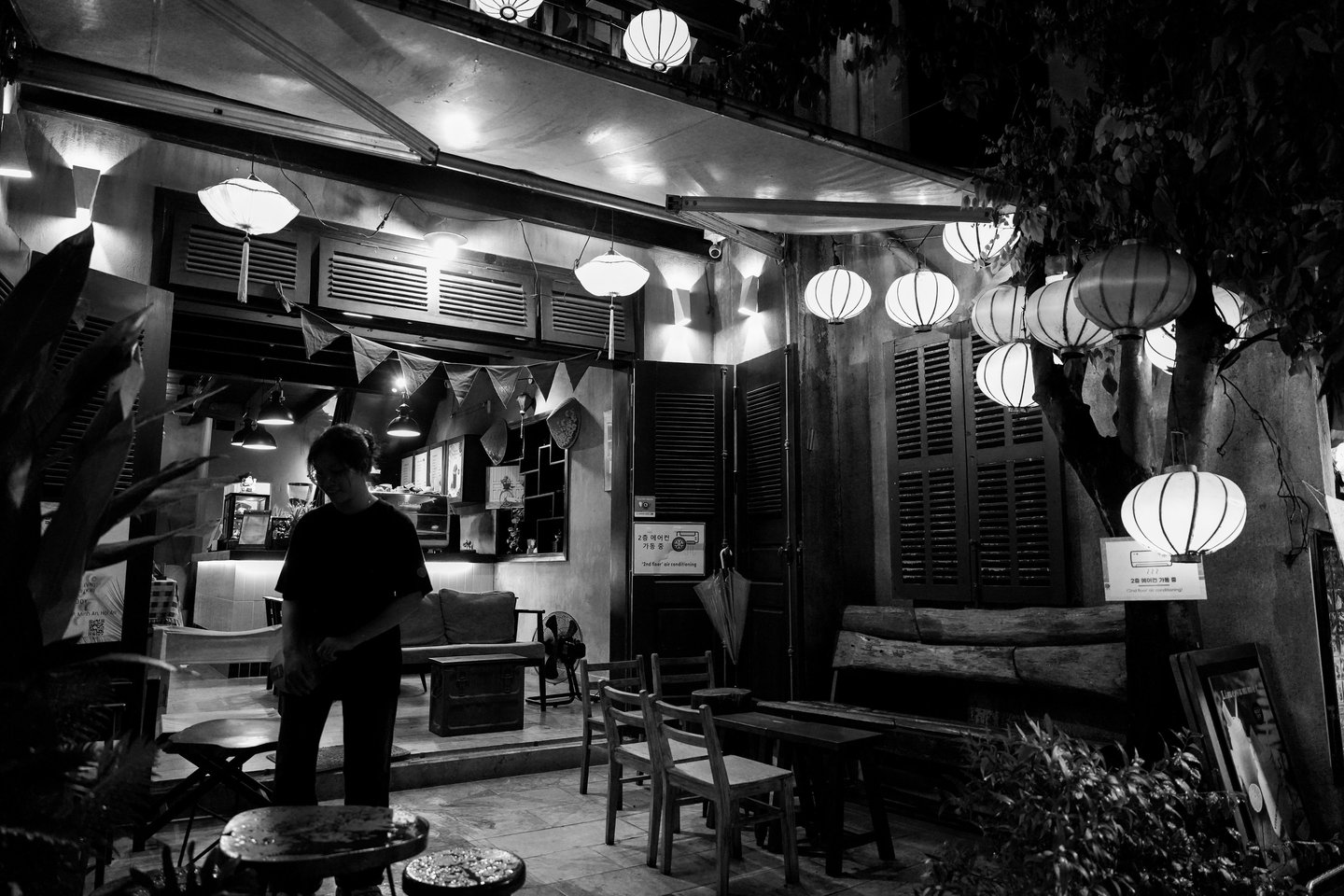
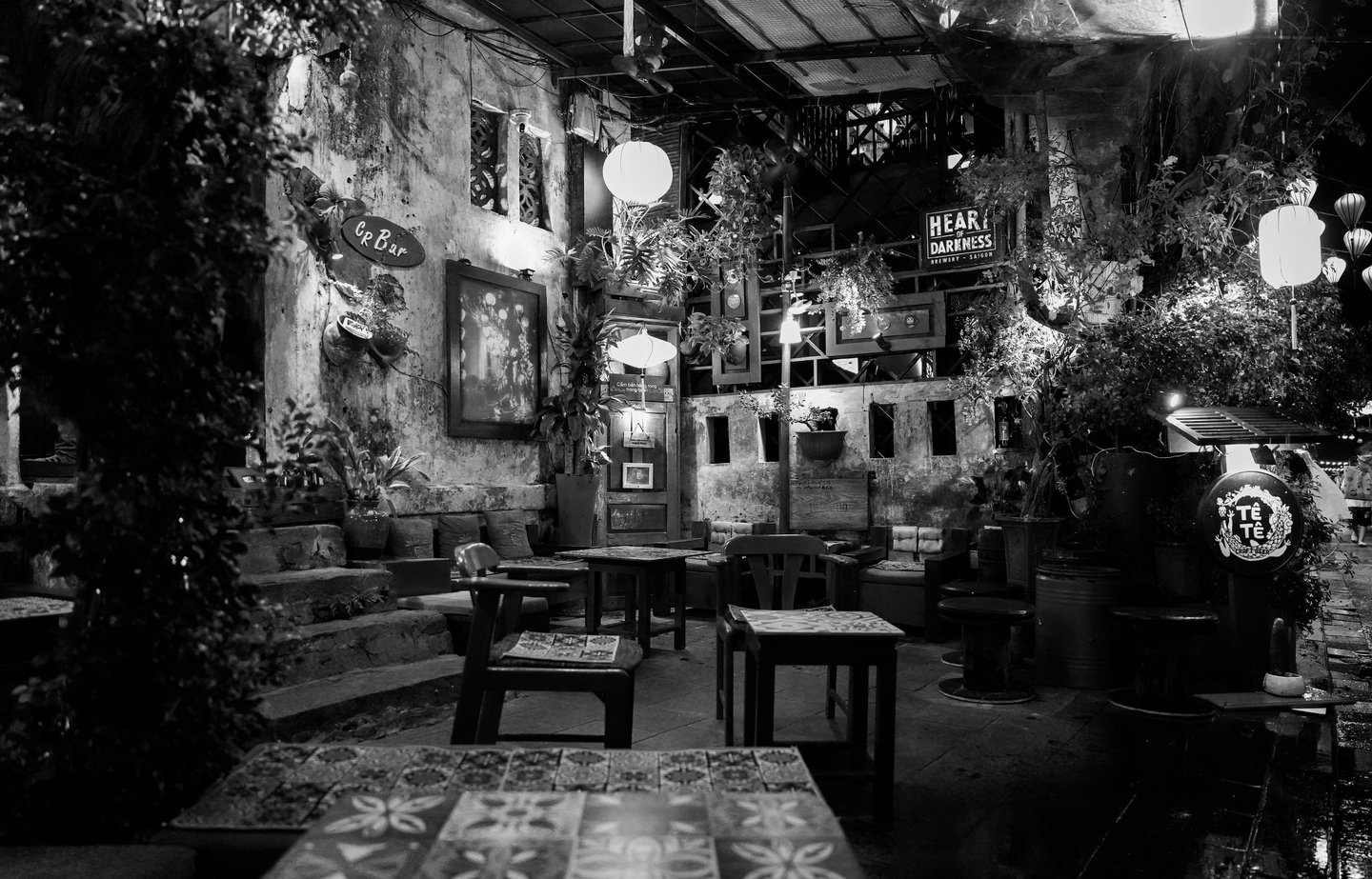
When I walked through the historic streets of this old trading port at night, I was not looking for postcard images. I was looking for contrast, texture, movement and the quiet details that often disappear behind bright lanterns and tourist colours. That is exactly why black and white street photography in Hoi An works so well.
Behind the romantic image many visitors know, Hoi An is a city shaped by centuries of exchange, migration and survival.
Hoi An – A Historic Port with Global Roots
Located on the central coast of Vietnam, Hoi An was once one of the most important trading ports in Southeast Asia between the 15th and 19th centuries. Merchants from Japan, China, Portugal and later Europe arrived here, bringing goods, architecture and influence.
That history can still be felt today.
The old town, now recognised as a UNESCO World Heritage Site, remains one of the best-preserved historic urban areas in the region. Wooden shop houses, narrow streets, assembly halls, temples and riverside buildings still carry the marks of different cultures meeting in one place.
At night, when the crowds thin out and shadows begin to take over, Hoi An feels closer to its past.
And that is when I prefer to photograph it.
The Japanese Bridge – More Than a Landmark
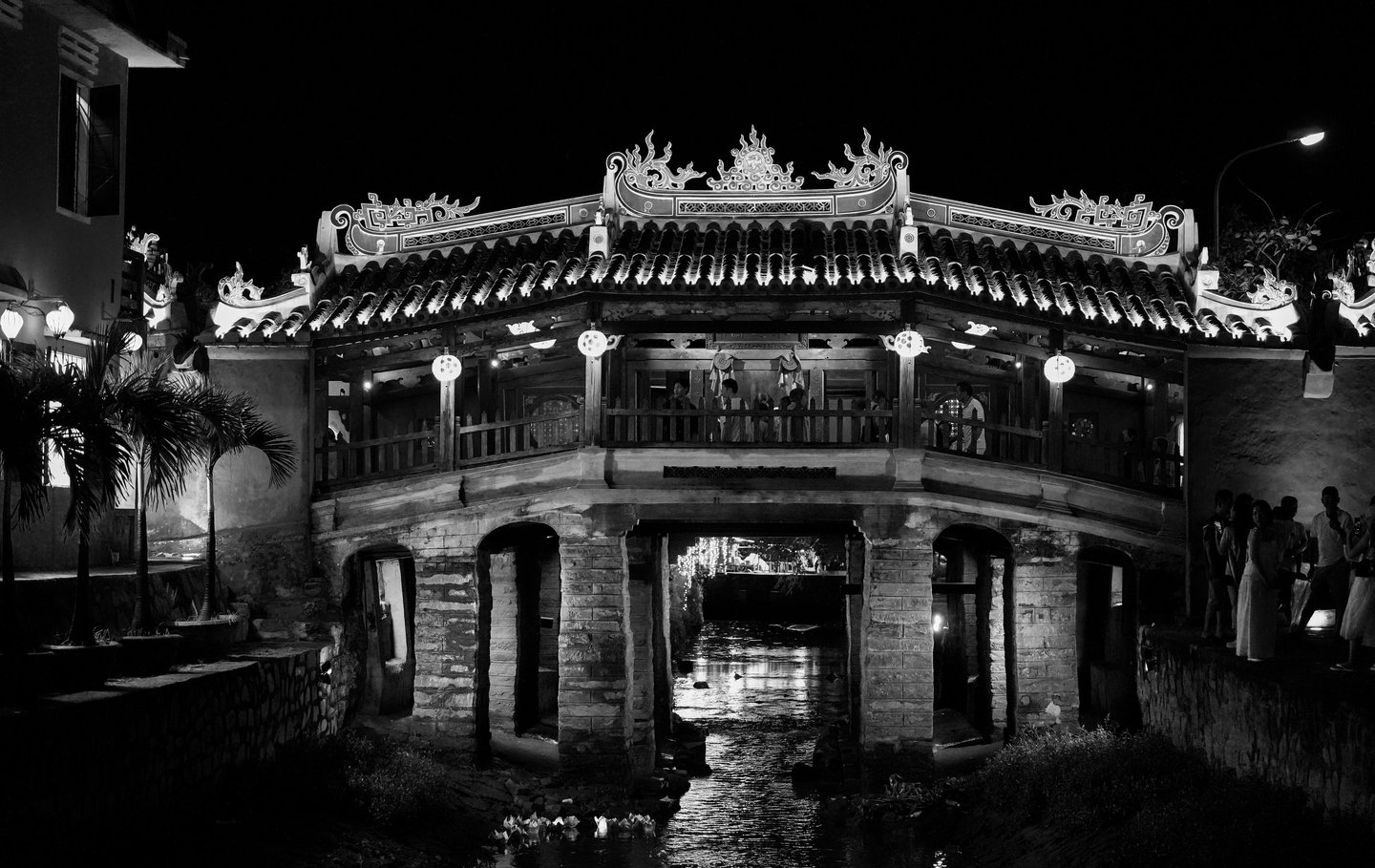
One of the best-known symbols of Hoi An is the Japanese Covered Bridge. Built in the late 16th century by the Japanese community living in the town, it once connected different quarters of the city and reflected the international character of Hoi An long before globalisation became a modern word.
Millions photograph it in colour.
I chose black and white.
Without the distraction of colour, the bridge becomes structure, shape and atmosphere. Stone, wood, shadow and light begin to speak for themselves. It stops being a tourist attraction and becomes what it really is: a witness to time.
Night Streets, Bars and Urban Contrast
Hoi An after dark has its own rhythm.
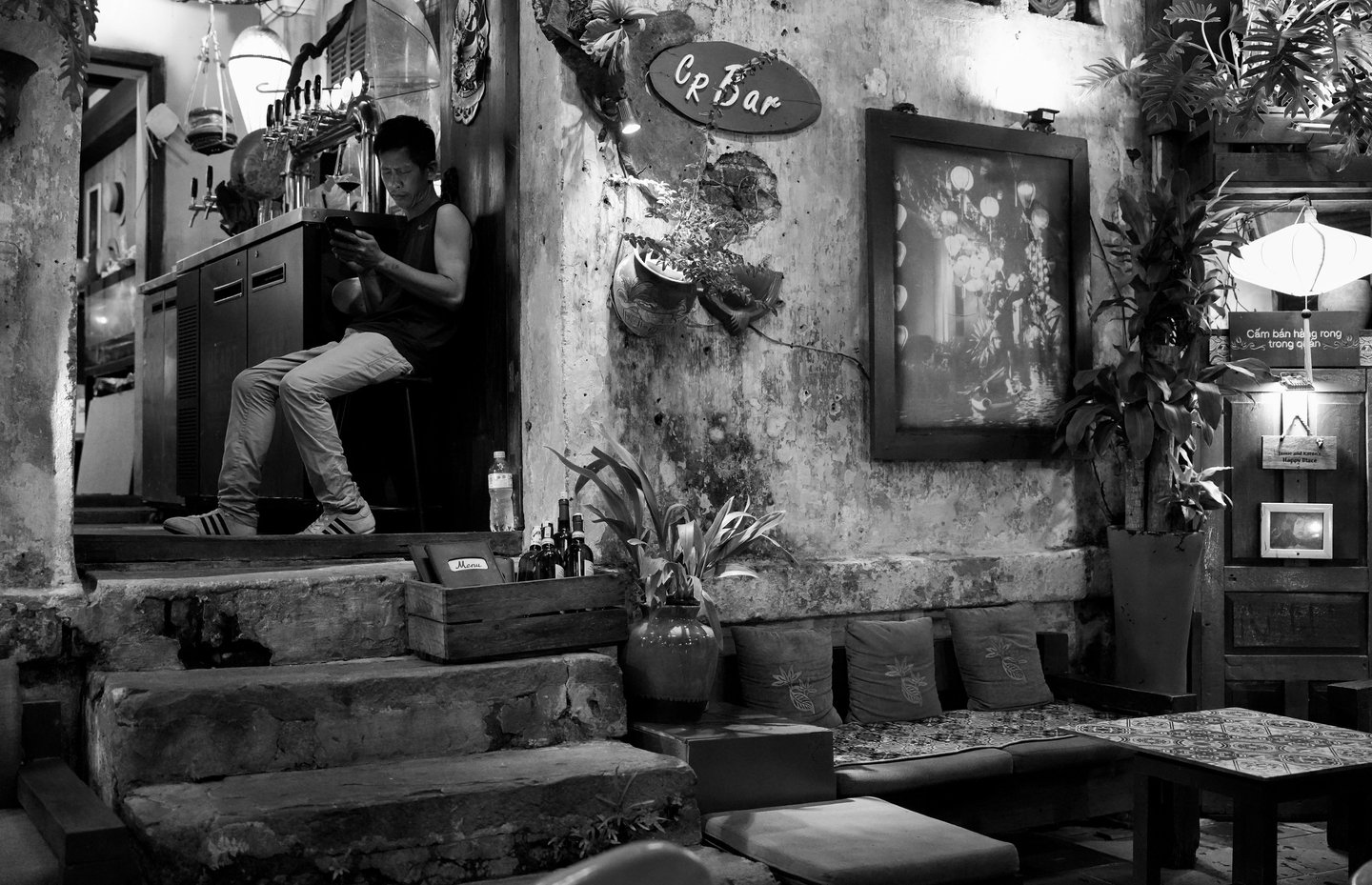
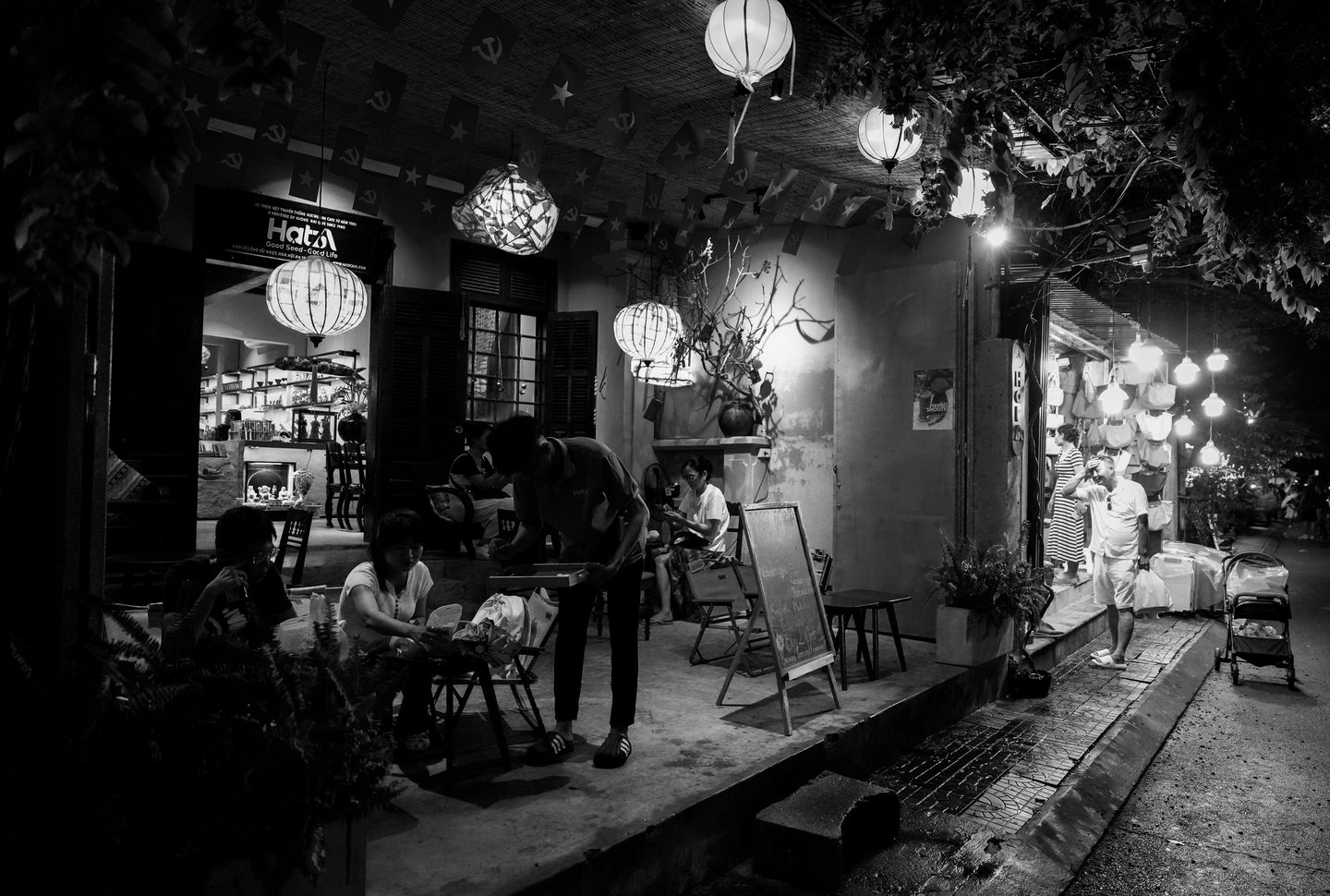
The historic old town fills with bars, restaurants and people moving through narrow streets framed by old facades. In colour, it can feel charming and soft. In monochrome, it becomes something more honest.
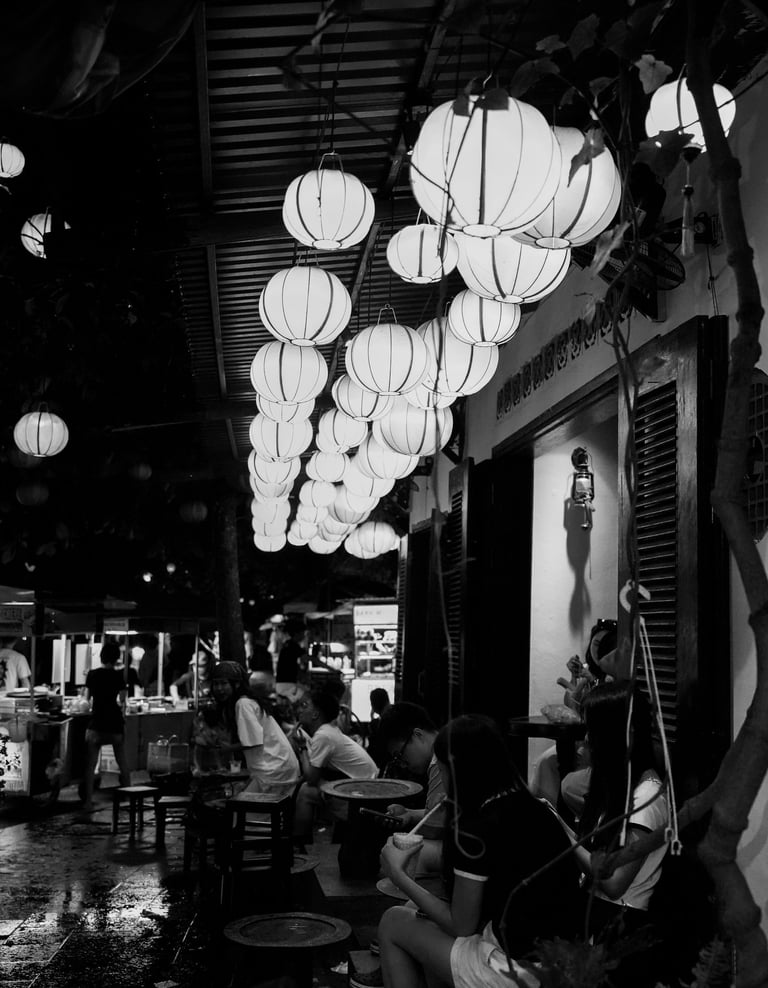
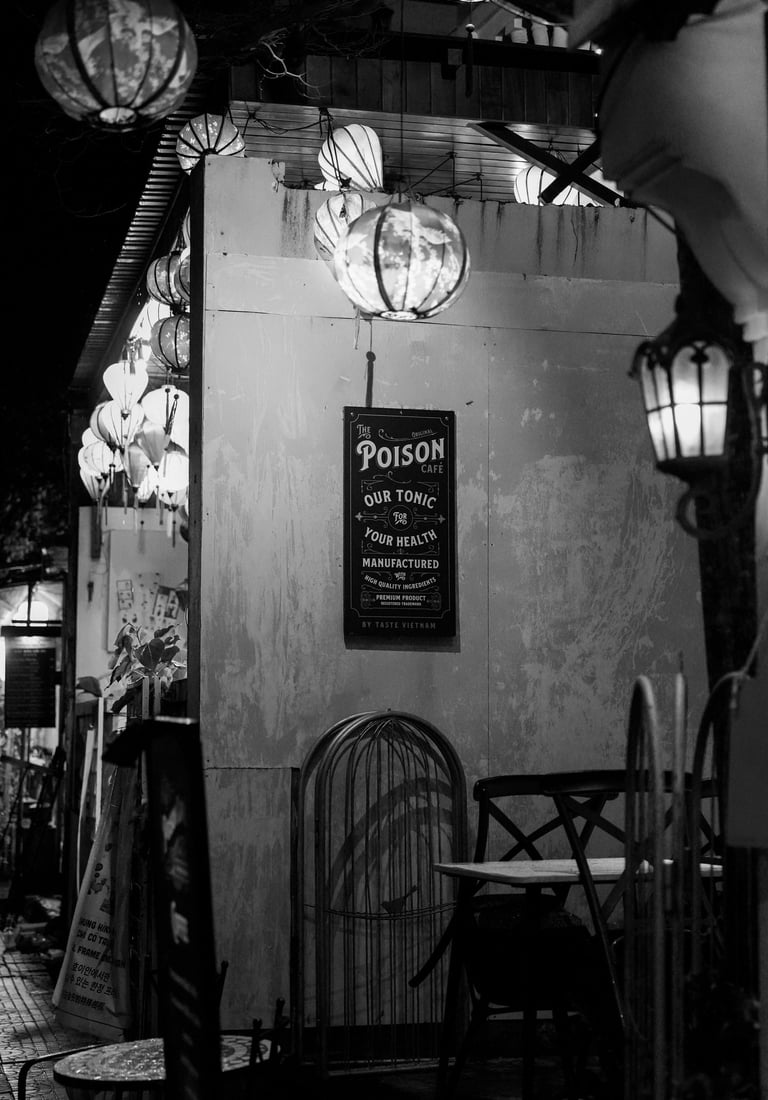
Black and white photography strips the scene back to essentials:
reflections on old pavement
cigarette smoke outside late bars
hard light falling through open doors
silhouettes crossing alleyways
faces caught for one second in passing
This is where urban contrast photography in Southeast Asia becomes interesting to me. Beauty mixed with wear. Tourism mixed with daily life. History mixed with commerce.
Street Food and the Soul of the City
For me, cities are often best understood through food stalls.
Hoi An is famous for its street food culture, and especially for its noodle dishes. The most iconic local bowl is Cao Lau, a regional noodle specialty deeply linked to the city’s heritage. Vendors serve soups and noodles with speed, routine and zero wasted movement.
That is always worth photographing.
Steam rising into street light. Hands preparing bowls. Plastic stools. Waiting customers. Quiet concentration. These scenes say more about real life than any polished travel brochure ever could.
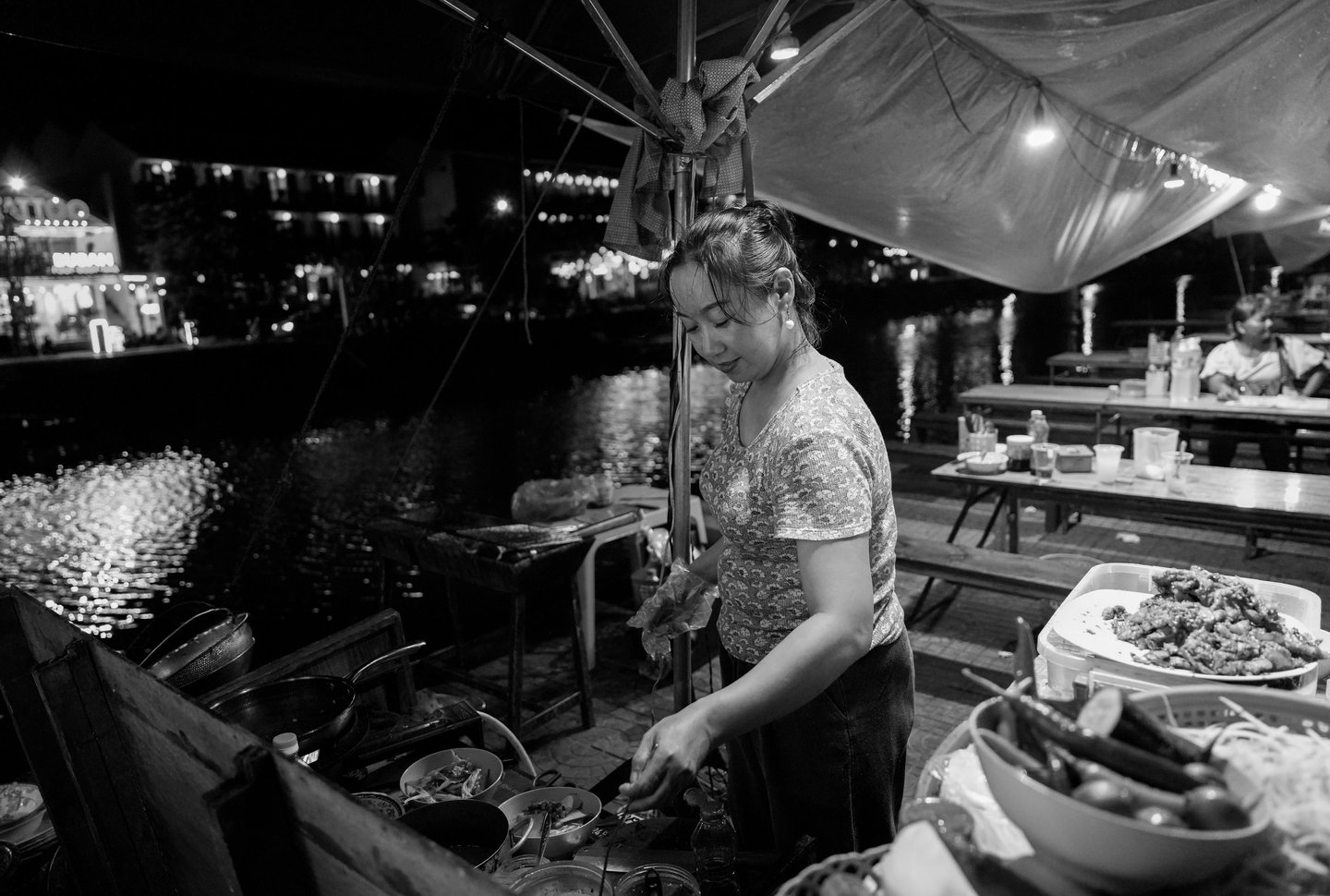
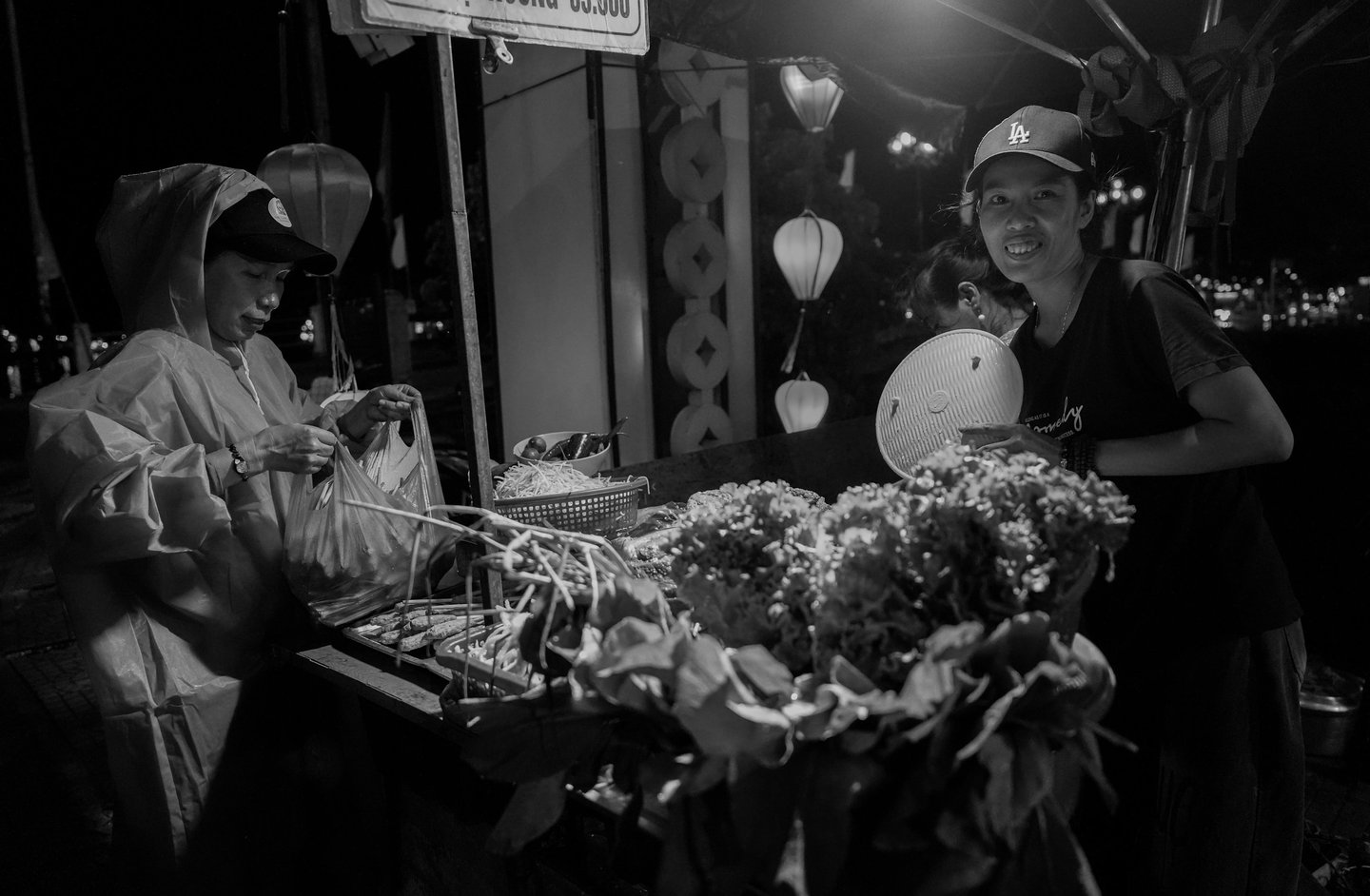
I also photographed one of the open squares inside the old town where mobile Vietnamese food vendors continue their nightly routines. Carts, baskets, stools, portable kitchens – small businesses built on movement and hard work.
This is the living side of Hoi An.
Not preserved history. Working history.
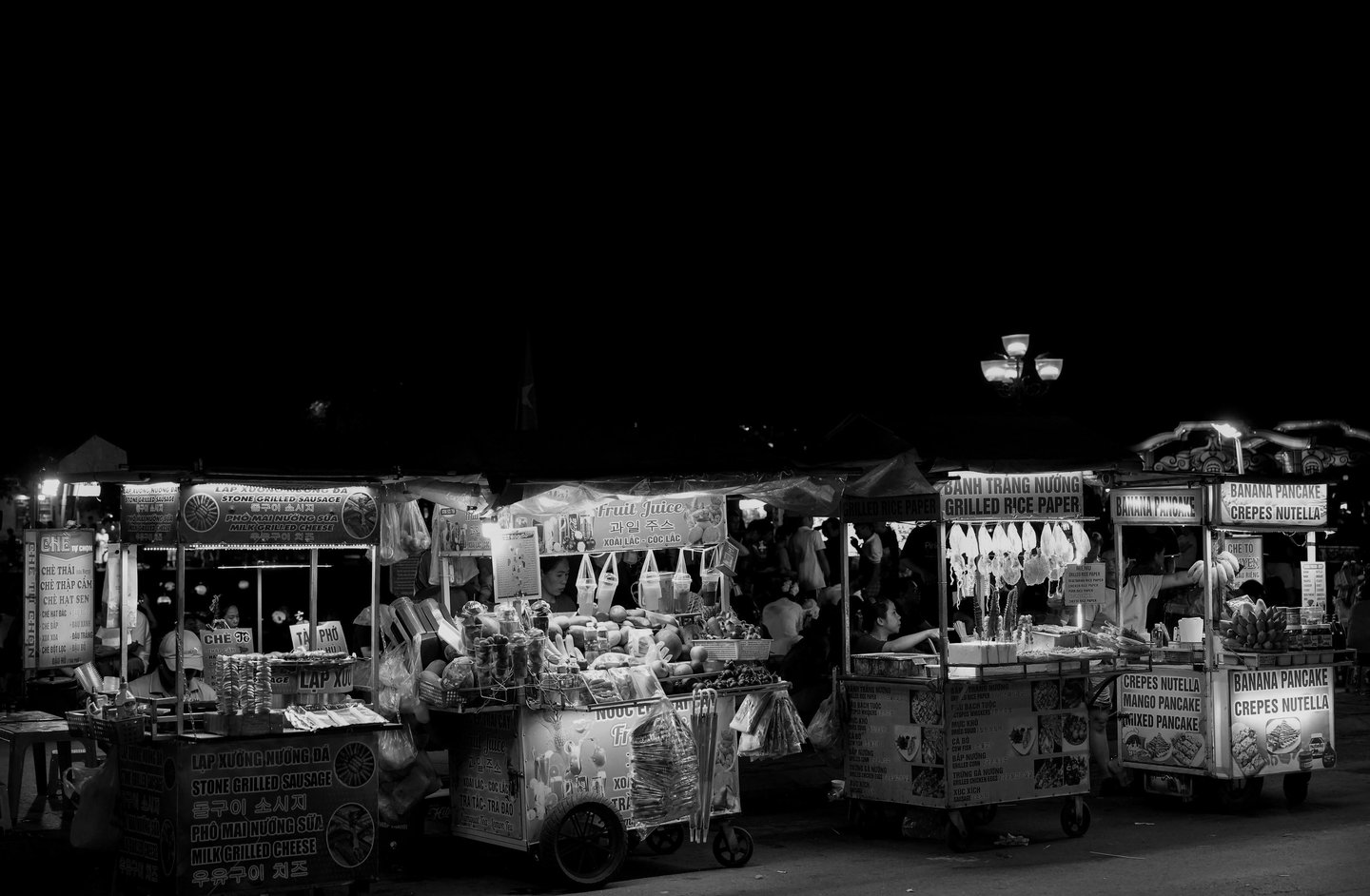
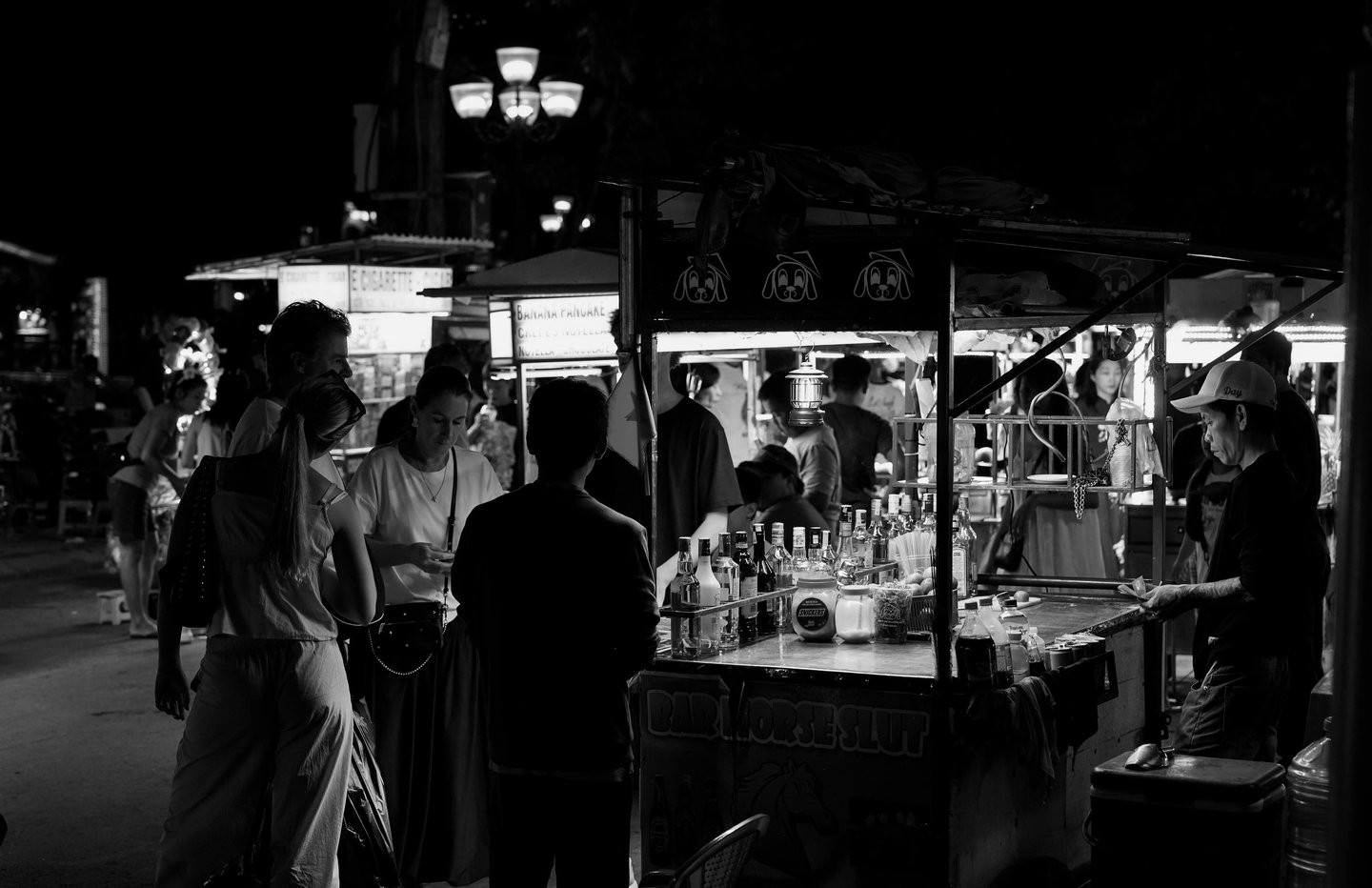
Why Black and White Works in Hoi An
Many people think Hoi An is only about colour lanterns and romantic evenings.
I disagree.
Black and white removes decoration and leaves mood. It shows lines, faces, fatigue, pride, routine and atmosphere. It turns a pretty destination into a real city again.
That is why I chose monochrome for this series.
A Preview of a Larger Story
These photographs from Hoi An, Vietnam are only a small preview of a much deeper visual story I am working on.
A full street photography storytelling feature about Hoi An will be published later here on Strangphotography.com and linked in this section.
There is much more to show.
Photographed with My Trusted Setup
All images were captured with my trusted Sony Alpha 7 IV and the outstanding Sony FE 24-70mm f/2.8 GM.
Reliable in low light, sharp when it matters, flexible enough for everything between architecture, portraits and fast street moments.
But as always, gear only helps.
The real image still happens in front of the lens.
Faces of Thailand in Black and White | Street Portraits, Bar Culture & Real Life Moments
Thailand is often shown through beaches, temples and postcards. I prefer faces. Real people. Real expressions. Real moments.
These Pictures are a personal black and white photo journey through Thailand, focused entirely on the people who give the country its character. Faces seen in late-night bars with live music, on busy streets, in quiet corners and in those short moments that disappear if you hesitate too long.
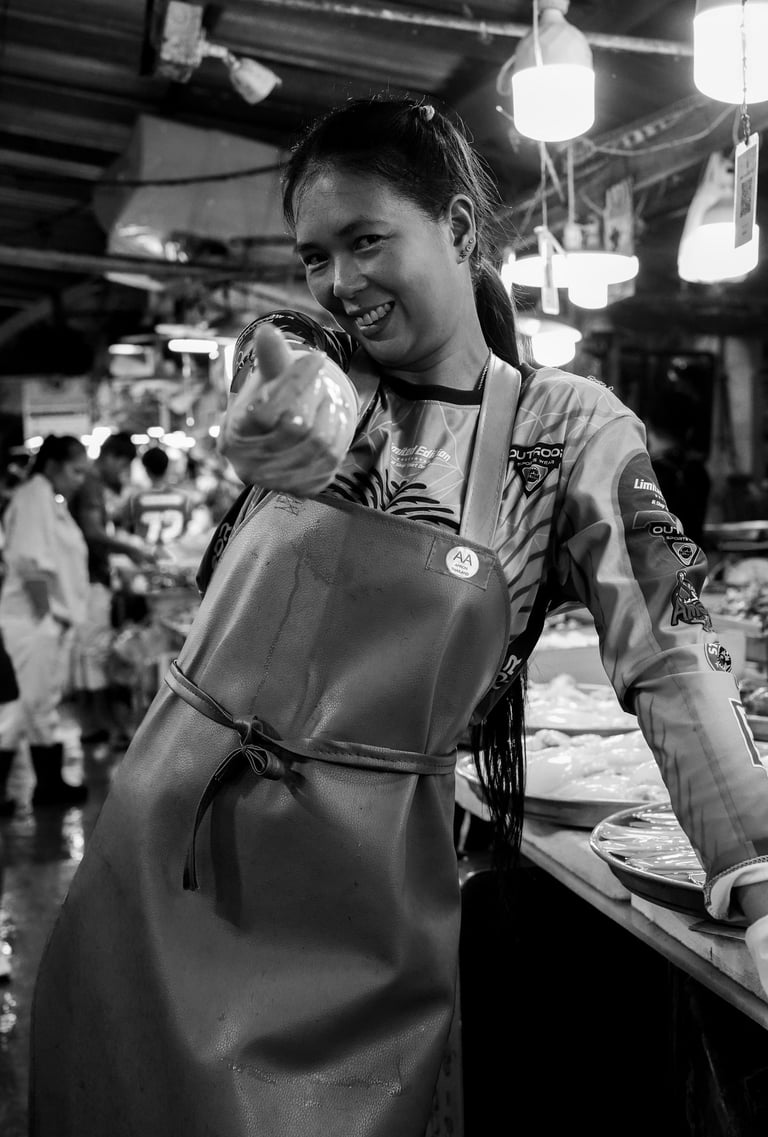
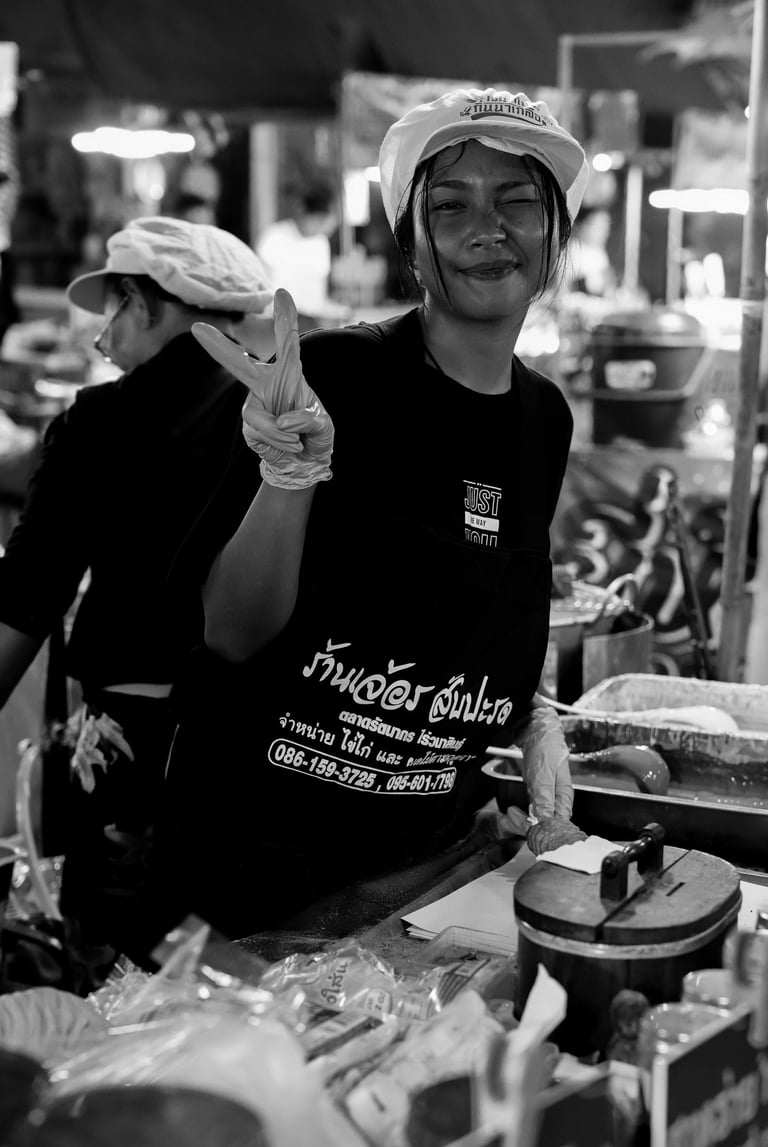
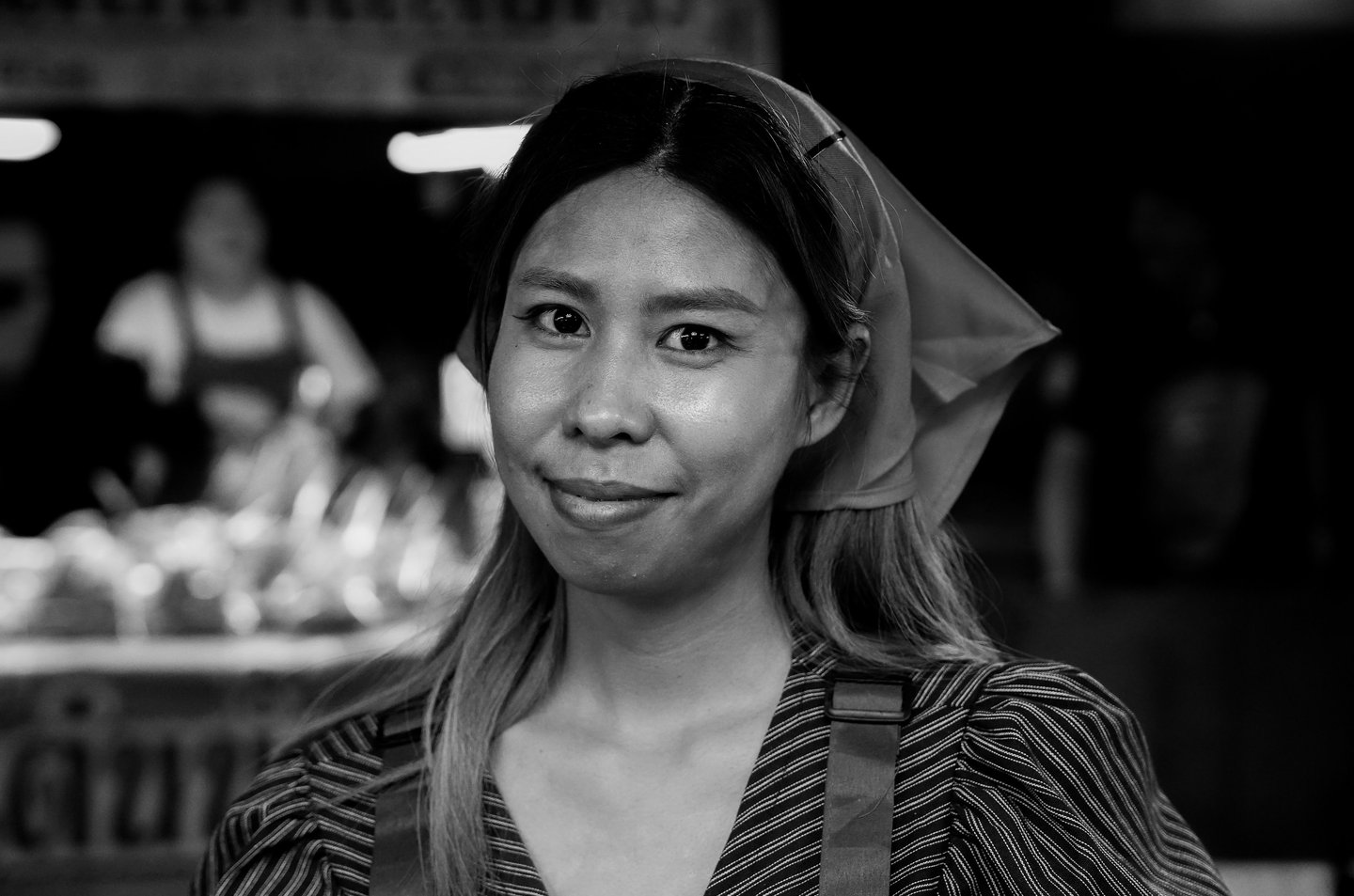
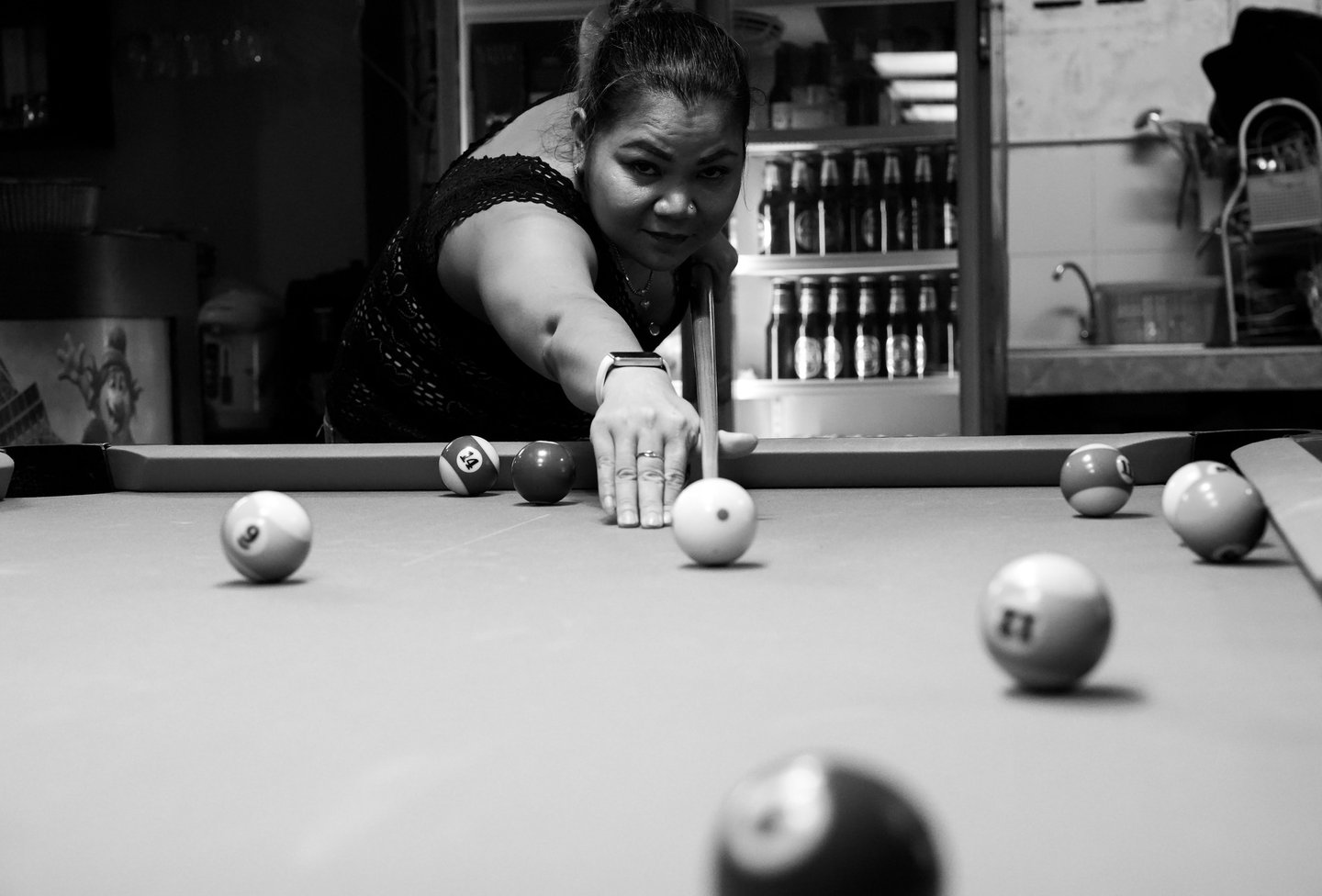

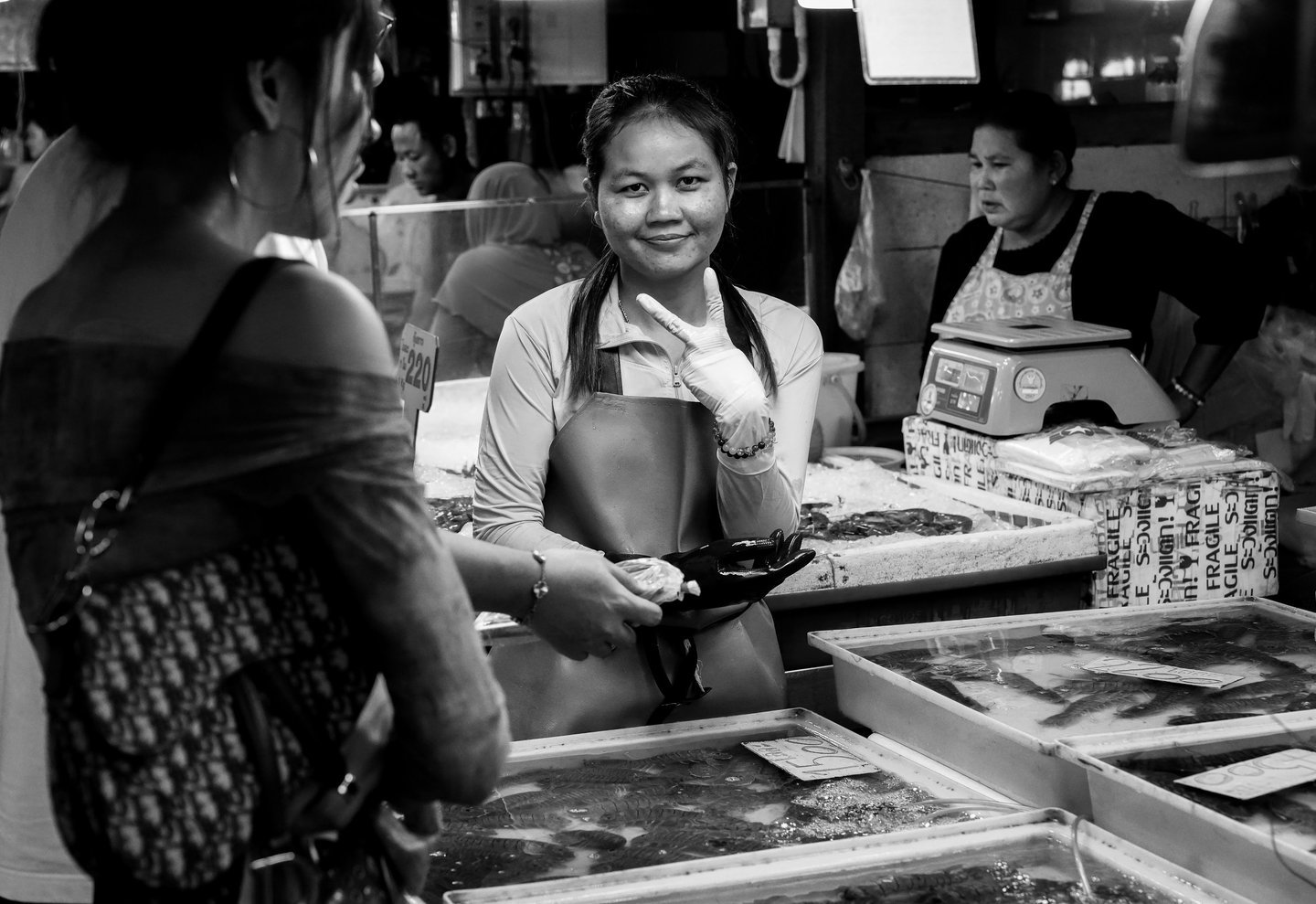
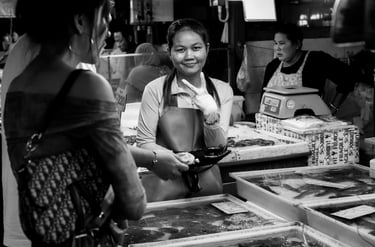
Some frames were taken in bars where live bands played into the night. Others come straight from the street, where everyday life moves fast and nothing repeats itself. Different places, different moods, but always the same focus: the human side of Thailand.
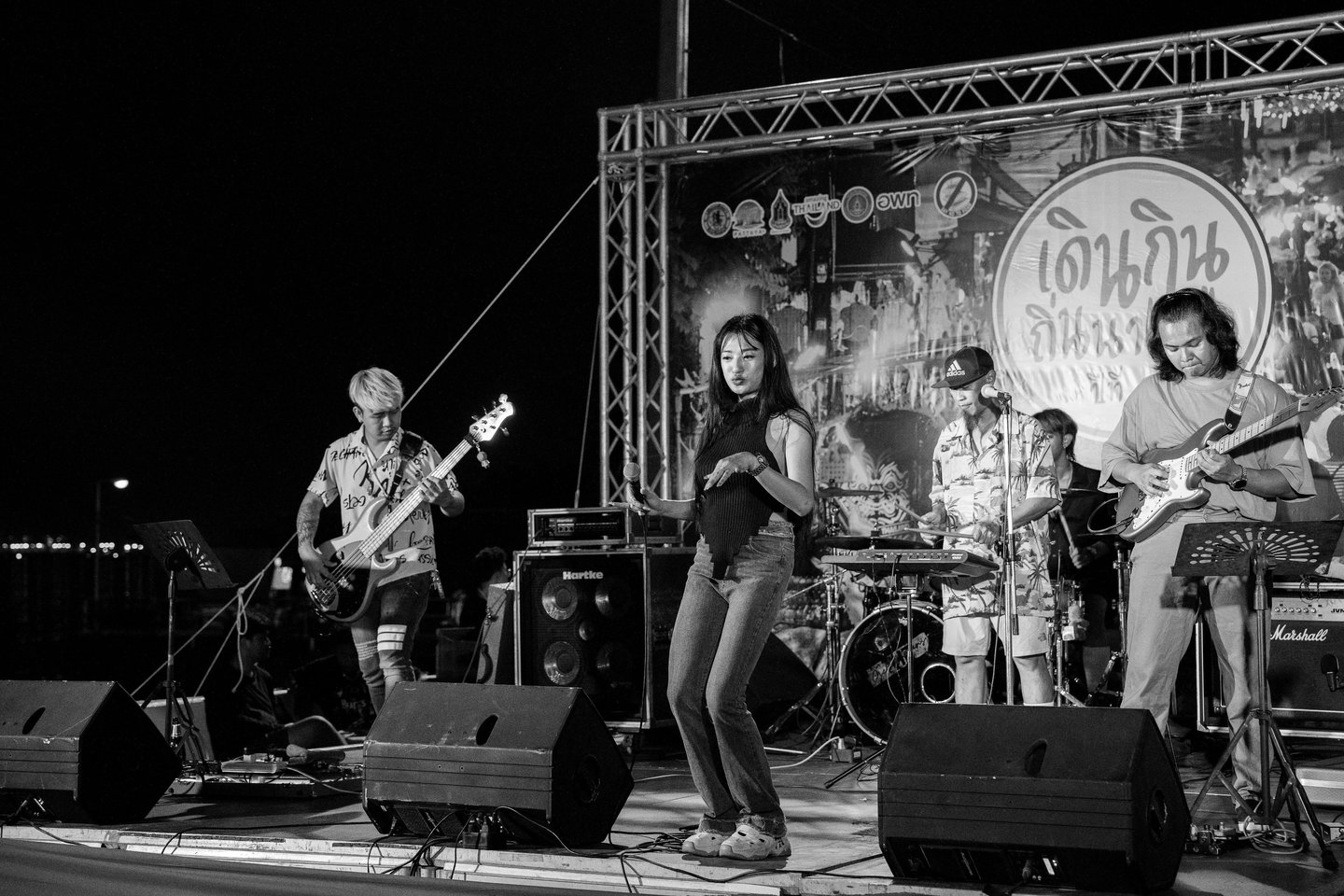
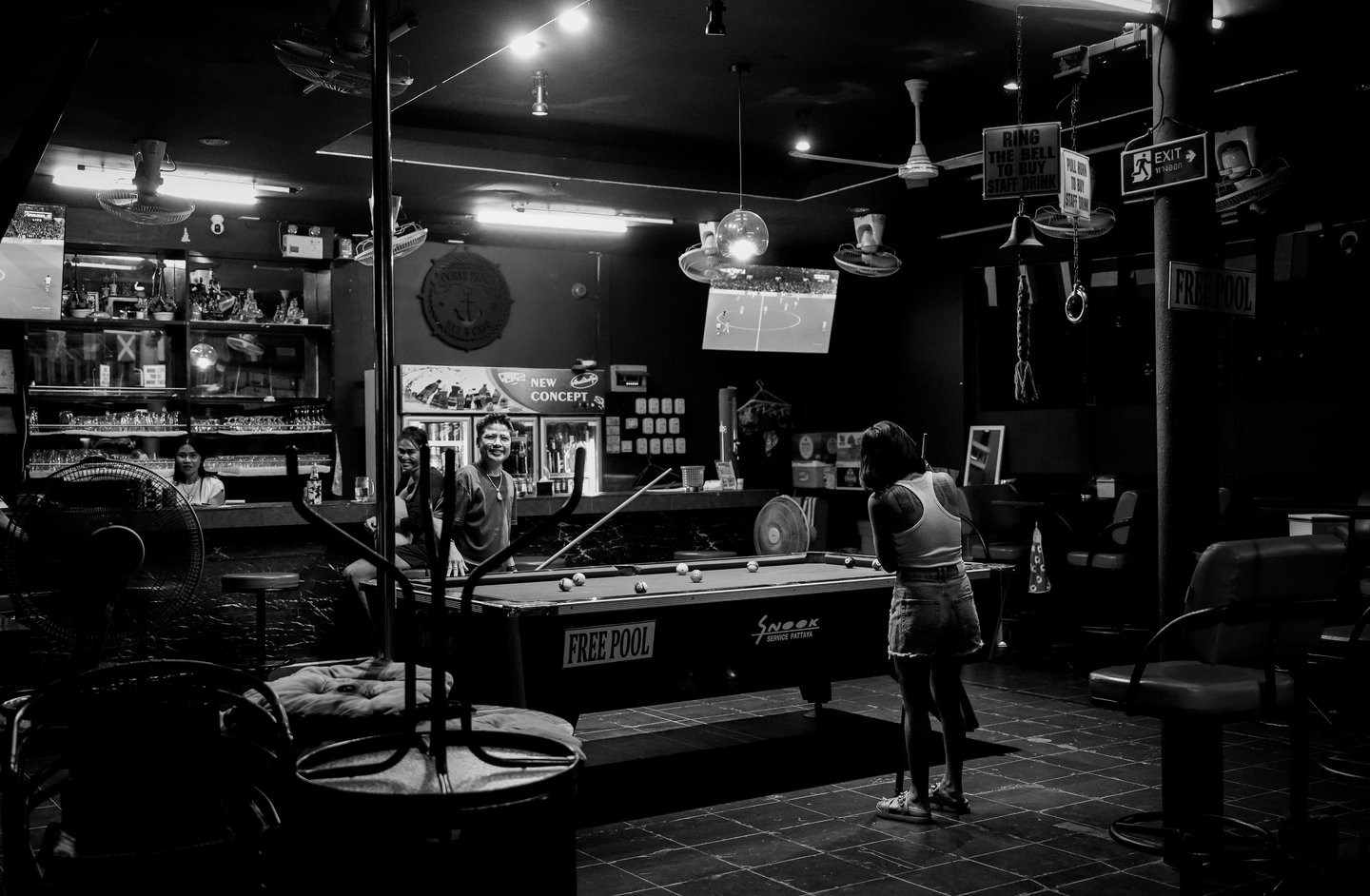
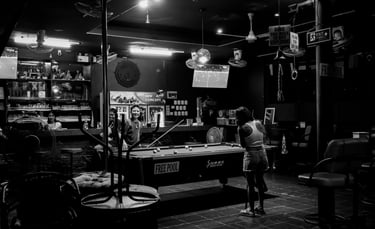
I chose black and white because colour often distracts. Expression does not. In monochrome, the face becomes the story.
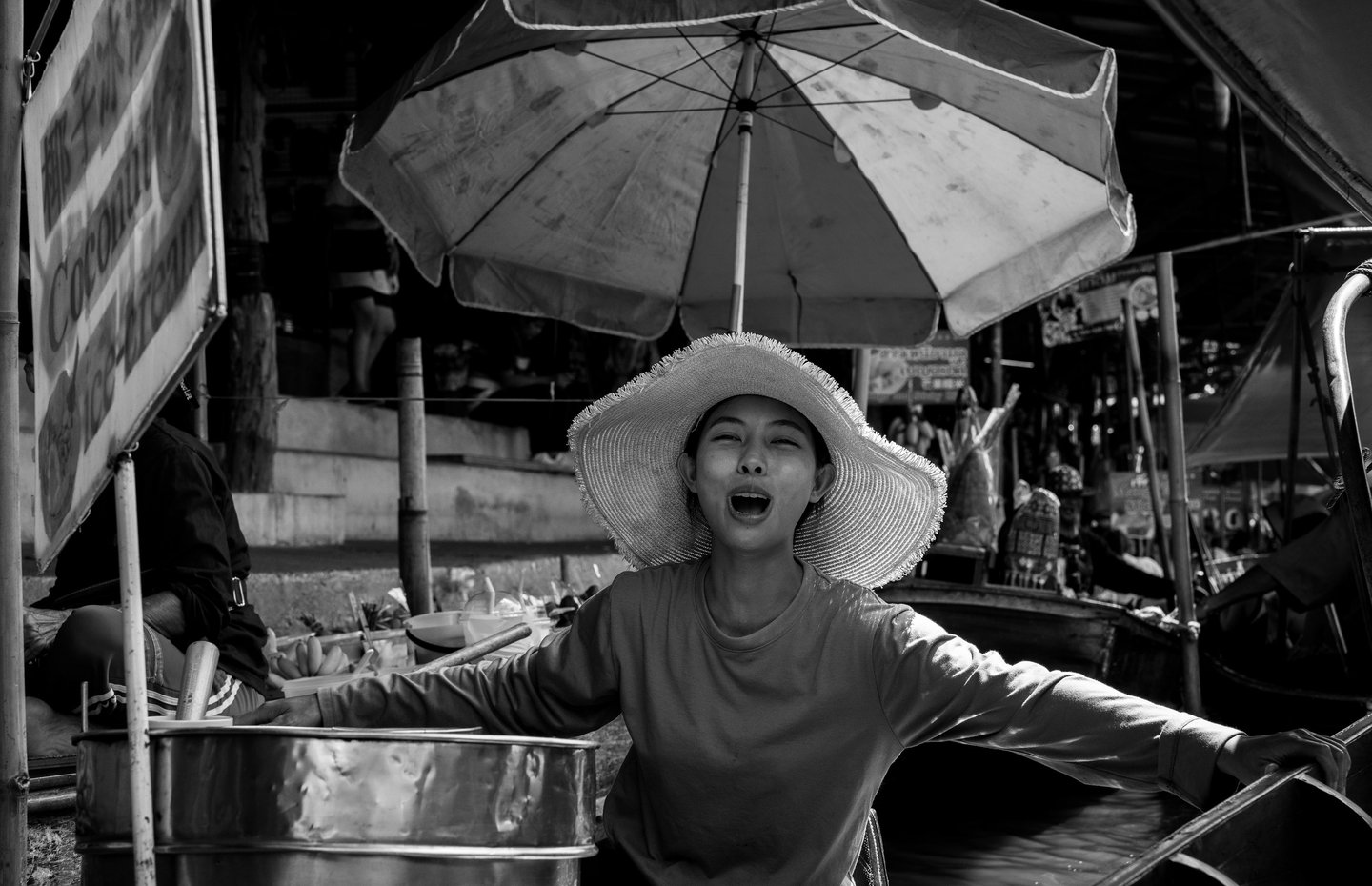
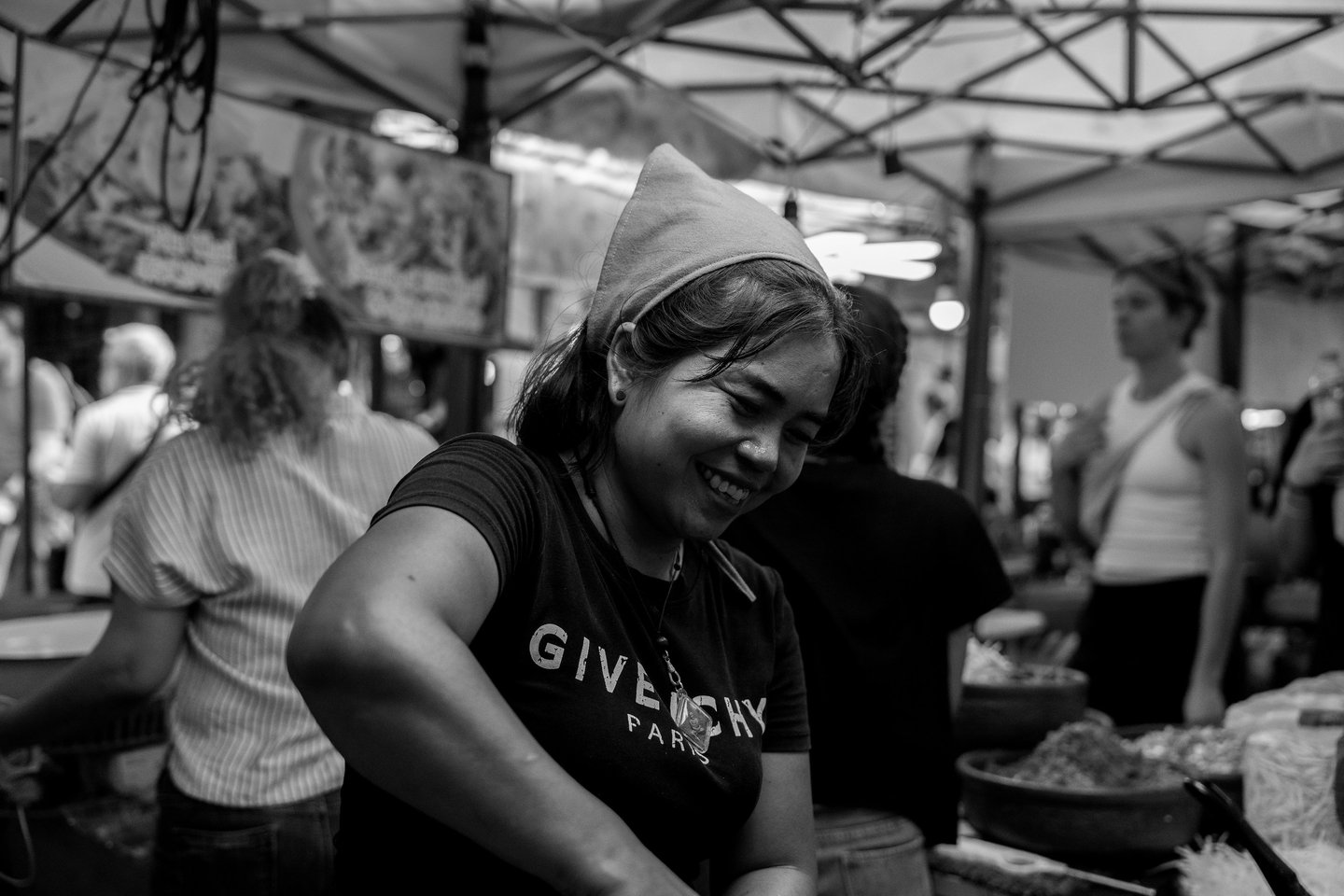
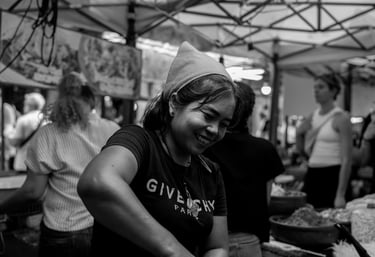
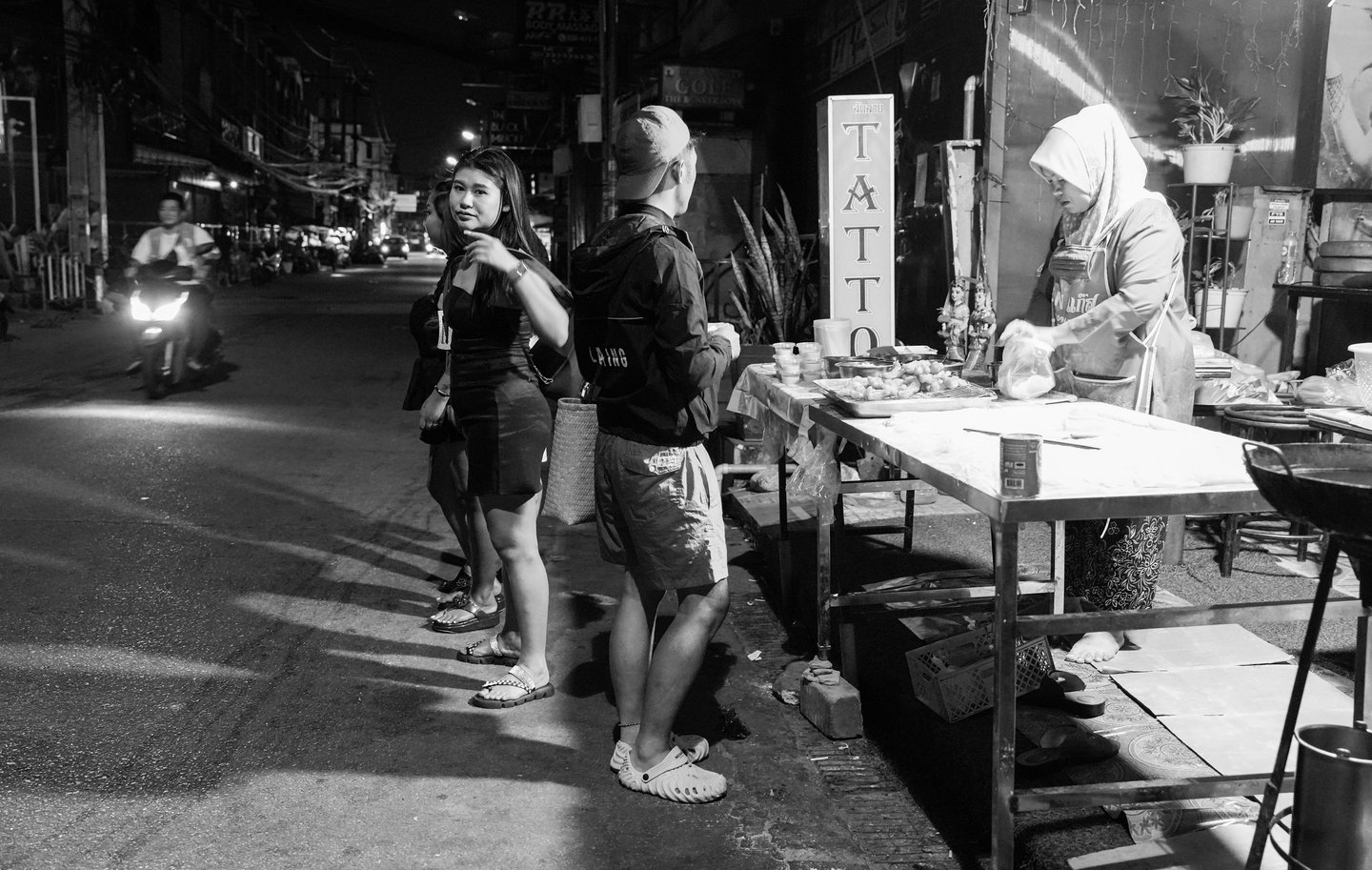
These Photos are made for people who appreciate honest photography, street portraits, Thailand culture and the beauty of unplanned moments.
If you understand Thailand beyond tourism, you will recognise a lot here.
I have published a video about this on YouTube, which can be accessed via the following link.
Black and White Photography in Southeast Asia – Soi Buakhao Pattaya at 4:00 AM | Between Light, Silence and the Last Faces of the Night
If you only know Pattaya in daylight, you do not know Pattaya at all. If you only know it through flashy videos, neon lights and bar scenes, you know even less. The next chapter of my series Black and White Photography in Southeast Asia – Night Street Photography between Light and Shadow takes you to the moment when the night begins to fade: Soi Buakhao in Pattaya City, Thailand, at 4:00 AM.
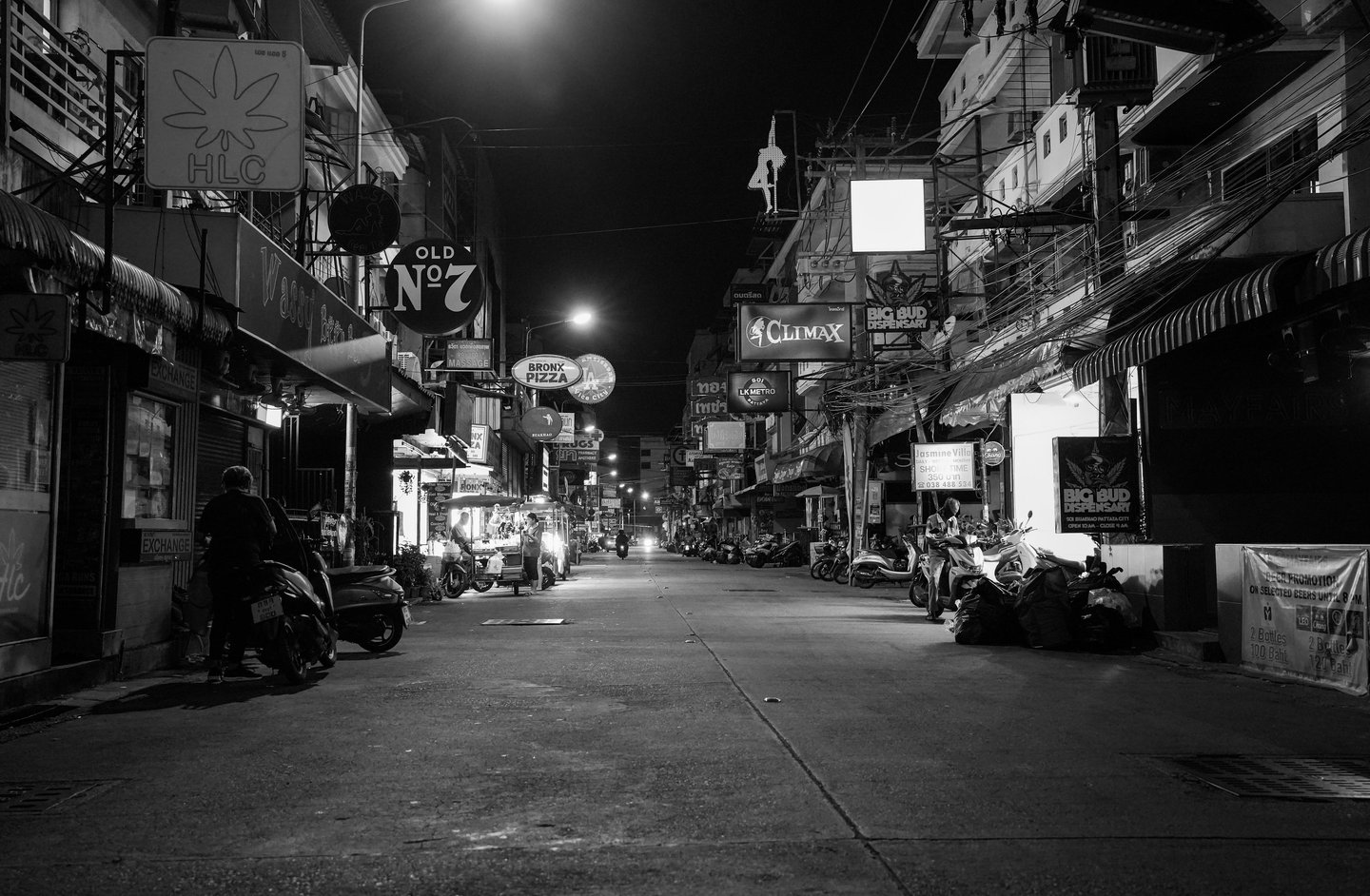
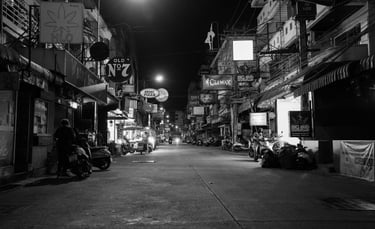
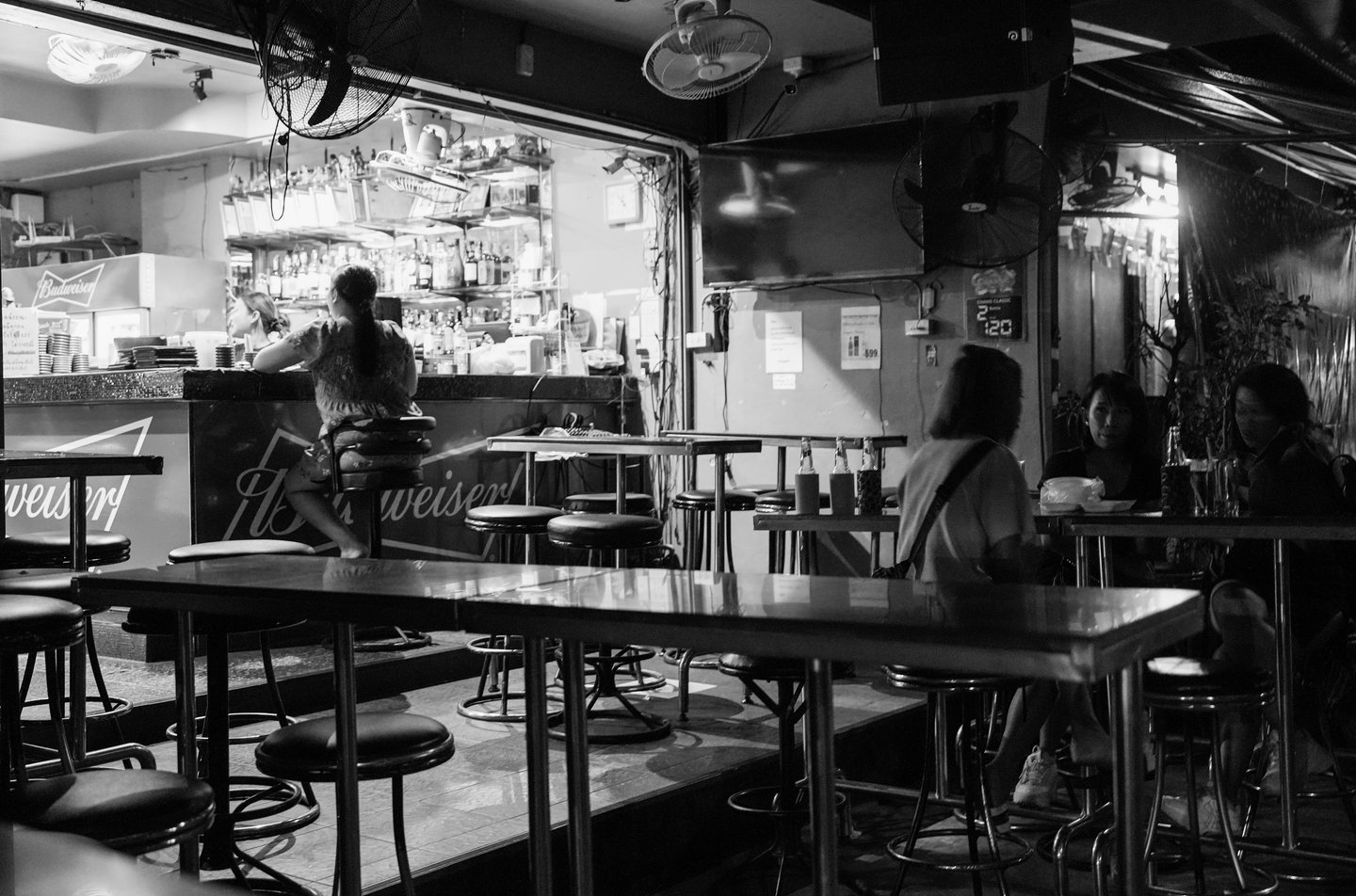
Soi Buakhao has long been one of the most important streets in Pattaya’s nightlife scene. Lined with small bars, beer bars, restaurants, guesthouses, street food stalls, markets, massage shops and endless lights, it has its own rhythm every single night. Many people say that if you want to understand the real Pattaya, you need to spend time on Soi Buakhao. It is raw, direct, loud, sometimes chaotic — and that is exactly what makes it alive.
But I am not interested in the peak hours around midnight. I am interested in what comes after.
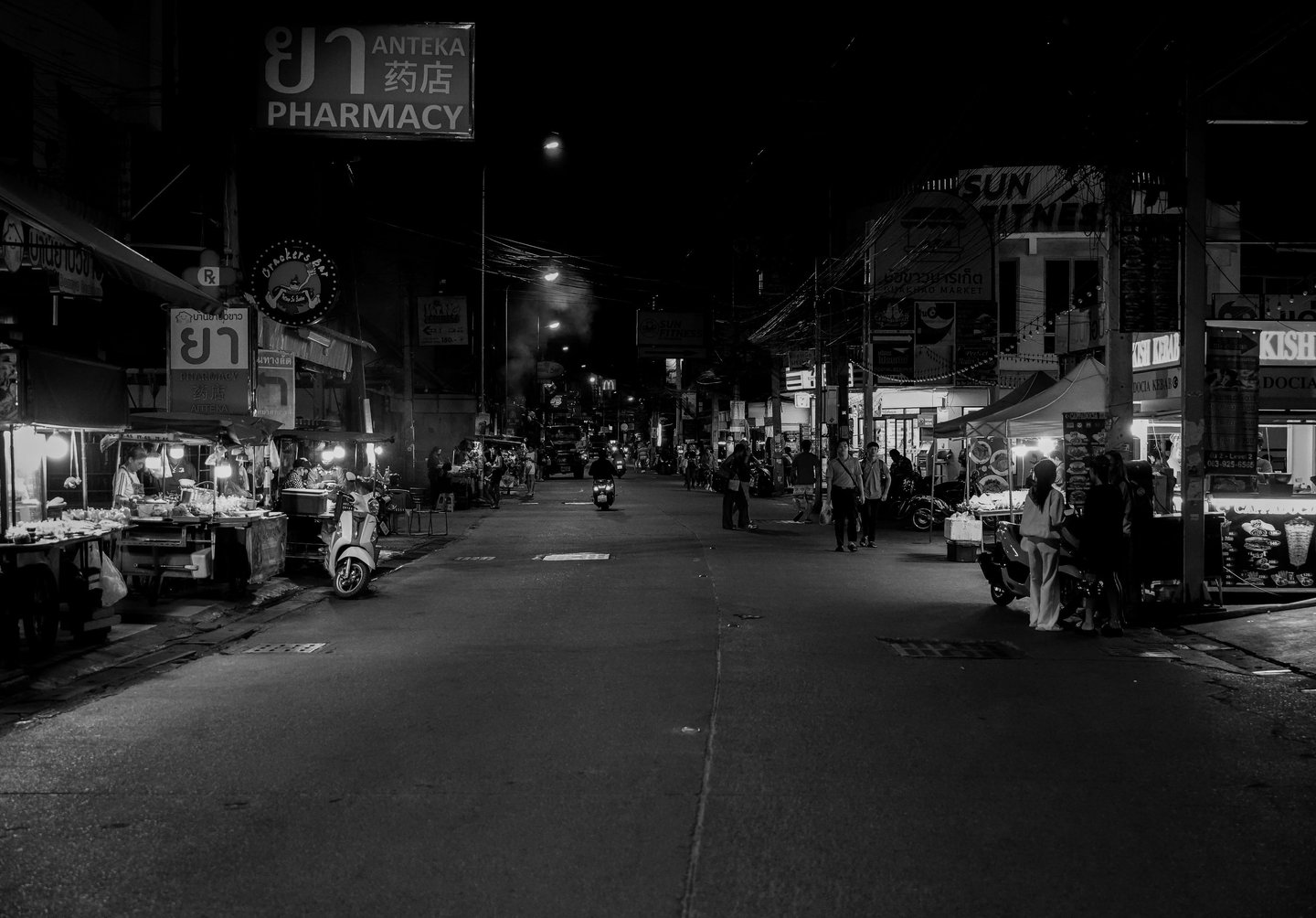
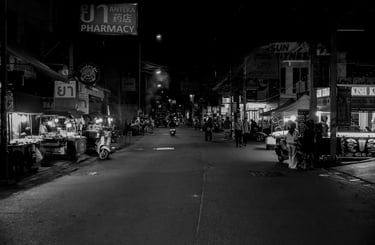
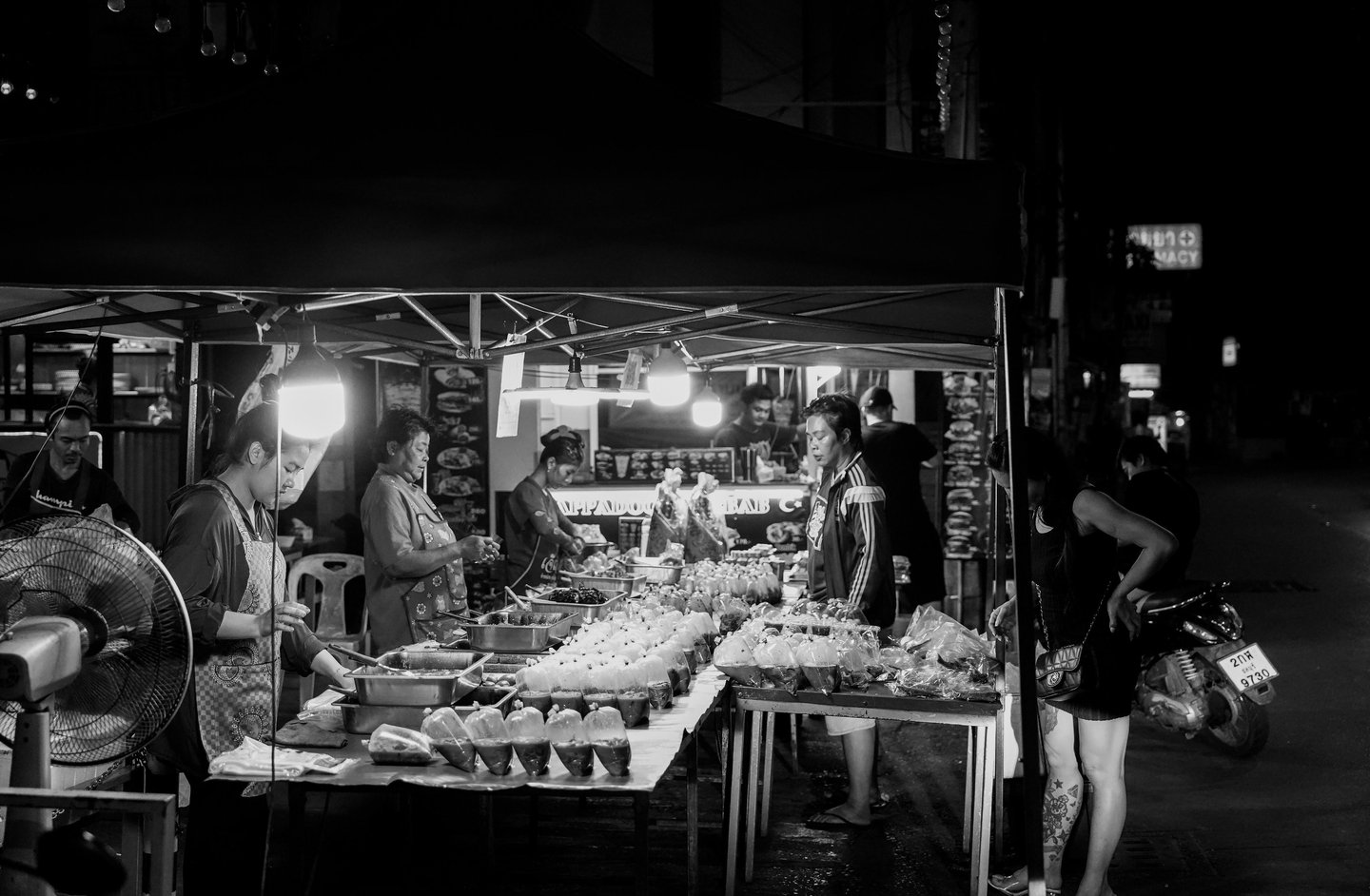
At 4:00 AM, the street changes completely. Most bars are closing, the music fades out, the last bottles are cleared away, chairs are stacked, and neon signs begin to switch off. What remains is a different truth of this street. Only a few people are still around. Night owls, workers heading home, figures caught between exhaustion and wakefulness, staff after their shift, lone scooter riders, empty seating areas and the last glow reflecting on wet asphalt.
That was the atmosphere I wanted to capture.
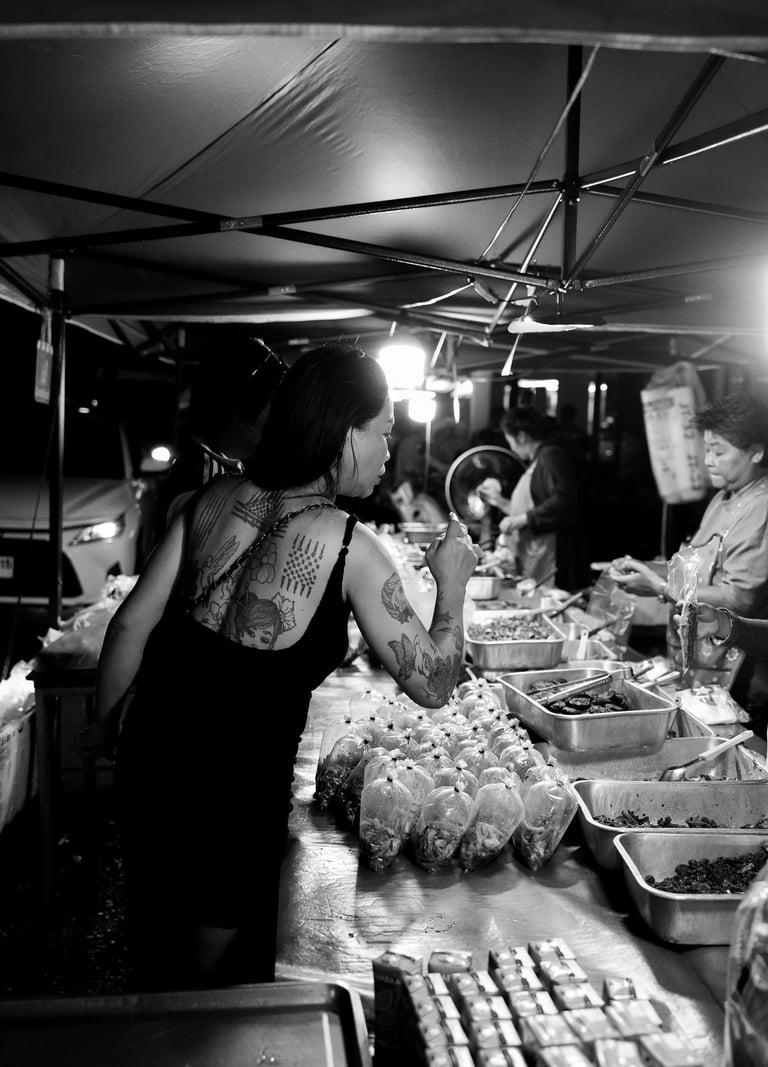
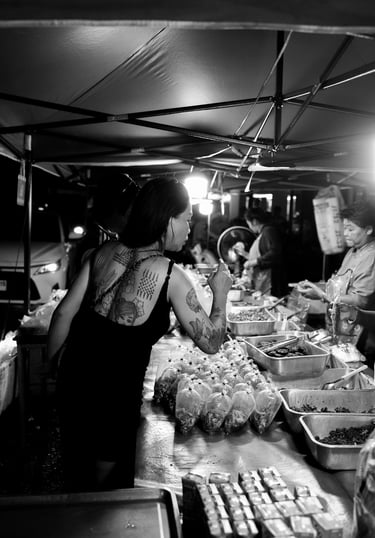
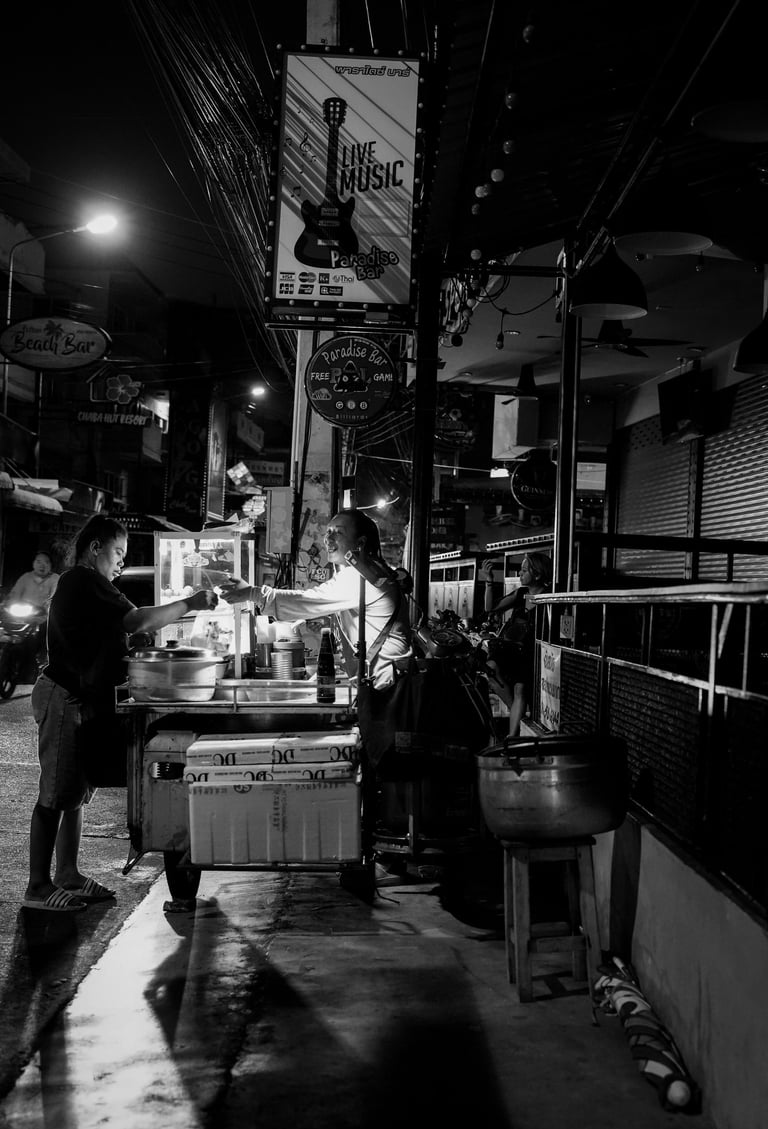
In black and white, the street loses its bright colors and reveals its real character. Shadows become deeper, faces more honest, contrasts stronger. Suddenly it is no longer about advertisements or nightlife — it becomes about mood, texture and real moments.
My images show nearly empty bars after a long night. Silent counters. Final conversations. Mobile Thai street food stalls, where you can still get something hot to eat when almost everything else is already closed. People eating quietly. Vendors still awake while the city slowly winds down.
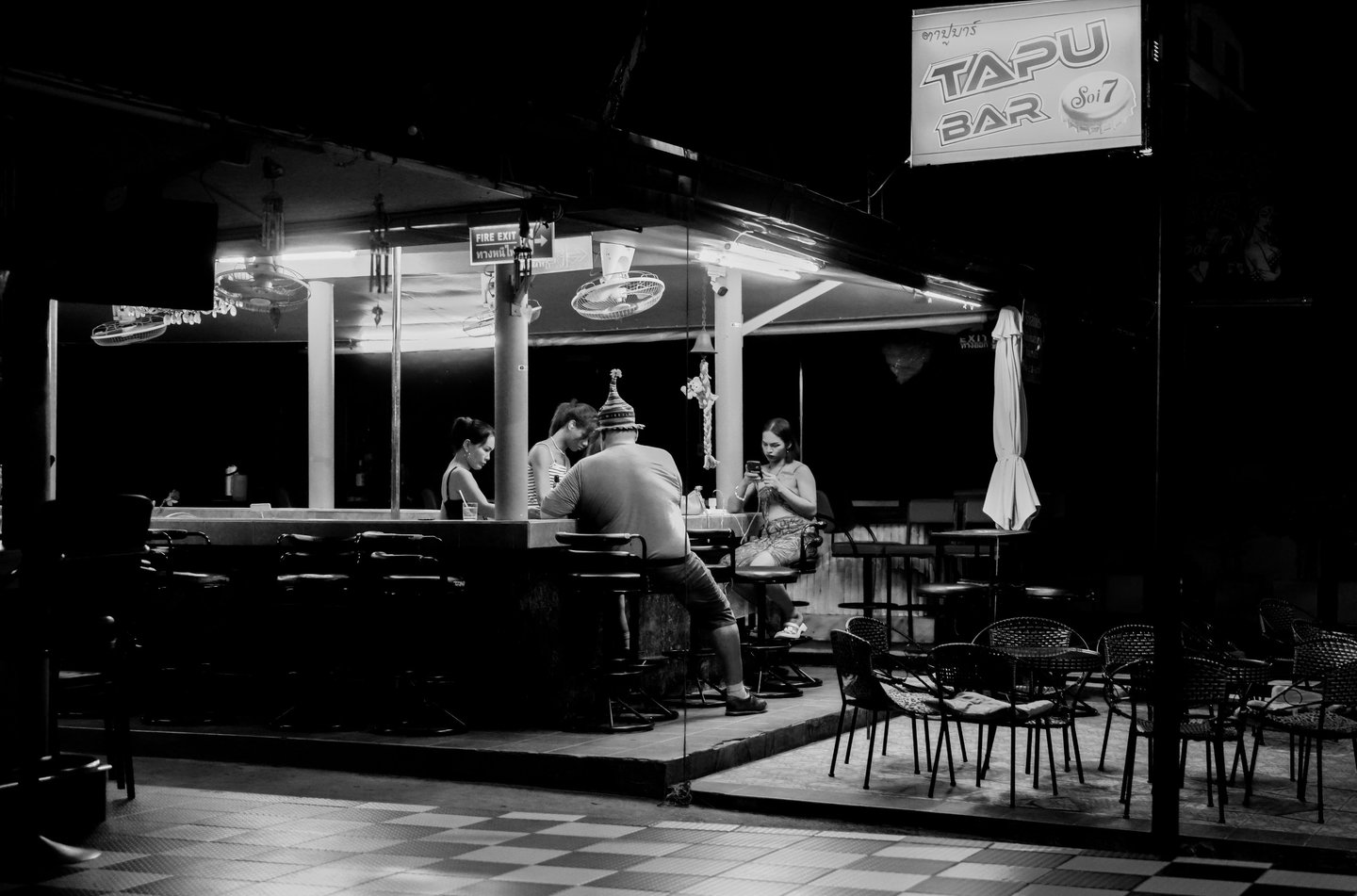
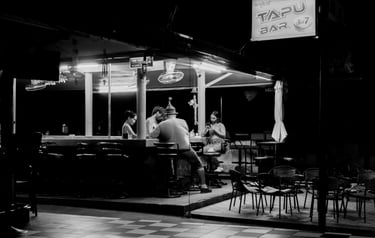
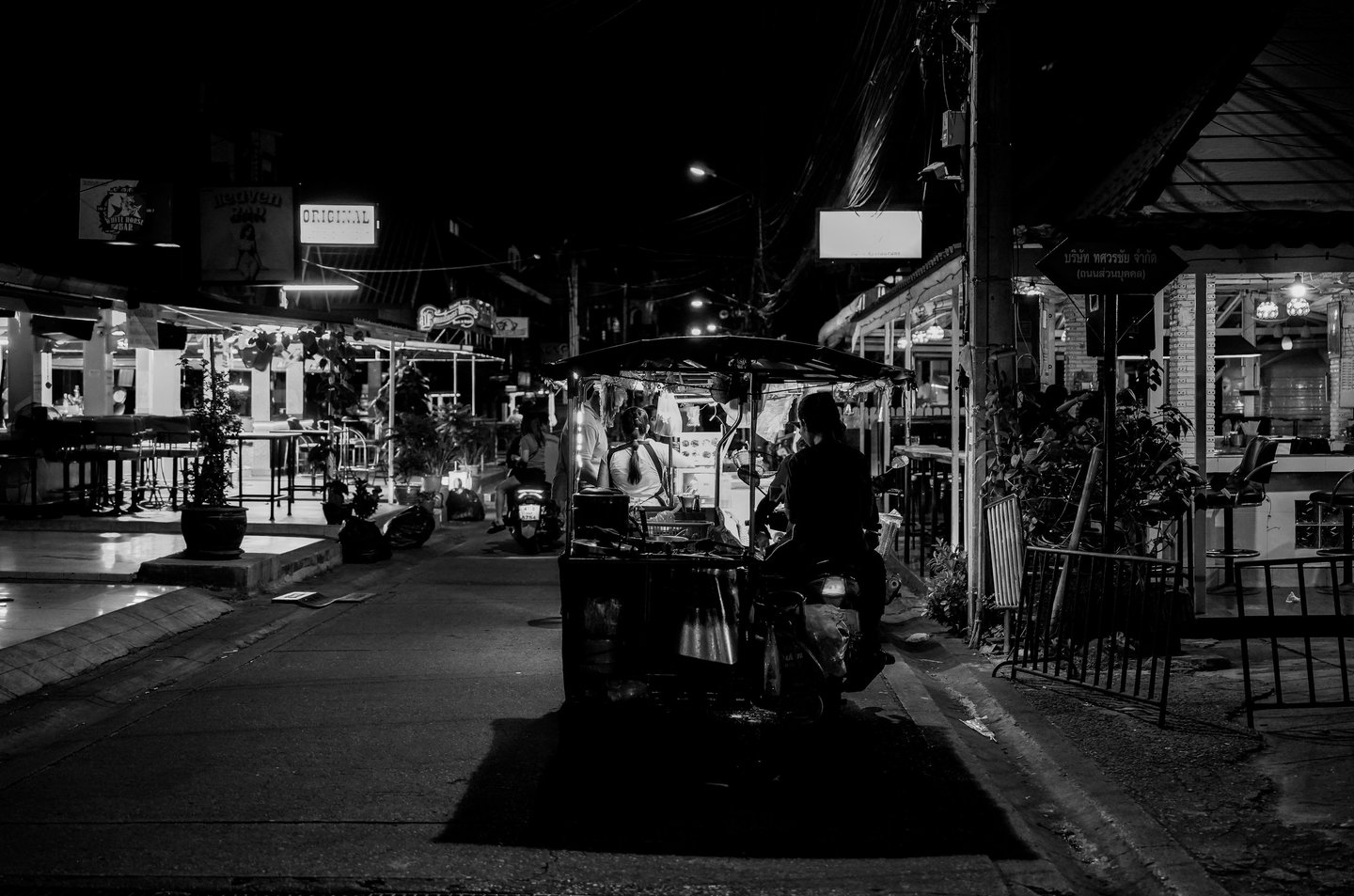
For me, these hours often create the strongest photographs. Once the noise disappears, what truly matters comes into view.
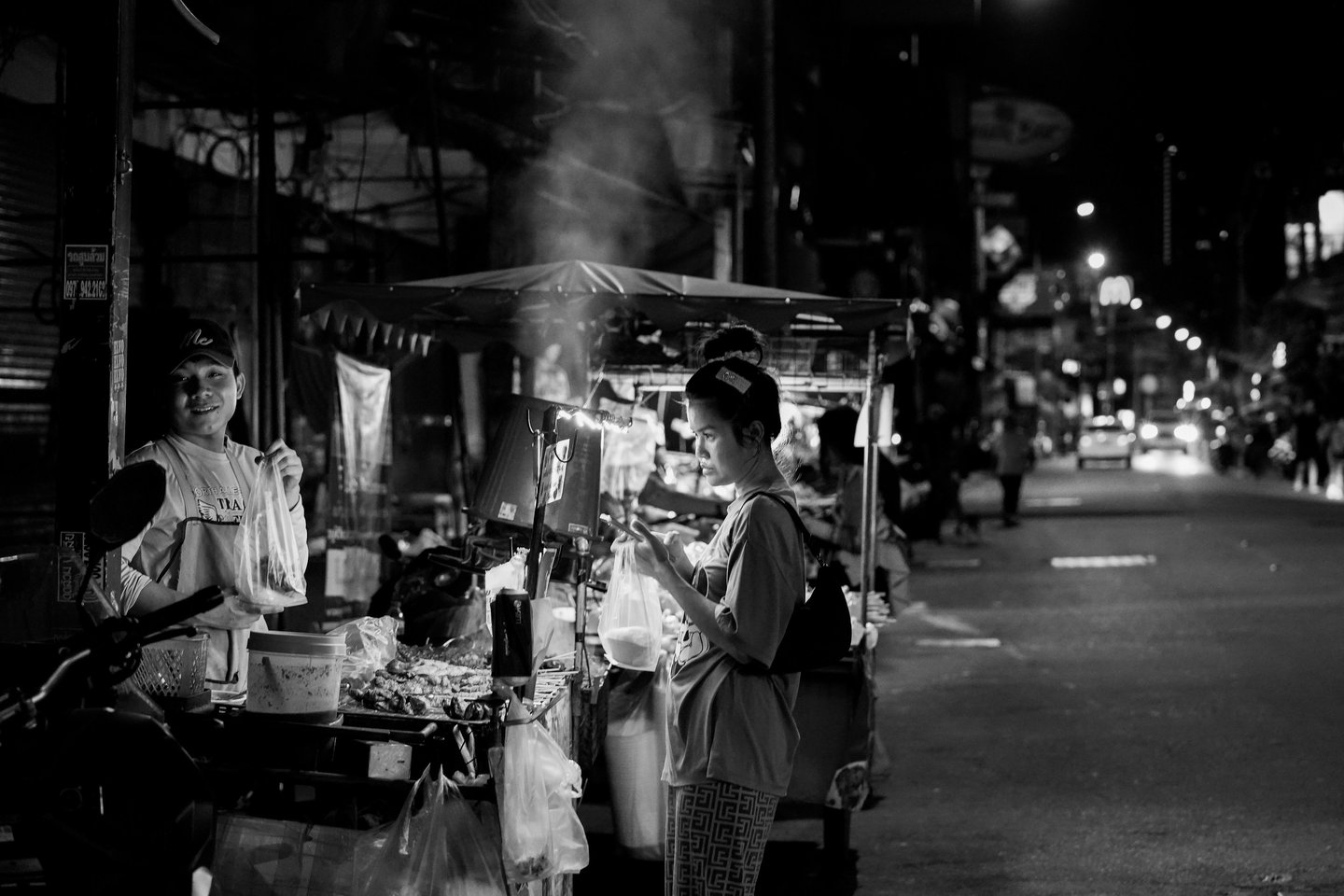
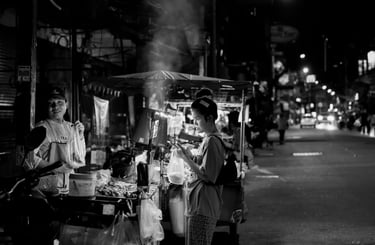
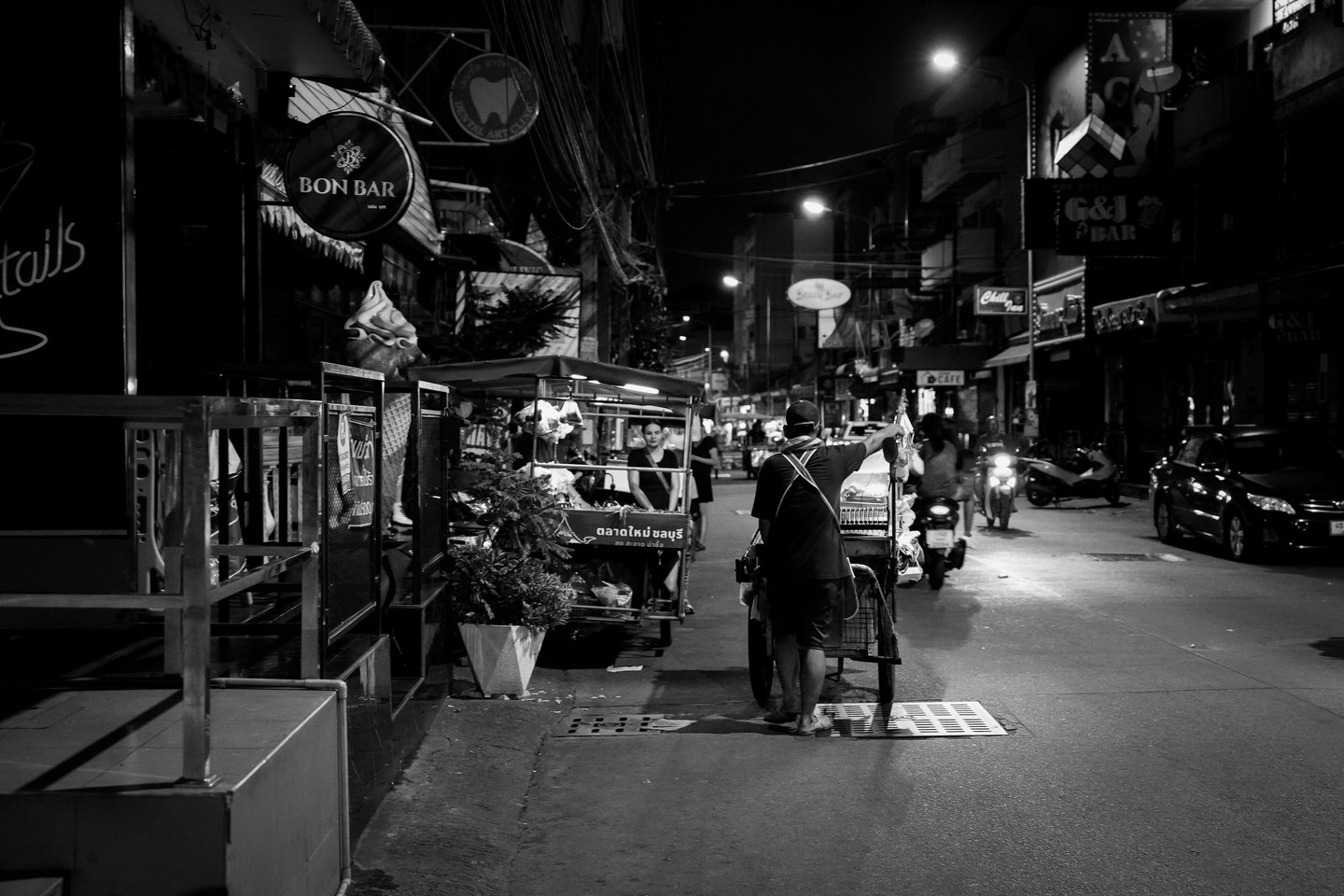
This series does not show the tourist version of Pattaya. It shows Soi Buakhao between ending and beginning. Between light and shadow. Between night and morning.
Anyone who loves street photography will understand this hour.
Ho Chi Minh City formerly Saigon, Vietnam in Black and White – Between Memory, Neon and Constant Change
What you’re about to see is not a polished version of Ho Chi Minh City.
It’s not postcards, not the obvious landmarks, not the easy shots.
This series is about tension. About contrast. About a city that never really stands still.
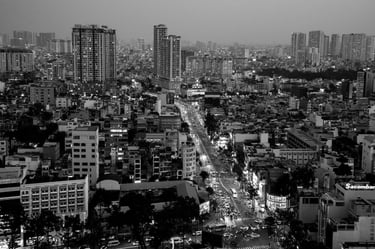
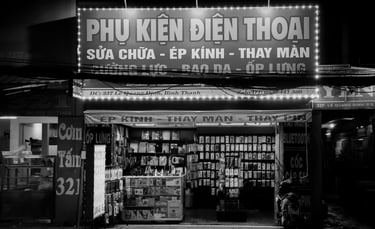
Ho Chi Minh City — still called Saigon by many — carries its history in layers. French colonial architecture, the scars of war, decades of rapid transformation. You feel it everywhere. In the facades, in the streets, in the way old and new collide without asking for permission.
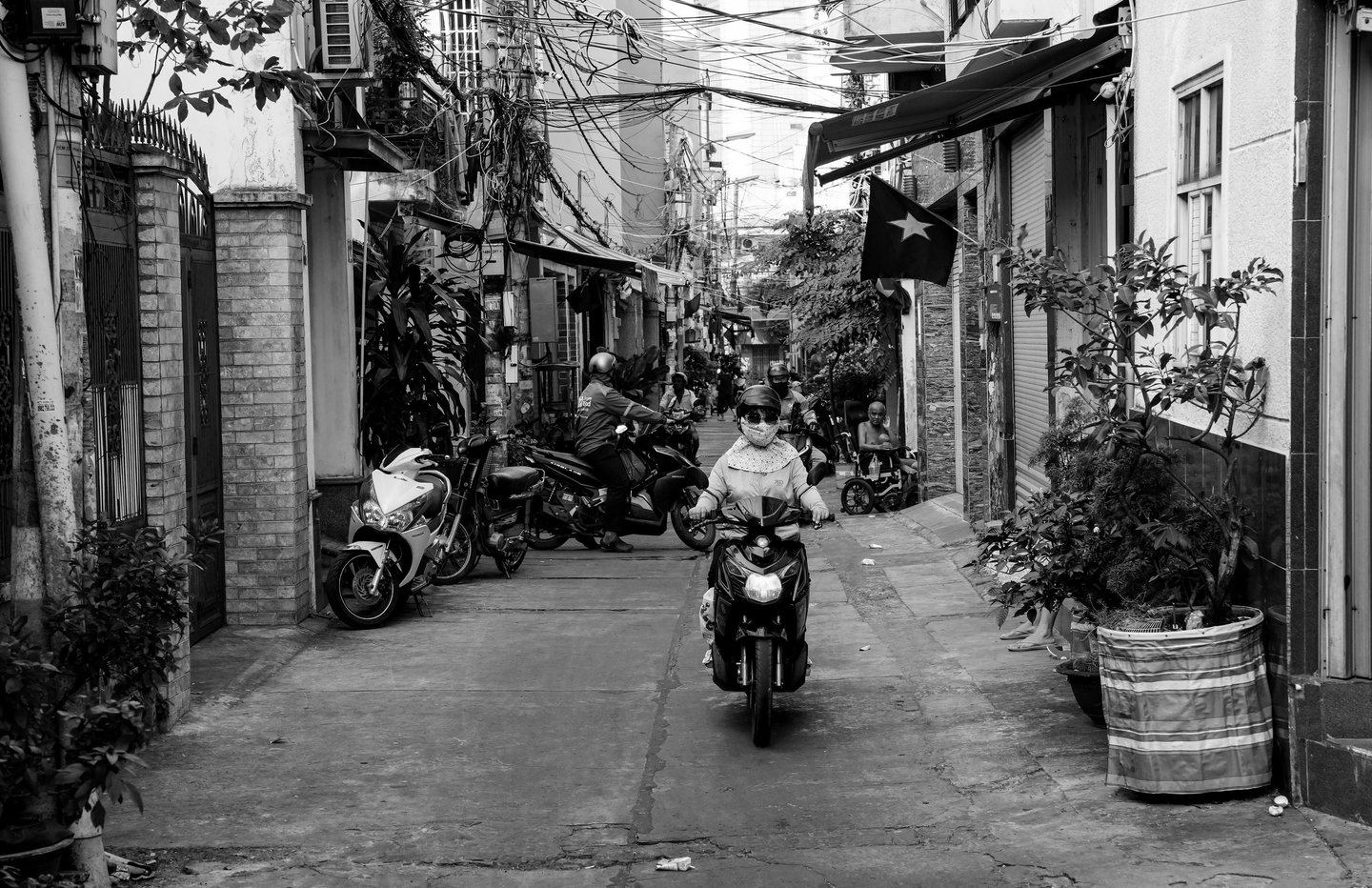
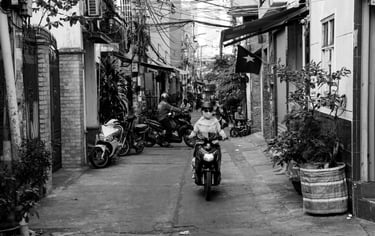
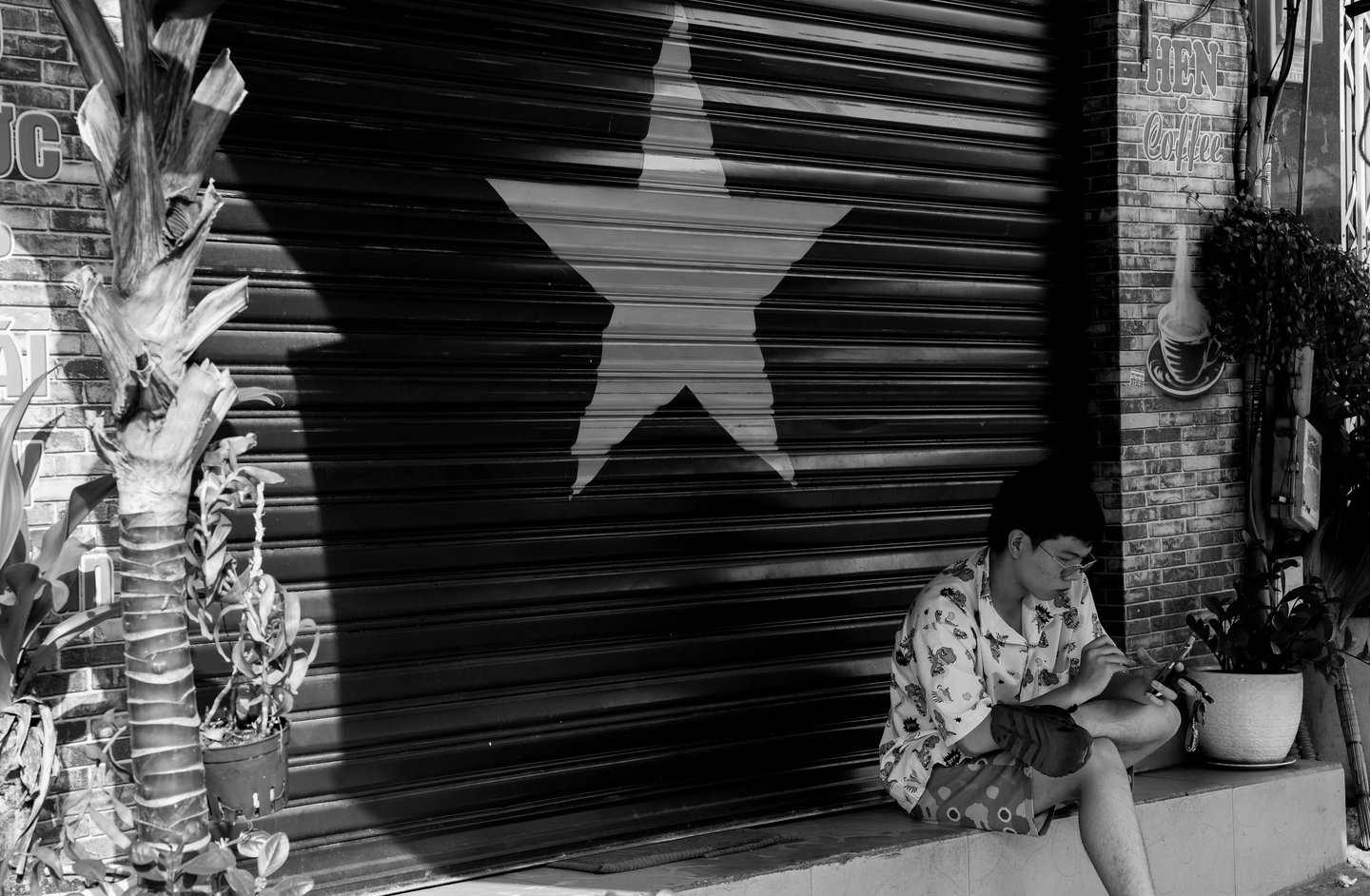
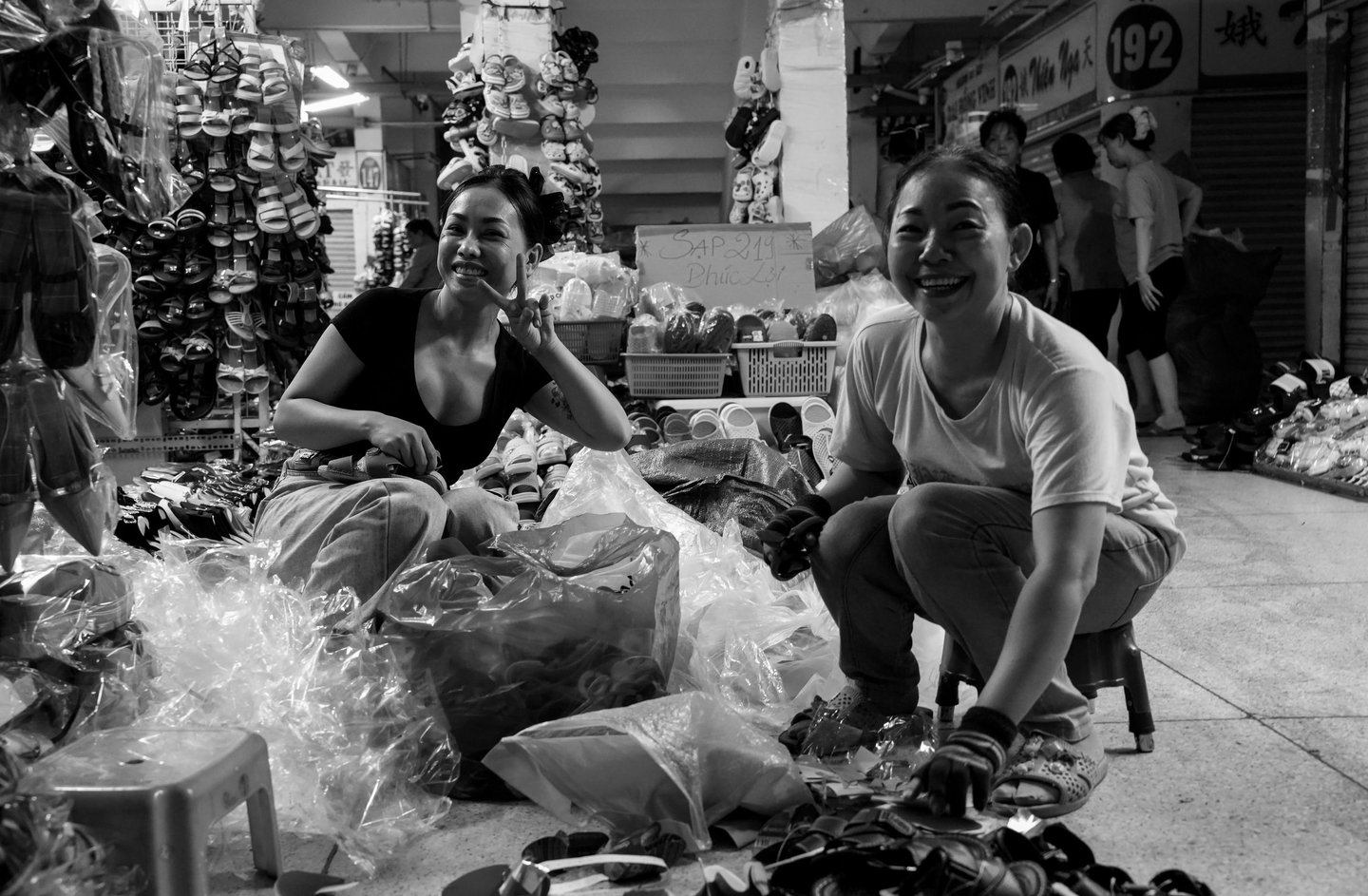
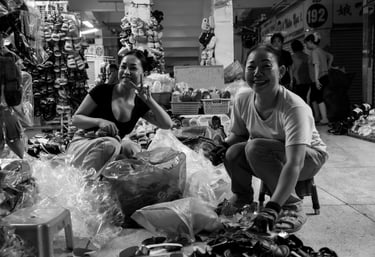
And then there’s today.
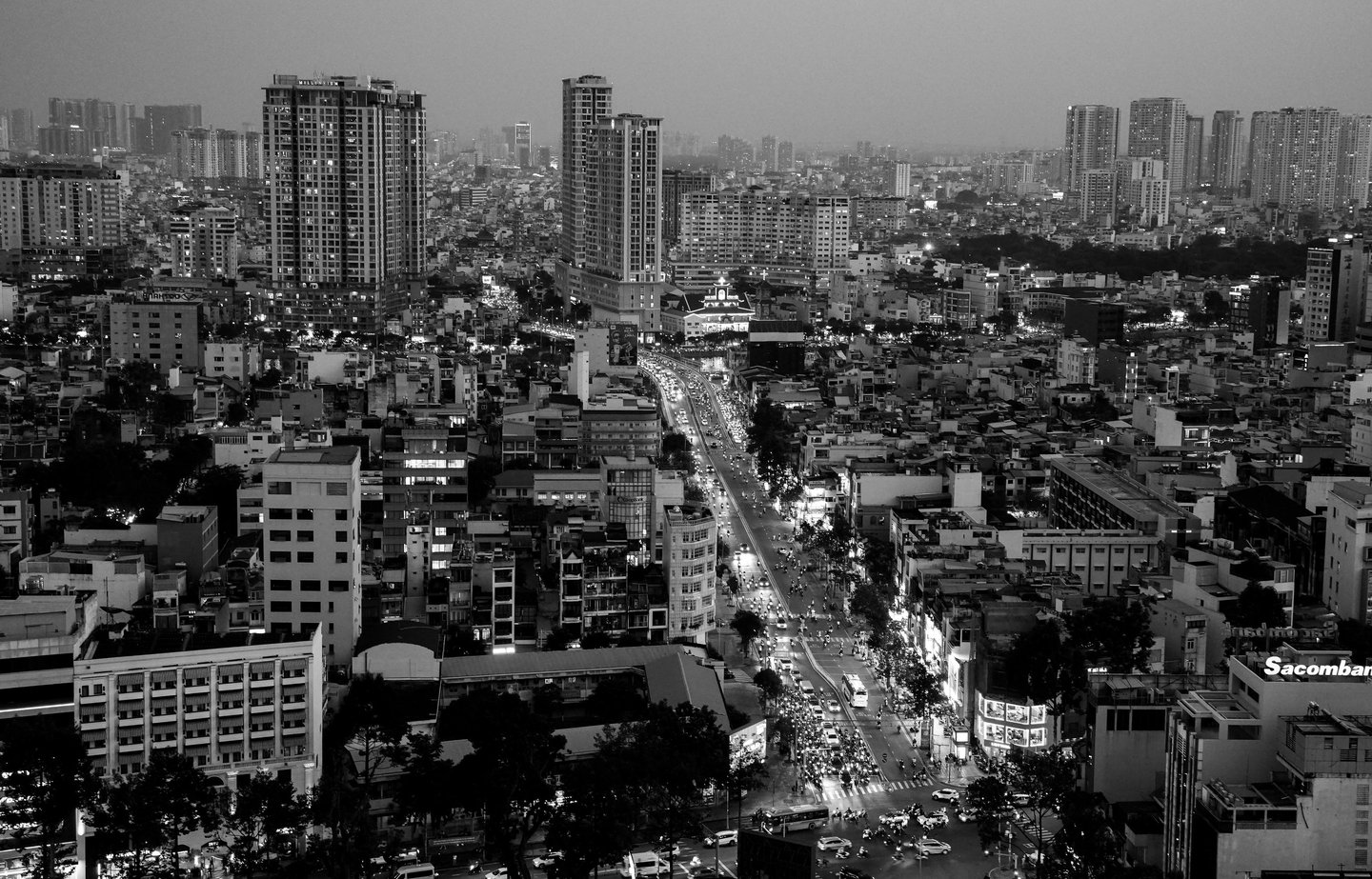
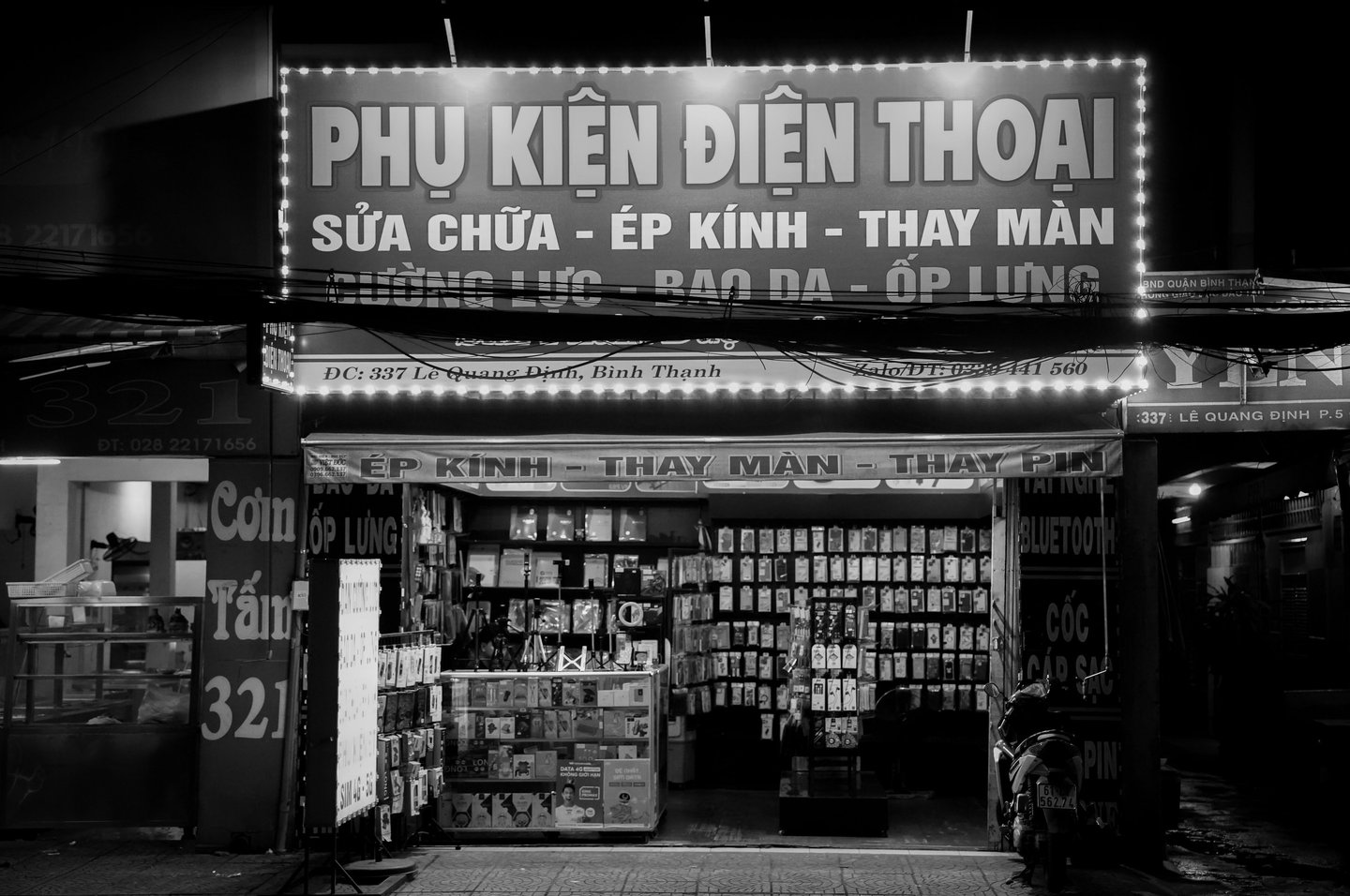
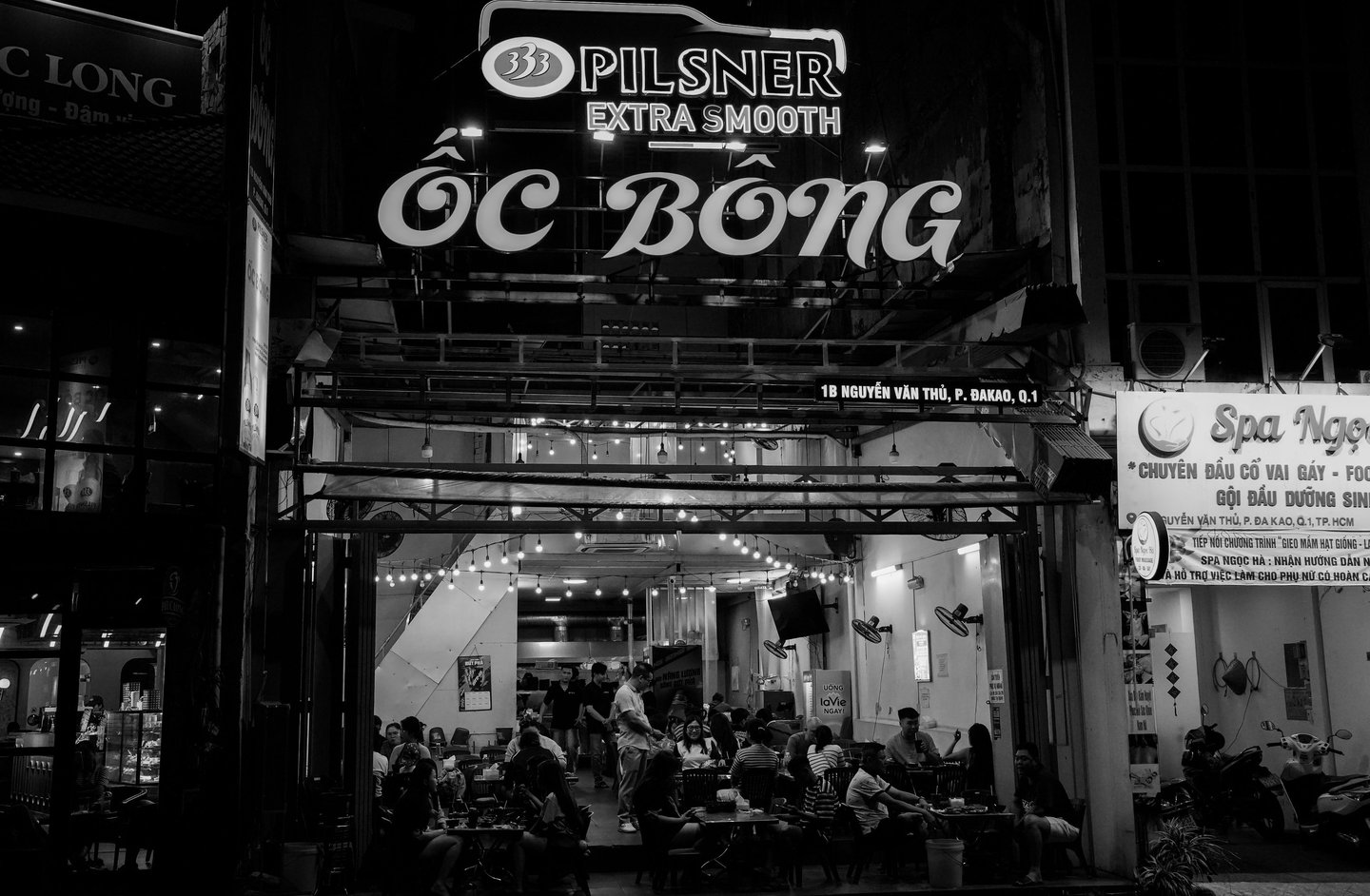
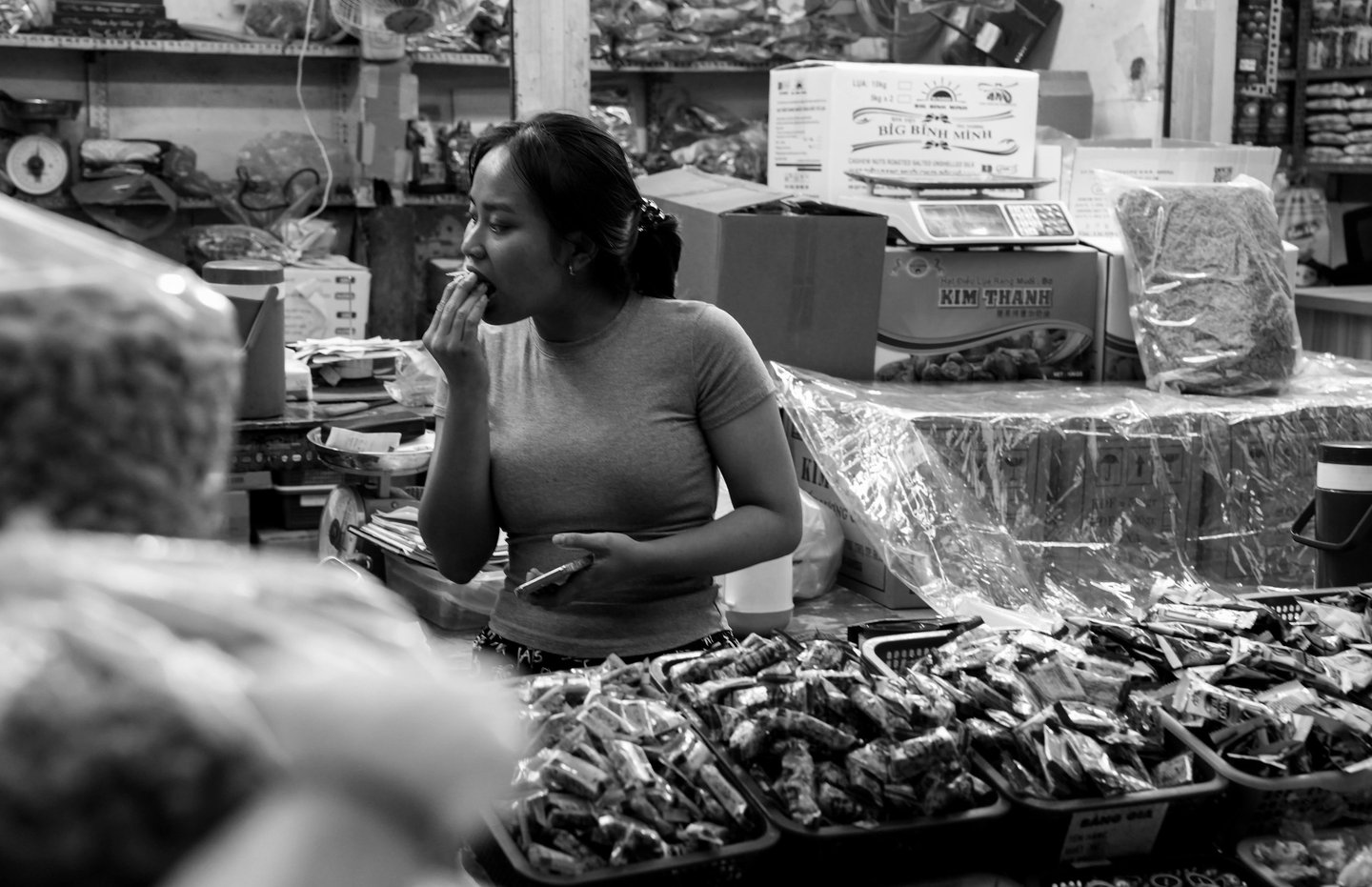
Glass towers rising fast. Neon everywhere. Money, movement, speed. District 1 feels like it’s constantly rewriting itself, block by block. But step just a few meters into one of the narrow alleys — the “hems” — and everything shifts. Life slows down. Small plastic chairs, street kitchens, people living their routines just like they have for years.
This is exactly where I spent my time. Walking. Waiting. Watching.
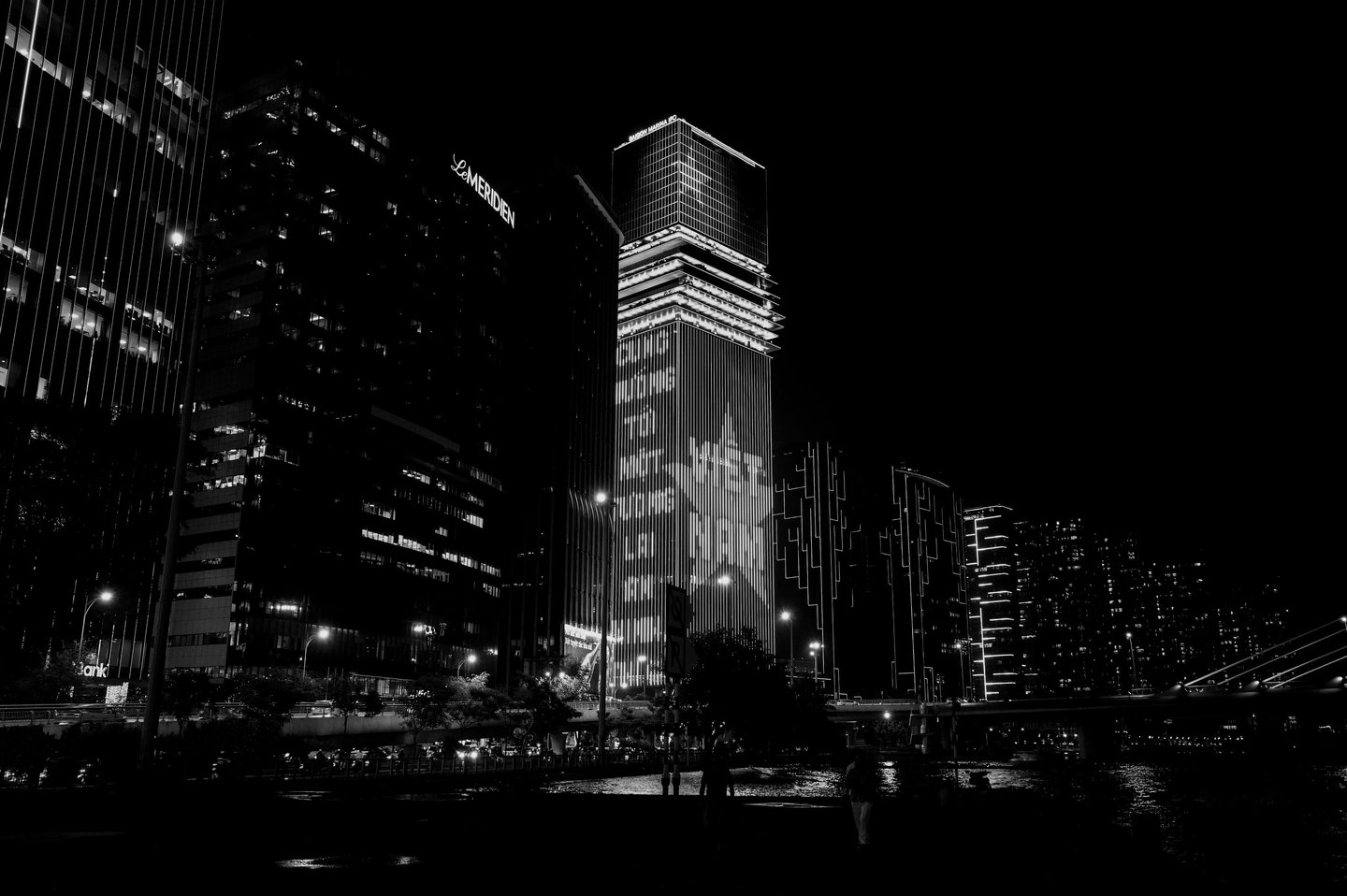
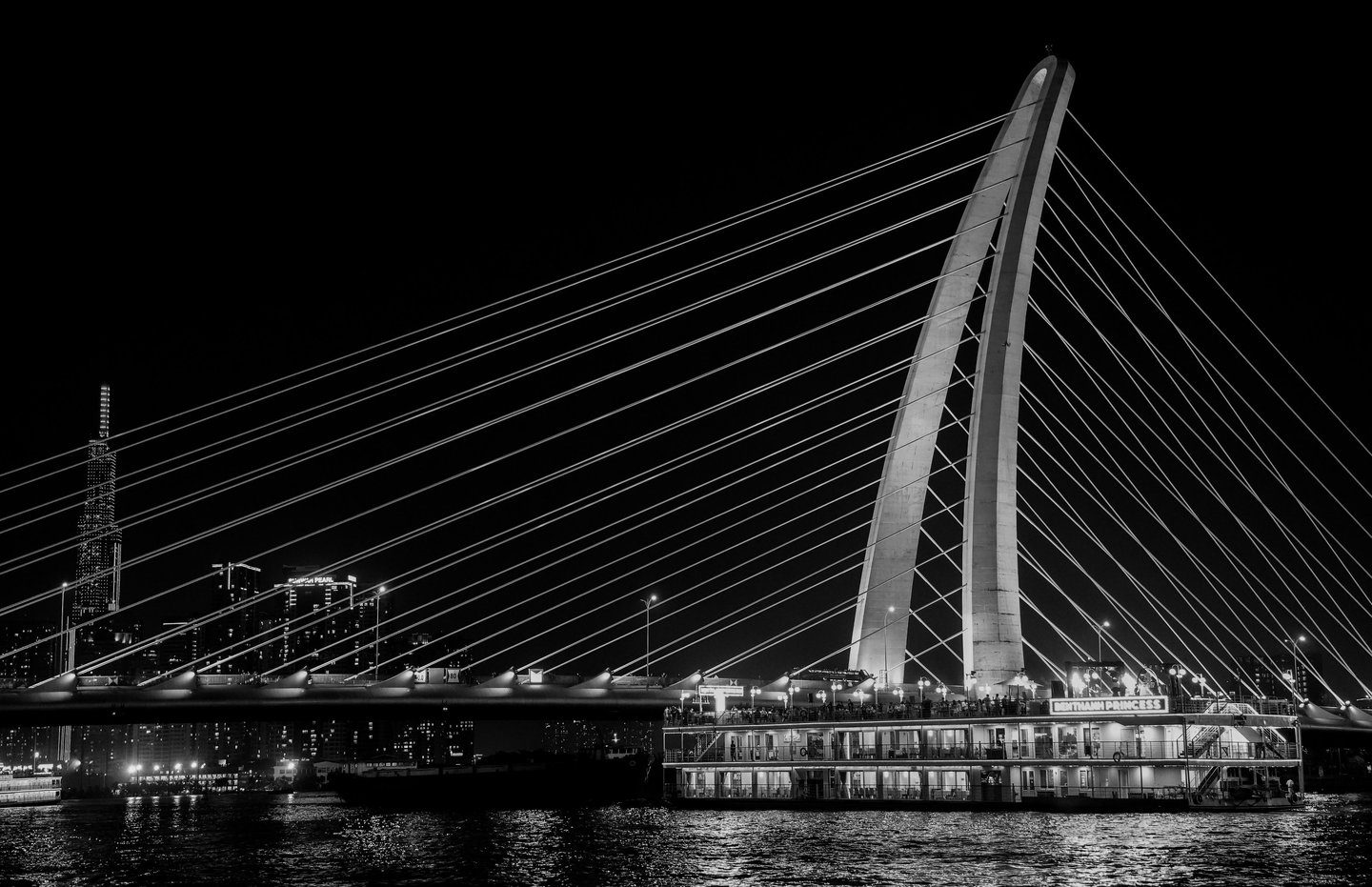
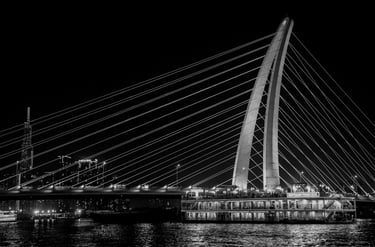
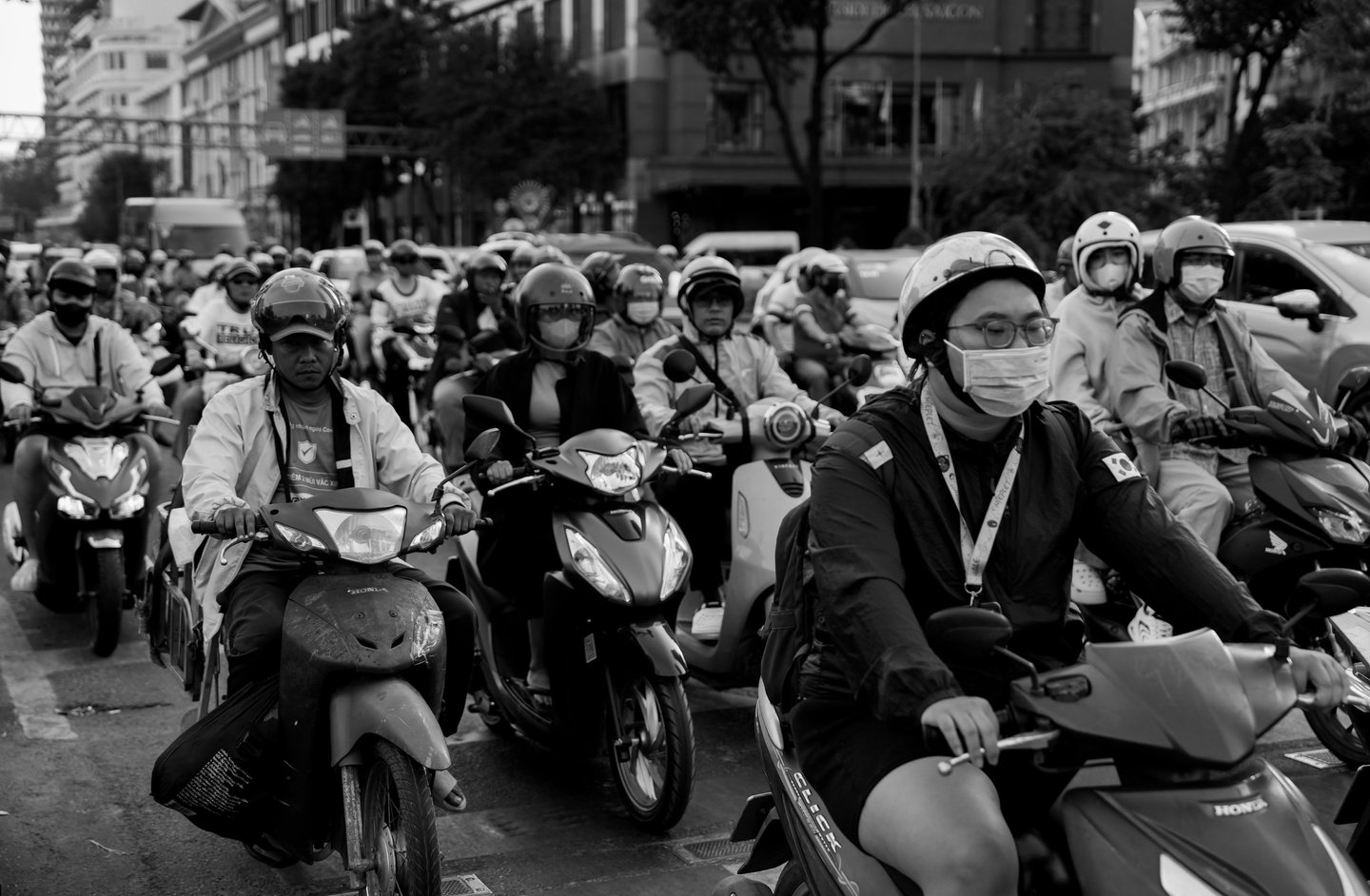
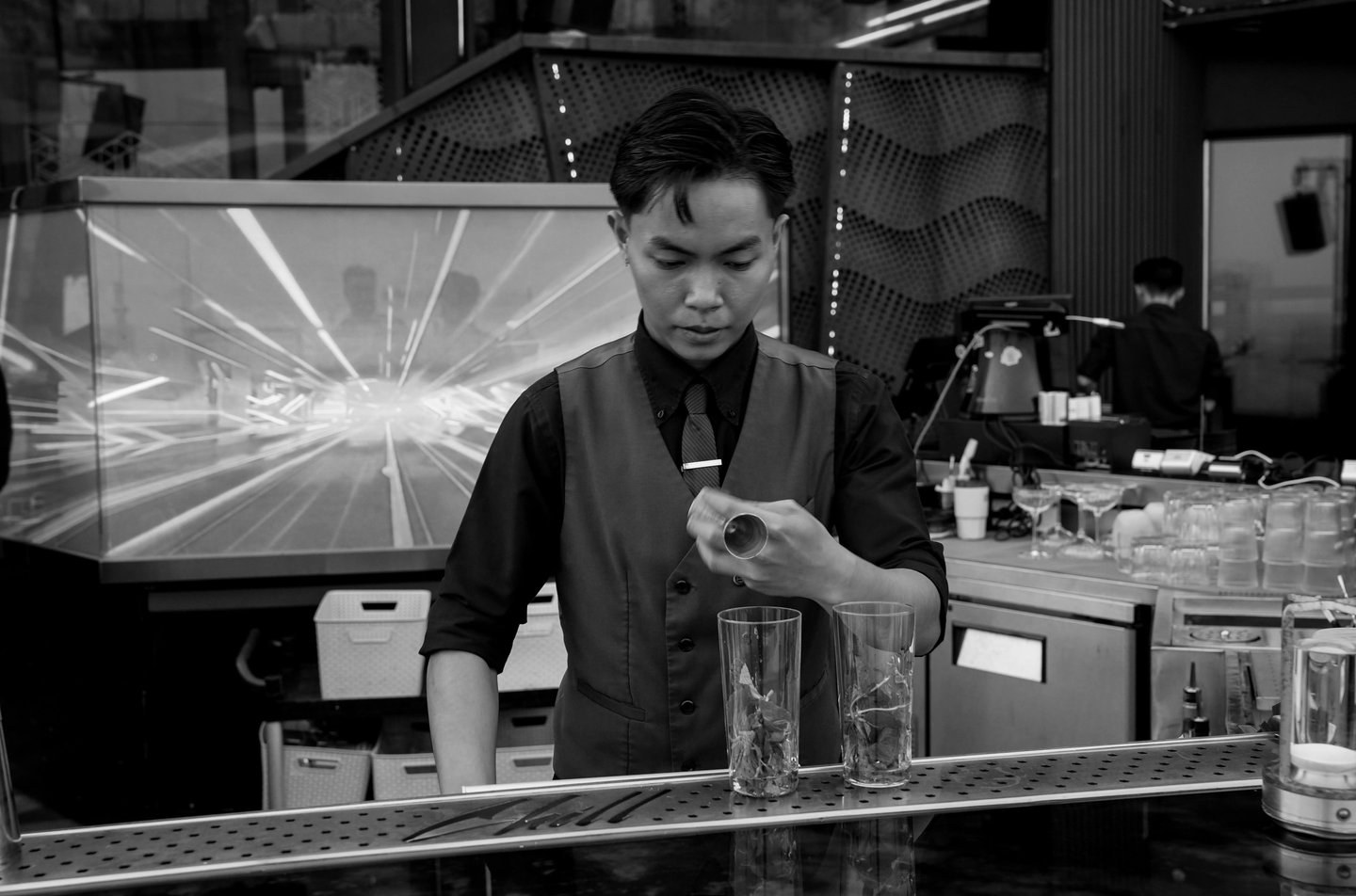
I wasn’t chasing perfection — I was looking for those in-between moments. The ones that happen when a street vendor sets up right under the cold glow of a high-rise. When a quiet alley meets the noise of the main road. When light cuts through the darkness in a way that feels almost unreal.
That’s why this series is in black and white.
Because color would be too easy here. Too loud.
Stripping everything down to light and shadow puts the focus back where it belongs — on structure, on faces, on atmosphere. On the raw energy of the city.
Gear mattered on this one.
I worked with the Sony Alpha 7 IV and the 24–70mm f/2.8 GM II — a combination that gave me the flexibility I needed in a place like this. Wide one second, tight the next. The dynamic range helped me hold onto details in the deep shadows of the alleys while still controlling the harsh highlights from neon signs and street lights.
But in the end, it’s never really about the gear.
It’s about being there. At the right time. Paying attention.
This isn’t a travel guide.
It’s a visual document of a city in transition.
Fast. Unpredictable. Alive.
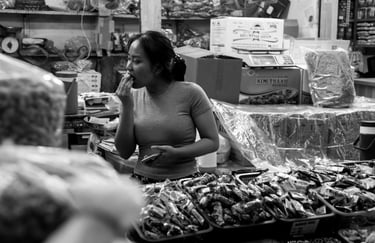
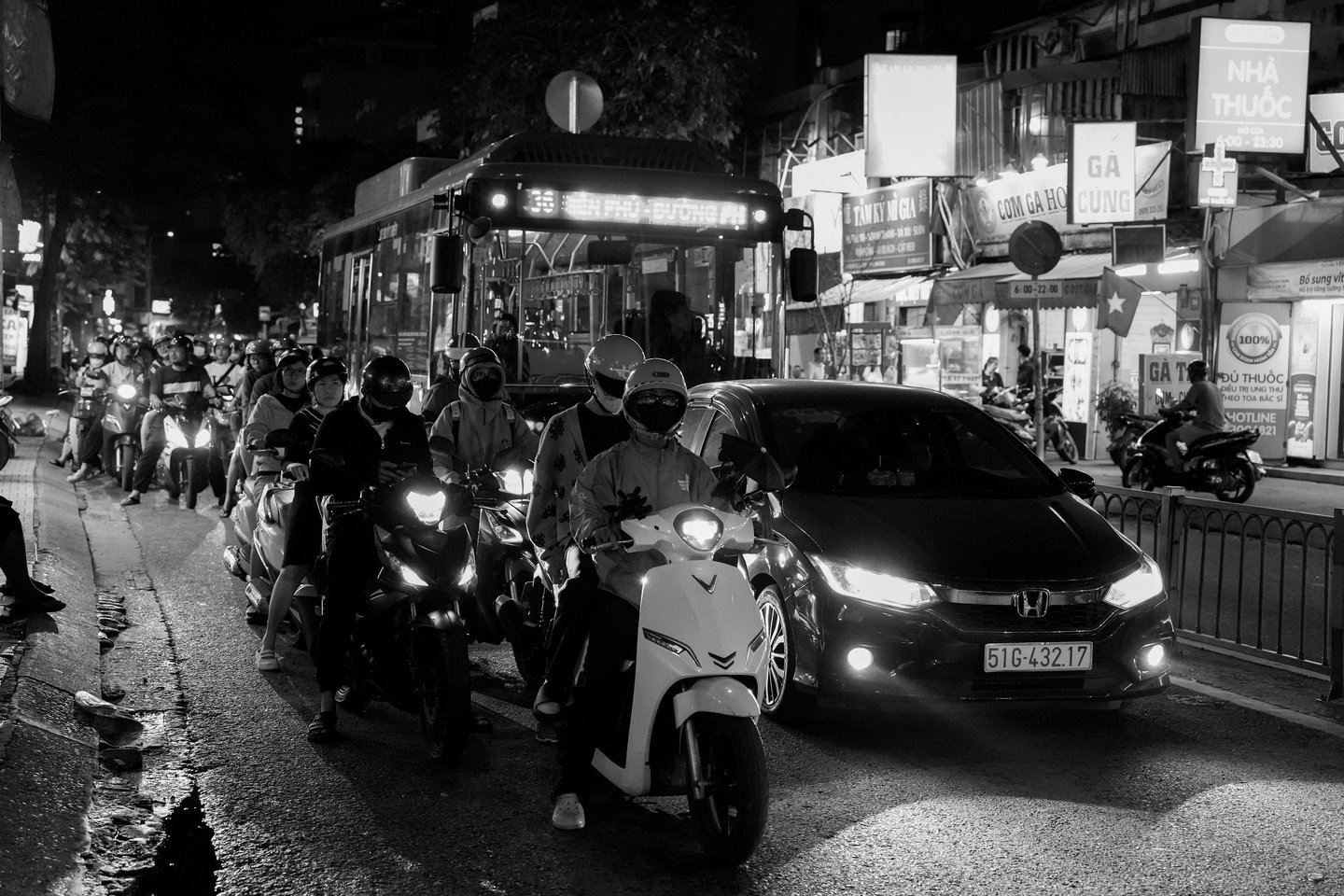
And if you look closely, you’ll see it —
that thin line between past and future, running right through the streets of Saigon.
Contact
Fuel my creativity, If you enjoy my content, feel free to support me with a small tip. Thanks for being part of this journey!
If you enjoy my photography and the stories I capture across Southeast Asia, consider supporting my journey. Every coffee helps me stay on the road longer and document more unique locations. Thank you for being part of the adventure!
Traveling across Southeast Asia, I’ve found that having an eSIM ready the moment you land is an absolute game-changer. I highly recommend Saily – I’ve had a great experience with them myself. It offers unbeatable advantages, especially for ordering a Grab taxi right away or using Google Maps to find your way as soon as you exit the airport
This post contains affiliate links for Saily. If you sign up through my link, I may earn a small commission at no extra cost to you. I only recommend services like Saily because I use them personally and they’ve made my travels much easier.
You can license my photography directly through my Alamy portfolio. My work covers authentic travel and street photography across Southeast Asia — Bangkok, Ho Chi Minh City, and the wider region — shot on location, not staged.
Looking for street scenes, urban editorial content, or landscapes from Thailand and Vietnam? My full collection is on Alamy, with licensing options from standard editorial to extended commercial rights, depending on what your project needs.
Disclosure: the link below is an affiliate link. If you license an image through it, I earn a share of the sale at no extra cost to you. It goes straight back into keeping me on the road and shooting across Southeast Asia.
© 2025 Strangphotography – Southeast Lens. All rights reserved.
All photos taken by me in public spaces. Licensing available via Alamy.
Unauthorized use prohibited. For full legal info, see my Imprint