Southeast Lens - Documentation, Travel and Street Photography

Pattaya in Thailand – More Than Just Stereotypes
Pattaya has a reputation. Most people know it, and many have a very fixed idea of what the city is all about.
Nightlife, bars, Walking Street, tourists and everything that comes with it. Of course, this is part of Pattaya. I am not going to pretend otherwise. But after living here since 2018, I have learned that there is much more to the city than what you usually see in the headlines or on television.
This is what I want to show with my photography.
I am not a tourist passing through Pattaya for a few days. I live here, walk the streets, visit the markets and spend time in places where everyday life simply happens. Sometimes I have my camera with me, sometimes I don't. But when I do, I try to photograph what catches my attention – people, places, small moments, old neighbourhoods, fishing communities, street life, architecture, sport and, of course, the nightlife that Pattaya is famous for.
What interests me most are the contrasts.
You can leave the busy centre and, within a short time, find yourself in Naklua among fishing boats and old wooden houses. You can stand at a local market in the morning and see a completely different Pattaya from the one you find in the nightlife areas later that night.
For me, this is what makes Pattaya interesting to photograph.
I don't want to tell you what Pattaya is supposed to be. I simply want to show you what I see.
The photographs on this page are my personal view of the city. Some are carefully observed moments, others happened very quickly. From time to time I will also explain how I took a particular photograph, including the camera, lens and settings I used.
But the technical side is not the main point.
The photograph is.
This is Pattaya as I see it – beyond the stereotypes, through my lens.

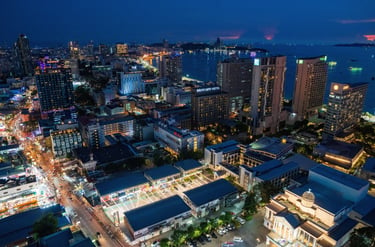
Lan Pho Na Kluea Fish Market – People Behind Pattaya’s Seafood
Where the Story Begins
Just north of Pattaya, in Naklua, the Lan Pho Na Kluea Fish Market is a place I return to with my camera.
I am not here simply to photograph seafood. I am interested in the people who work here, the customers, the movement and the small encounters between them.


A Moment of Contact
I started by observing the market.
Then the woman behind the stall noticed my camera. The customer continued choosing her seafood while, for a moment, the seller looked directly at me.
This is often how my photographs begin: I watch first, and let the situation develop.


When People Notice the Camera
Once people realise I am photographing, something can change.
Some simply carry on working. Others smile, make a gesture or show me what they are selling.
I don't see this as a problem. It becomes a different kind of street photography — an encounter rather than a distant observation.


Proud of Their Work
This young seller proudly lifted two large lobsters for the camera.
It lasted only a few seconds, but his expression says more than a description of the market ever could.
For me, these spontaneous interactions are part of what makes photographing local markets so rewarding.


Everyday Work
Behind every market counter is someone working.
People arrive early, prepare their products, serve customers and repeat the same routine day after day.
A photograph can freeze one second of that routine — and suddenly make us look at it differently.


Faces Behind the Market
The seafood is what brings people here.
But the people are what make the market worth photographing.
Their expressions, gestures, clothing and reactions turn an ordinary market visit into a collection of personal encounters.


The Photographer Becomes Part of the Scene
Sometimes the distance between photographer and subject disappears completely.
A smile, a gesture or a direct look can turn a photograph into a shared moment.
I don't need to control that moment. I simply need to recognise it when it happens.


Back to the Market
After the close encounters, I step back again.
The people become part of the larger scene: sellers, customers, seafood, water, light and movement.
That is Naklua for me.
Not a postcard of Pattaya, but everyday life happening in front of my camera.


Behind the Photographs
I photographed this series with my Sony Alpha 7 IV and Sony FE 24–70mm f/2.8 GM II.
Working inside the market meant dealing with difficult, constantly changing light. I used ISO 5000–6400, mostly f/2.8–f/4.0, while keeping an eye on the automatically selected shutter speed to avoid motion blur.
The technical settings matter — but only because they allow me to stay focused on what is happening in front of me.
The moment always comes first


Naklua Walk & Eat Festival – Authentic Pattaya Street Life Through My Lens


Every year, Naklua changes.
For a few weekends, the streets around the old fishing community fill with food stalls, music, lights and people. Locals come together, families walk between the stalls, and the area around the Na Kluea Fish Market becomes a completely different place.
This is the Naklua Walk & Eat Festival — one of the places where I can photograph a side of Pattaya that has little to do with the city’s famous nightlife.
Food, People and Local Life


Fresh seafood, Thai street food, local products and small food stalls fill the walking street.
But for me, the food is only part of the story.
What I really look for is what happens behind the stalls.
A vendor looking into my camera.
A smile between customers.
Hands preparing food.
People working while music plays somewhere in the background.
These are the moments that make the festival interesting to photograph.
The event takes place in Na Kluea, North Pattaya, around the historic market area and toward Naklua Bridge. During the festival, parts of the street become pedestrian-only, creating space for people to walk, eat and simply enjoy the evening.
Behind My Lens


I usually move slowly through the crowd.
I don't walk around looking for a perfect photograph. I watch, wait and react when something catches my attention.
With my Sony Alpha 7 IV and Sony FE 24–70mm f/2.8 GM II, I can move from a wider scene to an intimate portrait without changing lenses.
For these evening photographs, I mainly work with ISO 5000–6400, an aperture between f/2.8 and f/4.0, and automatic shutter speed. In this kind of light, I want to keep enough speed for people who are constantly moving.
But the settings are never the reason I take the photograph.
The moment is.
Faces of Naklua


Some people notice my camera immediately.
Sometimes they smile. Sometimes they pose. Sometimes I only have a second before the moment disappears.
I like both.
The woman in the red headscarf, the young vendor giving me a playful peace sign, the women working behind their food stalls — these photographs are small encounters.
For a few seconds, I am not simply photographing a market.
I am photographing people.
And that is what keeps bringing me back to Naklua
When the Street Turns Into a Stage


Further along the festival street, the atmosphere changes again.
Food stalls give way to music, lights and an open-air stage. Thai bands perform while people gather around, creating a completely different energy.
For me, this is Pattaya street photography at its most authentic — food, work, music, community and everyday Thai life all happening within a few hundred metres.
This is the Pattaya I want to show.
Not the stereotype.
The people behind it.
Authentic Thai Seafood Restaurant in Naklua, Pattaya
A small seafood restaurant, a narrow passage, motorbikes and everyday Thai life — this is Naklua away from the tourist postcard

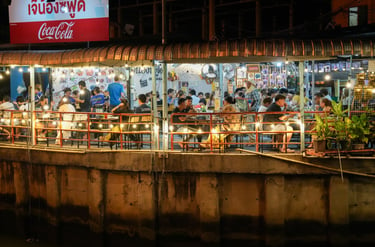
Just behind the street where the Naklua Walk & Eat Festival takes place, I found this small seafood restaurant beside the khlong, only a short distance from the sea.
It is not fancy.
And that is exactly what I like about it.
Fresh seafood, simple tables and mostly Asian guests create an atmosphere that feels very different from the tourist areas of Pattaya.
But there is something here you probably don't expect.
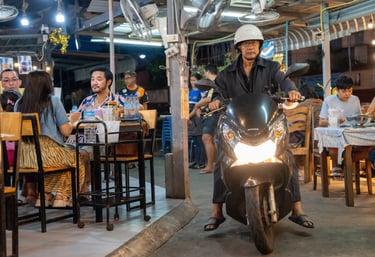
Motorbikes pass directly through the narrow passage between the tables.
When the Street Runs Through the Restaurant


The first time I saw it, I knew I wanted to photograph it.
A family arrives on a scooter. Guests continue eating. Staff move around the tables. Nobody seems particularly surprised.
That is Thailand for me.
Life does not stop because something unusual happens. It simply continues.
Then another scooter appears.
For a street photographer, these are the moments I wait for.
Not staged.
Not planned.
Just happening.
Thai Food, Local People, Everyday Life


The restaurant itself is simple and busy.
People sit close together, eat, talk and watch the activity around them. The food is ordered by writing your selection on a small notepad before it goes to the kitchen.
I like that.
No complicated system. No tourist show.
Just Thai seafood, local people and everyday life.
Sitting here, you are not only eating.
You are watching a small piece of Naklua street life unfold around you.
Through My Lens


When I photograph places like this, I am not looking for perfect compositions.
I watch.
A person entering on a motorbike.
A child sitting in front.
A waiter moving between the tables.
Someone smiling across the room.
These small moments are what tell the story.
For me, Pattaya street photography is about these contrasts.
Pattaya has its famous nightlife and tourist hotspots. But places like this show another side — quieter, more local and much closer to everyday Thai life.

If you are exploring Naklua, the Na Kluea Fish Market or the Walk & Eat Festival, this is the kind of place I would look out for.
Not because it is spectacular.
Because it is real.
The Khlong of Naklua – Life by the Water
Explore Naklua’s Khlong Nok Yang – traditional wooden houses, canals, and authentic Thai life near Pattaya’s famous fish market.
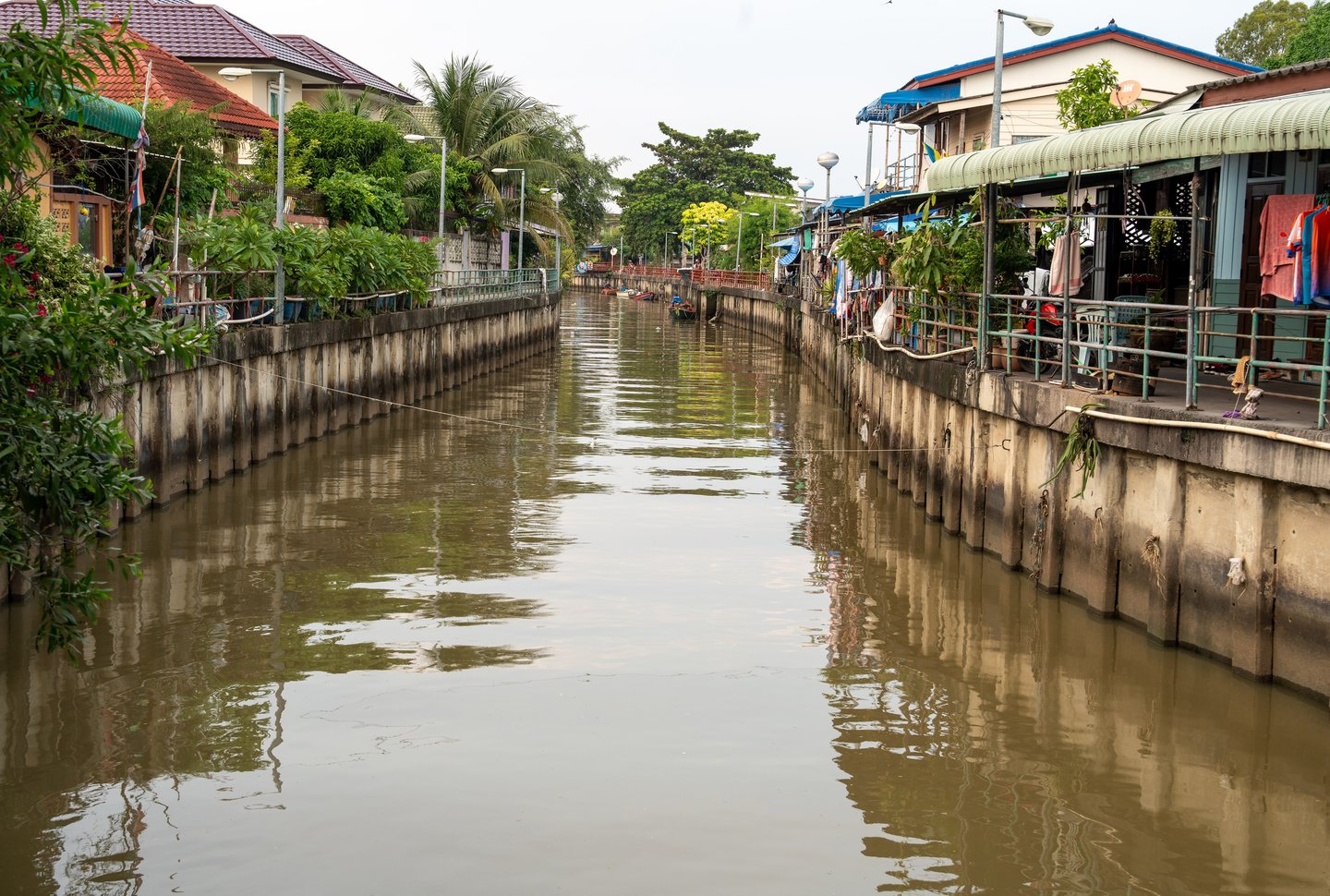
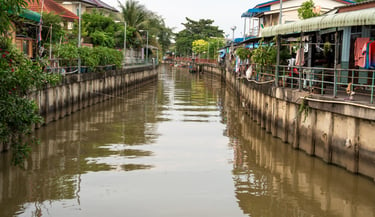
The Khlong of Naklua, located right next to the seafood restaurant, is one of the most authentic waterways in this part of Pattaya.
In Naklua, you can still find one of the area’s original canals — the Khlong Nok Yang, sometimes connected with the Khlong Saphan Yao.
It’s part of a preservation project for the Old Town of Naklua, aiming to maintain the charm and atmosphere of the traditional fishing village.
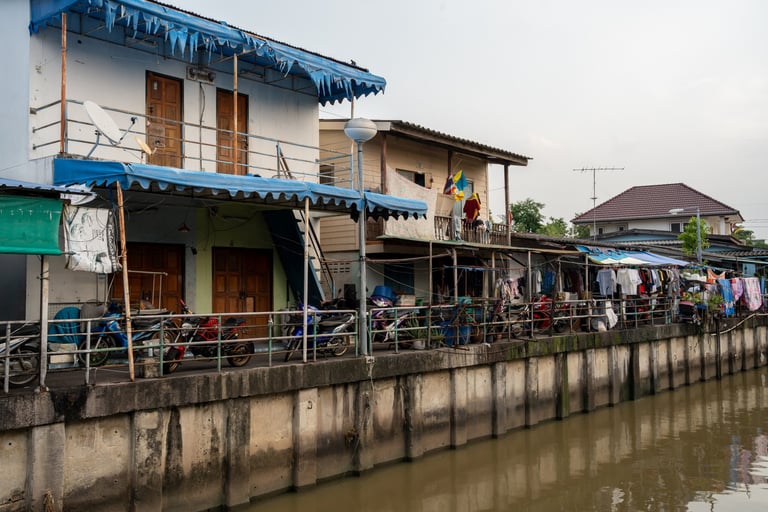
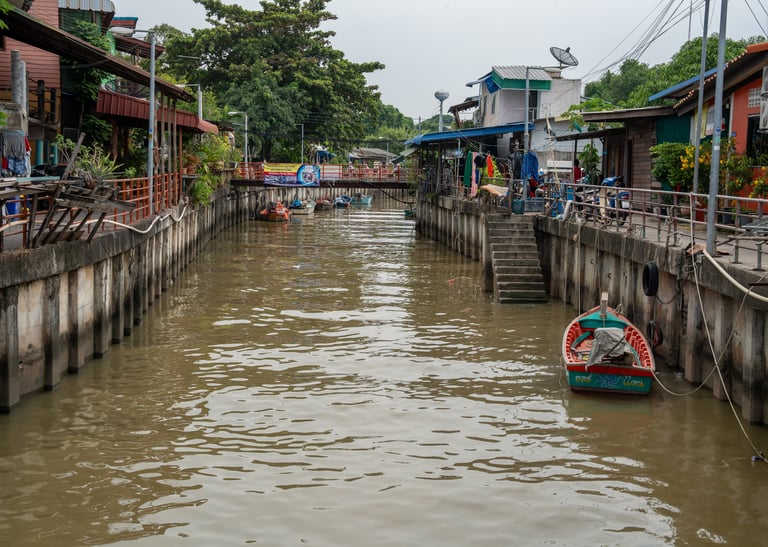
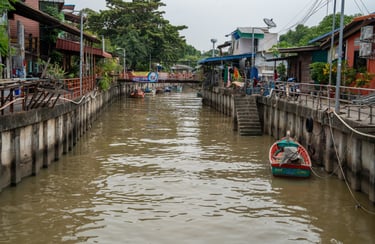
This canal runs right through the old fishermen’s quarter, surrounded by wooden stilt houses that sit directly above the water.
Walking here feels like stepping back in time — this area reflects the “old Thailand”, far away from the modern hotels and nightlife of Pattaya.
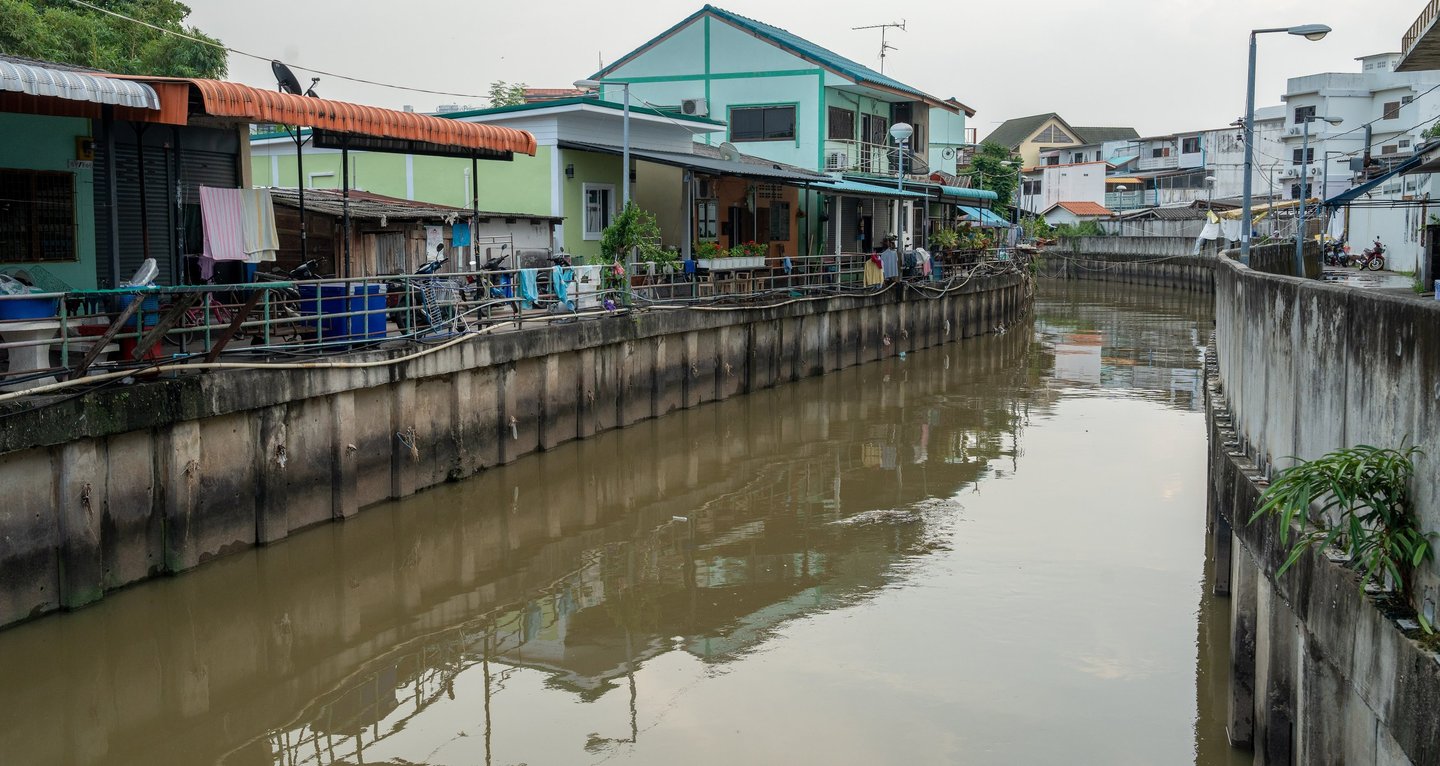
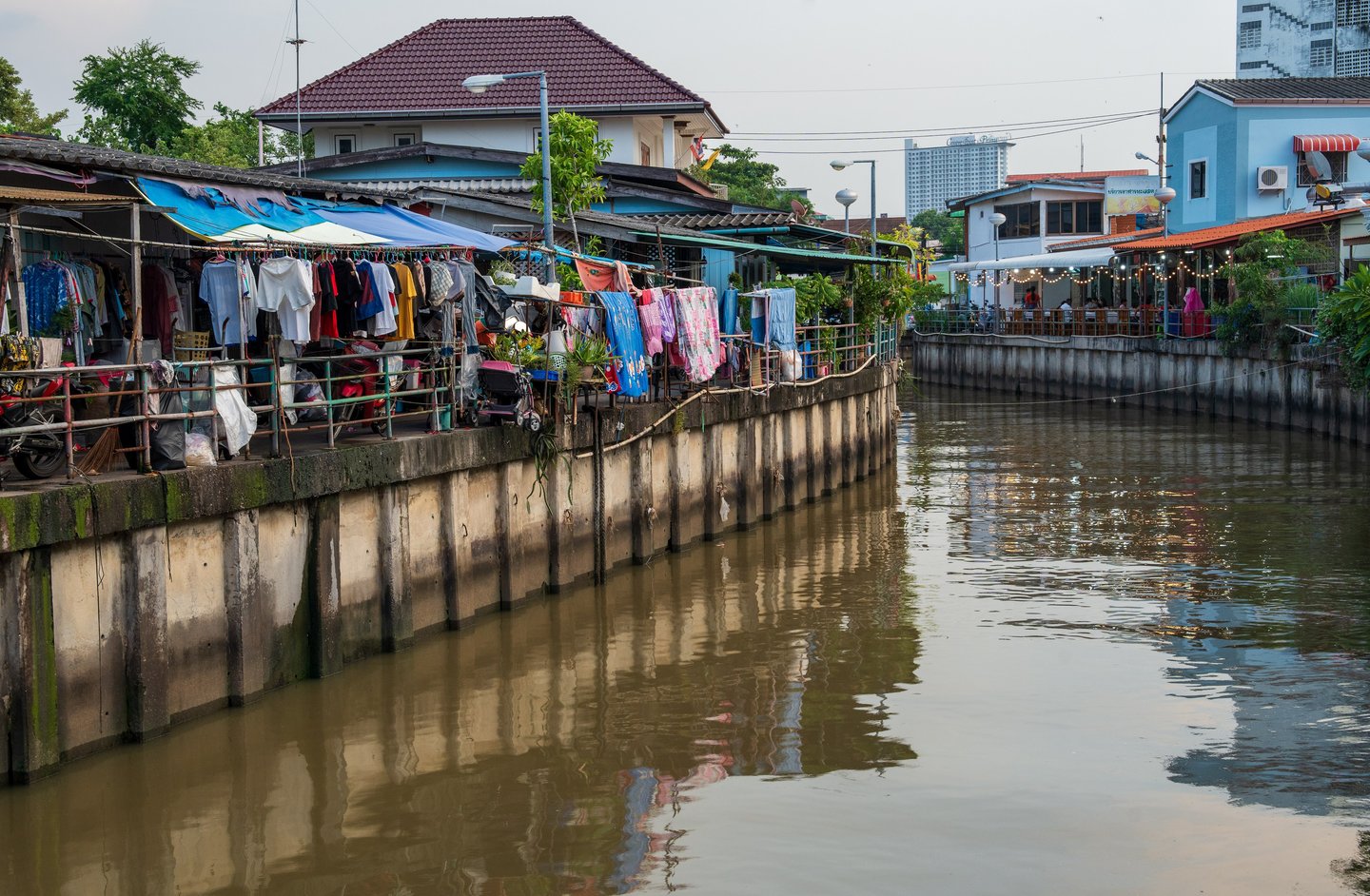
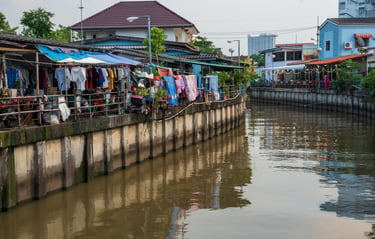
The Khlong is just a short walk from the famous Lan Pho Naklua Market, the city’s best-known fish market.
A narrow alley runs between the canal and the local houses, and walking through it almost feels like passing straight through the living spaces of the residents.
It’s a truly unique scene — motorbikes carefully squeezing through tight paths, locals chatting, and the sound of daily life echoing over the water.
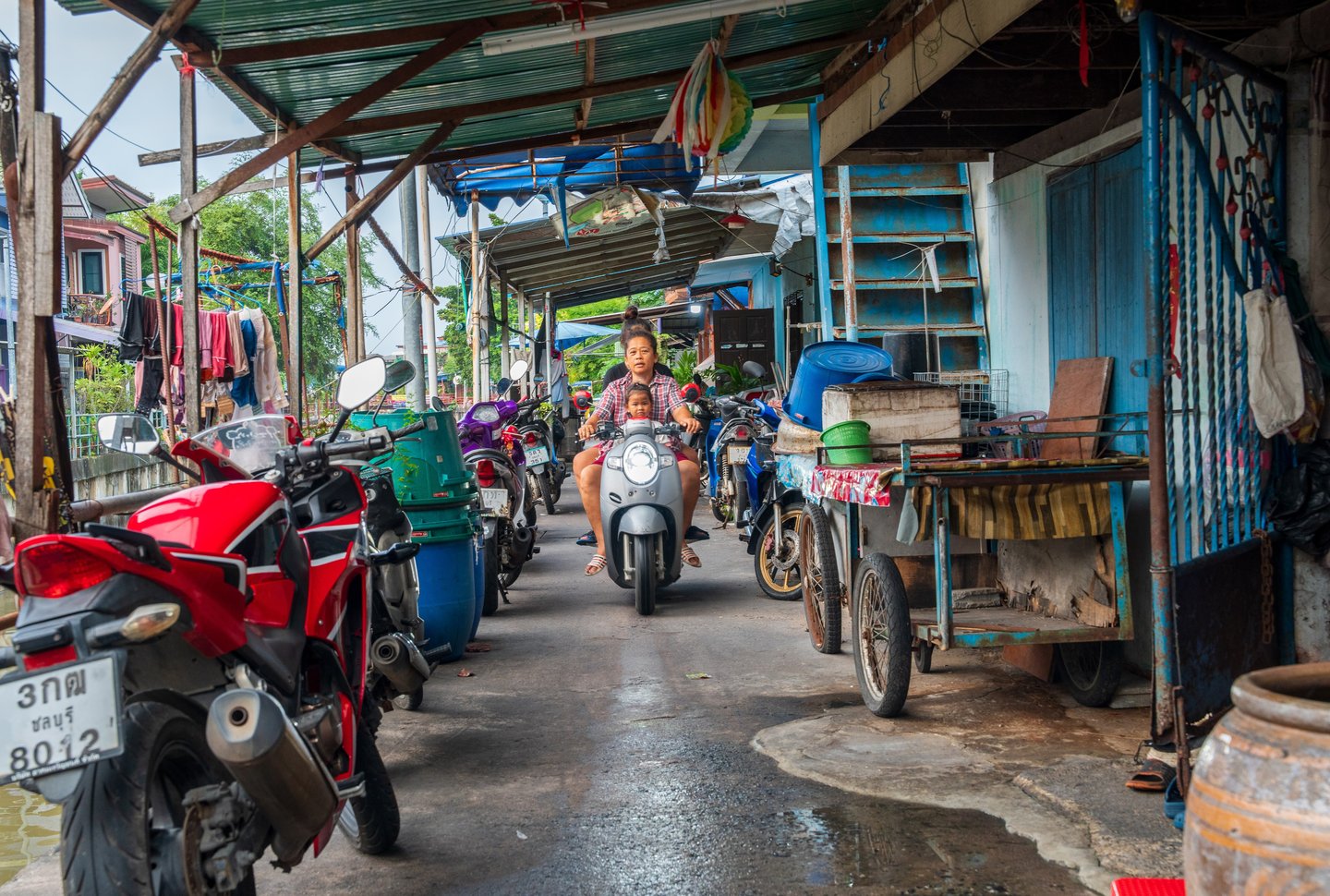
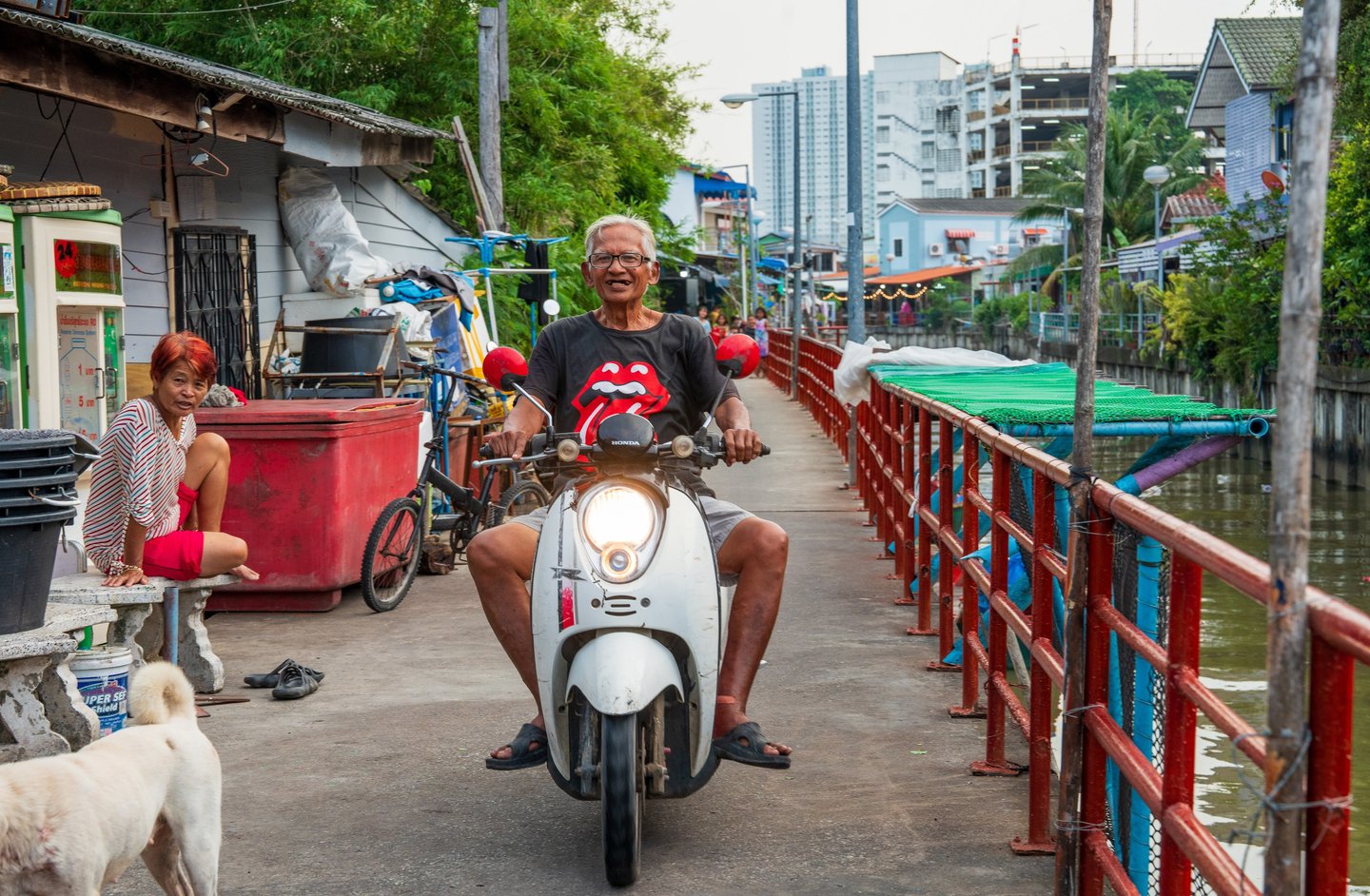
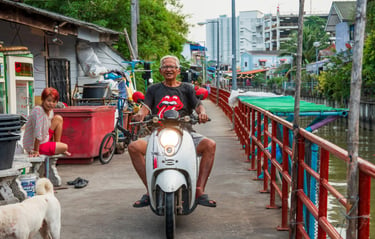
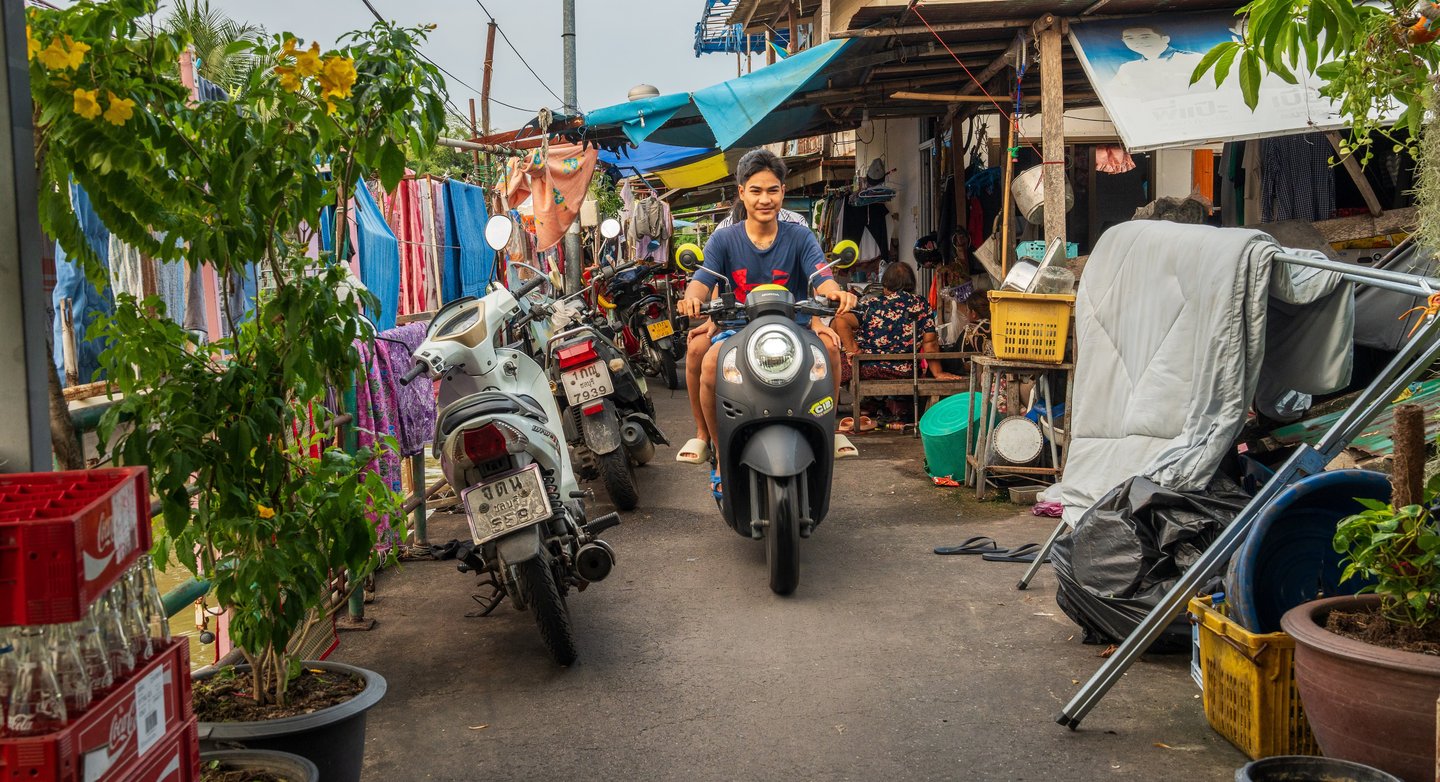
For anyone interested in authentic Thailand, Pattaya street photography, and traditional culture, this small area of Naklua offers incredible photo opportunities and a glimpse into real local life.
Naklua Fishing Pier – The Authentic Heart of Northern Pattaya
In the northern part of Pattaya, far from the nightlife and tourist crowds, lies one of the city’s most genuine places — the Naklua Fishing Pier.
Here, life still follows its natural rhythm, shaped by the sea, the wind, and the people who have lived from fishing for generations.
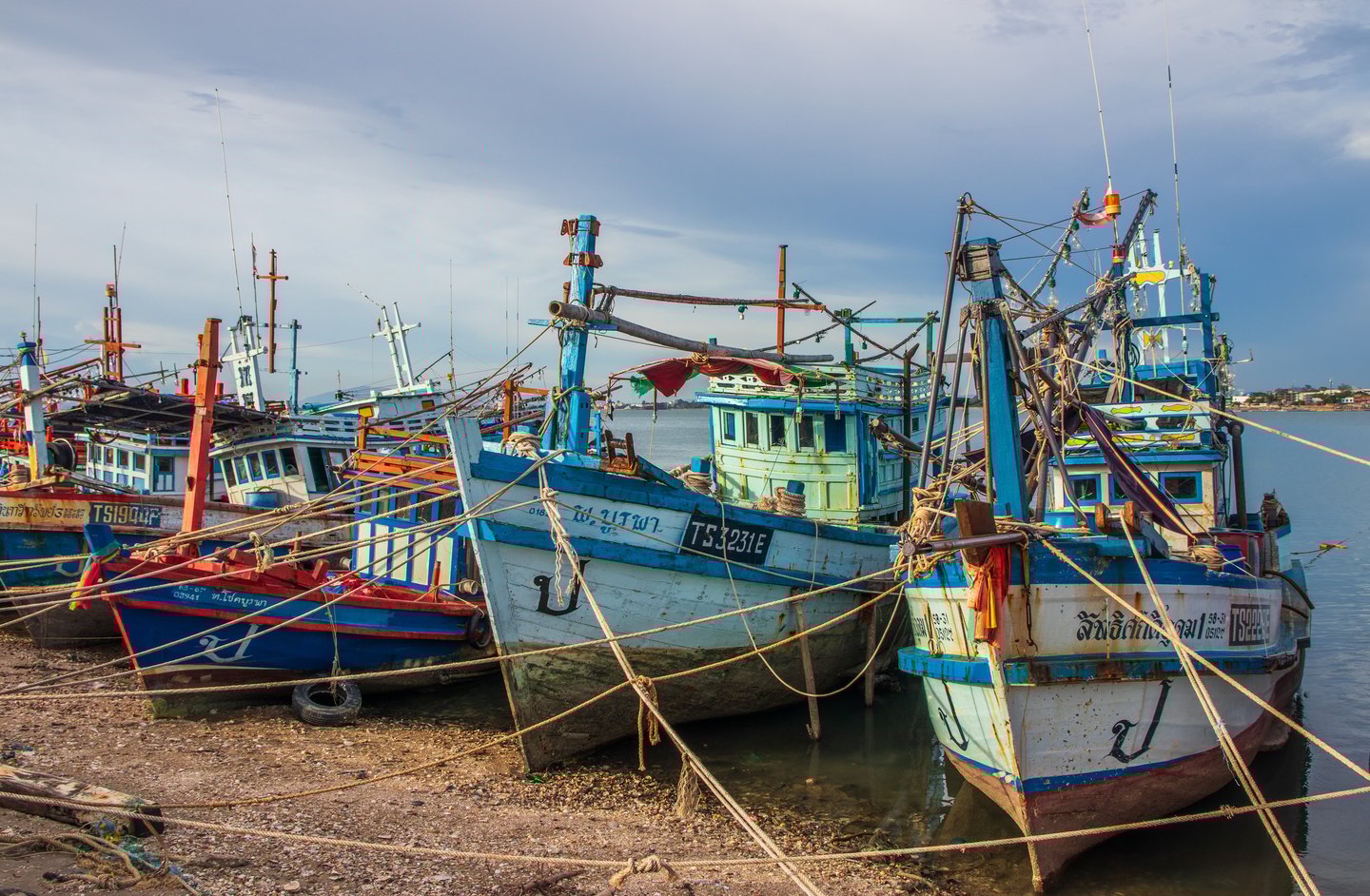
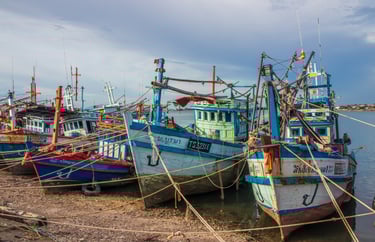
All the photographs shown here were taken in the late afternoon, when the light becomes soft, warm, and golden.
It’s the best time of day to be at the pier — when the heat fades, the colors deepen, and the small details of daily life come into focus
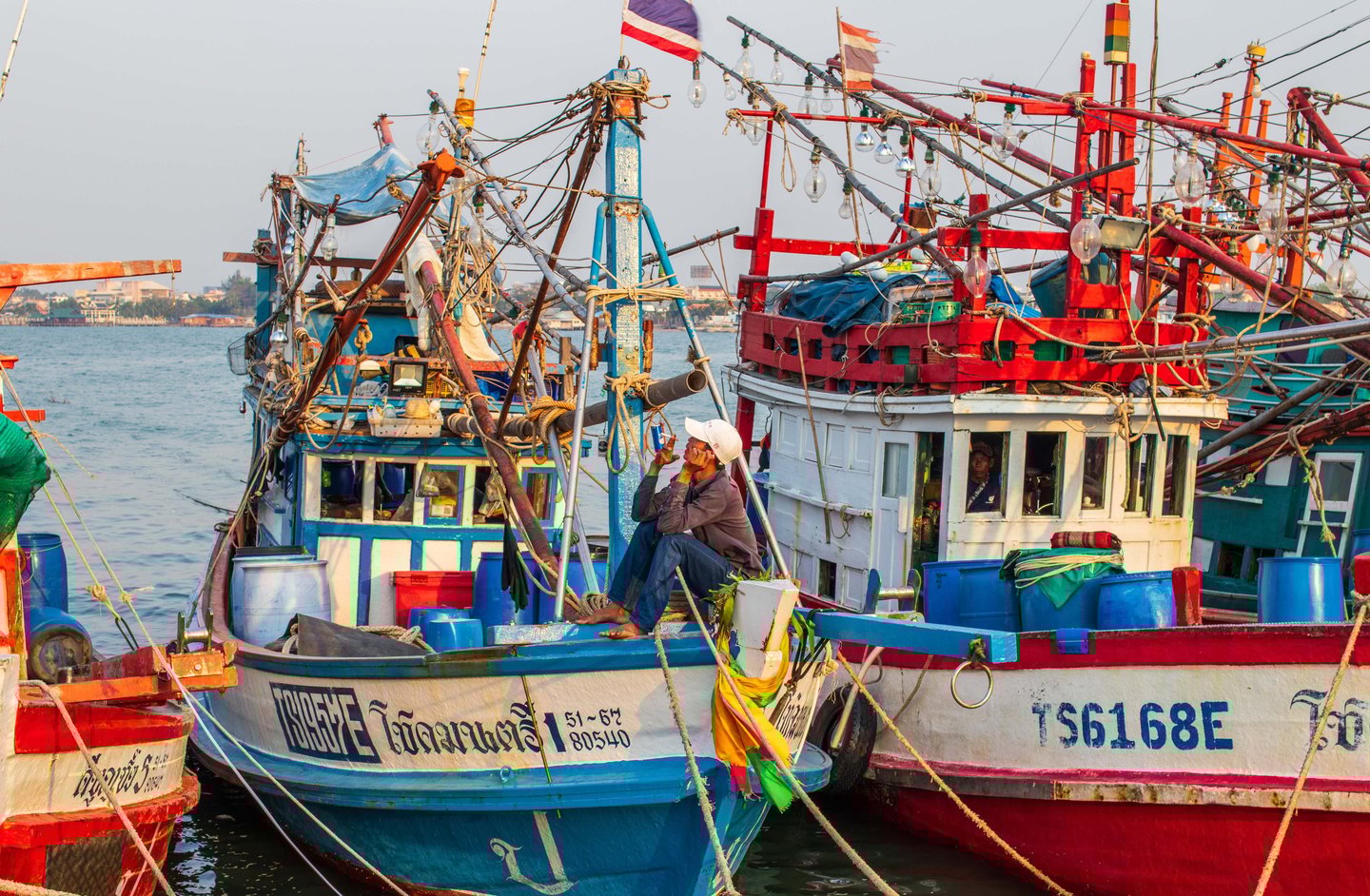
Most of these images were captured with my Sony Alpha 7 IV (ILCE-7M4) and the Sony FE 24–70 mm f/2.8 GM II,
but I also used my Canon EOS 77D with a Sigma Art 30 mm f/1.4 lens — a camera I still take out occasionally for its distinct APS-C look and character.
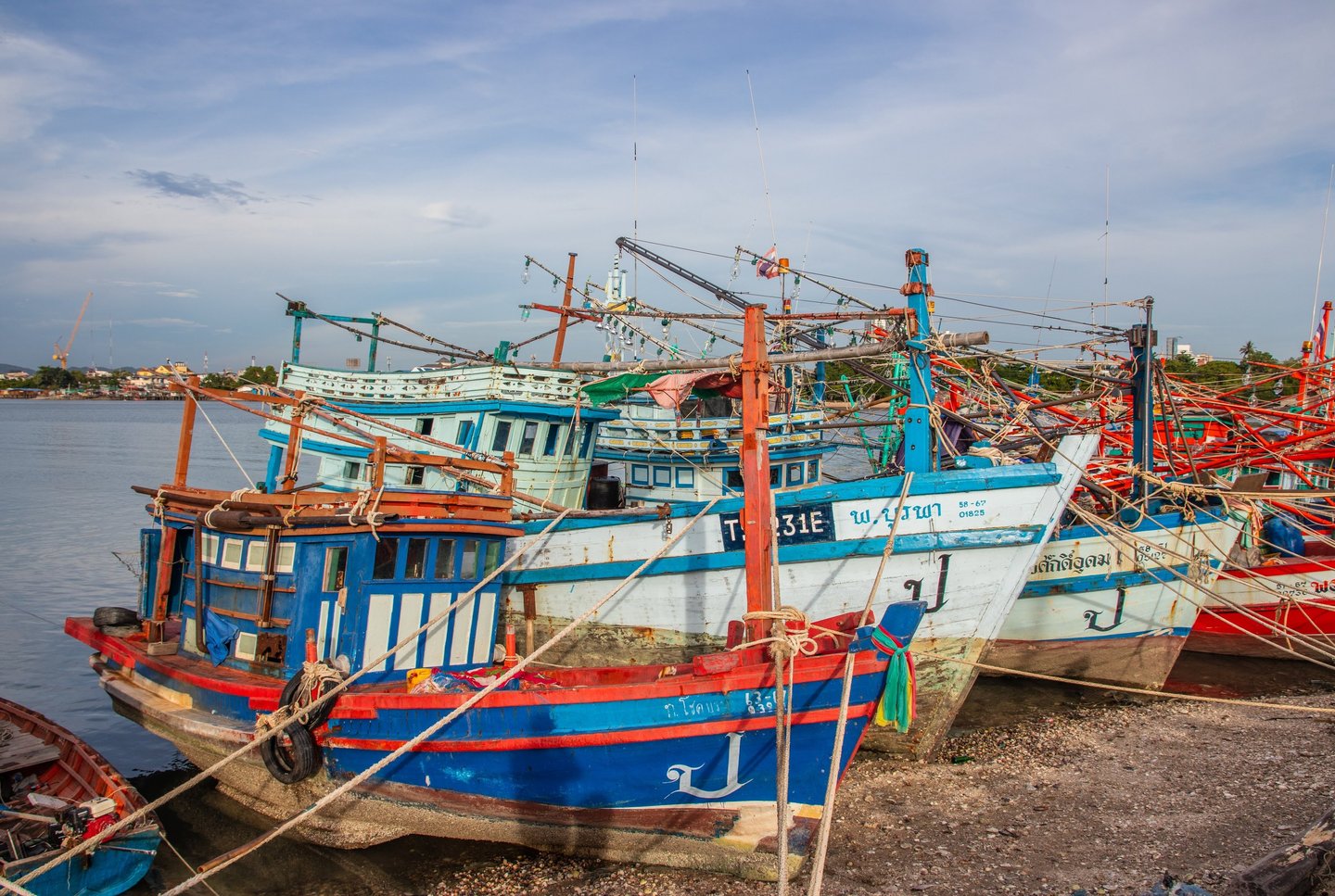
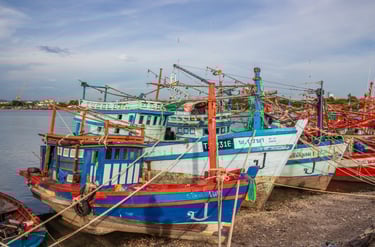
The pier itself is long and narrow, stretching out into the Gulf of Thailand.
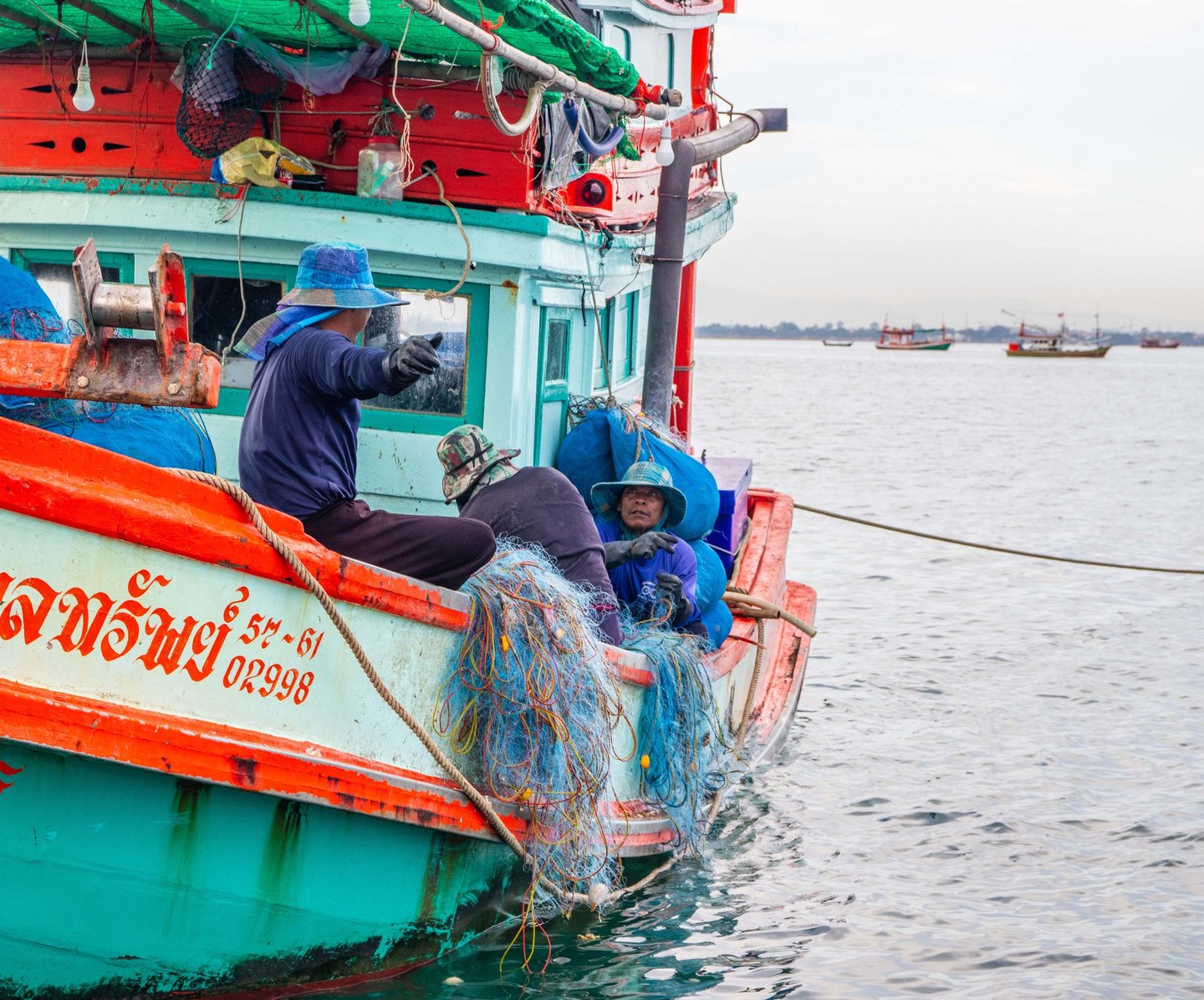
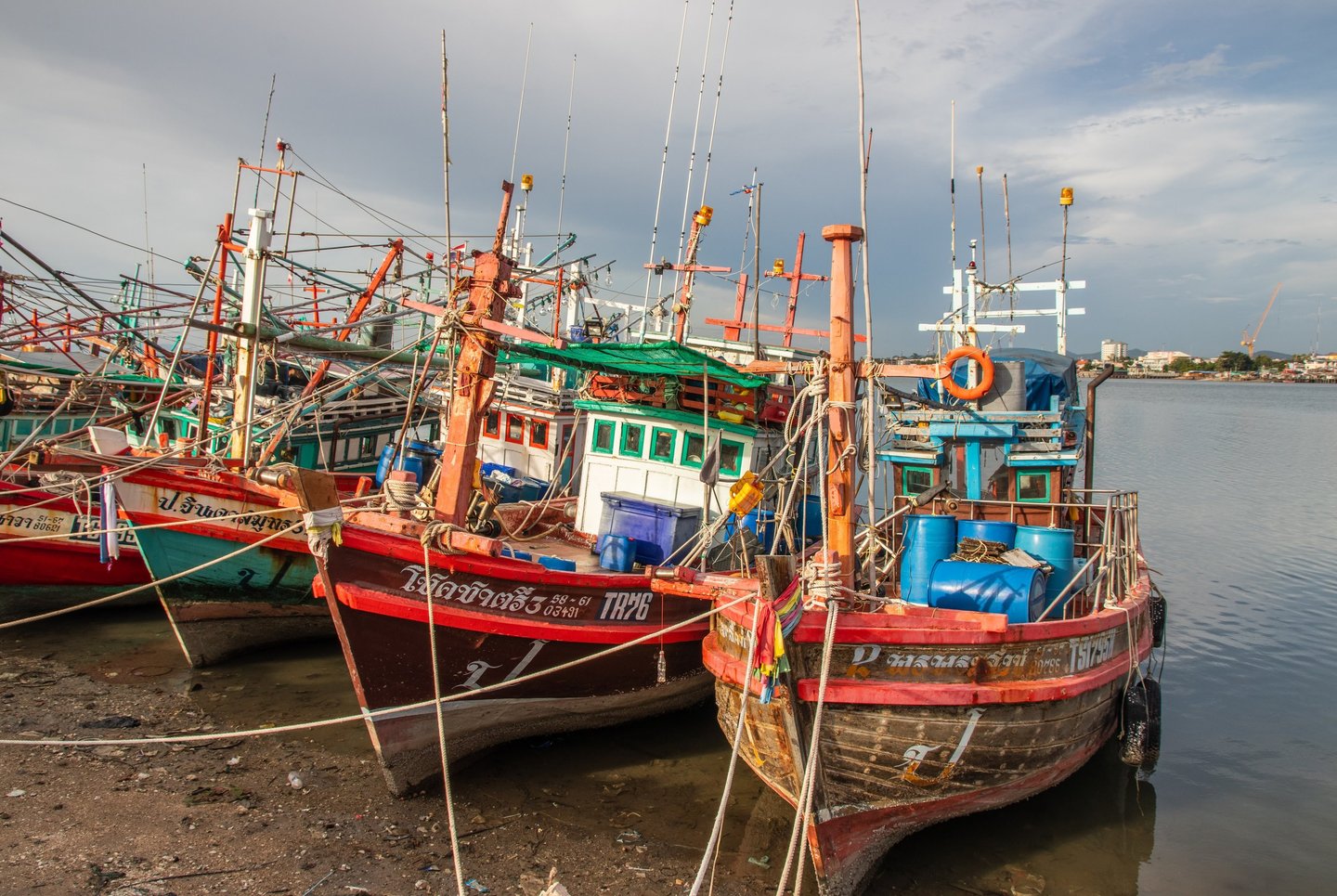
Colorful wooden fishing boats line both sides, painted in bright shades of blue, red, and green, their reflections shimmering in the golden light of the late afternoon sun.
Fishermen can be seen repairing nets, cleaning their decks, or resting inside their boats — many of which serve as both workspaces and homes.
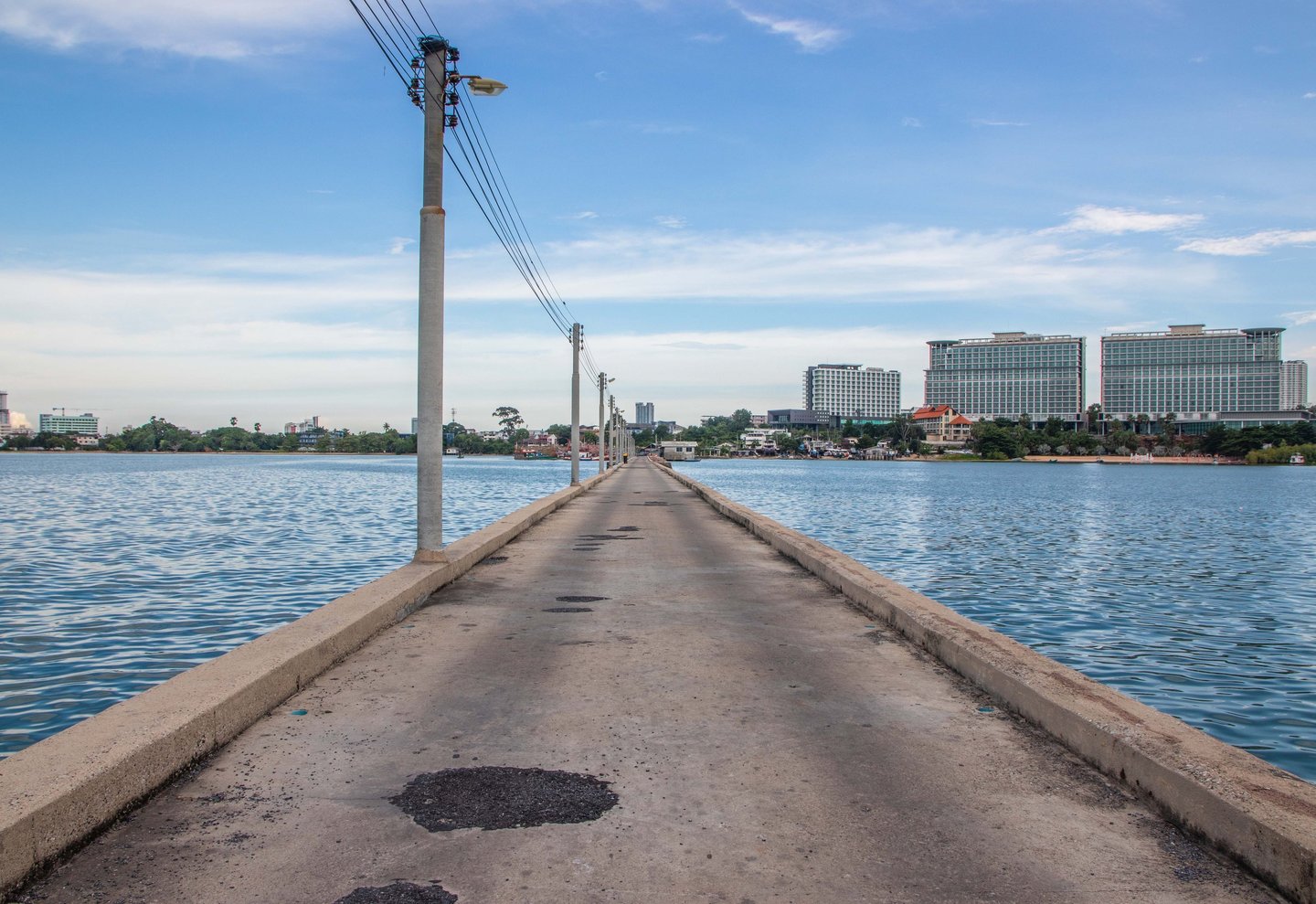
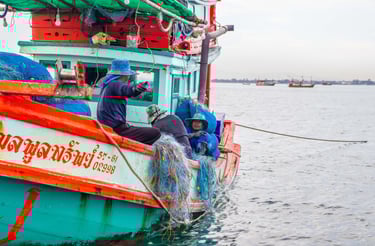
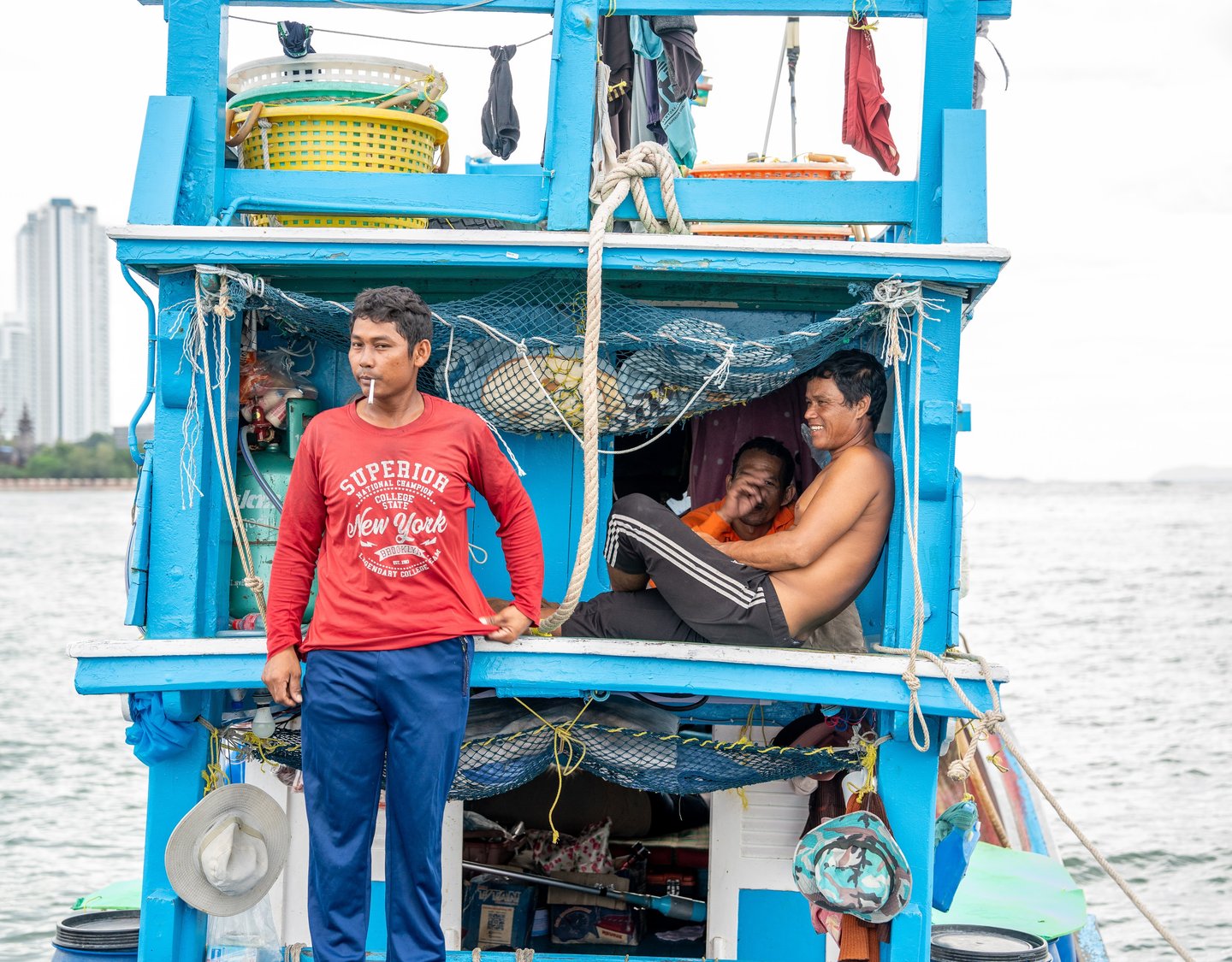
During these hours, the pier takes on a calm, almost cinematic mood.
Thai families arrive to fish together as the sun sets, chatting quietly as they drop their lines into the water.
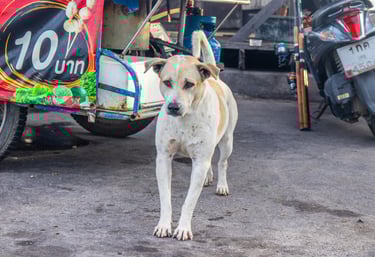
A motorbike rolls slowly toward me along the narrow path, its sound blending with the sea breeze. A mother rests in a hammock with her child, watching the soft light over the sea, while a few stray dogs wander lazily between the boats, hoping for a small piece of fish
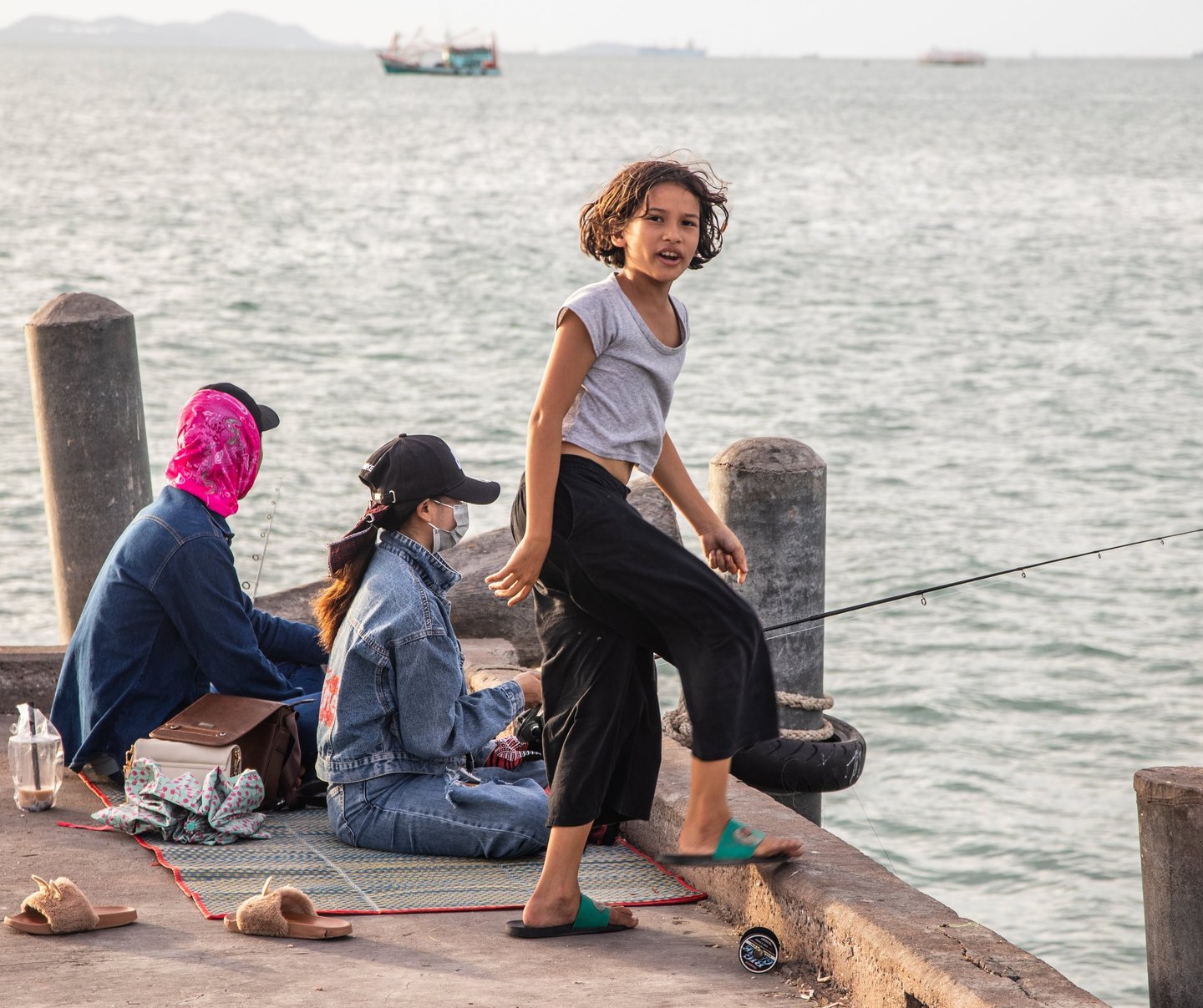
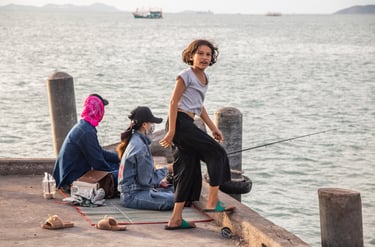
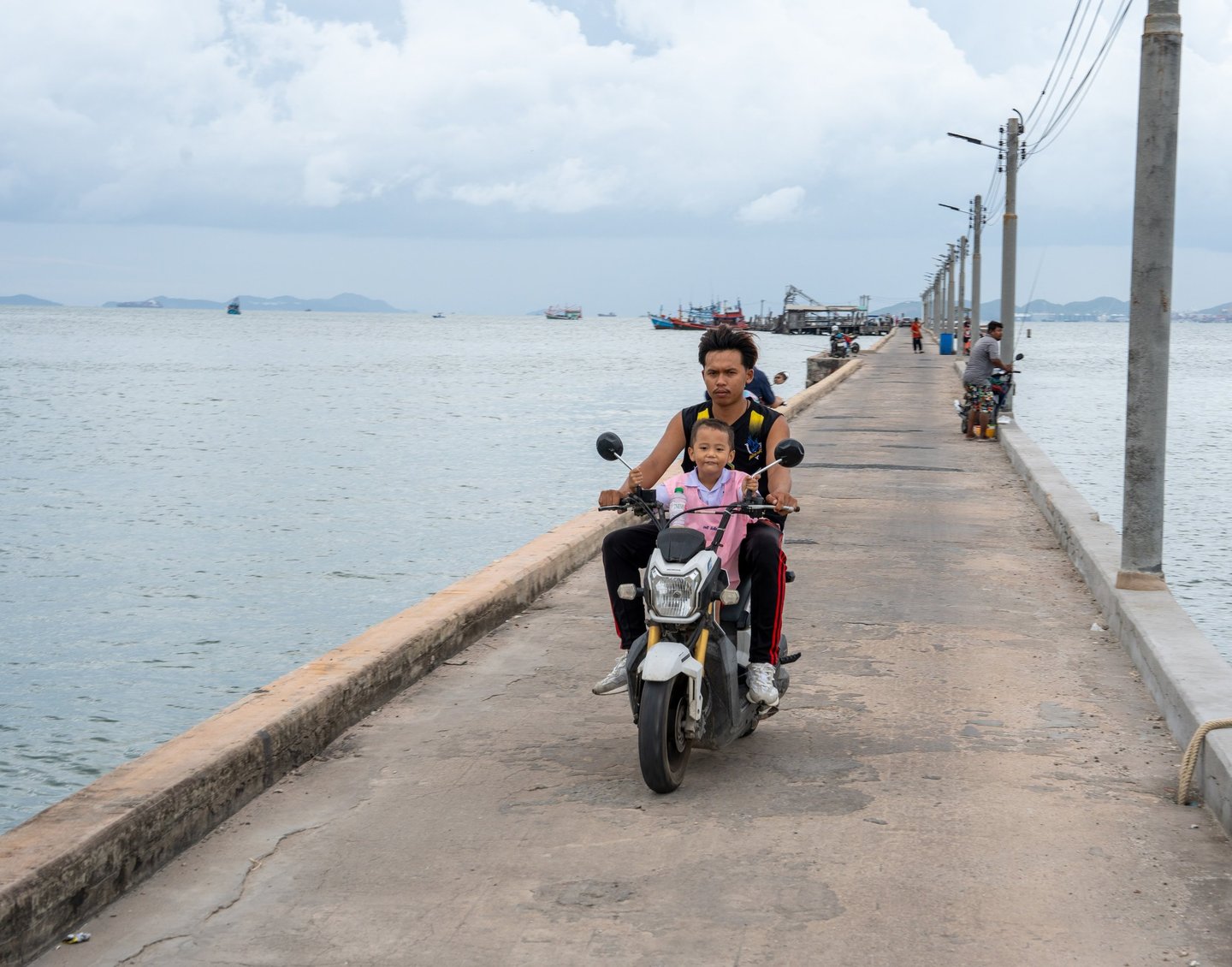


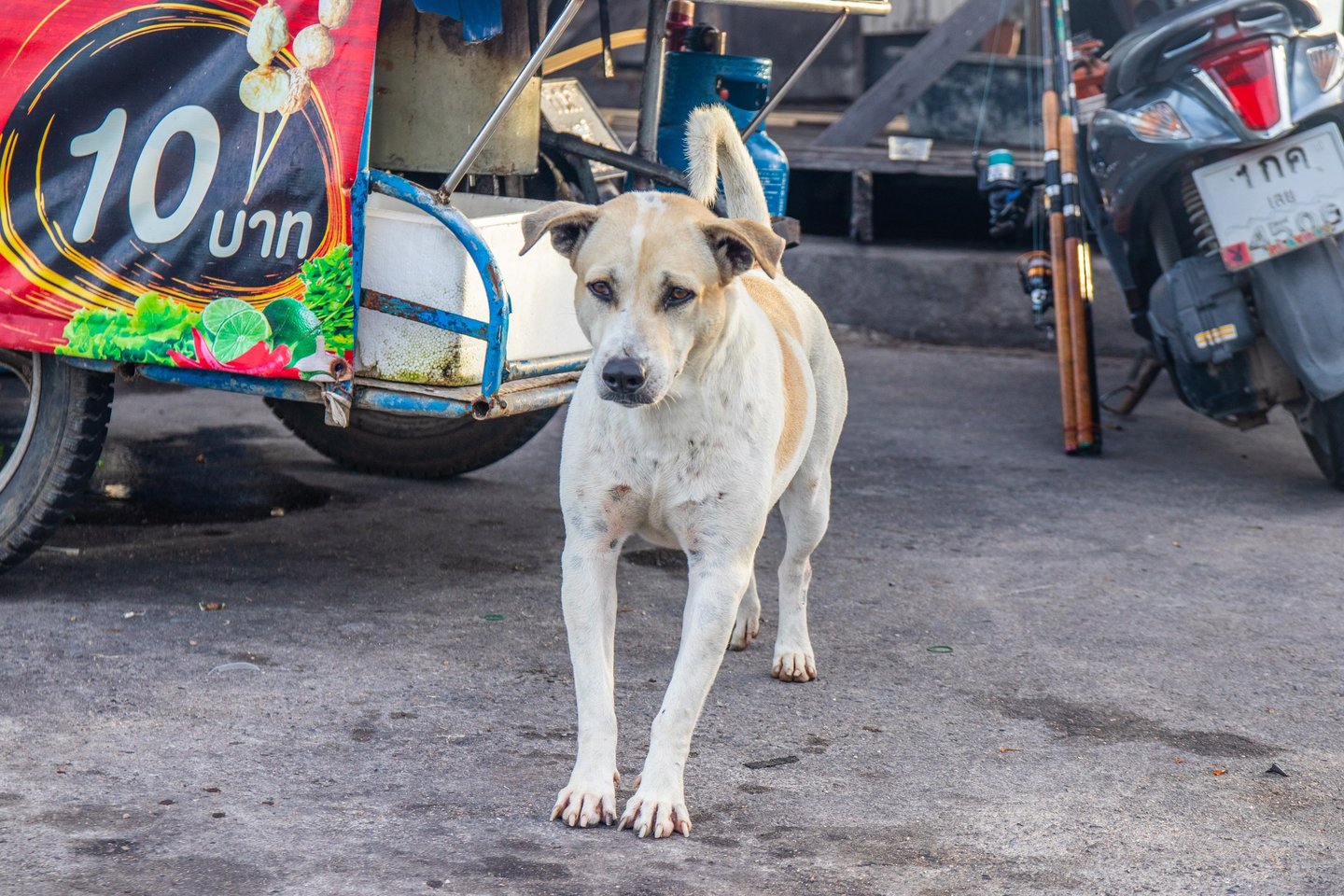
For me, the Naklua Fishing Pier represents the real Pattaya — peaceful, modest, and connected to the ocean.
It’s a reminder that this city has another side, one that’s not defined by bars or bright lights, but by its people and their everyday lives
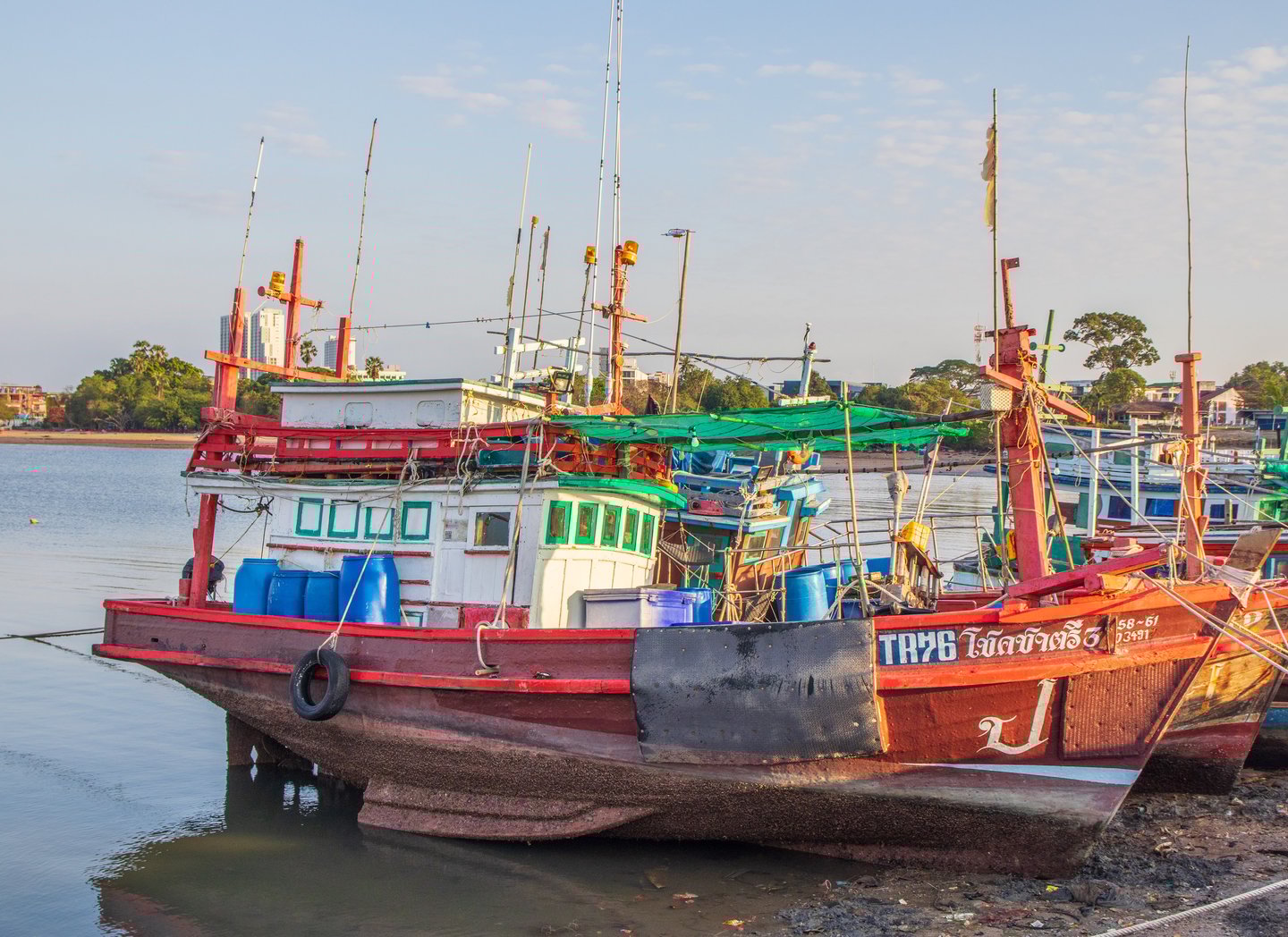
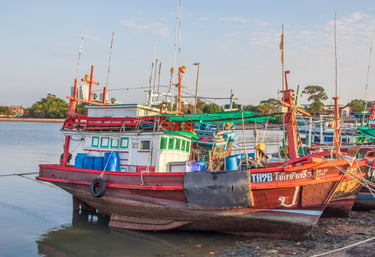
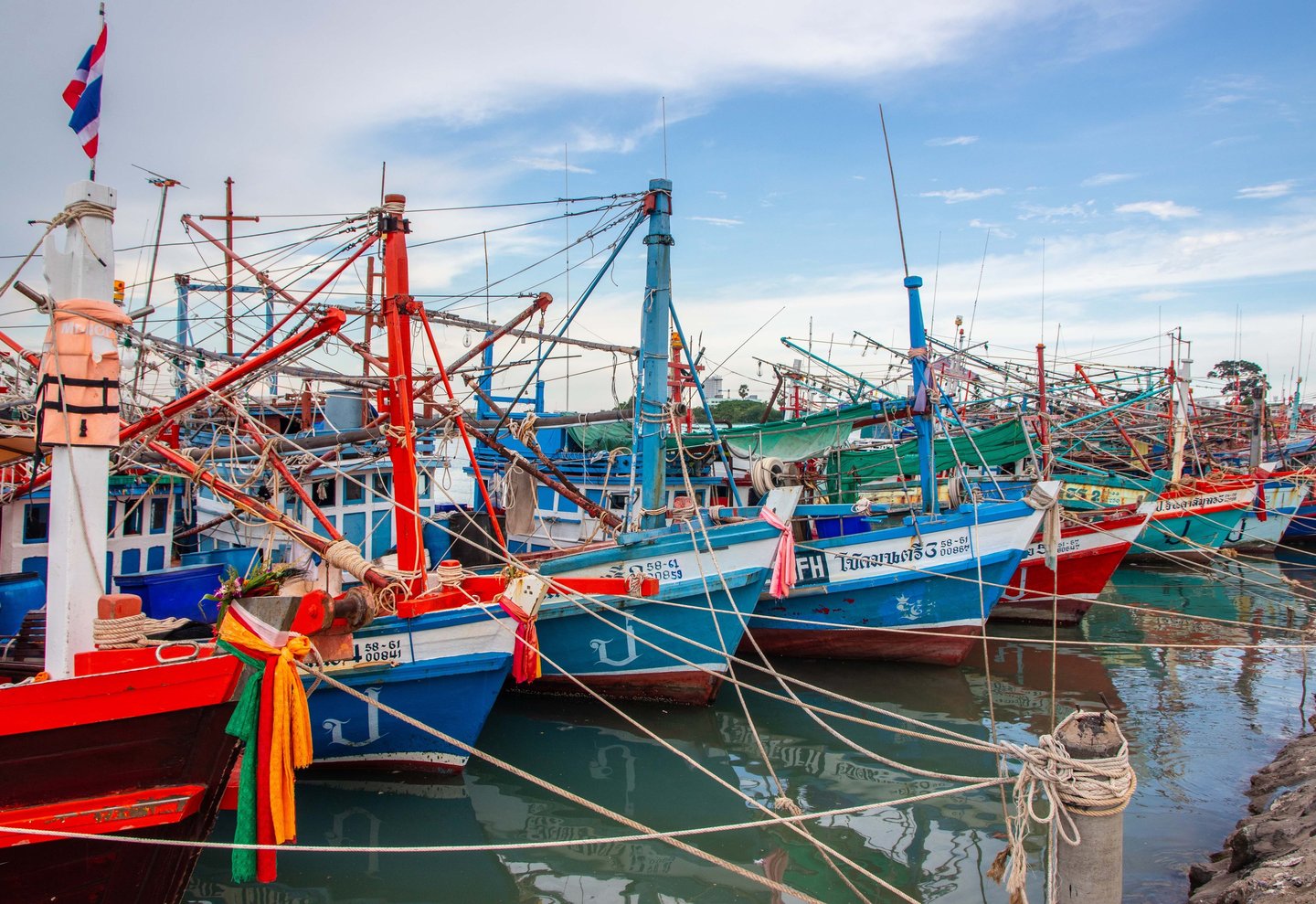
This is the Pattaya I want to show on my page “Pattaya – More Than Stereotypes.”
Because here, at the pier, the city reveals its quiet beauty — where light, water, and human stories come together in perfect balance
The Sanctuary of Truth – Light, Wood, and Spiritual Art in Pattaya
In the northern part of Pattaya, near the coastline of Naklua, stands one of the city’s most fascinating and unexpected landmarks —
the Sanctuary of Truth, a wooden masterpiece that combines Buddhist and Hindu philosophy with extraordinary Thai craftsmanship.
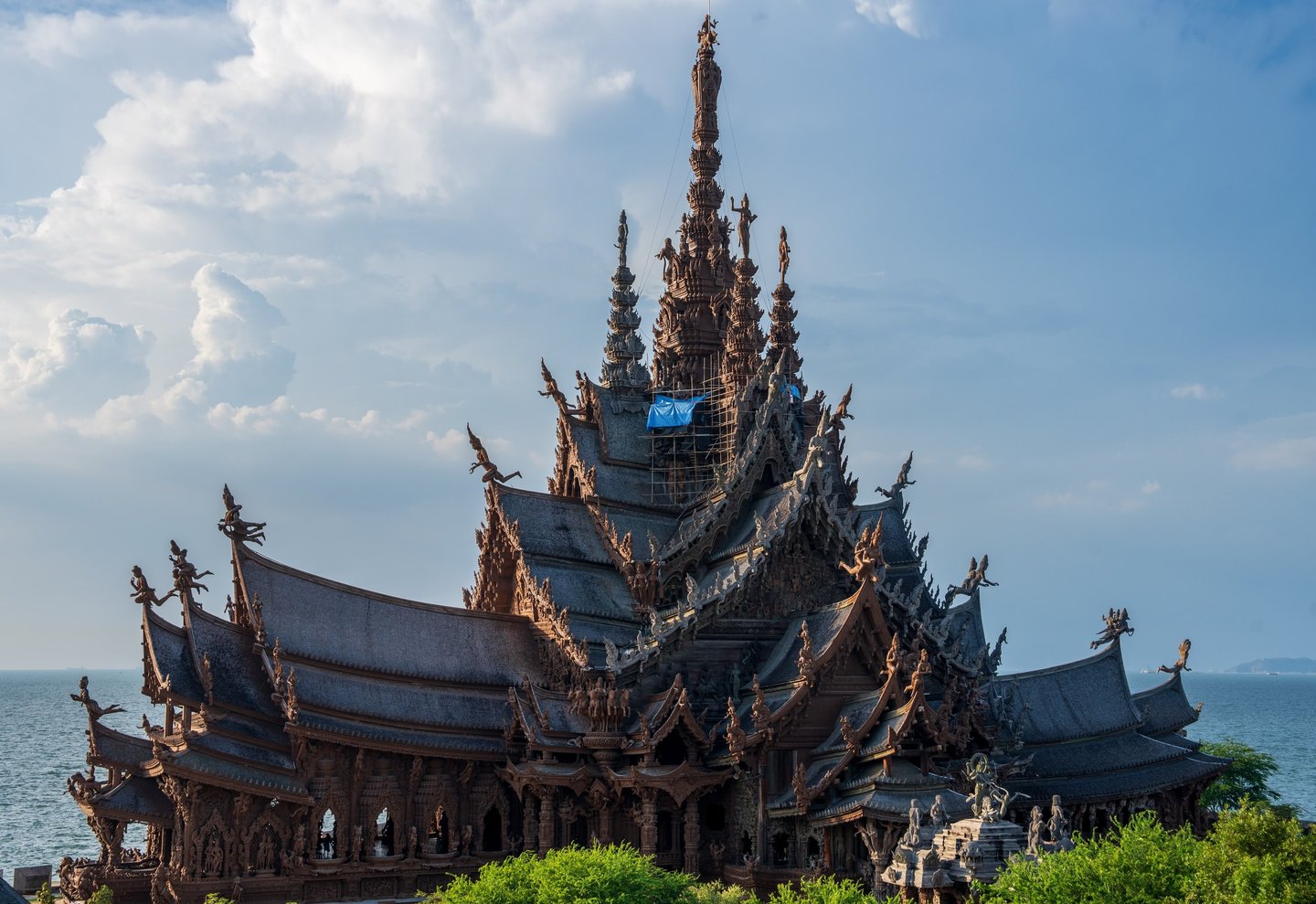
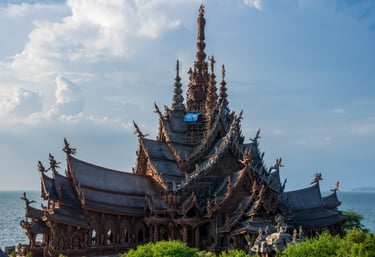
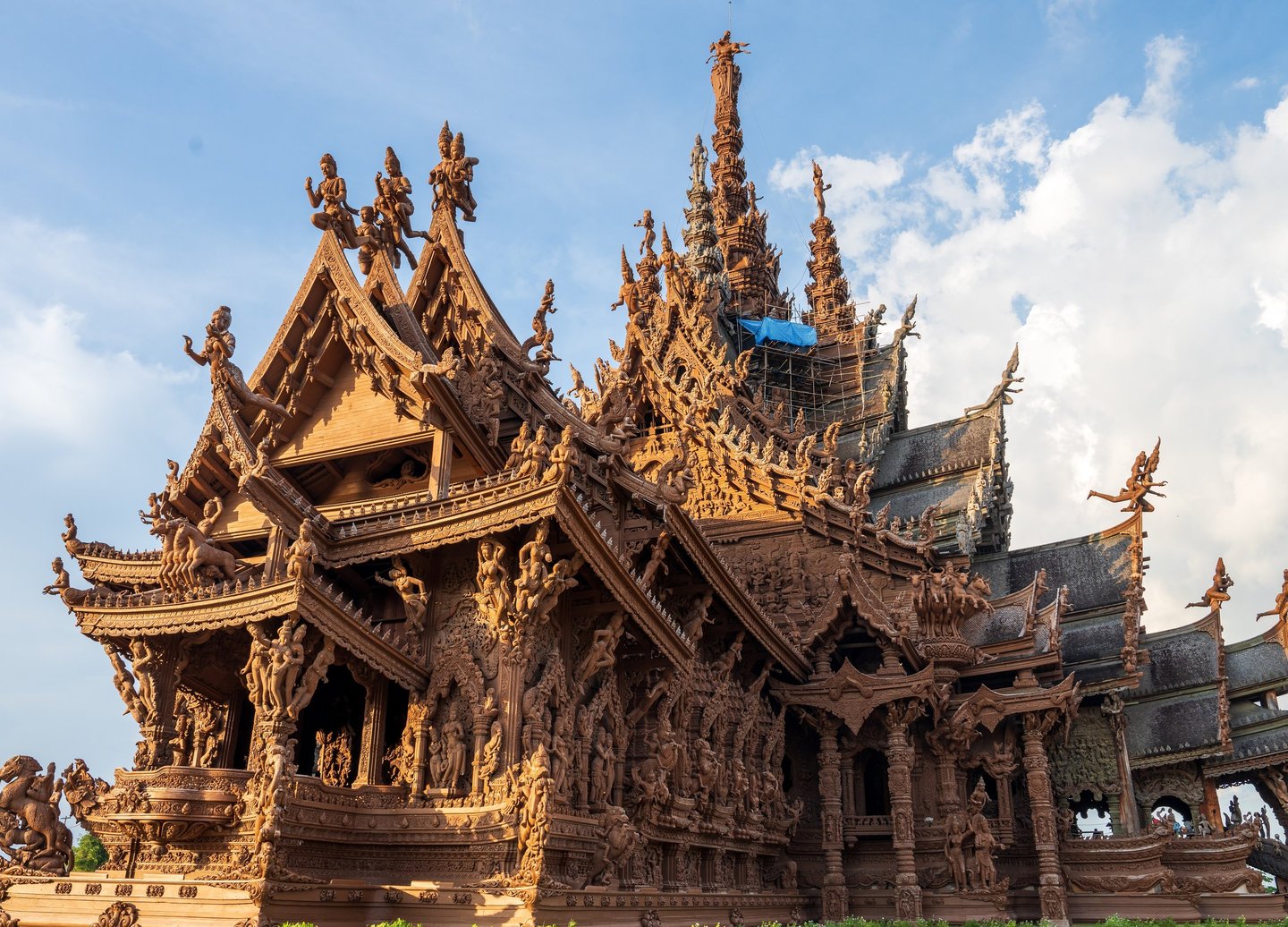
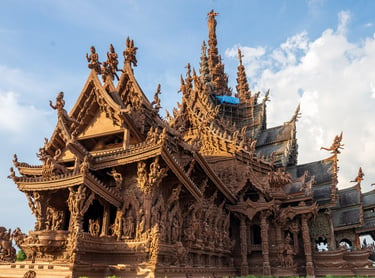
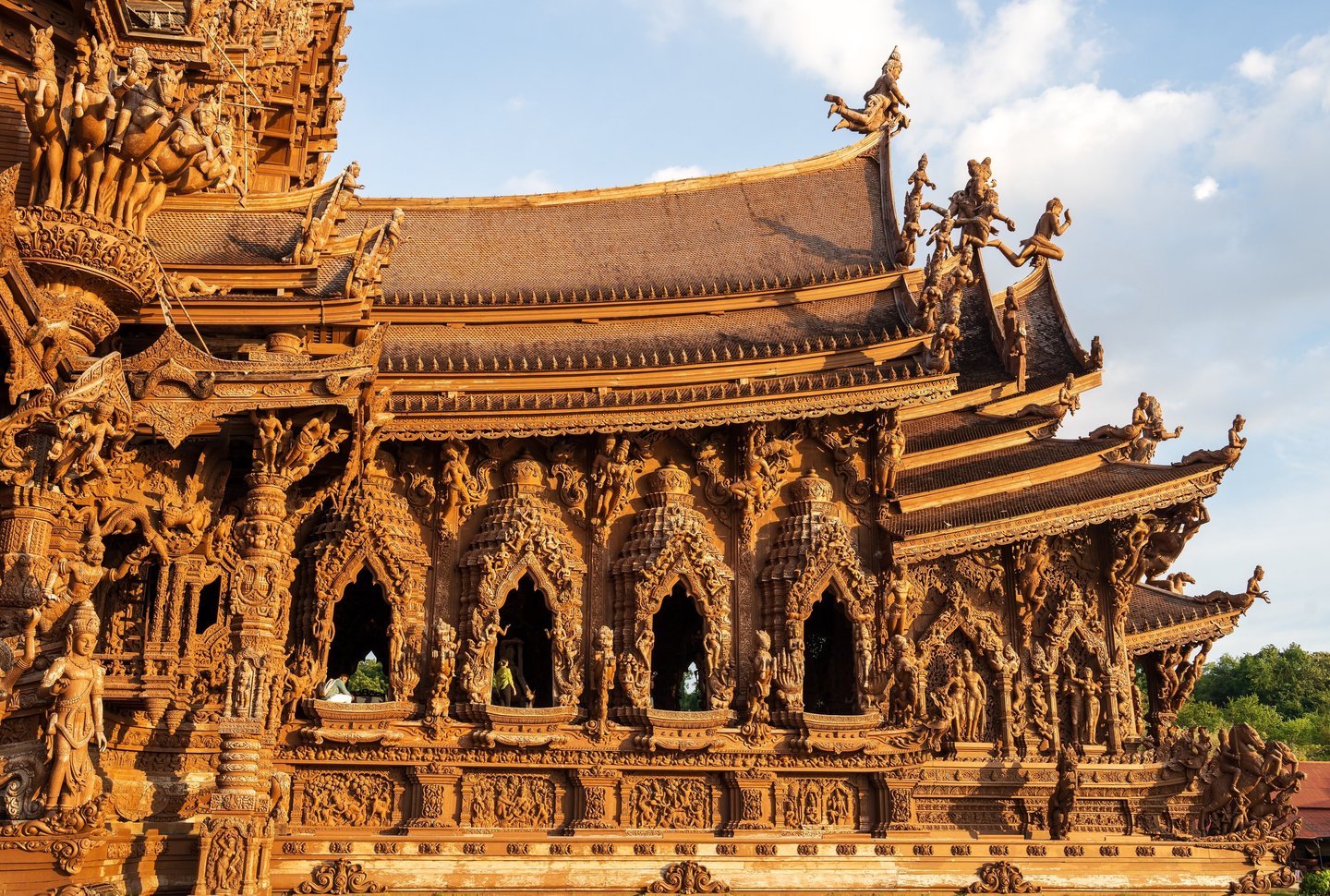
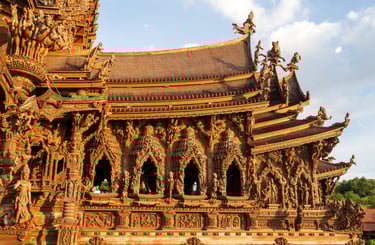
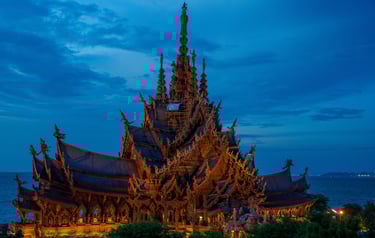
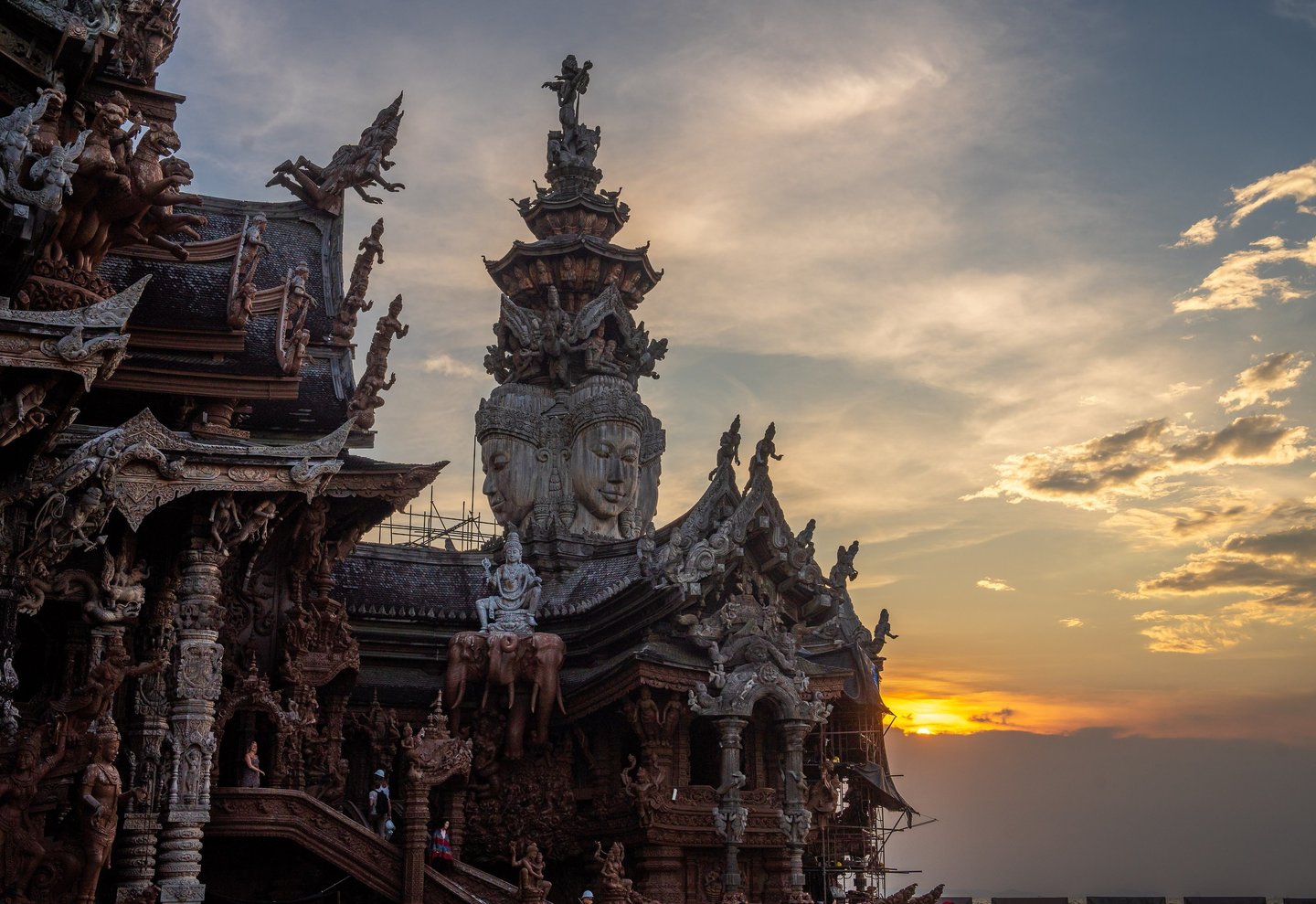
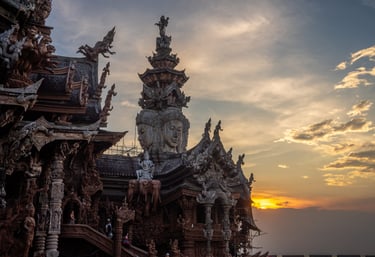
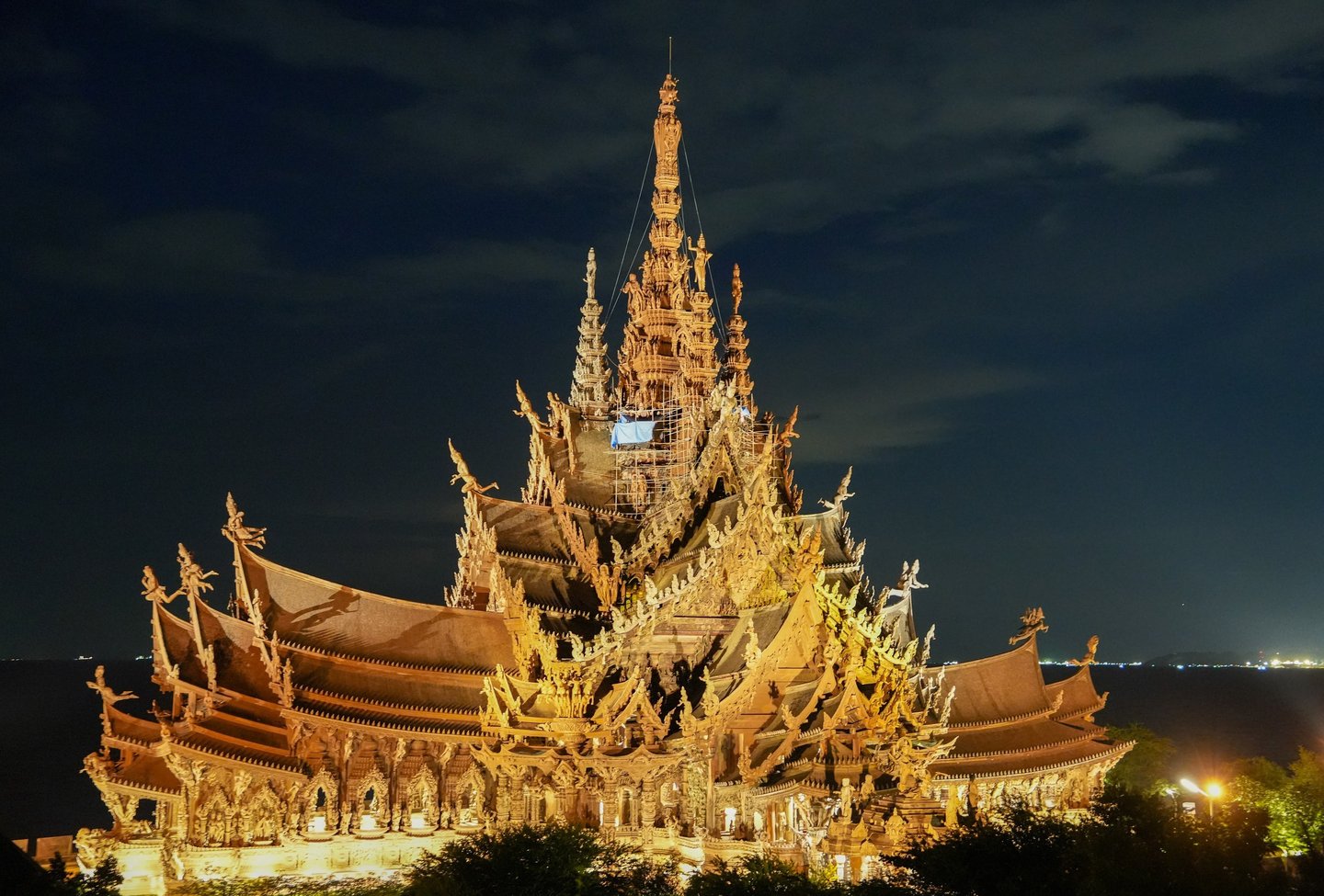
I photographed this monumental structure in the late afternoon, just before the blue hour, continuing through sunset and into nightfall.
During these hours, the light transforms every part of the building — from golden tones that warm the carved teak surfaces to deep shadows that emphasize its countless details.
As the sun sets behind the Gulf of Thailand, the carvings take on a soft, almost sacred glow.
Later, under artificial light, the sanctuary turns into a silhouette of spiritual calm against the night sky.
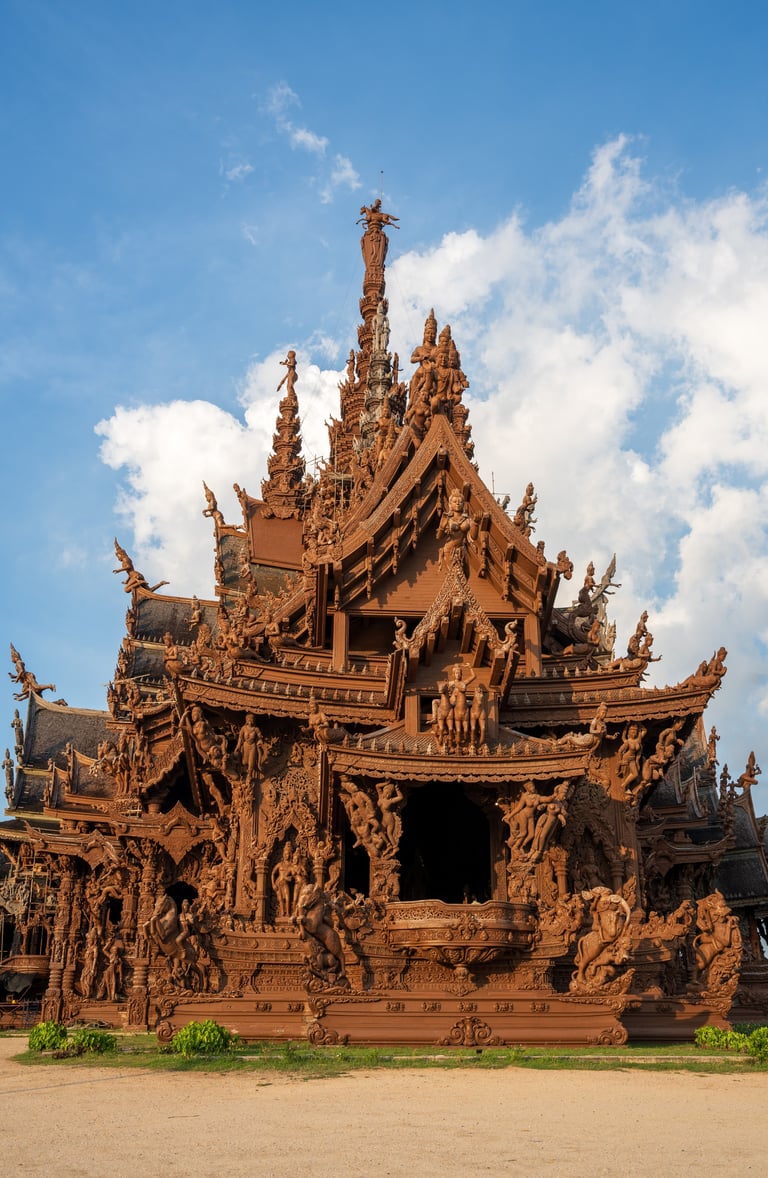
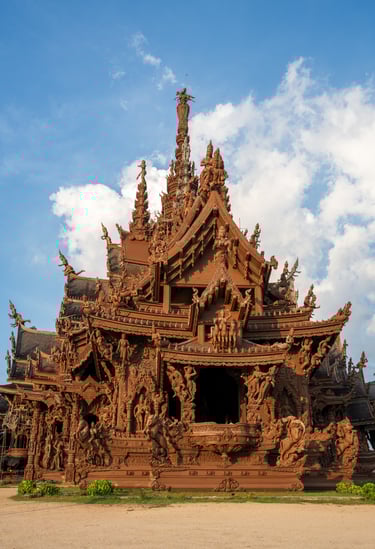
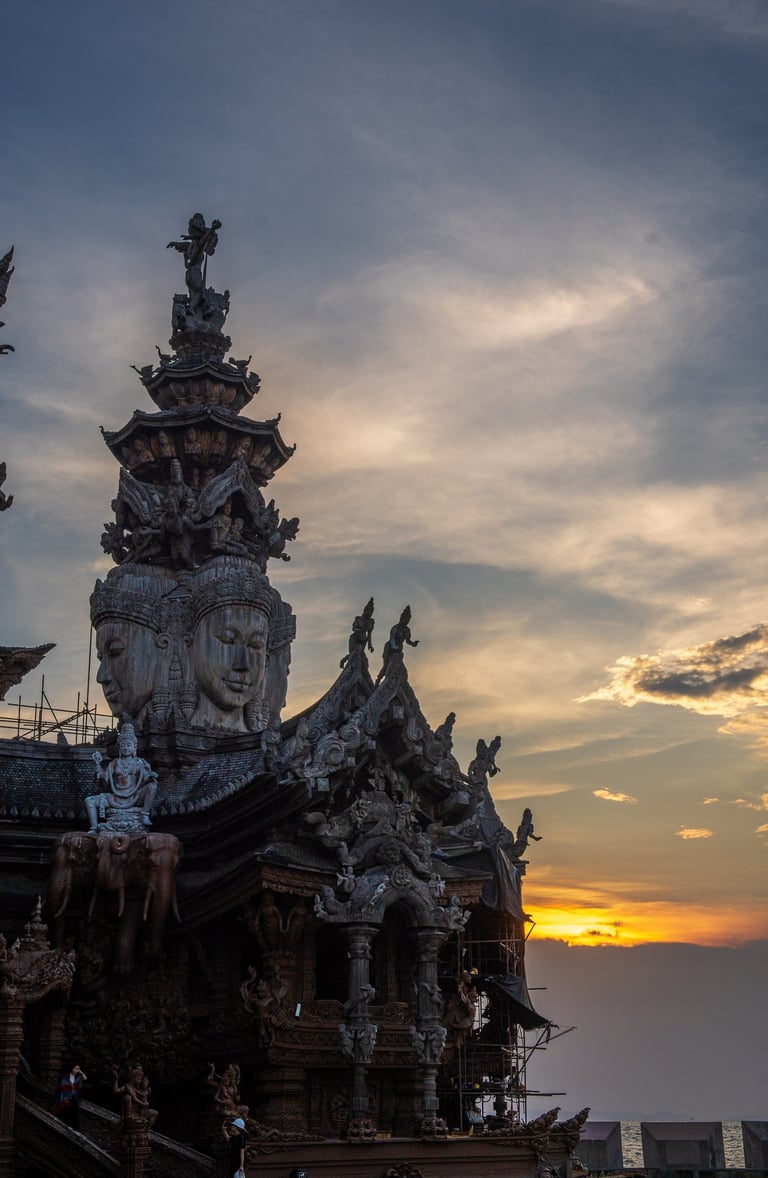
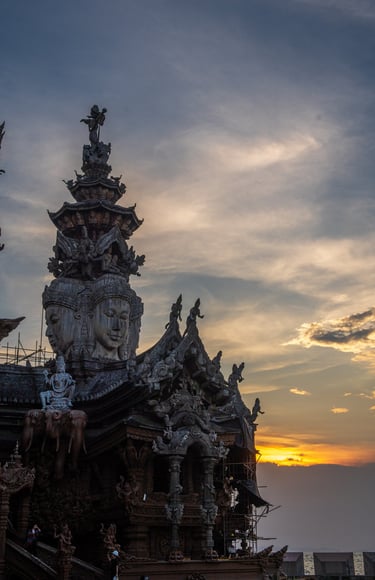
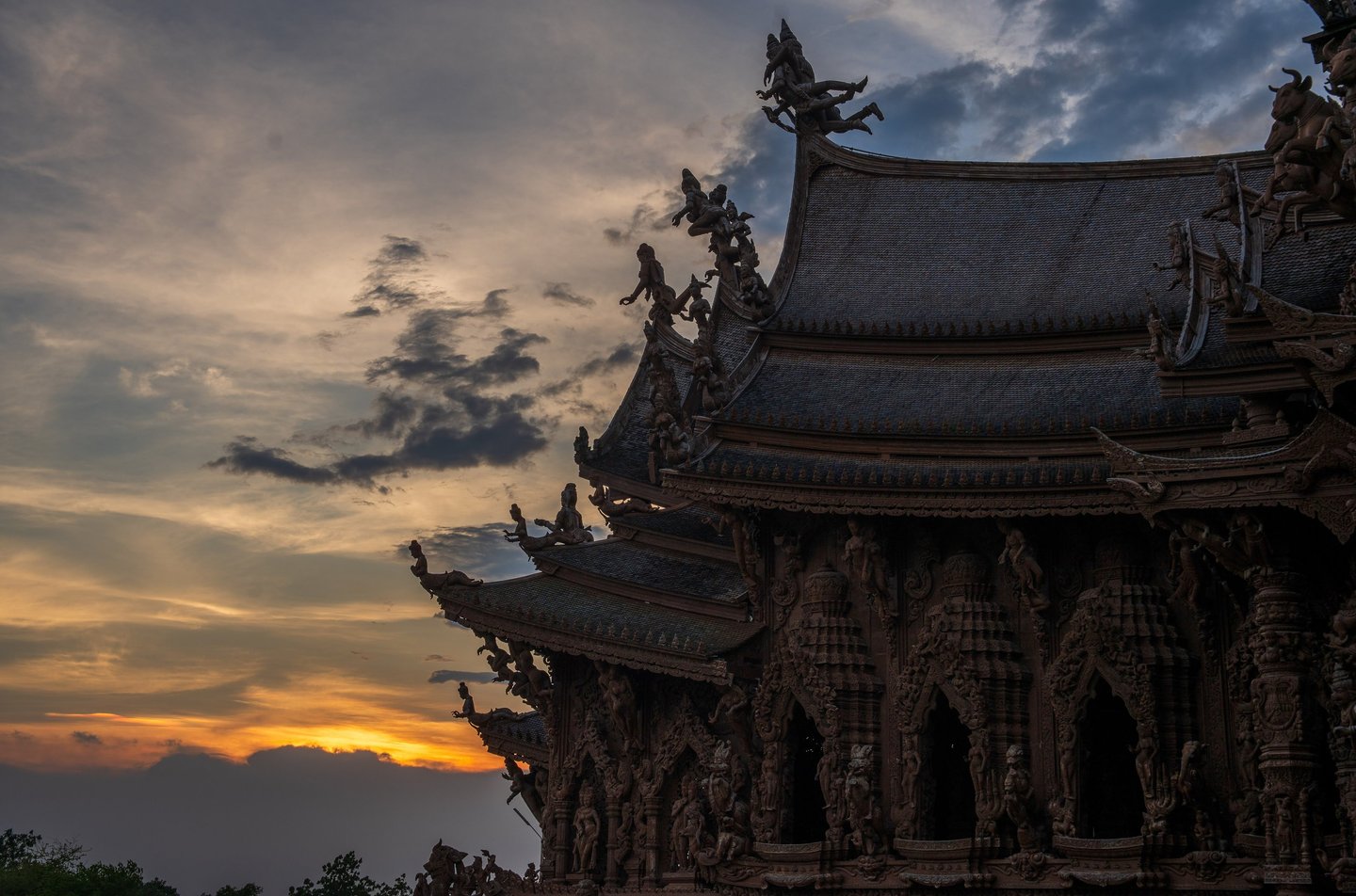
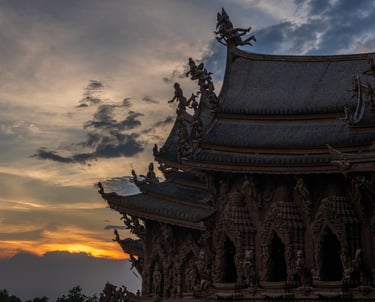
Built entirely from wood, without nails, the Sanctuary of Truth stands as both a temple and a museum —
a place where art, religion, and philosophy meet.
Its sculptures represent themes from Buddhism and Hinduism, illustrating ideas of creation, compassion, and the connection between humanity and the universe.
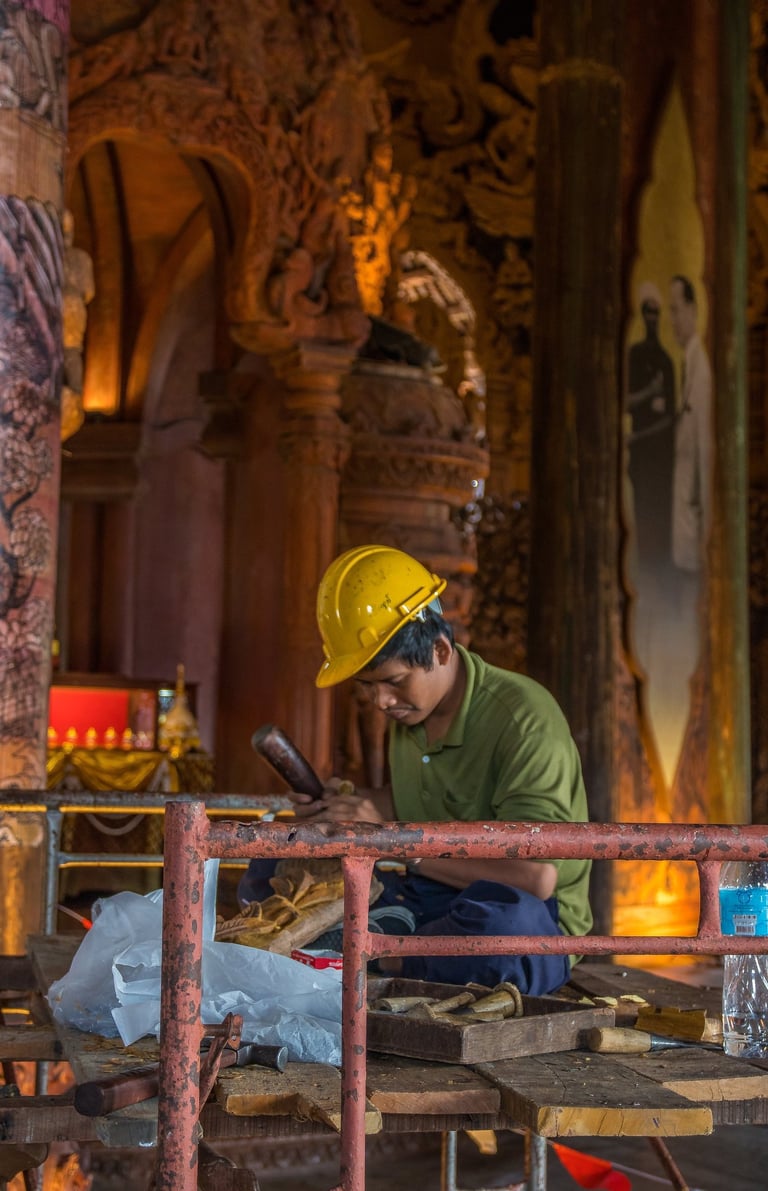
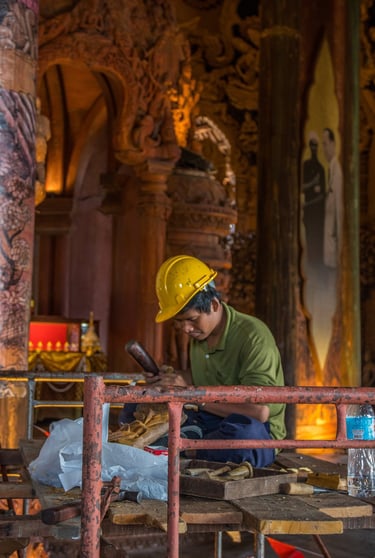
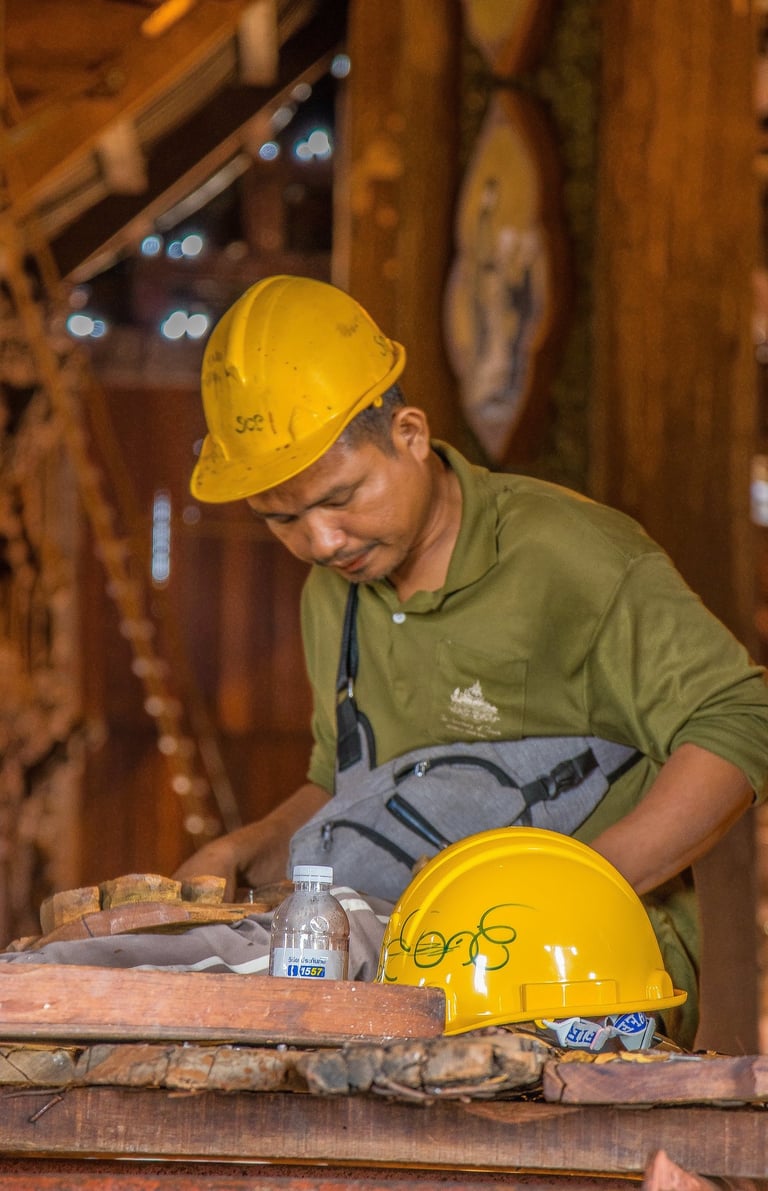
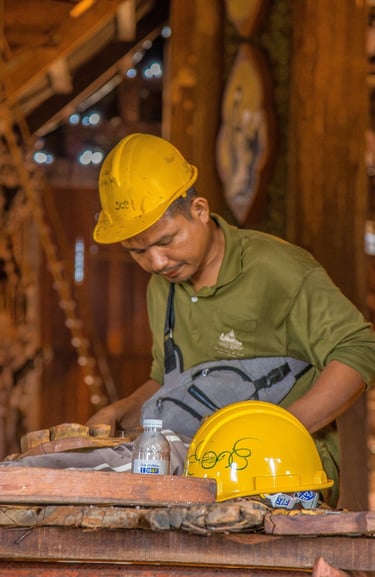
Walking around with my Sony Alpha 7 IV (ILCE-7M4) and the Sony FE 24–70 mm f/2.8 GM II, I tried to capture the transitions of light —
how the structure changes character with every minute of the evening.
From bright reflections to soft dusk and finally to the quiet blue tones of night, the sanctuary revealed a new presence with each frame.
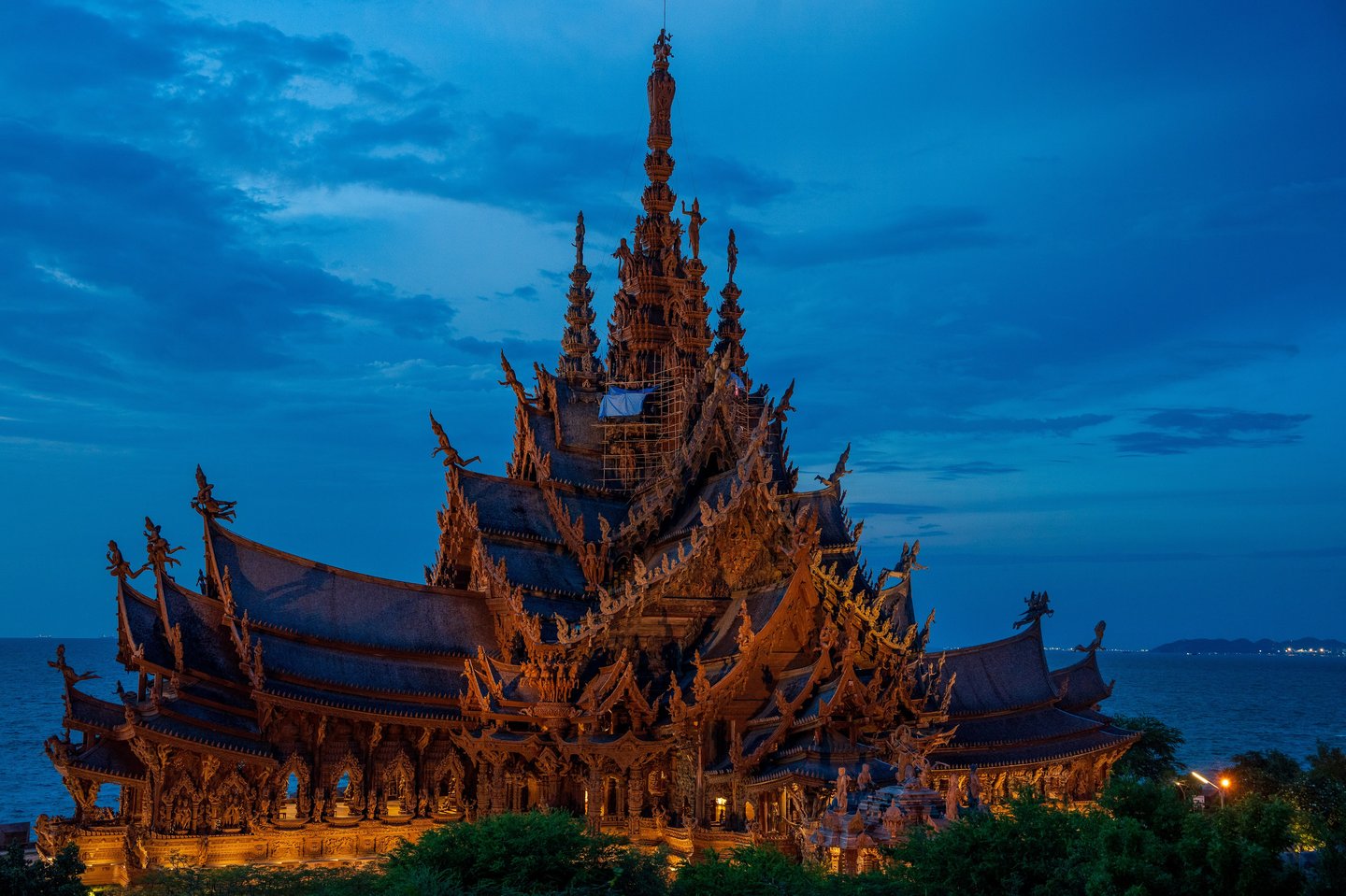
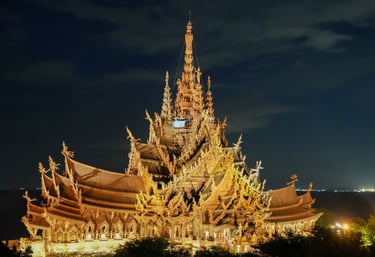
For me, this place is one of Pattaya’s most surprising and meaningful locations.
It shows a side of the city far from nightlife or noise — a place of art, belief, and reflection.
That’s exactly why I wanted it to be part of my project “Pattaya – More Than Stereotypes.”
The Ocean Sanctuary – Silence, Structure, and Spirit in Naklua, Pattaya
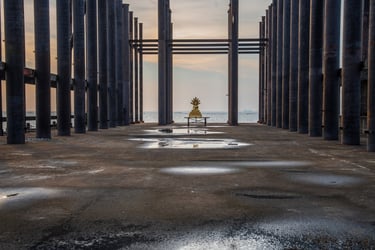
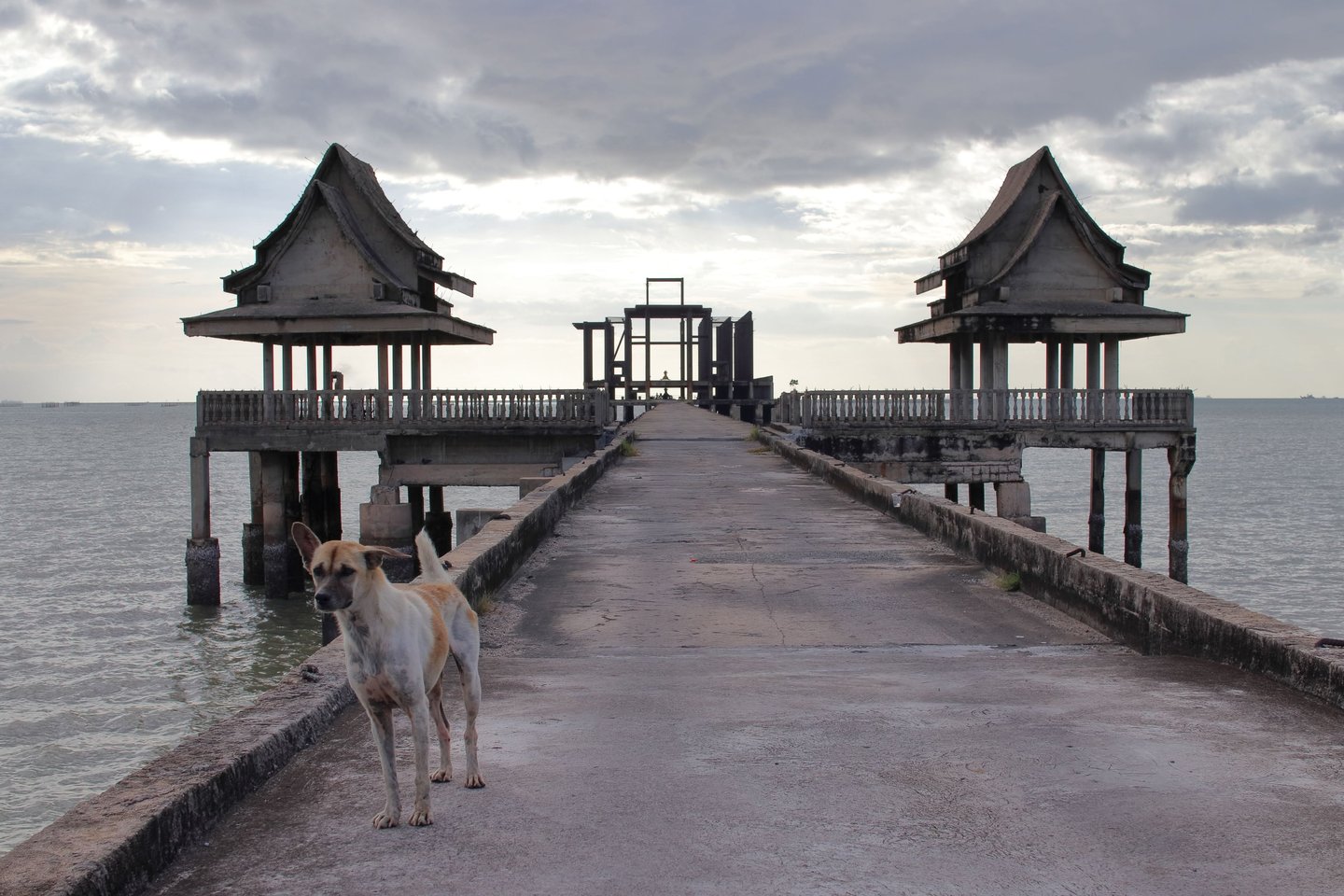
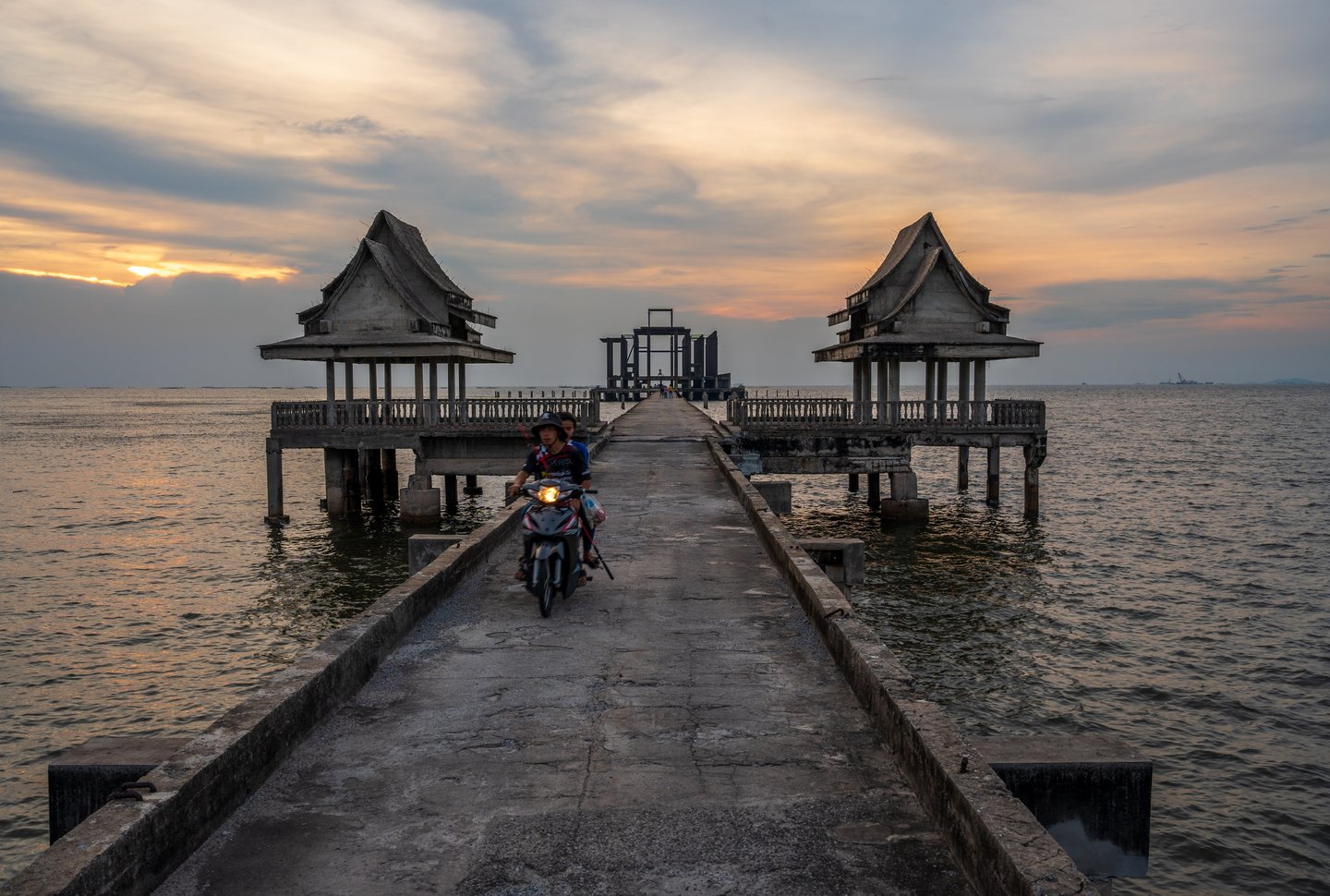
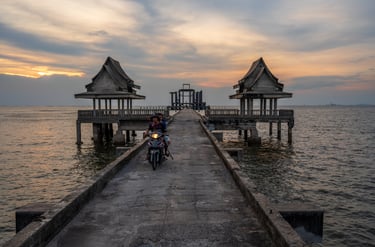
The Ocean Sanctuary is an unusual, partly unfinished temple and monastic project located by the sea in the northern Naklua district of Pattaya.
Today, it stands as a quiet, rarely visited place offering fascinating perspectives and a sense of stillness.
It belongs to the Chittaphawan Monks College, a Buddhist educational and monastic institution in the region.
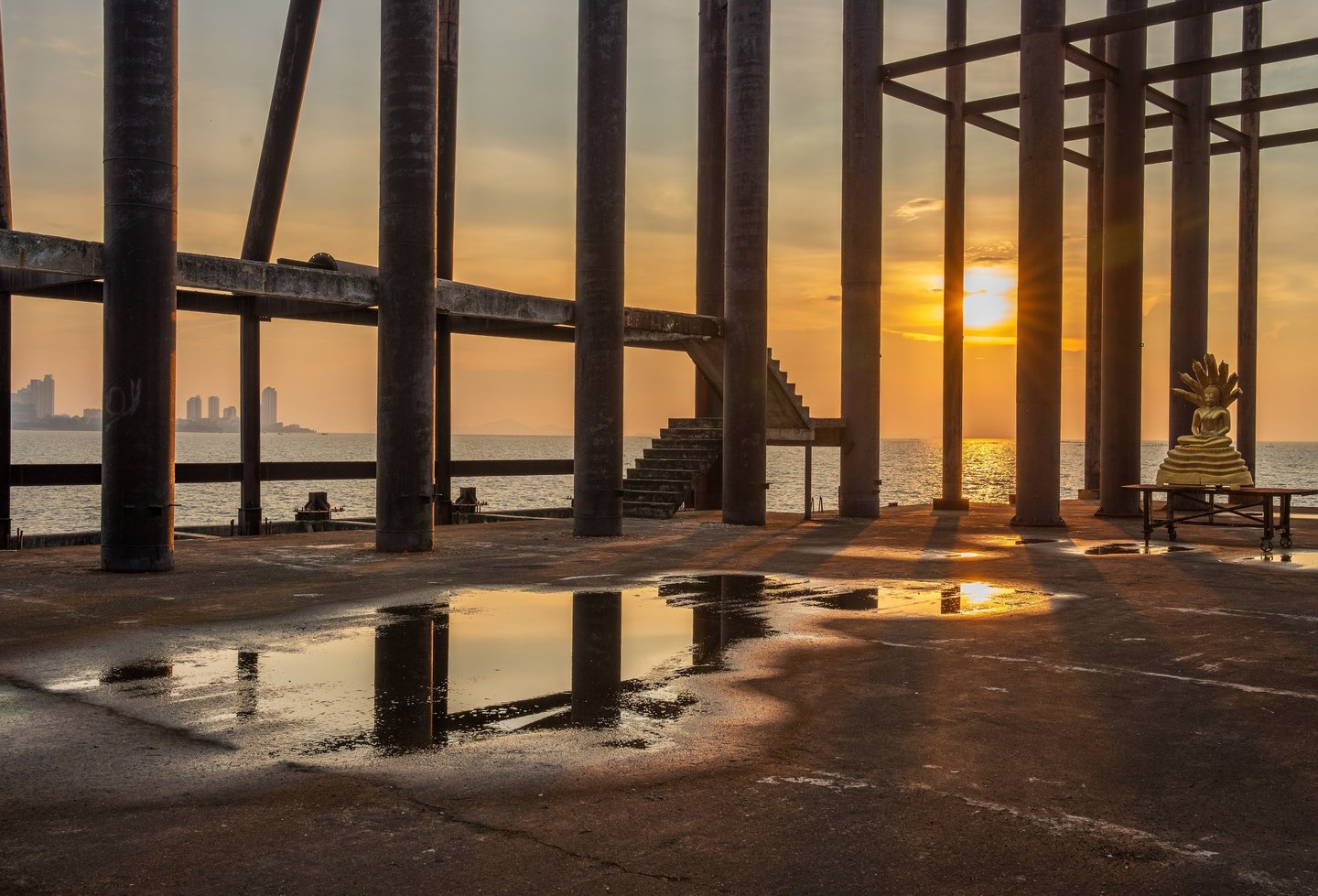
Unlike traditional temples, this site appears less like a completed sanctuary and more like a spiritual structure in progress, envisioned to rise above the water —
a construction that was never fully finished, and precisely because of that, it holds a special photographic atmosphere.
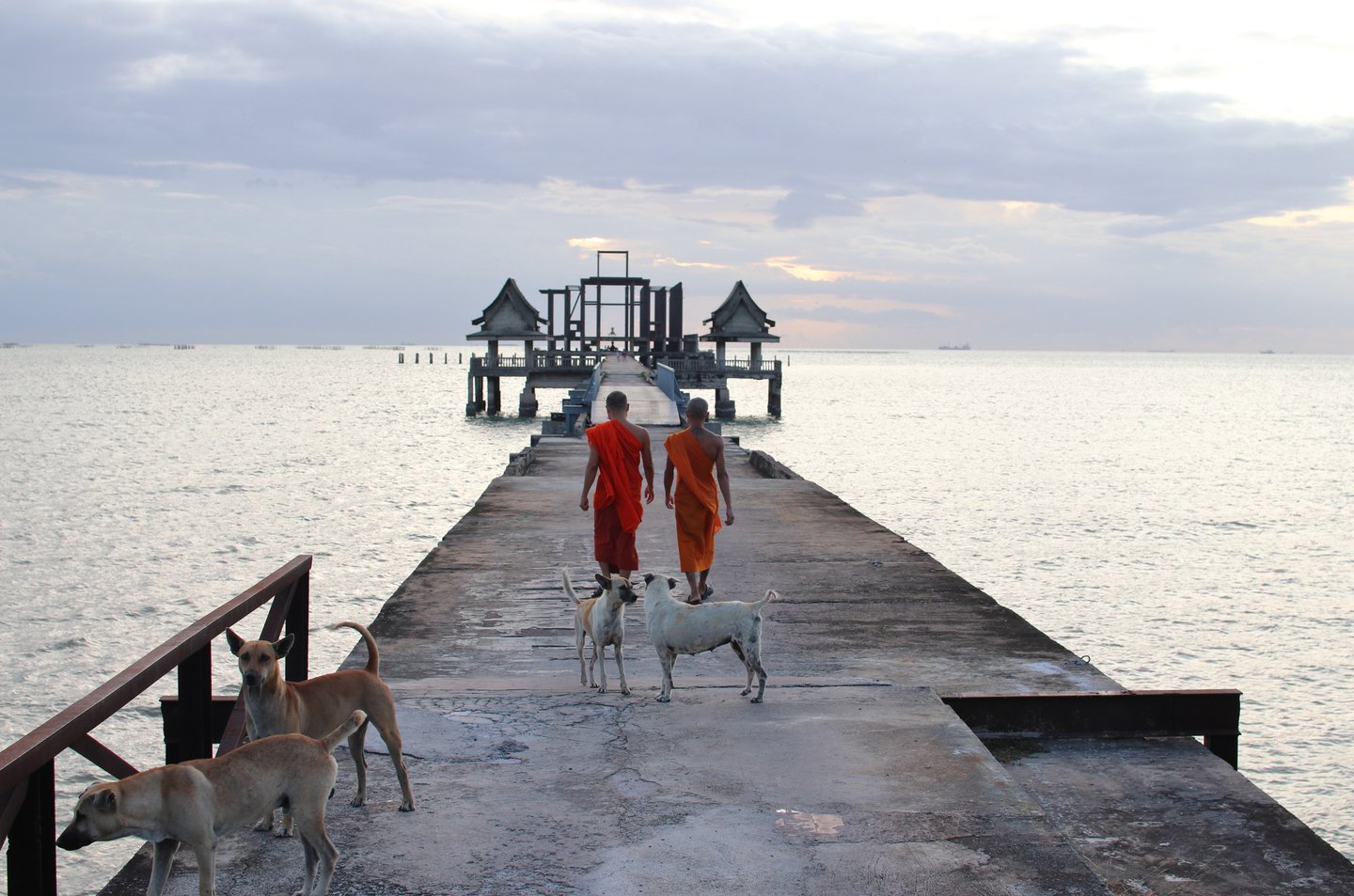
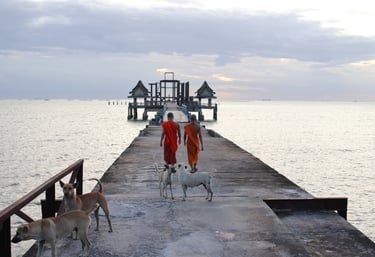
📍 Location: The Ocean Sanctuary sits directly by the sea in Naklua, within Bang Lamung District (Pattaya).
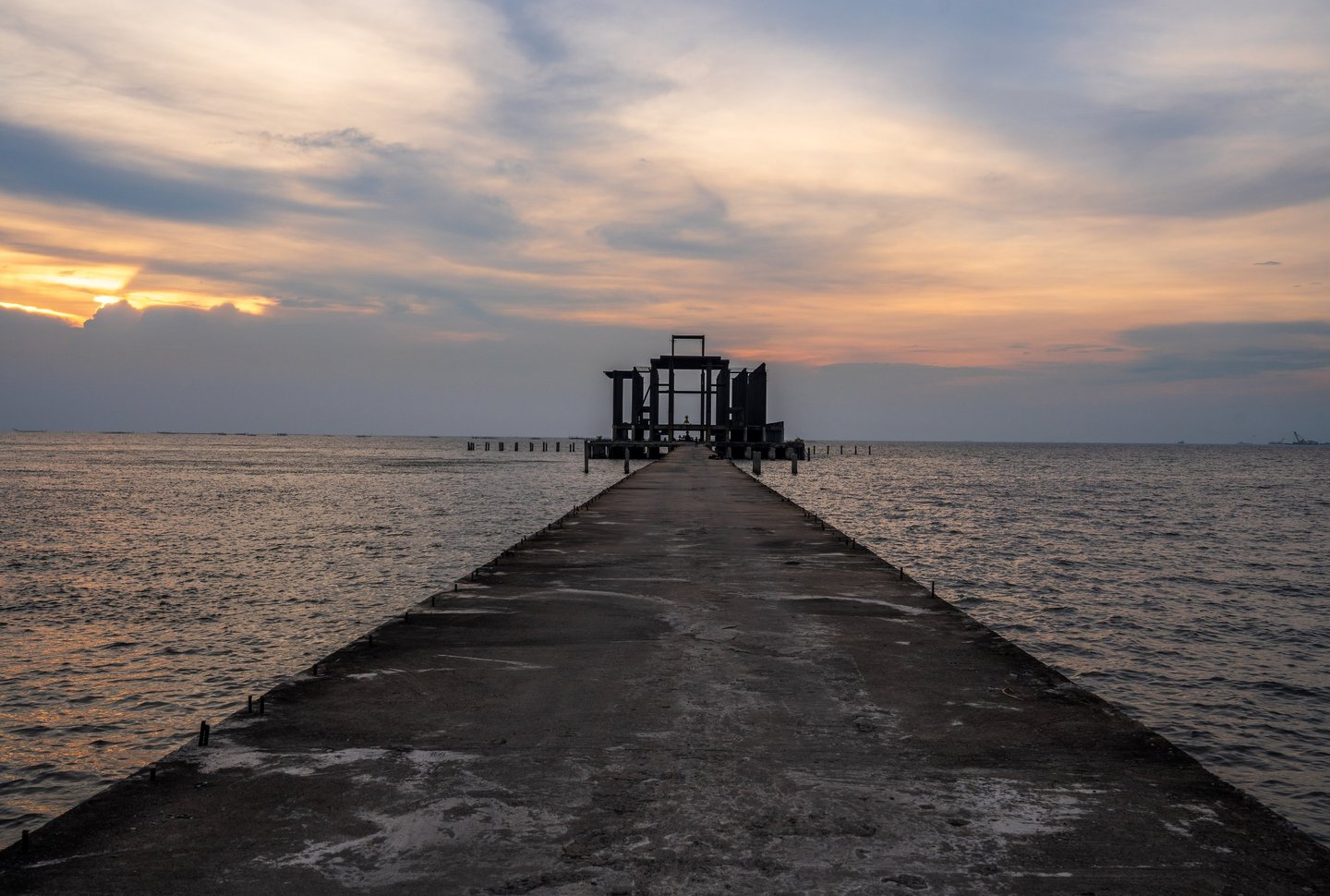
📷 Character: The structure resembles a large open platform or pier with Buddhist architectural elements, rather than a traditional temple — and that’s what makes it visually so compelling.
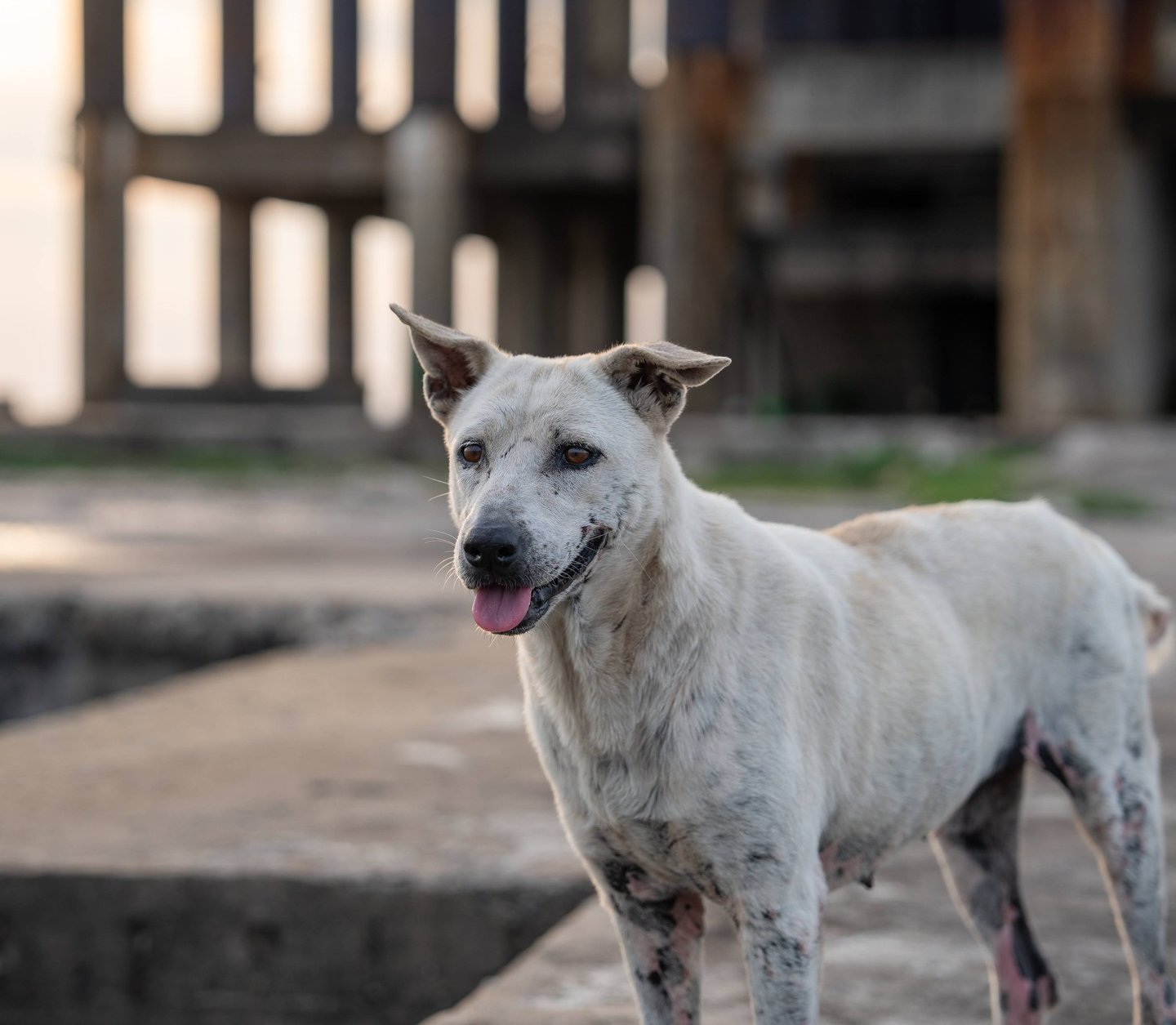
Unfinished architecture: Massive concrete pillars and open frameworks stand like frozen sculptures in the air — perfect for high-contrast compositions of light and shadow.
Wide sea views: The sweeping view of the Gulf of Thailand and the Pattaya skyline is especially impressive in the late afternoon or during the blue hour.
Few visitors: Unlike most tourist sites, this location remains quiet and almost deserted, allowing for peaceful, meditative photography without distraction.
Spiritual everyday life: The place is occasionally used by monks for ash-scattering ceremonies at sea (loi angkan), an emotional and deeply cultural moment far removed from tourist imagery.
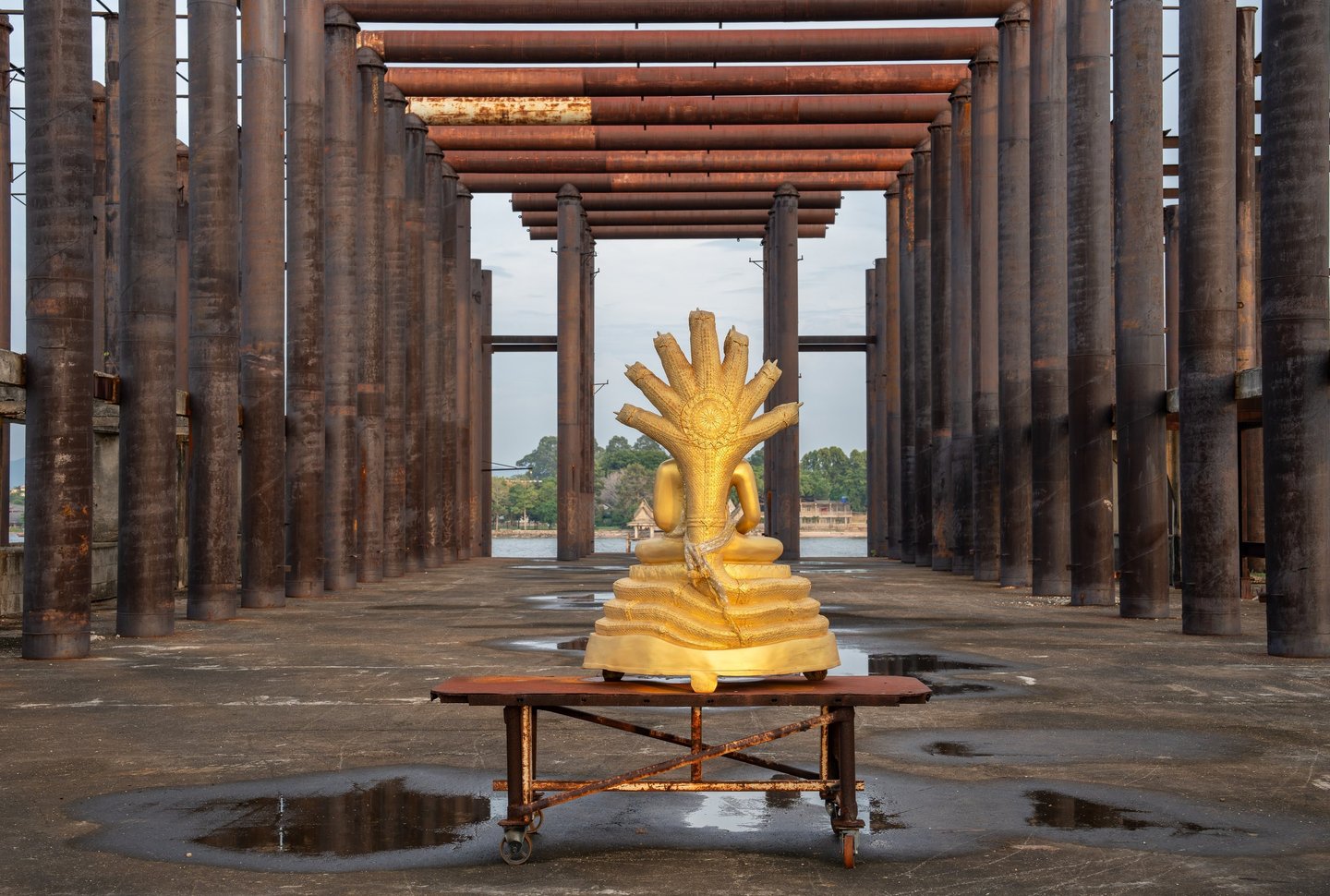
It reveals a different, unseen side of Pattaya — far from bars, beaches, and entertainment.
The site invites slow, contemplative photography — focused on architecture, light, sea, and transcendence.
Its unfinished nature feels symbolic: what remains incomplete expresses patience, time, and silence — perfectly aligned with documentary photography.
With almost no visitors, you’ll find quiet, undisturbed subjects, ideal for intimate visual storytelling.
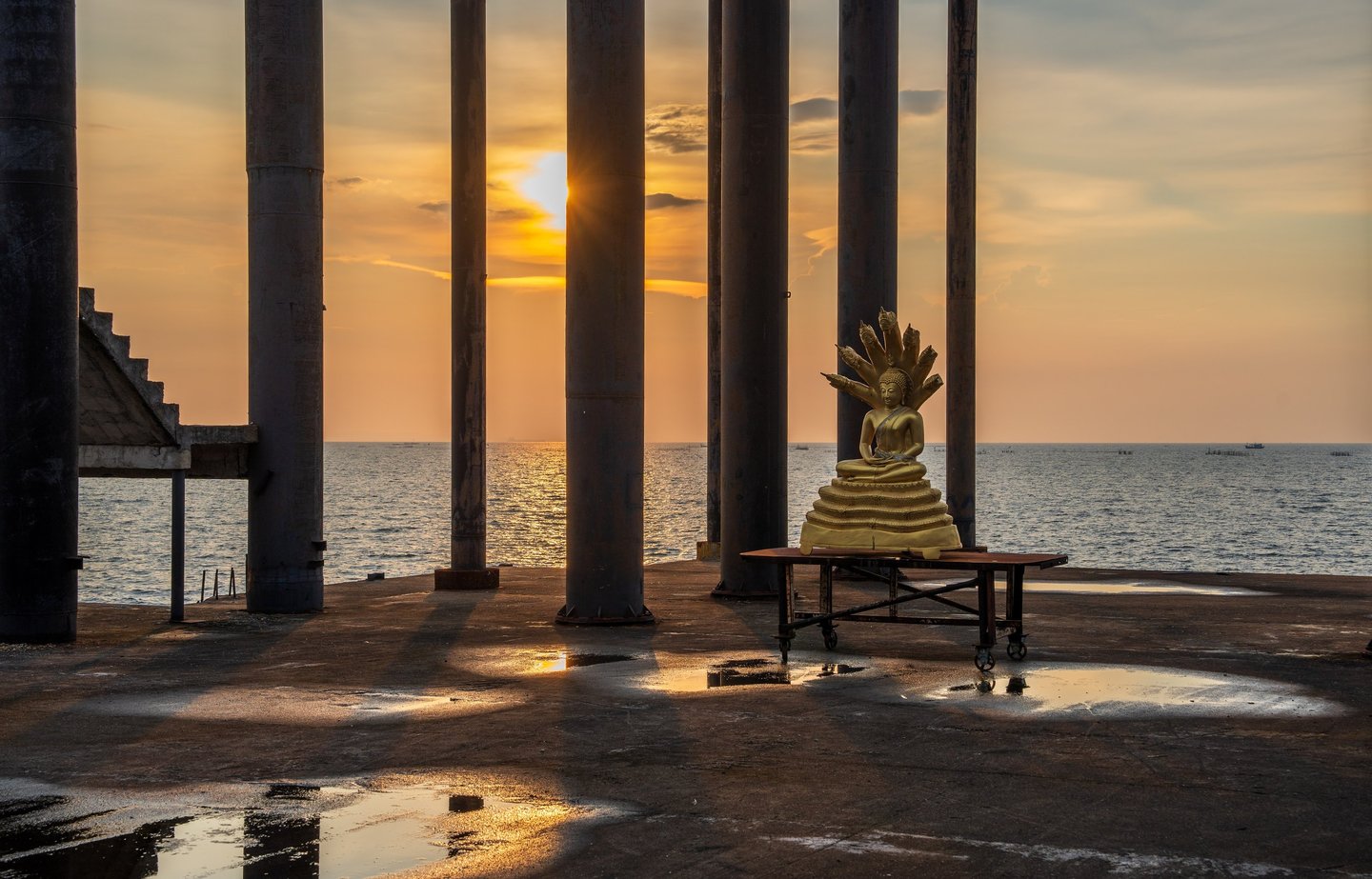
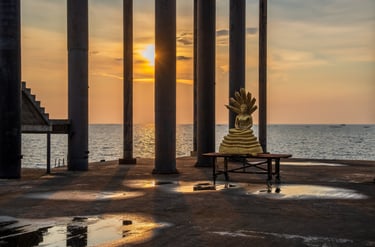
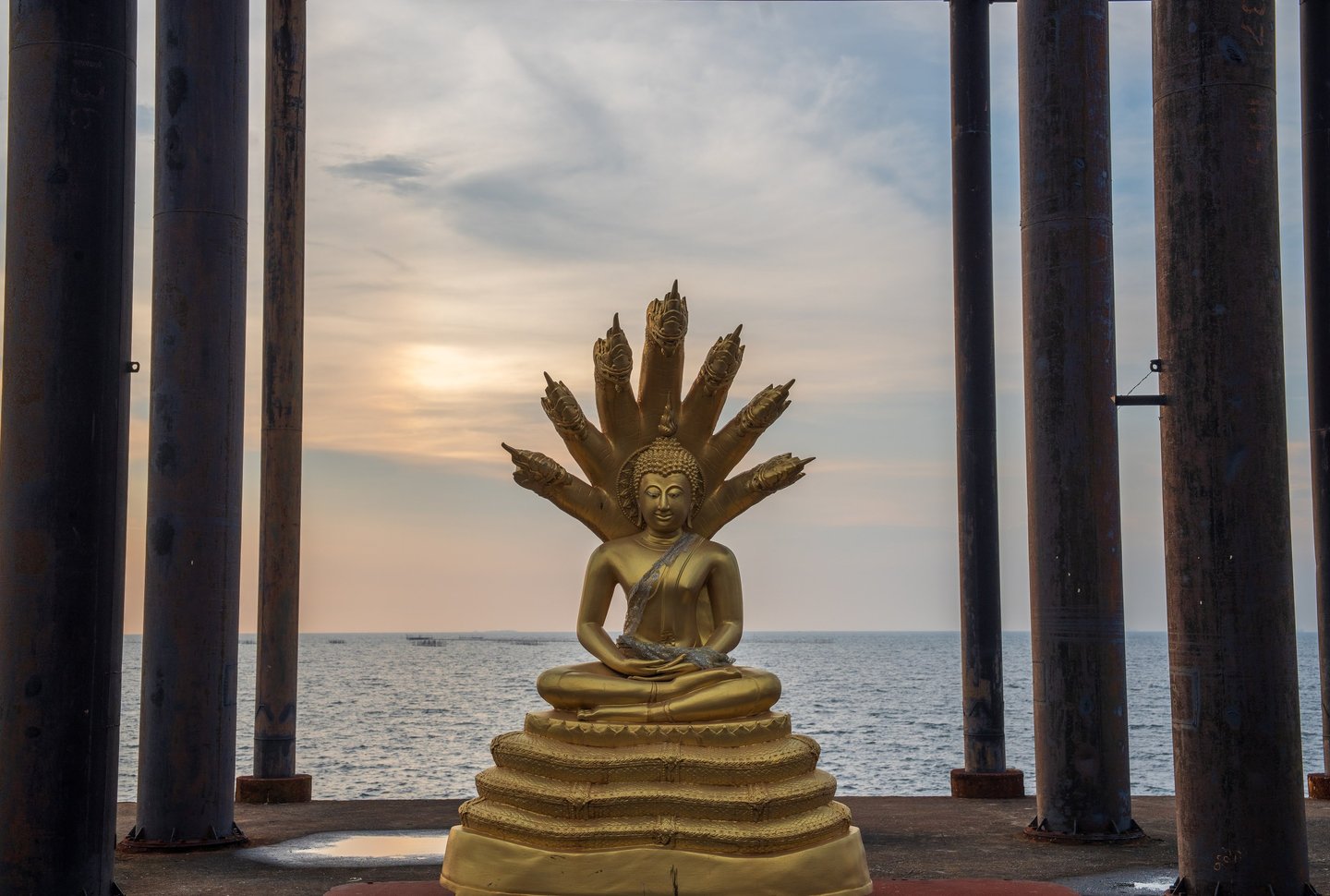
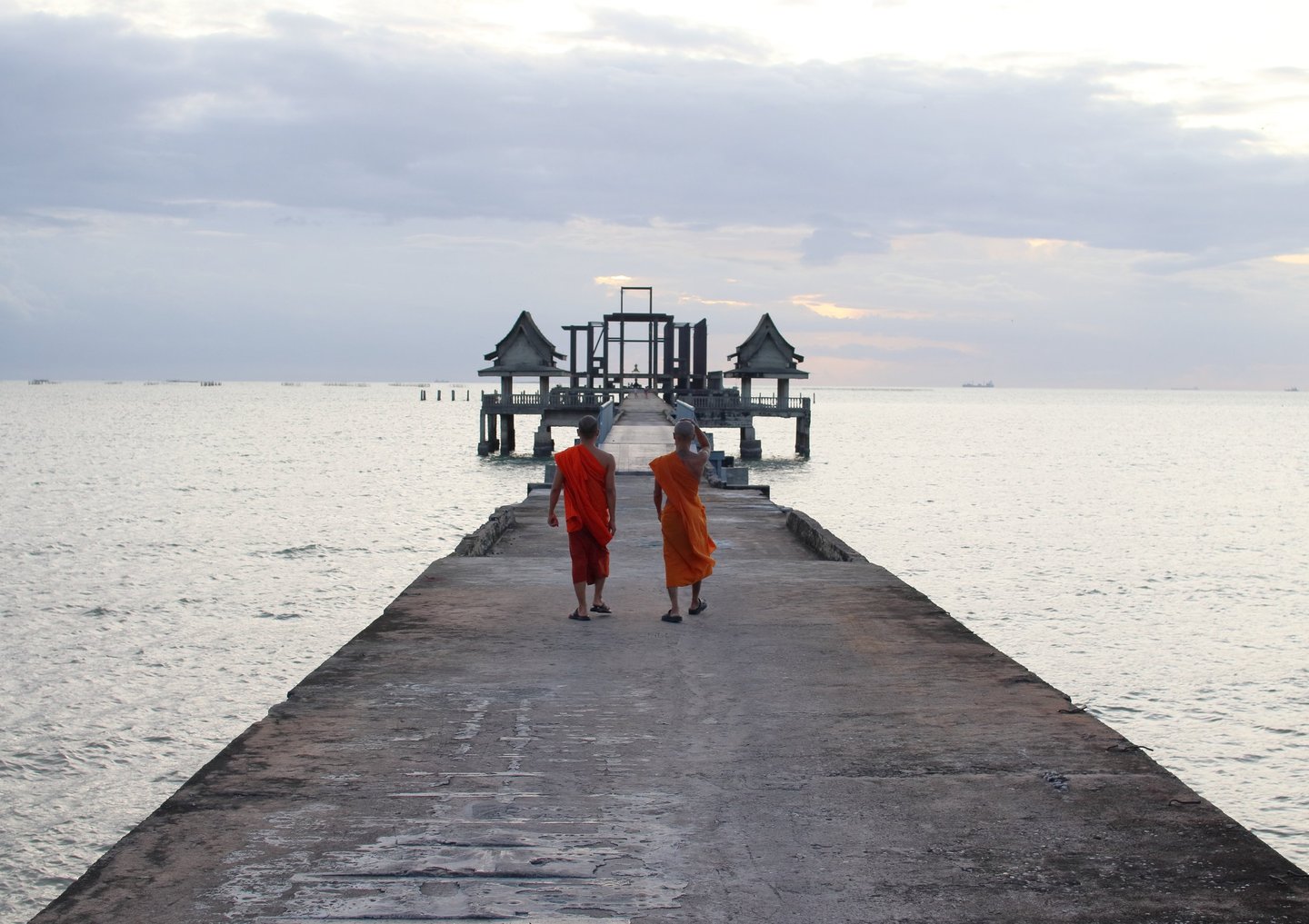
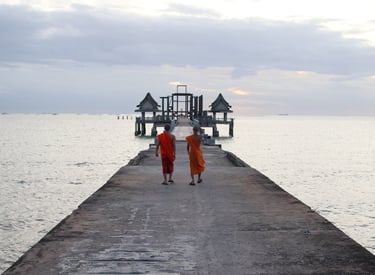
Best time: Late afternoon until just before sunset — soft light creates depth and strong texture across the concrete and sea.
Composition: Use the long perspective toward the sea and horizon for wide-angle panoramas.
Details: Concrete textures contrasted with water, sky, and monastic life make for striking visual tension.
Atmosphere: The mood here is meditative — people move slowly, waves shimmer in the light, and calm spreads across the pier-like structure.
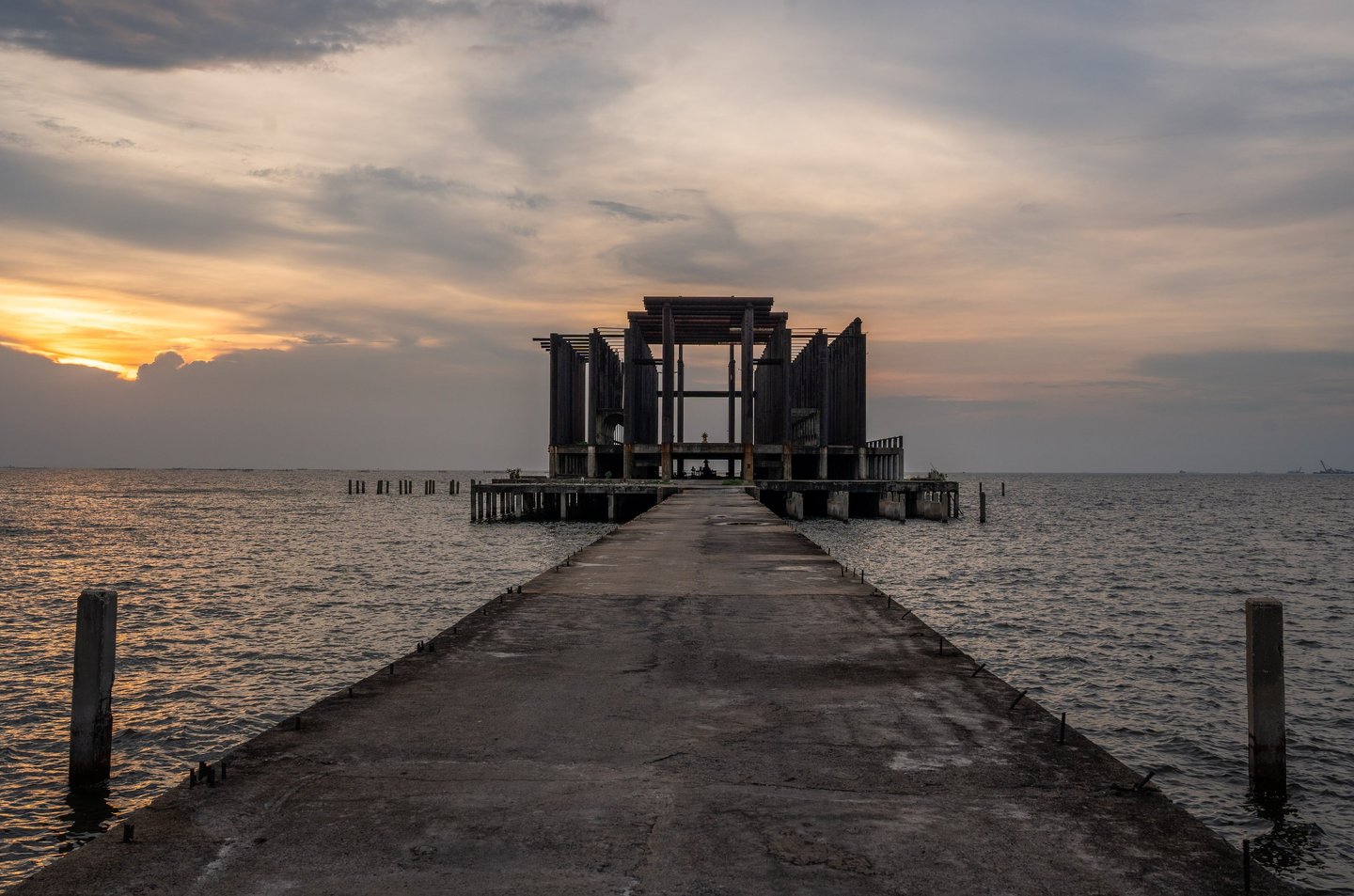
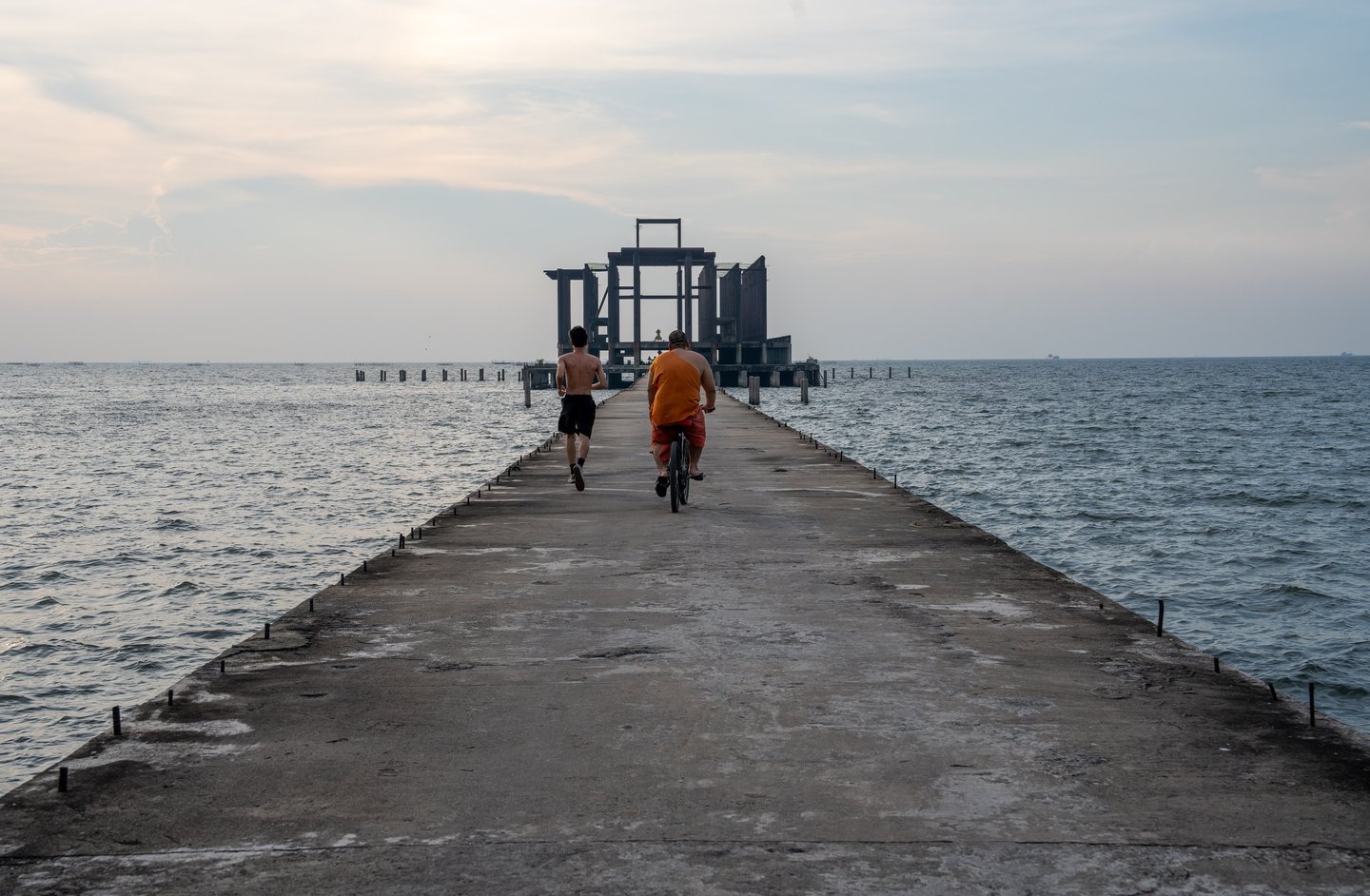
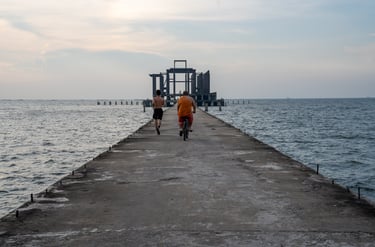
Photographing here with my Sony Alpha 7 IV (ILCE-7M4) and the Sony FE 24–70 mm f/2.8 GM II,
I focused on the contrast between man-made geometry and natural elements —
the rough texture of concrete against the smooth movement of the sea,
the golden light of the setting sun reflecting off the still water.
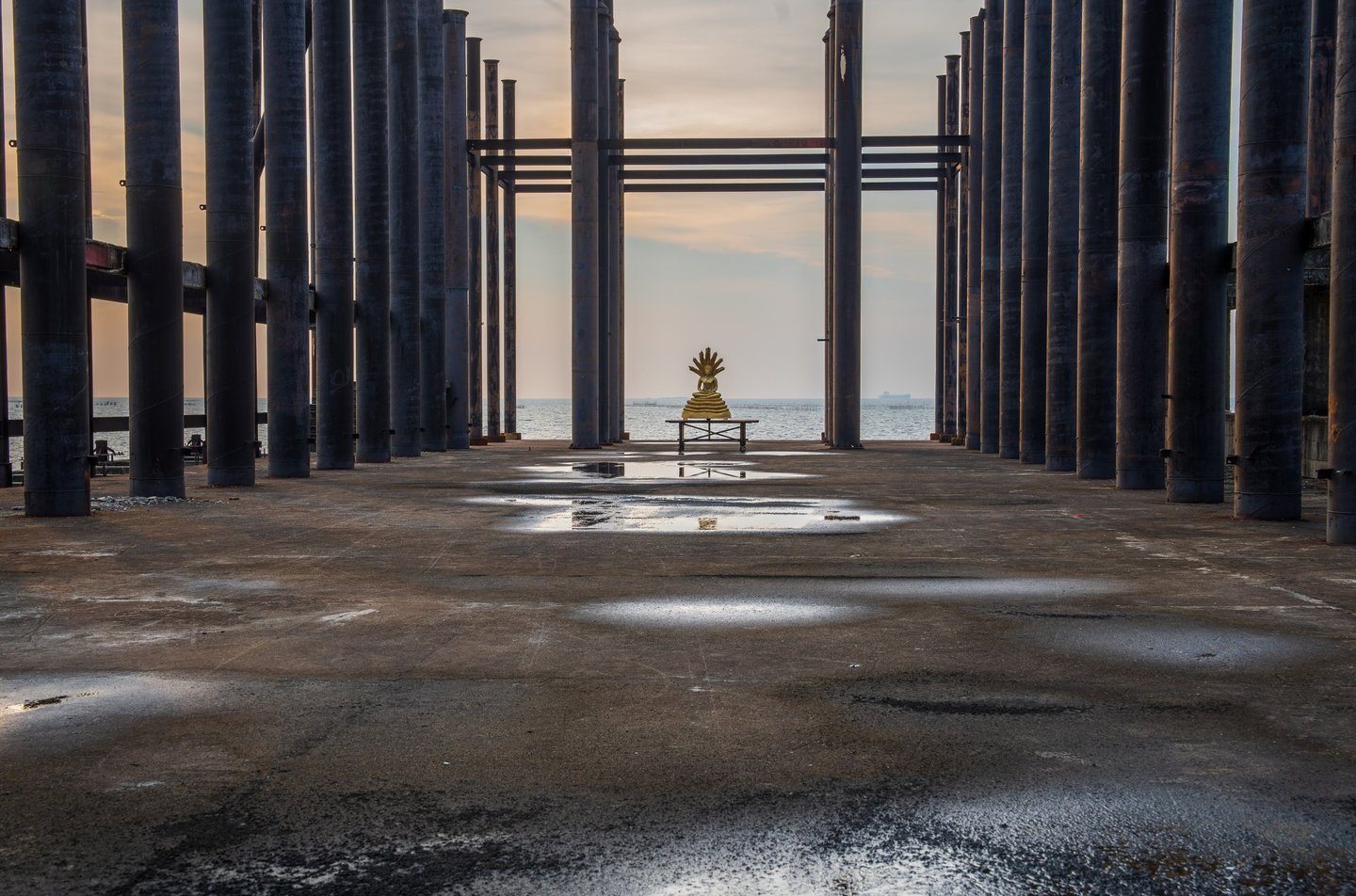
For me, this place represents another side of Pattaya —
a city known for energy and nightlife, but also home to calm, unfinished beauty.
The Ocean Sanctuary is about patience and impermanence,
a reminder that not everything needs to be complete to be meaningful.
Pattaya from Above – Cityscape Views Beyond the Stereotypes
When most people think about Pattaya, they imagine beaches, nightlife, and neon lights along Beach Road.
But if you take the time to look at the city from above, Pattaya reveals a completely different side — a skyline shaped by the Gulf of Thailand, modern high-rise architecture, and spectacular sunsets over the bay.
For this section of Pattaya – More Than Stereotypes, I focused on a few carefully chosen viewpoints and rooftop locations that offer the best perspectives for cityscape photography, urban landscapes, and sunset views.
Most of the photographs shown here were captured with my Sony Alpha 7 IV (Sony ILCE-7M4) paired with the Sony FE 24-70mm f/2.8 GM II — my preferred setup when working with urban skylines, sunset light, and changing evening conditions.
A few images were also taken with my Canon EOS 77D and the Sigma 30mm f/1.4, a camera with an APS-C sensor that I still occasionally enjoy using.
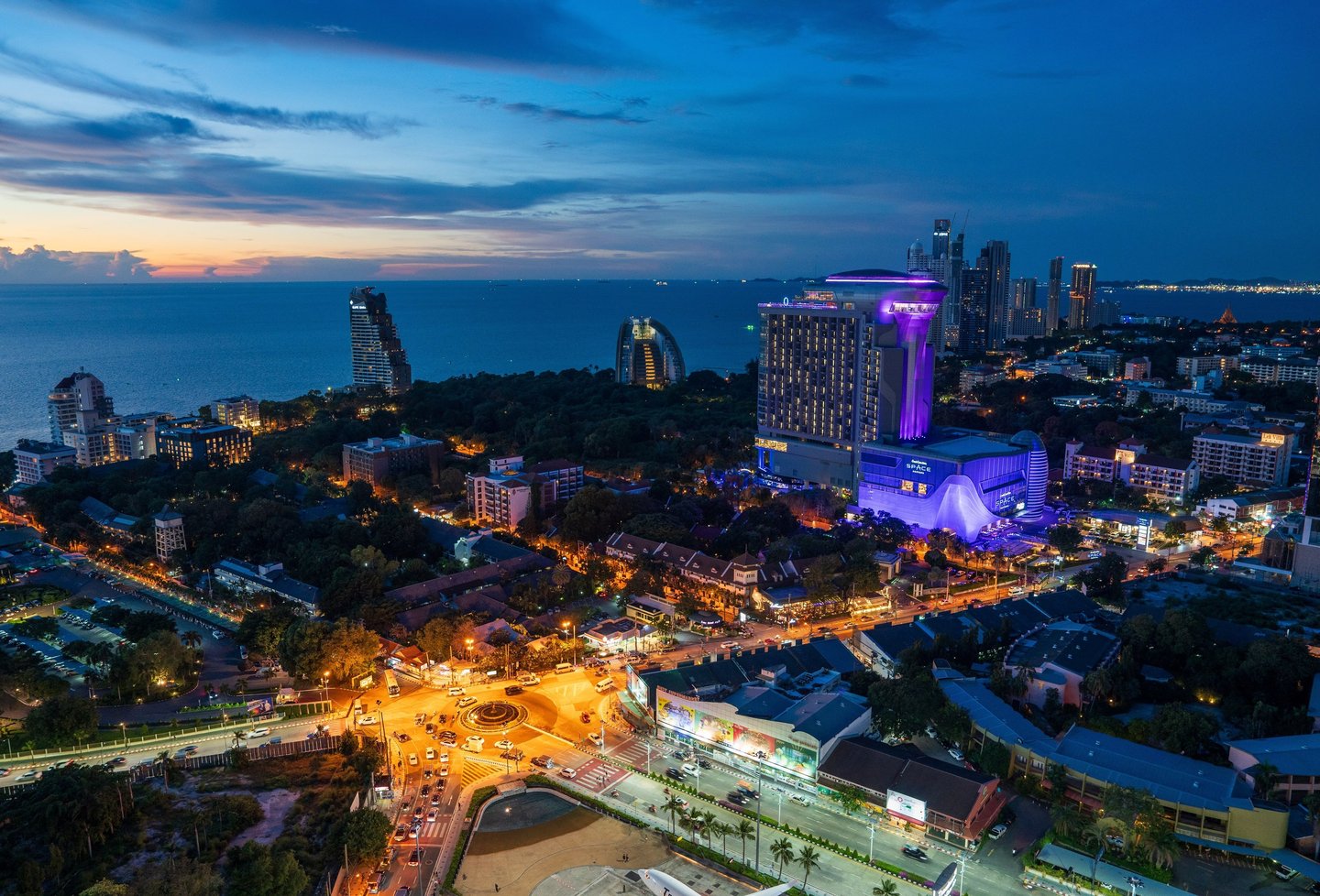
Sky 32 Rooftop Restaurant – A Quiet Window Above Pattaya
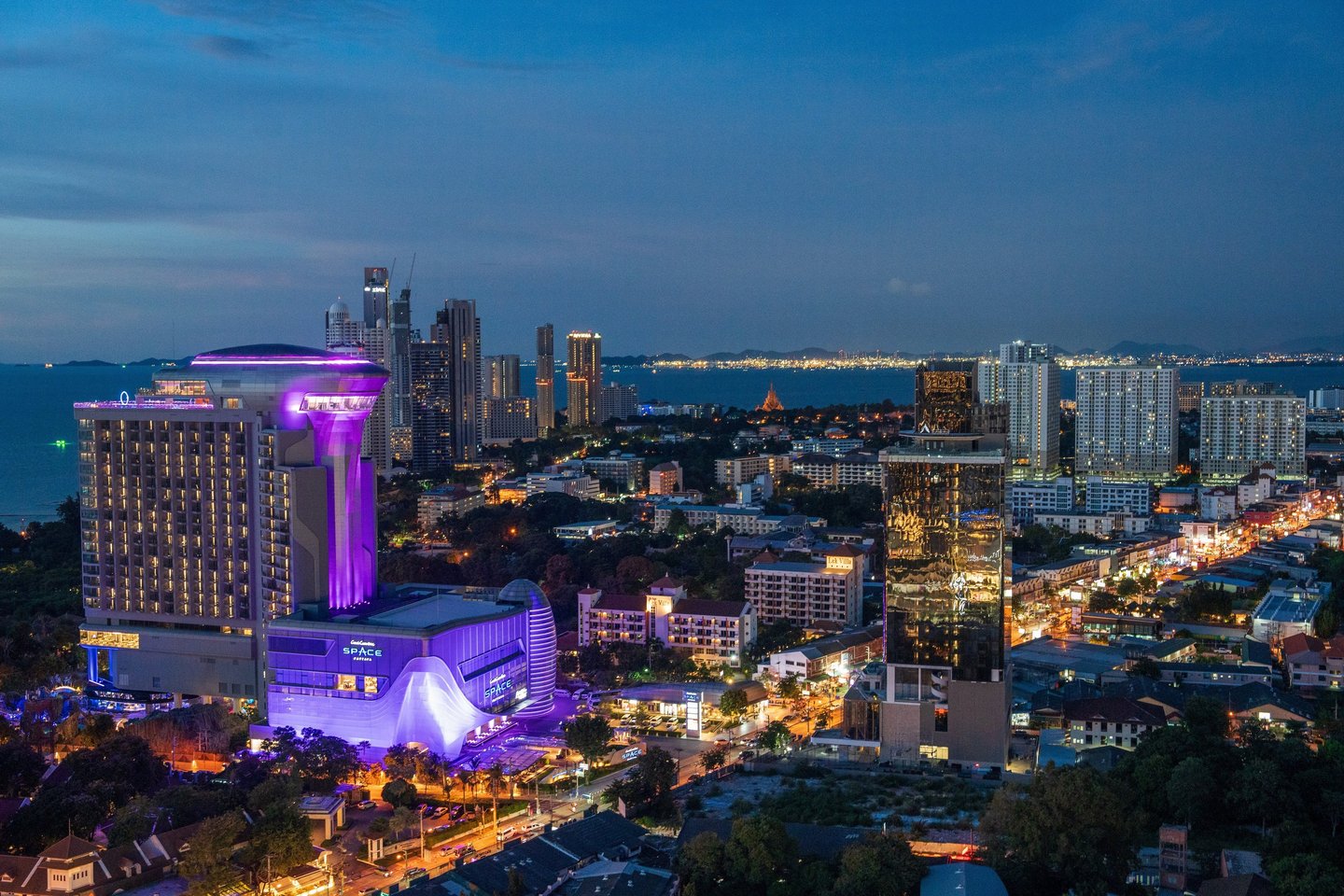
The first stop is the Sky 32 Rooftop Restaurant, located at the Grande Centre Point Hotel Pattaya above the well-known Terminal 21 Pattaya shopping mall.
This rooftop location offers a 360-degree view across Pattaya’s skyline and coastline. The modern glass architecture with floor-to-ceiling windows creates clean lines and unobstructed perspectives — perfect for urban landscape photography.
Compared to many rooftop bars along the busy Beach Road, the atmosphere here is noticeably calmer. It’s a place where you can simply sit down, watch the light change over the city, and observe the skyline slowly transitioning into evening.
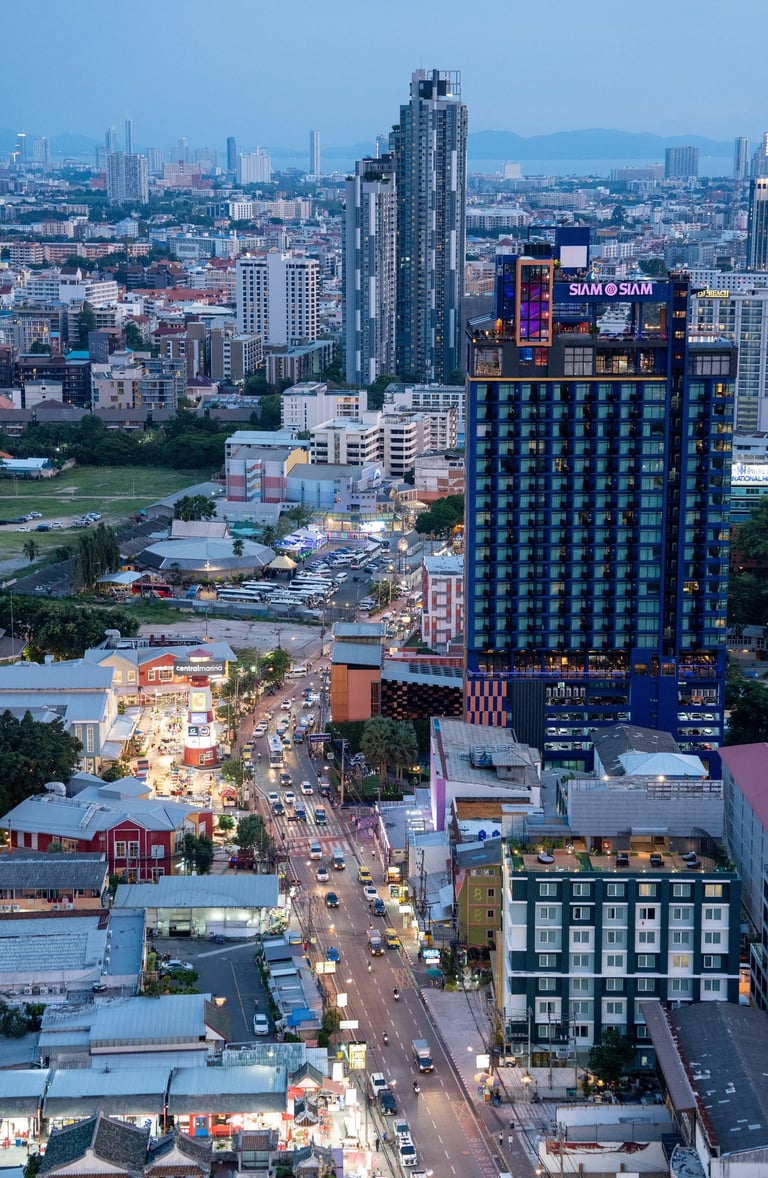
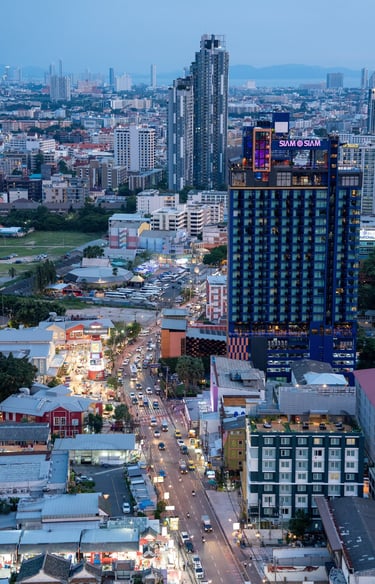
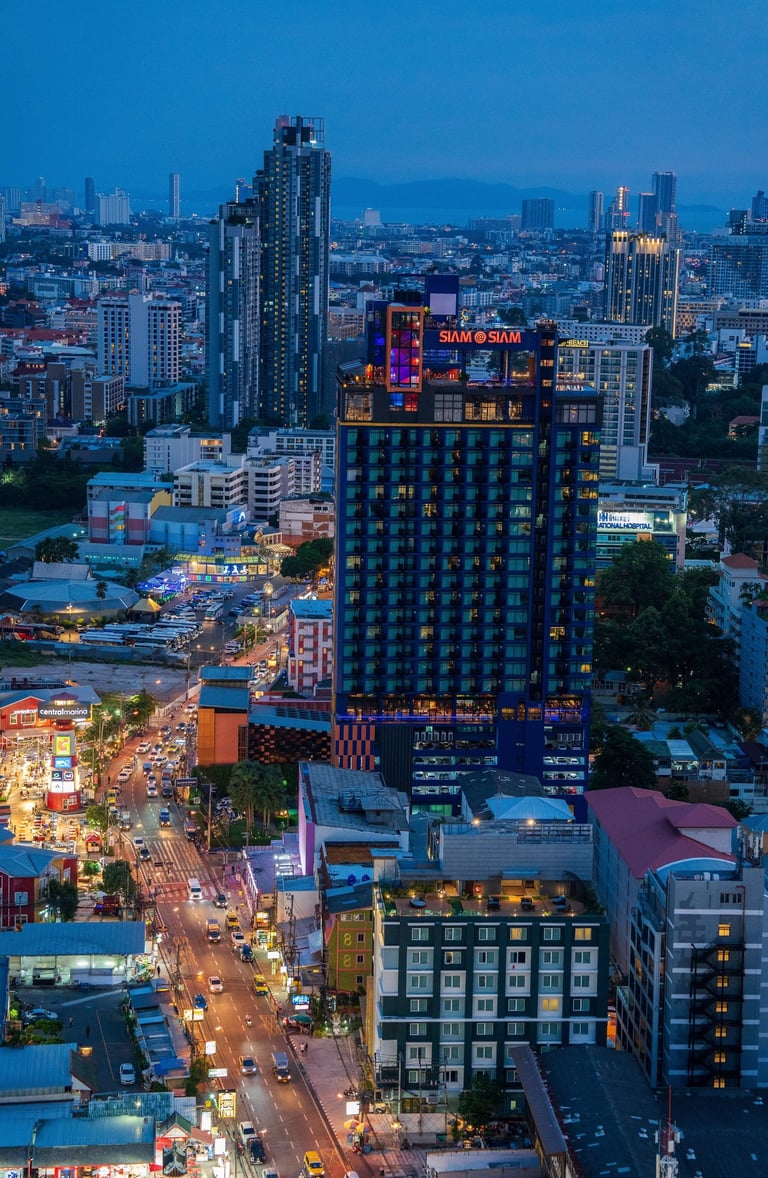
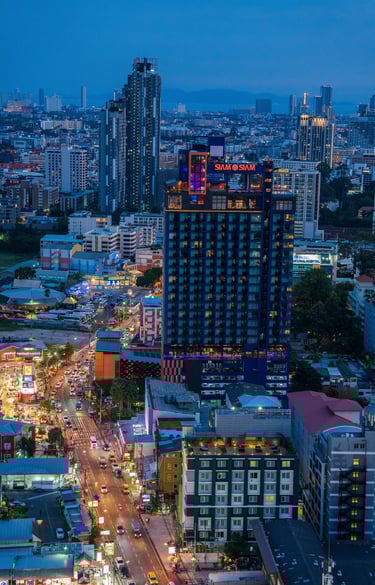
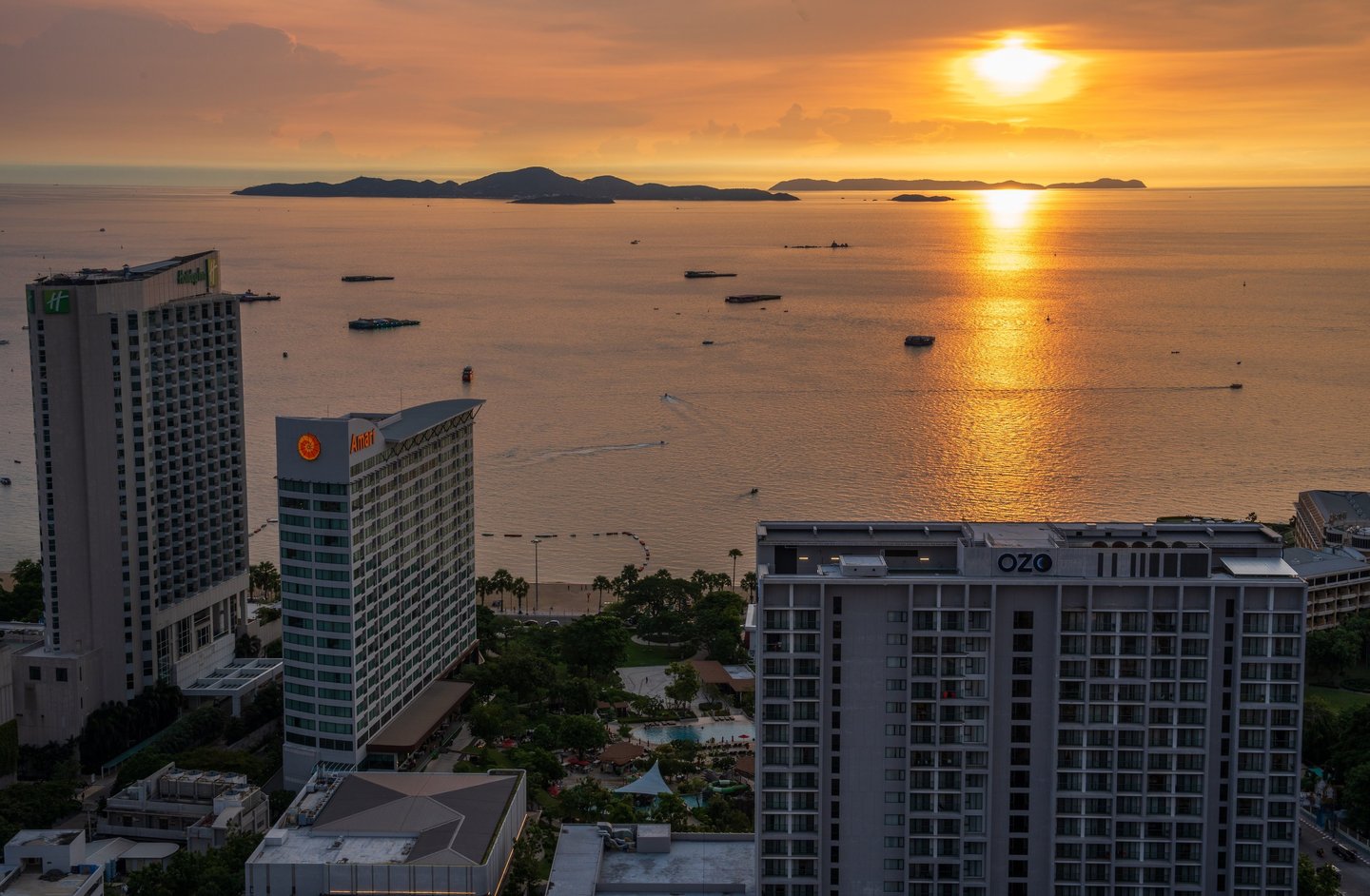
The images shown here were taken during sunset and the blue hour, capturing three different directions of the city:
looking south across Pattaya Bay
looking north toward Naklua
and looking west across the sea toward Ko Lan
Especially during the blue hour, the skyline begins to glow while the last colors of the sunset fade over the Gulf of Thailand — a perfect moment for cityscape photography in Pattaya.
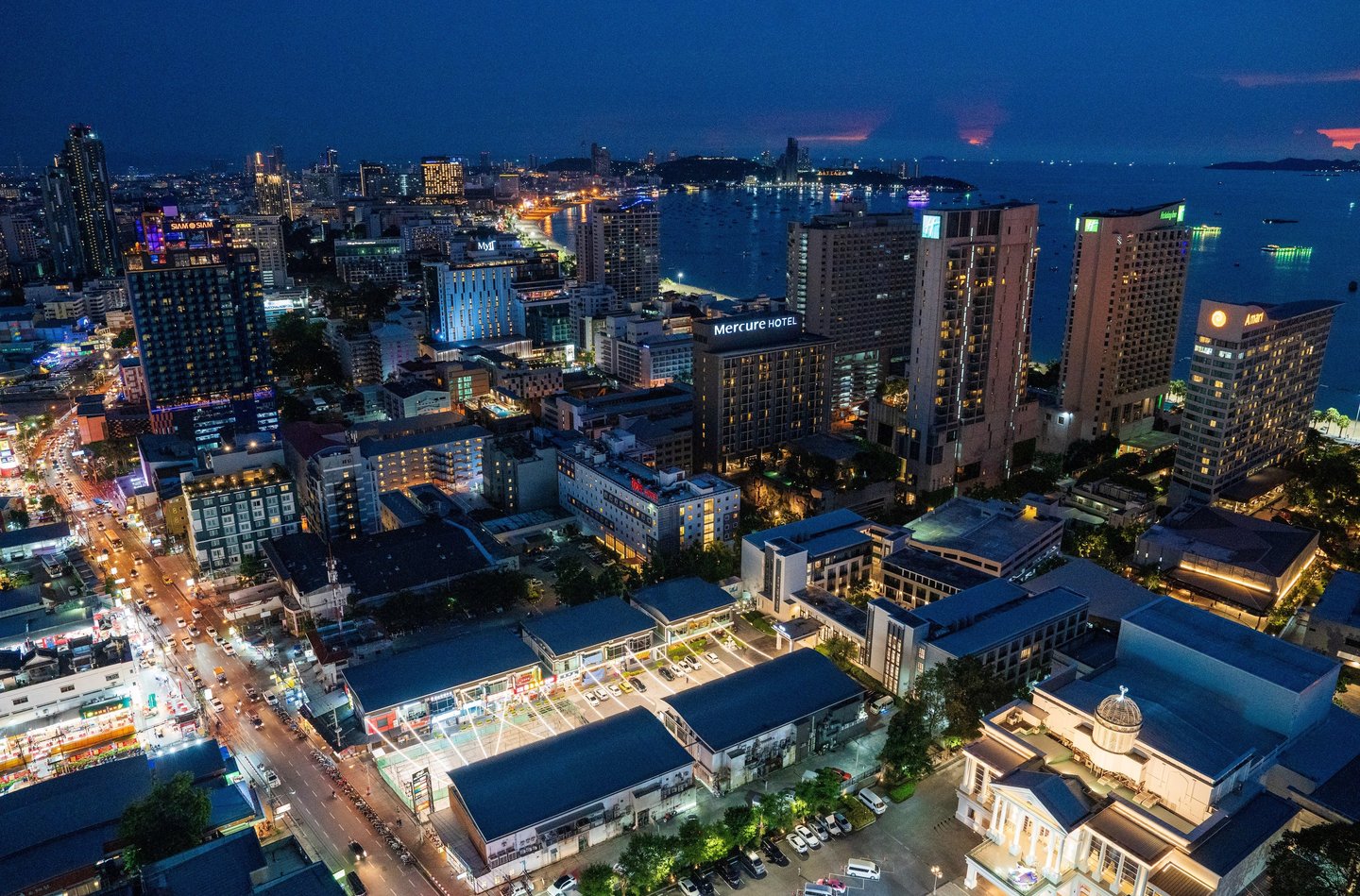
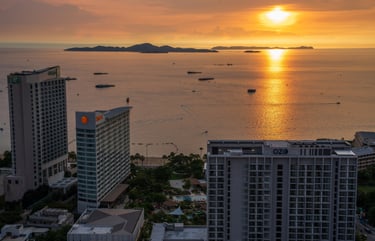
Horizon Rooftop Bar – Skyline and Beach Photography
Another impressive rooftop perspective can be found at the Horizon Rooftop Restaurant & Bar, located on the 34th floor of Hilton Pattaya.
This rooftop bar is one of the most spectacular viewpoints in the city.
From here you get a 270-degree panorama over Pattaya Beach and the Gulf of Thailand, with open glass fronts that provide completely unobstructed views. For photographers this makes the location ideal for cityscape or Urban Photography
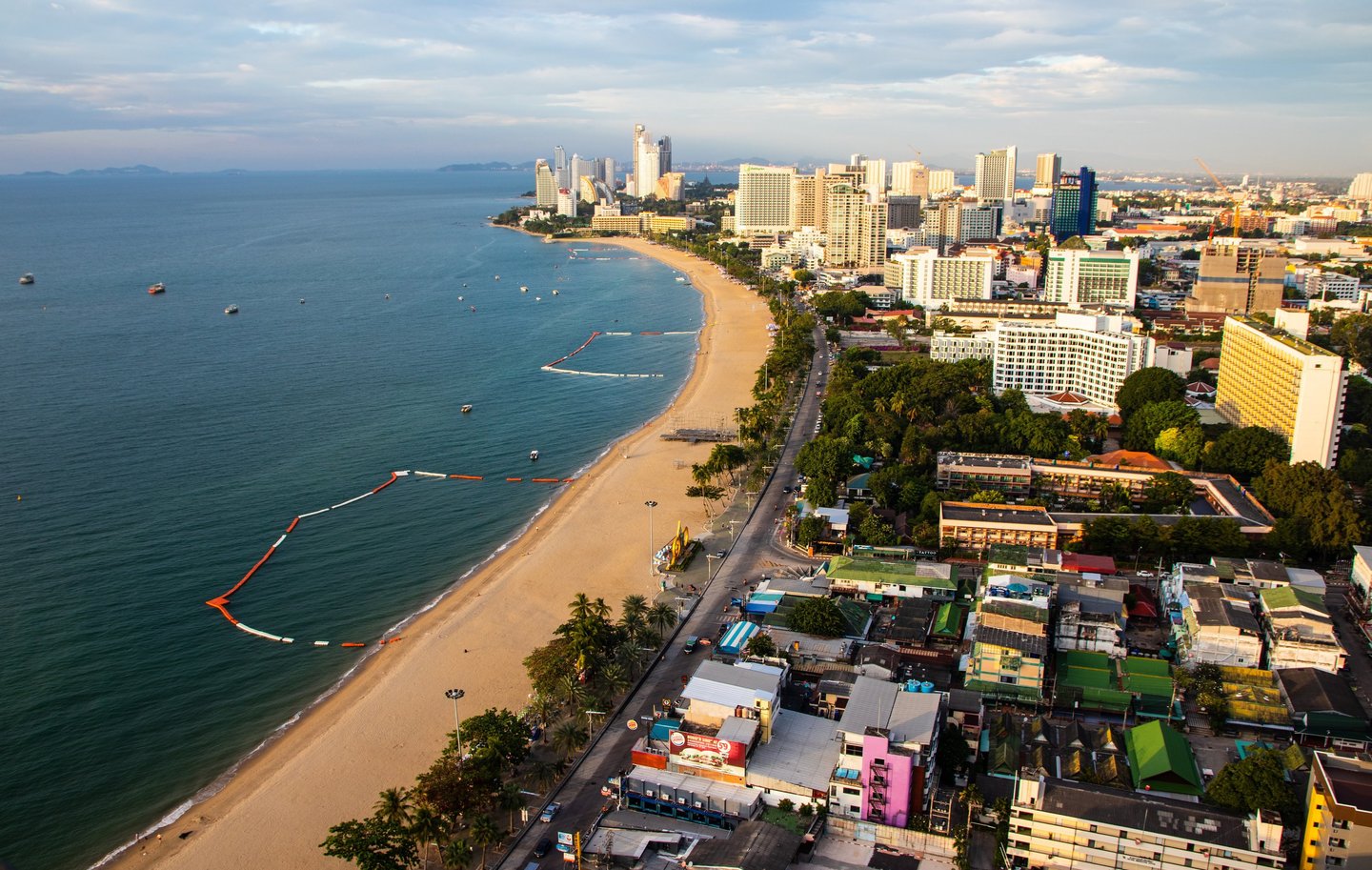
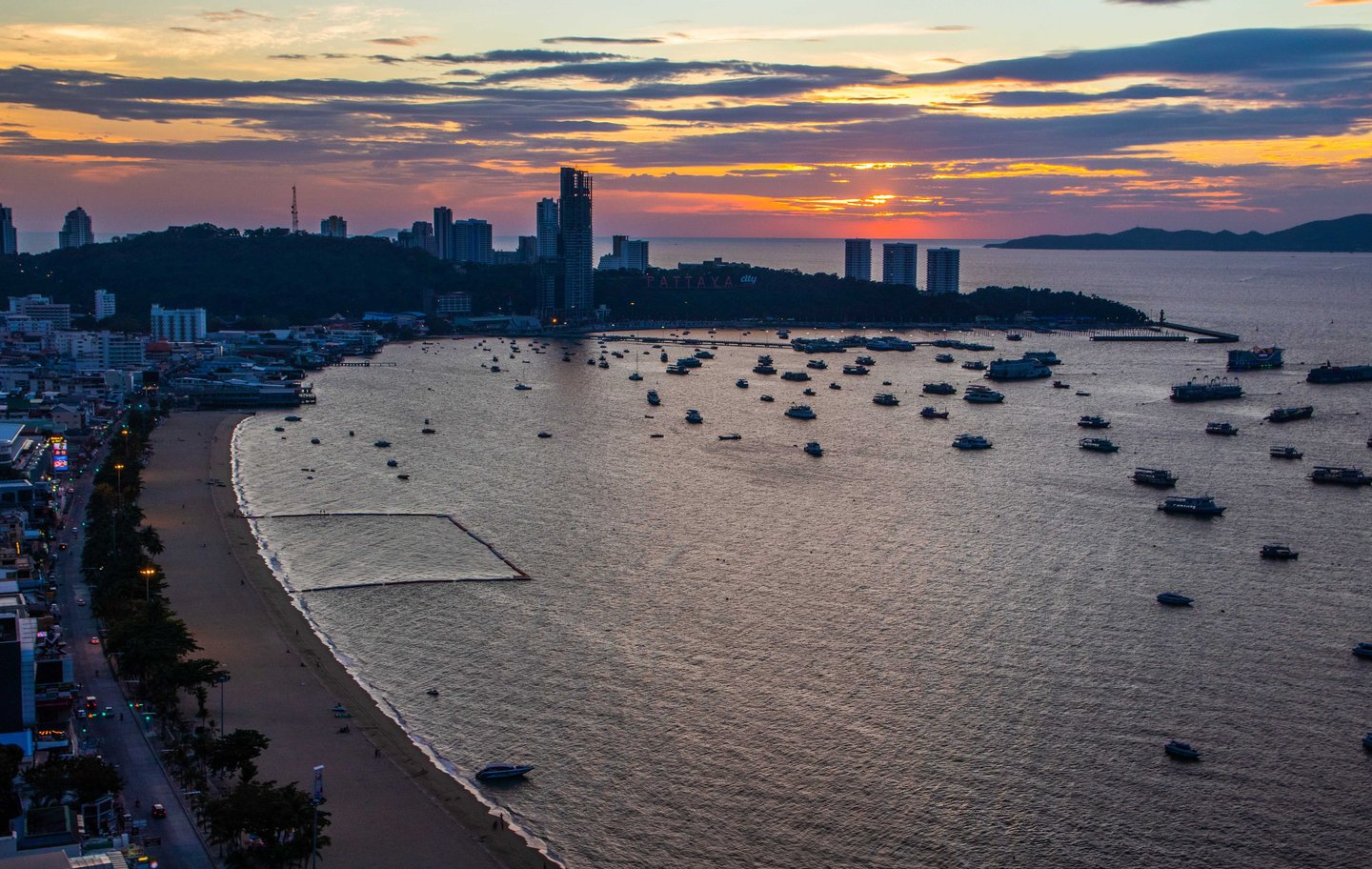
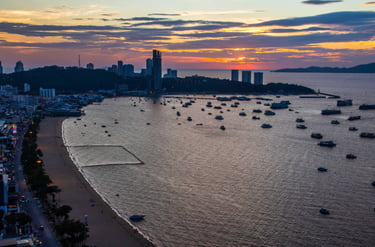
The images from this spot were taken during the late afternoon Happy Hour, when the light is still soft but the skyline already begins to show its contrast. From this height you can clearly see both directions of the city’s coastline — north toward Naklua and south toward Walking Street and Bali Hai.
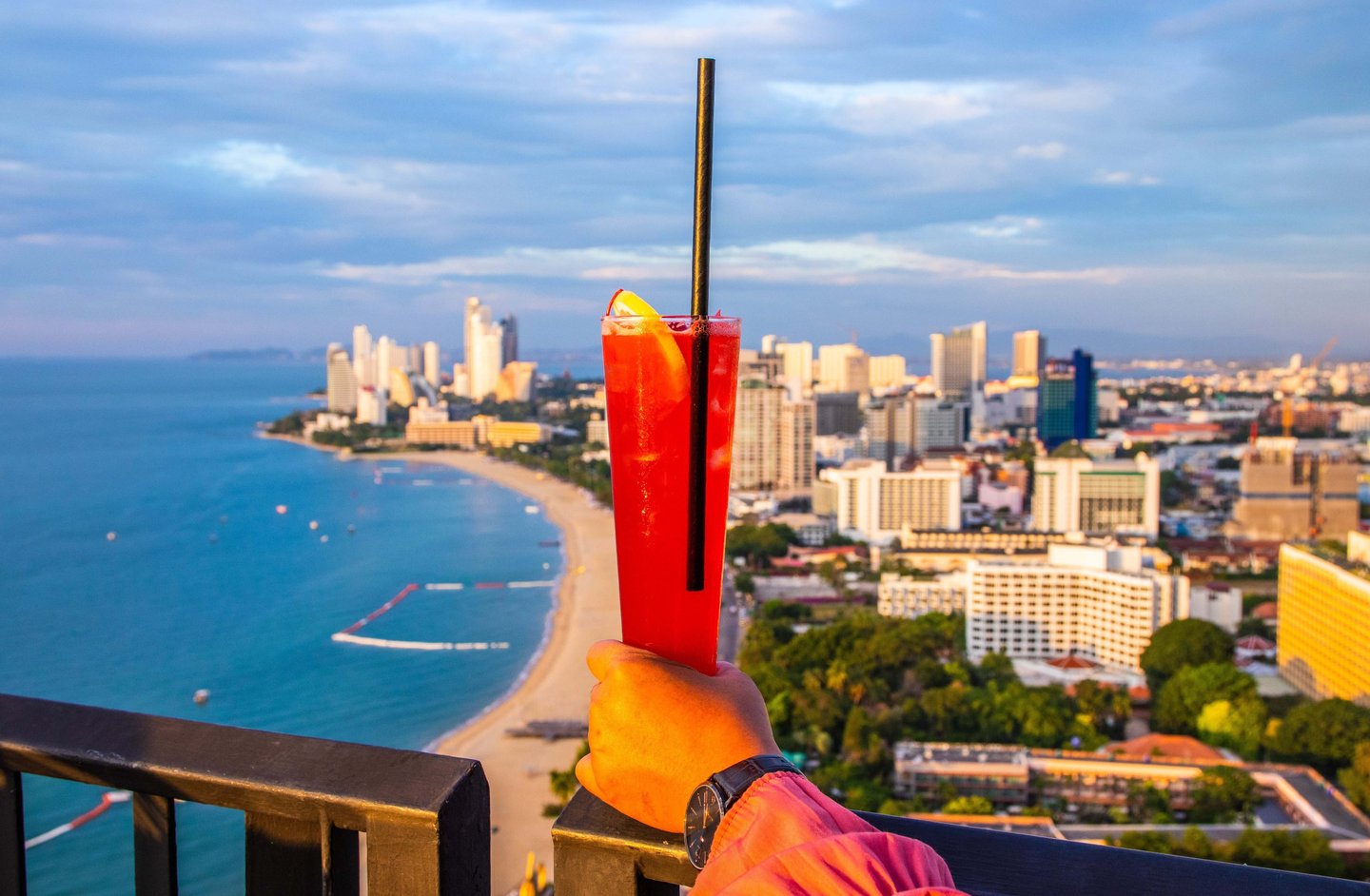
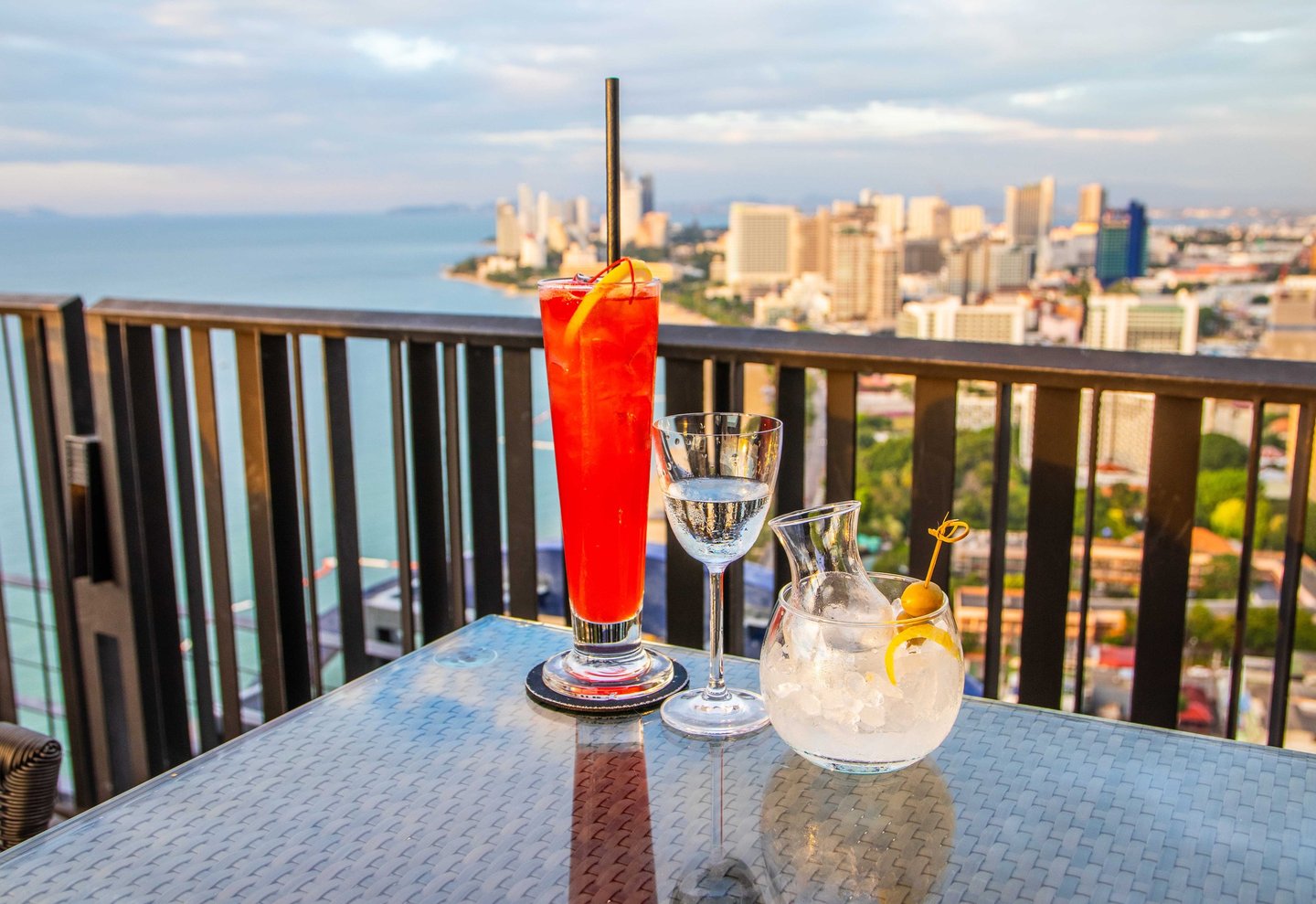
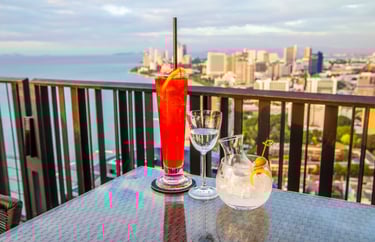
It’s a fascinating place to watch the rhythm of the city slowly shift from day to night.
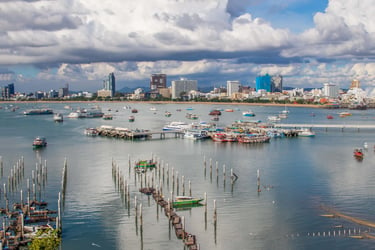
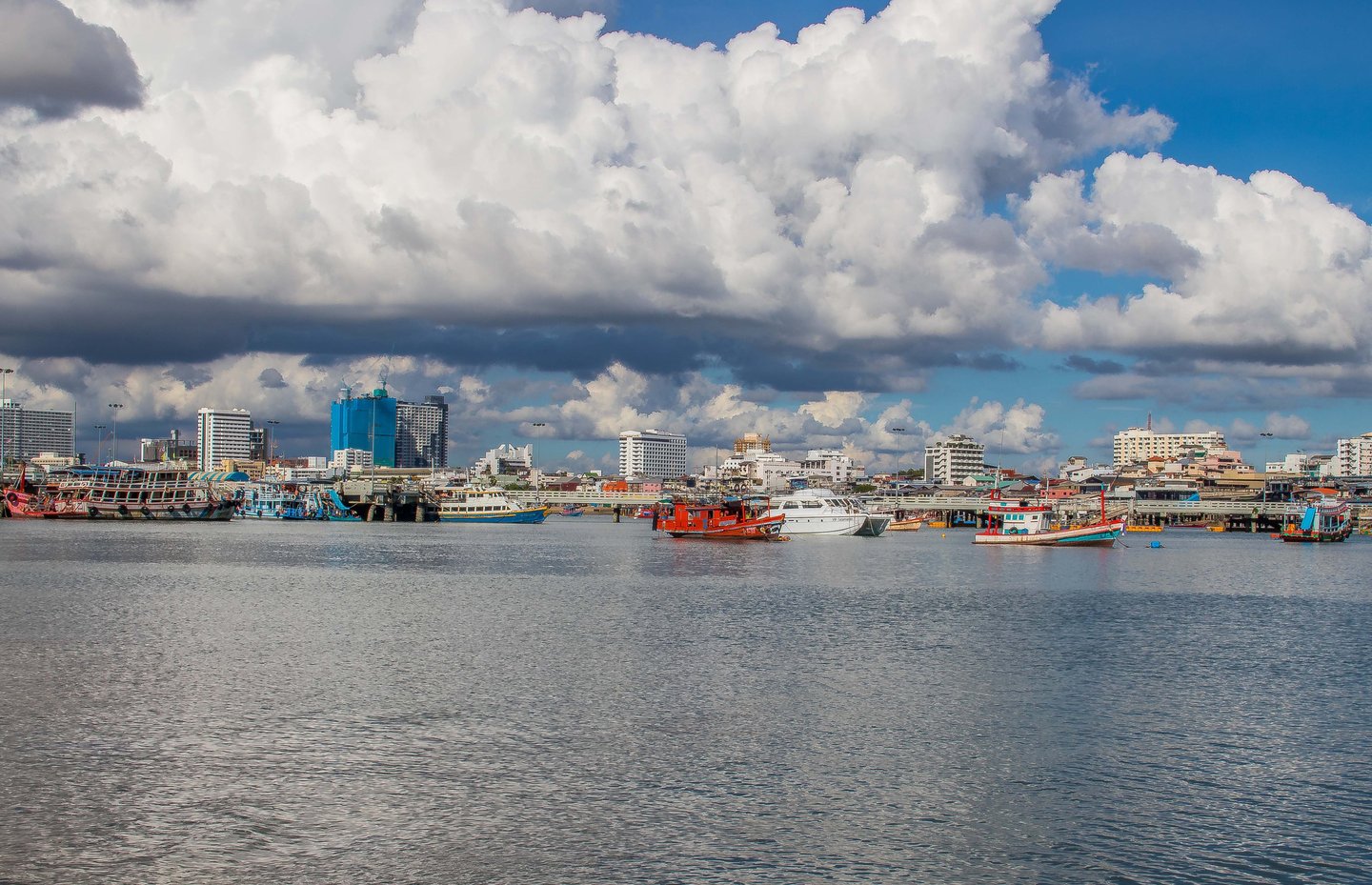
Khao Pattaya Viewpoint – The Classic Panorama
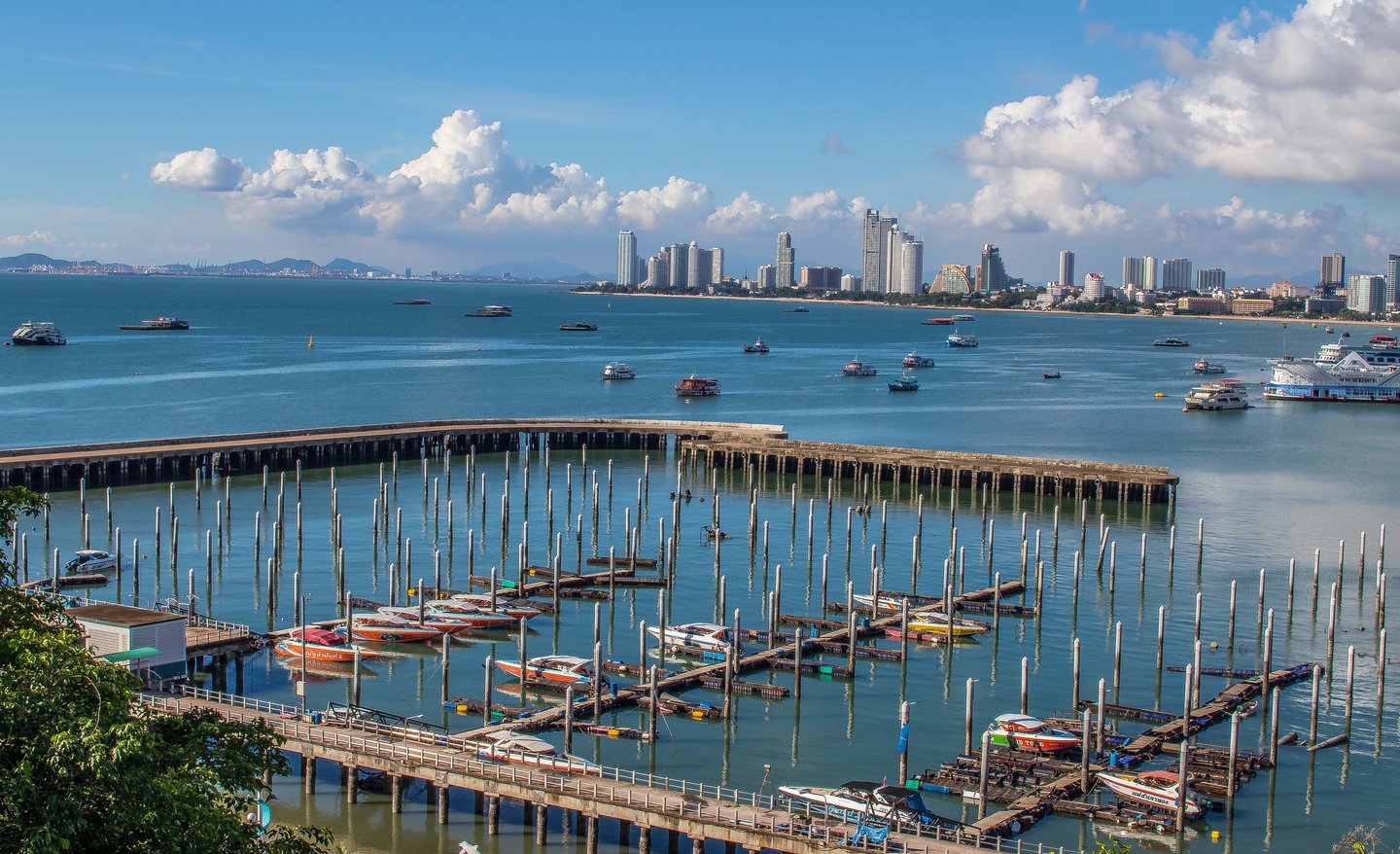
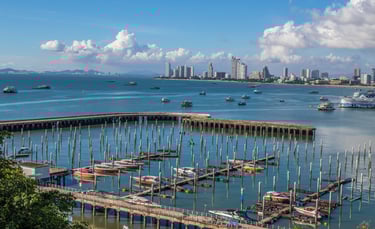
No overview of Pattaya’s skyline would be complete without the Khao Pattaya Viewpoint, located on Pratumnak Hill between Pattaya Beach and Jomtien.
This is the most famous viewpoint in the city, and for good reason. From here you get a wide panoramic view across the entire Pattaya Bay, including the skyline stretching along the coastline.
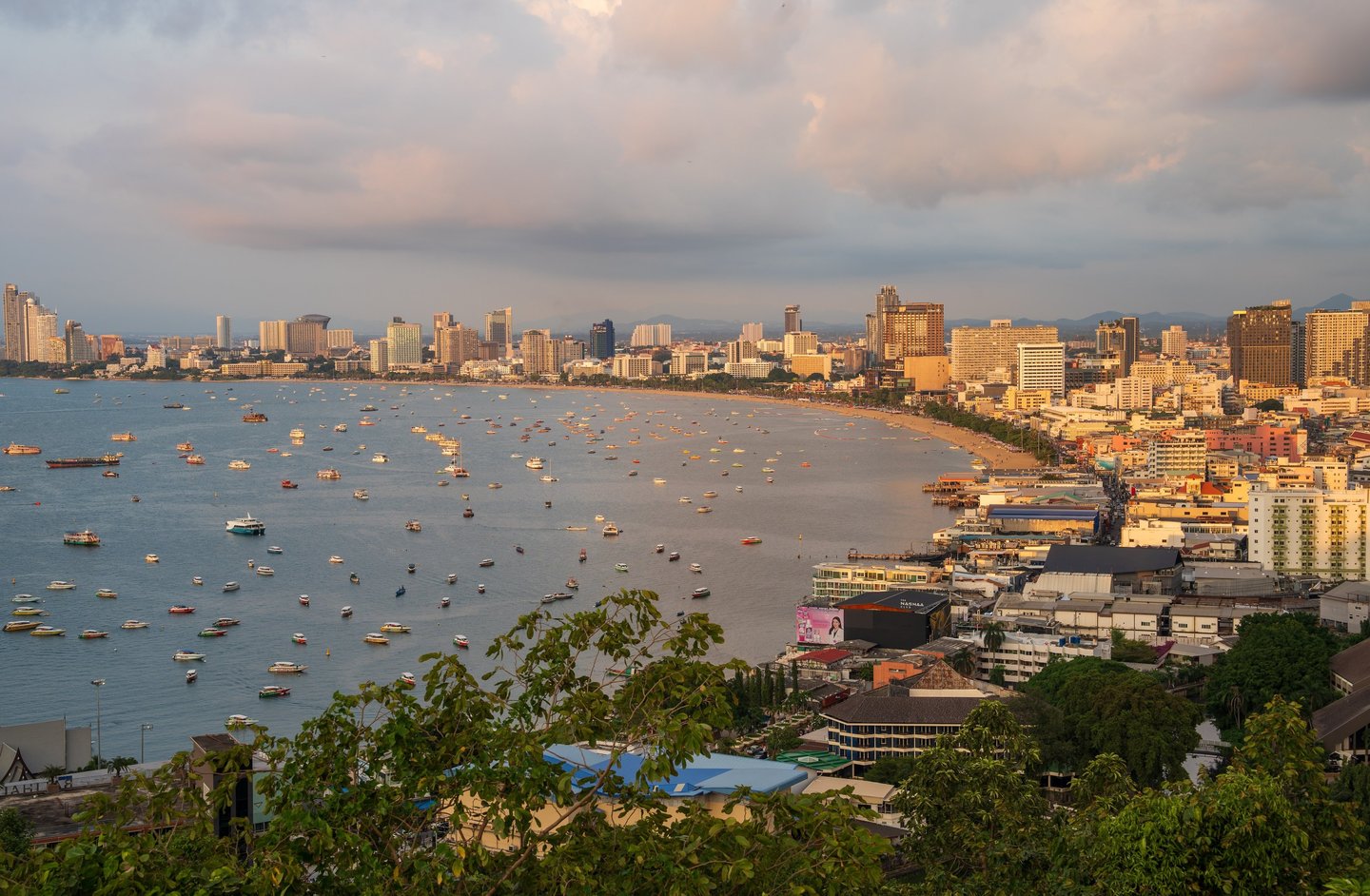
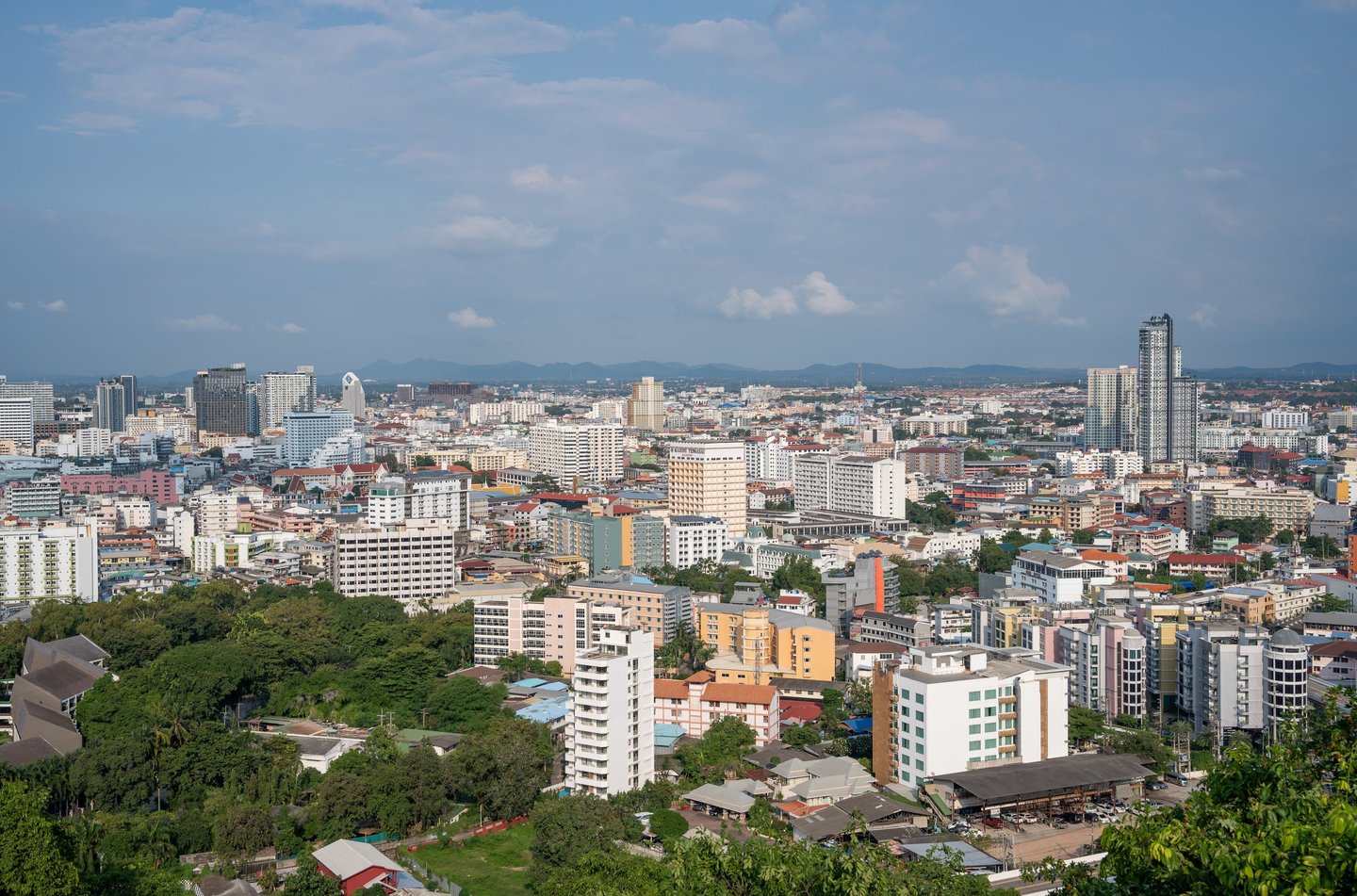
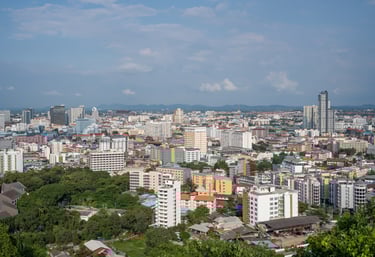
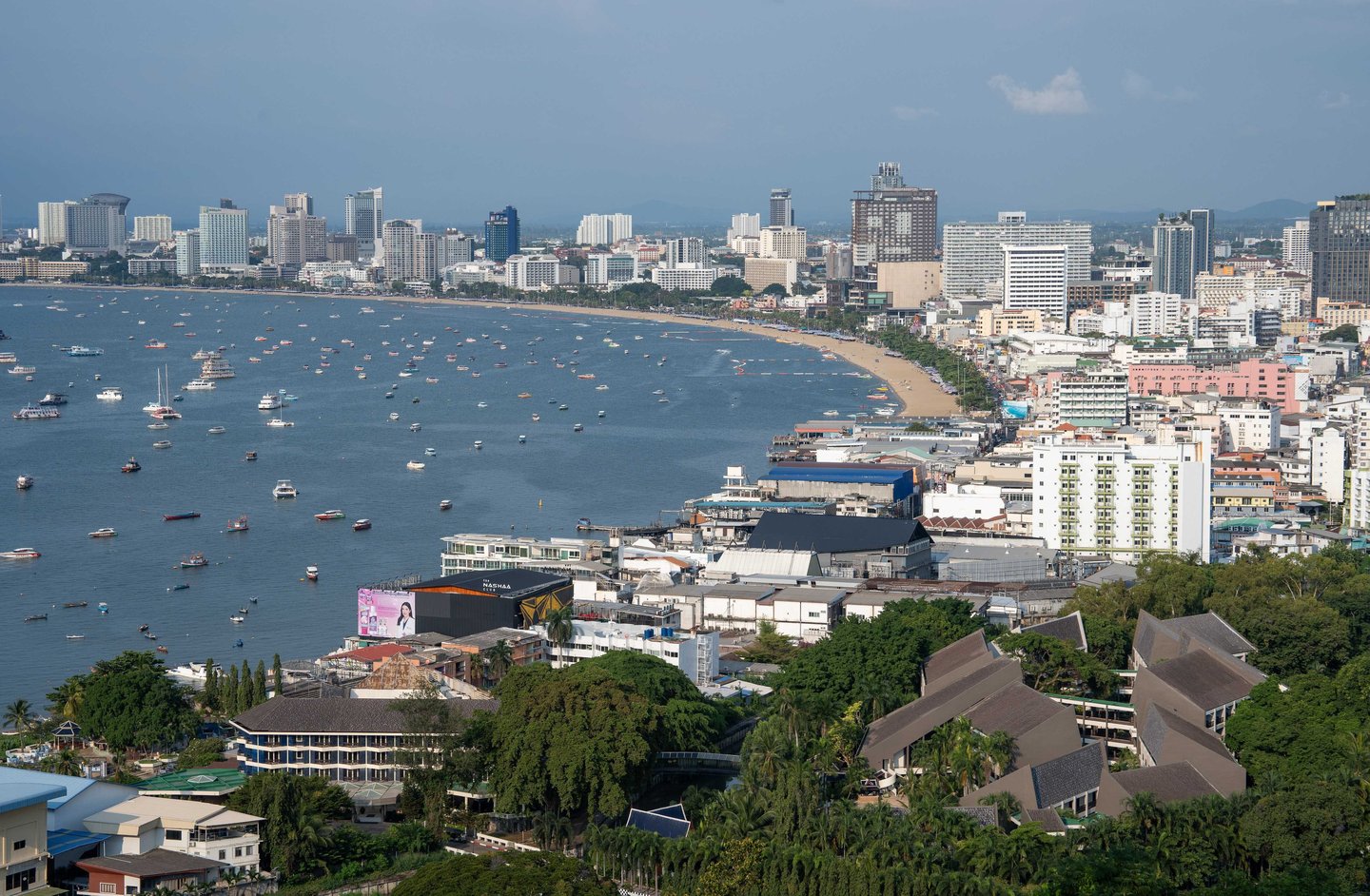
One of the recognizable landmarks at this location is the large “PATTAYA CITY” sign, which has become a popular foreground element for photographs of the city.
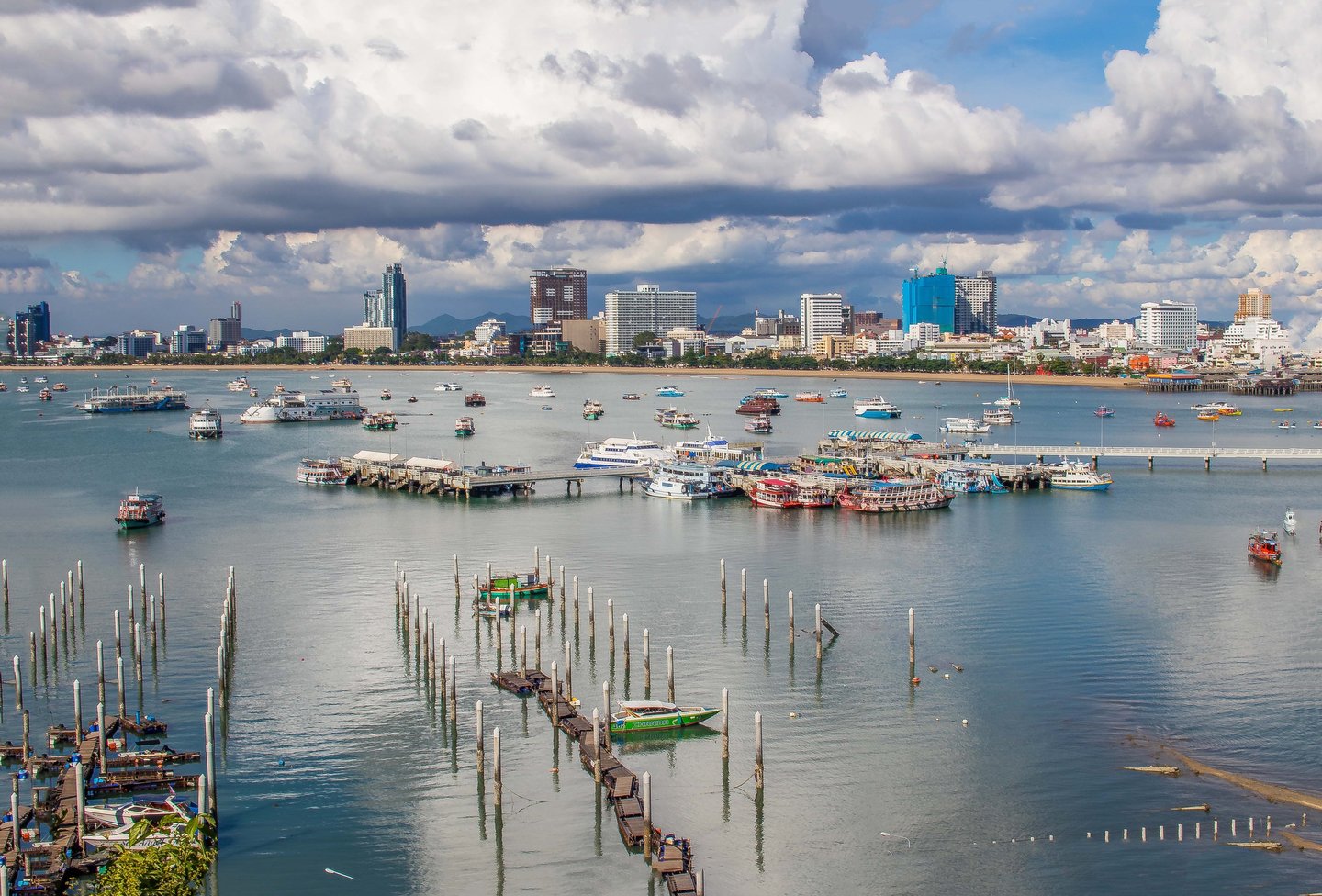
From this viewpoint the camera looks across several iconic elements of the city:
the Bali Hai Pier
the open seascape of Pattaya Bay
and the city skyline rising behind it
This combination of sea, skyline, and harbor activity makes the location one of the most classic cityscape photography spots in Pattaya.
PKCP Condominium – A Hidden Rooftop Perspective
Another remarkable perspective over Pattaya can be found on the rooftop of the PKCP Condominium.
From the 22nd floor, the view opens widely toward the western horizon and the Gulf of Thailand, creating an impressive setting for sunset and blue hour cityscape photography.
I photographed several images from this rooftop during the short window between late afternoon sunset light and the blue hour, when Pattaya slowly transitions from daylight into the glowing night skyline. From this height the city spreads out below while the sky over the sea turns into soft shades of orange, purple, and deep blue.
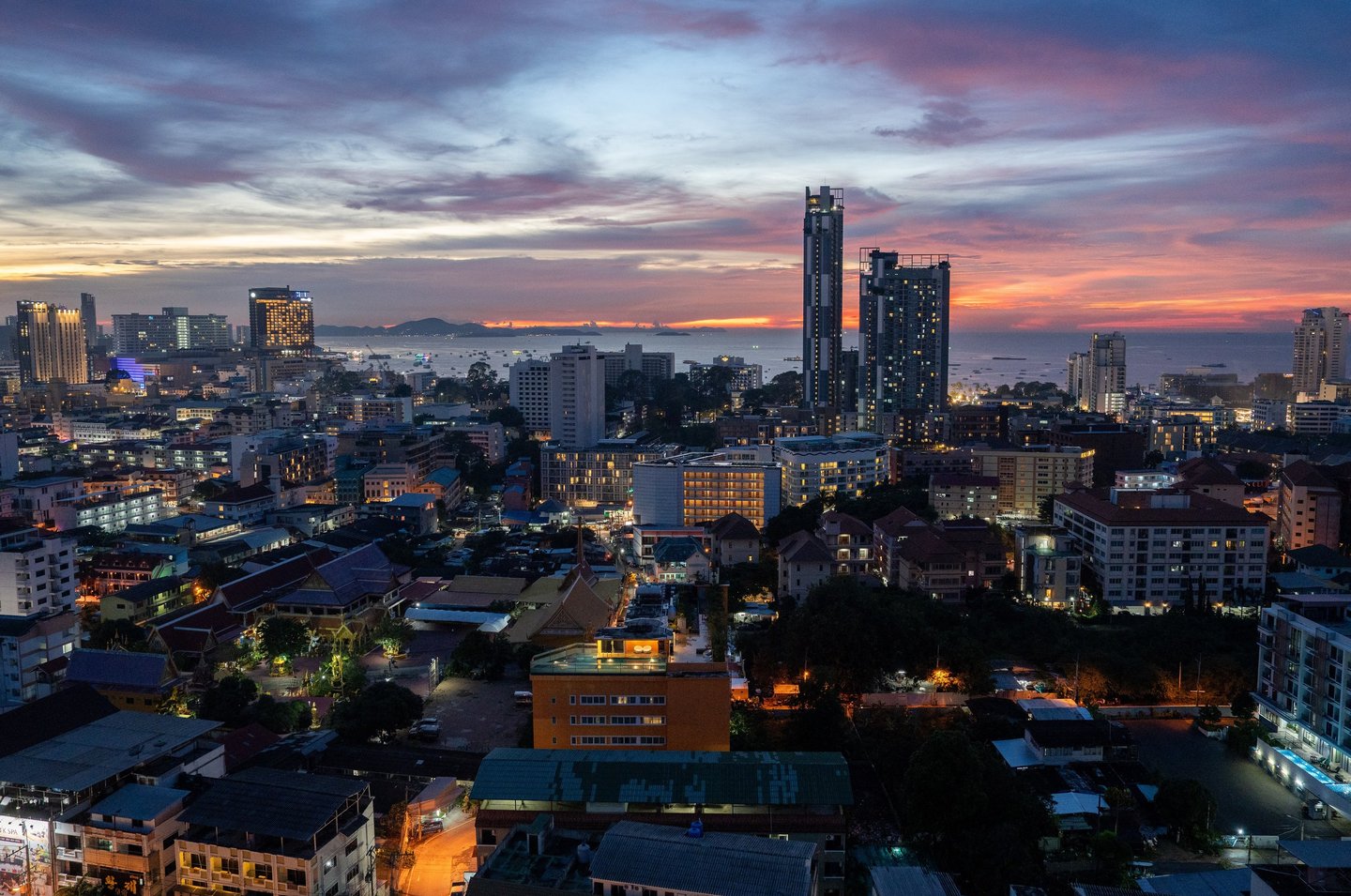
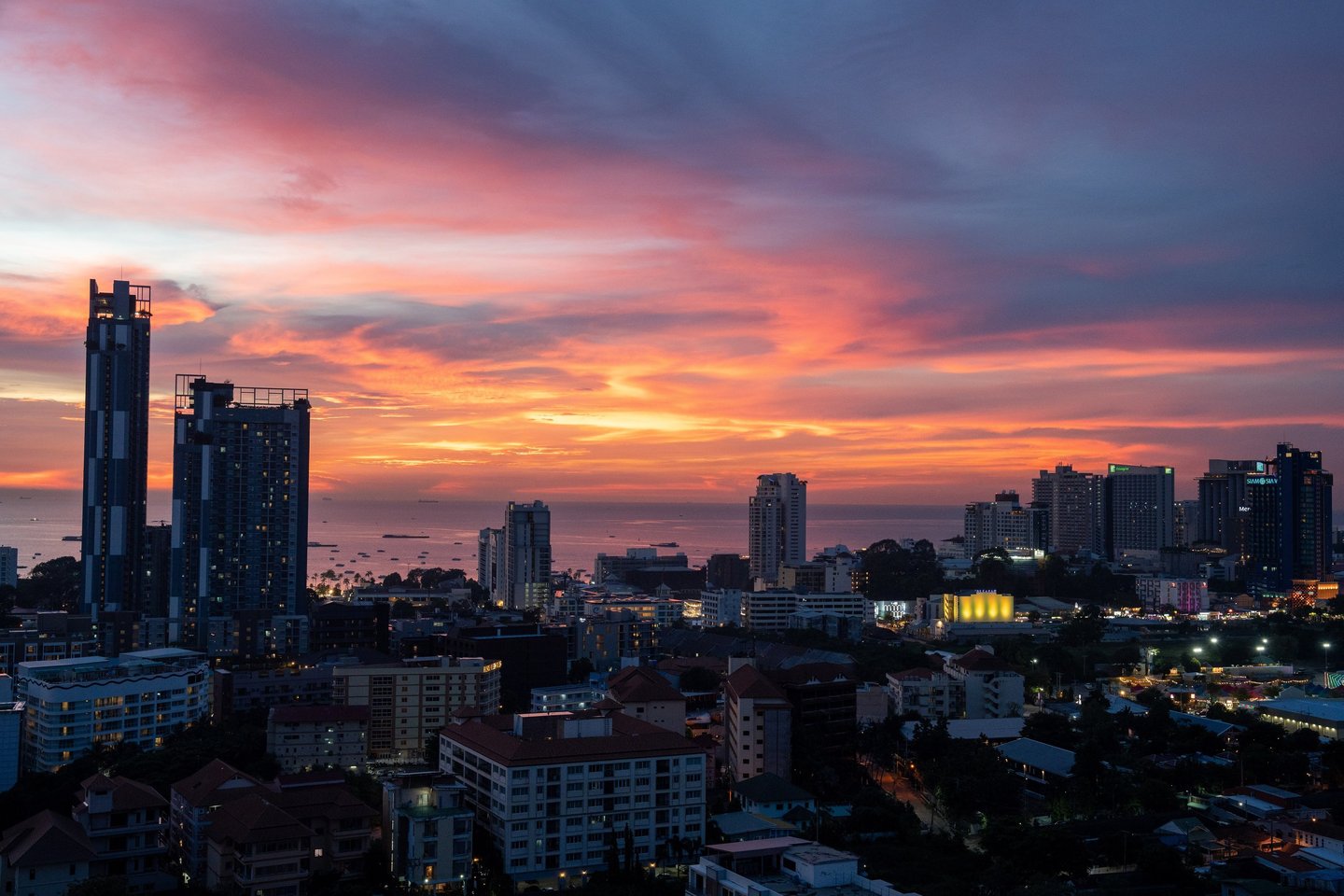
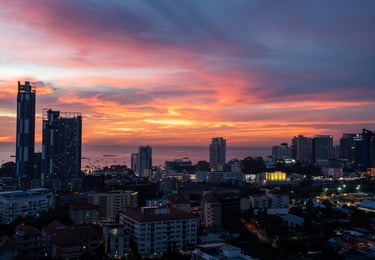
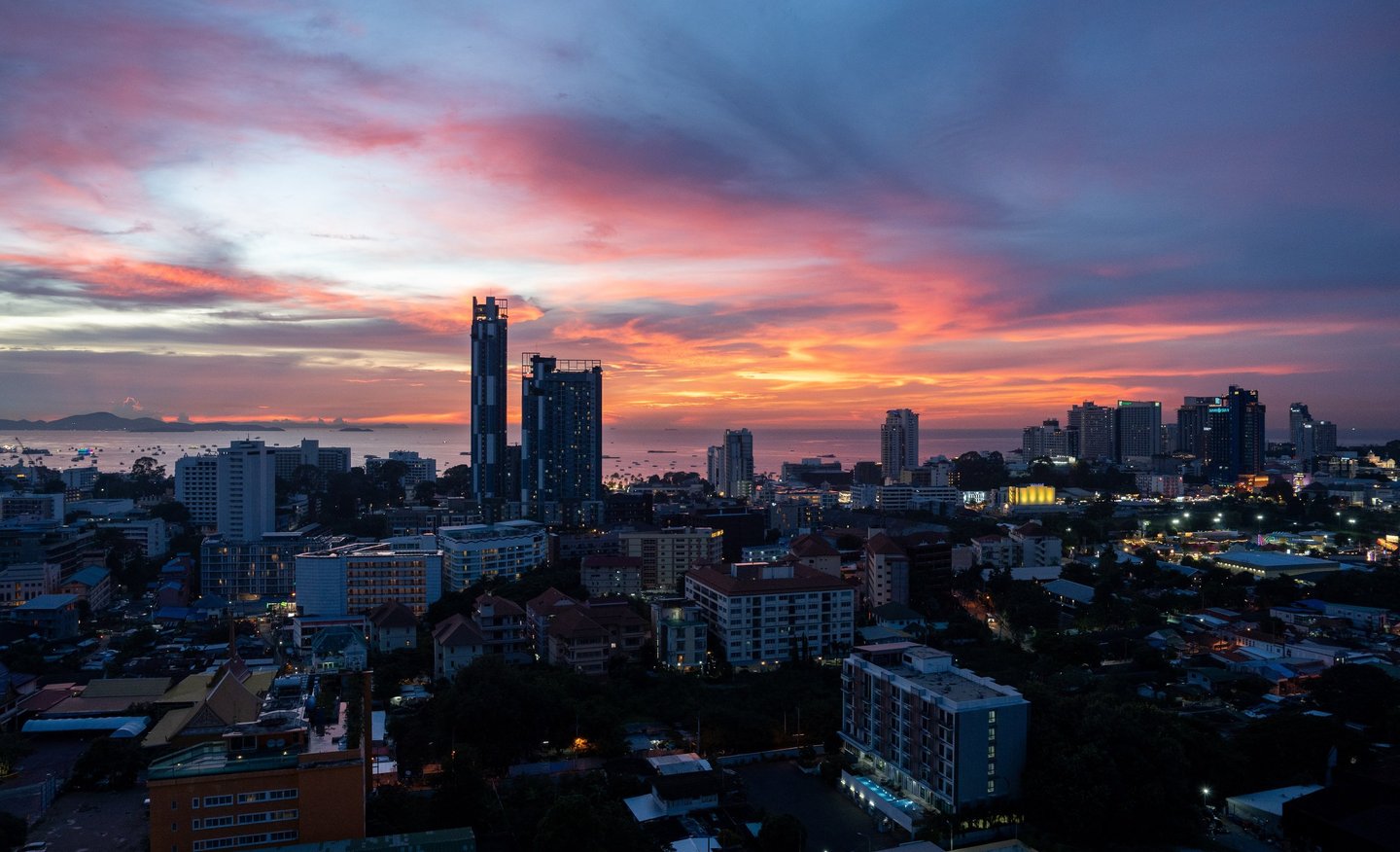
This perspective is particularly interesting because it feels less like a public viewpoint and more like a quiet rooftop observation point above the everyday rhythm of the city.
There is also another special moment during the year when this location becomes especially rewarding for photographers. During the annual Pattaya Fireworks Festival in November, the rooftop offers a fantastic vantage point for photographing the fireworks displays over the bay. From here the exploding colors appear directly above the skyline and the sea — creating dramatic long-exposure photography opportunities with the illuminated city in the foreground.
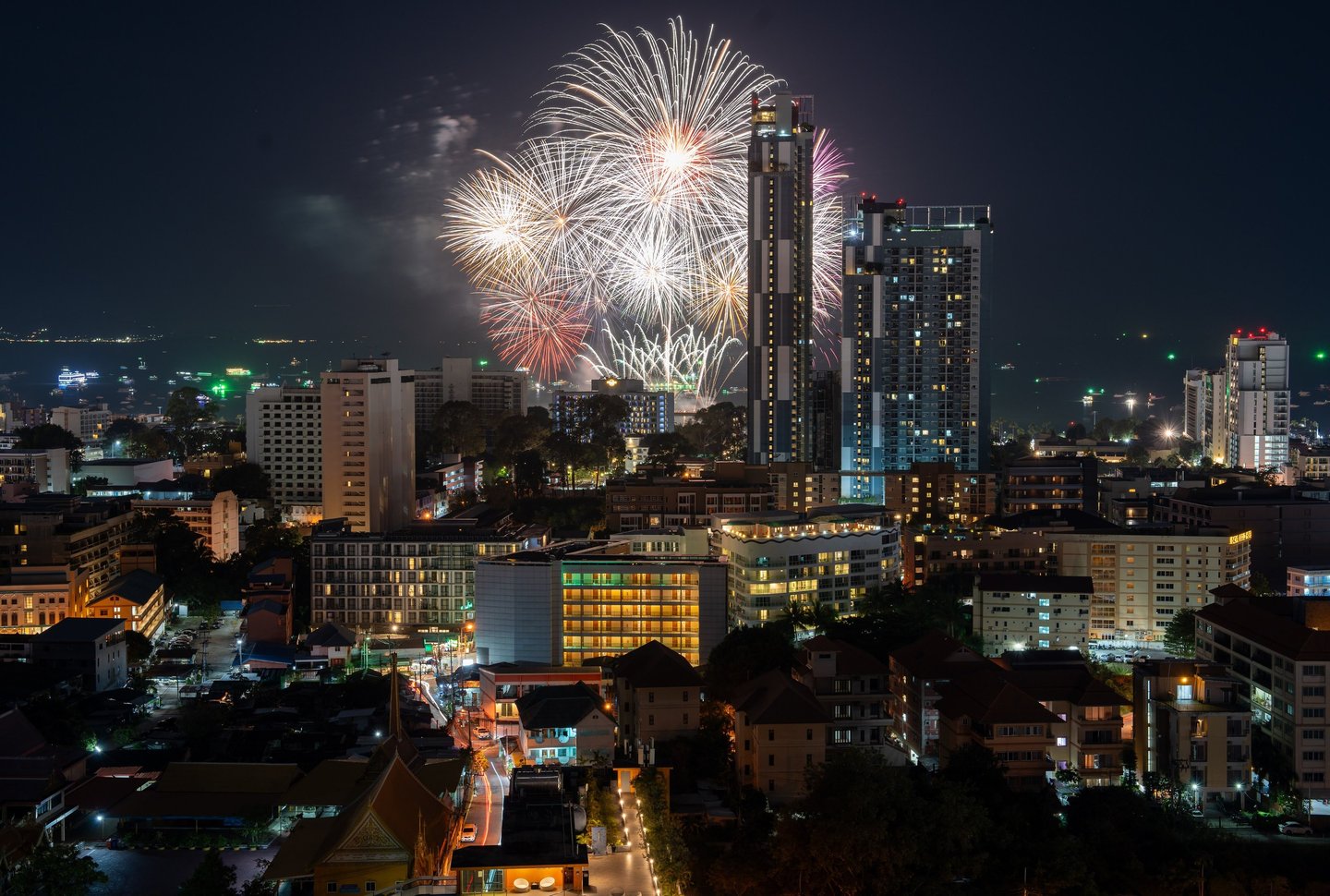
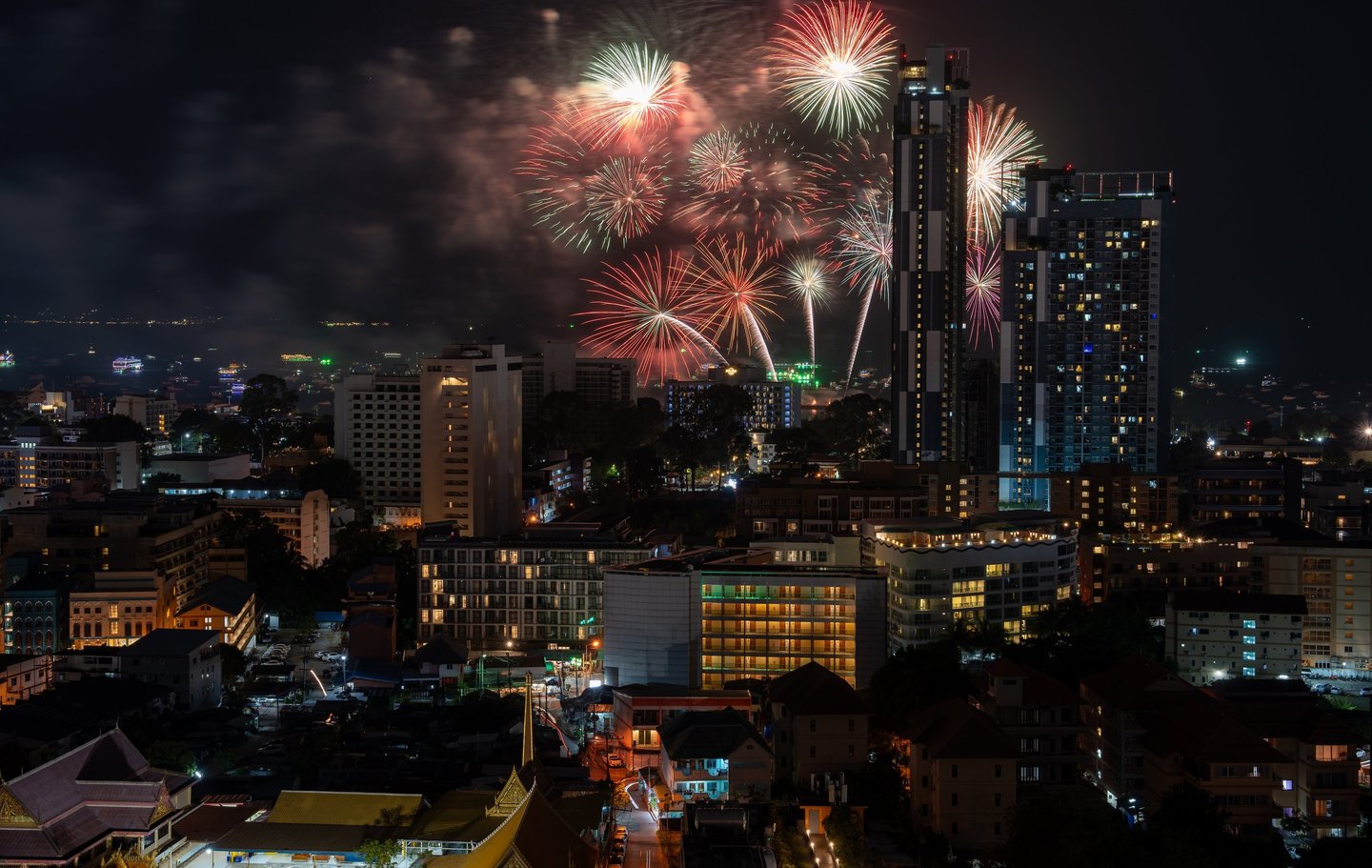
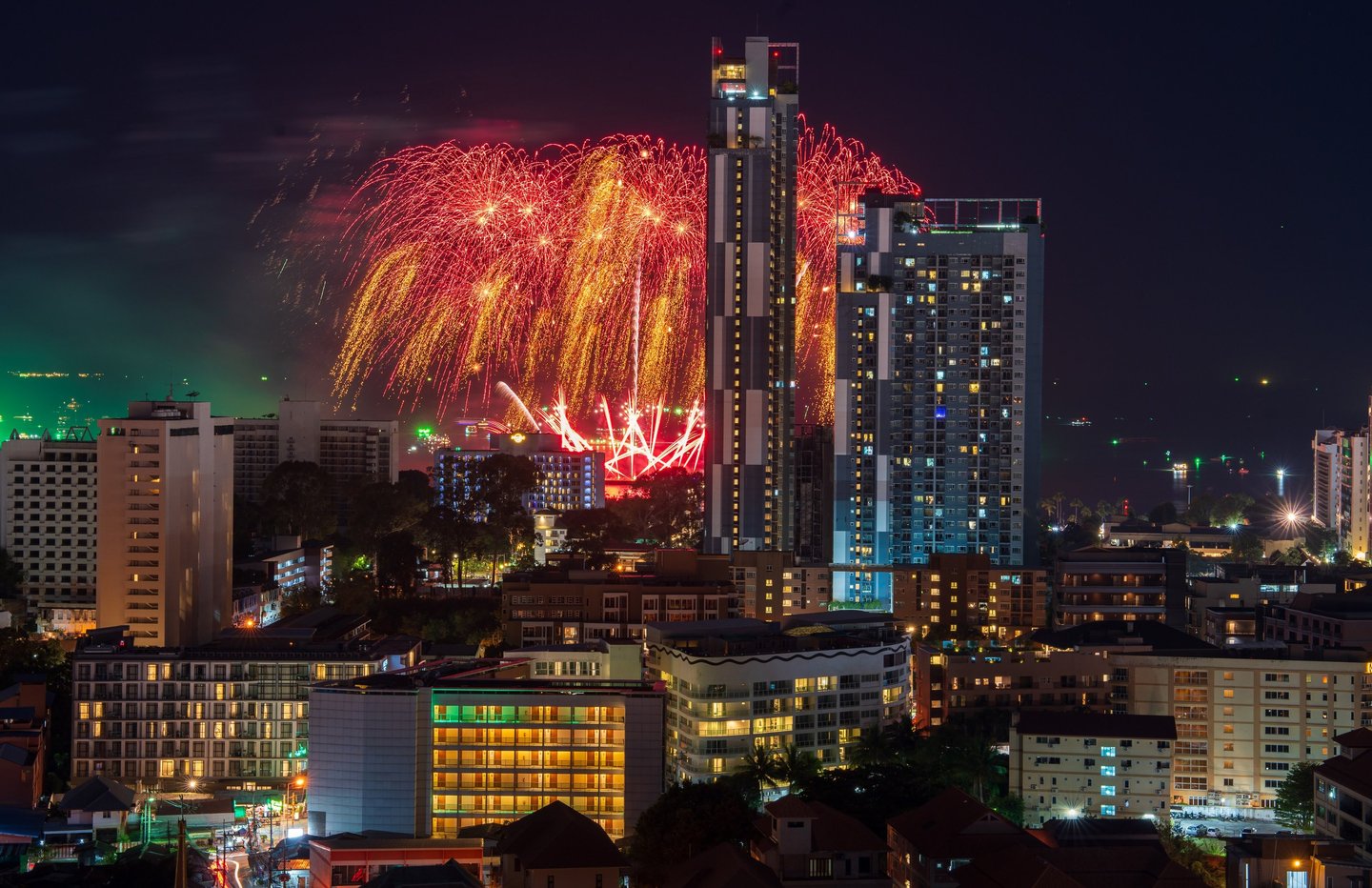
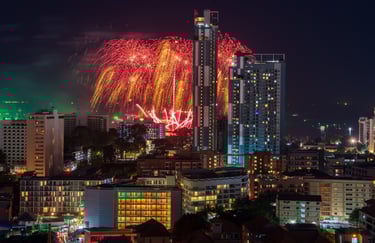
For photographers interested in Pattaya skyline photography, sunset cityscapes, and urban night photography, this rooftop perspective adds yet another dimension to the many ways of seeing the city from above.
Photography Notes
Most of the photographs in this section were taken in the late afternoon, during sunset, and into the blue hour, when the light over Pattaya changes rapidly and the skyline begins to illuminate.
For cityscape photography in tropical coastal cities like Pattaya, this short window between sunset and night often produces the most atmospheric images — where warm sunset tones blend with the first artificial lights of the skyline.
Looking at Pattaya from above changes the perspective completely.
What many people see only as a nightlife destination becomes something else: a coastal city with a dynamic skyline, vibrant harbor activity, and dramatic evening light over the Gulf of Thailand.
And sometimes, all it takes to see that side of the city is simply to step a little higher above it.
Pattaya from Above: Modern Realities from the Sola Luna Rooftop
Any seasoned Pattaya expert knows the coastal city is rapidly outgrowing its old stereotypes. As a photographer focused on documenting changing urban landscapes, tracking this visual evolution means getting above the street-level noise to map the true scale of the city.
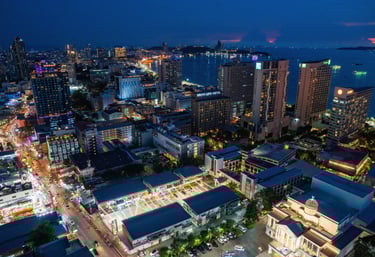
A major catalyst in this transformation sits in North Pattaya: the Grande Centre Point Space Pattaya. Developed by LH Mall & Hotel (LHMH), a subsidiary of Land & Houses PLC, this mega-project launched as Thailand's very first space-themed luxury hotel complex. Perched directly on the 32nd floor of this futuristic tower is the Sola Luna Rooftop Restaurant (often stylized as Sola I Luna). This vantage point provides an unobstructed, high-altitude panoramic view where the sheer density of the city unfolds.
The upcoming expansion to the portfolio features three distinct, high-contrast frames captured hand-held from this exact rooftop destination, each mapping a different geometric direction of the modern skyline:
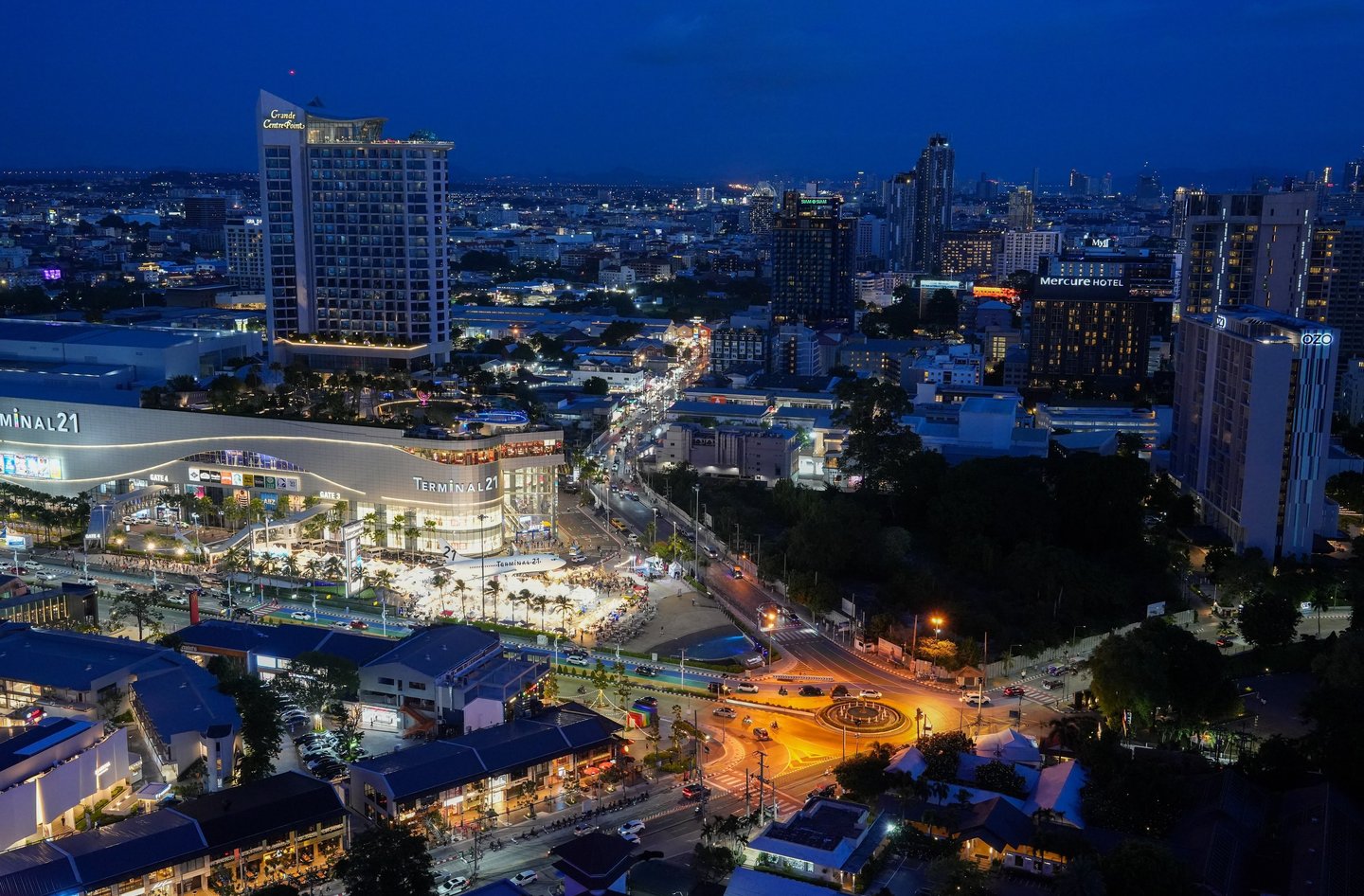
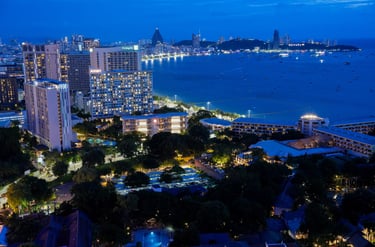
Pattaya North Night Scene: High-Contrast View of Terminal 21 🏙️✈️ Looking straight down into the northern transit artery, this view captures the sprawling layout of the neighboring Terminal 21 mall complex and its illuminated outdoor airplane plaza. The glowing orange circles of the North Pattaya Road roundabout anchor the frame while the sister Grand Centre Point tower cuts sharply into the dark.
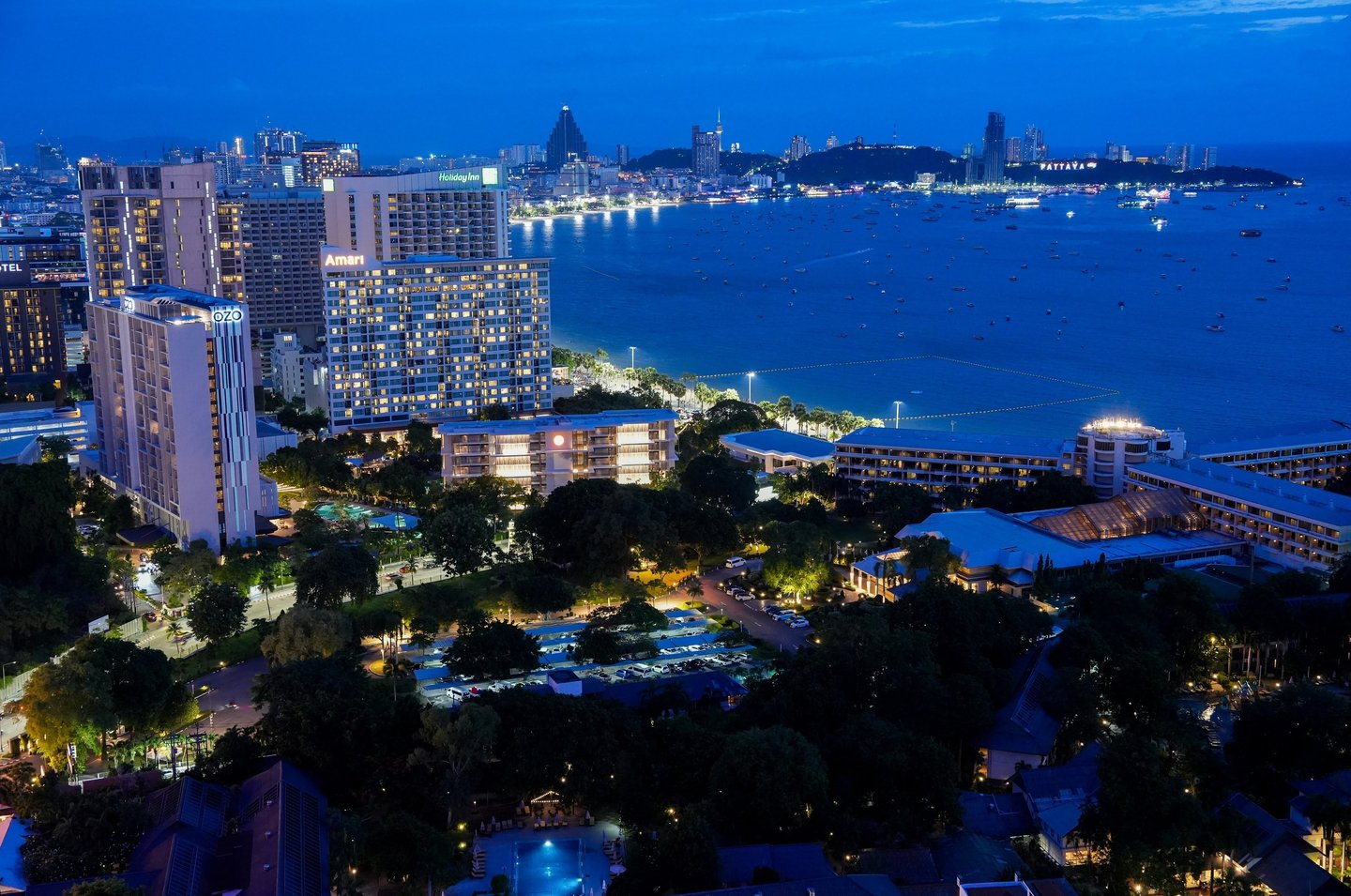
Pattaya Bay Dusk: High-Contrast View Over Beach Road 🏙️🌊 Turning the lens southwest reveals the iconic, crescent-shaped sweep of Pattaya Bay. From this elevation, the beachfront hotel facades of the OZO, Amari, and Holiday Inn trace the coastline, leading down into a matrix of neon lights, parking layouts, and boats anchored on dark water.
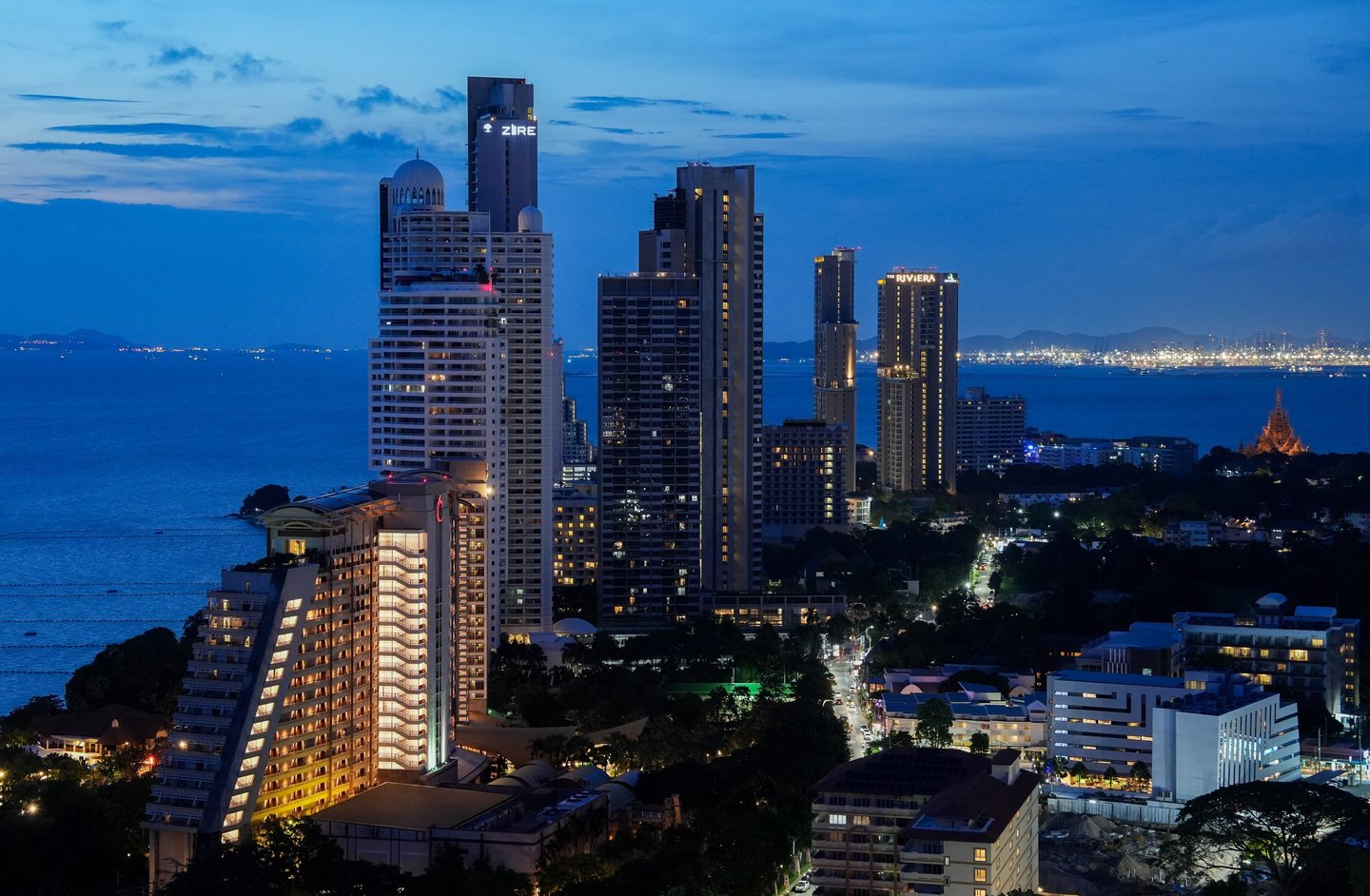
Pattaya Skyline Dusk: High-Contrast View Over Wongamat 🏙️🌊 Facing north-northwest, this perspective documents the high-end residential shift of Wongamat beach. The stepped architectural layers of the Centara Grand Mirage sit in the foreground, acting as a structural anchor that pulls the eye toward the massive, blocky concrete outlines of the Zire and Riviera luxury skyscraper complexes slicing into the twilight blue hour.
Chak Ngaew Chinese Market – A Living Chinese Heritage Near Pattaya
Not far from the busy streets of Pattaya, another world appears every Saturday evening.
The Chak Ngaew Chinese Market takes place in a historic Chinese village that is more than a century old and home to only a few hundred families.
The small settlement dates back to the time when Chinese immigrants settled in this part of eastern Thailand to work in agriculture and trade. Over time they built a close-knit community with wooden shophouses, temples, and narrow streets that still preserve the atmosphere of another era.
Today the village counts around 300 households, many of which have lived here for generations. During the week the streets are quiet, but every Saturday evening the village transforms into a lively traditional market.
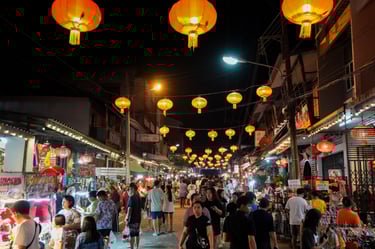
A Market Between Historic Wooden Houses
Walking through the market feels like stepping into a different time.
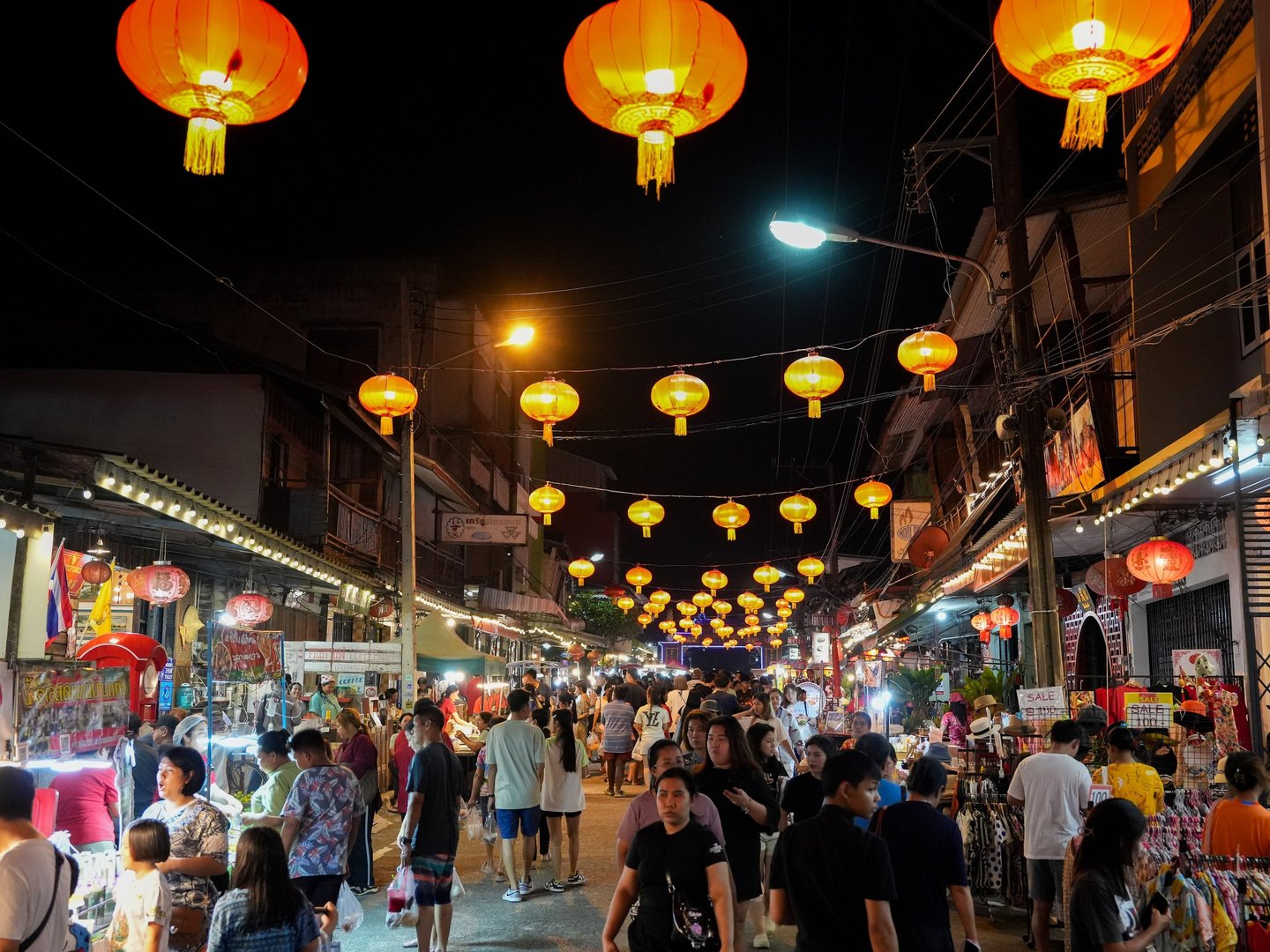
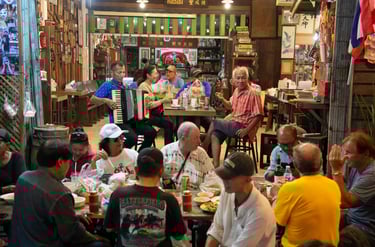
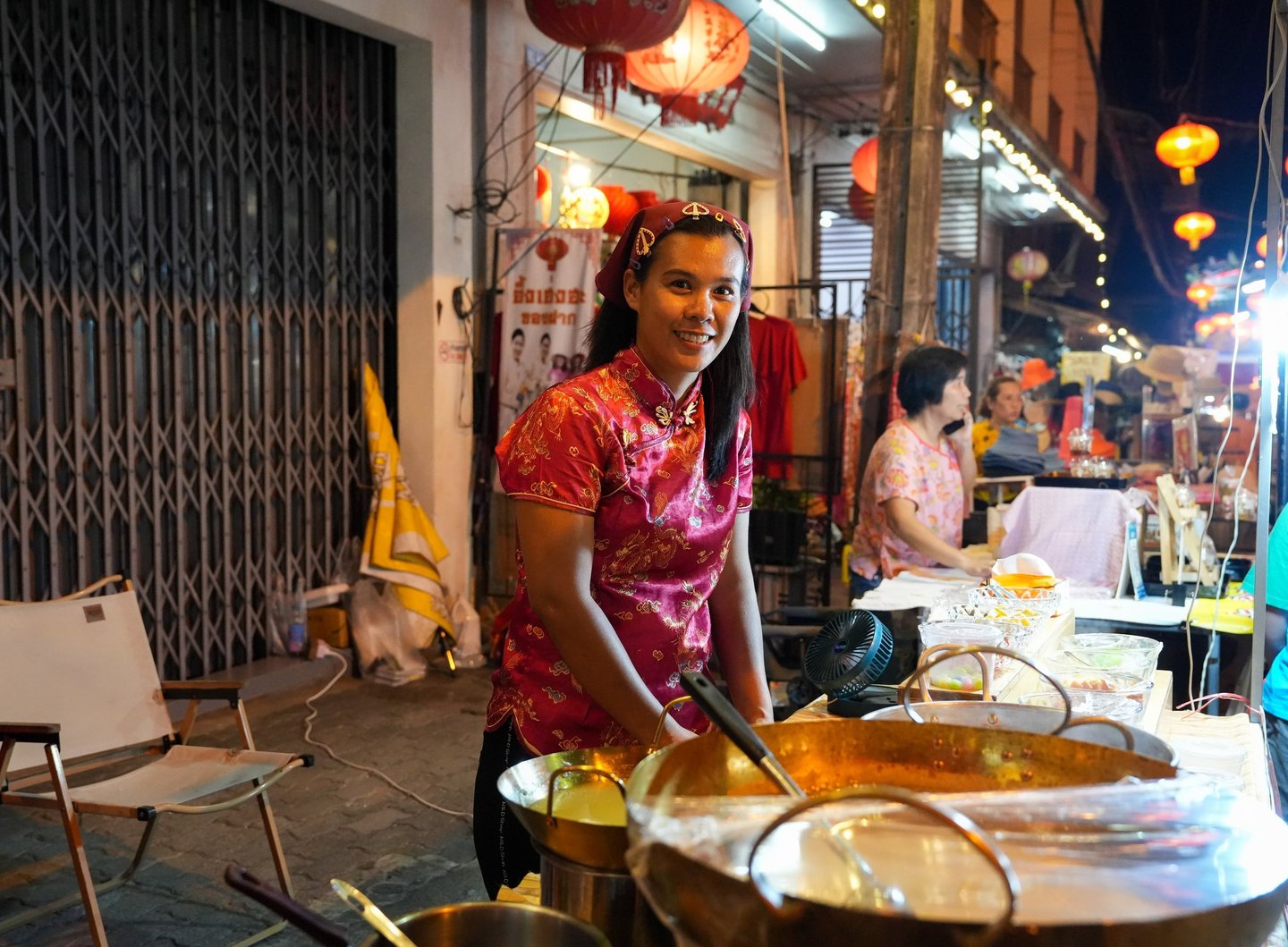
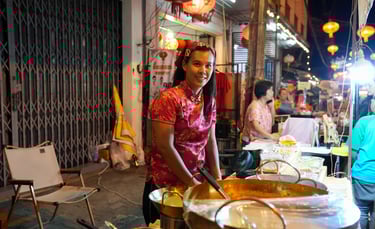
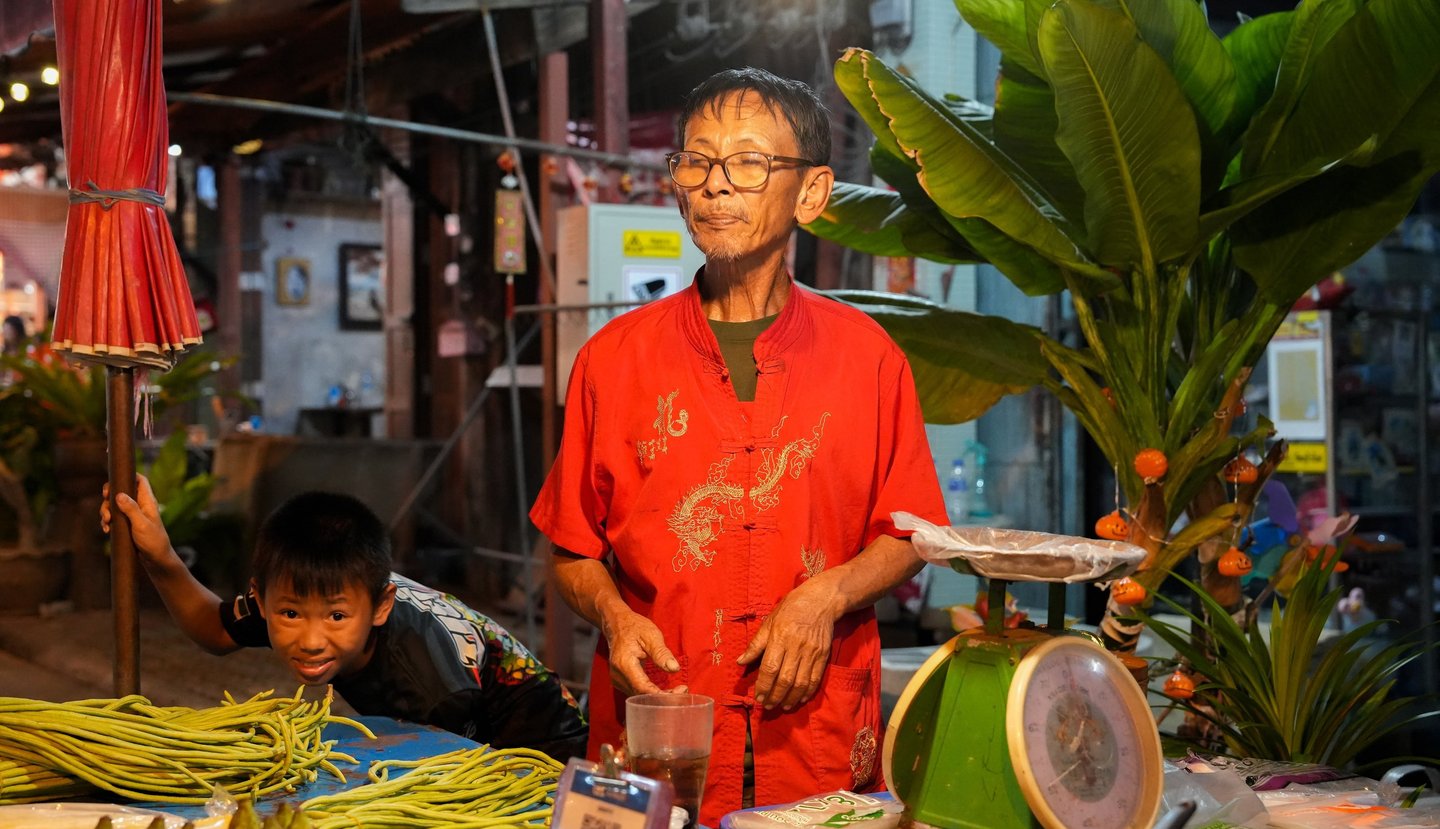
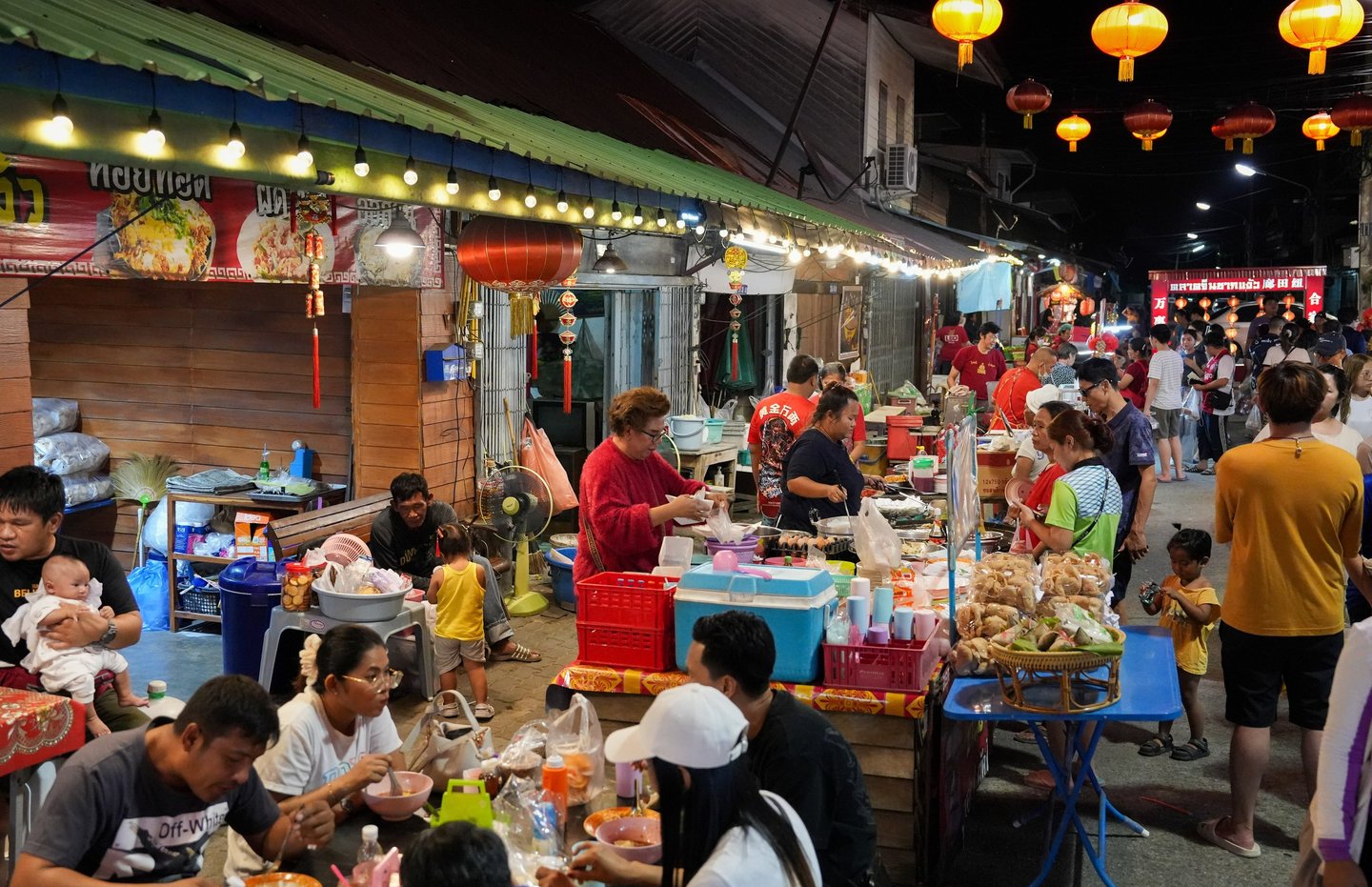
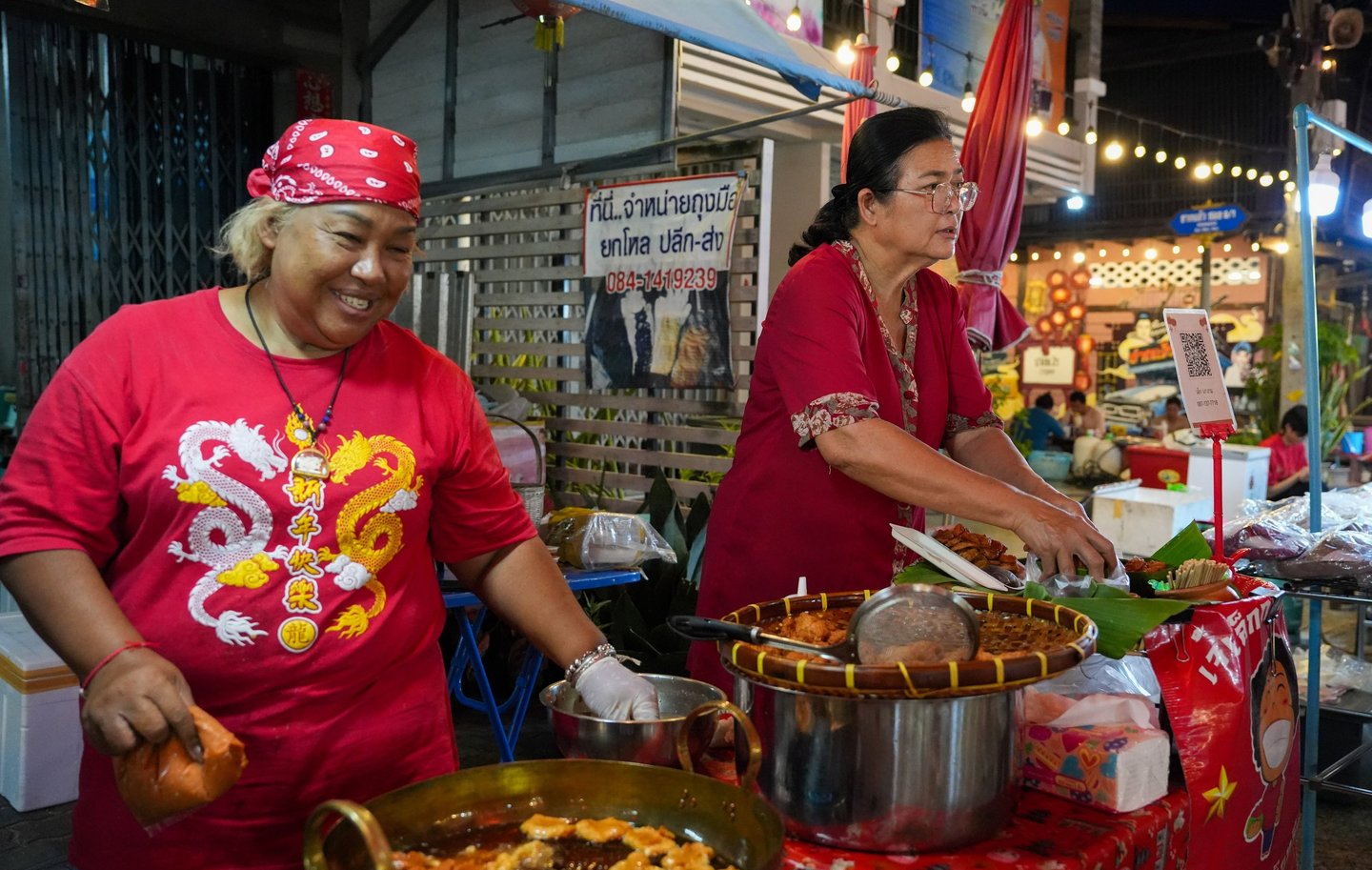
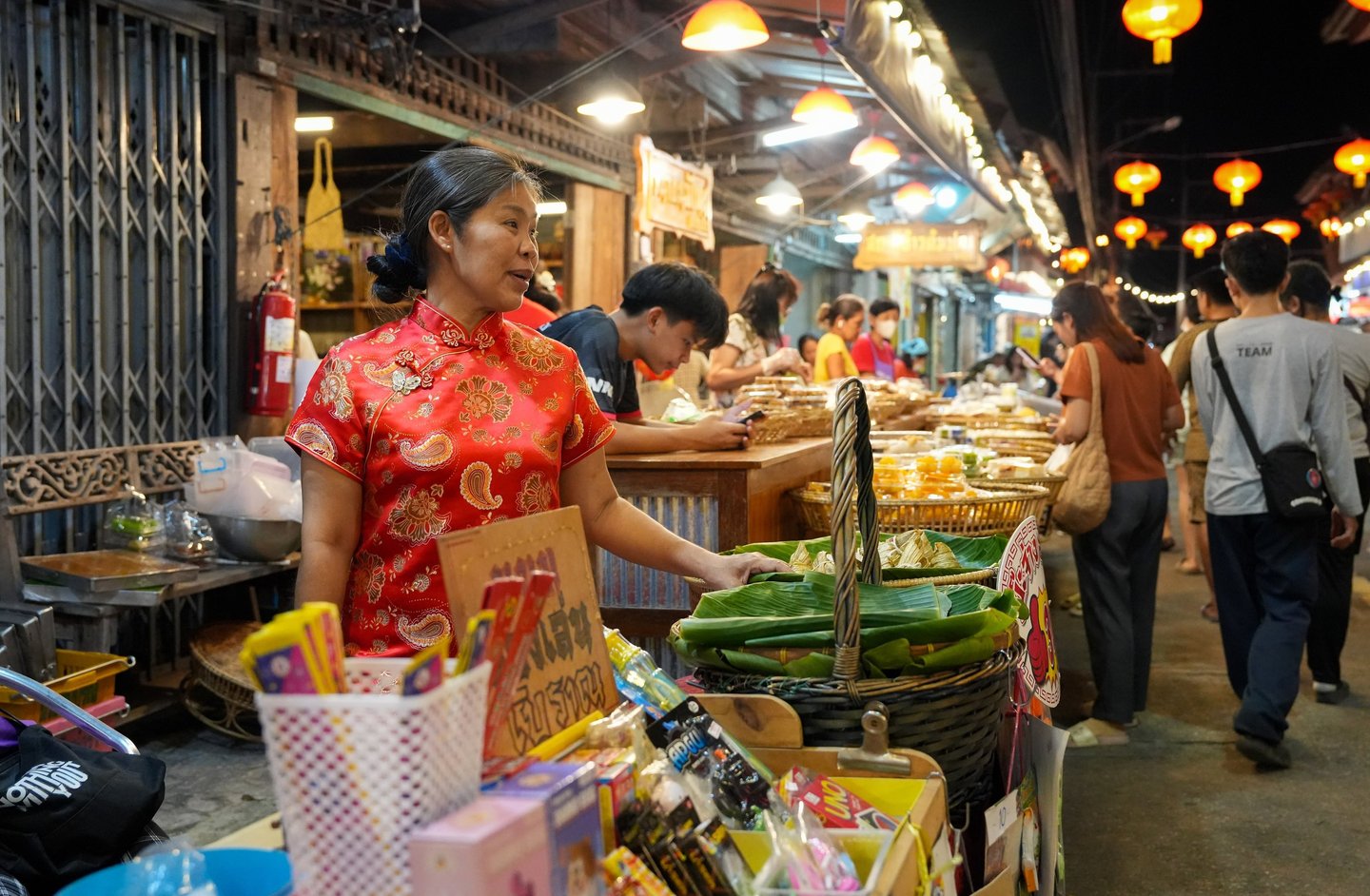
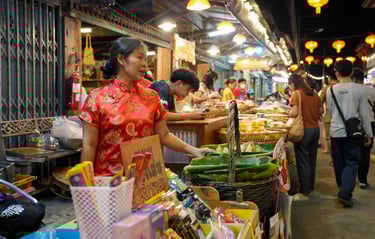
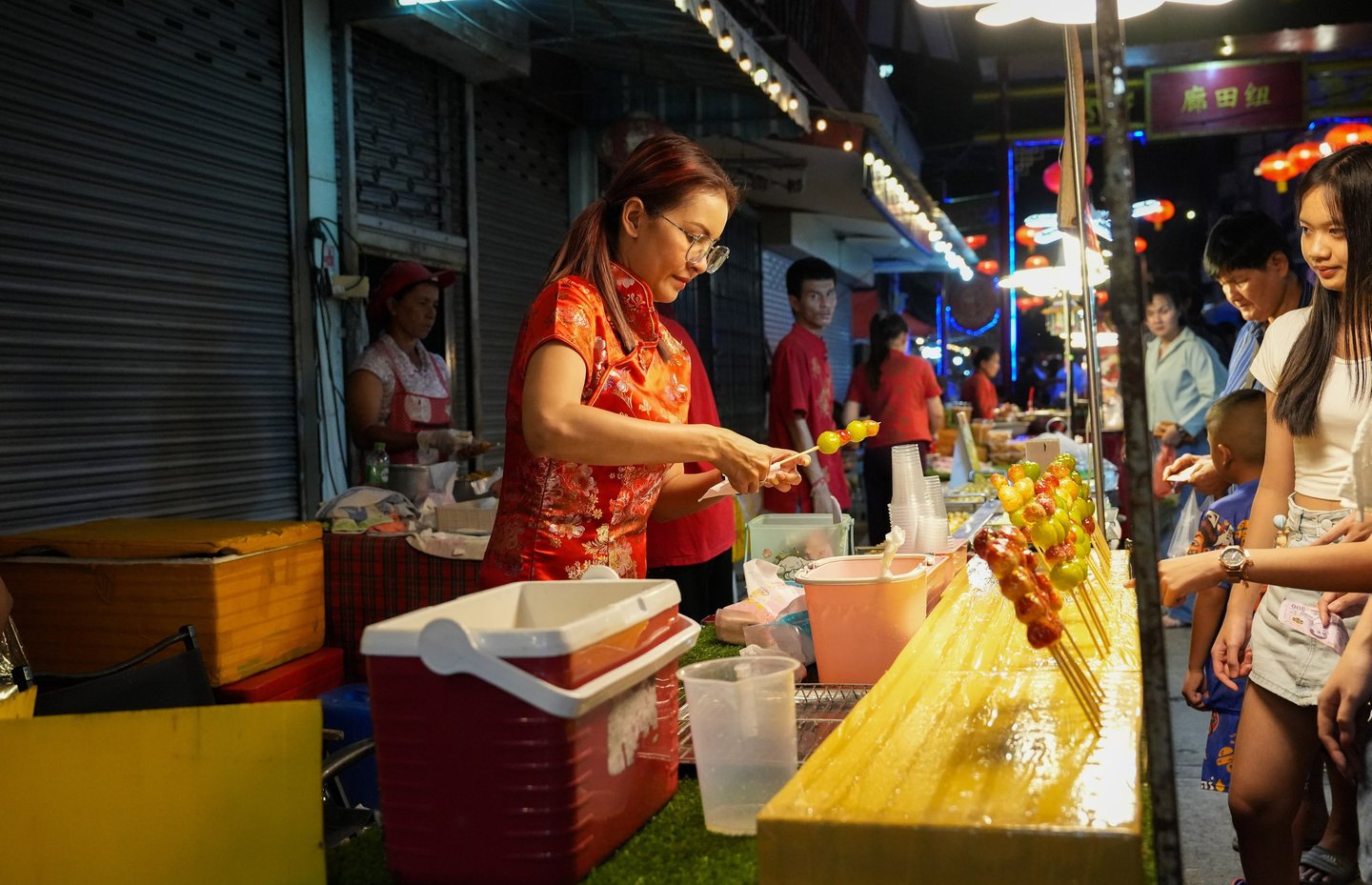
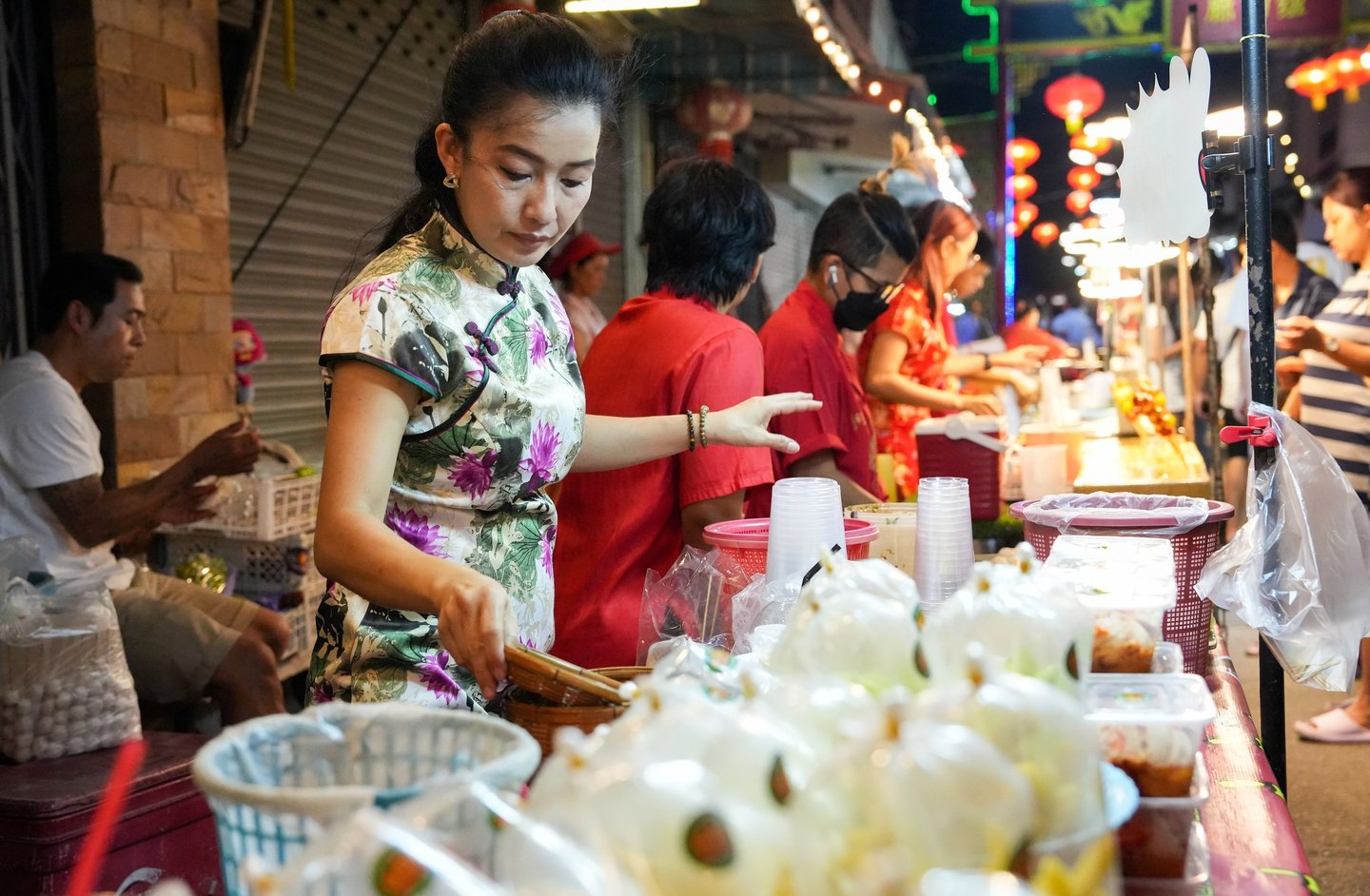
Rows of two-storey wooden houses line the narrow street, many of them over 100 years old. Lanterns and warm lights illuminate the façades while vendors set up small stalls in front of their family shops.
Unlike the large tourist markets in Pattaya, the Chak Ngaew market still feels authentic and community-driven. Most of the small shops and restaurants are run by local families who have been part of the village for decades.
The result is a market atmosphere that feels both nostalgic and welcoming — a place where visitors can slow down and experience a piece of Thai-Chinese heritage.
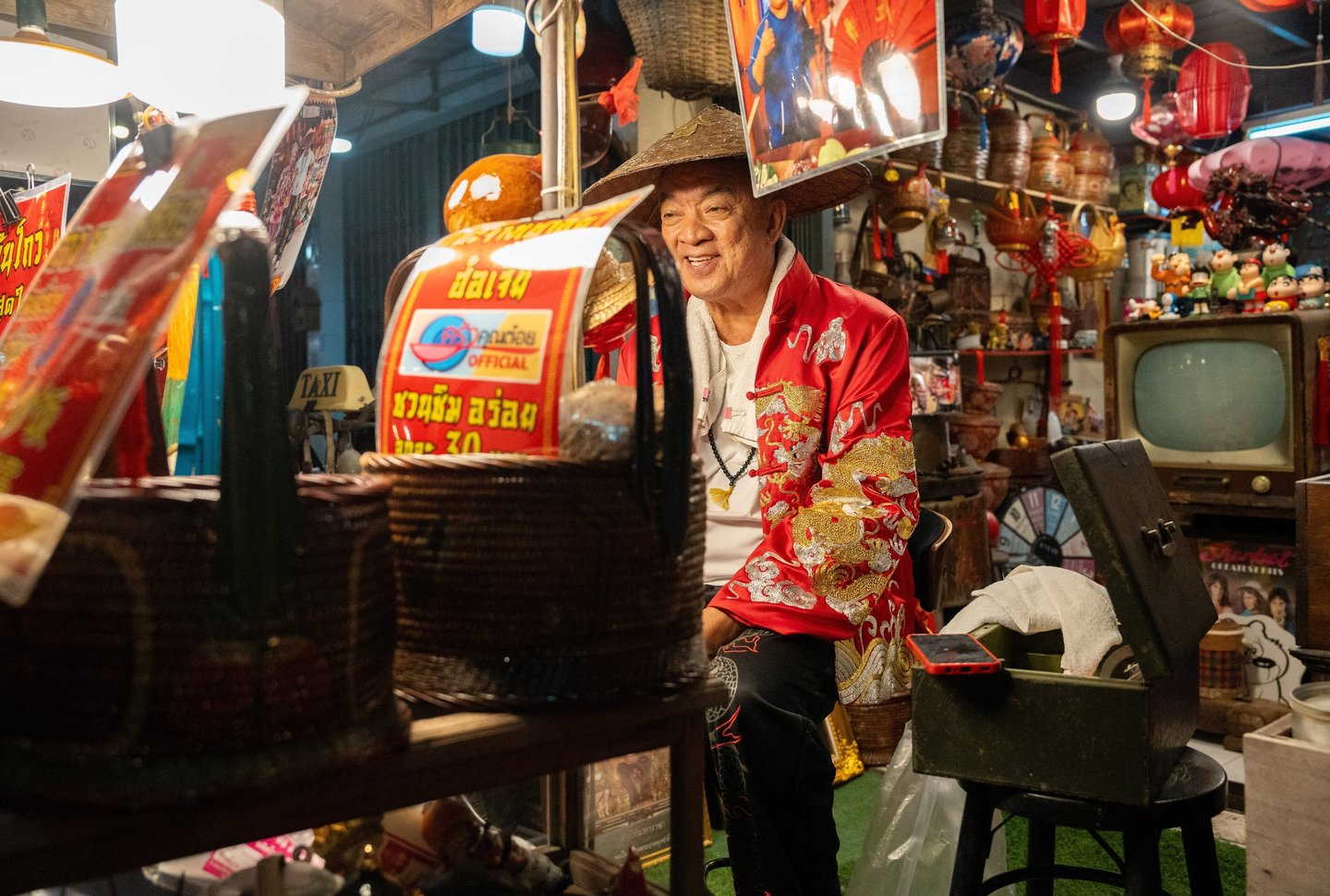
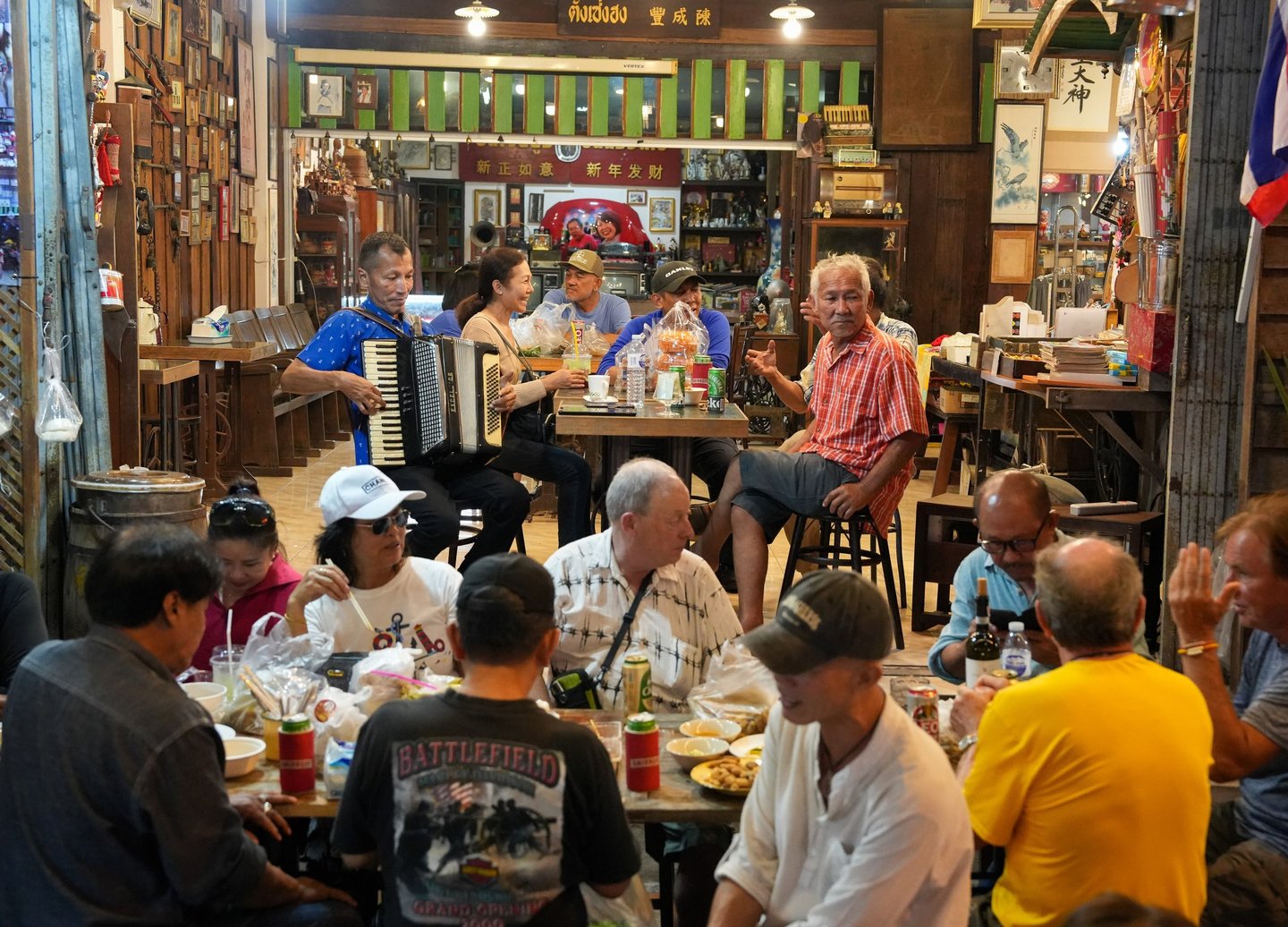
Food, Traditions, and Street Photography
One of the highlights of the market is the food.
Visitors can sample a wide range of traditional Chinese and Thai-Chinese dishes, including:
handmade noodle soups
dumplings and steamed buns
roasted meats
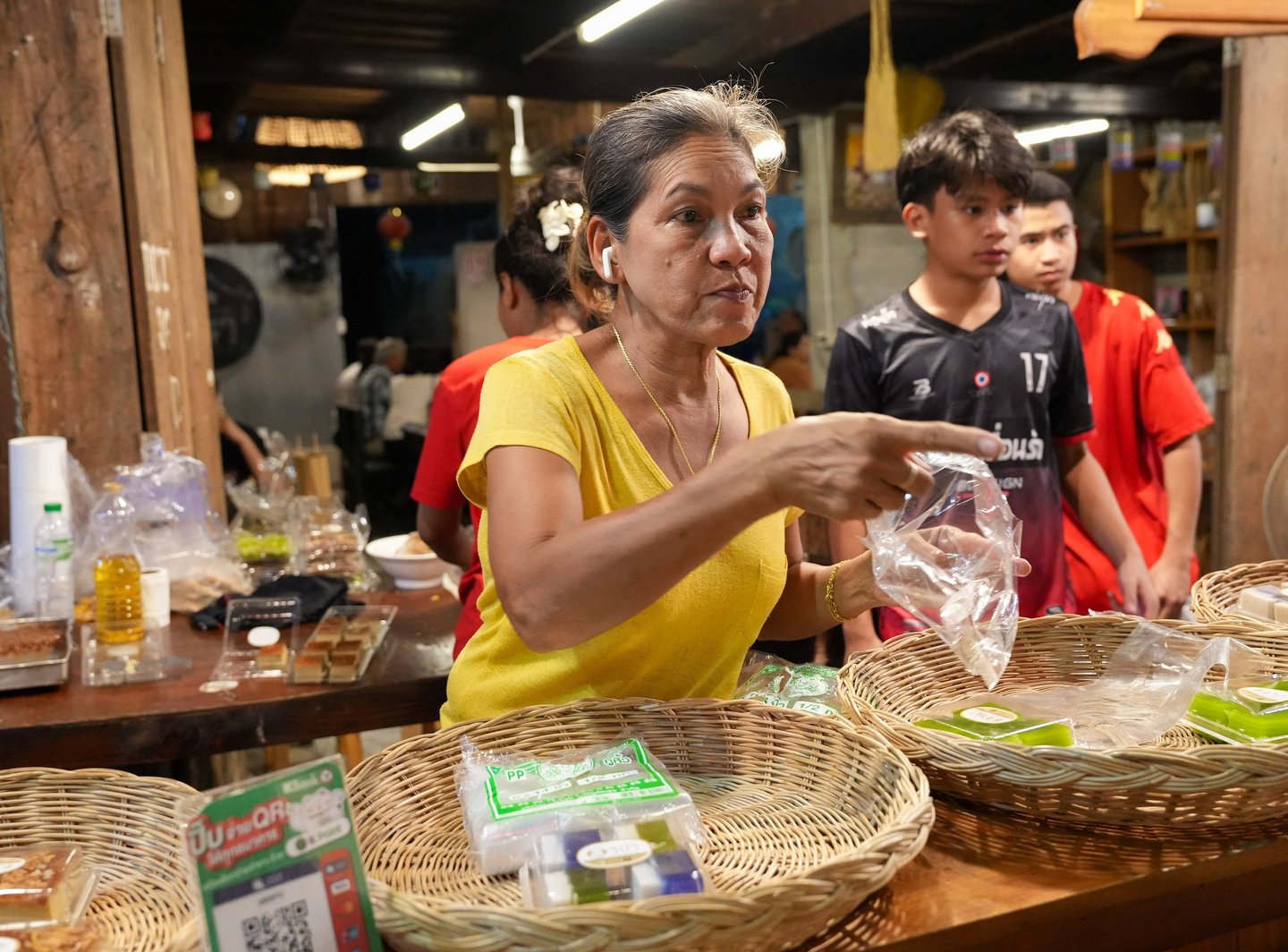
traditional Chinese sweets and snacks
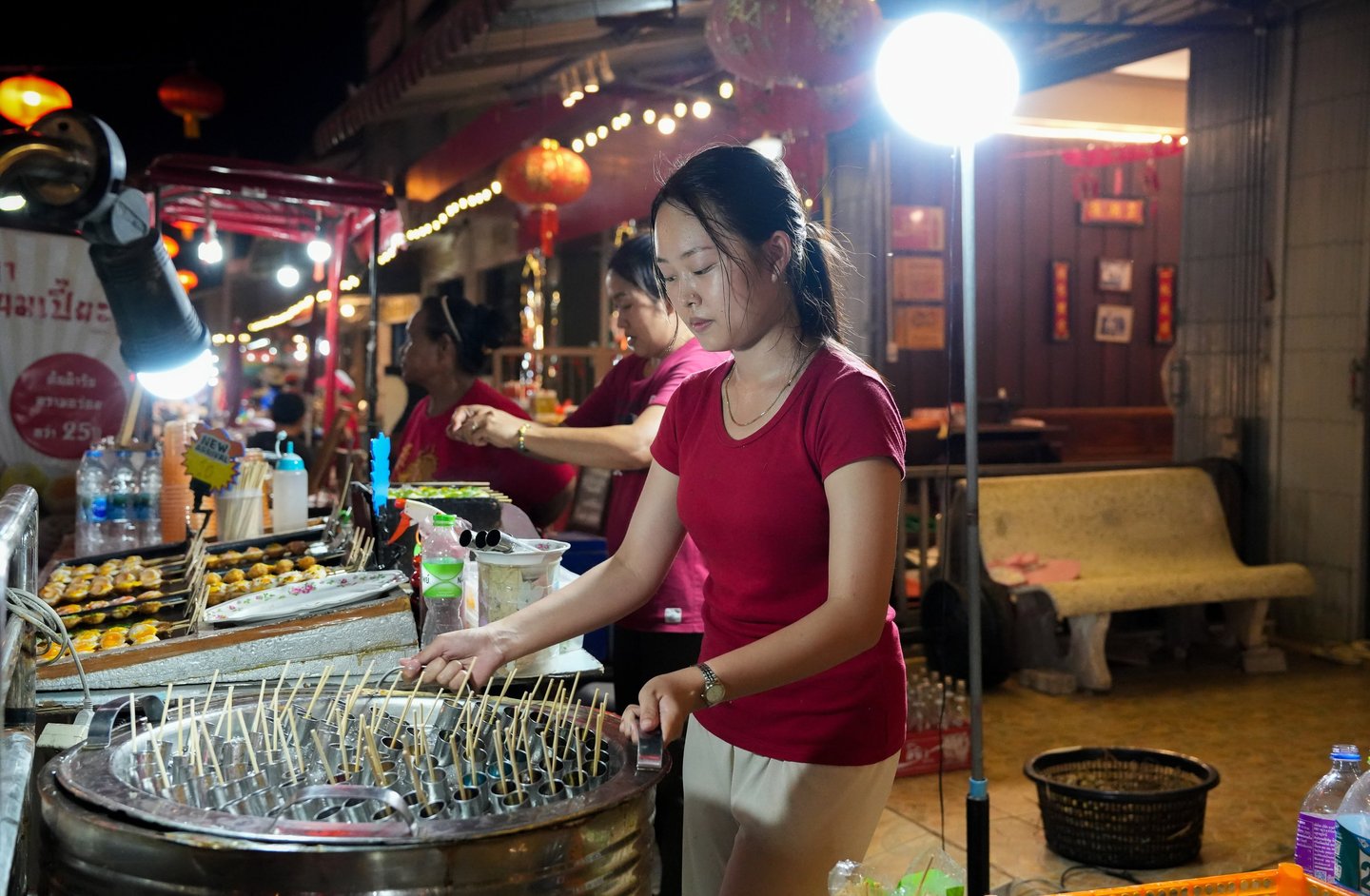
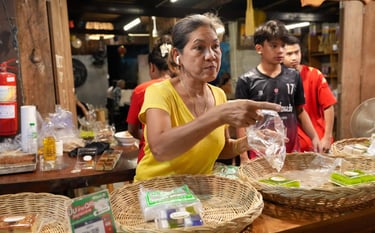
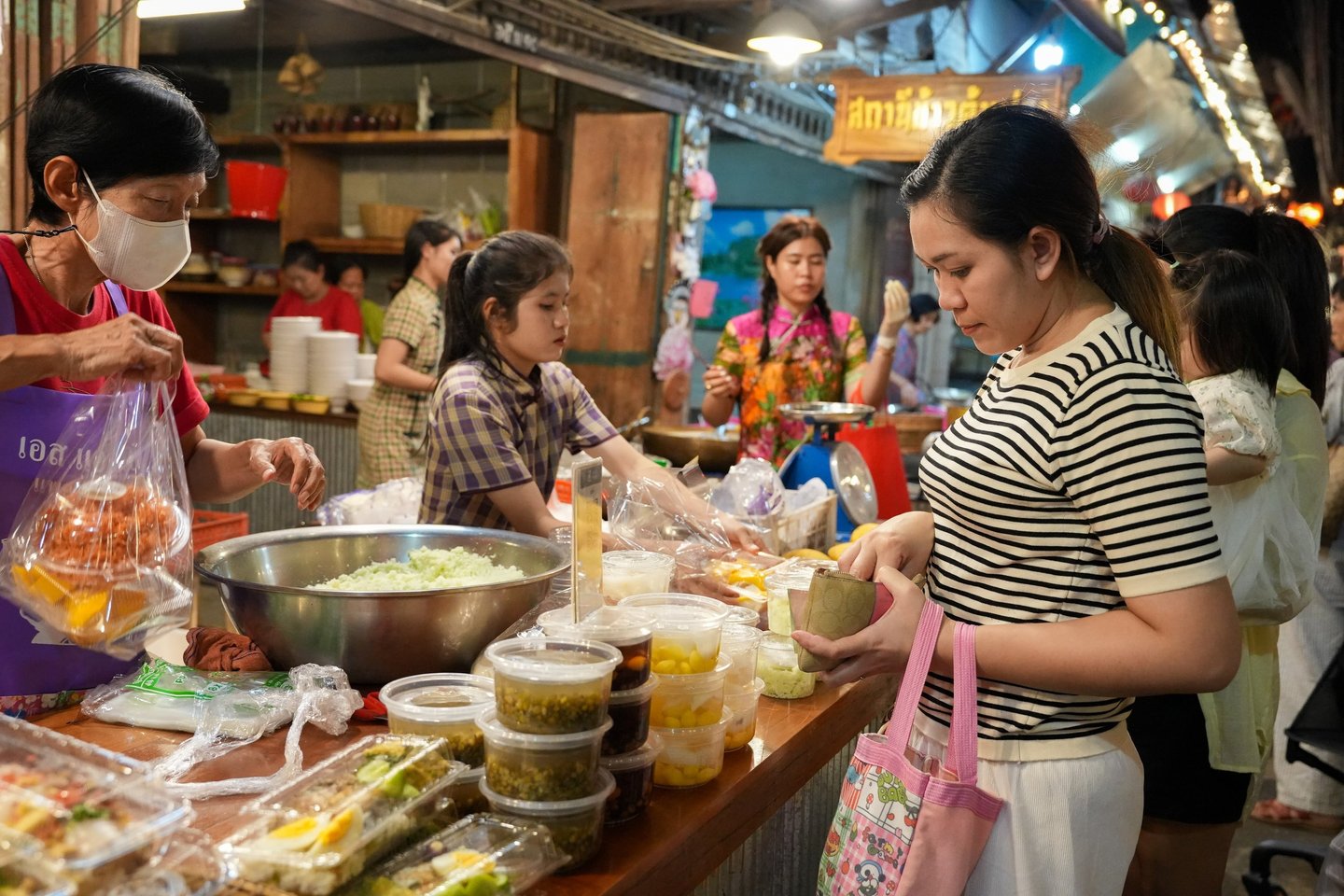
The smell of food drifting through the narrow street mixes with the sound of conversations and cooking — creating a perfect environment for documentary and street photography.
For photographers, the market offers countless small scenes:
vendors preparing food, visitors browsing the stalls, and lantern-lit wooden houses that form a beautiful historic backdrop.
Souvenirs and Cultural Details
Besides culinary delights, the market is also known for its traditional souvenirs and handcrafted items. Visitors can find Chinese-style decorations, handmade goods, small antiques, and many objects that reflect the cultural mix of Chinese and Thai traditions.
Because the market takes place inside the original village street, the entire setting feels less like a commercial event and more like a weekly gathering of the community.
A Different Side of Pattaya
Places like the Chak Ngaew Chinese Market show that the region around Pattaya is far more diverse than many travelers expect.
Just a short drive away from the beaches and nightlife, this quiet historic village offers something completely different:
culture, heritage, food, and a glimpse into the Chinese roots of the local community.
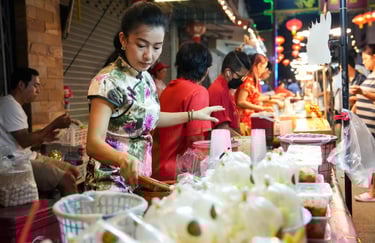
For anyone interested in authentic experiences, cultural photography, and traditional markets, this small Saturday evening market is one of the most rewarding places to visit near Pattaya.
Pattaya United vs. Bangkok United – Football in Pattaya at the Dark Side
Football is probably not the first thing people associate with Pattaya, but matches like this show a completely different side of the city.
The photos in this section were taken during a league cup game between Pattaya United and True Bangkok United, played at the Nong Prue Stadium. With around 5,500 seats, the stadium feels compact, but that’s exactly what makes it interesting — you’re close to the action and right inside the atmosphere.
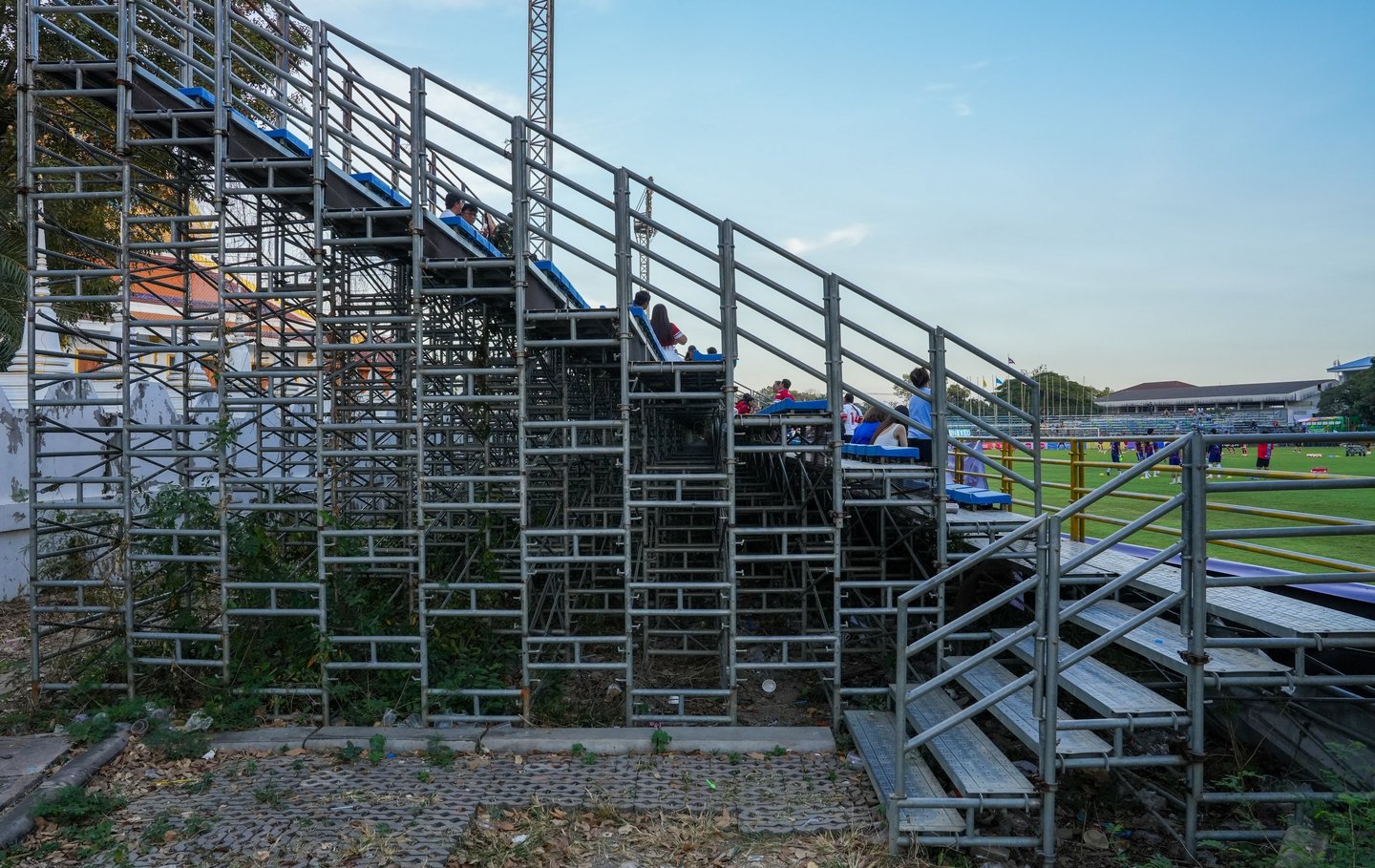
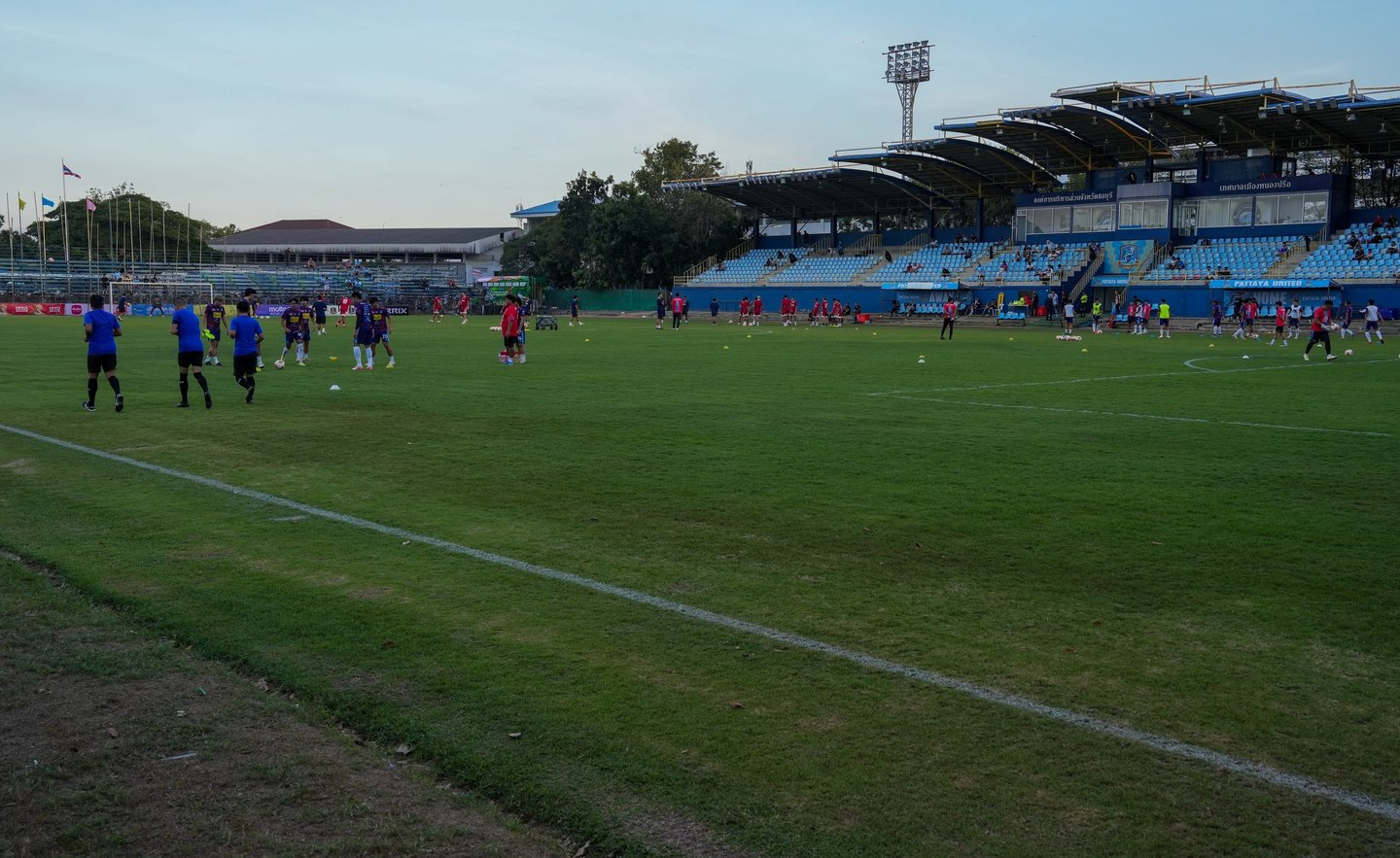
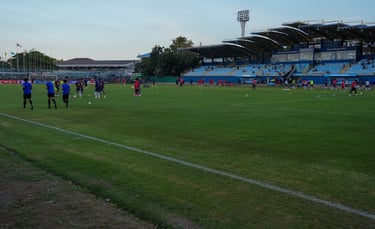
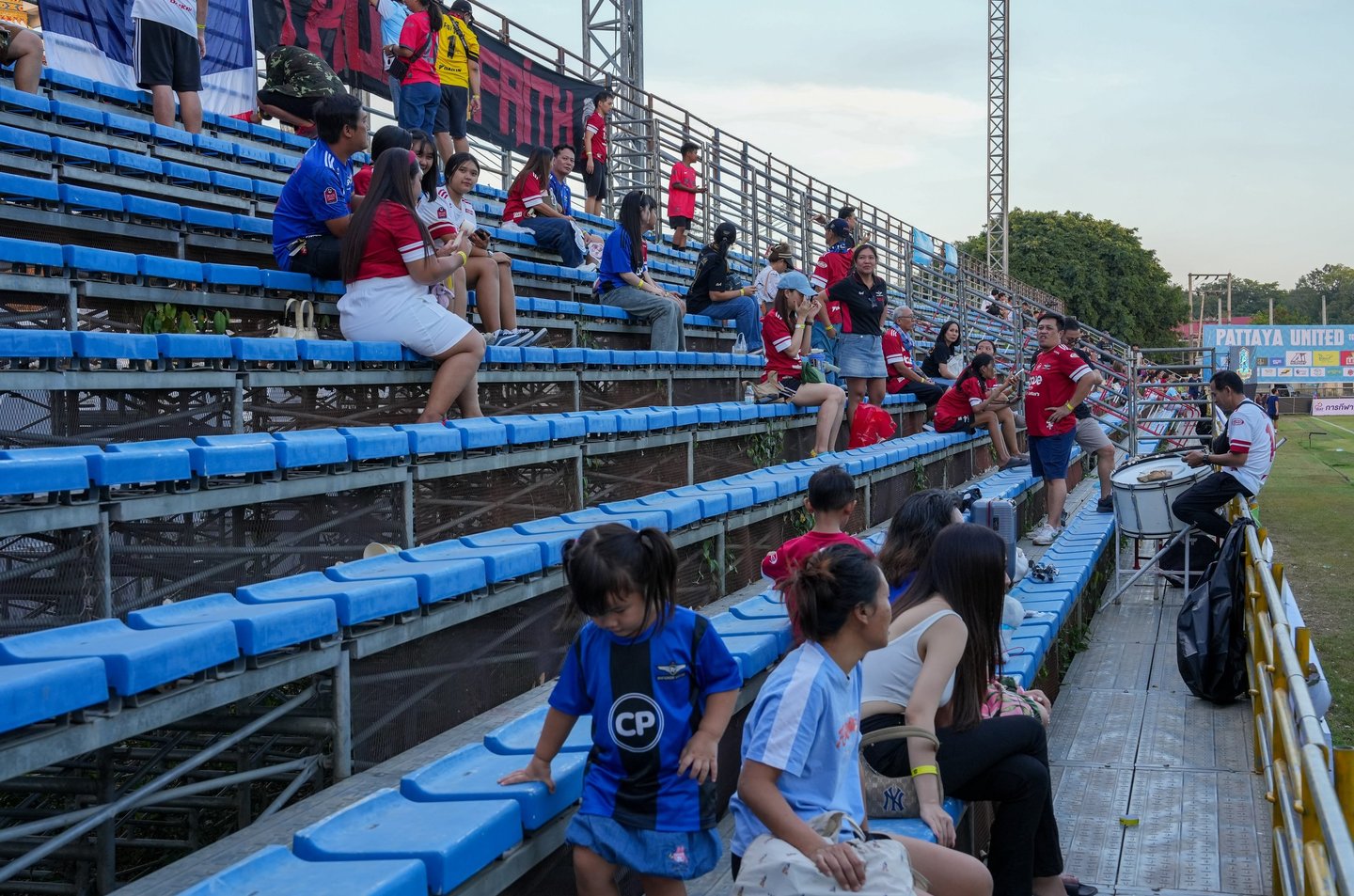
Some of the images were captured from the opposite stand, from the perspective of the Bangkok United supporters, adding another layer beyond the pitch itself.
On paper, this matchup already brings contrast.
Pattaya United currently plays in Thai League 2 and is a club with a rather complex history. The original team was founded in 1989 but later relocated and disappeared from Pattaya. The current club evolved from a different project (founded in 2011), went through several name changes, and only returned to the traditional Pattaya United identity in 2023.
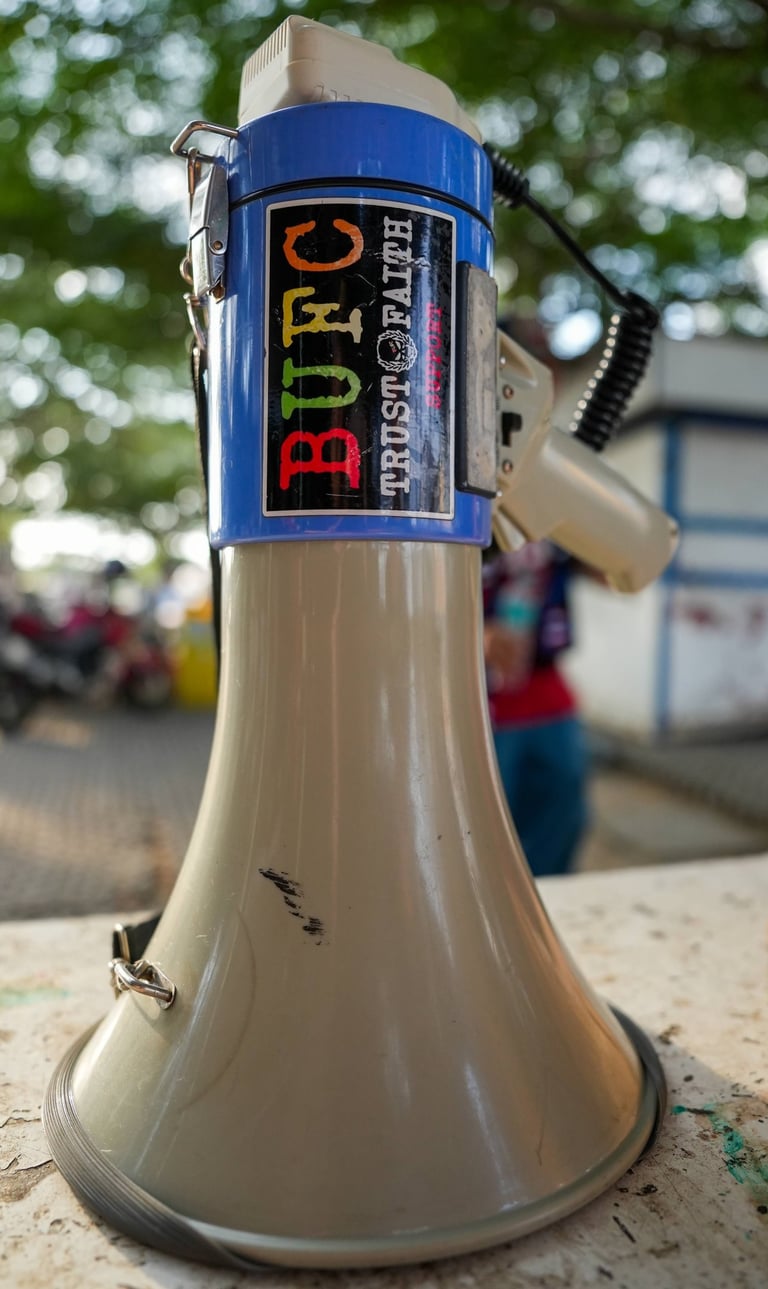
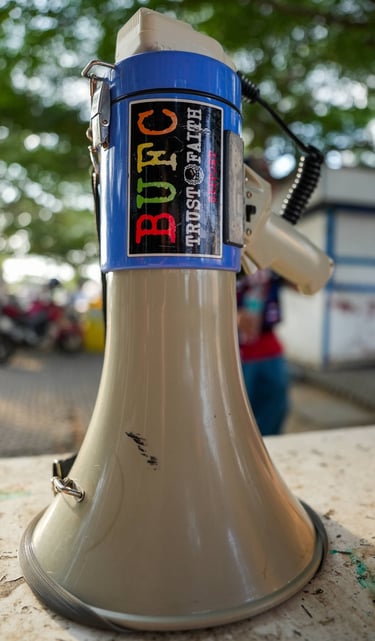


True Bangkok United has a much more stable trajectory. Founded in 1988 as Bangkok University FC, the club rebranded in 2009 and developed into one of the strongest teams in the Thai League 1. Today, they are regular title contenders and also compete internationally in Asian competitions.


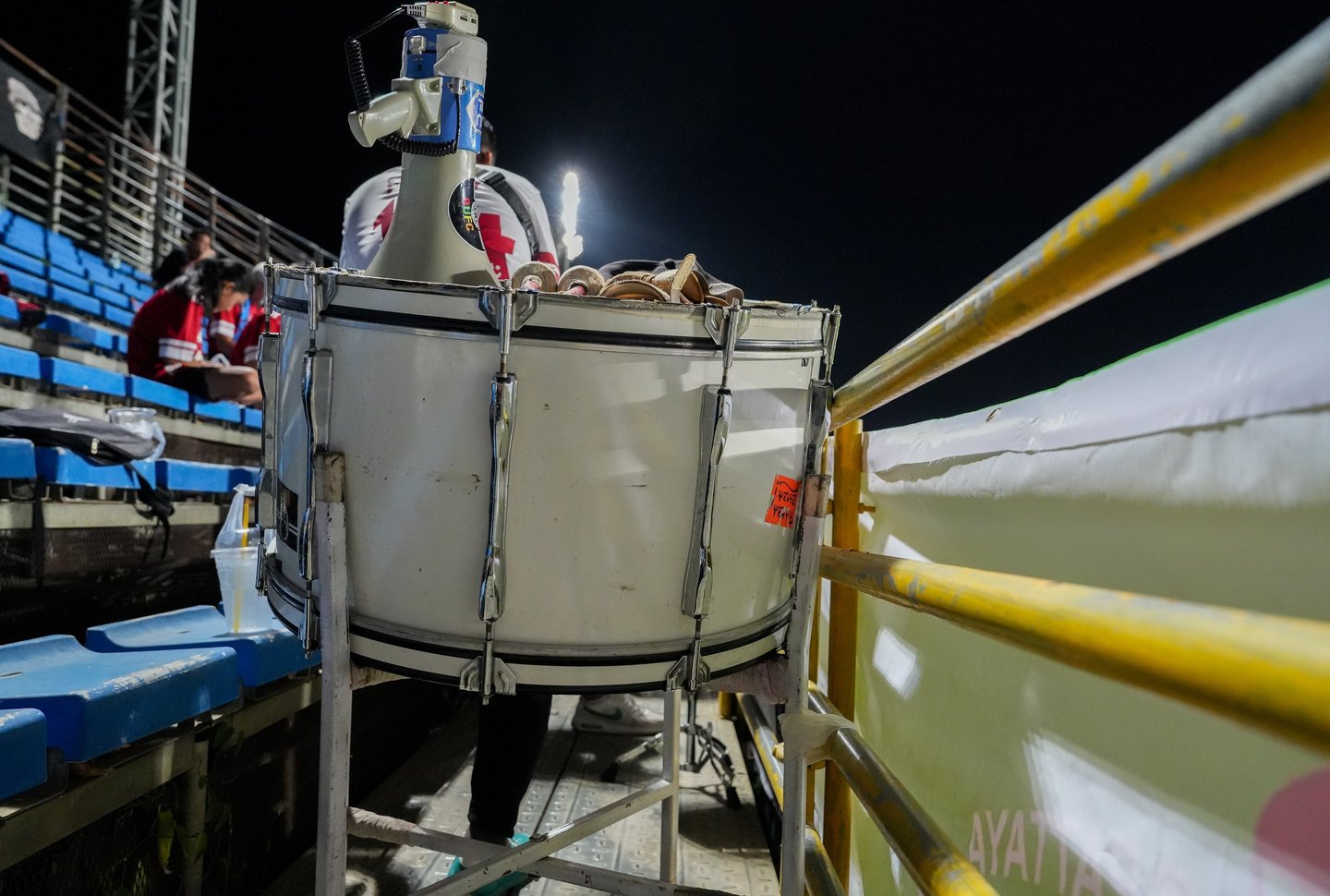


From a photography point of view, it’s exactly these differences that make the scene interesting — a smaller stadium, a rebuilding club, and a top-tier opponent bringing a different level of intensity.
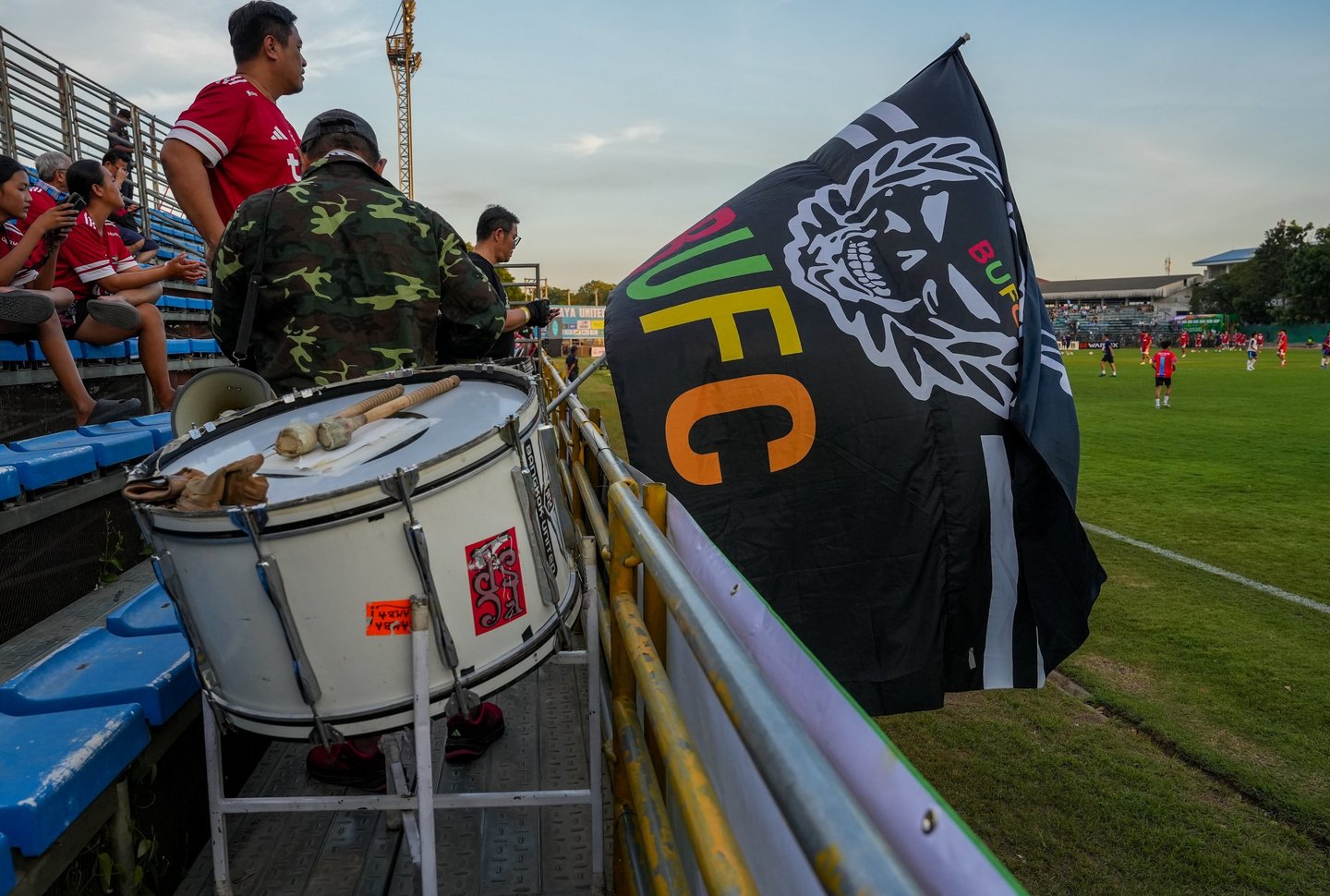
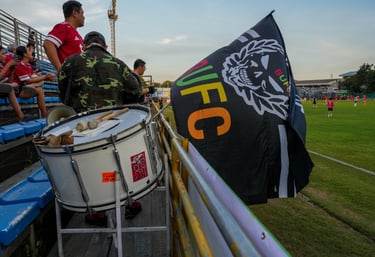


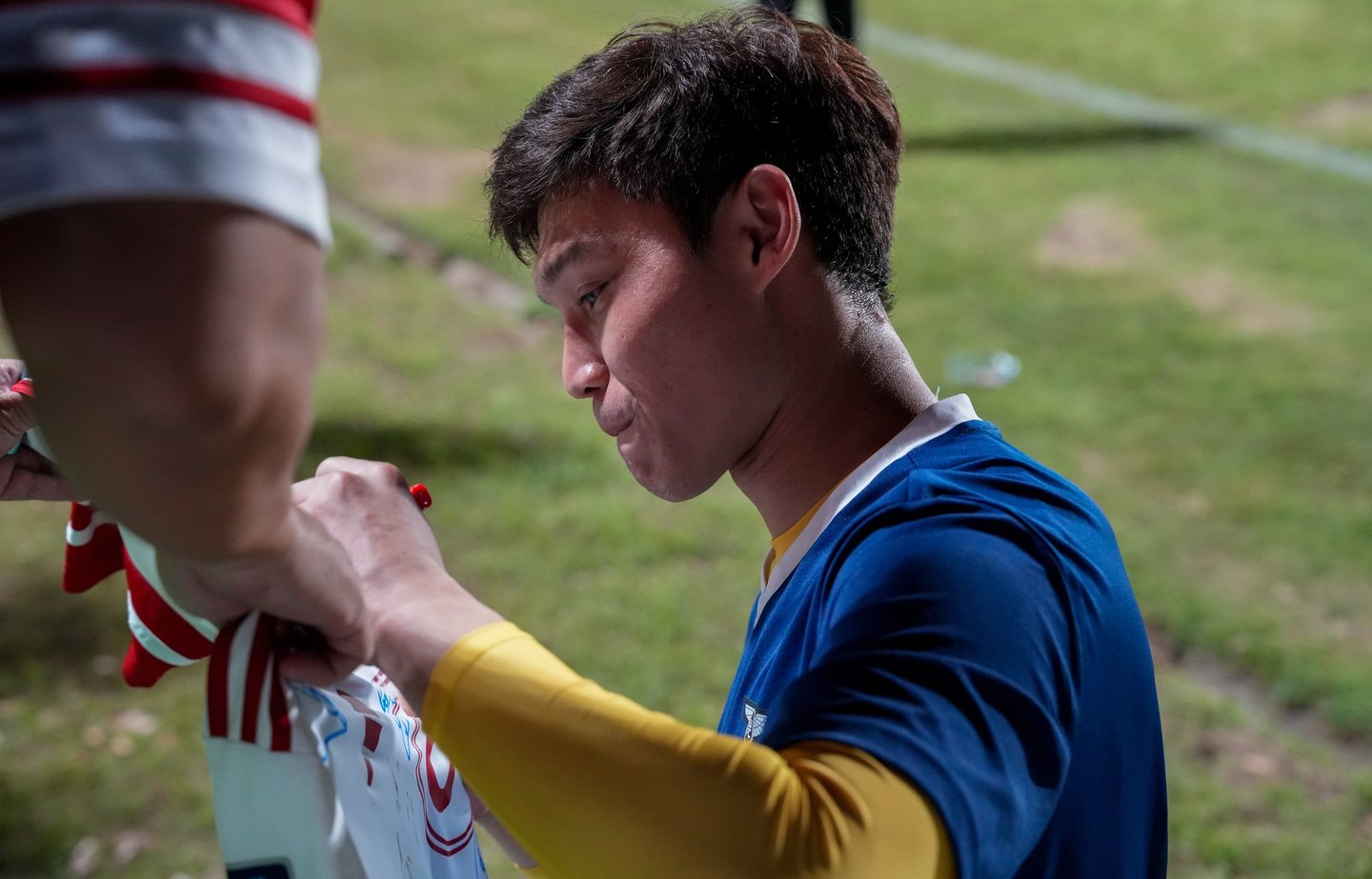
For me, this wasn’t just about football.
It was about documenting another side of Pattaya — one that most people simply don’t expect.
The Bali Hai Pier: Pattaya's Working Heart, Not Its Postcard
There's a version of Pattaya that lives on postcards and a version that lives at Bali Hai Pier, and they're not the same city. Walk south past the end of Walking Street, past the barrier where the bars stop and the sea takes over, and you land at the pier that actually keeps this place running — the departure point for Koh Larn, the working dock where fishing boats and ferries and half-sunk relics all share the same stretch of water.
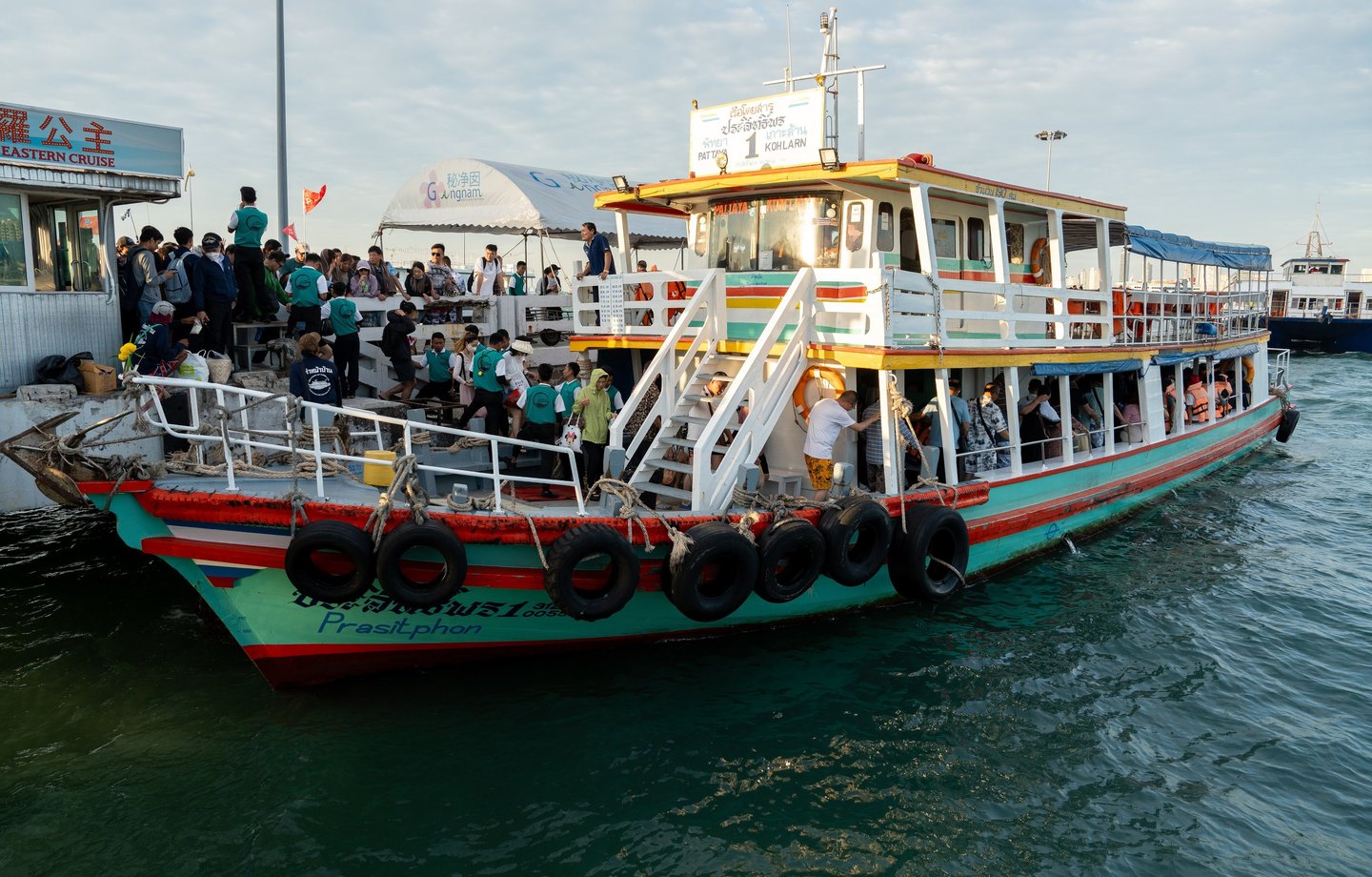
I shot everything here in the late afternoon, when the light does most of the work for you. ISO stayed at 100 almost the entire session, aperture sitting between f/8 and f/11 for the boats and the cityscape shots where I wanted everything sharp front to back — the light was strong enough that I never had to compromise anywhere in the exposure triangle. The one exception was a wide-open f/2.8, saved for a subject that needed separation from its background rather than depth.
The ferries that actually run this city
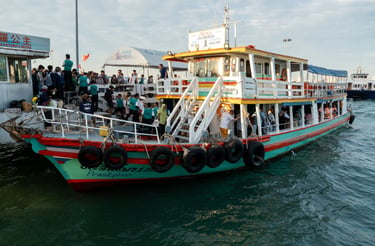
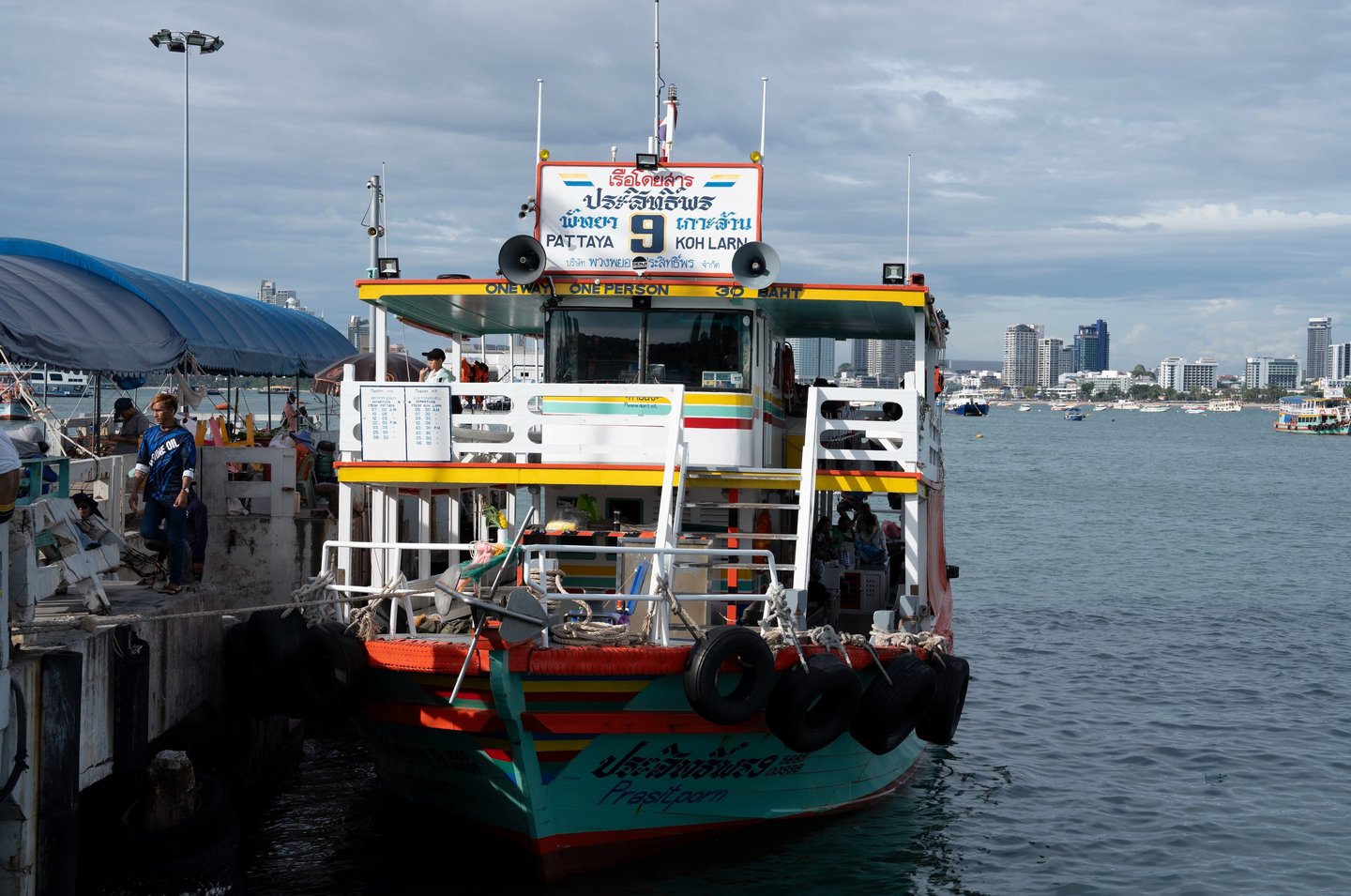
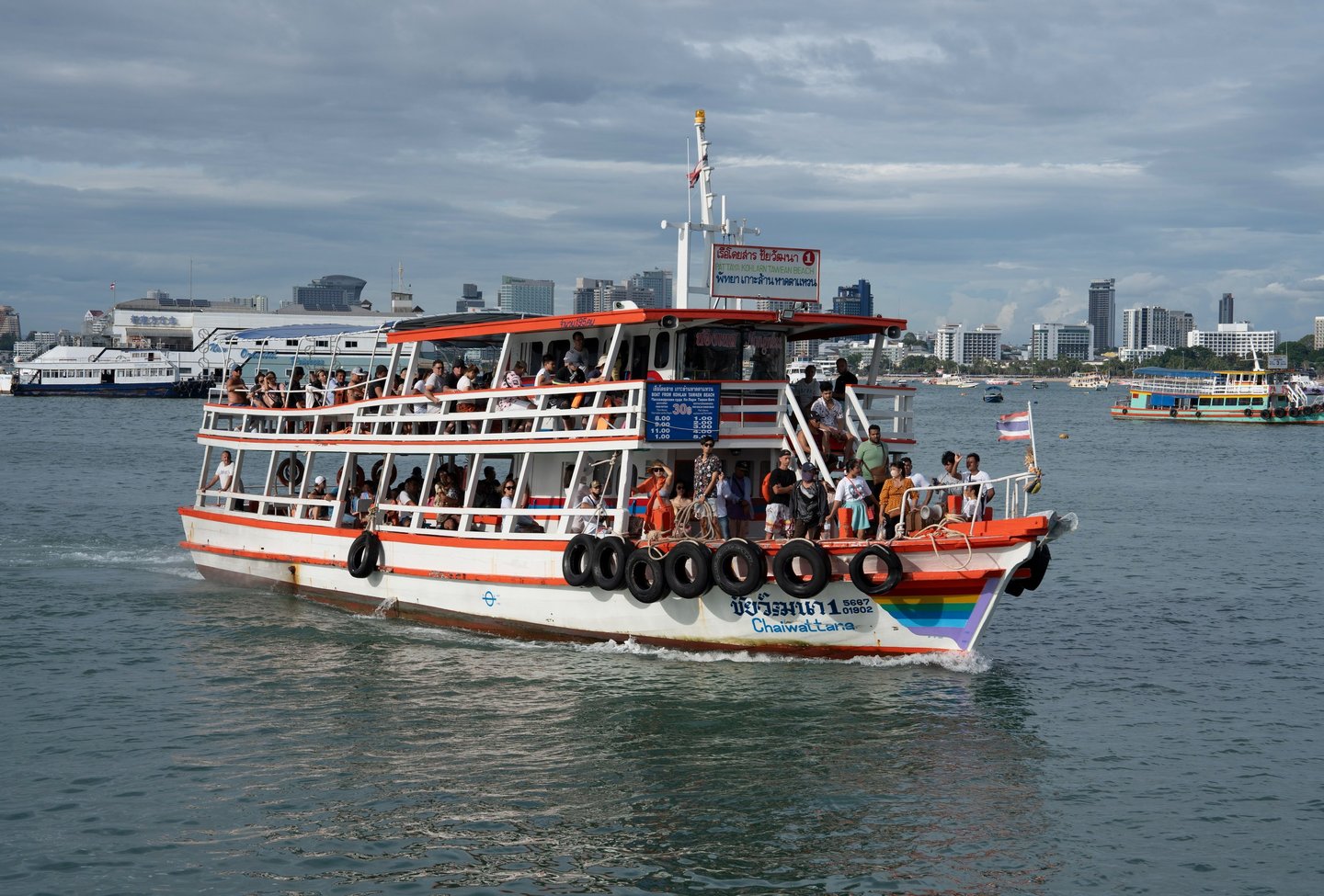
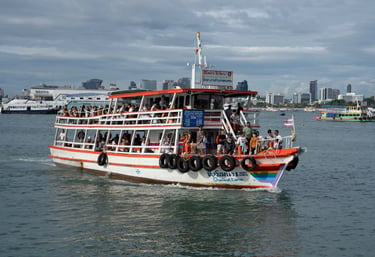
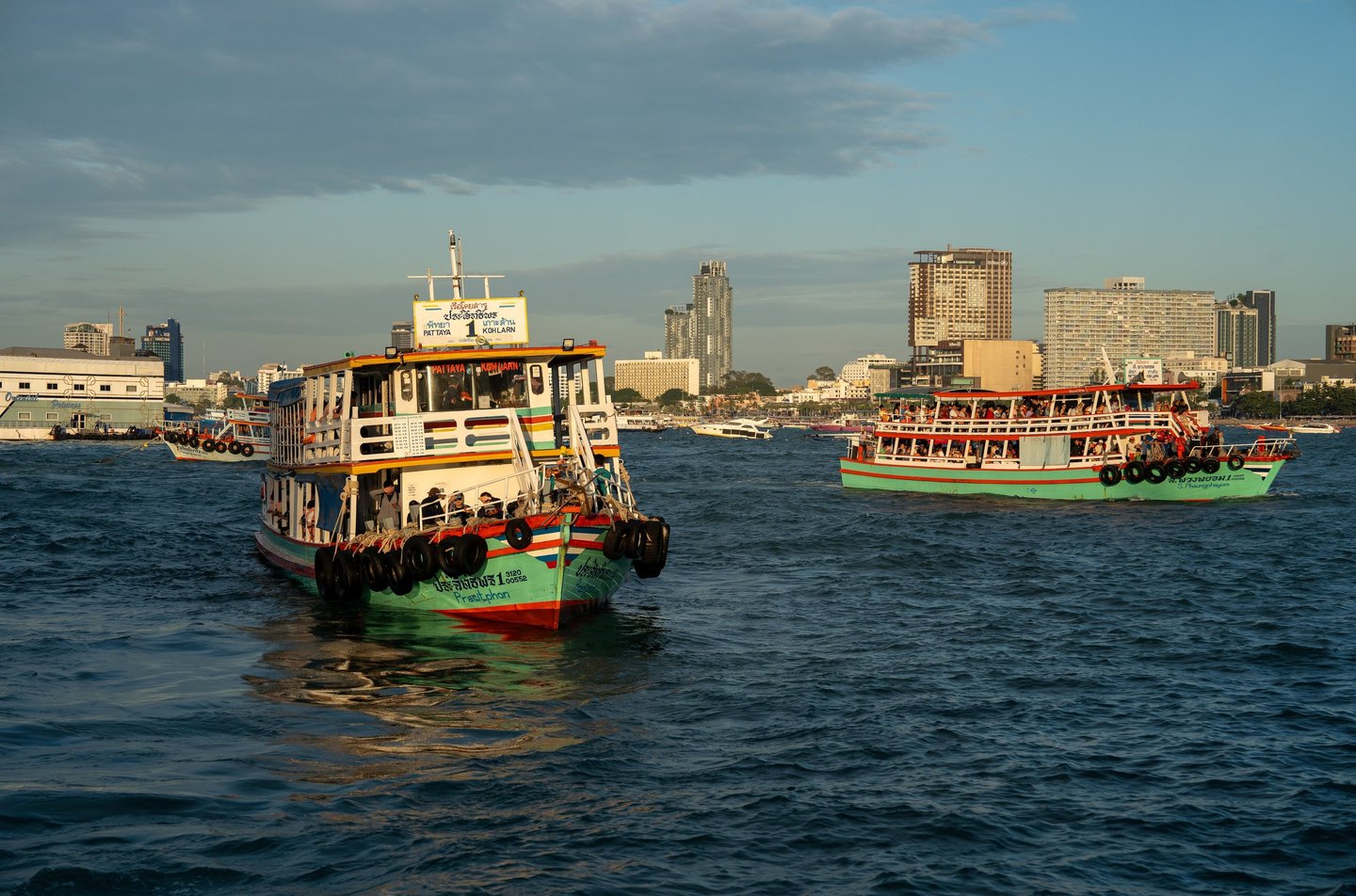
Bali Hai Pier is Pattaya's only public gateway to Koh Larn, and it's been that way for decades — a 803-metre structure jutting out from the headland at the southern tip of Pattaya Bay. The public ferry still runs for 30 baht one-way, a 30-to-40-minute crossing that's barely changed in price or spirit even as everything around it has been rebuilt, renovated, and rebranded. One of my shots here is the ferry marked "Pattaya 9 – Koh Larn," moored bow-first at the dock, tyres lining its hull as fenders, loudspeakers mounted on the roof still announcing departures the same way they must have for years. Another frame catches a fuller ferry, "Chaiwattana 1," mid-crossing and packed with passengers leaning over the rails, city skyline receding behind it — this is the boat that actually moves this city's people, not a tour operator's marketing shot.
A boat that's given up the fight
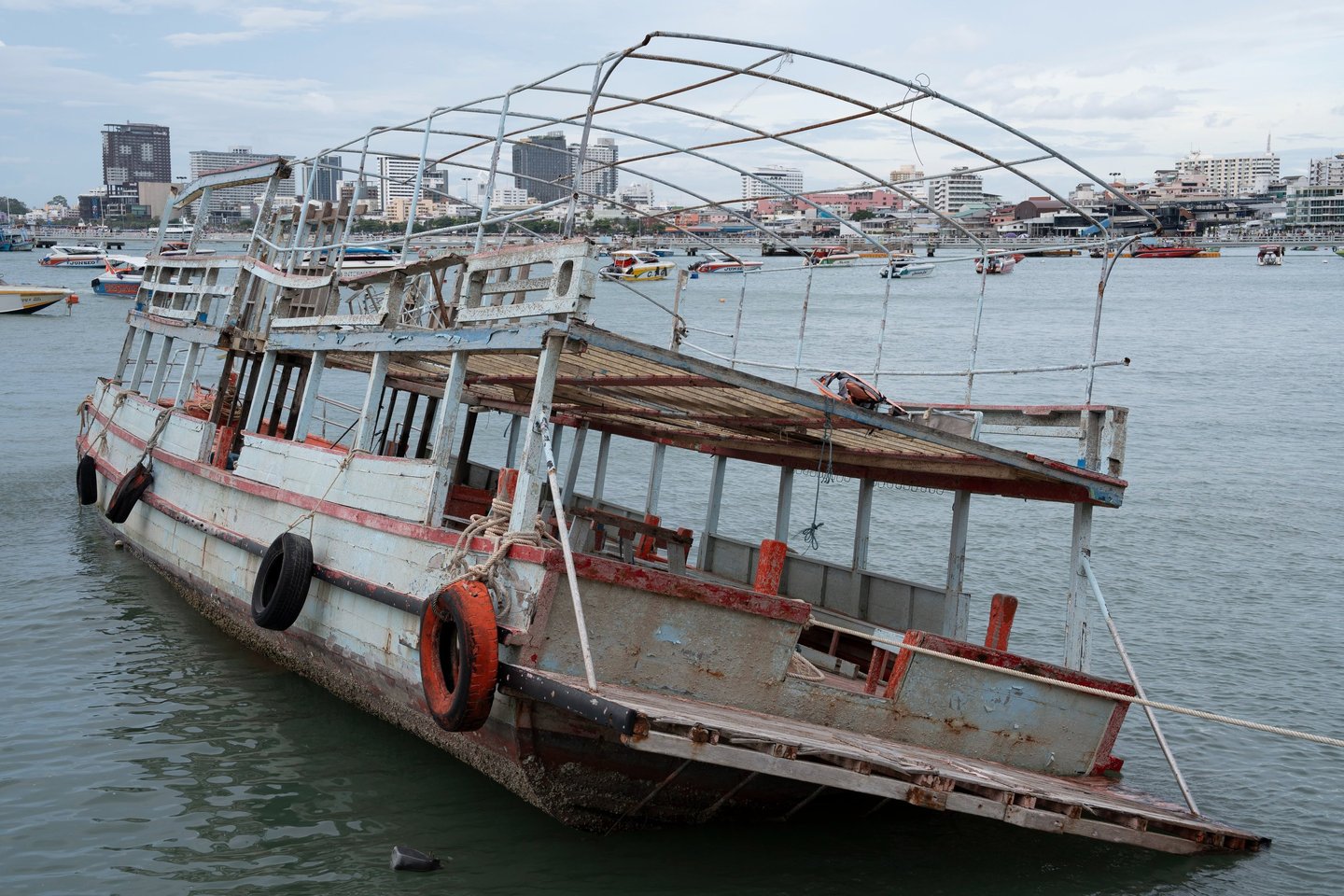
Not every vessel here is still working. One of the most striking things I photographed was a stripped, rusted transport boat — hull sagging, structural framework exposed to the sky, tyres and rope still hanging off its sides like it's waiting for a repair that isn't coming. Half-sunk, angled hard into the water with Pattaya's skyline sitting calm and unbothered behind it. That contrast is the whole story of this pier in one frame: brand-new towers on one side of the bay, a boat quietly dying on the other, both completely unremarkable to everyone walking past.
Crowds, speedboats, and a city that never really slows down
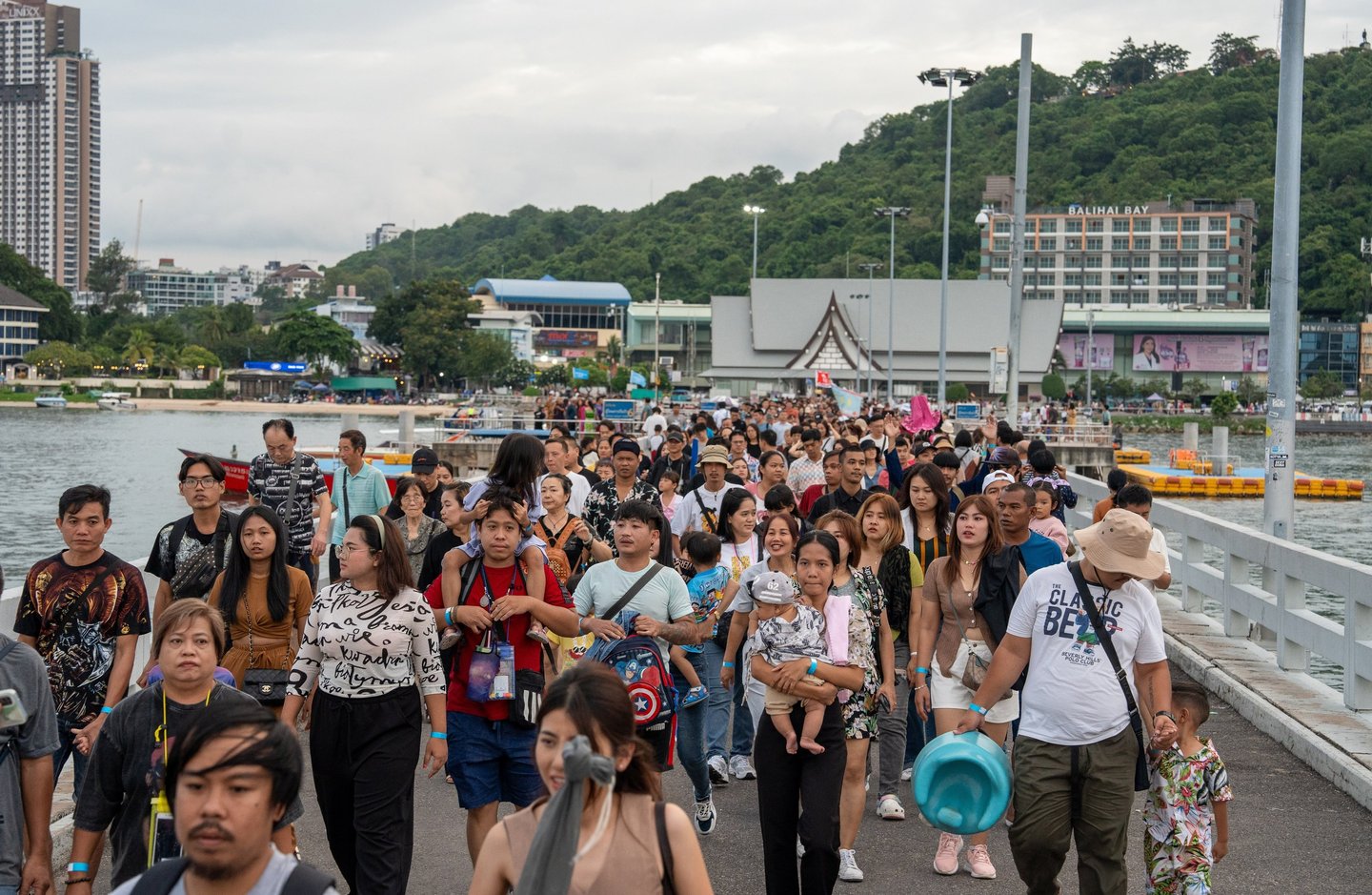
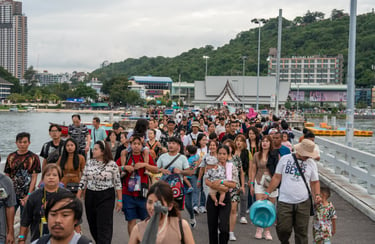
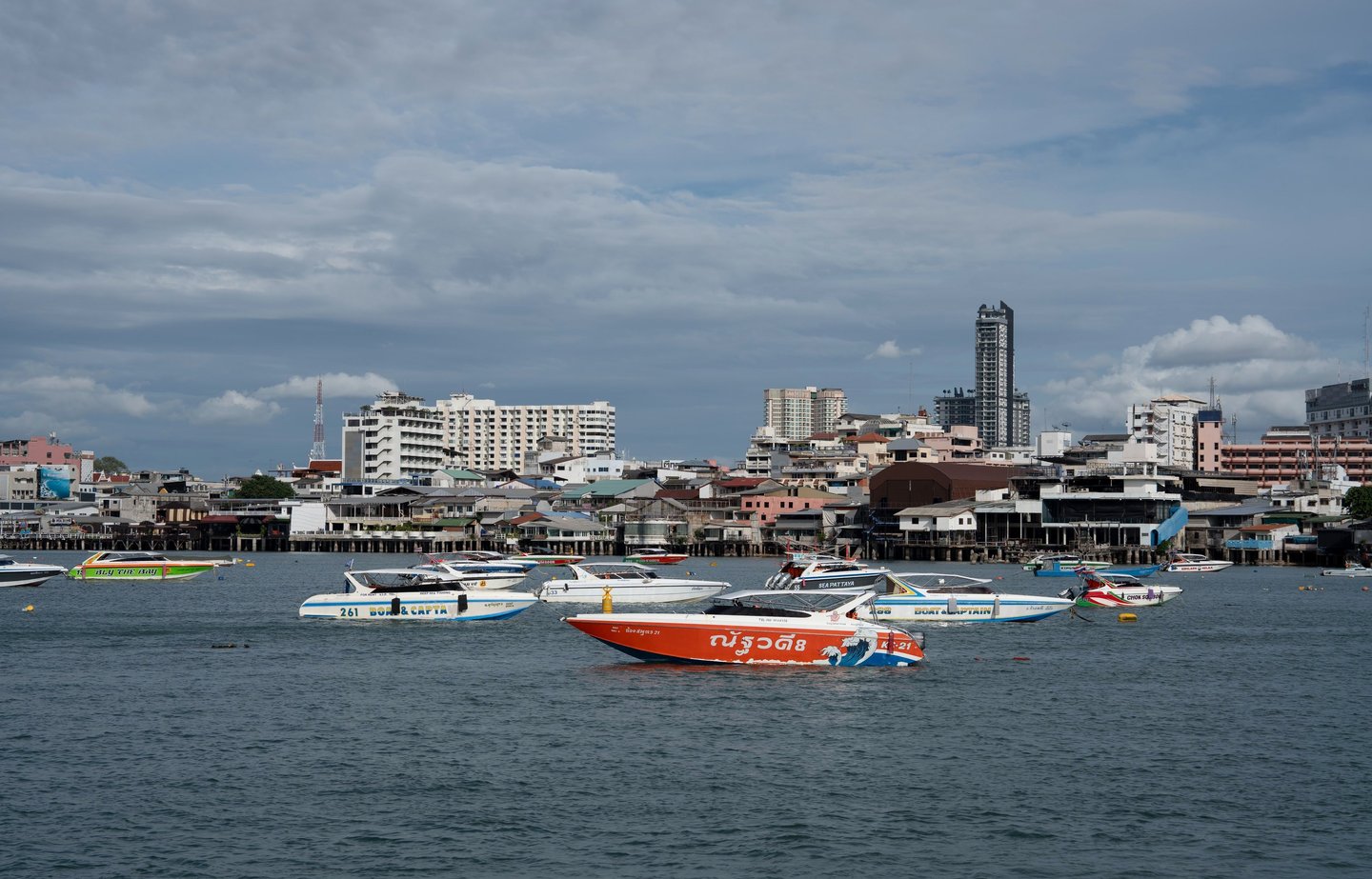
Late afternoon at Bali Hai brings a very specific kind of crowd — people coming back from Koh Larn sunburned and salty, mixed with locals just here for the view. I photographed a wave of Chinese tourists moving down the pier walkway toward the pickup point, dozens of them in a single frame, kids on shoulders, bags in hand, the hills of Pattaya rising green behind them with the Bali Hai Bay sign visible on the far building. Out on the water, a cluster of speedboats sat anchored just offshore — that packed, colorful chaos of orange, white, and blue hulls that ferries tourists out for day trips to Koh Larn on a faster, pricier crossing than the public boat.
The dog that decided to model
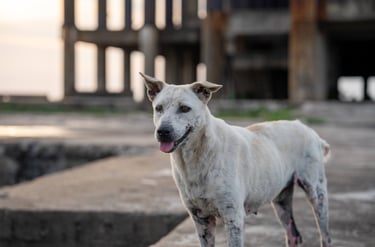
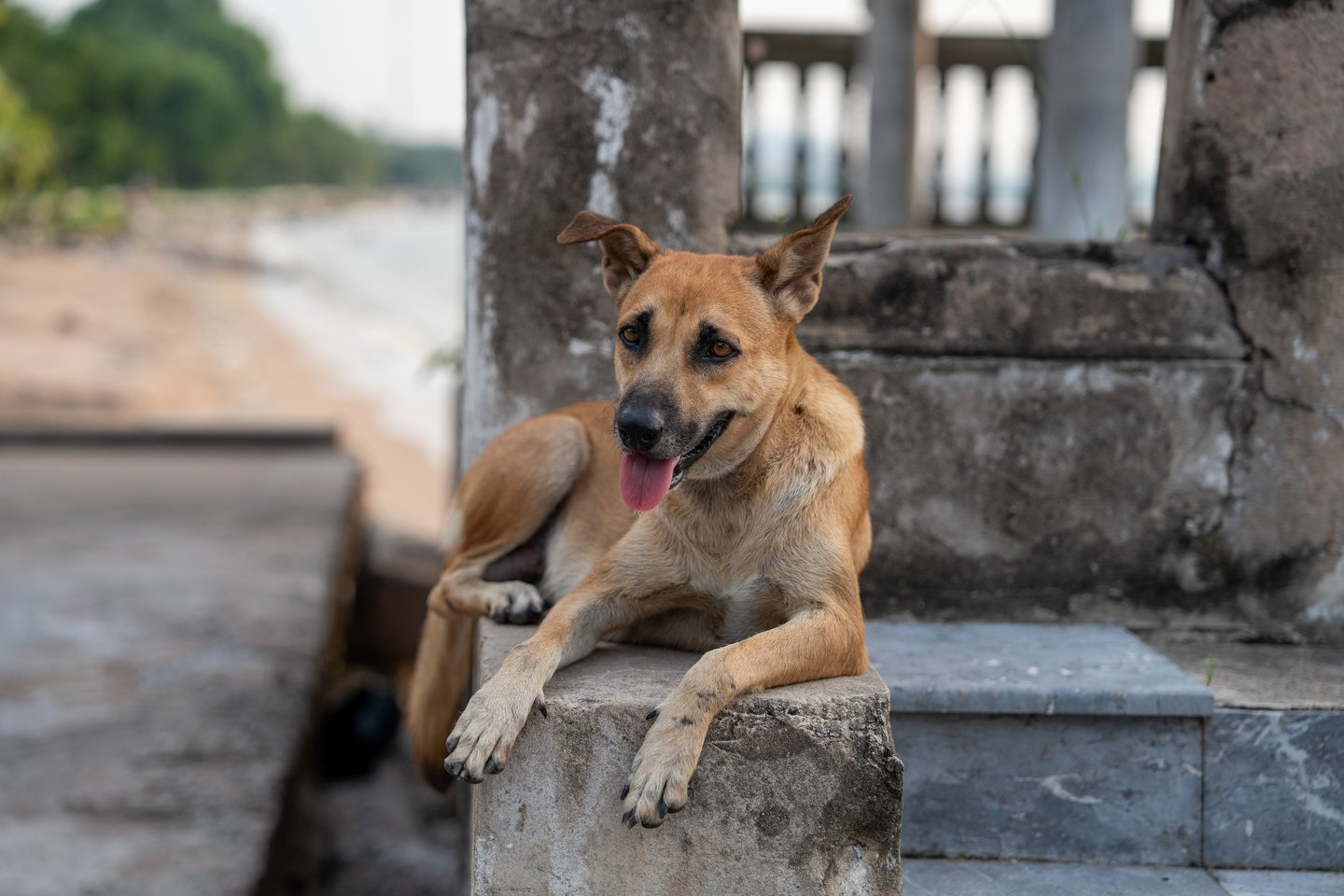
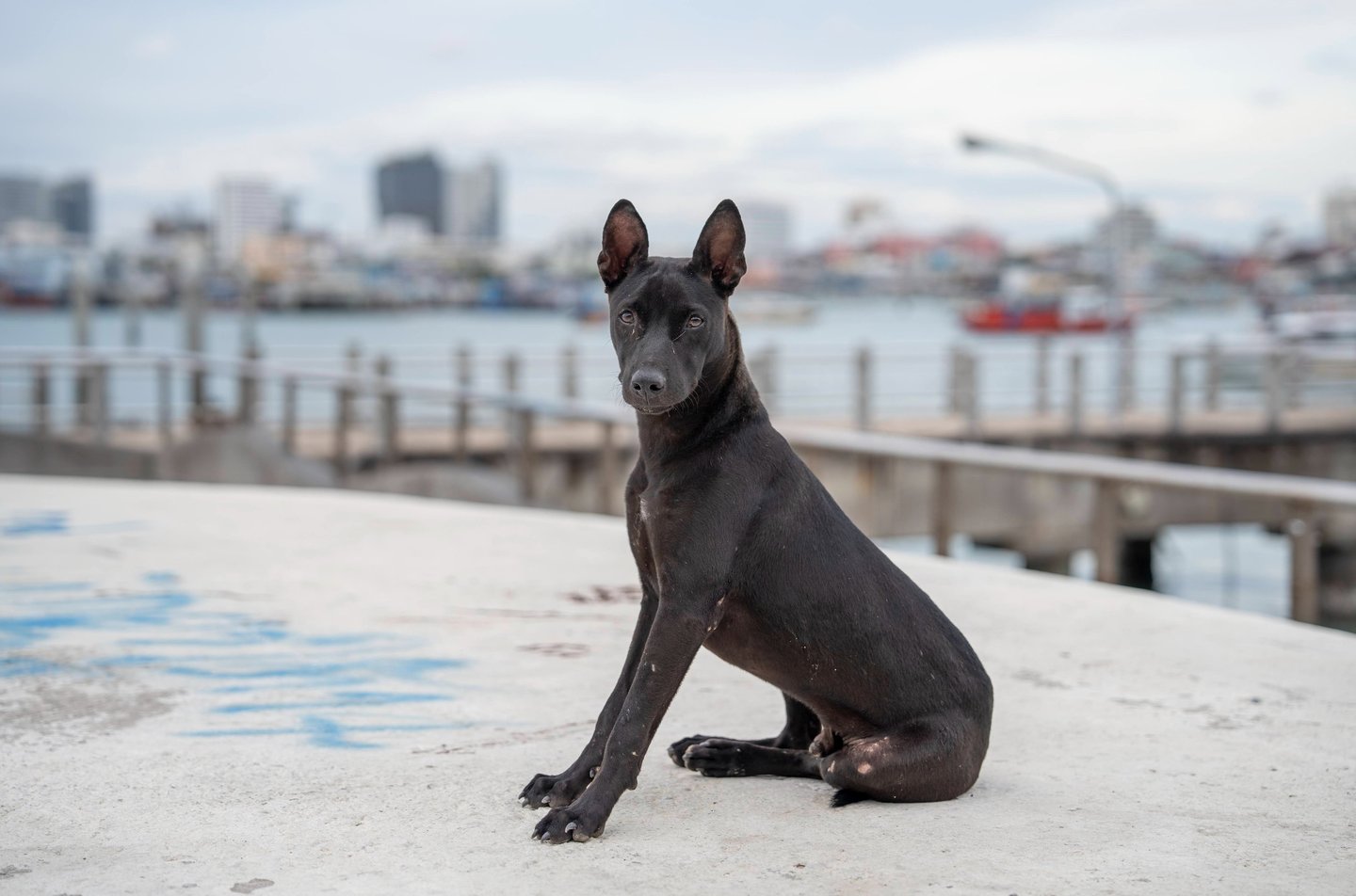
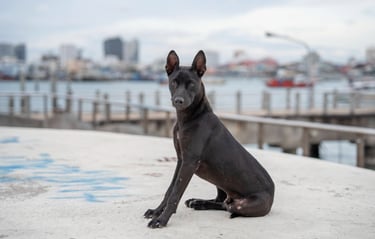
Not every good photograph at a pier is a boat. There's a black street dog here — lean, alert, ears sharp, sitting on a concrete ledge with the harbor blurred out behind it — that looked straight into the lens like it had done this before. Stray dogs are part of the texture of almost every Thai pier and market, and this one earned its own frame, shot wide open at f/2.8 to pull it forward from the soft, busy background.
Bali Hai Pier isn't why people fly into Pattaya. But if you want to understand how this city actually functions — how people get to the islands, what the working boats look like next to the tourist ones, who's really moving through this place at four in the afternoon — this pier tells you more in twenty minutes than Walking Street will all night.
Koh Larn – Frame by Frame, Behind the Lens


Just a few kilometres across the Gulf of Thailand from Pattaya lies an island that feels surprisingly different from the city on the mainland. Koh Larn – often called Coral Island – has long been part of Pattaya's story, but its own story began long before the arrival of mass tourism.
For generations, island life was shaped by fishing, small-scale agriculture and the rhythms of the sea. Old traces of that past can still be found among the village roads, temples and everyday life of the island. One of its most visible reminders is Wat Mai Samran, commonly known as Wat Koh Larn, which was built in 1922.
Then Pattaya changed.
From the 1960s onwards, the rapid development of Pattaya as an international resort also transformed Koh Larn. What had once been a relatively quiet island became an easy escape from the mainland – close enough for a day trip, yet far enough to offer a different landscape and a different rhythm. Today, ferries and speedboats carry visitors across the water throughout the day, while beaches such as Tawaen, Samae, Tien and Nual have become firmly established on the tourist map.
But Koh Larn is more than beaches, turquoise water and day-trippers.
For a photographer, the interesting part begins where the postcard ends: the people, the boats, the narrow village streets, the working island, the traces of its past and the constant tension between local life and tourism.
This is Koh Larn as I experienced it through my camera – frame by frame, behind the lens.
On the Way to Koh Larn: Pattaya Begins at the Pier


This is the ferry from Pattaya to Koh Larn on a busy day. Almost every seat was taken, with passengers sitting under the blue and red canopy and orange life jackets filling the boat. Through the open side, the green hills of Koh Larn were already visible.
I was interested in the scene inside the boat rather than the island itself. People were talking, checking their phones, looking out towards Koh Larn or simply waiting for the crossing to finish. Everyone was heading in the same direction, but each person was having their own little moment.
For me, these are often the photographs that belong in a travel story. A day trip to Koh Larn is not only about arriving at the beach. There is the ferry, the waiting, the people around you and the short journey across the Gulf of Thailand. This is what I wanted to capture here.
I used 24mm to include as much of the crowded ferry as possible while keeping the coastline visible through the open side. At f/5.6, I had enough depth of field to keep both the passengers in the foreground and Koh Larn in the background reasonably sharp. The bright daylight allowed me to stay at ISO 250, while 1/60 sec was sufficient for the relatively calm movement of the boat.
📍 Location: Ferry from Pattaya to Koh Larn, Thailand
📷 Camera: Sony Alpha 7 IV
🔍 Lens: Sony FE 24-70mm f/2.8 GM II
⚙️ Settings: 24mm | f/5.6 | 1/60 sec | ISO 250
Koh Larn Beyond the Beaches: Street Life on Coral Island


Koh Larn is usually associated with beaches, clear water and day trips from Pattaya. But away from the waterfront, the island has another side. This is the Koh Larn I was interested in photographing.
I took this photograph on one of the narrow streets of the island. A woman on a scooter is riding towards me, while behind her another scooter and a small motorcycle with a sidecar are coming along the same road. Houses, parked motorbikes, a small roadside stall and the old tree on the right complete the scene. Nothing was arranged. It was simply everyday life on Koh Larn.
For me, this is what travel photography is about. I don't always look for the obvious postcard view. When travelling through Thailand and Southeast Asia, I prefer to walk around, watch what is happening and photograph the places as I actually find them.
I used 61mm to bring the woman and the traffic behind her closer together without losing too much of the narrow street. I chose f/8 to keep the foreground subject and the activity further down the road sharp. With good daylight, ISO 250 was enough, while 1/400 sec gave me the shutter speed I wanted to freeze the approaching scooter and keep the photograph crisp.
📍 Location: Koh Larn, Pattaya, Thailand
📷 Camera: Sony Alpha 7 IV
🔍 Lens: Sony FE 24-70mm f/2.8 GM II
⚙️ Settings: 61mm | f/8 | 1/400 sec | ISO 250
Luang Pu Thuat in Gold and Purple


When most people think of Koh Larn, they think of beaches and the sea. I found another side of the island here: the imposing statue of Luang Pu Thuat, one of Thailand's most respected Buddhist monks.
The statue immediately caught my attention. The large seated figure dominates the frame, painted in gold and purple, with a smaller standing Buddha behind it. At the base, offerings and flowers are placed in front of a smaller monk statue. Trees, temple buildings and the blue sky complete the scene.
As a travel photographer living in Thailand, I often look beyond the obvious tourist subjects. Koh Larn is more than a day trip from Pattaya and its beaches. Places like this show another part of Thai life and Buddhist culture that is easy to miss when the focus is only on the coast.
I used 33mm to keep the full statue in the frame while getting close enough to make its size and details dominant. The strong daylight and bright sky allowed me to use 1/2500 sec at ISO 250. I chose f/5.6 to keep the statue sharp while retaining enough detail in the surrounding temple area and background.
📍 Location: Luang Pu Thuat Statue, Koh Larn (Ko Lan), Pattaya, Chonburi, Thailand
📷 Camera: Sony Alpha 7 IV
🔍 Lens: Sony FE 24-70mm f/2.8 GM II
⚙️ Settings: 33mm | f/5.6 | 1/2500 sec | ISO 250
Koh Larn From Above: Parasailing Over Tawaen Beach


The yellow and white parasail immediately caught my attention against the blue water of Koh Larn. Below it, Tawaen Beach stretches along the shore, with speedboats, swimming areas and the busy pier forming the rest of the scene.
I took this photograph from above, looking across one of the busiest parts of Koh Larn. The beach is filled with visitors, while boats move between the marked swimming areas and the pier. From this perspective, the turquoise water becomes almost as important as the beach itself.
As a travel photographer based in Thailand, I often look for scenes beyond the usual postcard view. Koh Larn is one of the most popular day trips from Pattaya, but the activity around Tawaen Beach shows another side of the island — water sports, boats, visitors and the constant movement around the bay.
I used 69mm to bring the parasail into the frame while still showing Tawaen Beach, the pier and the surrounding water. The strong daylight allowed ISO 250. I chose f/5.6 for enough depth of field, while 1/2500 sec froze the moving parasail and kept its shape sharp against the sky and sea.
📍 Location: Tawaen Beach, Koh Larn (Ko Lan), Pattaya, Chonburi, Thailand
📷 Camera: Sony Alpha 7 IV
🔍 Lens: Sony FE 24-70mm f/2.8 GM II
⚙️ Settings: 69mm | f/5.6 | 1/2500 sec | ISO 250
Photisarn Market – Frame by Frame, Behind the Lens


There are markets in Pattaya that are well known to visitors, and then there are markets that are simply part of everyday life.
Photisarn Market, also known as Phothisan Market or Talat Phothisan, is one of them. Located in North Pattaya, in the Naklua area, it is a local market where people come to buy fresh food, meat, fish, vegetables, fruit and other things needed for everyday life. It is not a market created for tourists. It is a place that works because local people use it.
The area around Naklua has a long connection with local fishing communities and everyday life in Pattaya before the city became the international tourist destination it is today. Much has changed over the years, but places like Photisarn Market still give a glimpse of everyday life in North Pattaya.
I have always found places like this more interesting to photograph than a market designed mainly for visitors.
There is nothing spectacular here – and that is exactly the point.
People are working, preparing food, carrying goods, talking to customers and simply getting on with their day. The market changes throughout the day, and there is always something happening around it.
For me, this is where street photography becomes documentary photography.
I am not looking for perfect poses or staged scenes. I am interested in the moments that happen naturally in front of me – the concentration of a vendor, a quick exchange between customer and seller, the rhythm of the market, or a small detail that might otherwise go unnoticed.
These are the moments I tried to capture at Photisarn Market.
Not the market as a tourist attraction, but the people and everyday life that make it what it is.
This is Photisarn Market as I experienced it with my camera.
Frame by frame, behind the lens.
Sometimes the best street photographs are the ones you never planned.


This moment at Photisarn Market in North Pattaya happened naturally. A local market vendor looked straight at my camera and held up a large carrot for me. Behind her, people were shopping, working and going about their daily business. The cut pumpkin, fresh vegetables and busy market stall complete the scene.
For me, this is what street photography in Pattaya is about. Not staged photographs and not the Pattaya most tourists see, but ordinary people and small moments that tell something about everyday life in Thailand.
Photisarn Market, also known as Phothisan Market or Talat Phothisan, is a local market in North Pattaya where you can see a very different side of the city. As a travel photographer in Thailand and Southeast Asia, these are exactly the places I look for. They give me the opportunity to photograph real Thai street life, local people and everyday work without turning the scene into a tourist attraction.
I used my Sony Alpha 7 IV with the Sony FE 24–70mm f/2.8 GM II at 70mm. I chose 70mm to stay slightly away from the vendor while still bringing her and the carrot strongly into the frame. The f/13 aperture gave me enough depth of field to keep both the foreground and the busy market surroundings recognisable. With the available light inside the market, I accepted ISO 4000 and a 1/30 sec shutter speed to get the exposure I wanted.
For me, the technical settings are always secondary to the moment. The important thing is being there when something unexpected happens in front of the lens.
Photisarn Market, North Pattaya, Thailand
Sony Alpha 7 IV · Sony FE 24–70mm f/2.8 GM II · 70mm · f/13 · 1/30 sec · ISO 4000
Rain outside, everyday life inside


This is the kind of scene I look for when photographing Pattaya street life. At Photisarn Market in North Pattaya, an older Thai woman sits beside her vegetables and looks directly into my camera. Around her, customers are eating and shopping while the wet market floor reflects the light from the stalls. The handwritten Thai price sign behind her adds another small detail that makes the scene feel real and local.
For me, this is what street photography in Thailand is about. I am not looking for a perfect tourist photograph. I want to document people at work, everyday moments and the atmosphere of places that are part of normal life in Pattaya.
As a travel and documentary photographer working in Thailand and Southeast Asia, I often find that the most interesting photographs happen when I simply slow down and watch what is happening around me.
For this photograph I used my Sony Alpha 7 IV with the Sony FE 24–70mm f/2.8 GM II at 39mm. I chose 1/320 sec because people were moving around the market and I wanted to keep the moment sharp. With the limited light inside the market, ISO 5000 gave me the exposure I needed, while f/3.5 helped separate the woman from the background without losing the feeling of the busy market around her.
Photisarn Market, North Pattaya, Thailand
Sony Alpha 7 IV · Sony FE 24–70mm f/2.8 GM II · 39mm · f/3.5 · 1/320 sec · ISO 5000
Preparing Fresh Fish for Sale


This is where fresh fish becomes ready for the customer.
Walking through Photisarn Market in North Pattaya, I noticed a Thai fish vendor working behind his stall. He was handling freshly caught fish, preparing and processing it before putting it up for sale. His hands were busy, his attention was on the fish, and for a moment everything around him seemed secondary.
That was the moment I wanted to photograph.
The large metal bowls, the fish, his apron and gloves, and the shelves packed with products around him all tell part of the story. This is not a staged market scene. It is simply a man doing his daily work.
As a travel and documentary photographer in Thailand and Southeast Asia, these are the moments I look for. Photisarn Market is part of everyday life in North Pattaya, and photographing people while they work gives me a very different view of Pattaya than the usual tourist images.
I used my Sony Alpha 7 IV with the Sony FE 24–70mm f/2.8 GM II at 70mm. I chose 1/250 sec to freeze his hands and the movement while he was preparing the fish. The market was not brightly lit, so ISO 4000 gave me enough exposure without having to slow the shutter speed. At f/3.5, I could keep the man and his work clearly separated from the busy background while still showing the atmosphere of the fish market.
For me, this is what street photography and documentary photography are about: seeing the work behind everyday life and being ready when the right moment appears.
Photisarn Market, North Pattaya, Thailand
Sony Alpha 7 IV · Sony FE 24–70mm f/2.8 GM II · 70mm · f/3.5 · 1/250 sec · ISO 4000
Thai Street Food and Everyday Life


A smile, a quick gesture, and everyday market life.
This was one of those small moments I like to catch while walking through Photisarn Market in North Pattaya. A Thai woman working at a food stall looks towards my camera and gives me a quick peace sign, while the younger woman beside her continues preparing and packing food for customers. In front of them are plates, fried food and other freshly prepared dishes. Around them, the market carries on as usual.
For me, this is what makes street photography in Thailand interesting. Nothing was staged. It was simply a friendly moment during a normal working day at a local Pattaya market.
As a travel and documentary photographer in Thailand and Southeast Asia, I often look beyond the well-known tourist areas. At places like Photisarn Market, I can photograph everyday Thai life, local food and the people who make these markets what they are.
I used my Sony Alpha 7 IV with the Sony FE 24–70mm f/2.8 GM II at 70mm. I chose 1/200 sec to keep the women and their movements sharp while they were working. The market was relatively dark, so ISO 4000 gave me enough light without sacrificing shutter speed. At f/5.6, I could keep both women and the food stall clearly visible while still giving the background some separation.
The peace sign was unexpected. That is often the best part of photographing real street life.
Photisarn Market, North Pattaya, Thailand
Sony Alpha 7 IV · Sony FE 24–70mm f/2.8 GM II · 70mm · f/5.6 · 1/200 sec · ISO 4000
Rain, Work and Everyday Street Life


Rain can change the whole mood of a market in seconds.
During a visit to Photisarn Market in North Pattaya, a sudden heavy rain shower turned the market floor into a mirror. A vendor crouches under a large red plastic sheet, protecting himself and his goods from the rain. Water is splashing across the wet floor, while the market continues in the background. Even the simple white plastic bucket becomes part of the scene.
This is the kind of moment I look for when photographing street life in Thailand. Nothing was planned. The rain simply arrived, people reacted to it, and everyday work continued.
As a travel and documentary photographer in Thailand and Southeast Asia, I often find that weather adds something to a photograph that you cannot create or stage. At a local market like Photisarn, it becomes part of the story.
I used my Sony Alpha 7 IV with the Sony FE 24–70mm f/2.8 GM II at 50mm. I chose 1/320 sec to capture the falling rain and the splashing water sharply. With the light dropping during the storm, ISO 5000 gave me enough exposure, while f/3.5 helped keep the main subject clear and the surrounding market atmosphere visible.
For me, this is Pattaya street photography at its most natural: ordinary work, sudden weather and a moment that lasts only a few seconds.
Photisarn Market, North Pattaya, Thailand
Sony Alpha 7 IV · Sony FE 24–70mm f/2.8 GM II · 50mm · f/3.5 · 1/320 sec · ISO 5000
Street Food in the Rain


Sometimes the rain makes the picture.
Rain was falling at Photisarn Market in North Pattaya when I noticed this scene. A Thai street food vendor was working under the shelter of her stall, surrounded by grilled sausages and skewers, while a woman in a bright blue outfit stopped to choose her food. The wet ground, reflections and drops of rain in the foreground add another layer to the scene.
This is exactly the kind of everyday moment I enjoy photographing in Thailand. Nothing was arranged for the camera. The vendors continued working, customers continued shopping, and the rain simply became part of the story.
As a travel and documentary photographer exploring Thailand and Southeast Asia, I often look for these ordinary moments. They show a side of Pattaya that is easy to miss when you only see the city's tourist areas. Photisarn Market gives me the chance to photograph local people, Thai street food and everyday market life as it really happens.
I used my Sony Alpha 7 IV with the Sony FE 24–70mm f/2.8 GM II at 54mm. I chose 1/250 sec to keep the people and falling rain reasonably sharp. With the darker conditions, ISO 5000 gave me the light I needed, while f/3.5 helped separate the customer and food stall from the background without losing the atmosphere.
For me, this is street photography: watching what happens and being ready when the moment comes.
Photisarn Market, North Pattaya, Thailand
Sony Alpha 7 IV · Sony FE 24–70mm f/2.8 GM II · 54mm · f/3.5 · 1/250 sec · ISO 5000
Frogs at a Thai Market


Not every Pattaya market scene is made for the tourist postcard.
At Photisarn Market in North Pattaya, I came across this unusual sight: a large net filled with live frogs, stacked together on a market stall and ready to be sold. Their faces, eyes and bodies pressing against the green net caught my attention immediately. It is a simple scene, but one that says a lot about everyday food markets in Thailand.
This is the kind of detail I look for when photographing street life in Pattaya. Local markets show a side of Thailand that you will not necessarily see around the main tourist areas. As a travel and documentary photographer travelling through Thailand and Southeast Asia, I enjoy documenting these everyday scenes as I find them.
For this photograph, I used my Sony Alpha 7 IV with the Sony FE 24–70mm f/2.8 GM II at 70mm. I chose 1/100 sec because the frogs were mostly still, while ISO 4000 was necessary in the relatively low market light. I used f/9 to give the group of frogs enough depth of field and keep the net and several layers of the animals clearly defined. At 70mm, I could fill the frame with the subject and avoid unnecessary distractions around the stall.
For me, this is part of photographing real Thai market life: seeing something unexpected, stopping for a moment and making the photograph.
Photisarn Market, North Pattaya, Thailand
Sony Alpha 7 IV · Sony FE 24–70mm f/2.8 GM II · 70mm · f/9 · 1/100 sec · ISO 4000
The real character of a market is found behind the price signs.


This scene at Photisarn Market in North Pattaya caught my attention because it shows the market exactly as it is: people working, customers buying food and rows of small baskets filled with fresh products. A Thai vendor in a red shirt is busy at his stall, while the woman beside him prepares another customer's order. The handwritten prices of 20, 30, 40 and 50 Baht are right in front of the camera.
I like photographs like this because there is no need to stage anything. The people, the products, the signs and the busy market behind them already tell the story.
These are the everyday scenes that keep me coming back to places like this with my camera. Photisarn Market gives me a chance to photograph a side of Pattaya that is very different from the usual tourist images.
I used my Sony Alpha 7 IV with the Sony FE 24–70mm f/2.8 GM II at 34mm. I chose 1/200 sec to keep the people working at the stall sharp, while f/4.5 gave me enough depth of field to show the market without making the background too dominant. ISO 2000 was enough for the available light and allowed me to keep the shutter speed where I wanted it.
For me, this is documentary photography: stand back, watch what is happening and take the photograph when the moment feels right.
Photisarn Market, North Pattaya, Thailand
Sony Alpha 7 IV · Sony FE 24–70mm f/2.8 GM II · 34mm · f/4.5 · 1/200 sec · ISO 2000
Sometimes a portrait finds you before you find the photograph.


I was walking through Photisarn Market in North Pattaya when this woman looked up from her stall and gave me a big smile. She was busy working behind the counter, surrounded by trays of food, bags of ingredients and the equipment she uses throughout the day. Nothing was arranged for the camera. She simply noticed me, and for a second the work stopped.
I like moments like this. A local market is not just about what is being sold. It is about the people behind the stalls and the small encounters that happen while you walk through. This is everyday Thai life in Pattaya, and exactly the kind of street photography I enjoy documenting.
Photisarn Market shows a very different side of Pattaya from the familiar tourist areas. Walking through places like this gives me the opportunity to see the city at ground level and photograph real people doing ordinary work.
I used my Sony Alpha 7 IV with the Sony FE 24–70mm f/2.8 GM II at 54mm. I chose 1/200 sec to keep her natural movement sharp. The market lighting was not particularly bright, so ISO 4000 gave me enough exposure. At f/5.6, I could keep her face and the food stall clearly defined while still retaining enough of the market surroundings to tell the story.
The smile was not planned. That is what makes the photograph work for me.
Photisarn Market, North Pattaya, Thailand
Sony Alpha 7 IV · Sony FE 24–70mm f/2.8 GM II · 54mm · f/5.6 · 1/200 sec · ISO 4000
You don't have to look far to find the real Pattaya


Walking through Photisarn Market in North Pattaya, I stopped at this food stall. A Thai man looks directly towards my camera while the woman beside him continues working. In front of them are pots, fresh vegetables, mushrooms, prepared ingredients and small bags of food. Behind the stall, the market is busy with vendors and customers, with Thai signs hanging above the aisles.
I like photographs where the surroundings are just as important as the people. Here, the whole stall tells a story about everyday Thai market life. Nothing was arranged, and I simply took the opportunity when the man looked towards me.
This is one of the reasons I enjoy photographing local markets in Thailand. Away from the familiar tourist side of Pattaya, places like Photisarn Market give me a chance to see and document ordinary working life as it happens.
I used my Sony Alpha 7 IV with the Sony FE 24–70mm f/2.8 GM II at 43mm. I chose 1/100 sec because there was enough time to capture the scene without needing a faster shutter speed. ISO 4000 compensated for the relatively low light inside the market, while f/7.1 was important here. I wanted the man, the woman, the food stall and much of the market behind them to remain recognisable.
For me, the photograph is not just about one person. It is about the place around him.
Photisarn Market, North Pattaya, Thailand
Sony Alpha 7 IV · Sony FE 24–70mm f/2.8 GM II · 43mm · f/7.1 · 1/100 sec · ISO 4000
Contact
Fuel my creativity, If you enjoy my content, feel free to support me with a small tip. Thanks for being part of this journey!
If you enjoy my photography and the stories I capture across Southeast Asia, consider supporting my journey. Every coffee helps me stay on the road longer and document more unique locations. Thank you for being part of the adventure!
Traveling across Southeast Asia, I’ve found that having an eSIM ready the moment you land is an absolute game-changer. I highly recommend Saily – I’ve had a great experience with them myself. It offers unbeatable advantages, especially for ordering a Grab taxi right away or using Google Maps to find your way as soon as you exit the airport
This post contains affiliate links for Saily. If you sign up through my link, I may earn a small commission at no extra cost to you. I only recommend services like Saily because I use them personally and they’ve made my travels much easier.
You can license my photography directly through my Alamy portfolio. My work covers authentic travel and street photography across Southeast Asia — Bangkok, Ho Chi Minh City, and the wider region — shot on location, not staged.
Looking for street scenes, urban editorial content, or landscapes from Thailand and Vietnam? My full collection is on Alamy, with licensing options from standard editorial to extended commercial rights, depending on what your project needs.
Disclosure: the link below is an affiliate link. If you license an image through it, I earn a share of the sale at no extra cost to you. It goes straight back into keeping me on the road and shooting across Southeast Asia.
© 2025 Strangphotography – Southeast Lens. All rights reserved.
All photos taken by me in public spaces. Licensing available via Alamy.
Unauthorized use prohibited. For full legal info, see my Imprint