Southeast Lens - Documentation, Travel and Street Photography

Luang Prabang in Laos – Photography, Documentary and Travel
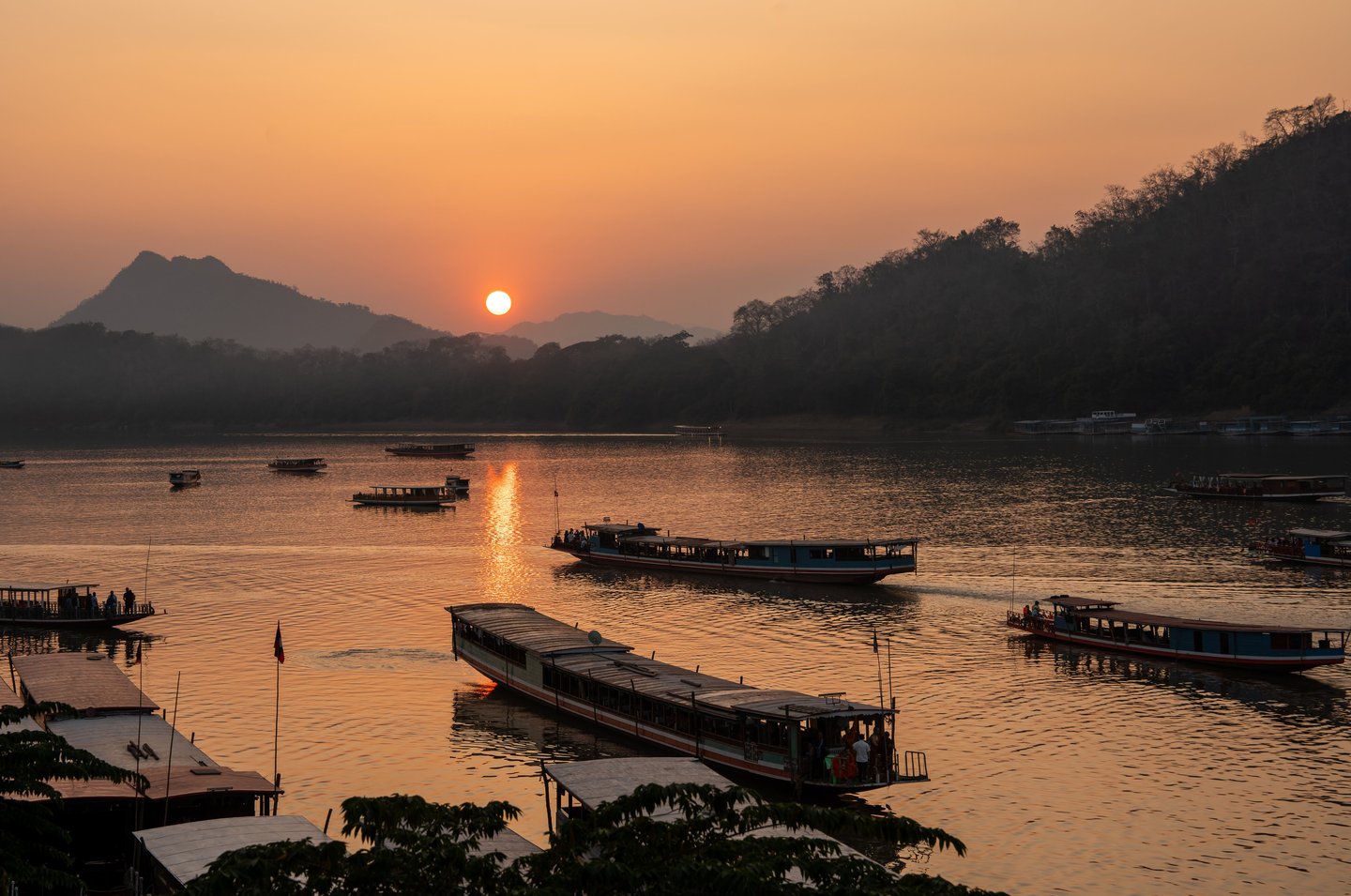
Nestled between the Mekong River and the Nam Khan River, Luang Prabang in Laos is a place where time seems to move at its own pace.
It’s a city of temples, rivers, and stories — where tradition and quiet modern life exist side by side.
On this page, I want to take you through my visual journey across Luang Prabang, captured with my camera in different lights, moods, and perspectives.
The photographs you’ll find here show not only the landmarks but the life that flows around them.
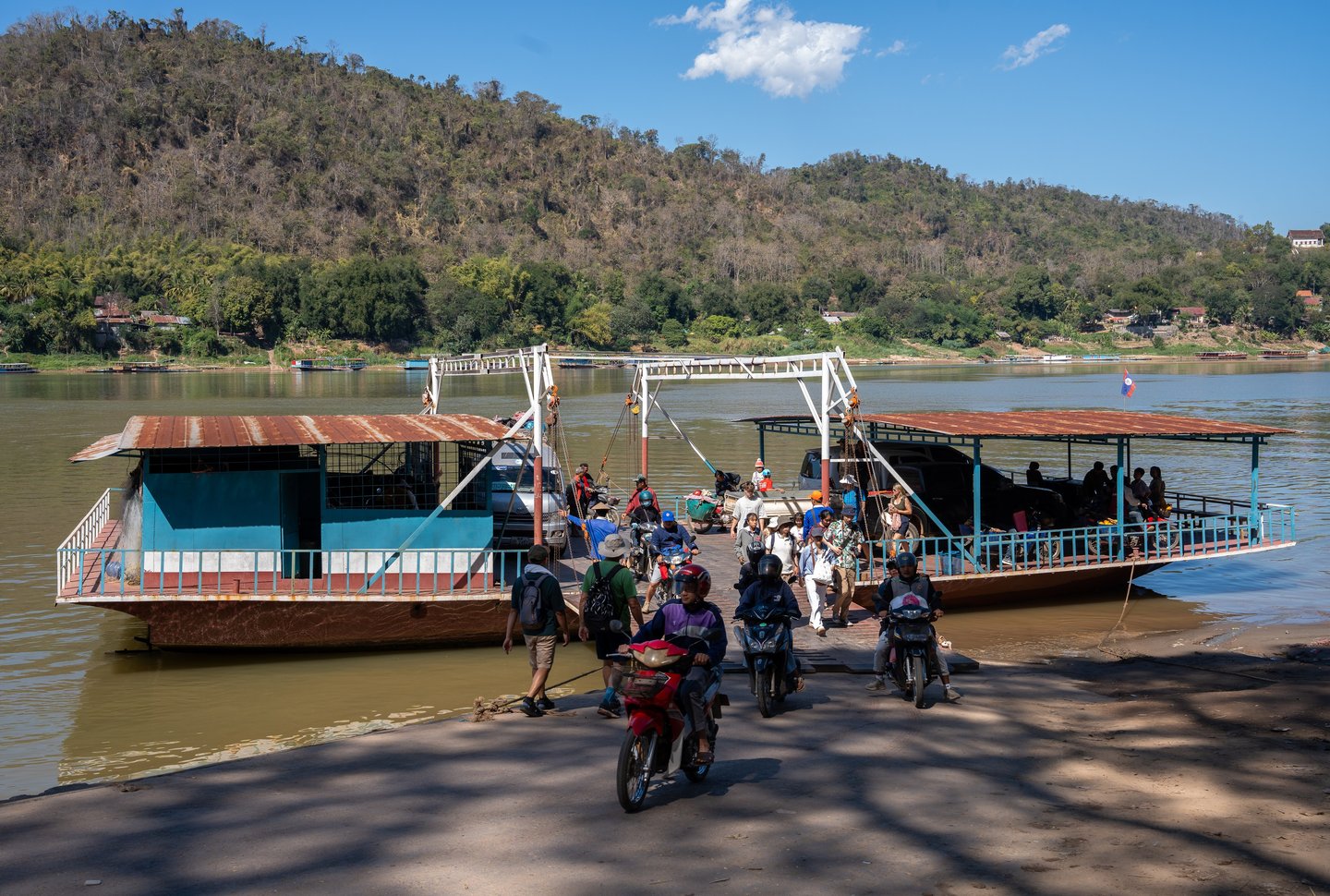
We’ll start along the Mekong River, with images of ferries crossing the brown water and local boats used for everyday transport
From there, I’ll take you into the historic old town, a UNESCO World Heritage site filled with colonial houses, golden temples, and quiet streets where the rhythm of life slows down.
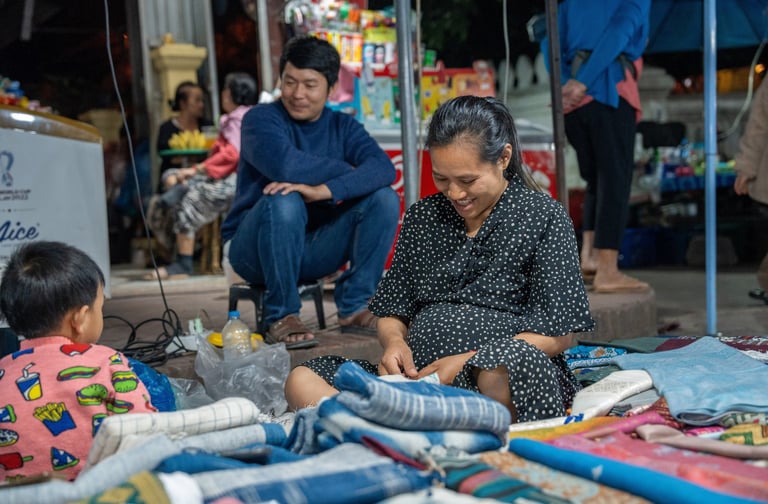
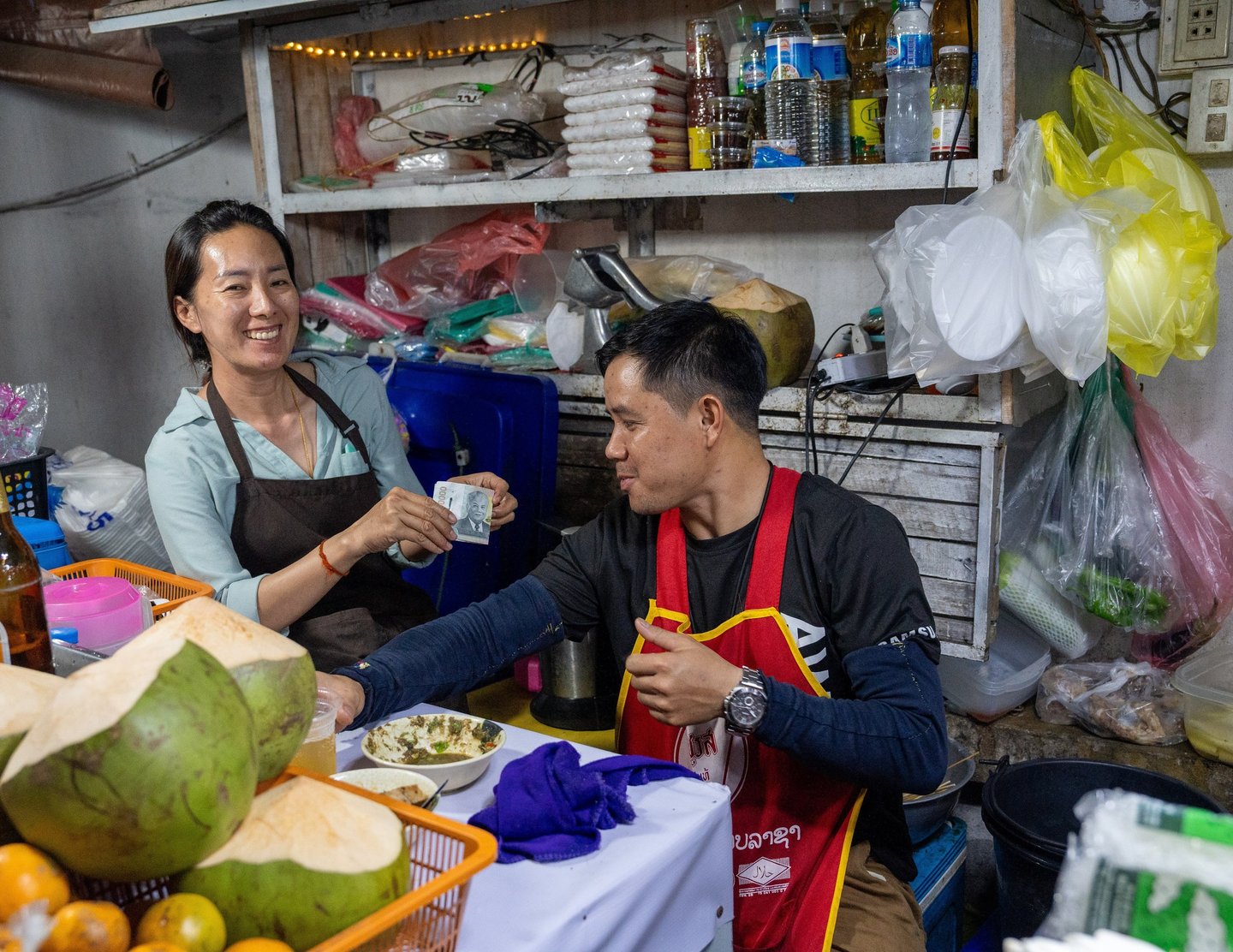
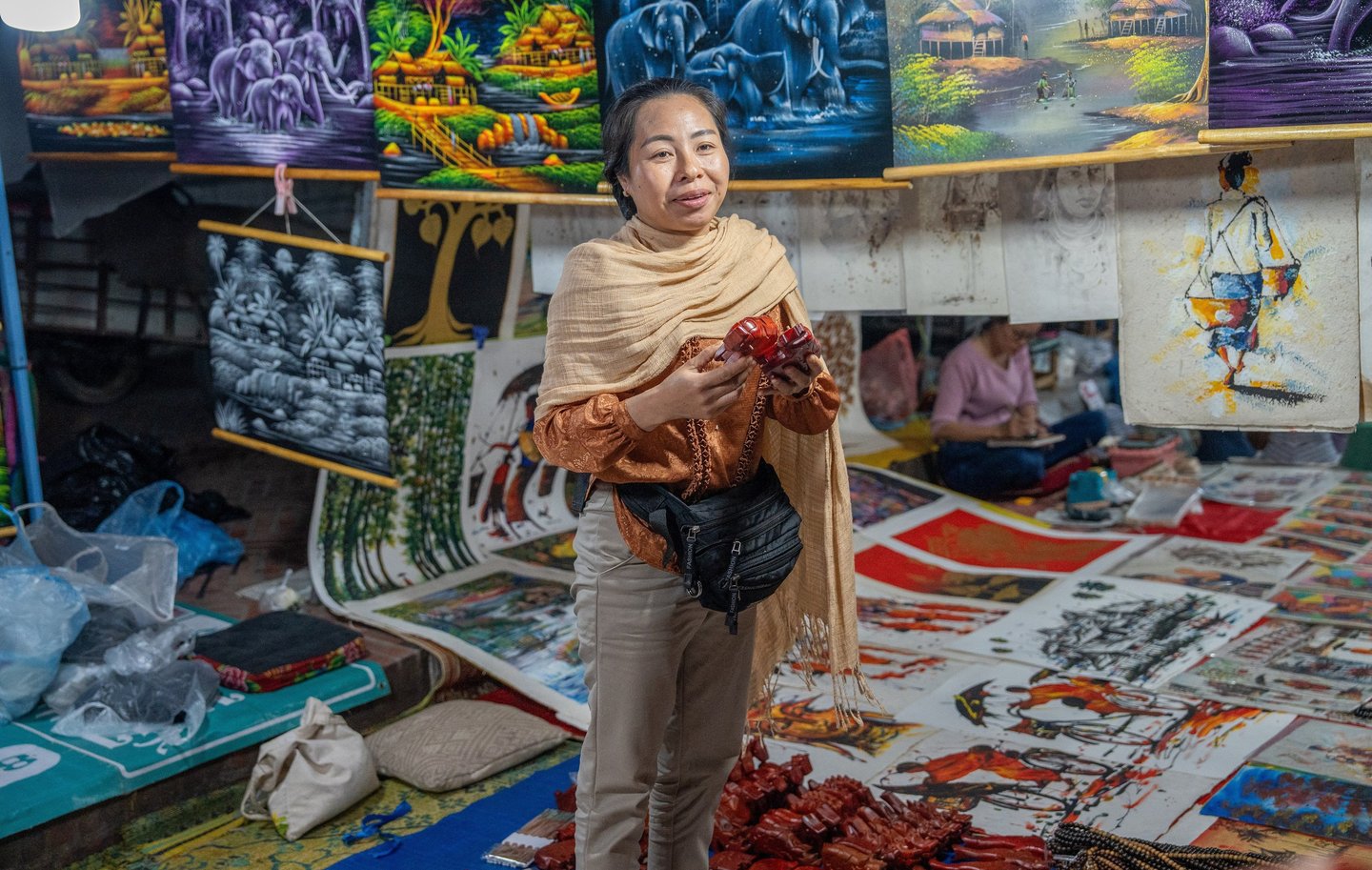
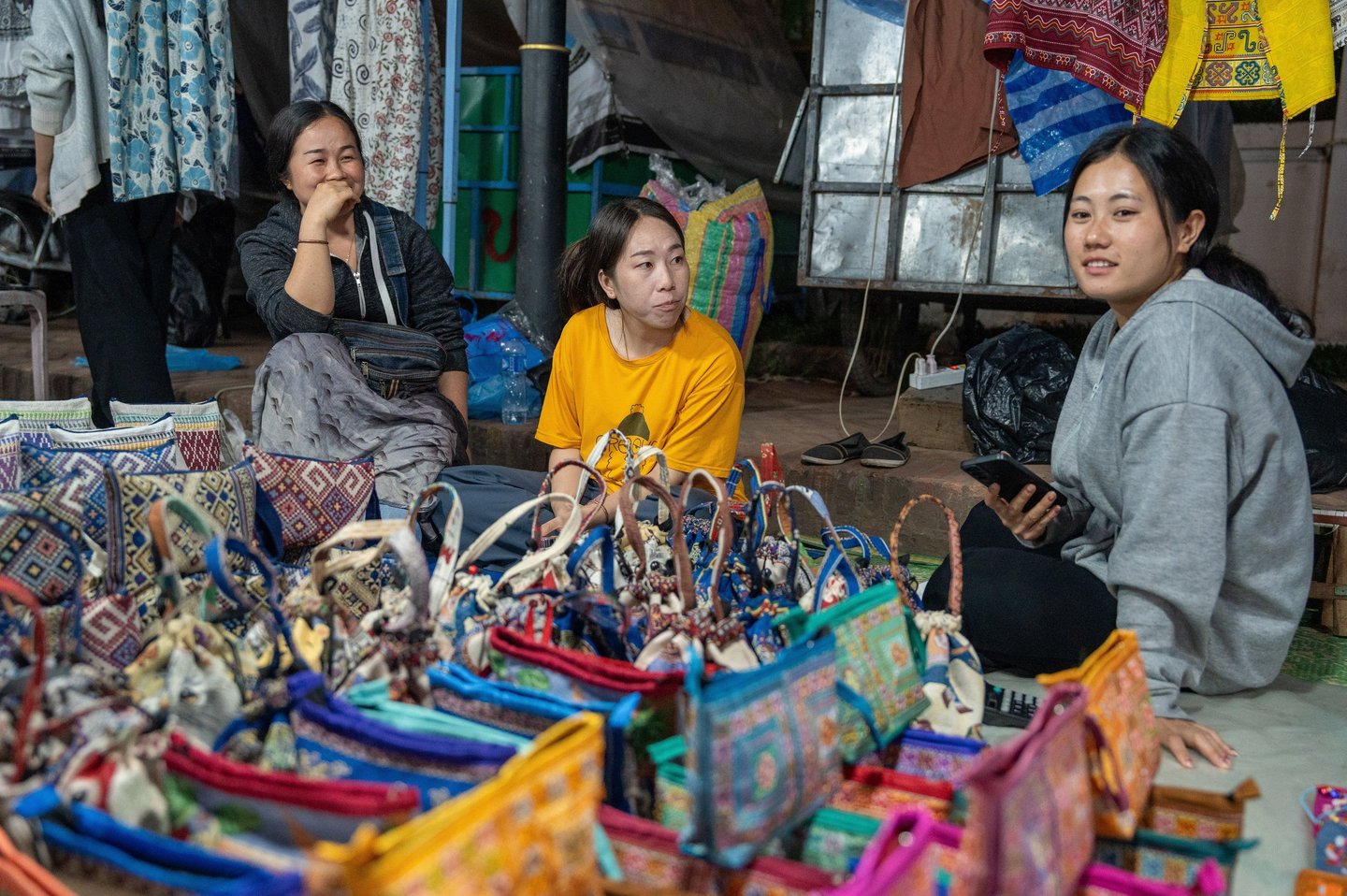
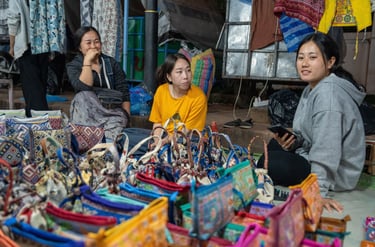
The Night Market in the center of town brings color and warmth — a mix of handmade crafts, Lao textiles, and delicious street food that fills the air with spice and smoke.
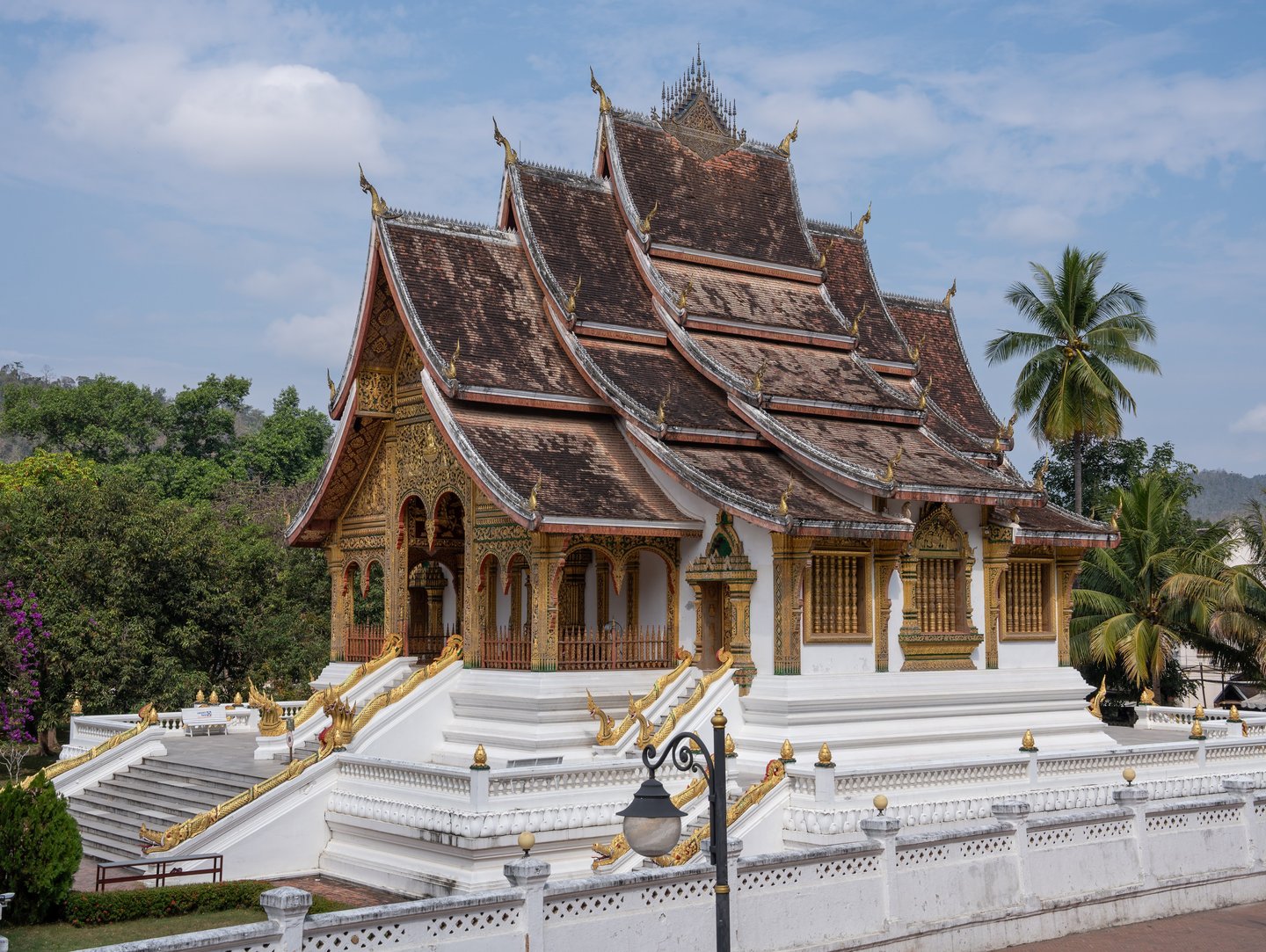
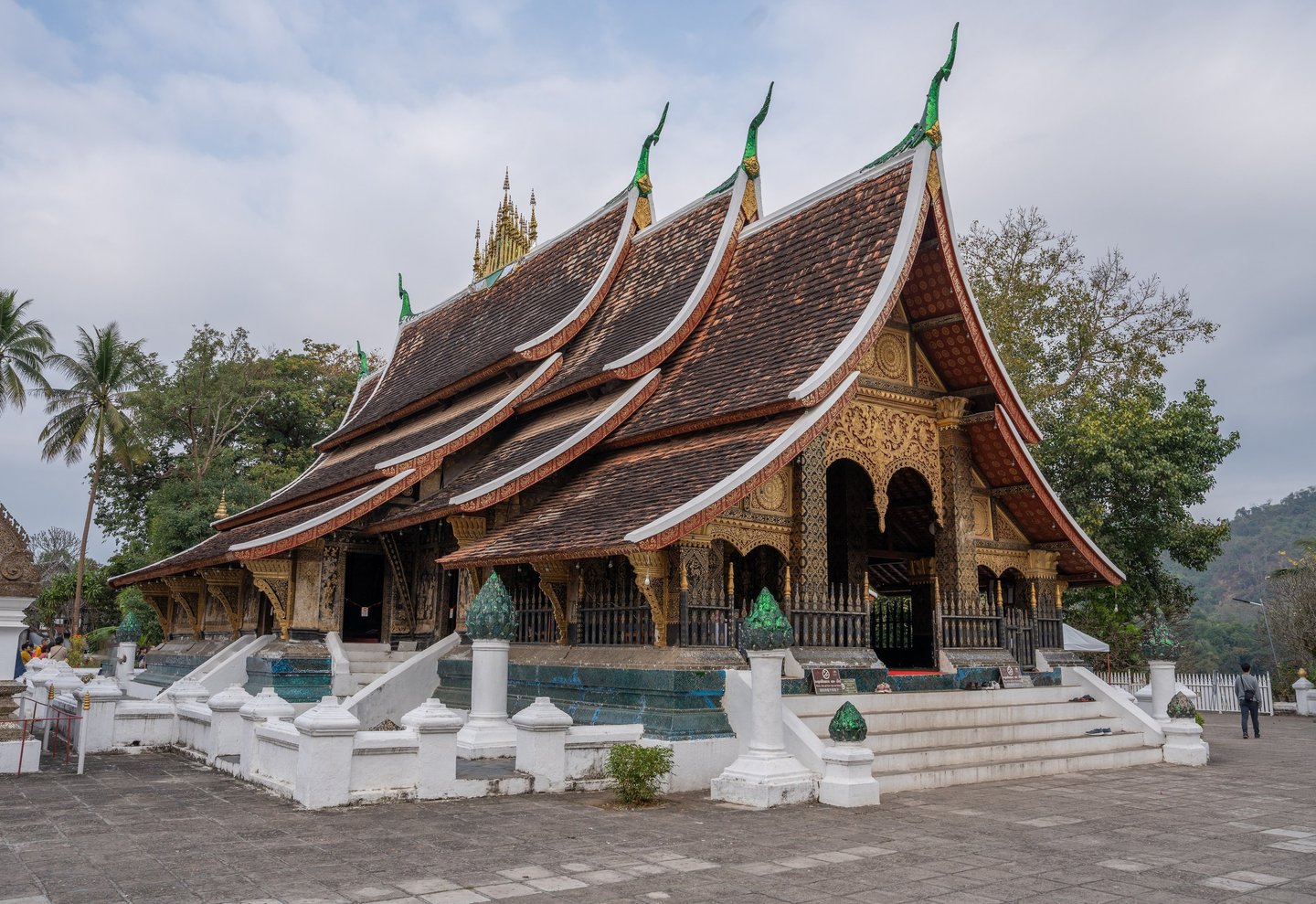
Among the many temples, two stand out — the Haw Pha Bang, located within the Royal Palace grounds, and the Wat Xieng Thong, one of Laos’ most beautiful and historic temples.
Both are symbols of faith, art, and architectural elegance.
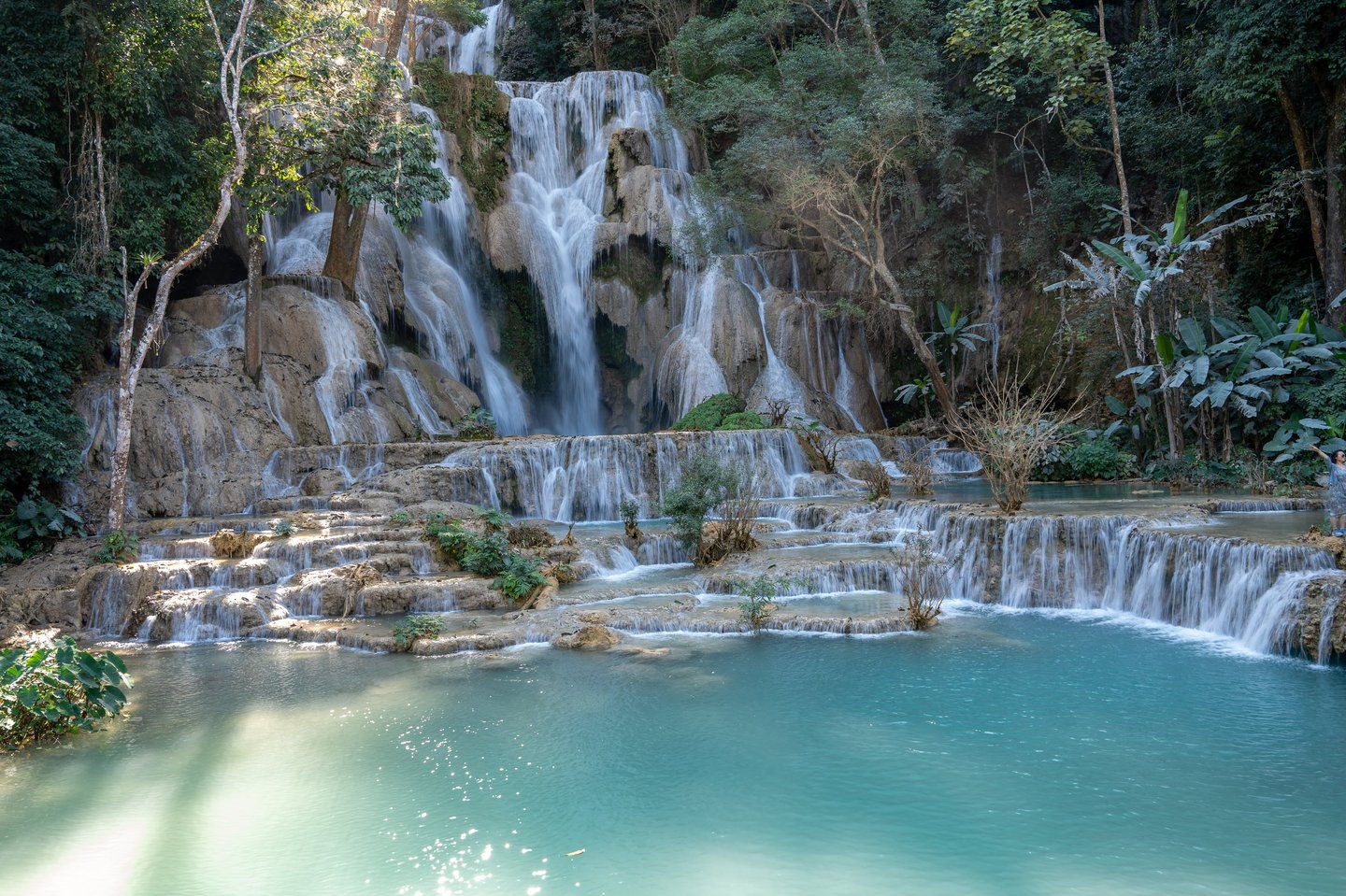
Beyond the city, I ventured into the rainforest to visit the Kuang Si Waterfall, where the turquoise water cascades over limestone terraces surrounded by deep green jungle.
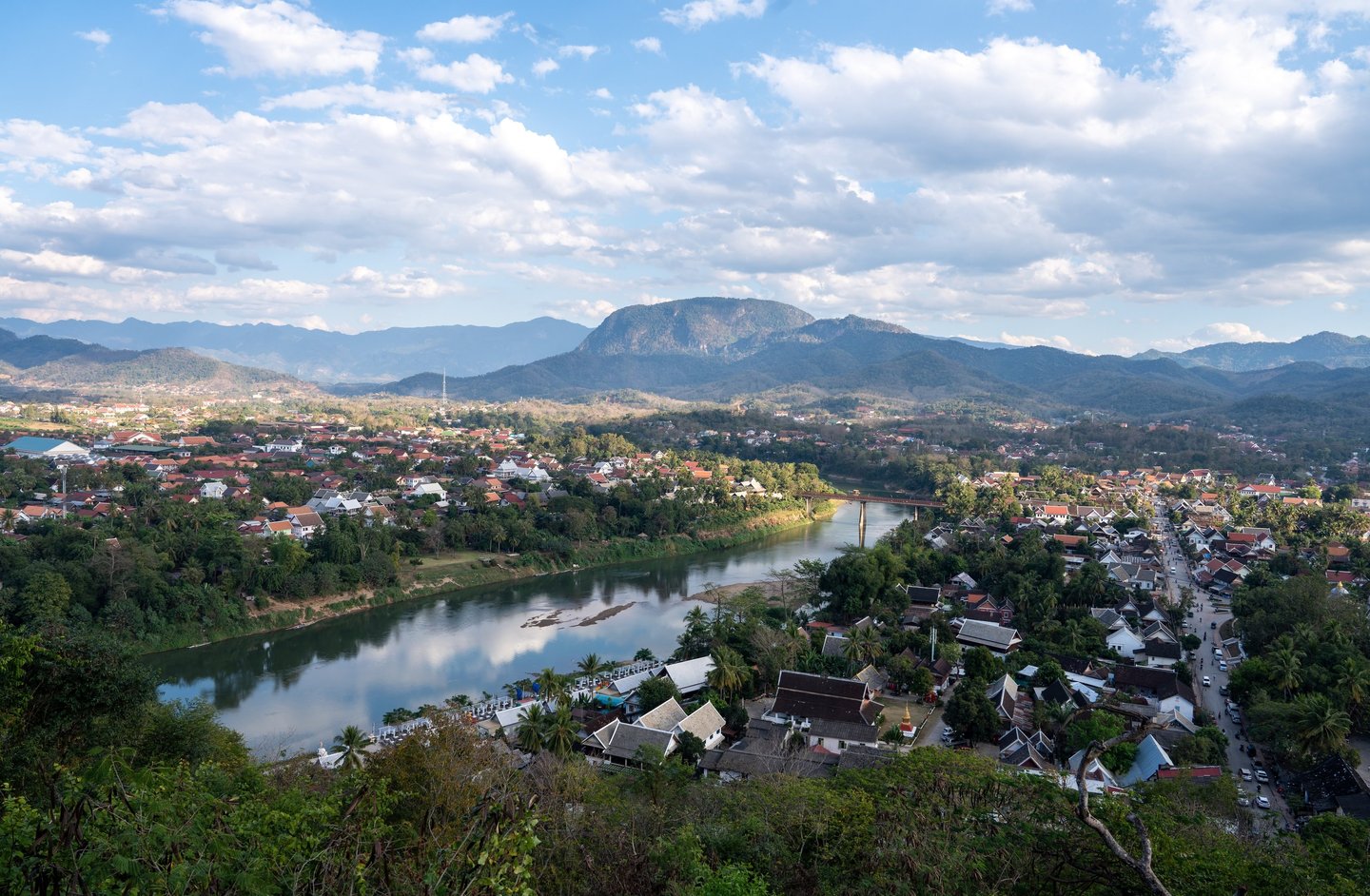
From the top of Mount Phousi, I captured views over the city and both rivers, just as the evening light faded into gold and violet tones.
My journey also took me to two villages outside Luang Prabang, where traditional crafts are still made by hand.
These visits revealed a slower, more authentic Laos — one deeply rooted in craftsmanship and community.
Mekong River – Light, Travel and Reflection in Luang Prabang, Laos
At the heart of Luang Prabang flows the great Mekong River — calm, wide, and endlessly moving.
For me, this river became one of the most inspiring parts of my journey through Laos, where life and landscape meet in perfect balance.
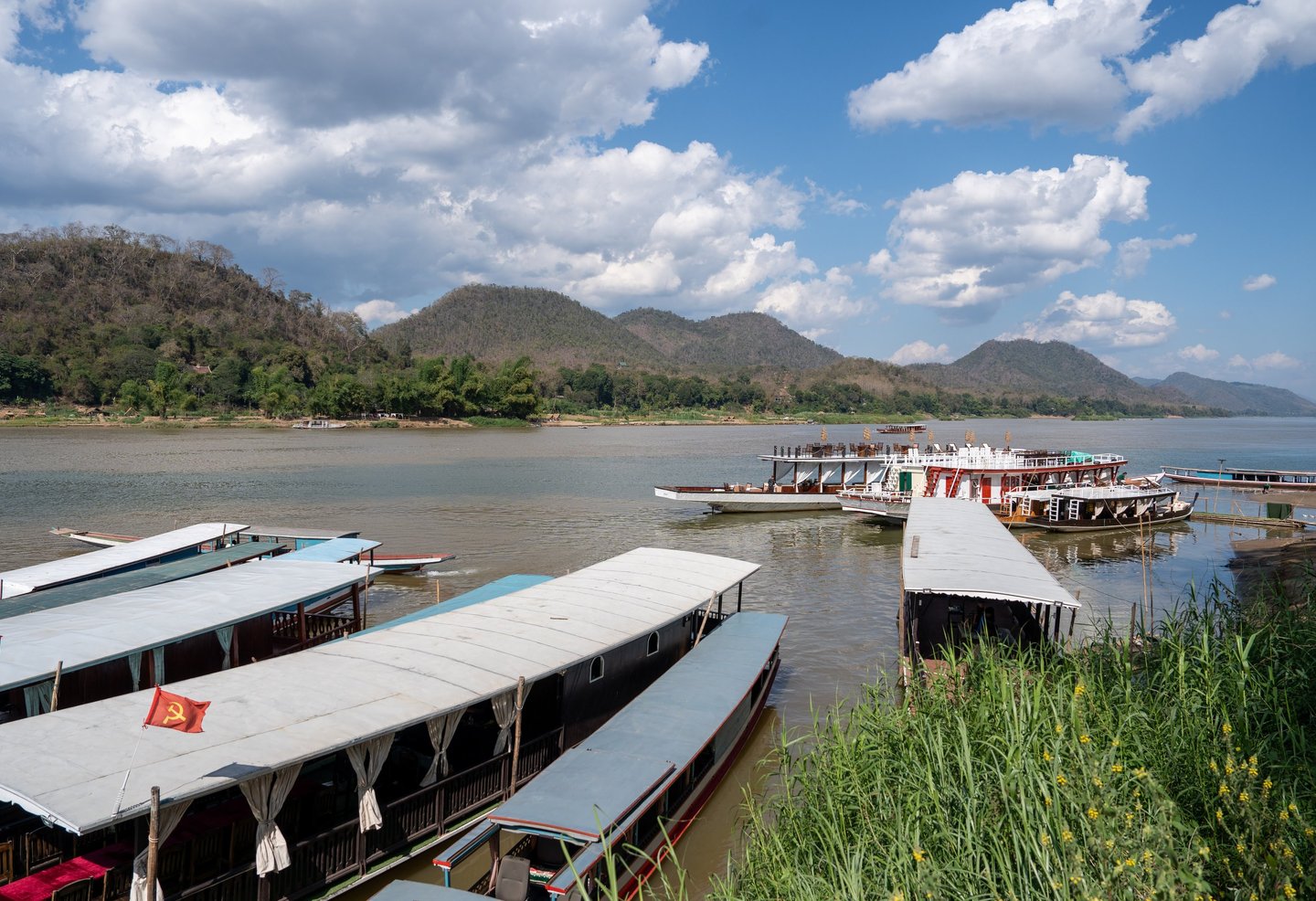
We chose our accommodation in the historic old town, close to the river, to feel this rhythm every day.
Many afternoons were spent in the cafés and restaurants that line the riverbank — watching boats pass, light shift, and the day slowly fade.
At sunset, the Mekong turns into a mirror of gold and orange, reflecting the sky above and the quiet pulse of the city below.
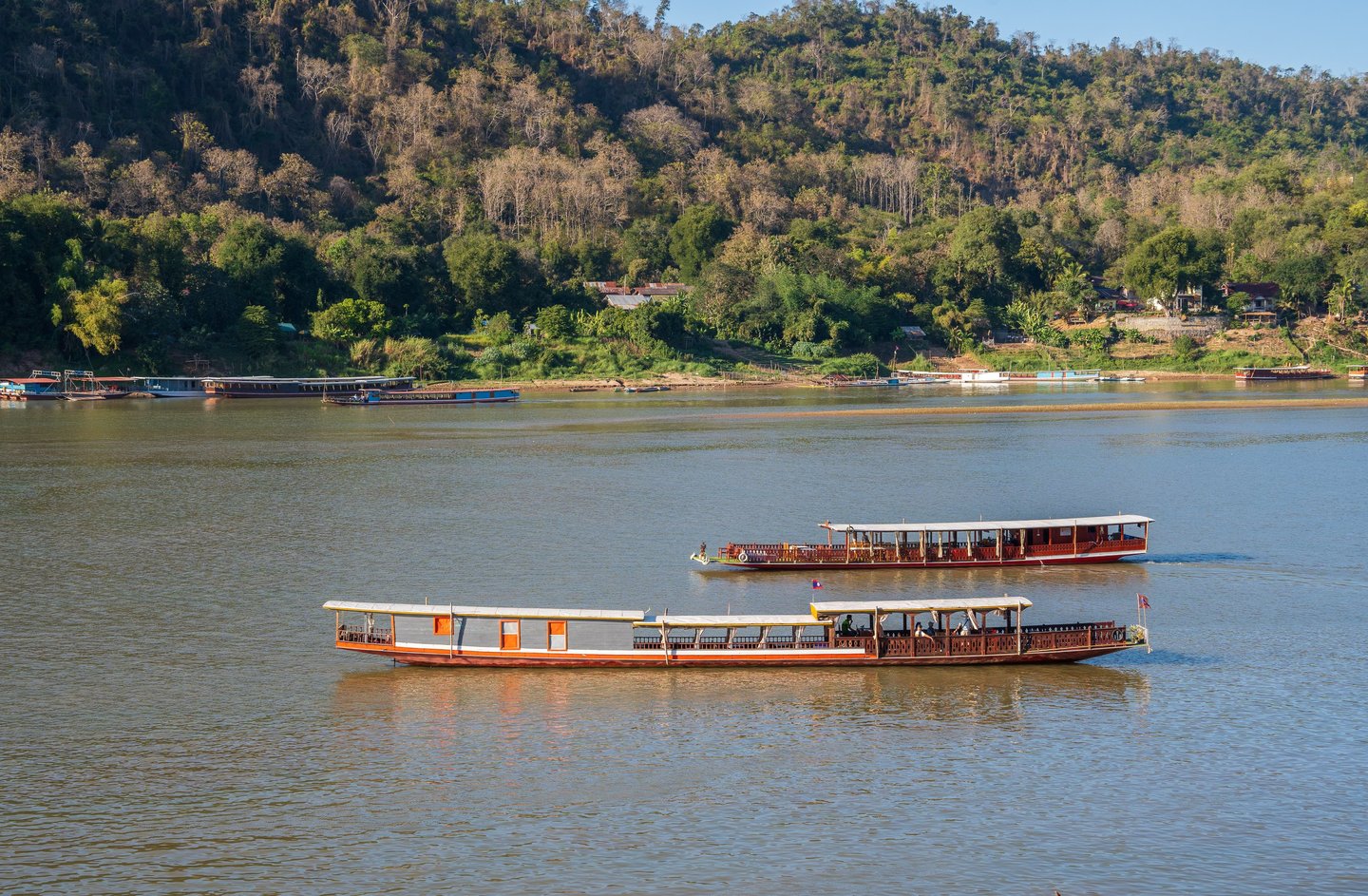
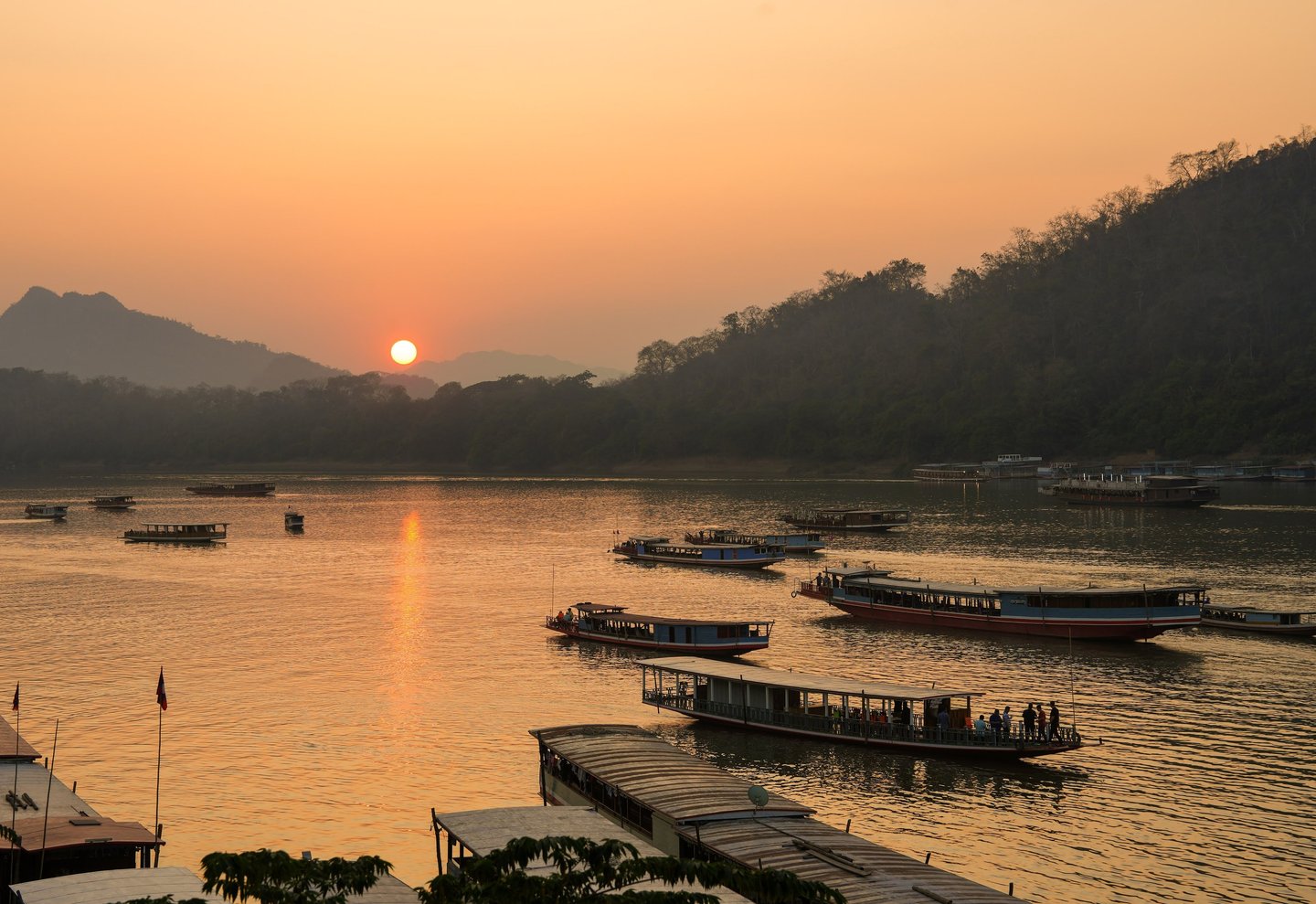
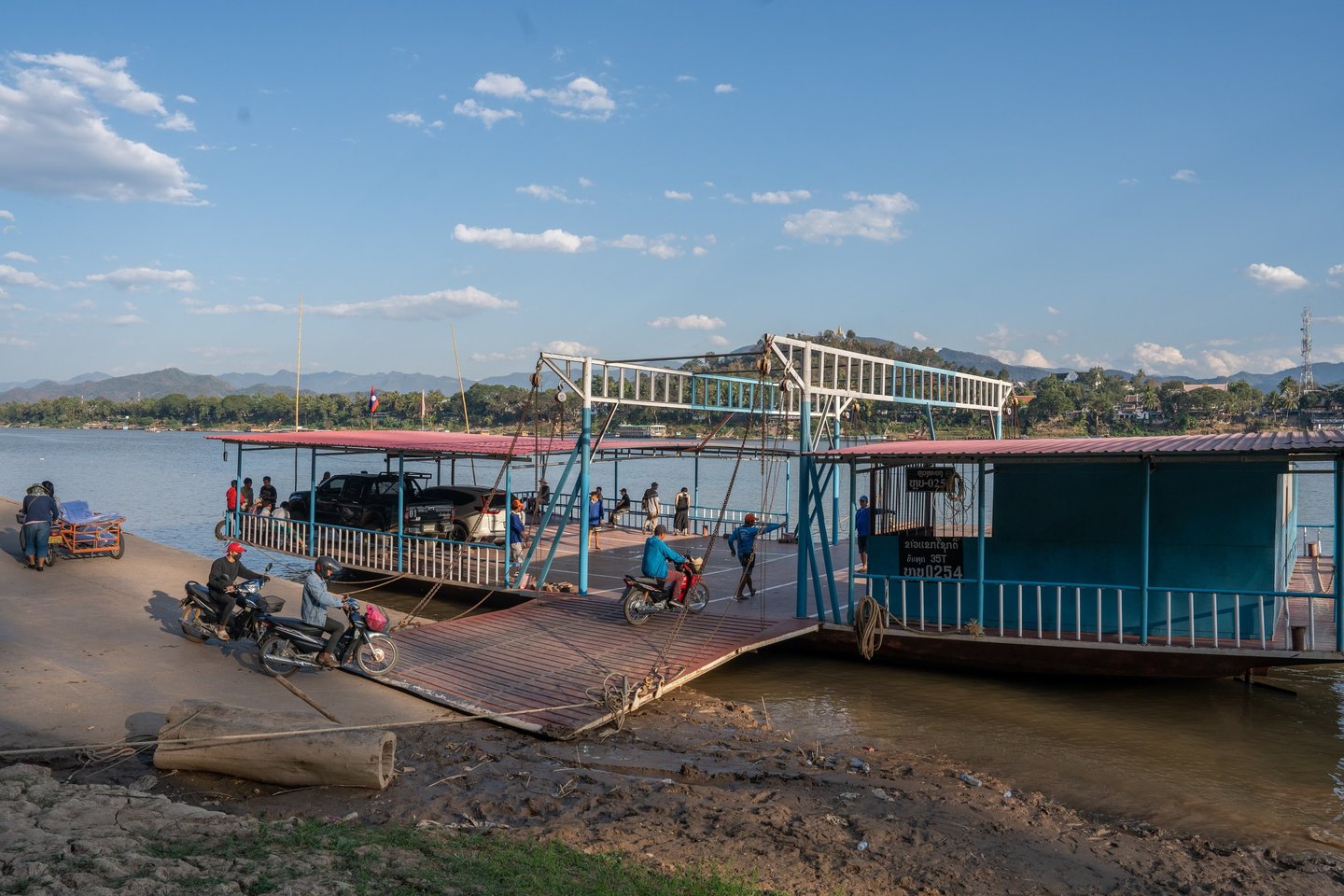
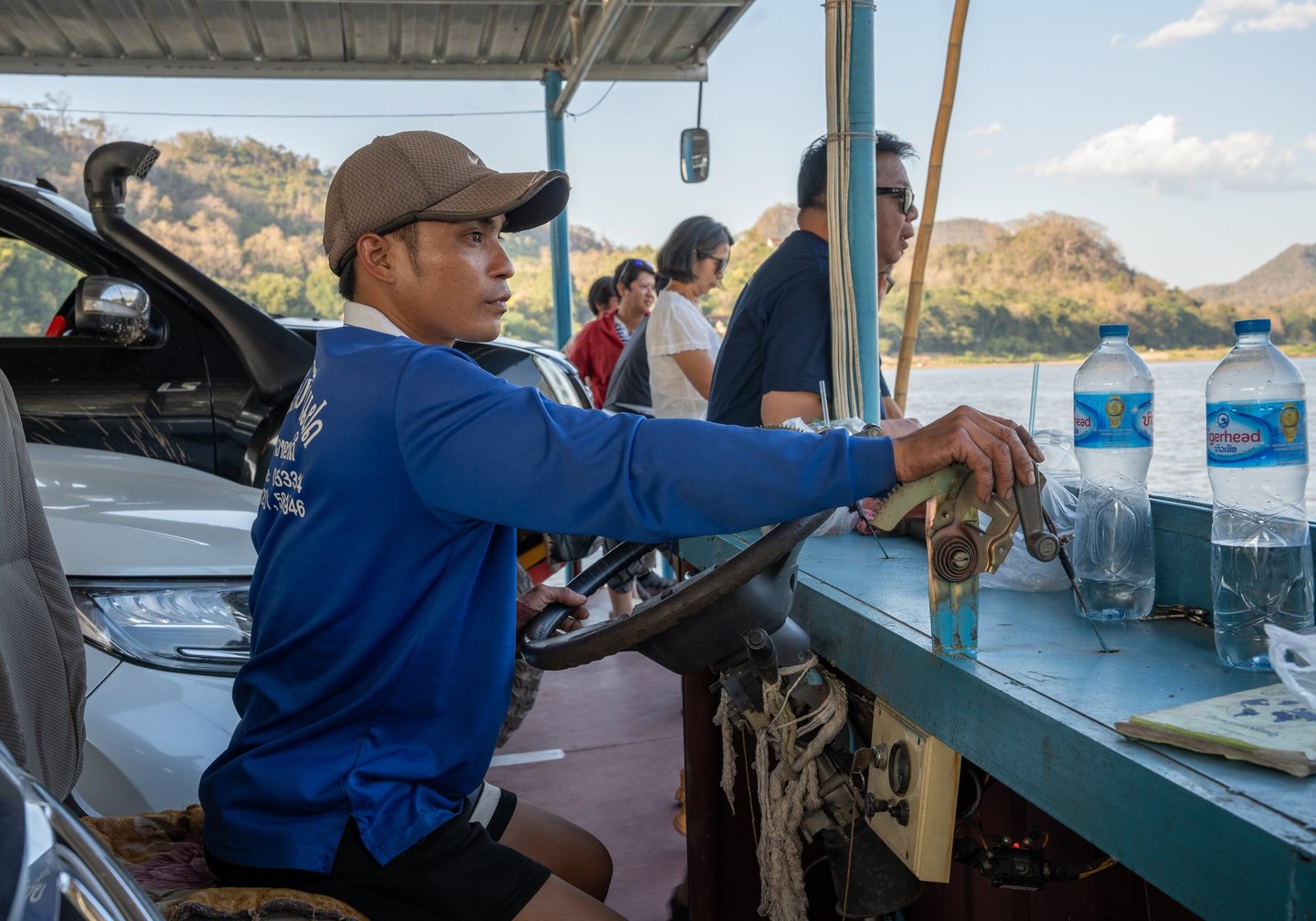
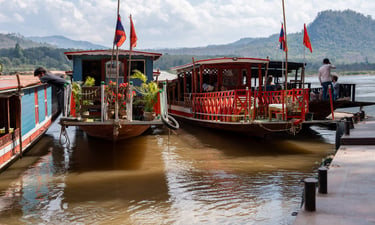
The ferry across the Mekong remains a vital part of daily life in Luang Prabang.
From one side of the river to the other, people and vehicles move in a slow, steady rhythm, guided by the ferry man, whose boat cuts calmly through the current.
Standing on the deck, the view opens toward Mount Phousi, a landmark rising gracefully over the old town — a reminder that even in motion, there is stillness.
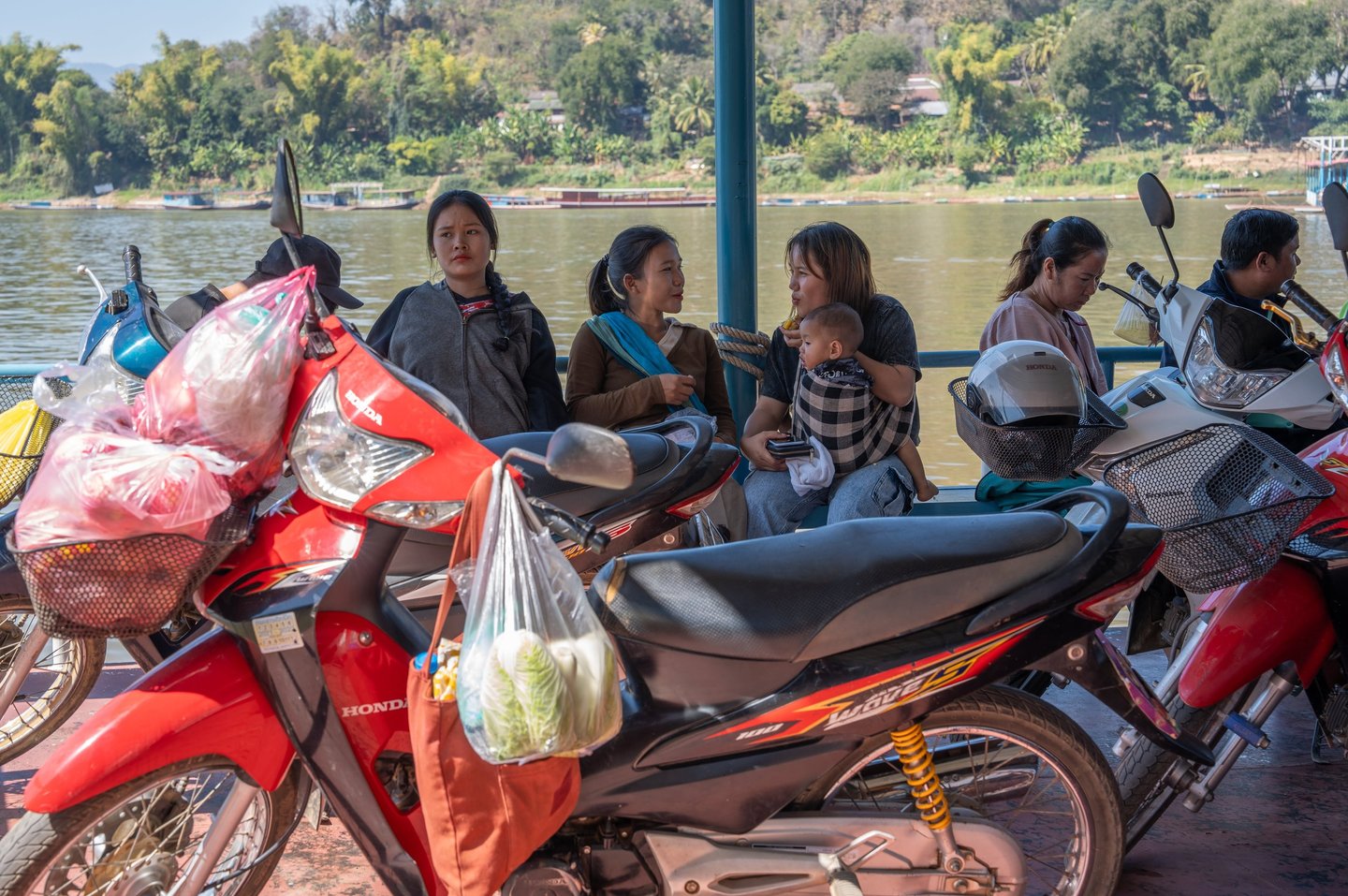
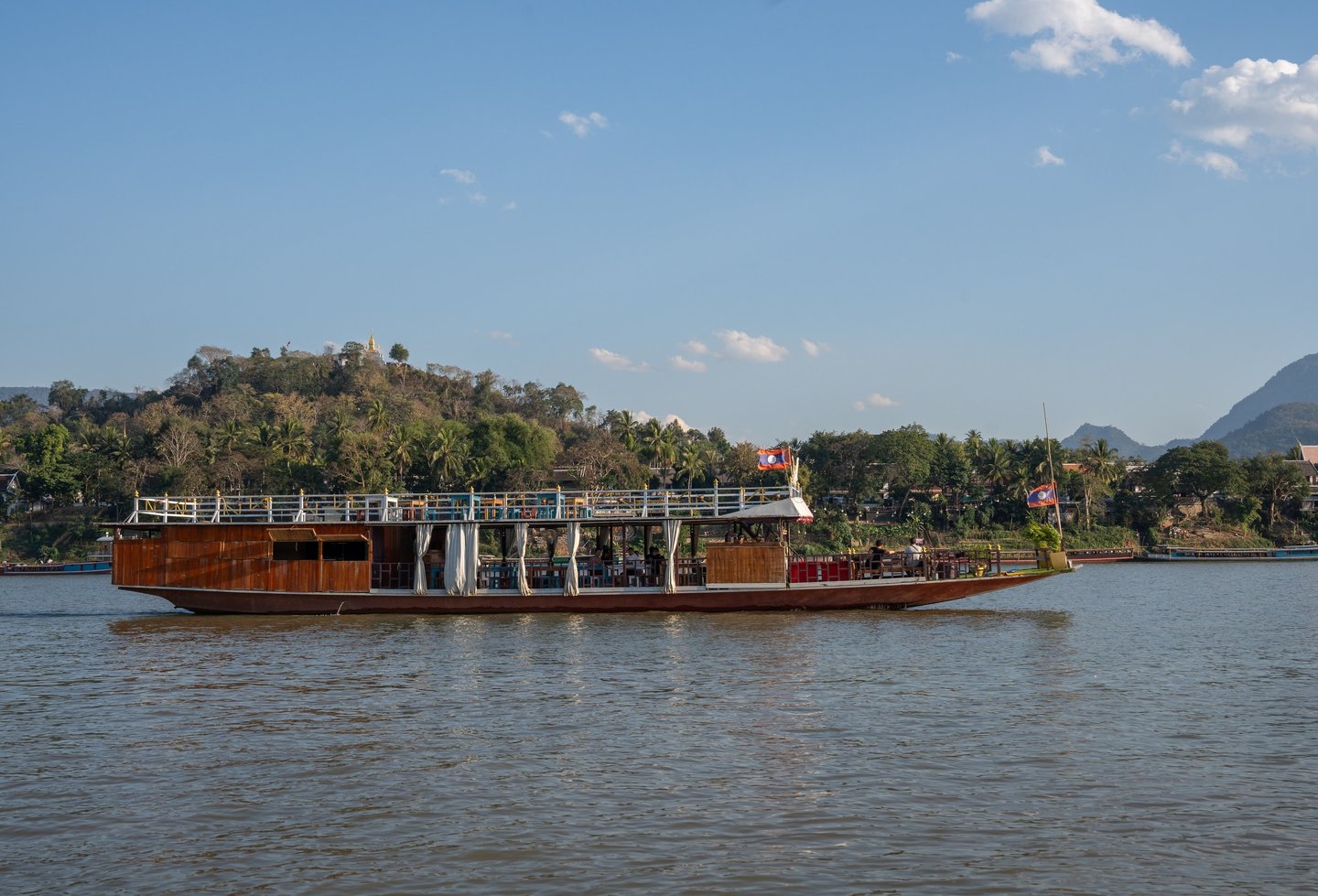
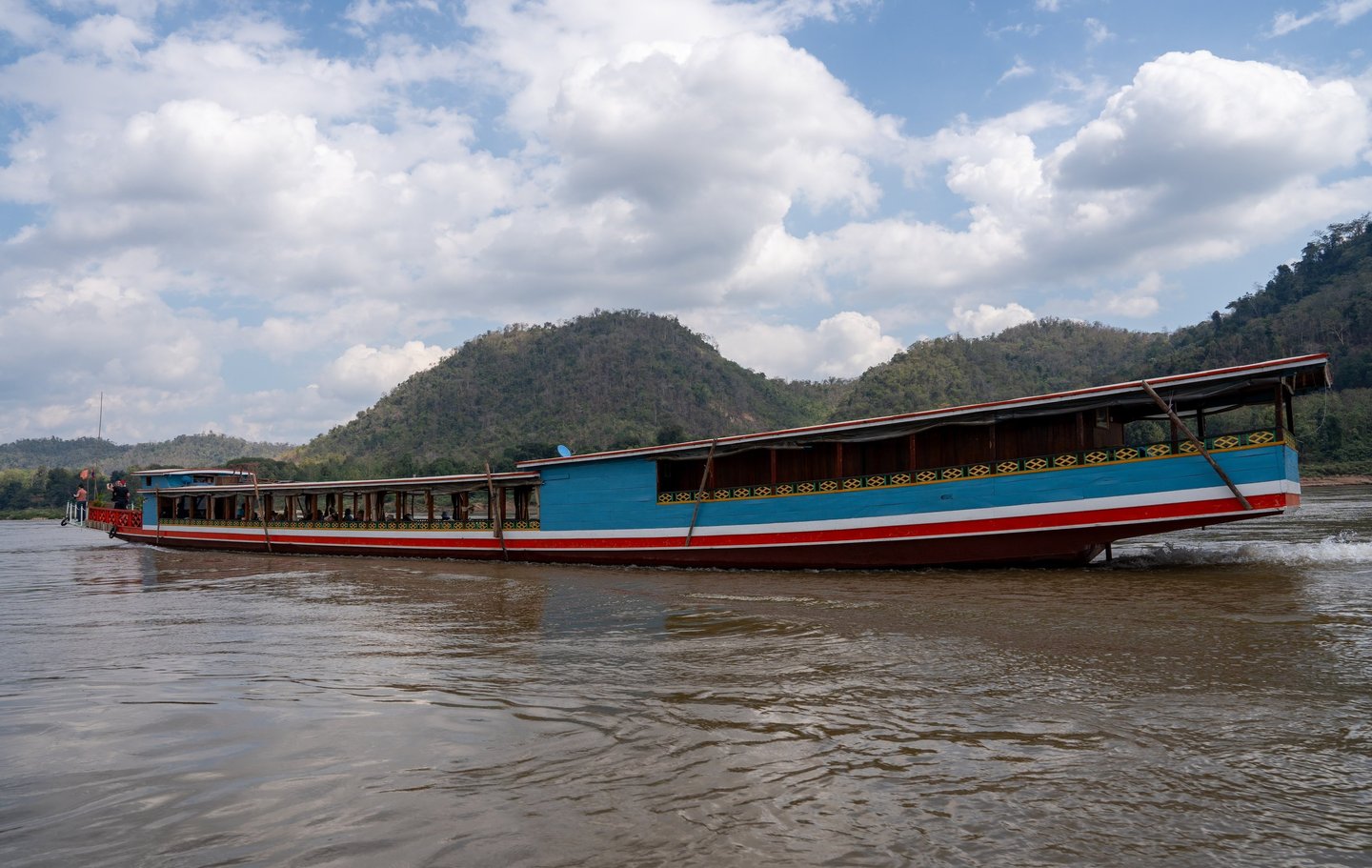
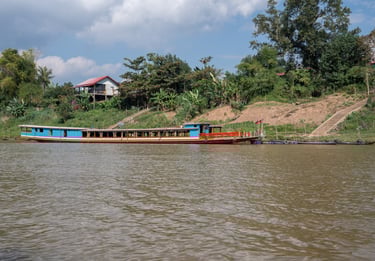
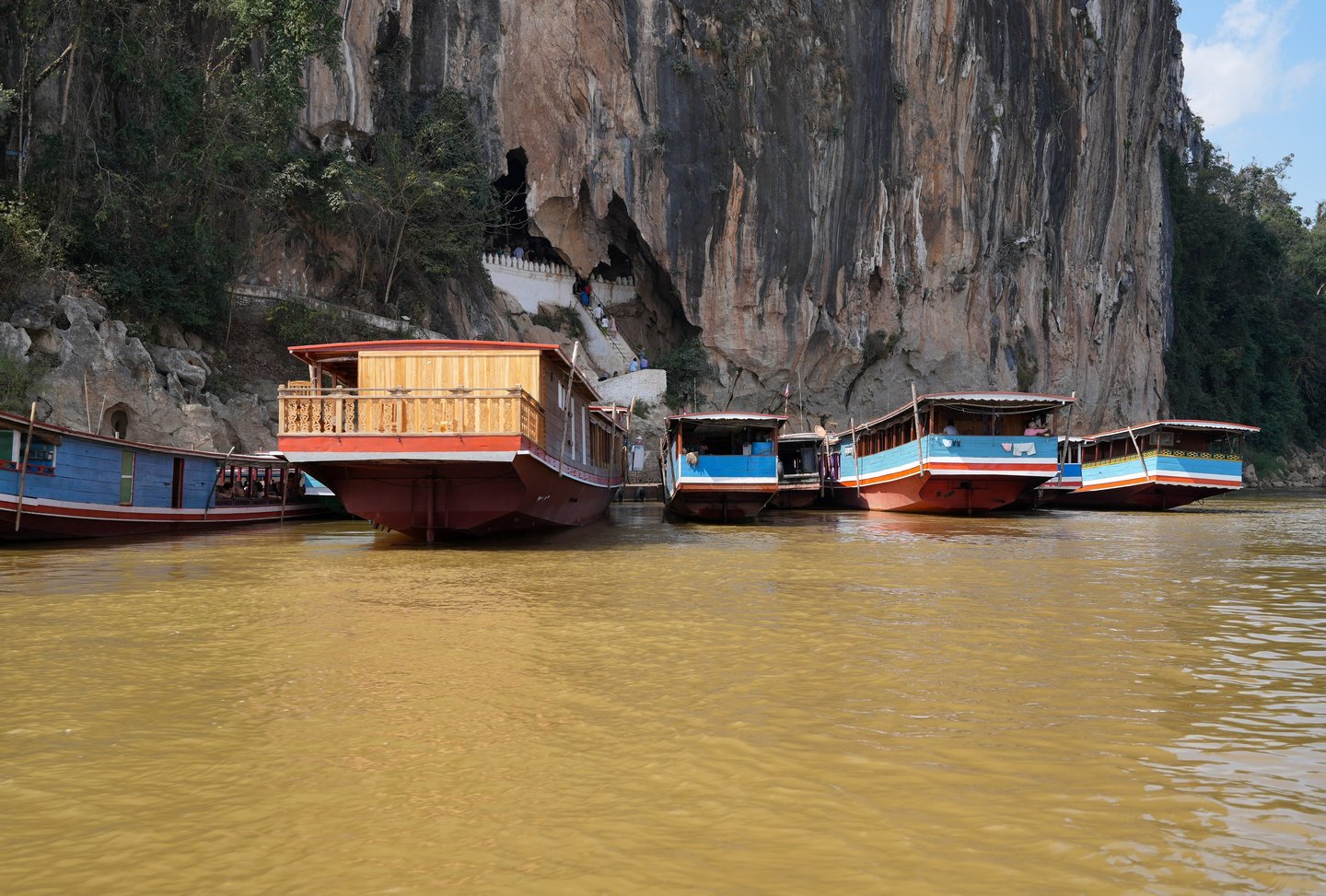
One morning, we boarded a traditional wooden boat for a journey upstream to the Pak Ou Caves.
Along the way, the river revealed quiet stretches of jungle and small riverside villages, untouched by noise or rush.
The wooden hull, the low hum of the motor, and the morning light created a sense of calm that’s hard to describe — a kind of moving meditation on water.


The Mekong River in Luang Prabang is more than a landscape.
It’s a place of observation and rhythm, where light changes every minute and reflections tell new stories each time you look.
This river has its own heartbeat — slow, steady, timeless — and photographing it felt like listening to that rhythm through the lens.


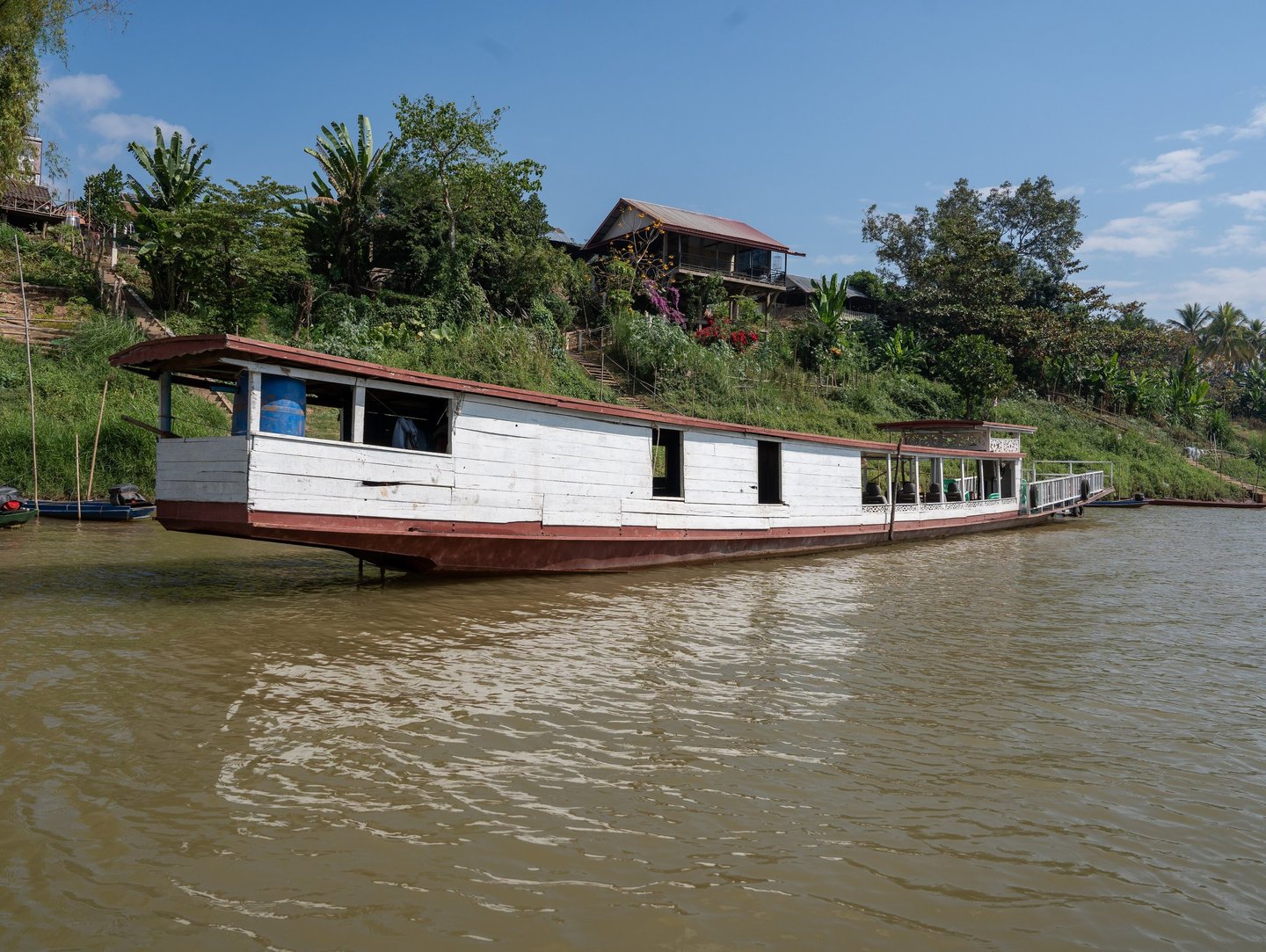
Captured with my Sony Alpha 7 IV (ILCE-7M4) and Sony FE 24–70 mm f/2.8 GM II, these images show the Mekong not as a tourist attraction, but as a presence — calm, reflective, and deeply connected to the soul of Laos.
Historic Old Town of Luang Prabang – Colonial Heritage and Night Market Life
The historic center of Luang Prabang is one of the most fascinating places in Southeast Asia where architecture, culture, and everyday life merge into a unique atmosphere.
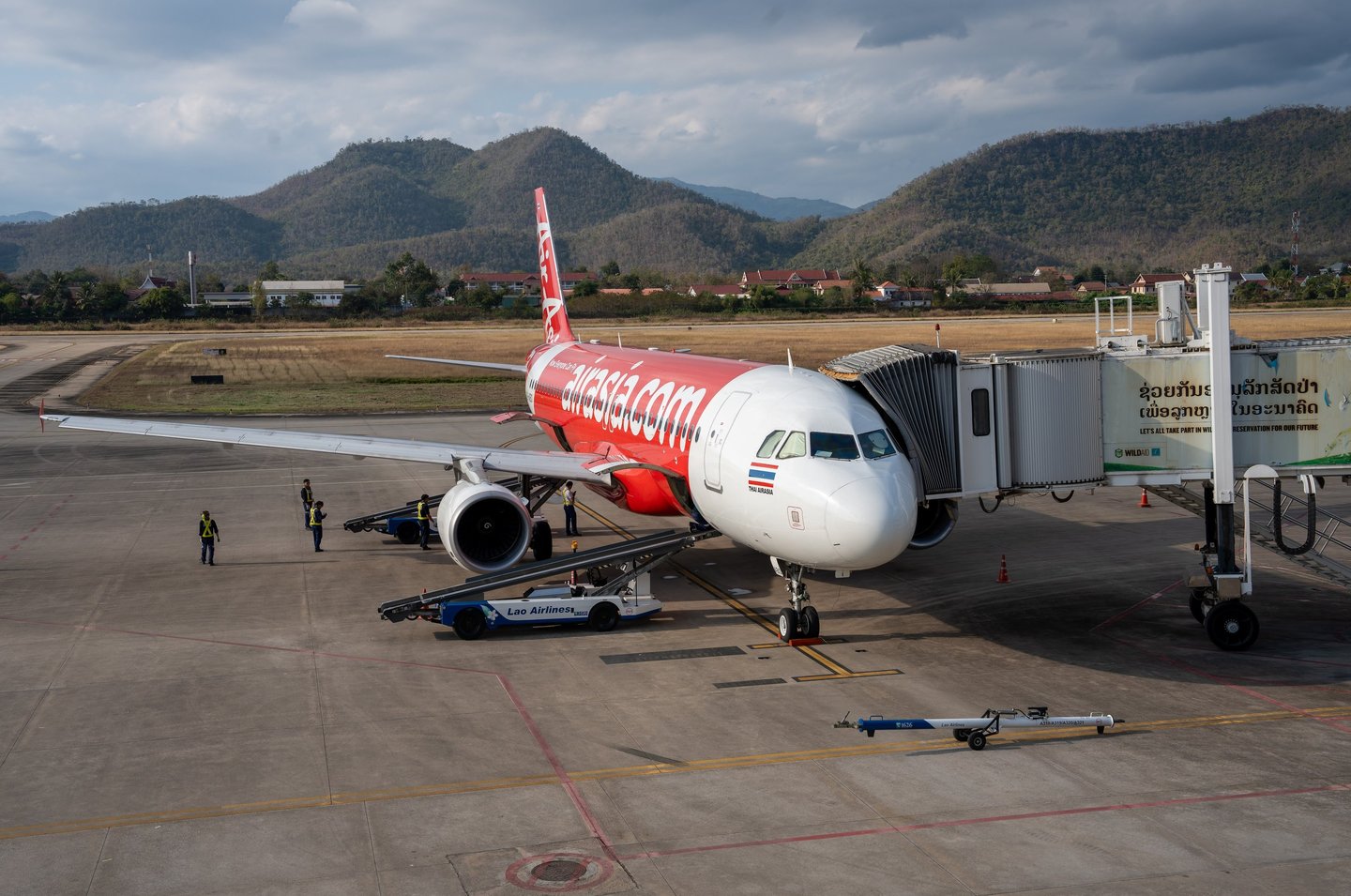
Long before reaching the old town itself, the journey already gives a sense of the surrounding landscape. Even the Luang Prabang International Airport blends surprisingly well into the mountainous scenery of northern Laos. From the moment the plane approaches the runway, the green hills and the winding rivers already hint at the calm character of this region.
The historic town of Luang Prabang carries a strong legacy of the French colonial period, when Laos was part of French Indochina.
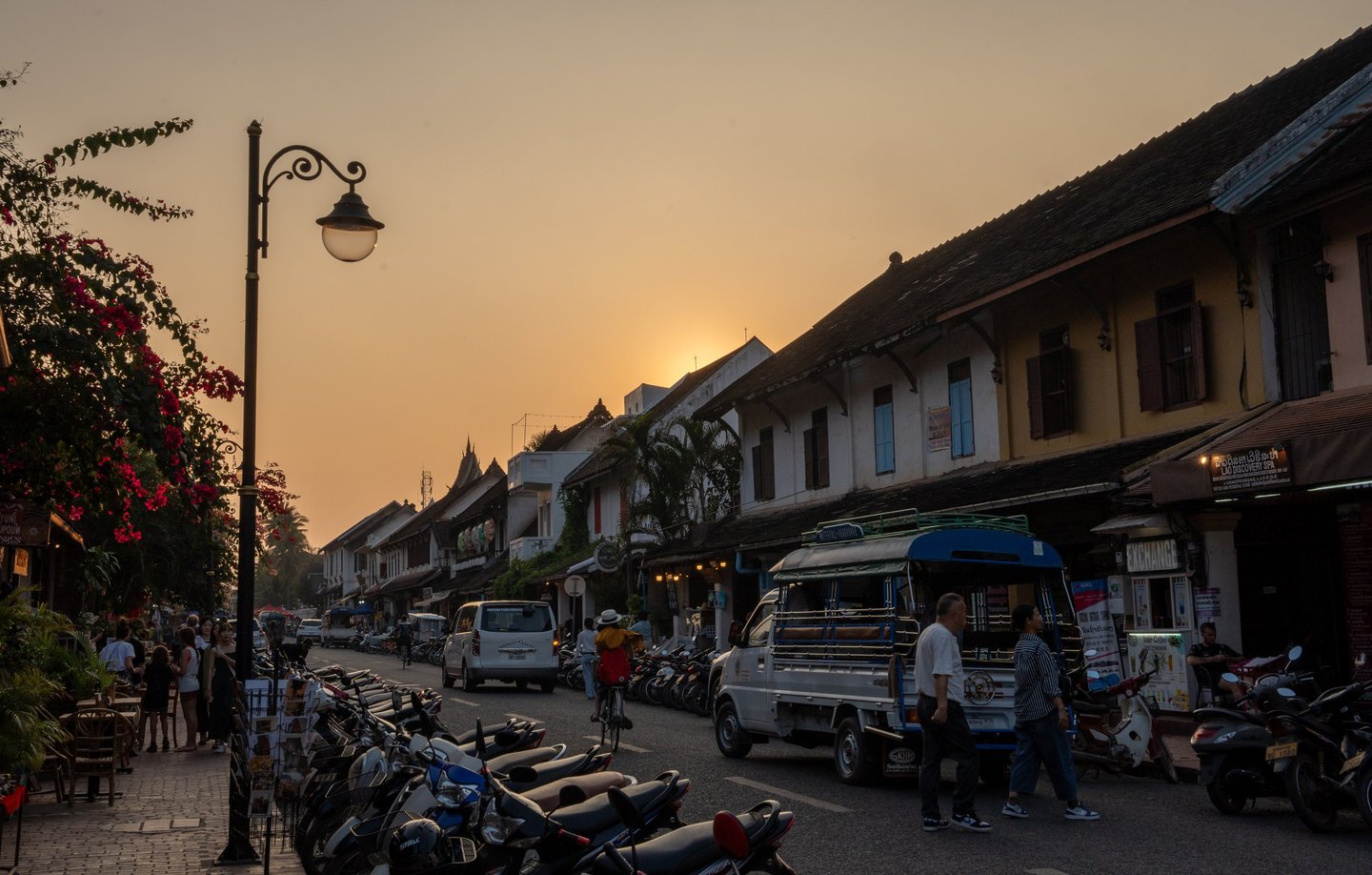
Elegant colonial villas, wooden Lao houses, Buddhist temples, and quiet streets form a rare architectural combination that has remained largely intact over time.
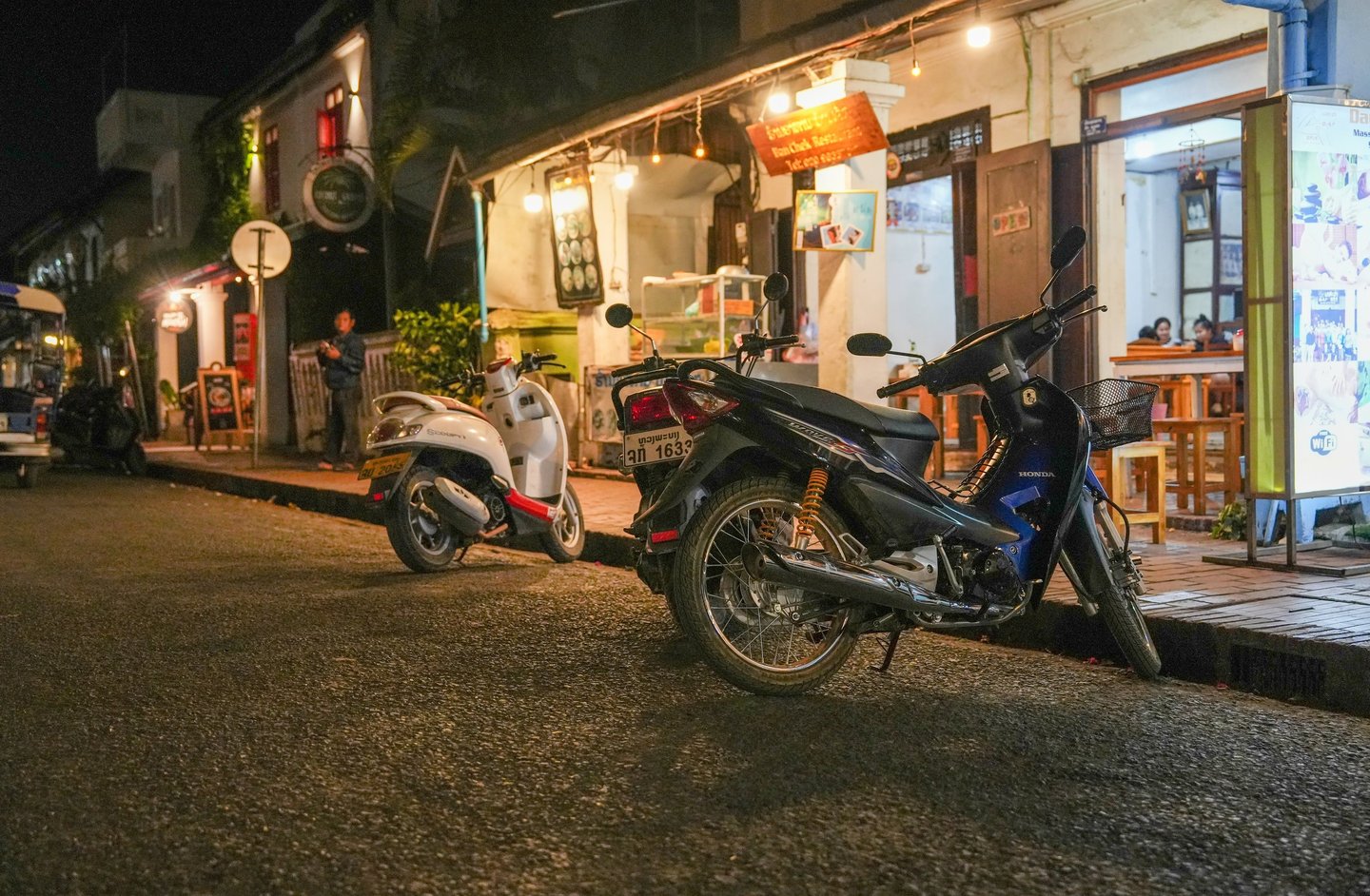

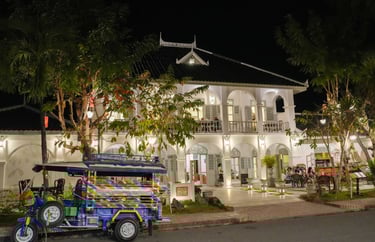
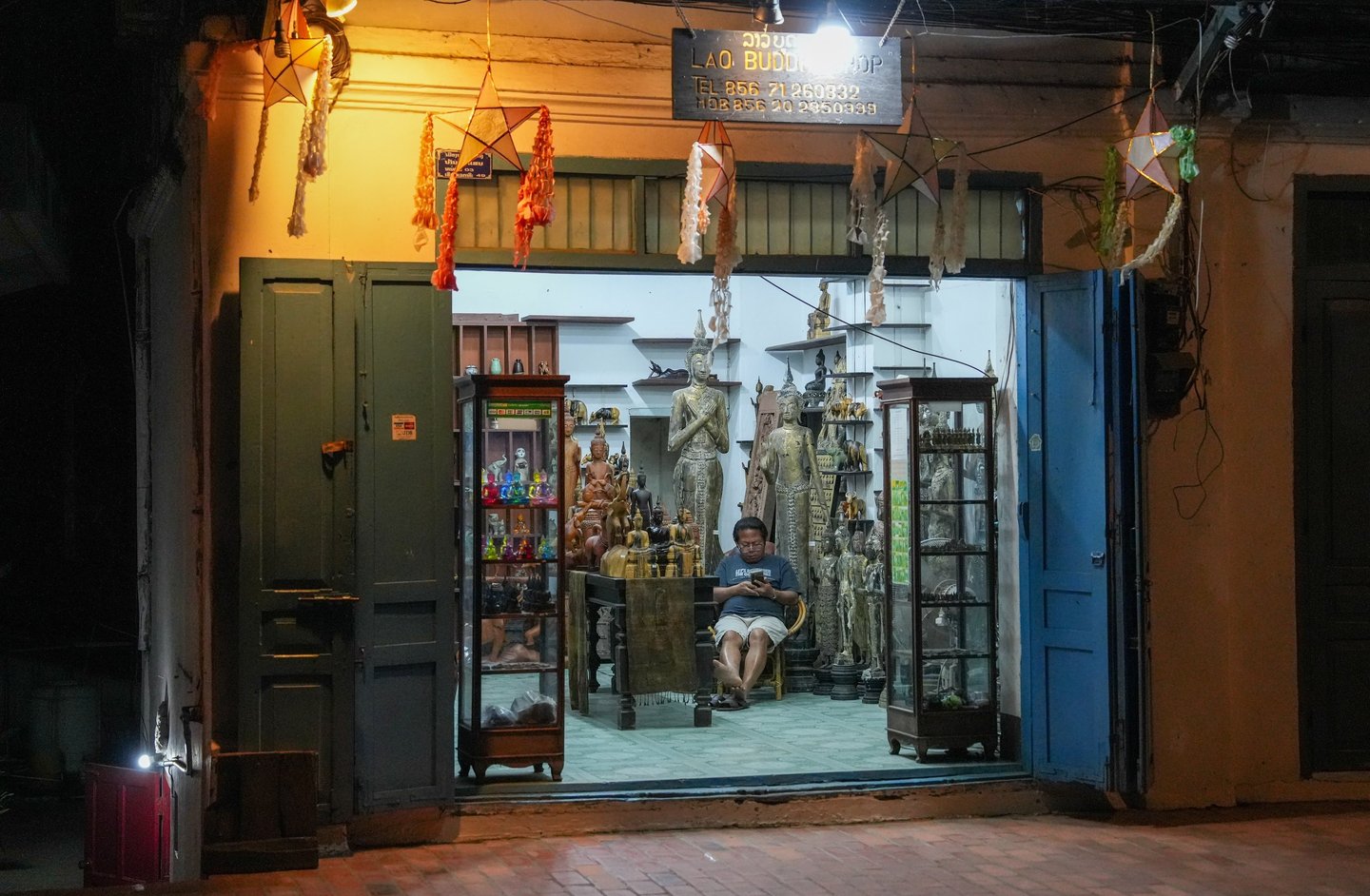
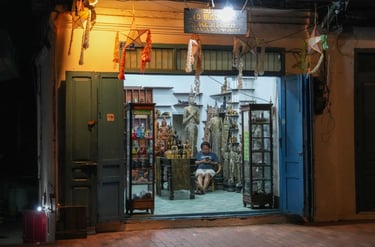
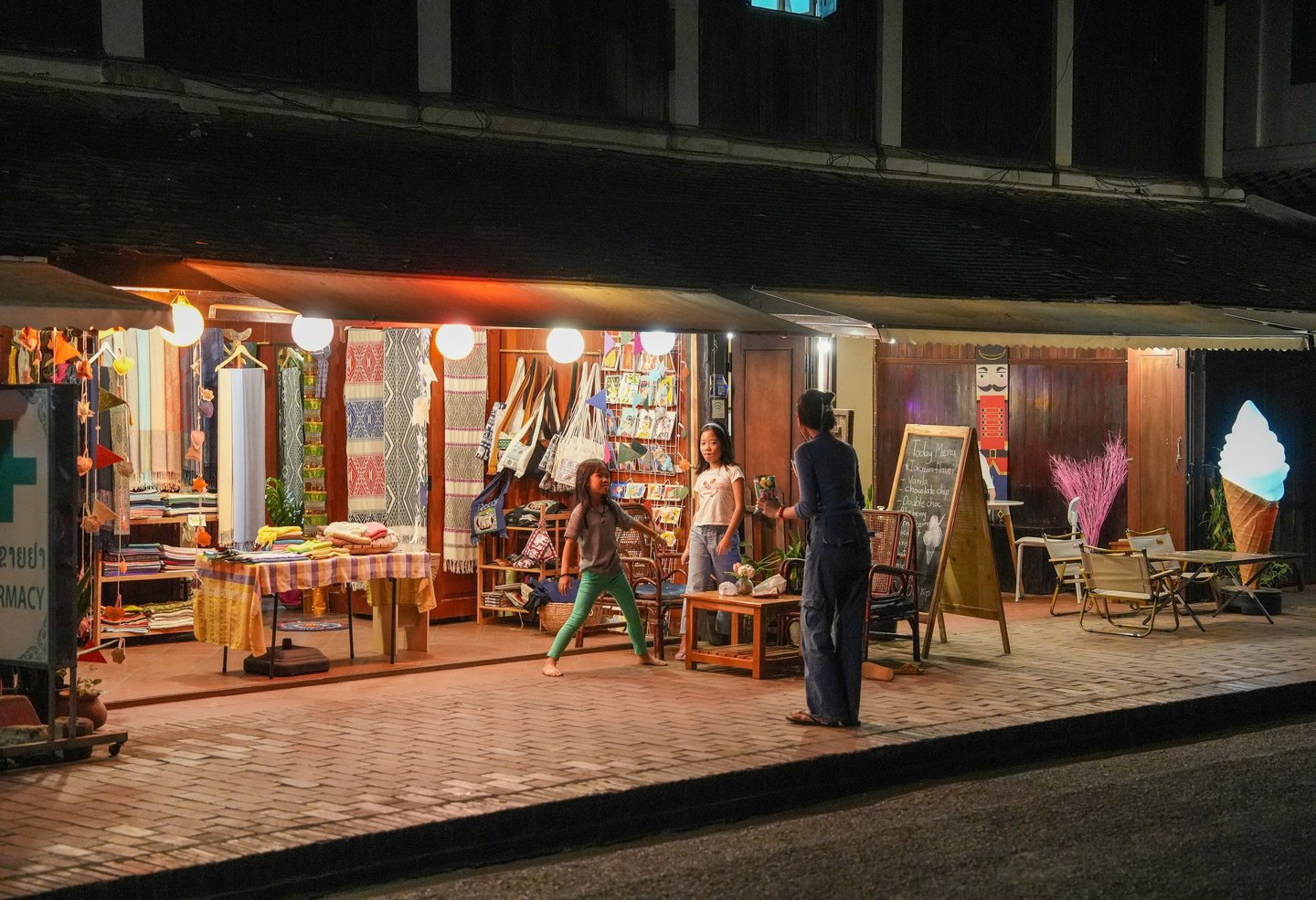
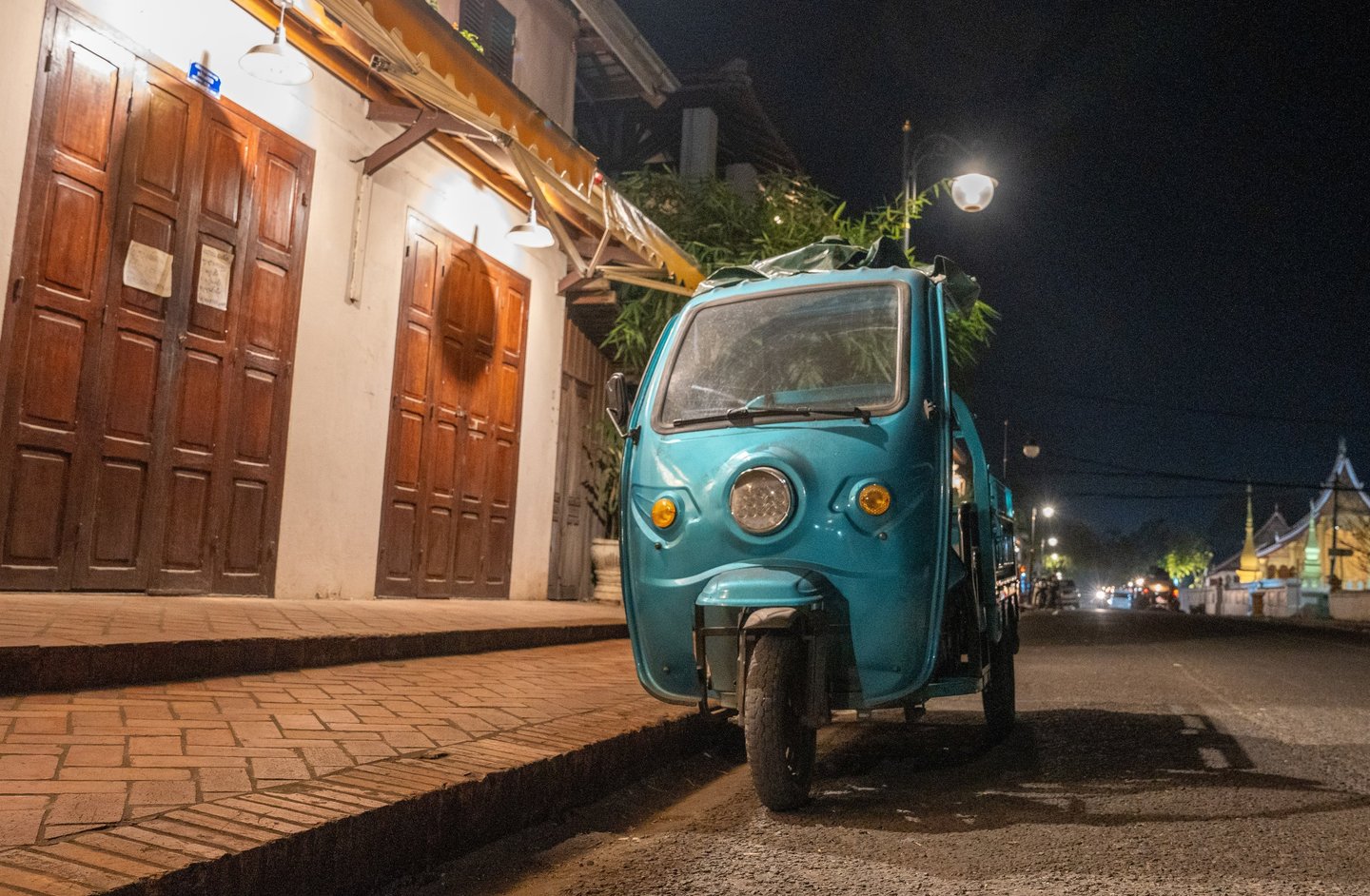
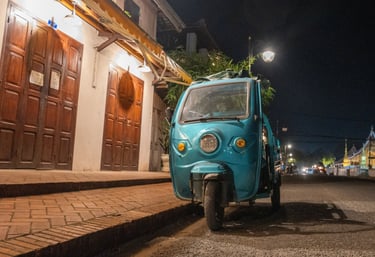
Because of this exceptional cultural value, the old town was designated a UNESCO World Heritage Site in 1995. Walking through these streets today feels almost like stepping into another era. The buildings are carefully preserved, many of them now home to small cafés, boutique hotels, galleries, and restaurants.
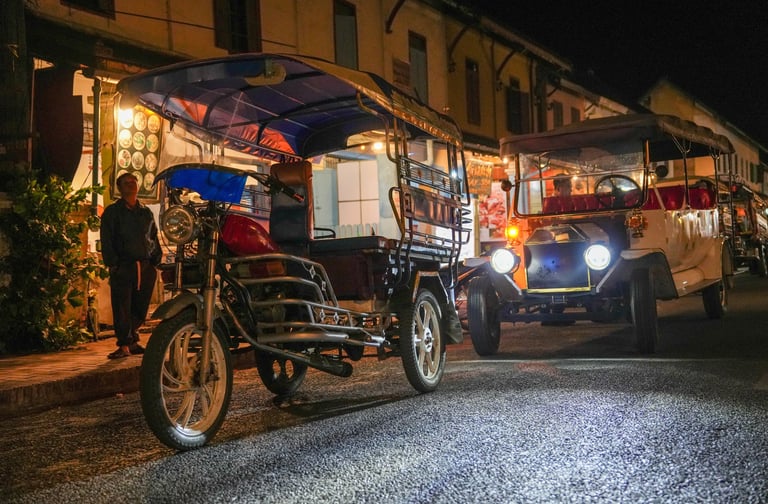
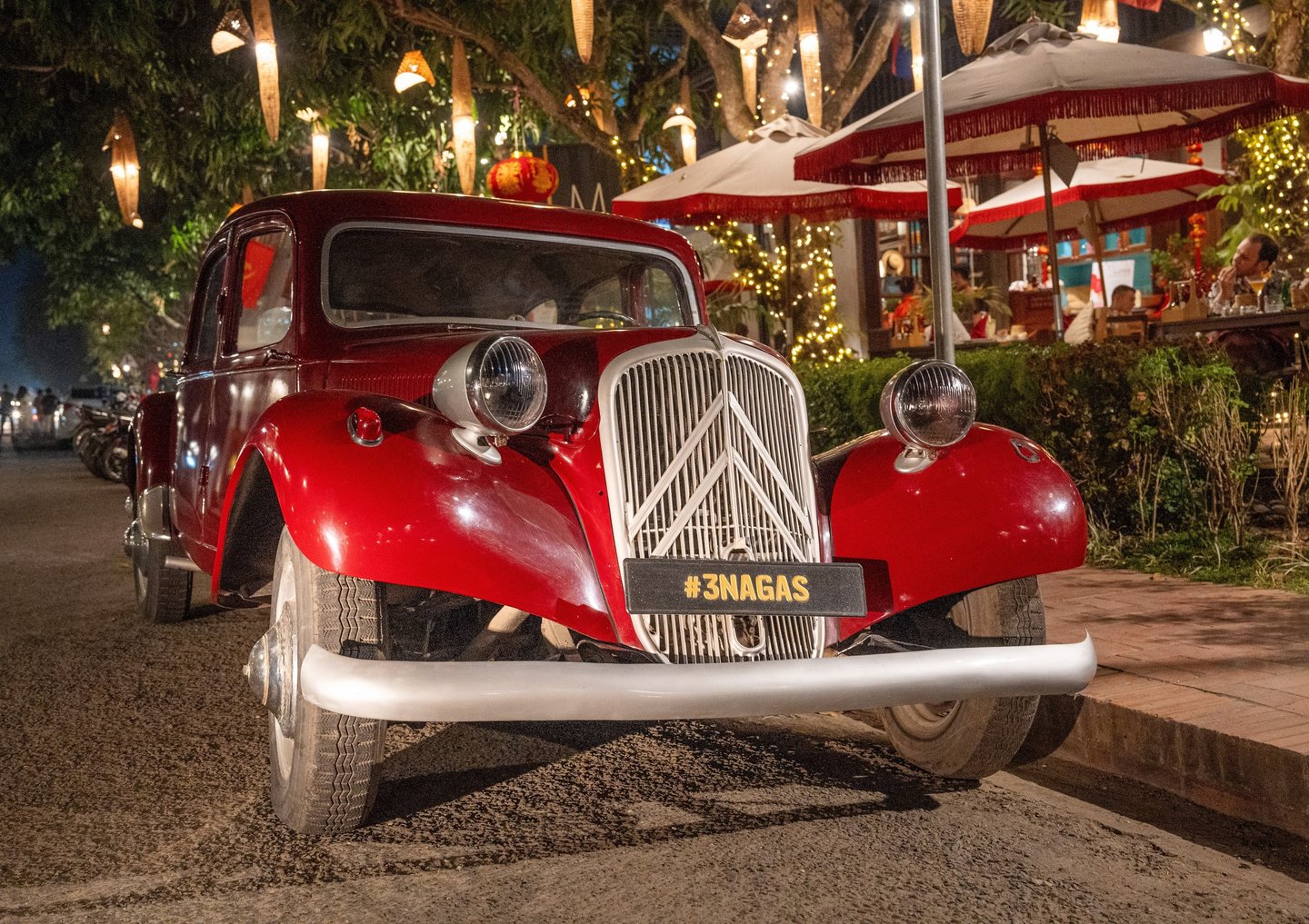
While exploring the old town with my camera, I also encountered unexpected scenes that perfectly fit the nostalgic atmosphere of the city. One of them was a beautiful classic red Citroën, parked in front of one of the colonial buildings — a small reminder of the French influence that once shaped this town.
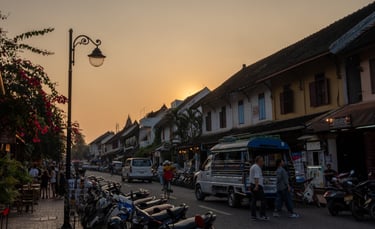
Night Market – Street Photography in the Heart of the Old Town
Every evening the main street of the historic center transforms into the lively Luang Prabang Night Market.
Rows of market stalls stretch along the street, illuminated by warm lights and colorful fabrics. For photographers this is an excellent place for street photography, as the market brings together locals, travelers, artisans, and food vendors in a constantly changing scene.
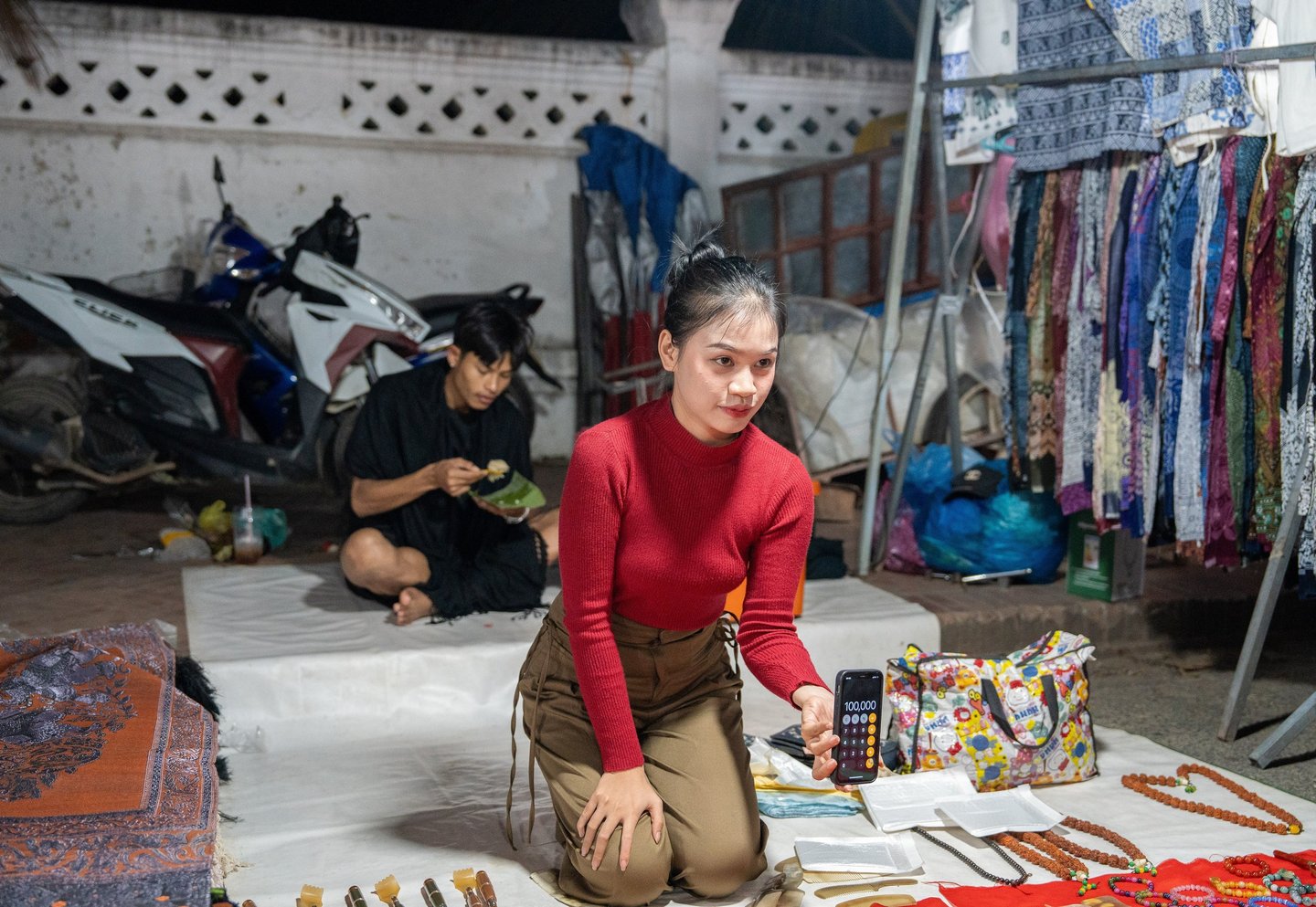
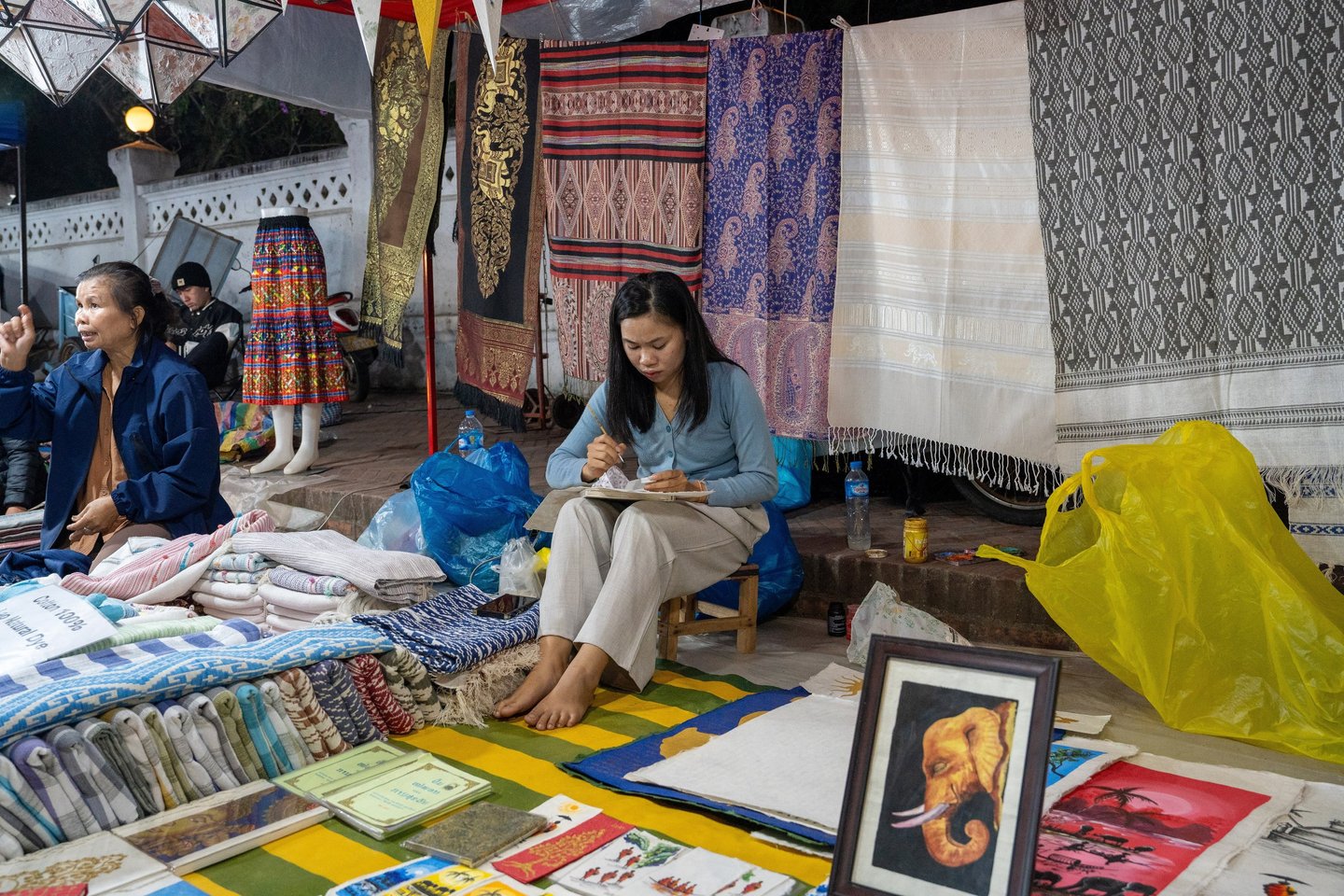
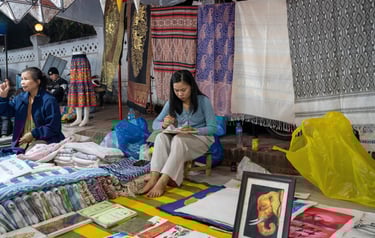
Visitors looking for souvenirs will find plenty of choices here. Handmade textiles, traditional crafts, paintings, and countless small items from the region are offered every evening. If you enjoy collecting T-shirts from the places you travel to, as we do, the Night Market is almost guaranteed to have something worth bringing home.
Beyond the souvenirs, the market also reflects the cultural richness of Laos, where local craftsmanship still plays an important role in everyday life.
Lao Street Food Market – A Place of Flavors and Encounters
Just a short walk from the Night Market you will discover another highlight of the old town — the Luang Prabang Street Food Market.
Especially in the narrow side streets, small food stalls line up next to each other, creating a lively evening atmosphere filled with the aromas of grilled meat, noodles, soups, and traditional Lao dishes.
This place is highly recommended not only for the food but also for the atmosphere. Travelers from all over the world gather here, sharing tables, conversations, and travel stories. It’s one of those rare places where you can easily start a conversation with people from completely different parts of the world
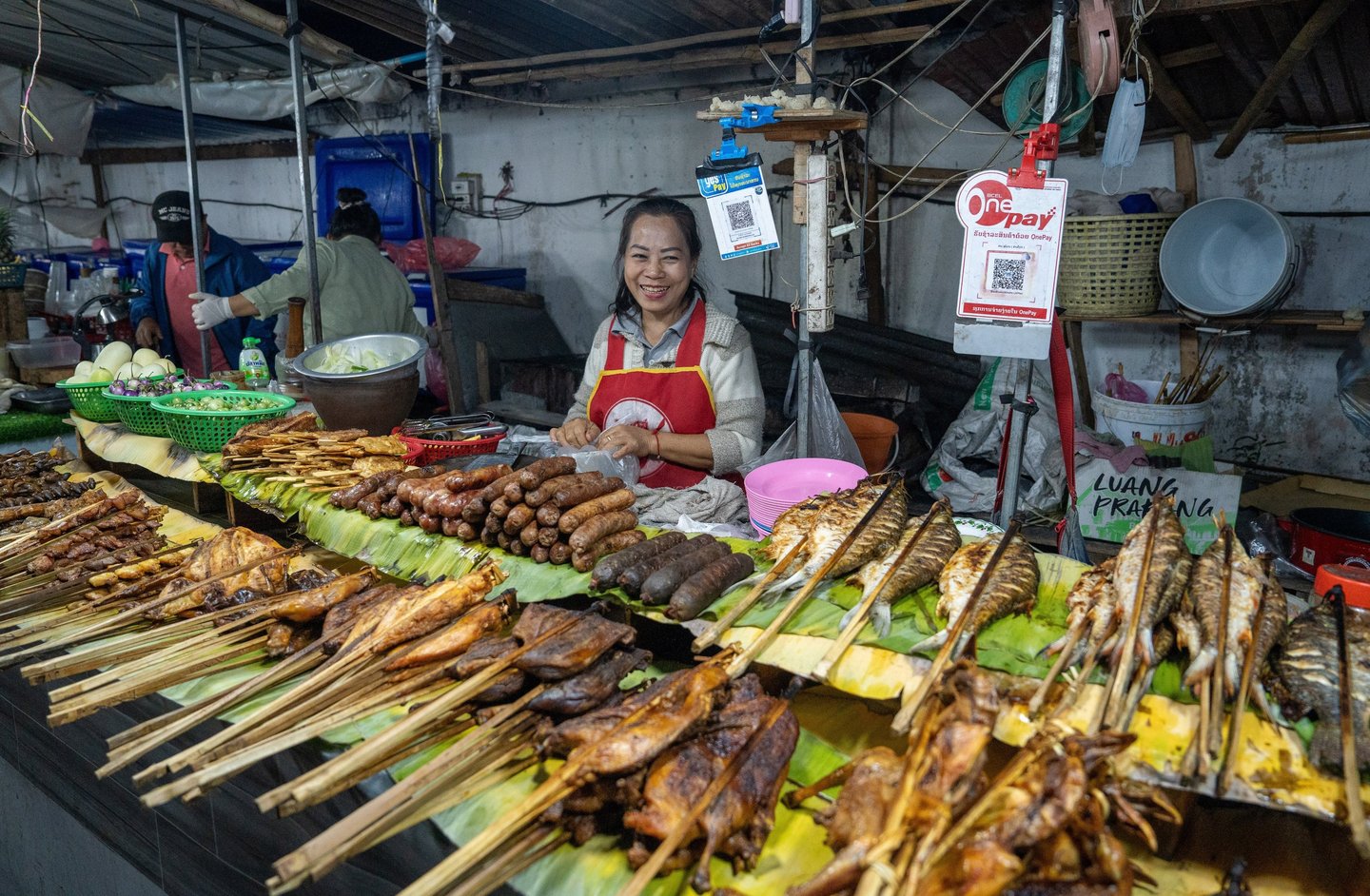


The result is a truly international atmosphere, yet still deeply rooted in the culture of Laos — a perfect ending to an evening in the historic old town of Luang Prabang
Sacred Landmarks of Luang Prabang – Haw Pha Bang and Wat Xieng Thong
The historic city of Luang Prabang is known for its extraordinary concentration of Buddhist temples, many of them quietly woven into the streets of the old town.
Among the most significant are Haw Pha Bang and Wat Xieng Thong — two sacred landmarks that reflect the spiritual and architectural identity of Laos.
For travelers, photographers, and cultural explorers alike, these temples are essential places to understand the rhythm of this UNESCO-protected town.
Haw Pha Bang – Spiritual Heart of the Royal Palace Grounds
Located within the grounds of the former Royal Palace Museum, Haw Pha Bang is one of the most revered religious buildings in Laos.
The temple houses the Phra Bang, a sacred Buddha statue that gave the city its name. According to tradition, this statue arrived in Laos centuries ago and became a symbol of both religious devotion and national identity.
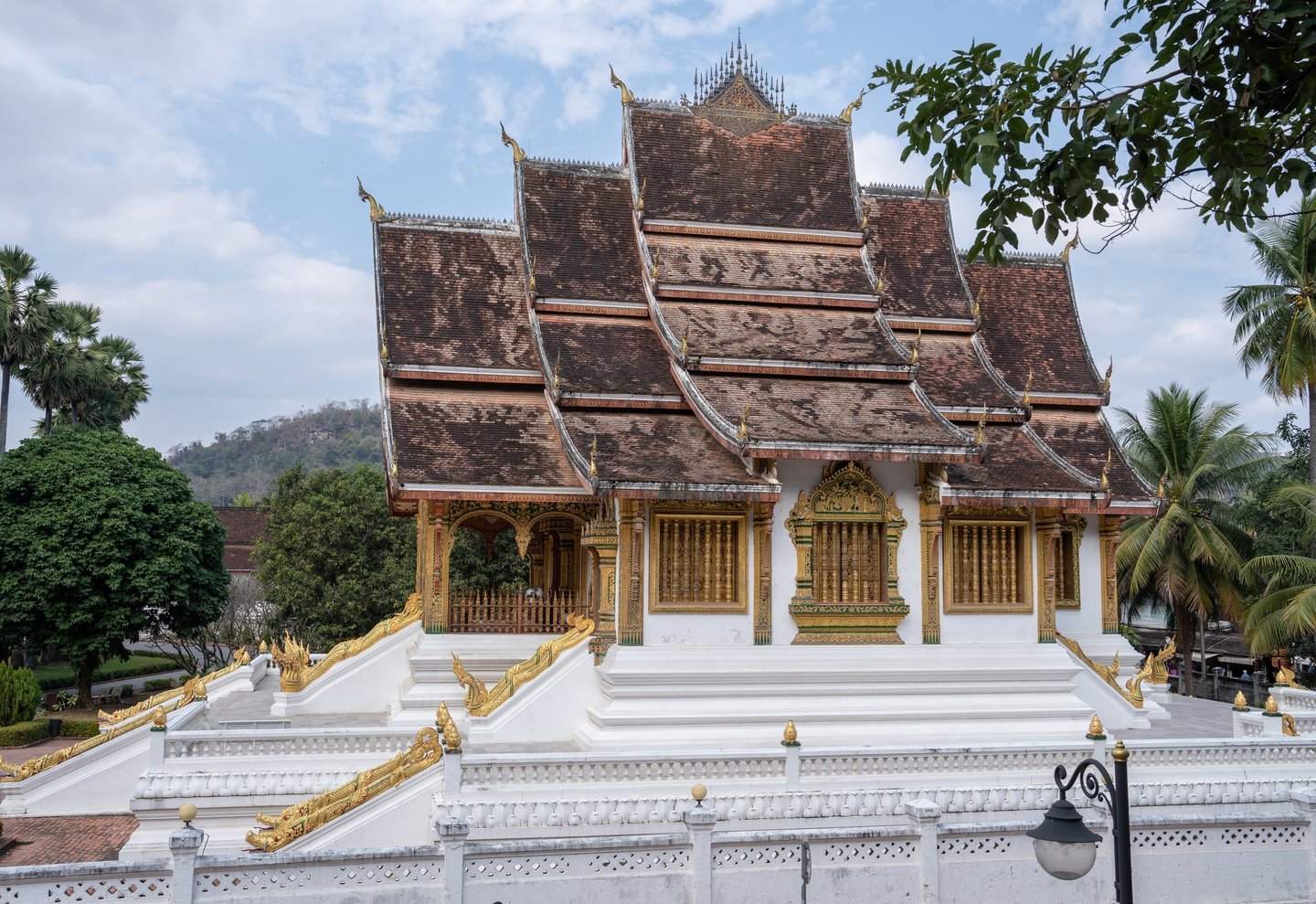

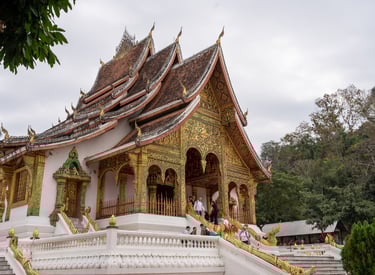
Architecturally, Haw Pha Bang stands out immediately.
Its elegant multi-tiered rooflines, golden ornamentation, and richly decorated façade represent classical Lao temple architecture, carefully designed to reflect spiritual harmony and royal heritage. For photography, the late afternoon light often creates beautiful contrasts between the temple’s golden surfaces and the surrounding greenery.
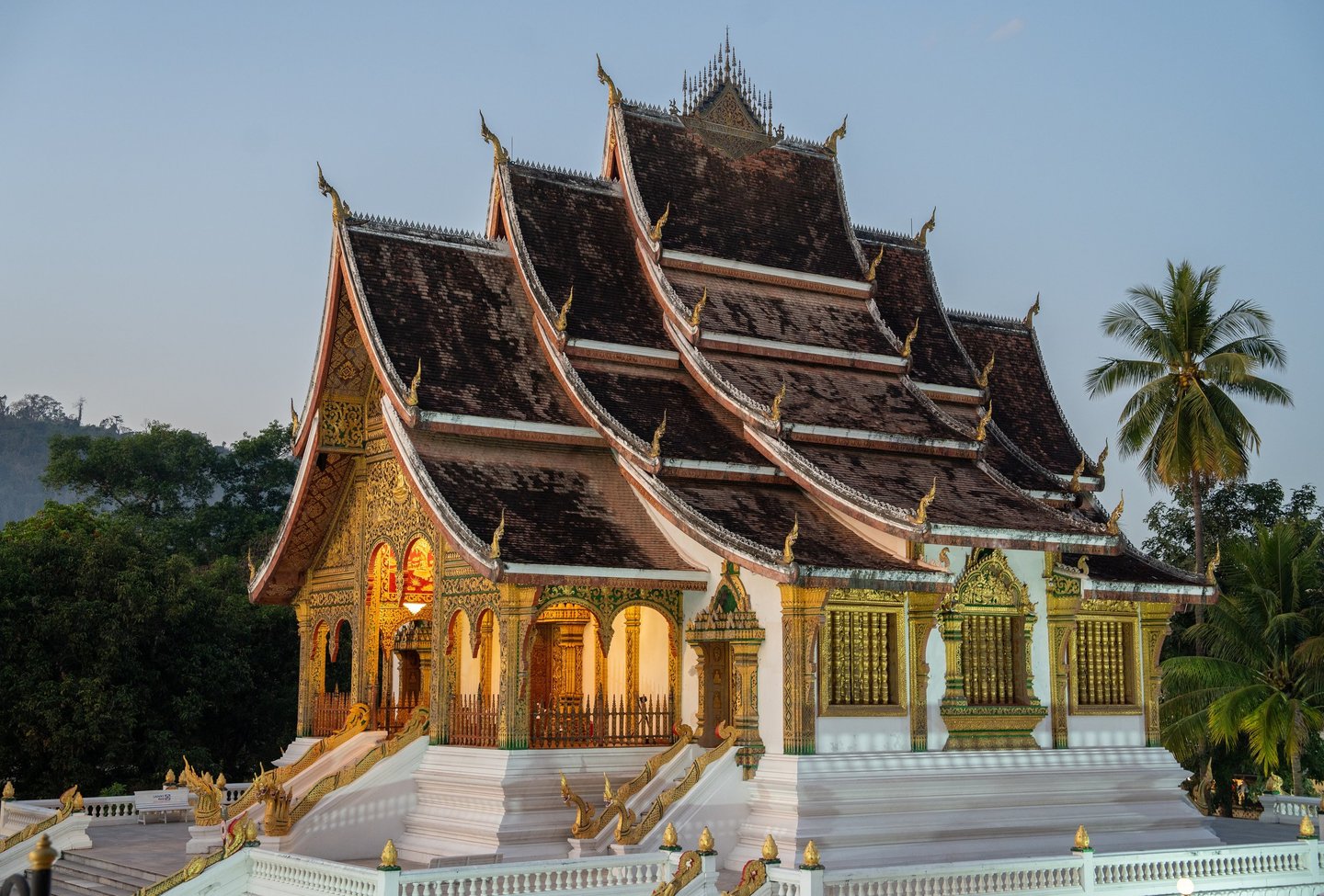


For anyone documenting Luang Prabang’s cultural landscape, Haw Pha Bang offers an important connection between the city’s royal past and its living Buddhist traditions.
Wat Xieng Thong – The Temple of the Golden City
Just a short distance away, near the banks of the Mekong River, stands Wat Xieng Thong, one of the most beautiful and historically significant temples in Laos.
Built in the 16th century during the reign of King Setthathirath, the temple complex became a ceremonial center for the Lao monarchy and an important place for religious festivals and rituals.
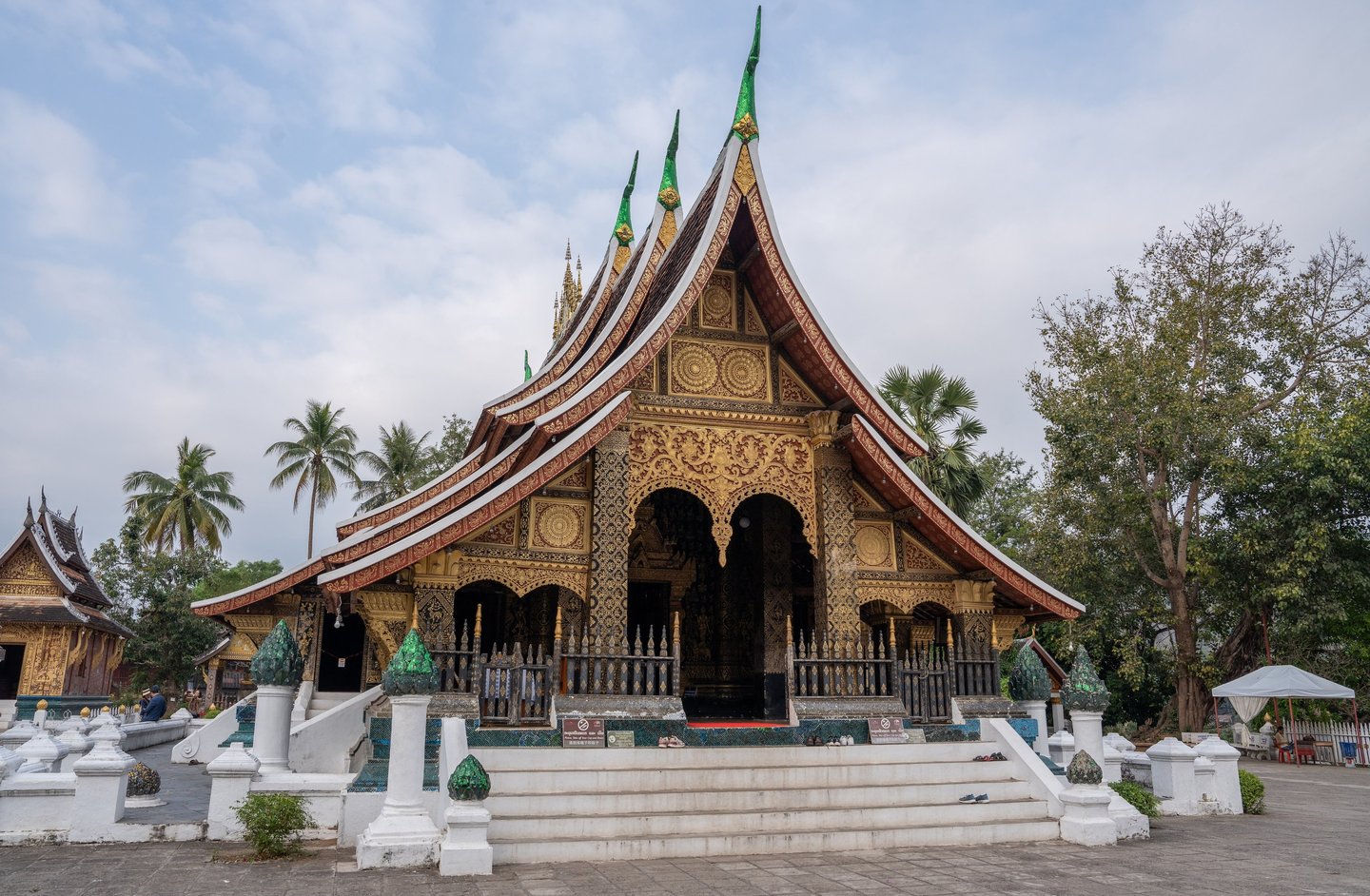
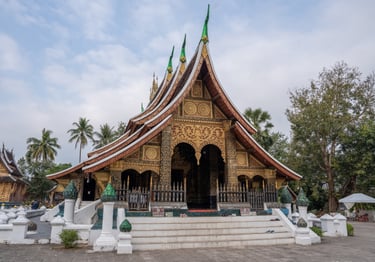


What makes Wat Xieng Thong so distinctive is its low sweeping roof, which appears to almost touch the ground — a classic feature of traditional Lao temple design.
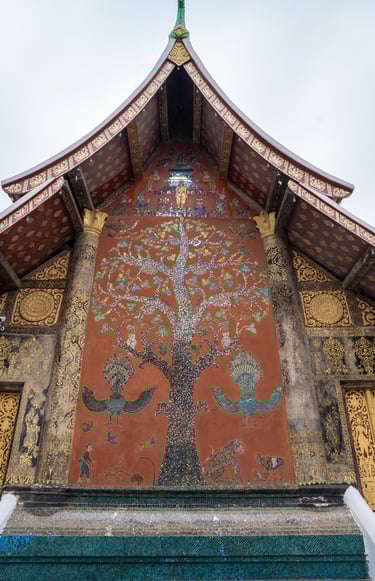
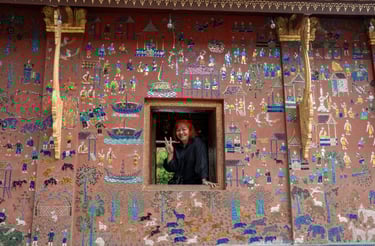
The temple complex includes several structures, richly decorated chapels, and intricate mosaics. One of the most famous artworks is the “Tree of Life” mosaic, displayed on the rear wall of the main temple building. The colorful glass pieces shimmer in the sunlight and depict symbolic scenes from nature and Buddhist mythology.
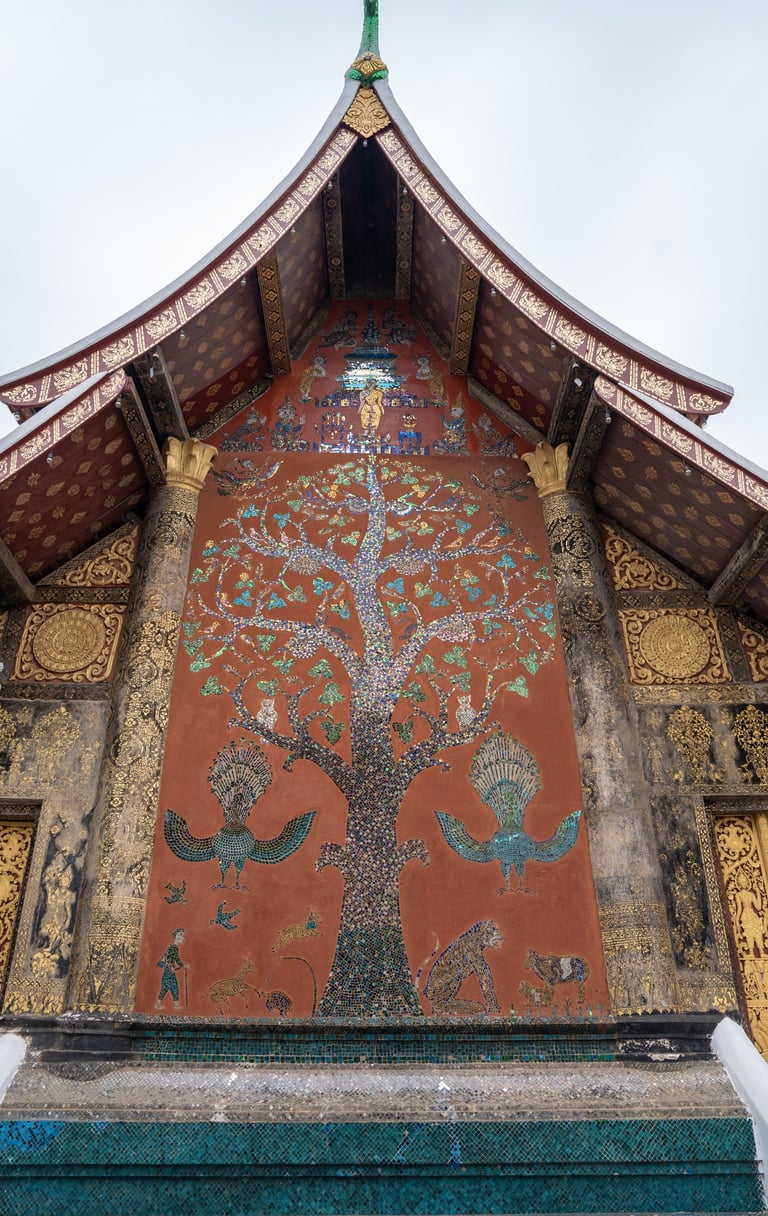
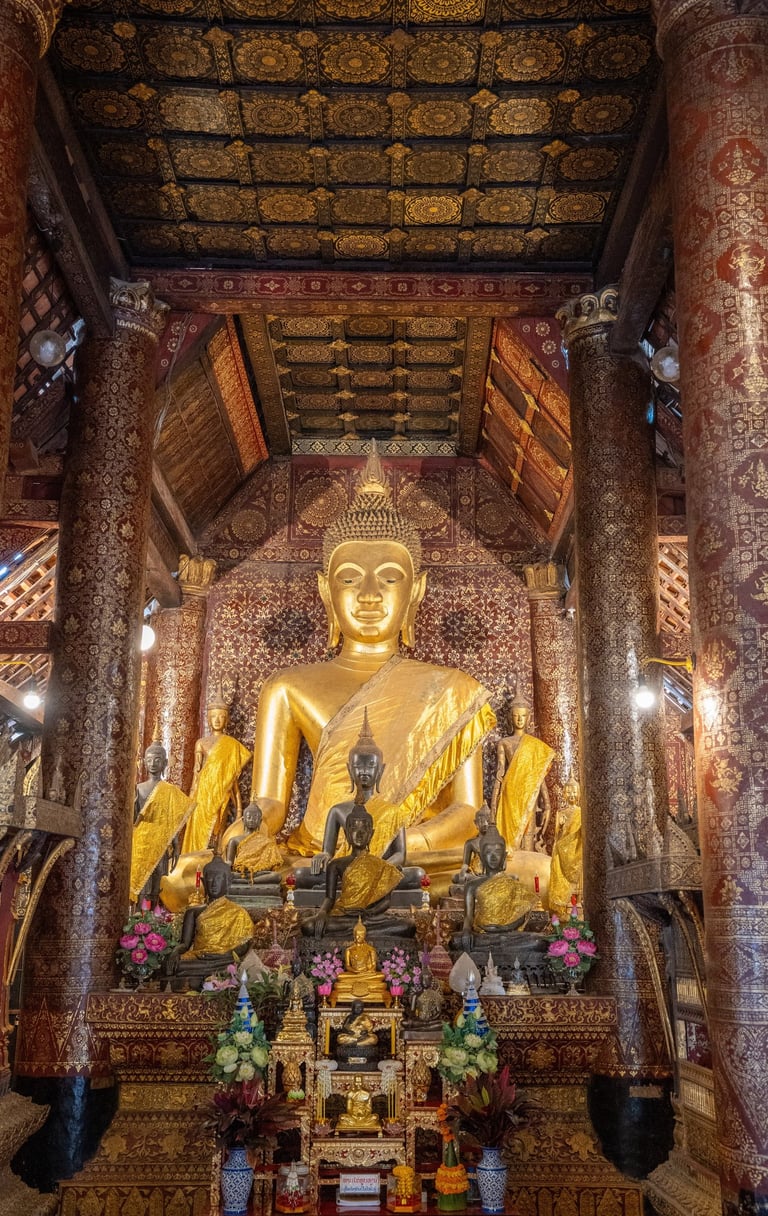
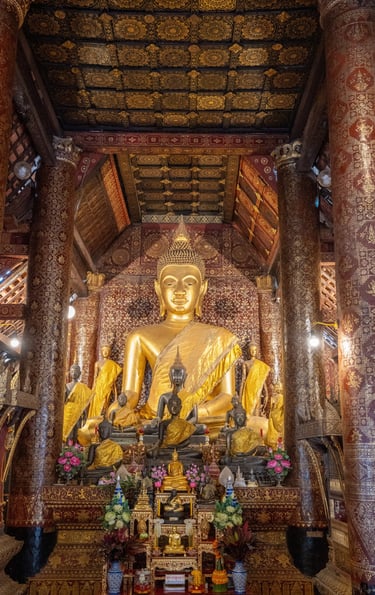
Walking through the temple grounds with a camera reveals endless photographic details:
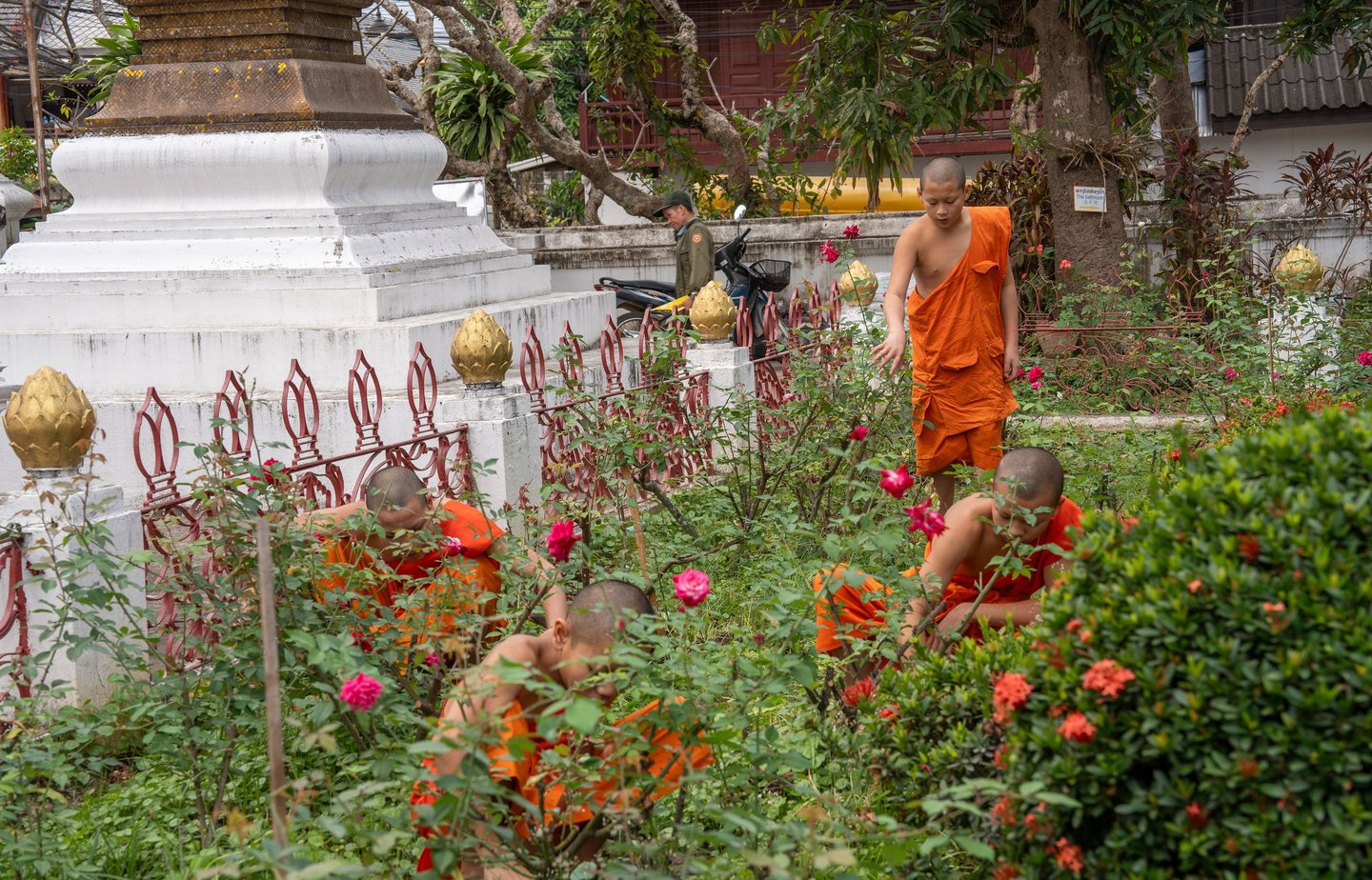
golden carvings, red lacquer doors, monks quietly moving between buildings, and the soft light filtering through ancient trees.
For travel and documentary photographers, Wat Xieng Thong offers the kind of atmosphere that makes Luang Prabang so special — a place where history, spirituality, and everyday life meet naturally.

Travel and Documentary Photography Inspiration
For me, places like Haw Pha Bang and Wat Xieng Thong represent more than just architectural landmarks.
They are part of the deeper story of Luang Prabang — a city where Buddhism, royal history, and colonial influences coexist in a unique balance.
Photographing these temples is not about capturing monuments alone.
It’s about observing the quiet moments around them: changing light, the slow movement of visitors, and the peaceful rhythm that defines this historic town.
This kind of travel and documentary photography inspiration is exactly what I aim to share on strangphotography.com.
Whether you are a traveler exploring Laos, a social media creator searching for authentic visual stories, a travel guide researching cultural destinations, or an editor looking for documentary travel imagery, Luang Prabang offers an extraordinary visual narrative waiting to be discovered.
Mount Phousi – Sunset Views Over Luang Prabang
Rising directly from the center of Luang Prabang, Mount Phousi offers one of the most impressive viewpoints in northern Laos.
The hill stands roughly 150 meters above the city and can be reached by a staircase that winds its way through small shrines and Buddhist statues before finally opening up to the summit.
From the top, the view stretches across the entire historic peninsula of Luang Prabang. On one side you see the wide flow of the Mekong River, while on the other side the quieter Nam Khan River curves around the old town.
Especially in the late afternoon, when the tropical light becomes softer, the view turns into one of the most beautiful cityscape moments in Laos.
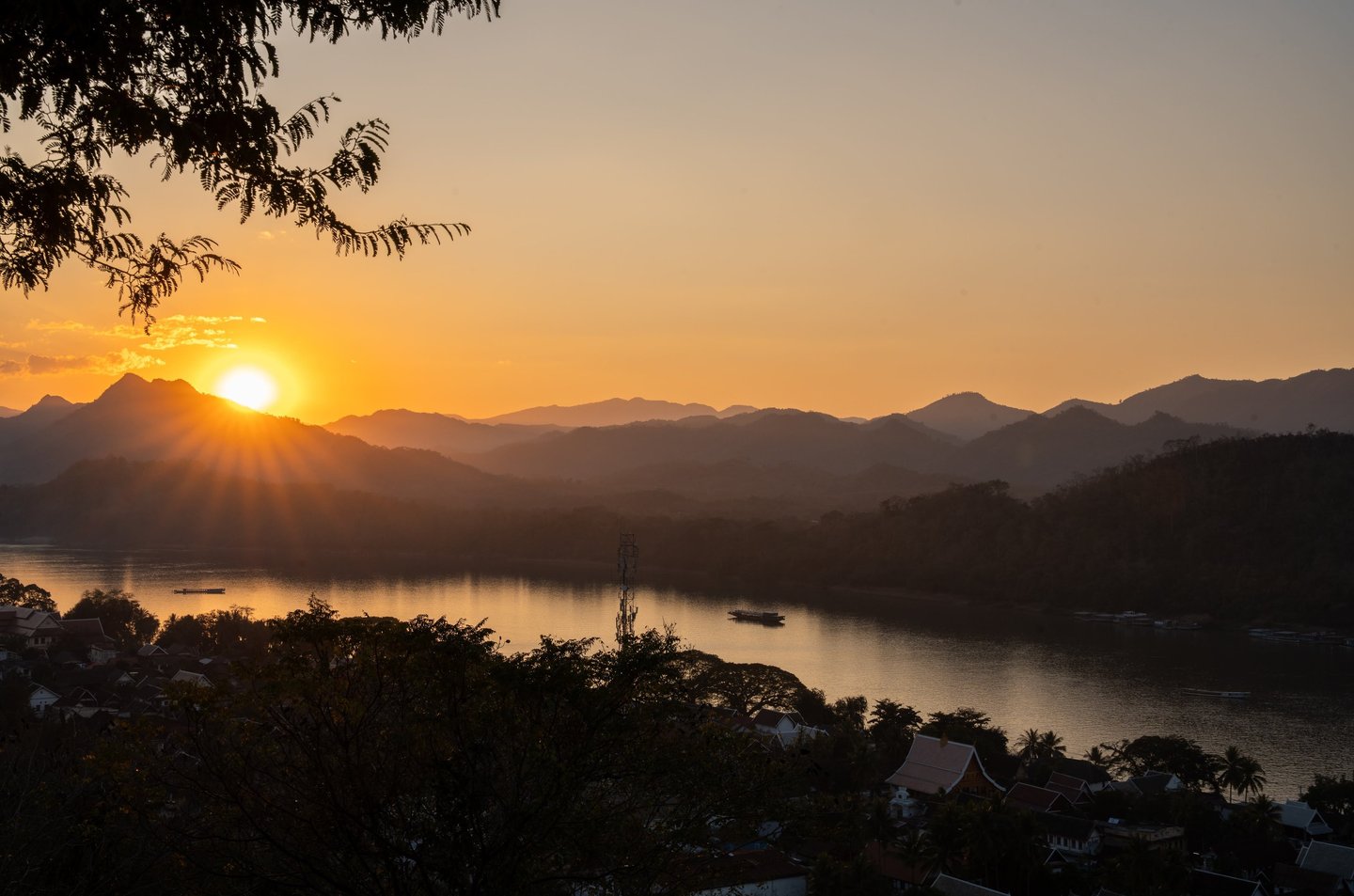
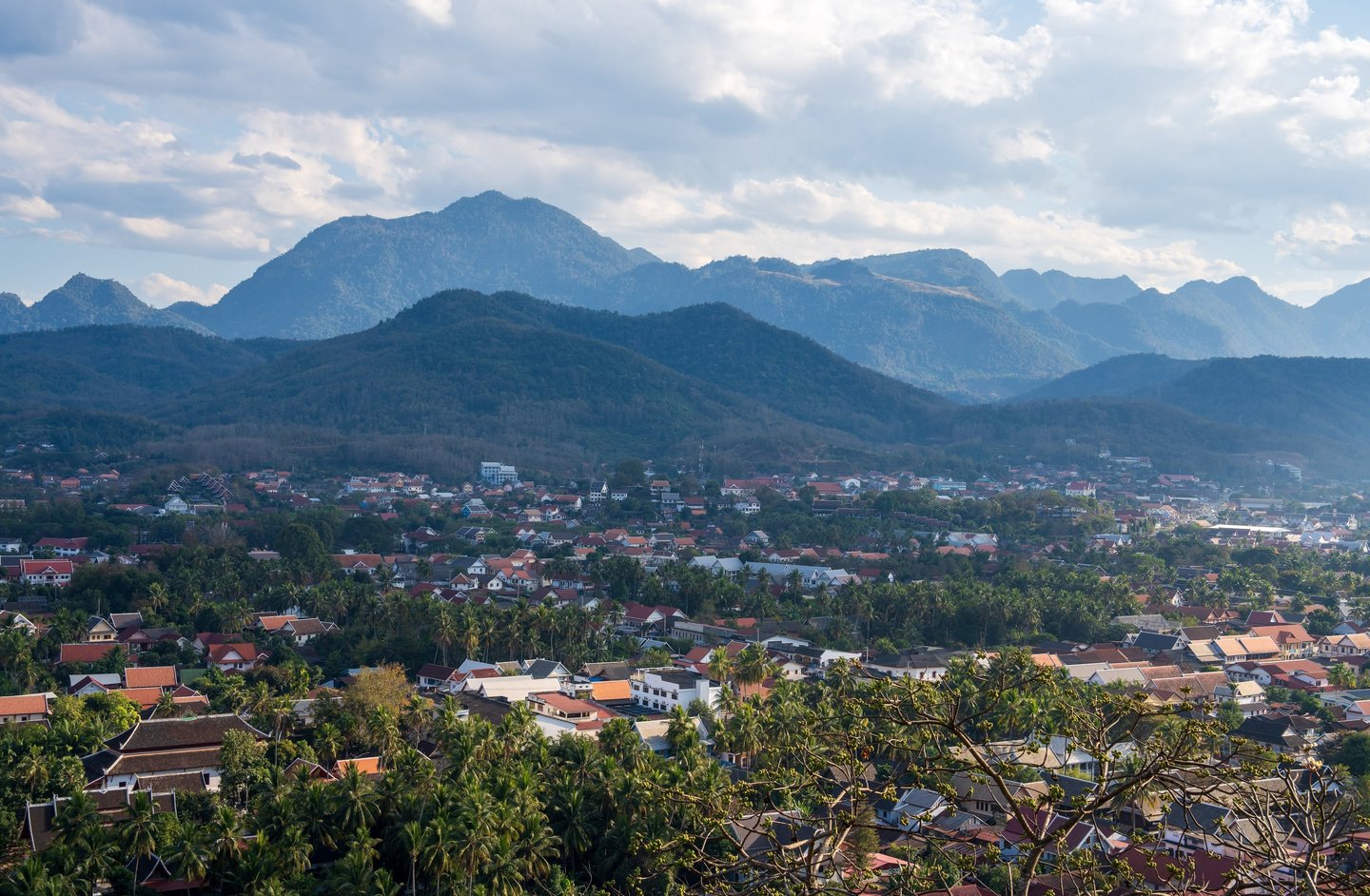
For photographers and travelers alike, Mount Phousi is the perfect place to understand the geography of the city. From here it becomes clear how Luang Prabang developed on a narrow strip of land between two rivers — a location that shaped both its history and its atmosphere.


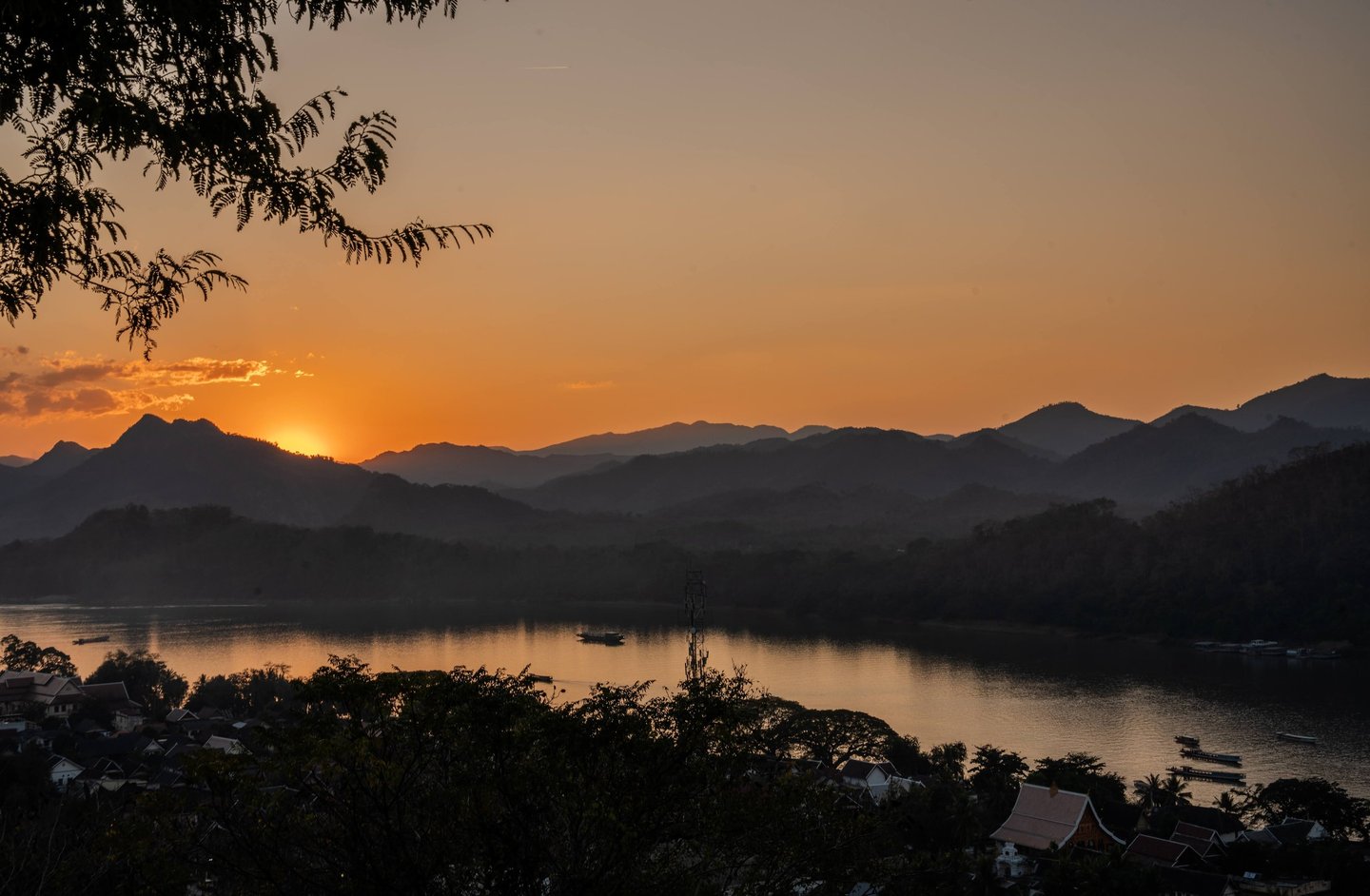
Watching the sunset from this hill is one of those moments where the pace of travel slows down and the city reveals its quiet beauty. For anyone documenting Luang Prabang through travel and documentary photography, Mount Phousi provides an unforgettable perspective.
Nam Khan River – The Quiet Side of Luang Prabang
While the Mekong often receives most of the attention, the Nam Khan River offers a completely different side of Luang Prabang.
This smaller river flows along the eastern edge of the old town before joining the Mekong just south of the historic peninsula. Compared to the wide Mekong, the Nam Khan feels calmer and more intimate.
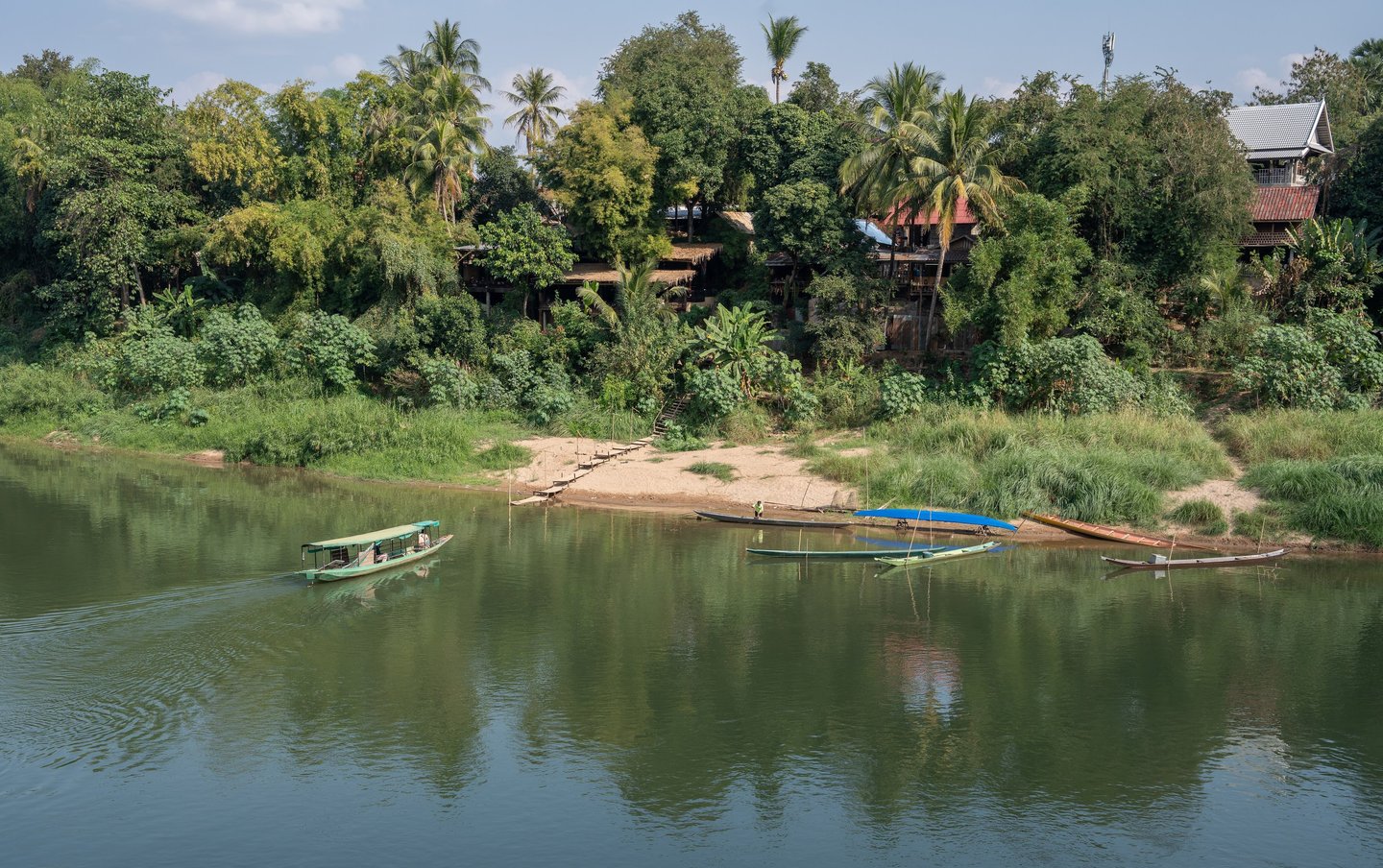
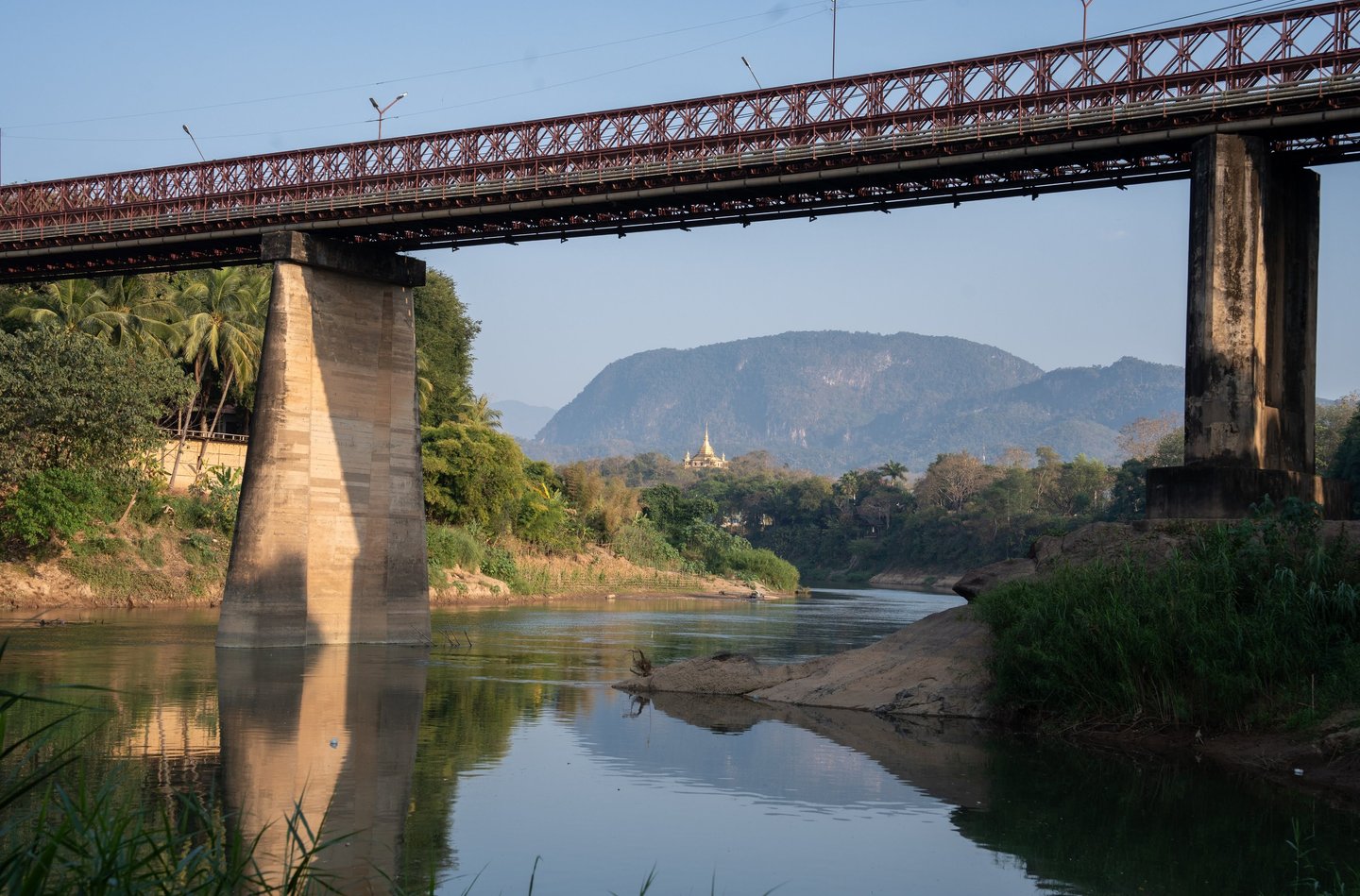
Along its banks you will find wooden bridges, quiet temples, small guesthouses and cafés overlooking the water. The pace here is slower, and the atmosphere often feels more local than touristic.
In the early morning light or during the late afternoon, the river reflects the surrounding jungle hills and wooden houses — creating beautiful natural compositions for photographers.
Several traditional crossings connect both sides of the river, including bamboo bridges that are rebuilt each year after the rainy season. These crossings are part of everyday life and provide interesting visual elements for documentary photography
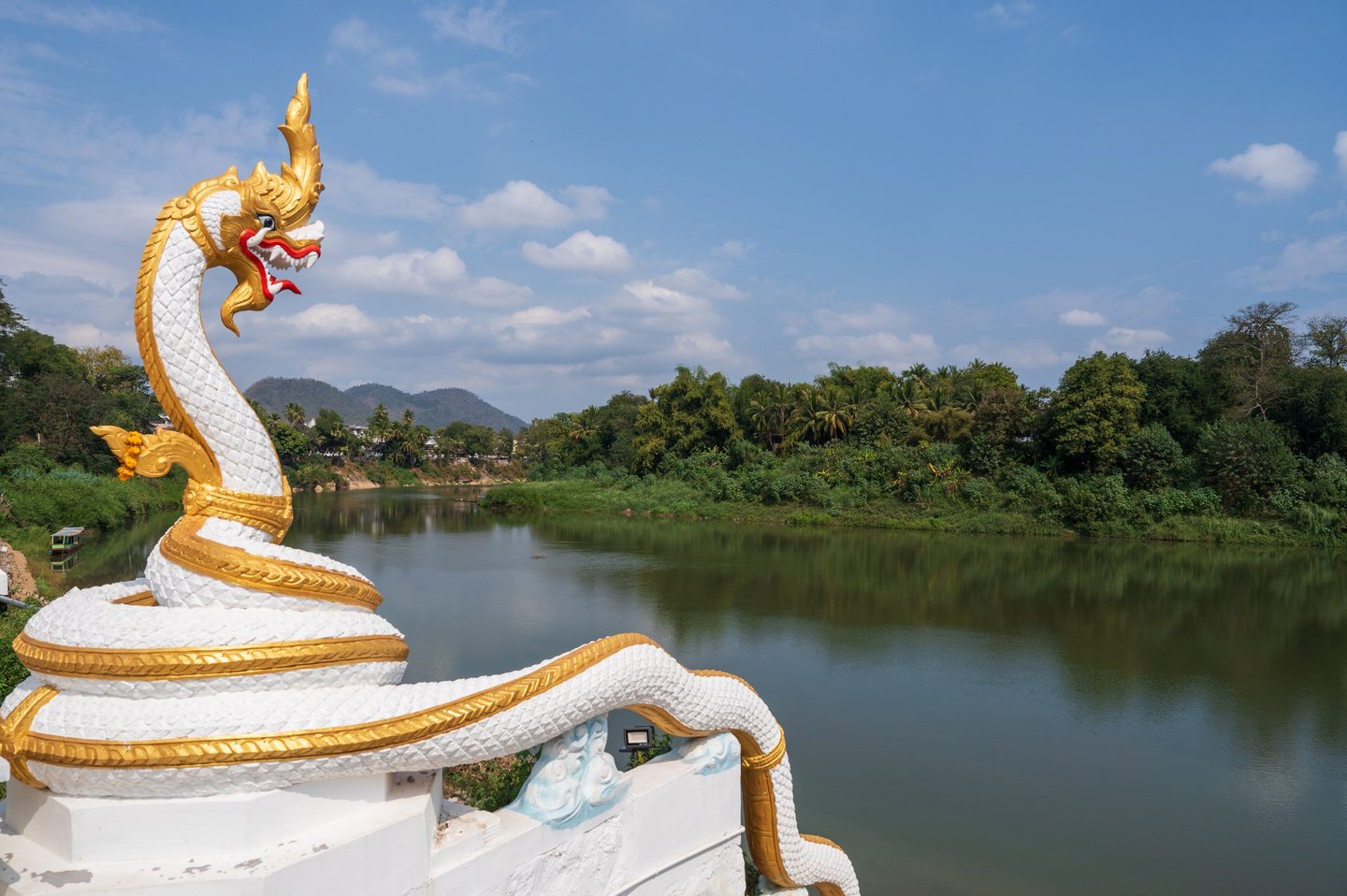


For visitors who want to see more than just the main attractions of Luang Prabang, the Nam Khan River offers exactly that — a peaceful contrast to the busier streets of the old town.
Travel and Documentary Photography Inspiration
Both Mount Phousi and the Nam Khan River show how diverse Luang Prabang really is.
From the elevated panorama above the city to the quiet riverbanks below, these places reveal the natural setting that defines the character of this UNESCO-protected town.
For me as a travel and documentary photographer, these locations are not just scenic viewpoints. They are places where light, landscape and daily life come together naturally.
Kuang Si Waterfall – Morning Light in the Jungle of Luang Prabang
About 30 kilometers outside Luang Prabang, surrounded by dense tropical forest, lies one of the most beautiful natural landscapes in Laos — the Kuang Si Waterfall.
We decided to head there early in the morning, long before the usual wave of visitors arrives. For photographers, timing often makes the difference — and this time it certainly did. When we reached the park, the forest was still quiet and the soft morning light filtered through the trees, creating a calm atmosphere that disappears later in the day.

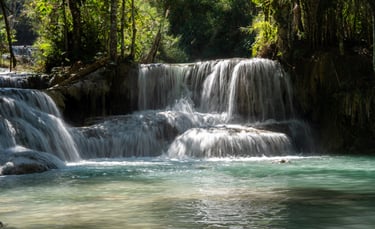
Kuang Si is famous for its turquoise limestone pools, where mineral-rich water flows gently over several natural terraces before reaching the main cascade. The contrast between the bright blue water, pale rock formations, and the deep green jungle creates a landscape that feels almost surreal.
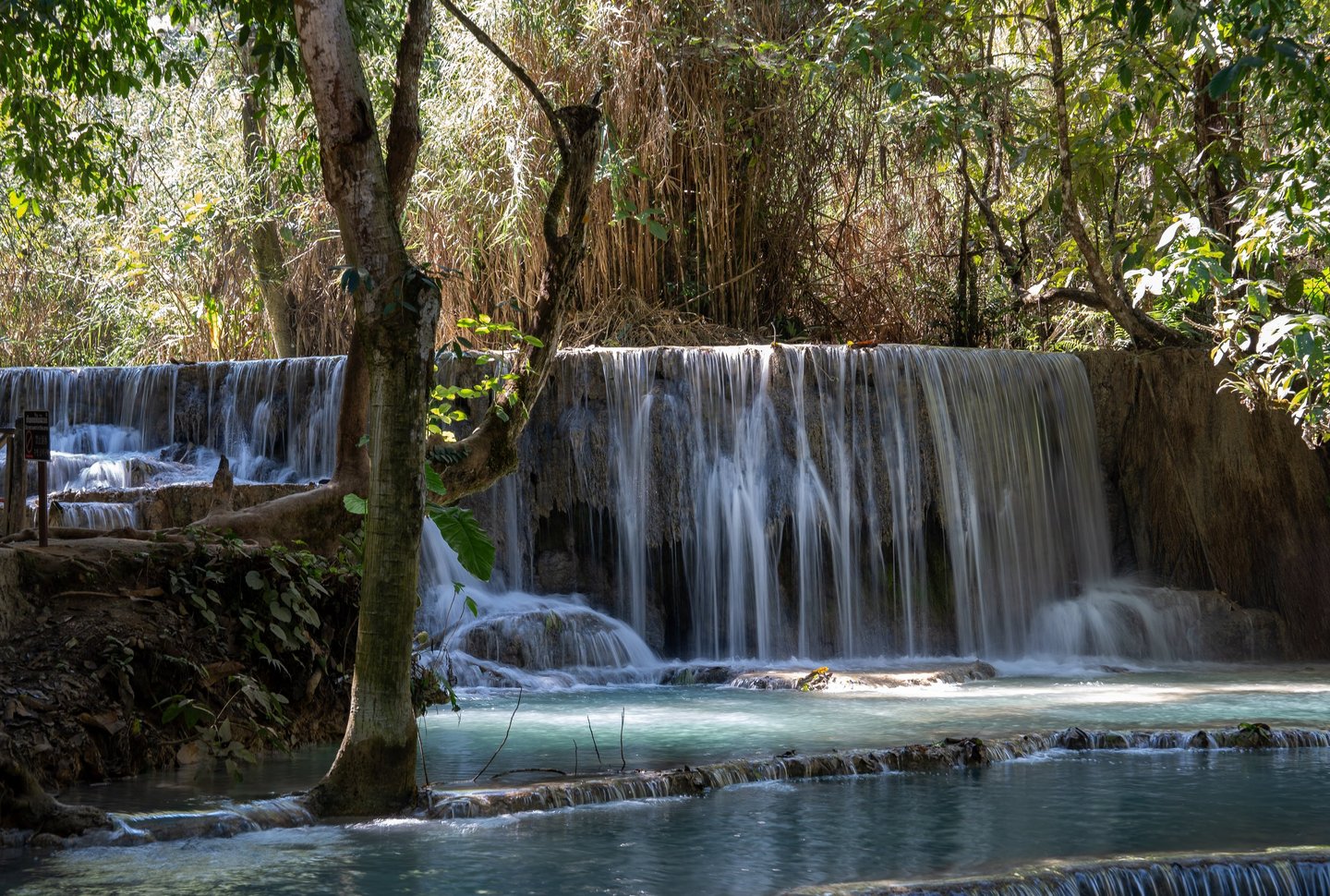
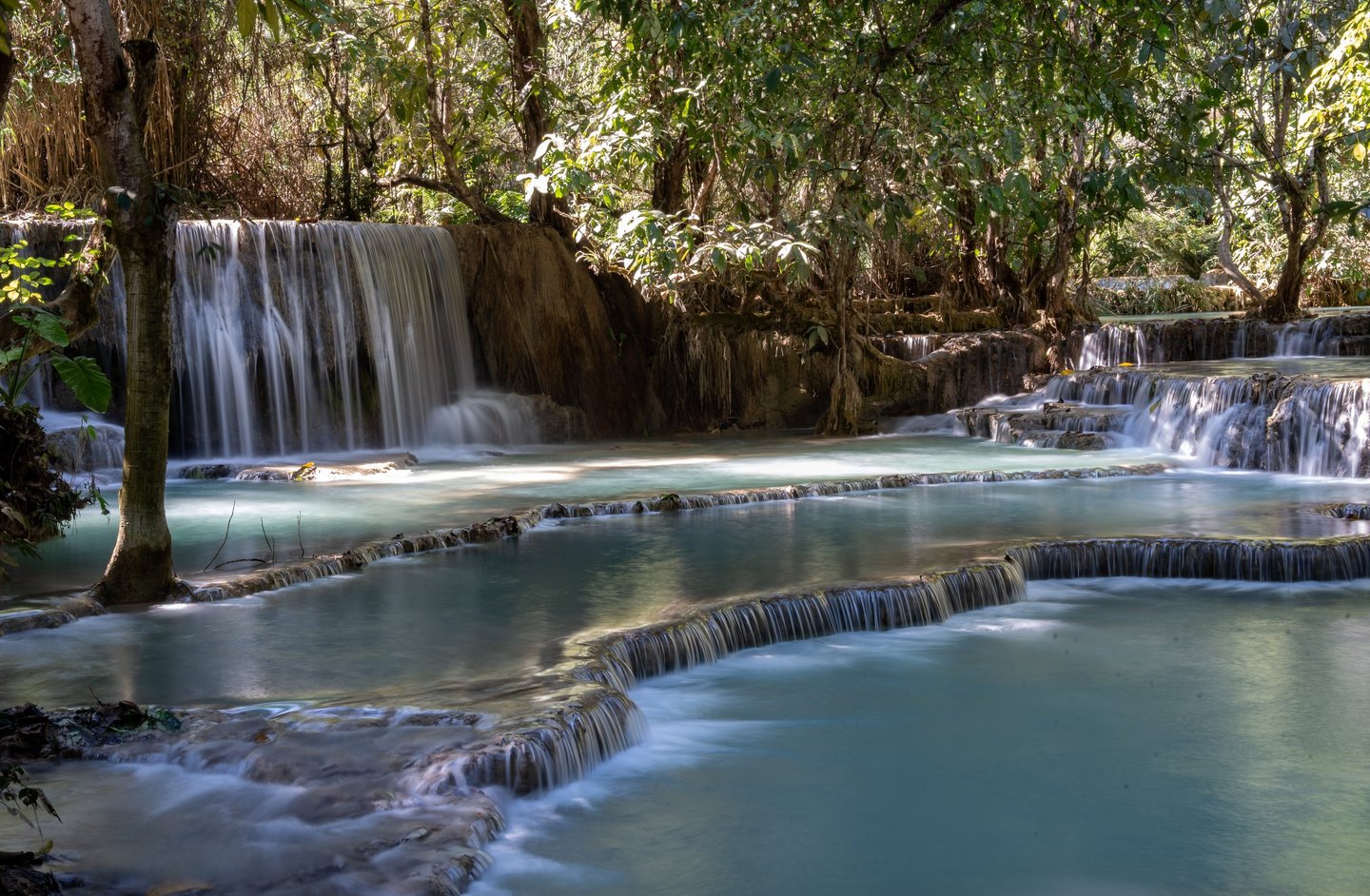
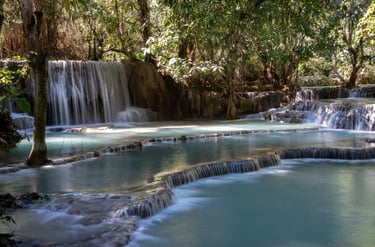
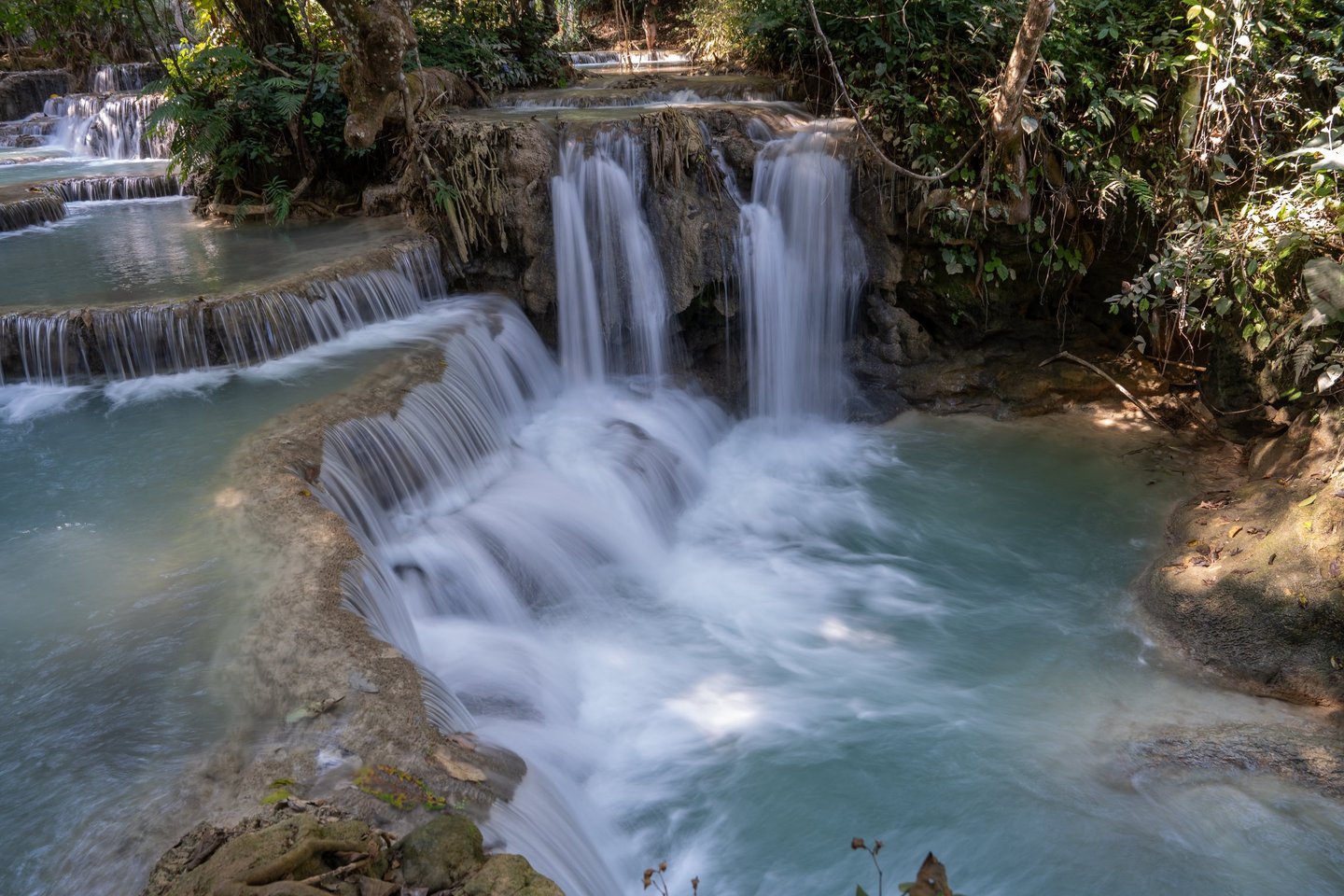
Arriving early allowed me to photograph the falls without the crowds of tourists and social media creators who usually gather here later in the day. For travel and documentary photography, these quiet moments are often the most rewarding.
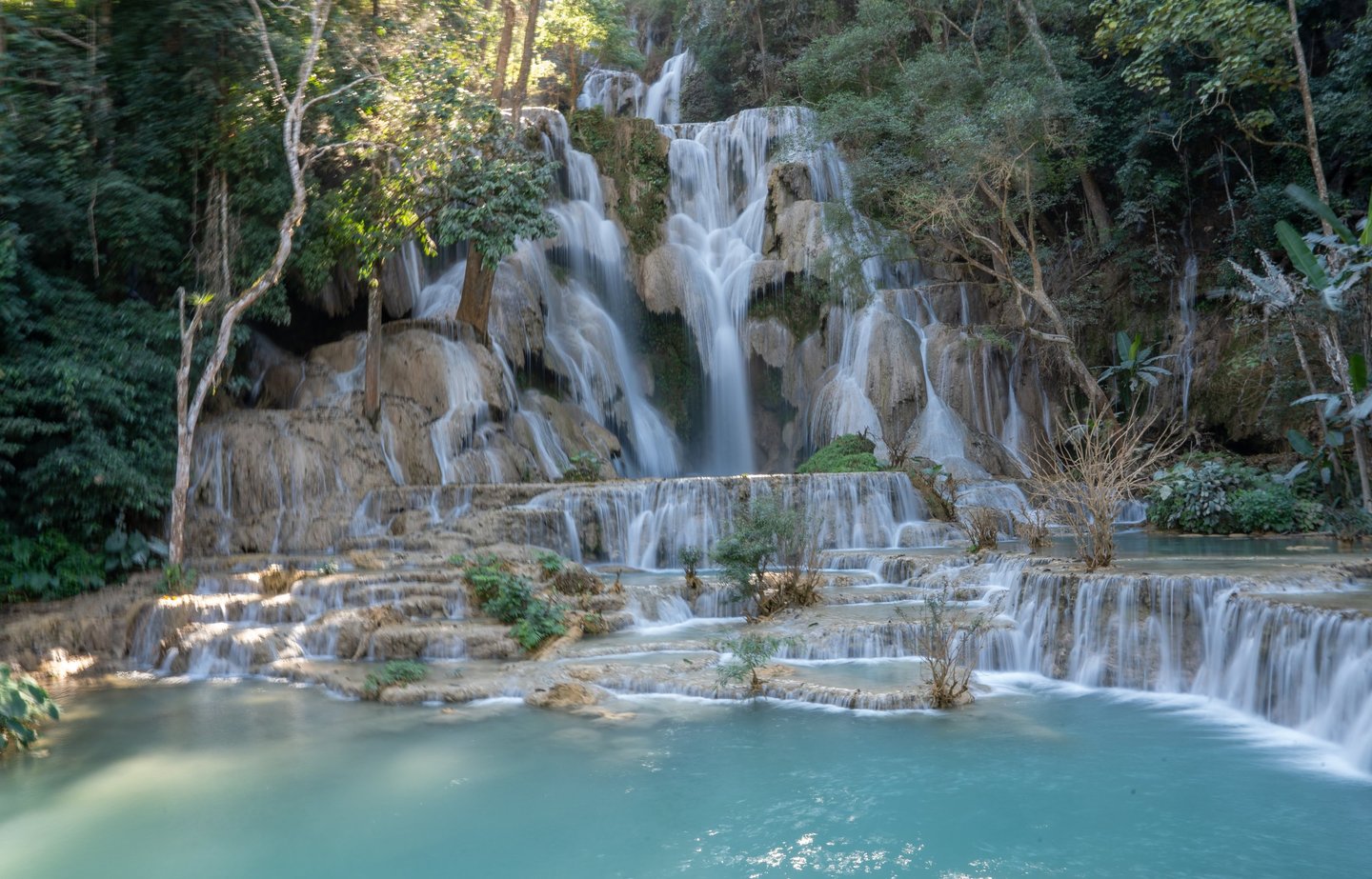
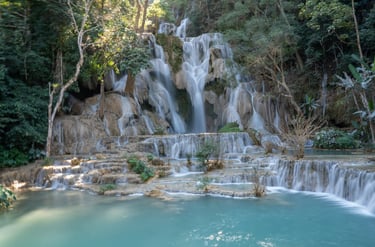
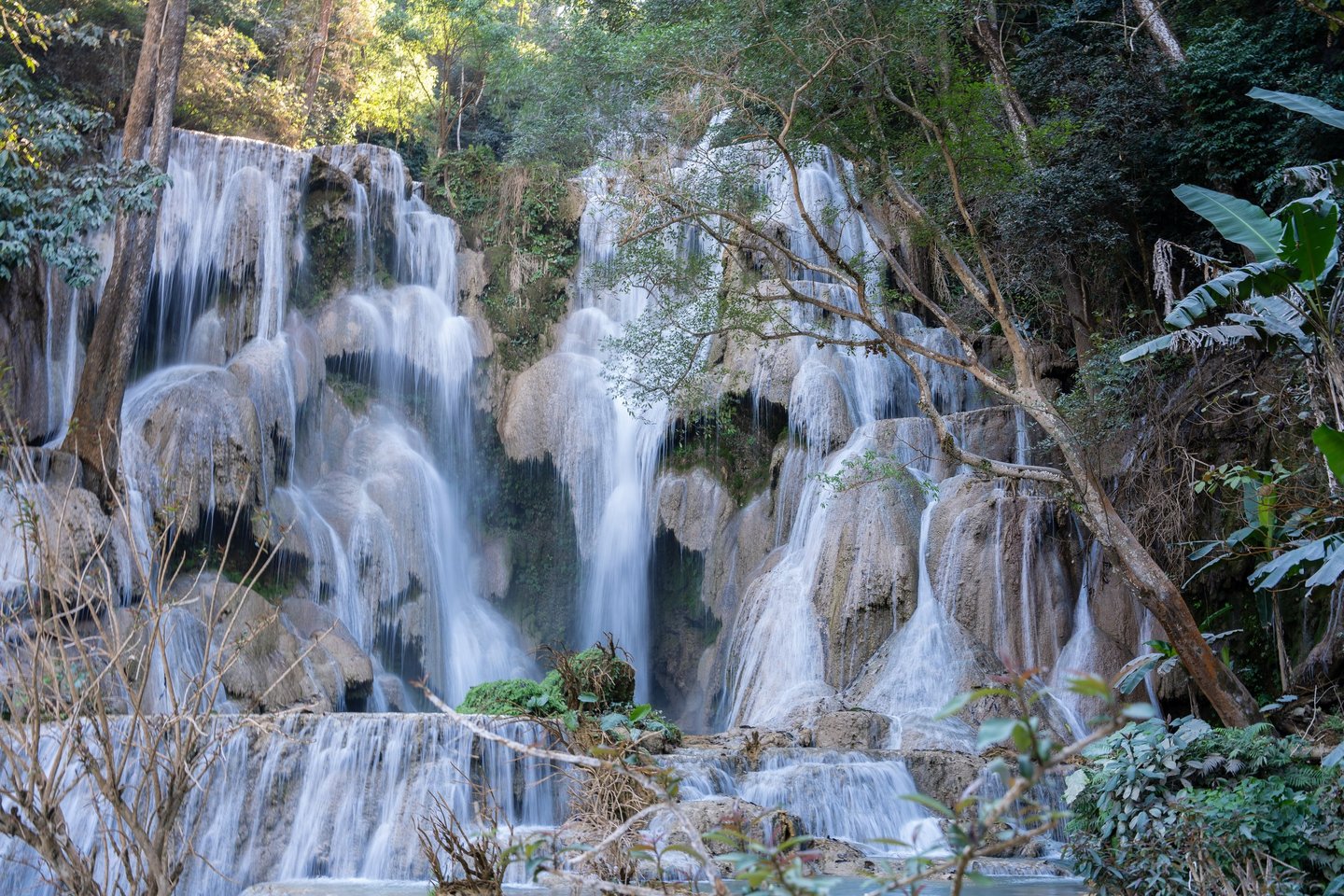
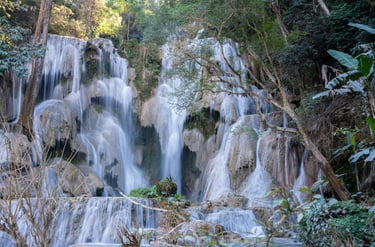
For visitors exploring Luang Prabang, Kuang Si offers a completely different perspective on the region — away from temples and markets, deep in the rainforest that surrounds this historic city.
Kai Pen – A Traditional Lao Snack from the Mekong Villages
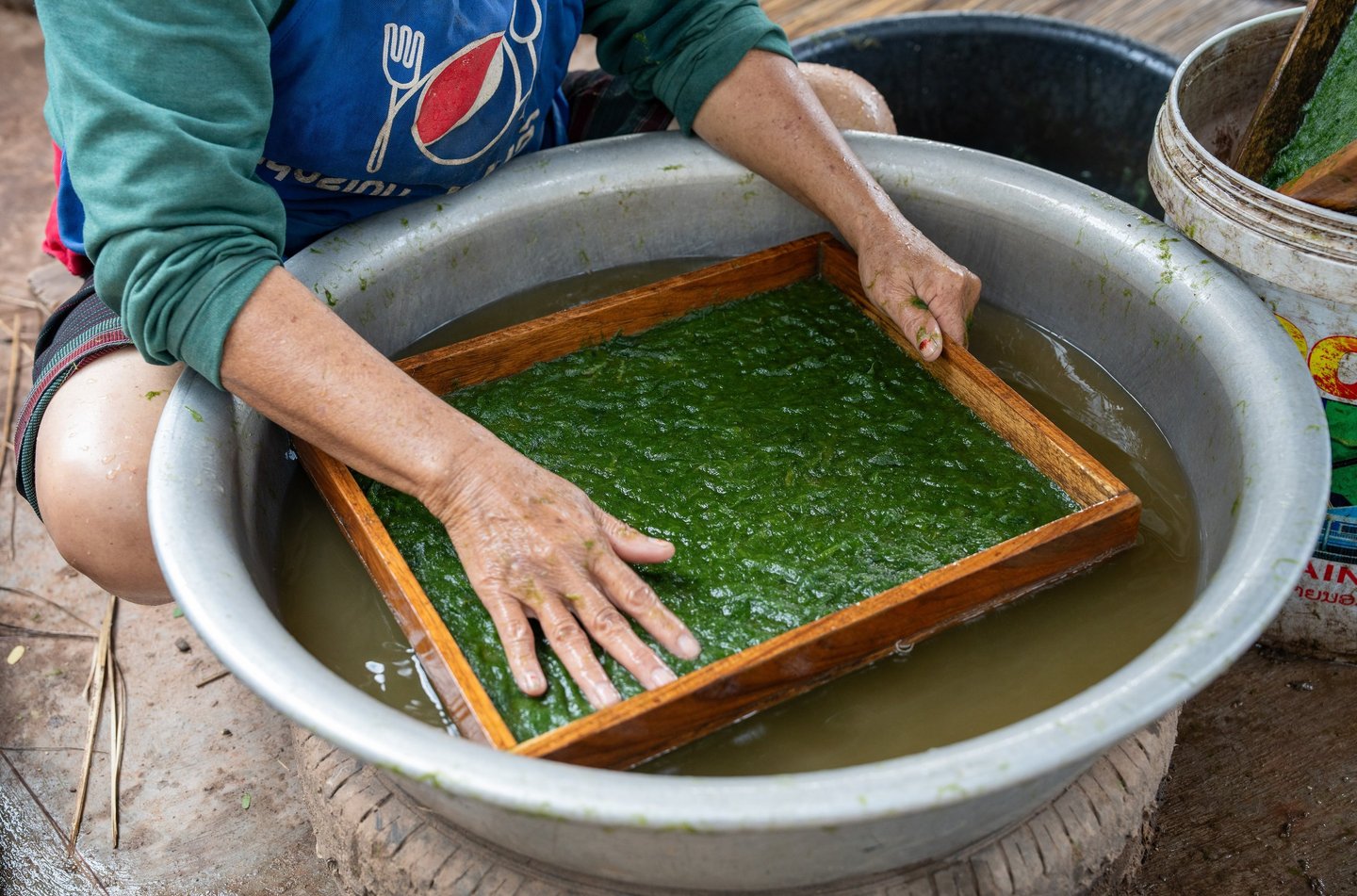
Just outside Luang Prabang, along the banks of the mighty Mekong River, we visited a small traditional village where daily life still follows a very simple rhythm. This is where Kai Pen, one of the most distinctive snacks in Laos, is produced.
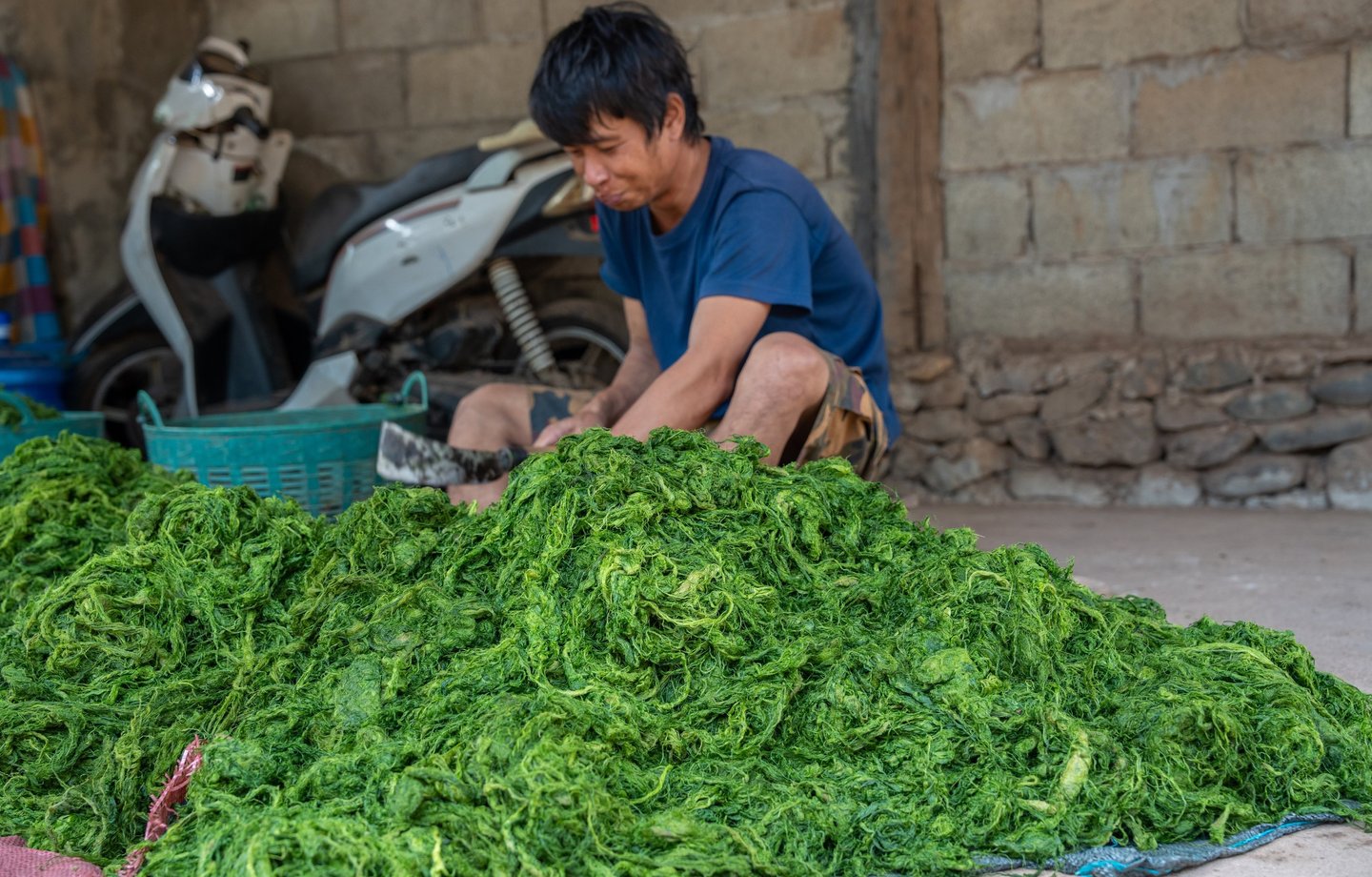
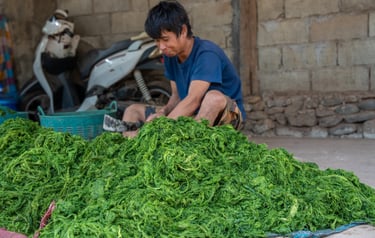
Kai Pen is made from freshwater green algae collected directly from the Mekong during the dry season, when the water level is low and the algae grow along the rocks near the riverbanks. The harvested algae are carefully cleaned and mixed with ingredients such as garlic, vegetables, and sesame seeds, creating a thin layer that is then spread onto bamboo mats and left to dry in the sun.
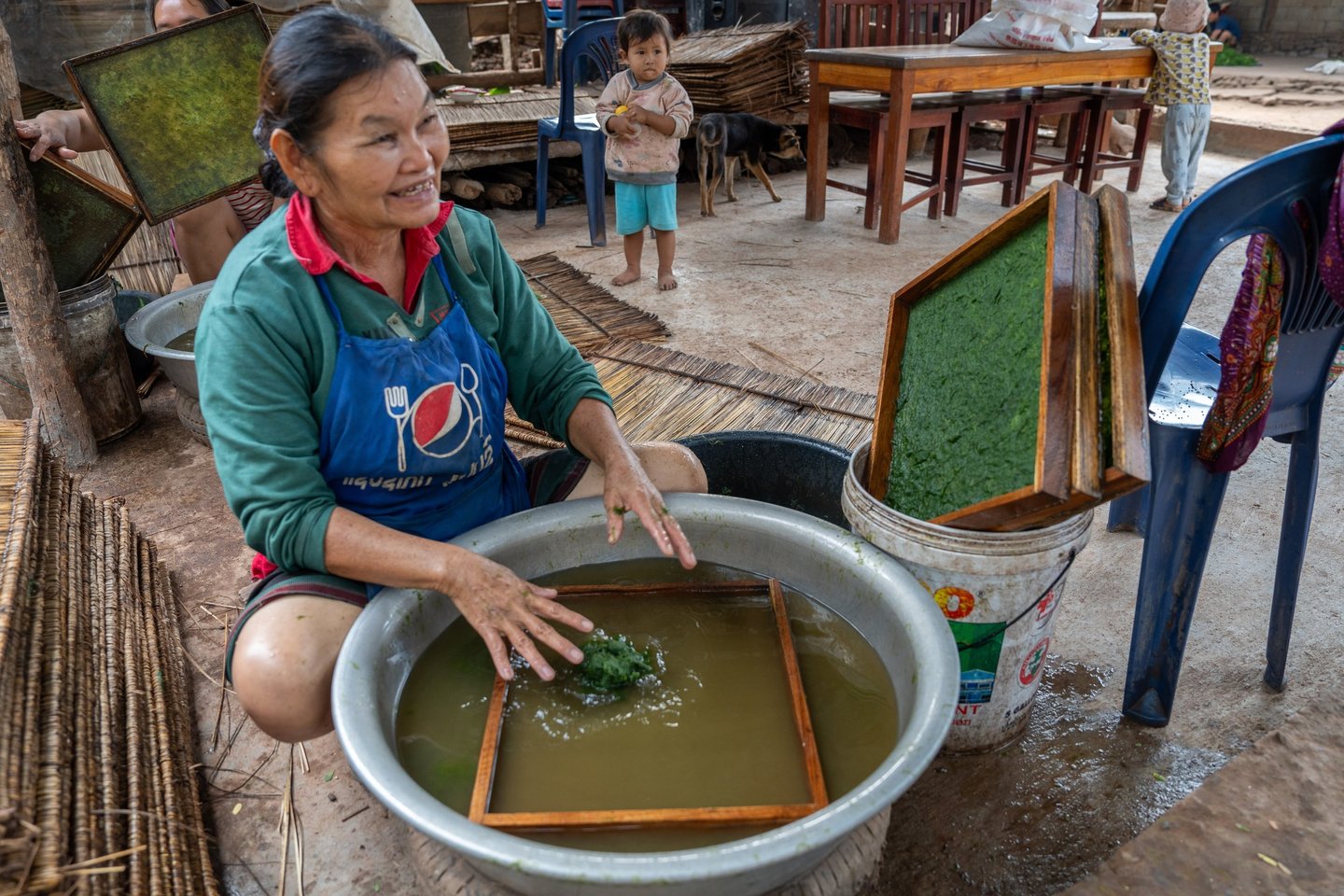

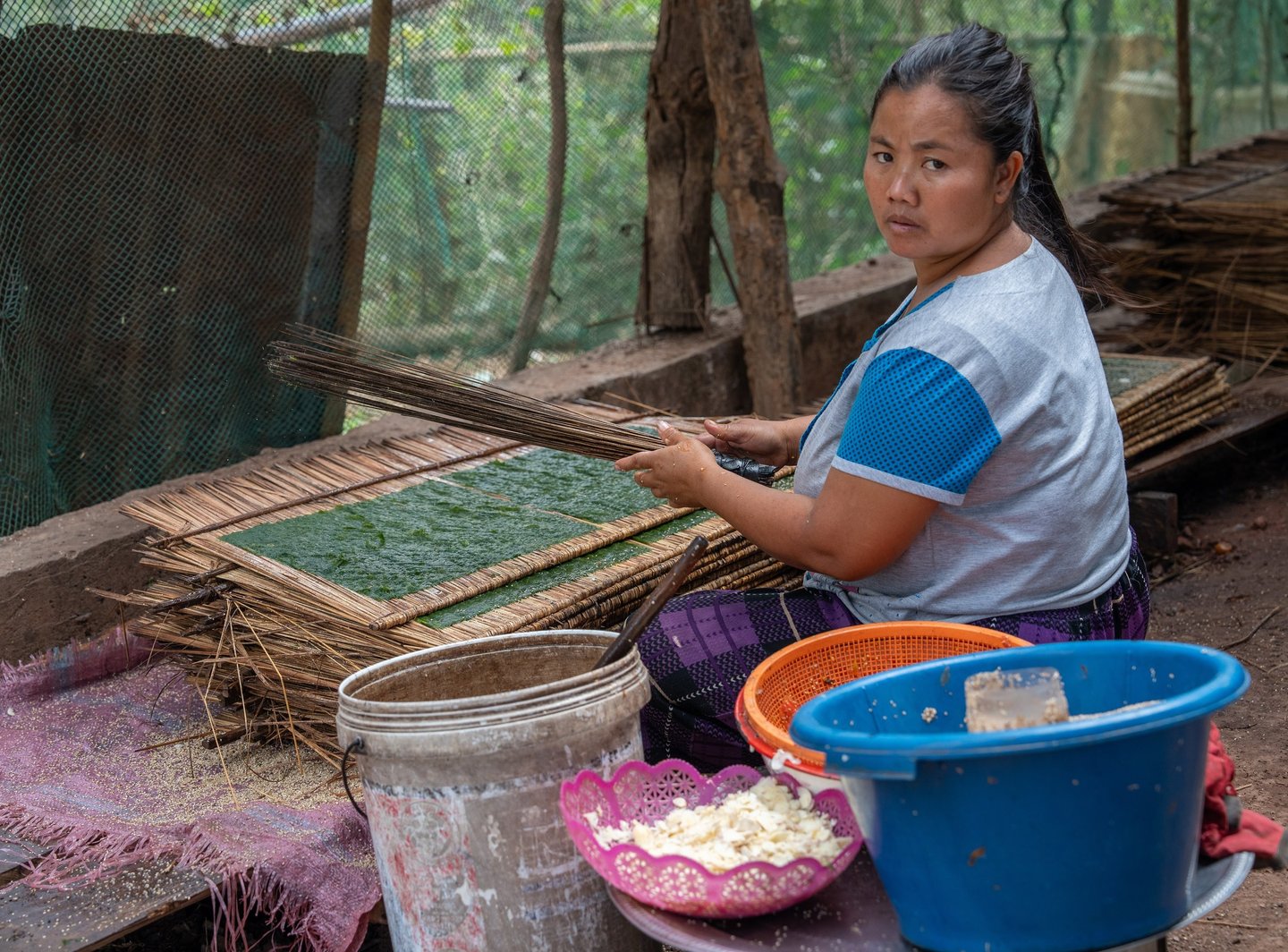
Once dried, the sheets become crisp and are usually lightly fried before being served. The result is a delicate, slightly salty snack that is widely known in Laotian cuisine, particularly in the region around Luang Prabang.
But what made this visit truly memorable was not just the food itself — it was the village life surrounding its production.
Walking through the village with my camera, the focus quickly shifted toward the people and their everyday routines. Residents were busy with their work, preparing the algae, laying it out to dry, or moving through the village with simple agricultural vehicles. Everything here feels practical, quiet, and deeply connected to the river that sustains the community.
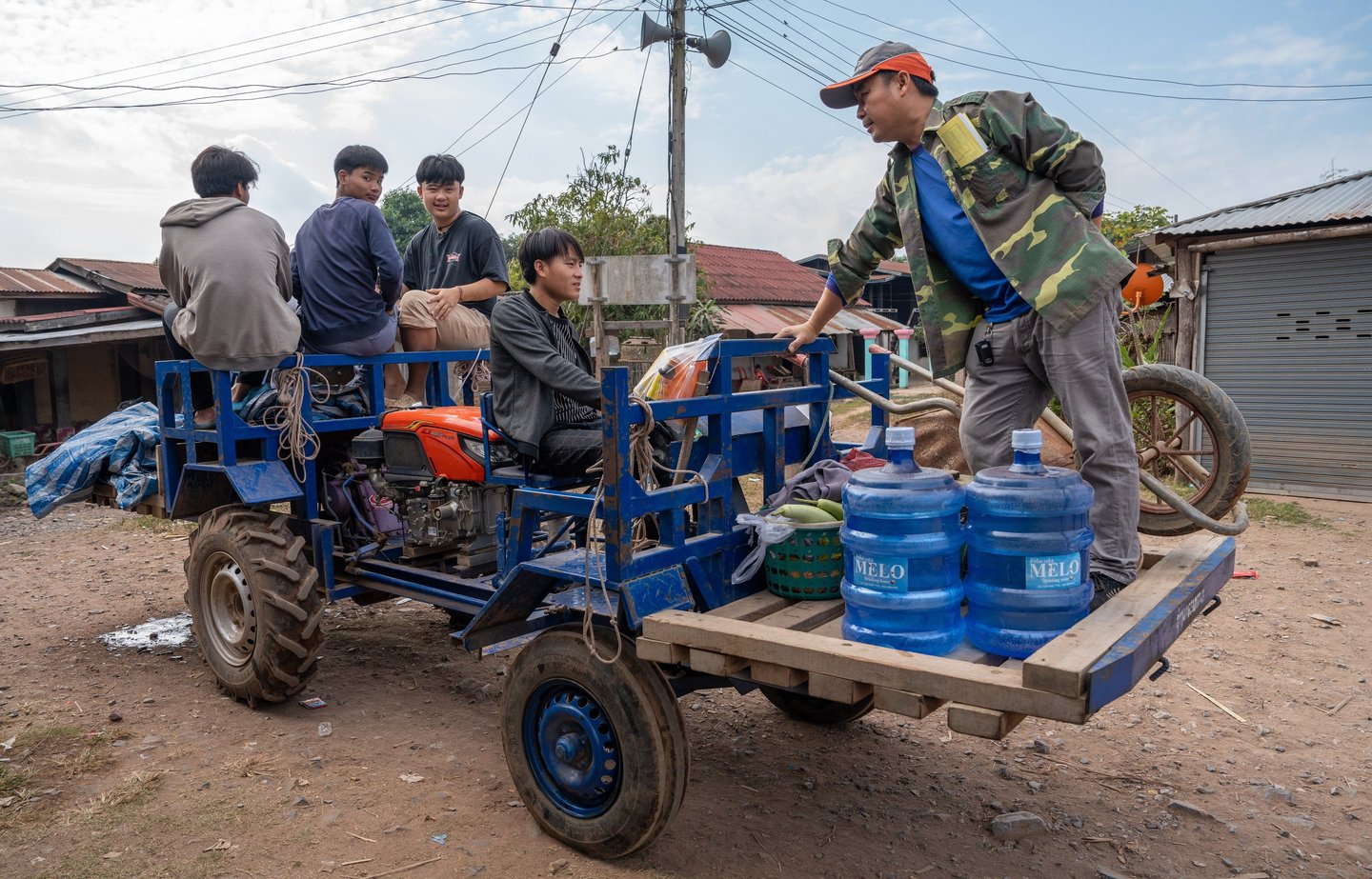
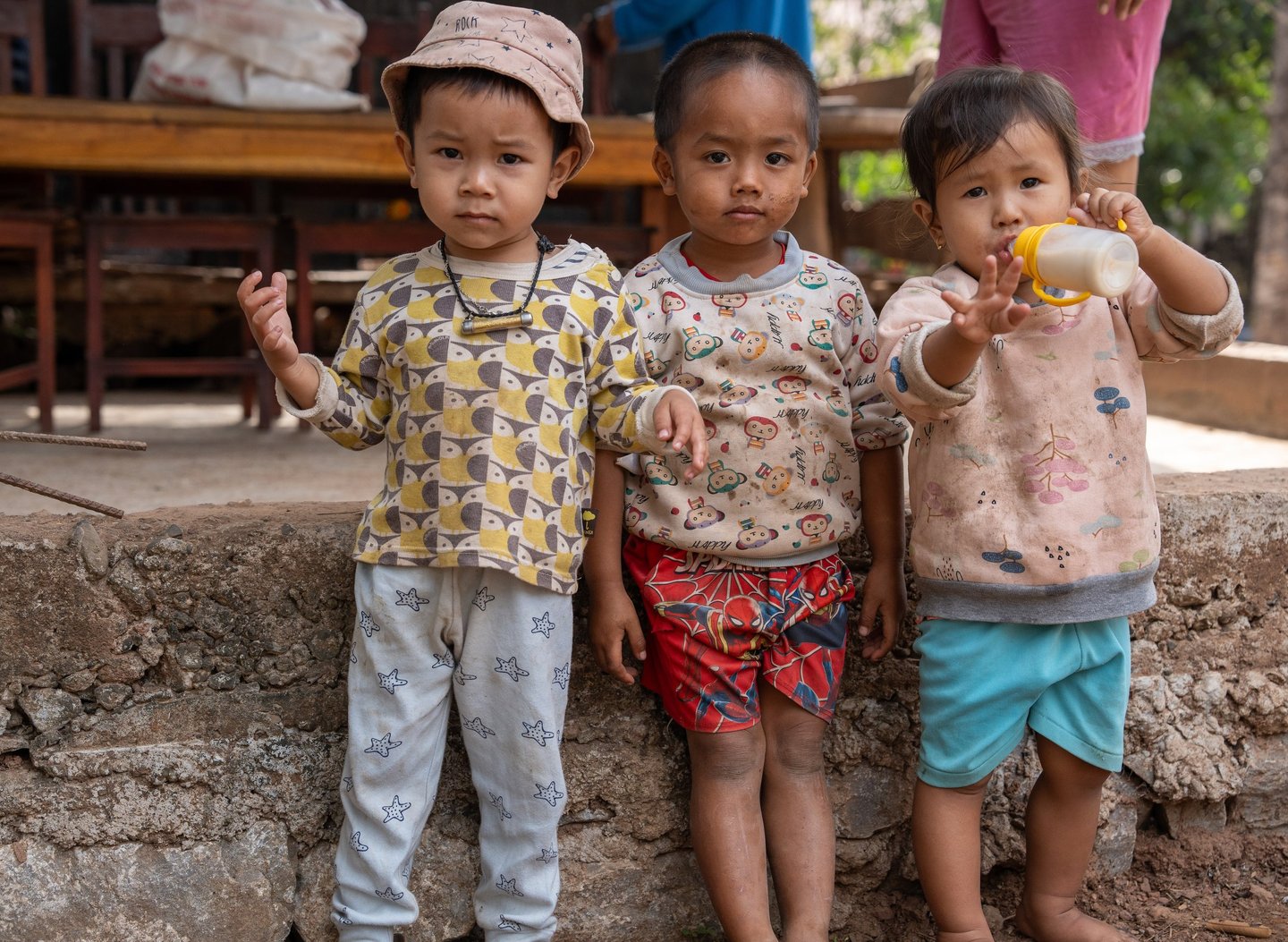
In another corner of the village, a small group of children appeared, curious about the camera but continuing with their games as if visitors passing through were just another moment in the day.
For me, this was exactly the kind of scene that makes travel and documentary photography so compelling. It’s not about staging images but about observing how daily life unfolds naturally — people working, families moving through the village, and traditional food being prepared the same way it has been for generations.
Places like this reveal a different side of Laos — far from the temples and markets of Luang Prabang, yet just as important to understanding the culture of the region.
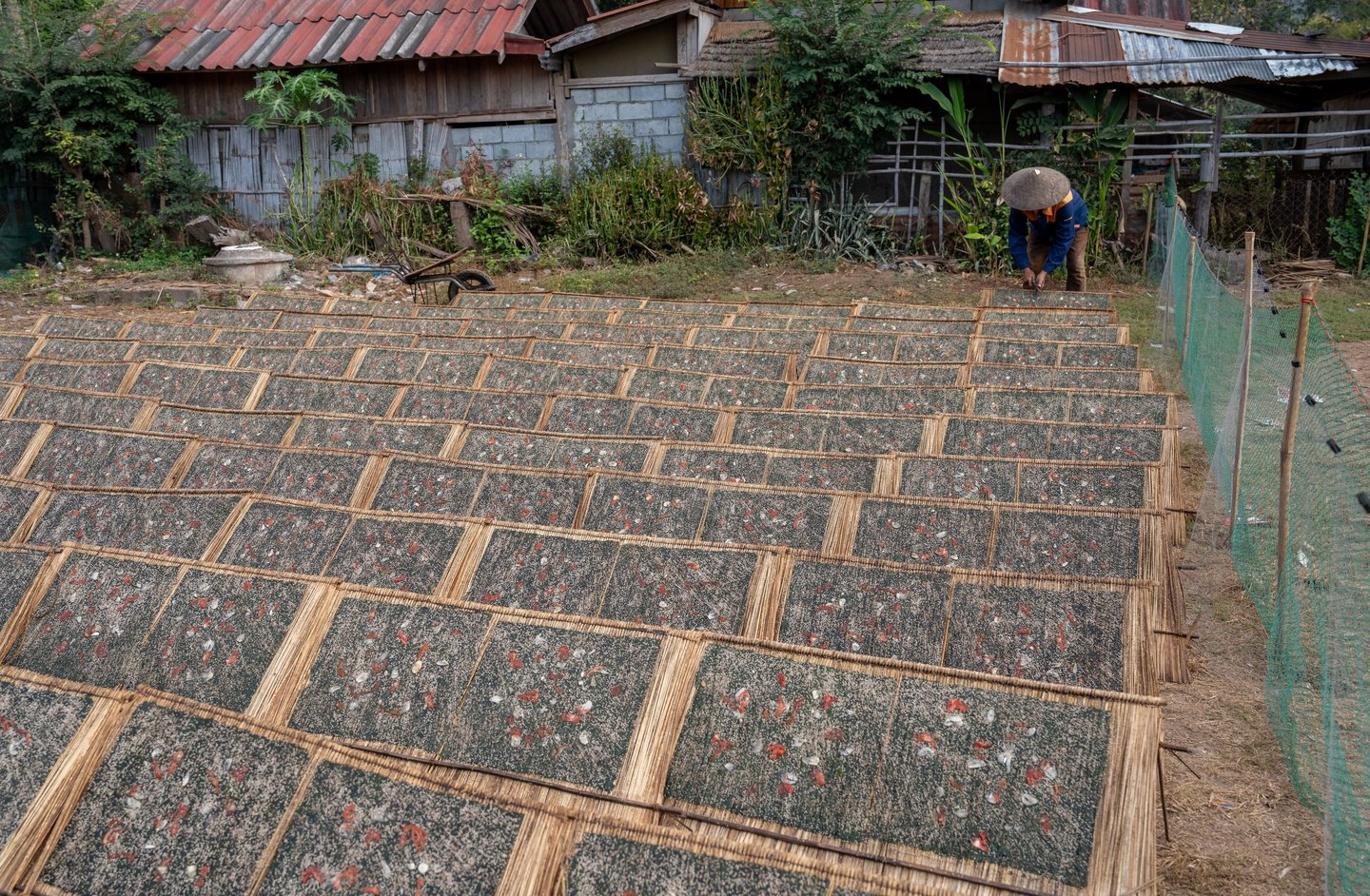
For travelers, photographers, and storytellers interested in authentic experiences, the production of Kai Pen offers a rare glimpse into traditional village life along the Mekong River.
Explore more travel photography, documentary stories, and detailed camera settings behind every Image on strangphotography.com.
Contact
Fuel my creativity, If you enjoy my content, feel free to support me with a small tip. Thanks for being part of this journey!
If you enjoy my photography and the stories I capture across Southeast Asia, consider supporting my journey. Every coffee helps me stay on the road longer and document more unique locations. Thank you for being part of the adventure!
Traveling across Southeast Asia, I’ve found that having an eSIM ready the moment you land is an absolute game-changer. I highly recommend Saily – I’ve had a great experience with them myself. It offers unbeatable advantages, especially for ordering a Grab taxi right away or using Google Maps to find your way as soon as you exit the airport
This post contains affiliate links for Saily. If you sign up through my link, I may earn a small commission at no extra cost to you. I only recommend services like Saily because I use them personally and they’ve made my travels much easier.
You can license my photography directly through my Alamy portfolio. My work covers authentic travel and street photography across Southeast Asia — Bangkok, Ho Chi Minh City, and the wider region — shot on location, not staged.
Looking for street scenes, urban editorial content, or landscapes from Thailand and Vietnam? My full collection is on Alamy, with licensing options from standard editorial to extended commercial rights, depending on what your project needs.
Disclosure: the link below is an affiliate link. If you license an image through it, I earn a share of the sale at no extra cost to you. It goes straight back into keeping me on the road and shooting across Southeast Asia.
© 2025 Strangphotography – Southeast Lens. All rights reserved.
All photos taken by me in public spaces. Licensing available via Alamy.
Unauthorized use prohibited. For full legal info, see my Imprint