Southeast Lens - Documentation, Travel and Street Photography

Hanoi, Vietnam Between History, Street Life and the Endless Motion
Hanoi Street Photography: Capturing the Rhythms of Hoan Kiem Lake
Hanoi doesn’t hand itself to you on a silver platter; it’s a city you have to actively absorb. Vietnam’s capital moves to a completely unique cadence—one minute it slows to a crawl, the next it completely overwhelms the senses. Caught between faded French colonial facades, historic tube houses, tucked-away cafés, and the relentless hum of motorbikes, Hanoi feels wonderfully raw, weathered, and intensely alive. Nowhere is this gripping friction more visible than around Hoan Kiem Lake, the undisputed cultural heartbeat of Northern Vietnam.
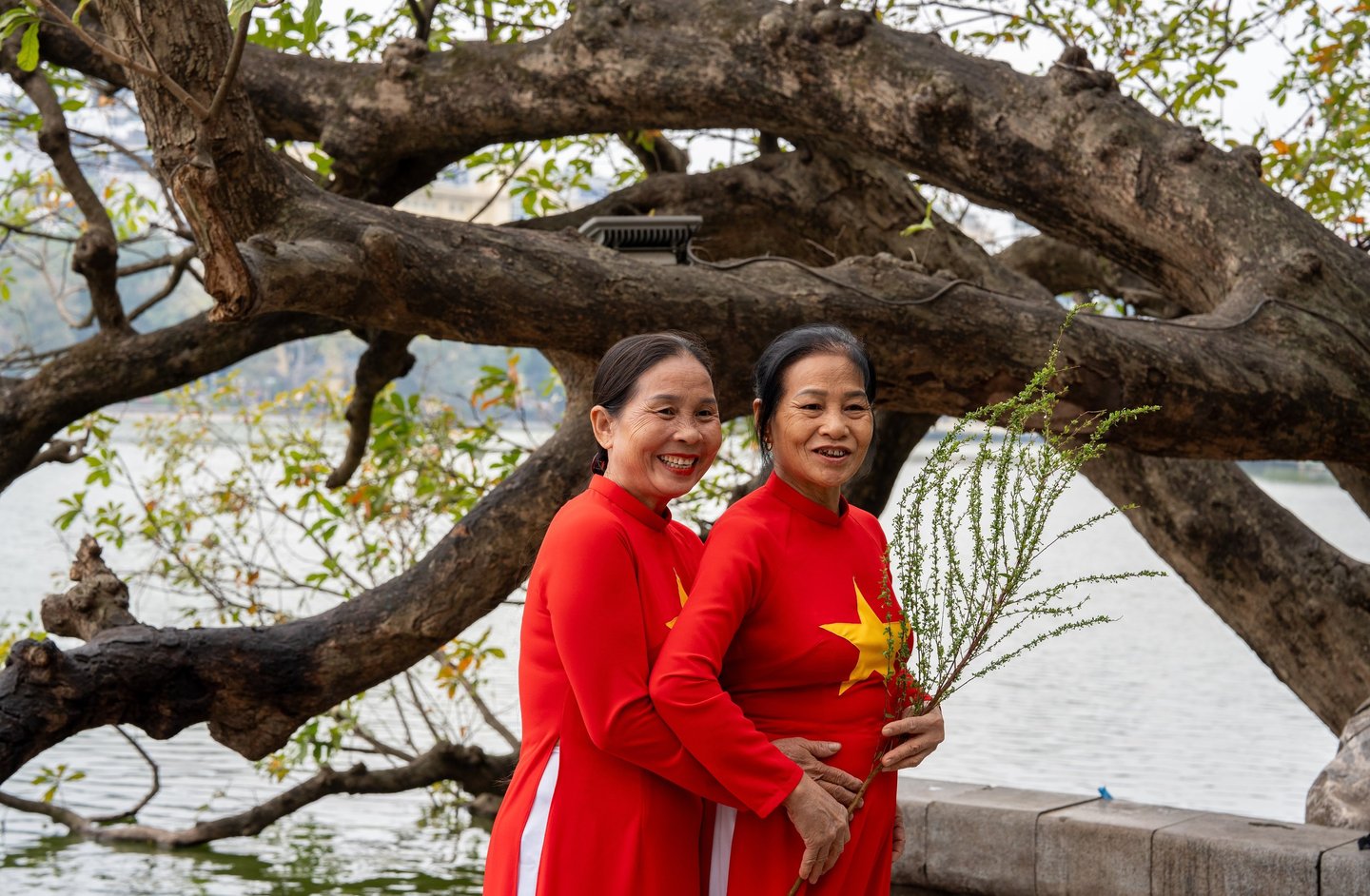
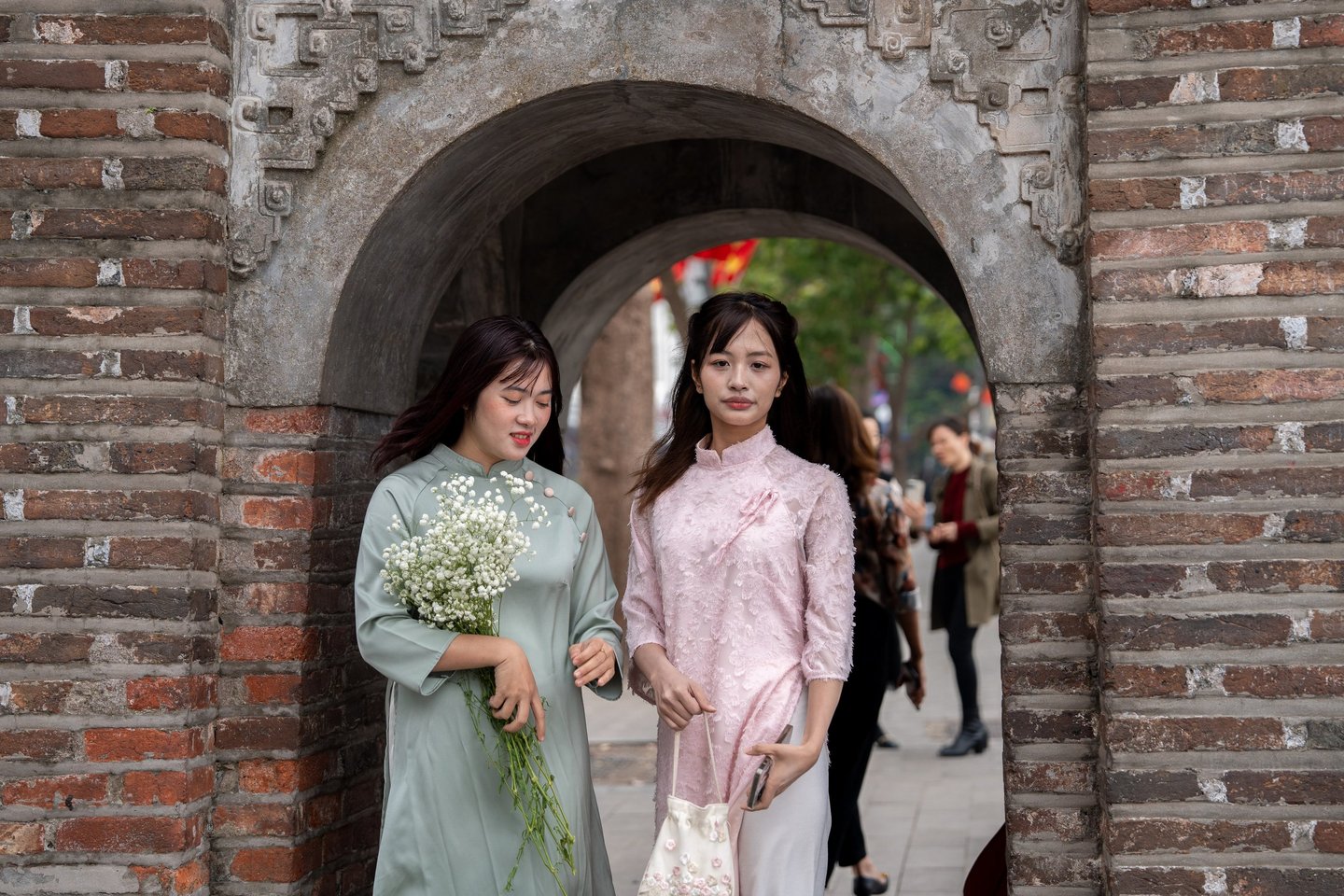
For me as a documentary photographer, Hanoi was never about checking off famous landmarks. It was about chasing light, freezing motion, and documenting the unscripted rhythms of everyday street life. Around the lake, early mornings belong to the locals exercising in the dense, foggy air. As night falls, the energy shifts gears. On weekends, the streets around the water transform into a massive pedestrian zone—a vibrant stage for street performers, local families, and young Vietnamese gathering for photoshoots in traditional attire.
Documenting the Icons: From the Huc Red Bridge to Dong Kinh Nghia Thuc Square
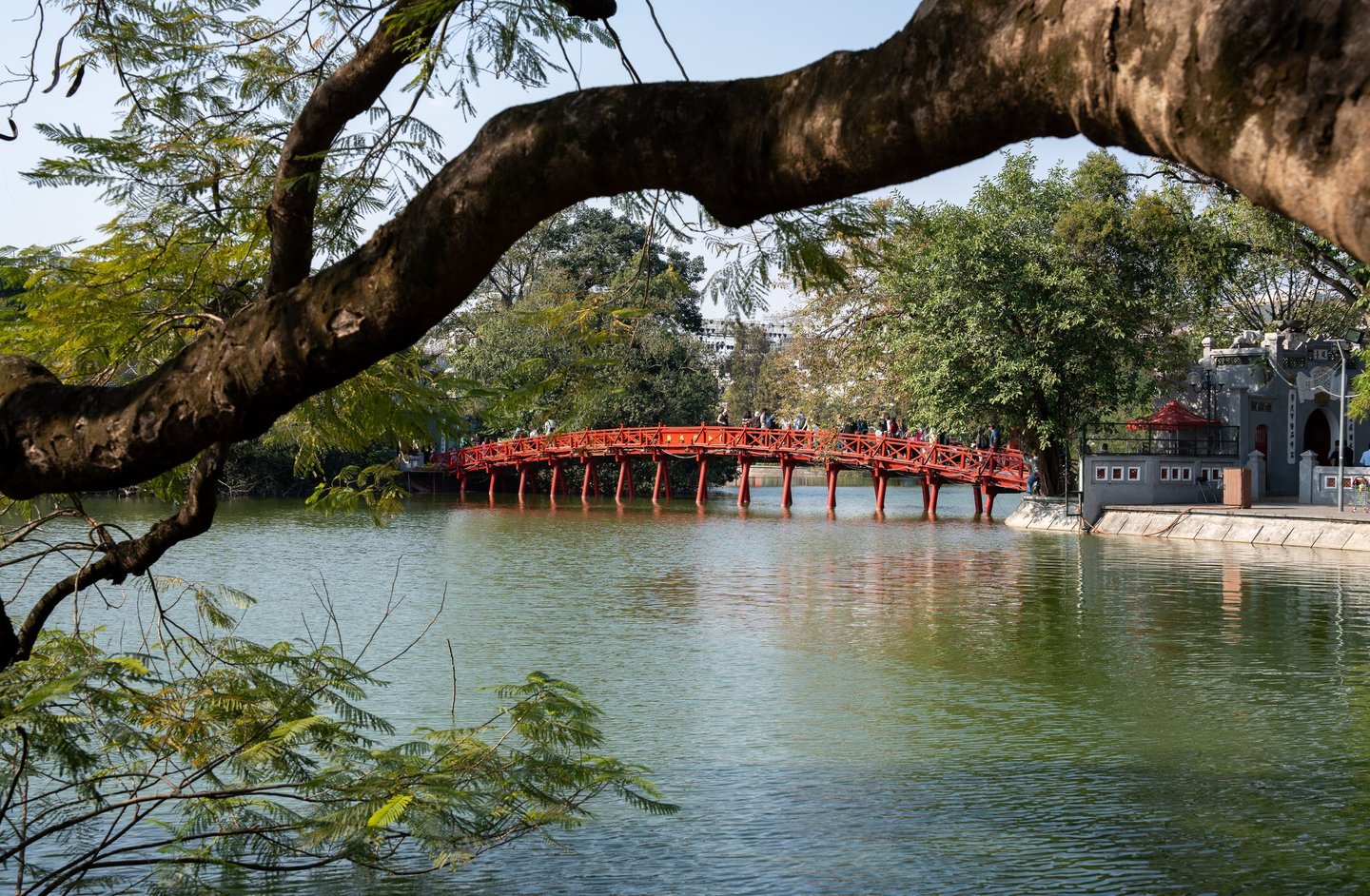
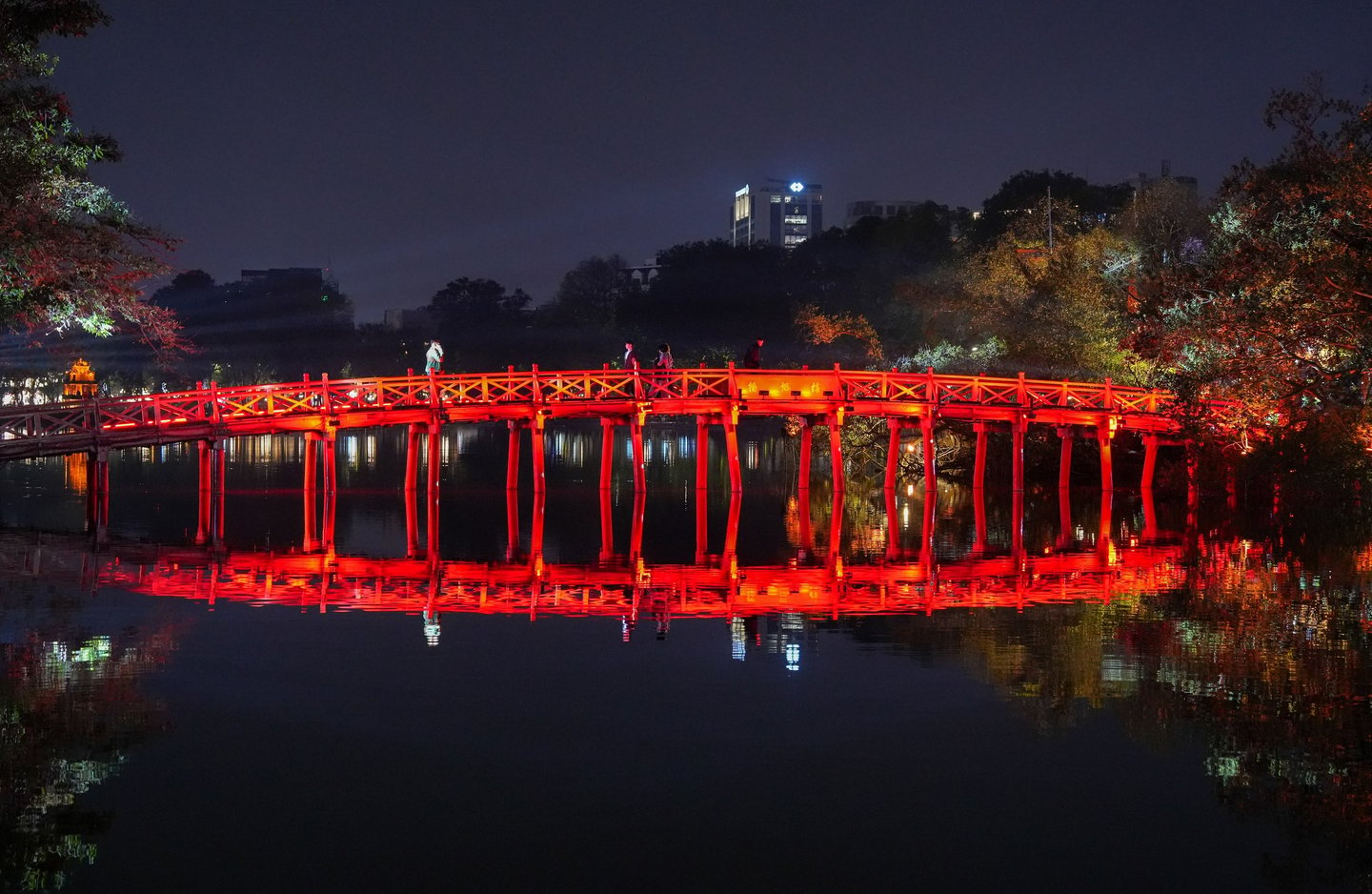
At the center of this urban ecosystem spans the iconic Huc Red Bridge, leading to the Ngoc Son Temple. Built in the 19th century during the Nguyen Dynasty, this bright crimson wooden structure is deeply woven into the city’s identity. During the golden hour and subsequent blue hour, the stark contrast between the red wood, the emerald-green water, and the emerging city lights creates one of the most compelling scenes for travel photography in Hanoi.
What struck me most was how seamlessly ancient traditions collide with modern chaos. You will see young women posing in elegant Ao Dai dresses beside the quiet lakeshore, while just meters behind them, thousands of scooters push through the frantic intersection at Dong Kinh Nghia Thuc Square.
Many of the photographs in this collection were shot from Ham Ca Map, the famous “Shark Jaw Building” overlooking the square. For years, this architectural landmark has been a legendary vantage point for street photographers to observe Hanoi’s traffic streams from above. Today, it remains the ultimate intersection connecting the timeless lanes of the Old Quarter with the modern pulse of the capital.
The Photographer’s Toolkit: High-ISO and Fast-Moving Action
Visually, this pocket of Hanoi mutates by the minute. Neon reflections bleeding onto wet asphalt, sweeping light trails, street vendors navigating the crowds, and the thick, humid air of Northern Vietnam combine to create frames that feel cinematic without trying to be.
All photographs in this documentary series were captured in rich color using the Sony Alpha 7 IV (ILCE-7M4) paired with the Sony FE 24-70mm f/2.8 GM II lens. Around Hoan Kiem Lake, this setup proved to be the ultimate workhorse. It gave me the split-second adaptability needed to shift from low-light street scenes and high-ISO night photography to spontaneous portraits and fast-moving traffic moments without breaking stride.
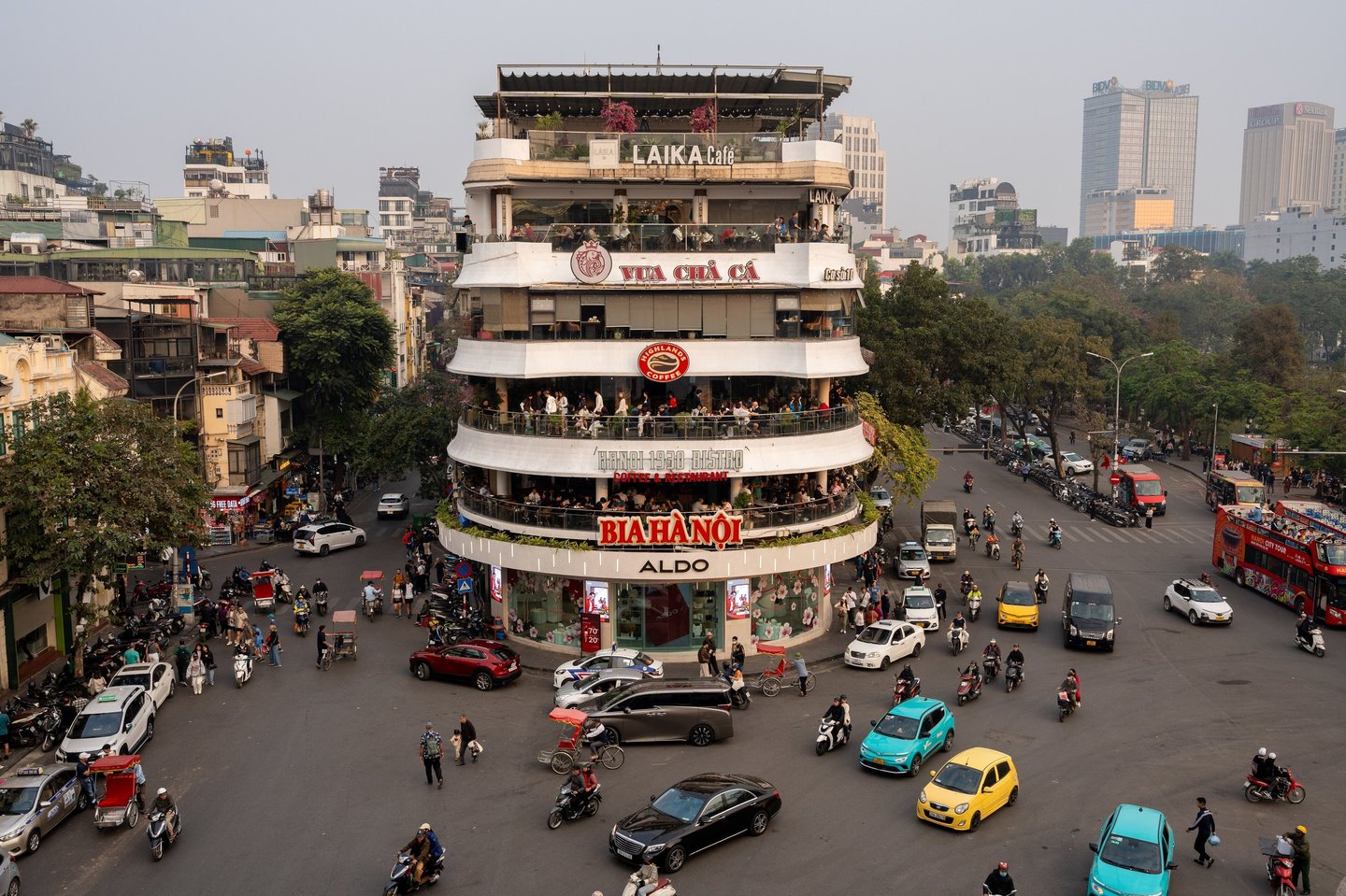
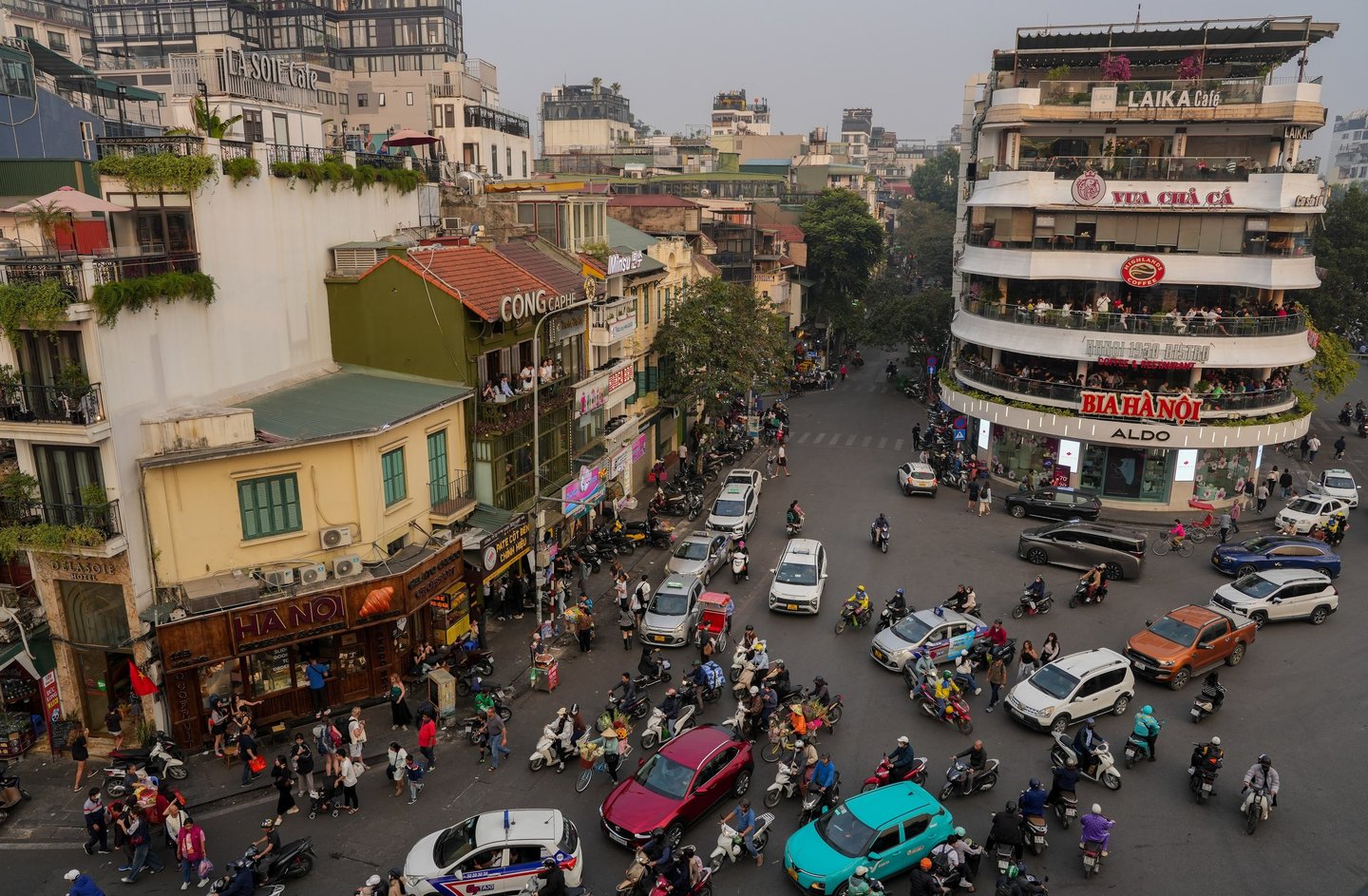
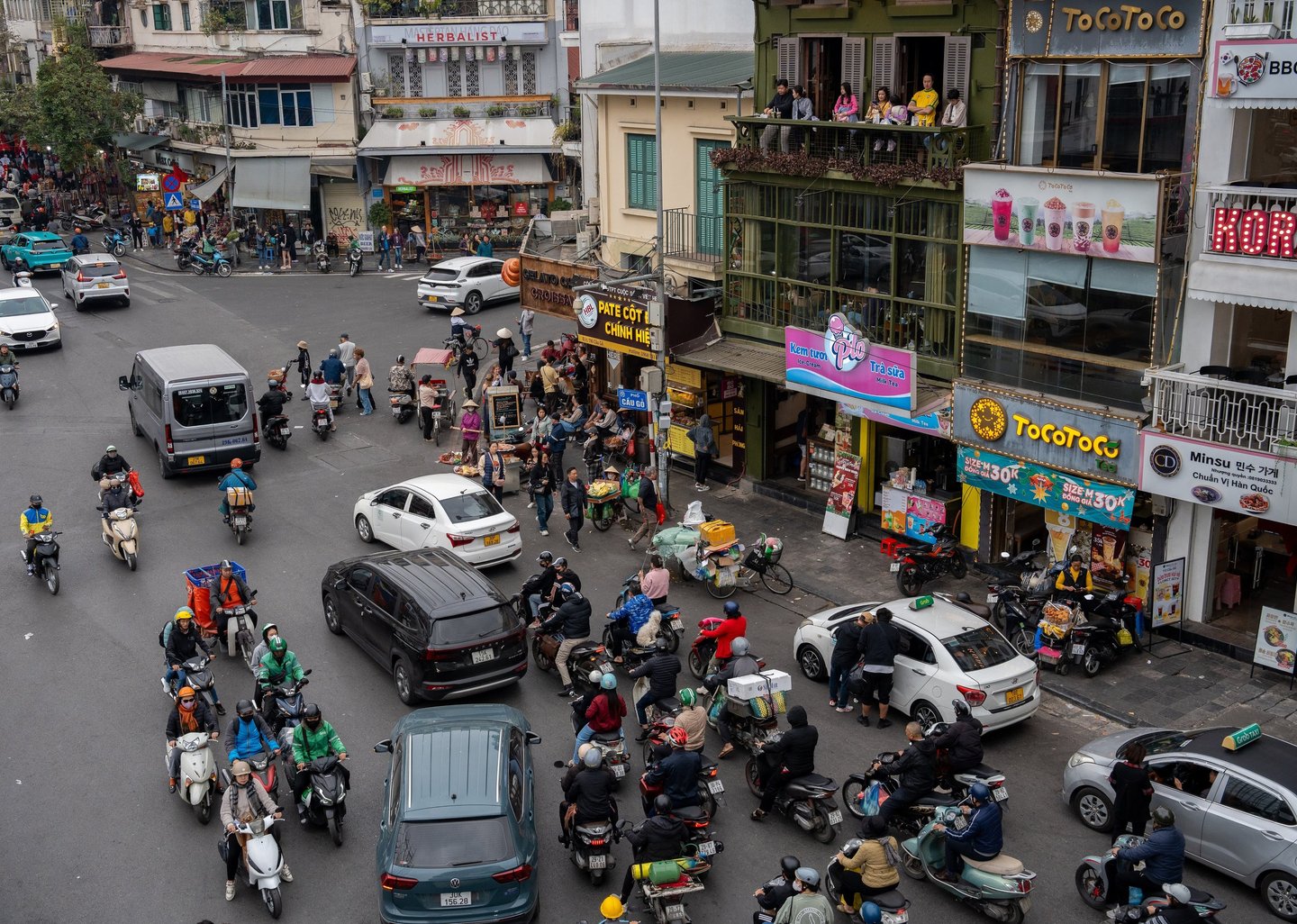
This gallery on strangphotography.com is part of my dedicated, ongoing Southeast Asia photography archive—focused on real urban life, architectural contrasts, street-level culture, and the raw atmosphere of Asian cities after dark.
A quick side note about our arrival in Hanoi, Vietnam...
Hanoi Arrival: Stay Connected and Avoid the Scams
Hanoi is a city of "Endless Motion," but the motion starts long before you reach the Old Quarter. My recent arrival at Noi Bai International Airport (HAN) was a perfect reminder of why I never travel without my Saily eSIM.
I’ve been using Saily for years throughout Southeast Asia, and it has consistently saved me both time and money. Here is why it’s a permanent part of my gear:
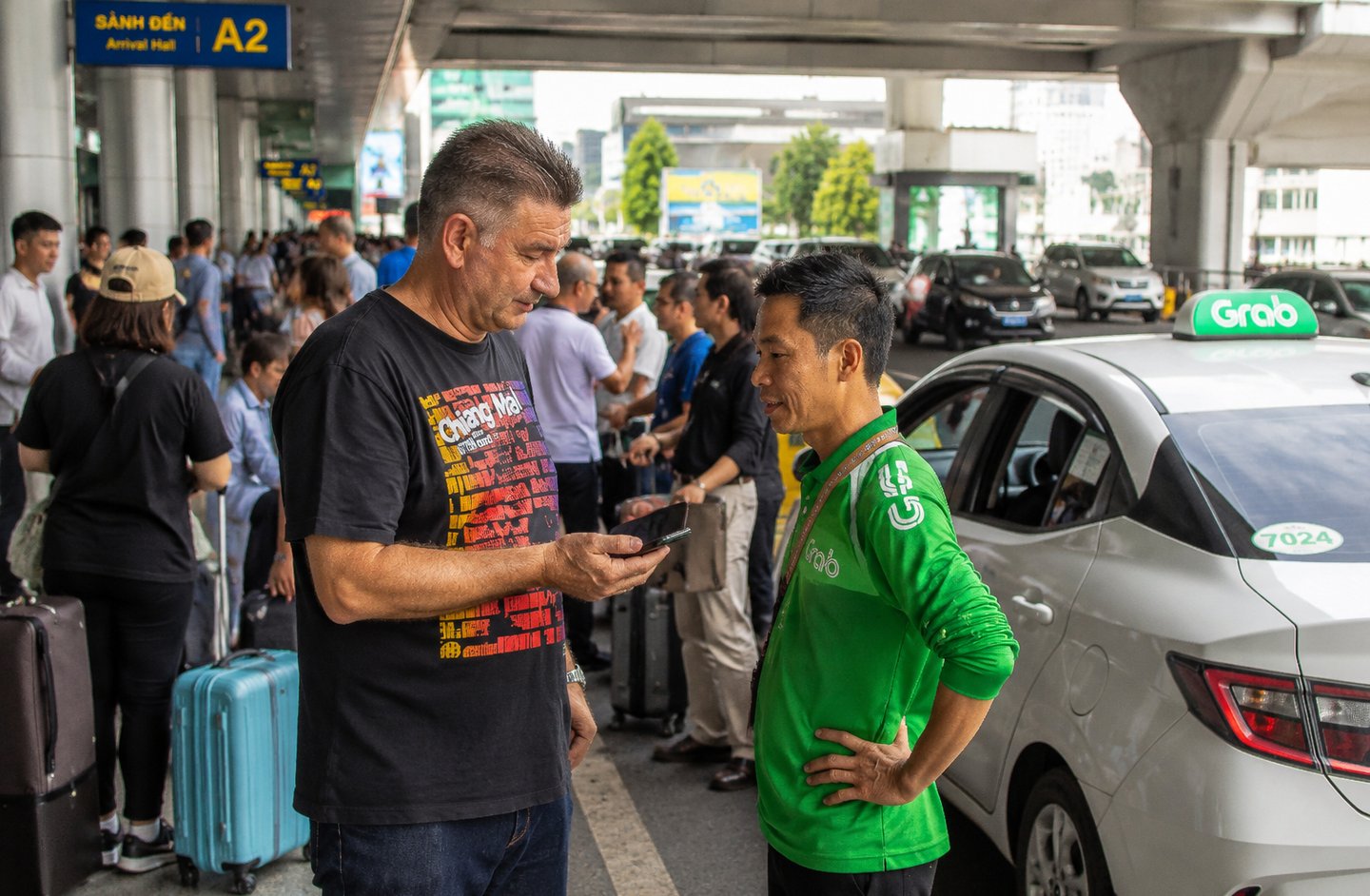
The $50 Trap vs. The $3 Reality Before landing, our hotel offered a "free" shuttle service to the Old Quarter. However, after a grueling two-hour wait at the overcrowded immigration counters, the driver’s patience had run out. Suddenly, the "free" service turned into a $50 USD demand—a classic move to take advantage of exhausted travelers.
Because I was already online with my Saily eSIM the moment I cleared the gate, I didn't have to argue. I opened my Grab Taxi App, checked the real-time rate, and saw that the fair price was actually less than $3 USD. I walked away from the scam, booked an honest driver through the app, and was at my hotel in no time.
Why I recommend Saily for Vietnam:
Immediate Connectivity: While hundreds of people were wasting more time queuing at the SIM card booths in the terminal, I was already moving.
Navigation & Security: With Google Maps and Grab ready to go, you are never at the mercy of the "Taxi Mafia" or overpriced airport transfers. You see the price, you book the ride, and you pay a fair fare.
Reliability: In a city as fast-paced as Hanoi, you need tools that work. Saily has never let me down, from the streets of Saigon to the alleys of the Old Quarter.
If you’re planning to capture the history and street life of Vietnam, don't start your trip with a headache. Sort your connection before you fly.
As a Saily partner, I may earn a small commission if you purchase through my link—at no extra cost to you. I only recommend tools I use and trust myself.
Hanoi Old Quarter, Vietnam – Sidewalks Full of Street Food, Motorbikes and Real City Life
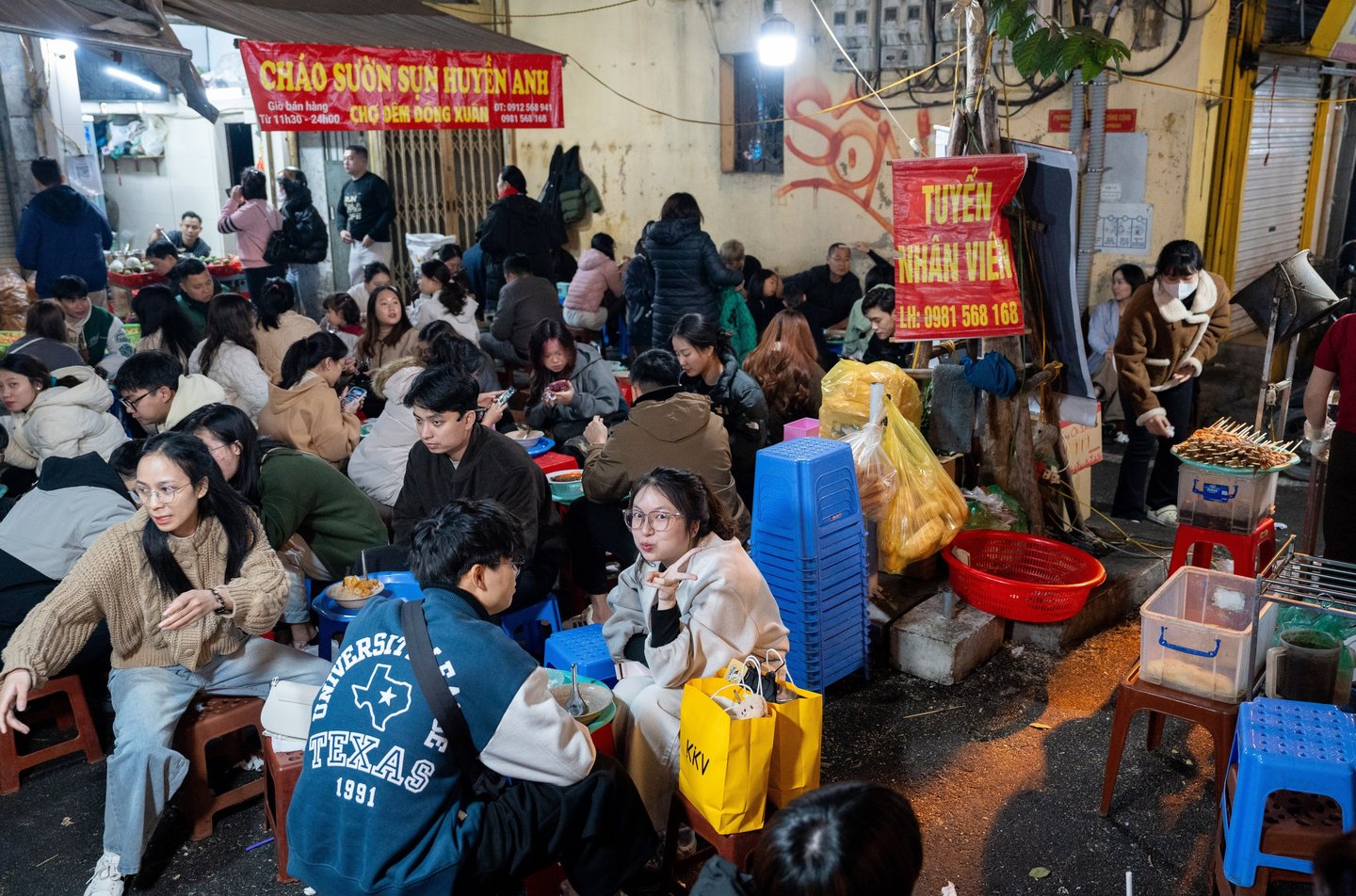
The Old Quarter of Hanoi is not a place you simply walk through; it’s an ecosystem you actively absorb. The second you step into these ancient, narrow corridors, you are instantly swallowed by a wave of motorbikes, drifting street-food smoke, stacked plastic stools, and relentless motion. This raw, unapologetic energy is precisely what drew me to document this corner of Vietnam’s capital.
Dating back centuries, these labyrinthine alleys were originally established as specialized trading and craft districts. They were never designed for the staggering volume of scooters, merchants, and pedestrians packed into them today. Yet, somehow, the chaos functions. Hanoi operates on its own unspoken rhythm—after a few hours, you stop fighting the current and simply learn to drift with it.
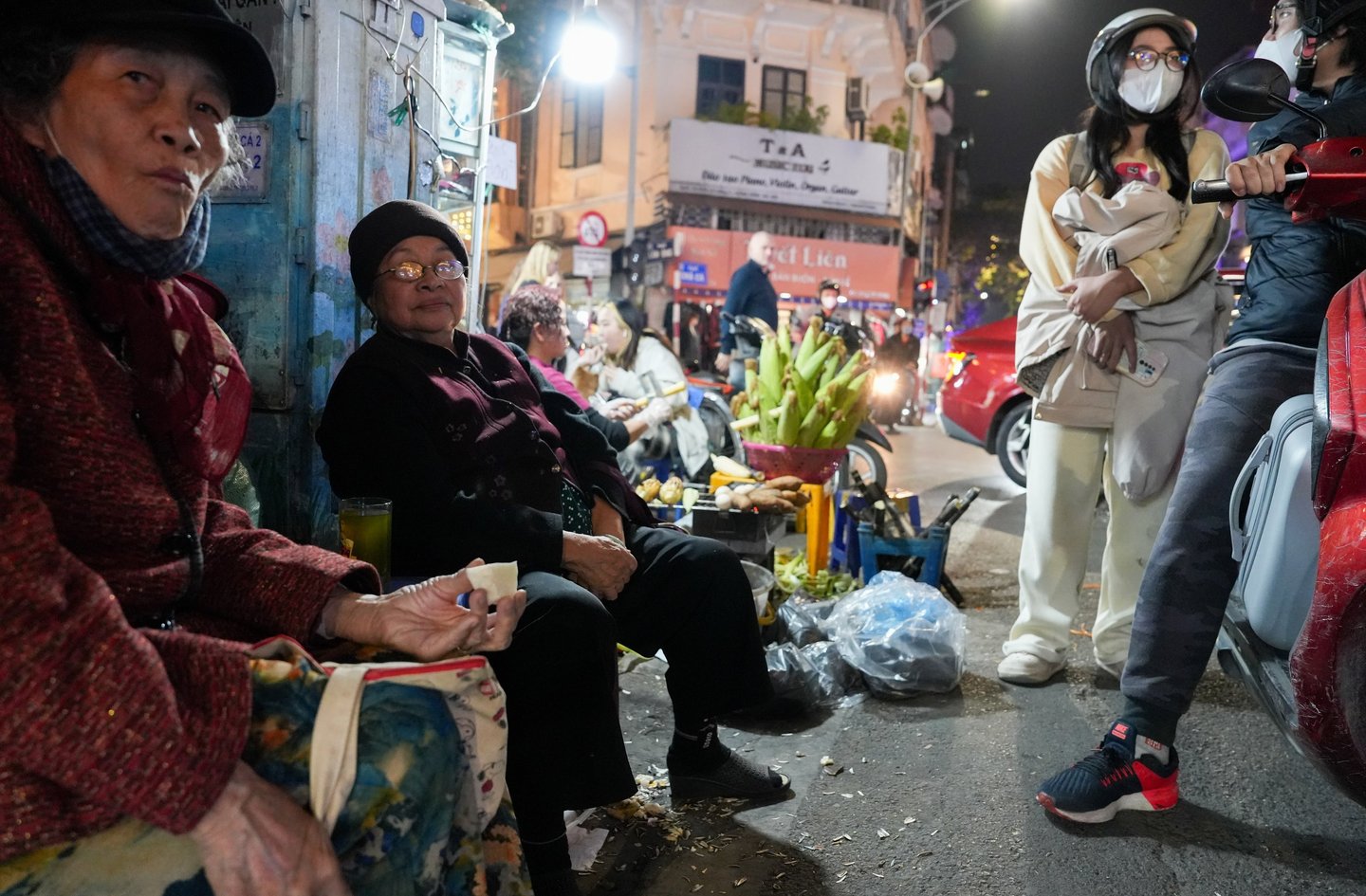
The Sidewalks of Hanoi: An Extension of the Living Room
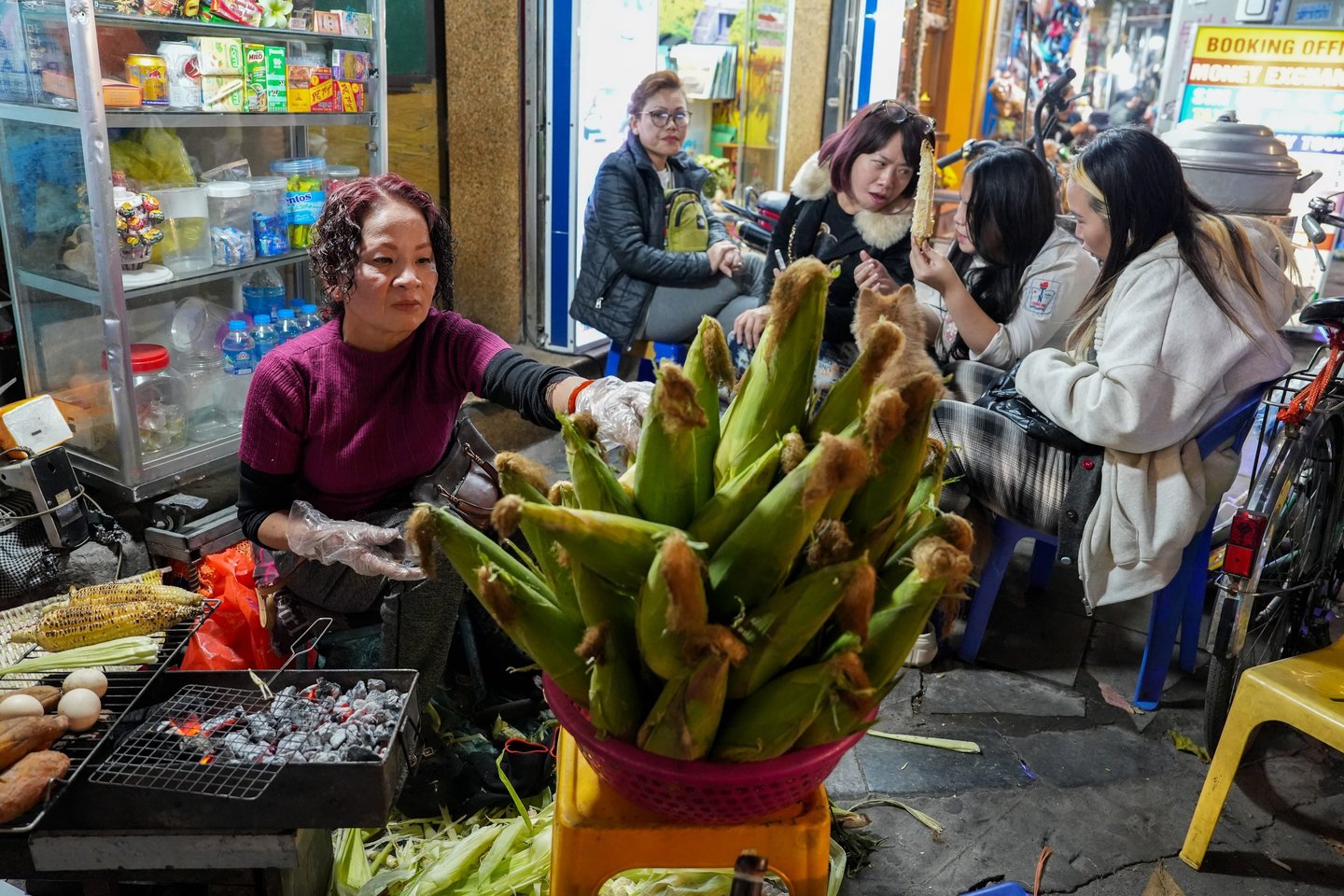
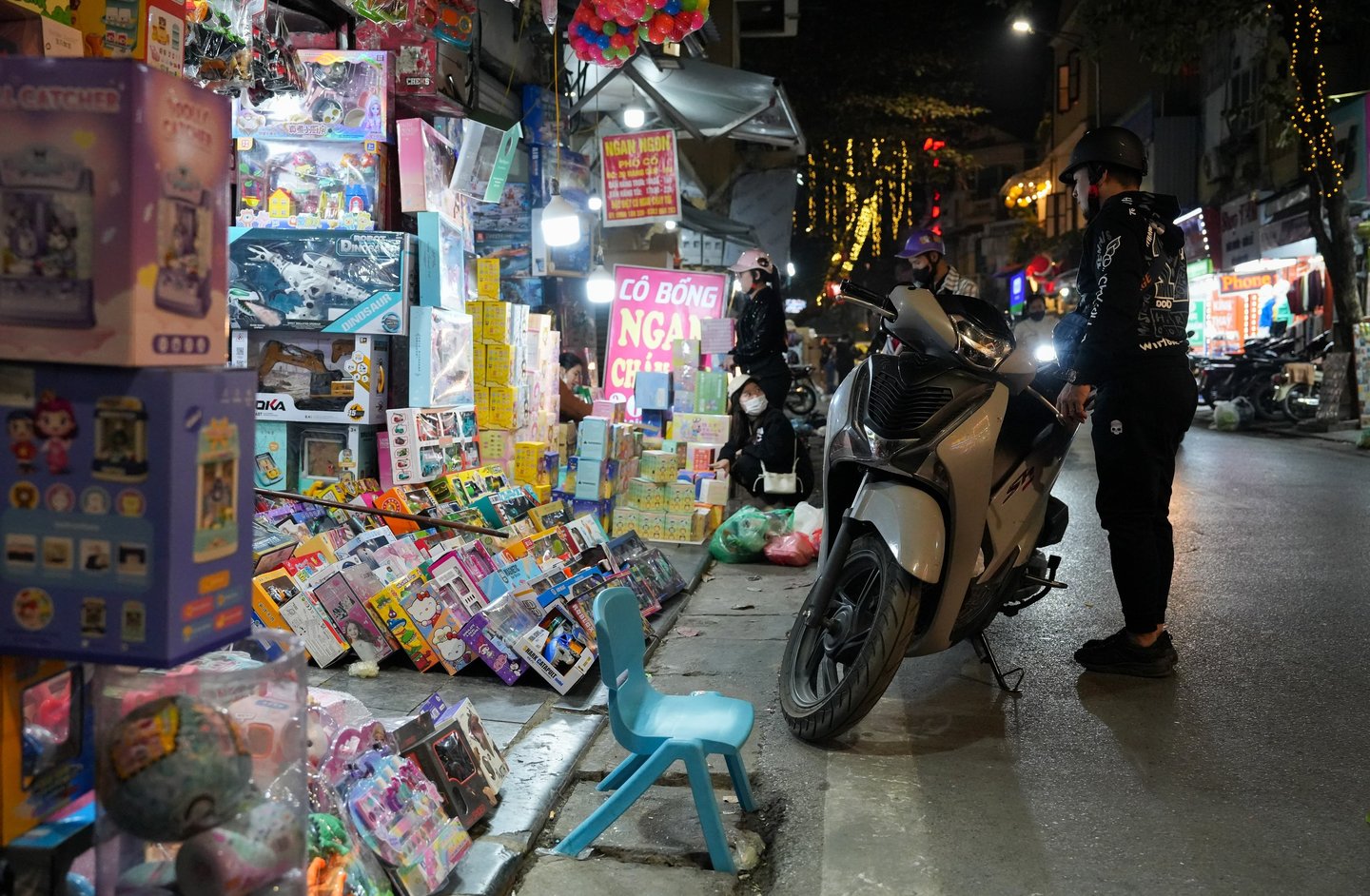
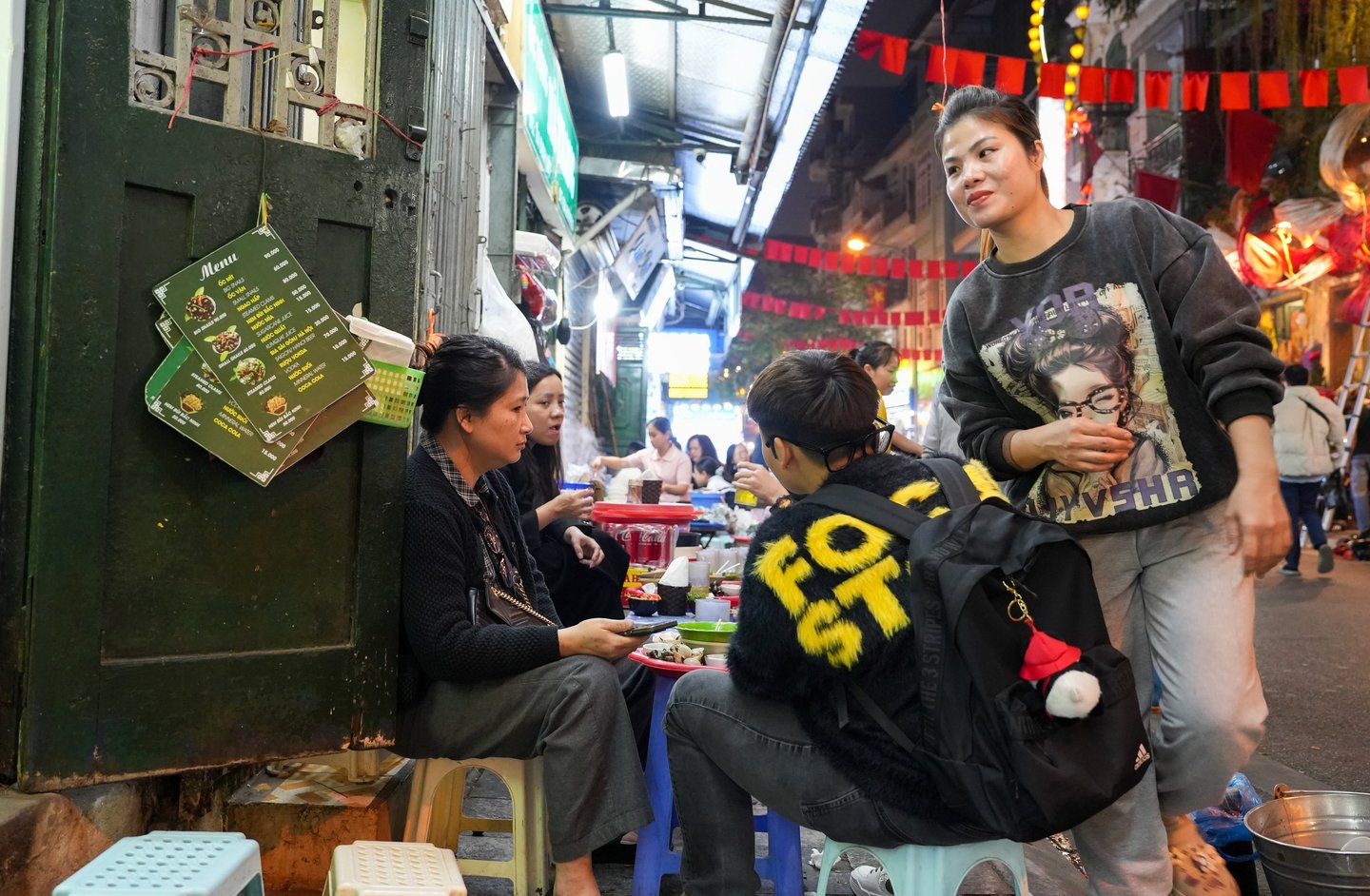
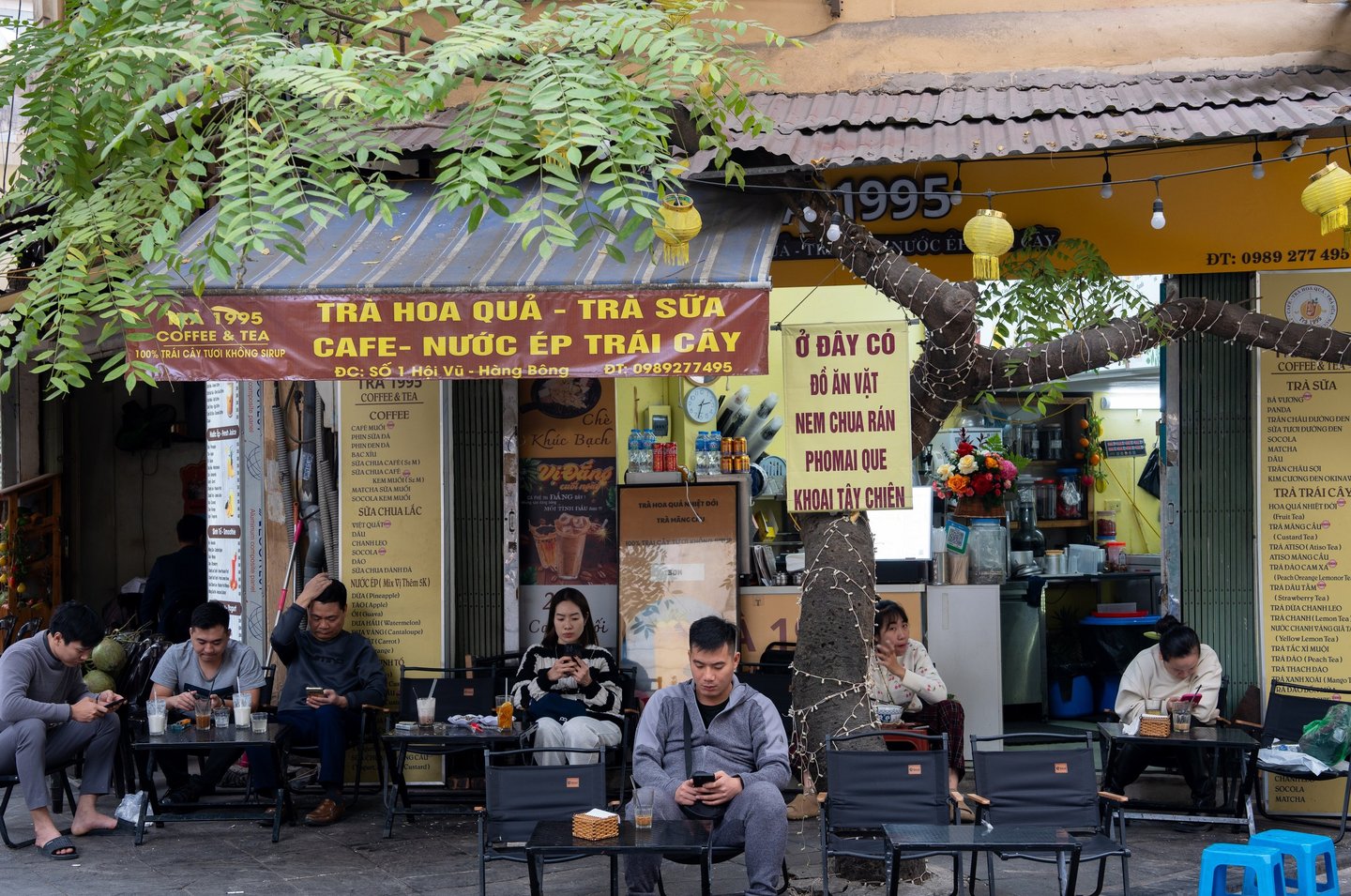
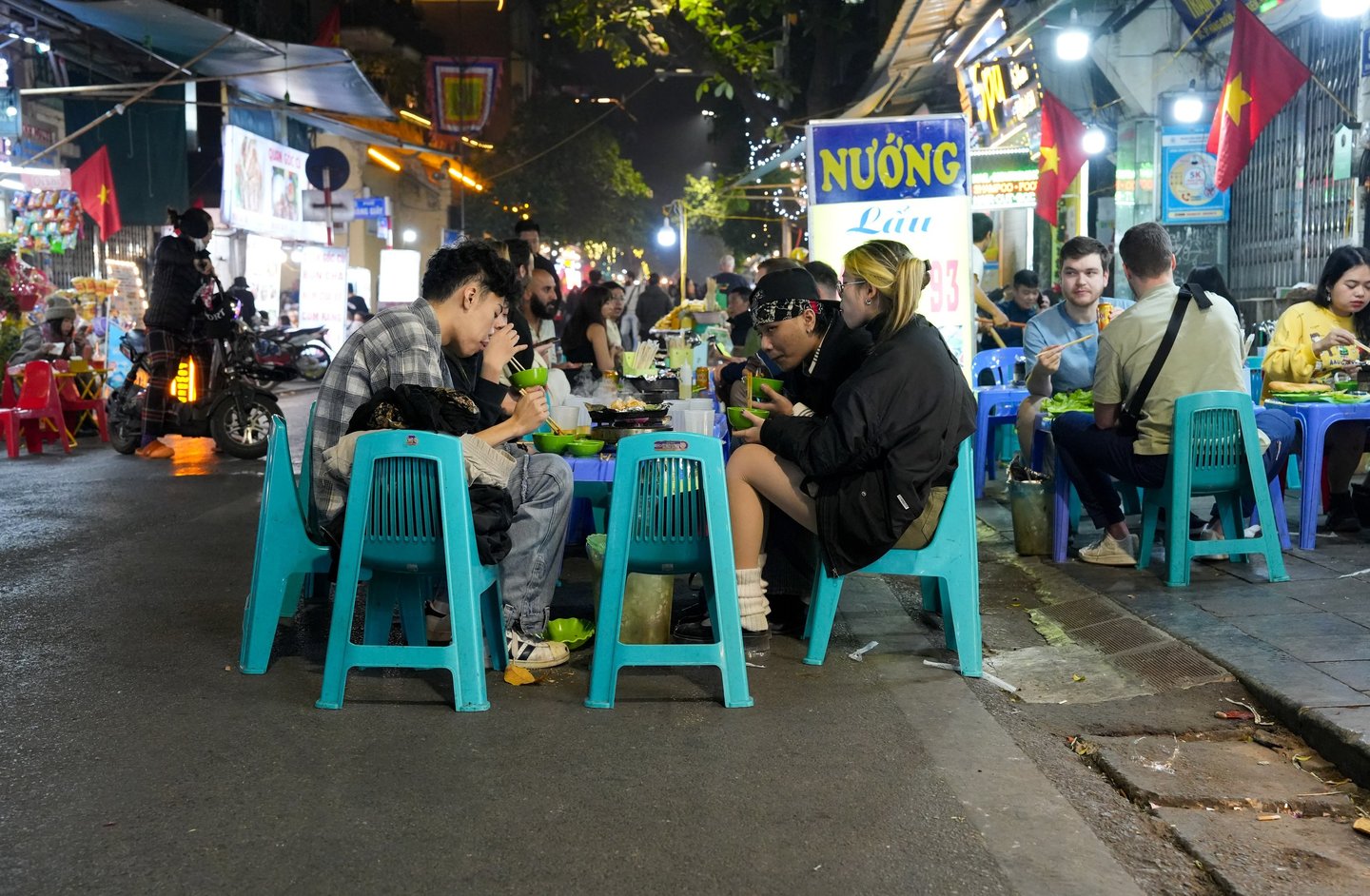
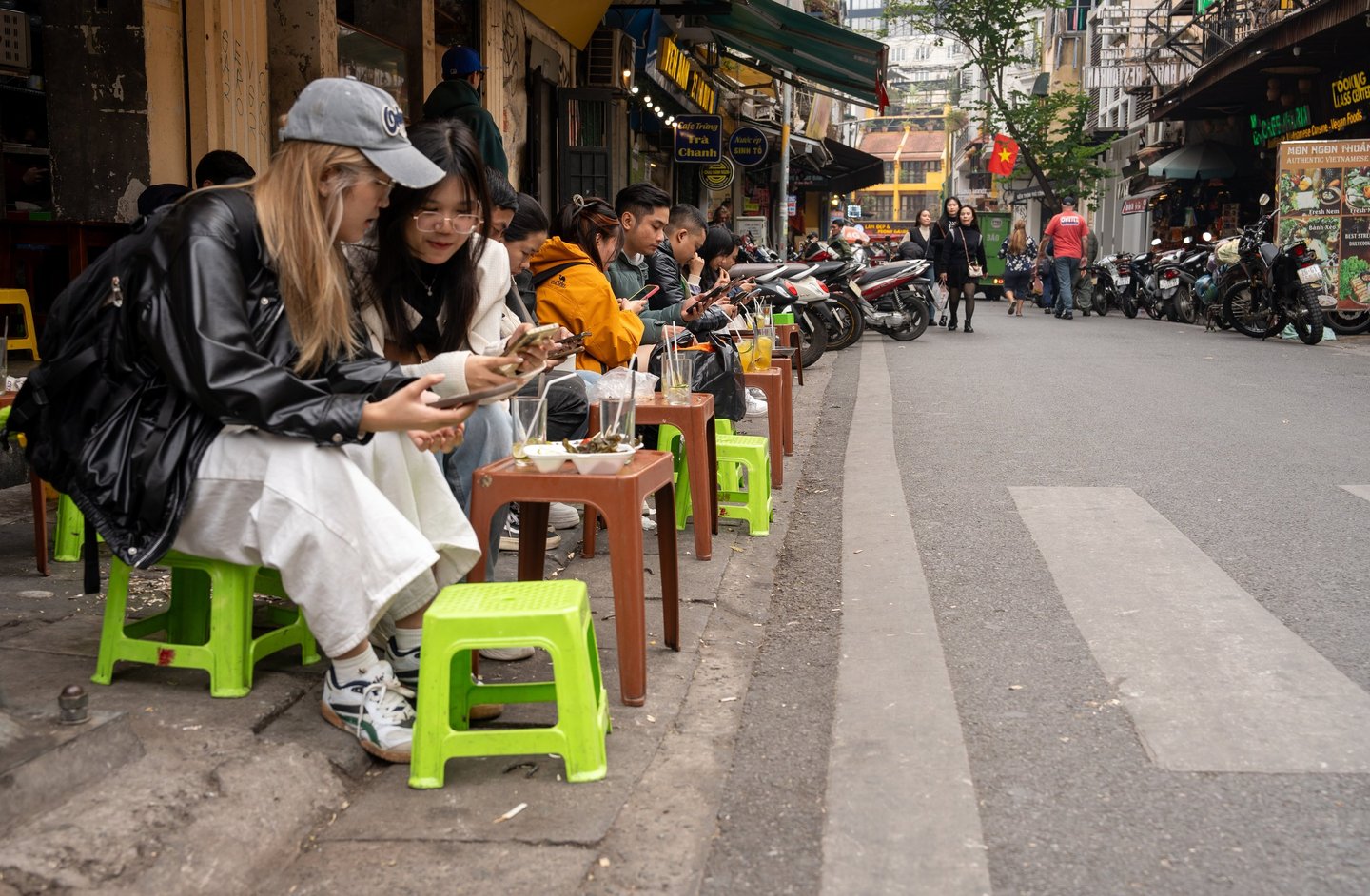
To understand Hanoi’s local life, you have to look at the sidewalks. In the Old Quarter, pavement is rarely used for walking; instead, it serves as a multi-functional stage for daily life.
Small, makeshift street kitchens claim the curbs, bars spill tiny plastic stools onto the asphalt, and locals gather for cold beer and conversation. Any remaining pocket of space is instantly reclaimed as motorbike parking.
When darkness falls, the entire texture of the neighborhood shifts. The sidewalks transform into vibrant social hubs where people sit shoulder-to-shoulder for hours, hunched over steaming bowls of Pho, Bun Cha, or grilled street food while traffic brushes past just inches away. For night photography in Hanoi, it’s a goldmine: warm neon reflections bleed onto wet asphalt, scooter headlights cut through the heavy air, and the ambient roar of the city never truly fades.
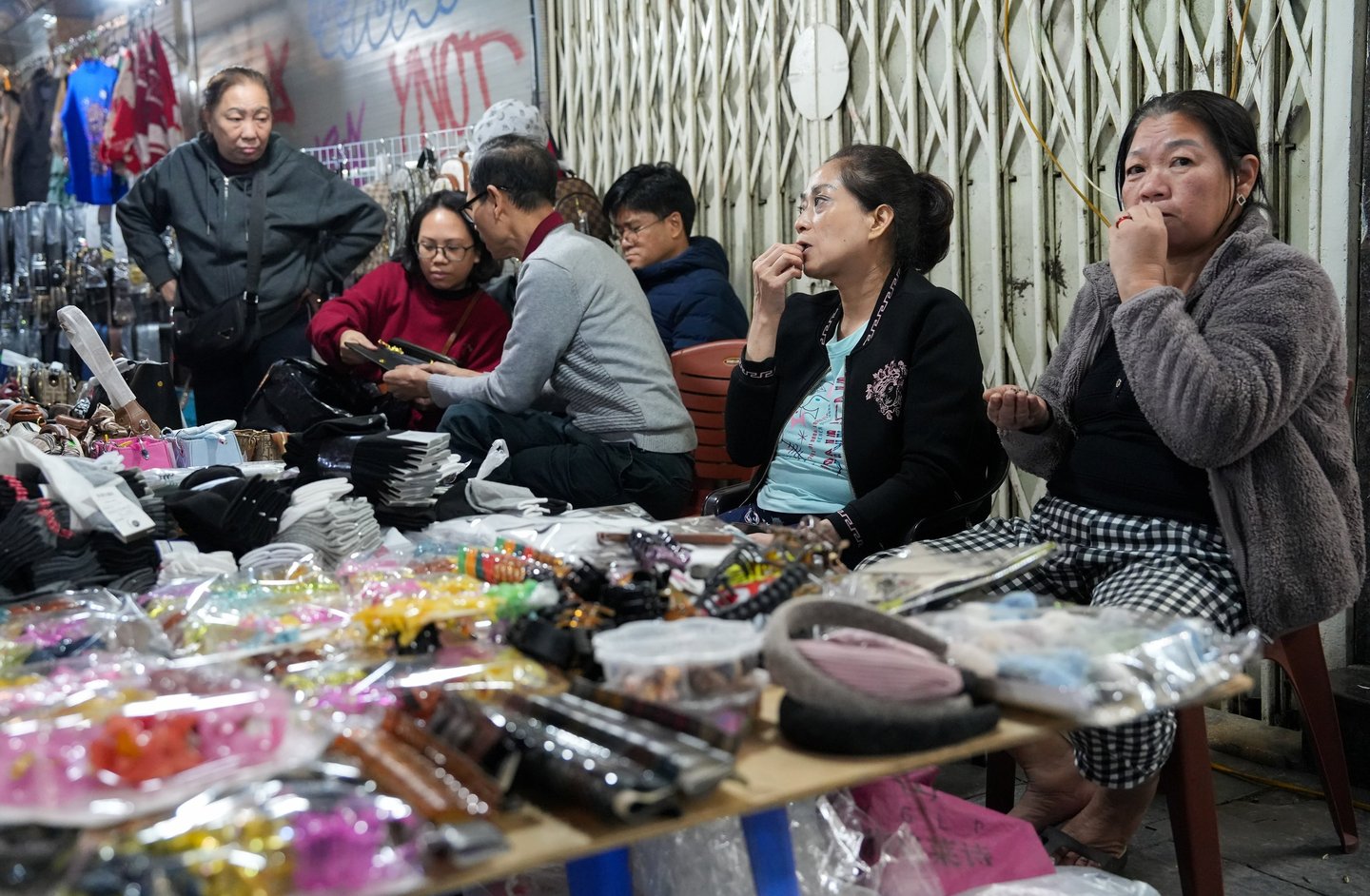
Ta Hien Beer Street: Capturing the Nightlife Energy
This kinetic energy peaks on Ta Hien Street—widely known as Hanoi Beer Street. Here, tiny bars overflow straight onto the pavement, weaving travelers and locals into a dense, single crowd that pulses until the early hours. It is loud, claustrophobic, and chaotic, but at the same time, intensely human and authentic.
Hanoi’s streets are a masterclass in urban adaptation. A single patch of concrete serves as a dining room, a marketplace, a kitchen, and a parking lot all within the span of a day.
Navigating this dense crowd with my Sony Alpha 7 IV and the Sony FE 24-70mm f/2.8 GM II allowed me to lock onto these fleeting interactions in real-time. This specific camera setup thrives in the unpredictability of low-light street photography, capturing the raw, unfiltered grit of the Old Quarter without missing a beat. Hanoi makes no effort to hide its rough edges—and as a documentary photographer, that is exactly what makes it unforgettable.
This Gallery on Southeast Lens
This collection is part of my ongoing documentary and travel photography archive at strangphotography.com, dedicated to exploring the raw urban cultures, street life, and night-time transitions across Thailand, Vietnam, and Laos.
Hanoi does not try to look perfect.
That is exactly what makes it unforgettable to me.
Hanoi Train Street, Vietnam – Between Adrenaline, Street Food and the Sound of the Railway
Hanoi Train Street is a location that instantly swallows you whole. Tucked away inside the labyrinth of the Hanoi Old Quarter, what started decades ago as a basic residential rail line built during the French colonial era has transformed into one of the most surreal street photography locations in Southeast Asia.
The tracks themselves are a functioning section of the historic North–South Railway, linking Hanoi to Ho Chi Minh City. Long before international travelers arrived with cameras, local Vietnamese families had carved out an existence right on the edge of the iron rails. Over time, tiny trackside homes, improvised cafés, and local kitchen stalls grew around the line, creating an urban anomaly that defies conventional city planning. No video or wide-angle shot quite prepares you for the friction of the actual experience.
Living on the Edge: The Rhythm of the Tracks
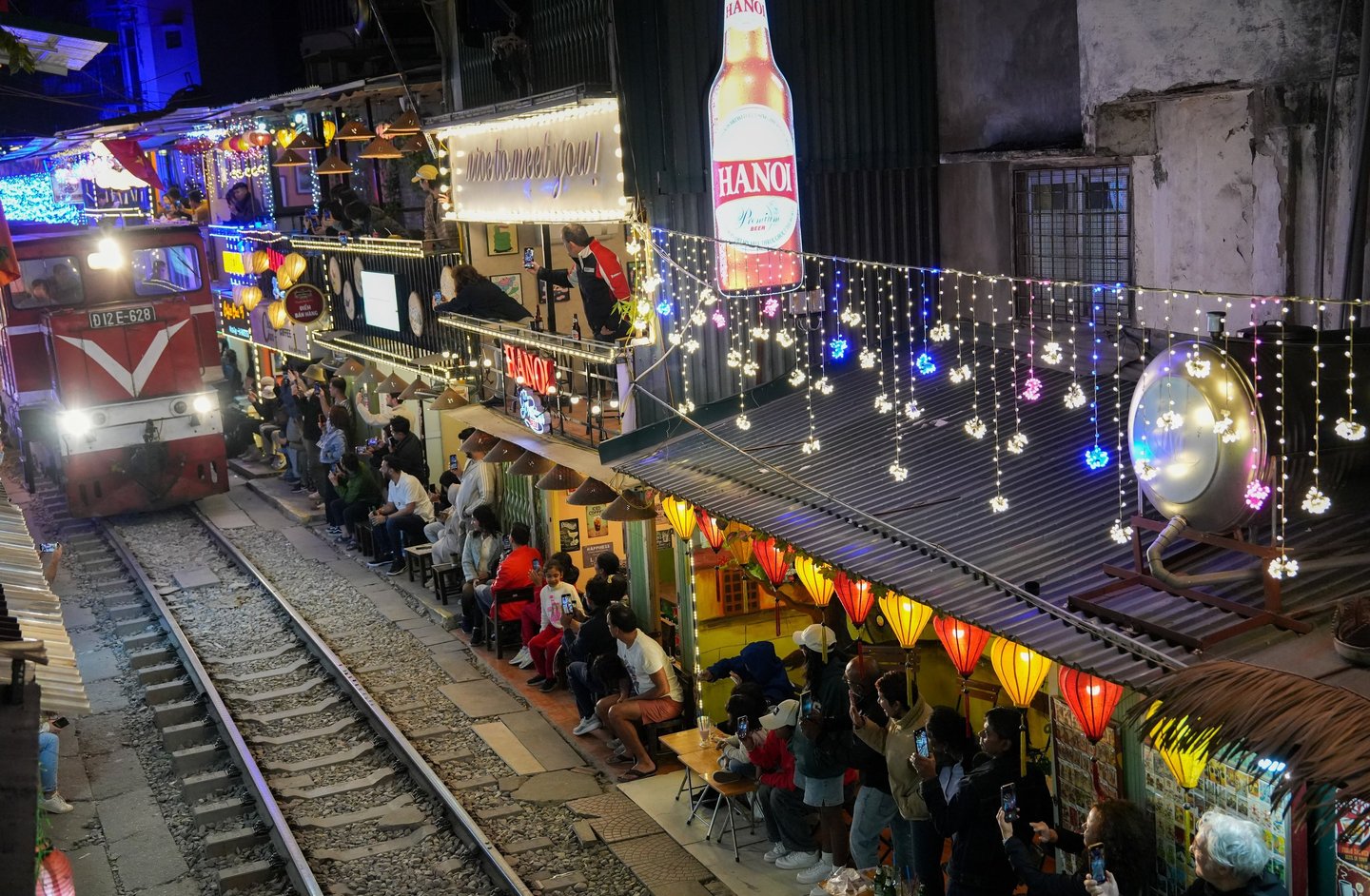
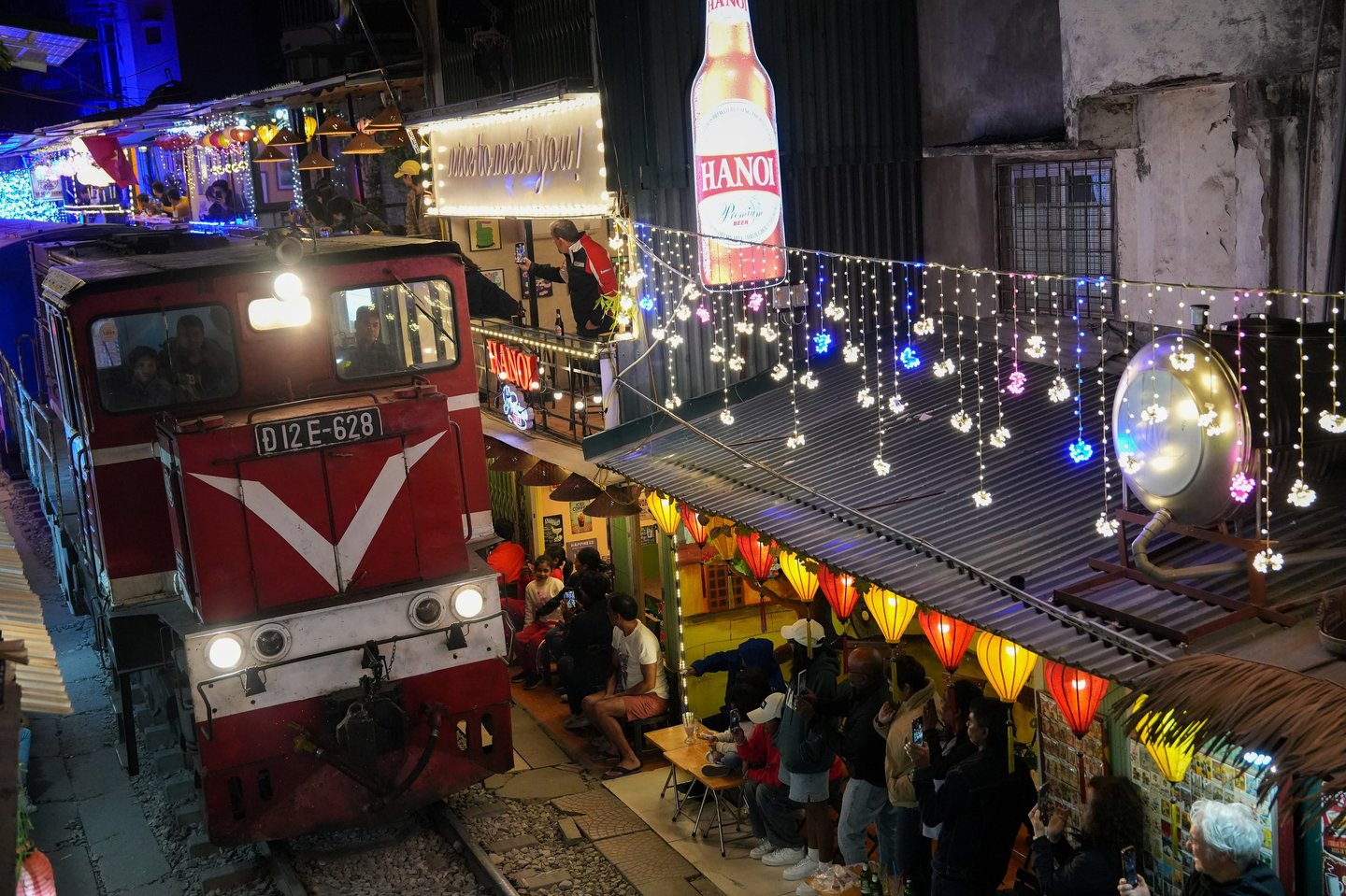
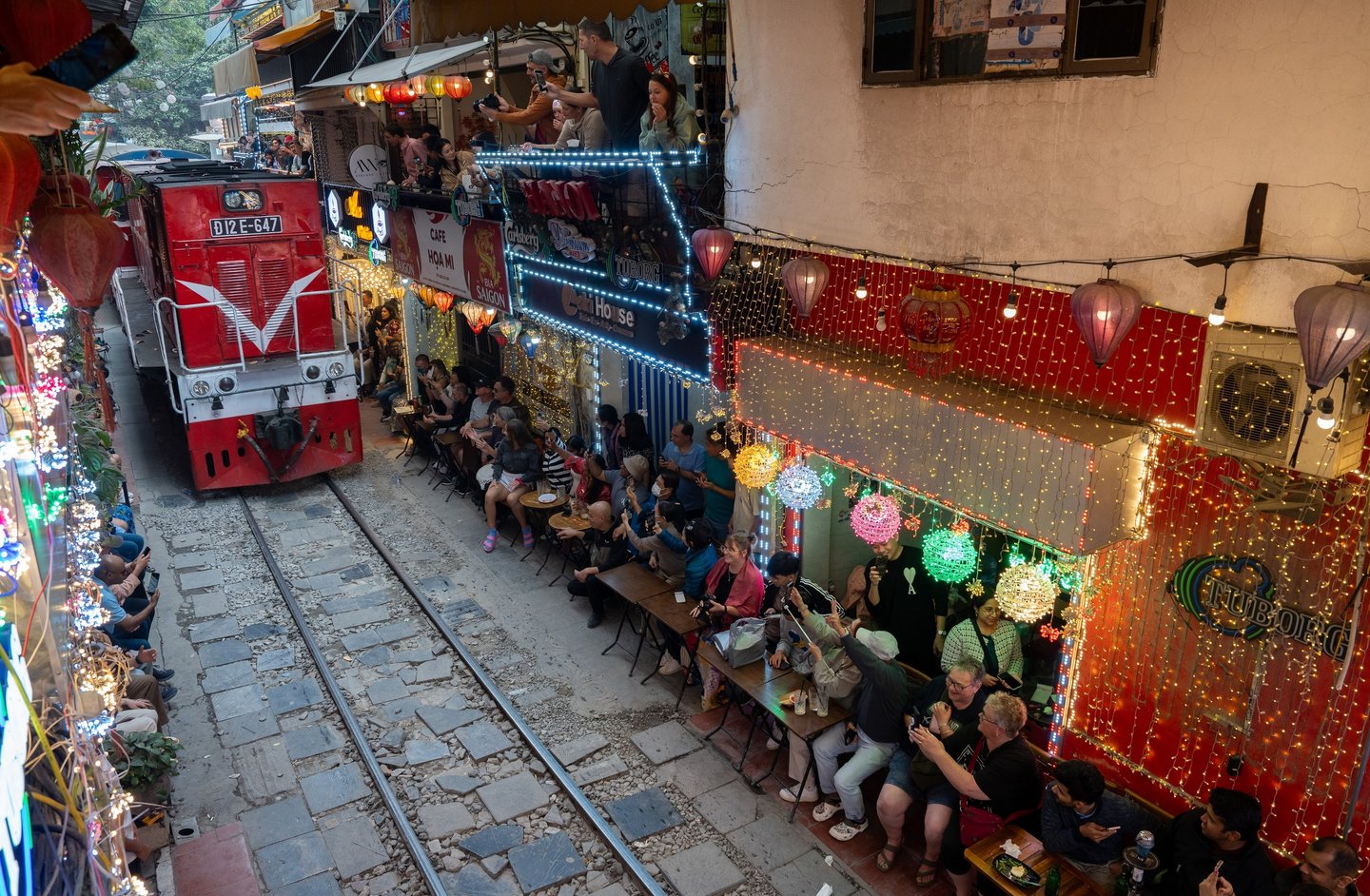
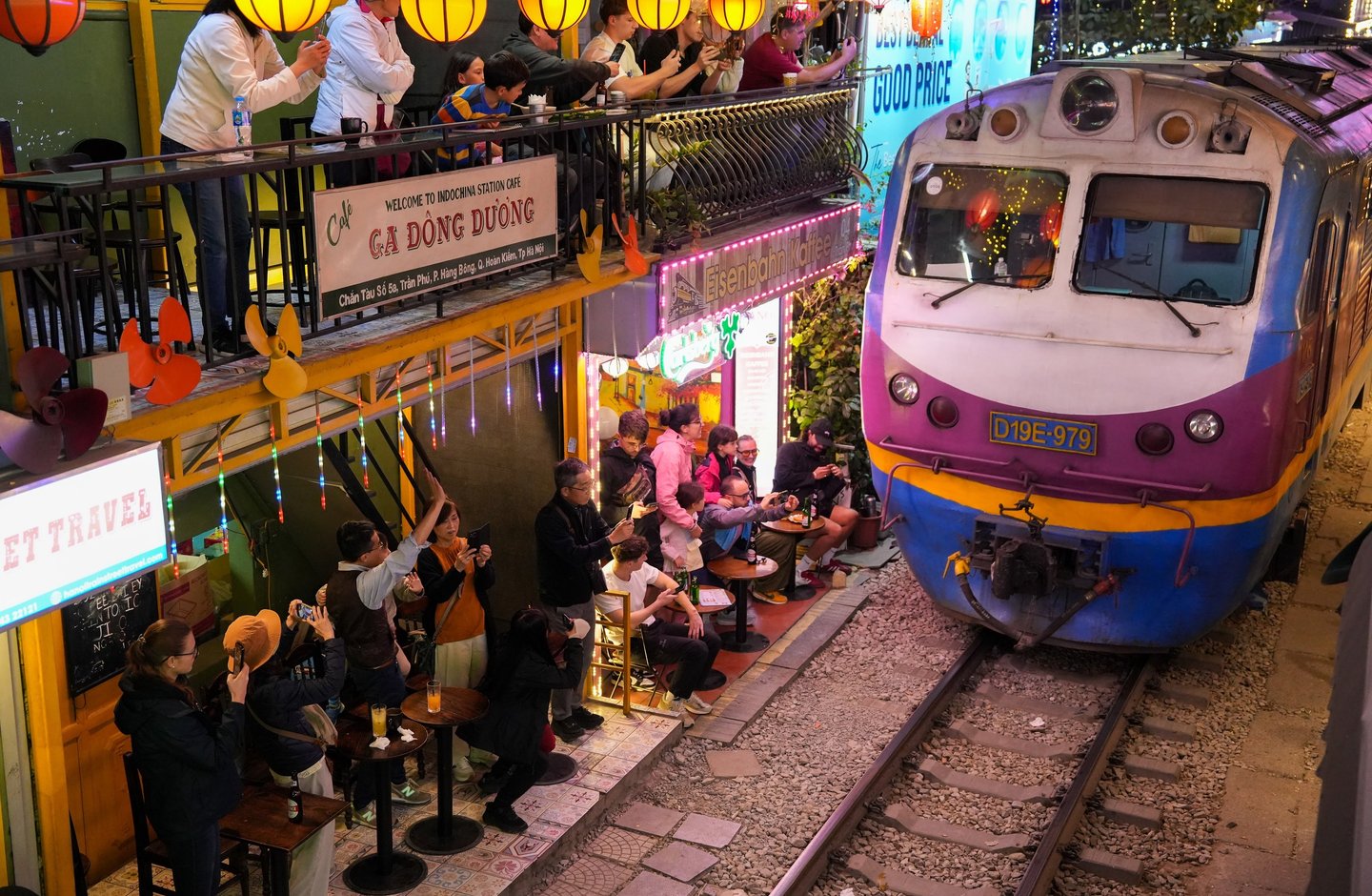
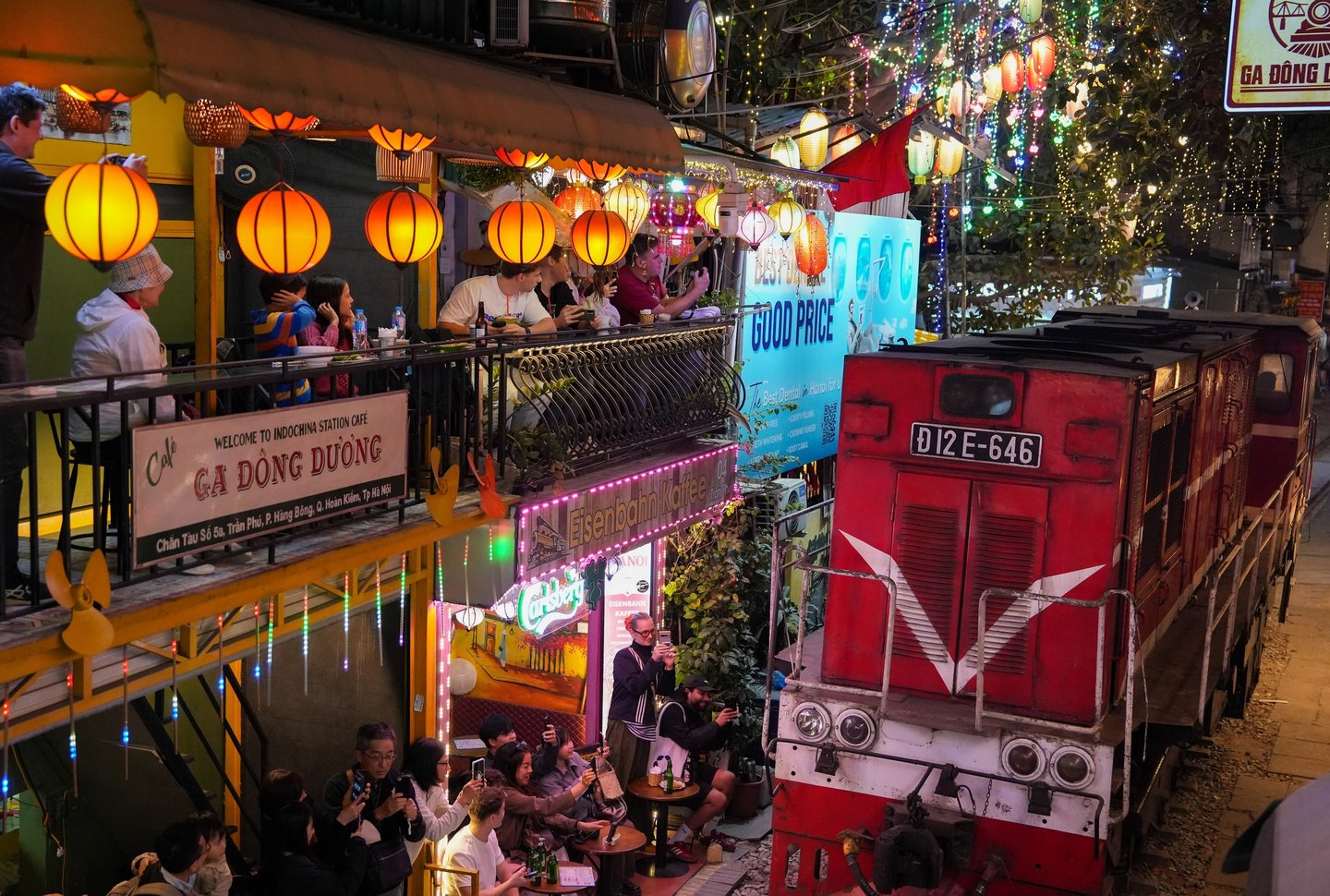
The sheer proximity of everyday life to active railway tracks is mind-boggling. One minute, people are perched on tiny plastic stools, nursing ice-cold Hanoi beers, sharing authentic Vietnamese street food, and swapping stories. The next, the environment shifts instantly. Tables vanish, stools are stacked against the walls, and a multi-ton train slowly squeezes through the narrow canyon of brick and mortar, clearing the buildings by mere centimeters.
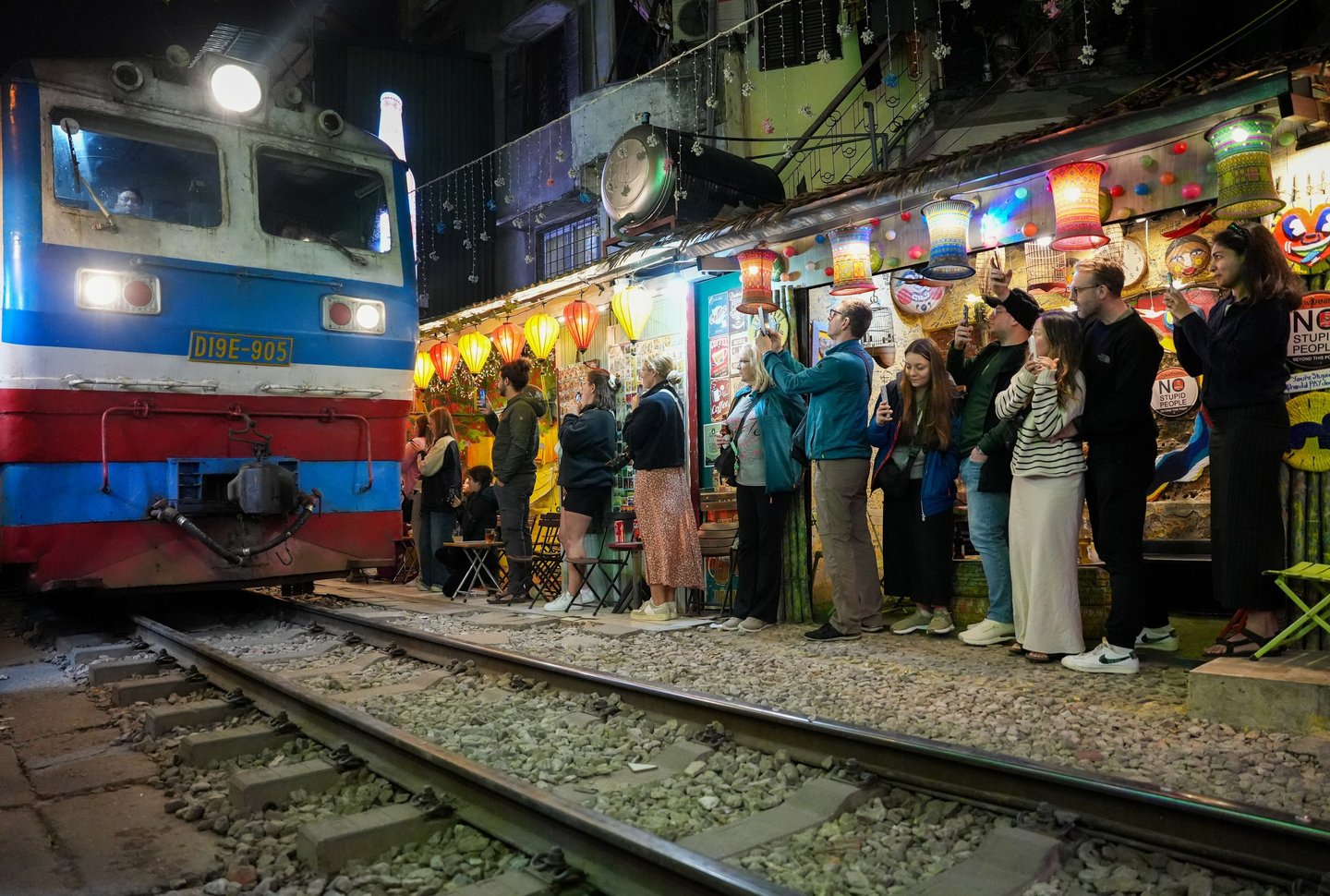
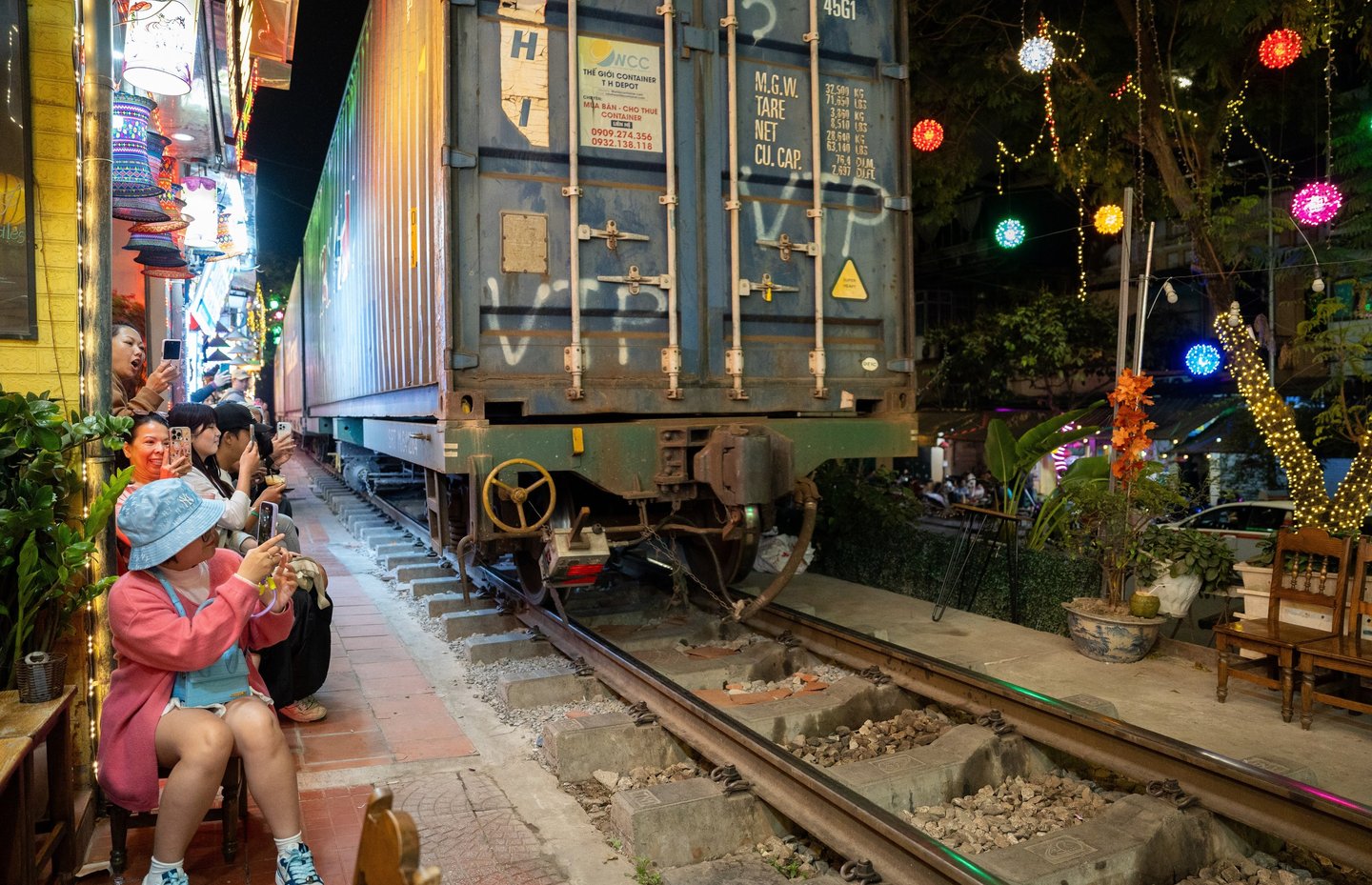
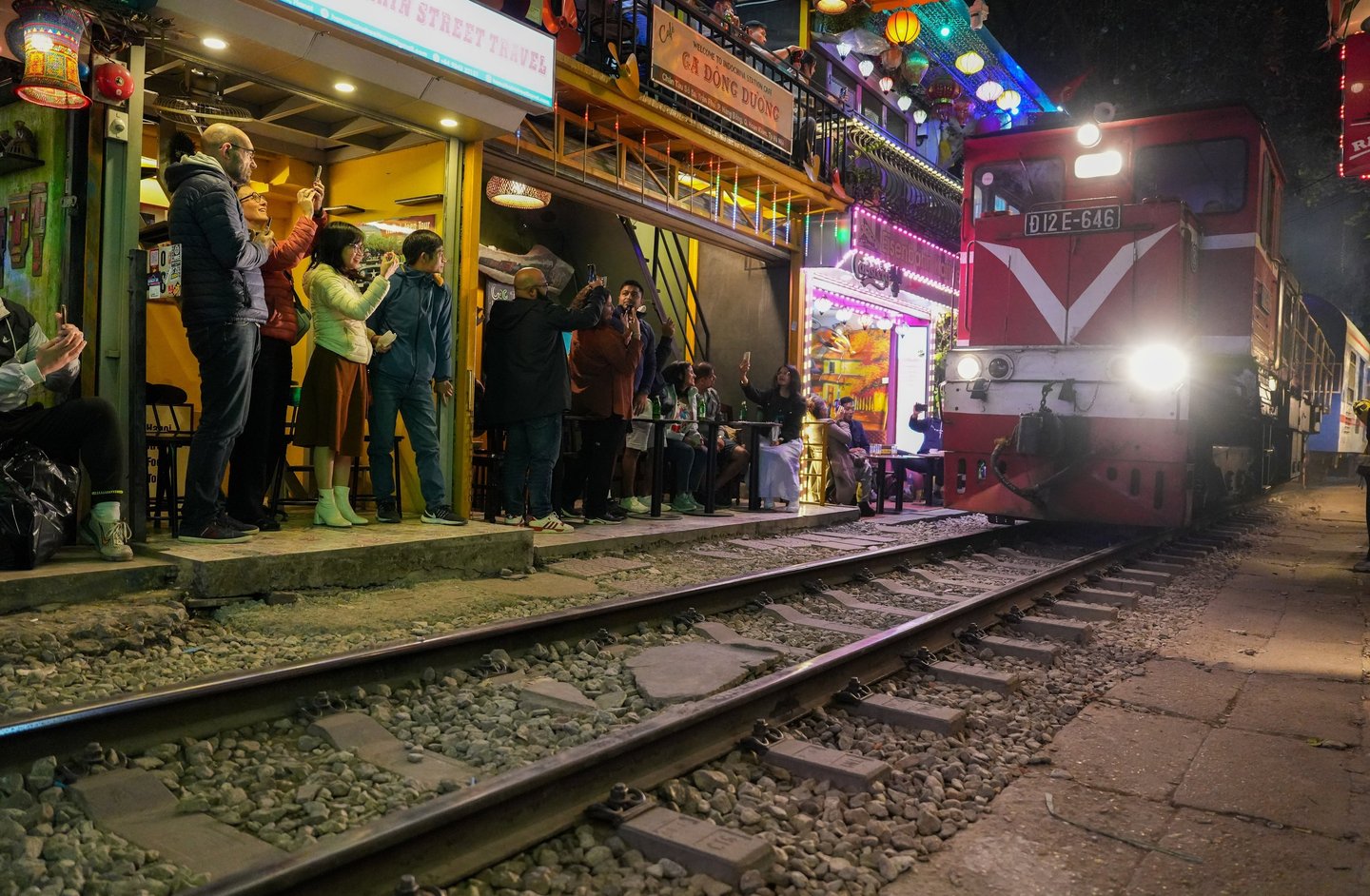
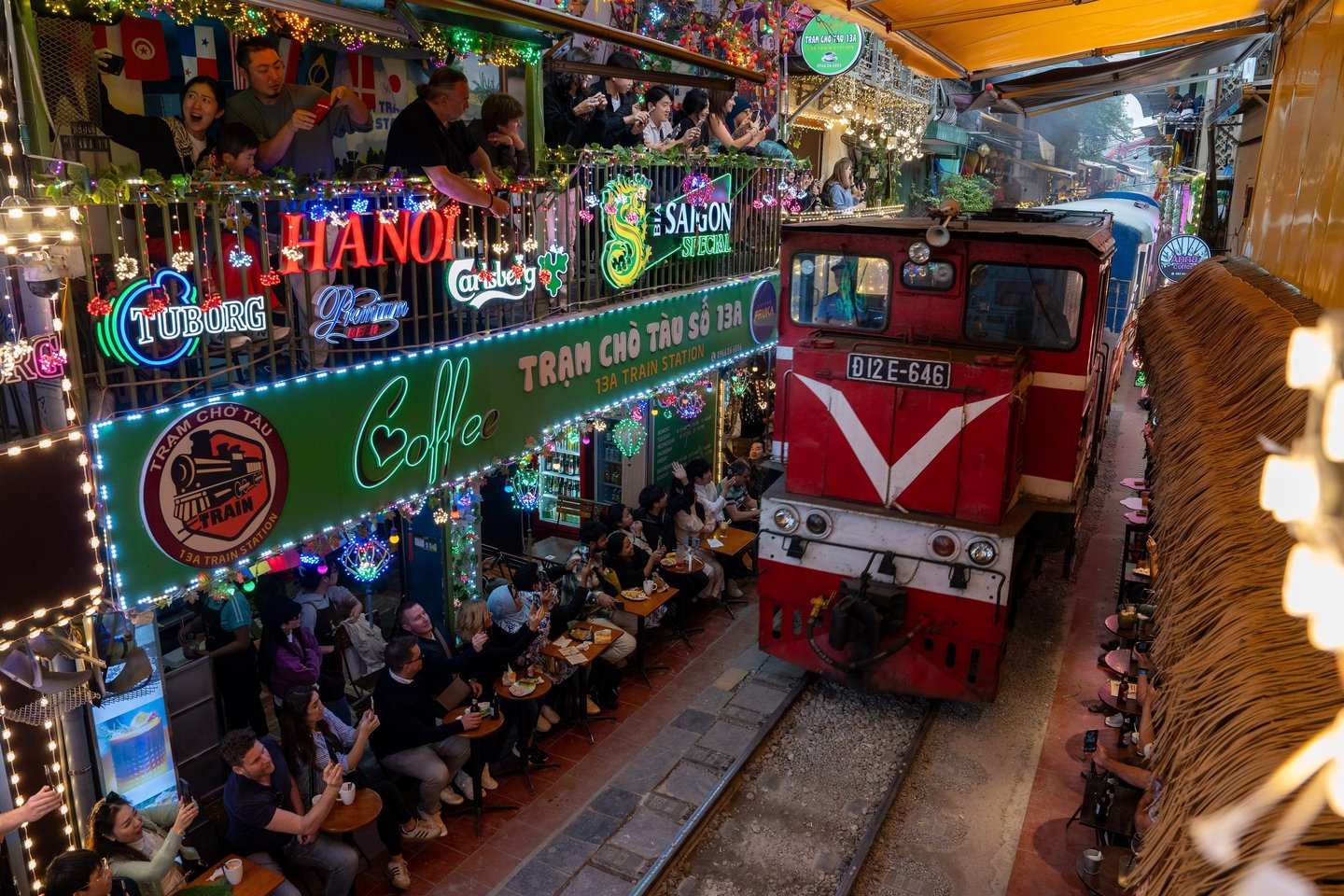
We spent several evenings embedded in the Hanoi Train Street, shifting vantage points to document the train's arrival from different angles. Sitting downstairs on the gravel directly beside the tracks puts you right in the middle of the frantic, shared anticipation. Conversely, moving up to the first-floor balconies of the trackside restaurants offers a wider, more editorial view of the organized chaos below.
The energy here is intensely social—a unique melting pot where travelers from Europe, America, and Australia sit shoulder-to-shoulder with local families. It feels less like a sterile tourist sight and more like a raw piece of live urban theater.
Cinematic Textures and Modern Regulations
From a documentary photography perspective, Train Street is visually spectacular. The combination of weathered ocher walls, glowing neon signs, heavy humid air, tangled overhead power lines, and the piercing high-beams of the approaching locomotive creates frames that feel inherently cinematic.
However, the area also highlights the complex tightrope walk between mass tourism and public safety in modern Vietnam. Over the last few years, local authorities have repeatedly tightened Train Street safety regulations and restricted track access due to severe overcrowding. Today, many entrances are strictly monitored by guards, requiring visitors to be escorted in by local café owners.
Despite these shifting rules, the tracks remain an undeniable magnet for urban explorers and photographers looking to capture the unfiltered heartbeat of the capital.
Explore the Full Vietnam Photo Series
For more raw street photography, immersive travel stories, and unposed moments from across Thailand, Vietnam, and Laos, explore my full portfolio and premium image licensing options at strangphotography.com.
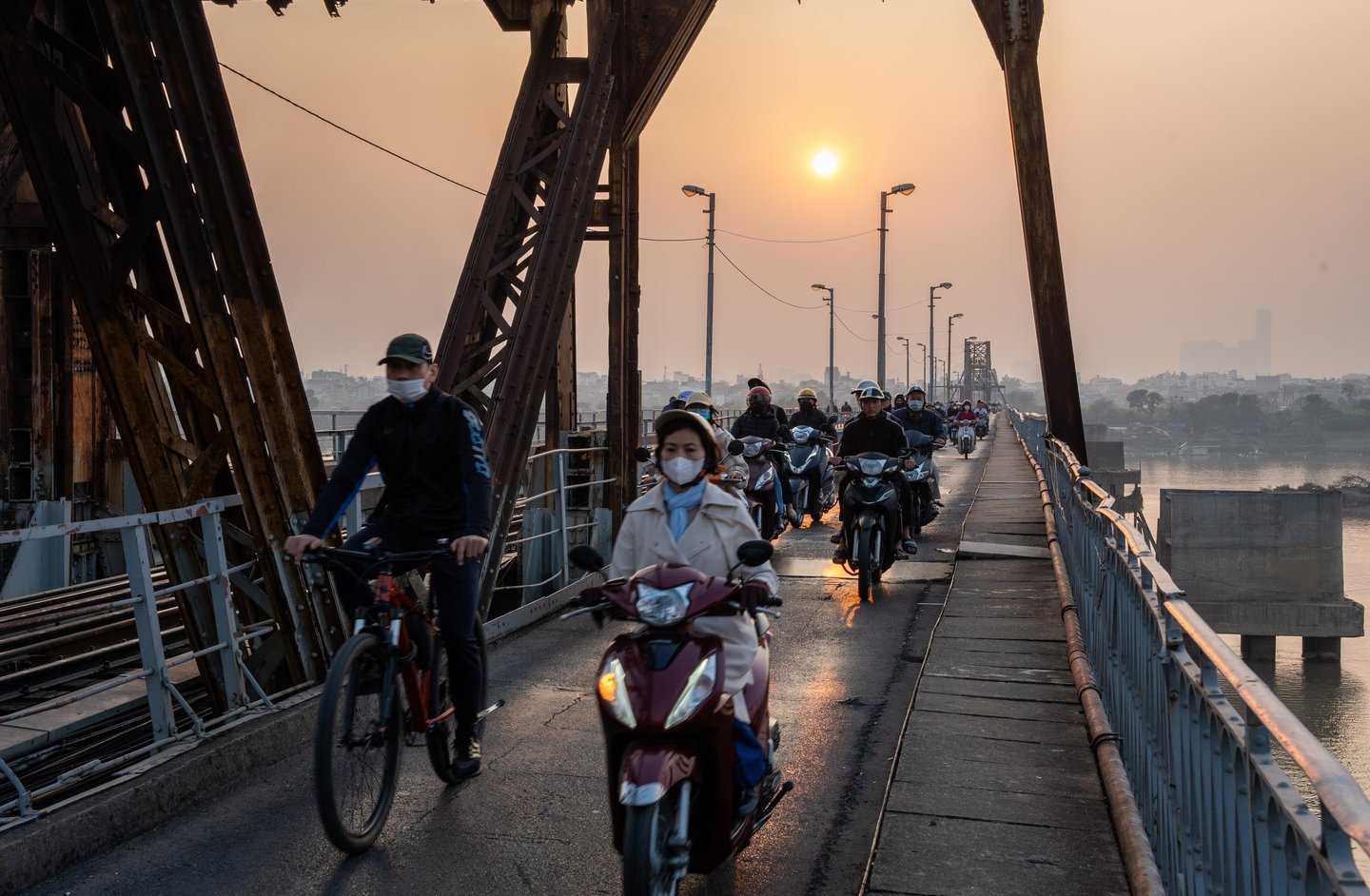
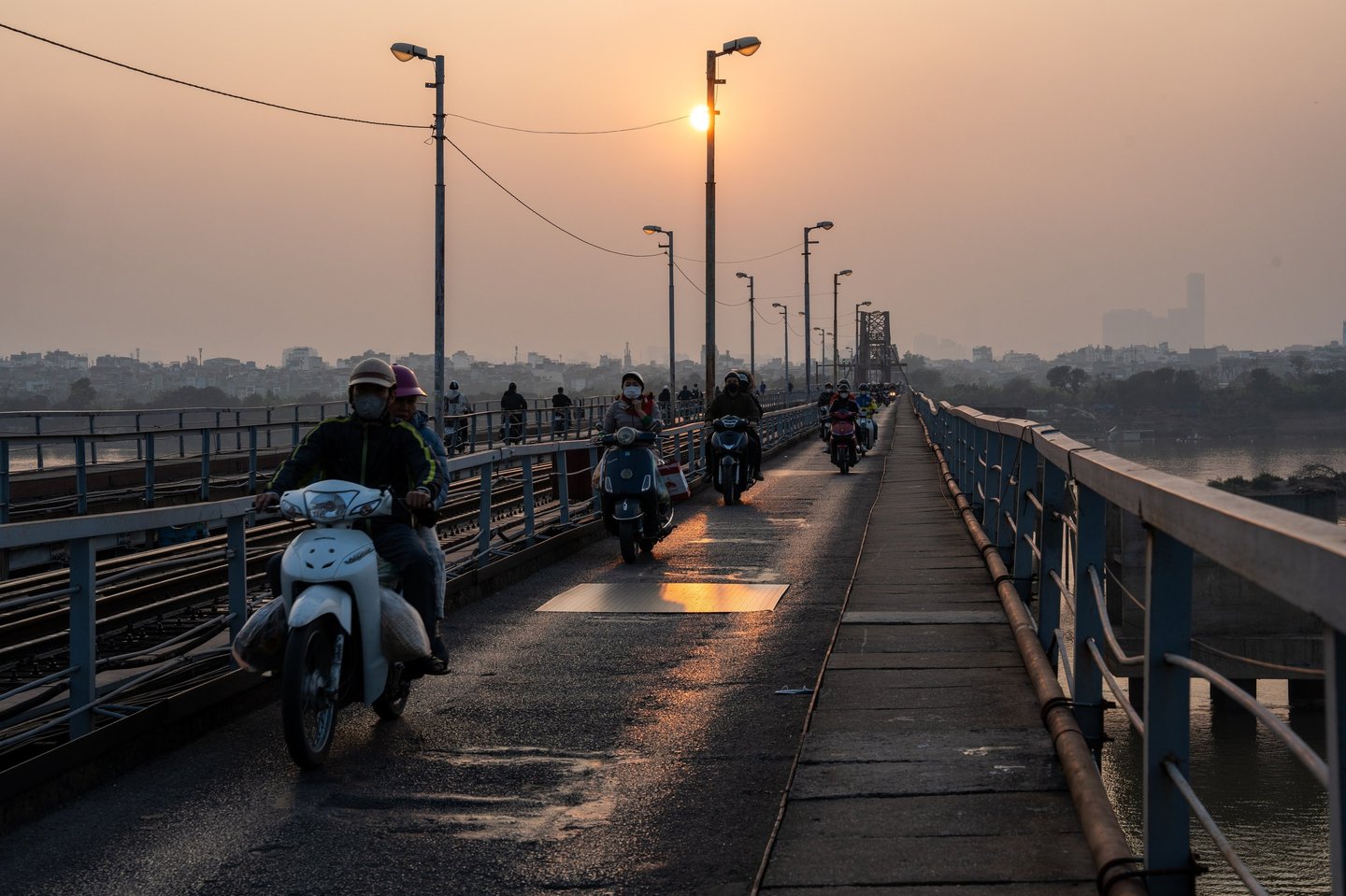
Vietnamese Motorbike Driver at Long Bien Bridge | Hanoi Between History, Motion and Sunset
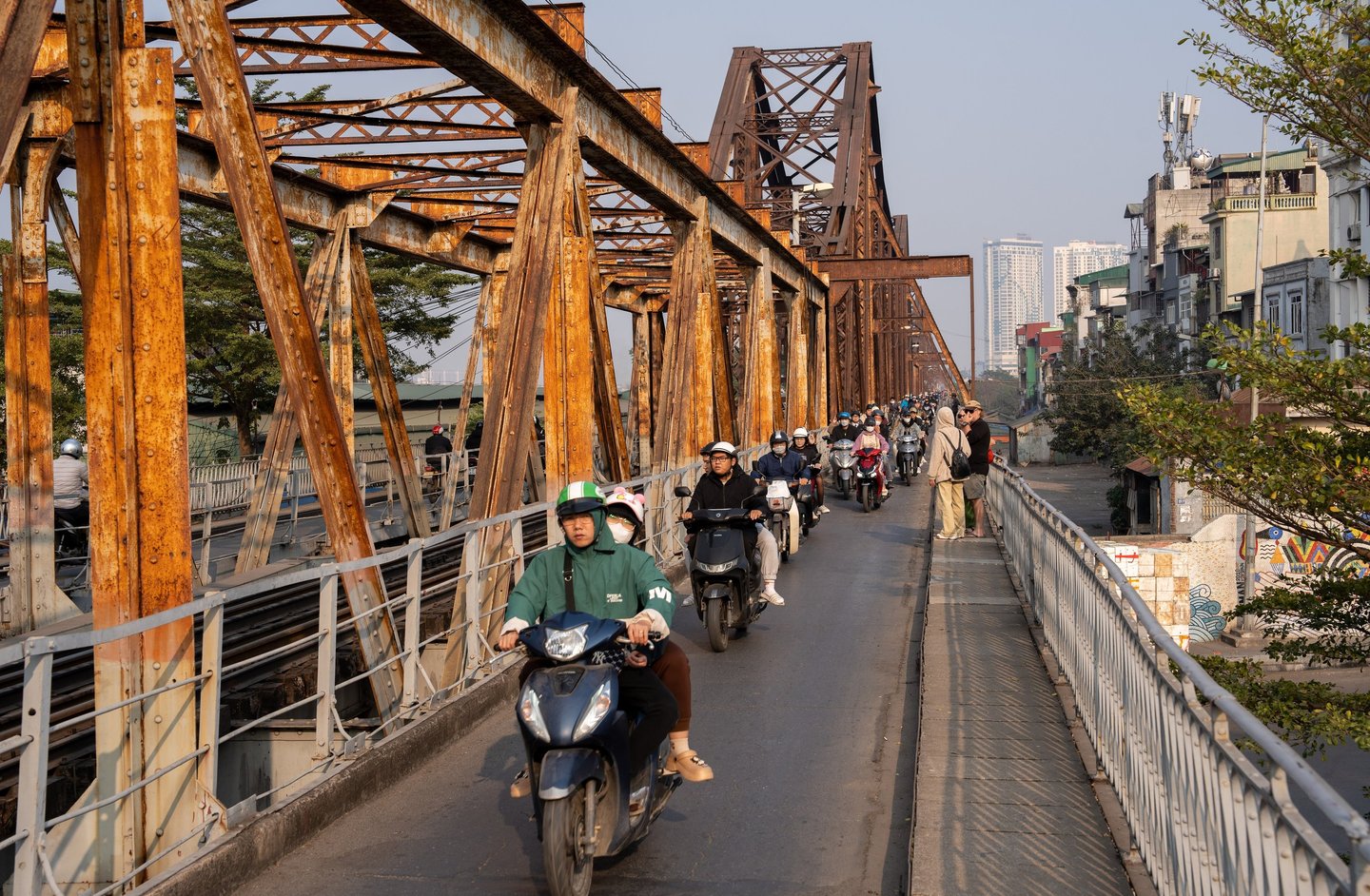
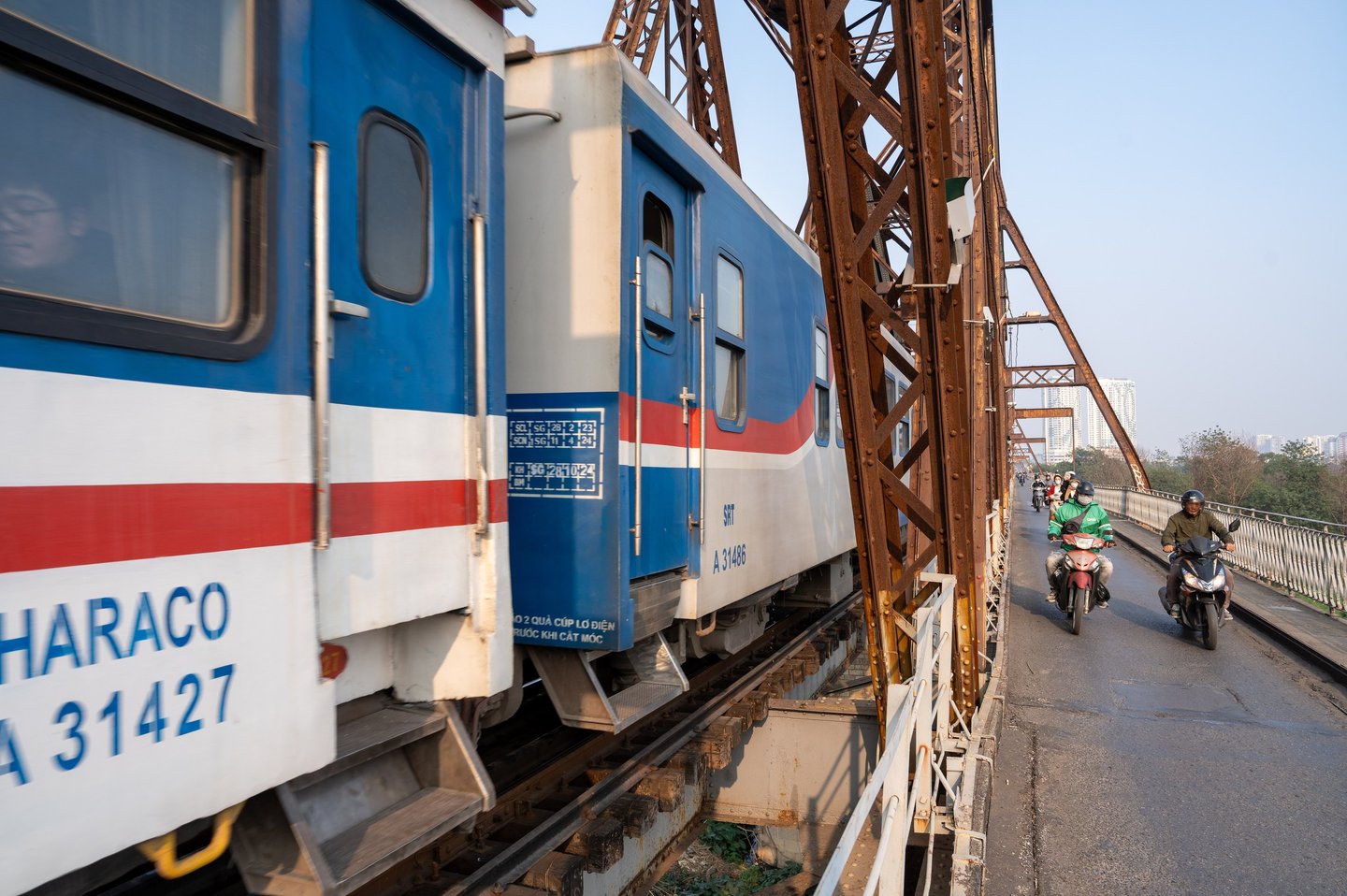
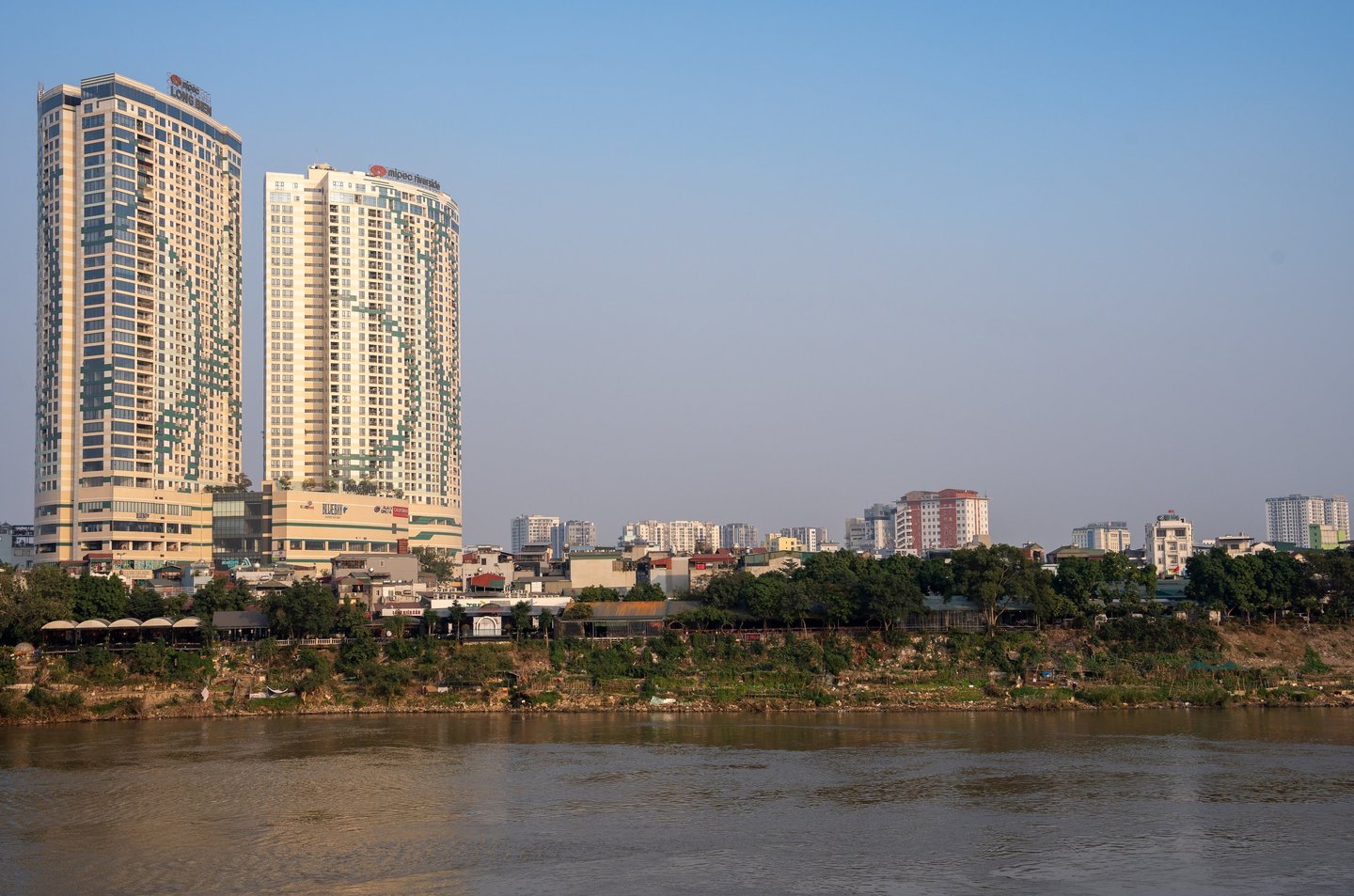
Long Bien Bridge is a place that demands your full attention; you don't merely cross it—you feel the weight of its history vibrating through your boots. Late in the afternoon, we set out directly from the Hanoi railway station to walk the entire span across the Red River and back. What followed were nearly three hours spent suspended between rusted steel beams, endless torrents of motorbikes, the rumble of train tracks beneath our feet, and the warm, golden light of a Northern Vietnam sunset.
Spanning over 2.2 kilometers, this monumental cantilever bridge was constructed between 1899 and 1902 during the French colonial era. Designed by the renowned French firm Daydé & Pillé (and originally named Paul Doumer Bridge), it stood as one of the most ambitious engineering feats in 20th-century Southeast Asia. During the Vietnam War, its strategic importance made it a prime target; heavily bombed by American forces, its iron spans were destroyed and patched up multiple times. Today, the bridge is a patchwork of survival—original intricate ironwork sits directly alongside raw, industrial repairs that speak volumes about Vietnamese resilience.
The Rush Hour Pulse: Chaos on the Red River
What captivates you as a photographer is the sheer, unyielding density of life on the deck. Thousands of commuters cross the old steel framework every minute. You see locals balancing impossibly high stacks of produce on their scooters, laborers heading home, cyclists navigating the narrow lanes, and pedestrians squeezing past each other, all while trains periodically rumble right through the spine of the bridge.
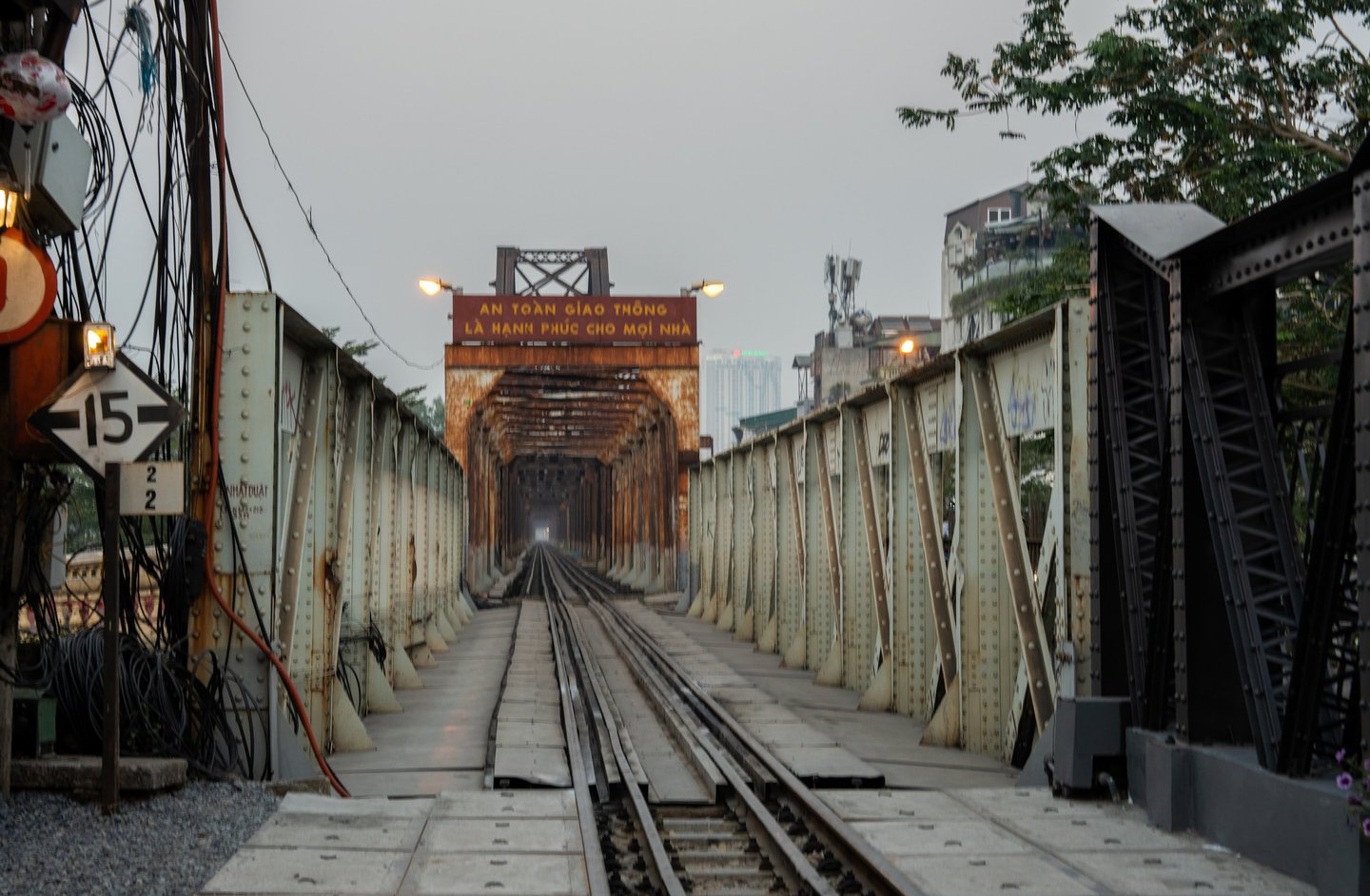
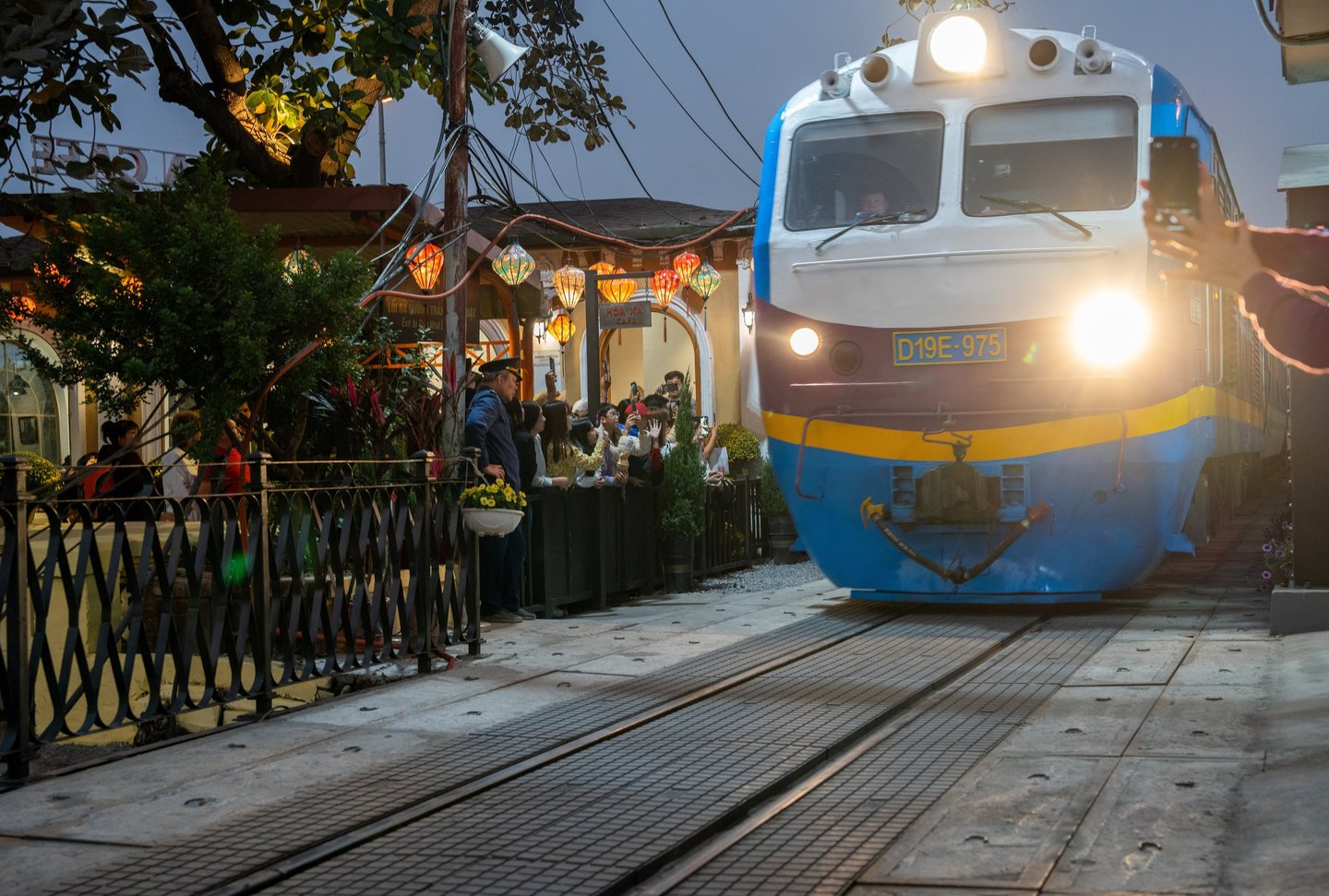
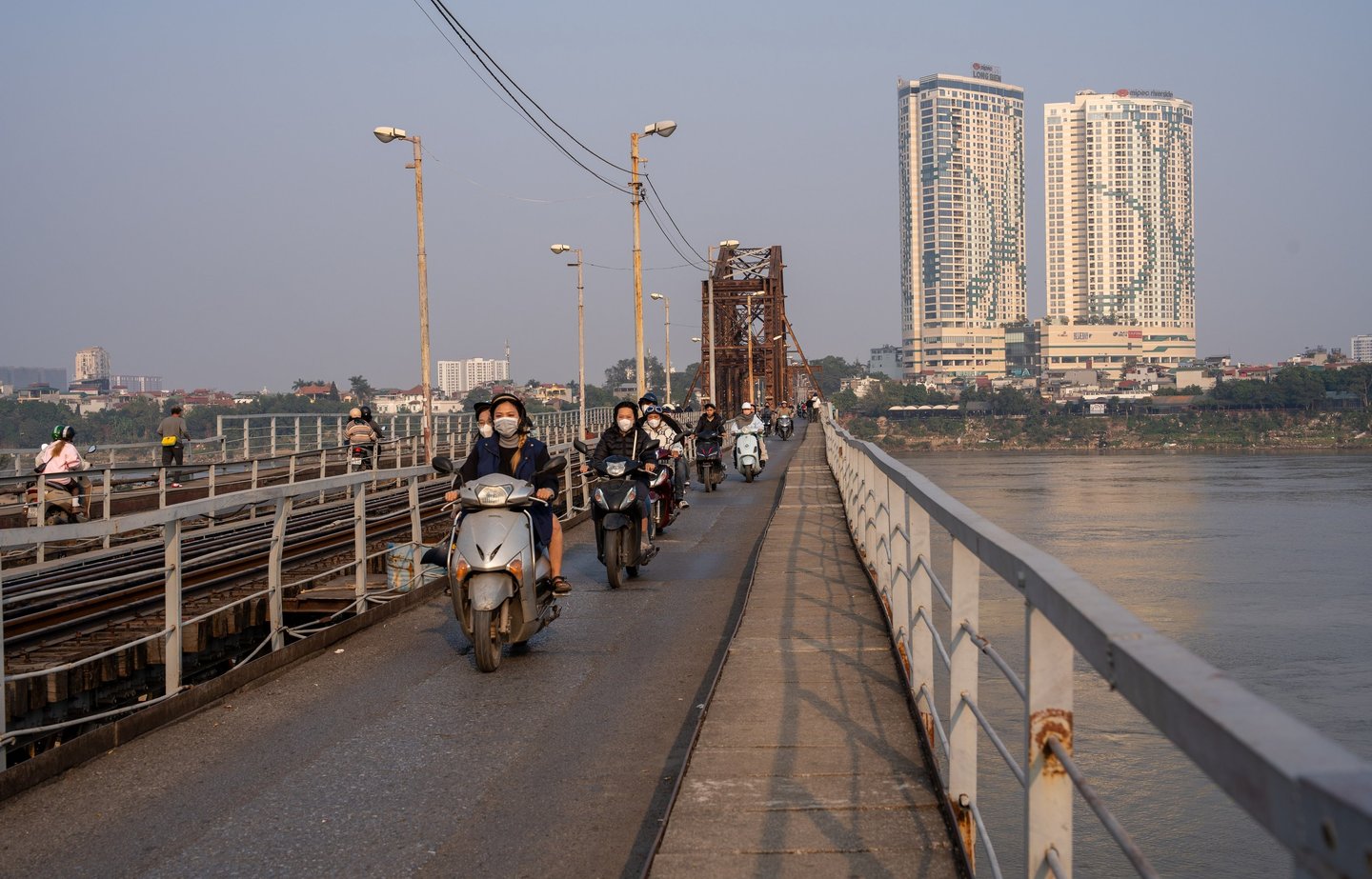
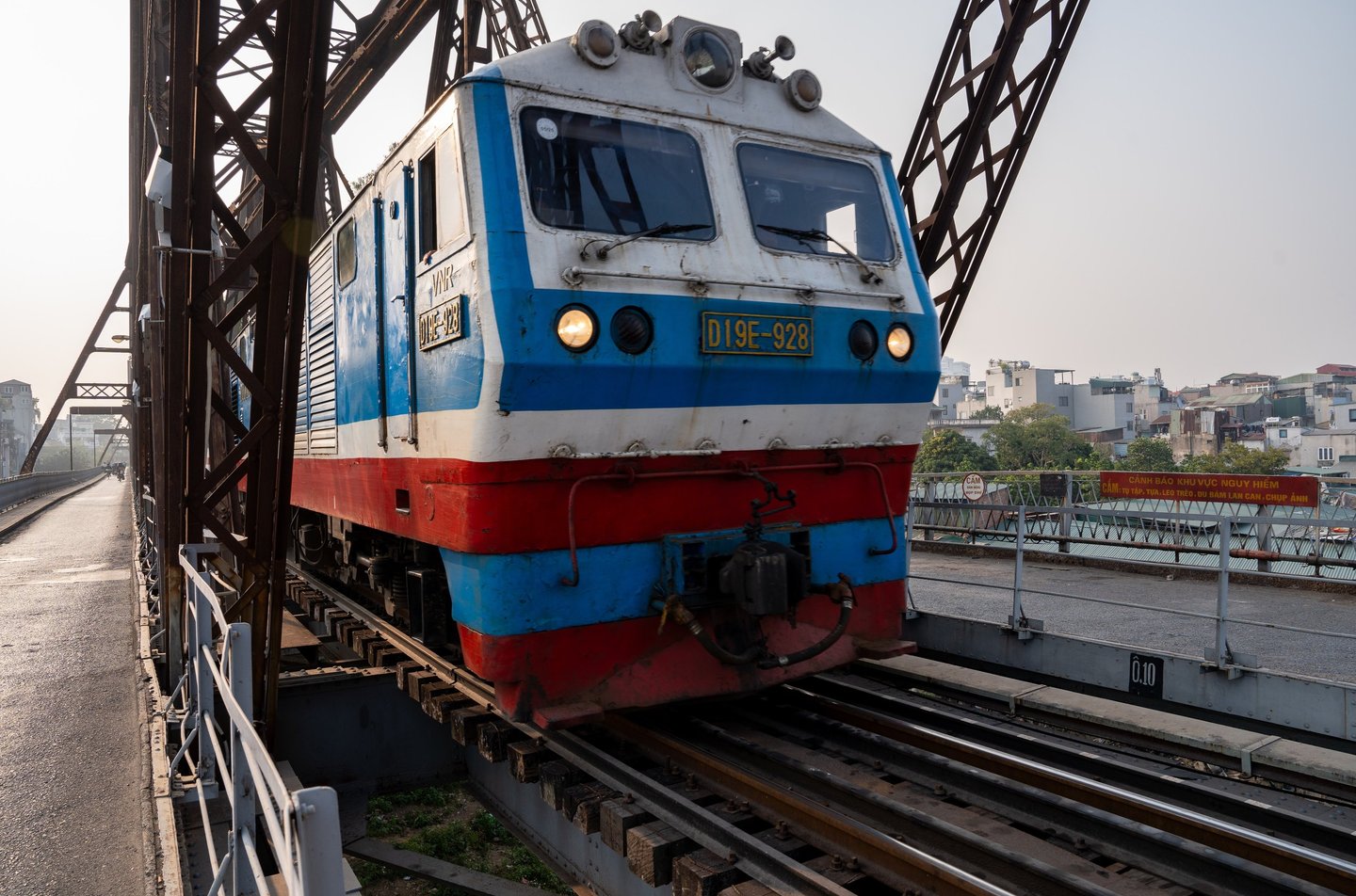
We experienced a train crossing firsthand, and the sensation is unforgettable. Suddenly, the entire iron skeleton begins to shake. The mechanical roar echoes off the iron beams, instinctively forcing everyone to hug the outer railings. Moments later, the train is gone, swallowed by the hazy expanse of the city. Below, the muddy currents of the Red River slide silently past, a timeless witness to the capital's endless transformation.
Chasing the Golden Hour: Cinematic Textures
On our trek back, the fading light completely revolutionized the landscape. As the harsh daylight gave way to deep orange and amber tones, the old ironwork began to glow. Motorbike headlights started piercing through the structural shadows while the skyline dissolved into the evening mist. This is the exact moment where Long Bien Bridge sheds any label of being a tourist attraction—it is the raw, beating heart of the capital's transit system.
As a documentary photographer, these are the unvarnished spaces I search for across Southeast Asia. I'm not looking for polished monuments or sterile postcard views. I'm looking for the gritty intersections where history, movement, and everyday survival collide without a script. Long Bien Bridge is exactly that.
Hanoi Old Quarter: Where Colonial Charm, Street Kitchens, and Endless Motion Collide
Some cities stay with you long after you leave, and Hanoi is firmly one of them—especially the Old Quarter.
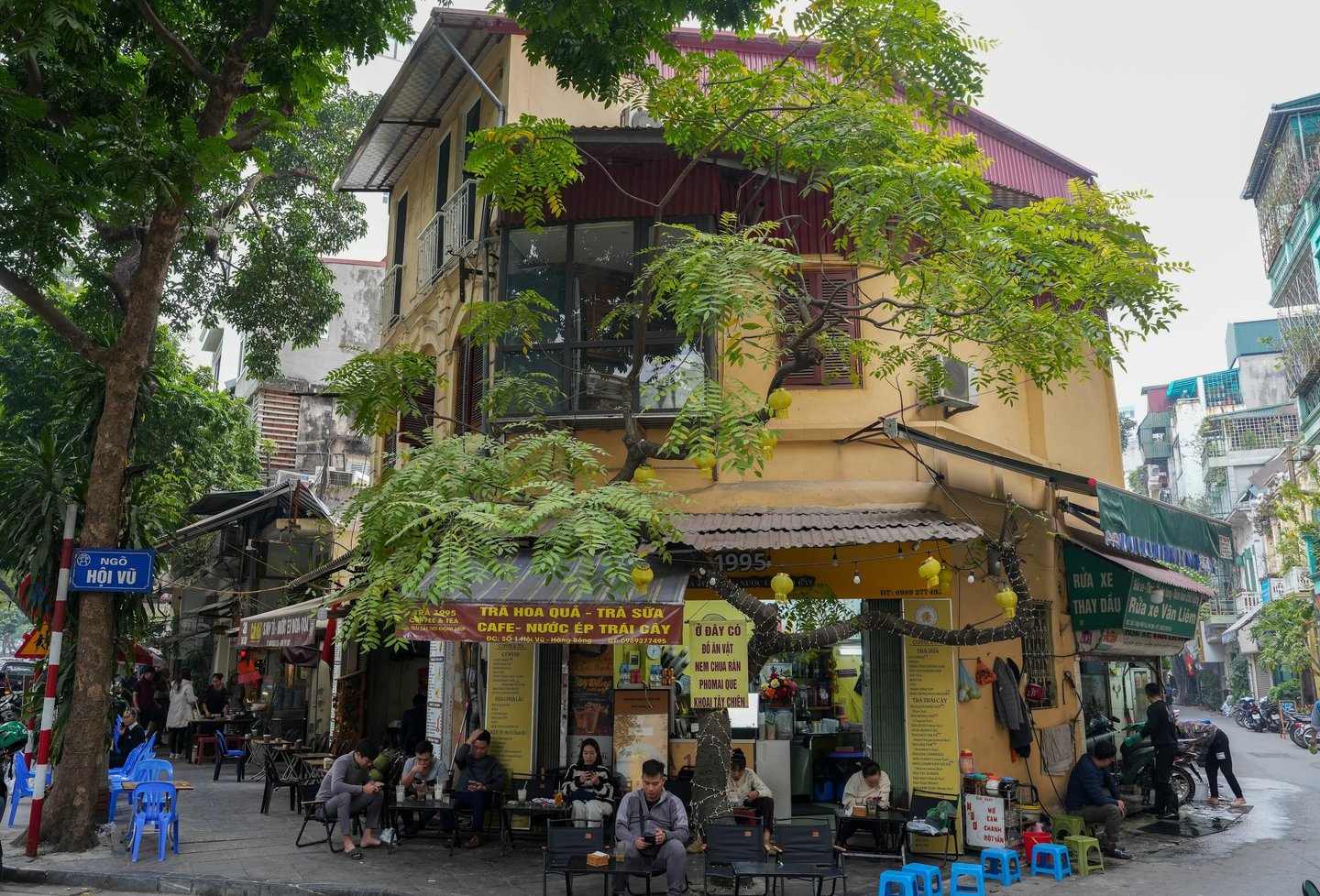
Walking through these narrow, labyrinthine streets feels less like exploring a modern capital and more like stepping back in time. More than once, we caught ourselves saying that this must be what Paris felt like a century ago. The faded ochre facades from the French colonial era, weathered wooden shutters, balconies with peeling paint, and tiny cafés squeezed into historic shop-houses create an atmosphere that is impossible to replicate anywhere else in Southeast Asia.
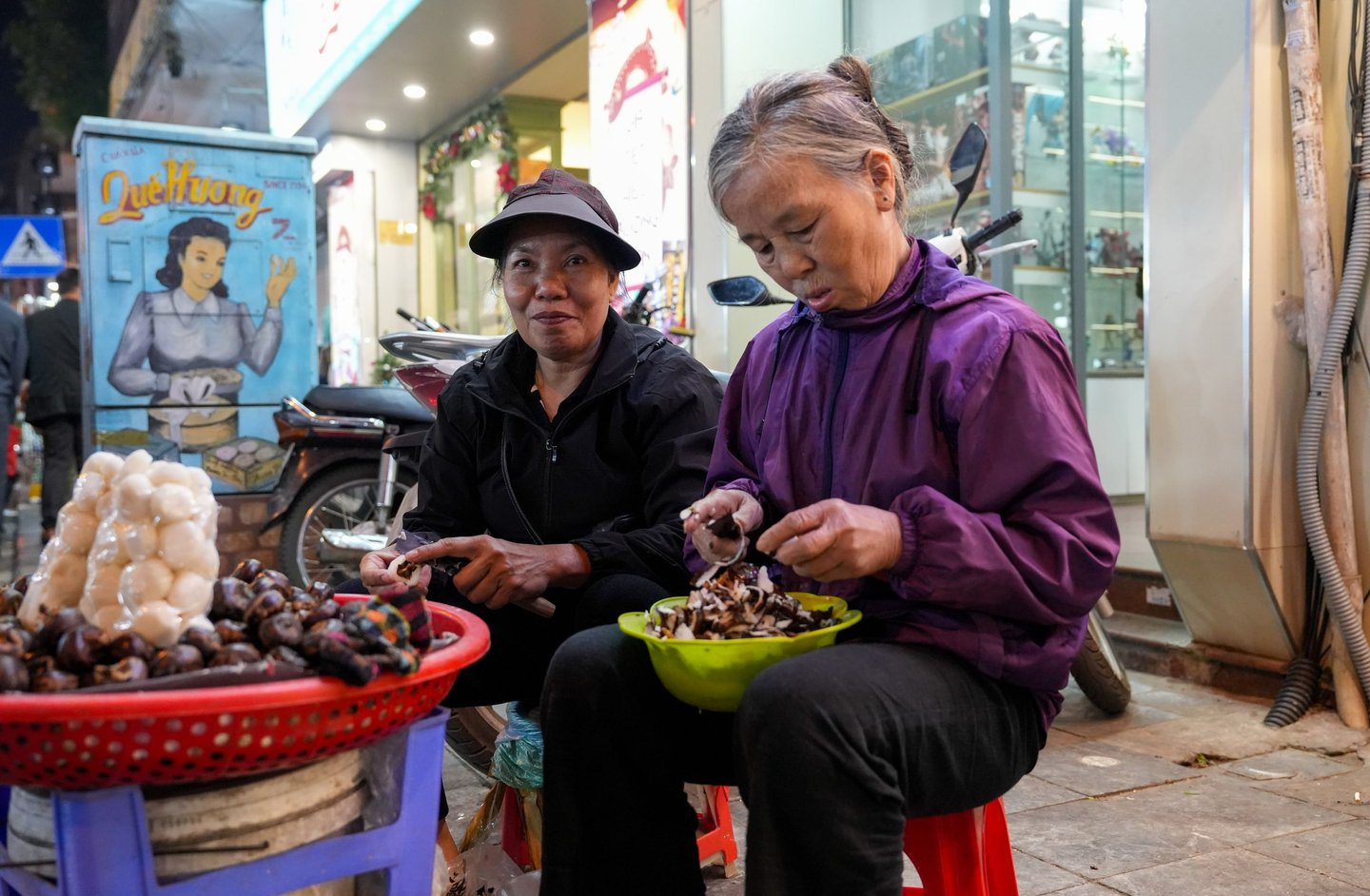
Yet, Hanoi is no museum piece; it pulses with life every single second. Scooters thread through impossible gaps, street vendors balance baskets heavy with produce, and locals perch on tiny plastic stools, hunched over steaming bowls of Pho while traffic swirls relentlessly around them. For street photography, the Old Quarter is pure chaos in the best possible way—every corner is a frame waiting to happen.
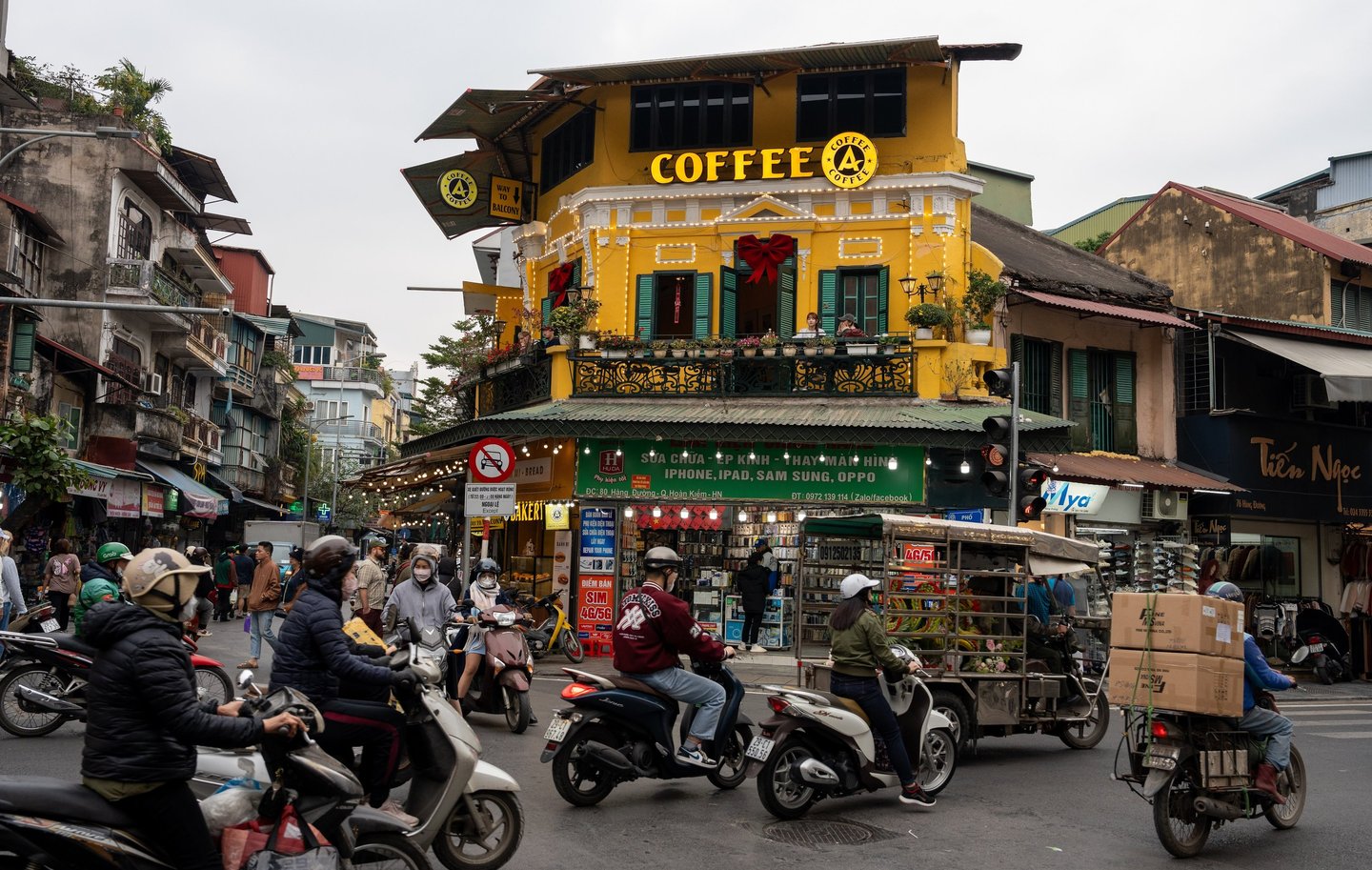
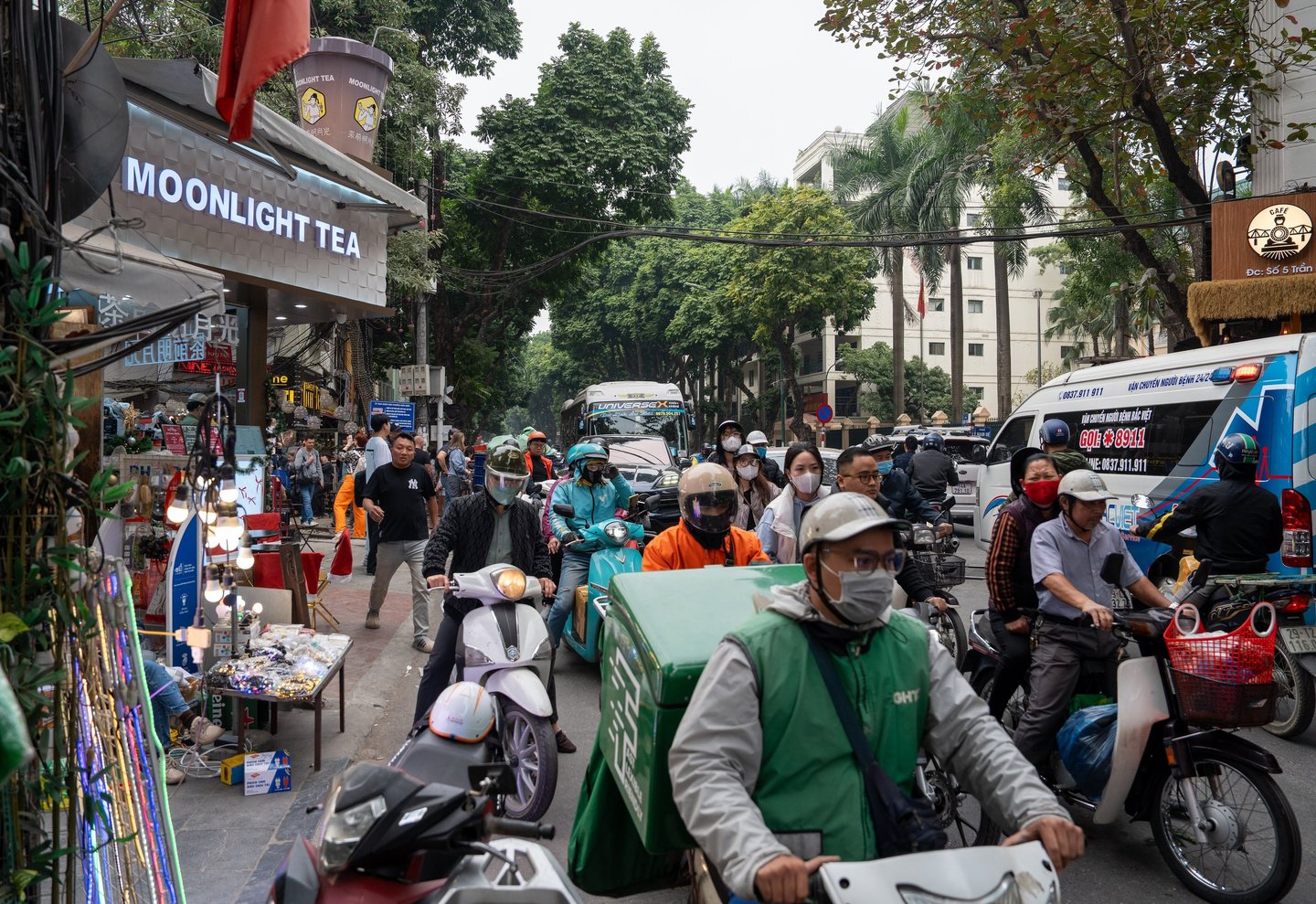
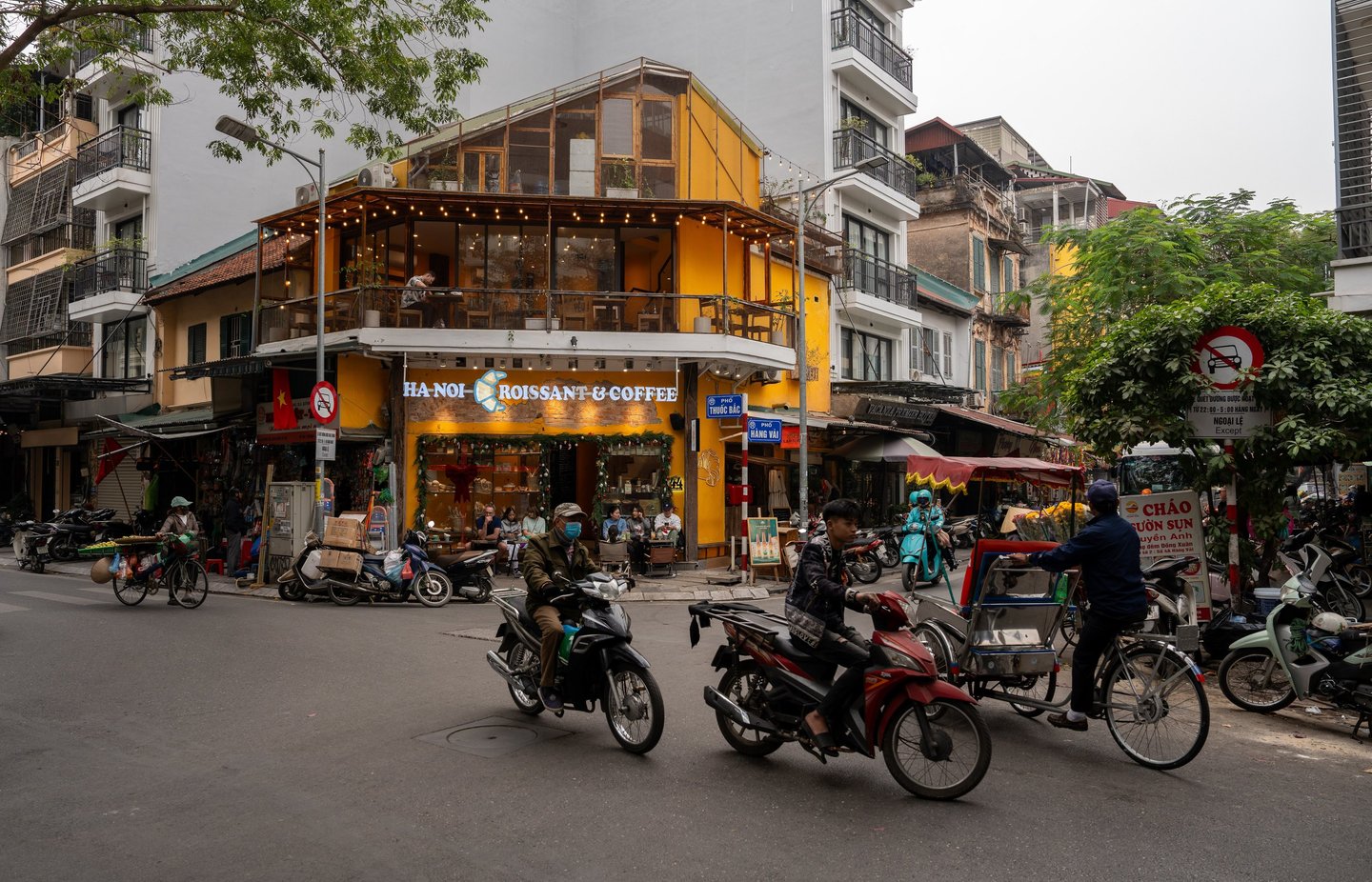
One moment, I was framing a shot of a makeshift street kitchen, its massive pots boiling right on the sidewalk. A few meters later, we’d pass grand colonial buildings repurposed into bustling coffee shops and bars, packed with young locals and travelers escaping the heat over a Vietnamese iced coffee. Then, the scenery would shift again: storefronts overflowing with hardware, fresh greens stacked on the asphalt, old women chatting outside beauty salons, and motorbikes cutting through the crowds as if it were the most natural thing in the world.
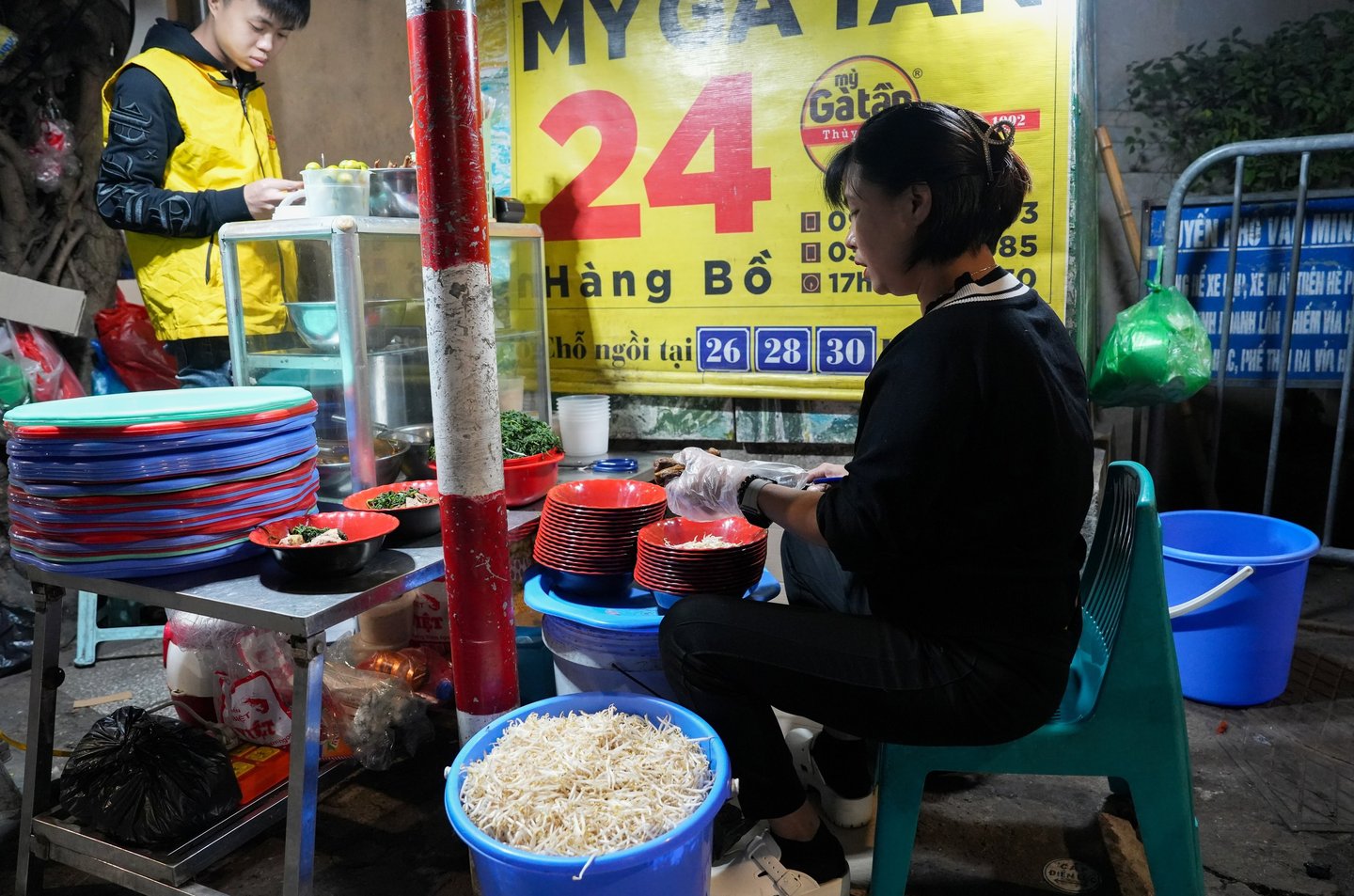
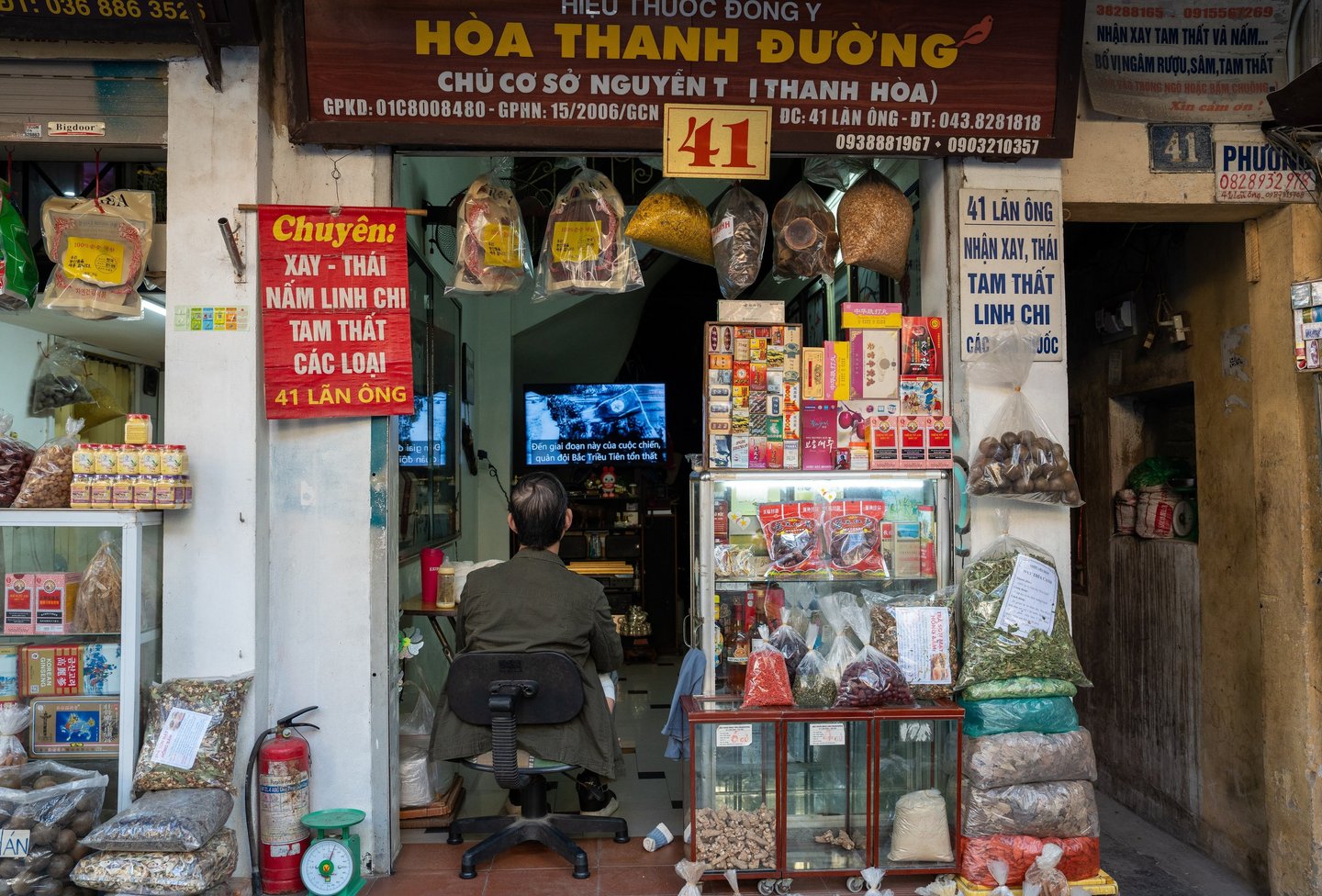
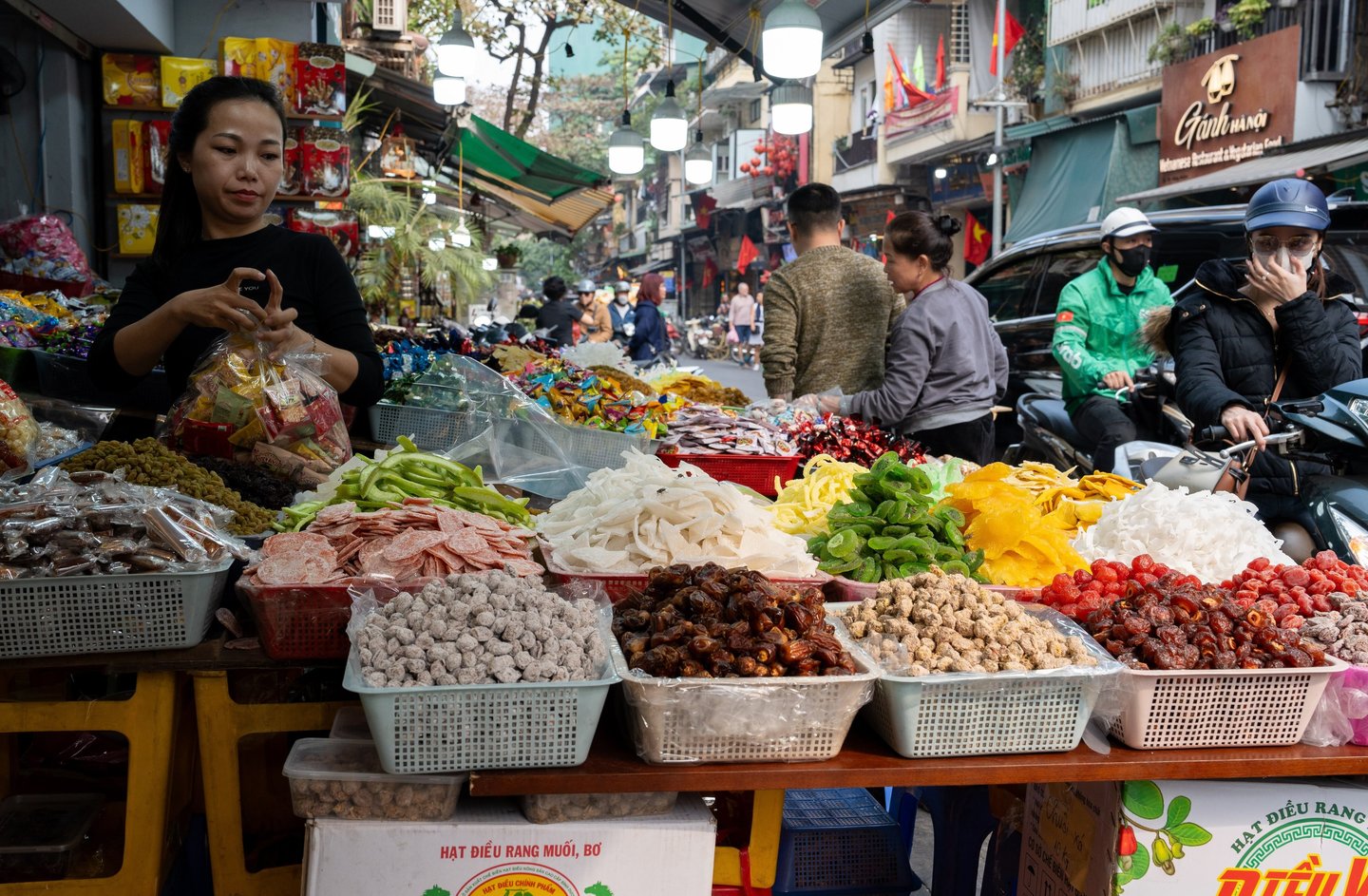
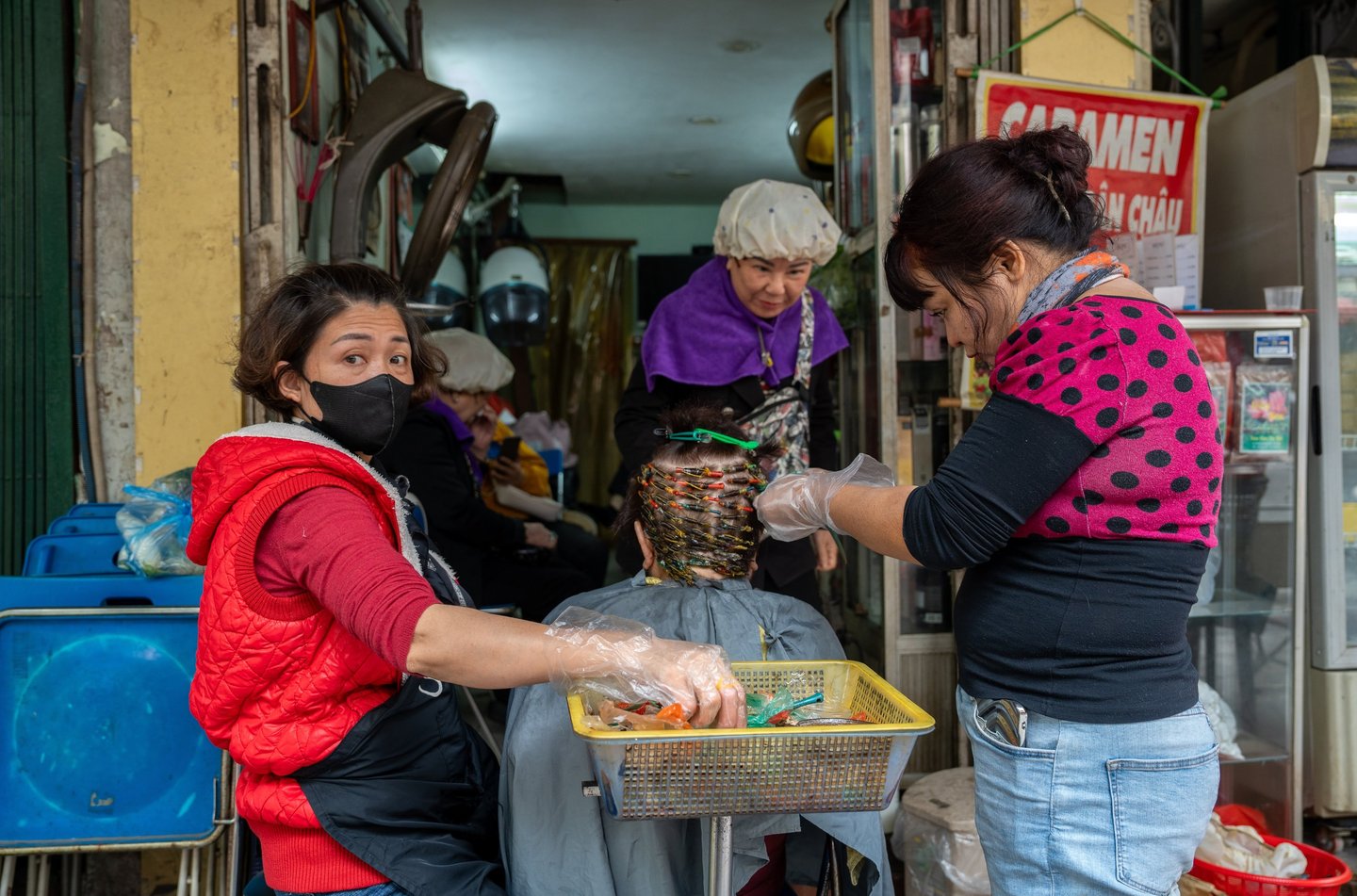
When the weekend night market kicks off, the energy shifts gears. Thousands of people pour into the streets, moving between glowing food stalls, music, and the ambient roar of Hanoi life. The area around Hoan Kiem Lake transforms into a massive open-air stage where daily life, tourism, history, and street culture seamlessly blend.
What struck me most wasn't any single landmark; it was the sheer texture of the atmosphere. We spent hours tucked away in small, upper-floor cafés just watching the city move below us. Honestly, you could sit there all day and never look away. Every roadside table is a front-row seat to one of the most mesmerizing urban spectacles in Asia.
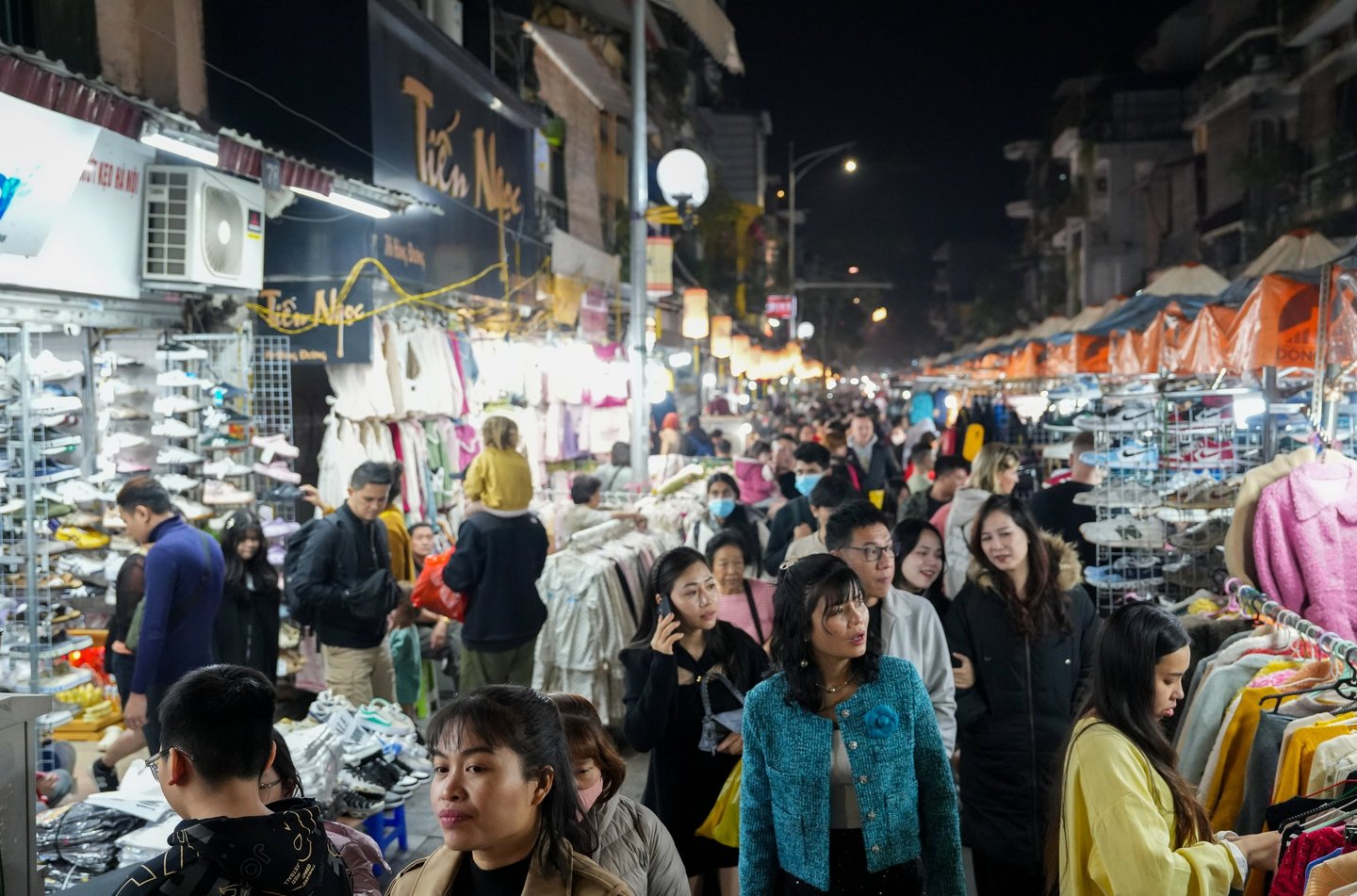
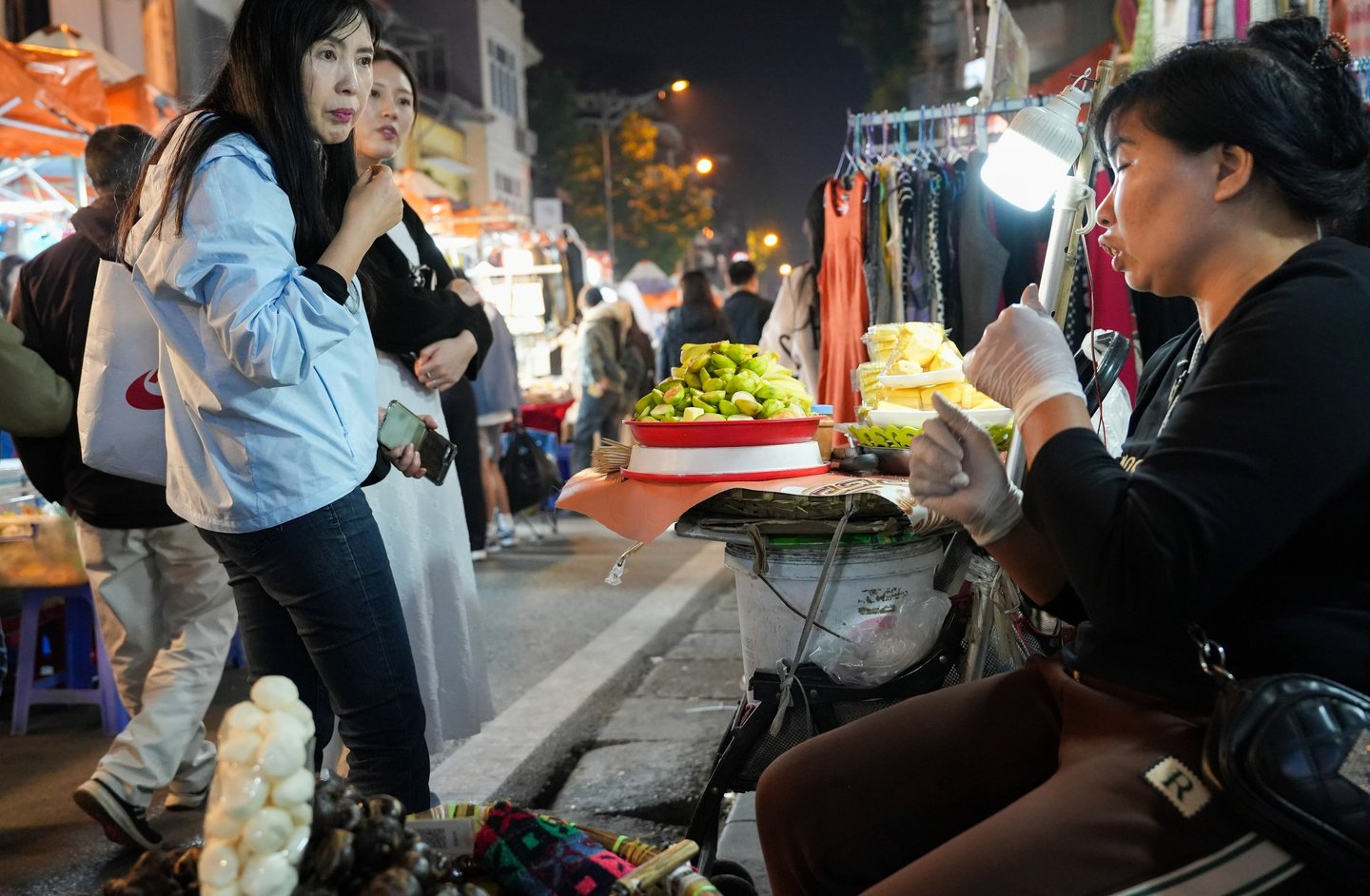
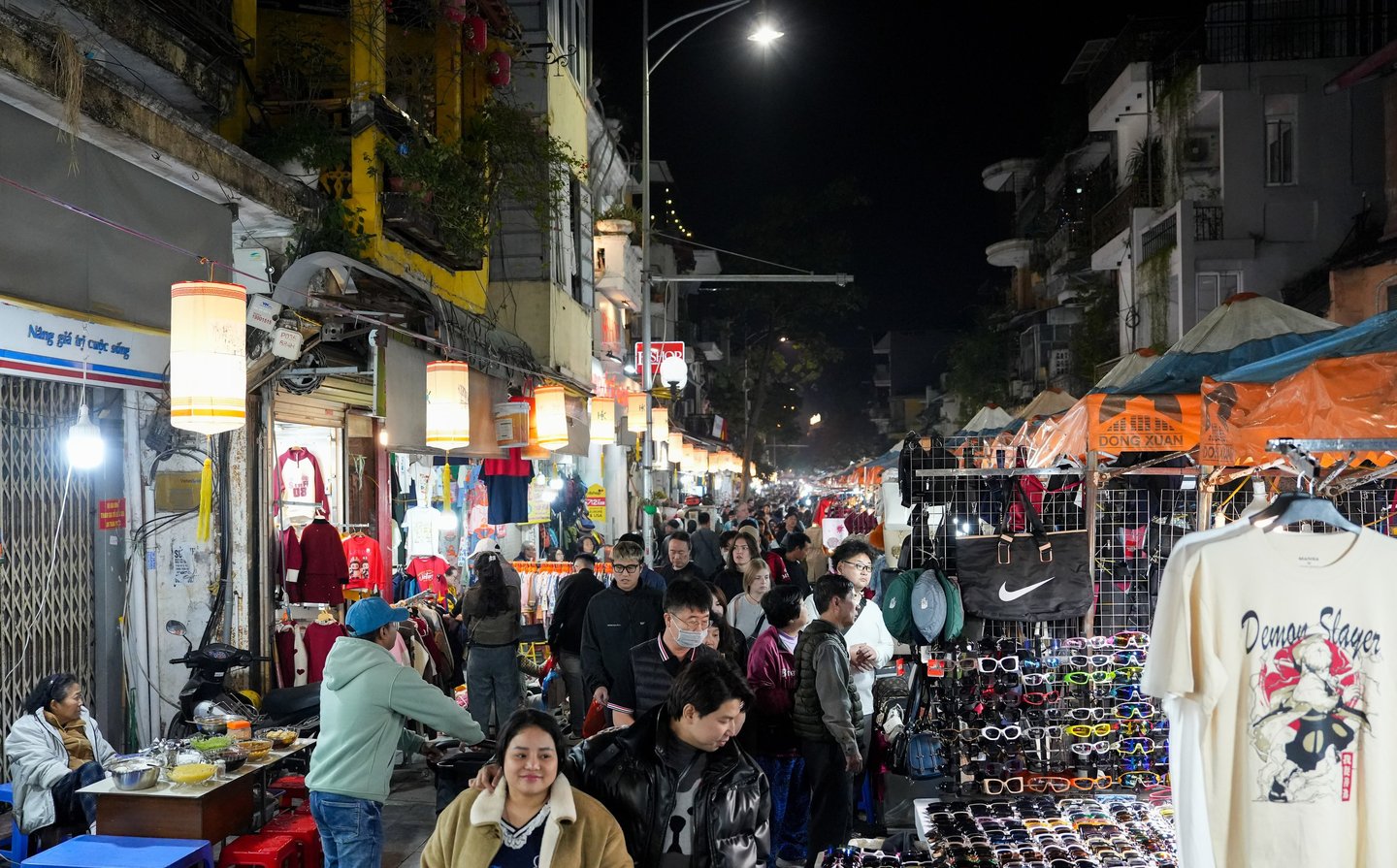
I’ve never been one to lecture people on how they should travel. Everyone connects with places differently. But if you ever find yourself in Hanoi, give the Old Quarter time. Don't just rush from one checklist sight to the next. Slow down, grab a coffee, watch the traffic, listen to the clatter of the street kitchens, and simply absorb the energy.
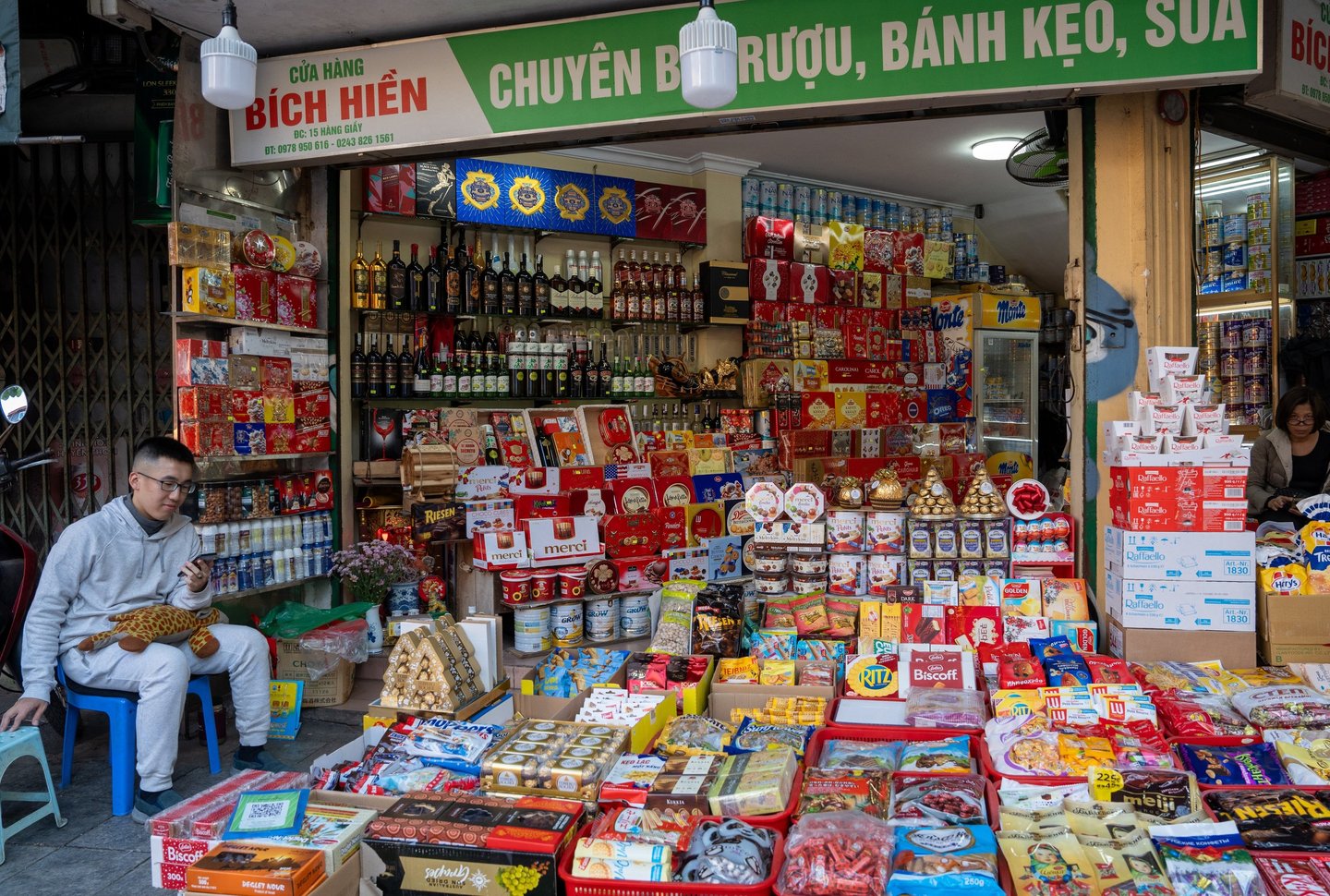
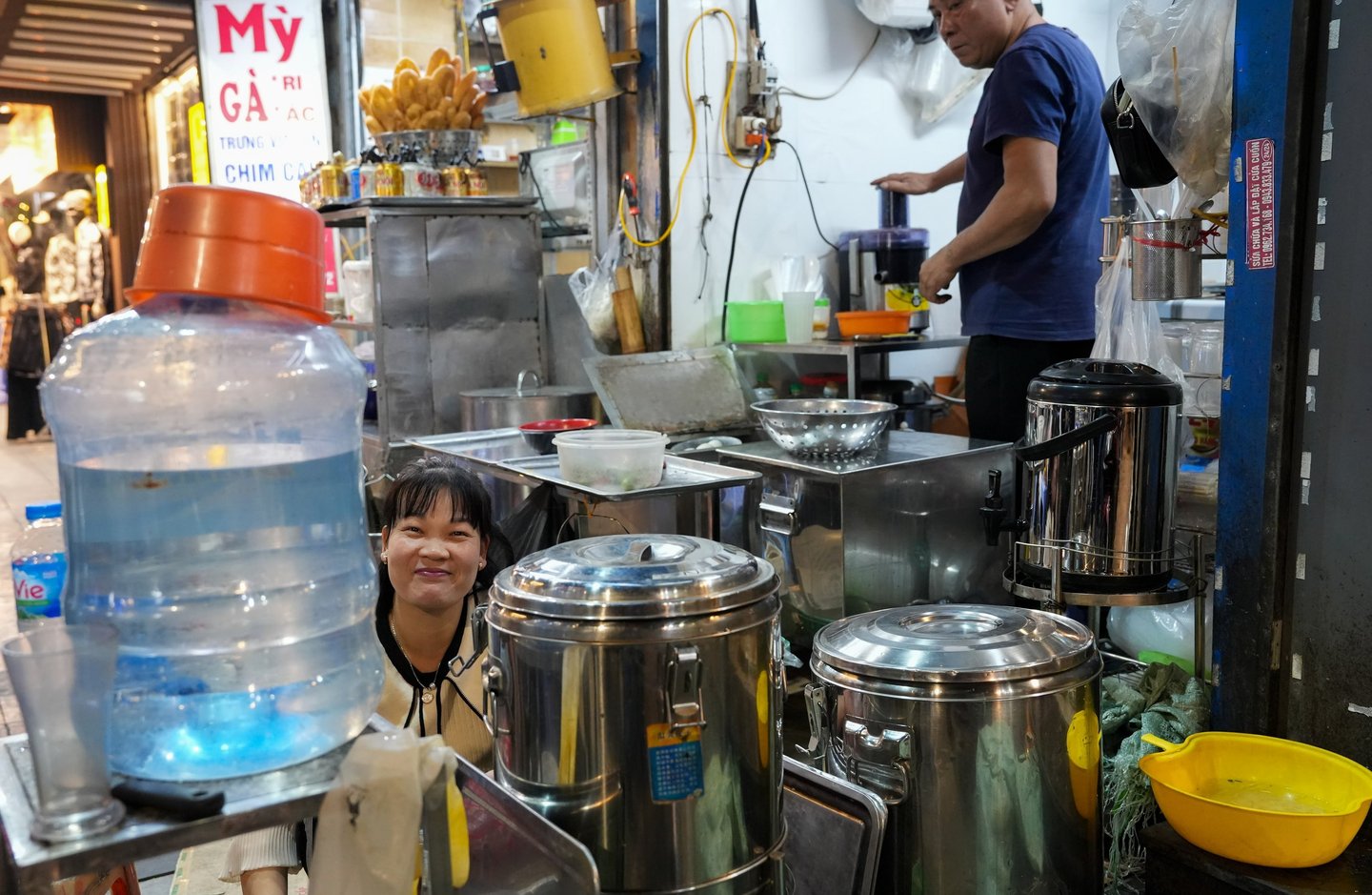
Hanoi isn't a city you just tick off a list—it's one you absorb through the senses. The architectural bones of the late 19th and early 20th-century French Indochina era still dictate the rhythm of the neighborhood today. Combined with the raw, unapologetic grit of Vietnamese street life, it creates a contrast where past and present don't just coexist—they collide. And that friction is exactly what makes street photography here so addictive.
Chasing the Light: A Sunny Day on Halong Bay, Vietnam
Halong Bay had been sitting on our list for a long time. Too long. And when we finally left Hanoi in January, the weather was doing its best to ruin it. Days of cold, grey, heavy mist. The kind of flat light that kills a landscape shot before you even raise the camera.
The forecast promised sun for our Halong Bay tour day. I've heard that before.
But this time it delivered.
First Stop: Tung Sau Pearl Farm
Before we even hit the water, we made a detour to the Tung Sau pearl farm near Cat Ba Island. Most visitors to Halong Bay skip this. I didn't want to.
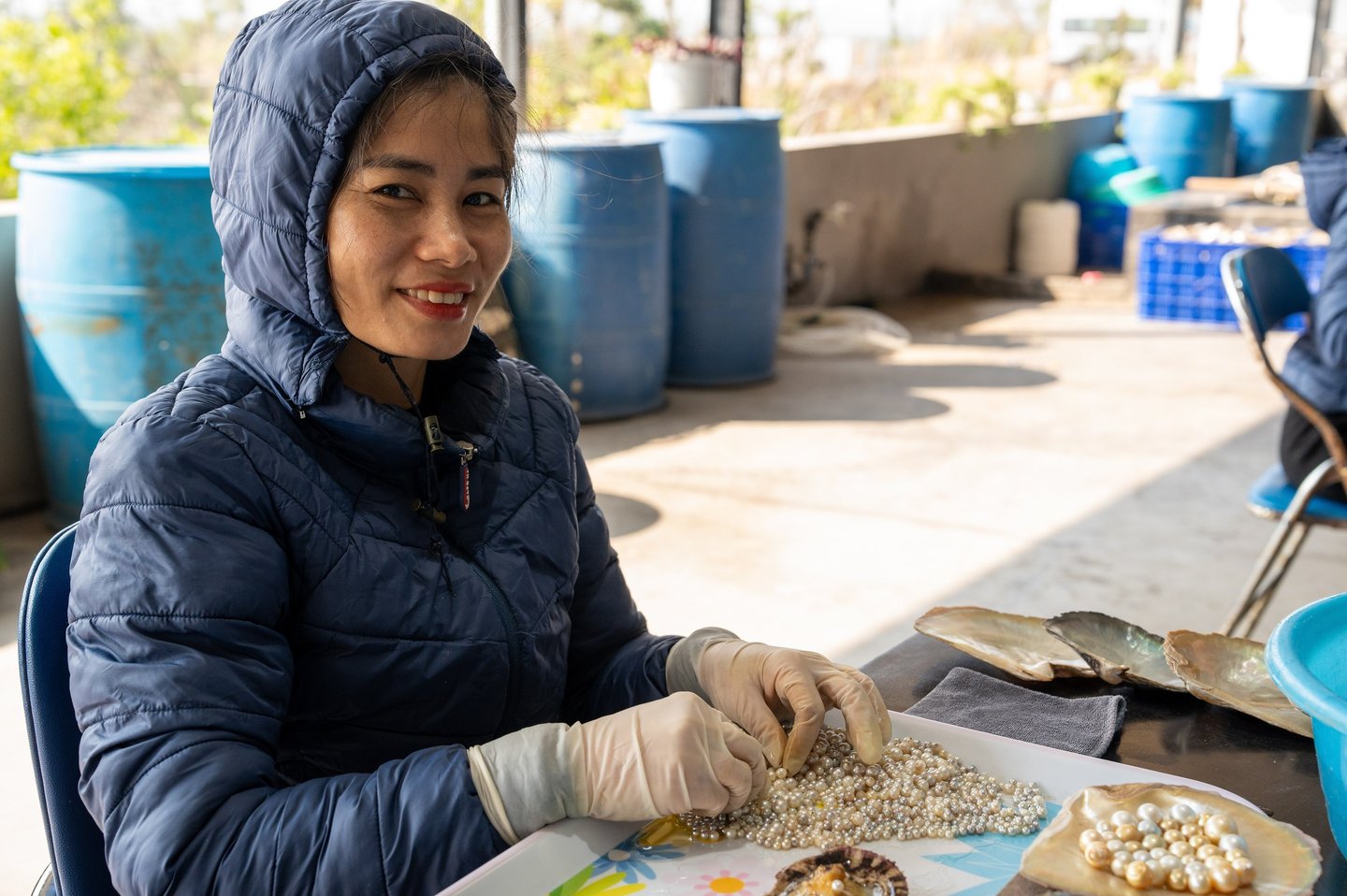
Inside the processing shed, daylight was cutting through hard and clean. Workers in winter jackets and latex gloves were sorting the morning harvest — trays piled with fresh pearls, hands moving fast, no interest in the tourists walking through.
I raised the camera. One woman looked straight up at me — not posed, not performing, just genuinely unbothered — and smiled. That's the shot. 44mm, available light, no flash. You don't direct moments like that. You just have to be ready.
For documentary photographers visiting northern Vietnam, stops like this are worth building into your Halong Bay itinerary. The light inside working sheds is always interesting, and the subjects are real.
Noon: Halong Bay Harbor
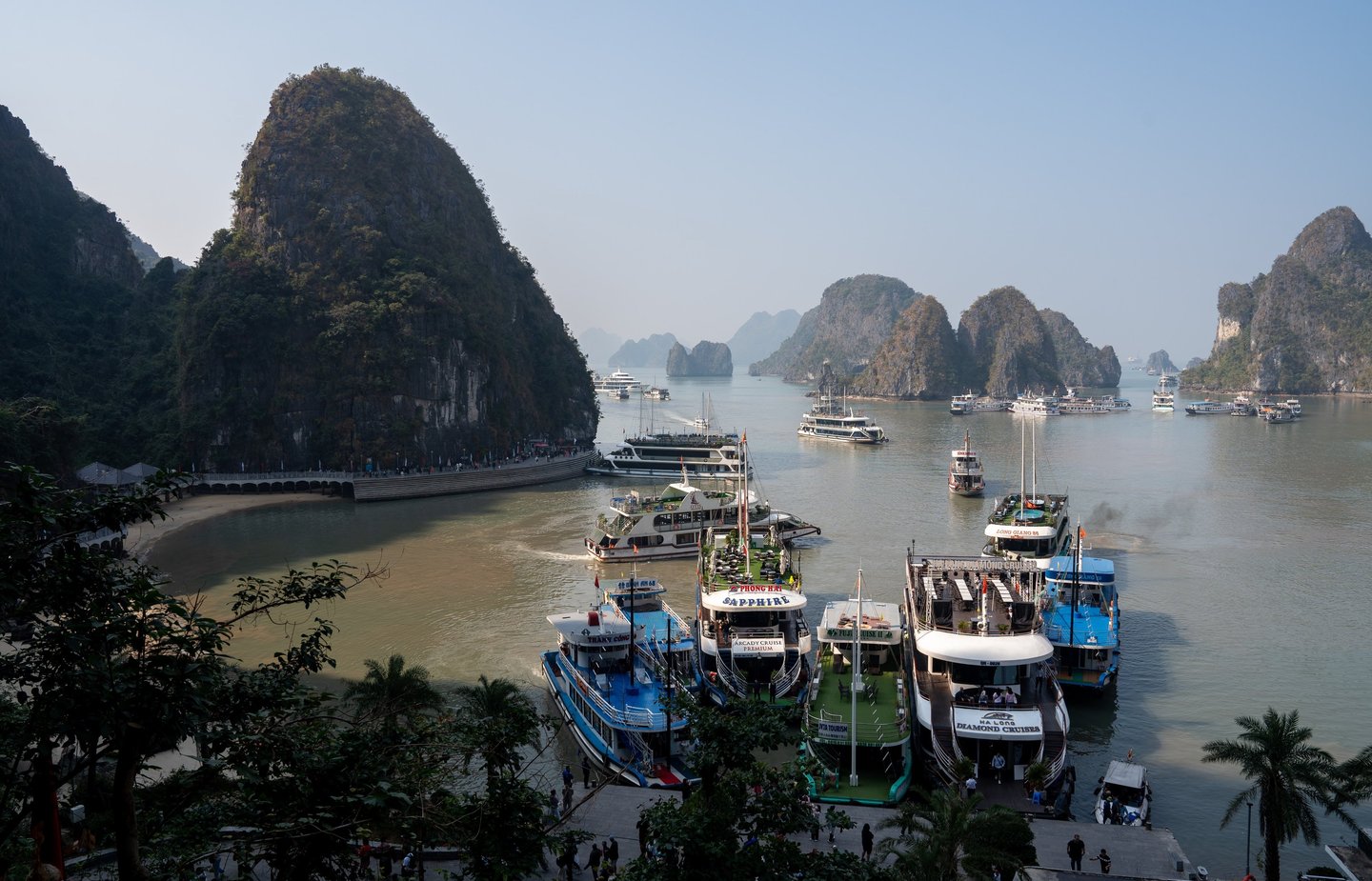
By midday we were at the pier checking in. The haze from the previous days hadn't fully cleared — there was still a soft layer sitting over the water on the horizon — but the sky above us was wide open.
Looking down from the stone dock, the scale of it hits you. Premium liners, day cruisers, traditional wooden junks, all threading through each other in the famous emerald green water of Halong Bay, with limestone karsts rising straight up behind them. I shot it wide to keep the chaos honest. This isn't a postcard harbour. It's a working one.
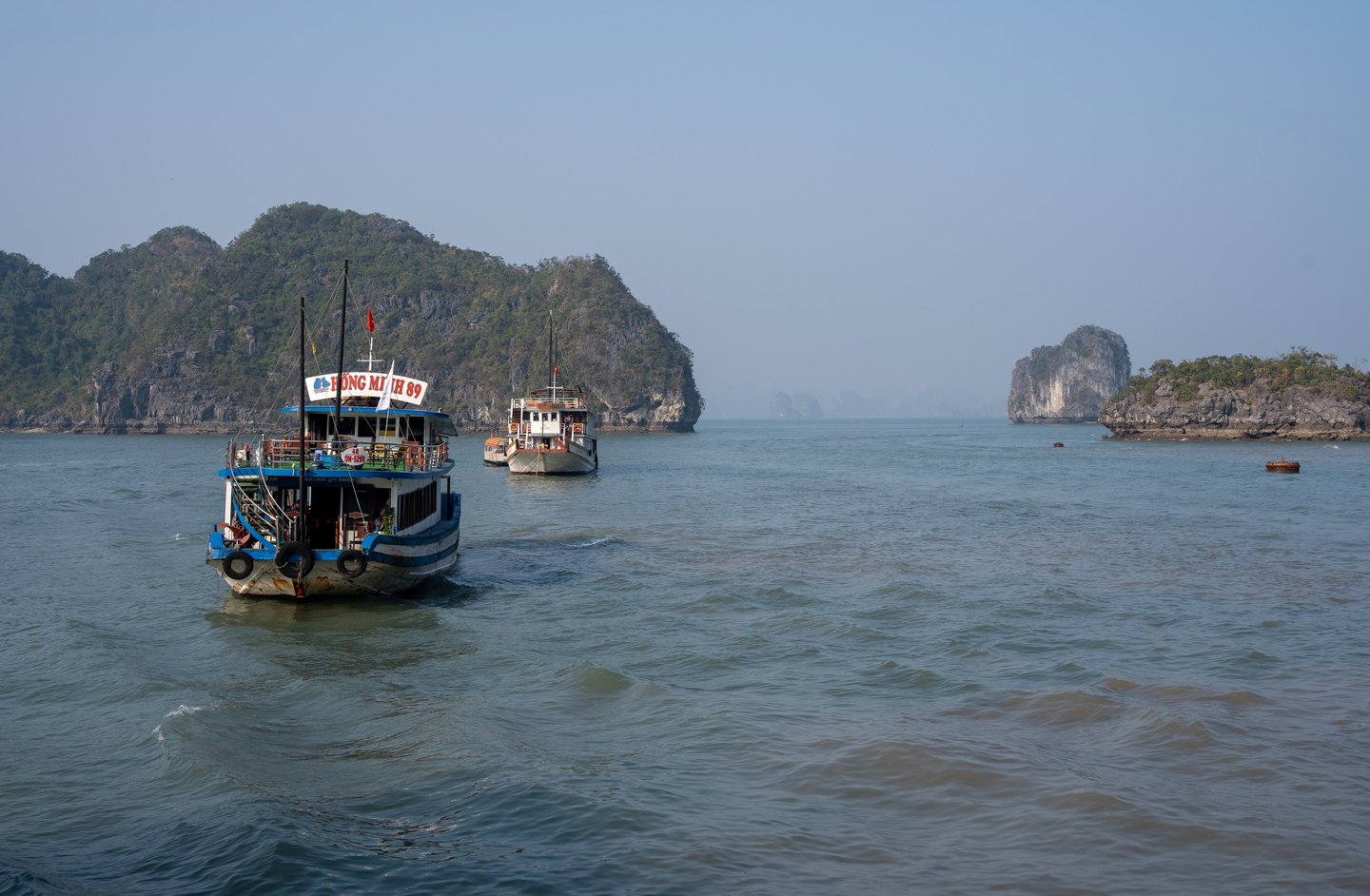
As our ship pulled away from the concrete docks, the traditional wooden day-boats were already out in the open bay. The water here is heavy, dark with silt, constantly churned up by passing wakes. That dark hull against the hazy karst background — that contrast set the documentary tone for the whole day.
Hang Sung Sot — Surprise Cave, Halong Bay
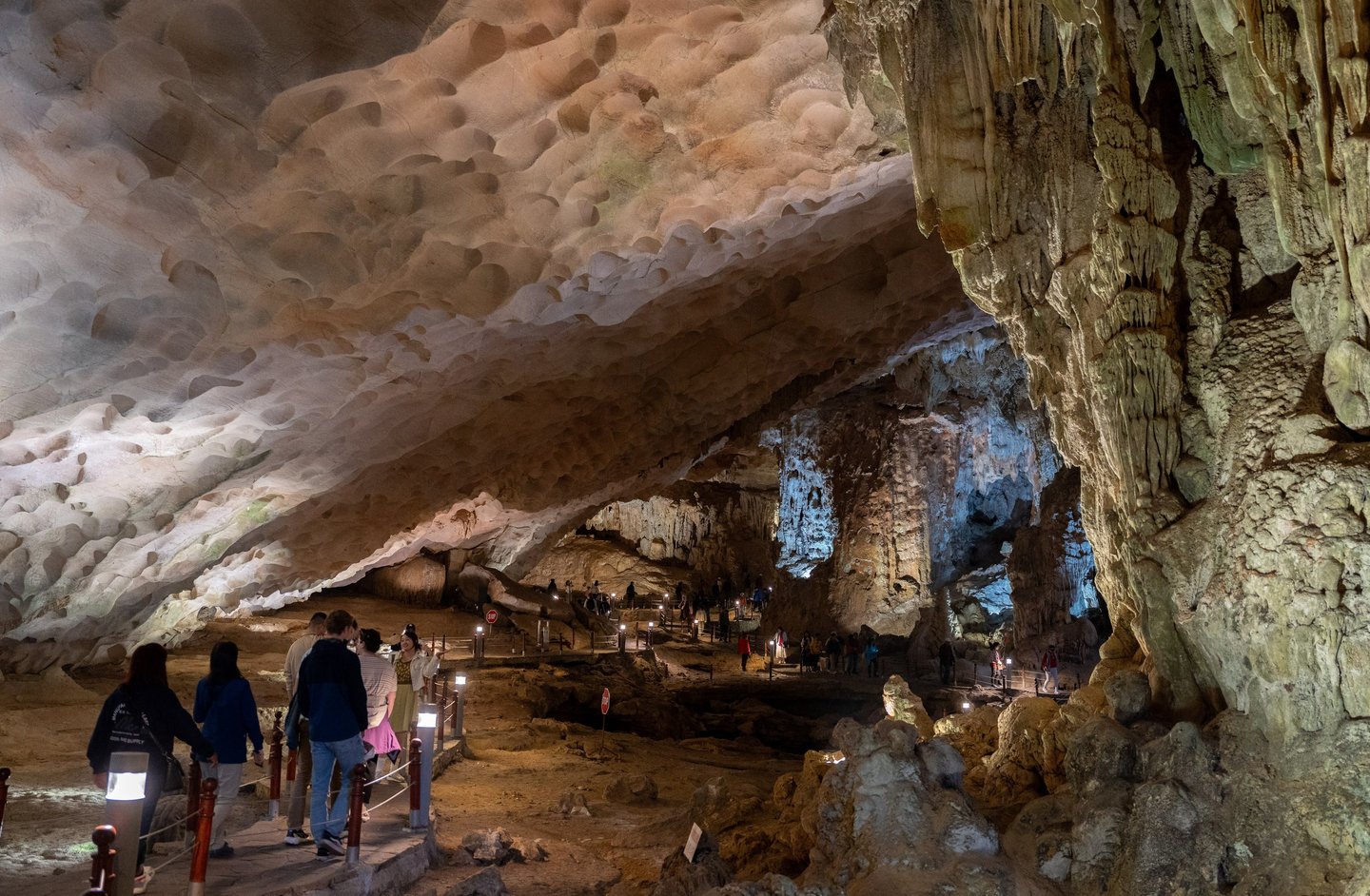
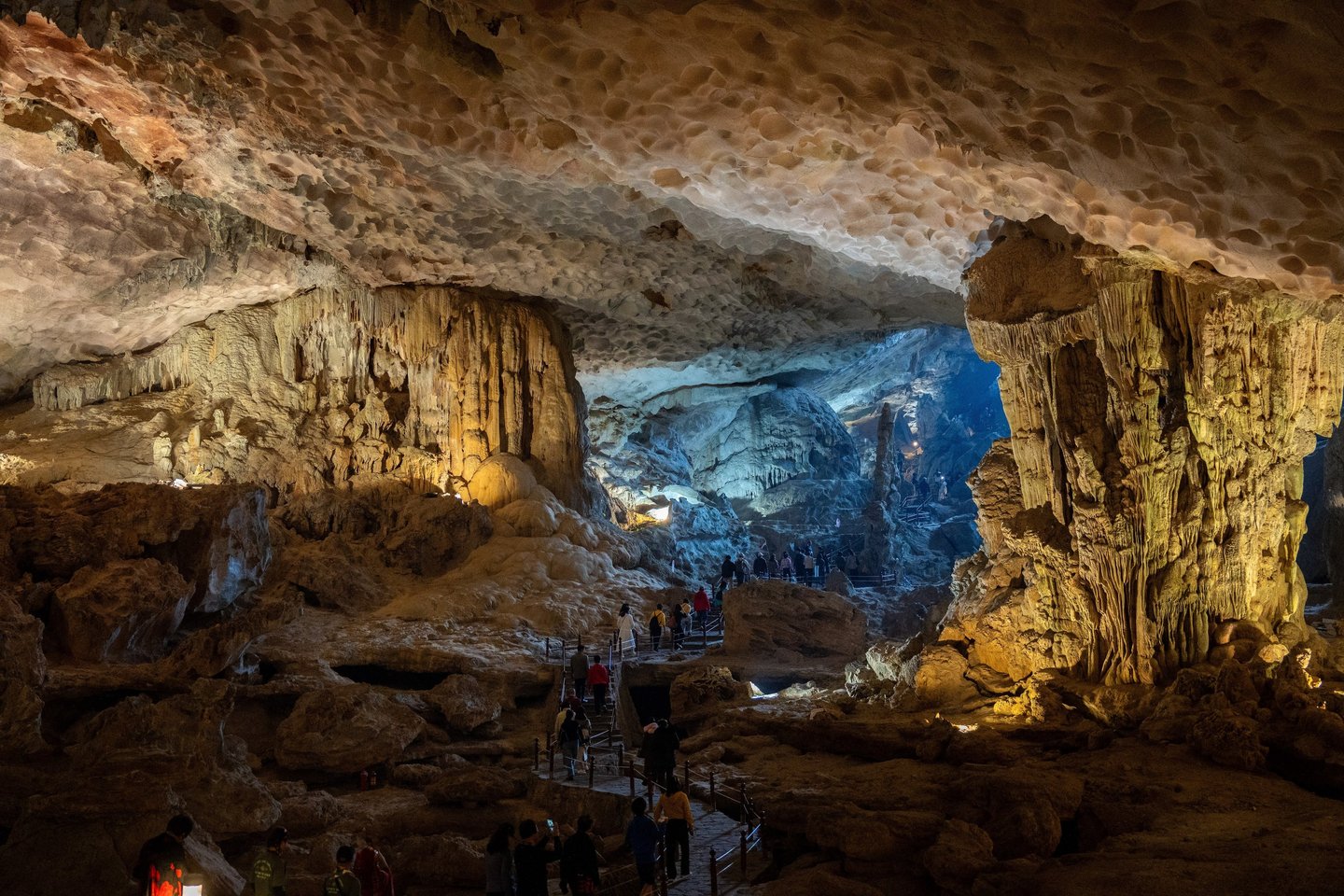
From warm sea air to cold stone in about thirty seconds. Hang Sung Sot — known to most Halong Bay visitors as Surprise Cave — opens up like something that was never meant to be walked through by humans.
I dropped low on the stone path to get the scale right. From that angle the cave reads like an ancient amphitheatre — spotlights picking out the stalactites overhead, a slow line of visitors descending into the dark below. Shot at a slow shutter to hold the detail in the shadows. The bright spots blew slightly but that's honest — that's what your eyes see when you walk in from full Vietnamese sun.
Surprise Cave is one of the standard stops on most Halong Bay cruises, but the photography opportunities inside are genuinely strong if you're willing to work the angles.
On the Water: The Bamboo Rowing Boats
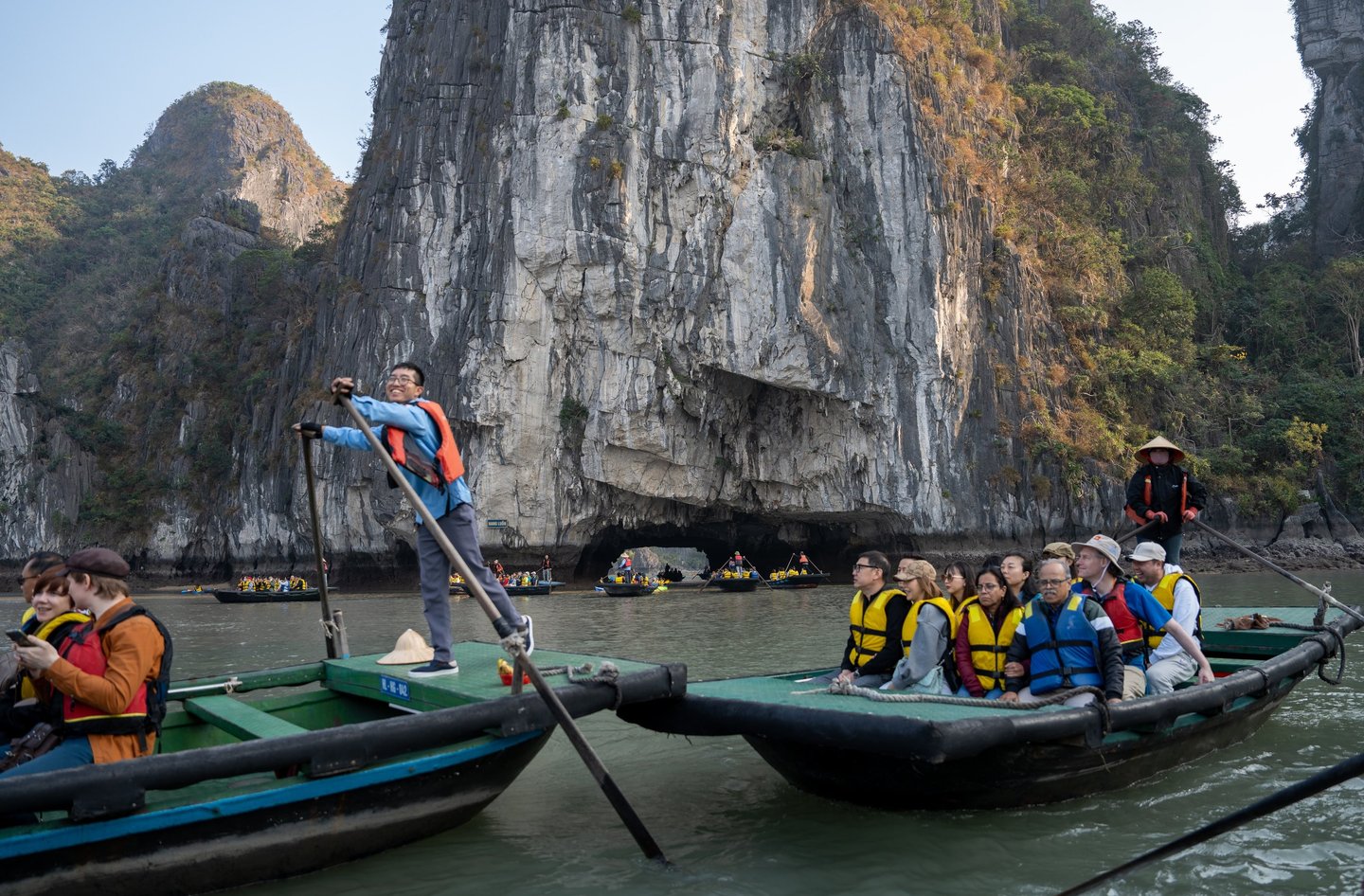
To reach the hidden lagoons and low cave openings scattered across Halong Bay, you leave the cruise ship behind and transfer onto small bamboo rowing boats. The local boatmen work standing up, pulling heavy oars with a rhythm that's clearly been the same for decades. Orange life jackets, sheer limestone rock faces, maybe two metres of clearance overhead.
This is one of the most photographed experiences in Vietnam travel — and for good reason. But the real shot isn't the lagoon. It's the oarsman's hands.
Afternoon: At Anchor in the Bay
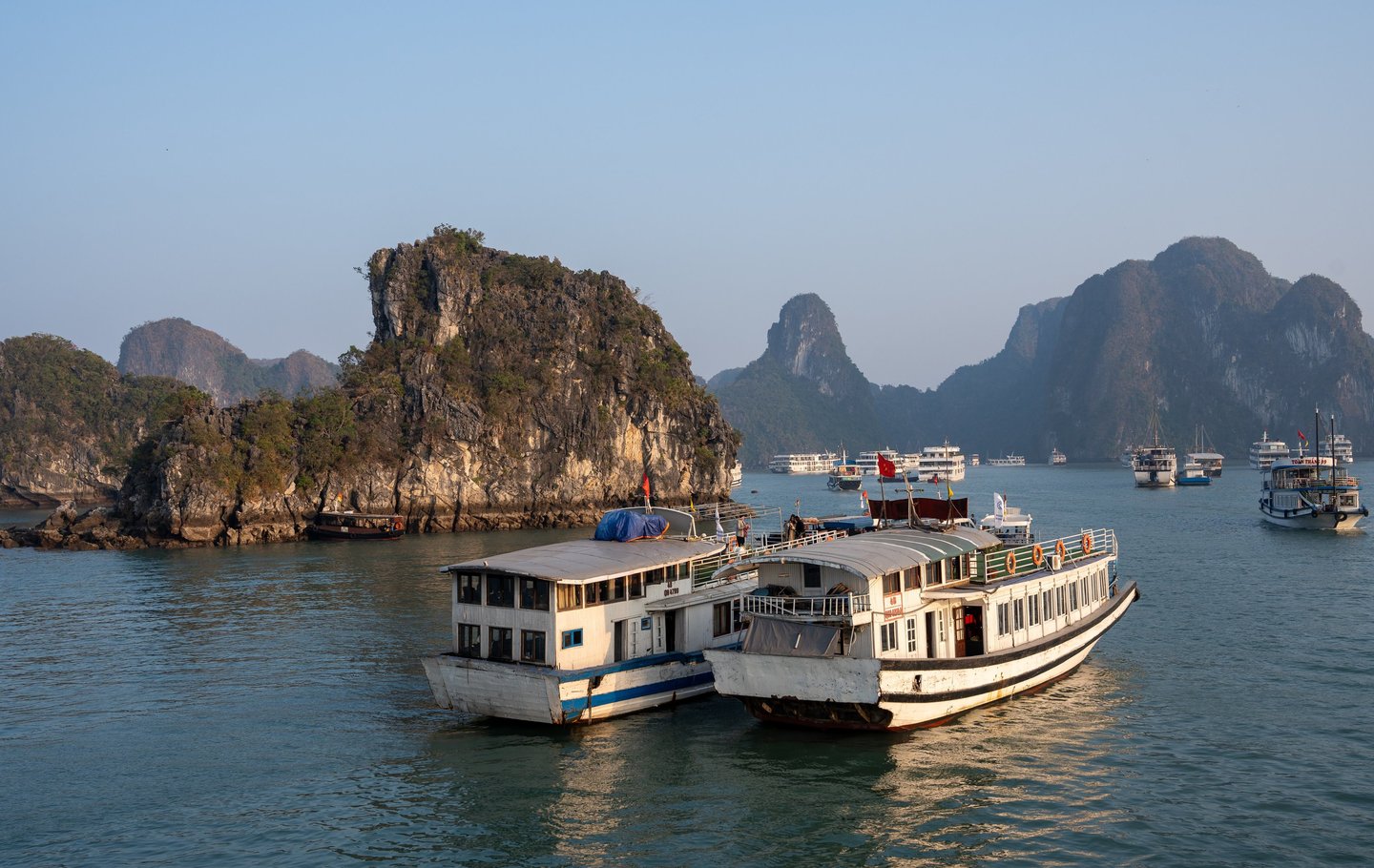
Our cruise ship sat at anchor in the afternoon light — white hull, classic wooden trim, ancient forested cliffs rising behind it. The light at this hour was clean and direct, no drama yet, just good honest Vietnamese winter sun doing the job.
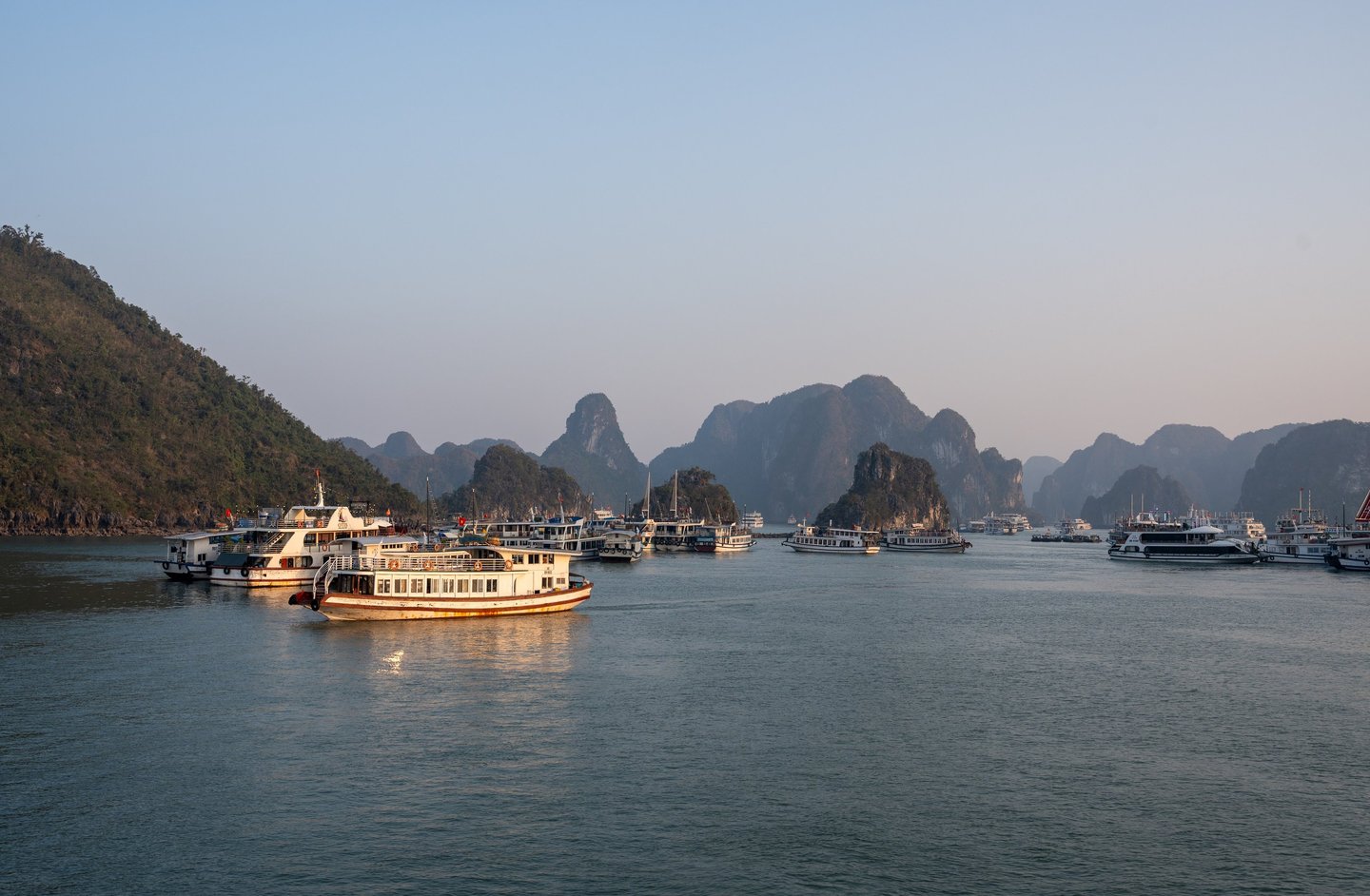
All around us, traditional wooden tour boats were moored side by side in the calm channels between the karst formations. White hulls lined up against limestone silhouettes. I framed it tight to compress the layers — boats, rock, haze, sky. The morning mist had retreated to the far horizon and was now acting as a natural diffuser on the distant mountains.
I didn't plan that. It was just there.
This is what Halong Bay photography looks like when the weather cooperates — layers upon layers, and the light working with you instead of against you.
Sunset Over Halong Bay: The Bay Goes Gold
The last hour was the best hour.
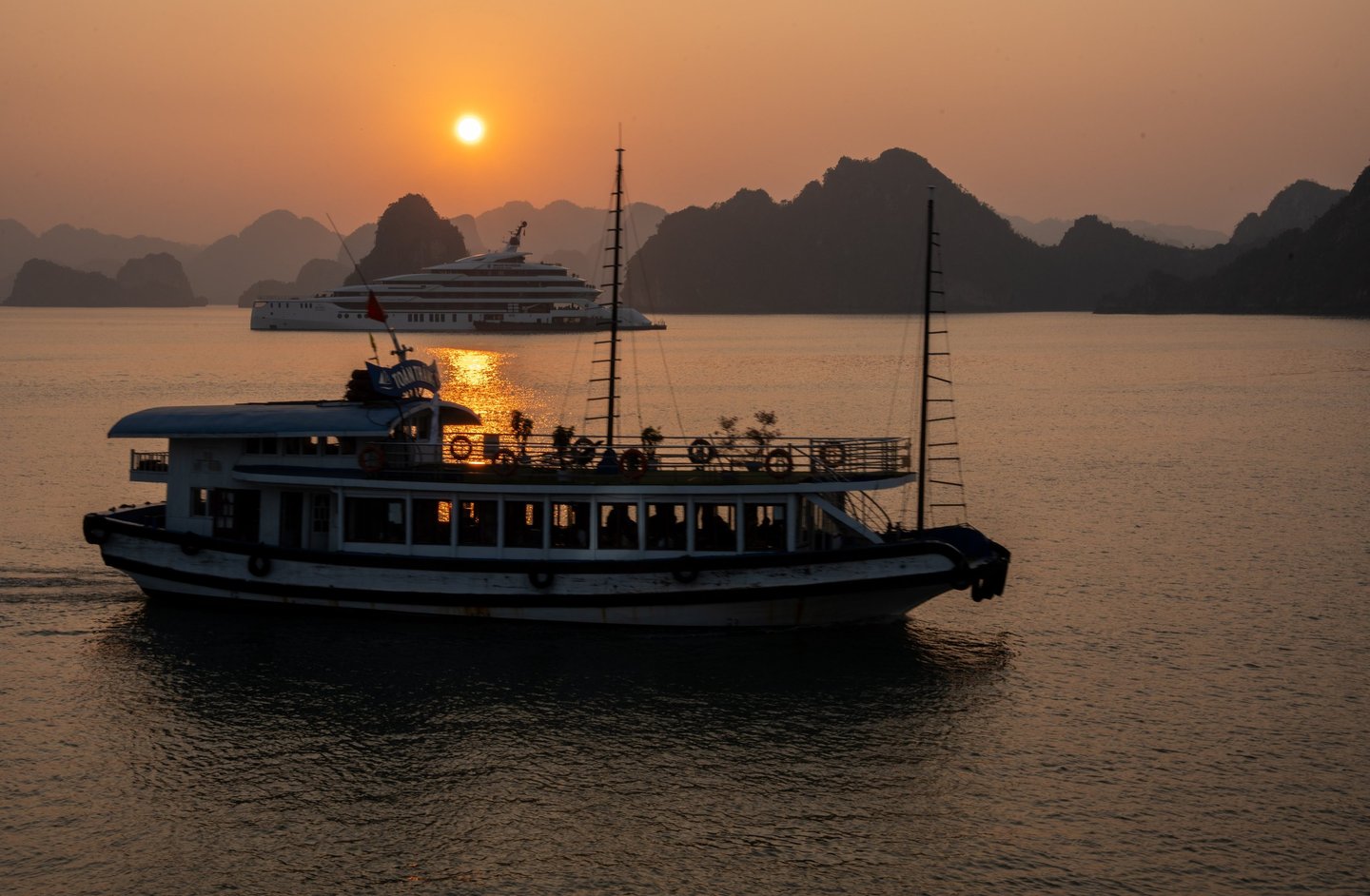
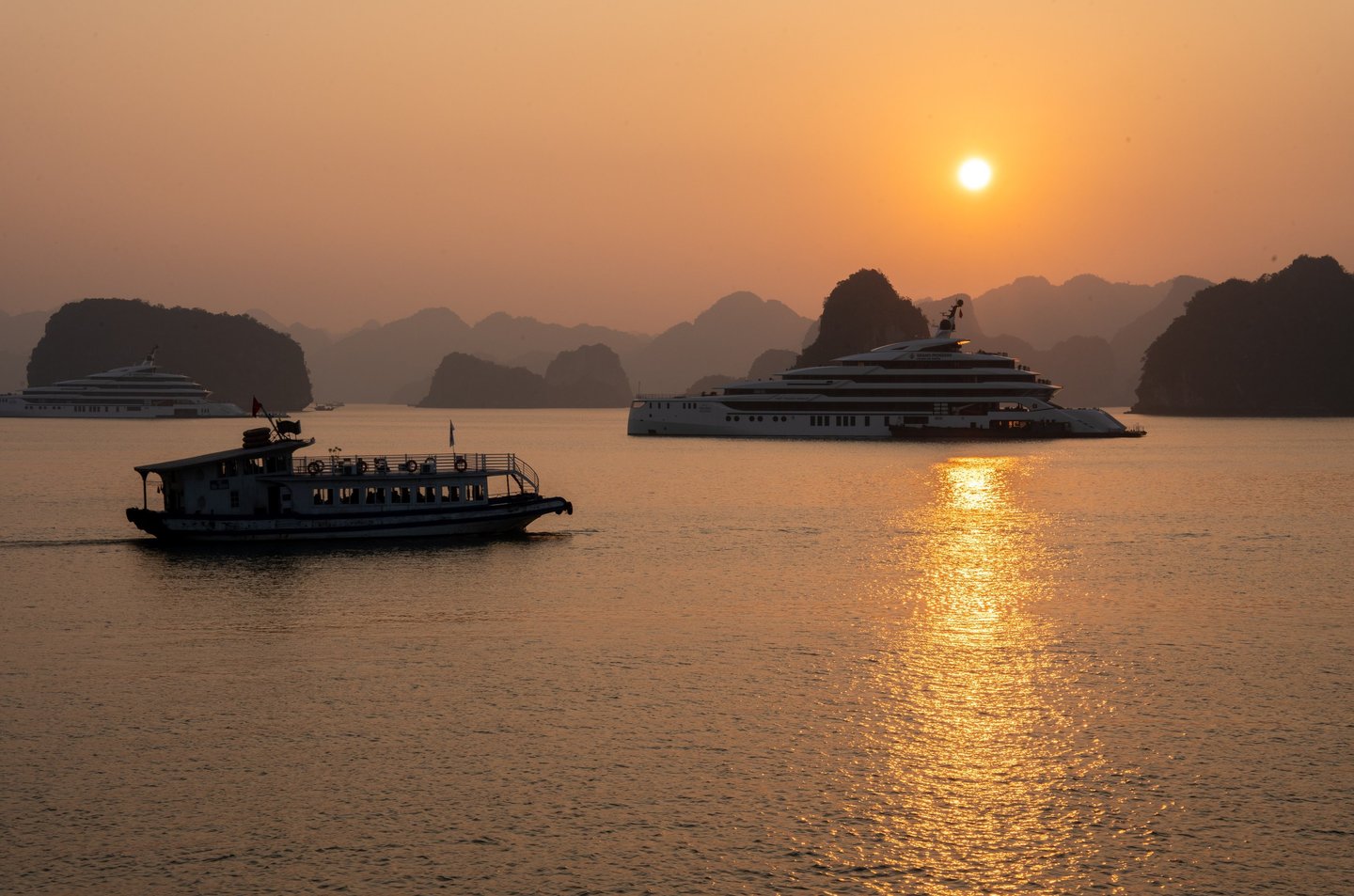
The Halong Bay sunset turned the sky deep orange fast — faster than I expected. I got as low as I could on deck, as close to the waterline as possible. A single day-boat crossed the frame, its silhouette cutting clean through the golden reflection on the water, the luxury liners and layered karst towers fading into the warm evening light behind it.
f/22, ISO 200, 1/80s. I wanted everything sharp — from the boat's hull to the furthest mountain ridge. The light did the rest.
Some days on the water in Southeast Asia you work hard for one decent frame. This day on Halong Bay gave them away.
Looking for more stories and photos from Vietnam? Head over to strangphotography.com! You can easily explore more articles and galleries by clicking the dedicated buttons on the site.
Contact
Fuel my creativity, If you enjoy my content, feel free to support me with a small tip. Thanks for being part of this journey!
If you enjoy my photography and the stories I capture across Southeast Asia, consider supporting my journey. Every coffee helps me stay on the road longer and document more unique locations. Thank you for being part of the adventure!
Traveling across Southeast Asia, I’ve found that having an eSIM ready the moment you land is an absolute game-changer. I highly recommend Saily – I’ve had a great experience with them myself. It offers unbeatable advantages, especially for ordering a Grab taxi right away or using Google Maps to find your way as soon as you exit the airport
This post contains affiliate links for Saily. If you sign up through my link, I may earn a small commission at no extra cost to you. I only recommend services like Saily because I use them personally and they’ve made my travels much easier.
You can license my photography directly through my Alamy portfolio. My work covers authentic travel and street photography across Southeast Asia — Bangkok, Ho Chi Minh City, and the wider region — shot on location, not staged.
Looking for street scenes, urban editorial content, or landscapes from Thailand and Vietnam? My full collection is on Alamy, with licensing options from standard editorial to extended commercial rights, depending on what your project needs.
Disclosure: the link below is an affiliate link. If you license an image through it, I earn a share of the sale at no extra cost to you. It goes straight back into keeping me on the road and shooting across Southeast Asia.
© 2025 Strangphotography – Southeast Lens. All rights reserved.
All photos taken by me in public spaces. Licensing available via Alamy.
Unauthorized use prohibited. For full legal info, see my Imprint