Southeast Lens - Documentation, Travel and Street Photography

Ayutthaya – Where Time Never Really Left Thailand
There are places in Thailand that instantly grab you with postcard beauty, pristine beaches, or chaotic nightlife.
Ayutthaya is different. It pulls you straight into another century.
Located just about 80 kilometers north of Bangkok, the former capital of the Kingdom of Siam feels like an open-air history book. It’s a landscape of ruined temples, broken Buddha statues, and ancient brick structures slowly being reclaimed by nature. Yet, despite the scars of total destruction and the centuries that have crawled by, the atmosphere here doesn't feel dead. It feels deeply, strangely alive.
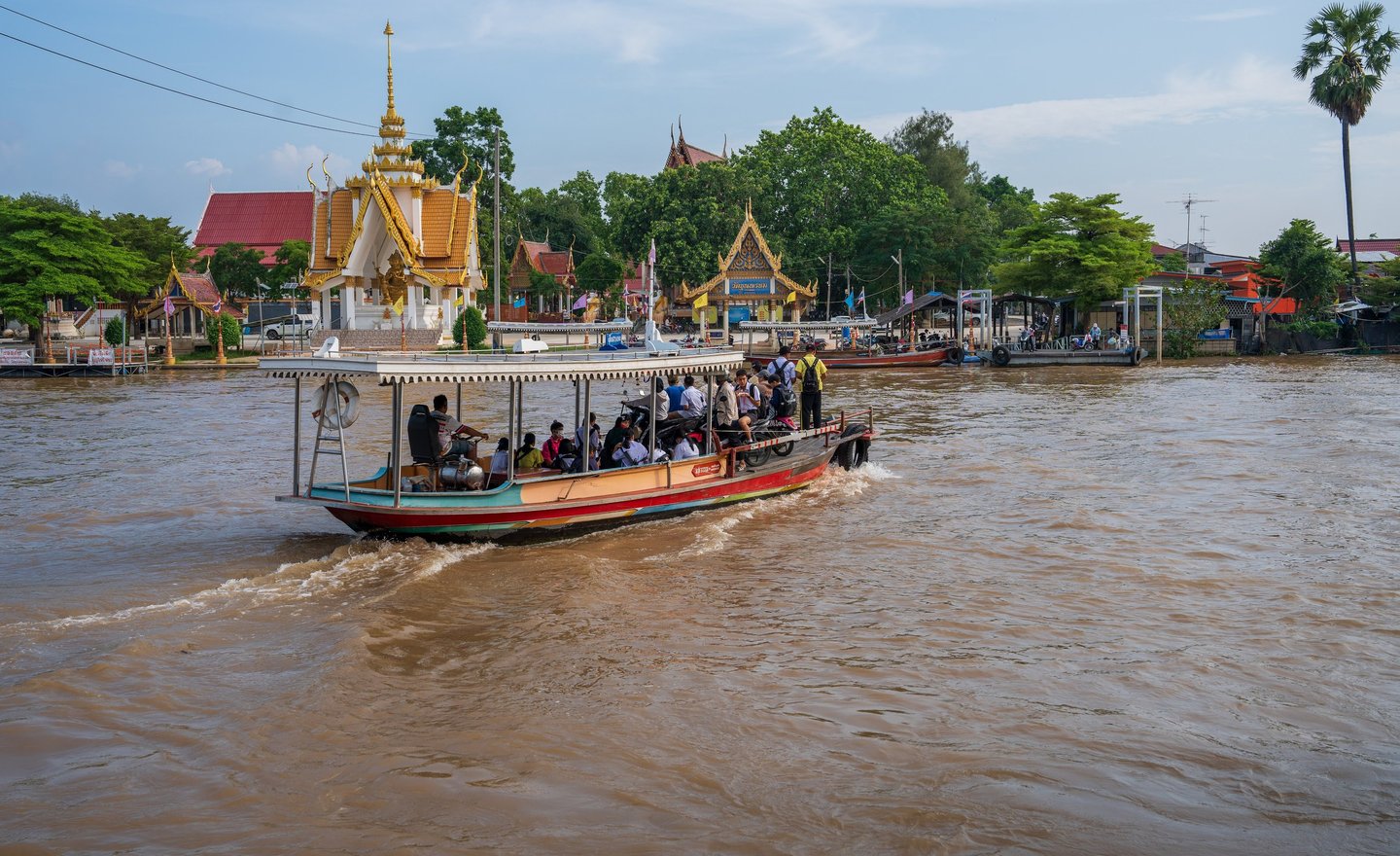
The Silent Face of Wat Mahathat
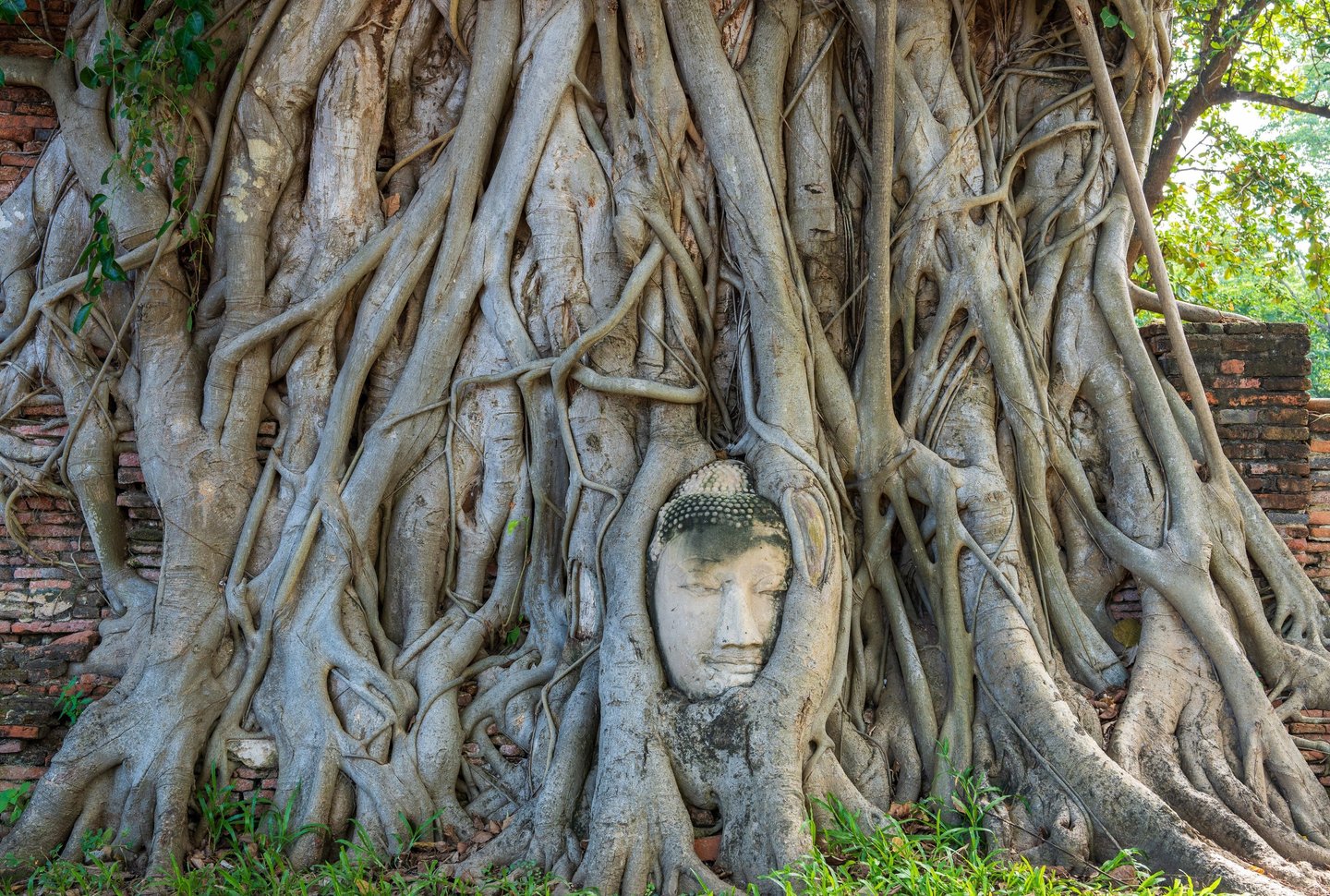
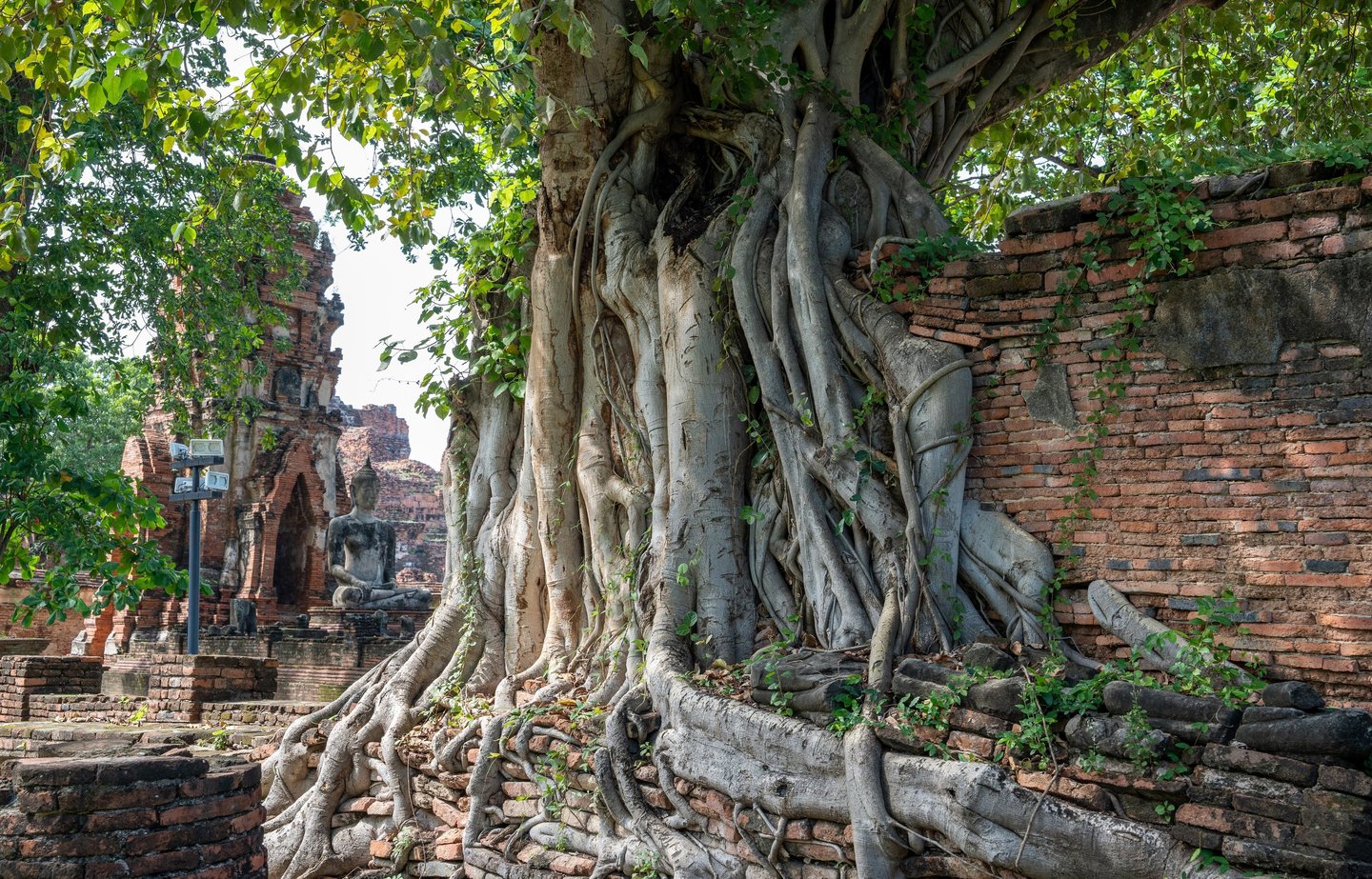
The famous sandstone Buddha head trapped inside the tangled roots of a banyan tree is arguably one of the most over-photographed images in Thailand. Still, standing there in front of it with a camera is something else entirely.
You don't just look at it; you end up staring, feeling the sheer weight of the history locked behind that expression.
Wat Mahathat, the “Temple of the Great Relic,” was once the beating heart of the Ayutthaya Kingdom. When construction began in the late 14th century under King Borommaracha I, Ayutthaya was rapidly growing into one of the most powerful trading and cultural hubs in Southeast Asia, eventually becoming the seat of the Supreme Patriarch of Thai Buddhism.
Back then, this was one of the largest cities on earth. Long before Bangkok was even a thought on a map, international merchants from China, Japan, Persia, and Europe were navigating these waters. The kingdom grew incredibly wealthy through global trade, shrewd diplomacy, and its strategic position between Asia and the Indian Ocean.
But history wasn't kind to Ayutthaya.
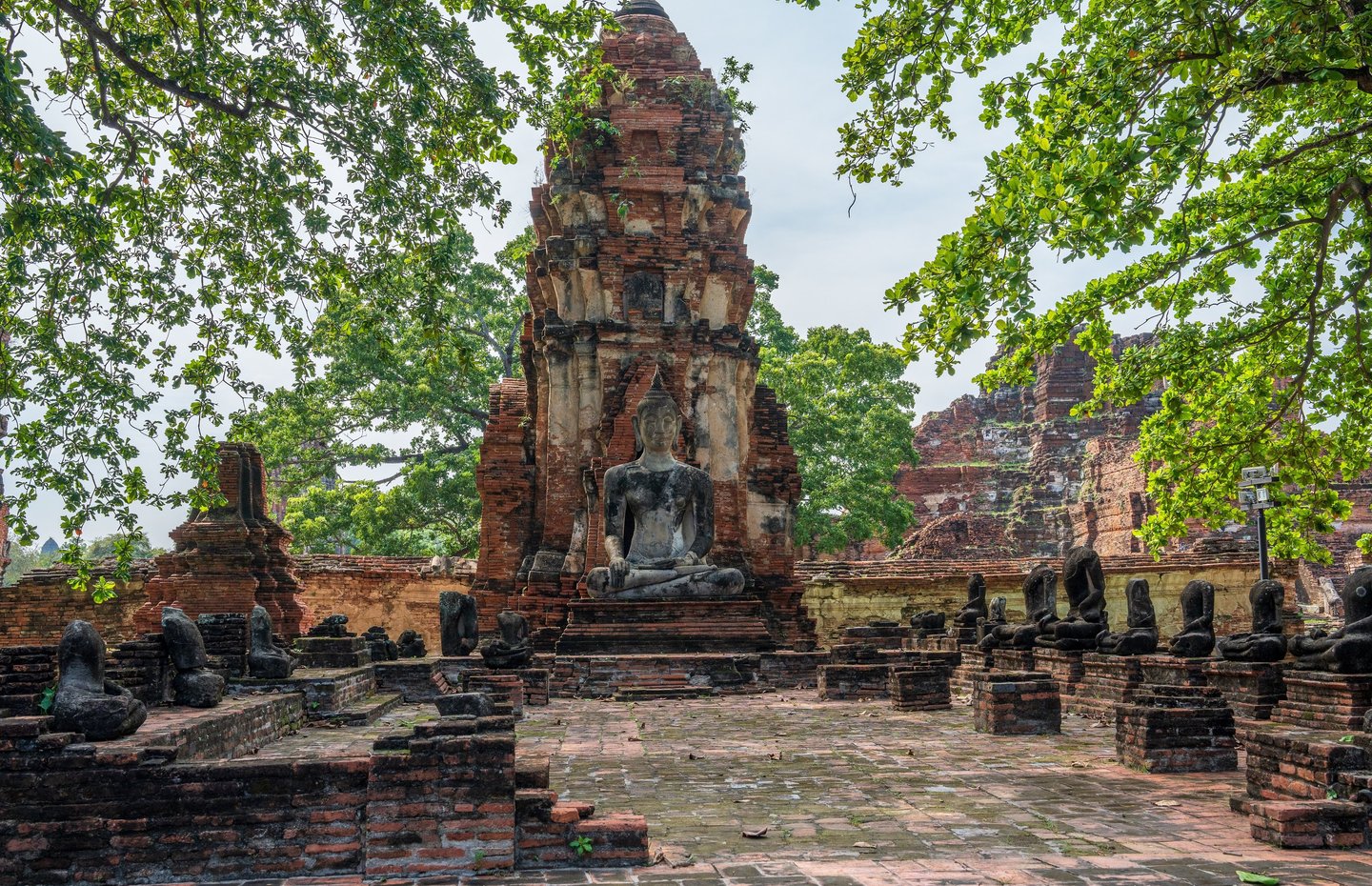
In 1767, the Burmese army invaded, systematically destroying the city during the Burmese-Siamese War. Temples were torched, structures razed, and countless Buddha figures were deliberately decapitated. Wat Mahathat took a brutal beating during the invasion, leaving most of the complex in the ruined state you see today.
Then came the frame that would later trigger global fascination.
Sometime after the carnage, a lone sandstone Buddha head was left on the ground next to a growing tree. Over decades, the roots slowly wrapped themselves around the stone face, locking nature and history into a single, permanent image. Nobody planned it. Nobody engineered it for tourism. It just happened, shaped purely by time and neglect.
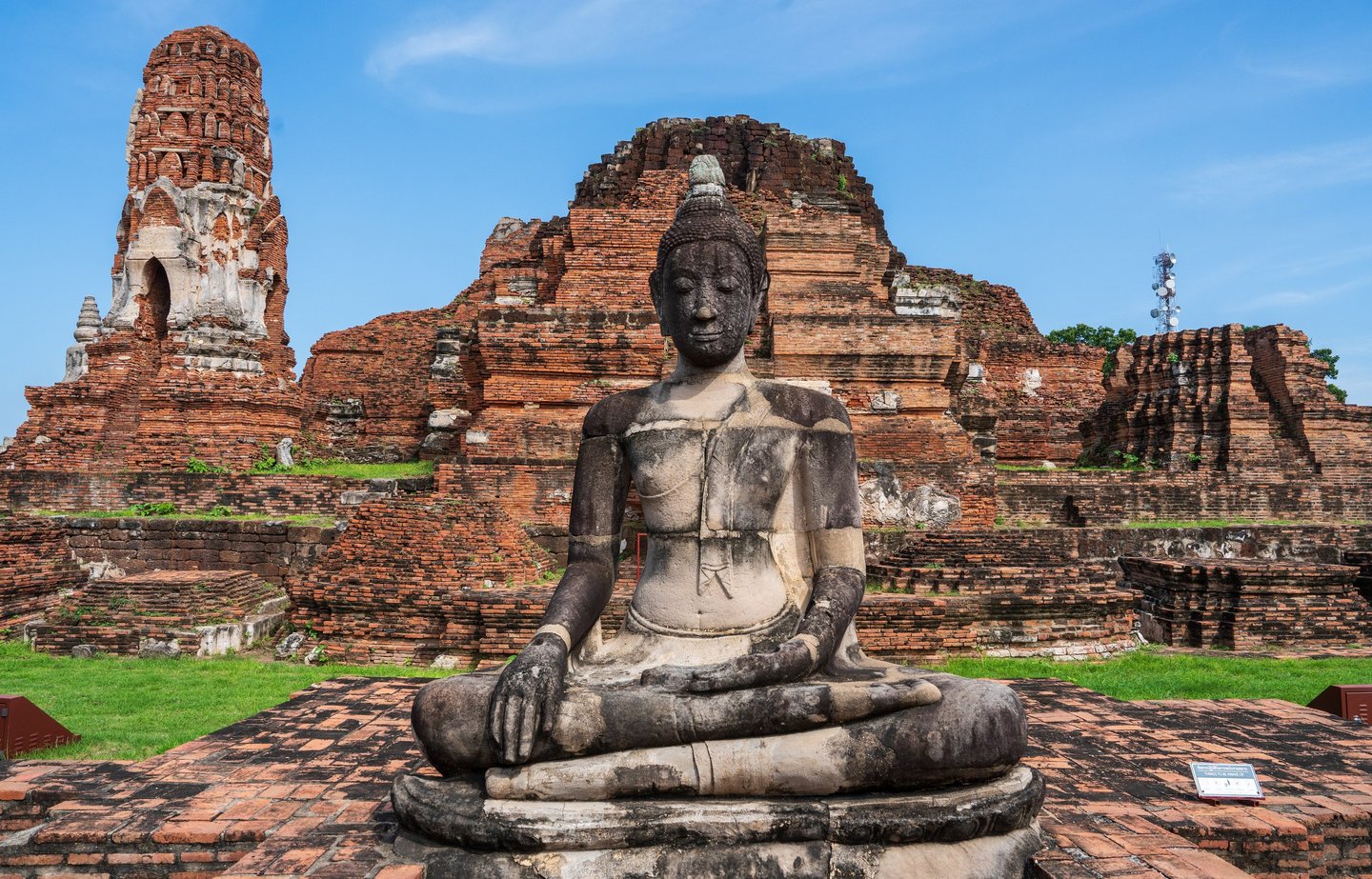
Standing there, surrounded by the crumbling brickwork of Ayutthaya Historical Park, I noticed how remarkably quiet people became around the tree. Even with crowds moving through, a heavy, respectful calm anchored the space.
That is exactly what makes these environments so compelling for documentary photography. It’s not about clean lines or perfect lighting. It’s about that raw, physical sensation that history is still occupying the room.
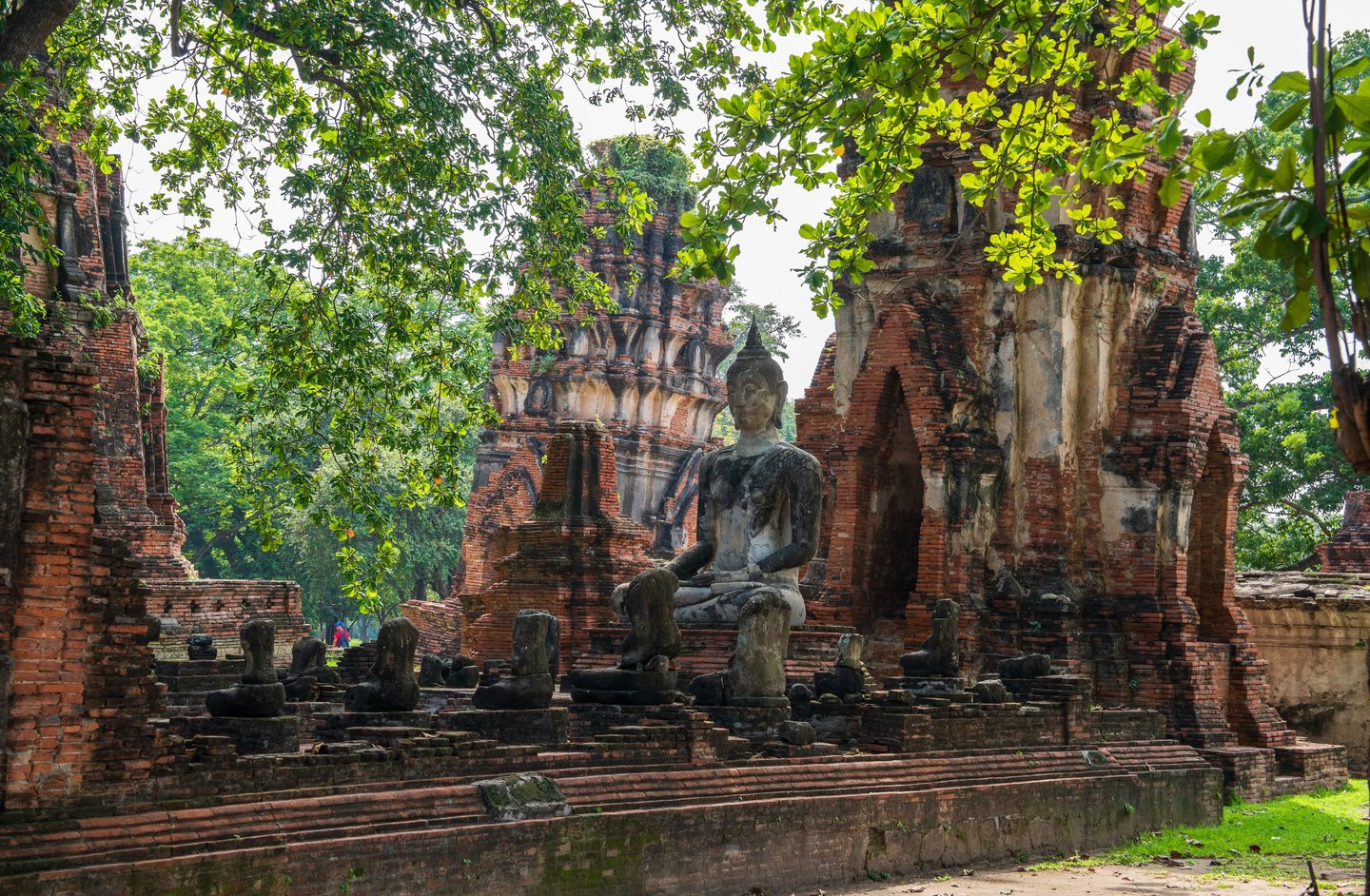
Walking through Wat Mahathat, you are constantly dodging collapsed prangs, headless stone figures, broken chedis, and ancient walls absorbing the intense heat of the Thai afternoon sun. Traces of a lost empire are everywhere. Yet, daily life just rolls on right beside it—tuk-tuks rattle past, monks cross the gravel, tourists scramble for shade, and local vendors sell cold water next to structures older than most modern countries.
Ayutthaya is a UNESCO World Heritage Site and a massive tourist draw. But if you look past the tour buses—especially during the quieter hours of the morning or late afternoon—many corners still feel raw, authentic, and completely untouched.
For me, Wat Mahathat became more than just another box to tick on a travel itinerary. It’s one of those rare locations where the camera forces you to slow down. You stop chasing the next shot. You just stand still and observe.
And somewhere between the ancient stones, the creeping roots, and the heavy silence of the ruins, you finally understand why this place refuses to be forgotten
Ayutthaya’s Wat Yai Chai Mongkhon: Living History and Sacred Alignments
The deeper you venture into Ayutthaya, the more you realize that history here isn’t trapped in the past—it breathes through the bricks, the stone, and the quiet devotion that still occupies these ancient spaces every single day. For a documentary photographer, Wat Yai Chai Mongkhon is easily one of the most compelling locations to capture this unbroken rhythm. Built in 1357 by King U-Thong to accommodate monks ordained in Ceylon, this sprawling complex has survived centuries of warfare, colonial shifts, and the relentless march of time. Today, it stands not just as an archaeological ruin, but as an active, pulsing hub of modern Buddhist worship.
Framing this location through the lens requires a constant balancing act between ancient masonry and vivid, living color. The site’s architectural layout forces a tight, powerful perspective that instantly dictates how you tell the story.
The Reclining Buddha
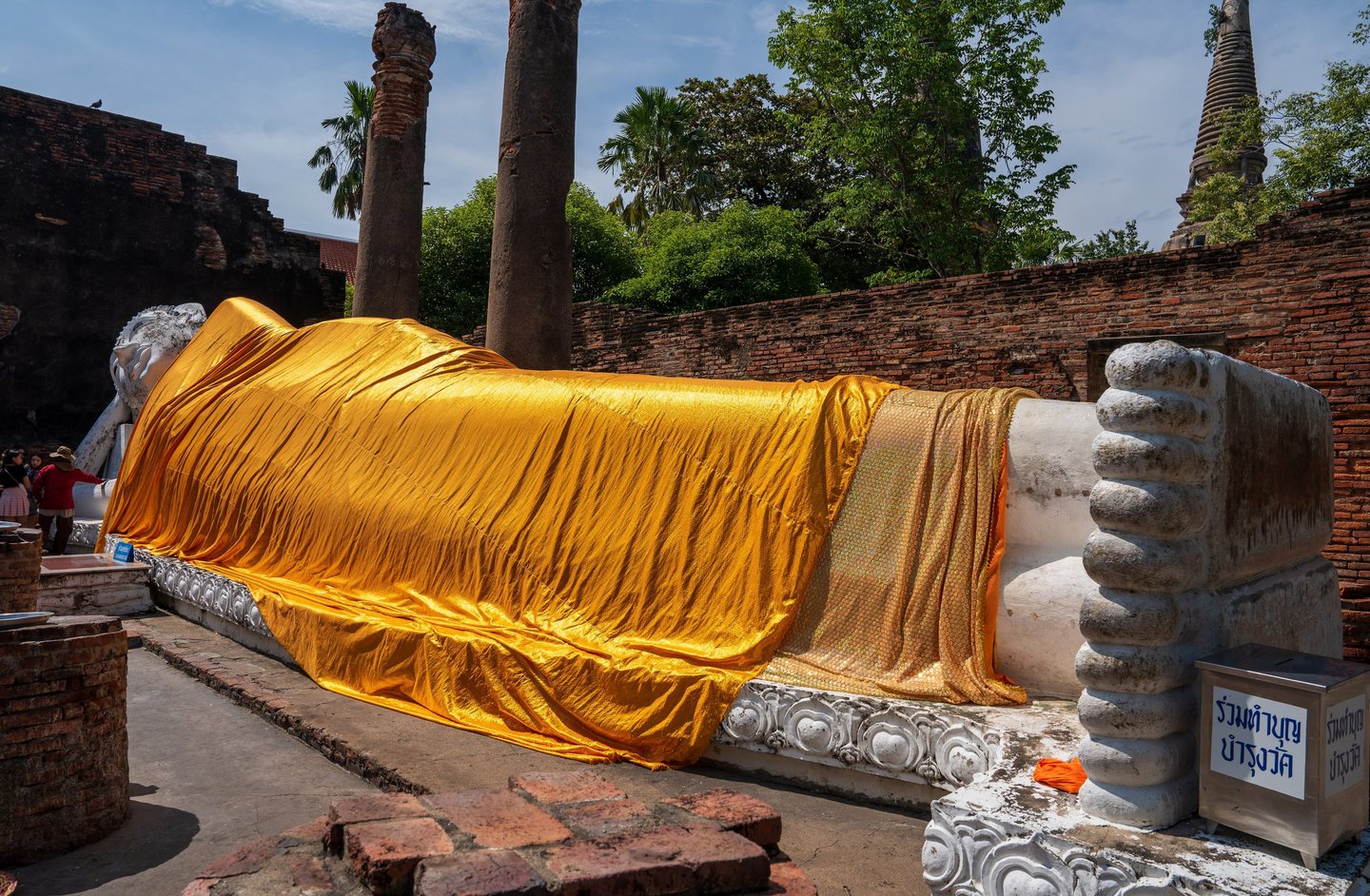
Near the entrance of the complex lie the remains of Phra Buddha Saiyas, the monumental outdoor Reclining Buddha. This image is the ultimate testament to Thai resilience and spiritual endurance. This unposed documentary frame captures the grand Reclining Buddha statue resting peacefully within the ancient temple grounds of Wat Yai Chai Mongkhon in Ayutthaya, Thailand. The monumental white Buddha figure is wrapped in a brilliant, gleaming golden sash, lying serene amidst weathered red brick ruins and historic chedis that tell stories of centuries past.
Documenting Wat Yai Chai Mongkhon isn't about chasing postcard views; it's about capturing the heavy atmosphere of a place where time never really left. The weight of the ancient bricks combined with the bright yellow and gold fabrics creates a raw, authentic texture that defines the true spirit of traveling through Thailand.
The Meditating Buddha
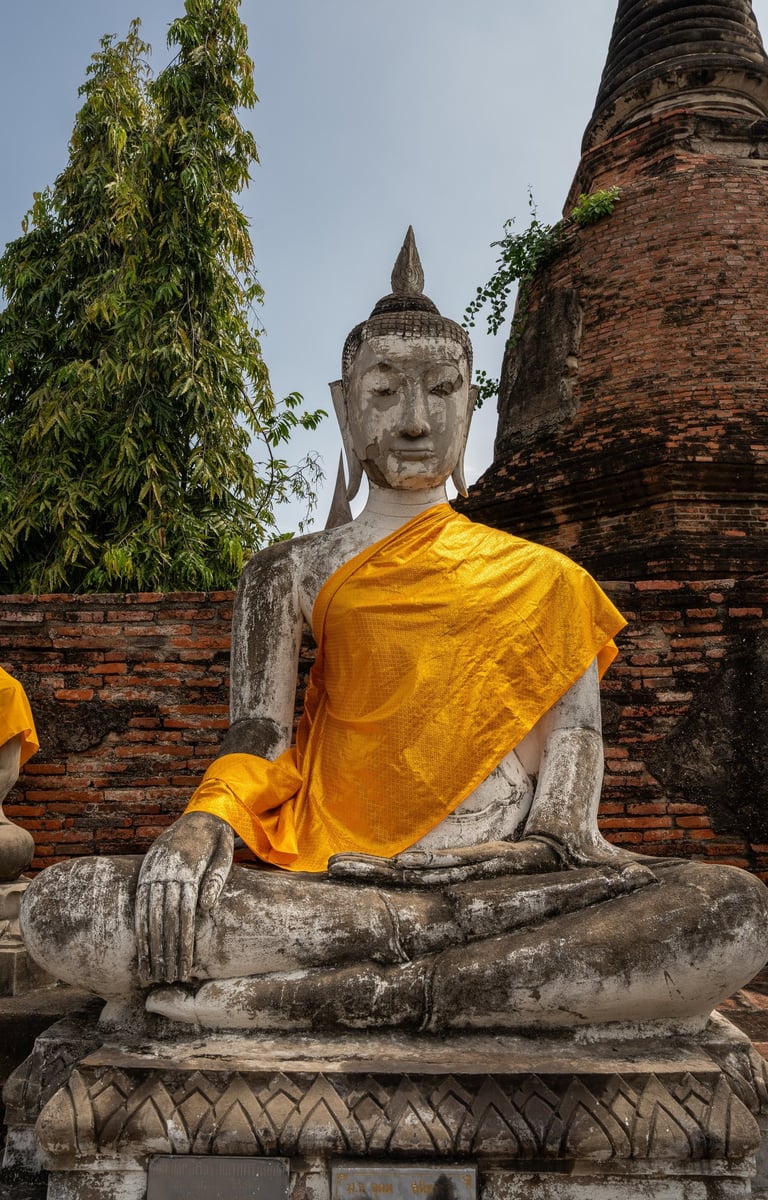
As you move through the open courtyards, the play of harsh afternoon light against the ancient materials becomes a masterclass in texture. This unposed documentary frame captures a weathered stone Buddha statue sitting in peaceful meditation within the ancient grounds of Wat Yai Chai Mongkhon in Ayutthaya, Thailand. Draped in a vibrant, gleaming golden robe, the sacred image contrasts beautifully with the ancient red brick walls, lush green foliage, and old historic chedis in the background.
The Grand Chedi
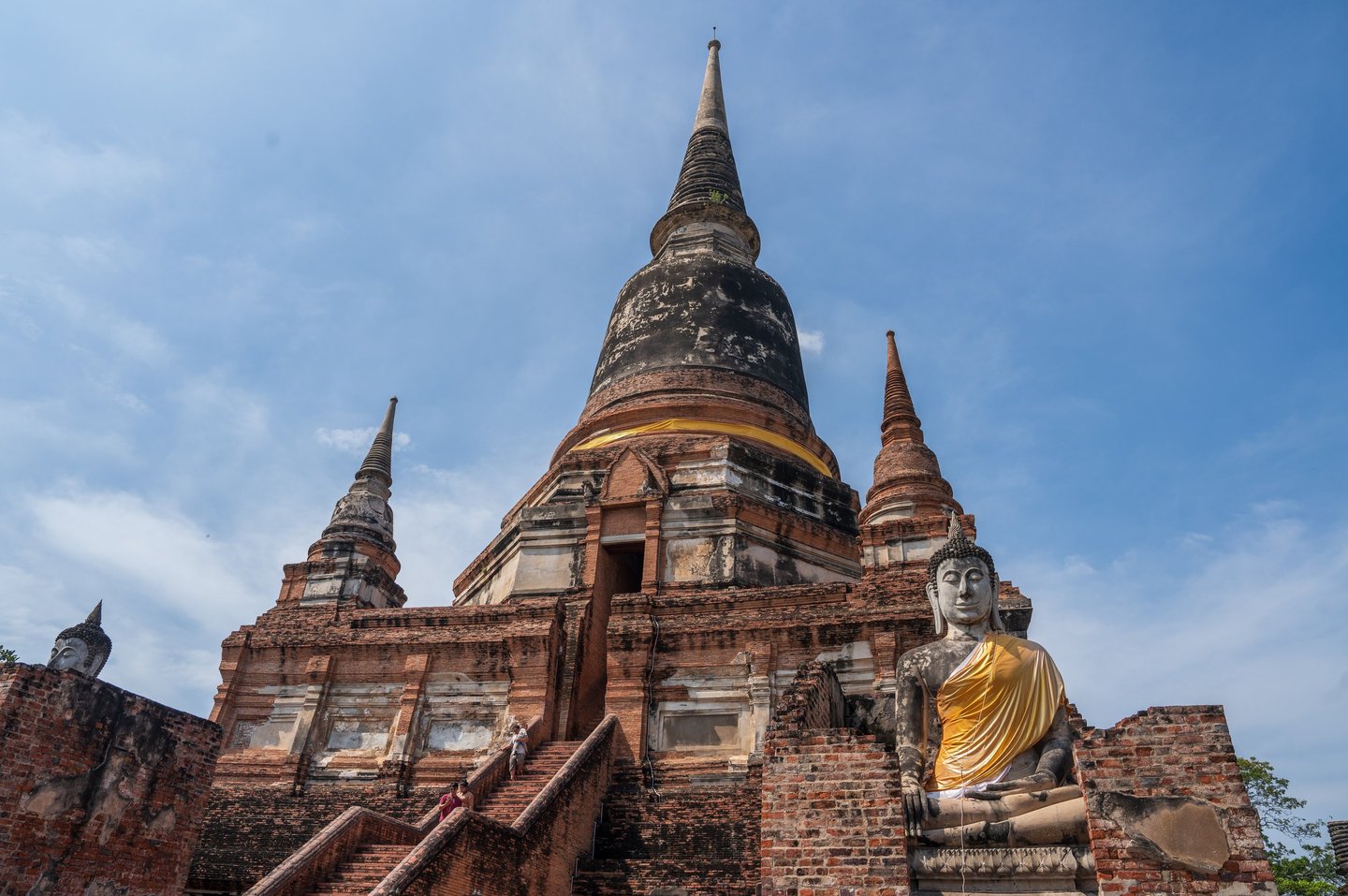
The architectural centerpiece of the complex is the soaring, bell-shaped principal chedi, constructed to commemorate King Naresuan the Great’s decisive victory over the Burmese in 1592. This unposed documentary frame captures the towering bell-shaped principal chedi rising high over the ancient temple complex of Wat Yai Chai Mongkhon in Ayutthaya, Thailand. A stone Buddha statue draped in a golden robe sits in peaceful meditation on the right, overlooking the weathered red brick terraces and grand staircases. Under a bright daylight sky, a few visitors walk quietly along the ruins.
Ancient Guardians
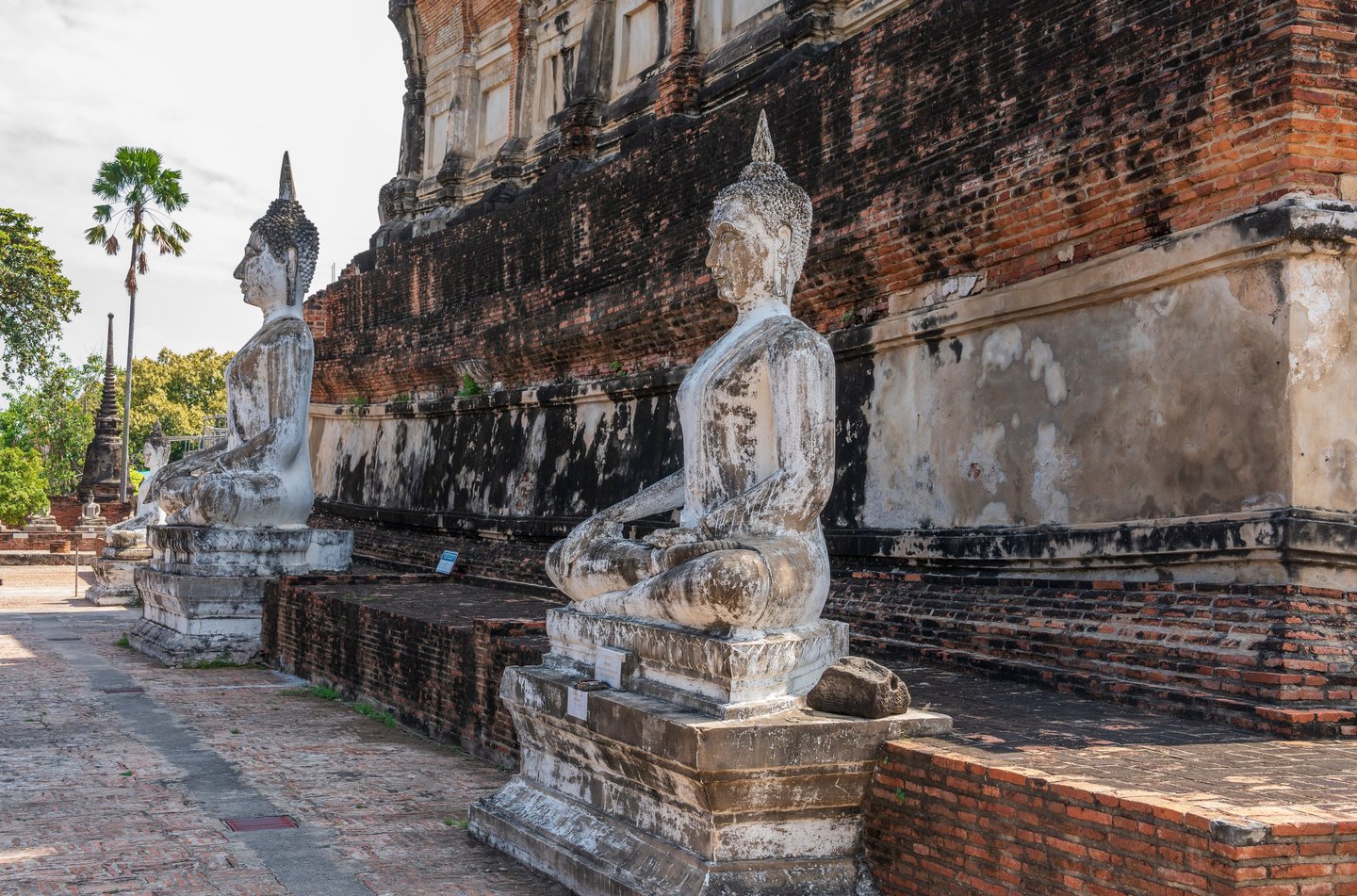
Every angle offers a different layer of narrative, mapping out the physical scale of the Khmer-influenced design. This unposed documentary frame captures large, weathered stone Buddha statues sitting in quiet profile along the high, weathered red brick foundations of Wat Yai Chai Mongkhon in Ayutthaya, Thailand. Facing left in a meditative posture, these historic figures line an open stone courtyard flanked by green trees and a single tall palm tree under a bright daylight sky.
The Row of Buddhas
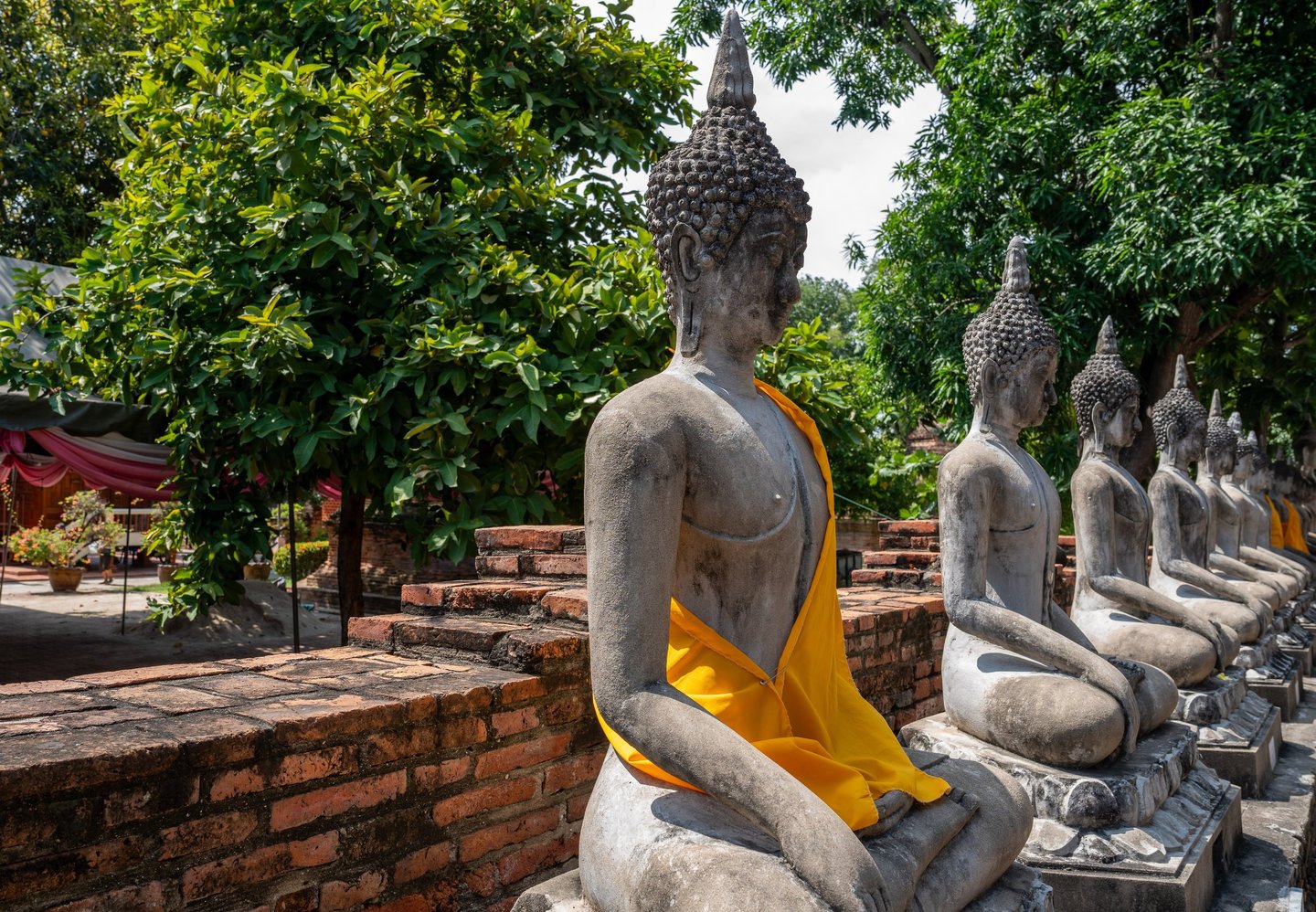
True historical depth reveals itself far beyond modern cityscapes. This unposed documentary frame captures a striking row of stone Buddha statues sitting in serene alignment within the ancient grounds of Wat Yai Chai Mongkhon in Ayutthaya, Thailand. Draped in vibrant yellow sashes, the sacred figures sit in meditative postures next to an old, weathered red brick wall, surrounded by dense green trees under the bright daylight sky.
Conclusion: The Weight of Undocumented Moments
For me, documenting a place like Wat Yai Chai Mongkhon always drives home why I keep coming back to Thailand with a camera in hand. It’s easy to get caught up chasing the perfect postcard composition, but the real magic happens when you look past the obvious angles.
When you stand among these centuries-old bricks, watching the harsh tropical sun soften into the afternoon, you realize that the golden robes and weathered stone aren't just remnants of a bygone era. They are part of an ongoing story. Capturing that raw, unbroken continuity—the quiet reverence that survives right alongside the modern world—is what makes travel and street photography in Southeast Asia endlessly addictive. It’s a vivid reminder that the best frames are the ones that let the true, unposed spirit of a place speak for itself.
Ayutthaya’s Open-Air Majesty: The Giant Reclining Buddha of Wat Lokayasutharam
When you navigate the dusty tracks of the Ayutthaya Historical Park, away from the heavily touristed temple complexes, you stumble upon spaces where the sheer scale of the past catches you completely off guard. Wat Lokayasutharam is exactly one of those places. Historically, while much of the surrounding monastery was razed to the ground during the Burmese invasion of 1767, this colossal site survived as a silent witness to the fallen kingdom. Today, it stands not within a restored hall, but entirely open to the elements, surrounded by vast green fields and a shifting Thai sky.
For a documentary photographer, framing a monument of this size without the traditional ceremonial saffron robes offers a rare, raw look at the pure passage of time. The peeling plaster and exposed brick create a heavy, authentic texture that tells a far deeper story than any polished postcard layout ever could.
Ancient Scale
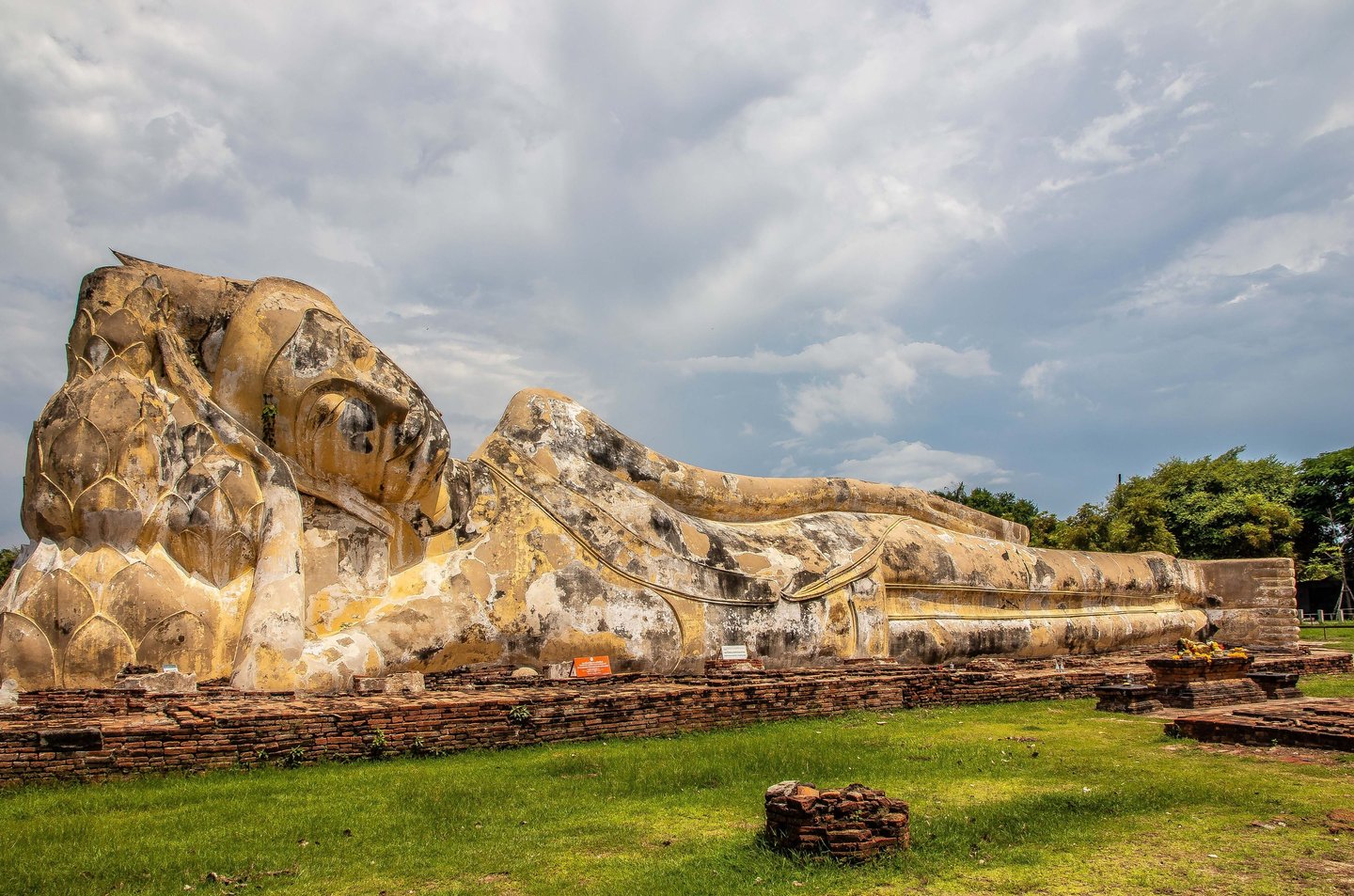
True historical depth reveals itself far beyond modern cityscapes. This unposed documentary frame captures the full grandeur of the colossal 42-meter-long Reclining Buddha at Wat Lokayasutharam in Ayutthaya, Thailand. Exposed to the elements within the ancient historical park, the fading stucco and weathered stone tell a story of centuries of resilience. Framed by a wide patch of green grass and a dramatic, shifting sky, the monumental sacred icon rests in absolute stillness.
The Lotus Cradle
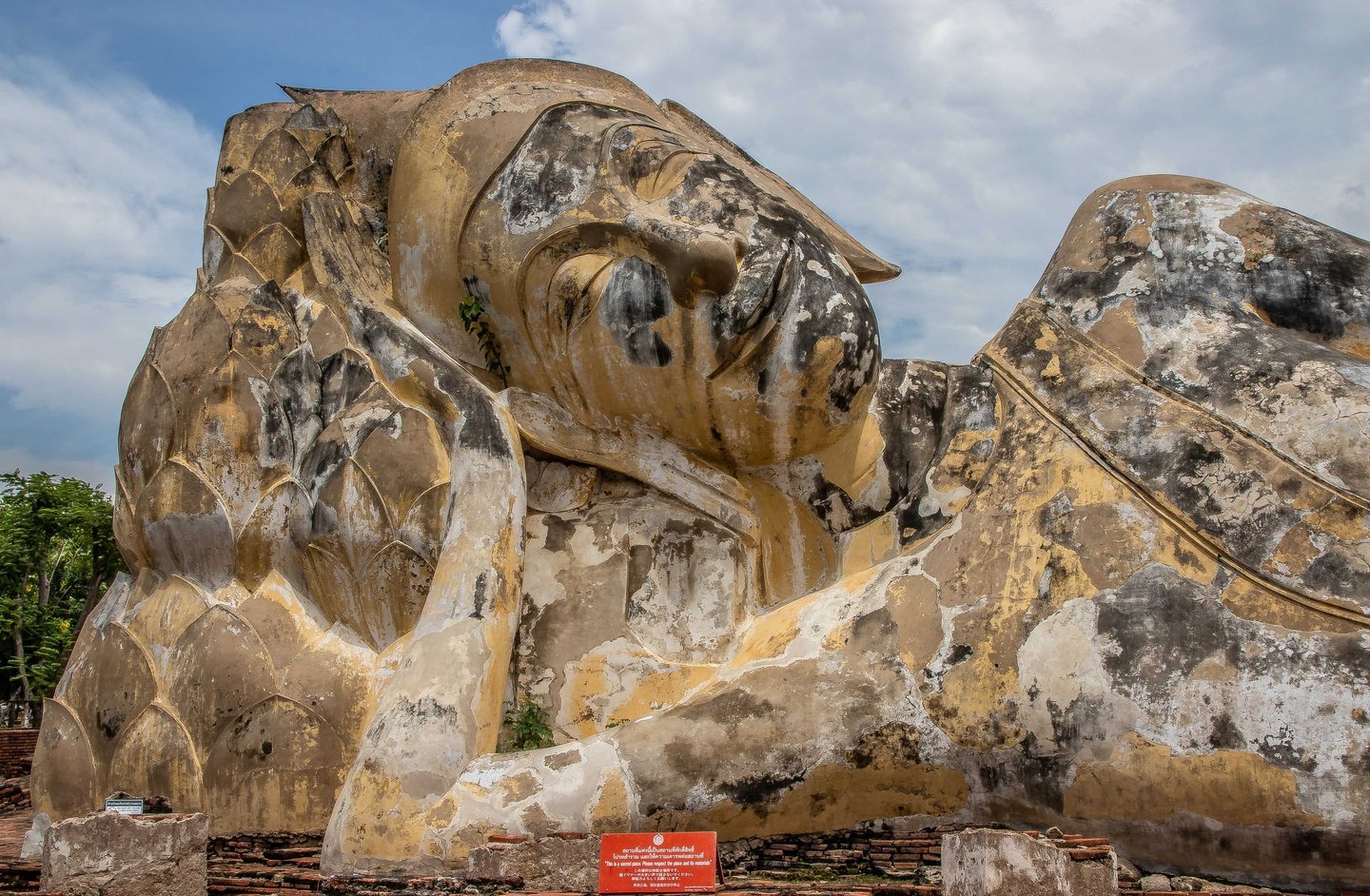
The closer you get to the structure, the more the meticulous craftsmanship of the ancient artisans comes to the forefront. This unposed documentary close-up captures the serene, weathered face of the colossal Reclining Buddha at Wat Lokayasutharam in Ayutthaya, Thailand. Resting his head gently on a beautifully carved stone lotus blossom, the 42-meter-long monument displays the raw, peeling textures of fading plaster and exposed stone from centuries of exposure.
Monumental Peace
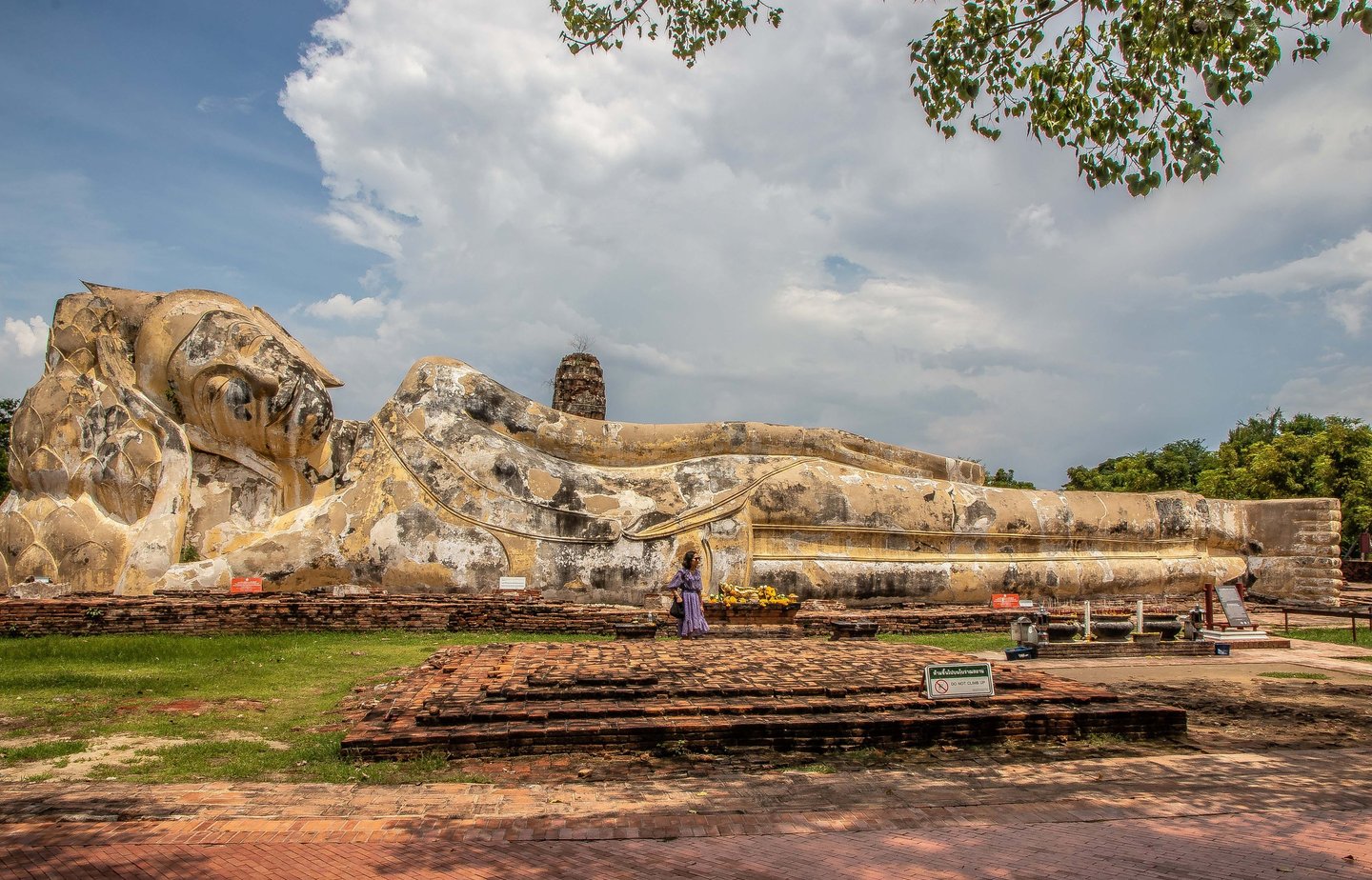
Standing back to absorb the entire scene, you realize how the massive scale of the ruin completely dominates the landscape, forcing a quiet reverence on anyone who walks the grounds. This unposed documentary frame captures the colossal, 42-meter-long Reclining Buddha at Wat Lokayasutharam in Ayutthaya, Thailand. Left bare without ceremonial robes, the weathered stone and fading plaster showcase the raw passage of centuries. A lone visitor stands quietly before the massive structure, emphasizing its immense scale against a dramatic, cloud-filled sky.
Documenting a site like Wat Lokayasutharam isn't about capturing a static ruin; it's about chasing the heavy atmosphere of a landscape where time never really left. The way the raw stone interacts with the changing tropical light creates a stark, powerful narrative that remains central to the true spirit of traveling through Southeast Asia.
Contact
Fuel my creativity, If you enjoy my content, feel free to support me with a small tip. Thanks for being part of this journey!
If you enjoy my photography and the stories I capture across Southeast Asia, consider supporting my journey. Every coffee helps me stay on the road longer and document more unique locations. Thank you for being part of the adventure!
Traveling across Southeast Asia, I’ve found that having an eSIM ready the moment you land is an absolute game-changer. I highly recommend Saily – I’ve had a great experience with them myself. It offers unbeatable advantages, especially for ordering a Grab taxi right away or using Google Maps to find your way as soon as you exit the airport
This post contains affiliate links for Saily. If you sign up through my link, I may earn a small commission at no extra cost to you. I only recommend services like Saily because I use them personally and they’ve made my travels much easier.
You can license my photography directly through my Alamy portfolio. My work covers authentic travel and street photography across Southeast Asia — Bangkok, Ho Chi Minh City, and the wider region — shot on location, not staged.
Looking for street scenes, urban editorial content, or landscapes from Thailand and Vietnam? My full collection is on Alamy, with licensing options from standard editorial to extended commercial rights, depending on what your project needs.
Disclosure: the link below is an affiliate link. If you license an image through it, I earn a share of the sale at no extra cost to you. It goes straight back into keeping me on the road and shooting across Southeast Asia.
© 2025 Strangphotography – Southeast Lens. All rights reserved.
All photos taken by me in public spaces. Licensing available via Alamy.
Unauthorized use prohibited. For full legal info, see my Imprint